By Joe Berk
As the Sixes go, there have been a few: The Honda CBX, the Kawasaki KZ1300, the Honda Gold Wing, the Honda Valkyrie, the Benelli Sei, and the BMW K1600. This doesn’t include any custom engined bikes, and there have been a few. This blog is long enough already, so I’m leaving out things like bikes with three Triumph 650 Twin engines. All the bikes included here were factory offerings.
Honda CBX
The year was 1979, and I was riding a Triumph 750 Bonneville I bought new in Fort Worth, Texas. We had a Honda dealer in town that had a demo CBX, and I went over there as soon as I knew the dealer had the CBX in stock.
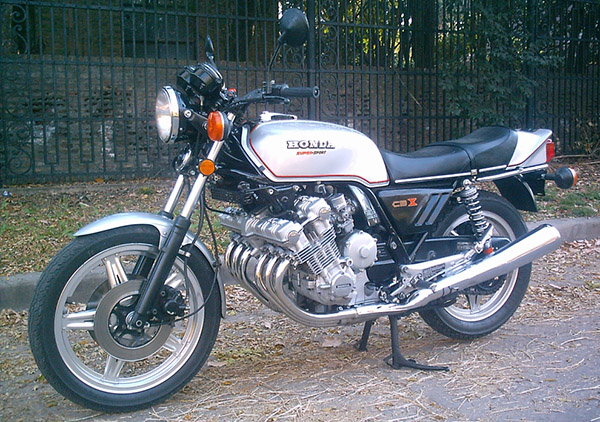
In those days, dealers of all kinds of bikes allowed unsupervised test rides. Very few dealers, if any, do that today, and for good reason. There are guys out there that will ride the snot out of them. I was one of them back in 1979. I picked up the CBX (a beautiful silver one that was essentially a naked bike; this was before Honda put the big fairing and bags on the CBX in 1981), and I headed out to Loop 820. Loop 820 (as the name implied) looped around Fort Worth. I lived on the west side of town out near the General Dynamics plant where I was an engineer on the F-16.
Loop 820 in those days way out on the west side of Fort Worth was a traffic-devoid area, and that made it a favored spot for top speed testing. My ’78 Bonneville would top out at an indicated 109 mph on Loop 820 (I think I’m past the statute of limitations on that moving violation, which is why I’m sharing this with you). Naturally, it was where I took the CBX. The bike had something like 6 miles on the odometer, but I didn’t care. The magic number? 131 mph. Yep. I was a speed demon back in the day.
When I brought the bike back to the dealer, I put it on the sidestand with the engine still running. It squirted oil arterially out the left side of the forward cam cover. It squirted in spurts, like it had a heart pumping it out. “How’d you like it?” the enthusiastic sales guy asked, and then he saw the oil orgasming out the top end.
“I didn’t,” I said. “I mean, look at it. It leaks worse than my Triumph…”
So I didn’t buy that CBX, but I never abandoned the idea of owning one.

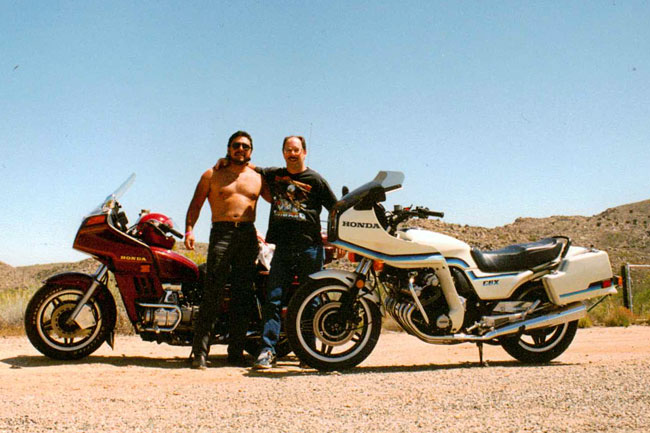
Maybe 20 years later I stopped at Bert’s, a huge local Honda/Suzuki/Yamaha/Kawasaki (and maybe a few other makes I can’t remember) dealer. He had a 1982 CBX on the floor. It was a used bike with just 4500 miles on the odometer, and he wanted $4,000 for it. It was beautiful. Completely stock, it was pearlescent white with turquoise and black accents. I stopped twice but couldn’t quite bring myself to pull the trigger. Then I stopped in a third time and it was gone. Rats. Missed it. He who hesitates is lost, and I had hesitated.
I asked about the bike and was told some rich guy from Japan had bought, and Bert’s was putting new seals in the forks, installing a new air filter, cleaning the carbs, and doing a general servicing on it. Lucky guy, I thought.
Then I stopped in a fourth time and the bike was back on the floor. The sales guy on duty in Bert’s used bike department was a nice old guy who told me he won the Daytona 200 in 1956. Did he really? Hell, I don’t know. We didn’t have the Internet yet. But none of that mattered. The ’82 CBX was back on the floor and it was now $4500. I could get my checkbook out fast enough.
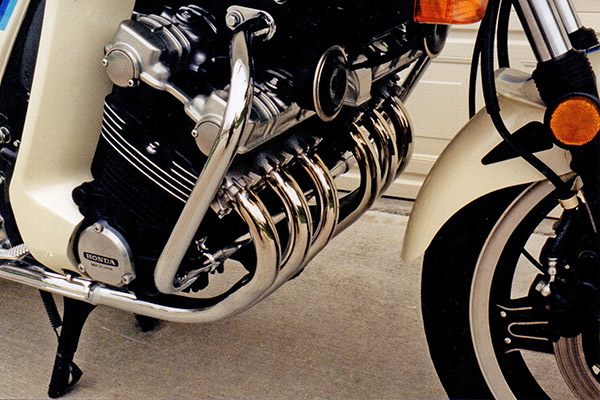
I had a lot of fun with the CBX, riding all over California, Nevada, and Arizona with it. I put 20,000 miles on the bike. I even road to the Laughlin River Run one year, where it drew more stares than any of the cookie-cutter wannabe rebel yuppie EVO-engined Harleys.
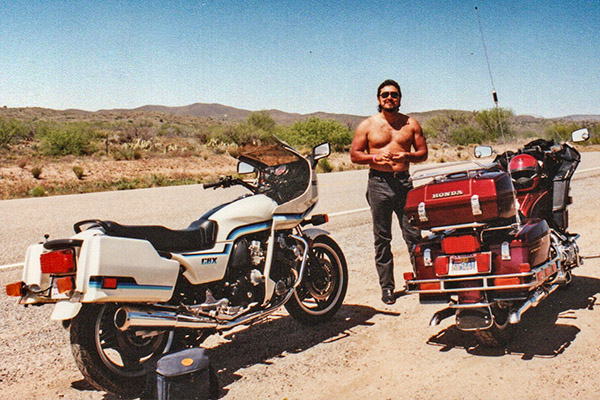
I loved the bike, but I decided it was time to sell it a few years later. A friend offered me $4500, which is what I had paid for it and about what they were going for in those days, and I sold it. I wish I still had it.
The Honda Gold Wing
Somewhere in its history (actually, it was way back in 1988, which surprised me), the Honda Gold Wing became a flat six displacing 1520cc. I think they are up to something like 1800cc or maybe a million cubic centimeters by now. I never rode a Gold Wing Six and I never had a desire to own a Gold Wing (one short ride on Louis’ Wing, a Four, convinced me that Wings are crafted of boredominium).
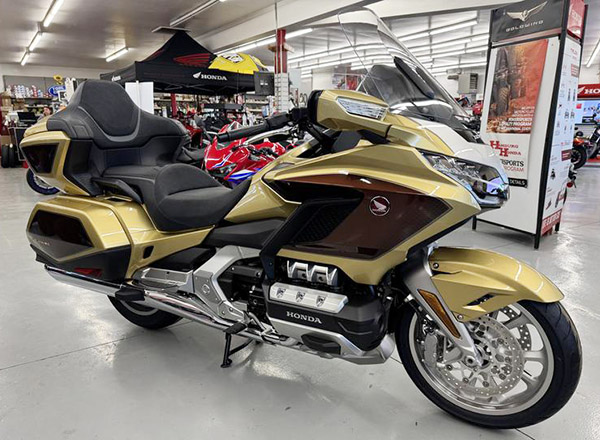
None of the Wings in any denomination ever appealed to me. I know that modern Gold Wings are impressive and fast and handle well (for a battleship) and all that. The whole Wing thing just never appealed to me. Never has, and never will.
The Honda Valkyrie
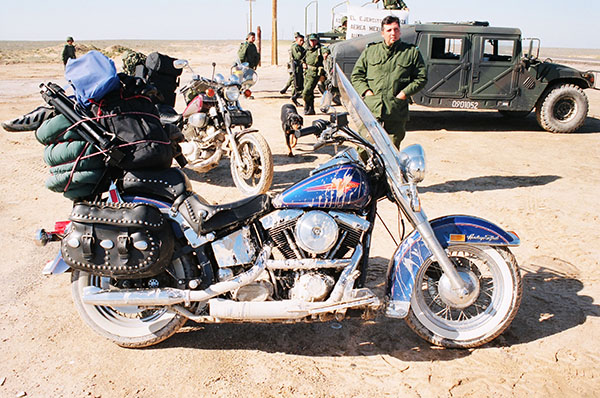
The Honda Valkyrie used the Gold Wing engine and it was, I think, supposed to sort of compete with Harley. I liked the idea, and I thought I wanted one, so I went back to Bert’s and looked at one on the showroom floor. Fortunately for me and my wallet, I rode my ’92 Harley Heritage Softail there. The Valkyrie looked good, I thought, until I went back out to the parking lot and saw a new Valkyrie that someone had parked right next to my Softail. Both bikes had windshields and saddlebags, so it was a good side-by-side comparison.
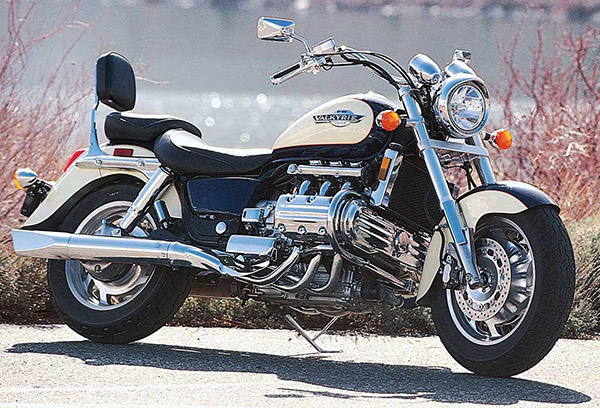
That visual comparison is what drove a silver stake through the Valkyrie’s heart for me. I couldn’t believe how big, porky, and bloated the Valkyrie looked next to my Softail (and the Softail was not a small machine). The Heritage Softail just looked way more svelte, nimble, and sexy. That killed it for me. No Valkyrie would ever live in my garage.
Like the Gold Wing, there were two iterations of the Valkyrie – a 1520cc initial offering and then later an 1832cc version. The Valkyries were known for their atrocious fuel economy, although I can’t imagine anyone who bought one worried about that. They were huge bikes.
The Kawasaki KZ1300
Shortly after Honda introduced the CBX, Kawasaki introduced a 1300cc, water-cooled monster they called the KZ1300 (I think that’s what they called it). Unlike the Honda CBX (whose production run lasted only from 1979 to 1982), the KZ1300 stayed in the Kawasaki lineup for several years. I don’t know why.
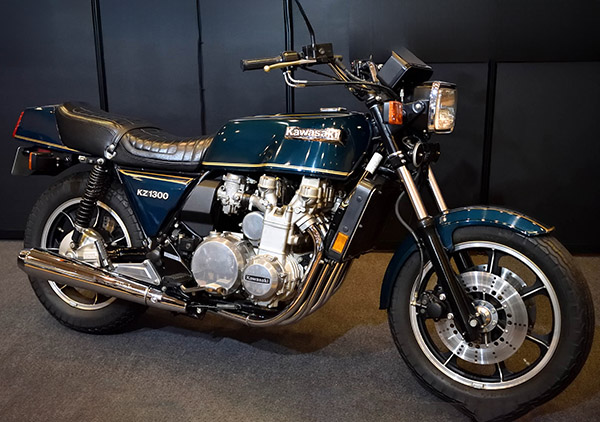
The Honda CBX (even though it was a Six displacing 1050cc) looked nimble, lean, and mean. The Kawasaki looked like a bus or maybe a dump truck to me. There was nothing elegant or graceful about it. I wanted no part of it. I’ve never ridden one.
Benelli Sei
Benelli jumped on the air-cooled inline 6 theme with their Sei models. They were good looking bikes, but they looked (at least to me) like a copy of the Honda CBX. As copies go, the CBX wasn’t a bad thing to use as a starting point, but to me, the CBX was a far more attractive motorcycle.
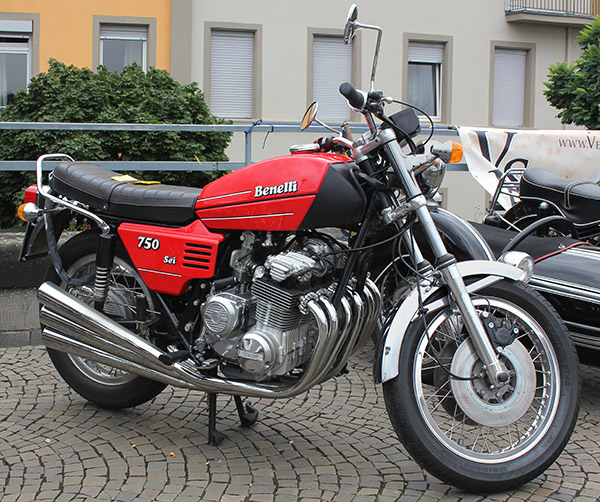
The Sei was offered at first as a 750 and later as a 900. The Benellis were made from 1973 to 1978. I think I may have seen one or two Benelli Sei motorcycles, but I can’t remember where. I never rode one and I had no desire to. The CBX spoiled me.
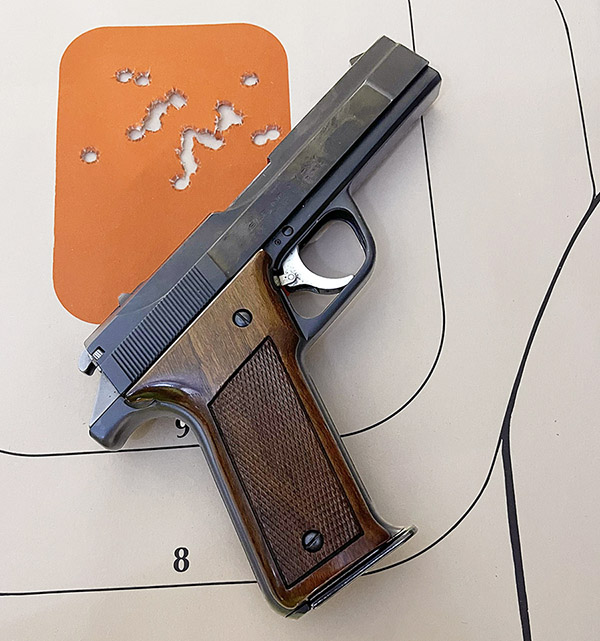
As an interesting aside, Benelli is one of those interesting companies that made both guns and motorcycles. I have a rare Benelli 9mm handgun, a pistol that didn’t make it commercially but is delightfully complex and fun to shoot. Benelli also makes rifles and shotguns. Motorcycles marketed under the Benelli name are today manufactured in China.
BMW K1600
The BMW K1600 series of luxo-barges are (as the name implies) 1600cc motorcycles. They have inline (across the frame) six-cylinder engines, with the pistons at a steep forward angle.
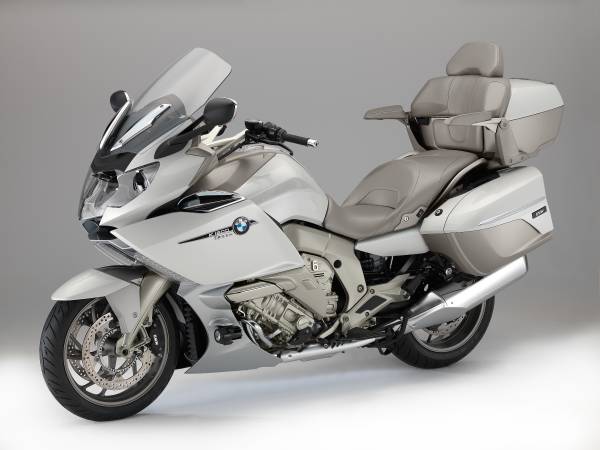
There’s a K1600 GT and a K1600 GTL. I think the L stands for luxury. Or maybe it stands for loaded (which is what I’ve have to be to ever purchase one of these 750-pound land yachts). Like most BMW products, the K1600s are outrageously priced, a situation made worse by tariffs.
These bikes, I think, are unnecessarily laden with electronics and other silly features. A few years ago when the K1600 first hit the market, I was in a BMW dealer chatting with the marketing manager. He was multitasking during our conversation. The other thing he was doing? He was trying to figure out how to use a K1600’s electronic ignition key for a bike he had just sold. BMW North America was on the phone, and the guy on the other end was similarly perplexed. That made four of us who couldn’t break the code on how to use the key (BMW NA, the dealer’s sales manager, the bike’s new owner, and me). I was the only one of the four who didn’t care, as I wasn’t going to ride the bike. Ah, the good old days…when a key was just a piece of mechanically-notched steel that you stuck in the bike’s ignition lock and turned.
So there you have it: My take on the Sixes. So is this it? We’ve done singles, twins, triples, fours, Fives, and Sixes. Surely there can’t be more.
Hey, don’t call me Shirley. Stay tuned. Yep, there are 7-cylinder, 8-cylinder, 9-cylinder, and more cylinders coming up. Stay tuned.
Missed our other ¿Quantos Pistones? stories? Here they are:
¿Quantos Pistones? (The Fives)
¿Quantos Pistones? (The Fours)
¿Quantos Pistones? (The Triples)
¿Quantos Pistones? (The Twins)
¿Quantos Pistones? (The Singles)
Join our Facebook ExNotes page!
Never miss an ExNotes blog:
Help us keep the lights on:
Don’t forget: Visit our advertisers!