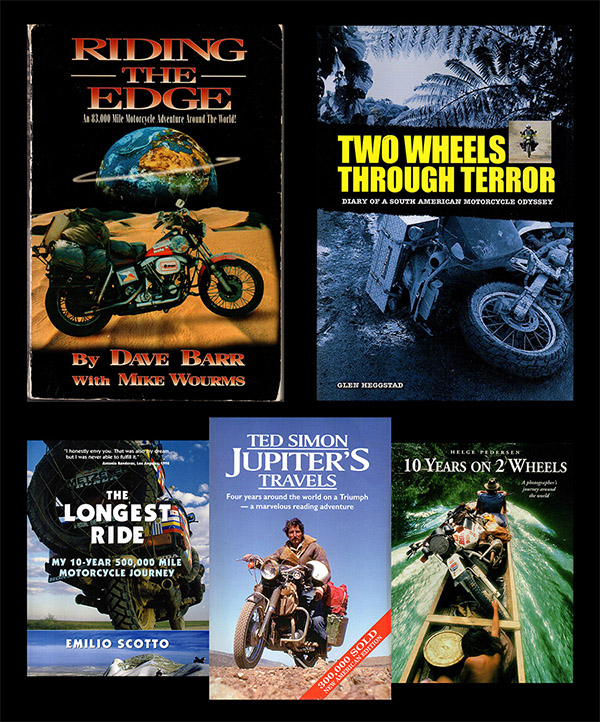
I thought I’d read everything that had ever been published about traveling the world on a motorcycle. I’ve written about it on ExNotes, describing my favorites among all the books on this topic.
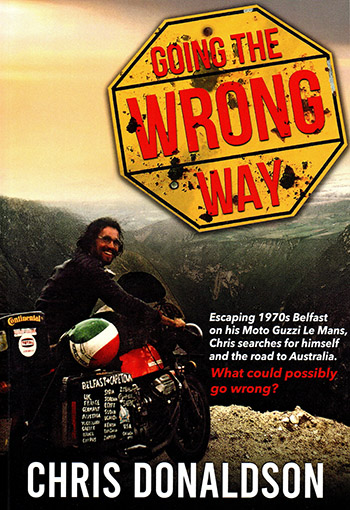
Notice that I’m writing in the past tense, and the reason for that is I most recently learned about another motorcycle saga that belongs on my best-in-class list: Going the Wrong Way, by Chris Donaldson.
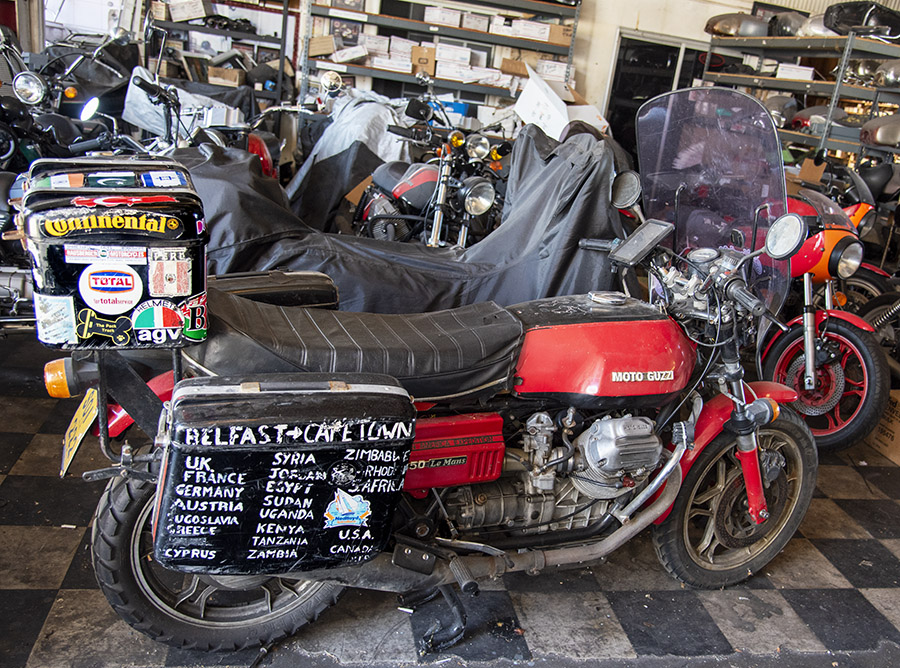
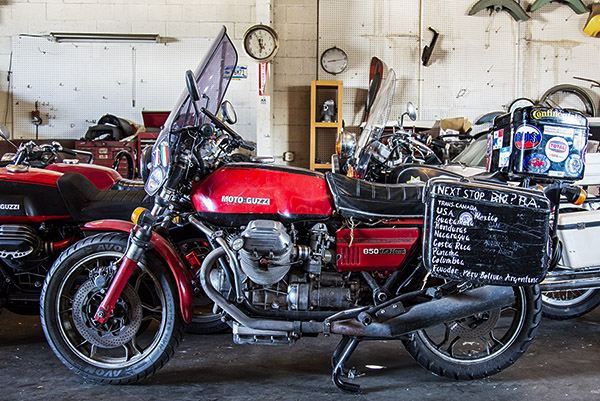
My newfound discovery came about almost by accident a few days ago when I visited with Moto Guzzi Classics, an independent Guzzi revival and maintenance facility in Signal Hill, California for a potential story I’m doing for the ExNotes blog and maybe one of the motorcycle magazines. The guys who run Moto Guzzi Classics are, in as few words as possible, both a bit eccentric and absolute subject matter experts. One of them, my new good buddy Wyatt, showed a few of the bikes in their shop to me, and one of those motorcycles belongs to Chris Donaldson. Chris is a Belfast boy (as in Belfast, Ireland) who is going around the around on a Moto Guzzi 850 Le Mans.
Man, there’s a lot to unpack in that last sentence. Belfast. Coming of age during The Troubles. Getting out of Ireland as a young man. Moto Guzzi, which has to be one of the coolest motorcycles on the planet (they’re like Harleys, but for people who like motorcycles). The Le Mans 850, which has to be one of the worst motorcycles in the world for world travel. Traveling the world (as in present tense). That’s right, the journey is not over, even though Mr. Donaldson started it many decades ago. Donaldson plans to continue his global conquest on the same motorcycle, which is one of the reasons why the bike you see here is currently in the queue at Moto Guzzi Classics in Signal Hill.
I’ve had a hard time putting the Going the Wrong Way down on my nightstand each night for the last several nights. I’d read until I couldn’t stay awake, and fall asleep reading it. Don’t get me wrong; the book is anything but boring. Just the opposite is true. It’s fabulous, and even though I couldn’t keep my eyes open because I was reading into the wee hours, I couldn’t stop reading. Going the Wrong Way has all the bike reliability stuff to keep an engineer interested, all the philosophical stuff to keep a philosopher awake, all the people stuff to keep a people person awake, all the border crossing drama stuff to keep a world traveler tuned in, and, well, I could go on, but I don’t want to spoil it for you. The writing is almost poetic. It’s that good.
Folks, Going the Wrong Way is a great read. Don’t just take my word for it; there are something like 1,394 Amazon reviews posted on this book (soon to be 1,395, when I write mine), which is really kind of stunning for a motorcycle travel book written by a rider with no sponsors. Trust me on this: Get yourself a copy of Going the Wrong Way. You can thank me later.
Our other book reviews (along with reviews on a lot of other things) are here.
I suppose I could wax eloquent about all the magnificent three-cylinder motorcycles out there in the world, but in keeping with the theme of this series, I’m sticking (at least for now) with motorcycles I’ve owned or ridden. In those of the triple flavor, there have been three: A 1969 Kawasaki two-stroke H1 Mach III, a 2006 Triumph Tiger, and a 2007 Speed Triple. The first one (the Kawi 500 triple) didn’t impress me at all; the Triumph triples impressed me mightily.
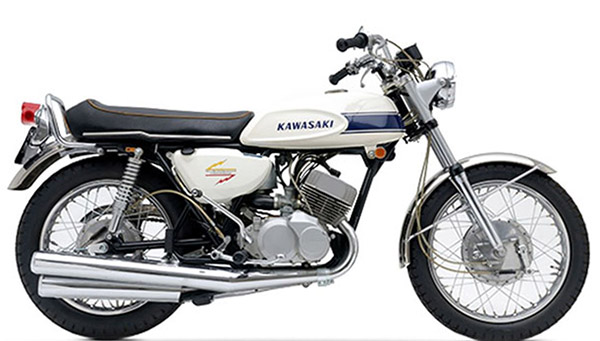
Keith Hediger’s 500cc Kawasaki
Way back when I was in college, I had a 1971 Honda 750 (I’ll you about that bike when I do the ¿Quantos Pistones? blog on the fours). One of my ROTC buddies, Keith Hediger, had a 1969 Kawasaki Mach III. It was a real oddball: A 500cc, two-stroke triple that could stay with a Honda Four in a drag race (which was kind of amazing, considering the Honda’s 50% displacement advantage). Keith and I had this great idea that it would be a real adventure to ride from New Jersey to Quebec, Canada, and we set off to do just that.
A 1969 Kawasaki Mach III 500cc two-stroke triple, a bike that broke all the rufes.
New Jersey to Canada on two naked street bikes with no plan, no luggage, and no rain gear was not a great idea. That point was driven home when it started to rain somewhere in Vermont. It kept raining all the way up into Canada, and when we hit Montreal, we decided we had experienced enough adventure riding for one trip. But it was my first international motorcycle ride, and I had a chance to ride Keith’s Mach III when we switched bikes for a while.
My short ride on the Mach III convinced me of three things:
The Honda CB750 Four was downright luxurious compared to the Mach III.
The Mach III had a seat like a 2×4. It was uncomfortable as hell.
The Mach III was indeed every bit as powerful as the CB750 Four.
I didn’t ride the Mach III long enough or on the right kind of roads to assess its rumored widow-making handling, but the bike felt twitchy and unstable compared to my Honda. And that was it for me and triples for the next 2o or 30 years.
My decades-earlier short ride on the Mach II notwithstanding, I changed my mind about triples. I wanted a Triumph. It started at a Cycle World event (or maybe was it Cycle; I always get the two pubs mixed up) in Los Angeles. I was there on my ’92 Softail when it happened: I heard a Trimph Speed Triple enter the parking lot. It was a magnificent thing, kind of a pearlescent candy pink (which sounds weird as I type this), but wow, it hit all the buttons for me. The color (I would call it bubble gum pearl) just flat worked for me, and that exhaust note…it was just wonderful. It was kind of a mix between a small block Chevy with a big cam and a jungle cat’s snarl. Fierce, yet refined. Loud, but not obnoxious. Big power, but controlled. I knew that someday soon I would own a Triumph triple.
2006 Triumph Tiger
That someday soon arrived when I stopped at Doug Douglas Motorcycles in San Bernardino. In those days some 20 years ago now, Doug Douglas was an old school motorcycle shop. San Bernardino is regarded by many in southern California as the armpit of the state, and I guess I was of that opinion, too. At least until one of my riding buddies corrected me: “It’s more like the crotch,” he said. I think he was right.
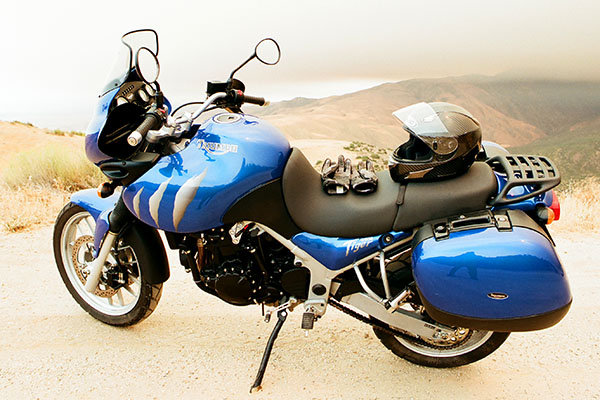
My 2006 955cc Triumph Tiger. The haze in the background is real. I and buddy of mine were riding in the mountains north of Los Angeles during one of our many famous forest fires.
Anyway, I was riding through San Bernardino on my Harley when I stopped at Doug Douglas Motorcycles. Doug was an old guy even then, and he was famous, I guess, as a former motorcycle racer. He was a crusty, cagey old guy who picked up on my reaction when I saw the candy blue, tiger-striped Tiger you see above. He knew I was a goner before he ever said a word. Doug told me what it would be, out the door, and my fate was sealed. Folks, I’ve never paid the asking price for anything, and folks who know me, know I’m as tight was a turtle’s butthole (and that’s watertight). I looked at the Tiger and then Doug and I simply said, “Okay.”
I don’t remember exactly, but I think the Tiger was about $9,000. Sue hit the roof when I came home and told her what I had just done. Then I told her I needed a ride back to Doug Douglas so I could bring the bike home. She fumed for about half the trip until she finally asked me where the money was coming from. I told her I had some money left from selling my Suzuki TL1000S. “What did you do with the rest of that money?” she asked.
“That mother of pearl and black onyx bracelet I bought for your birthday,” I said. I hadn’t known it when I said it, but it turned out that was the perfect answer. Sue was sweet as a kitten for the rest of the ride. When we reached Doug Douglas’s place, I introduced her to Doug.
“You must be the world’s greatest motorcycle salesman,” Sue said. “My husband told me he said yes to your first offer, and that never happens.”
Old Doug scratched his chin and told her, “It’s true I’m a good motorcycle salesman, but I’m really much better at selling new living room and bedroom furniture.” Sue and I were perplexed at that one, until Doug added, “lots of guys who come home with new motorcycles end up buying new furniture within a few days of their buying a motorcycle from me…”
The Tiger was a wonderful motorcycle and I covered a lot of miles with it. The Tiger was Triumph’s “me, too” ADV machine, but it was god-awful off road. I was terrified on it every time I turned onto a dirt road in Baja, which was exactly twice. In soft sand it would scare the bejesus out of a former paratrooper (something I can speak to with authority). The Tiger was essentially a high-performance street bike with ADV styling. It excelled on mountain roads. It was tall and top heavy, but it was fast, it sounded wonderful, and I loved it.
2007 Triumph Speed Triple
The Tiger scratched a lot of my itches, but I still remembered that candy bubble gum Speed Triple, I fancied myself a hooligan, and I still had the urge to own a Speed Triple.
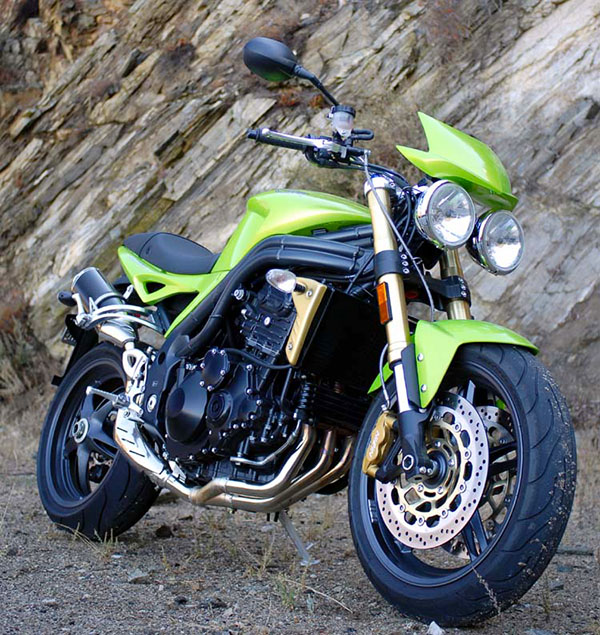
My 2007 Triumph Speed Triple. I shot this photo up on Glendora Ridge Road.
About a year after I bought the Tiger from Doug Douglas, I was in his dealership again and I saw the Speed Triple you see above. I didn’t buy it on that visit, but I thought about it a lot in the days that followed. I drove out there on a lunch break (I was still working then), made an offer, and it was mine.
I opted for a few doodads, including gold-anodized bits and pieces, the little flyscreen, and a set of Jardine carbon fiber mufflers. The result was what was unquestionably the most beautiful motorcycle I’ve ever owned. I remember I was getting a haircut one time downtown and a cop came into the barbershop. He asked if the Speed Triple was mine. I got an adrenaline rush thinking I had done something wrong, but nope, he just wanted to tell me it was a beautiful motorcycle.
The Speed Triple was beautiful and it photographed well, but it was buzzie and uncomfortable, and with its short wheelbase it was a little bit twitchy. I owned four or five motorcycles in those days, and the S3 was the one I rode the least. I sure liked looking at it, though.
One morning, I was headed to the University early in the morning for an 8:00 class. That was November 9, 2009. I exited the freeway and turned left, and I remember seeing a guy at a stop sign in a Camaro. We established eye contact. The next thing I knew I was being loaded into a helicopter, in great pain, with the blades’ downwash sweeping over me, thinking either I was having a really bad dream or I was being medevaced in Vietnam (which is kind of interesting, as I’ve never been in Vietnam).
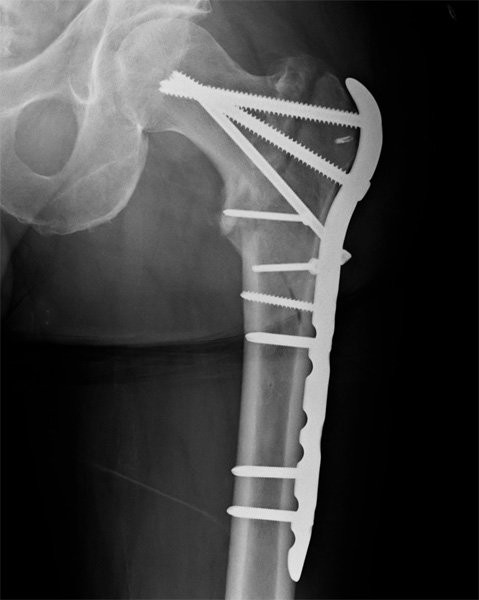
My “I got screwed” photo. Trust me on this: It was as painful as it looks.
It wasn’t the Camaro guy at the stop sign, and it wasn’t even at that intersection. My S3/automobile altercation had occurred a block further west, which I learned 6 weeks later while I was still in the hospital. I have no memory of the crash (event amnesia, the doctor called it), but as crashes go, it was a relatively bad one. I had a concussion, two crushed vertebra, and two big fractures of my left femur. The femur was the big deal. One surgery while I was still in the hospital put a big metal plate down there to hold everything together while the fractures healed, and when that broke a year later, I had revision surgery to remove the now-broken plate and install a femoral rod so that the lower fracture (which had not healed) could do so. (Trust me on this: The words “revision” and “surgery” should never be used together.) I went on to ride other motorcycles throughout the western US, Mexico, Colombia, and China, so I guess the accident didn’t screw me over too badly. But it made an impression, and I’ll never use a motorcycle to commute to work again. The streets have a different personality during commuting hours, one best suited for a big car, or maybe an armored vehicle.
So that’s my story on the triples. Although the idea of a three-cylinder motorcycle may feel weird (and from an engineering perspective, maybe a little unbalanced or asymmetric), I believe a three-cylinder motorcycle makes a lot of sense. I think a triple has it all: Power, balance, handling, and (at least for Triumphs) the right ExhaustNotes.
Missed our stories on the Singles and the Twins? Hey, no problemo! Here they are:
Boy oh boy, it’s hard to believe a dozen years have slipped by. The year was 2013, and one of CSC Motorcycles’ early marketing campaigns for the CSC 150 Scooter was the “bike in a box” program. CSC sold its Mustang revival motorcycle as a kit, with assembly to be performed by the owner. It was a brilliant marketing campaign and it worked well. So well, in fact, that when CSC started importing the iconic RX3 250cc adventure touring motorcycle a couple of years later, an option available to consumers was to buy the bike in a pre-setup format and perform the setup themselves.
In an effort to hold the line on tariffs and keep prices down, CSC is returning to its roots for the San Gabriel 250, one of its best-selling models. Buyers can get the bike pre-setup, set it up themselves, and save a whopping $495. It’s easy to put one of these motorcycles together, and to make it even easier, CSC provides a complete “how to” video. It’s a great way to bond with your bike and to learn a bit about motorcycle mechanics in the process. For more info, visit the CSC website at www.CSCMotorcycles.com.
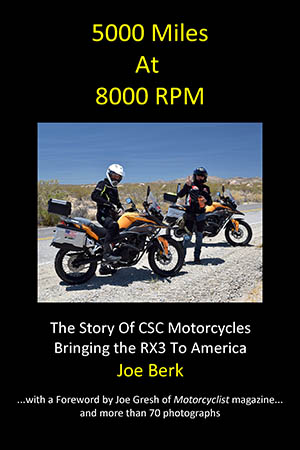
Would you like to learn more about CSC’s early days and the role yours truly and Joe Gresh played in helping to promote CSC Motorcycles? It’s all there in 5000 Miles at 8000 RPM.
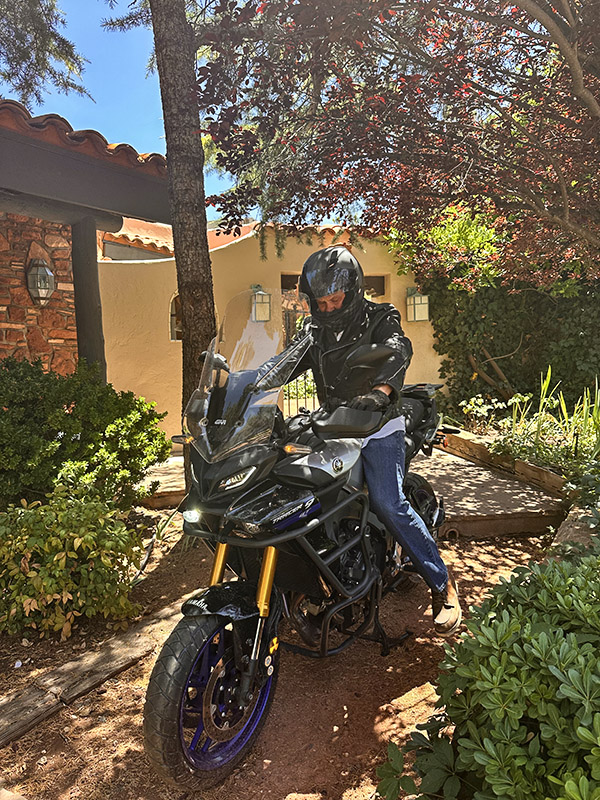
Ten weeks ago today, Tom and I set out on our bikes from Sedona, AZ, headed for a little mining town in Sonora, MX. The plan? Visit our good friends Tom and Lynn—expats who’ve built a beautiful life there with their hotel and a yearly rider meet-up that’s become a favorite stop for us.
It started like any great ride: a cool Thursday morning, Sedona fading in the mirrors, Bisbee as our stop for the night, and an early morning border crossing on Friday. I was back on Tippi, my Triumph Tiger 900 GT Pro. Tom rode his Yamaha 900. Ahead of us? Three days with Tom and Lynn in their Sonoran paradise and, of course, some excellent Bacanora—a local smoky cousin of tequila.
The Perfect Morning
We left Tom’s house in that perfect early light, the red rocks glowing like they do only in the morning. Onto Highway 89A, then climbing Highway 260 toward the Mogollon Rim. First stop: Payson for fuel and a snack from the top box. It was one of those perfect riding mornings—cool air, empty roads, and that smooth hum where the bike feels like it knows what you’re thinking.
From there, we rolled onto Bush Highway, then Route 188, Lake Roosevelt flashing blue beside the desert. It’s one of those stretches that makes you forget you even have a destination. Too soon, Globe showed up—time for another quick fuel stop and stretch.
Tom looked tired when he swung off his bike. I noticed, but let it slide. That was mistake number one.
When It Went Wrong
Highway 77 is a narrow, twisty canyon road. Tom led, I followed. He was riding too close to a double-trailer semi, hugging the shoulder. I wanted to yell “Move over!” but we weren’t running headsets that day—mistake number two.
The wind blast hit him hard. He veered toward the ditch—four, maybe five feet deep—plowed through two plastic road signs, and fought like hell to keep it upright. For a moment, I thought he’d pull it off. Then the bike hit a rock the size of a pineapple and went down.
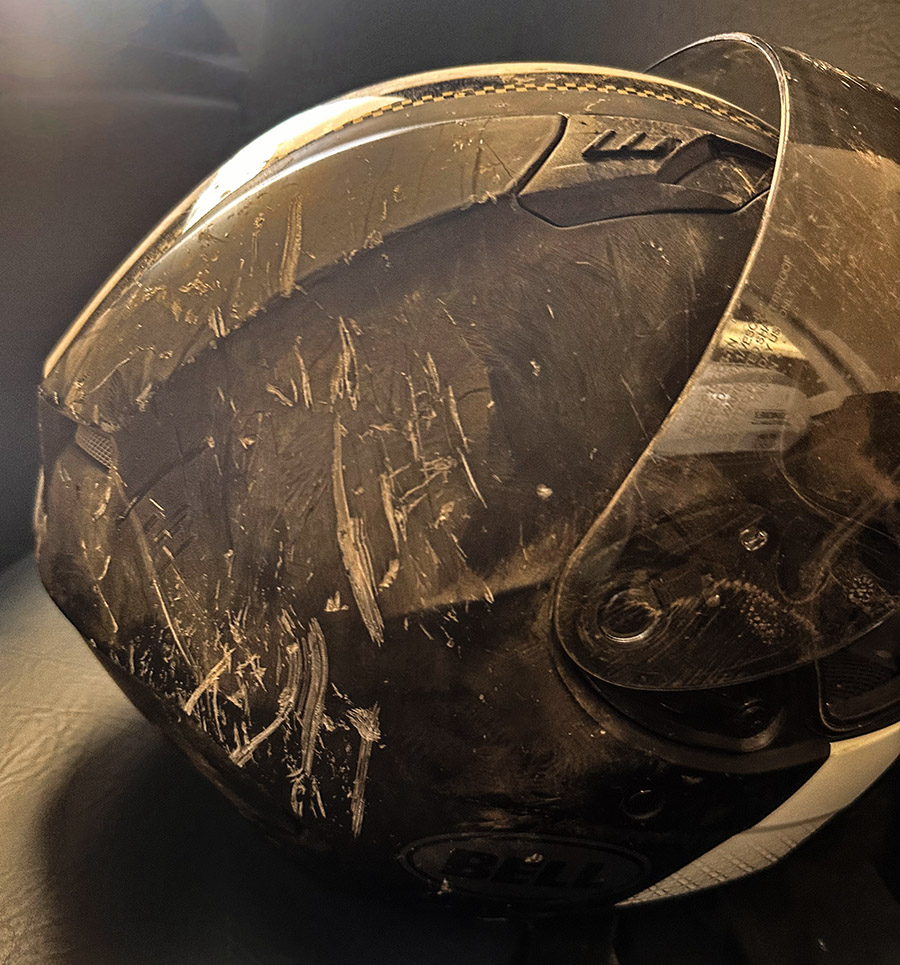
I rode past to find a safe place to stop, heart pounding so hard I could barely swing a leg over to dismount. For a second, I almost let Tippi fall so I could get to Tom faster. Somehow, I steadied myself, pulled off my helmet, and sprinted uphill.
Best sound I’ve ever heard? Tom yelling. Painful yelling, sure, but yelling. He was conscious, breathing, and already doing a self-check—old ER doctor habits die hard.
Angels on the Road
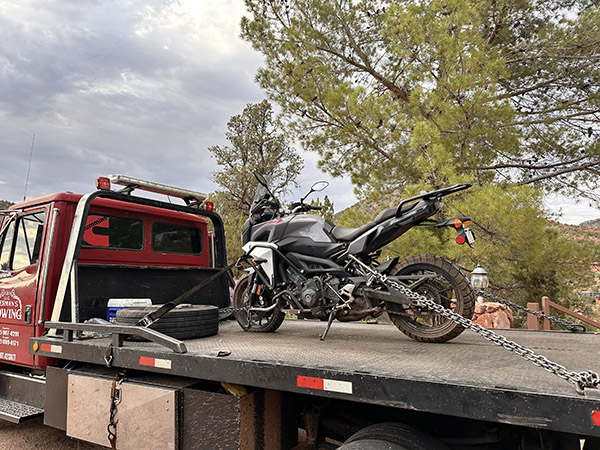
Cars kept flying by until one truck pulled over. Out stepped Chris—a firefighter, of all things. He took control like it was second nature: called for help, righted Tom’s bike, and helped him climb out of the ditch. Minutes later, paramedics loaded him into the ambulance headed for Cobre Valley Medical Center. Chris even gave me a ride to the hospital and didn’t leave until he knew we were okay.
Scans confirmed it: a broken scapula and two fractured ribs. Painful, yes, but survivable.
That night, I sat in the hotel room, had a good cry then listening to Tom breathe, whispering thanks to the road gods and to Tom’s split-second decision that might have saved his life.
Healing & Moving On
The following weeks were slow. Broken bones heal according to their schedule. Tom never complained, just kept moving, day by day.
By week six, the doctors were shaking their heads—he’d healed faster than expected. And, in classic Tom fashion, he now owns another Yamaha 900, fully loaded with more extras than I even knew existed. That crash slowed him down, but it sure didn’t stop him.
I’m still riding Tippi, and we’re already planning a fall ride back to Sonora. That Bacanora run? Just delayed, not canceled.
Lessons From the Road
If you’re tired, stop. Always.
Eat, drink, rest. These rides aren’t the place to “push through.”
Use comms. Sometimes one quick word can be the difference between safe and scary.
Sue and I were in Reno last month to visit the National Automobile Museum. Like most places, Reno isn’t what it used to be. The downtown area is a bit sketchy and I didn’t feel comfortable at all walking around. That said, we had a good time at the Auto Museum and a good time in Reno. As is my habit, I checked online to see if there were any interesting gunstores in town, and the online info for one in particular caught my eye: Willey Brothers Firearms. Unlike the others, Willey’s ad emphasized the kind of guns I’m interested in (blue steel and walnut, not the black plastic tactical junk one mostly sees in gun stores these days). Willey Brothers lived up to its ad: The firearms were interesting, including the used guns.
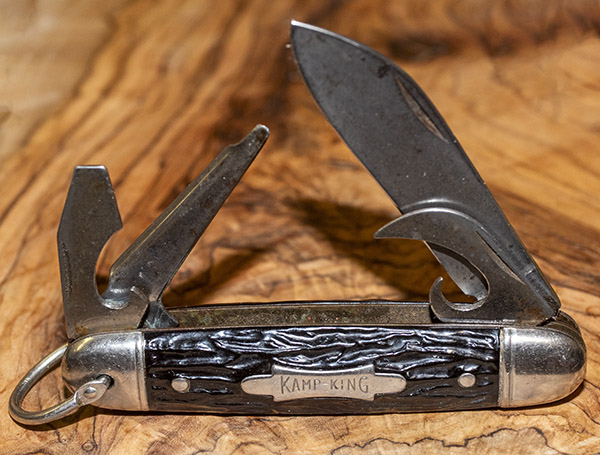
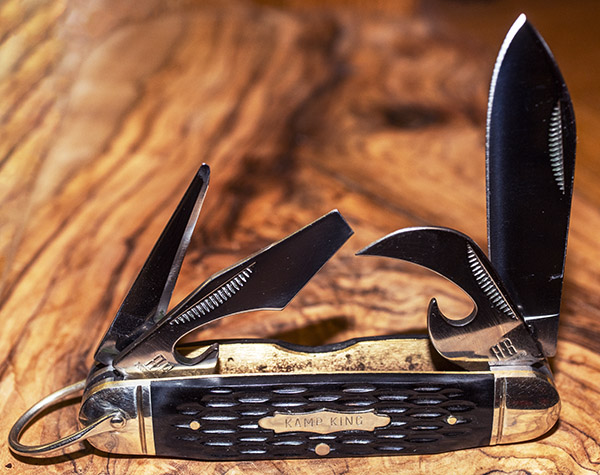
The old Imperial Kamp King knife I bought at a gun store in Reno, Nevada. It has a combination bottle opener/scredriver, an awl for punching holes and undoing knots, a can opener, and a main blade. This one is about 50 years old, and it is in great shape.
Nothing in the gun offerings was interesting enough, though, to make me want to go to the bother of shipping it to the Peoples Republik of Kalifornia, but I noticed the store had a few used pocketknives for sale. One in particular caught my eye: An old Imperial Kamp King that was in nice shape. I was interested in it because it has the same four-bladed configuration as my old Cub Scout knife. At $25, it looked like a good deal, so I paid the asking price and Sue and I were on our way. When I got home, I cleaned it up with a bit of Kroil penetrating oil and 0000 steel wool. I think it was made in the 1950s or 1960s (that’s a guess on my part, although if I studied the video included below, I’d probably be able to narrow it down more).
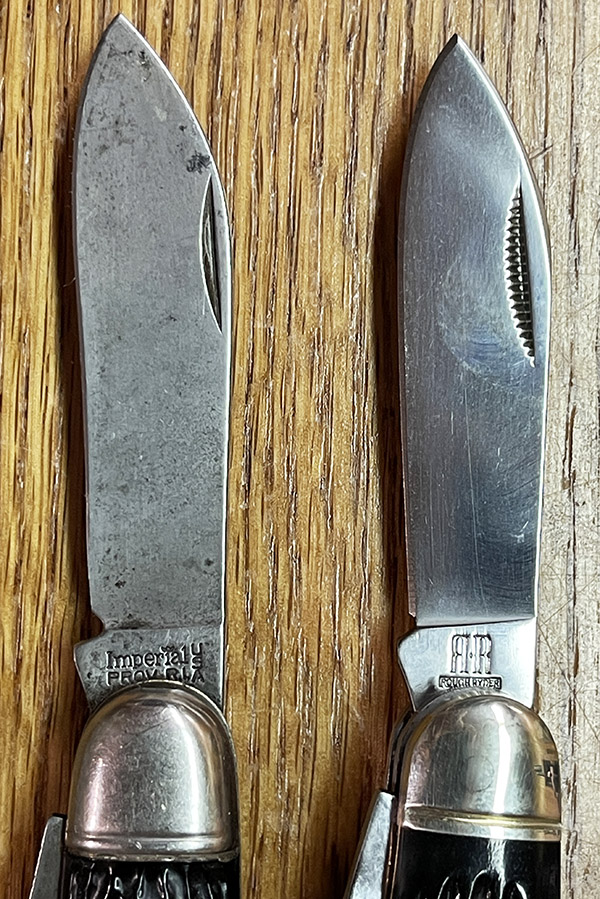
The new Rough Rider Kamp King, with the same blades as the original. This is a very high-quality knife, and I can tell you that the main blade is razor sharp (don’t ask me how I found out).
That got me thinking. There’s a company called Rough Rider (not the condom company) that makes a current version of the Kamp King. I recalled seeing that knife when scrolling through the offerings from Chicago Knife Works (which is actually located in Marion, Virginia). The CKW Kamp King was only $16.94, and the more I thought about it, the more I knew I had to have it (admittedly, the thought process did not take long). Move to cart, buy now, and in went my credit card number.
Chicago Knife Works has great prices and terrible shipping. It takes 10 to 12 days from the time I’ve placed orders with these guys until whatever I order actually ships. I don’t mean until it gets here; I mean until it actually leaves the CKW facility. I don’t know if that’s because CKW is just pokey, or if they don’t keep much in stock and they order their knives from China when I place an order. I suspect it’s the former, as every time it’s taken an inordinate amount of time to ship and I send them an email to complain (I did that every time I’ve ordered anything from them). Then I’ll get an automated response from Chicago Knife Works telling me they’re sorry (which I already knew) and they have so many orders they just can’t get to them all in a reasonable amount of time. And every time when I wrote to complain about taking to long to ship, well, CKW ships my order the very next day. I should get smart and complain about the shipping delay as soon as I place an order, I guess.
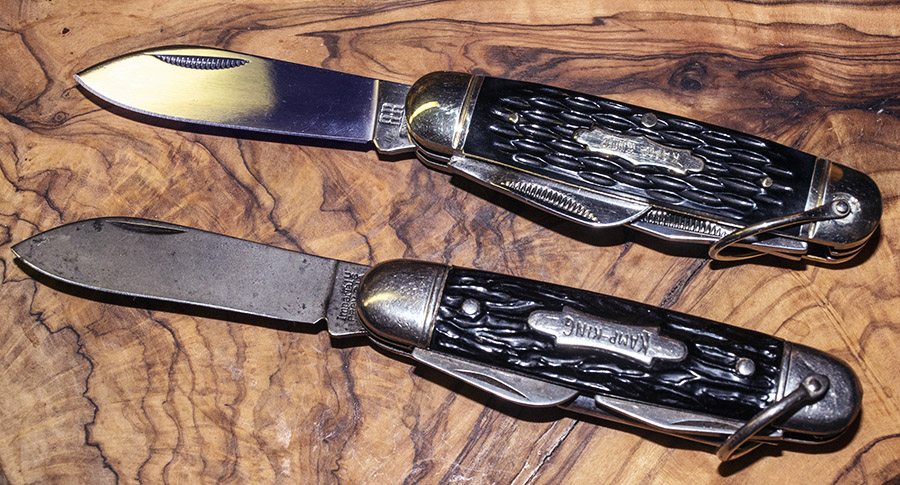
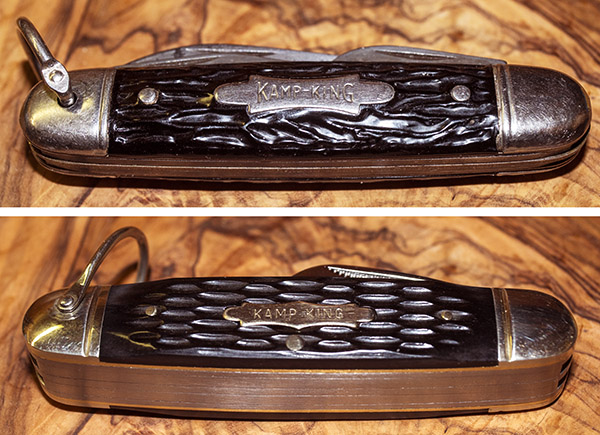
My new Rough Rider Kamp King arrived a few days ago and I’m impressed. It is a really nice knife that dimensionally is pretty true to the older ones that were manufactured in America. The quality on the new Chinese Kamp King is really good. The fit and finish are superb, and it just doesn’t look or feel like a cheap knife.
The old Kamp King (top), and the newer one (bottom). The dimensions are the same. For $16.94, the new one is a great buy.
The other reason I ordered the new Kamp King is that I wanted to compare it to a Marbles Scout King I had purchased from Chicago Knife Works about six months ago. I thought it might be the same knife as the Marbles, but it is not. The Marbles knife is a bigger, heftier version of the Kamp King. I suspect they are both manufactured by the same knife company in China, but I don’t know this. The appearance of the two new knives (even though the dimensions and the scales are different) is so similar that I’d bet both come out of the same factory somewhere in the Peoples’ Republic (and I’m talking about China now, not Kalifornia).
The original Kamp King was manufactured by Imperial in Providence, Rhode Island. The new one is produced somewhere in China; most likely in Yangjiang City, China’s knife-making capital.
I Googled the topic and although I couldn’t find the specific Chinese company that makes these knives, I learned that China’s primary knife-manufacturing region is Yangjiang City in Guangdong Province. It’s been China’s knife-making center for more than 1,400 years and is home to several knife companies. I’d sure like to visit that area someday. I’ve been to Providence, Rhode Island (where the original Kamp Kings were manufactured). A visit to Yangjiang City would be interesting. I’d probably come home with a suitcase full of interesting and inexpensive knives.
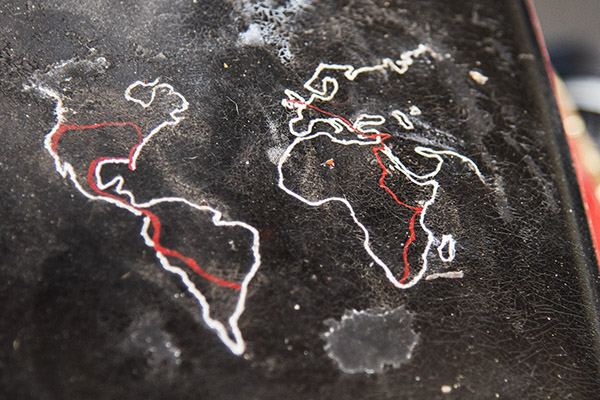
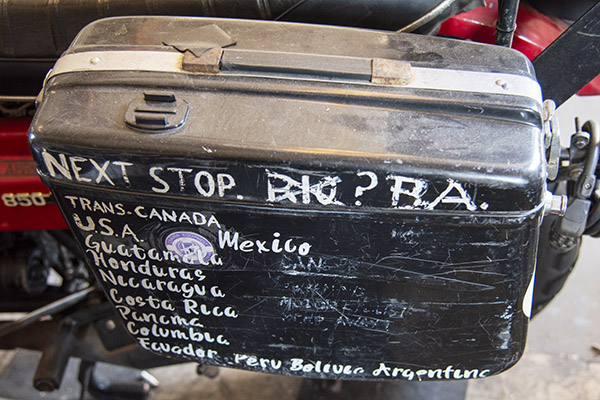 I’ve had a hard time putting the Going the Wrong Way down on my nightstand each night for the last several nights. I’d read until I couldn’t stay awake, and fall asleep reading it. Don’t get me wrong; the book is anything but boring. Just the opposite is true. It’s fabulous, and even though I couldn’t keep my eyes open because I was reading into the wee hours, I couldn’t stop reading. Going the Wrong Way has all the bike reliability stuff to keep an engineer interested, all the philosophical stuff to keep a philosopher awake, all the people stuff to keep a people person awake, all the border crossing drama stuff to keep a world traveler tuned in, and, well, I could go on, but I don’t want to spoil it for you. The writing is almost poetic. It’s that good.

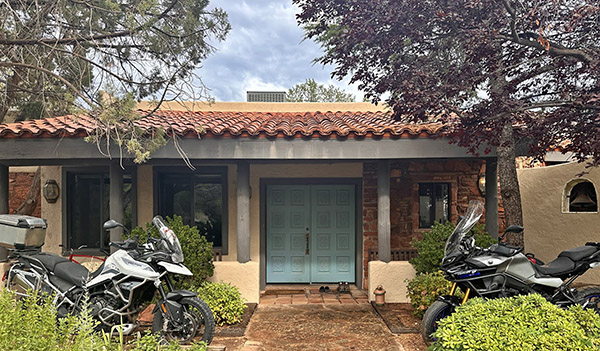 It started like any great ride: a cool Thursday morning, Sedona fading in the mirrors, Bisbee as our stop for the night, and an early morning border crossing on Friday. I was back on Tippi, my Triumph Tiger 900 GT Pro. Tom rode his Yamaha 900. Ahead of us? Three days with Tom and Lynn in their Sonoran paradise and, of course, some excellent Bacanora—a local smoky cousin of tequila.