We’ve already covered my favorite Baja places to eat from the border down through Ensenada in our previous installment of the adventurer’s guide to Baja dining. This next set of Baja dining recommendations covers the corridor south of Ensenada, through San Quintin, all the way to El Rosario. This region covers the wine country and the agricultural district, which ends in the San Quintin area. After San Quintin, Baja’s Highway 1 (the Transpeninsular Highway), continues south through low-lying coastal plains hugging the Pacific coast. Then it’s a brief climb through a set of twisties into El Rosario.
There are great places to eat through this stretch of Baja, folks. Let’s take a look…
Palomar
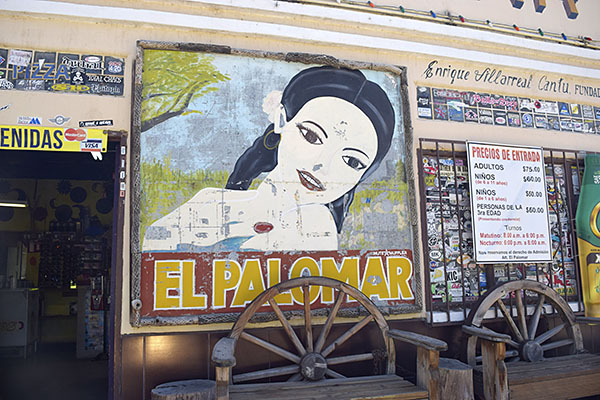
This is a cool little place that’s on the right side of Highway 1 after you’ve passed through the mountains south of Ensenada. The food is good, it’s reasonable, and it’s always fresh. I like their chicken tacos; my friends seem to always gravitate toward the shrimp.
The El Palomar, a nice spot to stop for lunch.The Pemex next to the Palomar restaurant.
There’s a little general store next to the restaurant, and if you need Baja kitsch, this is a good place to get it. More importantly, there’s also a Pemex station. I’d advise topping off here. If you’re on a motorcycle (and of course, you should be), this will get you all the way to El Rosario.
San Quintin
What can I say? I love this area. It’s one of the last vestiges of the northern Baja agricultural region. There are three places I like here. One is the restaurant in the Mision San Quintin. It’s a hotel restaurant (it’s pricey for Baja, but it’s cheap compared to US prices), and it’s good. I’ve stayed at the hotel and had breakfast and dinner here; both are great. The orange juice is always freshly squeezed, and it’s fantastic. To my great surprise, I didn’t have any photos of the Mision San Quintin when I prepared this blog entry. Sounds to me like a good excuse to ride down there again.
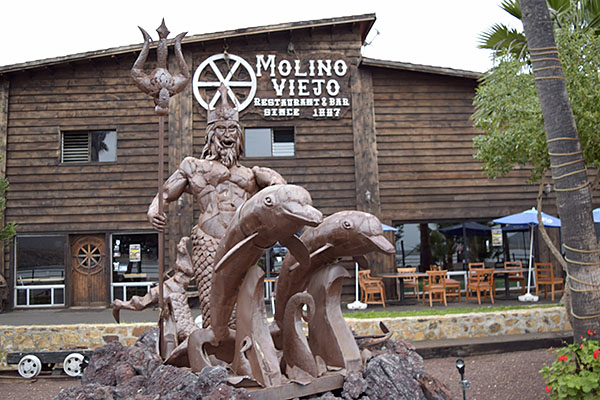
Another is the Molina Viejo restaurant, near the Old Mill Hotel, which is right on Bahia San Quintin. The good news here is that the 4-mile ride to Bahia San Quintin is now paved (no more white-knuckle soft sand or deep mud, thank God). Even before the road was paved, though, the ride out was worth it. There are two great restaurants hidden away back here (the Molina Viejo and Don Eddie’s), and the food at both is stellar.
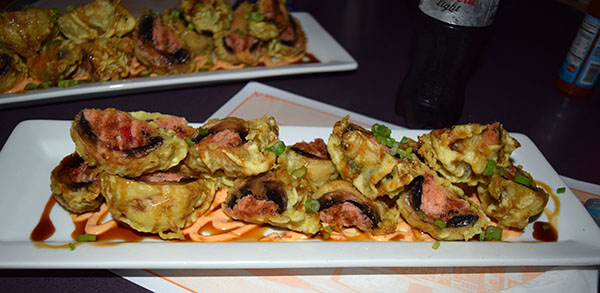
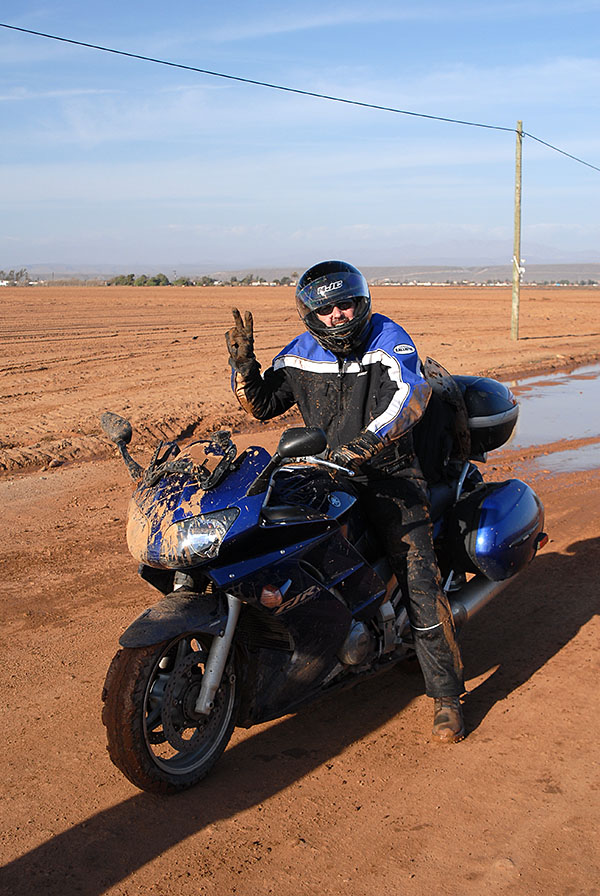
Fried mushrooms at the Molina Viejo. They’re awesome.Good buddy Dave on his FJR. Fortunately, the road into Bahia San Quintin is now paved!
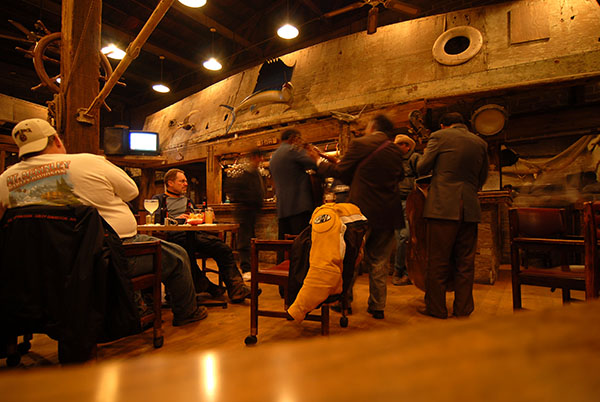
Both restaurants are literally right on the bay, and occasionally a gray whale will find its way into the bay. When that happens, it’s an amazing thing to see and hear. The Molina Viejo has a fried mushroom appetizer that’s a favorite, and any of the entrees are excellent. This place rivals the décor and feel of any restaurant in the US, but it hasn’t been discovered yet (and that means the prices are low).
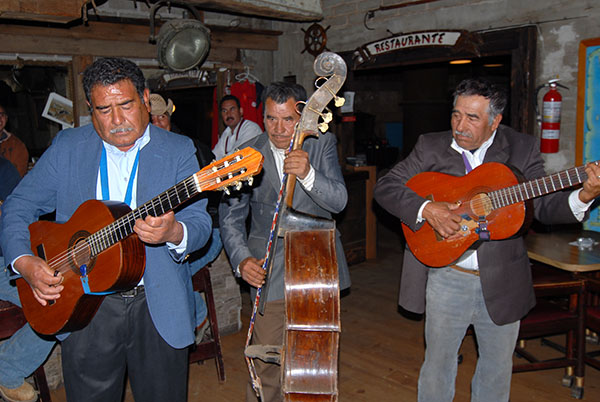
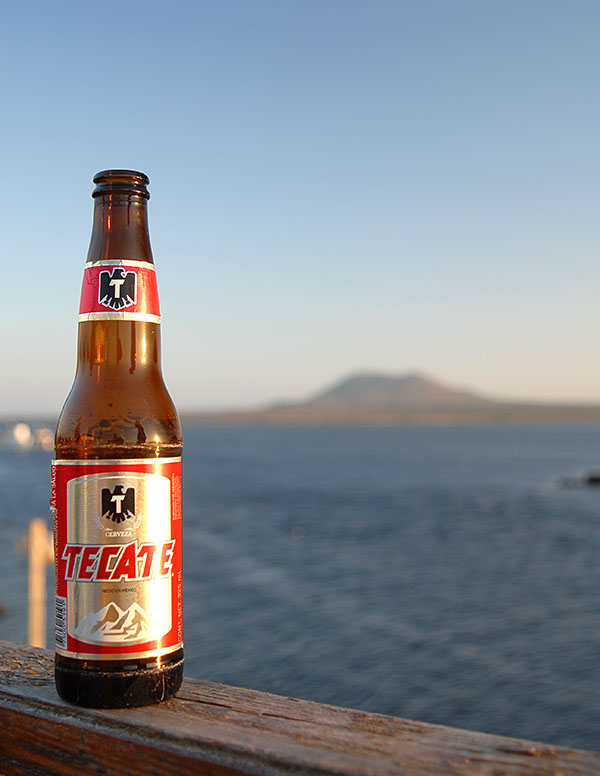
The Molina Viejo, a great restaurant right on Bahia San Quintin.Having a beer or two before dinner at the Molina Viejo.The real deal…Mariachi singers in the Molina Viejo.A good day, a good ride, and a Tecate overlooking Bahia San Quintin. We saw a California gray whale swim by this very spot one night. Life doesn’t get any better.
The other restaurant, Don Eddie’s, is on the opposite side of the Old Mill Hotel. It’s not as fancy as the Molina Viejo, but I think the food is even better. If you call ahead, Don Eddie (he’s a real guy) will prepare a buffet-style meal for your group. We do that whenever I’m leading a group tour, and the breakfasts are particularly fabulous.
An incredible Don Eddie dish….shrimp and pasta. Bring an appetite!The seafood medley at Don Eddie’s. The food is off the charts. The prices are ridiculously low. Hey, that’s Baja.
El Rosario
El Rosario is the last town on the Transpeninsular Highway before you enter the Valle de los Cirios. That’s an experience like no other; it’s the barren and beautiful wilderness that is Baja. But I digress; the focus here is the dining, and El Rosario (as any Bajaeno knows) means two things: Top off at the Pemex (it’s the last one for 200 miles if you’re headed south), and eat at Mama Espinosa’s.
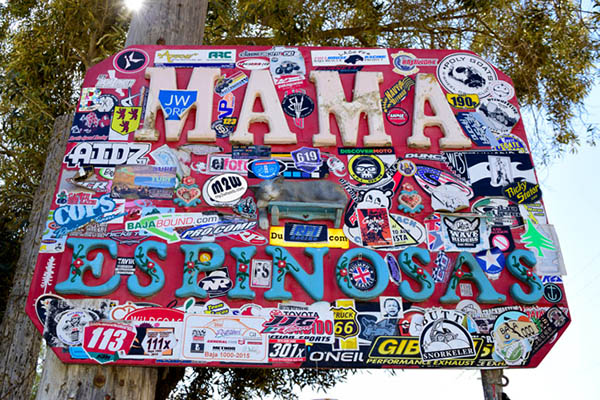
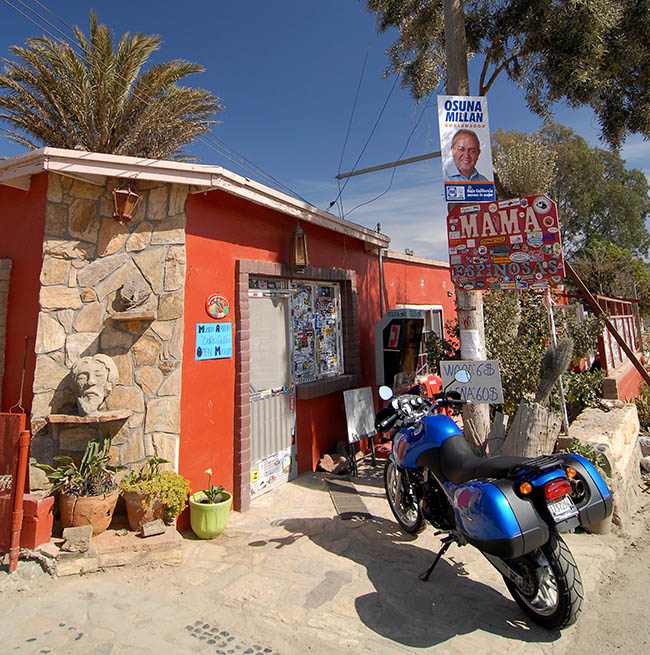
Decals and more at Mama Espinosa’s. Get one for your motorcycle; people will know you’re the real deal.I’ve parked my bike here many, many times.
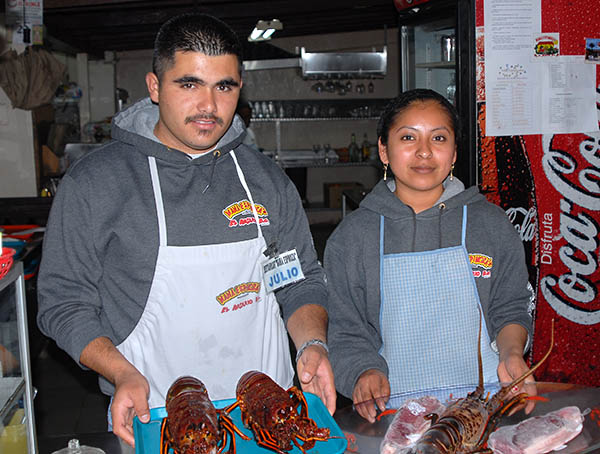
Mama Espinosa’s is a Baja icon, a legend among many Baja legends, and perhaps their most legendary dish is the old gal’s lobster burritos. This little tiny spot is a “must see” on any Baja trip. It’s literally world famous. It’s a stop on the Baja 1000. There are zillions of decals from folks who race and travel Baja. It’s got a cool wall-sized Baja map so you can get a feel for where you are. But you really don’t need the map. Ride into Baja and you know…you’ve arrived. You’re in Heaven.
Lobsters at Mama Espinosa’s. Folks, this is the closest you’ll ever get to Heaven without a one-way ticket!Mama’s chicken burritos, my personal favorite.
Mama Espinosa’s is known for their lobster burritos, but my favorite is Mama’s chicken burritos. I think they’re great. The bottom line is this: You won’t go wrong with anything on Mama Espinosa’s menu. It’s all good.
So there you have it. The next push south on our culinary cruise will take us all the way down to Guerrero Negro, and the best fish tacos on the planet. I’m not exaggerating. Trust me on this. But that’s a story for the next installment of our ExhaustNotes dining tour.
Here’s an interesting story that popped up on my news feed earlier today. It seems an errant scooter rider, a young one at that, was stopped by the Maine State Police riding his scooter on the Maine Turnpike late last night, using only his cell phone for a headlight. There must be more to the story, because after stopping him, the police gave the guy a lift to his destination some 70 miles away. I can’t make stuff up this good, and if you doubt my word, you can read the original story here.
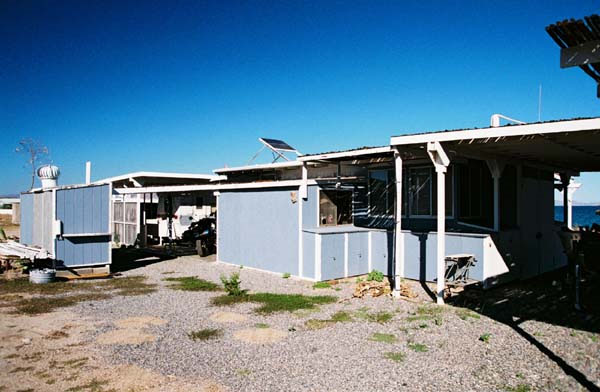
So that story naturally pulled my attention to a somewhat similar experience with my good buddy Baja John and his girlfriend Annie. This goes back to 2006 again, shortly after John bought a place right on the Sea of Cortez in Bahia de Los Angeles. Literally, right on the sea. Oceanside housing. It’s awesome.
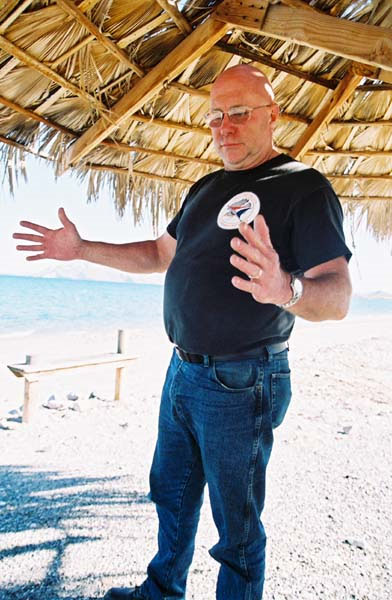
Casa Baja Juan, in Bahia de Los Angeles.Baja Juan, probably telling a fish story, in his back yard.
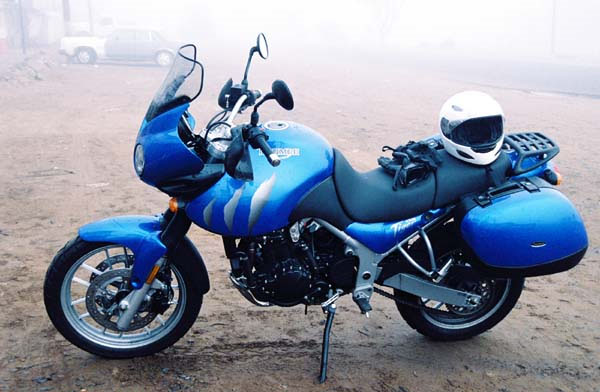
I had just bought a new Triumph Tiger. John and Annie invited me to their new place. Who can say no to an offer like that?
My Triumph. On the ride down to Bahia de Los Angeles, we hit very dense fog. We stopped and waited for it to lift. At one point it was so thick I couldn’t see the ground.
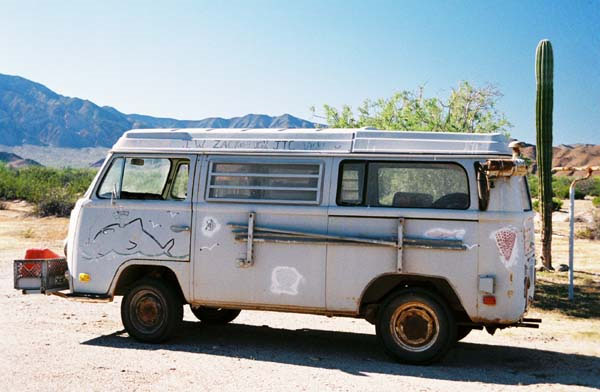
Here’s where the story gets interesting. When John bought the Casa Baja Juan, it came with a VW bus. John worked on it for a week and got it running, and it became his get-around-town wheels. He never registered it, so it had no plates, but it was cool. I love old VWs, especially the buses.
The VW bus that came with Baja John’s oceanside estate. Lights? We don’t need no stinkin’ lights!
That night, we took the VW and went to dinner at the best taqueria in town, just a short distance away…
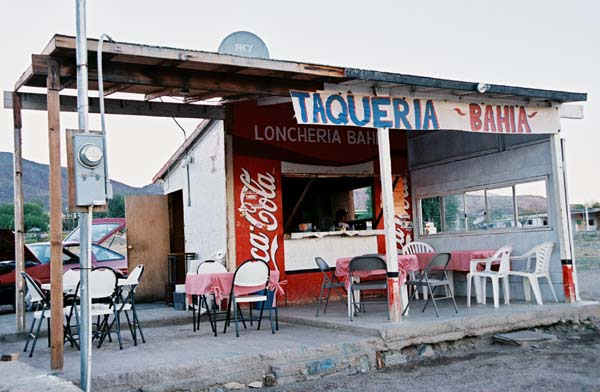
A typical Baja roadside restaurant. You can get some mighty good food in these places.
John, Annie, and I had a great dinner, a few Tecates, and then it was time to head back to his place. There was a problem, though. The sun had set, and the VW had no headlights. The three of us pondered this situation a while, and then John remembered he had a flashlight.
John handed the flashlight to Annie and she hung out the passenger window, lighting the way as we rolled down a dirt road to John’s house. We couldn’t see squat (the flashlight was pitifully weak), but we were laughing so hard we didn’t care.
Then we drove past another restaurant on that dirt road. Imagine that: Another restaurant on that same dirt road. Then I saw who was sitting under the veranda as we went by. Uh oh, I thought.
There were three Mexican police officers having dinner, sitting out front, just a few feet away as we passed. The police officers saw us, we saw them, and Annie waved, using the flashlight, which I thought would only accentuate the obvious: We had no lights and the VW wasn’t registered.
The police? They waved back, holding up their cervezas in a salute to our ability to adapt, improvise, and overcome.
Ah, Baja….
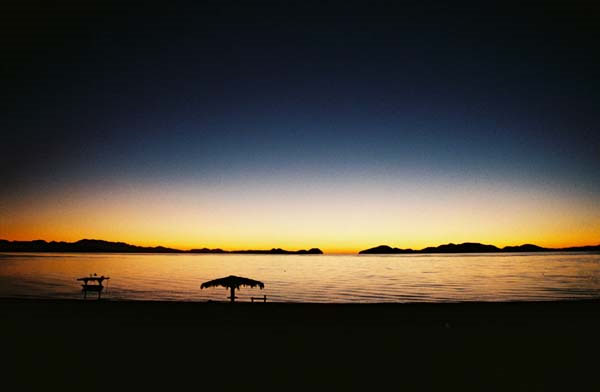
Sunrise, the next morning, looking east over the Sea of Cortez.
One of the best parts of the Baja riding experience is the cuisine. Yep, there are great roads, the scenery is breathtaking, there’s whale watching like no place else in the world, the ancient missions and cave paintings are amazing, and the people are wonderful. But what might be the best-kept Baja secret is the cuisine. In fact, if you need an excuse to head south (not that anyone ever needs an excuse for a motorcycle ride), you might want to ride Baja just to sample the food. It’s that good.
One of the things Baja has going for it is that no matter where you are, you’ll never be more than a few miles from the sea. That means great seafood, and lots of it. Fish tacos are a Baja staple, but there’s more. Lots more. We thought it might be fun to share with you a few of our favorite Baja restaurants in a series of blogs organized by area. This first one will be the Rosarito Beach-Ensenada corridor. With that as an intro, here we go…
Rosarito Beach
Located about 35 miles or so south of the border, Rosarito Beach is a tourist town, but that doesn’t mean it’s all refrigerator magnets and velour Elvis portraits. There are two spots in this town that we love: The Rosarito Beach Hotel, and Susanna’s.
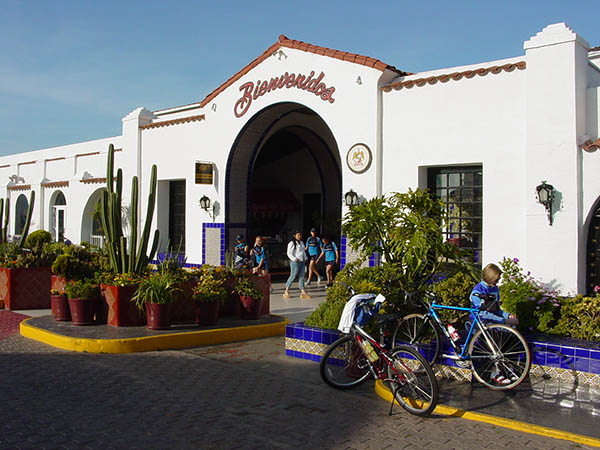
You can spot the Rosarito Beach Hotel from the cuota (the toll road heading to Ensenada). It’s one of the tallest buildings to your right.
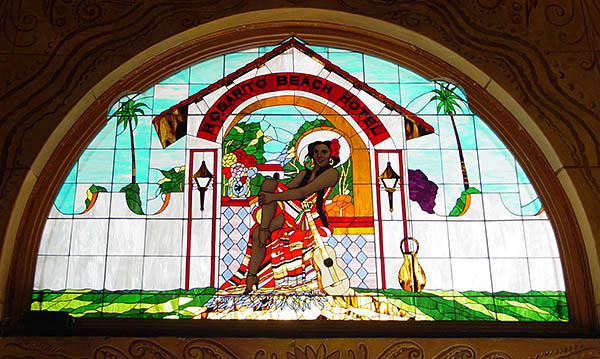
Not your typical tourist trap, the Rosarito Beach Hotel has a great restaurant.The Rosarito Beach Hotel’s stained glass lobby window.A typical breakfast at the Rosarito Beach Hotel.
If you’re thinking that hotel restaurants are both overpriced and mediocre, you’d be correct most of the time, but the Rosarito Beach Hotel is the exception. If you stay at the Rosarito Beach Hotel you get one meal free (they’re smart, you may not want to go anywhere else after that first one) and if you’re there on a Sunday, you don’t want to miss the brunch. It’s awesome. If you stop on the way south just for a meal, there’s ample protected parking and the hotel is biker-friendly.
Another best kept secret in Rosarito Beach is Susanna’s. It’s literally a 5-star restaurant tucked away in a small group of boutique shops at 4356 Benito Juarez Boulevard. Folks, trust me on this: Susanna’s is one of the best high end restaurants in the world. I’ve been all over the world. I know what I’m talking about here.
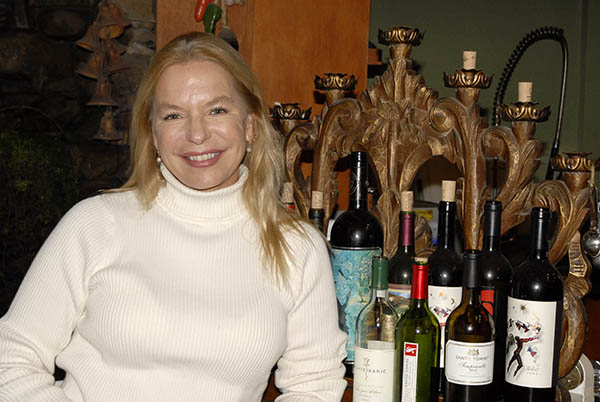
Ah, Susanna’s…the dining is as elegant as the owner!
I always make it a point to have at least one dinner at Susanna’s whenever I’m passing through Rosarito Beach, and there have been more than a few times when I made Rosarito Beach a stop just to eat here. It’s that good, and Susanna is an absolutely gracious proprietor.
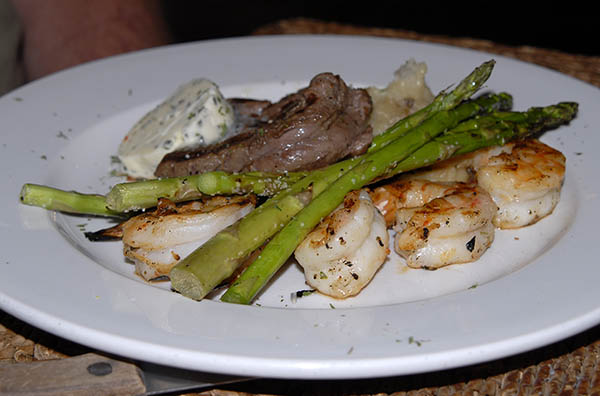
Shrimp, steak, and more. You cannot have a bad dining experience at Susanna’s.
Ensenada
As one of Baja’s larger cities, Ensenada has many dining choices. My favorites are any of the street taco stands (I love Baja street tacos), Los Veleros for breakfast, and a family-style place I just learned about called Birrieria La Guadalajara for either lunch or dinner (it’s on Macheros Street a little off the edge of the tourist area).
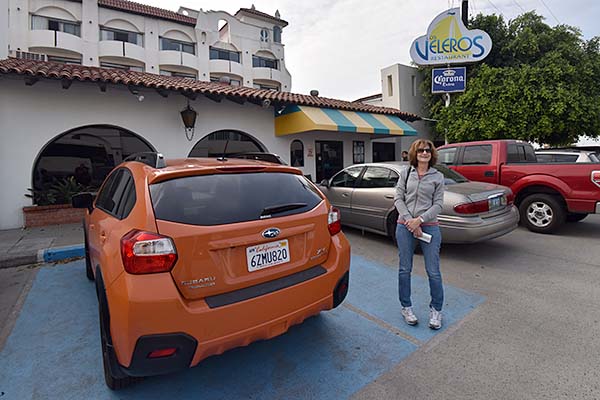
Good times ahead: Susie and I starting our trek south at Los Veleros in Ensenada!
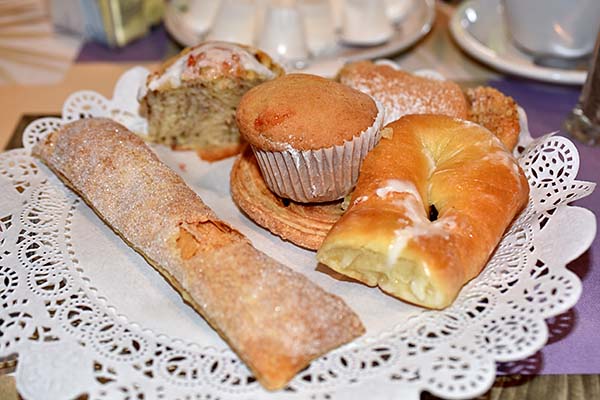
Los Veleros Restaurante is next to the Hotel Corona on Lázaro Cárdenas (it’s on the right as you head south, just a few blocks past where the cruise ships dock). Los Veleros has the best breakfasts in town, confirmed by the local business folks who regularly dine there. Breakfasts start with a plate of pastries that, all by themselves, are worth the trip to Baja (I’ll say that a lot about my favorite dining spots in Baja, and I’ll mean it every time).
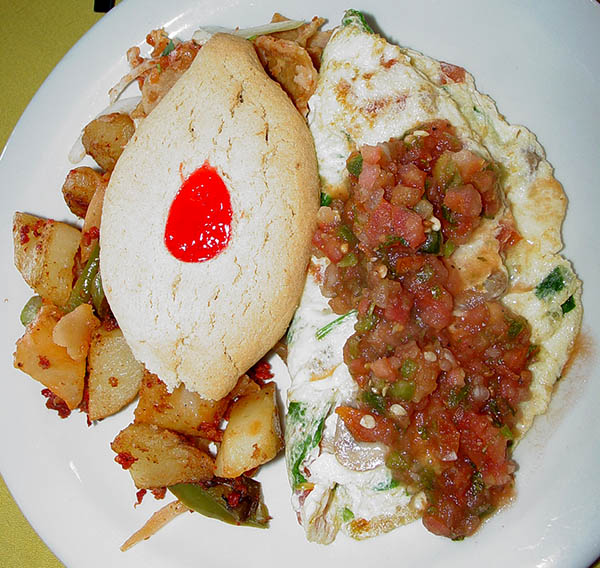
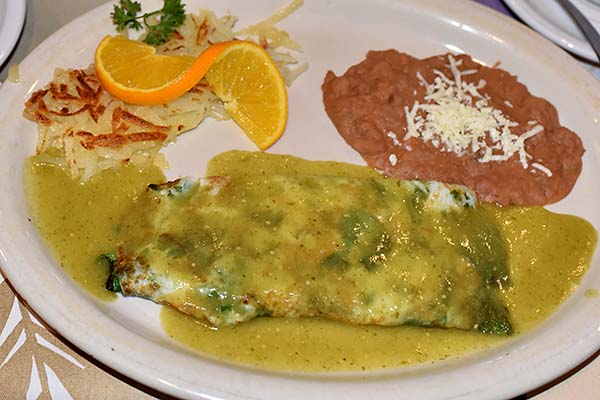
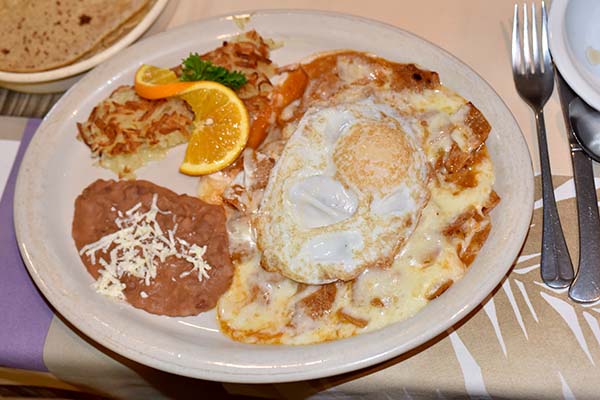
Pastries at Los Veleros, the start of every breakfast. They taste as good as they look, maybe even better!An awesome Los Veleros spinach and mushroom omelet.Chilequiles, a wonderful Mexican specialty.
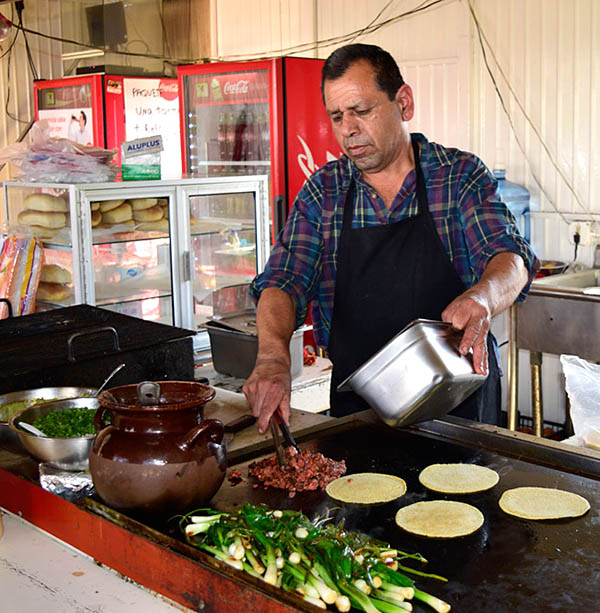
My preference for street tacos in Ensenada is any taco stand along the waterfront. Even though many folks who have never been to Mexico might be hesitant to try these, I haven’t found a bad one yet. Head toward the embarcadero if you’re in the tourist area, and take your choice. You can’t go wrong.
Street tacos near the docks in Ensenada. They sell the sizzle and the steak!Fish tacos, a Baja specialty, in Ensenada. Watch for our upcoming Baja dining blogs; we’ll have a lot to say on this magnificent Baja treat!
For either lunch or dinner, there are many choices in Ensenada. I’ve tried many of them and they are all good. Here’s the hot ticket: The family-style dining at Birrieria La Guadalajara.
A veritable feast at Birrieria La Guadalajara in Ensenada. Tim, I owe you for taking me to this wonderful restaurant!
A meal at the Birrieria La Guadalajara is a treat not to be missed. I’m embarrassed to admit I only found out about this magnificent restaurant on my most recent trip to Baja (and I have my good friend Tim to thank for that). Bring your group and bring an appetite, make your own tacos or burritos, and try the goat (you can thank me later). It’s the best meal in Ensenada!
That’s it for our first installment on Baja’s gastronomical delights. If you know of a great place to eat in the Rosarito-to-Ensenada corridor that we haven’t mentioned, by all means please leave a comment and let us know about it. And watch the Exhaust Notes blog; we’ll be adding to this series with a focus on each Baja area of interest. So what’s up next? Hey, our next set of dining delights will be in the stretch south of Ensenada all the way to El Rosario!
Well, sort of. On the last CSC Baja run back in March of this year, as the guys were signing up to register for the ride I had one fellow send in an email with the name “Buffalo.”
“What’s your real name?” I asked.
“Buffalo.”
Well, it turns out that “Buffalo” really was his name. But wait, there’s more. Buffalo is a world-famous artist. We can’t make this stuff up, folks. Check out this video and you’ll see…
Anyway, the first guy who signed up for the CSC ride was Tim. Buffalo is Tim’s cousin, and both gentlemen rode with us in Baja on the CSC ride. When they returned, Tim’s daughter bought the same motorcycle Buffalo and Tim rode in Baja: A CSC RX3. And then, not having had enough of a good thing, Buffalo, Tim, and Tim’s daughter rolled south in Baja again. Wowee!
I asked this intrepid trio if they would consider sending a story and a few photos to us, and they did. Here’s the story…
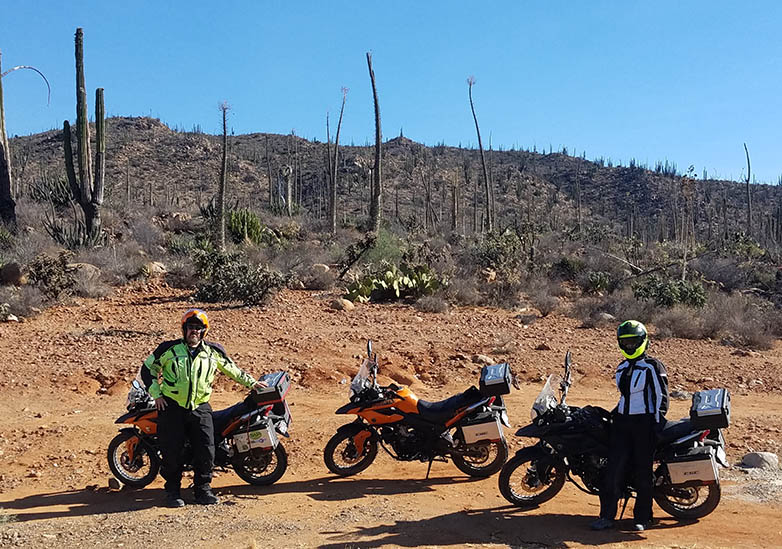
Two cousins, and one’s 18 year old daughter, ride their CSC RX3 250cc adventure bikes on a 5 day adventure in Baja, Mexico.
Day 1 – We rode from Burbank through San Diego, crossed the border at San Isidro, and took the cuota (toll road) along the coast to Ensenada. We rode a little bit farther from the tourist zone than usual to find our Air B&B for the night. We were almost there when a detour was required to get around a barrier in the middle of the cross street. Instead, we embraced Mexico-style and found a section of broken curb that allowed us to get some air as we moto-crossed our way to the other side. We took a perilous walk down an open-hole/rebar minefield sidewalk to Guadalajara Birrieria for some tasty stewed goat meat tacos and margaritas with locals enjoying live mariachi music.
Day 2 – We rode a really great winding mountain road southwest out of Ensenada on Hwy 3 to a high plateau and the little town of Lázaro Cárdenas. We filled up with gas and met a couple of retirees on quads who, after taking a minute to find their hearing aids, showed us lots of paper maps and advised us to change our planned route south past Mike’s Sky Rancho due to the road being in very poor shape. Instead we took 42 epic off-road miles west towards San Vicente. The dirt road was alternately sandy, hard packed, rocky, and ridged, along mountains and valleys, curves and slopes. Several times a nice section of hard pack tempted us to pick up the speed before patches of deep sand would suddenly grab our front tires, throwing the bikes unexpectedly. Each of us took at least one spill, but we were wearing full ATGATT so we only had some bruises to show for it, though our trusty RX3s required some roadside bending and bungee strapping. It was awesome. We popped out on Hwy 1 some hours later and headed south for some roadside fish tacos before finding our funky partially-finished concrete and rebar hotel resort (La Cueva del Pirata) on the beach at the end of a bit more dirt road in Camalu.
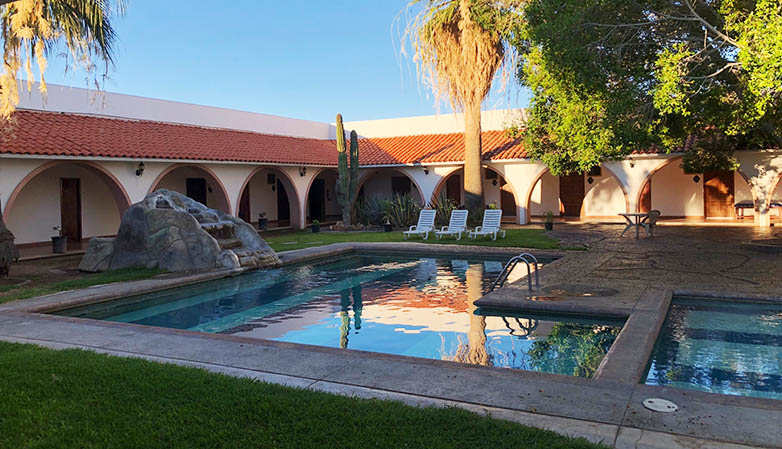
Day 3 – We rode south along a beautiful coastal section of Hwy 1 before a short but fun mountain pass, a military checkpoint, and then into El Rosario, where we decided to take the 16km (10 mile) dirt/gravel road out to Punta Baja, which is just a little fishing village with a dozen or so buildings. We asked some fisherman and found a little collection of picnic tables on a dirt floor under a building, where a lovely woman named Betty made us some abalone soup and fish tacos, and we met a lawyer from Texas with a dual sport and a surf board that was staying in one of the rooms upstairs and still hadn’t figured out how to work the toilets. The ride back to the highway was fast and fun, now that we knew the road and where the dogs would make chase. Next we rode up up up and into the desert of giant boulders and giant Saguaro cactus on our way to our turn-around point of Cataviña, where we stayed at the nice but pricey Hotel Mission Cataviña, with its delicious Micheladas and iffy electricity.
Day 4 – Since there are no gas stations, we began our ride back northwest by buying three plastic jugs of gasoline from some guys on the side of the road with our last twenty dollars cash, and had a lovely early morning ride through the desert before the day got too hot. Coming back to El Rosario, we had a fantastic mid-morning breakfast at the famous Mama Espinosa’s (cash only, try the ABD Supermarket), and headed north again. Back in Ensenada we cranked the Mexico-style adventure to eleven and got matching tattoos before having some tasty street tacos and cervezas.
Day 5 – Taking Hwy 3 just north of Ensenada, we finally passed a stinky truck likely carrying fish guts and rode the beautiful La Ruta del Vino (wine route) through the Guadalupe Valley and the mountains towards Tecate. We jumped on our last chance for some authentic Mexican street tacos at Tacos el Guero, and then we rode up Presidente Rubio Street and popped out right at a gap in the traffic barriers to meet the front of the line to cross the border. We were waved in by a nice man in a Mexican-plated pickup truck. Total time to cross: about 4 minutes. The hill country ride up Hwy 94 was a pleasant re-acclimation to driving in the U.S., and soon we were splitting lanes on the 15 North back to the LA area.
That’s an awesome adventure, guys, and thanks very much for sharing it with us. Great riding and great photos, and we sure appreciate seeing both! Baja is indeed a great place. Matching tattoos? Now there’s an interesting touch to a Baja tale! You’ve got to send us photos of those!
This is the second installment of a story about my grand designs on the 1979 Baja 1000. You can read Part I here.
Me, 37 years ago. No. 443. Baja. I’m the guy on the right…the one with a podium plan…
Feeling the desperate struggle of tiny, ceramic legs, the battle intensified between my digits until I could ignore it no longer. One eye reluctantly slid open. Something was in my hand. I repositioned my arm and uncurled my fingers inches from my nose. There in my palm lay the biggest cockroach I’ve ever had the displeasure of meeting. My brain slammed into gear with a grinding lurch. I hurled the Dreadnought class bug against a nearby wall and surged out of bed, heart pounding from adrenaline. Turning on the lamp I saw two more of his ilk and three ships of the line blinded by the light. Too many lads, I struck my colors and prepared the 250cc for tech inspection.
It seemed odd that while the bike was going through the most demanding vetting, the public course we were racing on was populated by terribly destitute cars wearing dented outboard motor fuel tanks atop their roofs in lieu of proper fuel pumps.
After Tech came Contingency Row. The deal was, you pushed your bike between manufacturers’ tents and they would plaster every square inch of the motorcycle with stickers. If you managed to win the race, money was paid providing the stickers were still visible. Use of the product was not mandatory since all bikes tend to look alike in advertisements. As the used-auto salesmen manning the tents plied their trade, the C&J Honda became laden with colorful vinyl logos. Chase truck driver Greg, Len and I agreed that we were now truly Big Time.
SCORE used a staggered starting system; each rider was flagged off at one-minute intervals. Motorcycles were the first to go, followed one hour later by the four-wheelers. This was done to give the high-powered trucks something to use for traction as they crossed the dusty lake beds at 140 miles per hour.
I was off. Riding through Ensenada past thousands of cheering spectators was unnerving. I had not expected so many people to show up to see me. There’s really no explaining my popularity with the Mexicans. I focused instead on my first problem, vision. I had attached tear offs, (thin sheets of plastic easily removable one by one to provide a clear view) to the face shield of my helmet. Since it was a thousand mile race, I stacked on 50 or so, figuring one for every twenty miles. Looking through the shield for the first time, the scene was a watery blur. I began removing tear-offs singularly then in groups while driving down the parade route. Little kids were scrambling in the street to retrieve my abandoned lenses. Ten miles out I managed to dislodge the final one and could see at last.
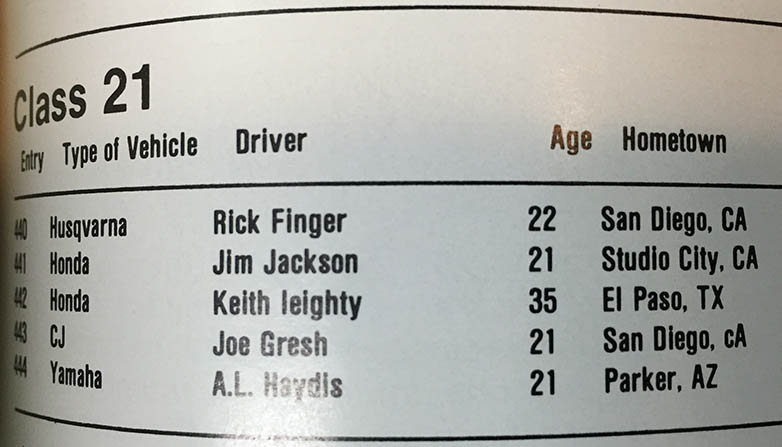
Class 21. Only five entries. I had a plan!
Fifty miles into the race the chain broke. I carried spare master links; repairs were made and I was back on the trail before the dreaded four wheelers came. Ten more miles and the chain broke again. I fitted another link as the first of the buggies drove past. A few miles further and the chain broke again. I was out of master links.
Pushing the bike through the sand and rocks, shod in heavy motocross boots, and wearing twenty pounds of leather, I was having trouble maintaining our 25 mile-per-hour goal. The near-constant buzz of four-wheel competitors saw me leaping to the side of the trail frequently. Except for the few motorcycles that started ahead of me, I saw the entire field for the 1979 Baja 1000 go by. I was dead last out of hundreds.
Pushing the bike off-road was hard work. I drank all the water and resigned myself to dying from evaporation. My luck changed, I came upon two campers from the USA who had a Yamaha dirt bike in their van. We talked casually, bemoaning my fate. All the while I was eyeing the chain on their bike.
“I’ll give you a hundred dollars for that chain,” I blurted out. The campers agreed and we swiftly installed the used chain. “Where’s the C-note, Gresh,” said one camper. “I’ll have to pay you back in civilization, I don’t have that much on me.” I gave them my phone number. The campers conferred amongst themselves. Plainly, they didn’t like the turn events had taken. “Why would you offer money you don’t have?” said the other. I made myself scarce before they decided to rob and kill me. That chain was still on the C&J when I sold it.
The Score Program. How hard could this be?
Any hope of catching the motorcycles long gone, I settled down to a four-tenths pace. I was learning desert savvy quickly: Anytime a large crowd gathered in the middle of nowhere you can be sure a ferocious obstacle was nearby. The locals liked to remove the little red ribbons tied in the brush that indicated you were on the right course. I was fortunate, the field had preceded me and I couldn’t get lost as long as I stayed in the rut.
The first two hundred miles were rough. I picked up ten or fifteen places using my secret weapon, attrition. If everybody broke down I could win this damn thing yet. Past San Felipe the course toughened up. One section called The Staircase was solid rock covered with loose shale. Stepped, square-edged boulders smashed the skidpan while I paddled to stay upright on the marbles. The Baja was working my body like a veteran boxer.
By nightfall I had made 350 miles, more like 400 if you include a 50-mile scenic detour. The thing that wins or loses Baja is lighting. Fully half the race is in the dark. I was running in fourth to rev the alternator high enough for the two 100 watt lights.
My pace dropped off and the crashes, while more frequent, were less painful because I was going slower. Ghostly cactus reached out from the gloom to paw at the C&J’s controls. The thorns stay stuck in your hands even after the main body of the plant is shaken off. Another crash finished off the headlights. I slowed to walking speed and fell again. Far away in La Paz Larry Roeseler and Jack Johnson had already finished on a Husqvarna, dramatically lowering my chances of winning.
I pushed the bike off the trail, leaned it against a cactus, and sat down on a large rock to plumb the depths of my character. It was time to find out what I was made of. Turns out, the abyss of my soul was a mere puddle concealing a shallow tolerance for pain. I sat on the rock and waited the few hours until daylight. The Baja 1000 could go to hell.
Dawn found me raring to go. With the glorious benefit of light I picked up the pace into El Arco, the halfway point, where my relief rider Len was stationed. I couldn’t wait to hand off the bike and turned in one of my fastest times between checkpoints.
In El Arco, Mag Seven installed a new headlight from one of the many wrecked buggies. I didn’t help at all. Peebles Sr. questioned me on how the bike was running. “The bike hasn’t missed a beat,” I told him, “Where’s my relief rider?” Sr. and Jr. looked at each other, “After you didn’t show up last night they figured you must be broken down. They went looking for you.” I wanted to scream Uncle right there but with Sr. and Jr. going over the engine plus all the Mag Seven guys bustling about feeding me coffee and doughnuts, describing road conditions, and generally getting me ready for another five hundred miles, I figured the embarrassment of quitting would be more than even I could stand.
I dropped the bike into first and motored away leaving behind El Arco, security and comfort all because I didn’t want to appear chicken in front of the guys. This kind of reasoning, my mom always said, leads to trouble.
Refreshed with caffeine and sugar, and with the bike handling much better since the boys lowered the fork air pressure from twenty pounds to five, I fell into an easy rhythm. Only one more major crash occurred when I drove off the side of a dry riverbed and impaled the front wheel on the opposite bank. The impact bent the handlebars and the wheel but I survived using a technique I’ve mastered called The Flying Squirrel. The lower Baja course flattened out and several sections along the beach were smoother than California’s freeways. I ran wide open for long periods of time and reached the town of Constitution by nightfall.
They had a nice cookout going at the Mag Seven pit in Constitution. It’s not often you get to sit down to a full meal during a motorcycle race so I couldn’t let the opportunity pass. The clock was ticking but nobody in Constitution pushed me to hurry. I finished dinner and lay down for a minute on an unoccupied camp cot. When I opened my eyes it was morning. The 1979 Baja 1000 was over.
There had been no communication with my team since I left the starting line two days ago. Maybe they had gone on to the finish and were waiting there. The P.T.M. 250 fired up first kick, no excuses to be had, and I continued south to La Paz at a less breakneck speed. Around noon, the team’s black Chevy chase truck loomed into view.
The razzing started immediately. “What took you so long? Were you out for a stroll? What part of “race” didn’t you understand?” Eight hundred miles of desert had proven to me that I was no hero. Our plan was sound, however. Only two 250s completed the course that year, leaving my spot on the podium tantalizingly empty.
On my last trip through Baja while riding with a dozen guys on RX3s, we stopped for fuel in Catavina while headed south. That’s on the long stretch between El Rosario and Guerrero Negro, where the distance between Pemex stations is over 200 miles. Catavina is a tiny town in a beautiful boulder field (in fact, it’s the area depicted in the lead photo on the ExhaustNotes Baja page). The locals sell fuel out of gas cans in Catavina, and on a motorcycle, you have to stop here to top off. The boulder fields through this region are dramatic, almost other-worldly. You can get a bit of a feel for the area from this photo…
Baja’s Catavina boulder fields. This is some of the most dramatic scenery on the planet!
Anyway, we had stopped for fuel in Catavina when I noticed a guy on an adventure bike amongst our guys. What grabbed my attention is that I didn’t recognize him. It felt weird, because this was our second day on the road, and I thought I was losing it. Usually by the middle of the first day on these group rides I know everybody who’s riding with us. Incidentally, if you want to know what it’s like organizing one of those tours, there’s a story on that topic appearing in ADVMoto this week (you can read it here).
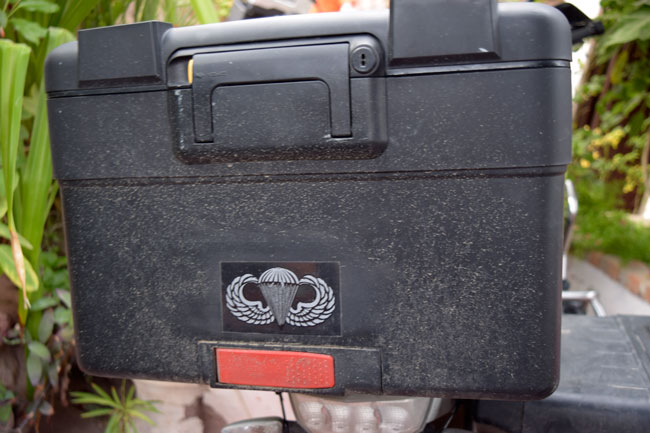
Mike’s BMW topcase. All the way!
Anyway, I looked at this new guy and then I realized his bike wasn’t an RX3; it was a BMW GS1200. I was just about to razz him a bit about that, and then I saw the jump wings on his bike’s top case. You don’t get US Army jump wings out of a Cracker Jack box, so I knew right away this guy was not going to be your typical adventure rider. No one who rides a motorcycle in Baja is a “typical” anything, but I knew this gentleman was going to be something special.
I asked the guy if he was a paratrooper, the answer was yes, and over the next roughly thousand Baja miles I got to knew Mike Huber well. He rode with us for several days and all of us thoroughly enjoyed his company. As it turns out, Mike is not your everyday former US Army paratrooper (as if there ever could be such a thing); he’s a serious rider with a very cool lifestyle (more on that in a second).
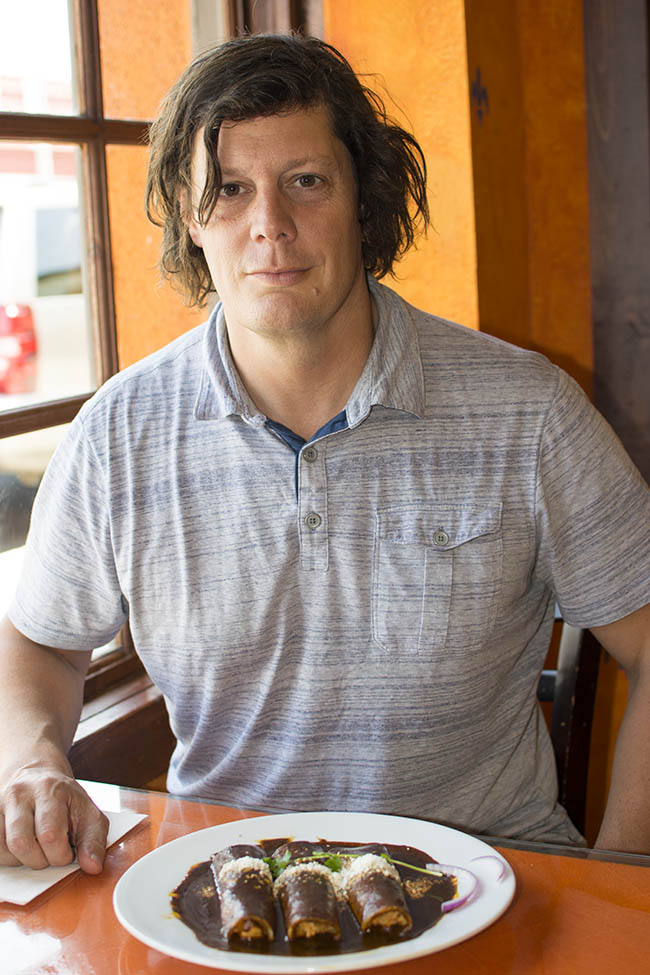
Mike and I became good friends, and when he was in town a couple of weeks ago, Sue and I met him for lunch at La Casita Mexicana in Bell (just south of LA). If you’ve never dined there, trust me on this, you need to make the trip. It’s an award-winning restaurant with a unique cuisine that I learned about from Steve and Maureen at CSC, and to be blunt, it’s the finest Mexican food I’ve ever had. But I digress…back to Mike…
Lunch with Mike at La Casita Mexicana. Those enchiladas sure look good!
Mike is anything but a stereotypical guy. Nope, he’s the real deal. Mike’s has been living on his motorcycle and traveling North America (and a bit of Central America) for the last year, and he just published a story about his lifestyle in Intravel Magazine. It’s a great read, and you can see it here.
Well done, Mike! Ride safe and keep us posted on your travels!
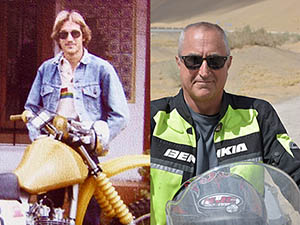
Baja in 79, riding across the Gobi desert 37 years later. Check out the hair!
There comes a moment in every man’s life when he will be required to delve deep into the reservoir of his character and choose if he is a hero, or a goat. My opportunity occurred at 1:30 AM on a cool November back in 1979. Body sprawled upon the unforgiving Baja soil, mouth full of dust and knuckles swollen from spiny cactus punctures, the abyss of my soul required sounding.
Enlightenment was not my original goal in entering the Baja 1000 desert race. After several years of a truncated, 1000-kilometer Ensenada-to-Ensenada Baja Lite version, the legendary race was restored to its original full-strength, 1000 statute-mile distance in 1979. Ensenada-to-La Paz was the race I’d dreamed about riding since I was a child. Being twenty-two years old and having never entered a motorcycle competition at any level did nothing to shake my confidence. Unlike the seasoned pros, I had a plan.
The plan was genius: In 1979 there were only five entrants in the 250cc class. With a historical attrition rate of at least 50%, the Baja desert would do the dirty work. All we had to do was stay together and keep moving. A podium finish was assured. SCORE, the event organizers, made it even easier by allowing a maximum of 41 hours to complete the course. Hell, a 25 mile-per-hour average would do the trick.
The motorcycle question was solved when a used C&J Honda frame was found. The C&J was a chromemoly assembly that was half the weight of Honda’s construct. Rear suspension was long-travel controlled by two Curnett shock absorbers. Front suspension was from an unknown Yamaha. Topped with a 3-gallon plastic fuel tank, the bike looked every bit the $475 paid.
Peebles Thunder Machines of Point Loma, California provided an endurance-prepped 1973 Honda XL 250cc single cylinder, four-valve engine. P.T.M. removed several thousandths of an inch off the top and valve pockets of a forged Venolia piston, the idea being to lower the compression of the engine enough to use the notoriously low-octane Mexican gasoline. The intake ports were cleaned up, while the exhaust ports received a violent going over. Peebles Jr. spent several days hogging out aluminum to the point of cutting down and faring in the valve guides.
Heavy clutch springs and new plates completed the otherwise stock engine. The bike topped out at 70 miles per hour and could run on donkey urine. Peebles Sr. encouraged me to run the bike flat out all the time. “You cannot blow this engine.”
Between the bike needing assembly and testing, our team having full time jobs, and beer not being capable of consuming itself, the days passed without any actual off road practice by either me or my co-rider Len. We were philosophic about training and agreed that the 1000 miles made available during the race would be plenty of time to get the hang of it.
Our team joined one of the pit crew troupes formed specifically to assist desert racers. The Magnificent Seven provided several pit stops along the course. Welding machines, generators, air compressors, water, food, and any gasoline or spare parts you gave them would be delivered to the stops. We had various sized cans of high-test and one rear wheel shod with a used trials tire dispersed throughout the 1000 miles of brutal desert terrain.
Far left is Lynn Gasser, the guy in the middle is Dick Bridges (my boss at the time), and me. Photo by Greg Smith.
Final preparations were made only hours before we left for Mexico. The bike needed a chain and I had to borrow leathers. With no time to stop and reflect on what we were attempting, Team Leader Greg, Lenny, several cases of beer, the C&J and I made for our Ensenada motel.
So I’m retired, sort of, but I feel this compelling need to keep writing. Hey, I like to write. I want to be as good a writer as Joe Gresh when I grow up.
Anyway, there’s a whole lot more coming, folks, while Joe and I (that’s Arjiu and Dajiu to about a quarter of the world’s population) share what we think on a wide range of topics, including motorcycles, Baja, adventure riding, Baja, riding in other countries, Baja, partying at 14,000 feet on the Tibetan plateau, Baja, guns, Baja, maybe a bit on reloading, Baja, cars, Baja, 4x4s, Baja, and more. Rumor has it that Gresh knows a bit about concrete and living off the grid. You’ll see some of that here. This blog is going to be all about the good stuff: Good writing, good photography, and good times.
Oh, yeah…did I mention Baja?
Wowee, this is going to be fun. We’ve got a lot of cool things to write about, not the least of which will be our impressions of CSC’s new electric bike and maybe a Zero, and a whole lot of other bikes from a whole lot of other people. Yeah, I’m still convinced that small bikes are the way to go for real world adventure riding, but I like big bikes, too. I’d like to play around with an Enfield. Maybe a beat up old Sportster is in my future. I’m still riding my RX3 and my TT250, and both are still going strong. Yep, I’m still an advocate for CSC Motorcycles, too, but we’ll be covering a lot more. There’s a big wave in the motorcycle world headed this way, folks, and it’s spelled C-H-I-N-A (for both small and large bikes), and it’s spelled E-L-E-C-T-R-I-C (and most, if not all, of those bikes are coming from China, too). I’ve been there and I’ve seen it. You’ll get to see it, too. Just stay tuned.
And there’s more. We have an idea about a review of the state of the industry in the motorcycle magazine world. It’s going through a dramatic transition. You’ll read about it here. Like I said above, just stay tuned.
Oh, and there’s Baja. We’ll be covering things like the hotels we like, which insurance is the best, the restaurants that make the adventure truly great, which whales are the fun ones to play with (yeah, we’re on first-name terms with our Scammon’s Lagoon denizens), which cave paintings are the most interesting, which missions are the most beautiful, which wines are the most satisfying, which roads are the most fun, the months you should avoid, where to stay, and more. The research is going to be grand.
You can poke around on some of the other pages on the ExhaustNotes.us site. There’s a lot of cool stuff here, and there’s lots more coming. Gresh and I have been at this writing and riding business for a while, and we’ve got pages with links to our stuff that you can access on the Internet. We’ve got a page just on Baja, and we’re going to cover a bunch of cool stuff on that page (and right here in the Exhaust Notes blog, too). We’ll be posting blogs about past grand adventures. And there’s more, but you can find that when you poke around on this site.
And one more thing: If you’ve got a comment on anything we post here on the ExhaustNotes blog, go ahead and post it. We want to know what you’re thinking.




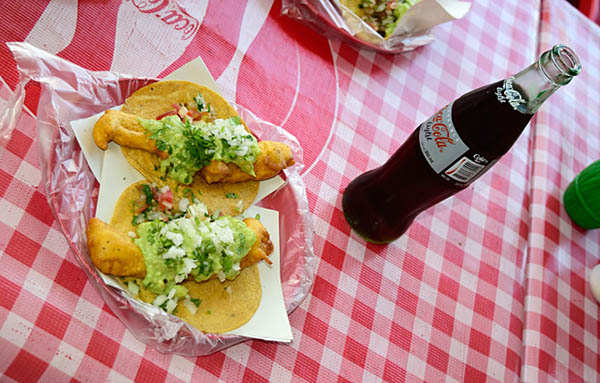
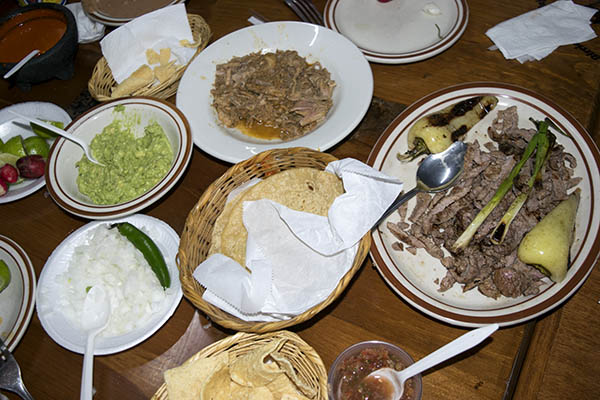
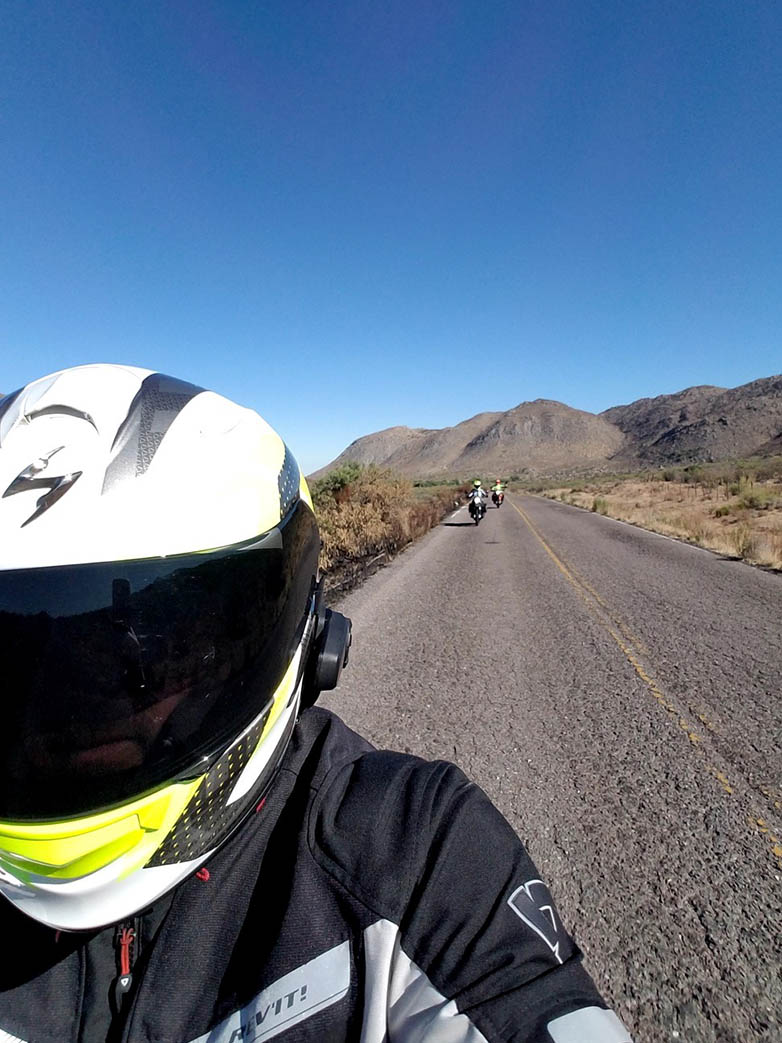 Two cousins, and one’s 18 year old daughter, ride their CSC RX3 250cc adventure bikes on a 5 day adventure in Baja, Mexico.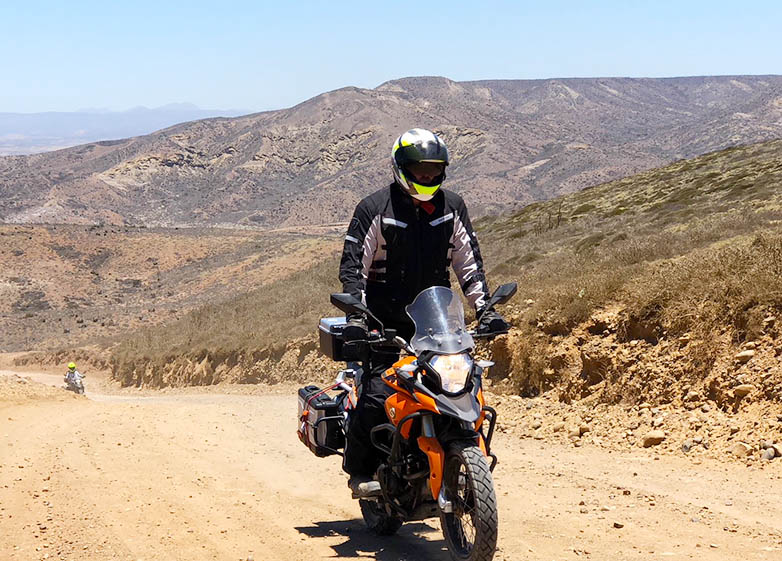
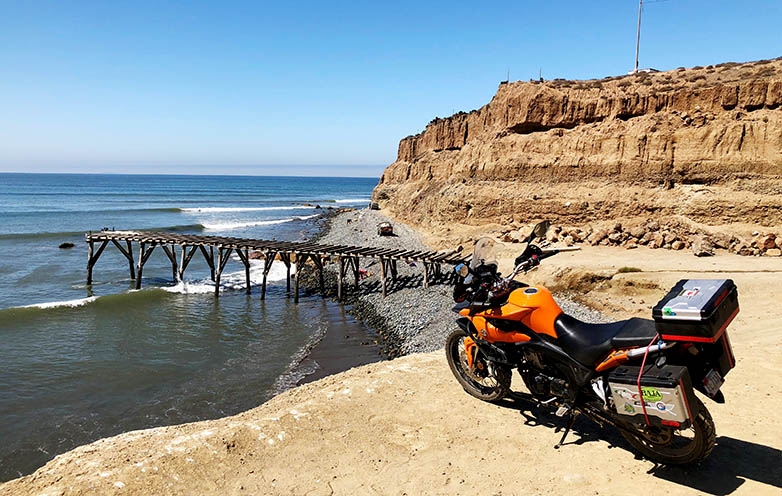 Day 3 – We rode south along a beautiful coastal section of Hwy 1 before a short but fun mountain pass, a military checkpoint, and then into El Rosario, where we decided to take the 16km (10 mile) dirt/gravel road out to Punta Baja, which is just a little fishing village with a dozen or so buildings. We asked some fisherman and found a little collection of picnic tables on a dirt floor under a building, where a lovely woman named Betty made us some abalone soup and fish tacos, and we met a lawyer from Texas with a dual sport and a surf board that was staying in one of the rooms upstairs and still hadn’t figured out how to work the toilets. The ride back to the highway was fast and fun, now that we knew the road and where the dogs would make chase. Next we rode up up up and into the desert of giant boulders and giant Saguaro cactus on our way to our turn-around point of Cataviña, where we stayed at the nice but pricey Hotel Mission Cataviña, with its delicious Micheladas and iffy electricity.
 Day 4 – Since there are no gas stations, we began our ride back northwest by buying three plastic jugs of gasoline from some guys on the side of the road with our last twenty dollars cash, and had a lovely early morning ride through the desert before the day got too hot. Coming back to El Rosario, we had a fantastic mid-morning breakfast at the famous Mama Espinosa’s (cash only, try the ABD Supermarket), and headed north again. Back in Ensenada we cranked the Mexico-style adventure to eleven and got matching tattoos before having some tasty street tacos and cervezas.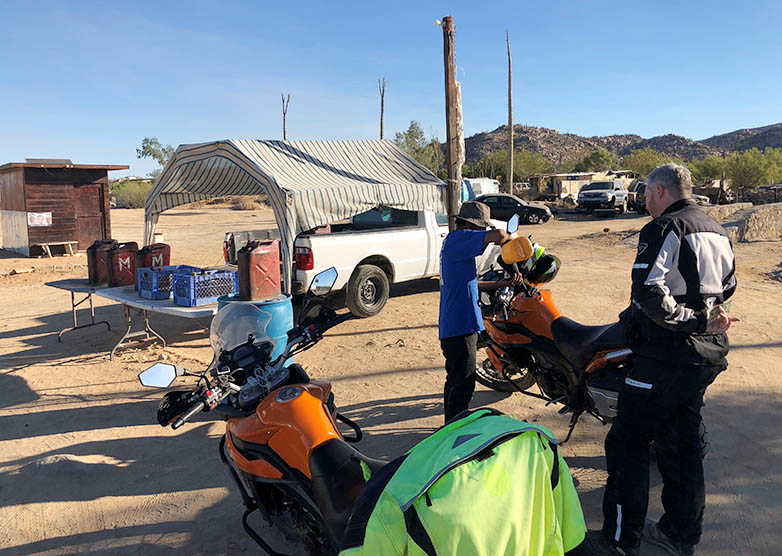
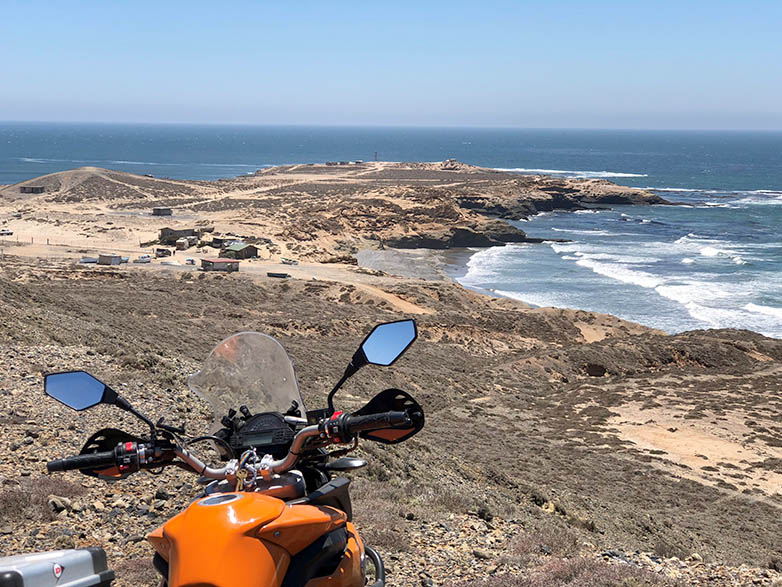
 Day 5 – Taking Hwy 3 just north of Ensenada, we finally passed a stinky truck likely carrying fish guts and rode the beautiful La Ruta del Vino (wine route) through the Guadalupe Valley and the mountains towards Tecate. We jumped on our last chance for some authentic Mexican street tacos at Tacos el Guero, and then we rode up Presidente Rubio Street and popped out right at a gap in the traffic barriers to meet the front of the line to cross the border. We were waved in by a nice man in a Mexican-plated pickup truck. Total time to cross: about 4 minutes. The hill country ride up Hwy 94 was a pleasant re-acclimation to driving in the U.S., and soon we were splitting lanes on the 15 North back to the LA area.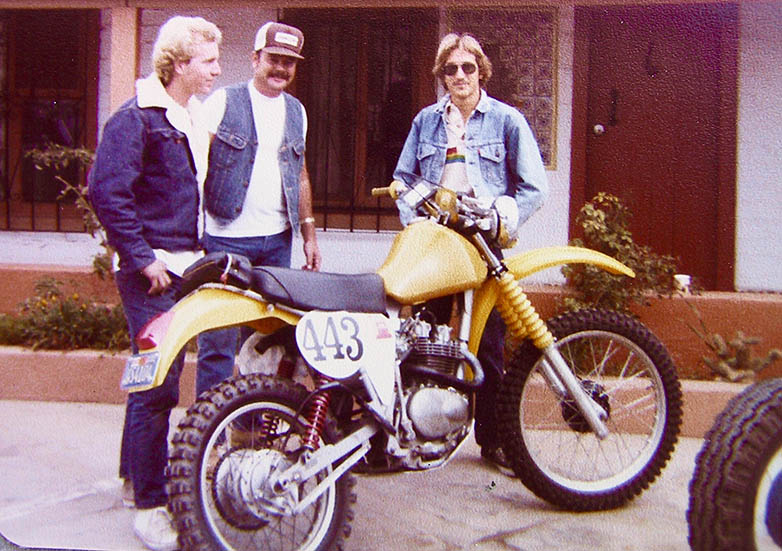


 The plan was genius: In 1979 there were only five entrants in the 250cc class. With a historical attrition rate of at least 50%, the Baja desert would do the dirty work. All we had to do was stay together and keep moving. A podium finish was assured. SCORE, the event organizers, made it even easier by allowing a maximum of 41 hours to complete the course. Hell, a 25 mile-per-hour average would do the trick.