Geezer on a Beezer

The latest news to sweep across the ether is that BSA is being revived in India.  Eh, we’ll see.

I’m naturally skeptical about revivals.  Lord knows Norton has been through a few, and last I checked, like Julius Caesar they’re still dead.  Indian (not bikes from India, but the American Indian brand) should maybe be called the Easter bike based on how many times they’ve been resurrected.   And there was Henderson for a while maybe 20 years ago (remember that flash in the pan?).   Triumph…well you know that story.  They rose again, but it wasn’t really the original Triumph…it was just the name, but then they reintroduced the vertical twin Bonneville, except the displacement increased until the marvelous 650cc we used to know grew to 1200cc and the bike gained a couple of hundred pounds, give or take.   I’d like to see Bud Ekins jump one of the new Bonnevilles escaping from a German POW camp.  He might have better luck getting airborne with a Panzer.

And then of course there’s Royal Enfield, but they’re technically not a resurrection.  They never went out of business.  Well, maybe they sort of did, but before the Japanese bikes drove the final nail in the British motorcycle industry coffin (with a lot of help from the British motorcycle industry, who’s official motto seemed to be “too little, too late”), the original Royal Enfield (the folks in England) starting building bikes in India, and when the Brits went belly up, the folks running the Indian plant watched, shrugged, and kept on building.  I ride an Indian Royal Enfield, but it’s not an Indian like most folks in the US motorcycling community use the word.  Well, okay, it is, but it’s from India.  It’s not a Polaris Indian from America.

Confused yet?

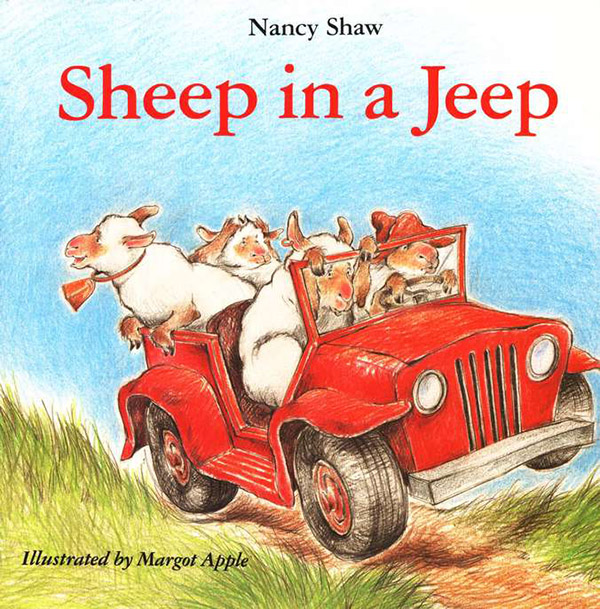
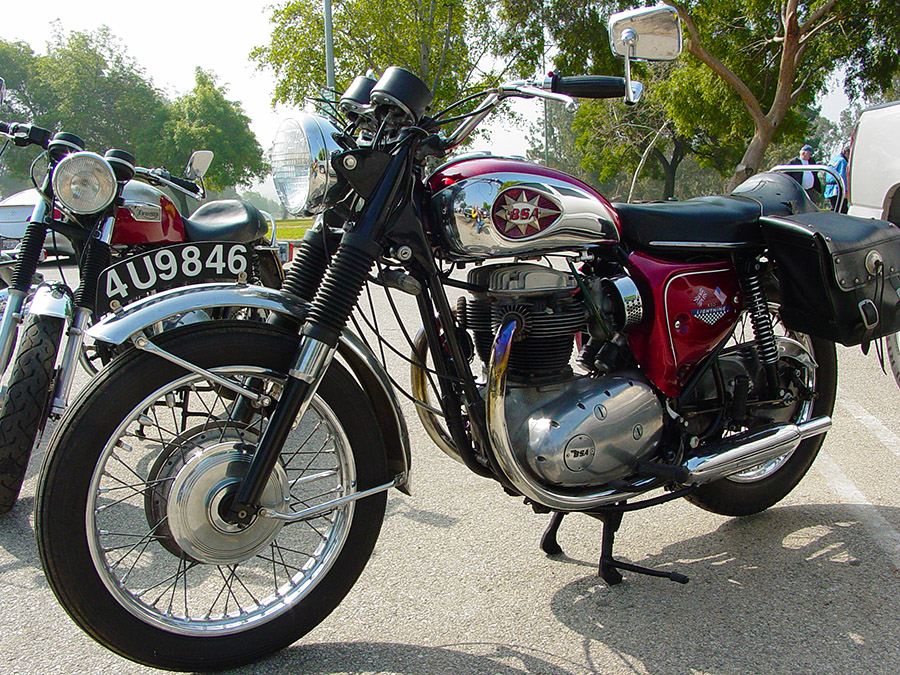
This BSA thing might be cool, though.  I’d like to see it work, and if it works as well as my Royal Enfield (which is as fine as any motorcycle made anywhere), it would be a good thing.  I always wanted a Beezer when I was a kid, and I suppose owning one now would make me a geezer with a Beezer (like the kid’s book, Sheep in a Jeep).

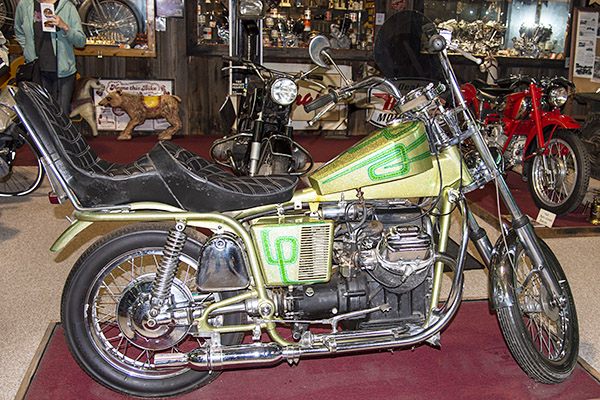
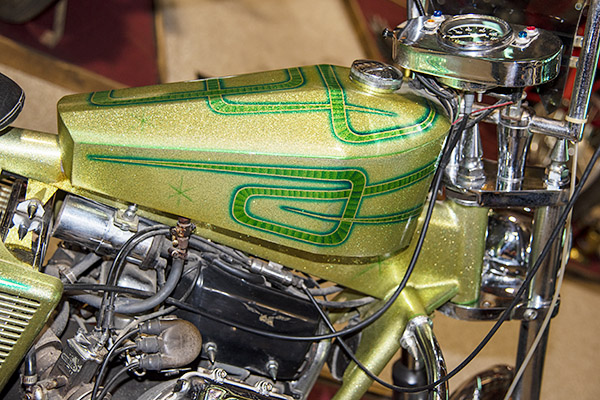
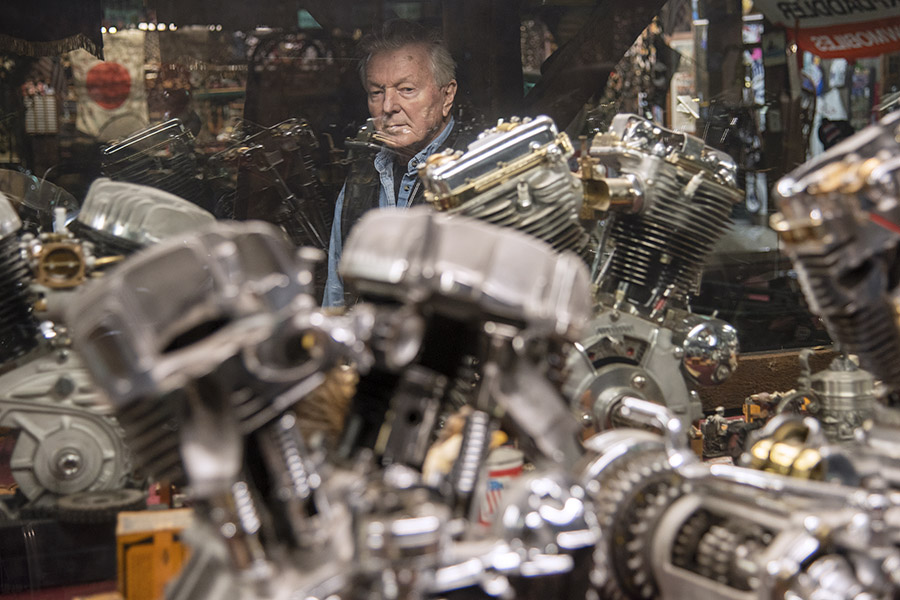
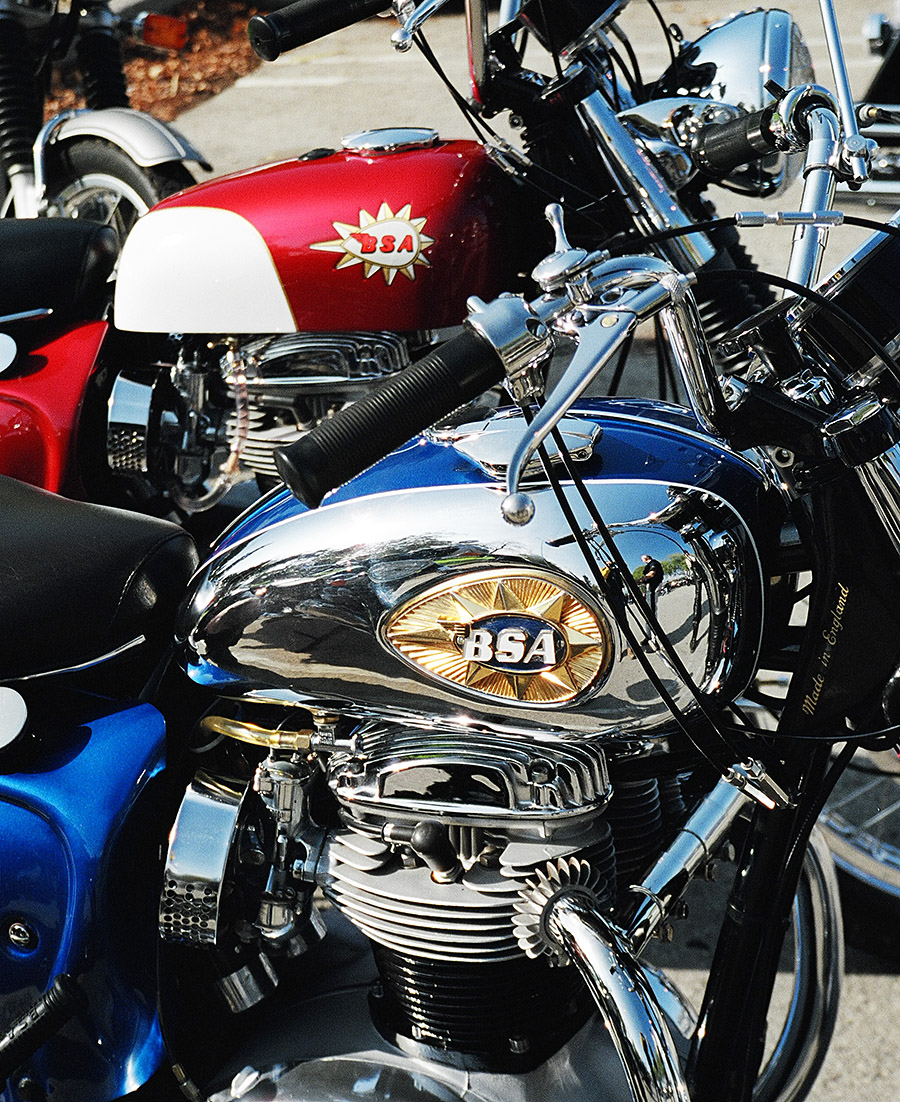
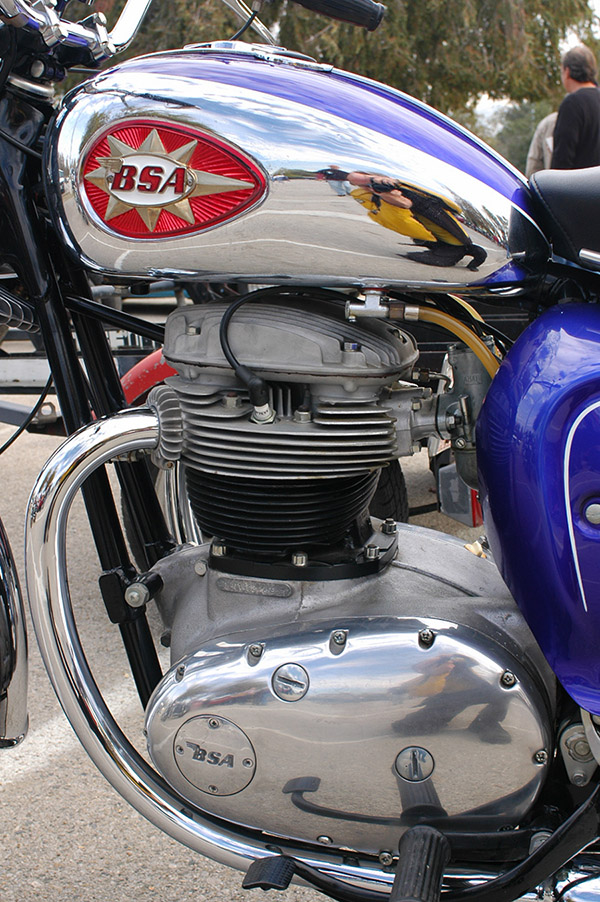
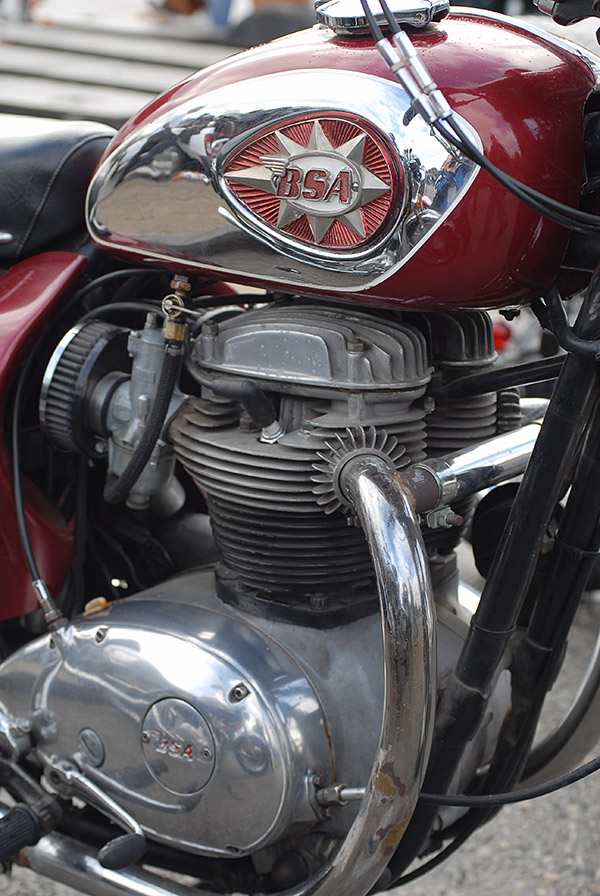
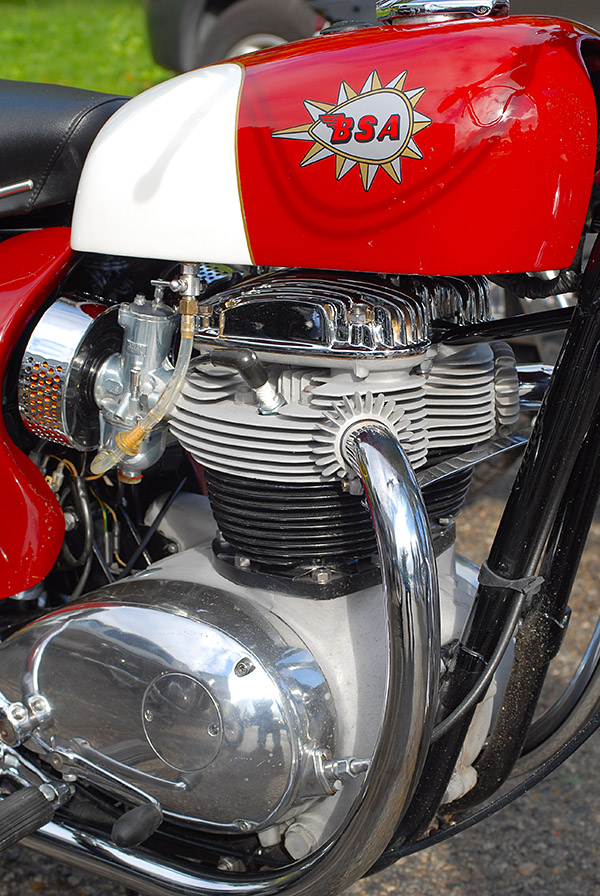
In the meantime, here are a few more photos I’ve shot of BSAs at the Hansen Dam Britbike meet in California, in Australia, and elsewhere over the years.  We can only hope the resurrected bikes look as good.

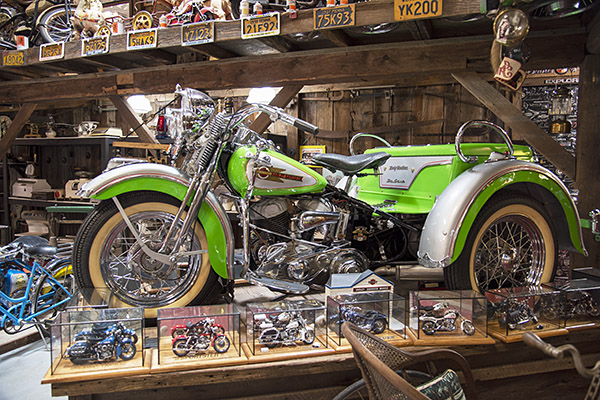
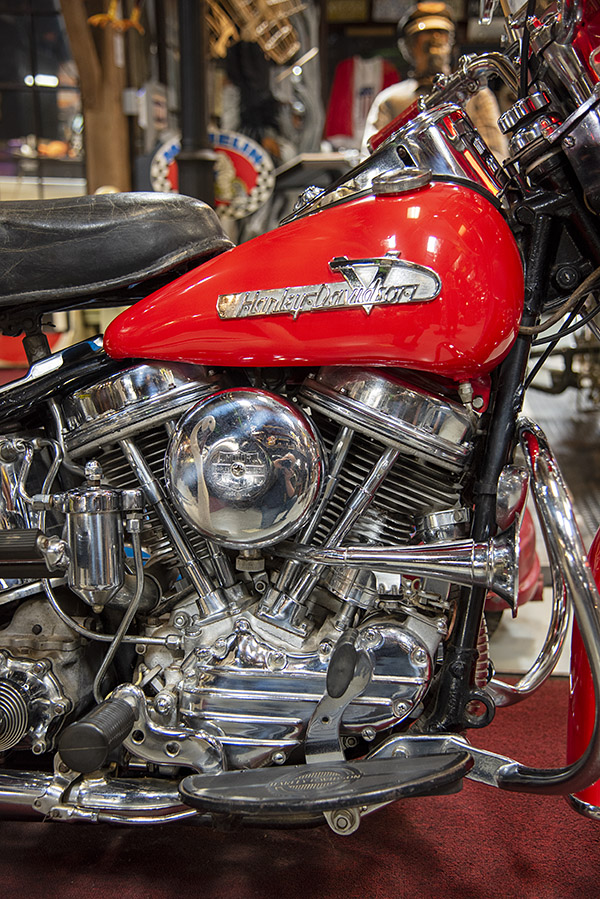
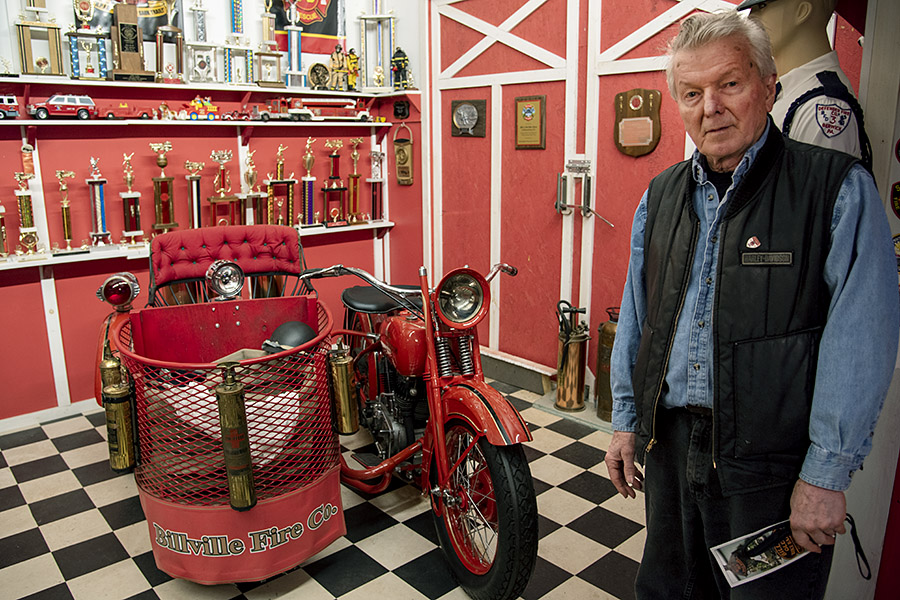
You know what I’d like to see?  I’d like to see two bikes from the 1960s resurrected…a 1966 Triumph T120R and a 1965 Electra Glide (the last year of the Panhead, and the first year of the electric start).  Those are two of the most beautiful motorcycles ever made.  The HD photo below is an earlier Duo Glide, but you get the idea.  Make them reliable, substitute enough aluminum for steel so that when you add all the smog and other regulatoria the bikes weigh in at their mid-’60s weights, and make them reliable.  Zongshen, you guys listening?
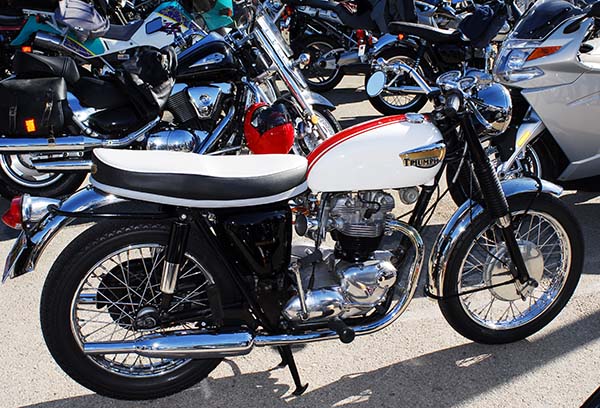
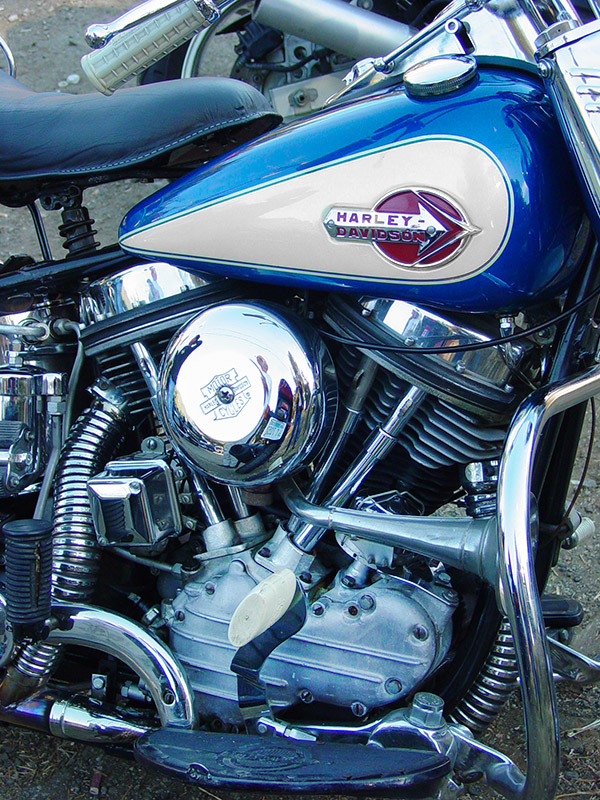
If they did either of those two resurrections, I’d be in.  In a heartbeat.  I’d be Charley on a Harley.  Johnnie on a Bonny.  Whatever.


Hey, if resurrections are what you want, check this out!


Never miss an ExNotes blog:

Pan America Adventure Motorcycle: The World’s First No-Compromise Harley-Davidson

What does that even mean, no compromise?

Hear me out. Like you I’ve read all the reviews on Harley’s new Pan America Adventure-Glide and they have been uniformly positive. Surprising is the word most frequently used by the tattered remnants of the moto-press when describing the Pan America. And it is surprising.

I’m not likely to ever test ride a Pan America. I offer Harley-Davidson nothing but suffering and heartache. Why would Harley loan me a bike in a category I pretty much despise? I can’t stand big Adventure bikes. I don’t like them one little bit. I think they are dangerous off road. Anyone who sends me one to test ride is a fool and Harley-Davidson’s marketing department is not populated by fools. Luckily I don’t need to ride one because Kevin Duke, the hardest working man in motorcycle journalism, says the Pan America is a good bike and that’s all you really need to know.

The no compromise hook in this story is the most impressive part of the new Pan America. It’s the first Harley (since the late 1960s) that competes head to head with the best the world has to offer and does it at a competitive price. In all areas the new bike is acceptable, meets expectations and is even, dare I say, good.

Most all the high-end, heavy, dangerously inadequate offroad Adventure bikes clock in at around 20,000 US dollars retail and they all weigh nearly the same ground-crushing 600 pounds. It must be a class requirement. Check out the manufacturer-provided spec sheets on a GS BMW, Ducati Multi Service, and KTM Breakdown. All of the numbers are within spitting distance of each other.

And that’s the amazing part. Harley-frigging-Davidson has made a competent motorcycle for the same price as everyone else. There’s no brand penalty. Harley-Davidson has made a motorcycle that the owner isn’t required to look through leather-fringed, nostalgia-tinted lenses to justify. No more having to tell non-Harley riders that they don’t get it when their questions turn pointed. Like all cults, the Harley cult requires actively looking the other way when hard facts and performance figures per dollar are bandied about.

With the Pan America there’s no need to believe in the Harley mystique. There’s no need to defend anemic performance by waving an American flag. The Pan America stands on its own merits as a motorcycle, nothing more. Is it as good as the other big Adventure bikes? I can’t say but the fact that it’s spoken of in the same breath and held up in comparison to the world’s best Adventure bikes is a stunning turnaround for a company that seemed hopelessly stuck in neutral by its mad marketing genius.

As much as I hate big Adventure bikes, I love the new Harley-Davidson Pan America.

I hope it’s a harbinger of change. I hope it succeeds beyond Harley’s wildest dreams and ushers in a new era of 150-horsepower Sportsters that handle, stop and are as fast as any other guy’s bikes. The late 1960s was the last time Sportsters were hot. That’s a long, long time to rest on your laurels. Let’s hope the Pan American gives stodgy old Harley-Davidson new life and a desire to be measured against the very best. Listen, if there’s any way you can afford to go out and buy one, go out and buy one. Tell Harley I sent you. Maybe they’ll even let me take one for a ride.

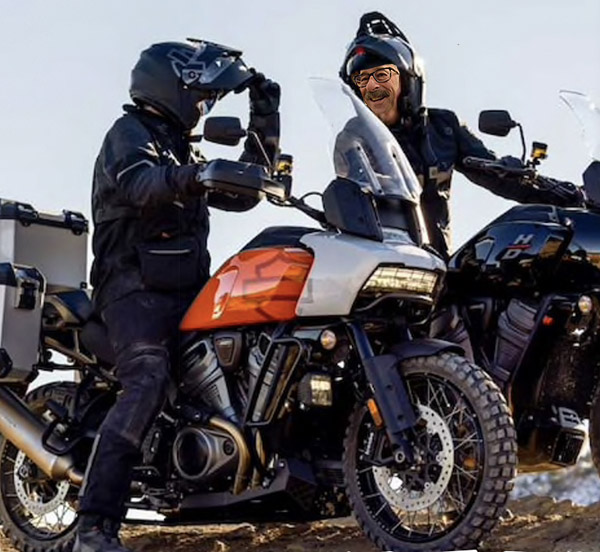
Berk, on right, telling Gresh to go back to Starbucks and fetch a Pumpkin Spice Latte for him.

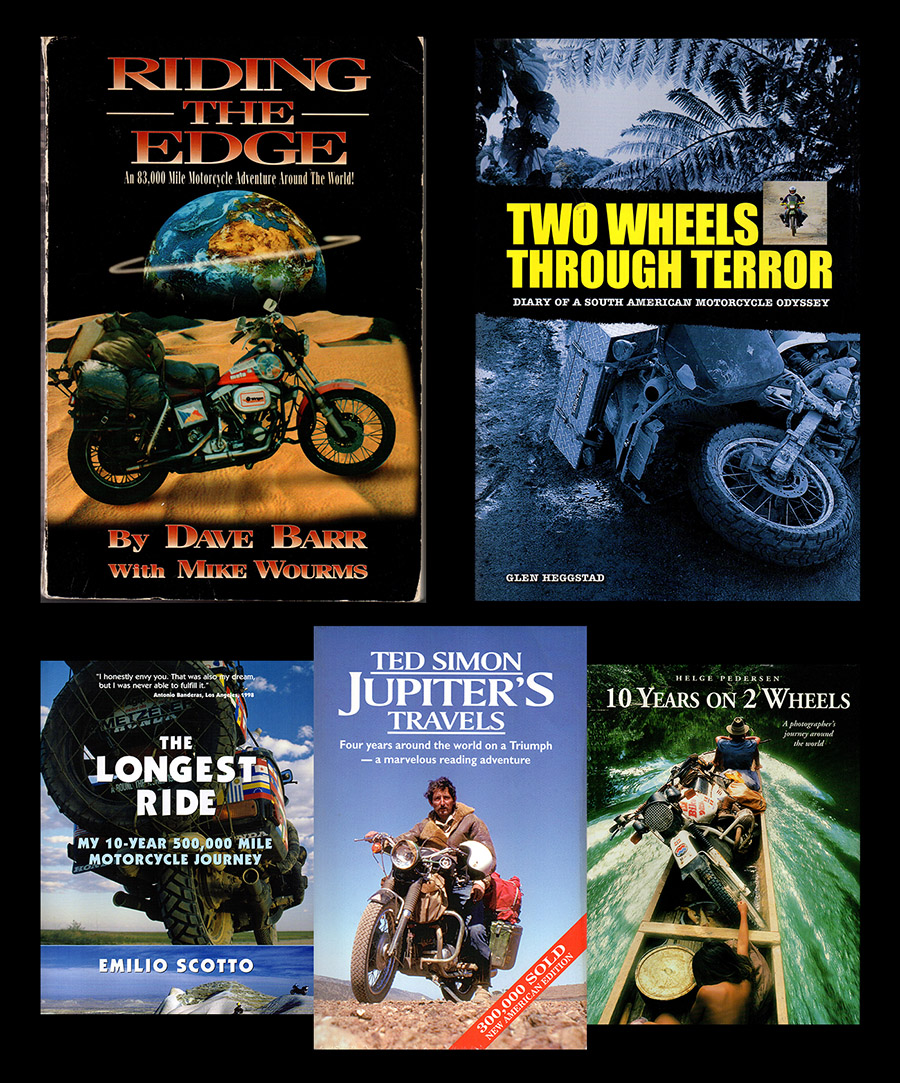
Five Best Motorcycle Books Ever

Listicles, Gresh calls them…articles based around the (fill in the number) best things to do, worst things to do, motorcycles, movies, and more.  One of Gresh’s friends told him that lists get more hits than any other kind of Internet article.  I was a bit skeptical when I first heard that, but Google Analytics doesn’t lie:  When we do a listicle, our hits go up big time.  And comments, too.  We like comments.  And a lot of this blogging game is about the hits and comments.  Gresh’s The 5 Stupidest Ideas in Motorcycling, my recent The Big Ride: 5 Factors Affecting Daily Mileage, and other ExNote listicles…they’ve all done extremely well.

This listicle thing has me thinking in terms of the five best whatever when I’m spitballing new blog ideas, and the list du jour is on motorcycle books.  It’s a topic near and dear to my heart and one we’ve touched on lightly before, although the emphasis in the past has usually been on a single book.  I think I’ve read just about every motorcycle book ever published, and I particularly like the travel stories.  That said,  I think this introduction is long enough.  Let’s get to it.

Riding the Edge

Riding the Edge, in my opinion, is the greatest motorcycle adventure story ever told, made all the more significant by two facts.   The first is that Dave Barr, the author, did the ride after losing both legs to a land mine in Africa; the second is that Dave did the ride on a beat up old ’72 Harley Super Glide that had 100,000 miles on the odometer before he started.
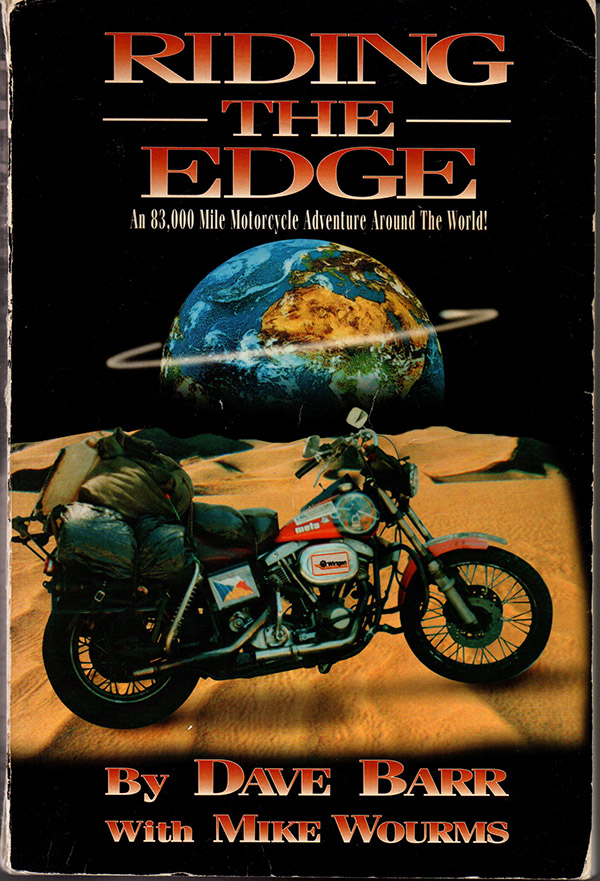
I know Dave Barr and I’ve ridden with him.  I can tell you that he is one hell of a man, and Riding the Edge is one hell of a story.  The ride took four years, mostly because Dave pretty much financed the trip himself.  He’d ride a country or two, run out of money, get a job and save for a bit, and then continue.  I read Riding the Edge nearly two decades ago, and it’s the book that lit my fire for international motorcycle riding.  None of the rides I’ve done (even though I’ve ridden through a few of the countries Barr did) begins to approach Dave Barr’s accomplishments.  The guy is my hero.

Riding the Edge is written in an easy, conversational style.  I’ve probably read my copy a half-dozen times.  In fact, as I type this, I’m thinking I need to put it on my nightstand and read some of my favorite parts again.  If you go for any of the books on this list, Riding the Edge is the one you have to read.

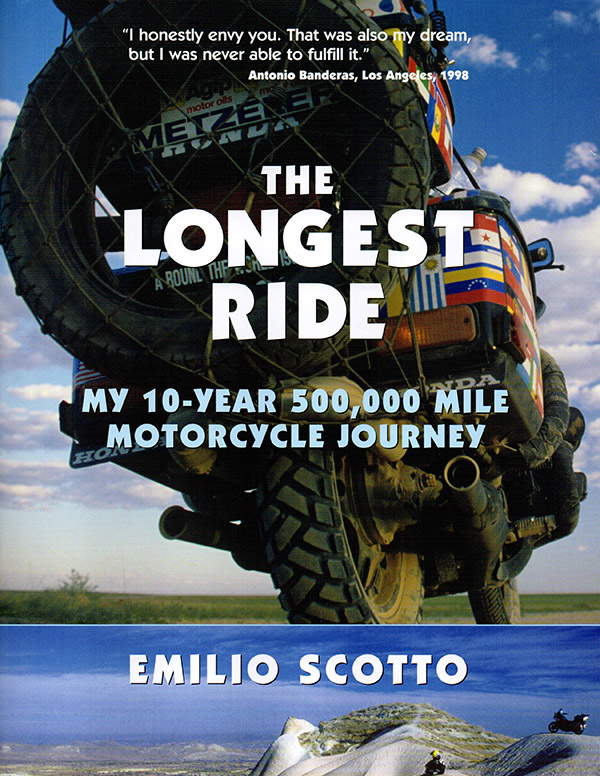
The Longest Ride

Emilio Scotto.   Remember that name, and remember The Longest Ride.  This is a guy who had never left his native Argentina, thought it might be cool to see the world on a motorcycle, bought a Gold Wing (which he named the Black Princess), and then…well, you can guess the rest.  He rode around the world on a motorcycle.

Emilio took 10 years for his trip around the world, and he covered 500,000 miles in the process.  He’s another guy who is good with a camera.  I thoroughly enjoyed The Longest Ride.  I think you will, too.

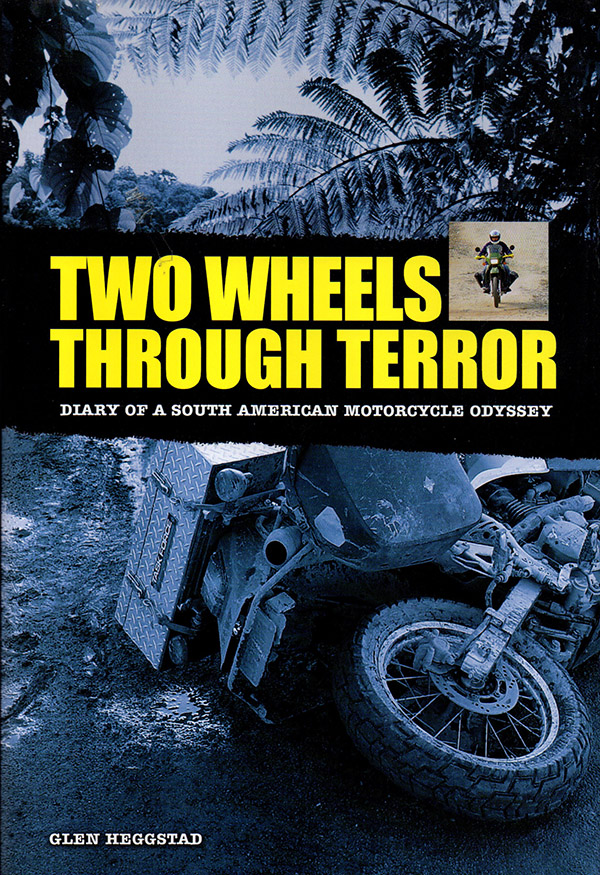
Two Wheels Through Terror

Glen Heggstad…that’s another name you want to remember.  Mix one martial arts expert, a Kawasaki KLR 650, a kidnaping (his own), a trip through South America, and a natural propensity for writing well and you’ll have Two Wheels Through Terror.  I love the book for several reasons, including the fact that Mr. Heggstad used a KLR 650 (one of the world’s great adventure touring motorcycles), the way he tells the story of his kidnaping in Colombia (a country I rode in), and his wonderful writing.

I’ve met Glen a couple of times.  The first time was at a local BMW dealership when he spoke of his travels; the second time was at his booth at the Long Beach International Motorcycle Show.  Glen is a hell of a man, a hell of a writer, and a hell of a fighter (all of which emerge in Two Wheels Through Terror).  He is a guy who just won’t quit when the going gets tough.  I admire the man greatly.

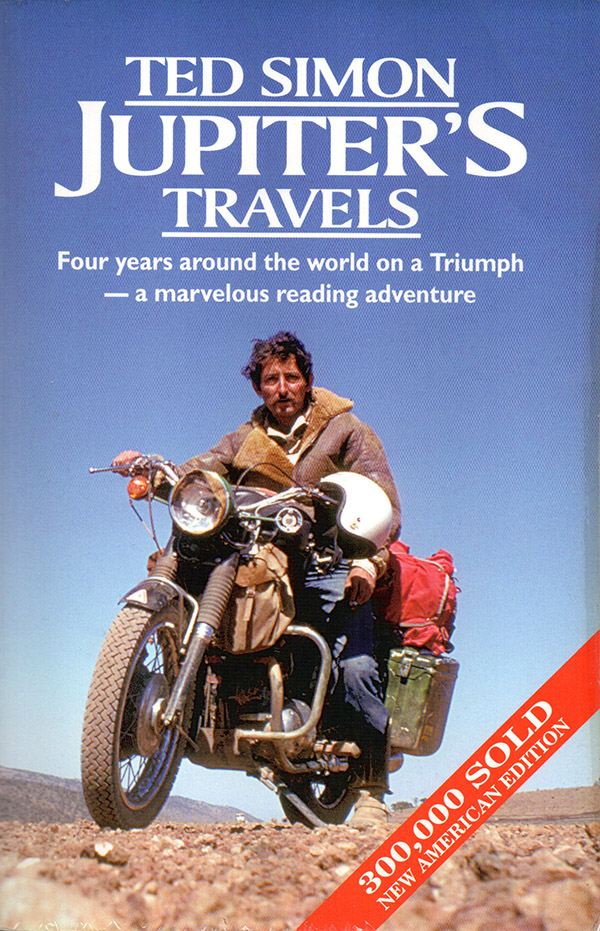
Jupiter’s Travels

Ah, Ted Simon, one of the granddaddies of adventure motorcycle riding.  I’d heard about his book, Jupiter’s Travels, for years before I finally bought a copy and read it, and then I felt like a fool for not having read it sooner.

Jupiter’s Travels was one of the first books about riding a motorcycle around the world, and what made it all the more interesting for me was that Simon didn’t do it as a publicity stunt.  No big sponsors, no support vehicles, no nothing, a lot like the other great journeys on this list.  It was what the guy wanted to do, so he quit his job and did it.  Simon’s bike was a 500cc air-cooled Triumph, and I liked that, too.  I’m a big fan of the old British vertical twins (the Triumph was a state-of-the-motorcycle-art when Ted Simon did his ride).  Trust me on this, folks:  Jupiter’s Travels is a motoliterature classic, and it’s one you need to read.

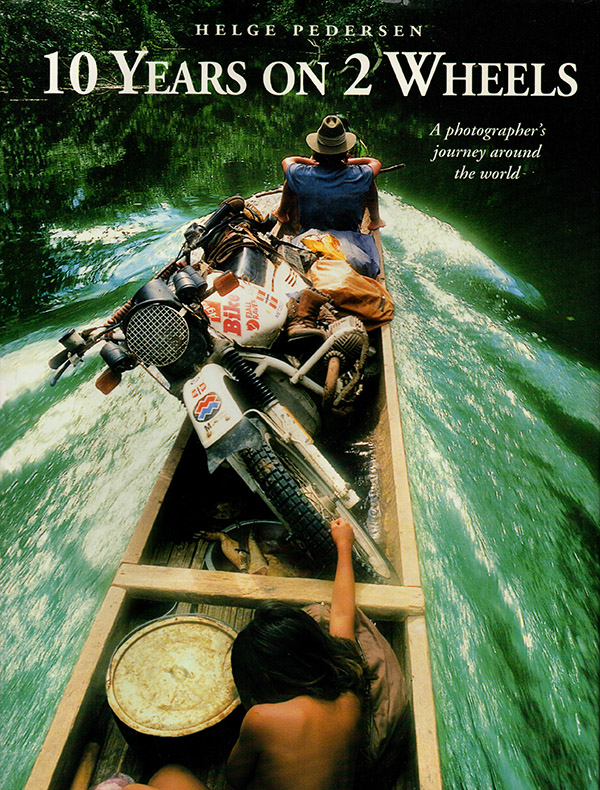
10 Years on 2 Wheels

Helge Pedersen is another name you want to know.  He is a phenomenal world traveler, writer, and photographer, and 10 Years on 2 Wheels is a phenomenal read.

What sets 10 Years on 2 Wheels apart is the photography, and you get a sense of that just by seeing the cover (this is one of those rare books that you can, indeed, judge by its cover).  10 Years on 2 Wheels is what inspired me to get serious about capturing great photographs during my travels, and Helge’s photos are fabulous (they’re art, actually).  This is a physically large book, and that makes the images even more of a treat.

Next Up:  The Five Worst Motorcycle Books

Look for a blog in the near future on the five worst motorcycle books I’ve ever read.  That one will be tough, because I pretty much like any book about motorcycles, but I’m guessing it will elicit a lot of comments.

So that’s it: Our list of the five best motorcycle books.  What do you think?  Leave your comments and suggestions here.   We want to hear them!


More book reviews?   You can find them here!

Never miss an ExNotes blog!  Sign up here:

Motorcycles and milsurps…

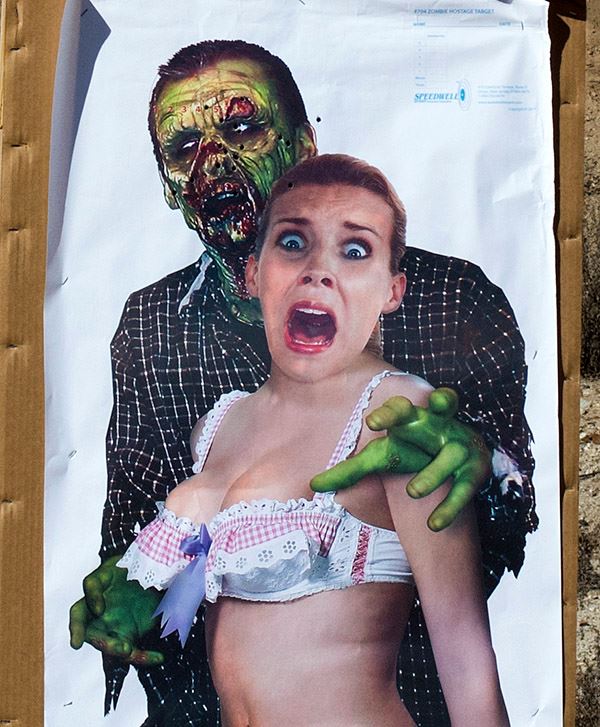
Zombies. No matter how many times you hit them, they won’t go down…goofy targets, to be sure, but lots of fun.

No motorcycle rides today…just a fun day at the range with some of my motorcycle and shooting buddies, and the milsurp rifles.

We get together every month or so to do this, and sometimes we let a few too many months slide by.  That was the case this time; it had probably been 3 or 4 months since we last had one of our informal matches.   We ordinarily have around 10 shooters show up.  This one was on short notice but we still had 5 of us get together.  It’s grand fun and we always have a great Mexican lunch following the match.   There’s something about having a rifle match (informal or otherwise) with firearms that are 70 to 110 years old.  It’s cool.

About this match business…it’s relaxed as hell, as you can probably tell from the targets, and it really isn’t a competition.  It’s just a bunch of guys with a common interest getting together to have fun.   Most of the time we don’t even bother to score the targets.   The company and the conversation are the best parts; we really don’t care about declaring a winner.   We have some interesting firearms, too.

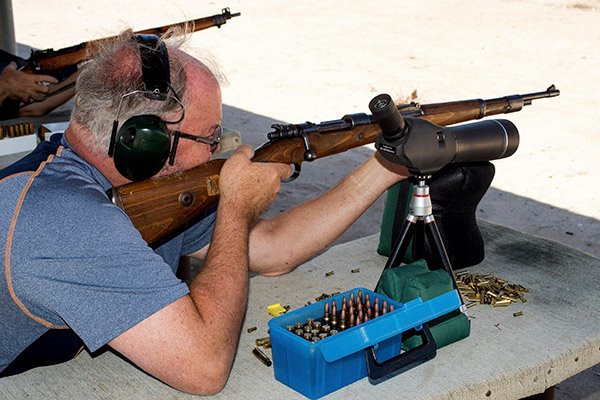
Duane and his German K98 Mauser. Duane rides an RX3 and an Indian. The rifle is a Nazi-proof-marked World War II weapon, which makes it about 70 years old.
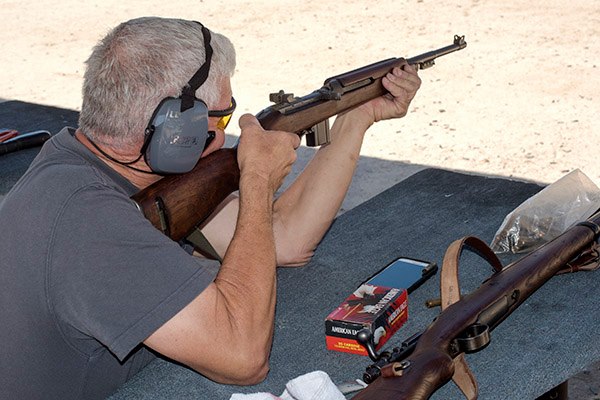
Willie and his US M1 Carbine. Willie also brought along a German Mauser (it’s to his right). Willie rides an RX3 and a TT250. The M1 is a World War II weapon.
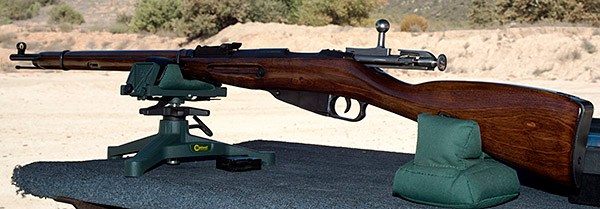
My Russian Mosin-Nagant. The Mosin-Nagant was designed in the early 1890s. This particular one was built in 1942, and most likely saw service in World War II. It’s very accurate.

Here’s a short video of Duane firing his World War II K98 Mauser…

You might wonder…why a gun article on a motorcycle blog?

Well, there are a couple of reasons.   The first is that I’m always amazed at how many riders are also into shooting.   The two interests seem to go hand in hand.  And then there’s another aspect:   The companies that manufactured both firearms and motorcycles.  There are more than a few manufacturers who have done that.

You guys and gals into vintage bikes certainly know of BSA.   The BSA initials stand for Birmingham Small Arms, and if you look closely at the emblem on older BSAs, you’ll see it’s a set of three stacked rifles…

A 1939 BSA M20. Note the stacked rifle logo on the engine.

Royal Enfield is another company with a military lineage.   Enfield was originally a British company (their motorcycles are manufactured in India today).  Take another look at Rick’s Lee Enfield rifle up above.  Yep, there’s a connection.

Hey, how about Benelli?  That was an Italian motorcycle company (Benelli motorcycles are now made in China), but they also have a line of shotguns.  Benelli made pistols for a while, too.  I have a Benelli 9mm handgun.

Iver Johnson is yet another company with a dual lineage.  They made motorcycles a century ago, and they are still manufacturing firearms.

I don’t know that Harley ever made guns, but they manufactured munitions components until very recently.  I know about that because I used to work for a company in that industry.

I’m sure there are more companies than just the few I’ve listed here, and I’m going to research this a bit more.   I don’t think it’s just coincidence that more than a few manufacturers decided to make both bikes and guns.   Motorcycles and firearms are two products with something in common:  They have a special feel to them, an appeal that reaches into our souls.  They are more than just mashed-up machined metal mechanisms.  There’s a commonality, a similarity, and maybe a sympatico between motorcycles and firearms, one that attracts both manufacturers and riders.  We see it right here on the ExhaustNotes blog (every time we post a firearms-related piece, our hits go through the roof).  I’ll post a more in-depth blog on this motorcycle/firearm connection down the road.  It’s a fascinating topic.  Maybe there’s a book in it!


Want to read more Tales of the Gun?  Just click here!

Wild Conjecture: The Harley-Davidson Pan America


Much like when your old granny starts using Instagram or throws down internet slang terms like LOL, Harley-Davidson’s new, Pan America concept motorcycle is a sure sign that the out-sized ADV fad has played itself out. It can’t come a moment too soon for me because these giant dirt motorcycles are the worst idea to come down the pike since Thalidomide. I won’t list the moto-journos that have injured themselves on these bikes but it’s a who’s who of two-wheeled typists. Remember, these are the pros!

H-D has ignored the segment these last twenty years for good reason: It’s simply not their bag. Change comes slowly to The Motor Company. They’ve been very successful building and selling a cruiser lifestyle. People tattoo H-D logos onto their bodies! Who else but a Batdorf and Bronson coffee fanatic would do that?

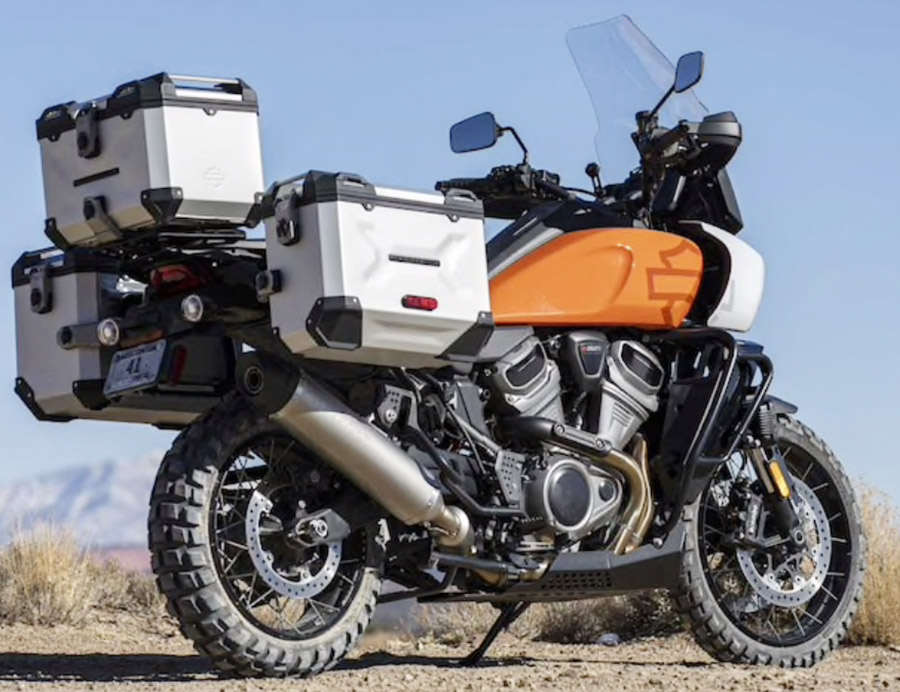
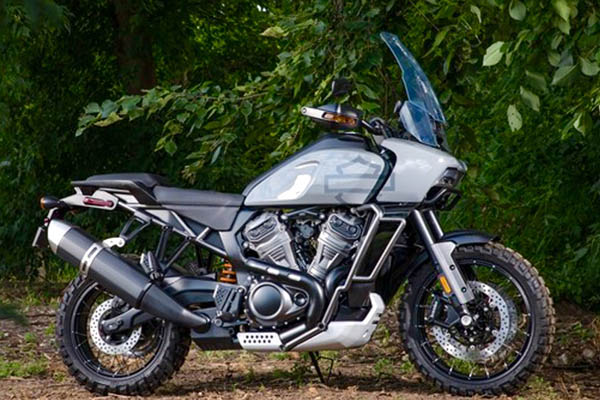
Back on topic: The Pan America. Harley doesn’t keep me in the loop so I have nothing but a promotional photo to go by but the thing doesn’t look half bad. There’s just a hint of Royal Enfield Himalayan in the styling but that’s not a bad thing. The fairing is kind of goofy, a requirement for ADV bikes. It’s got a decent-looking skidpan and a nice flat seat that looks comfortable.

The engine looks like a restyled version of H-D’s 750cc liquid-cooled Street power plant but with displacement rumors swirling around 1200cc, maybe not. Maybe it’s a V-Rod engine. Anyway I can’t see Harley building a new engine just for the Pan America unless it’s the beta test of a wholly new Sportster power plant. There’s almost no way the thing will weigh less than 600 pounds, again, seemingly not a problem for the chuckleheads who plow these big bikes through the trails.

I haven’t heard of any major reliability issues on the 500cc-750cc Street models or the V-Rod so if it’s either engine the thing should be more reliable than the class-leading GS BMW’s. I’m hoping the thing is chain drive as toothed belts squeak like crazy in the dirt and shaft drives seem to snap in half with alarming frequency.

The rest of the cycle parts look really modern, Japanese even, and the Pan America shows that Harley can build a bike that rivals the Europeans and Asians anytime they feel like it.  They just haven’t felt like it.  Until now.


Check out our other Dream Bikes here!