Geezer on a Beezer

The latest news to sweep across the ether is that BSA is being revived in India.  Eh, we’ll see.

I’m naturally skeptical about revivals.  Lord knows Norton has been through a few, and last I checked, like Julius Caesar they’re still dead.  Indian (not bikes from India, but the American Indian brand) should maybe be called the Easter bike based on how many times they’ve been resurrected.   And there was Henderson for a while maybe 20 years ago (remember that flash in the pan?).   Triumph…well you know that story.  They rose again, but it wasn’t really the original Triumph…it was just the name, but then they reintroduced the vertical twin Bonneville, except the displacement increased until the marvelous 650cc we used to know grew to 1200cc and the bike gained a couple of hundred pounds, give or take.   I’d like to see Bud Ekins jump one of the new Bonnevilles escaping from a German POW camp.  He might have better luck getting airborne with a Panzer.

And then of course there’s Royal Enfield, but they’re technically not a resurrection.  They never went out of business.  Well, maybe they sort of did, but before the Japanese bikes drove the final nail in the British motorcycle industry coffin (with a lot of help from the British motorcycle industry, who’s official motto seemed to be “too little, too late”), the original Royal Enfield (the folks in England) starting building bikes in India, and when the Brits went belly up, the folks running the Indian plant watched, shrugged, and kept on building.  I ride an Indian Royal Enfield, but it’s not an Indian like most folks in the US motorcycling community use the word.  Well, okay, it is, but it’s from India.  It’s not a Polaris Indian from America.

Confused yet?

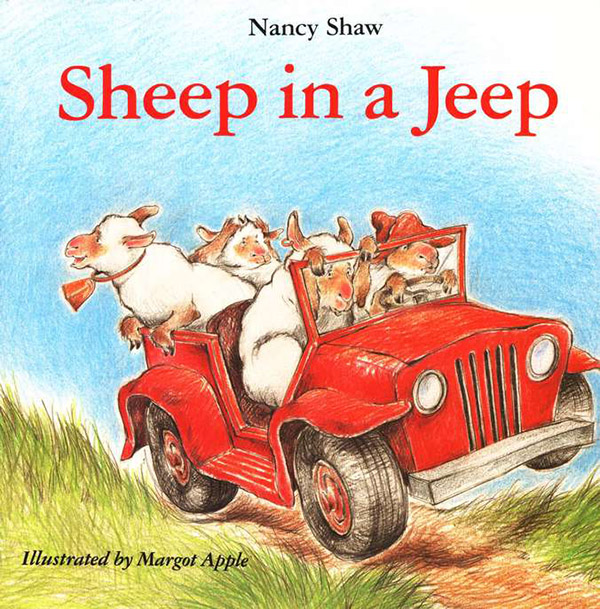
This BSA thing might be cool, though.  I’d like to see it work, and if it works as well as my Royal Enfield (which is as fine as any motorcycle made anywhere), it would be a good thing.  I always wanted a Beezer when I was a kid, and I suppose owning one now would make me a geezer with a Beezer (like the kid’s book, Sheep in a Jeep).
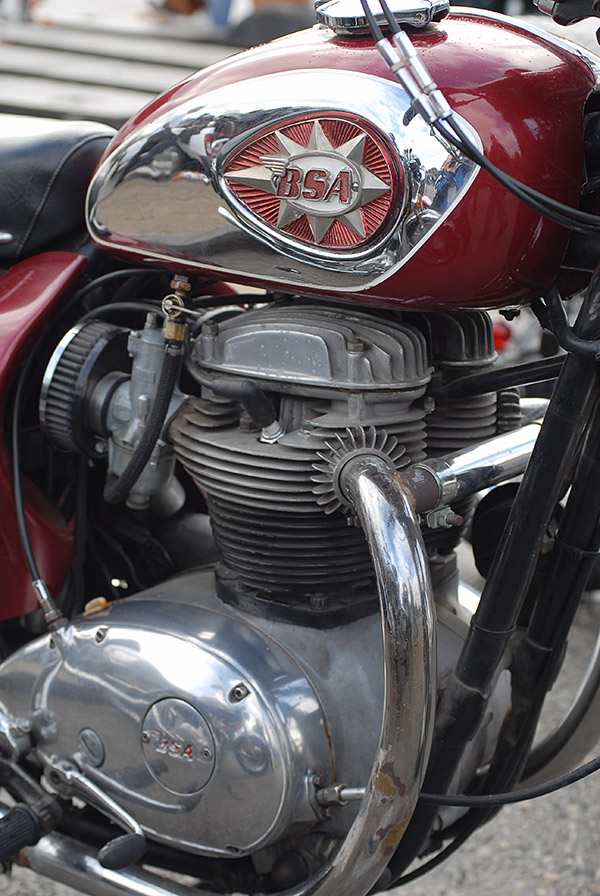
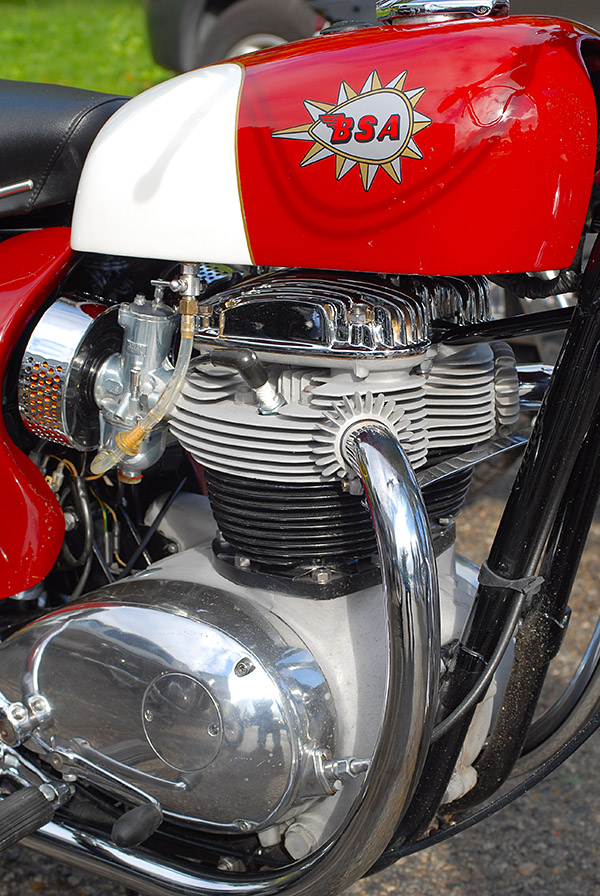
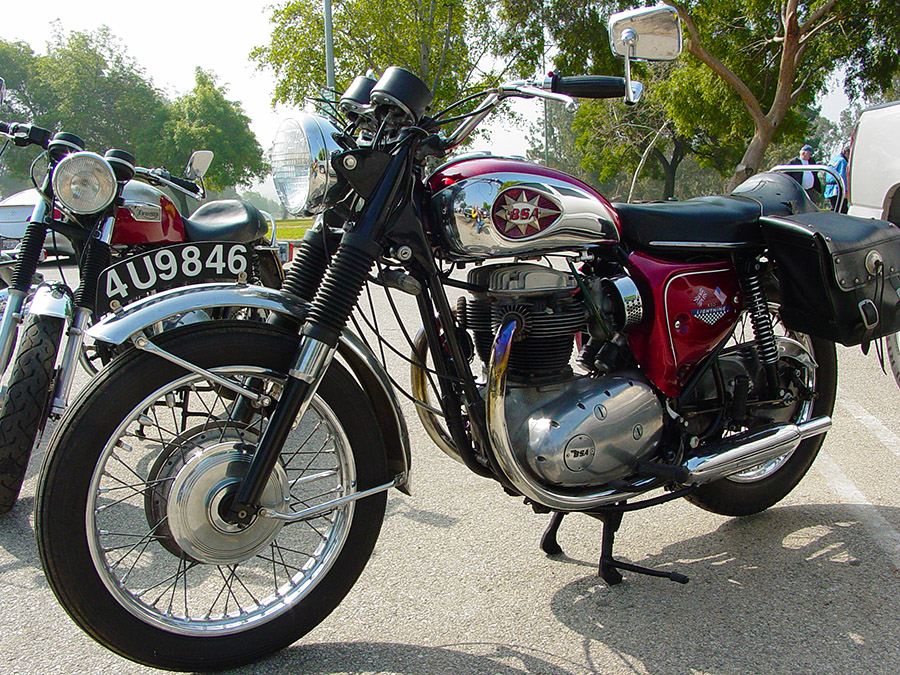
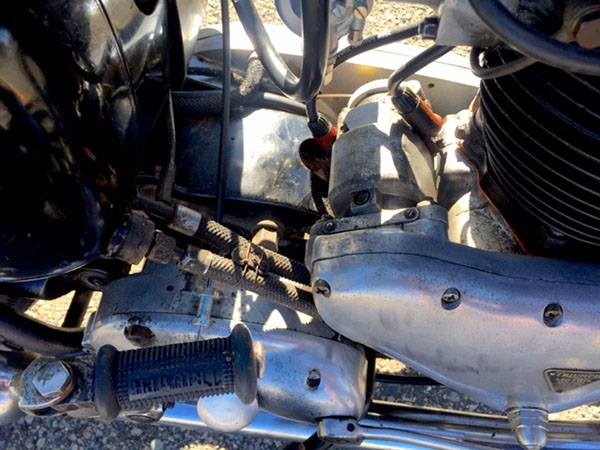
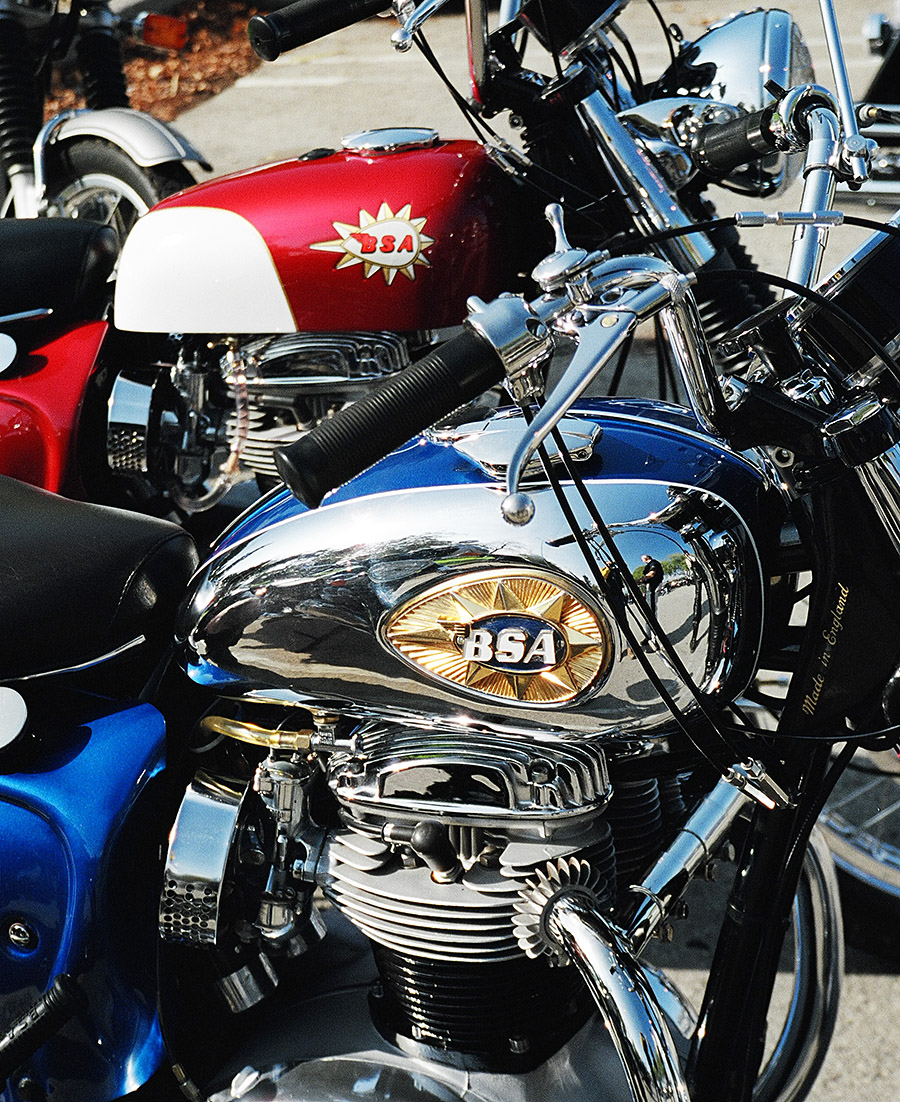
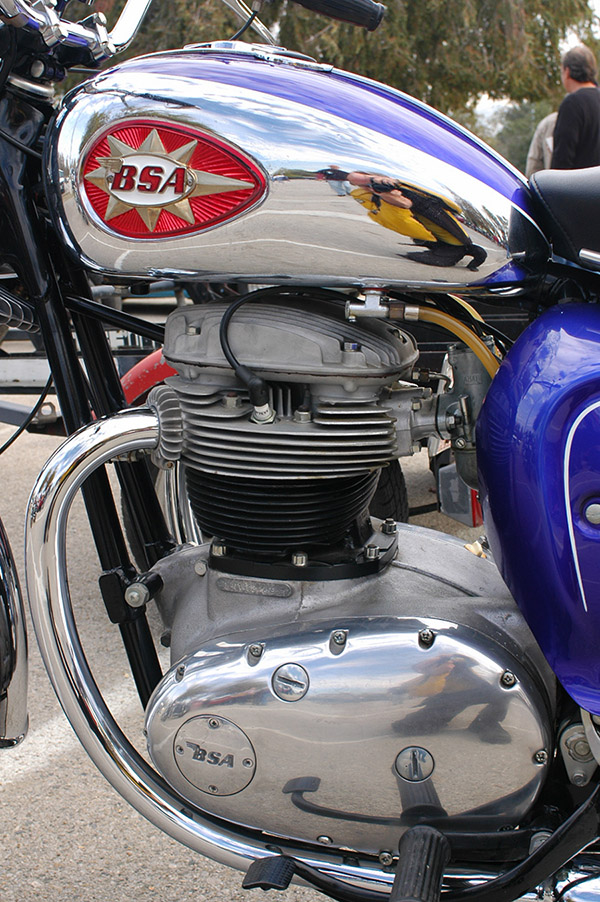
In the meantime, here are a few more photos I’ve shot of BSAs at the Hansen Dam Britbike meet in California, in Australia, and elsewhere over the years.  We can only hope the resurrected bikes look as good.
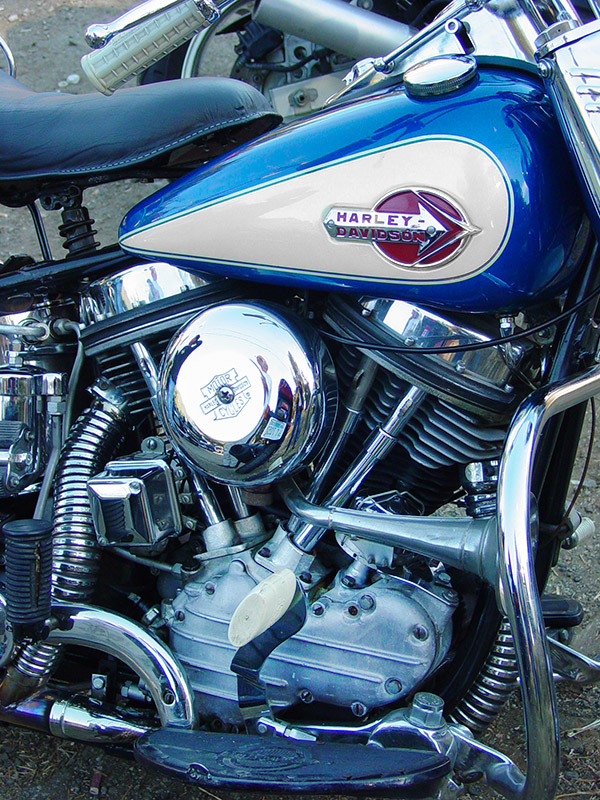
You know what I’d like to see?  I’d like to see two bikes from the 1960s resurrected…a 1966 Triumph T120R and a 1965 Electra Glide (the last year of the Panhead, and the first year of the electric start).  Those are two of the most beautiful motorcycles ever made.  The HD photo below is an earlier Duo Glide, but you get the idea.  Make them reliable, substitute enough aluminum for steel so that when you add all the smog and other regulatoria the bikes weigh in at their mid-’60s weights, and make them reliable.  Zongshen, you guys listening?
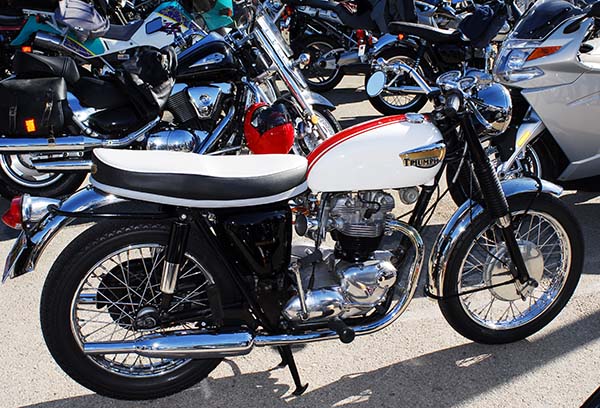
If they did either of those two resurrections, I’d be in.  In a heartbeat.  I’d be Charley on a Harley.  Johnnie on a Bonny.  Whatever.


Hey, if resurrections are what you want, check this out!


Never miss an ExNotes blog:
The $100 Hamburger…

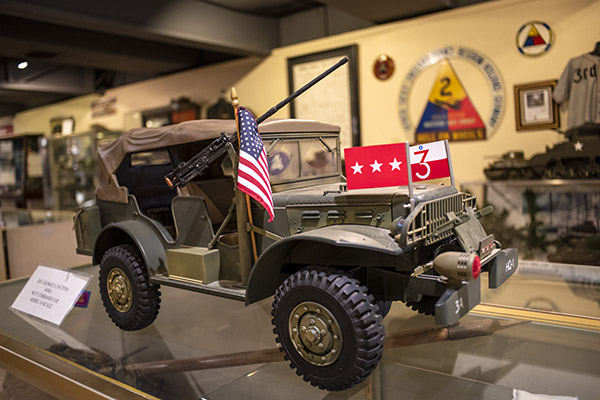
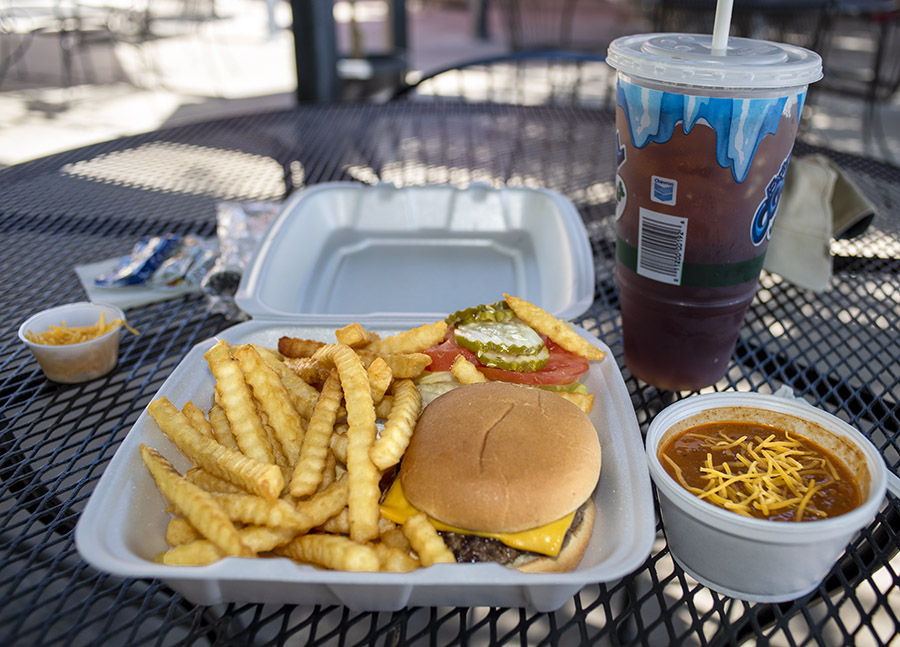
The $100 hamburger:  It’s aviation slang for any hamburger that requires flying in to a local airport for a burger. I first heard the term from good buddy Margit Chiriaco Rusche when researching the story on the General Patton Memorial Museum.  You see, there’s still an airport at Chiriaco Summit, left over from General George Patton’s Desert Training Center.  Margit told me about pilots flying in for the mythical $100 hamburger at the Chiriaco Summit Café, and I knew I had to have one as soon as she mentioned it.  The Café doesn’t actually charge a hundred bucks (it was only $15.66 with a giant iced tea, fries, and a side of chili); the $100 figure pertains to what it would cost a pilot to fly your own plane to Chiriaco Summit, enjoy the General Patton Burger, and fly out.

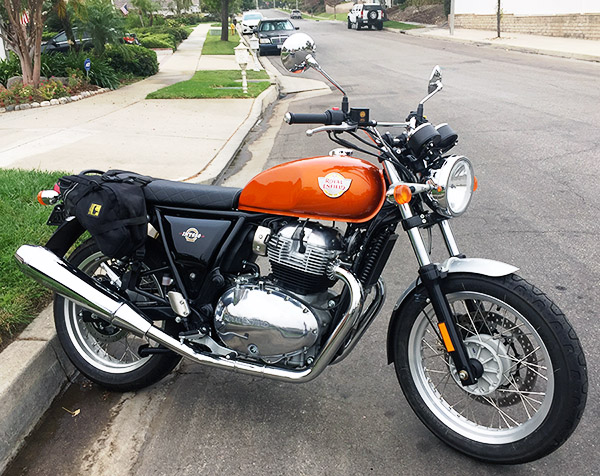
Even though bloggers like Gresh and me are rolling in dough, we don’t have our own airplanes.  But we have the next best thing.  Gresh has his Kawasaki Z1 900, and I have my Royal Enfield Interceptor.

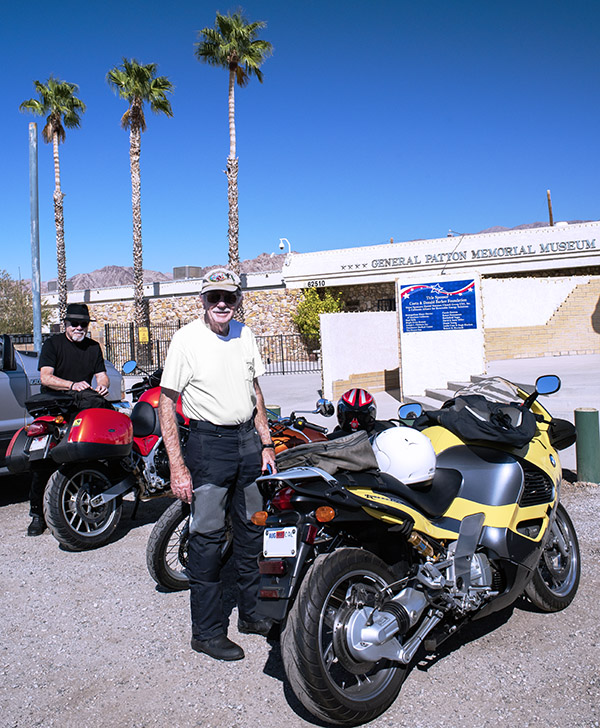
Good buddy Marty (a dude with whom I’ve been riding for more than 20 years) told me he needed to get out for a ride and I suggested the Patton Museum.  It’s a 250-mile round trip for us, and the trip (along with the General Patton Burger, which is what you see in the big photo above) would be just what the doctor ordered.  I’d have my own hundred dollar burger, and at a pretty good price, too.  Two tanks of gas (one to get there and one to get home) set me back $16, and it was $18 (including tip) for the General Patton Burger.  I had my hundred dollar burger at a steep discount.  And it was great.

I’ll confess…it had been a while since I rode the Enfield.  In fact, it’s been a while since I’d been on any ride.  I didn’t sleep too much the night before (pre-ride jitters, I guess) and I was up early.   I pushed the Enfield out to the curb and my riding amigos showed up a short time later.  There would be four of us on this ride (me, Marty, and good buddies Joe and Doug).   Marty’s a BMW guy; Joe and Doug both ride Triumph Tigers.

As motorcycle rides go, we had great weather and a boring road.  It was 125 miles on the 210 and 10 freeways to get to the Patton Museum and the same distance back.   Oh, I know, there were other roads and we could have diverted through Joshua Tree National Park, but like I said, I hadn’t ridden in a while and boring roads were what I wanted.

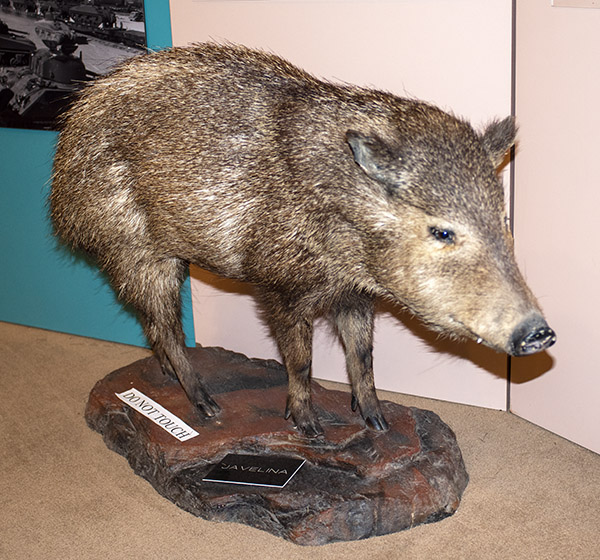
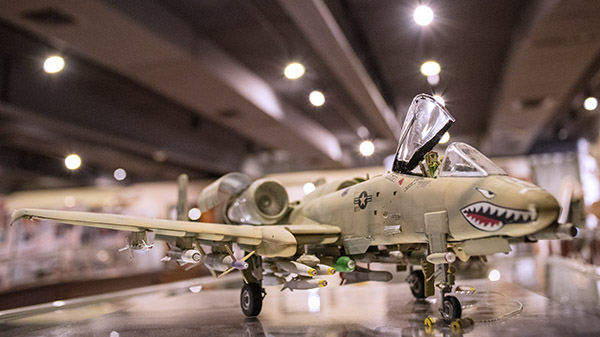
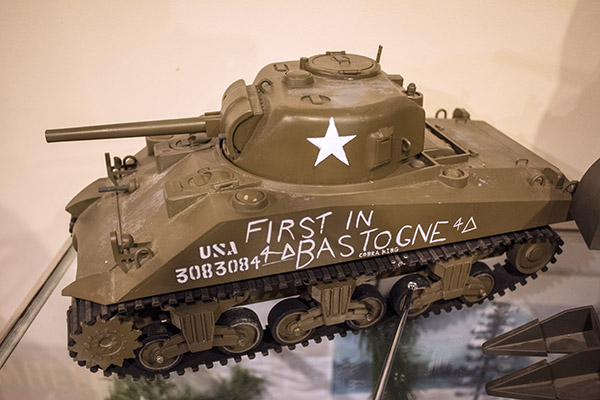
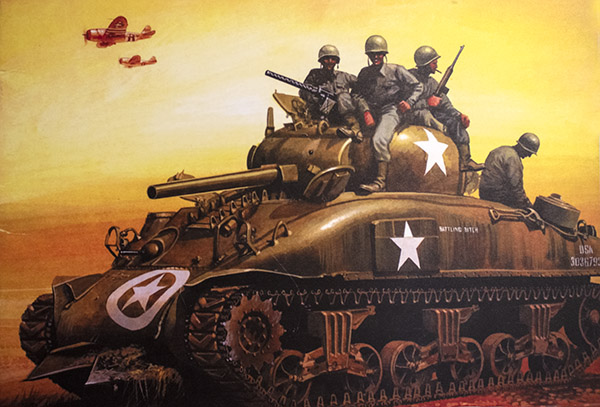
The Patton Museum was a hoot, as it always is.  I had my super fast 28mm Nikon lens (which is ideal for a lot of things), and I shot more than a few photos that day.  You can have a lot of fun with a camera, a fast lens, a motorcycle, and good friends.  A fast 28mm lens is good for indoor available light (no flash) photography, and I grabbed several photos inside the Patton Museum.
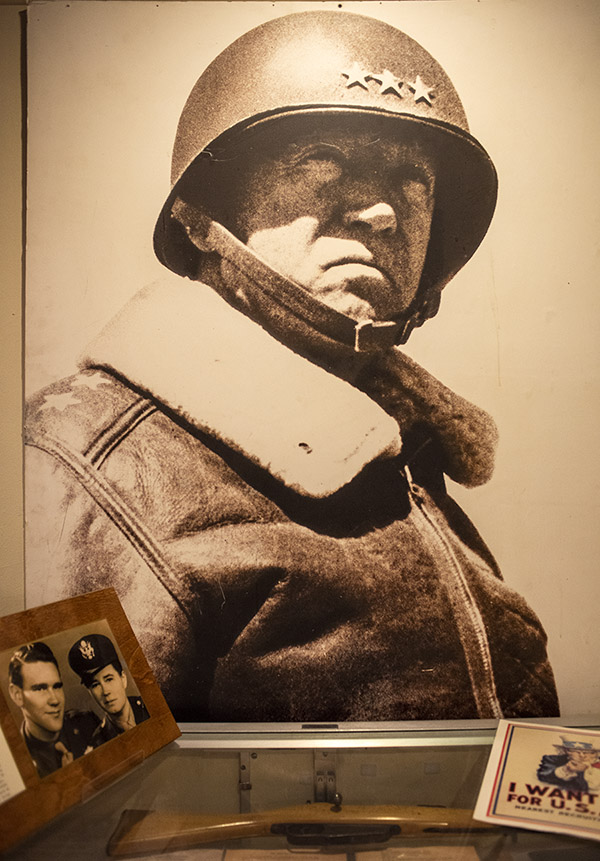
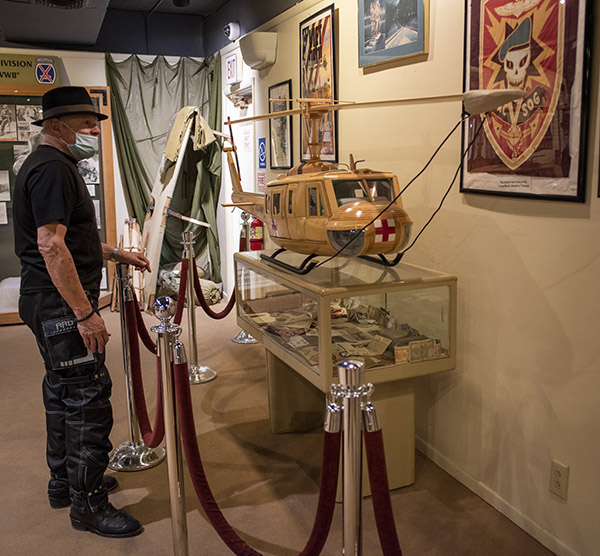
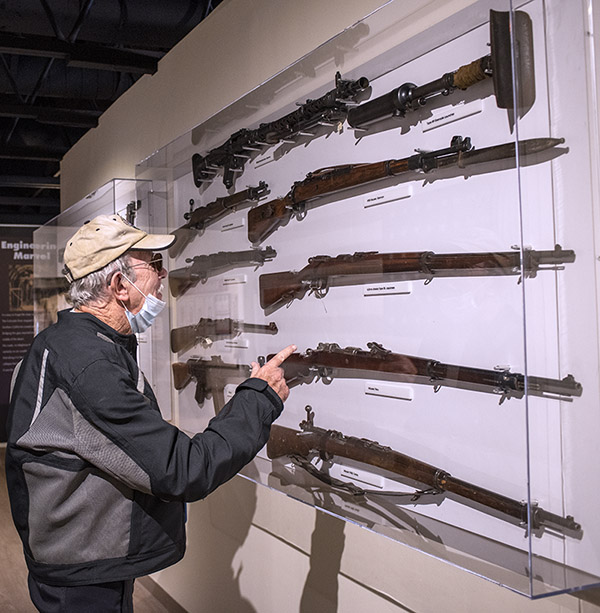
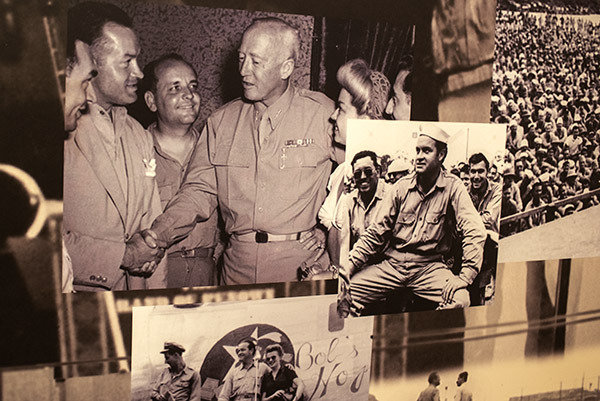
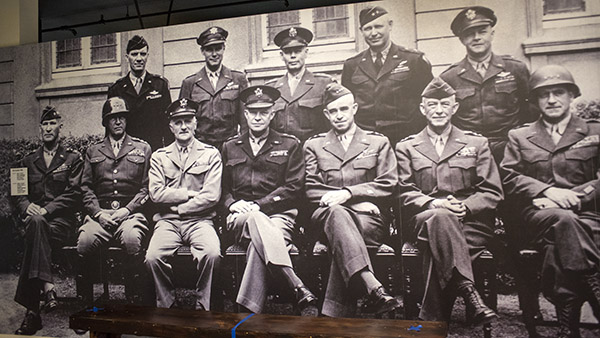
It was a bit strange looking at the photos of the World War II general officers, including the one immediately above.  I realized that all of us (Marty, Joe, Doug, and I) are older than any of the generals were during World War II.  War is a young man’s game, I guess.  Or maybe we’re just really old.

You can see our earlier pieces on the Patton Museum here and here.  It’s one of my favorite spots.  If you want to know more about Chiriaco Summit, the Chiriaco family, and the General Patton Memorial Museum’s origins, I highly recommend picking up a copy of Mary Gordon’s Chiriaco SummitIt is an excellent read.

We rode the same roads home as the ride in, except it was anything but boring on the return leg.  We rode into very stiff winds through the Palm Springs corridor on the westward trek home, and the wind made for a spirited ride on my lighter, windshieldless Enfield Interceptor.  My more detailed impressions of the Enfield 650 will be a topic for a future blog, so stay tuned!


Never miss an ExNotes blog!  Sign up for free here:

Bikes Gone By

Do you dream about the motorcycles you used to own?

Yeah, me, too.  I don’t have photos of all my bikes that have gone down the road, but I have a few and I’d like to share them with you.

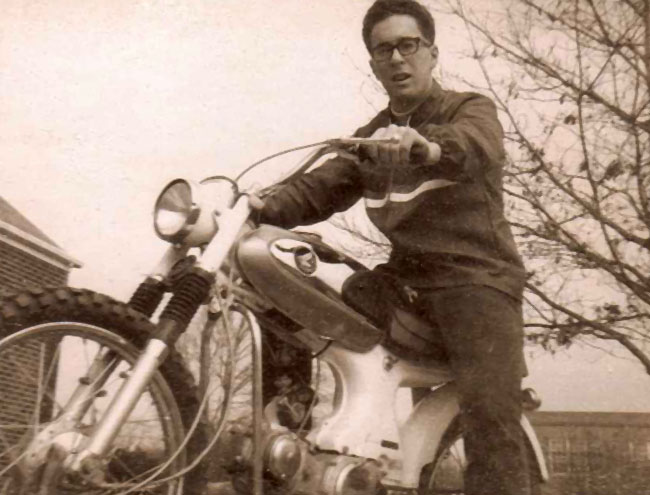
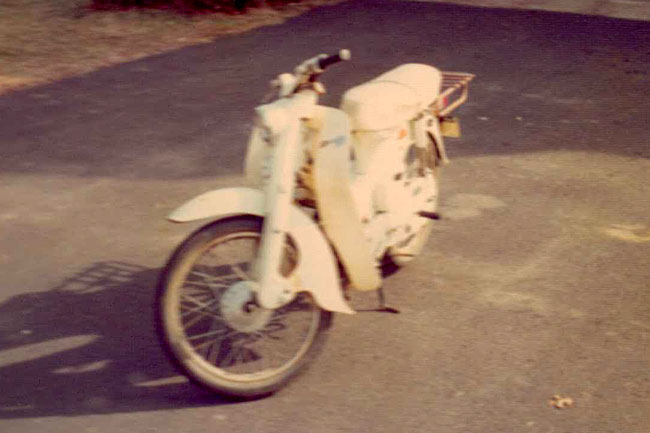
My first motorcycle was a Honda Super 90. I bought it from Sherm Cooper, a famous Triumph racer who owned Cooper’s Cycle Ranch in New Jersey. My Super 90 was cool…it was white and it had an upswept pipe and knobby tires.  Mr. Cooper used it for getting around on his farm (the Cycle Ranch actually started out there).  I was only 14 and I wasn’t supposed to be on the street yet, but I was known to sneak out on occasion. I liked that Honda Super 90 motor, and evidently so do a lot of other people (it’s still being manufactured by several different companies in Asia).

Yours truly at about age 14 on the Honda Super 90. What’s that stuff on top of my head?

The next bike was a Honda SL-90. Same 90cc Honda motor, but it had a tubular steel frame and it was purpose-built for both road and off-road duty. I never actually had a photo of that bike, but it was a favorite. Candy apple red and silver (Honda figured out by then that people wanted more than just their basic four colors of white, red, black, or blue), it was a great-looking machine. I rode it for about a year and sold it, and then I took a big step up.

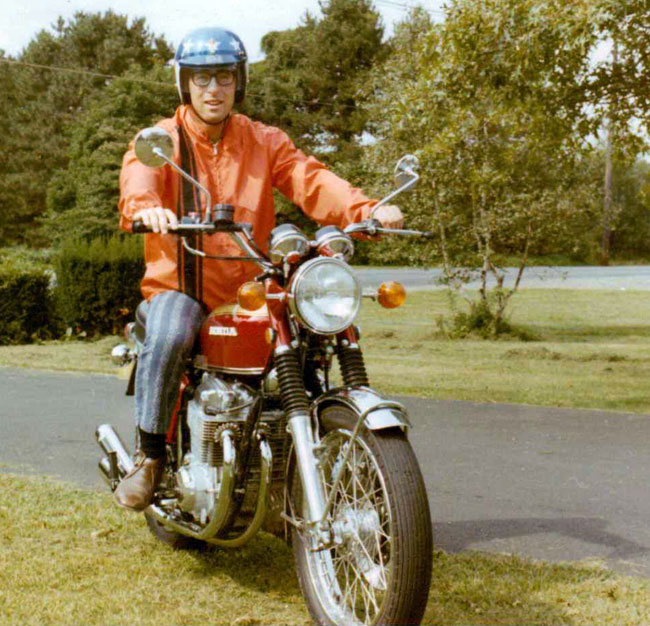
That big step up was a Honda 750 Four. I’ve waxed eloquent about that bike here on the blog already, so I won’t bore you with the details about how the Honda 750 basically killed the British motorcycle industry and defined new standards for motorcycle performance.  The 750 was fun, too. Fast, good looking, candy apple red (Honda used that color a lot), and exotic. I paid $1559 for it in 1971 at Cooper’s. Today, one in mint condition would approach ten times that amount.  I wish I still had it.

My first big street bike…a 1971 Honda 750 Four. It was awesome. It’s a miracle I never crashed it. I rode it all the way up to Canada and back in the early ’70s. Check out the jacket, the riding pants, and my other safety gear.

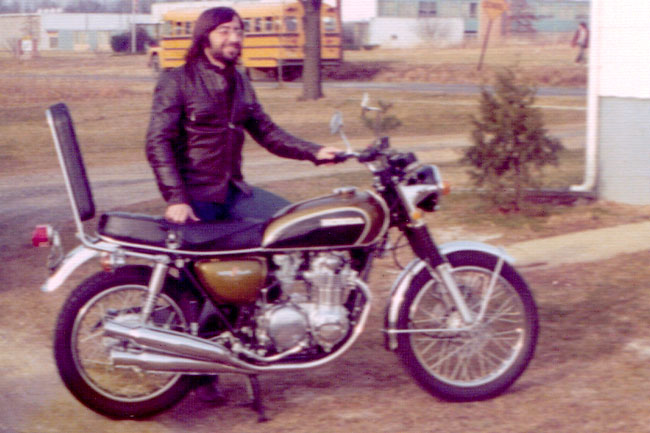
There were a lot of bikes that followed. There were two Honda 500 Fours, a 50cc Honda Cub (the price was right, so I bought it and sold it within a couple of days) an 85cc two-stroke BSA (with a throttle that occasionally stuck open), a 1982 Suzuki 1000cc Katana (an awesome ride, but uncomfortable), a 1979 Harley Electra-Glide Classic (the most unreliable machine I’ve ever owned), a 1978 Triumph Bonneville (I bought that one new when I lived in Fort Worth), a 1971 Triumph Tiger, a 1970 Triumph Daytona, a 1992 Harley Softail (much more reliable than the first Harley, and one I rode all over the US Southwest and Mexico), a 1995 Triumph Daytona 1200 (the yellow locomotive), a 1997 TL1000S Suzuki (a sports bike I used as a touring machine), a 2006 Triumph Tiger, a 1982 Honda CBX (a great bike, but one I sold when Honda stopped stocking parts for it), a 2007 Triumph Speed Triple (awesome, fast, but buzzy), a 2006 KLR 650 Kawasaki, and a 2010 CSC 150.   Here are photos of some of those bikes:

My high school buddy Johnnie with a Honda 500 four I later bought from him. That sissy bar was the first thing to go. It was a fun bike.
A Honda 50cc Cub, the most frequently produced motorcycle on the planet. In China and elsewhere, this bike is still being manufactured. I bought this one in the 1960s, mostly because I knew I could sell it and make a few bucks quickly.
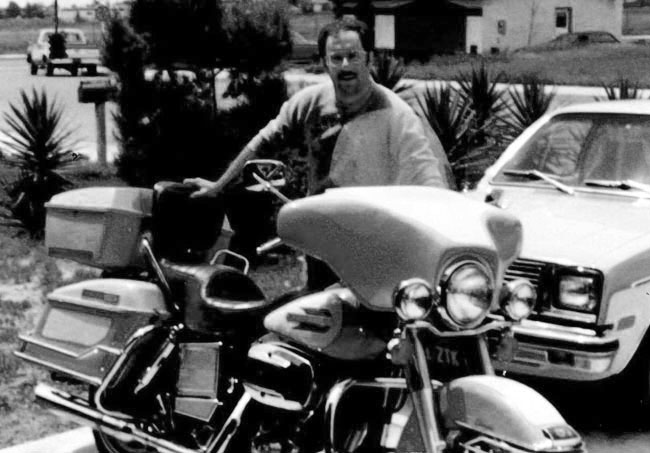
My ’79 Electra-Glide Classic. I called this one my optical illusion, because it looked like a motorcycle. I couldn’t go a hundred miles on that motorcycle without something breaking. And people badmouth Chinese motorcycles.
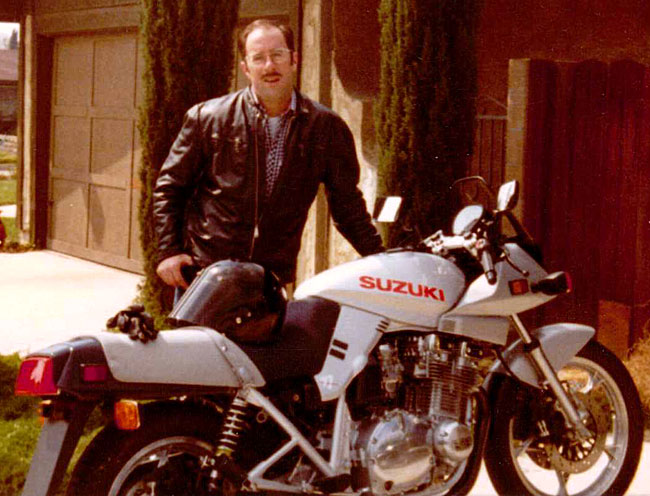
Me with my 1982 Suzuki Katana. In its day, that was a super-exotic bike. Uncomfortable, but very fast, and way ahead of its time. I bought it new and paid over MSRP because they were so hard to get. I was a lot skinnier in those days.
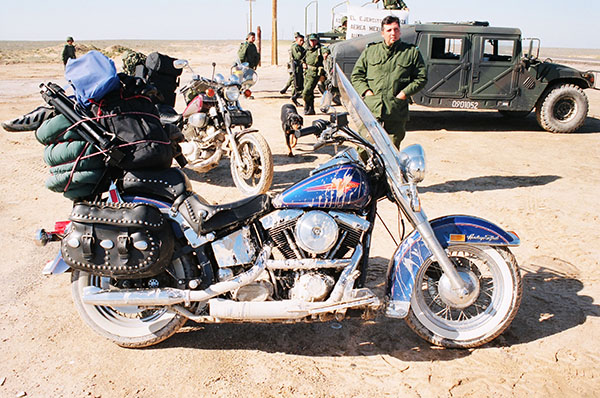
My ’92 Softail Classic Harley. This motorcycle was superbly reliable right up until the moment the oil pump quit at 53,000 miles. At about the time I shot this photo on a trip through Mexico, I started thinking that maybe a Big Twin was not the best answer to the adventure touring question. And I know, my motorcycle packing skills in those days were not yet optimized. That’s a Mexican infantry officer behind the bike.
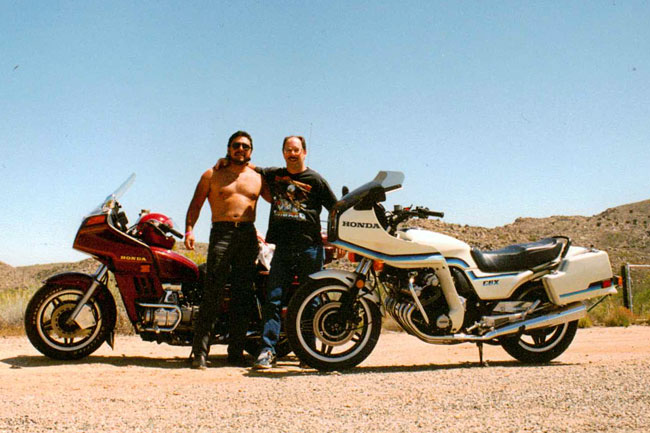
My buddy Louis V and me with our bikes somewhere in Arizona sometime in the mid-’90s. I’m not sure why Louis had his shirt off…we sure didn’t ride that way. Louis had an ’81 Gold Wing and I had an ’82 CBX Six. That old CBX was a fun bike…it sounded like a Ferrari!
My ’97 Suzuki TL1000S on the road somewhere in Baja. Wow, that bike was fast.  Here’s a story about my good buddy Paul and me featuring this motorcycle.
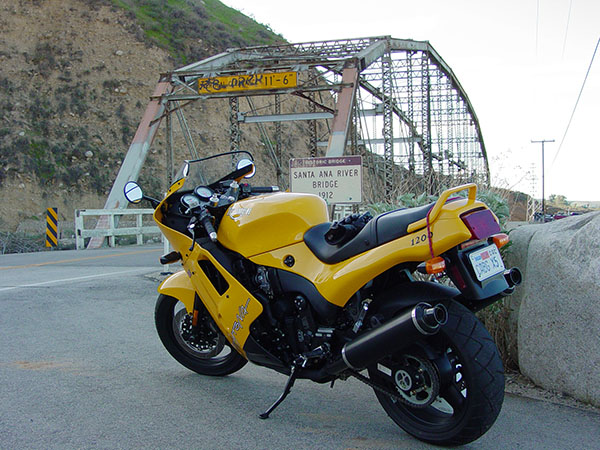
The 1200 Daytona. I won it on an Ebay auction.  It was an incredible motorcycle and you can read more about it here.
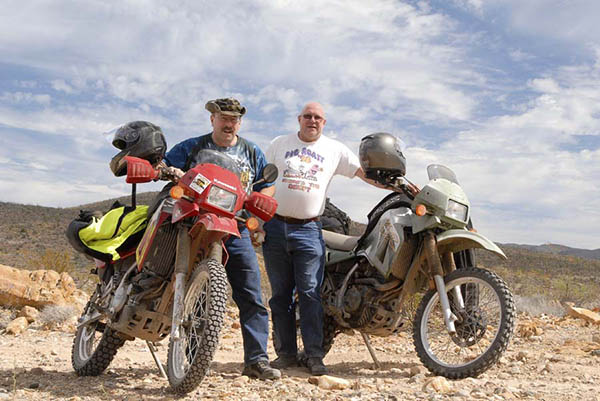
I’d always wanted a KLR 650, and when I pulled the trigger in 2006 I was glad I did. Smaller bikes make more sense. They’re more fun to ride, too.  It seemed to me that this was the perfect bike for Baja.  That’s me and Baja John out at El Marmol.
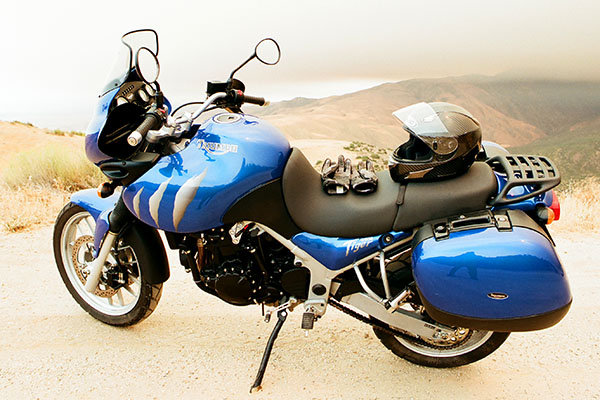
The ’06 Triumph Tiger. Fun, but a little cramped and very heavy. It was styled like a dual sport, but trust me on this, you don’t want to get into the soft stuff with this motorcycle.
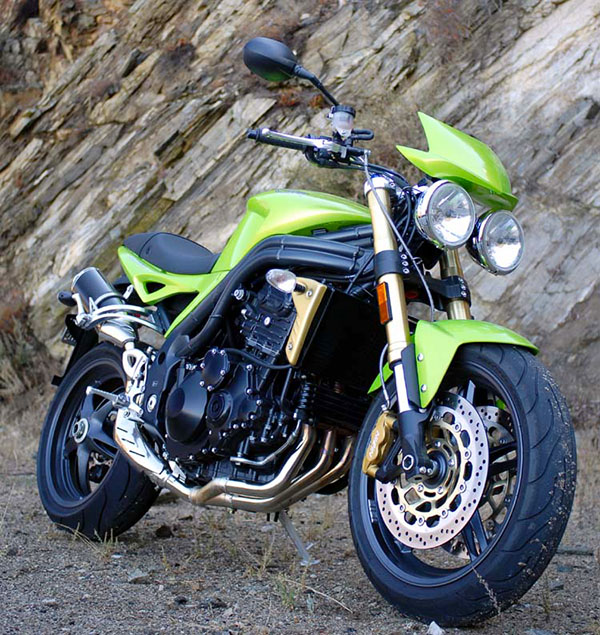
Potentially the most beautiful motorcycle I’ve ever owned, this 2007 Speed Triple was a fast machine. The joke in motorcycle circles is that it should be named the Speed Cripple. That’s what it did to me.
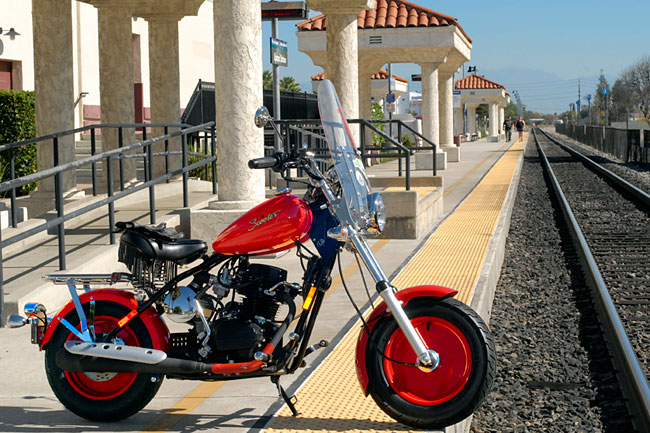
My CSC 150. Don’t laugh. I had a lot of fun on this little Mustang replica. My friends and I rode these to Cabo San Lucas and back.

That brings up to today.  My rides today are a CSC TT250, an RX3, and a Royal Enfield Interceptor 650.  I like riding them all.

Do you have photos of your old bikes?  Here’s an invitation:  Send photos of your earlier motorcycles to us (info@exhaustnotes.us) with any info you can provide and we’ll your story here on the blog.  We’d love to see your motorcycles.


Want to see some of our Dream Bikes?   Give a click here!

Fred Checking In…

Never miss an ExNotes blog!


The call we put out earlier about sending a photo and describing your first bike was answered almost immediately by our good buddy and YooHoo aficionado Fred.  Check this out, boys and girls:

JOE!

There was a Tecumseh-powered Mini-Bike before this one, but I consider my Yamaha Mini-Enduro to be my first REAL motorcycle (picture attached). I put 100’s a miles a day on it in the woods around Woodstock Connecticut and Sturbridge Massachusetts….especially in the woods around Bigelow Hollow State Park – got lost in there more times than I care to remember!

Note how skinny I used to be…..Mom wasn’t stocking up on the Yoo-Hoo for me…..

Fred

We wrote to Fred and asked what he’s riding today, and here’s his answer:

Only the finest motorcycle known to man (or woman) – my trusty 2007 Caspian Blue Triumph Tiger 1050 – pic attached.

Over 76,000 trouble-free miles and smiles from North (Nova Scotia) to South (Florida) and West (Arkansas) and back East (Connecticut).

And it’s got PLENTY of storage for the Yoo-Hoo.

Fred


Fred, we admire your choice in your first motorcycle, your current motorcycle, and of course, beverages.  I used to ride a Caspian Blue Tiger as well; mine was a 2006 and I loved it.  Thanks for writing and ride safe.

So how about the rest of our riders and readers?  Does anyone else care to share their first ride with us?  Write to us at info@exhaustnotes.us!


Ekins, McQueen, Leno, Weinstein, and more…

This is a story I wrote a good 15 years ago and it has appeared online a couple of times before.  It’s about an invitation only celebration of Bud Ekin’s life at Warner Brothers Studios here in So Cal.  I first published this story on the old MotoFoto site and then again on the CSC blog about 10 years ago.  Good buddy Marty and rode our motorcycles to the event and it was awesome. It’s a good story and it was a great day.


I’ll bet everyone who reads this blog has seen Steve McQueen’s The Great Escape. Released in 1963 (about the same time as the original Mustang Motor Products folded), I believe The Great Escape is one of the greatest movies ever made. If you’re into bikes (hey, you’re reading this blog, so you gotta be!), you know about the scenes showing Steve McQueen racing away from the Nazis on a motorcycle in World War II Germany.

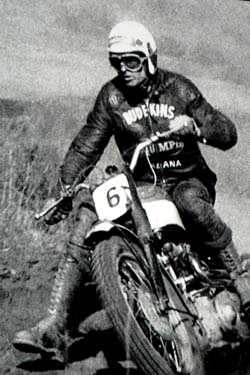
The purists among us recognized that the movie dudes took some liberties here…McQueen was on a 650 Triumph in the film, and the Germans didn’t use Triumphs. The movie folks modified the Triumph to make it look like a German military bike because it would have been a lot harder doing this scene on an old and underpowered BMW.  And the guy who jumped the bike over that barbed-wire fence wasn’t really Steve McQueen…it was a previously-unknown desert racer and stuntman named Bud Ekins (more on him in a bit).

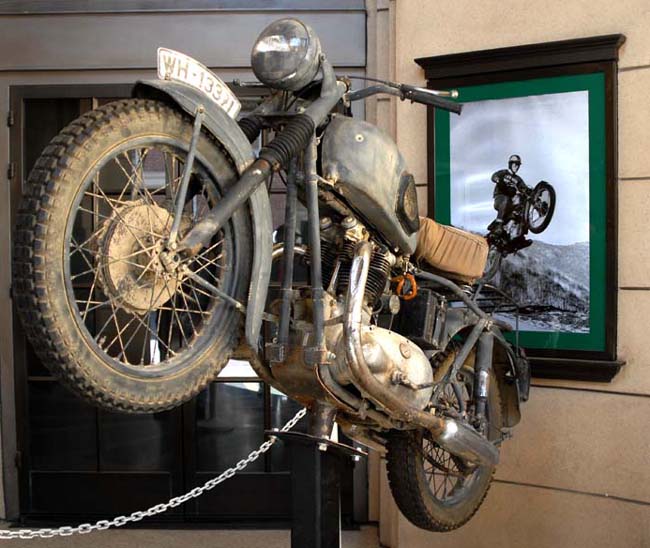
The real deal: The original, actual Triumph motorcycle used in The Great Escape.

So, how did all this come about?

Bud Ekins in action.

Most of you probably know that Steve McQueen was a serious motorcycle guy. In his day, he was an avid collector, racer, and rider. McQueen got into motorcycling almost accidentally. A guy who owed McQueen money offered to give him a Triumph motorcycle to repay the debt, and McQueen agreed, but he didn’t know how to ride.  McQueen took the bike to the local Triumph guru to learn how to ride, and that guy was a racer and mechanic named Bud Ekins. The two became riding buddies and (pardon the pun) fast friends.  Fast forward a bit, and McQueen’s got this gig to star in a movie called (you guessed it) The Great Escape. There are cool motorcycle scenes in it, including the iconic jump shown in the video above. McQueen’s bosses wouldn’t let him do the jump, so McQueen turned to his buddy, Bud Ekins. It would be the first time Ekins did any stunt work, or really any work at all in the movie industry.

Ekins and McQueen met with the folks in charge of the movie and learned that the script required jumping a 15-ft fence. Ekins explained to the studio execs that the highest he had ever jumped a motorcycle was maybe 5 feet, but Ekins thought he make the higher jump.  McQueen and Ekins worked at it, building up Ekin’s ability to jump greater heights through a series of experiments with ramps, velocity, and ropes. When Ekins felt confident, they filmed the scene in the above video in a single take. That’s all it took.

Ekins negotiated what was then a whopping fee for his jump: $1000. Yep, that’s right…there aren’t any zeros missing in that number. A cool one thousand dollars. It almost seems laughable now, but at the time, it was the highest fee Hollywood had ever paid any stuntman, and it made news.

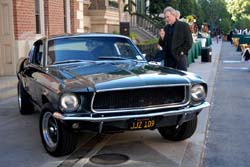
Frank Bullitt’s ride.  The two Mustangs used in filming Bullitt were on display at this event.

After Ekins made that Great Escape jump, his stuntman career took off. Just about any action scene you’ve ever seen in any movies during the last 50 years or so (if it involved a motorcycle or a car) had Ekins doing the real driving. In Bullitt, he drove both the Mustang (the green car, that is…not a Mustang motorcycle) and he rode the motorcycle that crashed during that movie’s iconic chase scene. In The Blues Brothers, that was Bud behind the wheel of Belushi’s and Akroyd’s trashed out police car. In Smokey and the Bandit, it was Ekins behind the wheel of the Firebird.  You get the idea.

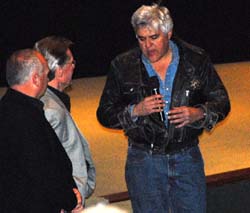
Speakers at the Ekins Celebration of Life. The guy on the right needs no introduction. The guy on the left is Harvey Weinstein.

McQueen died young a long time ago. Ekins passed away in 2007, and I was lucky enough to attend the celebration of life for him at Warner Brothers Studios.  There were a lot of speakers at that event, including big wheels in the movie business (one was a guy named Harvey Weinstein).  The were McQueen family members, Ekins family members, and Jay Leno. Something that stuck in my mind was Harvey Weinstein telling us that during the ’60s and ’70s if you asked any guy who he wanted to be, the answer would be Steve McQueen.  But, Weinstein continued, if you asked Steve McQueen who he wanted to be, the answer would be Bud Ekins.


So there you have it.  Bud Ekins, Steve McQueen, The Great Escape, a famous Triumph motorcycle disguised to look like a BMW, and more.  It was a grand day.   So, we have a question for you:  What’s your favorite motorcycle movie?   Let us know with a comment or two.  We’d love to hear from you.


A Dream Bikes page!

Yep, we’ve added another index page, this time for our Dream Bikes blogs…

The Dream Bikes page is a concept started by Arjiu, and it’s one of my favorites.   It’s all about bikes we wished we had bought back in the day, bikes we’d still like to own, bikes we have owned and miss, and more.   It’s a favorite, and now you can get to any of them quickly.

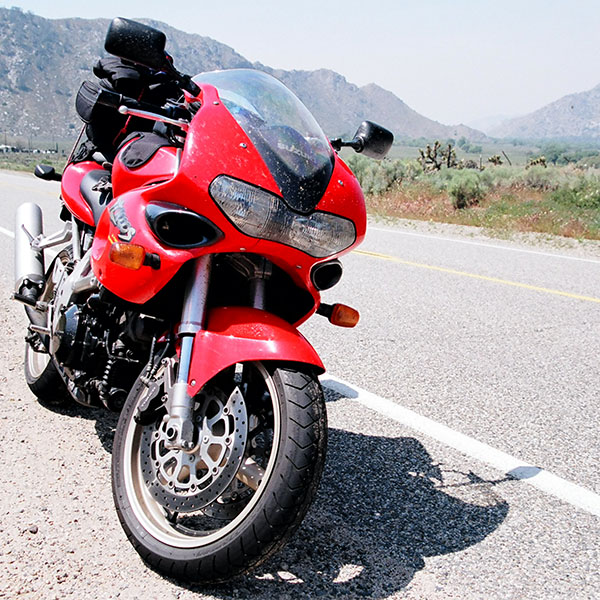
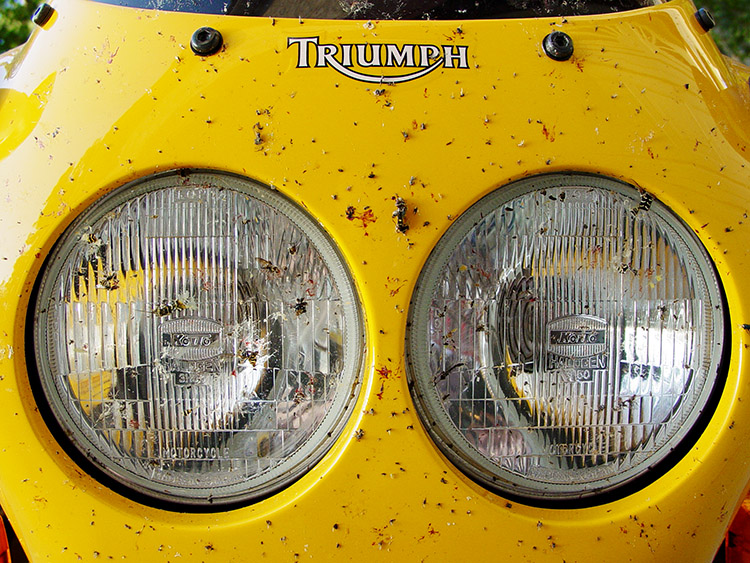
The lead photo above is one of the best bikes I’ve ever owned, my old 1995 Triumph Daytona 1200.   It was an awesome ride.  That bug-spattered headlight shot?  It was the result of a sustained 120 mph run across central California on Highway 58…a ride I was on with my good buddy Marty.  Good times on a dream bike…something we call can relate to.

The 2018 Motorado Show

The Motorado vintage motorcycle show is held once a year on the eastern outskirts of Santa Fe, New Mexico. It’s a cozy show with a few hundred entries and the parking lot contains a few dozen more worthwhile bikes. I could go into one of my patented off-topic rambles only to bring you back to the show 500 words from now but I’ll spare you the agony. Here are a few of the motorcycles I found notable.

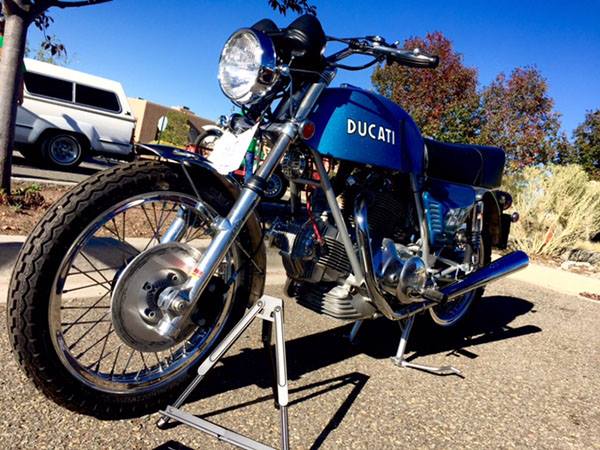
This year’s Motorado was Italian themed and the round-case 750’s came out in force. These are beautiful bikes but the non-desmo, spring-valve GT850 with its bizarre, Jetsons styling is the one for me.

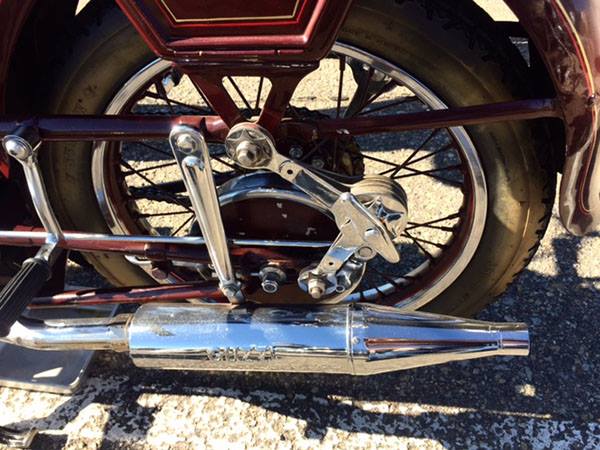
Adjustable rear dampers on the mono-shockish Moto Guzzi Falcone. Also known as the Baloney Slicer for the large outside flywheel. The Falcone sports a 500cc lay down engine and were used extensively by the Italian army and Police force.

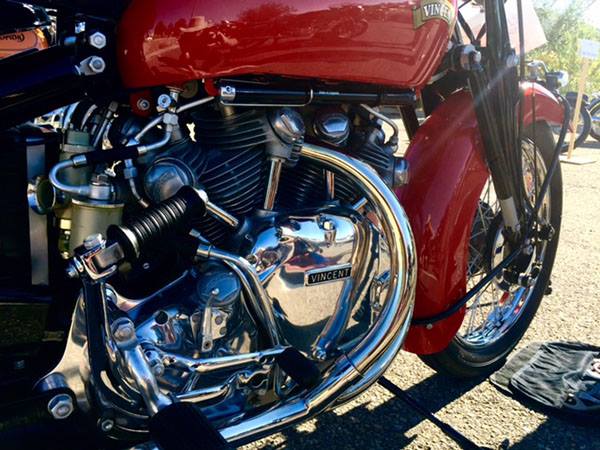
Italian-themed doesn’t mean Italian only. Motorado hosts all brands and style motorcycle. This Series C Vincent was blinding in the clear blue skies of New Mexico. Spotlessly restored and British, no one puts this baby in a corner.

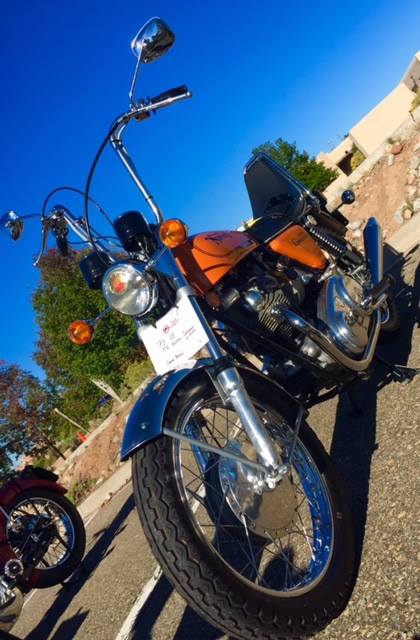
In all ways unfortunate, this ’73 Norton High Rider was one of the first-ever factory chopper style motorcycles. Someone at Norton spent a lot of time screwing up a great motorcycle. I can’t imagine how they decided enough was enough but it looks like they just stopped styling on the bike and called it good.

Pre-unit vs. Unit Triumphs: Me being me, I prefer the pre-unit engines for their added complexity and abundant opportunities to leak. The long primary cover looks better too. Unit Triumph lovers are soulless automatons who should never be invited to parties.

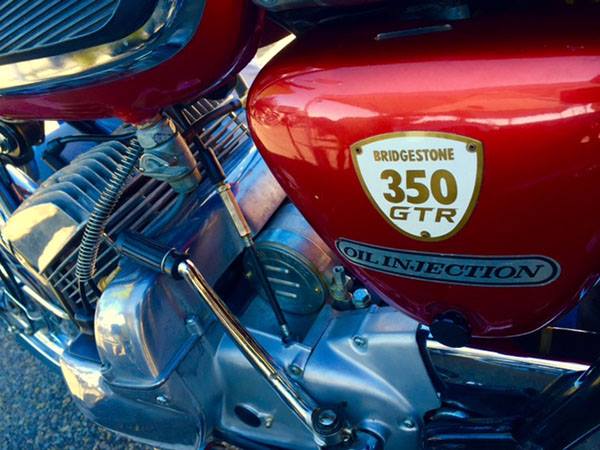
The rare Bridgestone GTR350. Disc-valved, two cylinders, this bike was a screamer. Motorado had an unrestored example on display. The owner says he has about 100 motorcycles in his collection! The aluminum crossover intake ducting has only a screen to keep debris out of the engine so I’m guessing these things wore out fairly fast.

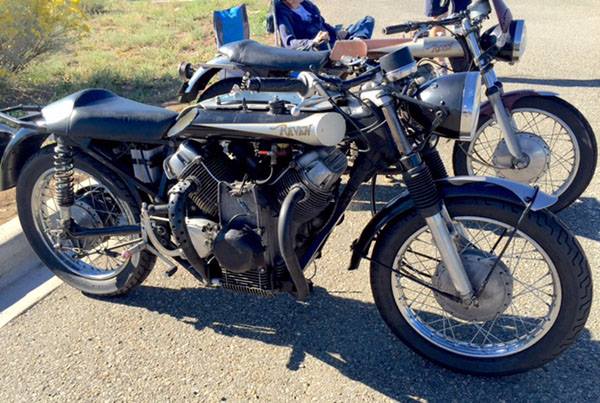
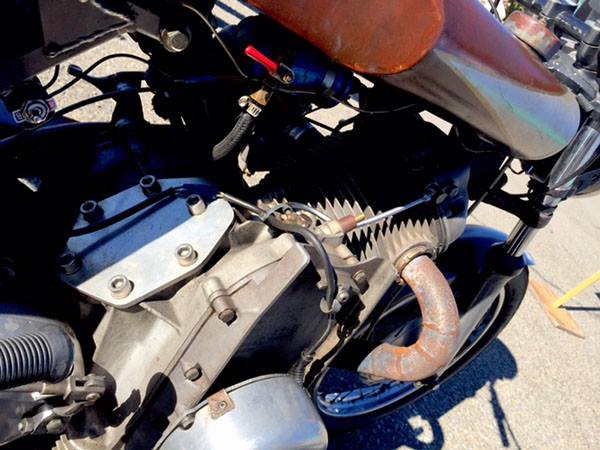
A couple of Ravens utilizing Moto Guzzi engines as they were never intended. The twin-cylinder model is shocking enough but the single with its rear cylinder blanked off takes the prize.
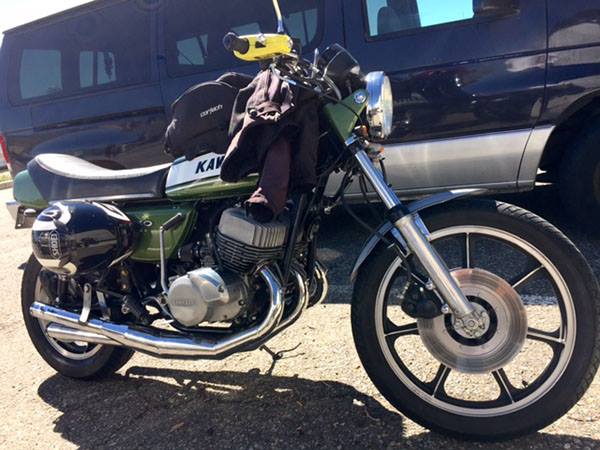
My internet buddy Wes dropped by on his H2 with bits and pieces from many years and even some 650 Kawasaki wheels. The whole of the parts exceeds the sum of the parts in this case. It’s a sweet bike and I should have killed him and stolen the thing.

I have about a million more shots from the show but you get the idea. Keep the date open for Motorado 2019 and I’ll see you there, maybe on an old Z1 if I can get the beast going in time.
More Joe Gresh stuff is right here!

Shine on…

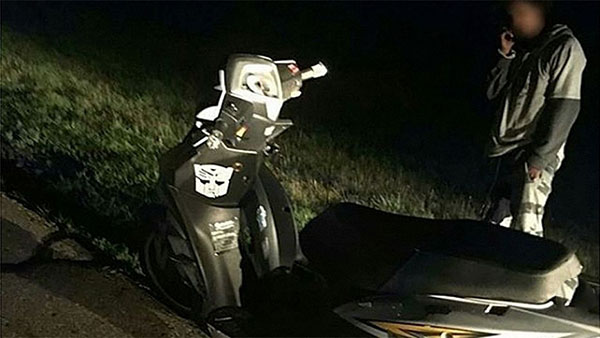
Here’s an interesting story that popped up on my news feed earlier today.  It seems an errant scooter rider, a young one at that, was stopped by the Maine State Police riding his scooter on the Maine Turnpike late last night, using only his cell phone for a headlight.   There must be more to the story, because after stopping him, the police gave the guy a lift to his destination some 70 miles away.   I can’t make stuff up this good, and if you doubt my word, you can read the original story here.

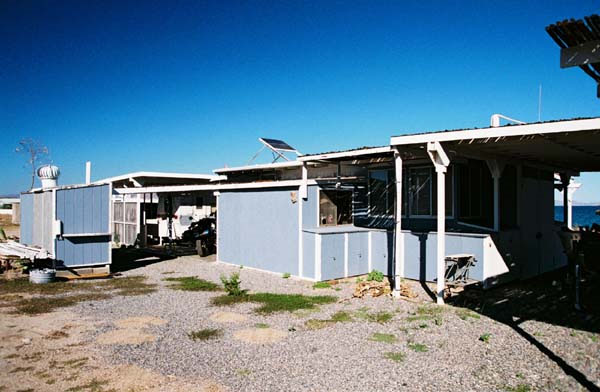
So that story naturally pulled my attention to a somewhat similar experience with my good buddy Baja John and his girlfriend Annie.   This goes back to 2006 again, shortly after John bought a place right on the Sea of Cortez in Bahia de Los Angeles.  Literally, right on the sea.  Oceanside housing.  It’s awesome.

Casa Baja Juan, in Bahia de Los Angeles.
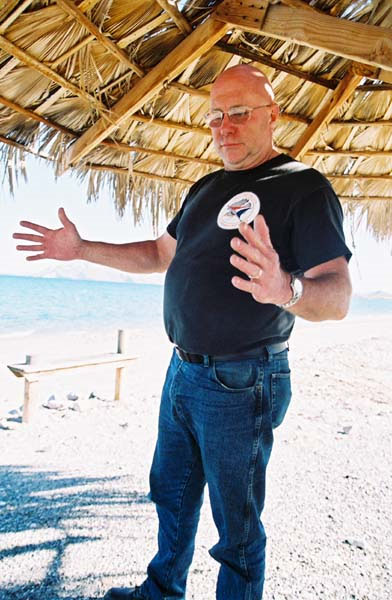
Baja Juan, probably telling a fish story, in his back yard.

I had just bought a new Triumph Tiger.  John and Annie invited me to their new place.   Who can say no to an offer like that?

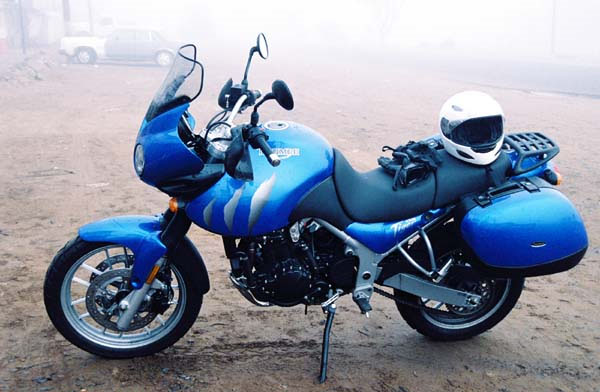
My Triumph. On the ride down to Bahia de Los Angeles, we hit very dense fog. We stopped and waited for it to lift.  At one point it was so thick I couldn’t see the ground.

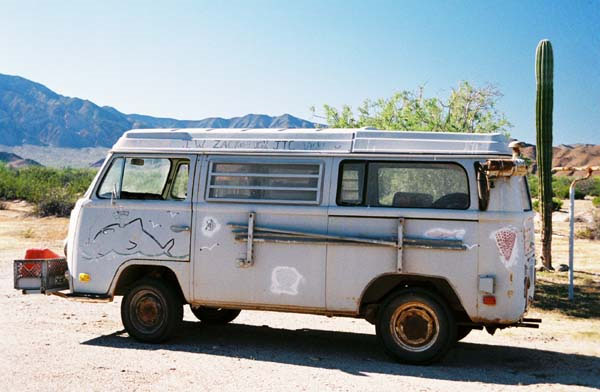
Here’s where the story gets interesting.  When John bought the Casa Baja Juan, it came with a VW bus.   John worked on it for a week and got it running, and it became his get-around-town wheels.  He never registered it, so it had no plates, but it was cool.  I love old VWs, especially the buses.

The VW bus that came with Baja John’s oceanside estate.  Lights?  We don’t need no stinkin’ lights!

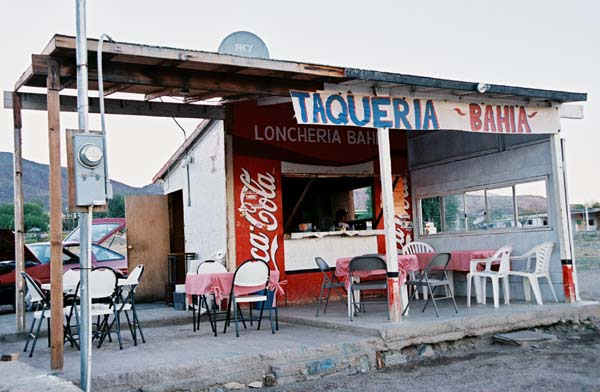
That night, we took the VW and went to dinner at the best taqueria in town, just a short distance away…

A typical Baja roadside restaurant. You can get some mighty good food in these places.

John, Annie, and I had a great dinner, a few Tecates, and then it was time to head back to his place.   There was a problem, though.  The sun had set, and the VW had no headlights.  The three of us pondered this situation a while, and then John remembered he had a flashlight.

John handed the flashlight to Annie and she hung out the passenger window, lighting the way as we rolled down a dirt road to John’s house.   We couldn’t see squat (the flashlight was pitifully weak), but we were laughing so hard we didn’t care.

Then we drove past another restaurant on that dirt road.  Imagine that: Another restaurant on that same dirt road.  Then I saw who was sitting under the veranda as we went by.  Uh oh, I thought.

There were three Mexican police officers having dinner, sitting out front, just a few feet away as we passed.  The police officers saw us, we saw them, and Annie waved, using the flashlight, which I thought would only accentuate the obvious:  We had no lights and the VW wasn’t registered.

The police?  They waved back, holding up their cervezas in a salute to our ability to adapt, improvise, and overcome.

Ah, Baja….

Sunrise, the next morning, looking east over the Sea of Cortez.