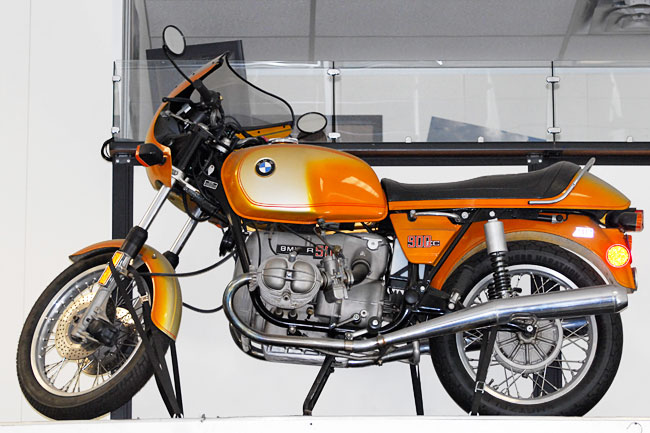
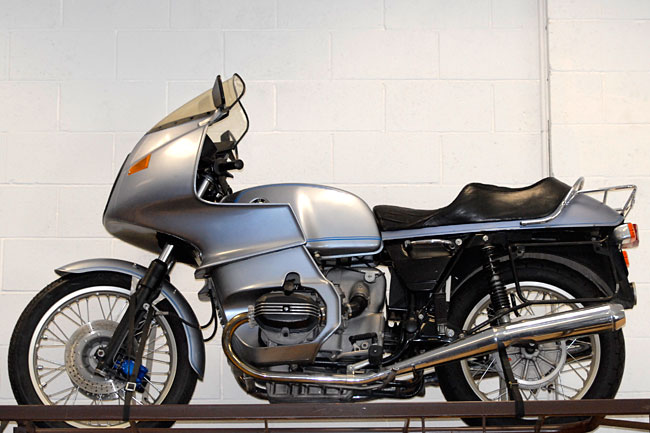
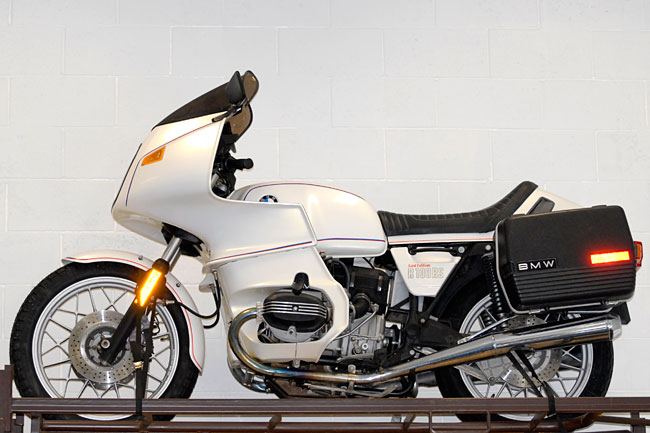
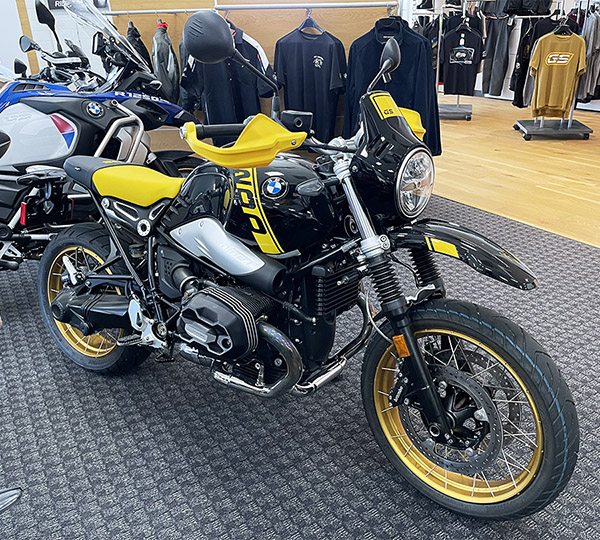
This blog is about my friend Bob’s vintage BMW collection on display at Brown Motor Works in Pomona, California.
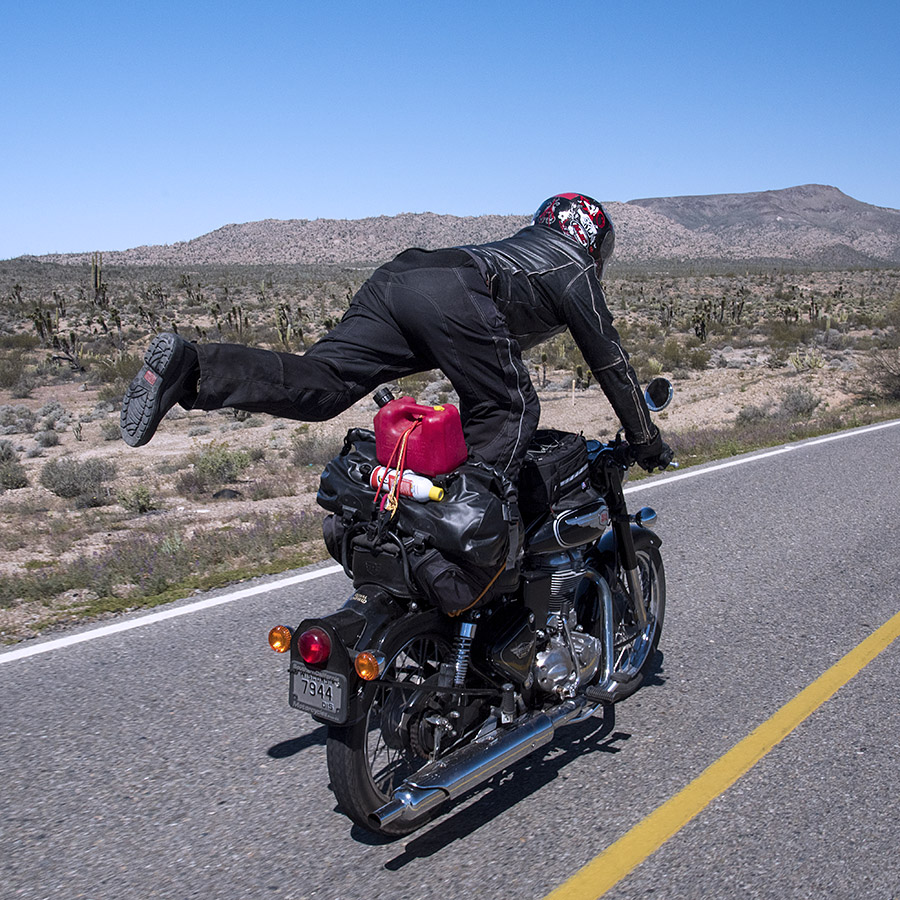
Bob is one of the most interesting people I know. He’s the founder of Brown BMW and he’s a guy with whom I’ve ridden Baja a couple of times. He is the fastest and most talented rider I’ve ever known. I’ve seen Bob riding well-worn BMW police trade-ins (bikes that weigh a hundred pounds more than regular boxer twins) smoke kids on Gixxers. When he wants to make a point, Bob will outride the Ricky Racers in the twisties while standing on the pegs.
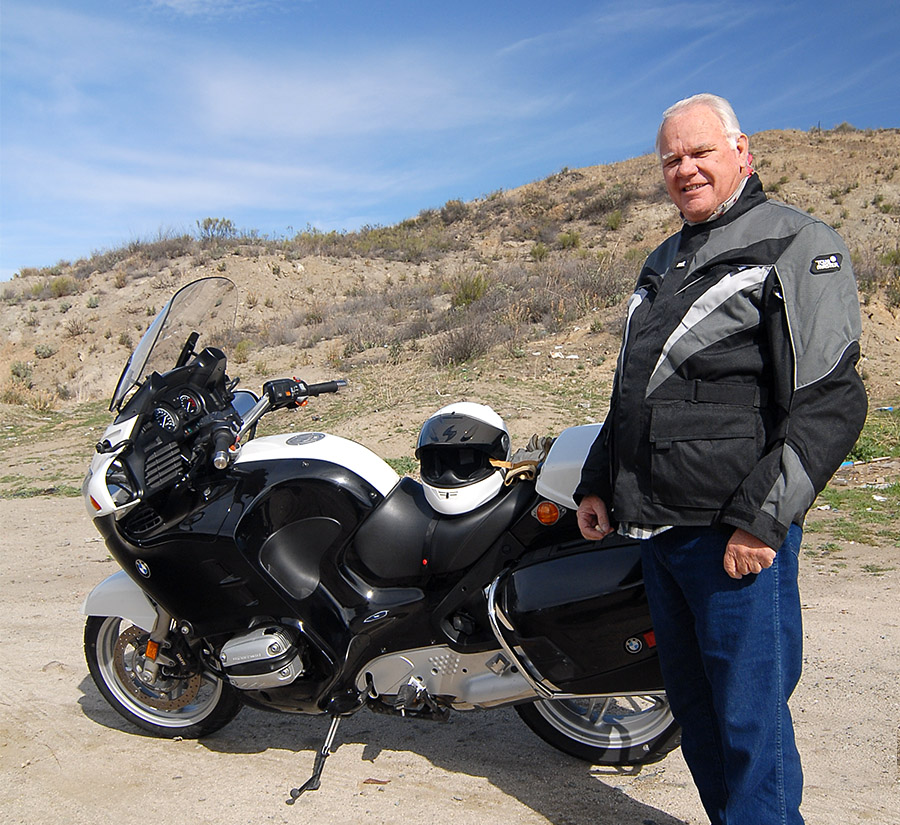
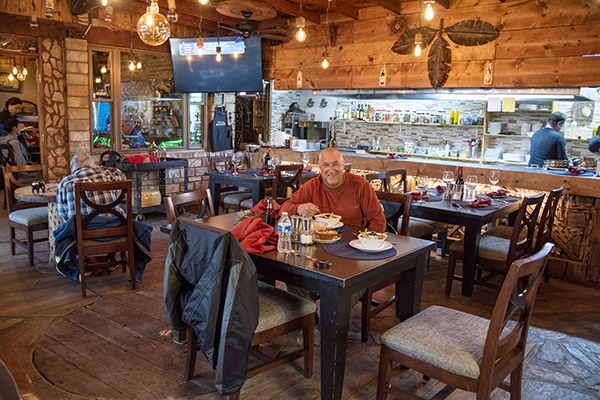
Bob’s dealership does a lot of police motorcycle work, and Bob will usually grab a black and white police motor that’s been turned in (I think he likes those bikes because they’re black and white, like the old Beemers). That’s a police motor you see in the photo of Bob at the start of this blog, and no matter how many times I’ve ridden with Bob, my heart still skips a beat when I see that black and white motorcycle in my rear view mirror. It’s a good thing when we ride in traffic…Bob takes the lead and traffic parts.
But I’m going off topic; the topic of today’s blog is the vintage Beemer collection at Brown Motor Works.
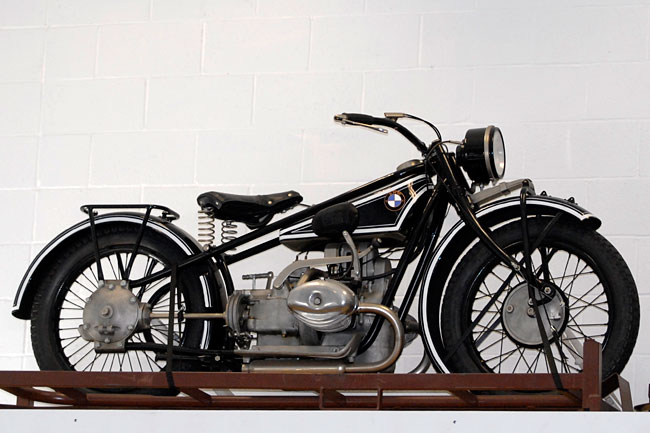
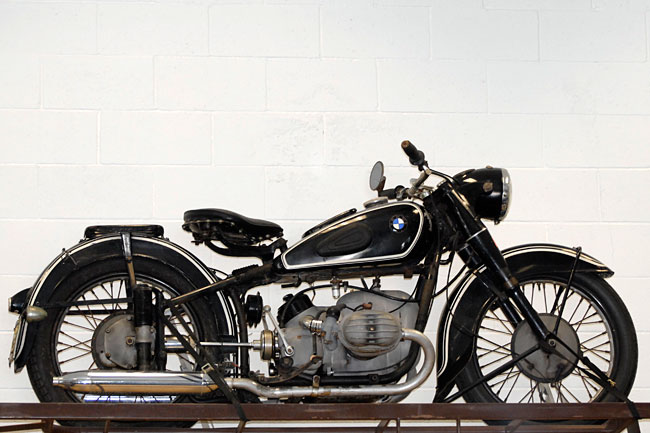
This first bike is a 1928 BMW. It’s a 500cc model, and like all of the bikes in these photos, it’s a boxer twin.
The black-and-white paint themes on the first several bikes make these photos really pop. This used to be the classic BMW colors until maybe the 1970s and it works. It’s a classic color combo.
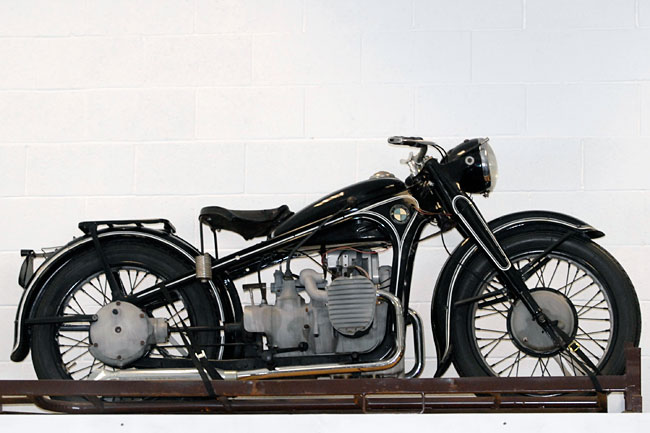
Here’s a 1936 750cc flathead BMW.
The bike above is interesting. It’s basically the model the Chinese copied, and until recently there were still folks riding around on Chiang Jiang motorcycles in China that are, well, Chinese copies of the old 1930s BMW flathead. In the 1990s, you could go to China and buy a brand new 1936 BMW (made in China under the Chiang Jiang name). It’s the bike my good friend Carla King rode around China. Those days are gone; you can’t register a motor vehicle more than 10 years old in China today, and they stopped making the Chinese early BMW boxer twin copies at least that long ago for emissions reasons.
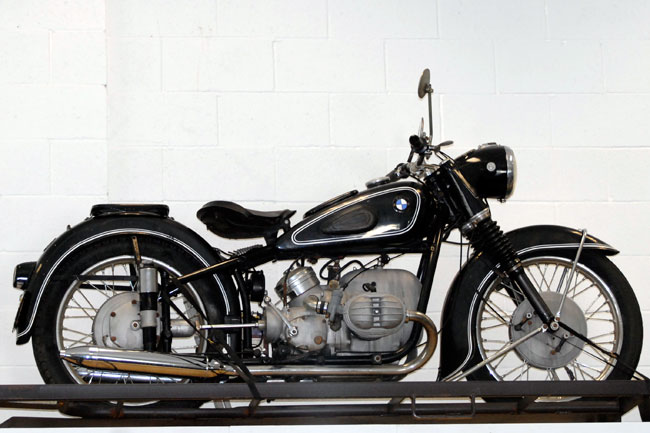
This next BMW is a 1952 600cc model.
Here’s a 1951 600cc BMW.
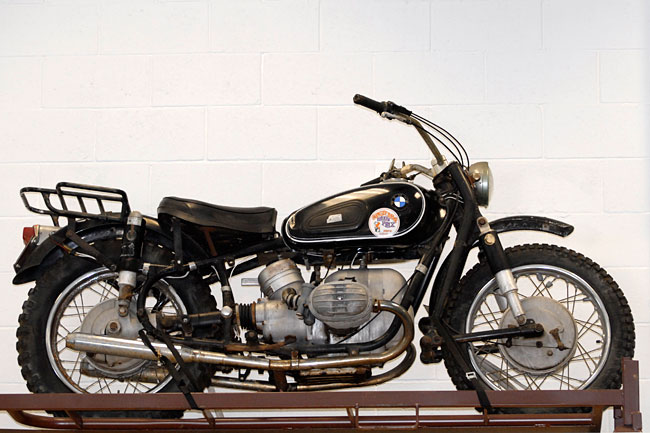
Here’s one with a great story…it’s Bob’s personal 1961 600cc BMW.
Bob calls the bike above the original GS, and for good reason. He rode it all the way to Cabo San Lucas back in the early 1960s. You might be thinking hey, what’s the big deal? Bob did it before there roads to Cabo. Bob rode the distance on trails and riding along the beach. Sleeping on the beach. Spinning the rear wheel in the sand to let the bike sink in so he wouldn’t have to use the center stand. That is a real adventure ride. Bob was blazing trails in Baja while I was still in elementary school!
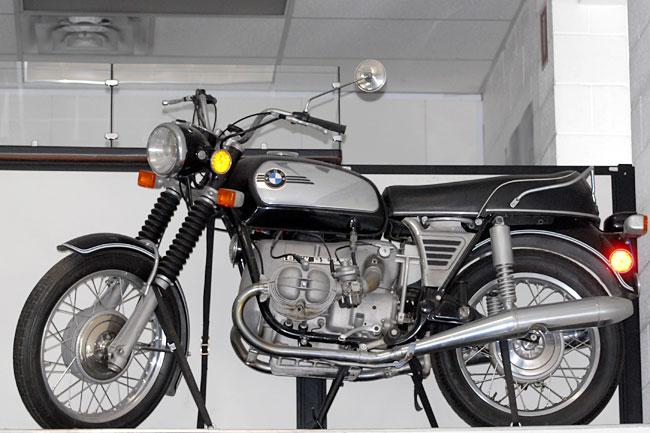
More good vintage stuff…here’s a 1971 R75/5 750cc BMW.
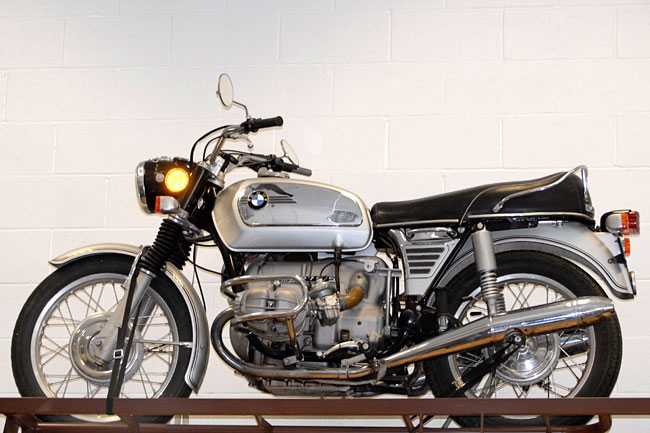
Here’s a 1972 model.
Another beautiful BMW classic is the 1976 R90S model. This motorcycle turned heads when it was first introduced, and it is still a show stopper.
The bikes you see in these photos are all in their stock colors. Most amazingly, most of these bikes (including the early ones) are not restorations…they are original motorcycles.
These last two are particularly beautiful. The first is the 1000cc 1977 R100RS.
And here’s the last bike BMW did in the R100RS configuration, the 1983 1000cc model in a beautiful pin-striped pearl white.
These photos are the results of a few minutes of shutter work on my part, and a lifetime of collecting by Bob Brown at Brown Motor Works.
The one that I found most intriguing was Bob’s early adaptation of a boxer twin into a dual sport. As I mentioned above, Bob refers to it as the original GS. When I was in Brown BMW ealier, I saw a current R9T 40th Anniversary model, and it pushed all the right buttons for me. It’s a little out of my price range, but I sure spent a lot of time looking at it. It’s one of the nicest ones they’ve ever done, I think.
Hit those pop up ads, folks!
Never miss an ExNotes blog:
There’s a lot of good stuff on ExhaustNotes. Check out our home page.
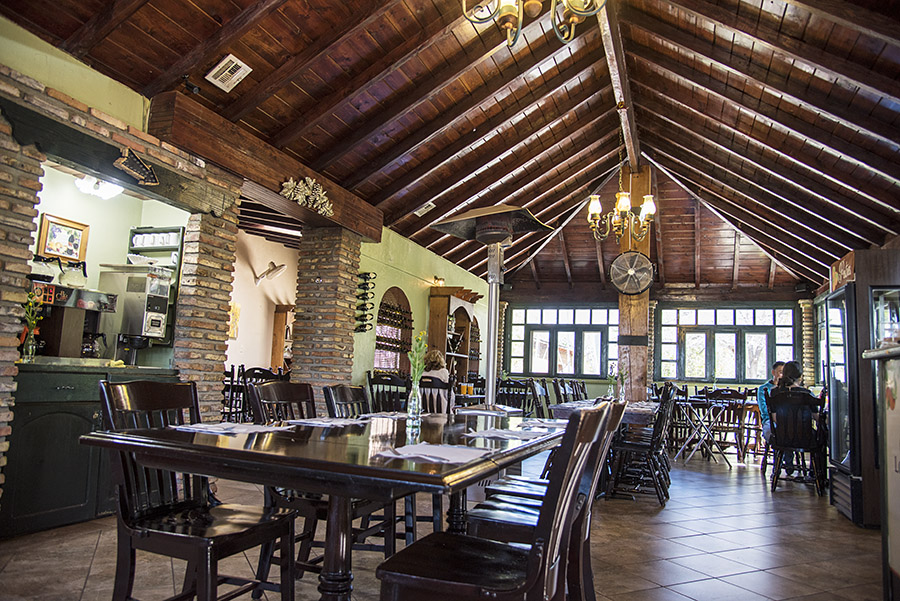
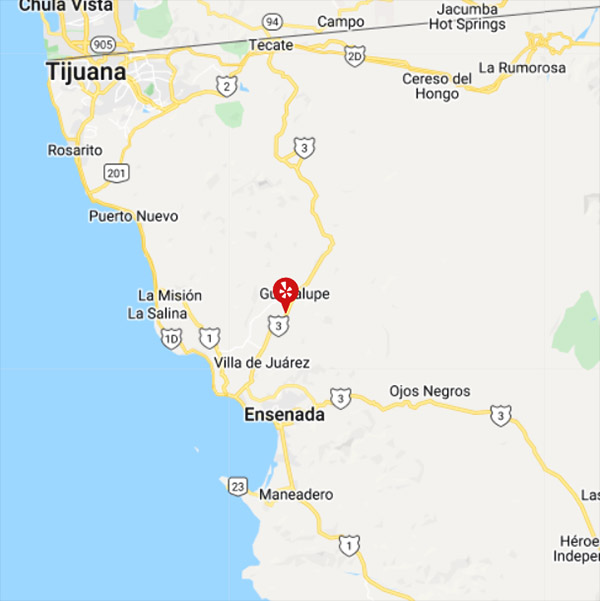
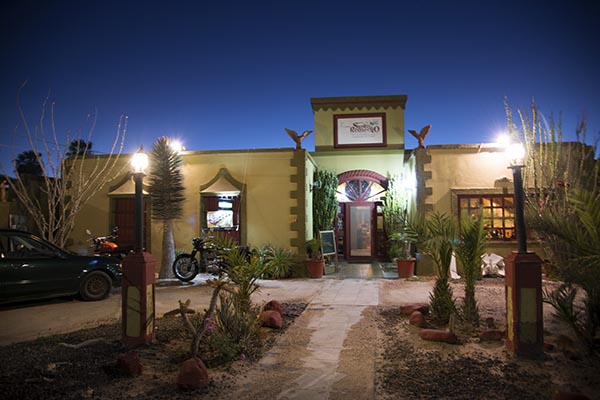
I have several favorite restaurants in Baja, and Los Naranjos in northern Baja’s Guadalupe Valley is certainly one of them. It’s address is México 3 22850 Ensenada, Baja, and what that means is the restaurant is about 80 kilometers south of Tecate along Mexico Highway 3 (the Ruta del Vino). It’s on your right as you head south, and if you blink you’ll probably miss it.
The Los Naranjos location on Mexico Highway 3.
If you’re coming north from Ensenada, Los Naranjos will be on your left. It always seems to me I’m on top of the place before I realize it when I’m riding north. You have to watch for it.
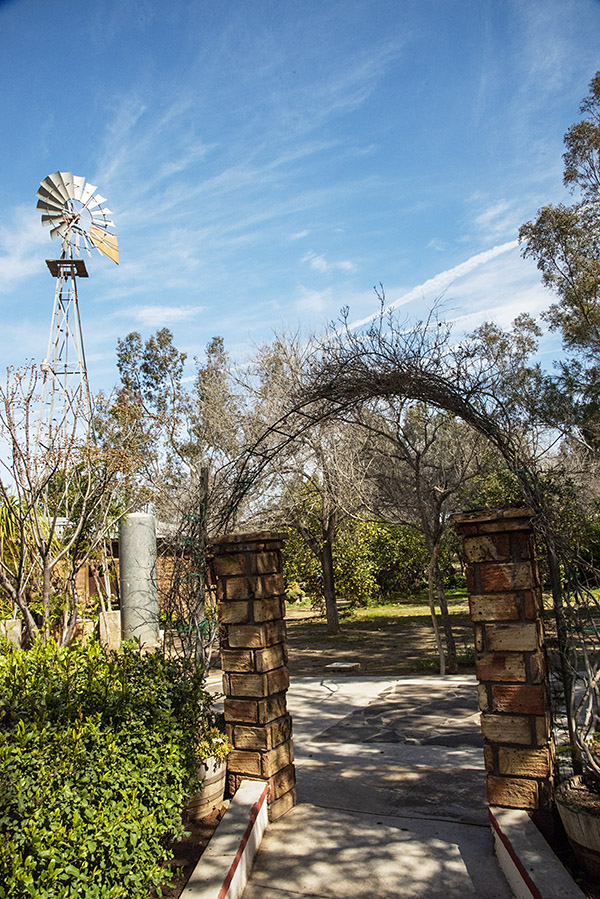
After you park, head in through the arch and you’ll enter another world. The grounds are immaculate (like the restaurant). You can poke around and explore a bit before you go into the restaurant, or you can do so after you’ve had a fine meal (which is the only kind of meal I’ve ever had there).
Entering the Los Naranjos grounds.
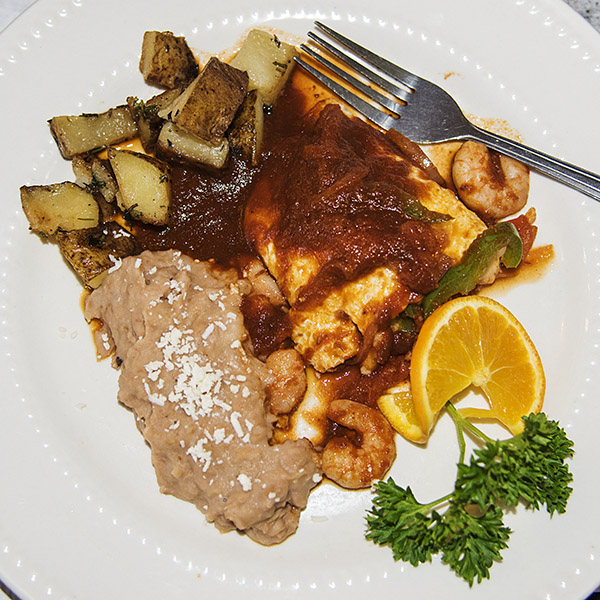
The food is exquisite and Los Naranjos is popular. You might see a Mexican riding club parked when you enter; the place is a well-known spot for an excellent dining experience. You can have breakfast or any other meal, and I’ve never had a bad meal there. Los Naranjos pies are exceptional, and their orange juice is off the charts. It’s fresh squeezed, and if there’s better OJ elsewhere, I haven’t found it.
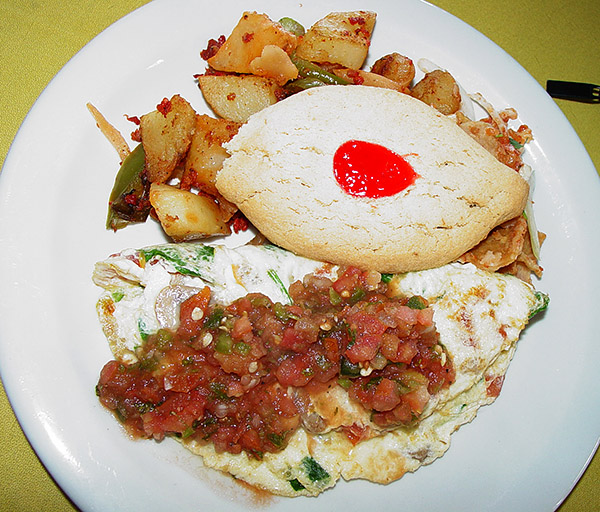
A superb breakfast at Los Naranjos. I’m getting hungry writing this blog and seeing this photo. I need to ride south soon.
The Los Naranjos grounds are interesting. There are sculptures in the exterior walls and various poultry species wandering the grounds. I don’t know if the chickens are committed or simply involved in the breakfasts and other selections (“involved” means they only provide eggs; “committed” means, well, you know), but a walk around is always interesting and full of photo ops.
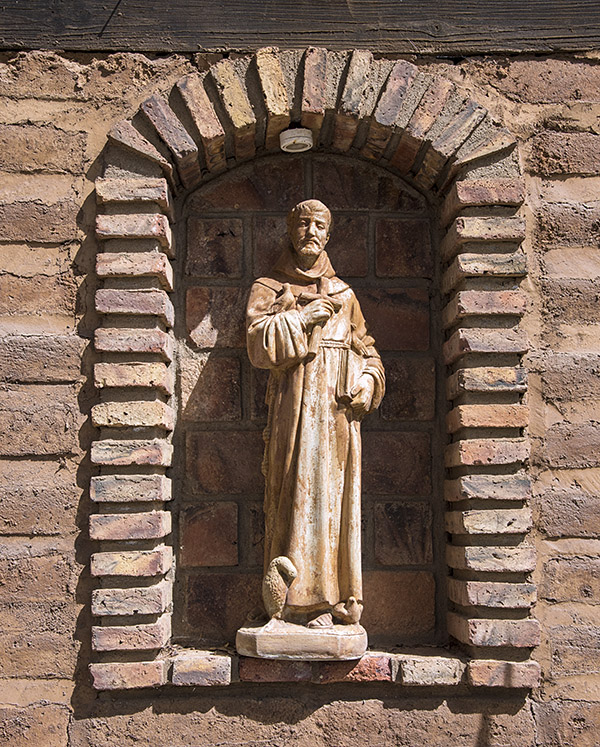
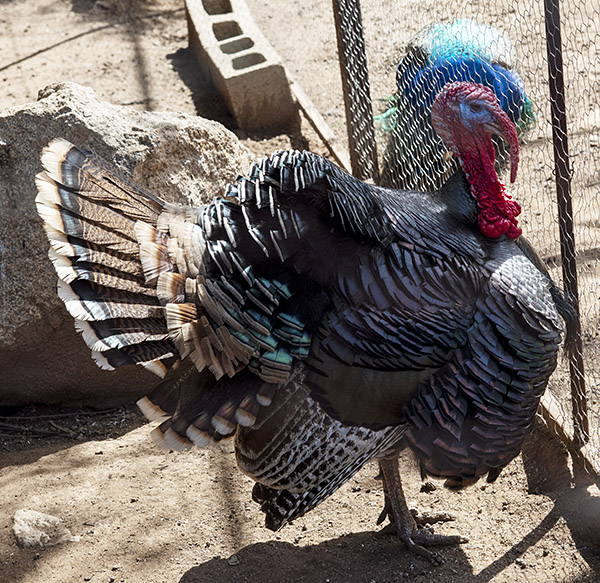
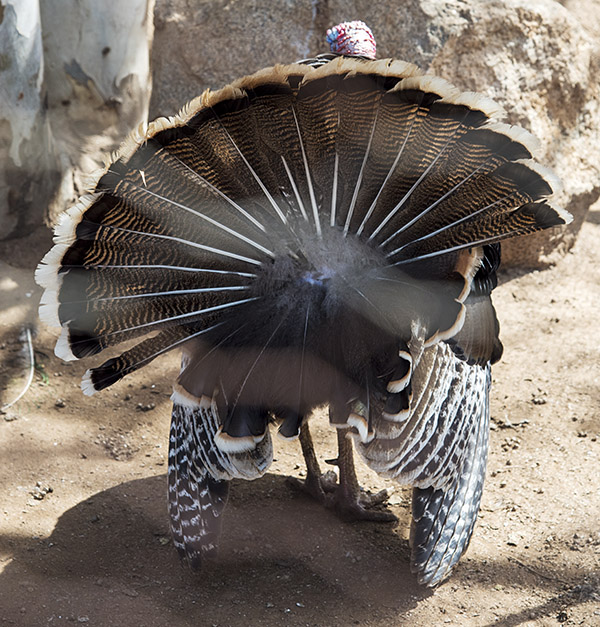
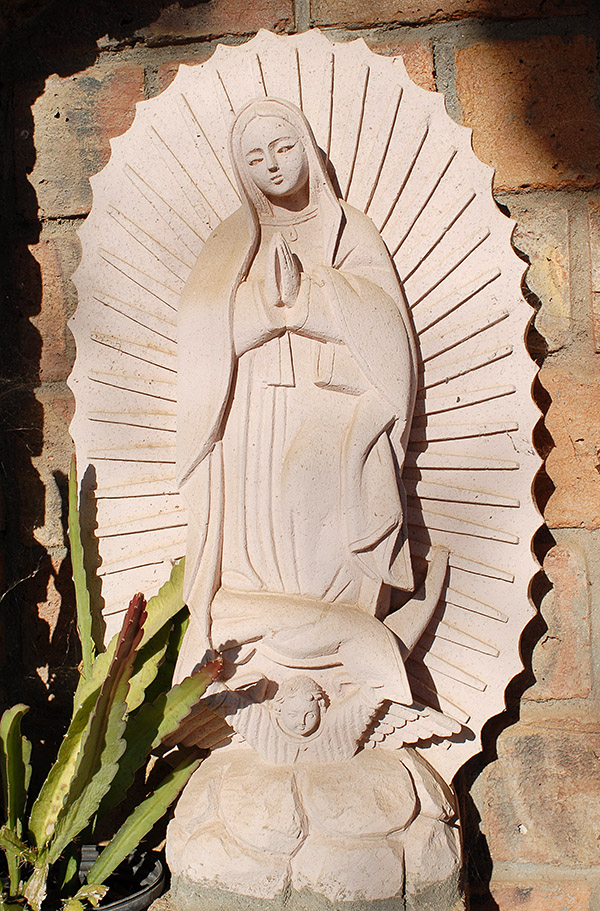
Wall sculptures abound at Los Naranjos.A turkey fanning its tail when I approached with my camera.Indeed, the photo ops are plentiful.More wall sculpture, in this case the Virgin de Guadalupe. This is a common sculpture in Mexico; the figure beneath the Virgin is an angel with the wings of an eagle holding her aloft.
There is a high end, small hotel directly behind Los Naranjos. I’ve never stayed there, which is a character defect I intend to correct on my next trip south. You’ll read about it here on the ExhaustNotes blog.
We’ve got a bunch of cool stuff coming your way in the next few weeks.
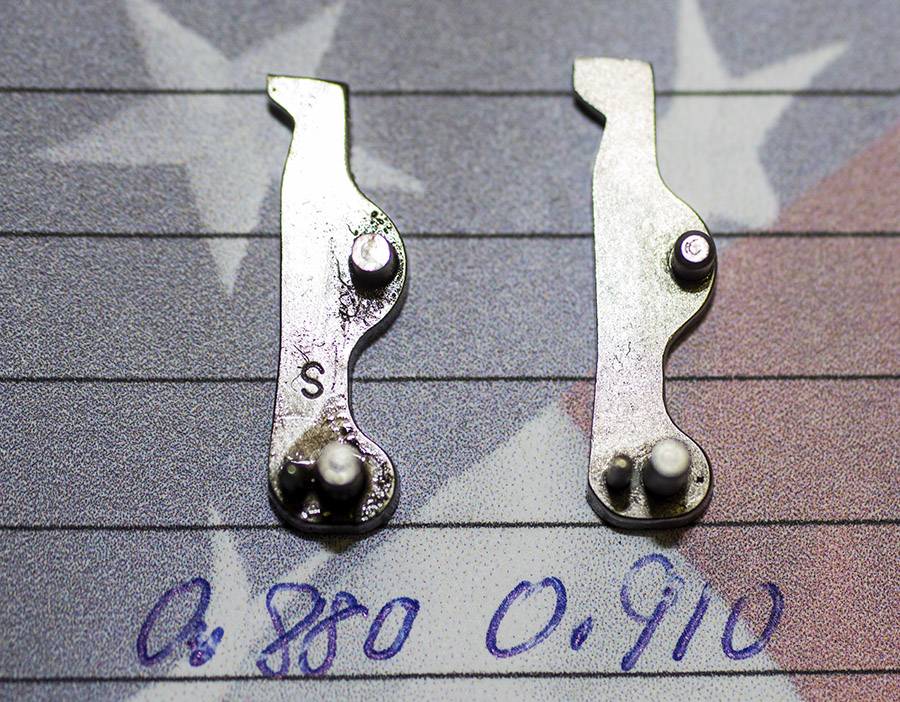
I’m working on a detailed tutorial on how to time a revolver…it’s my beloved Model 60. It seems the more things go south on that old war horse, the more I love it. This time, the revolver went out of time (that means it’s firing with the chambers misaligned with the barrel), and the way to correct that is by fitting a new hand. That’s the piece you see in the big photo above, showing the well-worn 60-year-old original hand on the left and a new one on the right (the hand is the part that advances the cylinder for each shot). Good times. Did I mention I love that gun?
I’ll be on a bunch of secret missions in the next few months. I’m visiting Janus Motorcycles in the next few weeks and I’m going to ride their new Halcyon 450. You may remember I rode with the Janus guys in Baja three years ago (wow, those three years went by quickly). The Janus trip was a hoot and I was blown away by the quality of these small motorcycles.
I’ll be in Gettysburg soon…four score and seven years ago, and you know the rest. Gettysburg was the turning point, and the bloodiest battle of the Civil War. I’m looking forward to the photo ops, and you’ll see the Nikon’s output right here.
And another: Hershey, Pennsylvania…an entire town blanketed in the aroma of good chocolate, streetlights that look like Hershey kisses, calories galore, and tasty treats. That will be a sweet ride!
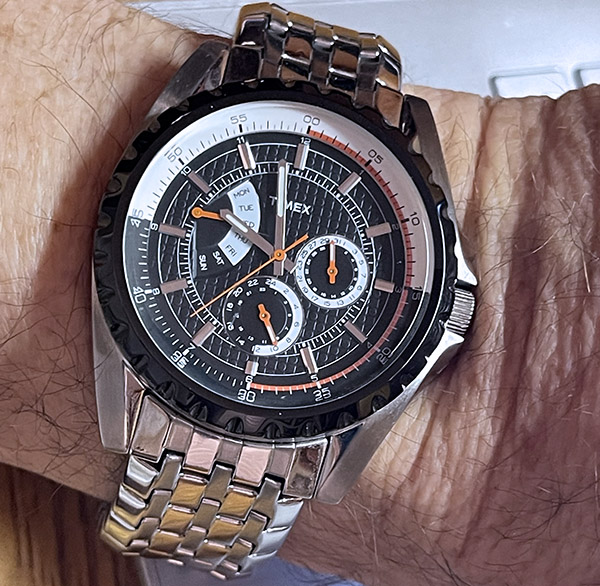
Folks love listicles. There are a dozen or so reasons why a Timex is as good as a Rolex. That one will generate a few comments, and we’ll be bringing them to you here.
How about the Indianapolis Motor Speedway? You’ll see it right here on ExNotes. Good stuff. Yep, we’ll be there, too.
Bill’s Bike Barn…yet another vintage moto museum. Never heard of it? Well, you will!
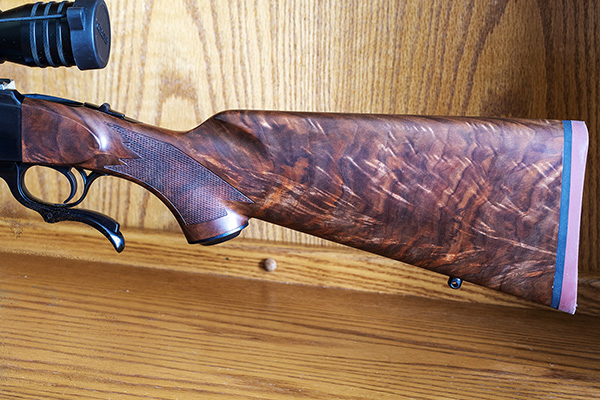
More gun stuff? Absolutely. Fine walnut and blue steel. I’ve got a cool story about the most beautiful stock I’ve ever seen on an absolutely incredible .257 Weatherby Magnum Ruger No. 1.
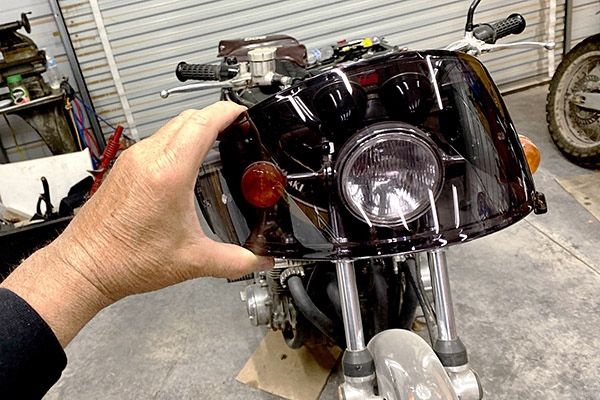
Look for a follow up on the Shoei helmet Gresh wears these days…it’s in the mix, too.
A road trip to New Mexico, and that means a visit with Joe 1 (or is he Joe 2?) and another video or two. Gresh has a bunch of motorcycles. Maybe I’ll borrow one and he and I will go for a ride. Who knows?
And more rides on my effervescent and exciting Enfield, one of the best bargains in biking (we’ll have a listicle coming up bargain bikes, too). Now that the left-leaning evil time suck (i.e., Facebook) is in the rear view mirror, I have lots more time. I’m doing what the Good Lord intended, and that’s riding my motorcycle and writing about it.
I’ve ridden motorcycles through Baja probably 30 times or more over the last 30 years, and it’s unquestionably the best place to ride a motorcycle I’ve ever experienced. Many people are afraid to venture into the peninsula for fear of a breakdown. Hey, it happens, but it’s not the end of the world and it doesn’t happen often. They don’t call it adventure riding because it’s like calling for an Uber.
Not all “breakdowns” result in your motorcycle being nonoperational. Some are just mere annoyances and you truck on. A few breakdowns result in the bike not running, but there are usually ways to get around that. When it happens, you improvise, adapt, and overcome. Here are a few of mine.
Heritage Indeed
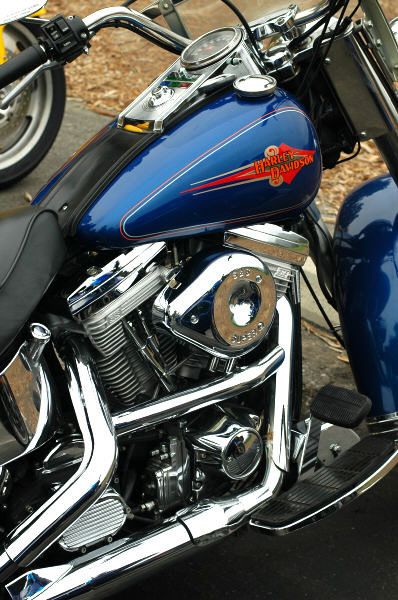
The first time I had a motorcycle act up was on my beloved ’92 Harley Softail. It started clanging and banging and bucking and snorting somewhere around Ensenada. I was headed south with my good buddy Paul from New Jersey. It was obvious something wasn’t right and we turned around to head back to the US. The Harley got me home, but I could tell: Something major had happened. The bike was making quite a bit of noise. I had put about 300 miles on it by the time I rode it back from Mexico.
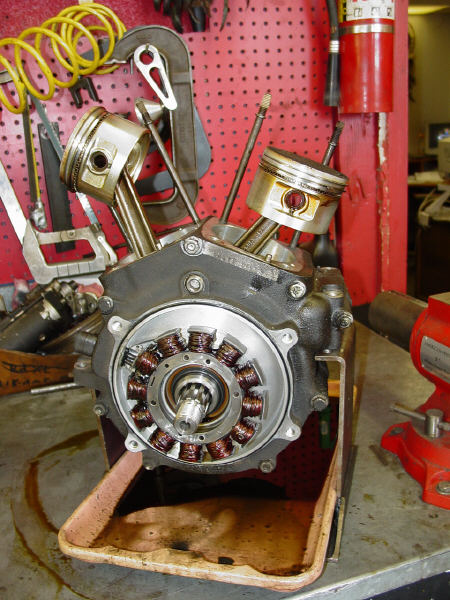
A roller lifter that converted to a solid lifter.
One of the Harley’s roller lifters stopped rolling, and that turned it into a solid lifter. And when that happened, the little wheel that was supposed to rotate along the cam profile started wearing a path through the cam. And when that happened, the metal filings migrated their way to the oil pump. And when that happened….well, you get the idea. My 80-cubic-inch V-Twin Evo motor decided to call it quits after roughly 53,000 miles. It happens I guess. Nothing lasts forever.
Potato, potato, potato.
Here’s where it started to get really interesting. My local Harley dealer wouldn’t touch the bike. See, this was around 2005 or so, and it seems my Harley was over 10 years old. Bet you didn’t know this: Many Harley dealers (maybe most of them) won’t work on a bike over 10 years old. The service manager at my dealer explained this to me and I was dumbfounded. “What about all the history and heritage and nostalgia baloney you guys peddle?” I asked. The answer was a weak smile. “I remember an ad with a baby in Harley T-shirt and the caption When did it start for you?” I said. Another weak smile.
An S&S engine in my ’92 Softail. It let me ride a slow bike fast.
I was getting nowhere fast. I tried calling a couple of other Harley dealers and it was the same story. Over 10 years old, dealers won’t touch it. I was flabbergasted. I tried as hard as I could, but there was no getting around it…the Harley dealer would not work on my engine. It was over 10 years old. That’s that; rules is rules. For a company that based their entire advertising program on longevity and heritage, I thought it was outrageous. A friend suggested I go to an independent shop. “It’s why they exist,” he said. So I did.
So, I went with Plan B. I took the Harley to a local independent shop, and they were more than happy to work on my bike. I could have the Harley engine completely rebuilt (which it needed, because those metal bits had migrated everywhere), or I could have it rebuilt with an S&S motor. I went with the S&S motor (the cost was the same as rebuilding the Harley engine), doubling the horsepower, halving the rear tire life, and cutting my fuel economy from 42 to 33 mpg.
Justin’s Countershaft Sprocket
On the very first CSC Baja trip, I was nervous as hell. The CSC bikes had received a lot of press and the word was out: CSC was importing the real deal, a genuine adventure touring motorcycle for about one sixth of what a GS 1200 BMW sold for in those days. The naysayers and keyboard commandos were out in force, badmouthing the Chinese RX3 in ways that demonstrated unbridled ignorance and no small amount of bias. And here we were, taking 14 or 15 guys (and one gal) who had bought new RX3 motorcycles that had literally arrived in the US just a few days before our departure. There was one thought in my mind as we headed south from Azusa that morning: What was I thinking? If the bikes started falling out on this first trip, it would probably kill the RX3 in America.
Hey, it worked. Adapt, overcome, improvise. The adventure doesn’t start until something goes wrong.
I need not have worried. None of the engines failed. We had a few headlights go out, but that’s not really a breakdown. And then, when we were about halfway down the Baja peninsula, I took a smaller group of riders to see the cave paintings at Sierra San Francisco. That trip involved a 140-mile round trip from Guerrero Negro into the boonies, with maybe 20 miles of that on a very gnarly dirt road. As we were returning, good buddy Justin’s RX3 lost its countershaft sprocket. We found it and Justin did a good enough MacGuyver job securing it to the transmission output shaft to get us back to Guerrero Negro, but finding a replacement was a challenge. We finally paid a machinist at the Mitsubishi salt mining company to make a custom nut, and that got us home.
On every Baja trip after that, I took a spare countershaft sprocket nut, but I never needed any of them after that one incident on Justin’s bike. Good buddy Duane had a similar failure, but that was on a local ride and it was easily rectified.
Jim’s Gearbox
Four or five Baja trips later, after we had ridden all the way down to Mulege and back up to the border, good buddy Jim’s transmission wouldn’t shift.
Good buddy Jim in the Mulege mission.
That’s the only breakdown I ever experienced anywhere on an RX3 that wouldn’t get us home, and that includes multiple multi-bike Baja trips, the multi-bike 5000-mile Western America adventure ride, the multi-bike 6000-mile ride across China, the 3000-mile circumnavigation around the Andes Mountains in Colombia, and quite a few CSC local company rides. One of the guys on that Baja ride lived in the San Diego area and he owned a pickup truck, so he took the bike back up to Azusa for us.
Biting the Bullet
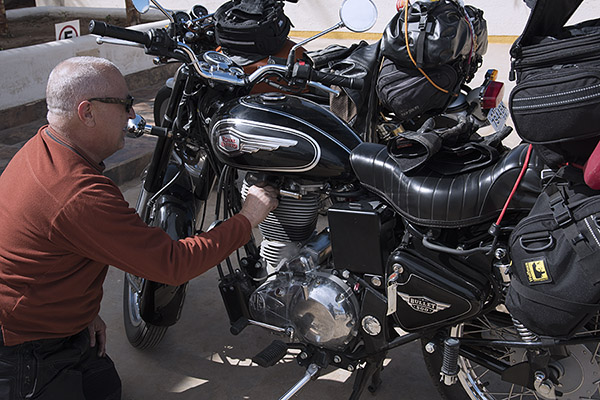
A couple of years ago Joe Gresh and I did a Baja road test with Royal Enfield press bikes. One was the new 650 Interceptor twin (a bike I liked so much I bought one when I got home); the other was a 500 Bullet. The Bullet was a disaster, but it really wasn’t the bike’s fault. The dealer who maintained the press fleet for Royal Enfield (I won’t mention them by name, but they’re in Glendale and they’re known for their Italian bikes) did a half-assed job maintaining the bike. Actually, that’s not fair to people who do half-assed work (and Lord knows there a lot of them). No, the maintenance on this bike was about one-tenth-assed. It was very low on oil, it had almost no gas in it, the chain was loose and rusty, and on and on the writeup could go. The bike kept stalling and missing, and it finally gave up the ghost for good at the Pemex station just north of Guerrero Negro.
Joe Gresh, inflight missile mechanic extraordinaire, getting intimate with the Bullet in Baja. “The Bullet needs me,” he said.
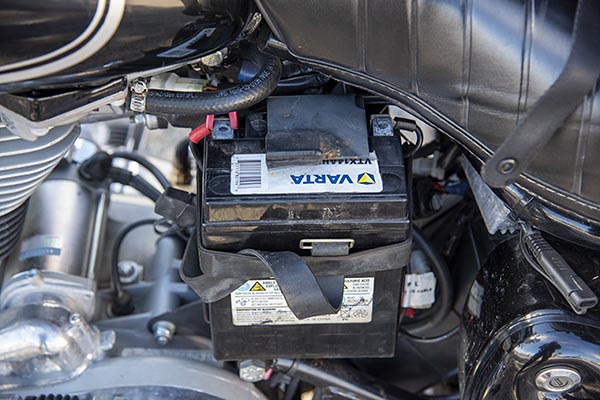
Fortunately for me, Gresh had one of those portable battery thingamabobbers (you know, the deals that are good for about 10 battery jumps) and it allowed us to start the bike. We bought a new battery that didn’t quite fit the bike in Guerrero Negro (big hammers solve a lot of problems), but the entire episode left a bad taste in my mouth for the Bullet and for the Glendale Ducatimeister.
Big hammers fix all kinds of problems.
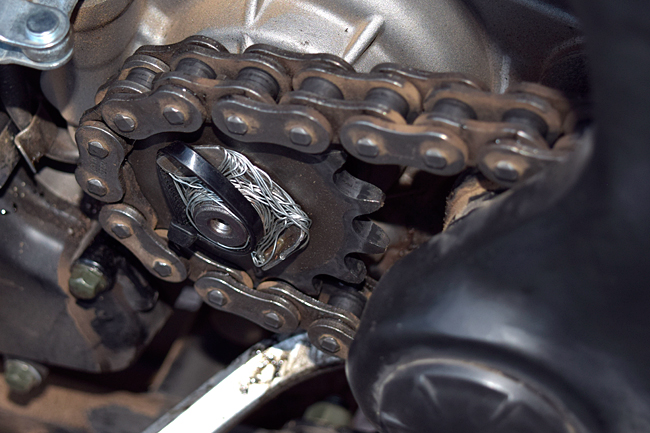
That bike had other problems as well. The kickstand run switch failed on the ride home, and Gresh did an inflight missile mechanic bypass on it. Then, just before we made it back to my house in So Cal, the rear sprocket stripped. Literally. All the teeth were gone. That was another one I had never experienced before. The Bullet was sort of a fun bike, but this particular one was a disaster. We joked about it. The Bullet needs me, Gresh said.
John’s Silver Wing Leak
Ah this is another motofailure that tried but didn’t stop the show. On one of my earlier Baja forays, Baja John had a Honda Silver Wing. That’s a bike that was also known as the baby Gold Wing (it had all the touring goodies the Gold Wing had). It was only a 500 or a 650 (I can’t remember which) and it had no problem keeping up with the Harleys (but then, it doesn’t take much to keep up with a Harley).
Baja John and the mighty Silver Wing, somewhere well south of the border.
The Silver Wing was a pretty slick motorcycle…it had a transversely-aligned v-twin like a Moto Guzzi and it had plenty of power. Unlike the Guzzi, the Silver Wing was water cooled and that’s where our problem occurred. John’s bike developed a coolant leak. I was a little nervous about that. We were more than halfway down the peninsula and headed further south when the bike started drooling, but John had the right attitude (which was not to worry and simply ignore the problem). The little Silver Wing was like a Timex…it took the licking and kept on ticking, and to my great surprise, it simply stopped leaking after another hundred miles or so. I guess it doesn’t really count as a breakdown.
John’s KLR 650 OPEC Bike
Baja John had another bike, a KLR 650, that developed a fuel petcock leak on another one of our Baja trips. As I recall, it started leaking on the return run somewhere around El Rosario. I get nervous around fuel leaks for the obvious reasons, but John stuck to his policy: Don’t worry, be happy.
Baja John: The man, the legend.
We stayed in a hotel in Ensenada that night. The hotel had an attached enclosed parking structure, which immediately started to smell like the inside of a gas tank. Not that I’ve ever been inside a gas tank, but that parking garage pretty much had the aroma I imagine exists in such places.
John’s luck continued to hold, and we made it home without John becoming a human torch.
The Bottom Line
The bottom line is you basically need four things when headed into Baja:
A tool kit.
A good attitude that includes a sense of adventure.
A well maintained motorcycle.
Maybe some spare parts.
So there you have it. If you’d like to know more about riding in Baja, please visit our Baja page and maybe pickup a copy of Moto Baja.
If you’re headed into Baja, don’t leave home without BajaBound Insurance. They are the best there is. If you are nice, they might even fix you up with a cool BajaBound coffee mug!
Never miss an ExNotes adventure! Sign up here for free:
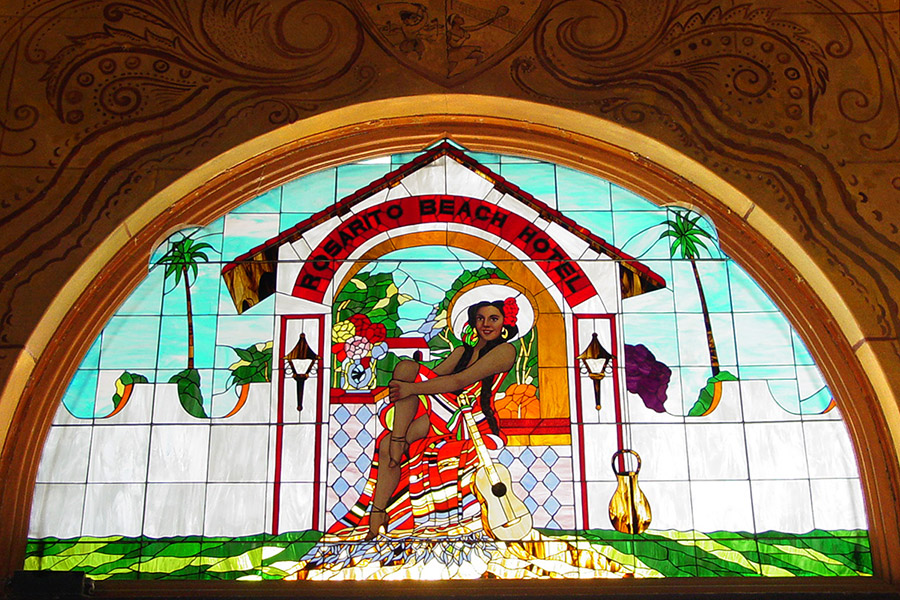
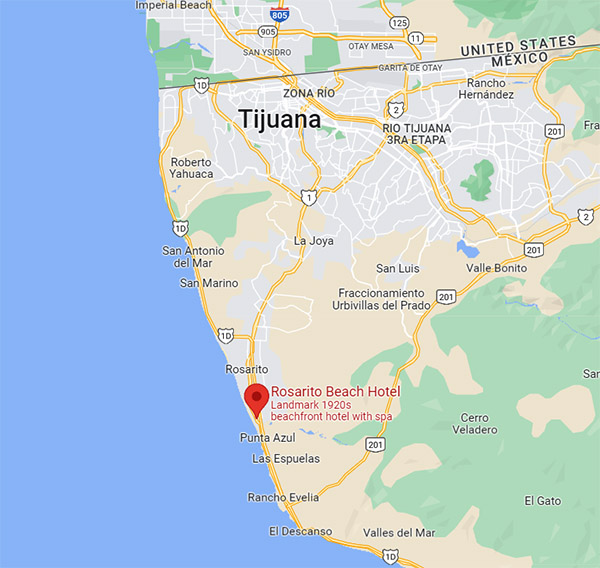
With the exception of our blogs on Tecate, most of what we write about Baja is well into the peninsula’s interior, far away from the touristy stuff clustered around Tijuana. Today’s blog on the Rosarito Beach Hotel is an exception. I love this place, and the beauty of it is that it’s only about 20 miles south of the border. It will take you longer to get through Mexican Customs in TJ than it will to drive to the Rosarito Beach Hotel.
You can actually see the Rosarito Beach Hotel from the toll road. It’s a short drive from the US border.
To get there from So Cal, just take I-5 south until you run out of road. Before you cross the border, though, make sure your car or motorcycle has Mexican insurance (we always use BajaBound). After you’ve crossed the border you’ll need to stop at the Mexican Customs office (it’s huge and you can’t miss it), get your paperwork squared away, and continue south. Watch the signs for the toll road to Ensenada; that’s the road you want. Driving through TJ isn’t too bad; once you’re on the toll road it’s a pleasant drive along the Pacific Coast and you’ll soon see signs for Rosarito Beach. Watch for the Rosarito Beach Hotel sign, head east, and after a couple of blocks you will be at the hotel entrance.
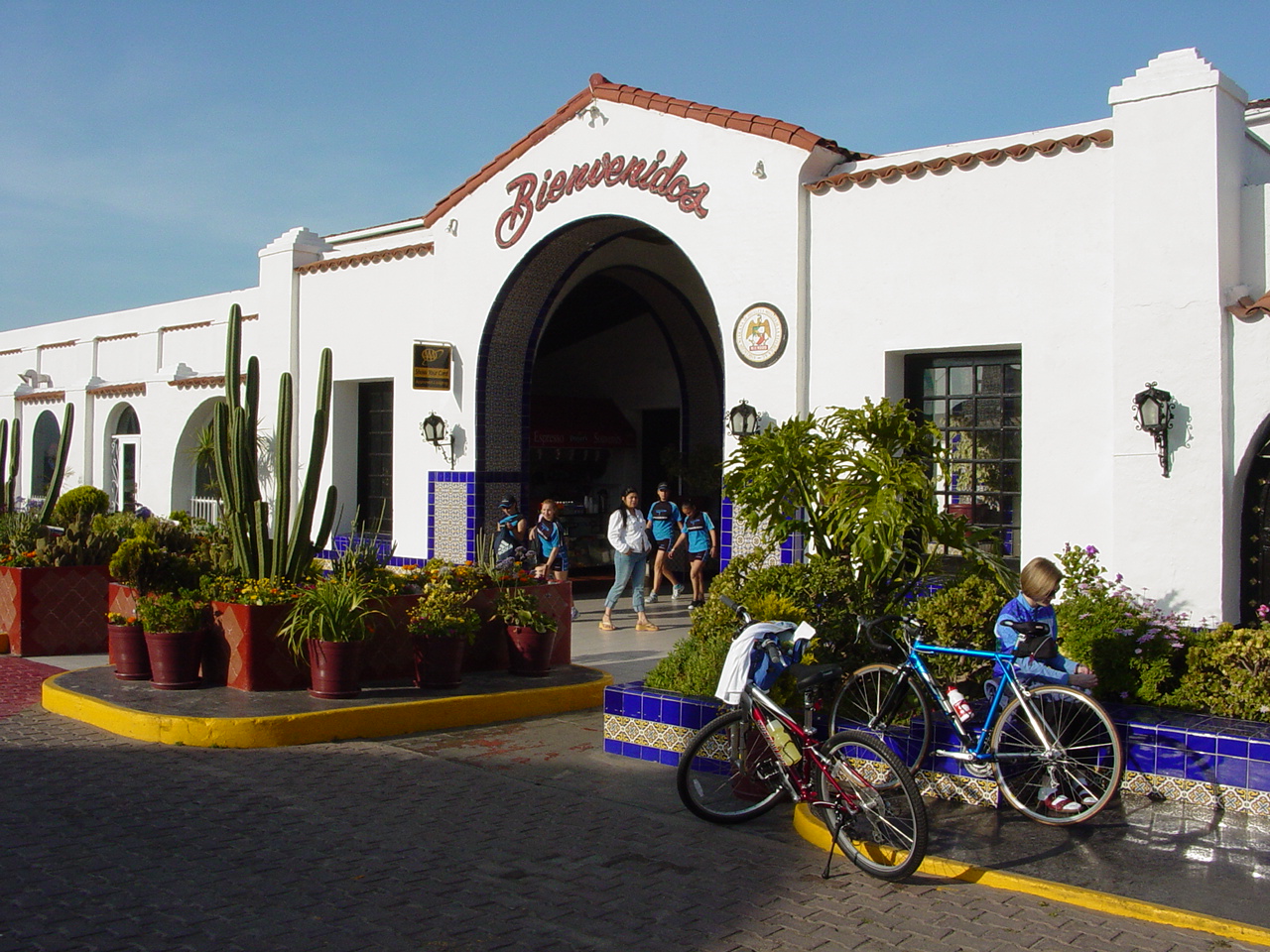
The Rosarito Beach Hotel. Susie and I used to ride in the 50-mile fun run bicycle ride from Rosarito Beach to Ensenada when it ran that route. Those were grand times.
The Rosarito Beach Hotel goes back to the 1920s when people like Clark Gable stayed there. The bar is great, the restaurant is surprisingly good, their Sunday brunch is incredible (it’s worth the drive there just for that), and the first meal is on the house. The rooms are modern and they are immaculate. The grounds are beautiful and the hotel has secure parking.
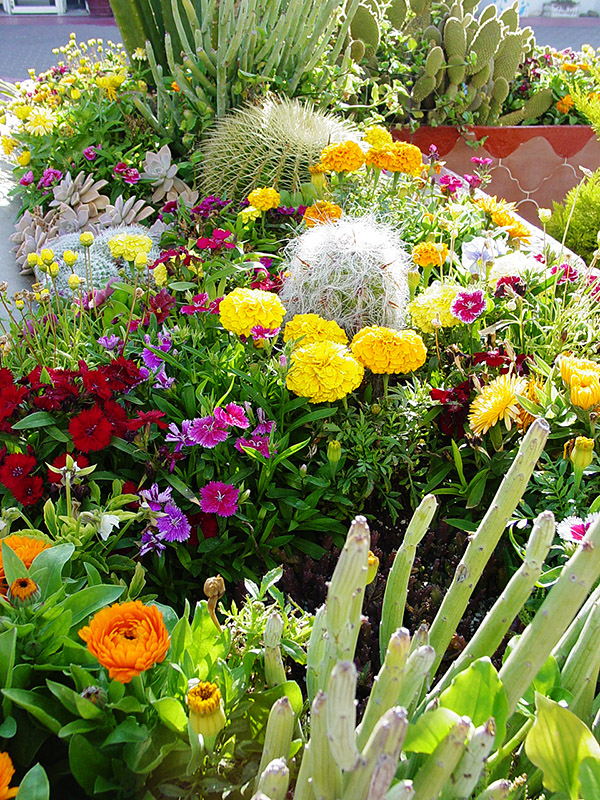
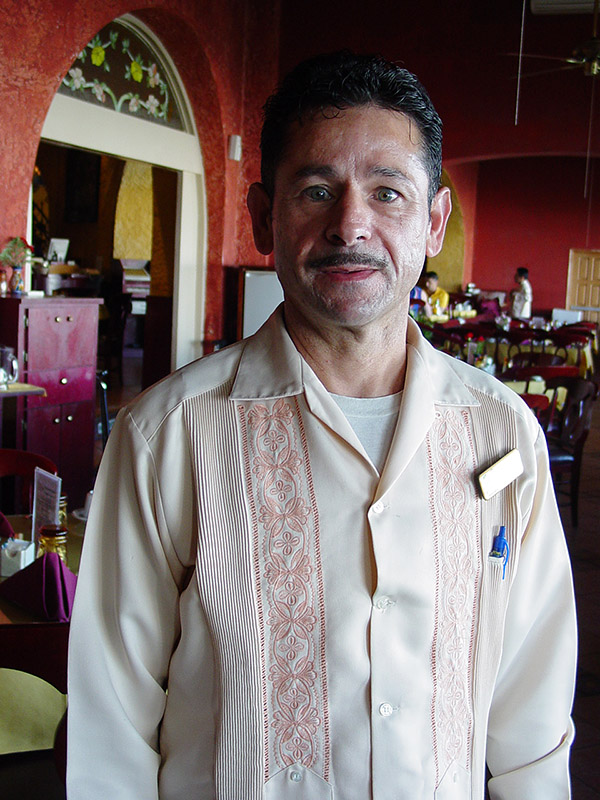
The landscaping and layout of the Rosarito Beach Hotel are well done. The hotel is immaculate.All parking at the Rosarito Beach Hotel is world class. Those two KLRs belonged to yours truly and Baja John. We rode them on several of many rides through Baja. You can read about our Baja adventures here.A member of the wait staff in the Rosarito Beach Hotel. The service was superb.A Rosarito Beach Hotel breakfast. The Sunday morning brunch is exquisite.
Many times when we’re doing group rides, we’ll use the Rosarito Beach Hotel as a rally point after we’ve crossed the border. It’s hard to miss when you’re on the toll road to Ensenada, and if your group gets separated in the complexity that is the Tijuana border area, the Rosarito Beach Hotel is a good place to meet.
As I mentioned above, the restaurant in the Rosarito Beach Hotel is good. If you enjoy world-class fine dining, Susanna’s may well be the best kept secret in Rosarito Beach. It’s just a bit north of the Rosarito Beach Hotel and within walking distance in the Pueblo Plaza courtyard collection of shops at Benito Juárez 4356 (walk north a block or two and turn right). I have at least one dinner there every time I am in Rosarito Beach and I’ve never been disappointed.
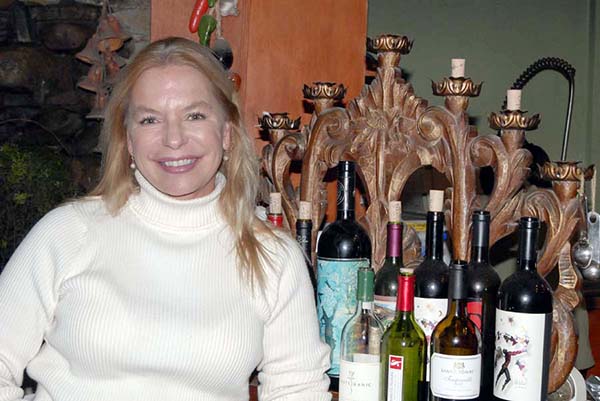
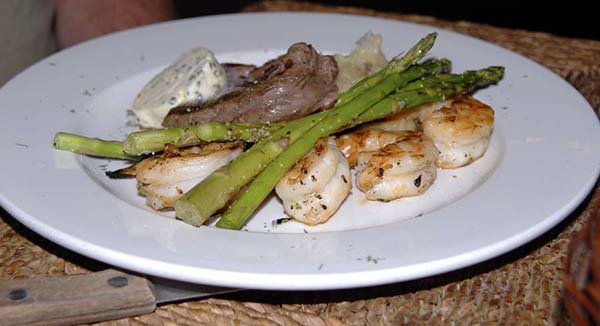
Susanna in her world-class restaurant. I love this place.Shrimp and steak in Susanna’s, one of many fine dinners I’ve enjoyed there.
There you have it: The Rosarito Beach Hotel. If you’d like to read more about our favorite spots in Baja and some of the fabulous rides we’ve enjoyed south of the border, please visit our Baja page!
Never miss an ExNotes blog…sign up here for free!
Headed into Baja? Make sure you have Baja insurance (it’s required by Mexican law). Our choice is always BajaBound!
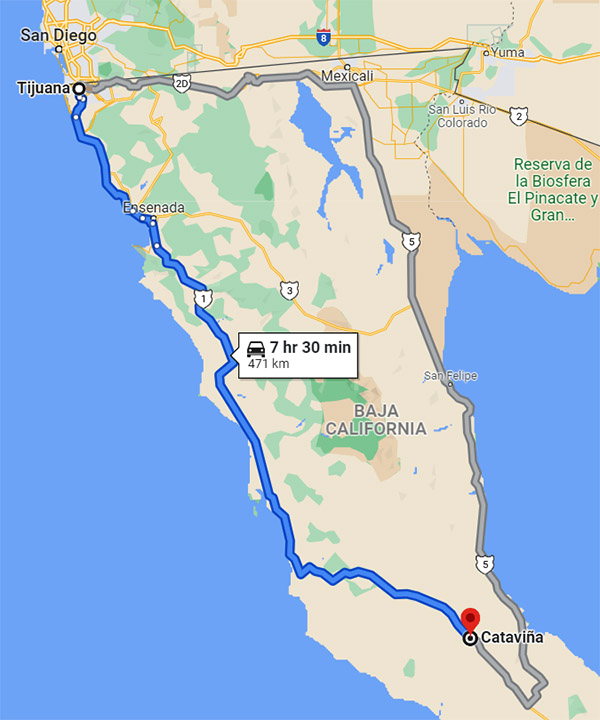
Located 297 miles south of the US border, Cataviña makes for a good spot to stop after your first day’s push into Baja. You might also try to make it all the way to Guerrero Negro, but that’s another 140 miles. When traveling in Baja through the mountains and all the small towns from Ensenada to El Rosario, you can’t grind out big miles like you can on a US freeway. And, trust me on this, you don’t want to travel at night in Baja. A 300-mile day in Baja when you’re starting at the US border is a good day, and that puts you smack dab in Cataviña.
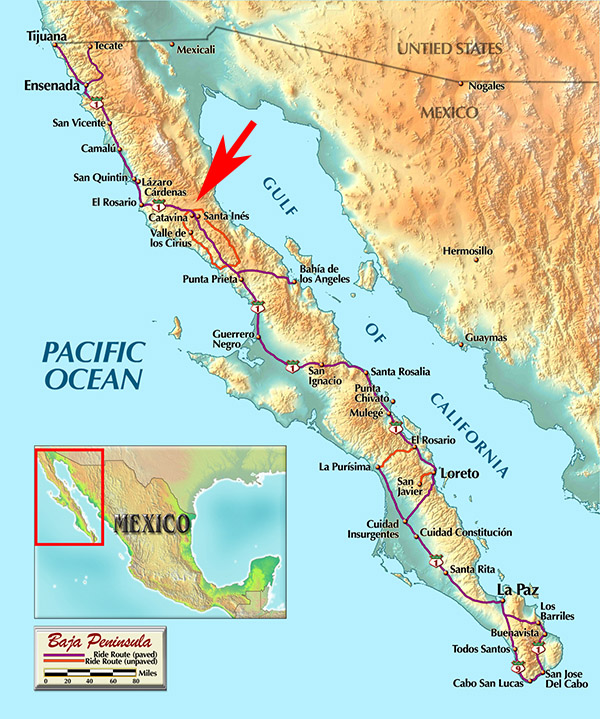
Cataviña’s location on the Baja peninsula.It’s a full day’s drive from TJ to Cataviña.
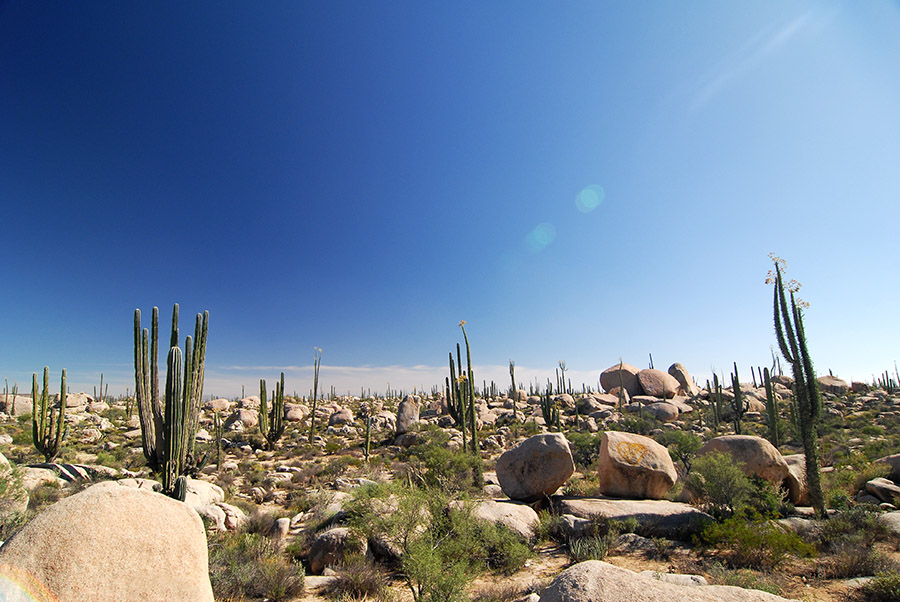
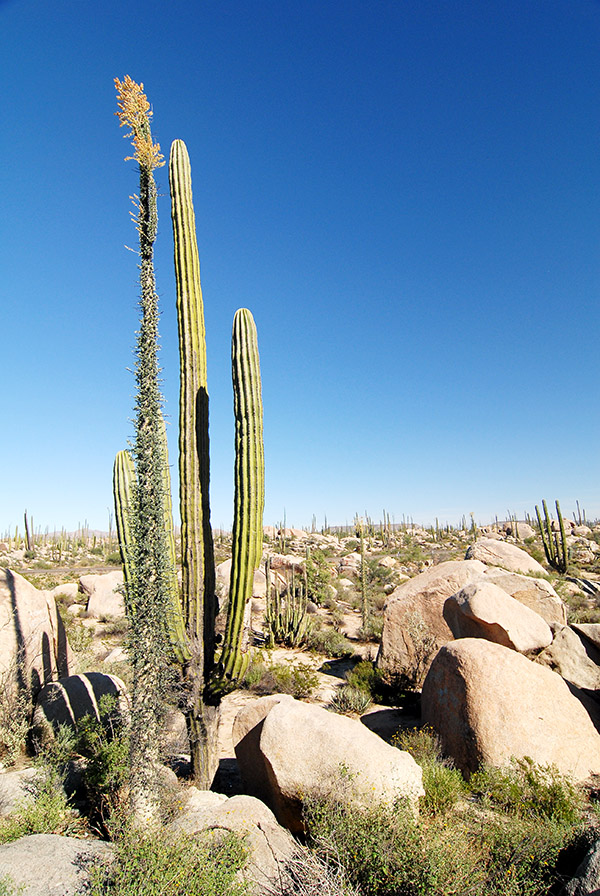
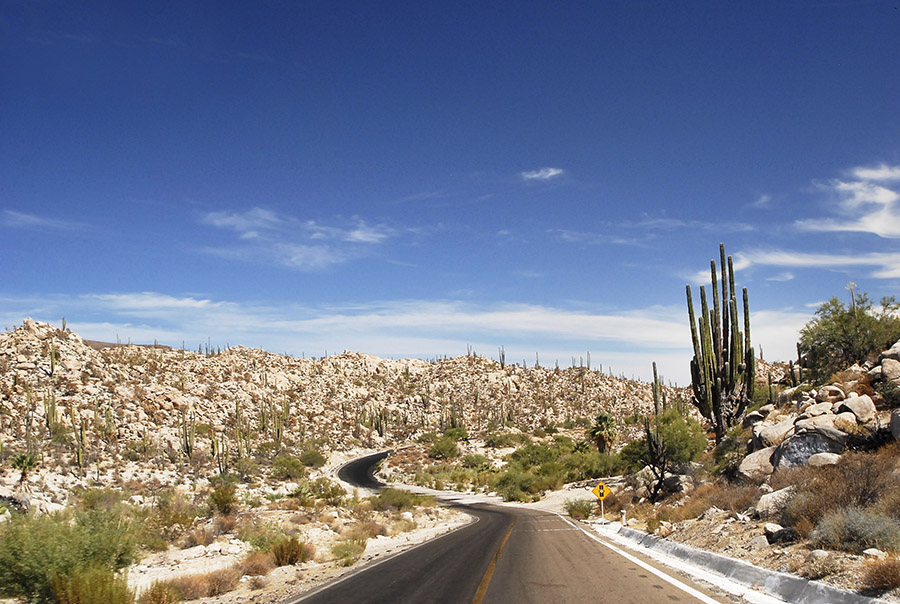
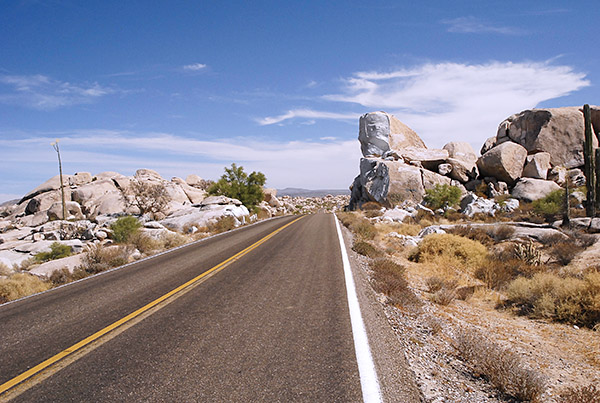
What’s cool about Cataviña is that it is in one of Baja’s boulder fields, as depicted in the big picture at the top of this blog. Those are just flat wild…the stark landscape, the giant boulders, the Cardon and Cirio cacti…it’s all impressive. The boulders were formed by wind erosion, which is kind of amazing. I didn’t believe that at first, but I checked with one of my Cal Poly colleagues in the Geology Department (I’m a retired university professor) and he confirmed it for me. Wow.
That’s a Cirio plant in front (the long thin one), and a giant Cardon cactus behind it, all in the boulder fields of Cataviña.
There’s only one decent hotel in Cataviña and it’s the Hotel Mision Cataviña. It’s gone through a number of name changes in the 30+ years I’ve been traveling in Baja (the La Pinta, the Desert Inn, and maybe one or two others), but the hotel has stayed the same and that’s a good thing. The Hotel Mision Cataviña has a good restaurant and bar. It also has a nice swimming pool, and that pool has been just what the doctor ordered for me and my friends on more than a few occasions riding Mexico Highway 1 through Baja.
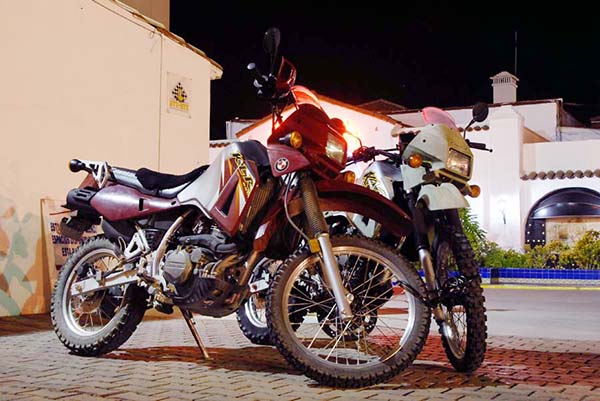
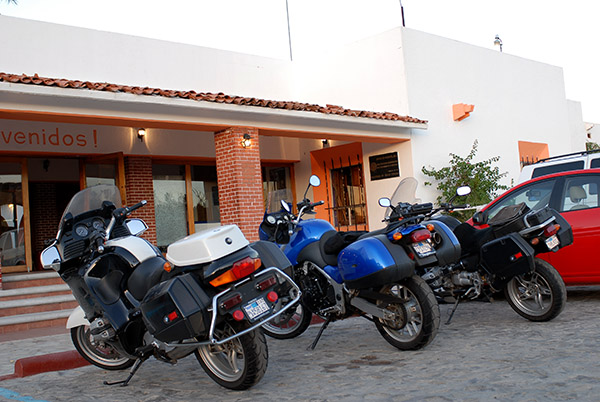
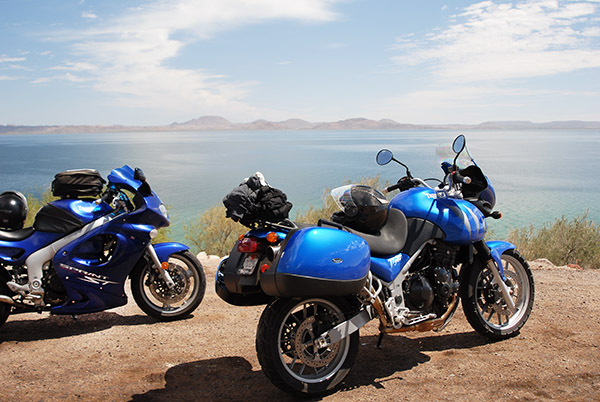
Parked in front of the Hotel Mision Cataviña. I’ve toured Baja on all kinds of bikes. The blue Triumph Tiger was my ride on this trip.My friends and I once rode all the way to Cabo and back on 150cc CSC Motorcycles Mustang replicas. You can read about that adventure here. We spent the night in Cataviña.
At around $80 a night it’s a bit pricier than most other Baja hotels, but it’s still inexpensive by US standards. There’s really nothing else in the Cataviña area for either hotels or restaurants other than a concrete-floored hotel on the other side of the highway. We had to stay in that other hotel once when the Hotel Mision Cataviña was full. That was more than 20 years ago and my wife still mentions it when she gets mad at me. Take my advice on this: The Hotel Mision Cataviña is where you want to stay.
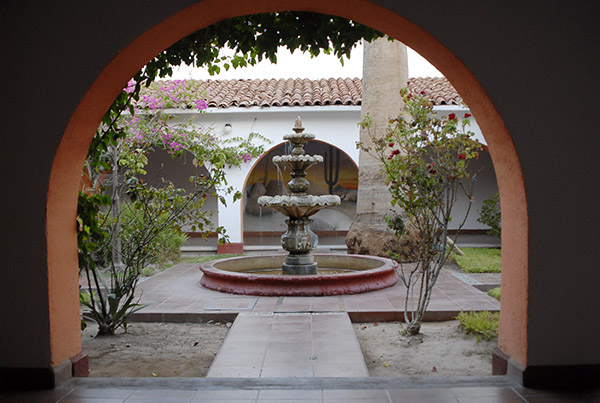
One the Hotel Mision Cataviña’s coutyards. It’s a classy place.
I enjoy eating in the Hotel Mision Cataviña’s restaurant even if I’m just passing through. If you let the staff know you’re in a hurry, they’ll get you in and out. If you don’t, things kind of run on a Cataviña pace. That’s cool if you’re staying for the night; it’s not if you’re trying to make Guerrero Negro. I’ve done that, but it is a very long day. The restaurant and bar have kind of an arched brick roof in the dining room. It’s fun. As you might imagine, they are well stocked with Tequila and Tecate.
Joe Gresh enjoying chicken tacos during a brief stop at the Hotel Mision Cataviña restaurant.They look good, don’t they?
If you’re traveling with a bunch of guys and you don’t mind sleeping 8 or 9 to a room, the Hotel Mision Cataviña built a separate just to the north of the main hotel and it has a dormitory style room. I don’t know what it costs, but it’s got to be (on a per head basis) cheaper than one of the double rooms. The rooms are nice. The place is clean, it’s air conditioned, and its comfortable. The only issue with the new building is that the hotel runs a diesel generator all night, and if you stay in the new building, it might keep you up.
Fuel is less of a concern today than it used to be. We used to buy bottled gasoline from enterprising guys by the side of the road, but there’s a convenience store just across Highway 1 from the hotel now with gas pumps, so I think getting gasolina today is less of an issue.
If you would like to know more about the Hotel Mision Cataviña, you can do so here.
Headed into Baja? Make sure you insure with the best, and that’s BajaBound!
Check out our reviews of other Baja hotels and restaurants, destinations, and more on our Baja page!
Never miss an ExNotes blog! Sign up here for free!
Want to know more about some of our moto trips in Baja? Pick up your own copy of Moto Baja!
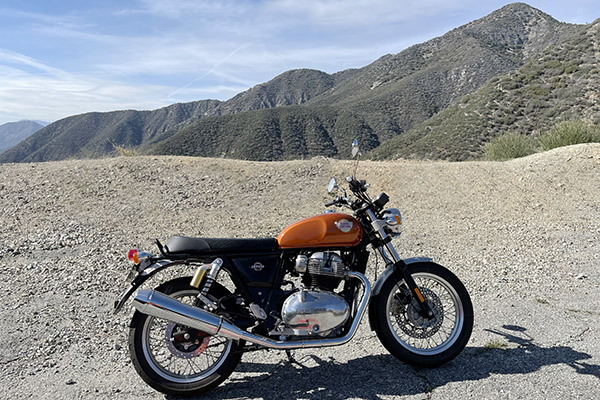
Shortly before the pandemic began, Uncle Joe and yours truly borrowed two Royal Enfields from Royal Enfield North America and toured Baja. One was the new 650 Interceptor, and I liked it so much I bought one when I came home. The other was a 500cc Bullet, and, well, you might want to read the blogs to understand how we felt about it. Truth be told, the Bullet was probably better than we perceived it to be (that was because the dealer did a half-assed job prepping it for us). Nah, that’s not fair (it implies the dealer did half of what he should have). But there’s no expression for 10%-assed, and even that might be giving the dealer too much credit. But I don’t want to spoil the story for you. You can get to the Enfield adventures here.
Never miss an ExNotes blog…subscribe here for free!
Baja is a motorcycling paradise and I have a bunch of favorite destinations there. Seven of them, to be precise, although truth be told, I like everything in Baja except for Tijuana and maybe La Paz and Loreto. That said, my favorites are:
Tecate
San Quintin
Cataviña
Guerrero Negro
San Ignacio
Santa Rosalia
Concepcion Bay
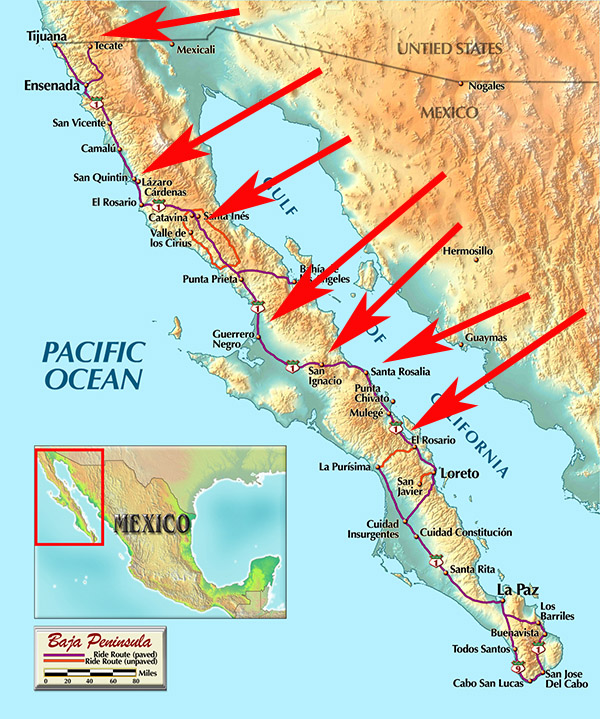
Here’s where they are on a map:
So what’s so great about these places? Read on, my friends.
Tecate
Tecate is the gateway to the middle of northern Baja, and it’s the easiest point of entry. Both Tijuana and Mexicali are too big and too complicated, and the Mexican Customs guys are too official in those bigger cities. Tecate is a friendly place. The last time I picked up a tourist visa in Tecate, the Customs officer tried to sell me salsa he and his family made as a side gig. That’s what the place is like. I love it.
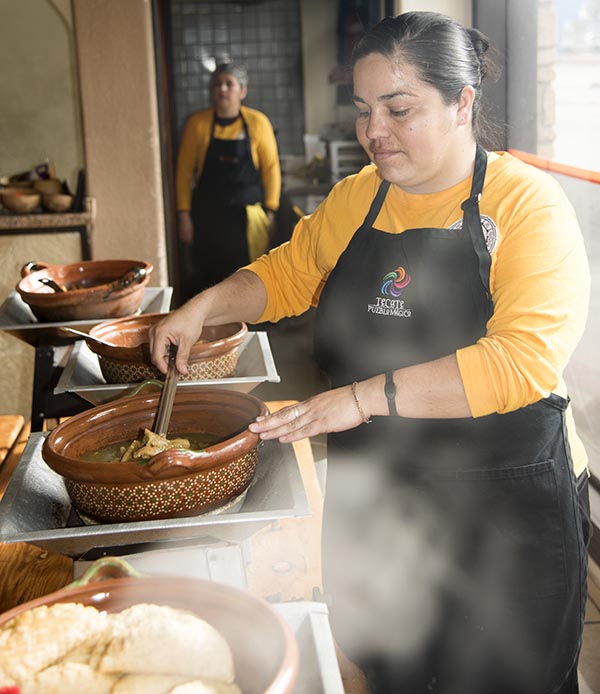
If you’re into fine dining (not as in expensive dining, but just great food), it’s hard to go wrong anywhere in Baja. Tecate has some of the best, from street taco vendors to Malinalli’s to Amore’s. I could spend a week just in Tecate. It’s that good.
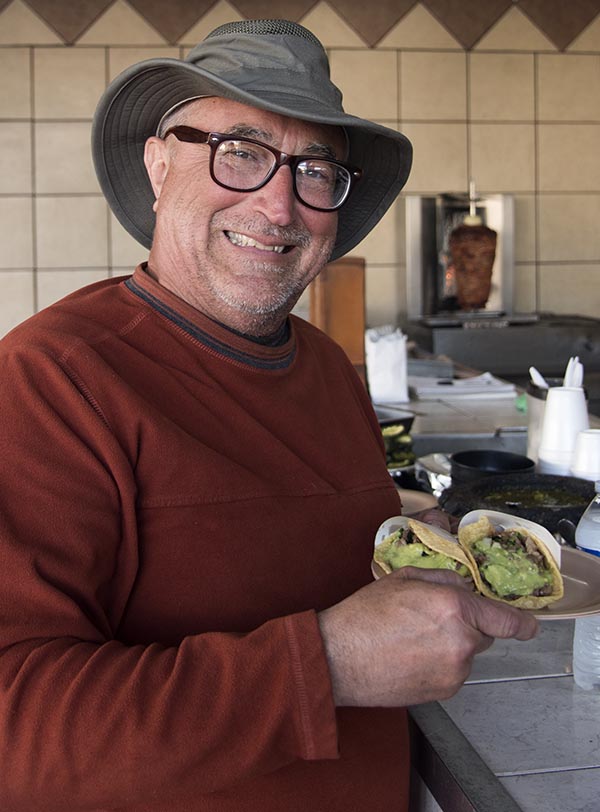
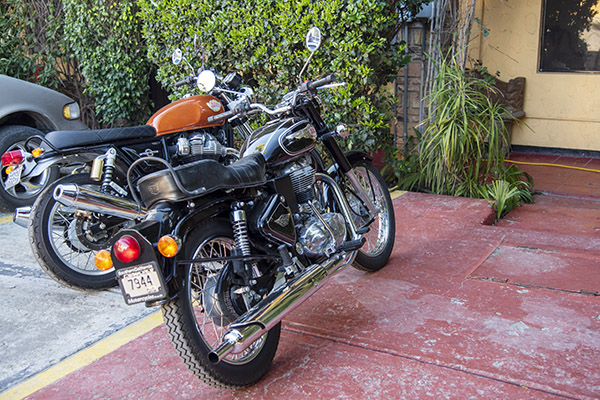
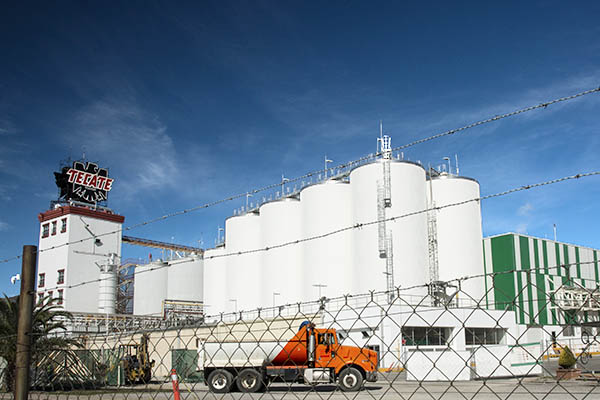
Uncle Joe Gresh with street tacos in Tecate. Wow, were they ever good.The buffet at Malinalli’s is regional, awesome, and inexpensive. It’s a hidden treasure.Dos Joes’ motos on an Enfield expedition that took us through Tecate.The Tecate brewery dominate the Tecate skyline and is visible from just about anywhere in town. A can of ice cold Tecate with sea salt around the rim and a bit of lime juice…life doesn’t get any better.
San Quintin
San Quintin is 186.4 miles south of the border on Baja’s Pacific coast. It’s usually a quiet ag town that has a lot of things going for it, including interesting hotels, good food, and Bahia San Quintin. The Old Mill hotel and its associated restaurant, Eucalipto, is my personal favorite. The hotel is about 4 miles west of the Transpeninsular Highway, and what used to be a harrowing soft sand ride to it is now easy peasy…the road is paved and riding there is no longer a test of your soft sand riding skills. The Eucalipto restaurant is second to none.
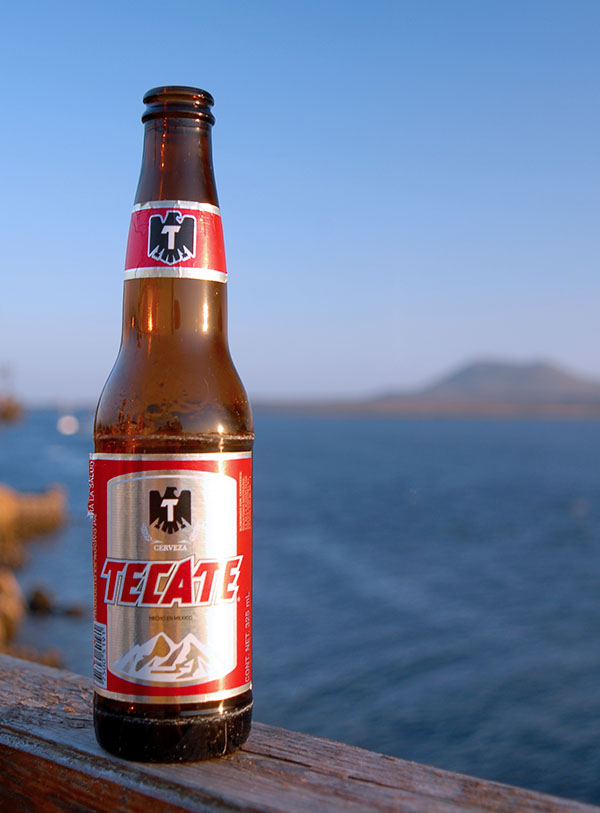
What could be better than an ice cold Tecate overlooking Bahia San Quintin after a day’s riding in Baja? We once saw a California gray whale from this very spot.
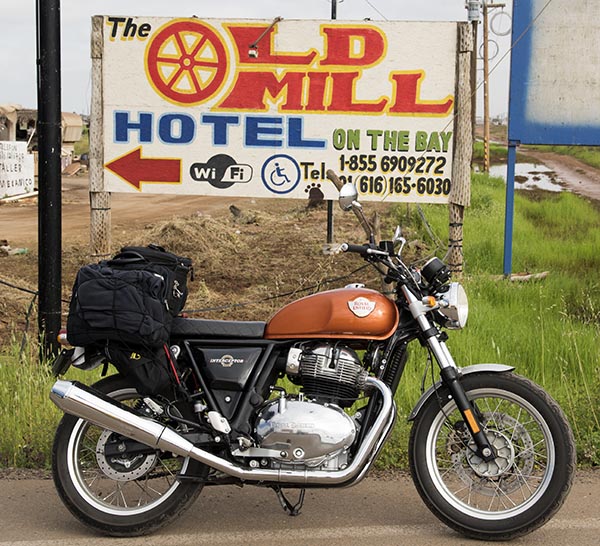
A man, a motorcycle, and Mexico….the sign on the Transpenisular Highway pointing toward Bahia San Quintin and the Old Mill Hotel. The bike? That’s the 650cc Royal Enfield, perfect for riding Baja. But then just about any motorcycle is perfect for riding Baja.Bahia San Quintin at dawn. It’s an awesome spot.Uncle Joe enjoying breakfast in the Old Mill’s Eucalipto. It is an exquisite restaurant.
You’ll notice at the top of my scribblings about San Quintin I said it is usually a quiet town. The one exception for us was when there was a labor riot and we were caught in it. The Mexican infantryman about 80 miles north of San Quintin told me the road was closed, but his English matched my Spanish (neither are worth a caca), and without me understanding what I was riding into, he let me proceed. It’s not an experience I would care to repeat. But it’s the only event of its type I ever experienced in Old Mexico, and I’d go back in a heartbeat.
The Cataviña Boulder Fields
Ah, Cataviña. Rolling down the Transpeninsular Highway, about 15 miles before you hit the wide spot in the road that is Cataviña you enter the boulder fields. Other-worldly is not too strong a description, and if the place wasn’t so far south of the border it would probably be used more often by Hollywood in visits to other planets. The boulders are nearly white, they are huge, and the juxtaposition of their bulk with the bright blue sky punctuated by Cardon cactus.
Pastel geology. The area really is as beautiful as the photos depict it to be.
I get a funny feeling every time I enter this part of Baja. Not funny as in bad, but funny as in I feel like I’m where I belong. I once rolled through this region in the early morning hours with my daughter and she told me “you know, it’s weird, Dad. I feel like I’m home.” She understood (as in completely understood) the magic that is Baja.
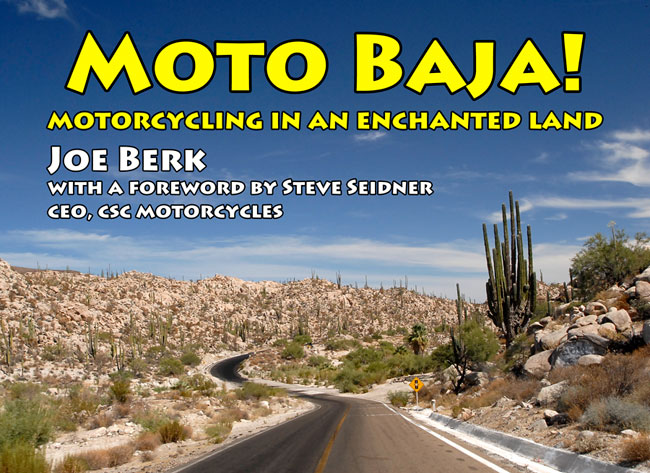
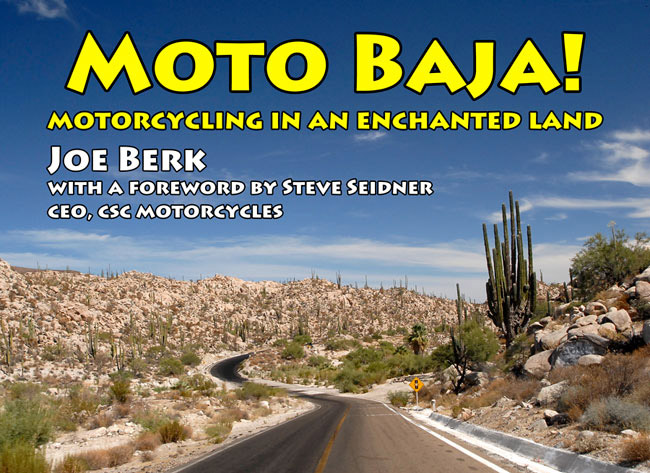
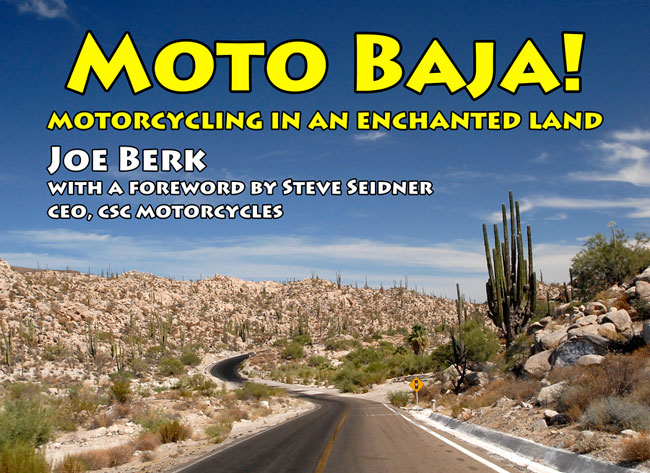
I like the area and its stark scenery so much that one of my photos became the cover of Moto Baja! I grabbed that shot from the saddle at about 30 mph on a CSC 150 Mustang replica, which I subsequently rode all the way down to Cabo San Lucas (that story is here).
You should buy a copy or three. They make great gifts.
Every time I roll through Cataviña with other riders, the dinner conversation invariably turns to how the boulders formed. When I was teaching at Cal Poly Pomona, I asked one of my colleagues in the Geology Department. He know the area as soon as I mentioned it. The answer? Wind erosion.
Guerrero Negro
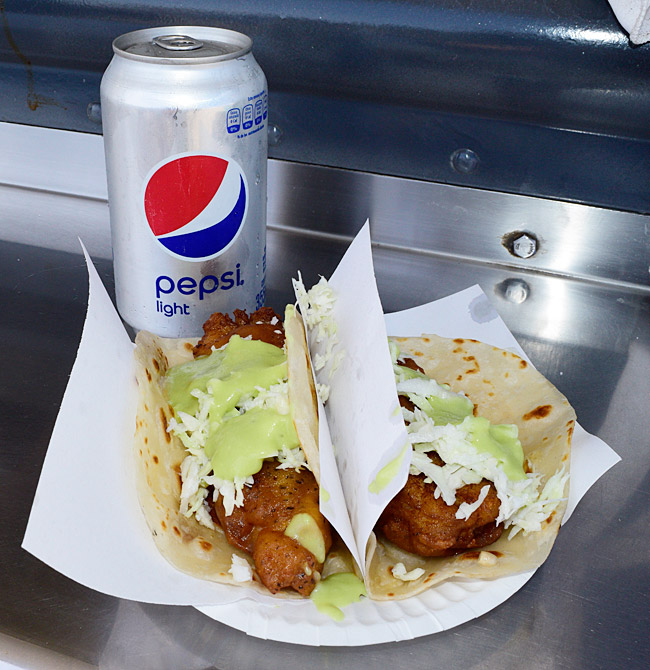
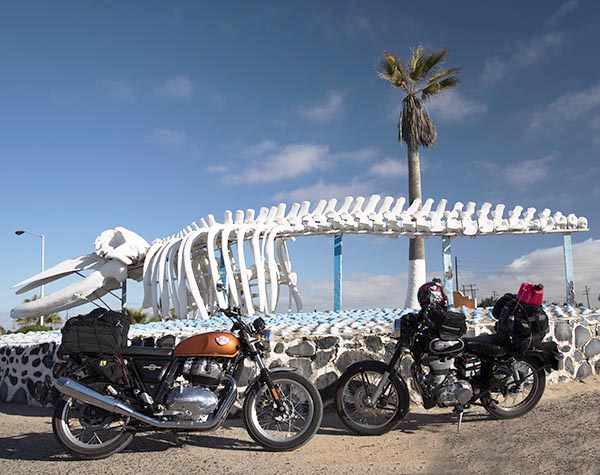
The Black Warrior. The town is named after a ship that went down just off its coast. It’s a salt mining town exactly halfway down the peninsula, and it’s your ticket in for whale watching and the best fish tacos in Baja (and that’s saying something). I’ve had a lot of great times in Guerrero Negro. It’s about 500 miles south of the border. You can see the giant steel eagle marking the 28th Parallel (the line separating Baja from Baja Sur) a good 20 miles out, and from there, it’s a right turn for the three mile ride west into town. Malarrimo’s is the best known hotel and whale watching tour, but there are several are they are all equally good. It you can’t get a room at Malarrimo’s, try the Hotel Don Gus.
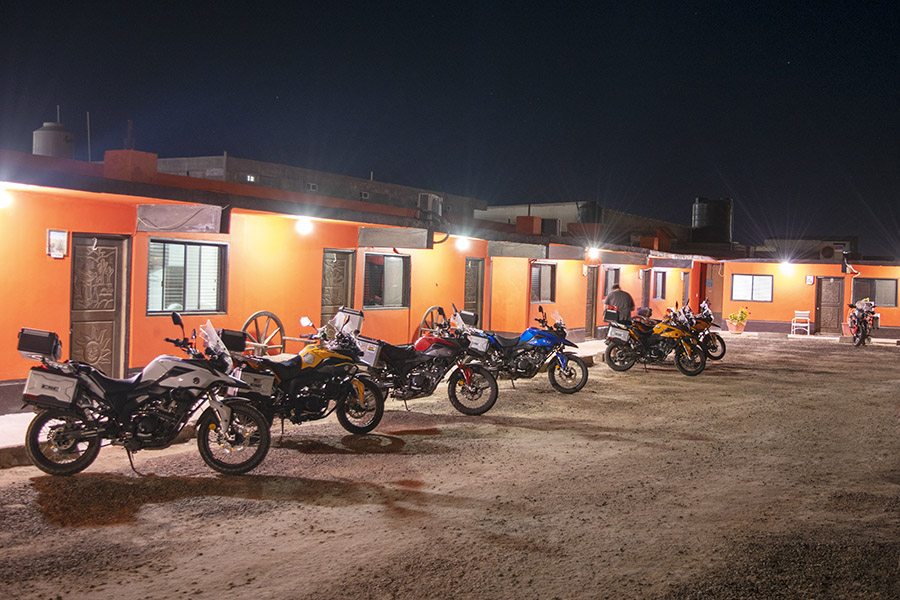
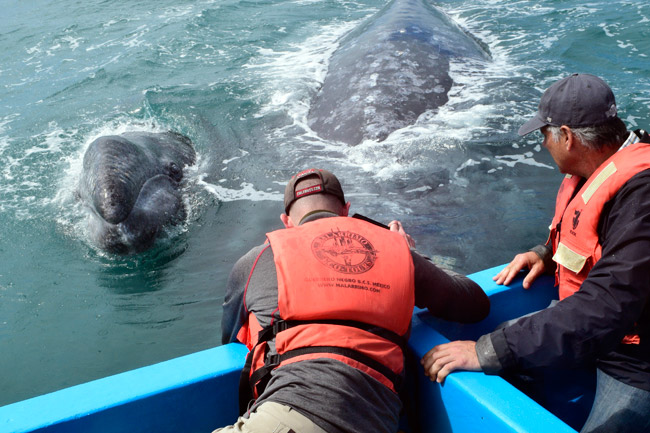
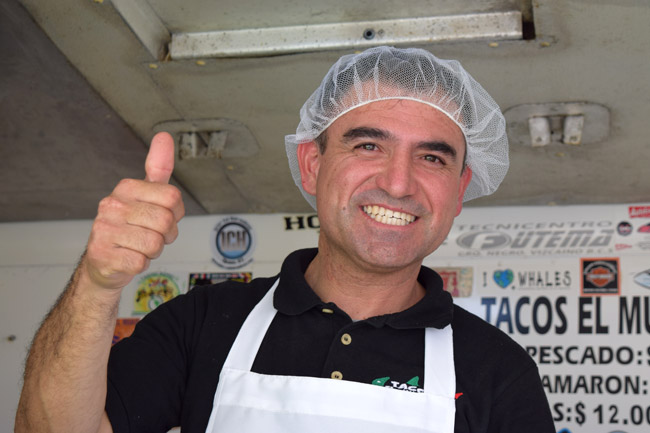
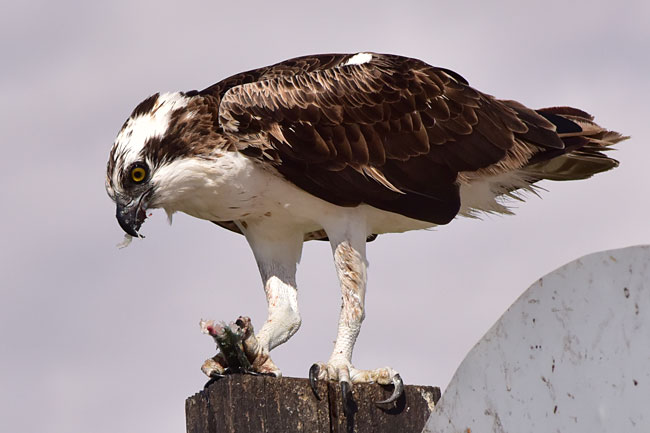
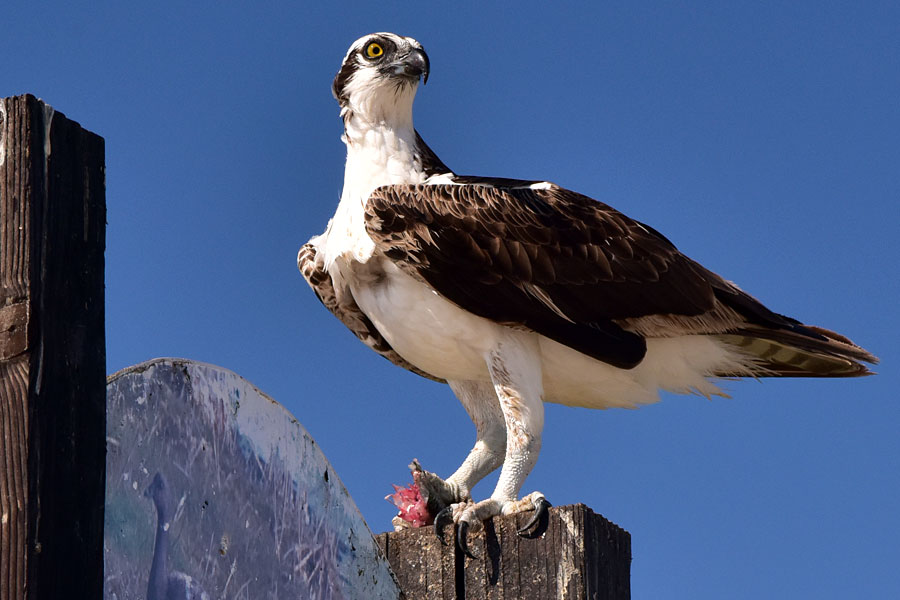
CSC RX3 motorcycles at the Hotel Don Gus. We used to do annual Baja tours with CSC…those were fun times and great trips, and introduced a lot of folks to the beauty of Baja.What it’s all about…getting up close and personal with the California gray whales. They are in town from January through March.Tony, taco chef extraordinaire. You might think I’m exaggerating. I’m not.It’s worth the 500-miles trek to Guerrero Negro just to savor Tony’s fish tacos. You might think I’m exaggerating. But like I said above…I’m not.Man does not live by fish tacos alone, so for breakfast or dinner, it’s either the restaurant at Malaririmo’s or the San Remedio, a block north of the main drag into town. You won’t be disappointed at either.Sue’s photo of a Guerrero Negro osprey enjoying some sushi.
After you leave Guerrero Negro and continue south, the Transpeninsular Highway turns southeast to take you diagonally across the Baja peninsula. About 70 miles down the road (which is about half the distance to the eastern shores of Baja and the Sea of Cortez along Mexico Highway 1) you’ll see the turn for San Ignacio. It’s another one of Baja’s gems.
San Ignacio
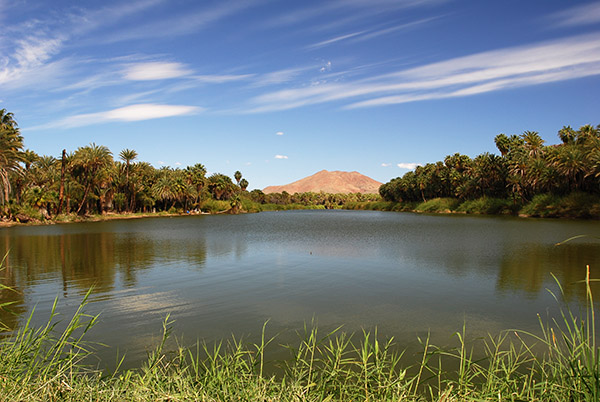
San Ignacio is an oasis in the middle of the desert that forms much of Baja. The Jesuits introduced date farming to the region hundreds of years ago, and it’s still here in a big way. Leave Guerrero Negro, head southeast on Mexico Highway 1, and 70 miles later you run into a Mexican Army checkpoint, a series of switchbacks through a lava field, and when you see the date palms, turn right.
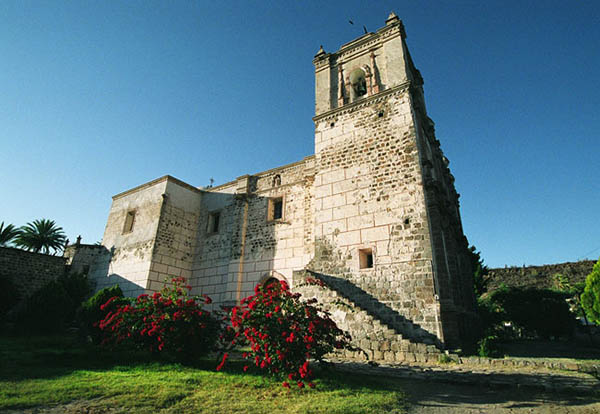
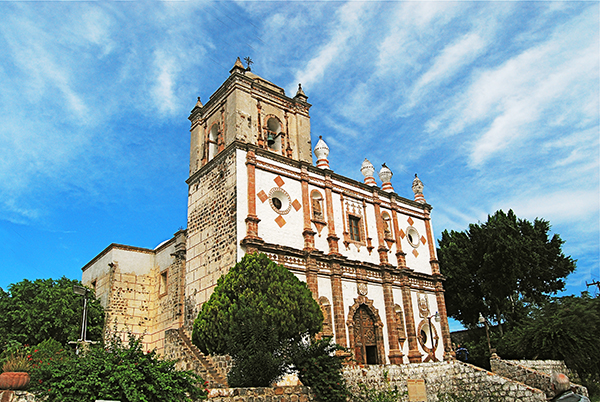
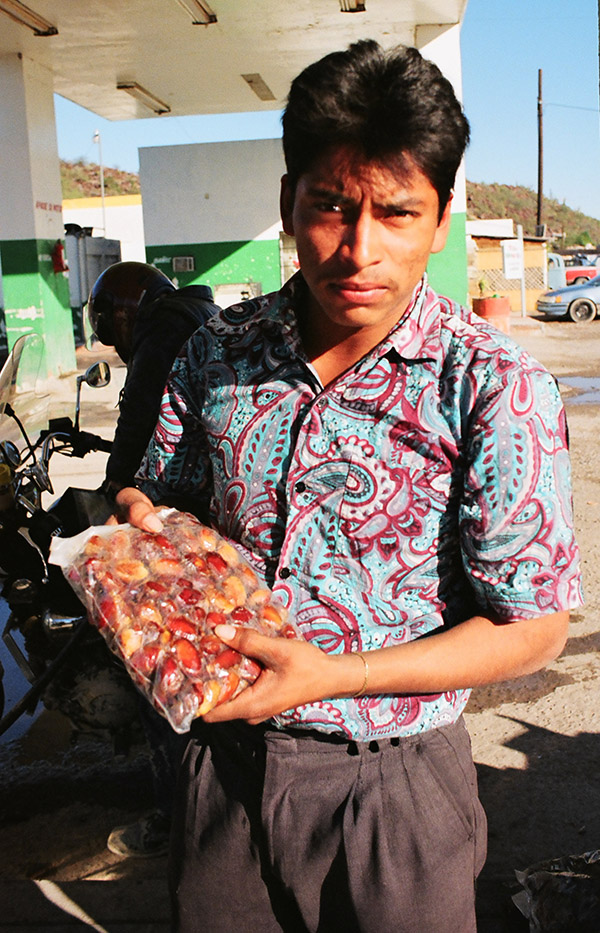
An oasis is usually formed by a volcano, and when a volcano is done discussing politics, it forms a lake. That’s the San Ignacio volcano and its lake, visible on the left as you ride into town.The San Ignacio church, built as a mission in the 1700s, dominates the center of San Ignacio. It’s a beautiful spot, one of the most photogenic in all of Baja.Another photo of the San Ignacio Mission. You’ll want to grab some photos in San Ignacio.Dates? Nope, not on that trip, but dates are one of the things San Ignacio is known for. I’ll bet they are delicious.
San Ignacio has a town square that’s right out of central casting, there’s a little restaurant that serves the best chile rellenos in all of Mexico (I’m not exaggerating), and the place just has a laid back, relaxing feel about it.
Santa Rosalia
You know, this town is another one of Baja’s best kept secrets. As you travel south on Highway 1, San Ignacio is the first town you encounter after traveling diagonally across the peninsula. Folks dismiss it because it’s an industrial town, but they do so in ignorance. There’s a lot of cool stuff in this place.
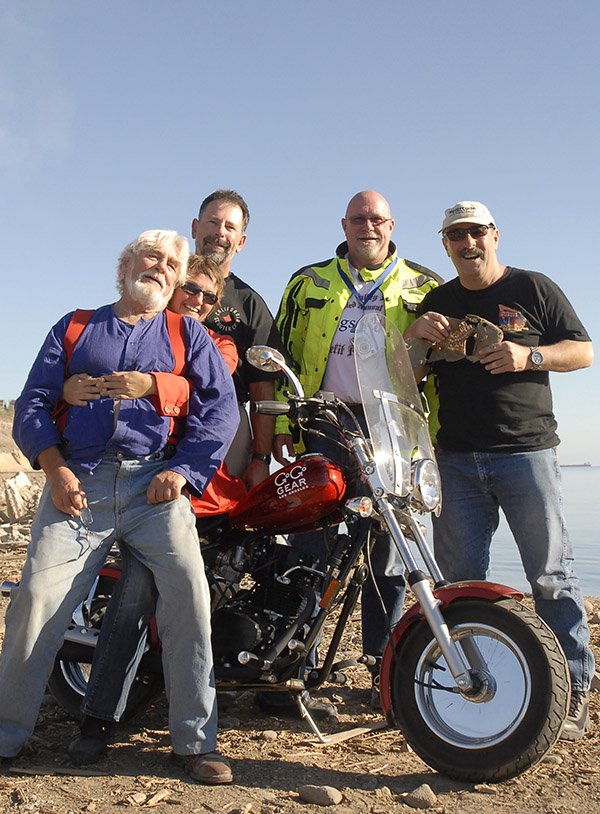
The ride into Santa Rosalia a few years ago with novelist Simon Gandolfi, Arlene Battishill, J Brandon, John Welker, and yours truly. That’s a dead fish I’m holding. We did a round trip to Cabo San Lucas on 150cc Mustang replicas, just to say that we could.
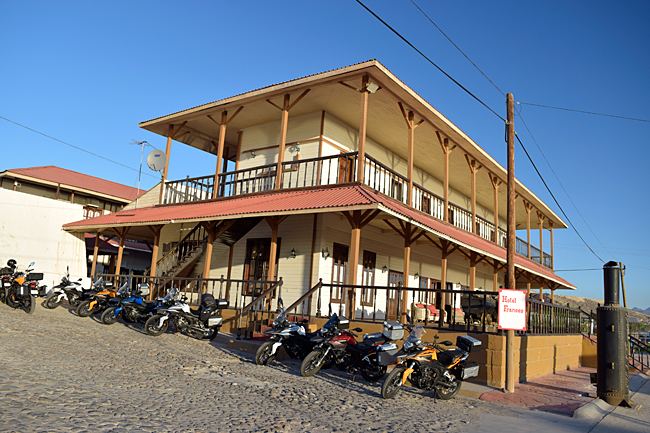
One of the things that’s unique about Santa Rosalia is the all-wooden architecture. The town was originally built by a French mining company (Boleo) and they built it they way they did in France. Like the Hotel Frances, which sits high on a mesa overlooking the town and the Sea of Cortez. I love staying there.
The Hotel Frances. It used to be a brothel.
There’s a cool mining musuem a block or two away from the Frances, and it’s worth a visit, too.
The mining museum in Santa Rosalia.
There are many cool things in Santa Rosalia, and one of the best is the Georg Eiffel church. It was designed by the same guy guy who did the Eiffel town.
Santa Rosalia’s church. It’s an unexpected delight. And I’m not even Catholic.Inside Santa Rosalia’s Georg Eiffel church.Stained glass. Photos ops abound in Santa Rosalia.
I’ve heard people dismiss Santa Rosalia as a gritty, industrial place not worth a stop. Trust me on this: They’re wrong. It’s one of my favorite Baja spots.
Bahía Concepción
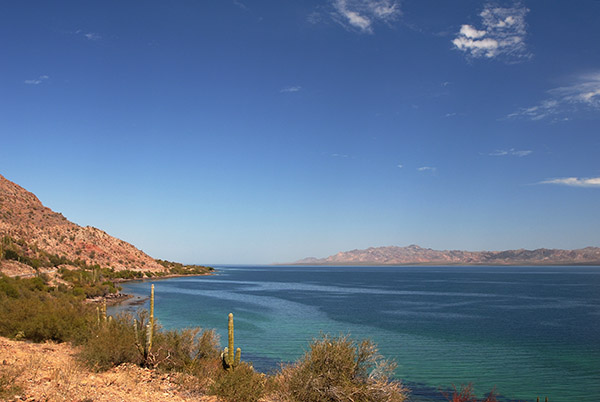
Concepción Bay is easily the most scenic spot in Baja. It’s just south of Mulege (another delightful little town, and the subject of an upcoming ExNotes blog). Bahía Concepción runs for maybe 20 miles along the eastern edge of the Baja peninsula. I’ve seen whales from the highway while riding along its edge, the beaches are magnificent, and the photo ops just don’t stop. The contrast between the mountains and Cardon cactus on one side and the pelicans diving into bright green water is view from the saddle you won’t soon forget.
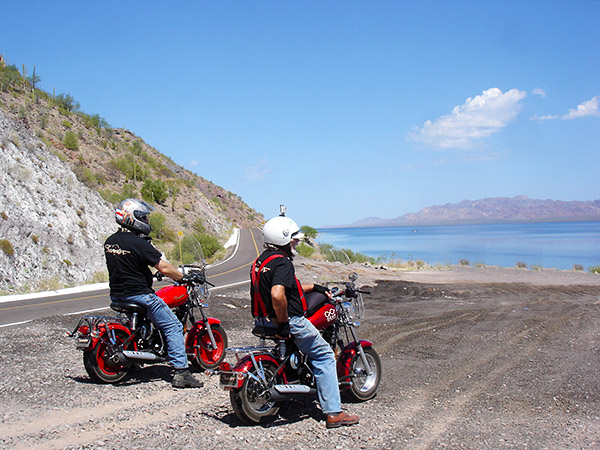
On one of many rides along Bahía Concepción, good buddy Joe Lee and yours truly rode our Triumph Triples. This is a favorite shot of mine.Besides “wow,” what can I say?World-famous novelist and motorcycle adventurer Simon Gandolfi andn yours truly on 150cc scooters. We were on our way back from Cabo San Lucas when we stopped for this Bahía Concepción photo. Hardtail 150cc scooters. Up and down the length of Baja. I think about that ride every time I see a GS parked at a Starbuck’s.
So there you have it: My take on seven favorite spots in Baja? How about you? Do you have any favorite Baja destinations? Let us know here in the comments sction!
This blog grew longer than I had planned. I thought I would touch on Malarrimo’s (one of my favorite hotels in Baja) and that would be it, but I realized once I got into it that there’s a lot more to the story and Guerrero Negro.
If you’re headed into Baja, especially if you’re headed there to see the whales, you’d be hardpressed to find a better hotel than Malarrimo’s in Guerrero Negro. Guerrero Negro is at the halfway point when headed down the Baja peninsula (it’s about 450 miles south of the border). It’s located along the 28th Parallel, the dividing line between Baja and Baja Sur (Baja’s two Mexican states).
Although some might be inclined to dismiss Guerrero Negro because as little more than a gritty industrial town, it’s actually a pretty cool place to visit and a good base for further explorations. There’s whale watching, the ecological preserve, salt mining, the nearby cave paintings, the food, and more.
Ah, the food. As Gresh so aptly put it, no one loses weight on a Baja ride with me. I’ll get to that in a minute.
Don Enrique Achoy founded Malarimmo’s about a half century ago, and it has remained a family business. He was ahead of his time, offering eco tours to see the whales, the ecological preserve surrounding Scammon’s Lagoon, and more. There are other hotels in Guerrero Negro, but I always check Malarimmo’s first. It’s not fancy and at around $65 per night it’s a tiny bit expensive for Baja, but it is inviting. it’s clean, and I just feel good there. The restaurant is arguably the best in town, and I love the bar (more on both in just a bit).
Getting There
Malarrimo’s is easy to find. Just head south on the Transpeninsular Highway from the border for 450 miles. You’ll see a huge metal eagle at Parallelo 28 and a Mexican military base. Shortly after that, you’ll see a sign pointing to the right and Guerrero Negro.
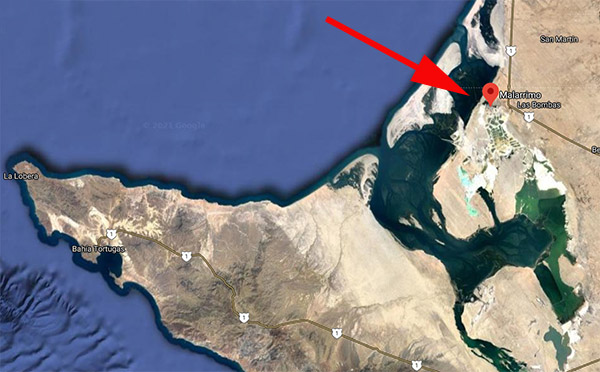
Take that right, and Malarimmo’s will be on your right as you enter town. You can’t miss it. Incidentally, the lagoon you see in the satellite photo above is Scammon’s Lagoon. It’s where the whales will be, which takes me to our next topic.
Whale Watching
Whale watching tours are available from January through March when the California gray whales are in town, and it is a life changing experience. Those are strong words and you might be tempted to dismiss them as hyperbole. Take one of Malarrimo’s 4-hour, $50 whale watching tours out on Scammon’s Lagoon and then you tell me. I’ll bet you come away feeling the same way.
We have a lot more on whale watching on our Baja page, so I won’t spend too much time here on it. Trust me on this, though: It is like nothing you have ever done.
The Ecological Preserve
When you get a whale tour at Malarimmo’s, it will take about a half hour in a Malarimmo van to get to the where the pangas (the small boats that take you out to see the whales) are docked, and on that ride, you pass through an ecological preserve that is home to more than 150 wildlife species. You’ll see many nesting ospreys (a bird of prey), and if you’re lucky (like we have been) you’ll get to see an osprey enjoying a bit of sushi. It’s a fun thing to encounter.
Salt Mining
Guerrero Negro is a company town, and the company is Mitsubishi, which owns (along with the Mexican government) the salt processing operation. It’s one of the largest salt producing regions in the world. They use an interesting approach: Flooding the coastal plains near the town with seawater, allowing the water to evaporate, and then using earth moving equipment to scrape up the salt that remains behind.
Guerrero Negro Cuisine
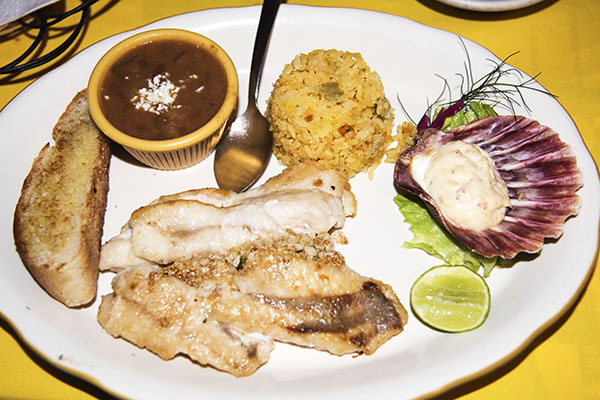
No discussion of Guerrero Negro would be complete without a discussion of the cuisine down there. In a word, it’s wonderful. My favorite meal? Fish tacos, served right off the truck (caught fresh daily) by my good buddy Tony. No one I’ve ever taken there has had anything but high praise for these incredible treats.
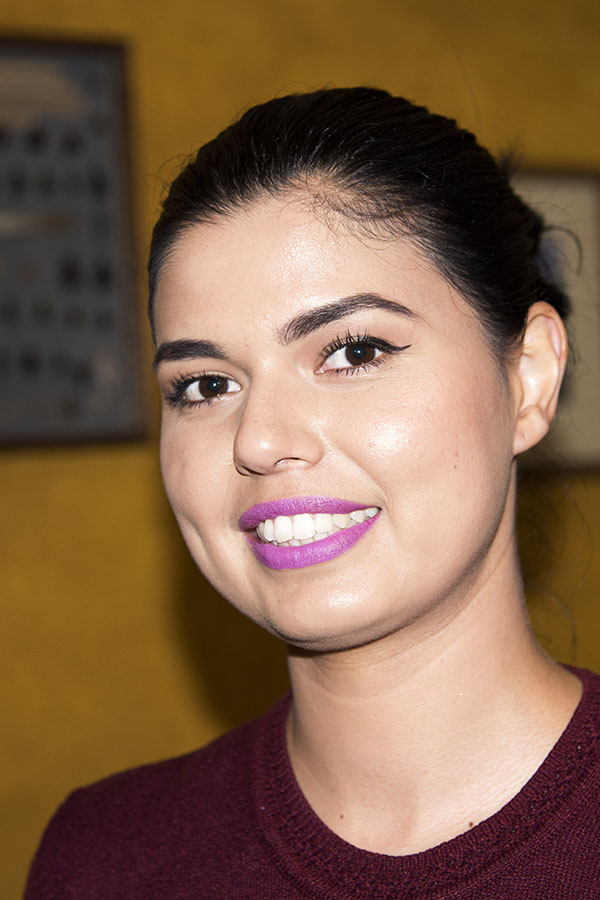
Another place I like is San Remedios, a restaurant a block or two north of the man drag through Guerrero Negro. Just head west a few blocks from Malarrimo’s, turn right, and you’ll find it. The food is awesome and the young ladies who serve it are stunning.
I’ve already mentioned the restaurant and bar at Malarimmo’s. You can’t have a bad meal at the Malarrimo’s restaurant, and the bar…wow, it’s interesting. The Guerrero Negro area forms a big hook out in the Pacific Ocean with the hook’s U facing north (you can see that in the satellite photo above). As a result, a lot of interesting stuff washes up on shore in that area, and Malarrimo’s has a collection of it hanging from the roof in their bar. It’s pretty cool.
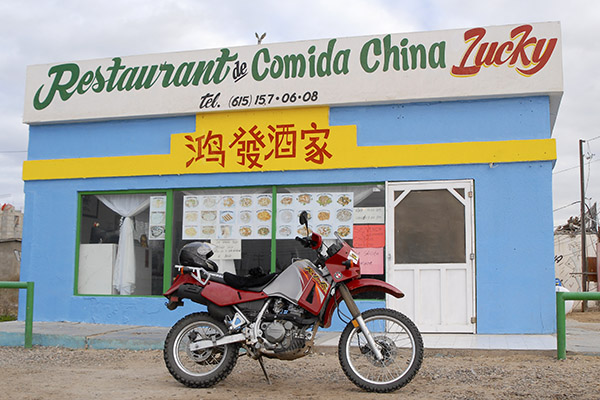
There are other restaurants in Guerrero Negro, too, and I try to make it a point to try a new one each time I am there. Baja John and I enjoyed an amazing Chinese dinner in Guerrero Negro on one trip; try Lucky’s if you feel like something different.
The Cave Paintings
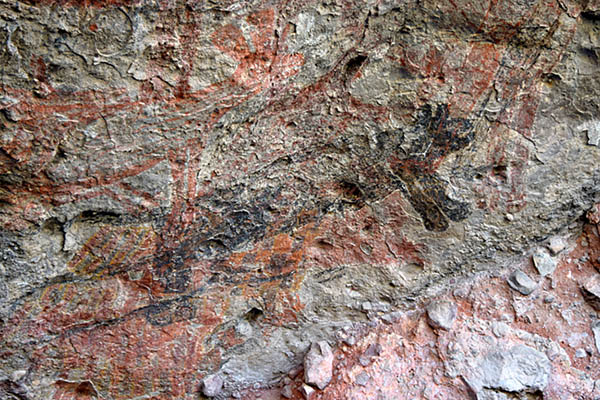
There are several cave paintings located throughout Baja. This is real Indiana Jones stuff; the cave paintings are estimated to be about 10,000 years old and not much is known about the people who put them there. They are all relatively remote, too, but one of the easier (I’m using that word in a comparative sense) ones to get to are the cave paintings in Baja’s Sierra San Francisco Mountains.
The cave paintings near Guerrero Negro are further south and east of the Transpeninsular Highway (Highway 1, the main and often only road running north and south in Baja). You take Highway 1 south and then turn left after passing through the town of Vizcaino to head east and up into the Sierra Francisco mountains. It’s a magnificent ride with an awesome climb into the mountains, then the road turns to dirt and then it becomes, for lack of a better word, gnarly. You buy tickets and secure a guide in a small village, and then double back for maybe a mile to see the paintings. If you have a 4WD car or a dual sport (or ADV) motorcycle, you can get there on your own; if you don’t, you can grab a tour that leaves from Malarimmo’s. It will take most of a day to get out there, see the paintings, and get back to Guerrero Negro, but it’s well worth it.
There’s a lot more to Baja’s cave paintings, but it’s too much to include here. Watch for a future blog on this topic.
So there you have it: Guerrero Negro, Malarimmo’s, and a bunch of things you can do while in that area. I love everything about Baja, and I especially love the Guerrero Negro area. You will, too.
When you head into Mexico, make sure you insure with BajaBound. They are the best, and they are the only insurance company we will ever use.
More Baja, including a list of our other favorite Baja hotels and things to see and do, is here on the ExNotes Baja page.
Never miss an ExNotes blog: Sign up here!
So what’s it like to ride in Baja? You can learn more with Moto Baja!
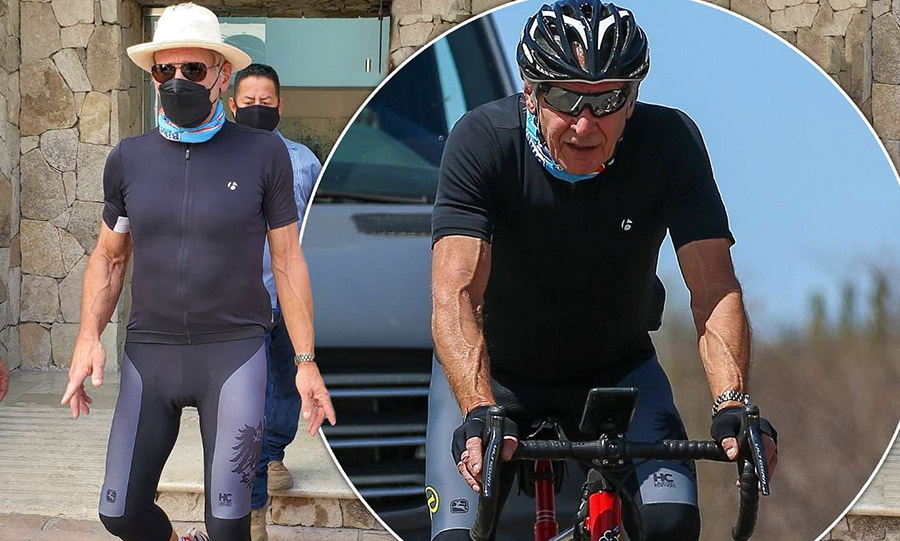
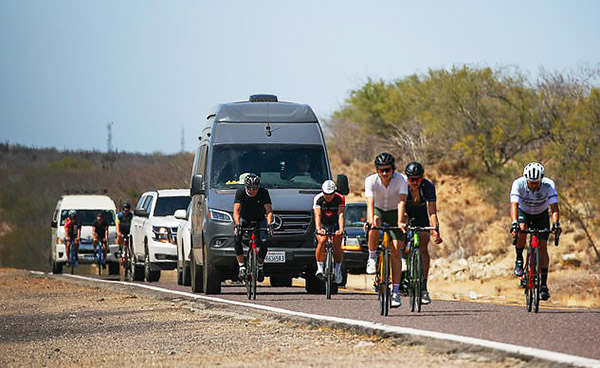
“Tough as Nails” could be an alternative title for this blog, as it is about Harrison Ford bicycling from Tijuana to Cabo San Lucas, a distance of roughly 1000 miles across deserts, over more than a few fairly steep and long climbs through Baja’s mountains, and widely varying weather conditions. I’ve encountered a few other folks bicycling the length of Baja on my motorcycle rides, and I’ve always been in awe of such an undertaking. TJ to Cabo. On a bicycle. Color me seriously impressed.
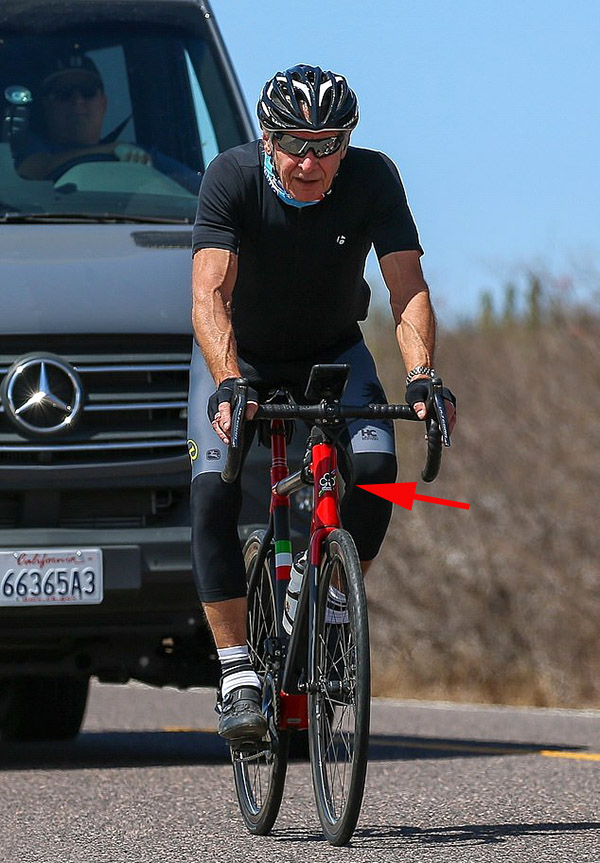
Another cool fact is that Ford is 78 years old. He’s got 8 years on me, but even when I was in my prime, I doubt I could have accomplished this ride. Ford’s bike, judging by the frame’s headbadge, is a Colnago, a very high end Italian roadbike.
I’ve bicycled bit in Baja, having ridden the annual Rosarito Beach to Ensenada ride several times. That’s a 50-mile ride along the ocean and up in the mountains, and I’d like to do it again someday. But TJ to Baja…man, that’s impressive.
Mr. Ford will be completing his ride about the same time as you read this blog. Now I’m wondering: What would it take to organize a bicycle ride like this? Who could I get to go with me? What would Gresh or Baja John look like in Spandex?