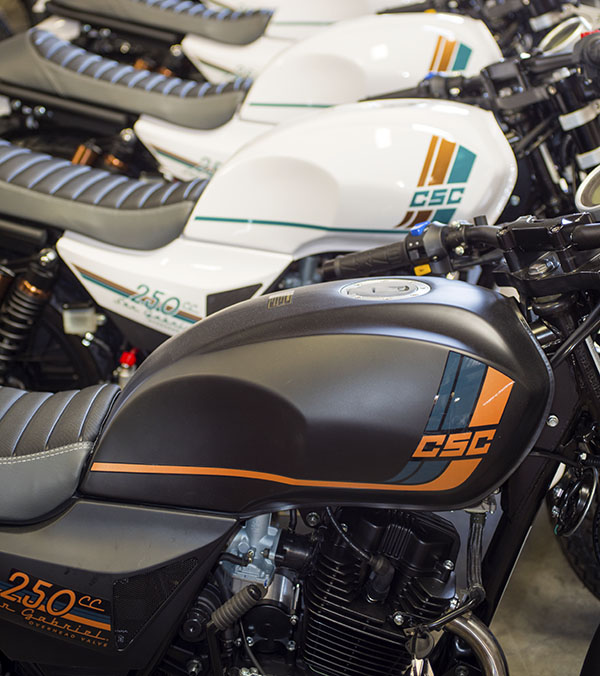
I stopped by CSC Motorcycles last week to visit with my friend Steve and see the new TT250, San Gabriel, and RX3 colors. I and my camera will try to do justice to the new CSC paint themes, and hey, while we here, we’ll share a few videos.
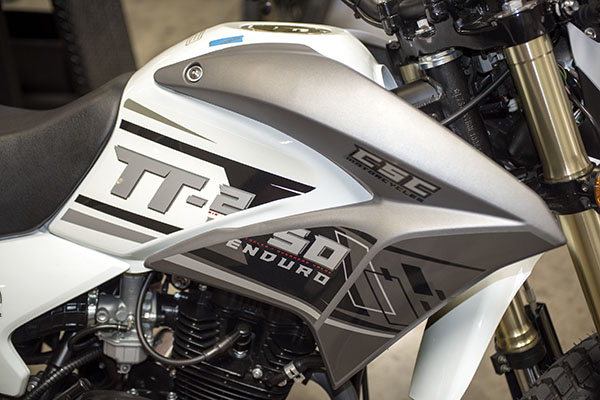
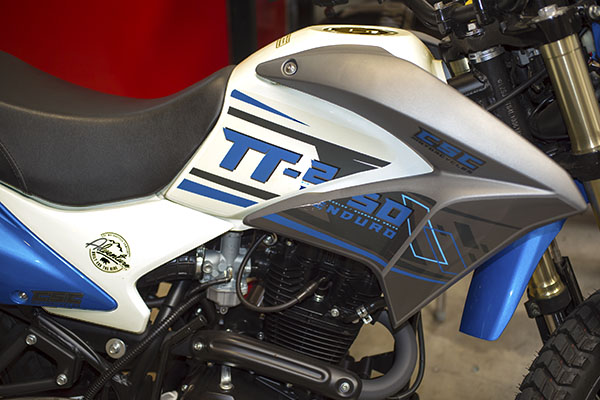
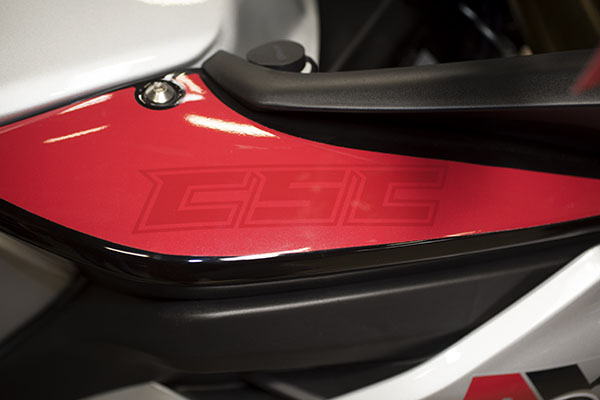
The TT250 line has an entirely new set of colors, and I like the new look.
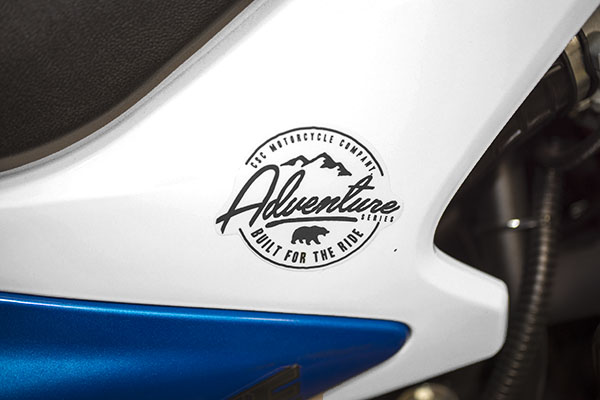
There’s a cool decal on the TT250 side panel, too, which i like a lot. It reminds me a bit of what new Triumphs had in the 1960s, when every one of their bikes had a “world’s fastest motorcycle” decal on the tank.
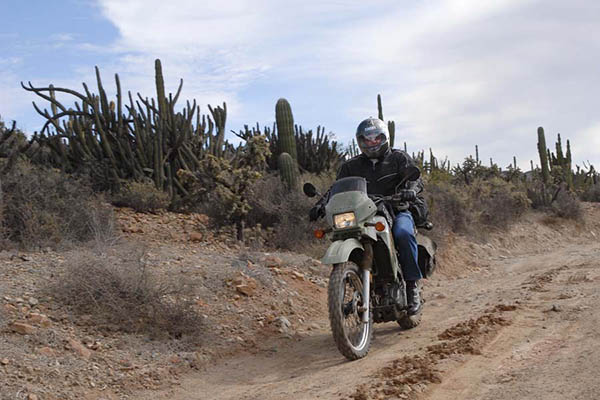
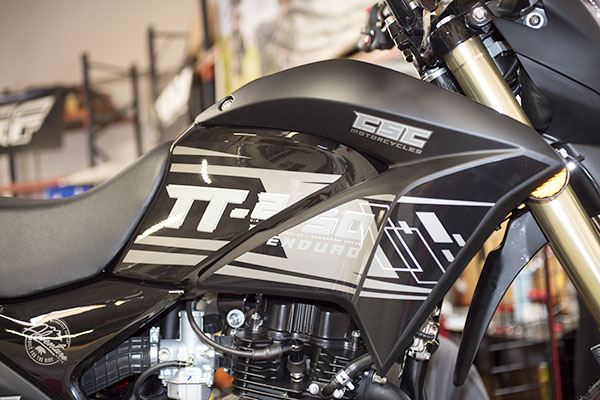
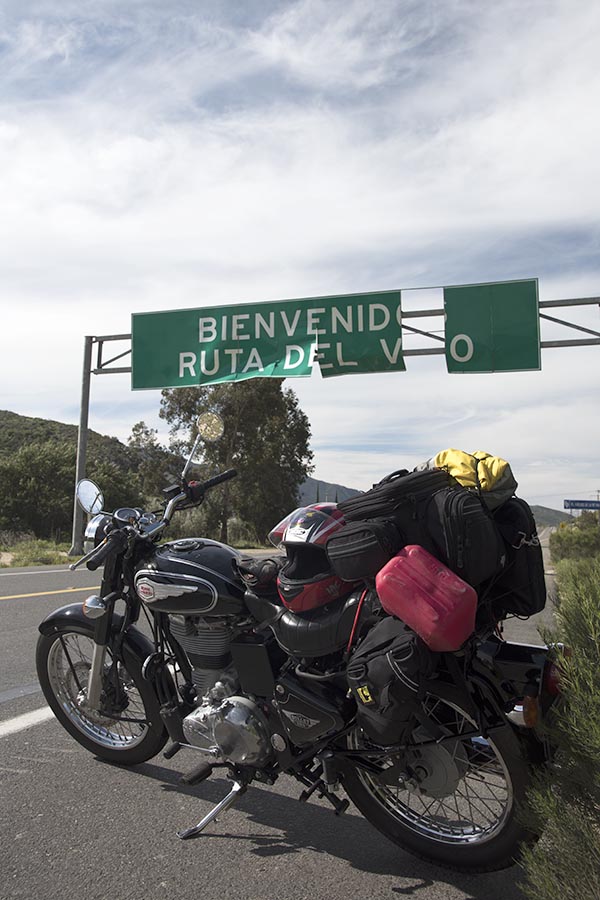
As you know, I have a TT250, and mine is from the very first shipment that came into CSC a few years ago. Mine is black with bold TT lettering on the tank and side panels. I like that bike, I’ve ridden it in Baja (the video below is taking it through the Rumarosa Grade in northern Baja), and I’m going to fire it up and ride it around a bit today.
Next up is a photo of the San Gabriels. The new colors on the SG250 work well, too.
You know, I did one of the very first San Gabriel videos when those bikes first came to America. It, too, was a hoot.
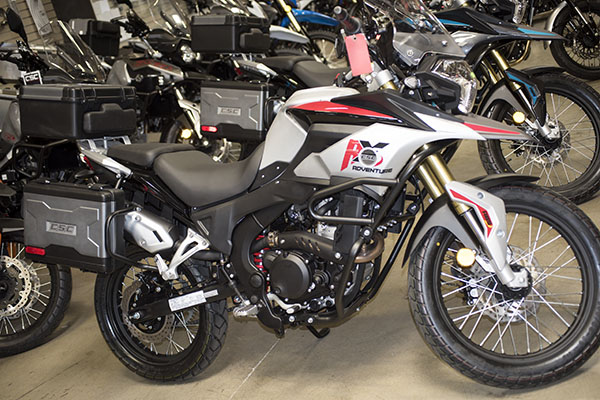
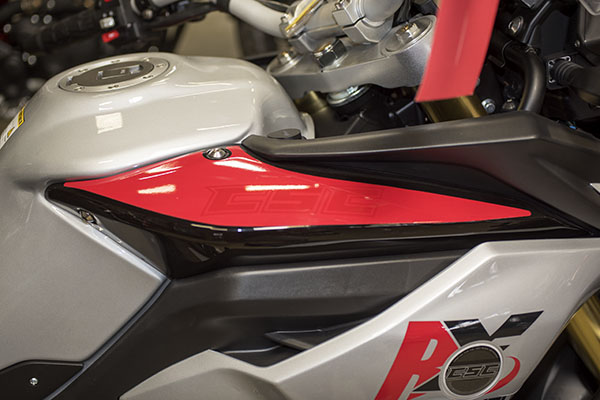
And here are a few photos of the CSC RX3, a bike that has generated lots of smiles and lots of miles since its introduction to the United States in 2015. The new colors are much more interesting and maybe a little more subtle than what we’ve seen on RX3 motorcycles in the past. There’s a gray and turquoise theme, and a silver and red alternative. They both look good.
I like the new RX3 paint themes, and I like the original ones, too. I ride an RX3. Mine’s a 2015 model and, like my TT250, it’s one from the very first shipment to the US. My RX3 is orange (the fastest color, as good buddy Orlando knows), and it’s one of the early ones that faded to a kind of subdued yellow (that’s before Zongshen started adding color stabilizers to the paint). I like that look and I’ve had a lot of great rides on RX3 motorcycles, starting with our initial CSC Baja run. That ride was a hoot and a half. Imagine that: A brand new shipment of RX3 motorcycles (the first in the US), and yours truly and 15 other intrepid CSC riders did 1700 miles in Baja on these bikes. Take a look:
Our next big RX3 ride was the Western America Adventure Ride…5000 miles across the Western US, from So Cal to Sturgis to Portland and then down the Pacific coast to home. I didn’t do a video on that ride, but good buddy Joe Gresh sure did!
We did several more CSC Baja rides, a bunch of rides in the US, and our absolutely amazing 6000-mile ride across the ancient kingdom on RX3 motorcycles:
Not enough? Hey, how about a ride through magical Colombia on RS3 motorcycles? The RS3 is the carbureted version of the RX3, and it, too, was an amazing adventure:
If you enjoy watching YouTube videos, we have quite a few more on our YouTubby page. Grab a cup of coffee, click on the YouTubby link, and have fun. I sure did.
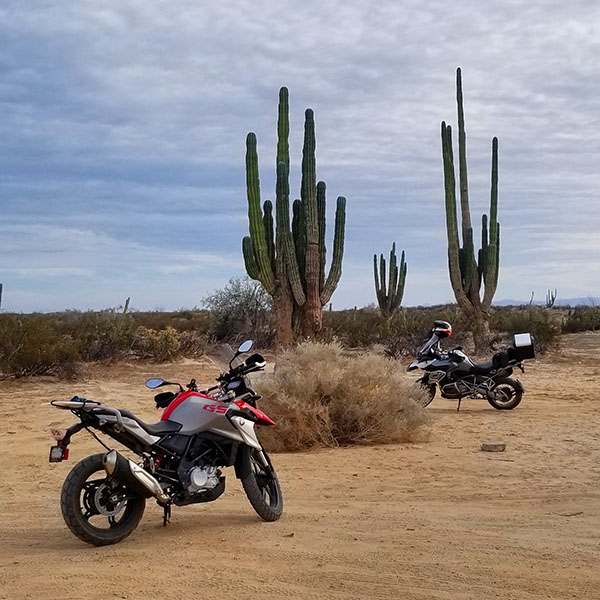
You guys and gals will remember my good buddy Mike, whom I met on one of the CSC Baja runs a couple of years ago. It was a chance meeting…we stopped to buy bottled gas from one of the roadside entrepreneurs in Catavina and I noticed one of the bikes had a set of jump wings on the tail box. We had been on the road a few days already and I wondered why I hadn’t noticed the Airborne insignia before, and then I realized it was because I hadn’t noticed the bike was a BMW GS, not a CSC RX3 (that’s how much the bikes look alike, I guess). I looked around and there was Mike (a new face in the crowd), waiting for fuel just like the rest of us. You meet the coolest people in Baja, and you meet the coolest people on motorcycles. I liked Mike immediately.
Mike is a former US Army Paratrooper (my kind of Amigo), an adventure rider, a good friend, and one hell of a guy. You’ve seen him here on the ExNotes blog before. Mike lives on his motorcycle (a big BMW GS) and travels all over, working as an untethered project manager and writing regularly. It’s a cool (and an enviable) lifestyle.
I received an email from Mike yesterday offering this guest blog, and I wanted to share it with you.
Joe,
Thought this would make for an interesting story for your blog. I know its been an interesting story for us! Let me know what ya think. Few colorful pics for it as well.
Hope you are doing well. I am sure you are fully prepared. 🙂
Mike
PS. Be cool if we could get Chris Hansen to read the blog “take a seat over there, would you like some lemonade” HAHAHA
Locked OUT Abroad- Mexico- Extended Stay
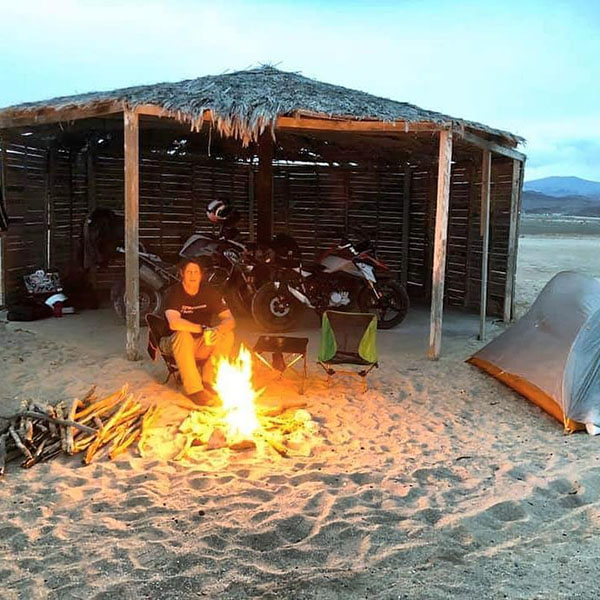
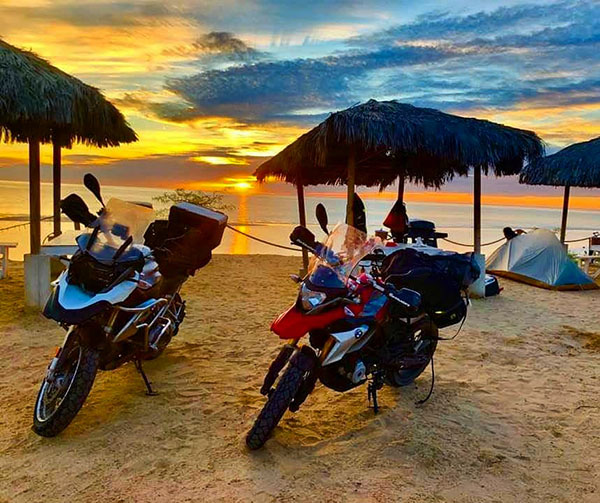
My girlfriend, Bobbie Surber and I both work remotely, so in late February we thought a 4-6 week adventure moto trip through Baja would be a great way to kick off spring. We could get some great riding in, explore camping along the beautiful beaches, and really just clear out the cobwebs from any winter blues and lack of activity we had been experiencing.
The trip started out great in San Felipe in a wonderful off grid solar AirBnb casita, with a lovely host (we only travel Saturday and Sunday as we are heads down working Mon-Fri in AirBnBs). We continued camping, riding, and staying in AirBnBs all through Guerro Negro, Muleje, La Ventana, Todo Santos, and Loreto. We were spending a week in each location to fully absorb the unique cities, people, and culture while soaking up the incredible desert roads, ocean views, and all while meeting new riders that will become lifelong friends along the way.
As we had just arrived in Loreto on March 15th we really began to notice the COVID-19 virus was really starting to ramp up in the United States to the point travel alerts were being issued globally and we began to see fellow travelers from Canada and the EU being requested to return home by their countries.
In Loreto, we were still a solid 3-day ride away from the US Border when on March 19th a Level 4 travel advisory was issued to either return to the United States or hunker in place for an indefinite period. At the same time people in America were hoarding toilet paper and individual states were beginning to “shut down” one by one. We took this quite seriously and given what information was being provided at the time a team decision had to be made by us. It was a long 2-3 days of going back and forth in open dialogue between both of us on different ideas, plans, and solutions. None of which either of us were thrilled with.
We both agreed returning to the United States was not a wise decision, however, we did not want to stay a 3 day drive away from a border crossing in the event there was a health emergency for either of us. We decided to reach out to our 1st Baja AirBnB host in San Felipe and she graciously offered her casita up for us to hunker down in which would place us within a 2 hour drive from the US Border should there be an emergency where one or both of us may need to return home. This seemed like a perfect staging area. The virus seemed to be less in the Baja, perhaps due to lack of testing, but nonetheless it was a peninsula so geographically it made sense that the impacts would be less. There was also an abundance of supplies (to include toilet paper, which I am still confused as hell on why there was a run on that particular item).
So now to our current state of affairs. We are in self-quarantine in San Felipe with our new AirBnB friend, Victoria and are continually evaluating the situation in the United States looking for a safe opportunity to return home, and are quite frightful for the new reality we are returning to. Confident in both our analytical and decision making abilities I am looking forward to writing Part II of this, hopefully sooner than later.
Mike, that’s an awesome input and we sure appreciate hearing from you. Thanks very much. Your photos and descriptions made me realize just how much I miss Baja. Sue and I would have been down there this month had it not been for this CV19 business. As soon as we return to normal, I’m headed south and we’ll be down there. Ride safe, take care, and thanks again!
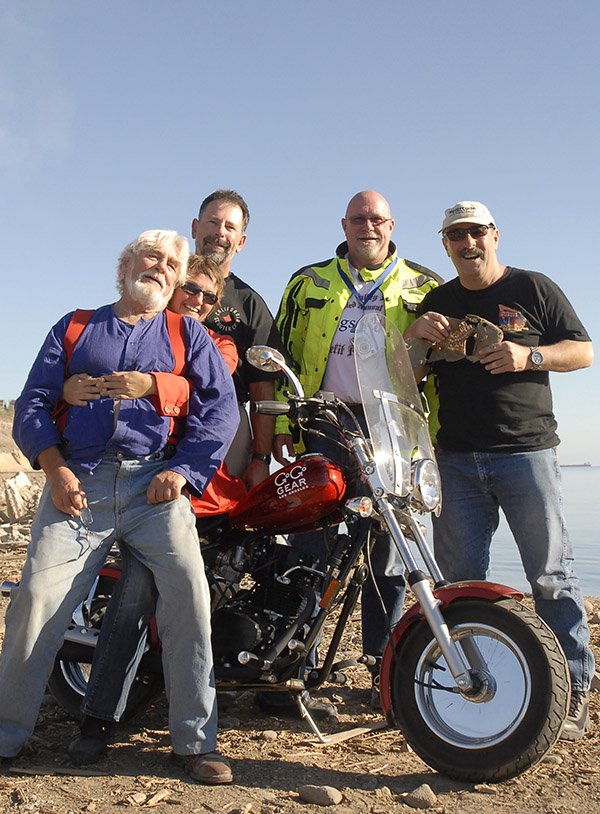
A great riding group on a Baja ride: From left to right, it’s British novelist and world traveler Simon Gandolfi, Go Go Gear CEO Arlene Battishill, hunting buddy J Brandon, Baja John, and yours truly. John loves Baja so much he lives down there. This photo is in Santa Rosalia. That’s the Sea of Cortez in the background.
Yep, based on the Chinese zodiac, 2020 is the Year of the Rat. I suppose there are all kinds of jokes, organized crime and otherwise, that could be made of that, but let’s set all that aside. Good buddy Baja John (who wrote to me from Bahia de Los Angeles in Baja just a few days ago) had this much better suggestion:
Hey Joe,
So, I’m calling this year the “Year of Hindsight.” I was thinking that might be good fodder for a blog entry. Lessons to pass to younger readers or lessons that have helped you live happier in your senior years. Who knows. Popped into my head and thought I’d share.
John
I think that’s a grand idea, John, and I’m hoping our readers do, too. Hey, it’s 2020, and everyone knows that hindsight is 20-20. So, to all our readers (and our year end report tells us that our key demographic for ExhaustNotes readership is men aged 55 and over), you have the benefit of years of experience in all kinds of things. Let’s have your comments, please. What advice on any topic (love, life, money, politics, 9mm vs. .45, motorcycles, whatever) would you give younger folks?
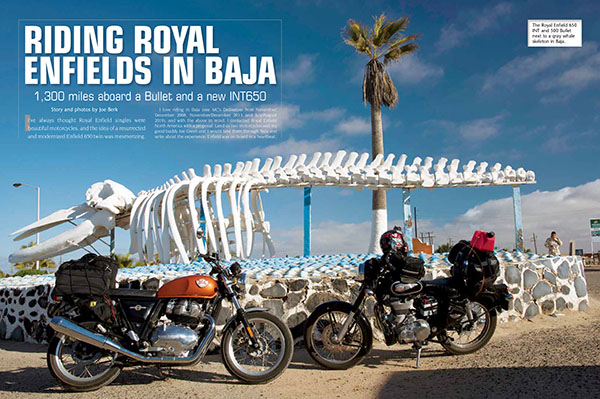
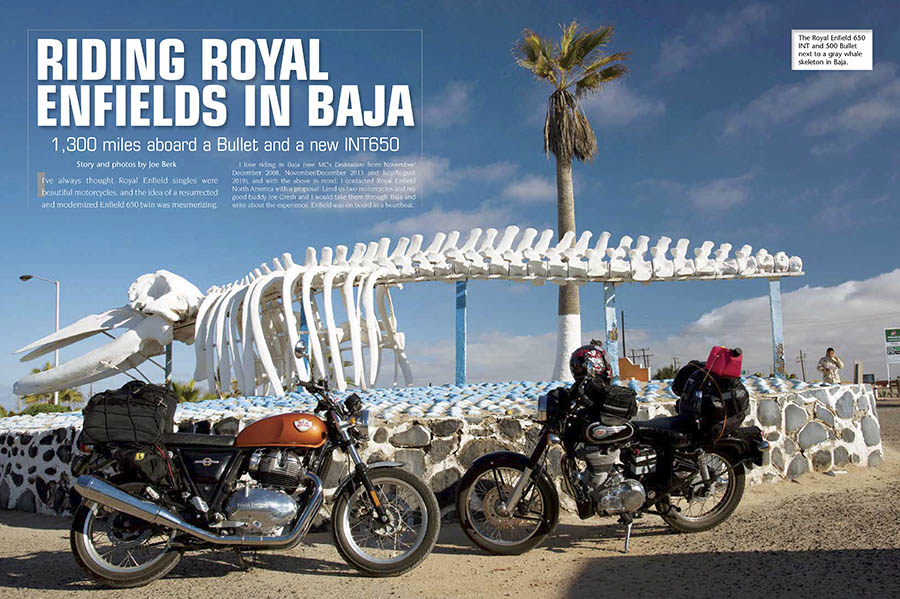
The Bullet in Baja. The new 650 Interceptor was a strong and reliable motorcycle. The Bullet, not so much, but it wasn’t the bike’s fault. Read the article, and learn more…
Some say the adventure doesn’t start until something goes wrong; by that measure, the Bullet was every inch an adventure bike…
Ah, quoted again. That’s my line, and you can read it online in the latest issue of Motorcycle Classics magazine.
Good times and great bikes in Baja, and the story is in the current issue of Motorcycle Classics magazine.
Our story of the Baja Enfield adventure is now available online, and you can read it here. Joe Gresh and I rode the new 650 Interceptor and an older Bullet, and we had a blast. Great food, great riding, beautiful people, and we said hi to the whales. It was awesome!
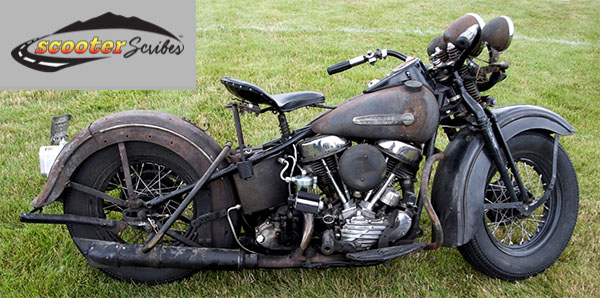
Ah, lots of good news and a few things to catch up on. For starters, I was alerted to another top notch motorcycle site, and that’s Terry Roorda’s ScooterScribes.news site. You’ll like it.
Terry is the former Thunder Press editor, and there’s lots of cool V-Twin stuff on ScooterScribes, and you don’t have to be a Big Twin dude or dudette to appreciate it. It’s good. Trust me.
More good news…the ExNotes stickers are in, and the extensive Direct Mail arm of the ExNotes empire is busy sending them out.
We sent an email requesting your address if you signed up, so watch for it and shoot that info back to us. We promise that as soon as we get your snail mail address and confirmed that you’re on our email list, we’ll shoot them out to you as soon as we get around to it. Want to help us more? Hey, share our site and get more folks to sign up for our automatic emails, or just get them to visit www.ExhaustNotes.us. We think we’ve got a good thing going. Guns, motorcycles, scooters, opinions, dream bikes, resurrected bikes, books, articles, Baja, and lots, lots more. Let us know what you think by posting your comments here on the blog. We get all kinds of inputs. Folks want more on Harleys, they want less on Harleys, they want more political commentary (seriously?), they want less political commentary…hey, let us know. There’s no guarantee we’ll take any of it seriously, but you never know.
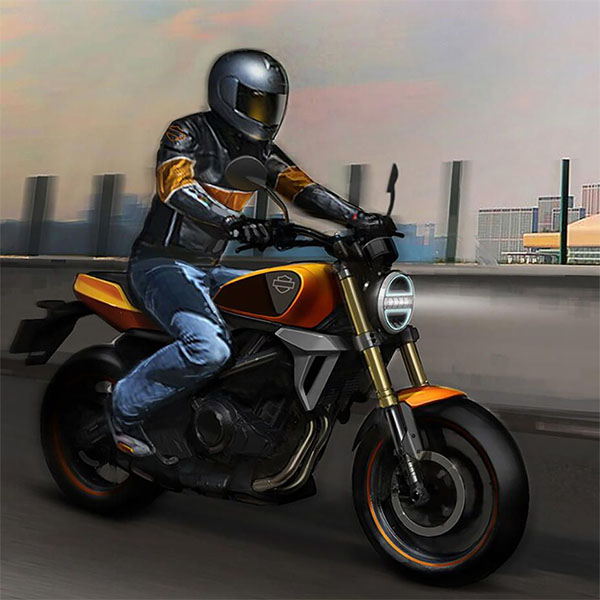
Yet more news…several online pubs are breaking the news that Harley is working with a Chinese company to offer a small HD.
Hey, we saw a Chinese manufacturer making parts for Harley a decade ago. But the recent news is this is going to be a complete small bike, just over 300cc. I’m surprised Harley didn’t do this several years ago, but then, Gresh and I were in the catbird’s seat on the small bike thing from the gitgo. CSC and Zongshen were way ahead of the curve on this one. Dollars to donuts says that the small Harley will find its way to the US, and that’s a good thing. I’ve seen the photos and I think it looks good. I’m waiting for the inevitable jokes and the anti-China rants to start, but Harley, if you’re reading this, ignore those folks. The only thing worse than a smartass is a dumbass, and anyone who criticizes a motorcycle based solely on its Chinese origin is most definitely in that latter category.
One last bit of news…make sure you pick up the latest issue of Motorcycle Classics magazine. It’s got my feature story on our Enfield Baja trip, and my Destinations piece on Tecate. Good stuff, Motorcycle Classics is.
Hey, Motorcycle Classics magazine is running my story on Tecate in the next issue! You can read it here. More good news: I have another story in that same issue. Buy a copy if you’re not already a subscriber!
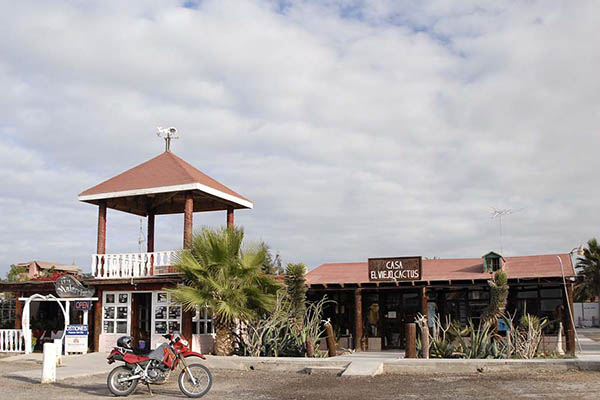
Our planned stop for the evening (and our turnaround point) was Guerrero Negro. It’s a town just south of the 28th Parallel, which forms the border between Baja California and Baja California Sur, the two states in Baja. It’s about halfway down the Baja peninsula.
Guerrero Negro is an interesting town. It’s named for the Black Warrior (Guerrero Negro in Spanish), a sailing ship that sank off the Baja coast a long time ago. It’s one of the best spots to see the whales in Mexico (you can read about that here). The whales hang out in Laguna de Ojo Liebre (the Eye of the Jackrabbit), also known as Scammon’s Lagoon. I’ve been down there many times to see the whales, and it is one of life’s main events. That’s a strong statement, and if you’ve never seen the whales in Baja, you’ll think I’m exaggerating. If you’ve seen them, though, you’ll know I’m not. It’s a surreal and awe-inspiring experience. The whales are in town from January through March, so we wouldn’t be seeing them on this visit.
We usually stay at Malarrimo’s in Guerrero Negro. It’s a great hotel with a great restaurant. I had a cup of coffee that morning that was just perfect.
The little town of Guerrero Negro has another distinction: It’s one of the biggest salt producing regions in the world. The area has hundreds of square miles of shallow flats that the Mexicans flood with sea water. They let the water evaporate and then they bulldoze up the salt. Mitsubishi owns 49% of the production operation; the Mexican government owns the other 51%.
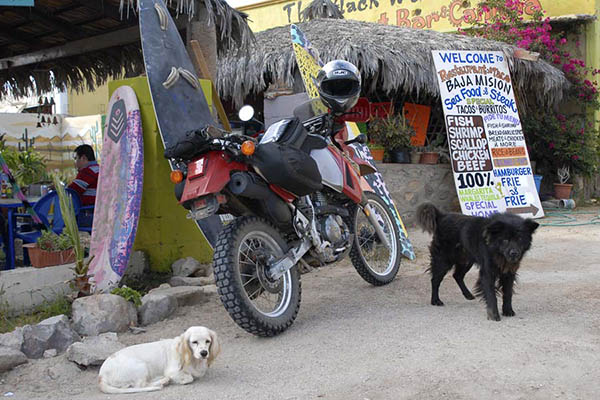
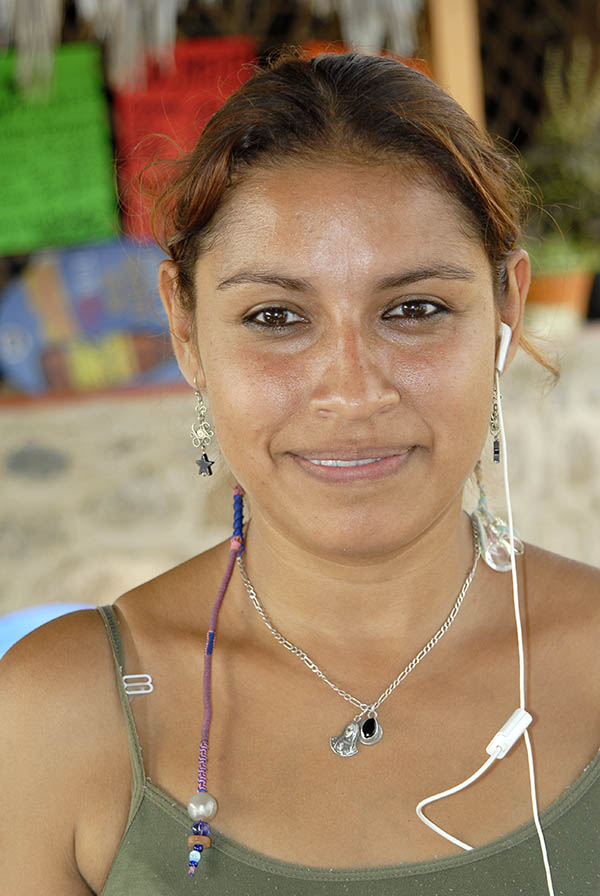
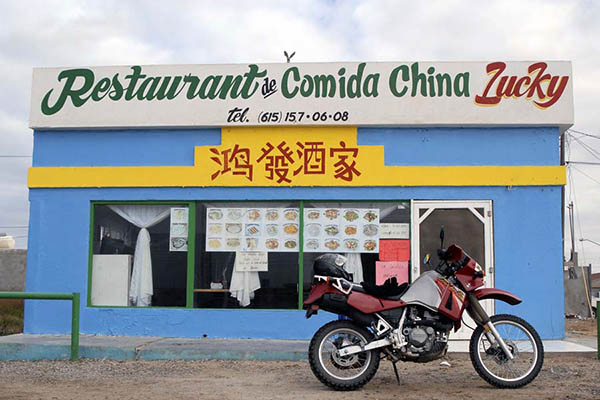
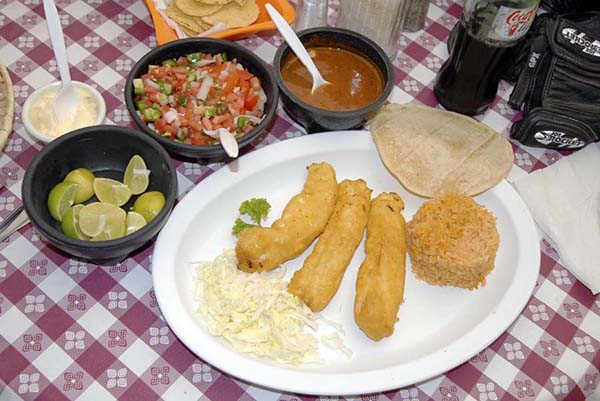
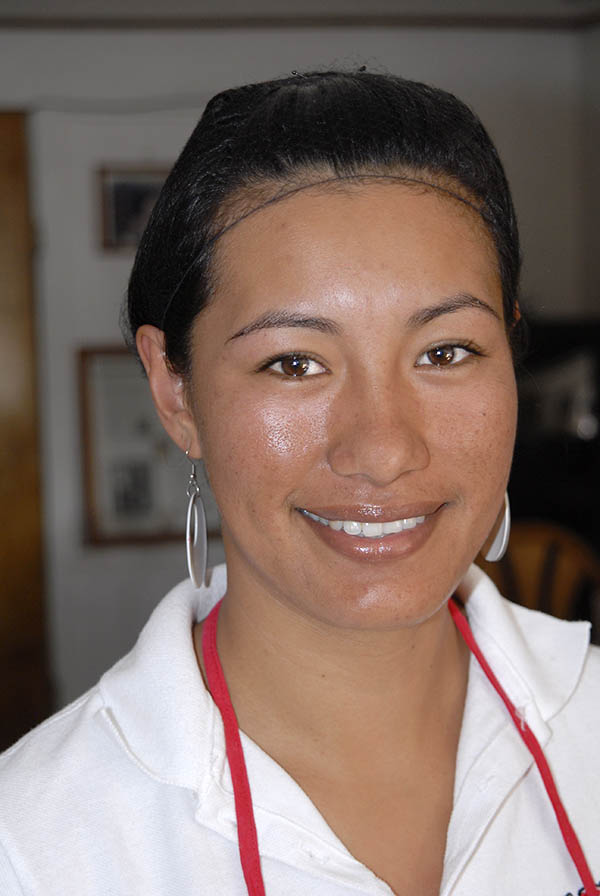
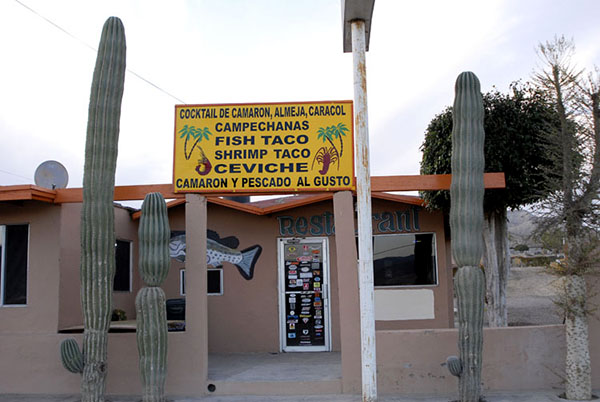
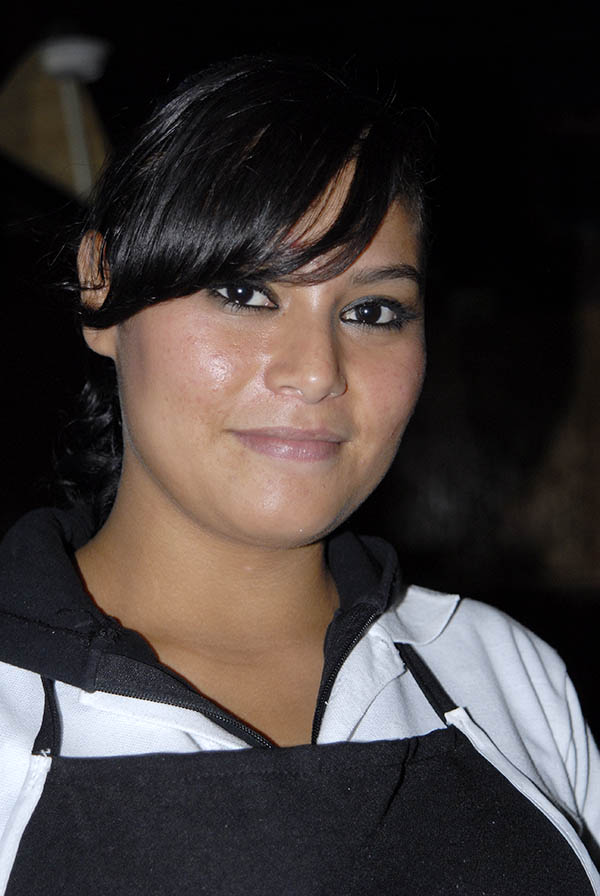
We stopped for fish tacos in Guerrero Negro’s Baja Mision restaurant. These were the only two dogs we saw on this trip that didn’t chase us.Laura, our waitress in Guerrero Negro when we ate at the restaurant in the above photo.John saw this Chinese restaurant in Guerrero Negro, which seems kind of funny. We had dinner there.Chicken chow mein in Guerrero Negro. It was great.
I got up early the next morning and rode around for a bit, exploring Guerrero Negro. With all of the luggage off the KLR, it felt much lighter and faster. I grabbed a few shots around town. I rode through all of Guerrero Negro, including its residential areas. Another 8 or 10 dogs chased me, intending to do me serious harm. None succeeded. By this time itwas almost funny. See a dog, go like hell, hope for the best. It was grand sport.
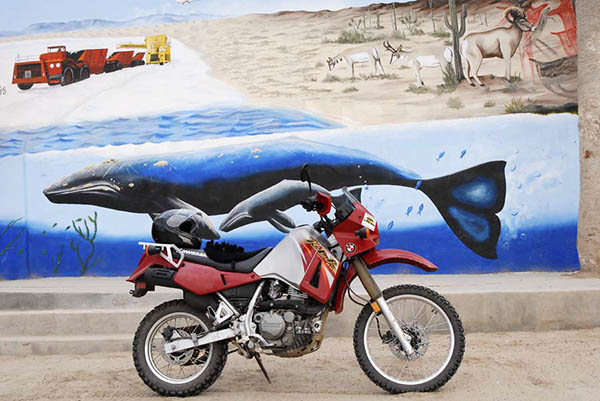
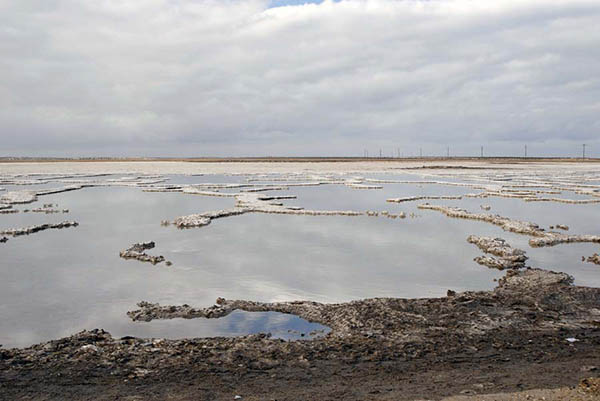
This is a mural on Guerrero Negro’s supermarket wall.This is one of the salt flats. When this area dries, the salt company will scrape up the salt, flood it again, and repeat the process.
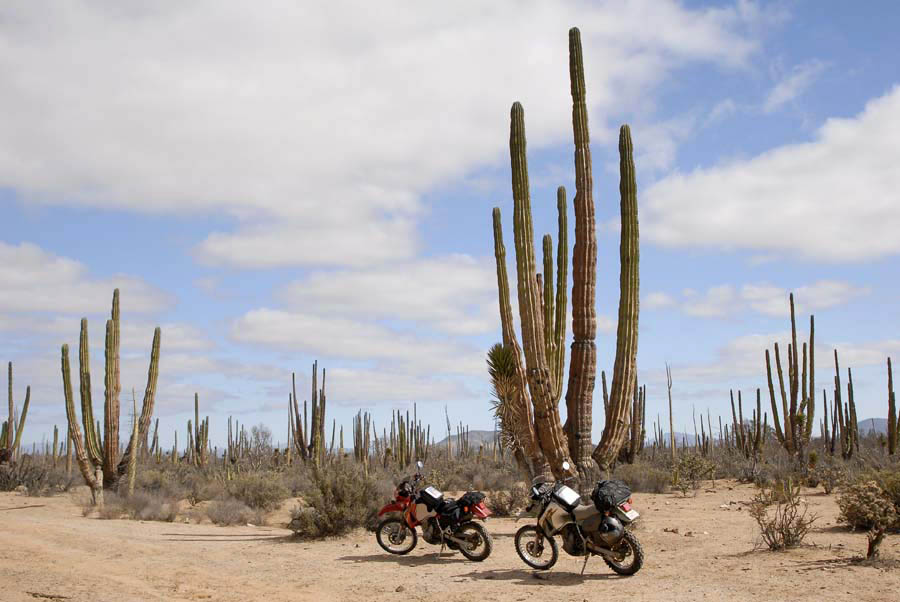
As I mentioned above, Guerrero Negro was our turn-around point on this trip. Here’s a shot on the way home, in the desert headed north.
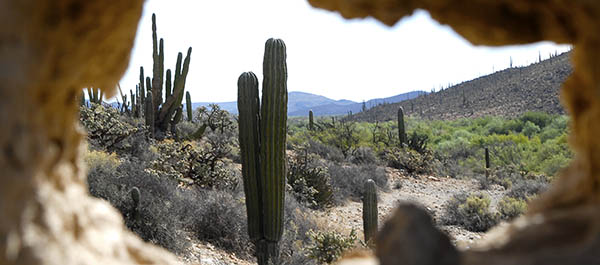
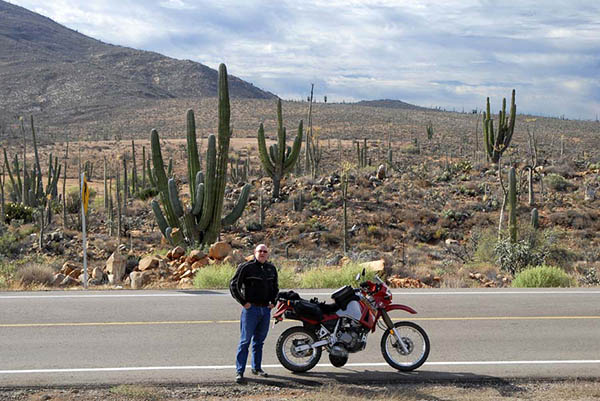
Those Cardon cactus are impressive.
We stopped again in El Rosario, this time for a lunch at Mama Espinoza’s. This is their take on fish tacos. They were excellent.
Fish tacos at Mama Espinoza’s. Life doesn’t get any better.Maria, our waitress in Mama Espinoza’s. There are a lot of ladies named Maria in Mexico.
After Mama Espinoza’s, we topped off at the Pemex station in El Rosario and continued north.
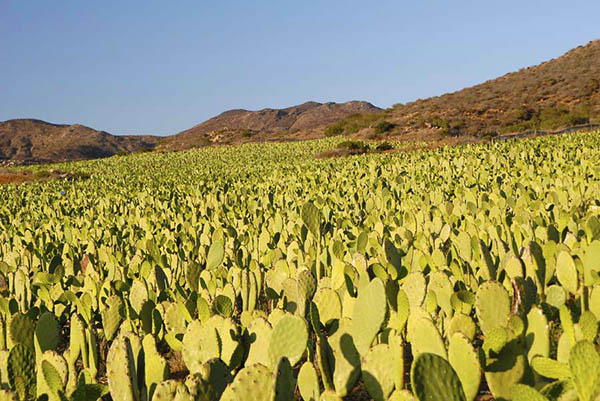
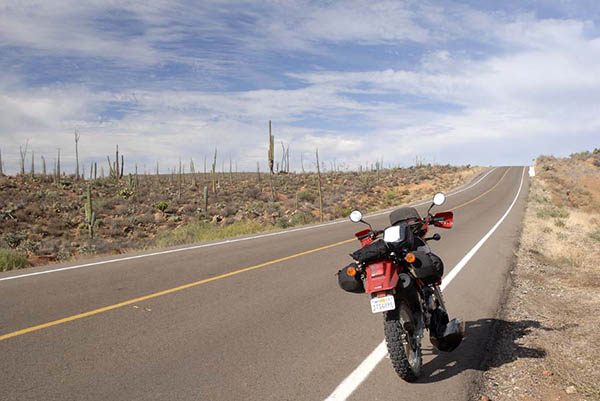
On the Transpeninsular Highway, south of Ensenada. I had to stop and grab a shot of this cactus path.
We rolled into Ensenada well after dark and decided to call it a day. That night we stayed in the Best Western in Ensenada’s tourist district, and it was nothing like any US Best Western. It was a really nice place. We unpacked and parked the KLRs right next to the entrance, and a guy who worked at the hotel put a rope barricade around them. We didn’t know if it was to keep people from touching the bikes, or if it was to isolate them for another reason…John’s KLR’s fuel petcock had developed a drip, and because of that, the area soon reeked of gasoline.
To be continued…
Want to read about more epic motorcycle rides? Click here to get to our Rides page.
Hey, why not sign up for our automatic email updates? You might win one of our adventure ride books. Just enter your email address here:
We promise we won’t share your email address with anyone else.
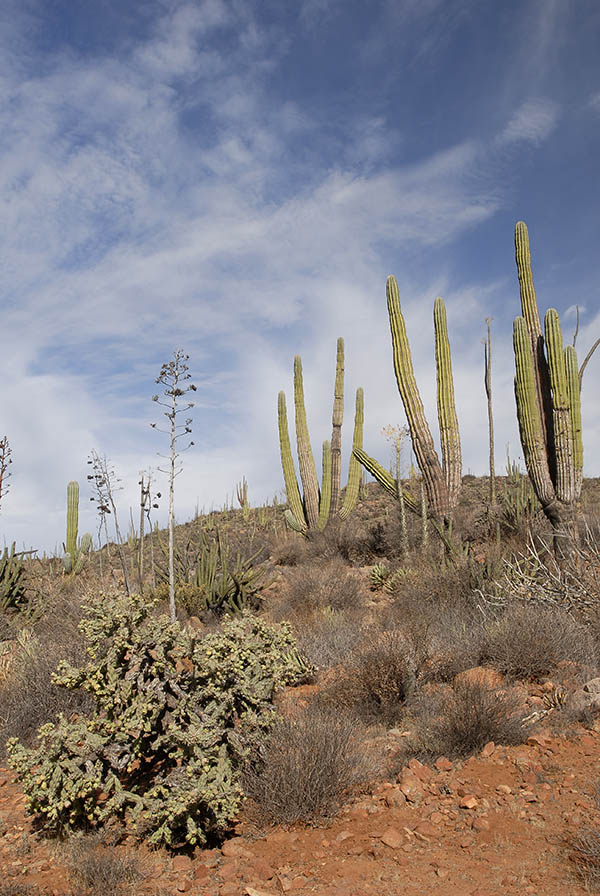
When the Transpeninsular Highway continues south after leaving El Rosario, it crosses a long bridge across the dry Rio El Rosario and then winds into the mountains on the northern edge of the Valle de los Cirios. The wilderness starts here, and it is awesome. I love this area. It’s the first place you encounter cardon cactus and the cirios. These things grow only in Baja (you won’t find them anywhere else on the planet). The Cardon are the giant cactus that look something like the saguaro cactus in Arizona, but the cardon are much, much larger. The cirios are the weird-looking thin shoots that grow to heights of around 30 or 40 feet (maybe even more). Someone once wrote that they look like a plant that Dr. Suess would have designed, and I think that’s a good description. They have this kind of weird, whimsical, goofy look…the kind of thing one might create when under the influence of, well, whatever your preferred mind-altering substance is.
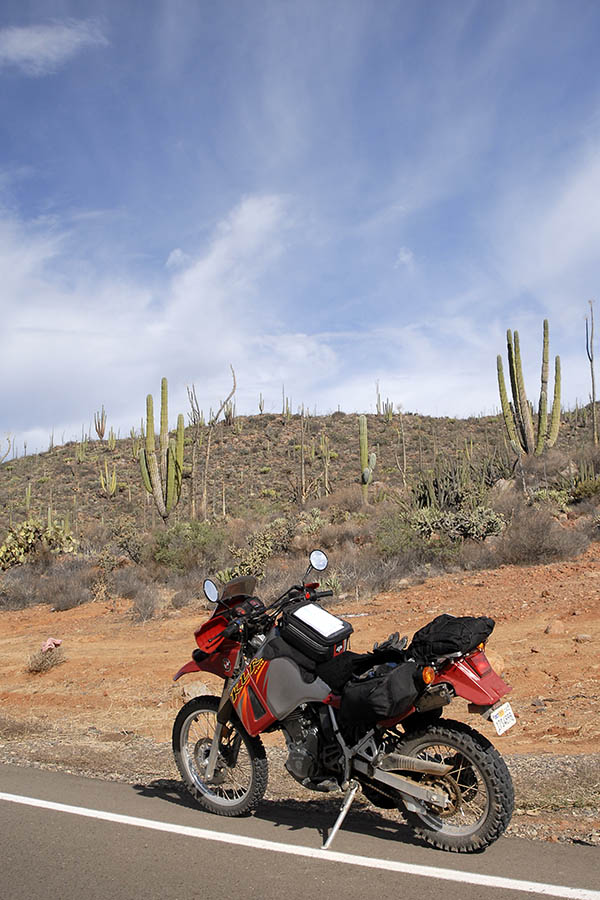
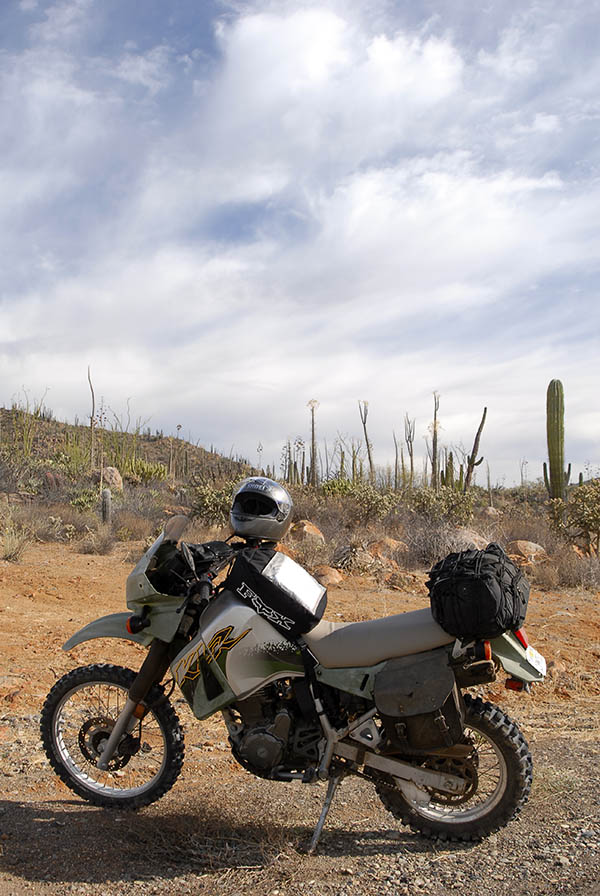
I grabbed a few shots of our KLRs a few miles into the mountains. You can see the cardon and the cirios in the background.
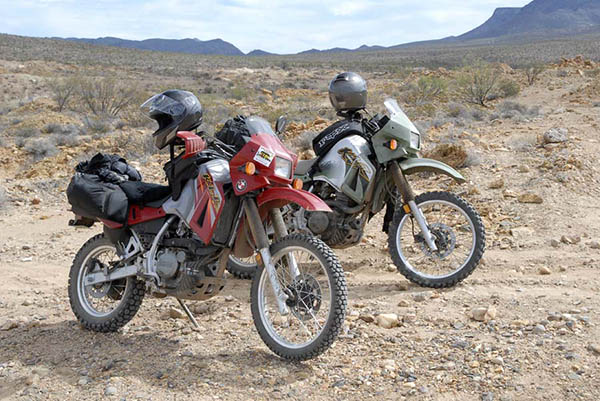
My KLR 650. I had the Kawi soft luggage on it and a Nelson-Rigg tank bag.John’s KLR. These bikes just keep going and going. They’re perfect for this kind of ride.Baja cacti. It’s one photo op after another in Baja.A shot along the Transpeninsular Highway in the Valle de los Cirios.Baja John standing by my KLR. The background almost looks like it’s been painted into this scene.
After rolling along the highway a few more miles, I saw something out of the corner of my eye on the road. At first I wasn’t sure, and then as I was playing back the image mentally, I decided I needed to turn around and take another look…
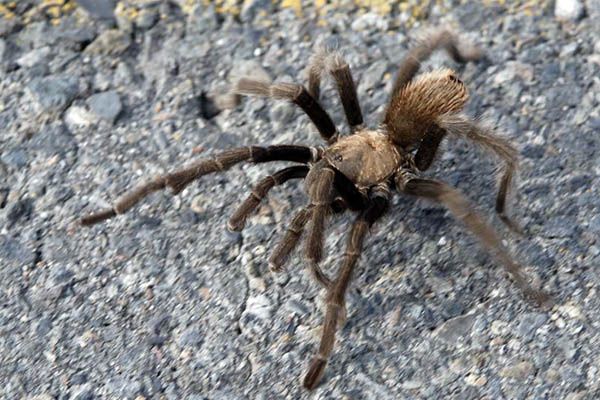
Yep, my eyes weren’t playing tricks. I had seen what I thought I saw. Is that correct grammatically? Whatever. The spider was huge.
Wow, that was one monstrous tarantula! We parked the bikes and started taking photos. This spider was easily double the size of the tarantulas I’ve seen in California.
John got down in front of the tarantula. He squatted to get a closer look, and then something wild happened. The spider ran straight at John. We were both shocked at its speed. They normally seem very deliberate and slow, but I have to tell you, that one moved terrifyingly fast.
John jumped up, screamed, and propelled himself backwards faster than a Democrat mistakenly wandering into a Trump rally. John was paddling backward so fast he looked like an old Warner Brothers roadrunner cartoon.
We both laughed after it happened. Here we were, two guys old enough to know better, screwing around with a ginormous tarantula in the middle of the Baja peninsula, laughing like a couple of kids. Baja does that to you.
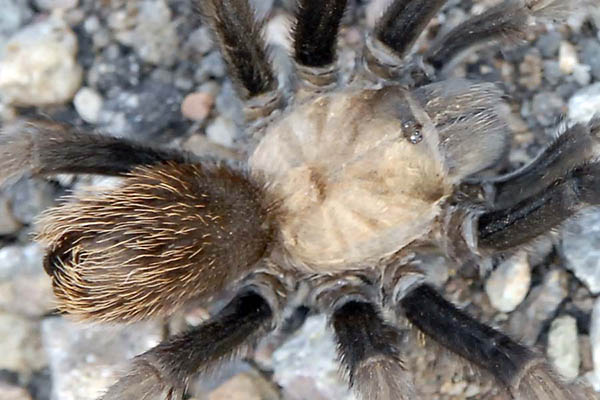
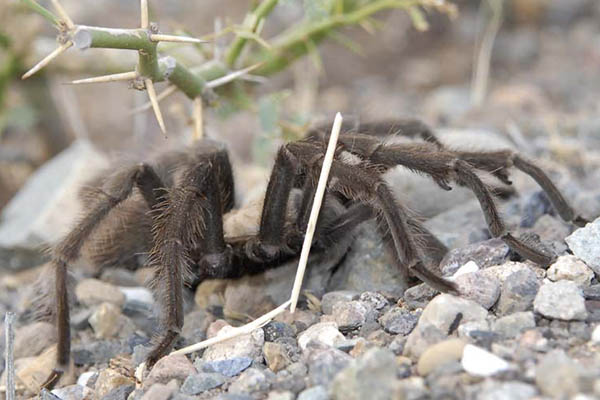
Look at this fellow’s little beady eyes. And his hairy butt. That’s quite a hairdo. It kind of reminds me of Beavis and Butthead. Come to think of it, those might be appropriate names for John and me.The tarantula crawled under a plant, I took a few more photos, and we were on our way.
I think I already mentioned that I had my Nikon D200 on this trip and an older (non-VR) 24-120 Nikon lens. I mostly shot at f/8 (the 24-120’s sweet spot) in the aperture mode, which is a mode that works well for me. I also had the 12-24 Tokina wide angle lens along for the ride, but I never even mounted it on the camera. The 24-120 is not a macro lens, but it did an acceptable job here. The Tokina lens does a good job, too, but the 24-120 Nikon was handling everything for me on this ride.
Our next planned stop was the Mission San Fernando Rey de Espana Velicata. We almost didn’t go. I had been spooked by the dogs, and I told John the night before that I wasn’t too keen on rolling through any more little villages with dogs. John waited awhile and casually mentioned that he really wanted to see some of the sights accessible only by dirt roads. I acquiesced and I’m glad I did. We saw some amazing things…things we wouldn’t have seen if we hadn’t wandered off road.
Further down the Transpeninsular Highway, we saw the sign for the Mission San Fernando Rey de Espana Velicata and a dirt road veering off to the west. I took the turn first, and son of a gun, a dog materialized out of nowhere and started chasing me. This time the dog was so small it was funny. It was a little Chihuahua, and he looked anything but threatening. The little guy was behind me yapping up a storm and I was enjoying the chase. Those little legs were pumping for all they were worth and he still couldn’t keep up. It was me, the Chihuahua, and John (in that order) rolling down this dirt road. The pup was struggling to keep up, barking all the while and trying his best to be intimidating. I could hear John laughing behind me. I should have grabbed a picture.
On the road to the Mission San Fernando Rey de Espana Velicata
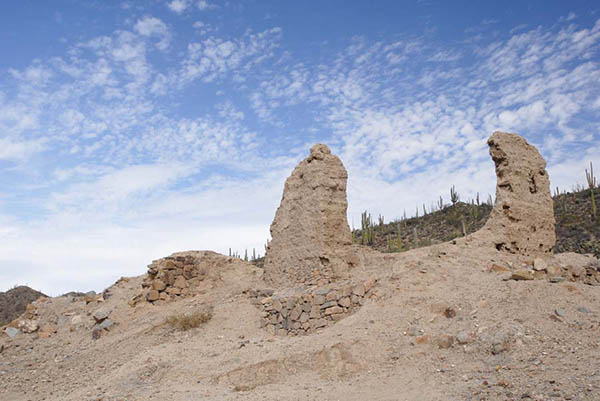
The Mission San Fernando Rey de Espana Velicata was the only one in Baja founded by the Franciscans (the Jesuits did all the others). It only lasted from 1769 to 1818. It was built to convert the local Cochimi Indians to Catholicism (that was how it was advertised; basically, the missions were labor camps with a touch of that old time religion). Unfortunately, the Spaniards brought diseases for which the indigenous people had no immunity, and disease soon ravaged the area. The entire mission system in Mexico ended in the early 1800s, when Mexico gained its independence from Spain. It’s not a pretty story, but there’s a history here and it’s intriguing to visit these ancient places (especially when they are well off the beaten path).
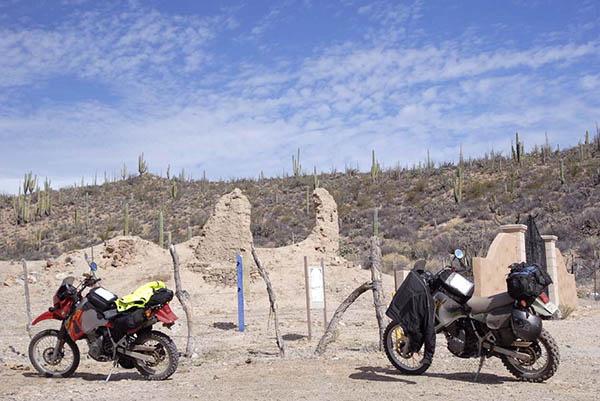
The Mission San Fernando Rey de Espana Velicata. This is all that’s left of it.Our KLRs parked in front of the mission ruins.
The place was amazing. I’d seen the sign and the dirt road to get to the mission on each of my prior Baja visits, but I had never been to see it. Getting there and taking it all in was fun.
After visiting the Mission San Fernando Rey de Espana Velicata, we rolled south along the Transpeninsular Highway a few more miles and took another dirt road (this time to the east) to see the ruins at El Marmol. El Marmol was a world-famous marble and onyx quarry 50 years ago. Like the mission, we’d seen the signs for it on our earlier travels through Baja, but we had never made the trip out there to see it. I always wanted to see what El Marmol was all about, especially after reading about it in several Baja references. Carole Lombard had a bathtub made from El Marmol marble, you know.
The ride out to El Marmol was exciting. The road was rough and had deep sand in several spots. My friend Bob had previously told me that the best way to take this stuff was at high speed, and that’s what we did. It made an enormous difference. I could see the rough road beneath me, but the KLR’s long-travel suspension let me fly over it. It was almost an out-of-body experience. I enjoyed it. I was in the zone, and suddenly, we were there.
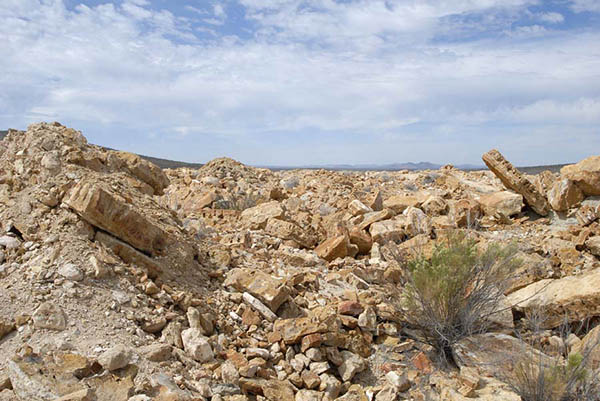
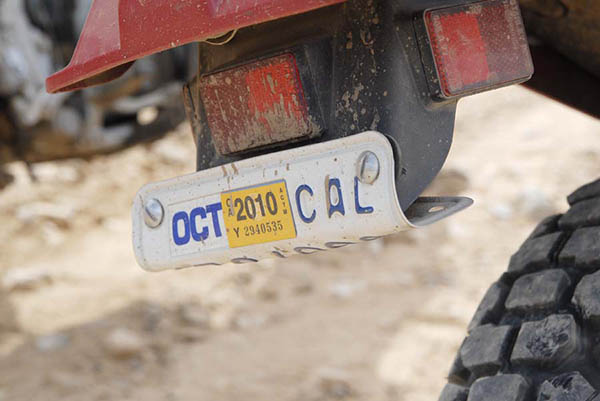
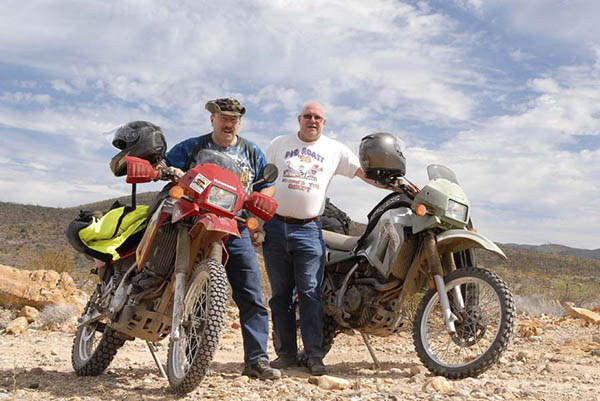
El Marmol. There isn’t much to it, other than a pile of big rocks. Folks still come out here to get the marble. We saw a few Mexicans loading some into a tiny pickup truck.I bottomed the suspension in a few spots on the ride out to El Marmol, and this is what it did to my KLR’s license plate. Many first-gen KLR owners relocate their license plate up on top of the rear fender. Now I know why.Two KLRistas at El Marmol. That’s my yellow riding jacket on my KLR. It seemed to aggravate any dog who saw it.The KLRs at El Marmol.
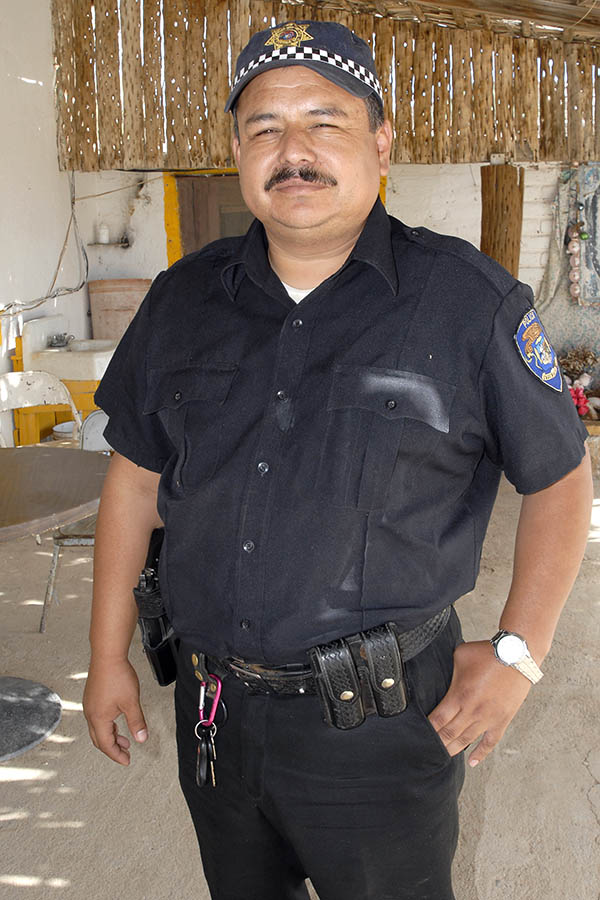
We stopped for a break on the way out of El Marmol where the dirt road rejoined the Transpeninsular Highway. We had a good conversation with Jose, a police officer from Catavina who consented to a photo.
Good buddy Jose, my tocayo.
There were two dogs hanging around the place watching John, Jose, and me. They seemed friendly enough when John gave one of them a snack. Then we got on the motorcycles and it was as if someone had flipped a switch. The dogs instantly turned mean, snarling and going after John, who was accelerating sharply way (a relative term, to be sure, when you’re on a KLR). There’s a rule in Mexico, I guess. If you’re a dog and you see a guy on a motorcycle, you’ve got a reputation to maintain. This time, though, both dogs went after John and ignored me. They chased John all the way back to the highway, with me following. Hey, that’s was okay by me. I’d already earned my combat pay.
The dogs chasing John, though, didn’t seem to have their hearts in it. They were chasing John like it was part of their job description and the boss was watching. Going through the motions. Phoning it in. You know the drill.
I thought about that as we continued south. I reasoned and hoped that as went further into Mexico (and we were about 350 miles into Baja at this point), the dogs might be nicer. Our next destination was Guerrero Negro, 500 miles south of the border. We would soon find out.
Check out our other Epic Motorcycle Rides, and watch the ExNotes blog for the next installment of the Baja KLR Khronicles!
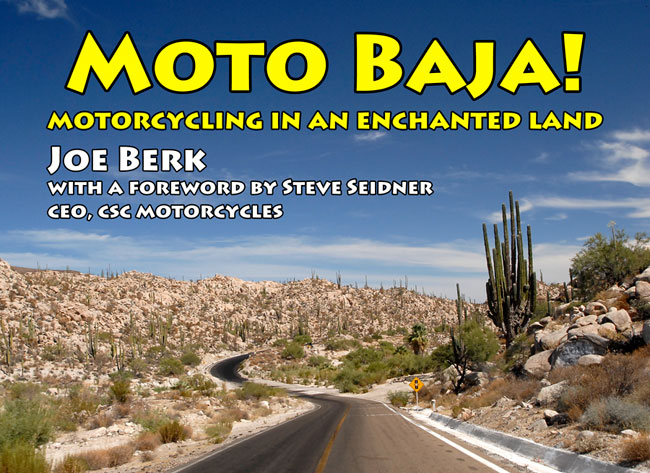
Like what you’re reading? Sign up for our automatic email updates, and you’ll be eligible for our quarterly drawing to win one of our adventure motorcycle books. Want to read about our other Baja motorcycle adventures? Order your own copy of Moto Baja here!
When I left off with the last post about our 2009 KLR Baja trip, I had a dog hanging onto my leg on a dirt road just north of San Jacinto. It was terrifying, and what I was mostly scared of was that the thing might have managed to sink its teeth into me. If that had happened, there was no question but that I would have to undergo the rabies shots. In order to avoid doing that, I’d either have to know that it hadn’t penetrated my leg or I’d have to kill the dog and get its head to a lab to be tested for rabies (gruesome, I know, and don’t ask me how I know about such things). That second option wasn’t going to happen, and in any event, I had no idea where I could go in Baja to get the head tested. Nope, all my bets had to be on no penetration, or I’d have to go for the abdominal rabies shots.
When the dog finally released its grip, John and I slid to a stop a half mile further down the road and I frantically stopped to check my leg. I didn’t know if the thing had actually bitten me or if it had just got a mouth full of denim and boot leather. I didn’t feel the dog’s teeth penetrate me, but I was too adrenalized to feel anything.
It’s a good thing we were out in the boonies, and it’s a good thing no one was there to see what happened next. And what that was, well, let’s just say it was picturesque. It was me frantically undoing my motorcycle pants, and then my blue jeans, and dropping both, with John kneeling in front of me to look for bite marks. Anyone seeing this might get the wrong idea. I know, we’re close, but not that close.
I checked my leg and I didn’t see any bite marks. John examined me and it was official: I was unharmed. Had I not been wearing boots and my motorcycle pants, that probably would not have been the case. All the gear, all the time. It’s an adage that holds true. Dodged a bullet, I did.
So, toothmark-and-rabies-free, we rolled past another little cluster of dwellings, made a sweeping right turn as the dirt road followed the coast, and there it was…
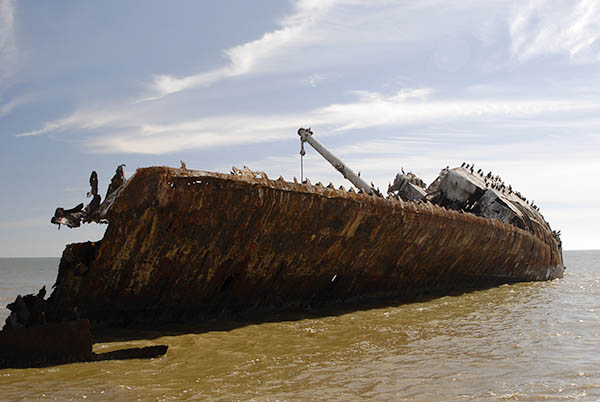
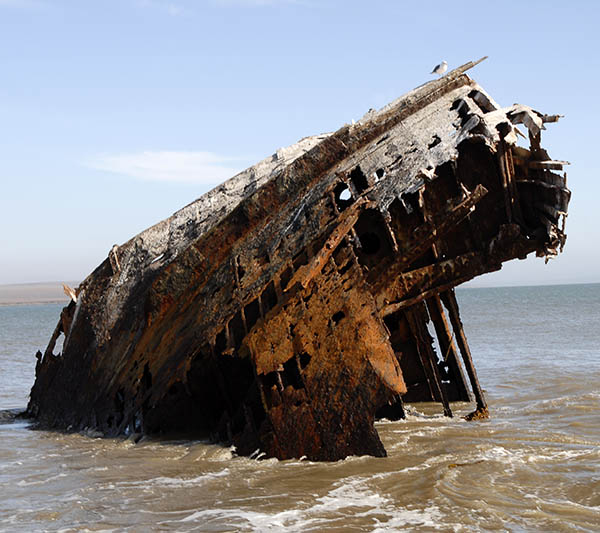
The Isla Del Carmen, off the Pacific Coast near San Jacinto, after confirming I was not going to become a rabid motorcyclist.
We hung out by the Isla Del Carmen for a while and I took a bunch of photographs. The Isla Del Carmen sank right off the San Jacinto coast during a storm in 1984. I’d seen the wreck in another photograph, and now I was seeing it in person. It was awesome being there.
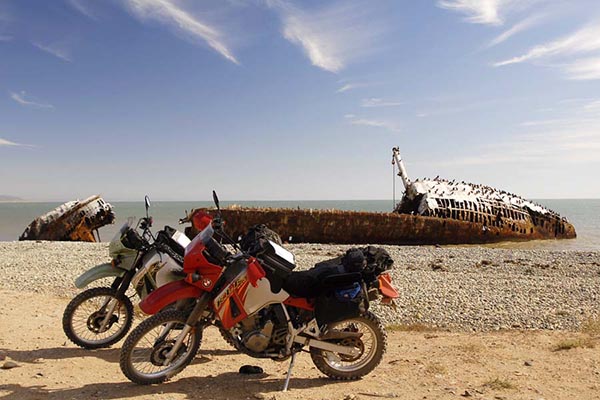
I like these photos, partly because of what we had gone through to get them (the rough roads and the canine assault), but mostly because it was a shot I had framed in my mind before we arrived and the actual photos turned out better than I had imagined. Indulge me. I’ll show you a few.
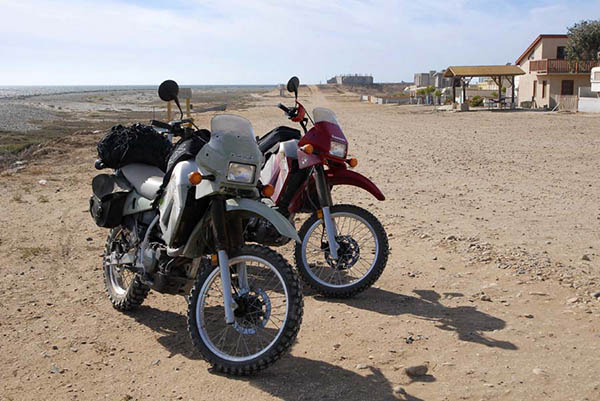
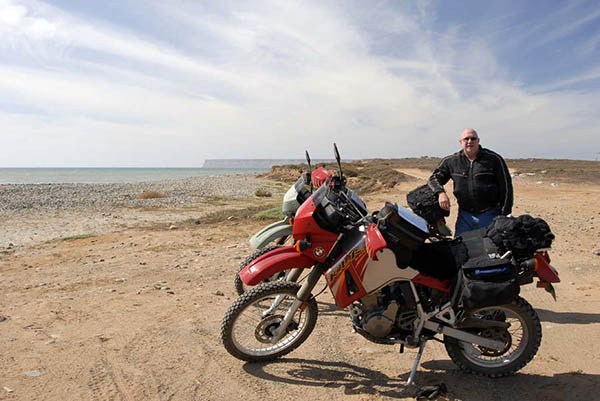
The KLRs in front of the Isla Del Carmen. That’s the Pacific in the background.John’s is green. Mine was red. Loved those bikes. Simple, fast enough, and fun.Baja John, at ease along the Pacific coast.Leave something in salt water long enough…Coastal stuff.
After spending a while taking photos, we took the direct route out of San Jacinto heading east. It was another sandy dirt road, but it was hard packed and it ran relatively straight to the Transpeninsular Highway north of Camalu.
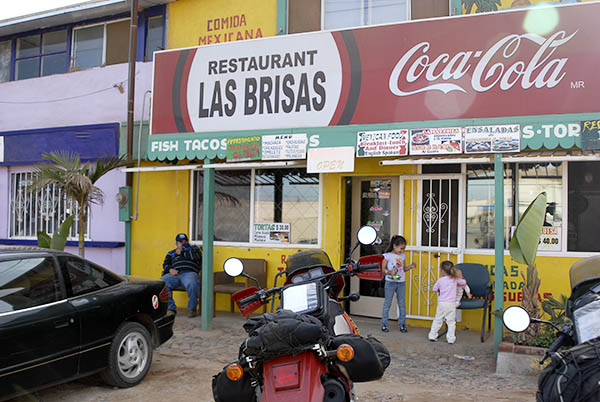
We stopped in Camalu for lunch. John and I opted for the chicken fajitas at the Las Brisas, a small restaurant, and our mid-day meal was amazing. Octavio, the owner and chef extraordinaire, took good care of us. We had a two-hour lunch, and we spent a lot of that time chatting with Octavio. It was fun.
The Las Brisas, the hot spot in Camalu.John enjoying Octavio’s chicken fajitas.This is Octavio, the propriet0r and Camalu’s philosopher-in-chief. He patiently explained to us that Camalu is the best place in the world. Who knew?America and Palmyra, two young ladies in Camalu.
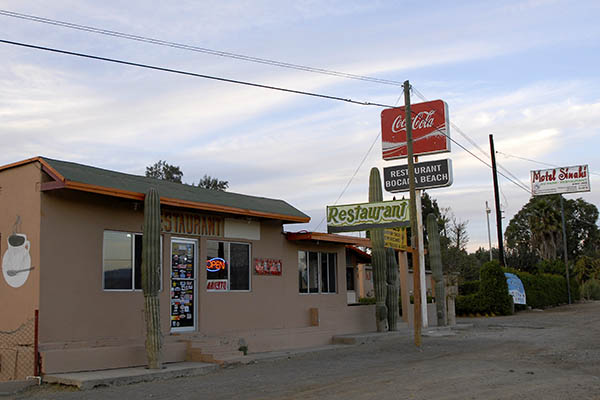
We got as far as El Rosario that second night, and we stayed in the El Sinahi hotel. It was an inexpensive, no-frills kind of place (exactly what I like in Baja).
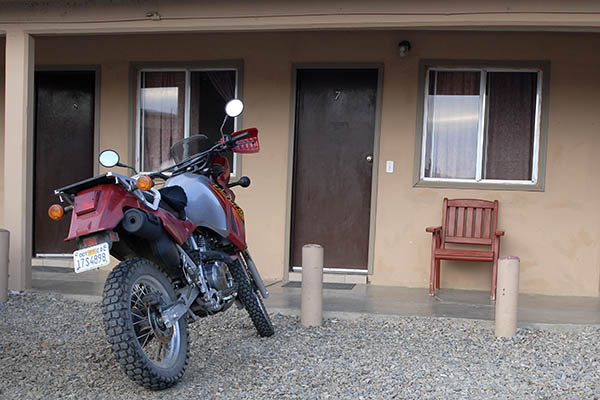
The El Sinahi. Check the spelling.The KLR, docked for the evening.
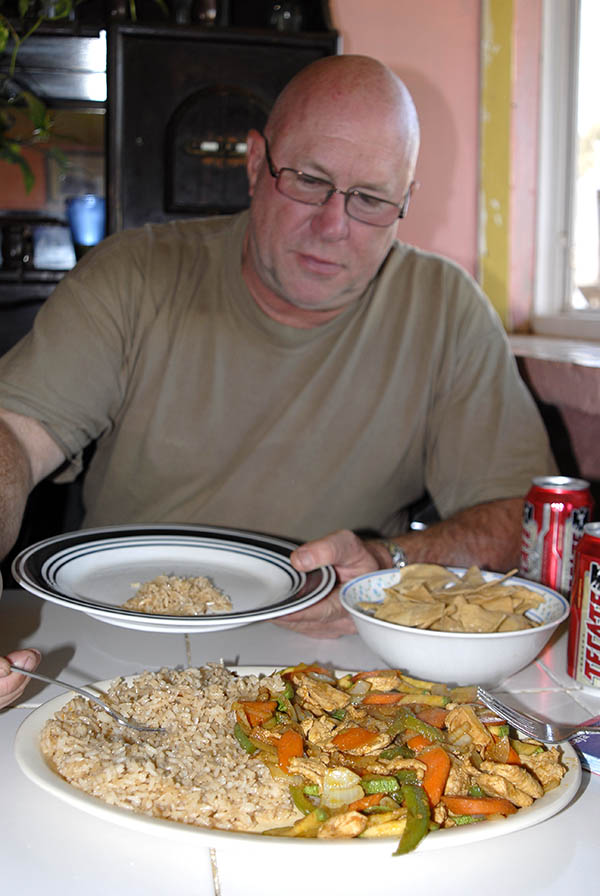
We ate at a restaurant adjacent to the El Sinahi, and it was great. I don’t think it had a name, other than “Restaurant.” It didn’t need one. It was wonderful. You know, folks tell me I spend a lot of time talking about the cuisine in Baja. Guilty as charged. I love that aspect of exploring the peninsula. I guess there are bad restaurants in Baja. In 30 years of exploring the place, though, I haven’t found them.
Good food, good meat, good God, let’s eat!John had fish tacos, the quintessential Baja dish. They look great, don’t they?Maria, our waitress in El Rosario.
I didn’t know it yet, but the rear window to my El Sinahi hotel room faced a neighbor’s yard. A neighbor with roosters. Lots of roosters. The kind that start cock-a-doodle-doodling at 4:30 a.m. Right into my window.
I had visions of making rooster fajitas, but I decided not to. Truth is, those things sounded so strong I didn’t know if I could take them in a fight.
There’s another abandoned mission west of El Rosario about three miles down a dirt road that winds through more small villages. We tried to find it that next morning, but we couldn’t. While rolling down that road, we encountered more Mexican dogs, and sure enough, the dogs came after us again. We outran them that time. We could have poked around longer trying to find the mission, but the dogs unnerved me. I reckoned that we had gone far enough to pass where the mission should have been, we never saw it, and I turned around. On our return through the area where the dogs chased us, we blitzed by at 60 mph. No dogs, no bites, and no problems.
Ah, but the day was just starting. A little further down the Transpeninsular Highway, in Baja’s Valle de los Cirios, we would be chased yet again. But this time, it would be by a titanic tarantula. But that’s a story for the next installment of our Baja KLR Khronicles.
This is a story about a 2009 Baja KLR ride. In Part I, we covered the ride from southern California to Rosarito Beach.
The breakfast at Velero’s in Ensenada was impressive (it always is), and it was a glorious morning as we rolled south.
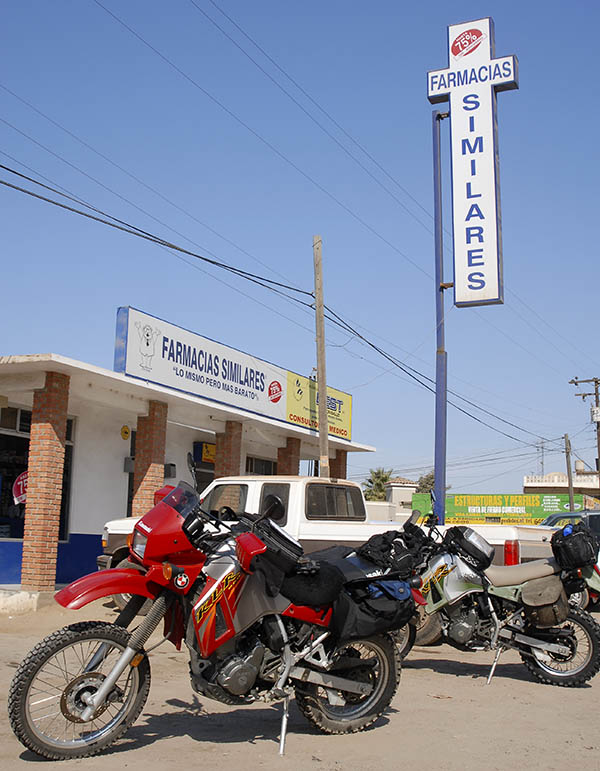
Two KLRs headed south in Baja. John forgot his toothbrush, and I wasn’t going to let him use mine, so we stopped at a farmacia so he could buy a new one.
We had several offroad explorations in mind as we rode deeper into Baja that morning, but our first stop was at a farmacia. I like Mexican pharmacies. Here in the US in 2009, all the stories in the news media were about the drug wars in Mexico. Right church, wrong pew, as they say: The US news media had the wrong story. The real drug story in Mexico was (and still is) how cheap prescriptions are down there. You don’t need a prescription in Mexico for many of the drugs that require prescriptions in the US (like penicillin, and prednisone, and Lord knows what else), and meds are trivially inexpensive. The drugs are the same as what we get in the US (literally, the same, from the same US manufacturers in many cases). I wish our so-called “investigative journalists” would write an expose on that topic, but they were too focused in 2009 on killing the tourism industry in Mexico with distorted news about the drug wars. Go figure.
We continued south on the Transpeninsular Highway. There’s about a dozen miles of traffic leaving Ensenada, and then Baja switches suddenly from squalor to splendor as the road climbs into the mountains and descends into Baja’s wine country. It really is spectacular. If you’ve never made this ride, or if you’re idea of going into Mexico is TJ or Ensenada, you need to venture further south to start to get a feel for the real Baja. Trust me on this.
John and his KLR on the Transpeninsular Highway in Baja’s wine country. This is where the beauty of Baja begins to emerge.
Ah, Baja. It was beautiful. It always is.
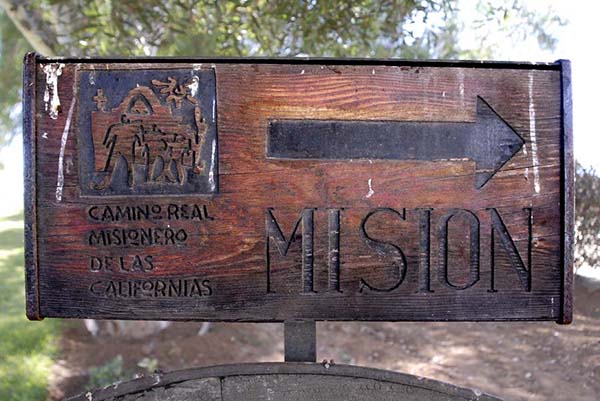
Our first excursion in the dirt would be to the abandoned mission in San Vincente, well into the desert and well south of mountains. We saw a sign for the mission and took a dirt road heading west from the Transpeninsular Highway. As it turned out, there was a lot more out there than just an abandoned mission.
The sign pointing to the Camino Real mission ruins.
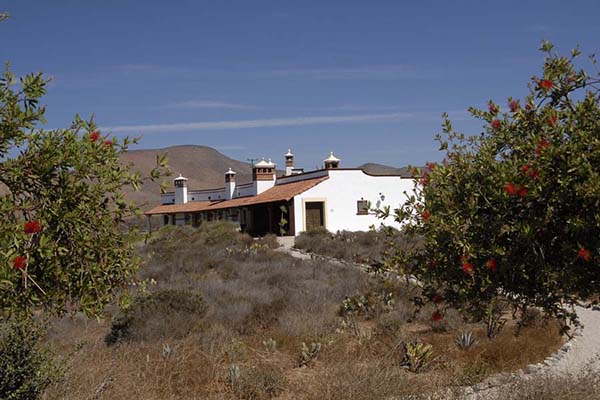
We first saw a building we initially mistook for the mission. It was a private home (one of several). We were stunned. The homes were magnificent, tucked away in the hills down a rough, soft sand road. I’d been by San Vincente on many prior Baja rides, but I had no idea the hills held such secrets.
Wow. Who knew this was back here?
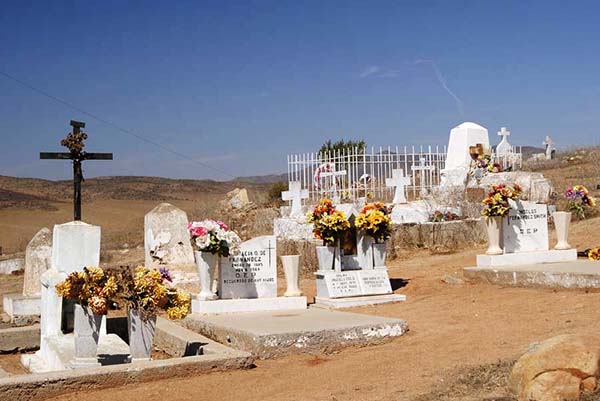
We saw a young lady and asked her for directions to the mission. She pointed and told us to go over a hill. We did, and the first thing we found was a well-maintained rural cemetery.
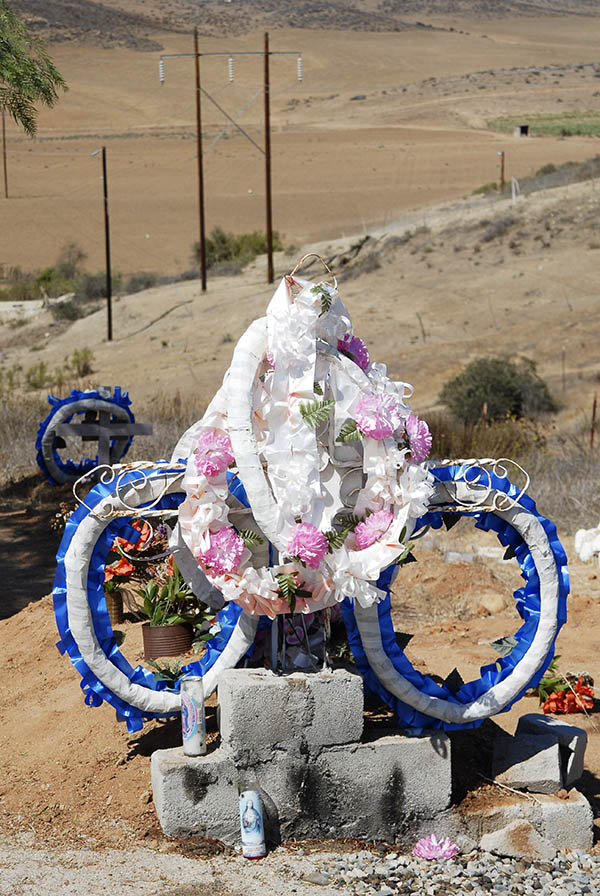
I’m in no hurry to be buried, but when it’s time, this might be nice. If there’s such a thing as elegance in a graveyard, this place had it.
There was something about the cemetery that was simultaneously captivating and tranquil. It seemed to come from another era, and after reading the headstones we saw that it did. It was meticulously maintained. It’s always nice to see that.
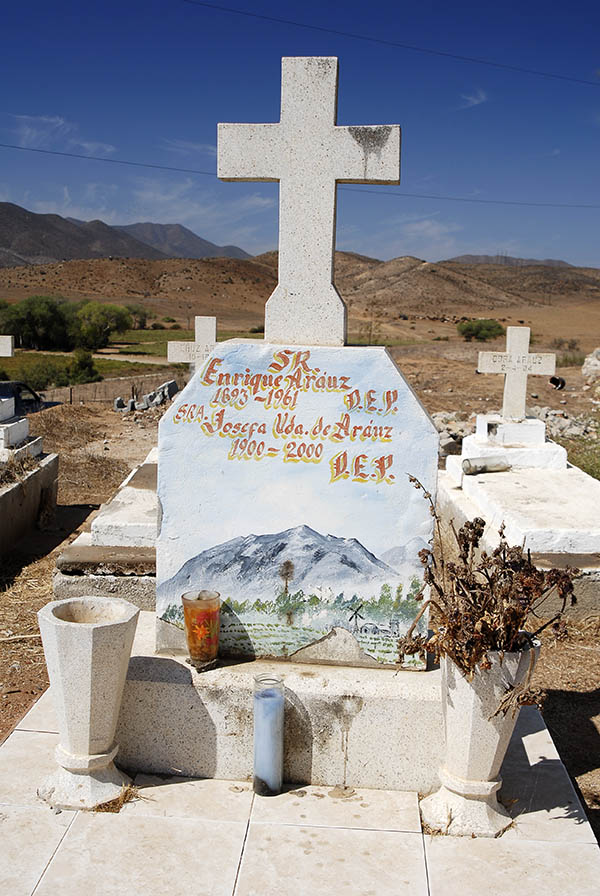
Impressive. A family plot. The wife lived to be 100. Imagine that.Magnificent. I shot all the photos in this series with my old Nikon D200 and the first-generation 24-120 lens. It was state-of-the-art in 2009. I took a lot of pictures with that camera.
After the cemetery, we found the San Vincente Mission. The local folks are restoring it. I’d seen signs for the mission on the Transpeninsular Highway, but this is the first time I’d ventured off the asphalt to see it. John and I were the only folks out there that day.
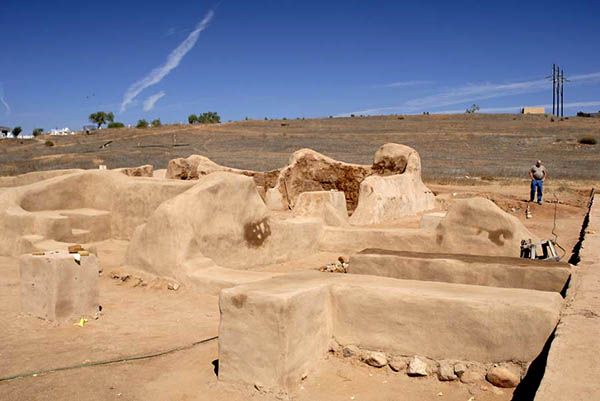
The San Vincente Mission was built about 300 years ago. It’s one of several that run the length of the Baja peninsula. I’ve been to several, and a few are still working churches. What’s left of the San Vincente Mission is not.
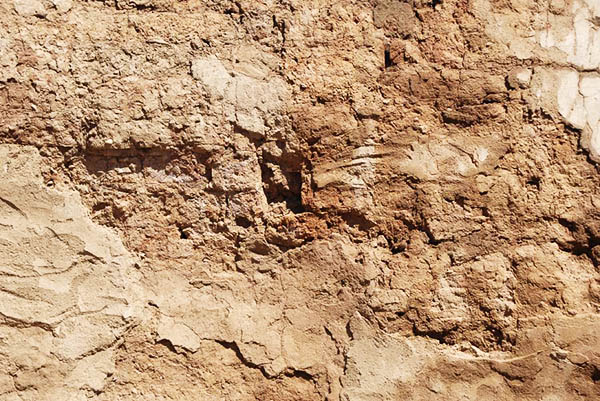
What’s left of the San Vincente Mission. The restoration was a labor of love. The mission’s adobe walls were being resurfaced. I need to get back there to see how it looks today.The mission walls underneath the restoration.
We rode through the soft sand back toward the Transpeninsular Highway to the town of San Vincente’s contemporary church (which is visible from the highway). It offered great photo opportunities and we took a bunch. We wanted to enter the church, but it was locked.
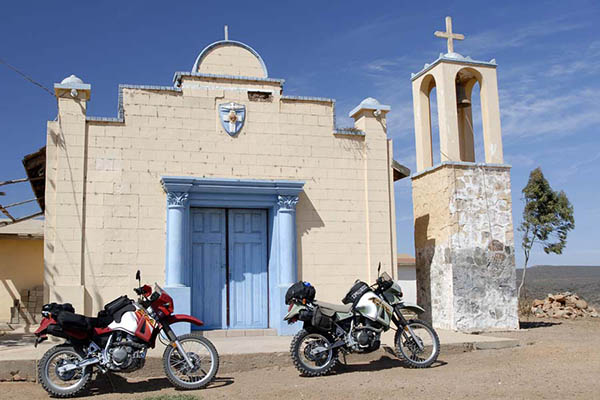
San Vincente’s church in 2009.John relaxing in front of the San Vincente church.John yanked on the cord, and that bell was loud. We stopped. We didn’t want the San Vincente residents to think they were being summoned.
It was fun being out in these remote areas on the KLRs. The experience was a lot different than seeing Baja from pavement only, and John and I were enjoying it. I’m normally not a guy who likes riding dirt, but John had talked me into getting off the highway and I’m glad he did.
Shortly after leaving San Vincente, it was time to check off another item on our wish list, and that was seeing the Isla Del Carmen shipwreck. I wanted to see it, but I didn’t know exactly where the wreck was other than that it was somewhere off the coast near San Jacinto, so we took another dirt road due west for about 8 miles and hit the Pacific coast. Our plan was to intersect the coast several miles north of San Jacinto, follow it south, and find what was left of the Isla Del Carmen.
The dirt road along the coast was rough, and I’m being charitable when I call it a road. It was mostly soft sand. At one point the sand was so deep it was nearly impossible to control the KLR, so I wrestled the Kawasaki up into the weeds. It was a marginal improvement. I couldn’t see where the wheel was going, but at least the sand wasn’t calling the shots anymore. And before you tell me the trick is to get up to speed and float on top of the soft stuff, all I can say is hey, I was there. You weren’t.
Then we encountered something we hadn’t expected: Dogs. A pack of dogs, actually. And they were pissed. At us.
Well, that’s not quite accurate. Their anger was focused on me. Specifically, me. At least that’s how I felt.
In California, you almost never see a dog off a leash. In rural Mexico, you almost never see a dog on a leash. Those things are aggressive, too. We were chased by more dogs on this trip than I have been chased by in my entire life. They weren’t just interested in scaring us or getting a good laugh. Those things wanted us for dinner. Or rather, they wanted me for dinner. I’ll tell you more about the angry dogs of Baja as this story progresses, but one dog story at a time for now. And this one was enough.
I don’t like dogs. I was mauled pretty badly by one when I was kid, and I still have the scars to prove it. I know that those of you who have taken the Motorcycle Safety Foundation course or who have read about such things are thinking that being chased by a dog is no big deal. I know about slowing down, letting the dog calibrate his intercept based on your reduced speed, and then accelerating to confuse the cantankerous canine. That works on pavement if there is one dog. Try doing it in soft sand when there’s pack of four or five that are fanned out along your flank. In that situation, you are not just a motorcyclist. You are a potential meal. And that was the situation I found myself in that fine Baja afternoon.
A tranquil scene, don’t you think? It was right after I shot this photo that the dogs descended on us.
We were approaching a rinky-dink little fishing village, eyeballing the coast for the shipwreck, when the pack of dogs came after me. I think it might have been my green fluorescent riding jacket. Maybe they had an unhappy childhood. Maybe someone unfriended them on Facebook. Who knows. Whatever the reason, they were snarling and spitting and literally smacking their jaws as I tried to fool them with the slow-down-speed-up maneuver. In soft sand. Trying to keep the motorcycle vertical. Wondering what the hell I was doing down there.
Then it happened. One of the dogs got me.
I felt him crash into my right leg, and when I looked down, the thing had clamped down on my motorcycle pants just above my ankle. The dog was literally being dragged along for what seemed like an eternity. It locked eyes with me, and if there’s such a thing as telepathic communication, or maybe interspecies body language, the dog’s eyes said it all. It was not a pleasant message in either direction. The dog might have thought I was a sonofabitch; I had no doubts about him being one. I’ve known some SOBs in my life, but this bastard was the real deal. I didn’t feel any pain, but that’s normal in a traumatic situation. I didn’t know if the dog’s teeth broke the skin around my ankle, but I knew what it would portend if it had.
“Not good,” I thought.
I could see it all the while that miserable sonofabitch was clamped down on my leg, as he was being pulled along at 30 mph. What I saw was me making a beeline for the border to get medical treatment. Rabies shots, and who knows what else.
To be continued…
Hey, check out our other Epic Motorcycle Rides, and watch the ExNotes blog for the next installment of the Baja KLR Khronicles!
Like what you’re reading? Sign up for our automatic email updates, and you’ll be eligible for our quarterly drawing to win one of our adventure motorcycle books. Want to read about our other Baja motorcycle adventures? Order your own copy of Moto Baja here!

 You know, I did one of the very first San Gabriel videos when those bikes first came to America. It, too, was a hoot.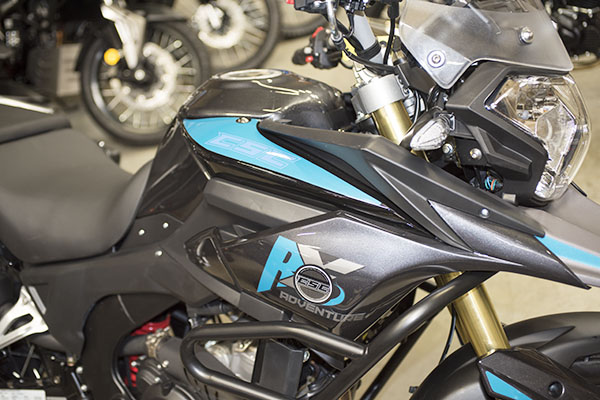
 You guys and gals will remember my good buddy Mike, whom I met on one of the CSC Baja runs a couple of years ago. It was a chance meeting…we stopped to buy bottled gas from one of the roadside entrepreneurs in Catavina and I noticed one of the bikes had a set of jump wings on the tail box. We had been on the road a few days already and I wondered why I hadn’t noticed the Airborne insignia before, and then I realized it was because I hadn’t noticed the bike was a BMW GS, not a CSC RX3 (that’s how much the bikes look alike, I guess). I looked around and there was Mike (a new face in the crowd), waiting for fuel just like the rest of us. You meet the coolest people in Baja, and you meet the coolest people on motorcycles. I liked Mike immediately.
 The trip started out great in San Felipe in a wonderful off grid solar AirBnb casita, with a lovely host (we only travel Saturday and Sunday as we are heads down working Mon-Fri in AirBnBs). We continued camping, riding, and staying in AirBnBs all through Guerro Negro, Muleje, La Ventana, Todo Santos, and Loreto. We were spending a week in each location to fully absorb the unique cities, people, and culture while soaking up the incredible desert roads, ocean views, and all while meeting new riders that will become lifelong friends along the way.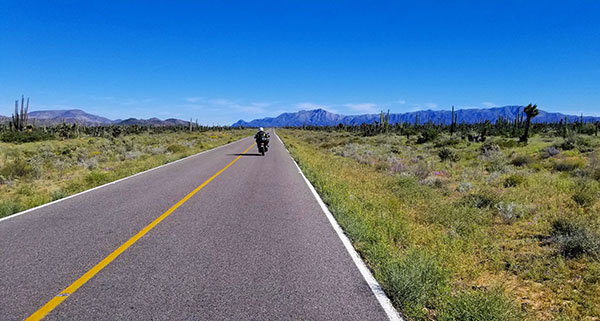
 Terry is the former Thunder Press editor, and there’s lots of cool V-Twin stuff on
 We sent an email requesting your address if you signed up, so watch for it and shoot that info back to us. We promise that as soon as we get your snail mail address and confirmed that you’re on our email list, we’ll shoot them out to you as soon as we get around to it. Want to help us more? Hey, share our site and get more folks to sign up for our automatic emails, or just get them to visit
  Hey, we saw a Chinese manufacturer making parts for Harley a decade ago. But the recent news is this is going to be a complete small bike, just over 300cc. I’m surprised Harley didn’t do this several years ago, but then, Gresh and I were in the catbird’s seat on the small bike thing from the gitgo.