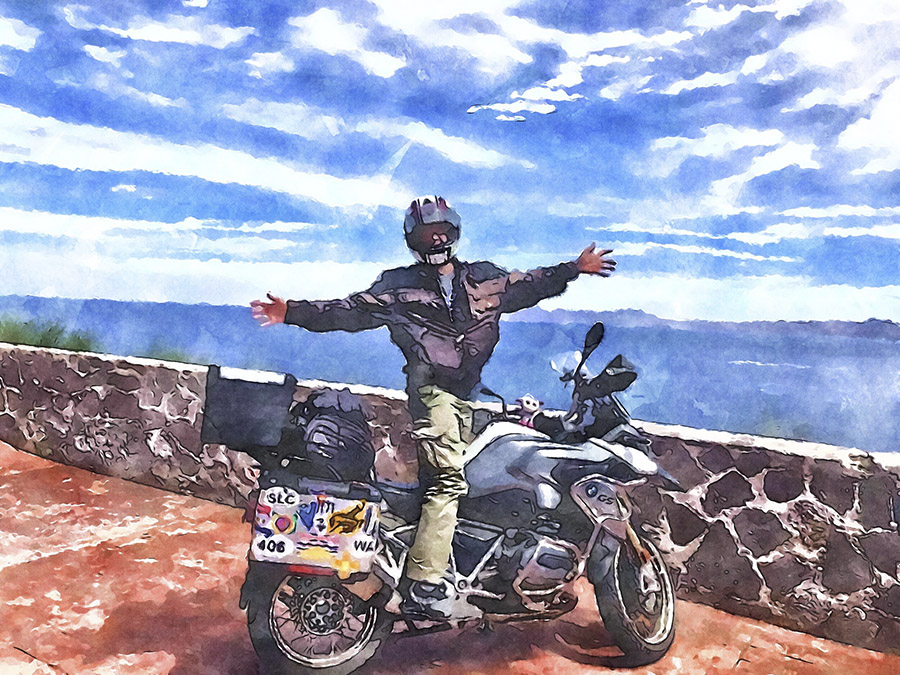
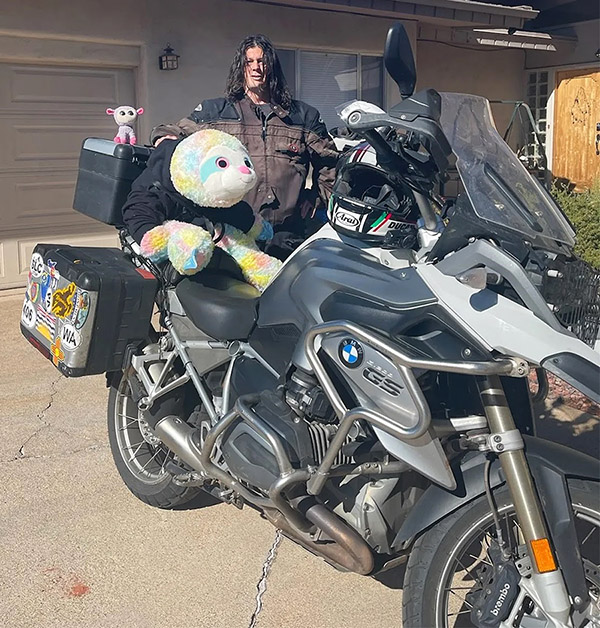
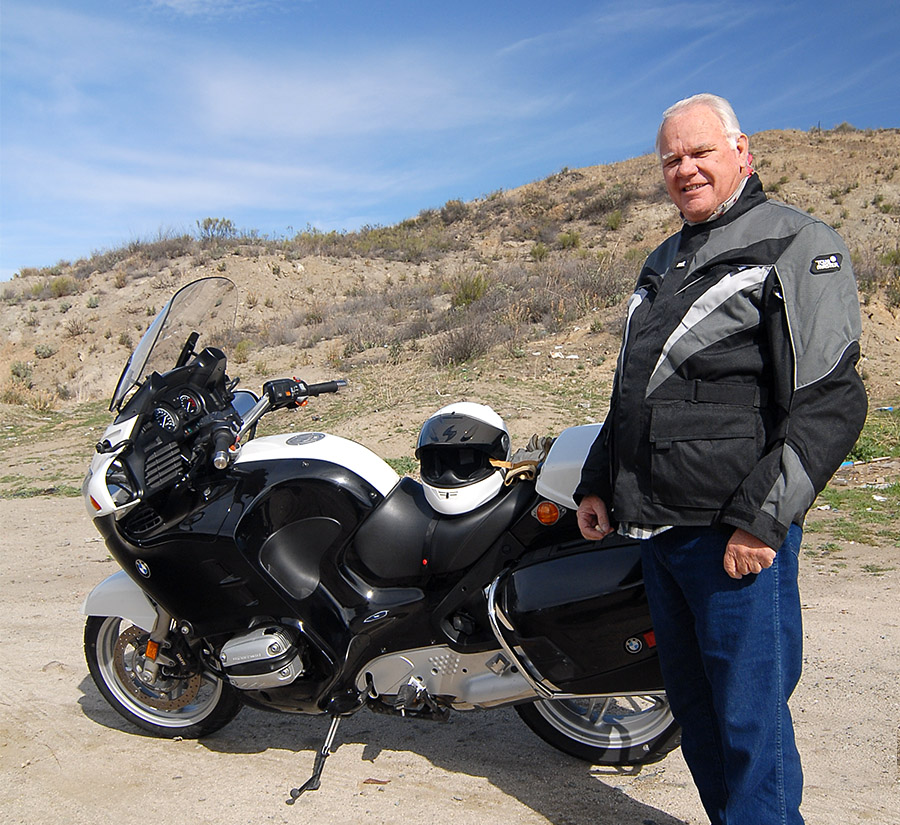
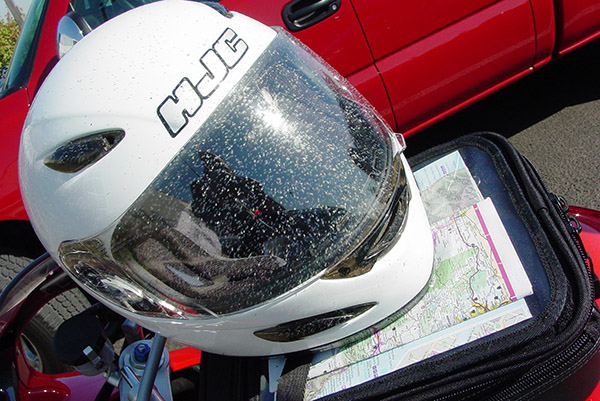
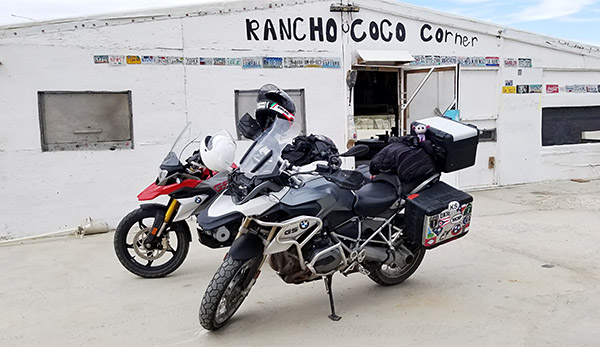
It was April and it was warm, even for the Arizona desert. A steady easterly breeze made the heat of the mid-day sun tolerable. We roared down back roads of the high plains that curved in wide arcs, past abandoned tourists traps and teepee hotels from the golden age of auto travel. The boxer engines of our BMW GS’s were humming in unison, interrupted by the whisper of dust devils that would whirl in from nowhere and dance in the center-line like mini tornadoes. I twisted the worn black rubber grip of the throttle and let myself slip into a deep state of attention to what the moment required. I was fully bonded with the machine that hurled me northward toward an ice cold India Pale Ale and a desert campsite I had yet to meet.
It had been some time since I felt this content and at peace. Over the past three months my girlfriend Bobbie and I had been watching the world burn down around us. Our pandemic hideout in Mexico felt like a grandstand seat at the races, and we had been awaiting a fiery crash at the finish line. I soaked in the sun’s rays through my riding suit and rolled the throttle on, savoring the feeling of heading home after months of uncertainty. Although riding north that day on Highway 89 was a fleeting moment, it was one that clicked and whirred in my memory like a Polaroid snapshot of harmony and integration with my surroundings. I was liking the feel of the TKC70 tires gripping the hot asphalt as I leaned the heavy machine through the curves with precision. It was the first time these tires had gripped American blacktop in 10 weeks. I could still almost smell the breeze coming off the sea of Cortez mixed with a slight hint of burning garbage like you get in Mexico along with the promise of wild nights, like it was before the plague sent us all running for the shadows.
Five Weeks Earlier
I woke up next to a beautiful girl in a turquoise room. The sun’s rays filtered in through translucent white curtains, embroidered with the flowers and skulls of Mexico’s Day of the Dead. Loreto is a colonial beach town on the inland side of the Baja Peninsula. The room, an Airbnb, was our home this week. I woke up slowly from an abnormally deep sleep. I blinked several times and let the humming of the air conditioner and the slow building sound of traffic on the street outside remind me where I was. I felt the stiffness of a slight hangover in my body. I caught a flash of last night’s events: Augie’s bar. A roar of laughter and music, conversation. I remember going into it looking forward to the fresh lime and rock salt taste of Margaritas and catching up with a couple riding GS800’s who had been playing leapfrog with us for several days as we all made our way up the peninsula.
I don’t know if you know any soldiers, or infantry soldiers, or paratroopers for that matter but we have a way of taking things to excess. There are a lot of reasons for it. Human behavior experts will site the scientifically low levels of impulse control found in those who perform dangerous jobs. Some blame the adrenaline. Some say it’s testosterone (women have it too, so don’t even start). Whatever it is, I think it has something to do with getting whatever enjoyment you can from life, while you can. The couple with the GS800s had some spectacular stories of their travels. I was not one to pass up an opportunity to swap tales of two-wheeled adventure, or pass up the highly flammable margaritas at Augie’s.
I got out of bed quietly and filled the small, hotel-style coffee maker with bottled water and some ground coffee that was dark and smelled promising. I liked the room. Sunlight streamed in and reflected off the brightly colored tile floor. A pair of parakeets outside the door were saying “buenos dias” over and over again to me or maybe to each other. Either way, it sounded extra loud. I blamed the cocktails from the night before as I took that first magic sip of black coffee. I looked over at Bobbie. She was out, curled up, still in a deep sleep. I eased myself into a faux-leather love-seat and cracked open my laptop. I logged onto the VPN and started preparing to get some work done when the google news crawl hit me like a concussion grenade. The US State Department had raised its global travel advisory to Level Four, something that had never happened before. Not ever. The message left no room for interpretation: “Return home now or plan to hunker down wherever you are for an indefinite period of time.” This was Defcon Four, for real.
As those words sunk in, my phone began to chirp with messages from friends and family north of the border. They were trying to relay the CDC and State Department warnings, and trying to figure out where I was, and push for my hasty return. The world was officially in a biological crisis, something we had prepared for during my time in the 82nd Airborne but had always prayed would never really happen. A few moments later my boss messaged me about COVID-19 and wanted to know if I was safe and sheltering in place. I told her that well, I was in Mexico and wasn’t exactly sure what to do. She corrected me and said “You mean you are in New Mexico.” I told her well, no. I am in old Mexico, like the real Mexico, on the Baja Peninsula, looking out over the Sea of Cortez at that very moment. There really wasn’t much to say after that and I was left alone with my phone, which went back to chirping along with the parakeets. I took another sip of coffee. I had some decisions to make. Although living free has some incredible benefits, like, well… freedom, lightness of being and of course the eternal spontaneity, there is always the lurking fact that having too many options can create a kind of analysis paralysis. As a wise man once said “Many a false move was made by standing still.” Well for those of us who suffer from a lack of impulse control, standing still is not really an option. So I threw on my trusty Levis and prepared for action.
I stepped out into the street and realized that an eerie silence had settled in over the town. We had passed through this way about four weeks ago. At that time it had all the trappings of a Baja tourist town; the bustling bars, restaurants, crowed sidewalks, coffee shops and art galleries. The historic Spanish Mission settlement of Loreto was now a ghost town. The streets were empty. Most of the businesses had closed, and many displayed signs warning tourists to return to wherever they came from. Within a couple of hours the decision had been made. It was time to ride north.
We loaded up the BMWs and headed out on Highway 1 north towards Gringolandia. Highway 1 is one of the most beautiful roads I have ever been lucky enough to ride. You navigate perfectly paved mountain switchbacks, complete with barrel cactus and rattlesnakes sunning themselves on the road until you begin a gradual decline towards the sparkling aquamarine blue water of the Bay of Conception. We decided to camp at a pristine little cove called Playa Santispac, a few miles south of the little mission town of Mulege.
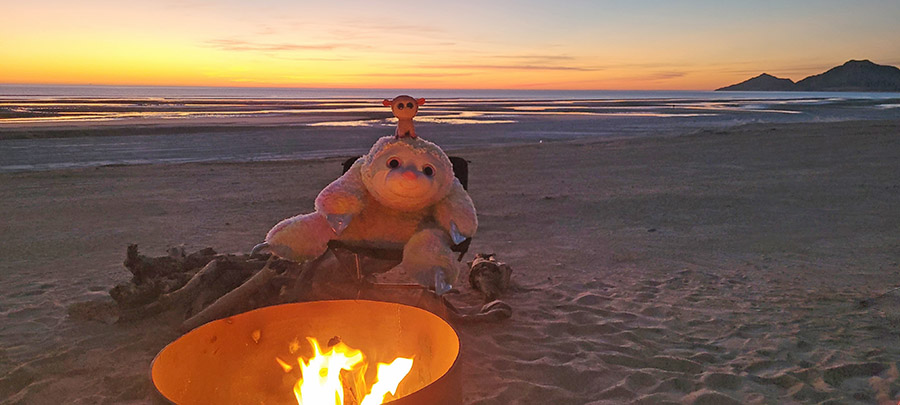
We set up camp in a beachfront palapa and I had just set about gathering firewood when a couple in an RV next door waved us over to join their fire. I could smell mouth-watering carne asada, seasoned to perfection sizzling over the flames so I dropped the firewood and said we’d be right over. As Bobbie and I moved into the firelight, we noticed another couple was already sunk comfortably into camp chairs at the fire, cold Coronas in hand. It took all of a second to realize we had met this couple a month prior. We had been navigating the dirt roads way down on the southern tip of Baja outside of Cabo Pulmo National Park. We had passed a couple of hours with these folks then, swapping stories and trading experiences and recommendations from the road. The world had still been a carefree and dreamy place a month ago, and I slipped for a second into thinking about how much had changed and how quickly. Now, enjoying a fire and a seaside campsite together, we picked up right where we had left off, telling stories of where we’d been and where we were going from here. North. The best thing about that evening was that no one mentioned COVID-19, or the world beyond the glow of that campfire, or the anxiety that was steadily growing inside each of us.
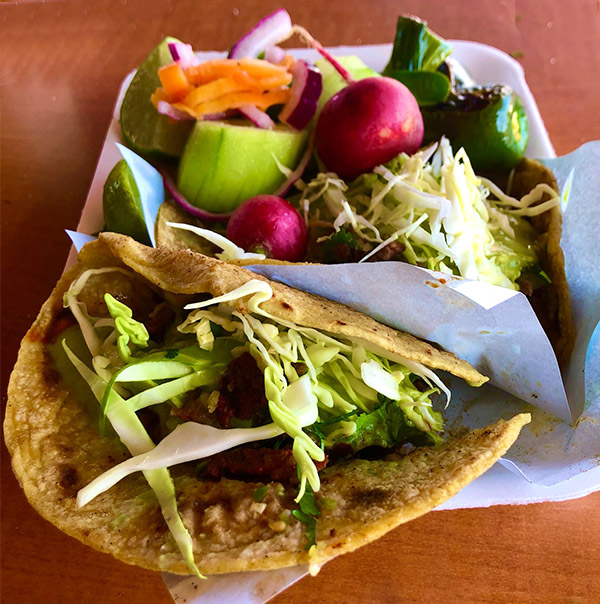
We ate carne asada tacos right out of the cast iron pan and clinked shot glasses of tequila to the sound of small waves lapping the shore. I watched the last light of the sun disappear behind silhouetted palms and scattered palapas to the west. I thought that Baja must be one of the world’s most beautiful places. It felt solitary and secure. It felt like it was ours. Without anyone saying it, we knew we were existing in a sort of bubble of denial. We were living a nostalgia for the carefree times, which have now given way to something else, something less innocent to say the least. Denial and tequila are a pretty good recipe for happiness, at least for a while, and we all enjoyed the warmth of each other’s company and the peace that campfire afforded us, even if it was just for one night.
Threading the Needle
Definition: Safely navigating a path through significant or numerous obstacles, which may be either social, figurative or physical in nature. In base-jumping, threading the needle refers to passing through a narrow gap between terrain features, probably while wearing a wingsuit or squirrel suit which generates lift and allows a controlled descent that feels like flying. Wingsuit flights usually end in the deployment of a parachute, or in death.
If you follow my road journal, you will know that I have been living off my motorcycle for the past three years. One thing I have learned in that time and those miles is the value of building solid friendships with the many amazing people I have met. One of these people is the Airbnb host we had stayed with back in February when our Baja adventure was just beginning. Veronica reminded me of Blanche from the Golden Girls. She was a blonde American woman from California. She had a high style and a kind of radiant energy to her. There were numerous stories of lovers past and present, and affairs won and lost like battles to a soldier who has traveled the world. Veronica had recently retired from a nursing career, and she administered her Airbnb with a level of caring and perfection fitting to that career. Veronica had adapted quite readily to the slower paced life of the Baja in the safe little community of San Felipe. She was one of the warmest people we had met on this trip and I made a point to keep in contact with her over the next two months as Bobbie and I explored every inch of the peninsula on our bikes. When the pandemic started ramping up, she sent me a text message to check on us and, learning that we were still in Mexico, again offered us shelter at her home.
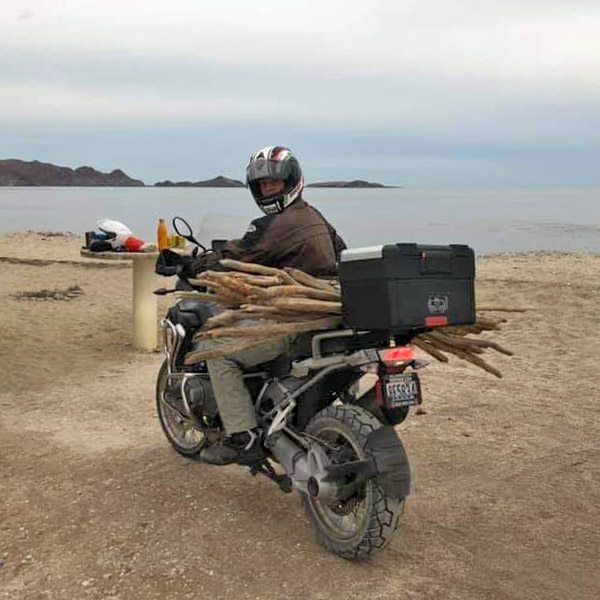
San Felipe was just a 2-hour ride to the border, which seemed like an option we did not want to turn our backs on if one of us were to come down with COVID. Additionally, it seemed like we could remain pretty well isolated in Baja. It was a peninsula; not counting the countless maritime options, there was really only one way on and one way off that thin little strip of sand. Even if you counted boats, access to Baja was a lot more controlled than say, Mexico City, and our beloved USA was starting to look like a full-on dumpster fire if the TV and internet news sources could be believed. Plus, from what we could see, the residents of Baja seemed to be more or less following the health protocols of the CDC and the World Health Organization. Our plan was to thread the needle and return to America once the cases flat lined there or started to decrease. So essentially, we planned to cross the border after the worst had passed in the US but prior to the virus wave hitting Baja, which we knew it eventually would. We feared if we stayed too long in Baja sooner or later as gringos, would be seen as part of the problem, and we would become persona non grata.
Our delayed evacuation plan was based on zero scientific data, but seeing the massive amounts of misinformation already circulating on the interwebs, a gut feeling was the only impulse we could trust. One thing was certain; we had to set up a secure forward operating base. Veronica’s house was located about three miles from the beach. It was the perfect place to wait and see which direction the world would go and an ideal launching point to counter most, if not all scenarios we came up with during an official risk assessment and brain storming session conducted over a bucket full of ice cold mini-Coronas.
For the next three weeks Bobbie and I fell into a kind of routine; sleep late, eat a leisurely breakfast while consuming worrisome world news and catching up on emails, ride to the beach. Routine can be a soothing thing when facing the end of the world as we know it in a country that is not your own, whose government could turn hostile on you at the drop of a sombrero. I thought of the thousands of Mexicans who make the daring run across the border every day and the hostility they have to face at every stage of the journey as we hovered over phones and laptop screens in our terracotta-and-pastel-stucco tactical operations center.
The big question was if and when to leave San Felipe and head for the border crossing at Calexico. There was no good advice and there were no right answers. The world had not seen a pandemic of this magnitude in a hundred-plus years. There was certainly no guidance for people in our unique situation, living off the meager possessions that could fit on the backs of our GS motorcycles far from home and making blind decisions that would affect (and possibly drastically shorten) our lives. During this period of limbo in San Felipe, I was continuously urged by family and friends to return home to America. These pleas were nonstop and utilized a progressive escalation of force and coercion. I was grateful for the concern of everyone, especially my mother, who has patiently put up with more stupid and risky adventures than any mother deserves to. I made my entry to adult life as a paratrooper and moved on from the Army to world travel to my present decision to live as a motorcycle vagabond. Although I am not much for looking in the rear-view, I regretted momentarily all I had put my Mother through every time I heard the worry in her voice over the phone, or sensed it between the lines of one of her text messages.
We received automatic updates from the State Department via email. These communiques were mostly just warnings to get the hell out of Dodge and come back stateside. I couldn’t help but think, “Come back to what?” Since there was no cure and the numbers were steadily rising, it made no sense to return. We looked at the numbers, the collapse of health services and the mounting uncertainty and unrest in our country. In light of all that, every risk analysis we did, whether fueled by tequila, beer or black coffee, all pointed to battening down the hatches and weathering the storm at Veronica’s Airbnb.
Once we made the decision to stay in San Felipe, we started to notice there was plenty going in the community around us to cast some serious, escalating doubts on the very decision we had just made. The city was in a process of closing down and withdrawing from public life, just like we had seen in Loreto. Beaches and public entertainment venues were fully closed and stores were boarding up one by one, making it more and more difficult to purchase food, booze and charcoal, all of which are non-negotiables. We ensured our gas tanks were always topped off and kept our gear semi-packed. We were ready to go kickstands up within 15 minutes of any breaking news that gave us a good enough reason to head north. The days started to blend together as I guess they did for a lot of people. I started to realize this was not going to be just another mini-crisis that passes, soon forgotten. The realization dawned on me that this was going to be a massive chapter in history, not only for North America, but for the world.
Through all the progressive shutting down of San Felipe, Baja and probably all of Mexico, one nearby beach remained open: Pete’s Camp. This was a 3-mile ride from our Airbnb base, and it was a priceless afternoon getaway where we could relax on miles of empty beach that faced the beautiful blue waters of the Sea of Cortez. At Pete’s Camp, my mind would drift, sometimes to the highest heights, memories of walking off the ramp of a C17 into clear blue Carolina skies. Other times it got dark on me, and I imagined a post-apocalyptic, post-COVID world. We didn’t know which way the world was going to go. We didn’t know if fear was going to dictate the next chapter in history or if courage and cooler heads would prevail. Occasionally there would be a lonely RV parked at the camp, making its their way north. Some were Canadians who still had a long road ahead. We would chat with these refugee travelers and worried retirees while awkwardly keeping our distance and trying to scavenge any credible news or credible rumors to supplement the politically partisan blamefest that we abused ourselves with daily online.
During a chat with a friendly couple of snowbirds from British Columbia we learned that the Mexican Federales were refusing to let travelers go south, which made sense for Mexico since, at that time, COVID-19 was still more of a problem in the US. Unfortunately for us, we had to ride south a little ways to get on the highway and head north. Heading due north from San Felipe led to nothing but open desert followed by a brick wall, or some kind of wall, known as the US border. So according to my land navigation skills, if we rode twenty miles east or west we would risk being turned around on general suspicion of wanting to head south. If we made it to the highway we could turn north, but if we failed to cross the border due to some kind of Homeland Security snafu or some other fuckup, we would likely not be allowed to return to San Felipe and our base at Vernonica’s because it would be, well… to the south. This scenario was not pleasant to think of. I imagined us being forced into a kind of fenced in refugee camp within sight of California soil, motorcycles confiscated, sitting cross legged on the ground, drinking rust colored water from cut-off Tecate cans. With that vision in my head, I suddenly started feeling some empathy for all the countless people who had been in this position every day for decades, trying to head north, with Mexico saying ‘go on, then’ and the US saying ‘whoa, not so fast’ and a hell of a lot less resources in their pockets than Bobbie and I had at that moment.
Boxed In
We were boxed in, for our own safety as the saying goes, as well as for the safety of everyone around us. I thought about how many times public safety had been used as the reason to keep people from doing what they wanted, whenever the heck they wanted to do it, which pretty much described my life since I left the military, and especially these last three years living off a motorcycle. Under normal conditions, being stuck in a situation like this would cause a significant amount of stress, and it did, but under the new COVID-19 circumstances, it gave us some peace of mind too. The fact was, there were about a thousand percent less people traveling the highways and byways of northern Mexico these days, and under the current circumstances, less people was good.
Although we knew how fortunate we were to be weathering this terrifying time in such a beautiful place, harsh reality began to seep into our lives. Bobbie’s company, which did seismic retrofitting in California, was all but lost. With the real estate market at a standstill, her client base had dried up almost overnight. My own work assignments were starting to dwindle. The thought of being laid off in the face of a full-on economic depression started to creep into our idyllic little Garden of Eden in the desert of northern Baja. After three weeks of sheltering in place at Veronica’s house in San Felipe, the mounting stress of inaction, as it is wont to do, became more painful than confronting our worst-case scenario. We decided to head for Bobbie’s house in Sedona, Arizona, about five hundred miles from our current location. Judging from the news, it seemed, at least for the first wave of this pandemic, that the incidence of new cases was stabilizing and even lowering in some places.
Green Light
Although we discussed new options every day, sometimes every hour, we committed; we decided to decide by Wednesday, the eighth of April. That would allow us a comfortable two days to pack, and we would leave out on Friday, the 10th and make it to Sedona by Saturday or Sunday at the latest. When Friday rolled around, we psyched ourselves up and told each other that it was finally time to leave. We said goodbye to Veronica, ensuring her that once we were safe in Sedona she was welcome to come and stay if the virus hit Baja as badly as we thought it would. We once again loaded the panniers covered with stickers from all the states we had visited. I leaned hard to the right against the added weight and let the kickstand flip up into place. We took a slight detour down the dusty dirt road we had ridden so many times to say a 60mph goodbye to the beach at Pete’s Camp. We were finally returning home to America.
New World
Contrary to my apocalyptic daydreams, we crossed the border without incident. We waited in an almost non-existent line that consisted of a few cars, pickups and RV’s and pretty soon we handed our passports to a friendly Customs and Border Protection officer wearing a surgical mask. He accepted our documents and gave them (and us) a once over, not too fast and not too slow. “Welcome home.” He said. I twisted the throttle and we picked up some of that quiet BMW speed, once again on good American asphalt.
It was still early and cool for Southern Arizona so we stopped at the first beige stucco and Spanish tile Starbucks that came into view. We dismounted and shook off the vibrations both real and metaphysical as we walked up to a sterile window, where we were handed two cups of drip coffee by a young girl wearing a contamination suit and the kind of face shield I’d use to grind the slag off a frame weld. We sipped bitter coffee and looked at each other in our new reality. I tried to stay focused on the beauty of our surroundings and the success of an easy border crossing back to our homeland. We had avoided the refugee camp scenario and I was very thankful and glad to be back on US soil.
Now that we were back in the United States, where were we supposed to go and how would we adapt to this scary new world order as motorcycle nomads? It was a relief to be back in our home country but to what avail? Everyone and everything was fully locked down. Almost nothing was open and no one had worked for weeks or months in some cases. It was a stark contrast to the America we knew just ten short weeks ago. There would be no gatherings with friends and family at our favorite bistro, Vino’s in West Sedona, to share stories of our adventures in Baja. There would be no popping over to our favorite local watering hole for a cold Four Peak’s IPA while catching up local gossip. Although we had been living in the same isolation south of the border just yesterday, it felt different now being home, because now we owned the problem. Our country had been enjoying record high prosperity when we left just a few months ago, and record low unemployment. Now huge numbers of Americans were unable to work and didn’t know how they would pay their bills, rent and mortgages. We tried to keep the talk light and the mood upbeat as we set up a cozy little camp that afternoon in the Prescott National Forest. We could have ridden straight through, but we wanted to be alone that first night, inhaling the aroma of dry pine on the breeze as we sat around our small fire. We needed the strength and clarity that came from sleeping that first American night on the clean, coarse sand of the high Arizona desert.
A sobering reality set in the next morning as we rode from first light through the lonely desert, now more deserted than ever. The whine of my 1200cc boxer engine and the wind in my helmet were the only sounds on the surreal Arizona landscape that morning. As we blazed on with the rising sun to our right, it felt like our whole country was on a one-way road northbound to Sedona, which I hoped wouldn’t turn out to be a dead end. We continued north, avoiding the freeway, until the soft afternoon light came from the west. We felt the temperature drop a few degrees as we roared over Mingus Mountain Pass in the Coconino National Forest. We leaned extra low and deep into every curve, wanting the bike and the tires to be there for us, to reassure us and support us in this time of uncertainty. Motorcycle riding can give you perspective; it can make existential problems feel distant, forcing you to focus on the here and now. As we descended into the still air and the evening warmth of Sedona, the light of the setting sun shone on the rocks, giving them a warm kind of alpenglow I had never noticed before. I knew that here, in the warm, safe interior of America we would be able to find a moment of solace to shake off the culture shock, gather our thoughts, and lay out our options for putting one tire in front of the other and ask ourselves: “Where to next?” The world was changing, radically and on a daily basis. We needed a plan that would fit the need we had for constant motion. We found a lot of courage there in Sedona, in the familiarity of Bobbie’s house, which looked out over a seemingly infinite landscape of red rocks to the south. From that place of courage, I realized that the sun would indeed rise again. It would rise over Veronica’s little house where we had waited out the uncertainty of the first wave and it would rise over any lonely Canadian RVs still parked at Pete’s camp, facing the Sea of Cortez and the new normal. So would it rise over our lives tomorrow and over the lives of our people near and far. Since my days in the 82nd Airborne, failure has never been an option, and this was no time to start considering it. I broke out the bottle of Laphroaig and we began unrolling the maps. The Southwest Operations Center was now established. We got down to the serious business of where to next, knowing we’d be kickstands up in no time.
Never miss an ExNotes blog:
Help keep us afloat: Please click on those popup ads!
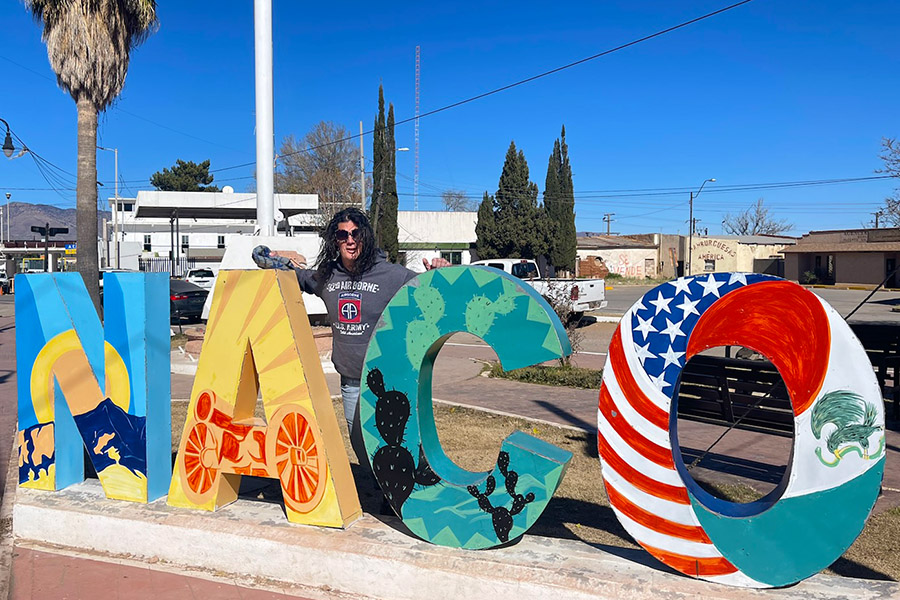
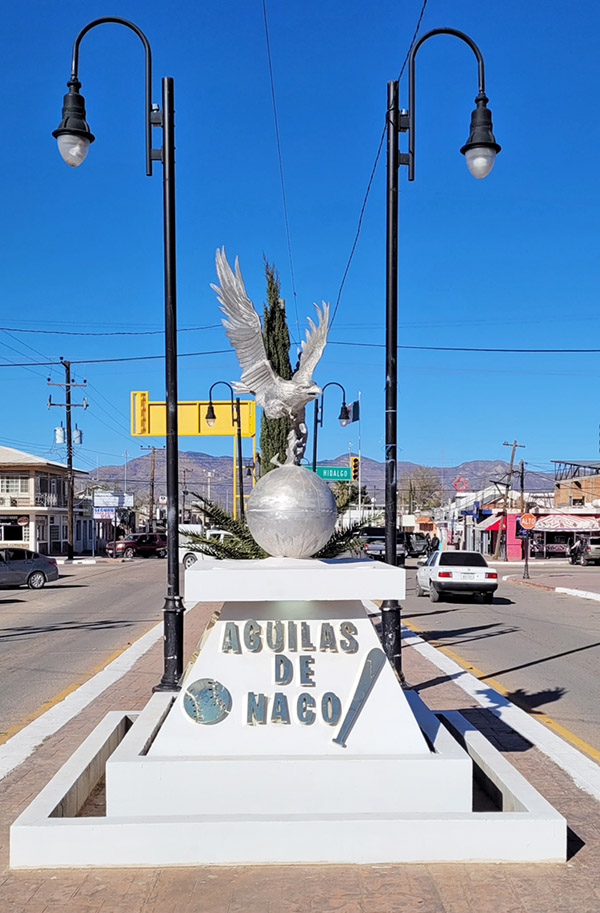
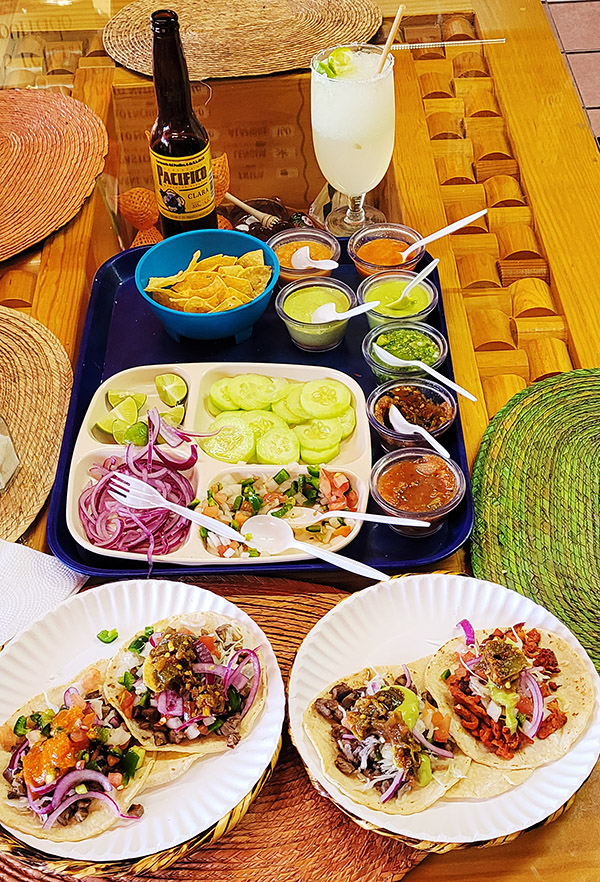
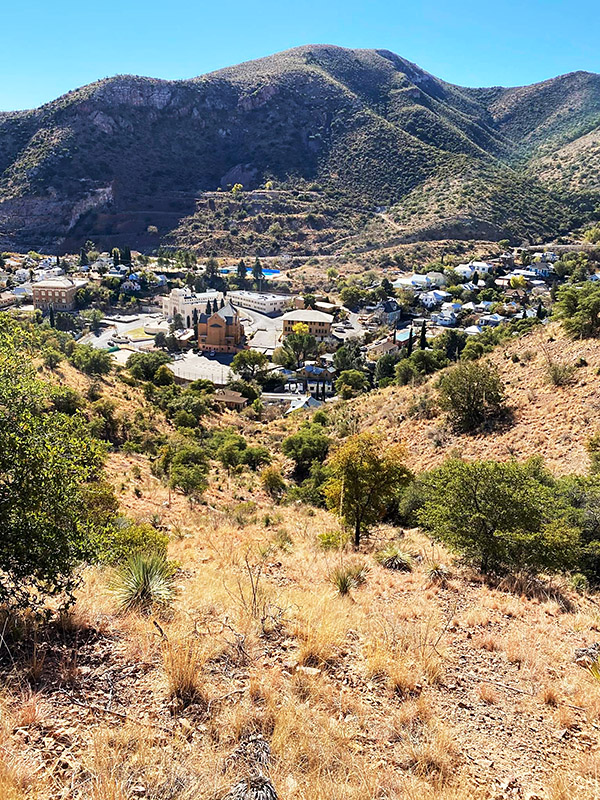 Bisbee, Arizona is a late 1880s copper mining town that turned in its explosives, shovels, and rock drills to grow into a more artistic town with historic hotels, quirky shops, and lots of festivals. Being that this tiny community is nestled in the canyons of southernmost Arizona (just minutes from the Mexican border), an idea struck me. I had not visited Mexico since February, and although this sounds crazy, I was craving tacos. Being this close to Mexico it felt almost a necessity to partake in a run to the border to extinguish my craving.