Moto Fishing

By Mike Huber

Having grown up in Maine, I used to love fishing.  I lived just off the Kennebec River, so it was only a short walk through some pines to Maine’s largest river where I had miles of it to myself.  After leaving Maine for the Army, my fishing fell by the wayside.  Until recently, that is.

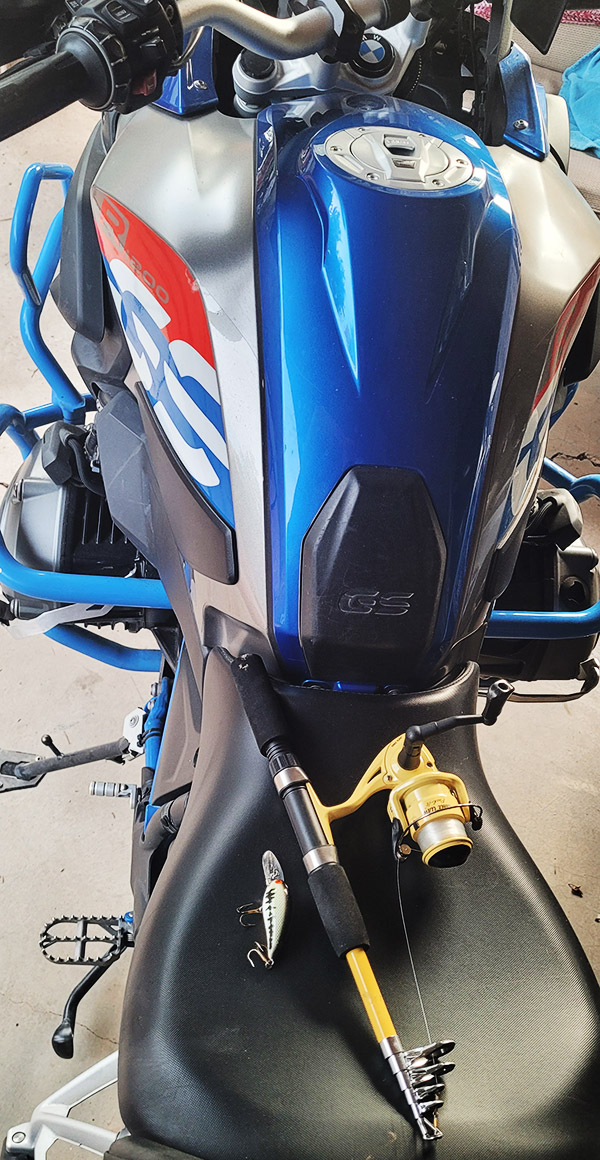
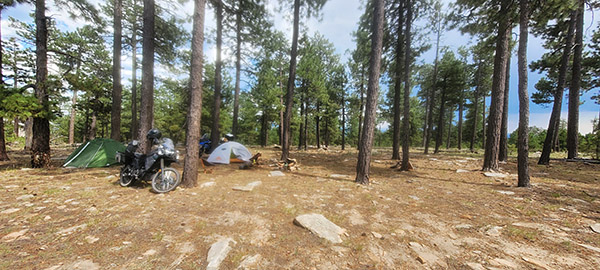
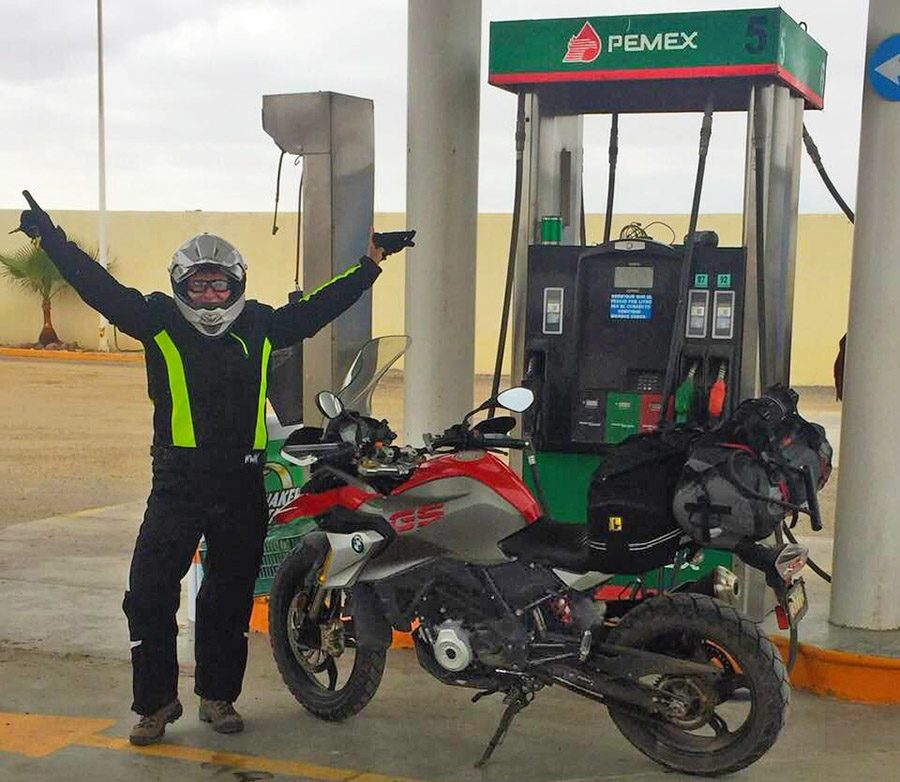
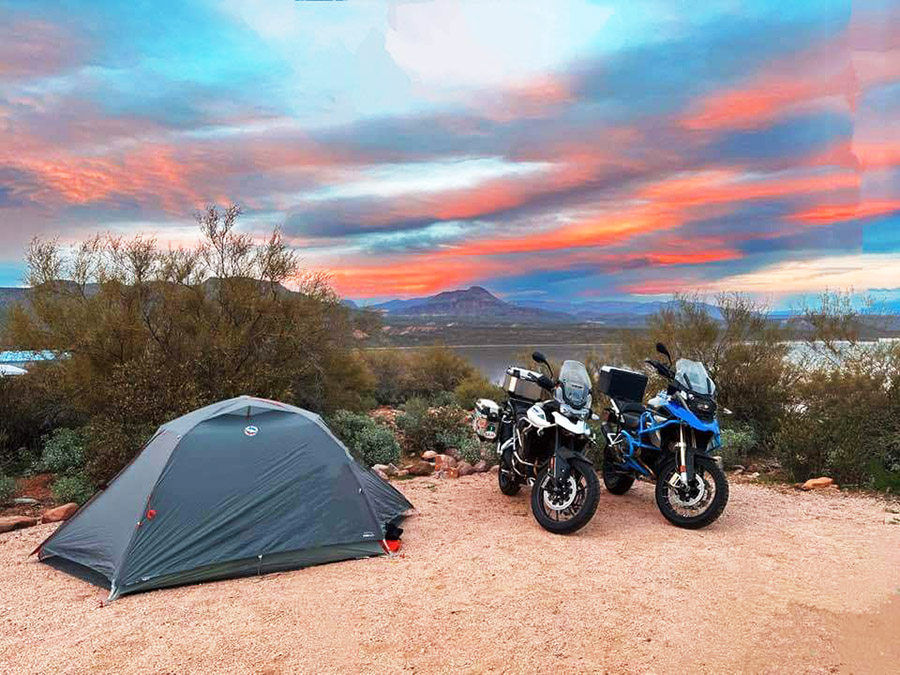
Last month in Sedona I met a friend of a friend and invited him to go camping with us along a lake in southern Arizona.  Even though he was from the east coast he brought his fishing gear and purchased a 1-day license.  One of his objectives is to fish in every state in the USA, a pretty formidable goal in my opinion. Almost as soon as I processed his story it hit me: Why am I not fishing as I camp throughout the United States on my BMW GS1200?  The next day I made a trip to Walmart (which I rarely do) and bought a $10 collapsible fishing rod (one that fits in my BMW’s panniers), swivels, and a few lures (including a red and white Daredevil).  The Daredevil always worked for me as a kid.

Due to an unusually wet winter in Arizona, the lakes are above their normal capacity. This made the Daredevil more of a hindrance as it kept getting caught on the weeds just under water.  After losing four lures I blasted to a local supply store and picked up a couple of spinners that would stay on top of the water and prevent (or at least minimize) my losses. I was now four deep in lost lures and was starting to feel like I do during my golf game in terms of losing balls in the water hazards. Maybe having a new angle with this top floating lure would renew my confidence and allow me to catch something (or at least not lose another $5 lure).

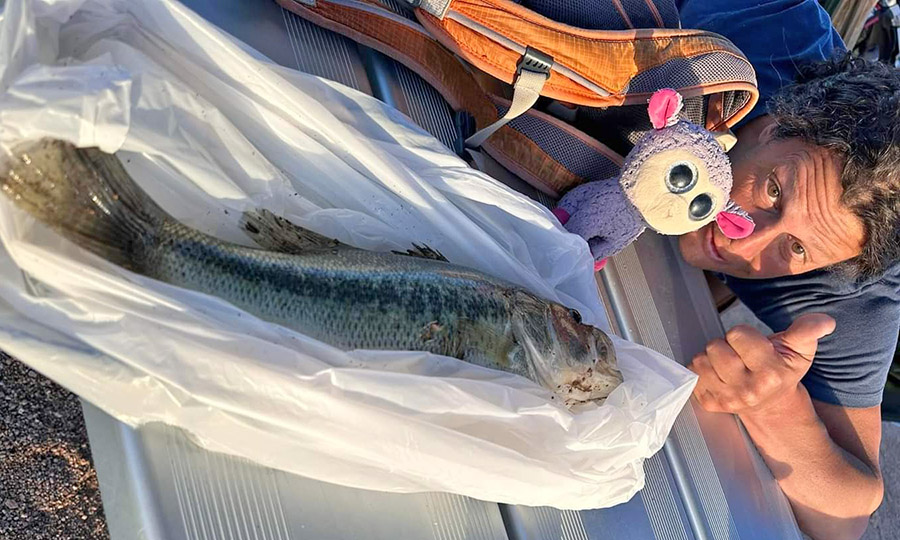
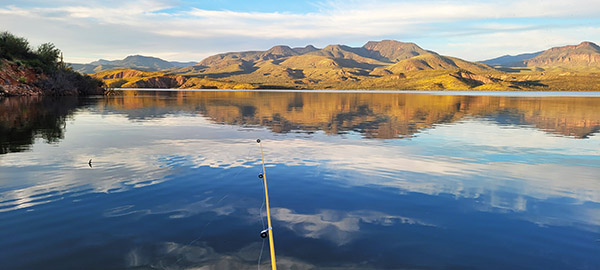
As sunset approached, I thought it was about time for a beer.  A nice cold IPA would surely ease the frustration of losing lures earlier in the evening.  Well, the IPA must have drawn the fish because within 15 minutes I caught a solid 18-inch striped bass. With this being the first fish I caught in several decades I wanted to tell you about what a fight it put up and all the time and effort it took to land this beast, but I won’t embellish my fish story.  The scene did, however, turn comical as another fishing boat approached.  They had been out all day and they had only caught one fish.  When they asked how long mine took, I picked up my half-empty IPA and said, “almost one beer.  We all laughed. Beer usually isn’t a time metric.

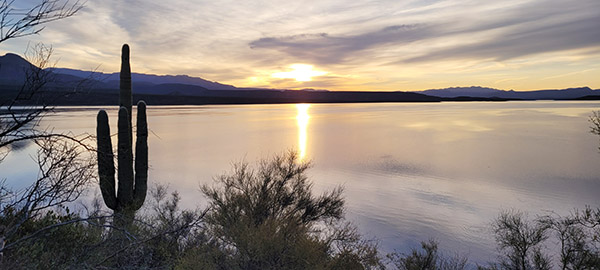
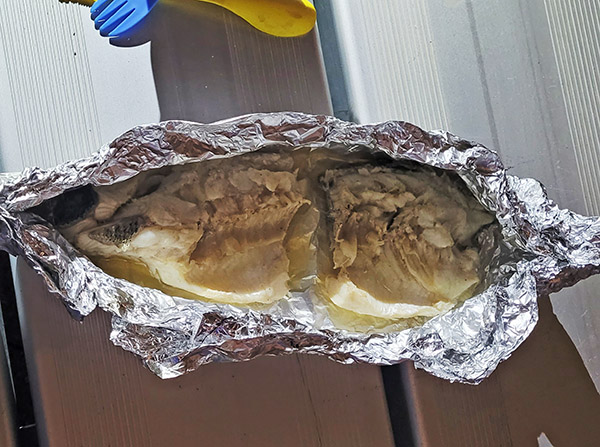
After cleaning the fish I realized that catching a fish wasn’t really part of my plan.  I was just passing the time. I now had to come up with a way to cook this monster.  Luckily, I was in a campground and earlier in the day had chatted up the hosts. It turned out they were from Maine, not too far from where I grew up.  They happily let me borrow some aluminum foil.  I figured this would be all I would need to cook over the grill.  Pouring the remainder of my beer into the foil and over the fish made for great flavoring. Once having the fish “properly seasoned” I threw it on the grill for about 5 minutes per side, removed it from the fire, and enjoyed it along with a pack of spicey Shin Ramen.  This was the perfect meal to enjoy while sitting around a glowing campfire and taking in the sun’s final rays over the Four Peaks Mountains.

The past two weekends I have returned to moto camp and fish with similar results.  This summer I will travel the west coast and spend time motorcycling, camping, and fishing as I meander up to British Columbia.  This renewed hobby will greatly compliment my finely honed skills of laying in my hammock, messing around with the campfire, and drinking cold beer in each region I travel though. There are few activities that can get your adrenaline rushing in an instant; the jolt from a fish on the line is one. I look forward to that rush as frequently as possible in my future travels.

Arizona Moto Camping

By Mike Huber

One of the advantages of living in Arizona most of the year is that you can ride every day, comfortably (I added “comfortably” because I know there is some guy or gal in Maine riding year-round in sub-arctic temps with snow).  We in Arizona can enjoy our passion for camping in all four seasons because of the extreme elevation changes, which allow moving to different climates with a one or two hour drive.

Arizona has an endless amount of camping areas, both dispersed and in formal campgrounds.  I thought highlighting two ends of the spectrum in would be a great way to convey the vast diversity Arizona offers.

Forest Road 300: Mogollon Rim

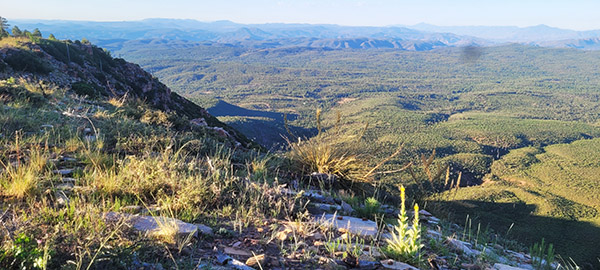
Forest Road 300 begins in the west off Arizona State Road 260 and ends 42 miles later near Payson’s Arizona State Road 87. The Mogollon Rim is home to the largest ponderosa forest on earth.  Although there are maintained campgrounds along this road, I prefer to disperse camp.  This provides one with the rare opportunity of awaking to an overlook in which you can see for over a hundred miles.  This spectacular view is something that a formal campsite cannot provide.  The road for the most part is in decent shape (excessive rains this year may have changed this however) and can be completed without a 4-wheel drive vehicle.

When traversing the 7,000+ ft elevation of the Mogollon Rim I will usually just ride down the many side roads until I come upon a campsite that isn’t too crowded or exposed, which I can then call home for the evening.  One of the main risks as you are indeed so exposed is that of lightning strike.  You may be able to find a perfect cliffside dispersed campsite but be aware that weather changes frequently and it is never okay to set up camp outside the tree line in this area. In fact, as you scout out your site it is wise to look up at the trees.  If you see many that have been damaged from previous lightning strikes, this is not a location in which you want to camp.

Another benefit to this area is the cooler weather at these elevations, which makes for a perfect Arizona summer trip.  The temperatures can be easily 20 degrees cooler than it is in Payson, which sits at 5,000 feet.  The refreshing temperatures and light breezes in the summer make this a perfect location for spending an evening around a campfire with friends while you enjoy the endless views.

Lake Roosevelt: Cholla Campground

I was hesitant to write about this location as it is my go-to happy place in winter and probably one of my favorite campgrounds in the southwest.  In winter it can be a cold drive if you are in northern Arizona until you drop into Payson, where the temperatures quickly gain 15 to 20 degrees and provide reassurance you’ll experience a perfect lakeside camping night (lakeside camping is a rare treat in Arizona).

Cholla Campground is part of the National Park Service so if you have a Senior or Veterans pass the fee is only $12 ($24 without the pass).  The site provides water, showers, toilets, and a beautiful lakeside view with an abundance of wildlife.  Having an elevation of just over 2,000 feet assures that on most nights, even in winter, it doesn’t get uncomfortably cold.

Another advantage to this campground is there are “tent only” loops so you can distance yourself from those noisy generators and the RV crowd if you choose to.   Choosing these loops provides a quiet night as you watch eagles fly by in the evening with their dinner in their talons while you cook a steak over hot coals while having a 360-degree view of the best sunsets.

Arizona is a much more diverse region than most people think it is.  This unique state isn’t all cactus and barren desert, and the above two locations highlight this diversity.  Motorcycle camping in Arizona can be a year-round pastime without being smothered in heat or waking up with a frozen water bottle (both still seem to happen to me all too frequently).

What are your favorite camp locations in your home state?


Never miss an ExNotes blog:


Have you clicked on the popup ads today?


Please share this blog on your social media!

Wildlife in The Southwest: Javelina

By Mike Huber

Having grown up in Maine I spent most of my childhood experiencing life up close with nature. I have always been drawn to the unique wildlife in different regions of our country.  In the Southwest this is especially true as the terrain is so different than Maine, or really anywhere else I have traveled.  Many people think desert and cactus, sand, maybe an old cow skull on a fence post and envision a region void of life.  This couldn’t be further from the truth.  Once you get out exploring this fragile ecosystem it’s easy to see and hear how much life there is in this harsh environment.

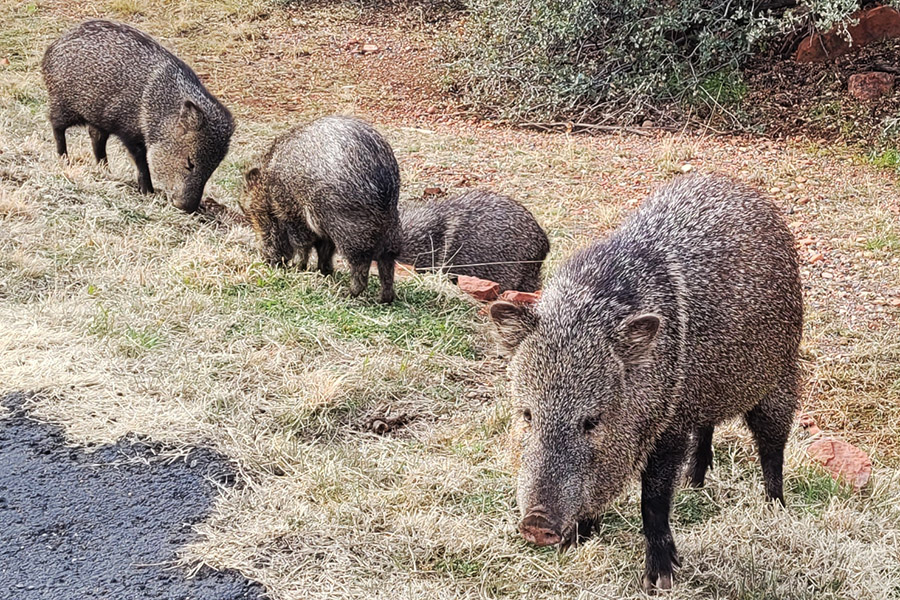
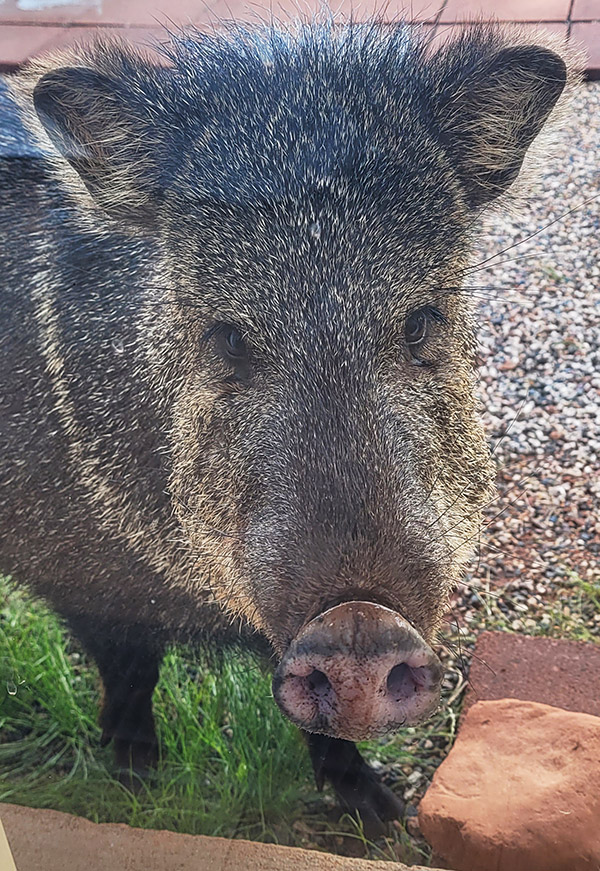
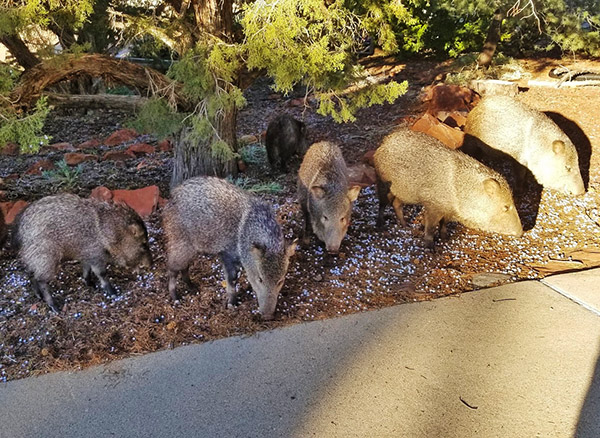
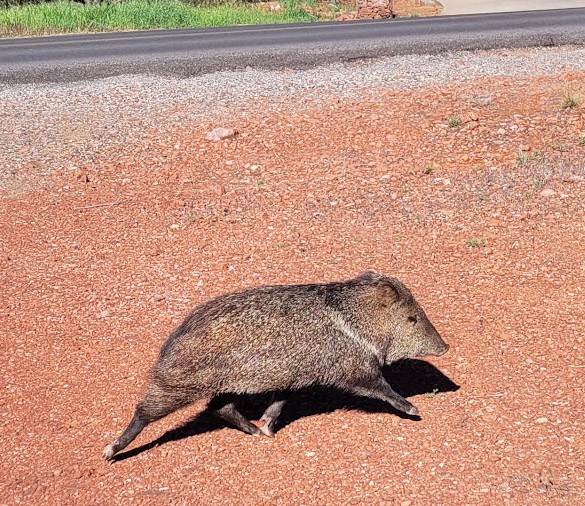
One of the coolest animals I have seen along my travels is the javelina.  These beady eyed little critters look very similar to boars or wild pigs but are actually in the rodent family.  If you are in the desert during a full moon and the wind is just right, and if you are lucky, you can hear a pack of these little guys chomping up prickly pear cactus and tearing up people’s lawns.  They are a little local gang of hoodlums causing mischief throughout the neighborhood and then disappearing into the thick desert underbrush as quickly as they appeared from it.

The first time I saw javelina was while camping along the Arizona and Mexican border.  Sleeping in a tiny one-man tent I woke up to what I thought were wild horses munching on some leaves.  The sound got louder and closer as whatever it was moved in on my position. I wasn’t quite sure what to do but wanted to be certain I wasn’t trampled by horses in my tent (that’s one way to end the story). I popped out of my tent and flicked my flashlight on.  What I saw was about 10 pairs of beady little eyes staring back at me and snouts wiggling in all directions.  Not having any idea what these things were and not being armed I began shouting at them “Quit screwing around!”  Little did I know that is the exact command they understood and followed.  After a few moments of a harrowing standoff, they took the hint and went around my tent without missing one leaf. The strange-looking beasts made their way into the rugged desert terrain as I stood outside my tent still trying to figure out what had just marched through my campsite.

Frequently wintering in the southwest I am now very accustomed to these little troublemakers, and it always brings me great joy in seeing them marching across the street like the Beatles on the Abbey Road Album cover.  On more then one occasion when I see them in the backyard, I will close the gate and jokingly say “We got us a petting zoo!”  In my experience the javelina are pretty focused on obtaining food and don’t pay much attention to us humans being near them. except if you move quickly, make loud noises, or they have babies in their herd.

So, whether these little Star Wars looking creatures are hanging out around my campsite in the middle of the desert or foraging through the neighbors’ yards, they are a pleasant reminder that the environments I travel through change in many ways. The javelina are a vital part of the desert’s fragile ecosystem that we are guests in to enjoy and embrace.


Disclaimer: Opening a javelina petting zoo is a foolish thing to do. Do not attempt to pet, embrace, or feed them either as they can turn on you and attack.


Never miss an ExNotes blog:
Bobbie’s Solo Baja Ride: Part 3

By Bobbie Surber

Do you ever have those moments when you wake up unsure of where you are? I awoke to the sound of birds, more specifically, parrots, and the smell of fresh tortillas and knew instantly that this was not home; I was in Baja in Mulege and wholly smitten with my room with her stone walls, comfy bed, and protective mosquito netting. I didn’t want to get out of bed until I remembered that I had made plans to go horseback riding to the bay.


Keep us going…please click on the popup ads!


Throwing on my clothes and double-timing it to the restaurant, I had just enough time for a cup of coffee and water before my guide arrived to take me to the ranch, which was less of a ranch and more of a lean-to along the highway with both our horses tied and already saddled. I met my girl for the day, Lupita. She had enough spunk to whinny at our arrival and appreciate the carrots I brought to help form this new friendship. Our saddlebag were loaded with swimwear and lunch, and we set off for a leisurely ride to the bay.

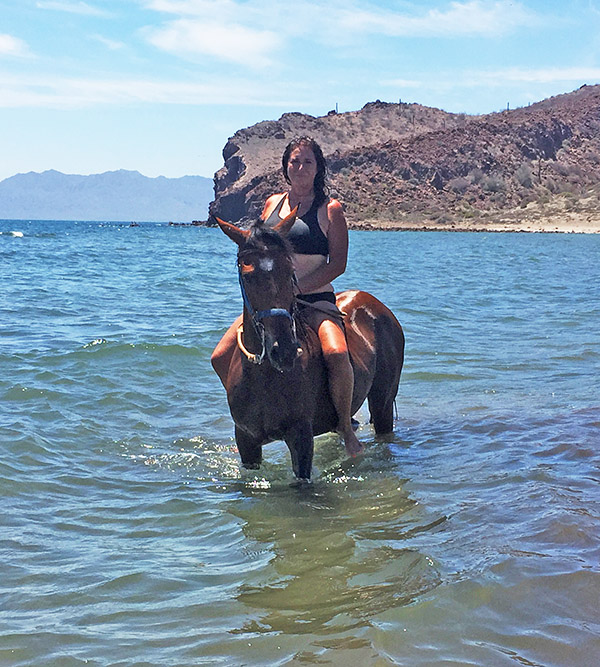
Horseback riding in the Sea of Cortez.

Muscle memory took over from riding horses in my youth, and I gave in to the morning’s joy and the view of Conception Bay. Riding down the beach at a slow gallop letting our horses have their lead and finding a bit of shade, we stopped for an early lunch of fresh fruit, good tequila, and some freshly made empanadas. After lunch, I asked if I could take off the saddle and ride bareback, something I had not done since childhood. It seemed a perfect idea for this glorious morning. Surprisingly my guide said yes and permitted me to ride Lupita bareback into the bay to enjoy a good swim. I had forgotten the thrill of entering a body of water on horseback; Lupita seemed to enjoy the experience as she left the security of the ocean bottom and took us further out into the bay. The morning flew by and soon it was time to return to the beach and make our way back to the corral.

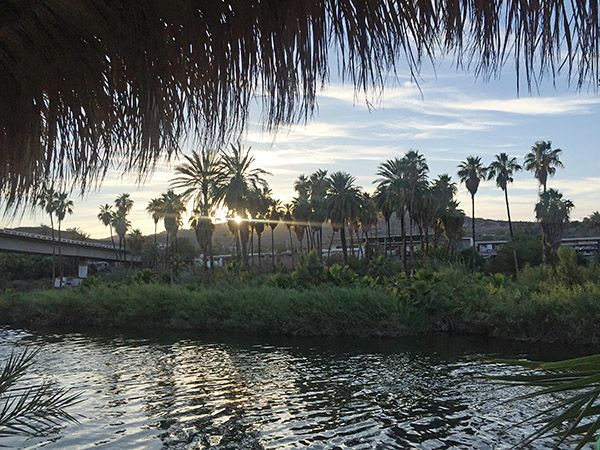
Sunrise on the Rio Mulege.
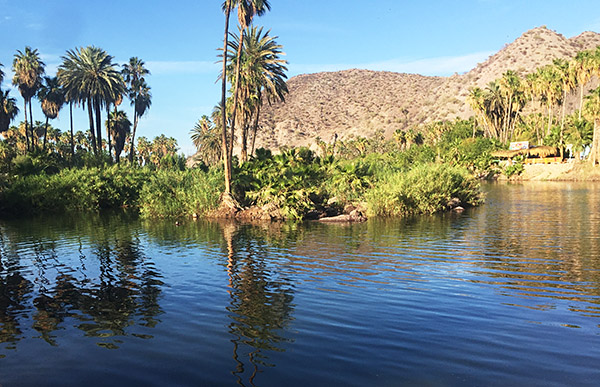
A river runs through it…the Rio Mulege in Mulege.

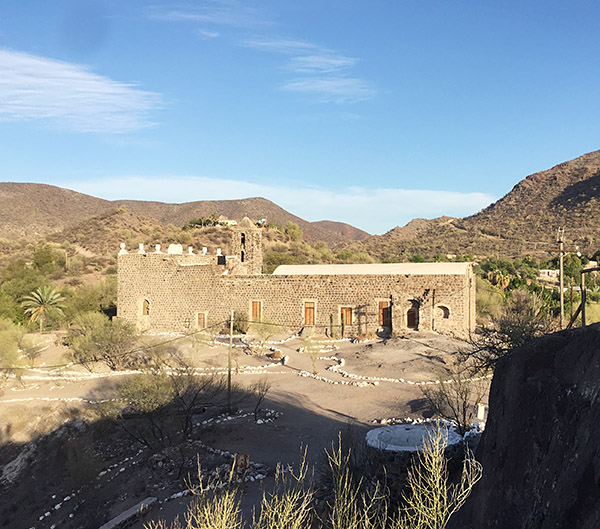
Returning to Historica Casita in the heat of the early afternoon, I did what any sensible local would do. I retreated to the coolness of my room for a proper afternoon siesta. After a cold shower and fresh clothes, I headed out to explore. With the help of a newfound local friend and a Google search, I learned that the Mulege indigenous population has a long and rich history that dates back centuries. It is believed that the region’s first inhabitants were hunter-gatherers who lived in small bands, but the arrival of the Mission changed their lives forever. Spanish missionaries established the mission in 1730, teaching the local population how to farm and build adobe structures and simple homes. I was also happy to learn there has been an effort to preserve their history by preserving ancient artifacts and teaching younger generations about their heritage.

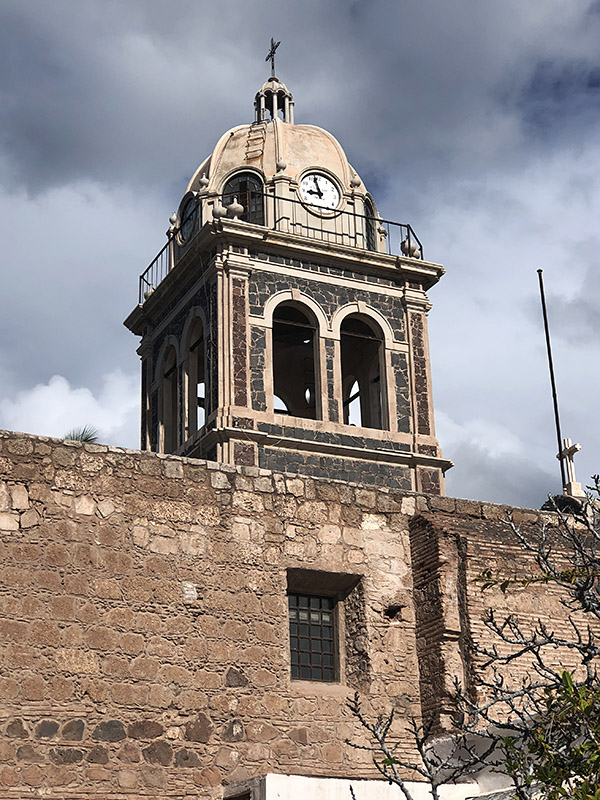
The Mission in Mulege.

While the Mission was closed, I could still walk the grounds and view the river from the vantage point of the Mission, as it is built on one of the highest points in Mulege. Wandering back down the hill, I walked the river’s edge, exploring the town and the small community of locals and ex-pats. As I made my way back to the hotel, I realized how hungry I was and looked forward to an evening in the hotel courtyard, a good dinner, and a freshly squeezed margarita. The evening did not disappoint as I sat visiting with locals and a young family visiting from the mainland. Soon I was off to bed with the promise of an early rise and the chance to explore the many beaches along Conception Bay.

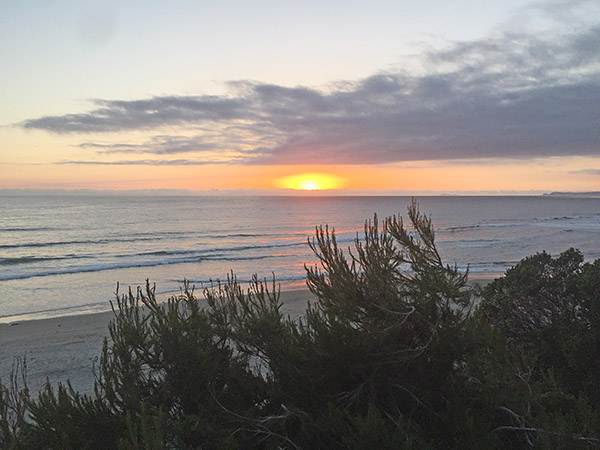
Sunrise on the Sea of Cortez.
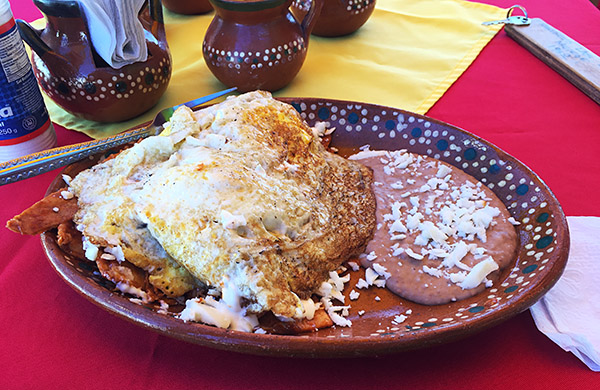
A fine Mulege breakfast.

The following day I was back on my bike and headed towards my next stop, Playa Santispac, a short 25 kilometers south on Highway 1. I knew I only had a few hours before the oppressive heat and humidity would force me back to the room, and I was determined to make the most of the day. Cresting the ridge, I was overlooking the bay with her teal-colored water inviting a closer look. Santispac beach has a restaurant and several palapas stationed along the beach; as I rode my bike down the beach, I decided a swim was in order, followed by a hearty breakfast at the modest beachside restaurant.

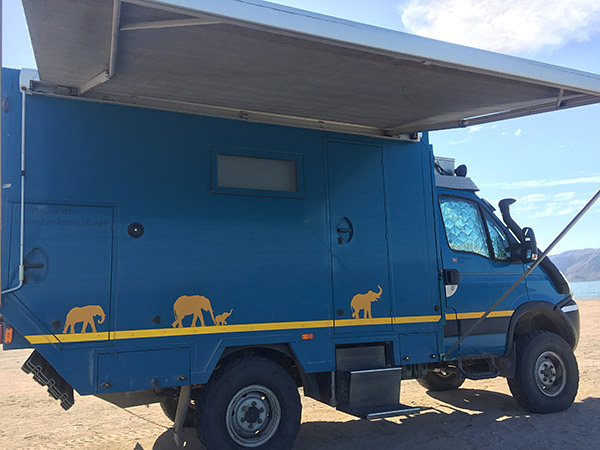
An overlanding rig.
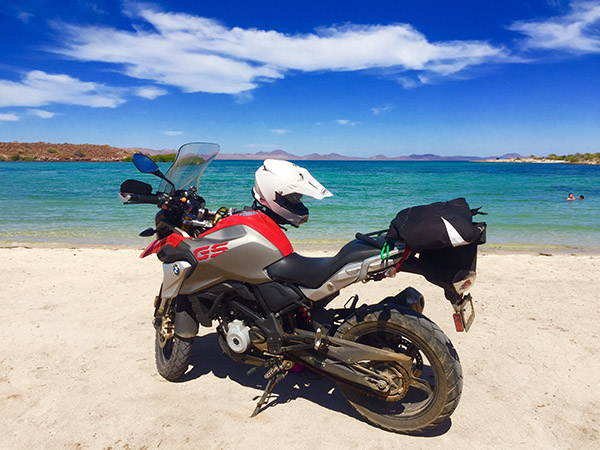
My BMW on a beach in Mexico.

Swim and breakfast completed, I headed further south, stopping at each beach I passed and settling on what has become one of my favorite beaches, Playa el Requeson. The white sand and sand spit at low tide, taking you to a small island, was more than I could resist. Setting up my camp chair, I soon made friends with an overlander couple from England. Borrowing their snorkeling gear I enjoyed a quick swim out to the island, enjoying the starfish and rockfish along the shore. I reluctantly returned for one last night in Mulege with a new plan for the following day, to ride to Loreto for lunch and then return to Playa el Requeson to camp for two nights.

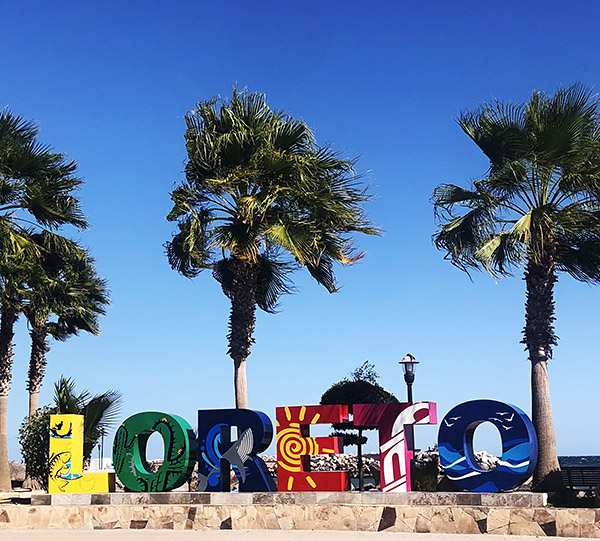
Loreto’s Malecon.
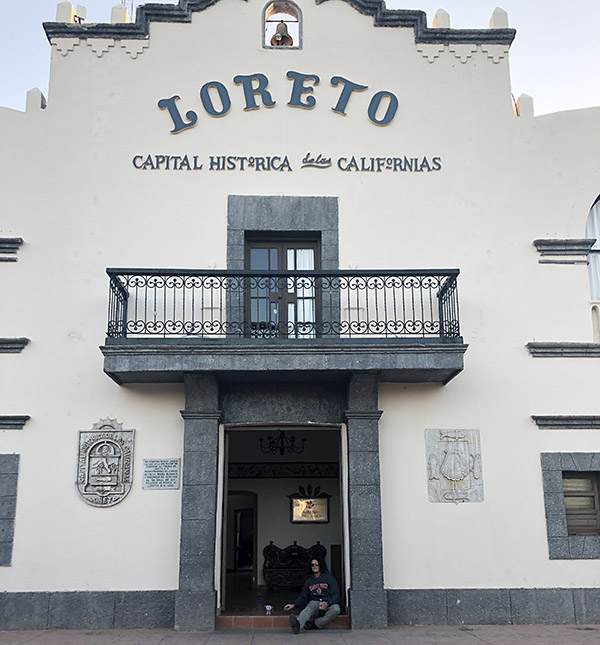
Loreto has a rich history.

Loreto has a rich history that dates back to the 16th century when Spanish missionaries established the first mission in the area. Indigenous people then populated the area, and over time, it became an important fishing port for the region. Today Loreto is a popular tourist destination complete with a Malecon along her waterfront. Loreto has an historic town square with a well-preserved mission and museum. With a population of around 25,000, finding lodging at every price point is easy, as are the town’s many services.

The Loreto Mission.

After a lovely day sightseeing, I headed about an hour and a half back north to Playa el Requeson to find a bit of shade and a good place for my tent. The afternoon was blazing hot as I headed inland along Hwy 1, as I once again cursed myself for selecting June to make this ride. Complaining aside, I arrived and indulged in a long swim to take the sting out of the day’s heat. I found my new friends in the overlanding vehicle who gave me the gift of a cold drink with ice and offered the shade of their massive vehicle to pitch my tent. The day gave way to a glorious sunset, and soon, we had a modest fire complete with fresh fish for dinner. With a million stars out for our pleasure, full bellies, and the delight of margaritas on the beach, the night was spent with storytelling of our past adventures. Both Stephen and Shelly’s stories surpassed mine as they shared their adventures traveling through three continents over the past several years.

The two days camping on the beach flew by, and it was sadly time to make my way back north. I planned to head to San Felipe, but the reality of the heat made heading back to the Pacific side an easy choice. Retracing my ride through Baja allowed me to revisit a few of my favorite places and discover a few new ones to ensure this would not be my last ride there!


Part 1 of my Baja adventure is herePart 2 is here.


Never miss an ExNotes blog:

Venturing into Baja?  Insure with the best:  BajaBound.  It’s what we use.


Want more Baja info? It’s right here!


Want to read more stories about riding in Baja? Pick up a copy of Moto Baja!

Bobbie’s Solo Baja Ride: Part 2

By Bobbie Surber

In Part 1 I shared with you my adventure from Sedona, AZ, crossing the border for the first time on a bike, and heading down Mexico’s Transpeninsular Highway to Guerrero Negro.   This blog continues the adventure.


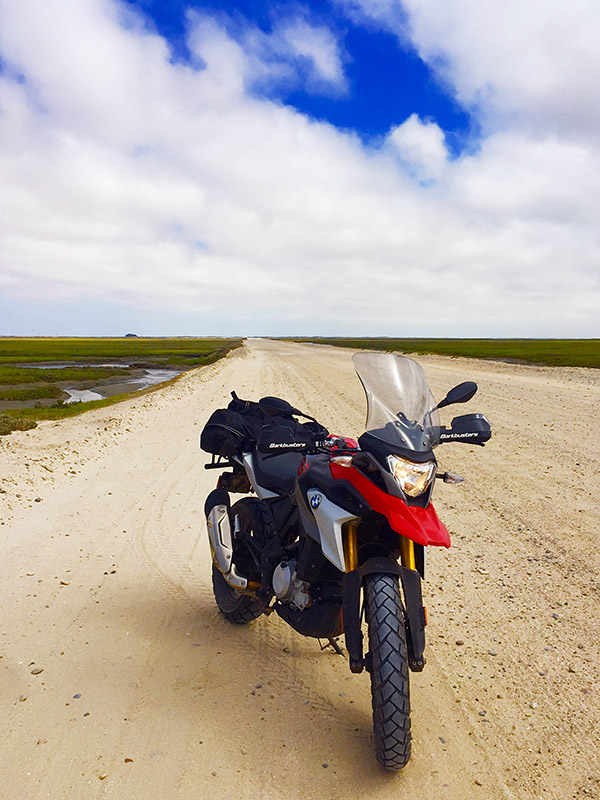
After an early morning departure leaving behind the comforts of the Hotel Mision Cataviña, I continued on Highway 1, enjoying a quiet morning and the rare good luck of an empty road. Settling into the ride with a deep breath that allowed me to loosen my tight muscles after two long days of riding, I felt the joy start to creep in as I took in the vastness and emptiness of the Sonoran Desert. The fierceness of the summer sun had already begun turning the winter greenness to a light wheat color. This did not diminish the stark beauty of her desert, with the surrounding hills in the distance with their deep purple shadows demanding a second look. My bike was doing great; her little single-cylinder engine was a gem off-road and could manage up to 80 miles an hour, more than enough in Baja. She was a perfect bike for the moment, made for Baja.

The desert south of Cataviña.

Rolling down into Villa Jesus Maria I was more than ready for a break, something cold to drink and some much-needed gasoline. I did well with the drink and break, but as can happen in Baja, the Pemex had no gas. It was another 40 kilometers to Guerrero Negro; as I emptied my MSR liter of gas into my tank, I said a little prayer to both Jesus and Maria to extend my range to Guerrero Negro.

In the Guerrero Negro salt flats.
At Scammon’s Lagoon in Guerrero Negro.

Prayers answered, by perhaps both Jesus and Maria, I arrived with a smidgin of gas fumes left in my tank. Reaching Hotel Don Gus, which several riders had recommended as both affordable and bike safe, I pulled into the dirt parking lot to check in. This is a typical motel-style lodging with comfortable rooms and a simple restaurant serving hearty portions. My room settled, I headed for a taco truck that every rider raves about, Tony’s Fish Tacos. Let me tell you, I often dream of Tony’s fish and shrimp tacos with the perfect batter and lime crema!


Keep us going…please click on the popup ads!


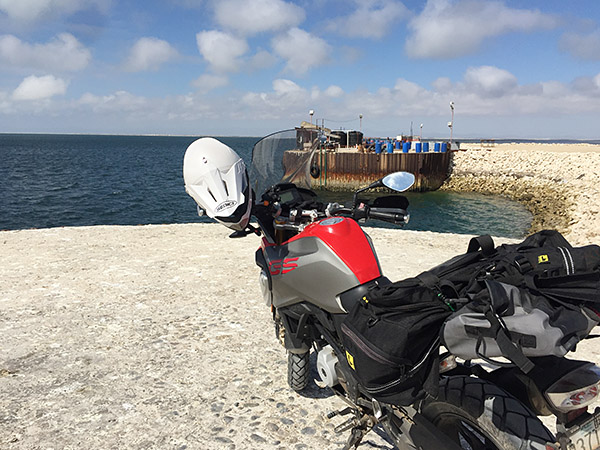
Fully satisfied and with still enough daylight left, I went to explore the salt flats famous in this area. A short ride from town, the salt flats looked like a mirage at times, fooling the eye into believing it was a vast lake. This soon gave way to the commercial operation with magnificent mounds of salt with trucks and bulldozers on the top of the salt hill so high that the trucks looked like toys. Soon I was passing the small boat dock and positioned my bike for a good pic. The sun was warm but blissfully not hot with the Pacific breeze. I set up my small camp chair, pulled out a flask filled with an excellent local Vino Tinto, and gave a silent toast to a perfect Baja day.

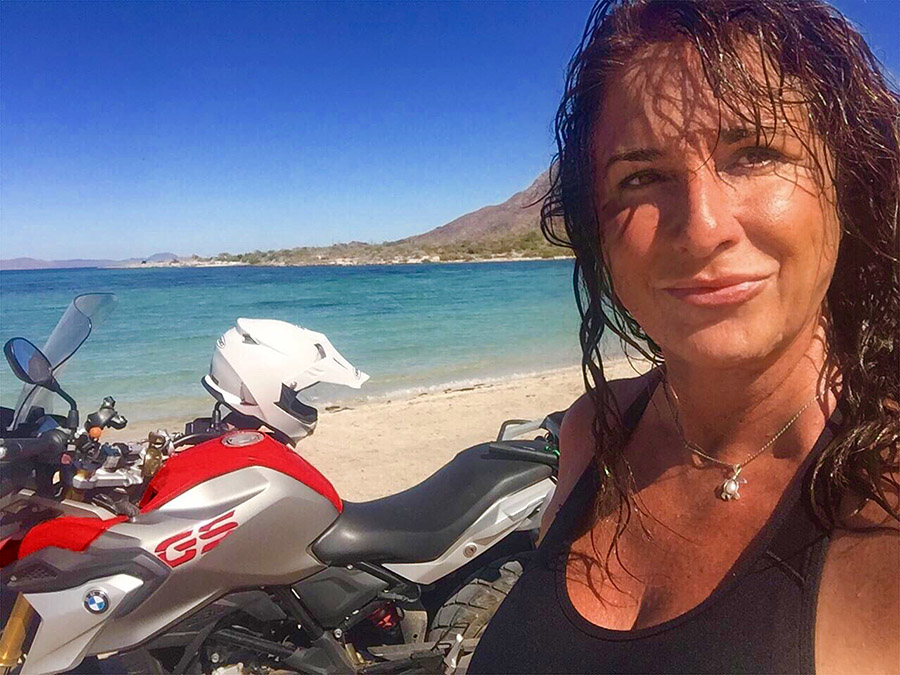
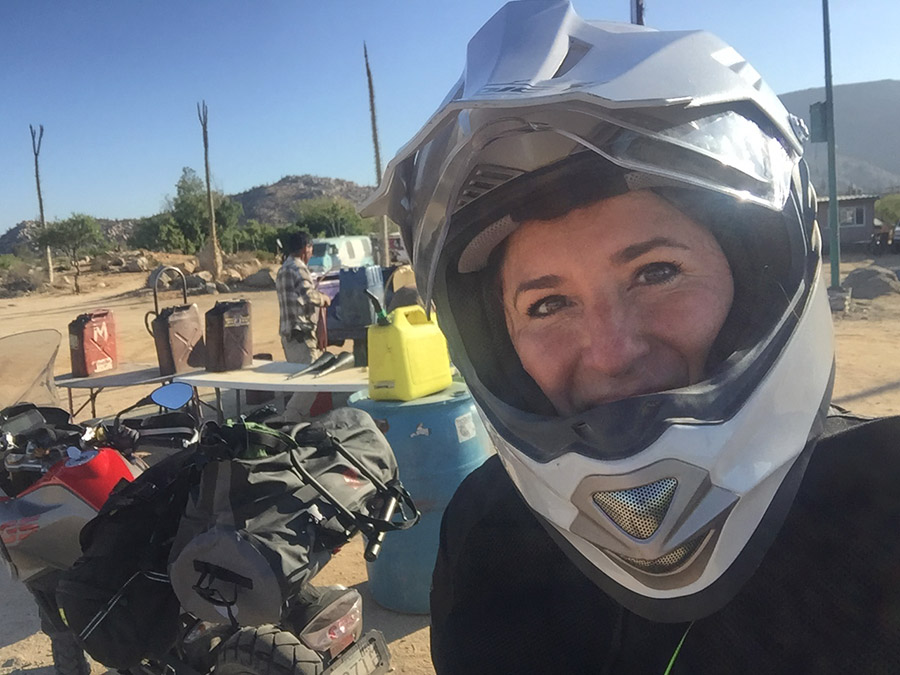
A Don Gus Hotel selfie.

I woke the following day with growing excitement, and unable to wait for daybreak I loaded my bike impatiently, waiting for the restaurant to open for a much-needed cup of joe. You will often find that opening and closing times in Baja are more of a suggestion than a hard rule. A half-hour later, I was in my room, firing up my rocket pocket stove and making do with a Starbucks instant coffee and some leftover tortillas. Bike ready and stomach full, I headed to the gas station to fill up Red, only to find I had caused a stir and was noticed by a few locals who wanted to meet the female American solo rider. A few of the younger ones asked what seemed like endless questions, wanting to know where I had been and where I was going. This completed, I was on the road heading to the part of Baja I had been waiting for, Mulege and the famous Bahia Conception.

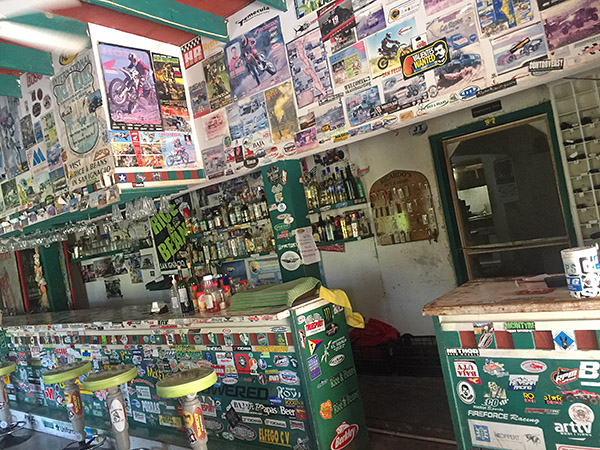
The road out of town was uneventful, an endlessly flat straight that challenged me to stay awake and focused. About an hour later, I passed the midsize town of Villa Alberto with plenty of gas, shopping, and lodging. I stopped long enough for gas and was back on the road. My interest in the highway picked up as I neared San Ignacio. A few kilometers before San Ignacio there was another military stop, which was uneventful other than the guard looking at me, my bike, and a long look down the road with was becoming the norm question and answer: Solo? Si Solo! With an astonished look, he waved me on, wishing me a safe ride. My next stop was a visit to the Baja 1000 popular pit stop, Rice and Beans, a restaurant and hotel just off the highway with good food and cold beer. I left satisfied and headed to the main square of San Ignacio.

Inside the Rice and Beans Restaurant in San Ignacio.

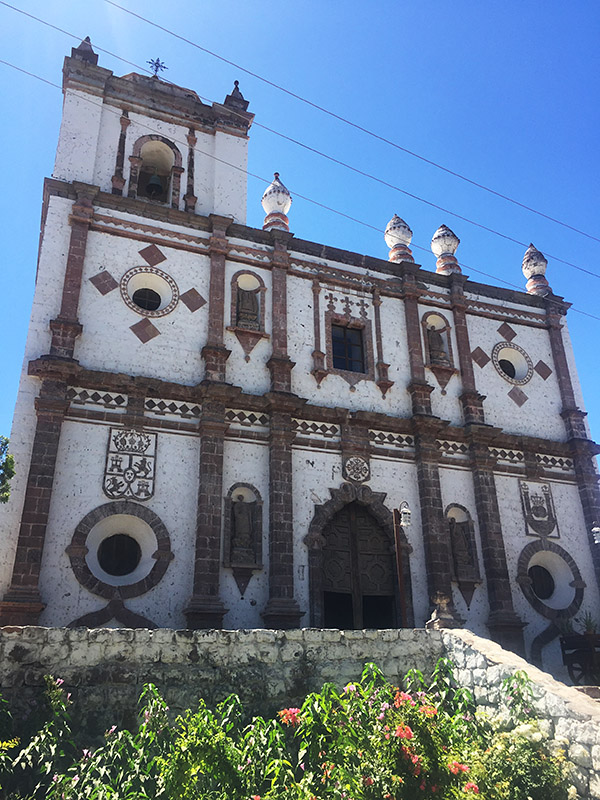
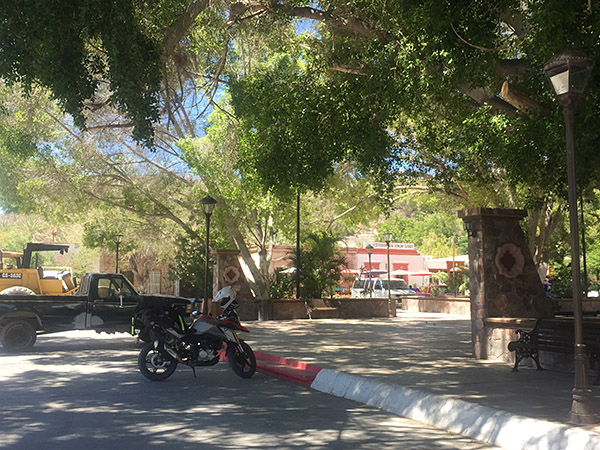
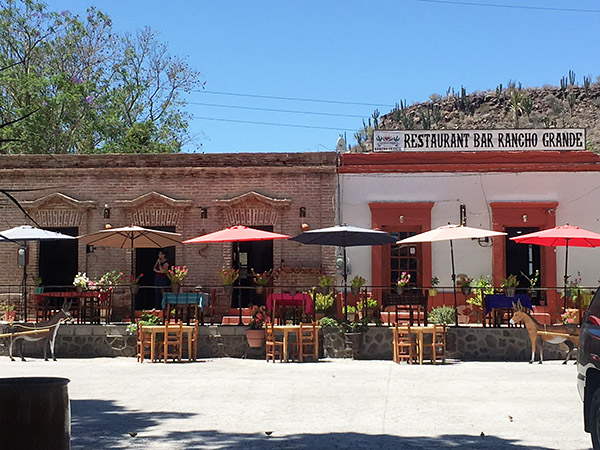
The town of San Ignacio is a true desert oasis with more palm trees than you could count and a river running through the town. San Ignacio seems caught in a time warp as elderly men sit in the shade of the massive trees that frame the small-town square, reading and playing cards as they eye me parking my bike. Curious about this gem, I found just enough cell coverage to look up her history. San Ignacio was founded in 1706 by the Cochimi tribe. In 1728, missionary Juan Bautista de Luyando discovered San Ignacio and committed to building Misión San Ignacio Kadakaamán. The building is made of volcanic rock from the nearby mountains. Her mission sits quietly, waiting for the next visitor, and I was lucky to find her open and welcoming.

The San Ignacio Mission.
San Ignacio’s town square.
A restaurant in San Ignacio.

I reluctantly got back on my bike, heading back to the highway with a promise that I would return to San Ignacio for further exploration and to enjoy her peaceful river and nearby lagoon. With one more top off of gas, I headed down the road finding the excitement of endless twisties and, on the horizon to my left, the peaks of Tres Virgenes. One last climb took me to another peak, with soon a sweeping view of the Sea of Cortez. Massive winds kept me alert. The heat was near overwhelming, and the wind only accelerated my dehydration. I was physically spent with still another hour to my destination. Pulling into Santa Rosalia, I sadly passed her mission for another time. I stopped just long enough to douse myself with water at the gas station, drink as much water as possible, and get back on the road.

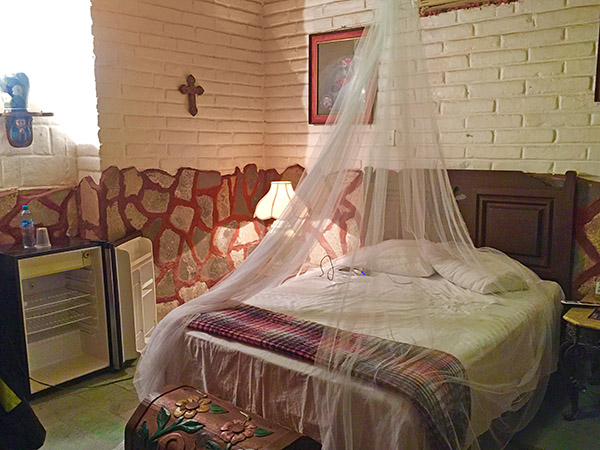
Soon I was riding through the arches that welcome you to the proper start of the town of Mulege. My destination was Historico Las Casitas. After several attempts to find the hotel cursing my Google Maps, I finally arrived. I walked in, took off my riding gear, and as if they were waiting for me to arrive, a young man said not a single word; instead, he handed me a glass of lemonade, a drink from heaven made with fresh limes, lemon, and cane sugar. I emptied my glass in two long swings. Gratefully finding an ounce of composure, I asked about a room for the night. I soon settled into my volcano rock room with mosquito netting; it took me no time to pass out with cold air soothing my heat-exhausted body.

The Hotel Las Casitas courtyard.
My room in the Las Casitas.

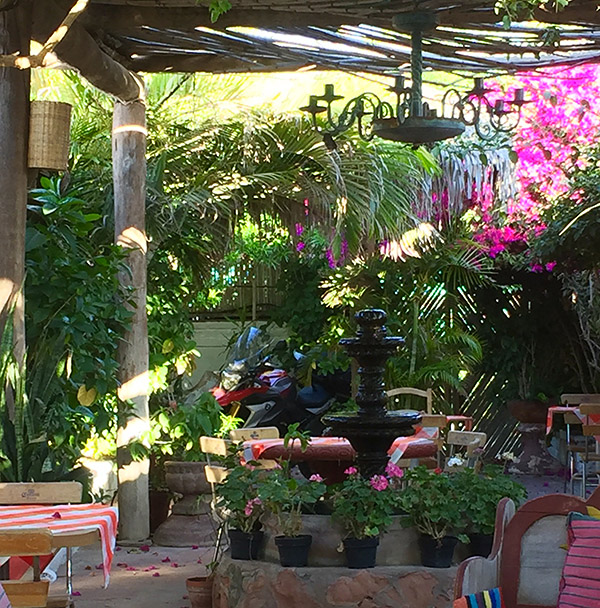
Waking in the late afternoon, I discovered the L-shaped courtyard covered in vines and trees, allowing for continual shade against the heat of the June sun. My bike was safely parked in the courtyard; I made my way to the bar to the young man who had saved me with his magical lemon concoction and ordered another (with tequila this time). Sufficiently recovered, I headed out to discover the town and look for another perfect taco. Mulege, another mission town founded in the early 1700s and known for the beauty of the river that runs her length ending at the Sea of Cortez, her proud mission sets up on a hill overlooking the palm trees and river. Sadly not open, I wandered around the grounds taking in the softness of the sunset overlooking the river. I headed back to the town square, and with a food stand next to the market, I had a satisfying plate of carne asada tacos with the best beans I’ve had in Baja. Heading back to the hotel, I found the courtyard packed with locals and visitors enjoying the evening coolness. I was lucky to be greeted by the owner, I learned more about the hotel’s history, and I met a friend of his who could take me horseback riding the following morning. With plans set for the next day I gratefully slipped between the crisp white sheets, pulled my mosquito netting around me, and drifted off to sleep dreaming of the adventures ahead.


Part 1 of my Baja adventure is here.


Never miss an ExNotes blog:


Venturing into Baja?  Insure with the best:  BajaBound.  It’s what we use.


Want more Baja info? It’s right here!


Want to read more stories about riding in Baja? Pick up a copy of Moto Baja!

Three Steps to Ease into Moto Camping

By Mike Huber

I know many people on this page camp and ride, but some have yet to dive into mixing these two great passions.  My objective in this article is to help you bridge riding and camping, alleviate any concerns on this topic, and build a foundation of knowledge for those new to motorcycle camping. In doing so you will discover a deeper level of motorcycling that many riders experience.


Help us bring more to you…please click on the popup ads!


Start with Less

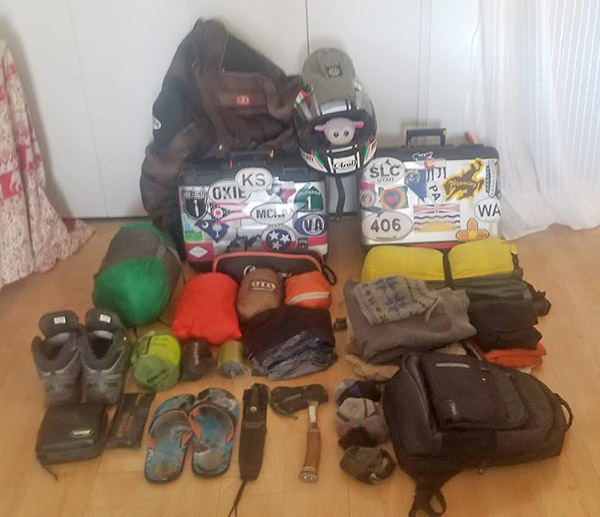
With all the social media posts of riders from around the world sharing their epic adventures and providing reviews of the gear they use can cause anxiety.  Intimidation from the expense and amount of equipment people use for moto camping can become overwhelming when starting this hobby.  I’m not saying any of these riders are wrong in the gear (or the amount) they use, but my philosophy while motorcycle camping is less gear is much more efficient and cheaper. My first time moto camping I had nothing other than a one-person Kelty tent (which I still use), a sleeping bag, and a small personal hygiene kit.  I planned to give moto camping a shot and figured I could survive one night out on Washington’s Olympic peninsula even if I was a bit uncomfortable.

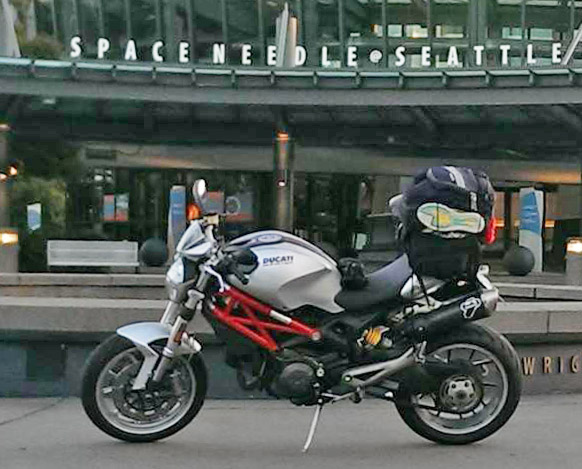
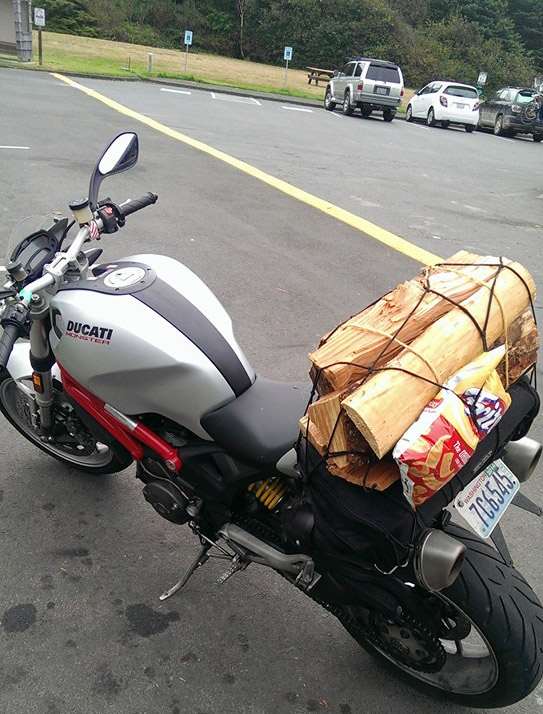
I wasn’t uncomfortable at all.  In fact, other than adding a 6-pack of beer and a crushed Subway sandwich my gear didn’t grow or change for the next 8 more years (even after “maturing” from a Ducati Monster M1100 to a BMW GS1200).  Would I have been more comfortable with a sleeping pad, cooking set up, and maybe even a chair?  Yes, but that came years later after learning from others (I am a bit set in my ways even if they force me to be uncomfortable). Starting from such a minimalist perspective and adding gear slowly allowed me to tailor my equipment perfectly.  You will find everyone has a “better” way of doing things; you might want to learn what works best for you and expand slowly.

Start in a Familiar Location

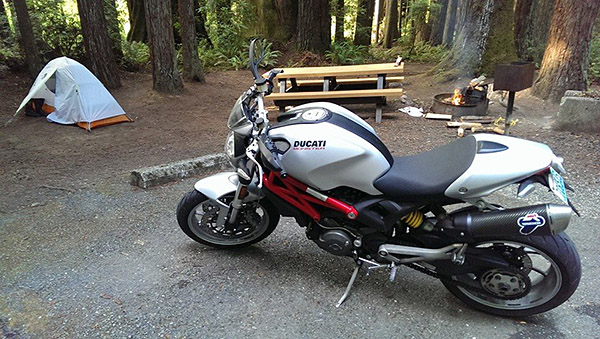
Roaring through the dense rainforest of the Olympic Peninsula on my Ducati Monster I was excited to be camping with my motorcycle for the first time.  In hindsight this choice was probably a further and more isolated location than I should have started with, but it worked for the most part. I had ridden the road several times, I was comfortable with the distance, and I was aware of the ever-changing weather conditions.  Being new to this I didn’t pack rain gear and of course it rained heavily that night (I was forced into my tent by the weather by 7:00 p.m.).  You must pack raingear if you want to ensure it never rains on your moto camping trip.   But even with the weather not cooperating it was a fun first night and it was enough to get me hooked on the lifestyle.

Looking back, a more comfortable way to experience my first moto camping adventure would have been a more controlled environment.  Even for those well-seasoned campers, testing new gear in your home or backyard to learn how to set up, adjust, and break down the equipment makes for a less stressful time in a real-world environment. Purchasing lots of expensive gear, not testing it, and going on a multi-state tour can be a painful way to learn the gear isn’t right for you or the climate.  Another way to learn your equipment and build experience is at a state park close to your home or a KOA.  Even if you have to retreat to the KOA store or end up back inside your house, don’t be discouraged.   That’s what this step is for.  Take notes on what worked and what didn’t, and build off that until you are comfortable with the next step, which can be dispersed camping or a longer distance ride.  It is better to learn in this semi-controlled environment than to have a horrific night with improper gear in poor weather and become completely deterred from ever moto camping again.

Learn From Experience

Having completed a successful test runs with your gear it is now time to begin learning how to increase your confidence in harsher and more remote environments. This point in your experience level is also the perfect time to make gear adjustments based on your notes.  With a few nights camping under your belt you can seek advice and learn from others, including their set up tricks and in what type of climate they moto camp.  In doing so you will fine tune your camping outfit so that it is perfect for you, your motorcycle, and the climate.

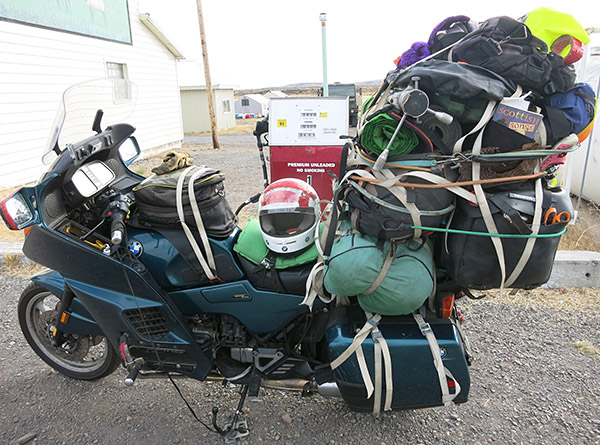
During this phase it is important to remain open minded.  Everyone has a method that works best for them.  For some it is a half shelter at a roadside pullout, for others it can be as elaborate as a 6-man tent with copious gear that requires 2 hours to pack.  Normally when I travel and moto camp it isn’t for just one night.   I’m on the road for two to three months at a time with Airbnbs or hotels as resting points or for working.  Even though I am comfortable with my moto camping equipment it’s always fun to chat up other motorcyclists. In most cases, even if their set up is completely different there is usually one or two takeaways I learn from conversing with them.

Conclusions

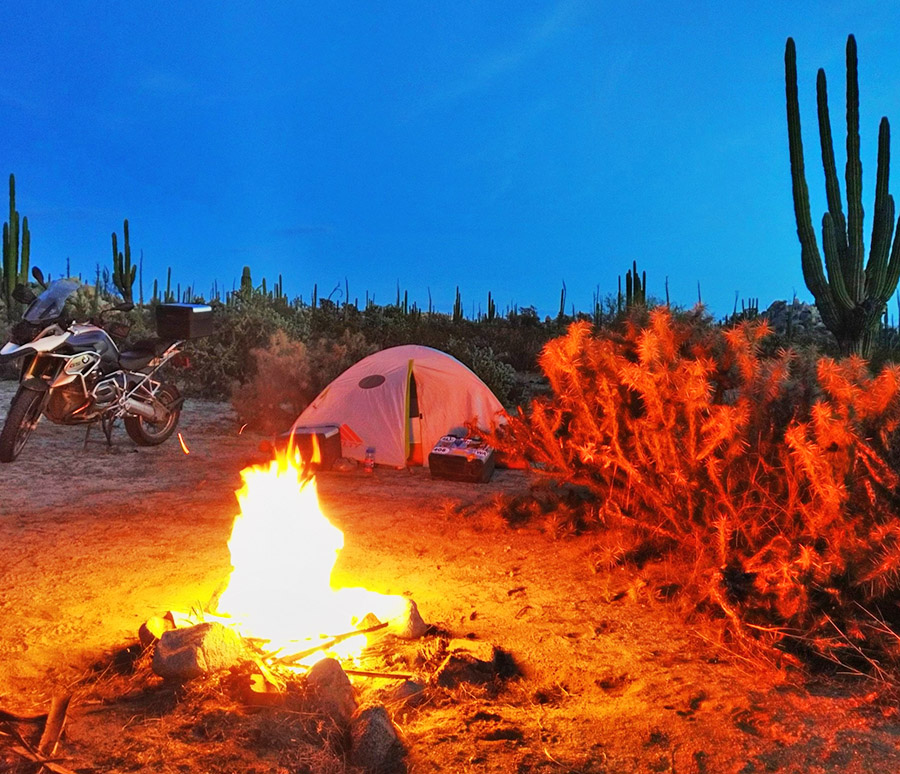
Moto camping is an easy and inexpensive way to escape the rat race with less effort than many would think.  These experiences and the people I meet along the journey are some of the most best I have had.  Being so removed from everything as you sit relaxing in the glow of a warm campfire reflecting off your moto is a fulfilling feeling that few venture to achieve.


Never miss an ExNotes blog:

Bobbie’s Solo Baja Ride: Part 1

By Bobbie Surber

Discovering motorcycles came late in life for me.  My first ride was in 2014 on the back of a KTM.  From the first ride I knew I was hooked, and I knew being on the back was not for me.  By January 2015, I purchased my first bike, a 2006 Yamaha 225 XT. I drove from Sedona, AZ, to Denver, CO, to pick her up. On the drive home, I kept looking at her in my rearview mirror and dreaming of my future adventures.  That is, once I learned to ride!

A day later I was on a quiet street teaching myself how to clutch and ride. The clutching came easy, and I had no fear as a newbie. Soon I was competent enough to go down the block, then to the store and friends’ houses, and soon off-road. Boy, I fell a lot at first, but I was surrounded by a group of guys who encouraged and taught me the basics. Many remain mentors to this day. I still have that little 225 XT and would never sell her or give her away. She will be with me till the end.

I soon added a Honda 750 Shadow to my new addiction and split my time between dirt and road adventures. It seemed a perfect balance as I gained more skills off-road with the 225 XT and could now venture further without trailering as I rode the Shadow. This led me to my third bike, new to the USA:  A BMW 310 (a single cylinder in hot demand in Europe and Asia). She was a red bike far faster than my little goat, the Yamaha.

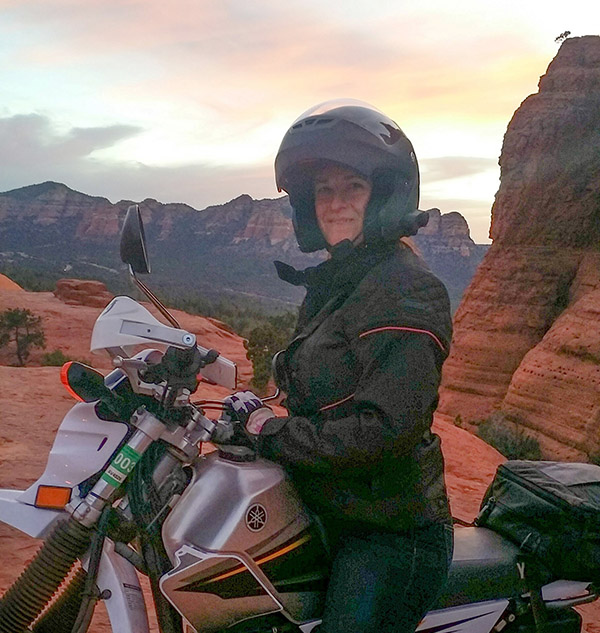
Broken Arrow Trail, Sedona, AZ.

With a bike that was great off-road while still able to handle the open roads, I set my sights on several bucket list trips, including the Pacific Coast Highway (Highway 1 up the California coast) and the Sierra Nevadas. These two trips in 2018 gave me the confidence to plan another solo ride.  This time I would ride Baja, the peninsula in northwestern Mexico bounded to the north by the United States, to the east by the Sea of Cortez, and to the south and west by the Pacific Ocean.  I set my plans for a Spring ride, but a trip to Hawaii and paddling the Colorado River got in the way in May, delaying my departure to June.


Want more stories?   Help us bring them to you by clicking on the popup ads!


Adding a new 40-liter Wolfman tail bag, I departed Sedona, AZ, heading for a small town south of Tijuana, Alisito, known to the gringos as La Fonda. This was my first time crossing the US border on a bike, challenging my skills while negotiating what seemed like 100 lanes with traffic darting between the lanes.  It was soon my turn to cross at San Ysidro south of San Diego. I had done this several times in a car, but what a whole new ball game on a bike!

Turning hard to the right, I made my way to Mexico Highway 1, following the Pacific coast out of Tijuana. The air was crisp even on a June morning as I pulled into the left lane to pass a line of trucks and a group of protesters, soon finding my groove, indulging in music through my helmet speaker and enjoying the sights along the way.  An hour later, I pulled into the parking lot at Dmytri’s Restaurant, well-known by locals and visiting gringos alike. It was a time to meet friends and show off my new girl (BMW, to clarify!). The margaritas and conversations flowed as I assured all of my friends that I was utterly competent to ride Baja solo in the growing heat of June.

Bravada got me thru till the morning of my departure, then a massive wall of apprehension flooded me.  WTH, I was not competent enough to take on this challenge solo in Mexico! A repeated flaw as I once again found myself vacillating between the urge to push myself and my endless fear of failure and the unknown. I did what I do best, shoved the fear down, and got on my bike heading south on Highway 1 while enjoying the ocean breeze and the endless views of the Pacific Ocean.   All the while, I negotiated traffic and the epic potholes that ranged from minor to “might swallow my bike” in one epic plunge.

With the efficiency of the toll road, I was soon in the traffic and mayhem of Ensenada, a port city that is a frequent stop for cruise ships. The smell of exhaust and burning trash contrasted against the street stalls grilling fresh fish and carne asada. I could not resist and soon found a place to pull over for a cold Tecate and a plate full of tacos. The local girls working the roadside restaurant were enthralled with my bike, asking for photos on it it with the sultry hotness that only a Latina could pull off while wearing an apron. I accommodated their requests for pictures and answered a soon-to-be-frequent question of “Solo?” with “Si, Solo,” followed by “No, no, where is your man?” Ha, I didn’t even have a man at home, let alone on this trip, but I had someone I was thinking about a lot on this trip (a story I will tell in another post).

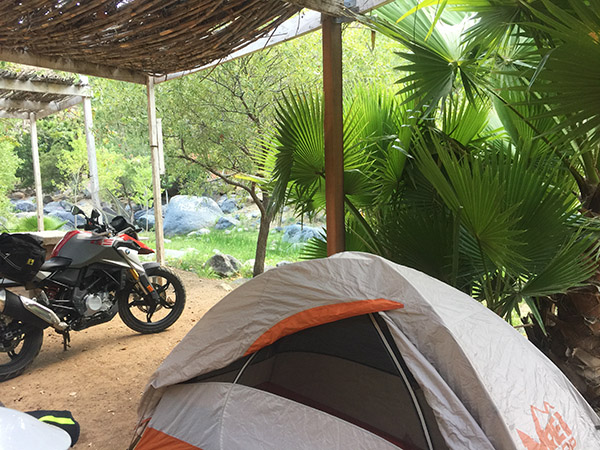
A Baja Campground.

With Ensenada’s noise and challenges behind me, I headed out of town to a campground with hot springs and soaking pools. The ride getting there was all dirt, rocky as hell, with several water crossings.  These were my first water crossings on my own.  I was both thrilled and nervous as I gave the throttle a firm twist and flew through creating a satisfying rooster tail. It was a short day full of first-time accomplishments that felt right and bolstered my confidence for the adventure ahead.   I paid my entrance fee of 200 pesos, about $10, and proceeded to enjoy the hot tubs, complete with little cabanas and a hot shower.

Relaxing in the hot springs.

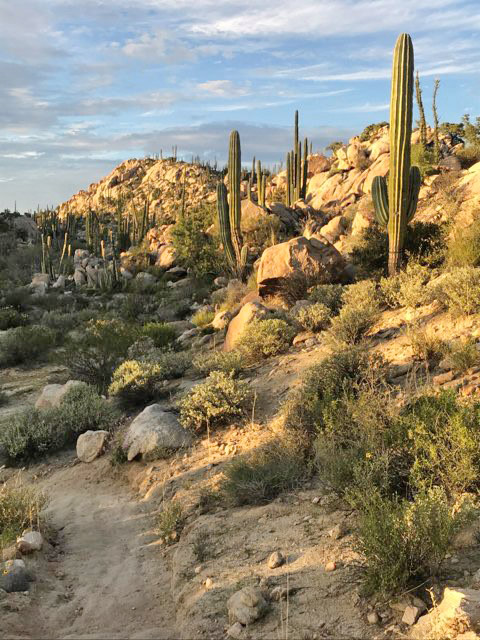
The next day I found myself back on the road.   My destination would be the tiny town of Cataviña, a community of fewer than 200 residents.  Cataviña is known for cave paintings, colossal rocks mixed with desert vegetation, and epic sunsets.  This place could be on Mars with its endless boulders stacked at impossible angles and the stark beauty of the high desert plateau.

The day called for 380 kilometers, about a six-hour ride without stops.  The morning started slow and easy as I retraced my ride back down the mountain and through the water crossings of the day before. After a quick stop at the OXXO convenience store for a burrito and coffee, I was on the road heading down Highway 1.  The road went into the interior, passing through several tiny dusty towns and a few newfound favorites, including San Vicente and San Quintin. One of my favorite finds is Don Eddie’s Landing Hotel and Restaurant, an oasis with comfortable rooms, sports fishing, and even a few camping spots. I settled in at their patio, enjoying the views of the Pacific and Eddie’s legendary hospitality. This place is an ideal rest spot for enjoying a perfect plate of shrimp ceviche with just the right intensity of lime and chilis, complete with Don Eddie’s legendary hand-crafted margaritas, the likes of which I’ve never found in the USA.

A Don Eddie’s Margarita.

Reluctantly leaving Eddie’s, I continued south on Highway 1, turning inland at El Rosario de Arriba, climbing up from sea level to 1841 feet. The elevation change did little to abate the day’s growing heat. I arrived intending to camp, but the reality of a 98-degree afternoon soon had me sapped. I pulled into the only commercial enterprise besides a little store across the street and a few tiny restaurants.

The Hotel Misíon Santa María – Cataviña looked like she was built in the colonial era; in reality, I learned she was built by the Mexican government as part of their tourism outreach. With a courtyard full of flowers and mature trees, I found a haven and counted my good fortunes to stay in such opulent digs (opulent compared to my humble tent). After securing my room for the night, I quickly dumped my gear, splashed some cold water on my face, and confirmed that I looked like I had ridden in the heat all day. I landed outside in the shade near the little bar enjoying my margarita. The bartender generously gave me endless glasses of water while we chatted about the heat, my bike, and his childhood in Arizona. Soon it was time to head to bed. I reached down to grab my bag and Delorme. A momentary shock as my Delorme was nowhere to be found. The little safety device would allow me to signal for help if needed and text my friends and family when off the beaten path and far out of cell coverage. The bartender and manager helped me search the grounds to no avail. I gave up and went to bed, cursing myself for my carelessness.

Catavina Sunset.

The following day bright and early I rode across the street to purchase the only available gas in this remote region from locals selling gas in plastic drums and liter-size soda bottles. Saying a prayer for the safety of my engine, I had them fill up my tank and MSR fuel bottle I always carry for the just-in-case moments.

Soon I was on the road headed to Guerrero Negro. The wind brushed over me gently with no hint of the high wind advisory posted for later that day. I left the unpleasantness of my Delorme loss behind and leaned into the joy of the ride. As it was a Sunday, I had the road to myself, with the added blessing of many commercial vehicles being home for the day. This was precisely what I had been dreaming of.  As the starkness of the desert unfolded in front of my bike, I knew how lucky I was to be on this adventure! I was once again reminded to grab my dreams, ignore the naysayers, and embrace the adventure ahead.


Never miss an ExNotes blog:


Venturing into Baja?  Insure with the best:  BajaBound.  It’s what we use.


Want more Baja info? It’s right here!


Want to read more stories about riding in Baja? Pick up a copy of Moto Baja!

Paddleboarding Horseshoe Bend

By Mike Huber

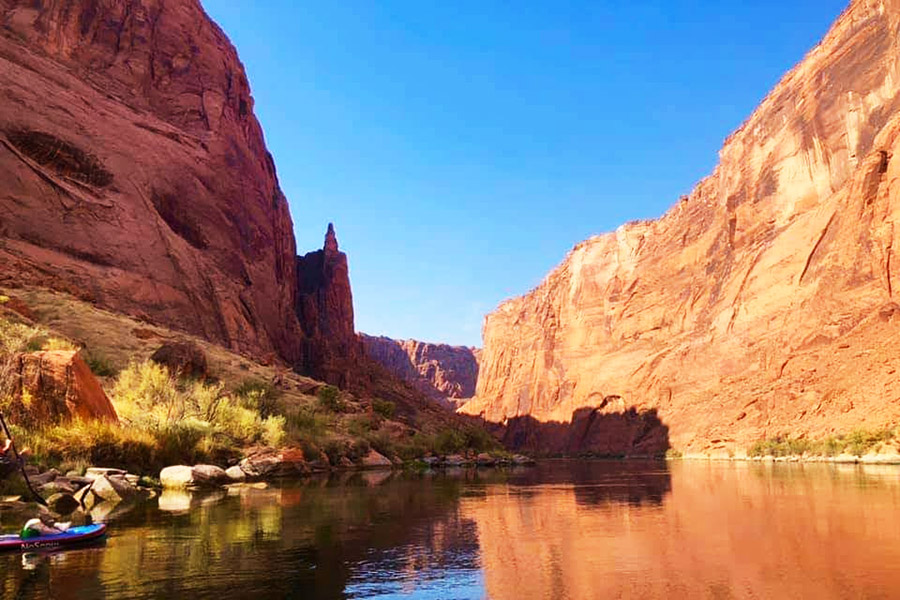
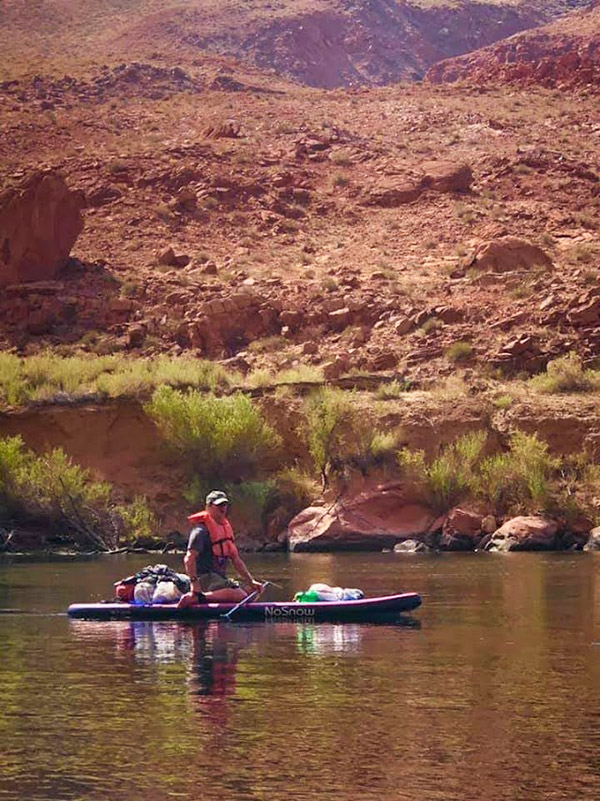
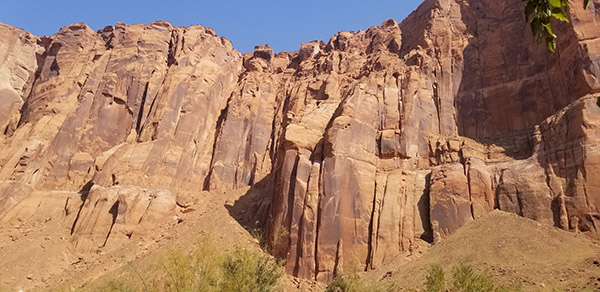
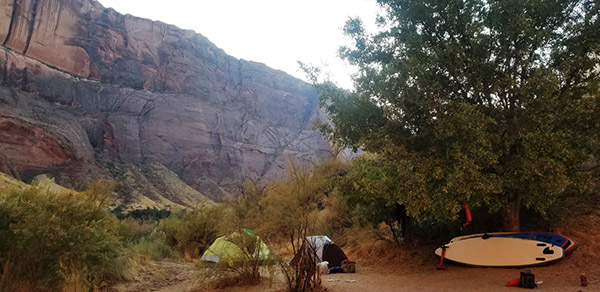
Since my last story was on paddleboarding I thought sticking with the topic would be a great opportunity to share a unique and exciting experience. Camping off a paddleboard at the base of Horseshoe Bend in Page, Arizona.  This was to be a 2-day, 15-mile trip down the Colorado River from Glenn Canyon Dam to Lee’s Ferry and would include one night of camping off our paddleboards. As an avid motorcycle camper, I thought camping off a paddleboard would be right up my alley as the amount of gear from a moto to a paddleboard was relatively the same.  This adventure would bring us to one of the most hostile environments in the United States, all while living it from a new perspective, being on top of the frigid waters of the Colorado River.

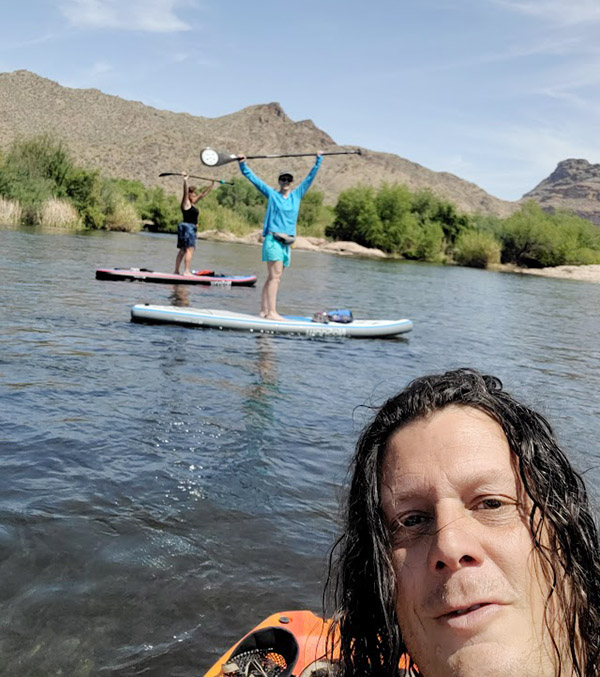
The adventure began with camping near Page, Arizona, and a day of light paddleboarding on Lake Powell to gain more familiarity and confidence on the board.  This was more for myself, as the two friends I was traveling with were both very experienced paddlers.  My paddling to this date was limited to a couple of 8-mile runs on the Salt River near Phoenix and a horrible windy day off the Colorado River where we launched from Hoover Dam.  The Salt River had portions of minor rapids, but the environment was much tamer than we would experience along the Colorado River.
The Colorado River water is extremely cold even during the spring.  Contrasting the freezing water was the ambient air temperatures, which reached the high 90s (with no place to find shade or relief from the sun above the golden canyon walls that surrounded us).  Adding to the natural environmental threats there can be winds that blow up the river so strongly that you cannot paddle against them, even when going down river.  A year prior we were supposed to do a camping trip and ended up having to do an 18-mile paddle in heavy winds; on that trip, we were not able to camp as the winds were forecast to be worse the next day.  I didn’t want to put myself through that again.  That night we made our way to Horseshoe Bend in our car to watch the sunset and look down over the edge to see where we would camp the next evening.


Please click on the popups…it’s how we keep the lights on!


The day we were set to launch the winds were calm.  At 8:00 a.m. we loaded our watercraft onto a powerboat at Lee’s Ferry that would deliver us to the base of Glen Dam.  It was a cold ride in the boat to our drop off location as the sun was still hidden behind the massive walls that went straight up nearly a thousand feet.  Every bend we went around I was in constant awe.  It was as if every element that you can face in nature was in full view for us to admire, respect, and fear.  Once dropped off we unloaded the paddleboards, our gear, and took a few minutes to gain our composure before starting our 15-mile journey down river.

Pushing our boards off the shoreline, it was still cold and between the 40-degree water and 50-degree air none of us wanted to stand up on the boards.  Making a small error that could cause us to capsize during this delicate time would result in hypothermia with little hope of warming up until the sun crested above the canyon walls more than two hours later.  The winds were absent and with an occasional dam release we just coasted down the river effortlessly.  Having no headwinds was so much more pleasant than our previous time on this fully exposed river when we spent the day battling a constant headwind.

When the sun finally glimpsed above the canyon walls they instantly lit up. Just a beautiful golden prison we were trapped in with neon aqua waters so clear you can see fish swimming 20 feet below your board.  We had dispersed the weight of our gear between the three boards and then balanced them out as best we could.  We even had a bundle of firewood secured with Rok Straps for what we hoped would be a magical night under the stars. Along the way we stopped occasionally for a snack, a beer, or a short hike.  There are some hidden petroglyphs along the river where you can disembark from your board and hike in to view them.  This made for a perfect slow-paced and enjoyable day that we all fully embraced.
It was still early, yet due to the lack of headwinds and numerous dam releases we were already arriving at our camp at Mile 9.  Mile 9 camp is at the turn of Horseshoe Bend.  What made this really cool wasn’t the view (it all looked really the same with giant canyon walls on both sides of you).  What made this special was that when you looked up the thousand-foot walls you could see hundreds of tourists looking down at you and waving.  I felt like we were in a zoo exhibit. We set up camp and spent a relaxing afternoon swimming, chatting with other boaters (mostly kayakers and fellow paddlers), and just enjoying the fact we weren’t battling winds.  This was quite a rewarding day.
After a perfect day of mild paddling, relaxing and gazing off into this beautiful yet intimidating environment, the day slowly turned into evening.  It wasn’t long before we started a campfire.  Sitting around a campfire with new friends, cold beers from our Ice Mule Cooler, and exchanging stories is always the high point in my day.  I wandered off to use the bathroom when I noticed flashing from above.  At first, I thought it was the stars beginning to peer from above the cliffs, but it wasn’t.  The flashes I saw were the tourists above using their phones and flashlights to signal “hello” down to us.  As I zipped my pants up, I already had the “It was the cold water that caused shrinkage” or the “You’re 1,000 feet away…of course it looks smaller” thoughts.  For some reason my new friends around the campfire didn’t understand my humor and the stories continued until the flashes from the tourists above faded about the same time we did.

Having slept great that night at the base of one of the most iconic photo spots in the United States it was now time to pack up.  Winds always seemed to gain intensity as the day wears on, so we wanted an early start to avoid this threat, but there were no winds on this day, either. It was almost as if the river was rewarding us for having passed its initiation from that previous windy trip that didn’t allow camping.  The river was so calm we were able to even lay down on our paddleboards and allow the current and dam releases to carry us the remaining 6 miles downriver without any effort. This is how paddleboarding should be, but I knew this was an anomaly on the Colorado River. In my experience tailwinds are like unicorns.  They really don’t exist, yet somehow this trip we were surrounded by a herd of unicorns.

It wasn’t long before we could see Lee’s Ferry ahead of us on the right.  We made it to shore and began the process of packing our gear up to return to Lake Powell for one more night of camping before returning to southern Arizona.  Since paddleboarding Horseshoe Bend, anytime I see pictures of this location I zoom in and can often see paddleboards, kayaks, and tents at the beach when everyone else just is looking at the full view of the photo.  I absolutely prefer my new perspective of this part of Glenn Canyon National Recreation Area, that being through the eyes of a paddleboarder.


Never miss an ExNotes blog:

Yellowstone National Park

Man, it was cold.  It was the coldest we would be on our 18-day, 5000-mile ride around the western United States.  Yellowstone National Park was our destination and we wanted to arrive early.  Baja John was doing the navigating and the trip planning, and we were leaving early that morning out of Cody, Wyoming, at 5:00 a.m. to beat the tourist traffic in Yellowstone.  I had an electric vest; our Chinese and Colombian guests did not.  I knew they had to be hurting.  I had my vest dialed all the way up and I was.  Did I mention it was cold?

So, about that big photo above:  That’s Yellowstone Falls on the Yellowstone River.  There are something like 10 waterfalls in Yellowstone National Park.  I’ve only seen the one above.  That means I have at least nine reasons to return.

Back to the story.  I did mention it was cold riding into Yellowstone that morning, didn’t I?

Following Baja John into Yellowstone. That trip was 6 years ago, and I still get cold looking at this photo.
Another shot entering Yellowstone National Park from the east.  That’s Baja John in front of me…we were dressed for the cold, but I think our guests found it to be a little colder than the weather they are used to in southern China.

The trip was a wild one…18 days on the road with a dozen guys from China, two from Colombia, and all on free motorcycles provided by Zongshen via CSC Motorcycles.  CSC was the importer, I was the go-between spanning the CSC/Zongshen interface (and two continents), and while we were arranging the initial shipment Zongshen asked if I had any ideas to promote the bikes in the US.  Wow, did I ever!

In Zongshen’s main offices, with key Zongshen execs viewing photos from my rides in the US and Baja. Sue grabbed this photo and it’s one of my favorites. Without realizing it, I was selling those guys on giving us 15 motorcycles to ride around the US.  This looks like a staged photo.  It’s not.

That ride became the Western America Adventure Tour, and it was a hoot.   I mean, think about:  Every angry and ignorant asshole on the Internet was condemning Chinese bikes and here we were, with 15 of the things just arrived in America, setting off on a 5,000 mile ride from So Cal to Sturgis, west across the US to the Pacific Ocean, and then riding the Pacific coast back to So Cal.  On that epic ride we didn’t have a single breakdown and that was giving the Internet trolls meltdowns.  It was a grand adventure.

But I digress.  Back to Yellowstone.  On our ride, we hit every National Park along the way, and Yellowstone was one of the best.   Prior to that ride, I’d never been to Yellowstone and I had always wanted to see it.  And for good reason…it is (in my opinion) the quintessential National Park.  Yellowstone is surreal, with sulfur-laden steams and ponds spewing forth, majestic views, waterfalls, bison, bears, deer, elk, wolves, geysers, and more.   It was a first for me.  I was a Yellowstone green bean.

When we entered Yellowstone, we arrived so early the gates were unmanned and we entered for free.  But it had been a long, cold ride in from Cody and we were nearly out of gas.  My fuel light was blinking as we entered the park and I didn’t know for sure if there would be gas in Yellowstone.  John felt confident there would be, and he was right.   I saw the Sinclair sign up ahead, but before we got there, we had a close encounter of the bison kind.  We were cruising along at about 30 mph, and all of a sudden I noticed this locomotive next to me.  I was too slow to realize what it was until I was alongside, but our chase vehicle driver John (we had two Johns and one Juan on this ride) grabbed this photo…I had passed within 10 feet of this monster!

Just as I went past my big buff buddy above, he  exhaled.   In the frigid Yellowstone air, fog came out of his nostrils.   It was like riding alongside a steam locomotive.

Here’s another cool shot in Yellowstone:  The Continental Divide.  We had crossed it several times on the ride to Yellowstone already, but I think this is the first time I stopped for a photo.

Sometimes the photos almost take themselves.

One of the many attractions in Yellowstone is Old Faithful.   Here’s a shot of the geyser in its full glory.

It was one of those motorcycle rides that was so much fun it made me feel a little guilty.  (That’s a Jewish thing; maybe some of our Catholic readers will understand it, too.)  I felt bad because Sue wasn’t enjoying the trip with me.  So I fixed that.  A few years later Sue and I hopped in the Subie, pointed the car north, and a few days later I rolled into Yellowstone National Park again (this time with my wife).  Naturally, I grabbed a few more photos.

Peering into the valley carved by the Yellowstone River.
Ah, the bison. This was really cool stuff.
Click. Click. Click.
A photo of Sue in the Subie photographing a bison.
Wow.

I’m not a geologist, but geology seems to me to be a pretty interesting subject and there sure are a bunch of geological things in Yellowstone.  Like the bubbling and burbling pits and pools you most definitely do not want to fall into.

You get the idea.  In doing a bit of Internet research on Yellowstone, I came across this Yellowstone map.  It is a good way to get the lay of the land up there in Wyoming, but visiting Yellowstone National Park would be even better.

You can learn a little bit more about Yellowstone as a destination (and how to get there) by reading an article I wrote for Motorcycle Classics magazine.  It’s a cool place and I’ve never met anyone who felt like visiting Yellowstone was anything other than a marvelous experience.  Trust me on this:  Yellowstone National Park belongs on your bucket list.


Never miss an ExhaustNotes blog:


Would you like to read more Motorcycle Classics Destinations articles?  Hey, just click here or better yet, buy your own copy of Destinations.


One more thing…if you’d like to learn more about the RX3 motorcycle and our 5,000-mile Western America Adventure Ride, you should do two things:  Buy yourself a copy of 5000 Miles at 8000 RPM, and watch Joe Gresh’s video:

ExNotes Review: Motorcycle Camping Stoves

In 1975 Greg Smith and I went on a long motorcycle ride. Greg had one of the first Goldwings, a pretty metallic blue motorcycle with a Windjammer faring. I had a BMW R75/5 also with a Windjammer faring and Samsonite bags. The ones with the soda machine, round key lock to hold the bags into the frames. We visited 41 US states and were on the road 3 months: Florida to California to Canada to Maine and most of the states between the coasts. In all that time I think we stayed in a motel three times; the rest was camping. Mostly we stayed at state parks for a dollar or commercial campgrounds with showers and toilets at the cost of around 2 dollars a night. If it was late or we were lost we would pull off the road and find an out of the way place to set up our tents. If it was really late or we were tired we would toss our sleeping bags on the ground and sleep just about anywhere.

Modern campgrounds are more like mini subdivisions now and the huge RV’s jammed cheek to jowl cost way more than houses did in 1975. But when we were discovering America on the Goldwing and BMW, tents were still popular. People camped out of their cars. KOA campgrounds were a luxury stay with plenty of hot water and clean bathrooms. We were on a strict 10 dollar-a-day budget back then, so eating at a restaurant was off limits except for cheap fast food places. We cooked all of our breakfasts and dinners. It was fun.

The very first motorcycle camp stove I bought was a Peak 1. Greg had one too.

New, the Peak 1 cost like 20 dollars, which was a huge amount of money back in 1975. I had bought many motorcycles for less money. The Peak was worth it, though, and has proven to be indestructible. It still works fine some 47 years later. Starting the Peak 1 has never been a simple process. You pump up the tank pressure and fiddle with the two fuel levers (instructions are printed on the side) and then a big yellow flame erupts from the stove. After a minute or so it settles down and you flip the small lever to normal operation. To adjust the flame use the long lever.

My Peak could use a new pump diaphragm but with determined pumping you can build enough pressure to light the thing off. After the cross tube gets hot the stove makes its own pressure. The colder it is the harder the stove is to start but it has never failed to start. The Peak 1 burns Coleman stove fuel or some stuff called white gas. White gas was available at many gas stations in the 1970’s so it was easy to fill the little tanks on our stoves for a few cents. A full tank would last a week of meals and coffee.

The Peak 1 is sort of big and heavy; I wouldn’t want to backpack with the thing. I don’t think gas stations sell white gas any more so you need the Coleman fuel. Any Wal-Mart has Coleman fuel. I used the Peak for many years until motorcycle camping became less likely to happen and I shoved the old warhorse onto a shelf.

For economy, nothing beats a penny, beer-can stove. They cost nothing. These little alcohol-burning stoves are super lightweight, probably the lightest you can get. You can’t buy a beer can stove, you’ll have to make one and YouTube has probably 1000 videos on how to build your own. The Cliff’s Notes version is you cut two beer cans and fit the two bottom bits together. Then you punch some holes for the flames to shoot out and a hole for filling the contraption. The penny serves to slightly pressurize the stove for a nice long flame. You’ll need some rocks or a wire frame to hold whatever you’re cooking. I used a bit of bent brazing rod.

Fuel for the stove is available everywhere. Drug stores, liquor stores (Everclear), auto stores (Heet) alcohol is ubiquitous in our country. The way it works is you fill the stove with a few ounces of alcohol, put the penny in the middle and light it up. The one I made lights easily.  Some builders complain about hard starting. One fill up will boil a quart of water and burns for 12 minutes or so. The beer-can stove has its drawbacks. Once the thing is lit you don’t want to move it or tip it over. It’s all too easy to set your arm on fire. Don’t try to conserve fuel, let the stove run until it’s out of alcohol. Lastly, the stove is fragile and easy to crush: pack accordingly.

Now we come to my favorite stoves: these little butane stoves cost between $10 and $15 on Amazon. They are extremely compact, like beer can stove size but not as light weight. They use slightly hard to get butane canisters (Walmart again) but they start easily and boil water fast. I have two sizes. The larger one was the first type I bought and it’s now my go-to motorcycle camping stove. My buddy, Mike, bought the smaller burner so I had to get one, too.  They’re cheap. The small one will fit anywhere.  Folded up it’s about the size of your thumb after you smashed your thumb with a hammer. The larger one actually works better because the flame is spread over a larger area. Water seems to heat faster with the big one but I haven’t timed it.

You can get butane fuel in several sizes. For a short, 2-3 day camping trip the small canister will do. Oddly, the large canister of butane costs less than the small one and it’s good for a week of camping. When I pack for a motorcycle camping trip I try to save space everywhere. It kills me to pay more for less fuel.

My newest stove is this wood burner. It’s so new I haven’t even used it yet. It’s bulky but not so heavy. The photo shows the stove fully assembled and ready for use, it breaks down to about 1/3 the size for packing. The big idea behind this stove is you don’t need any fuel to run the thing. Wood twigs, leaves, bits of brush, anything that will fit in the stove and burn are fair game. The stove is designed with side-draft vents to help cut down smoking. I got it because I like the idea of free fuel in an unlimited supply. I’ve yet to camp where there wasn’t enough stuff on the ground to make a pot of coffee. The top is cut away so you can feed a steady supply of soiled baby diapers, 12-pack Budweiser cardboard cartons and discarded Covid facemasks into the beast. Cook your dinner and clean up the environment at the same time! Drawbacks are you have to use the stove outside. No brewing a nice cup of Batdorf & Bronson coffee in the motel room.

There are many other types of small camp stoves. Everyone is trying to design a better, smaller, lighter stove. Some stoves cost hundreds of dollars. That’s not my bag, man. I guess I am into motorcycle camping stoves like Berk is into armaments: a stove for every pot, as it were.