My Solo Motorcycle Journey from Sedona to Canada: Part II

By Bobbie Surber

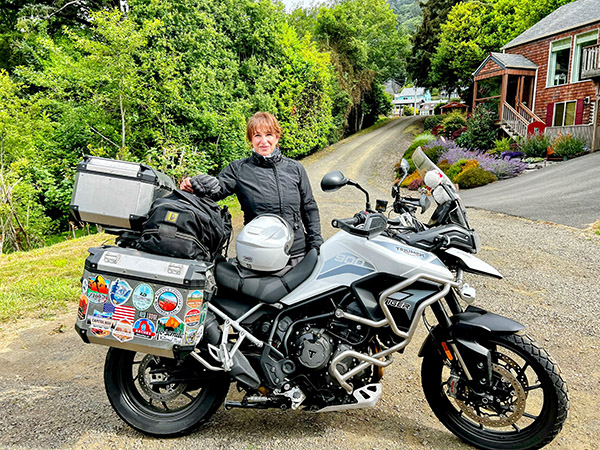
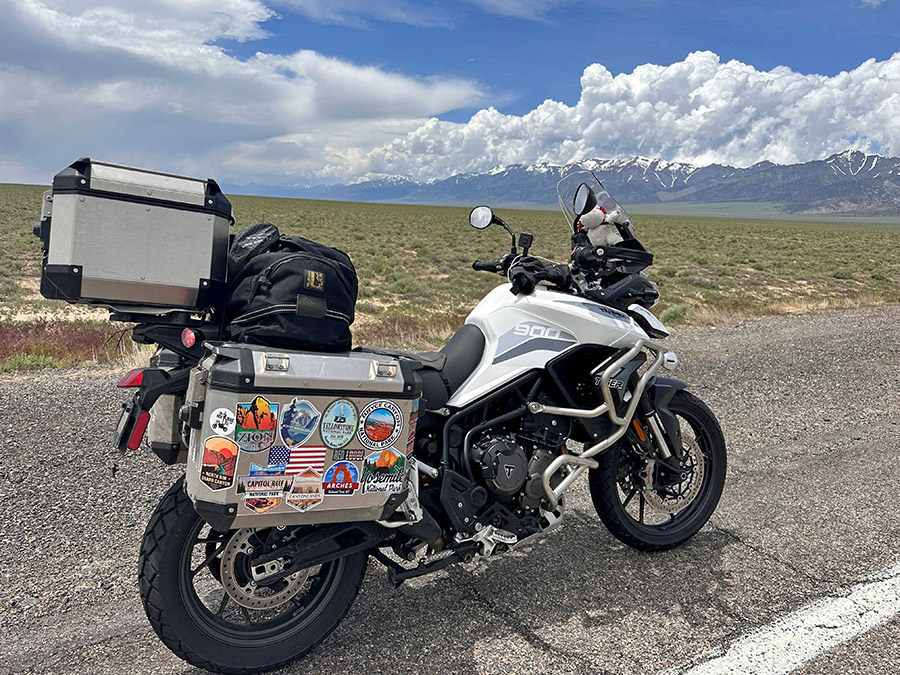
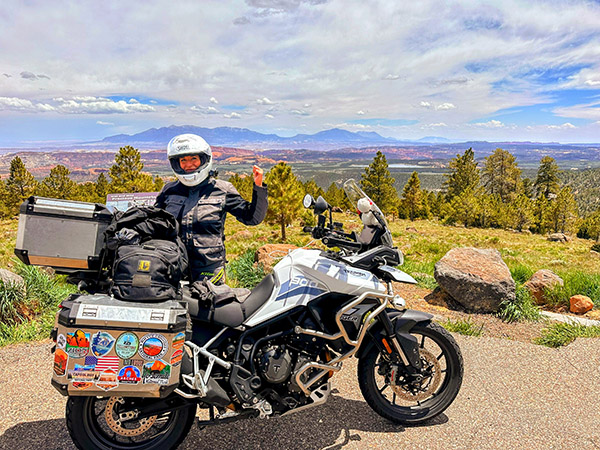
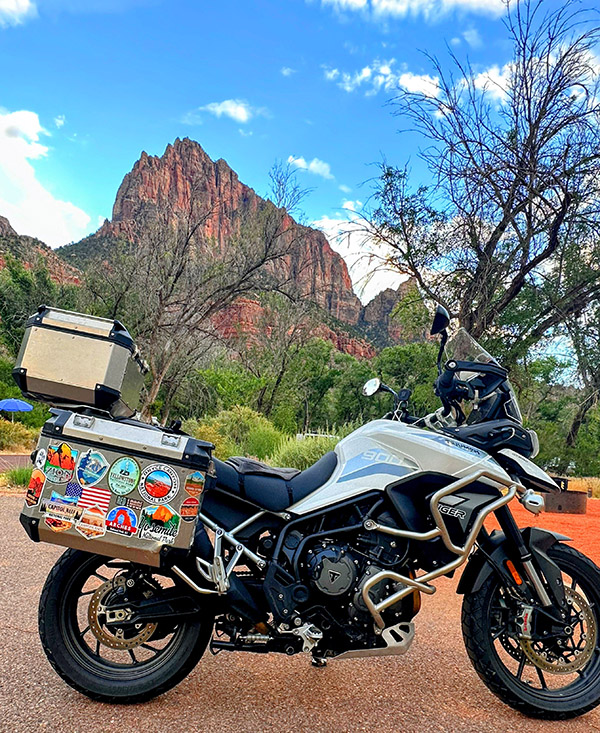
Welcome back to the next chapter of my solo motorcycle journey from my hometown of Sedona, Arizona, to the captivating landscapes of Canada. In Part One, I shared the exhilarating start of my adventure, from Sedona to the awe-inspiring beauty of the Grand Canyon and the mesmerizing Zion National Park. Now, as I continue northward on my trusty Triumph Tiger 900 GT Pro, lovingly named Tippi, join me in experiencing the next leg of this epic ride.

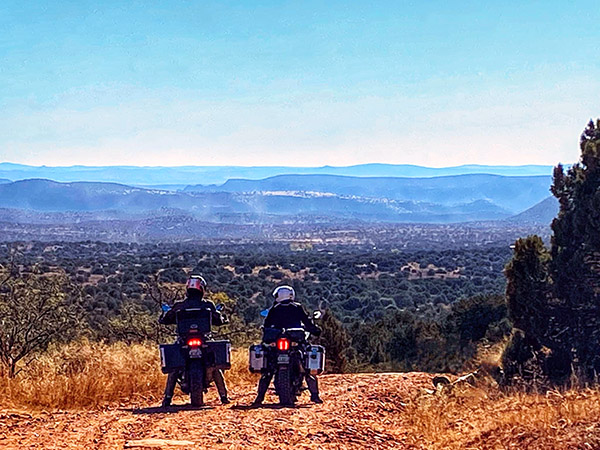
As I left the captivating beauty of Zion National Park behind, I couldn’t help but marvel at the magic of solo travel. The open road stretched out before me, promising new adventures and the opportunity to connect with the world in ways that only solo exploration allows. My heart swelled with anticipation as I headed north into Utah, a state known for its stunning natural landscapes.

A Return to Bryce Canyon

My next destination was my beloved Bryce Canyon National Park. The ride to Bryce Canyon was a scenic marvel in itself. Utah’s highway 89 to Route 12 made its way through crimson canyons, past towering rock formations, and into high-altitude forests. Every twist and turn of the road revealed a new panorama of breathtaking beauty.

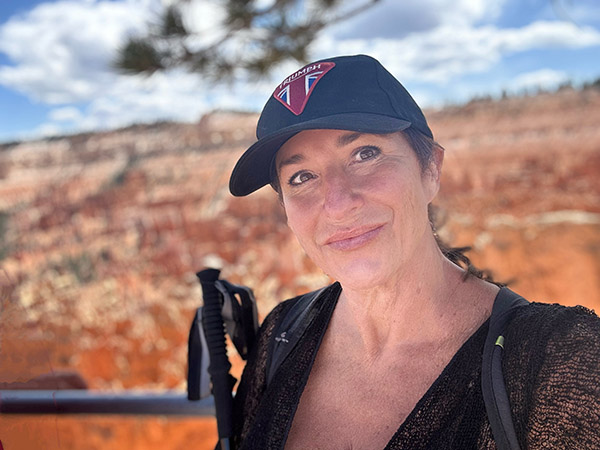
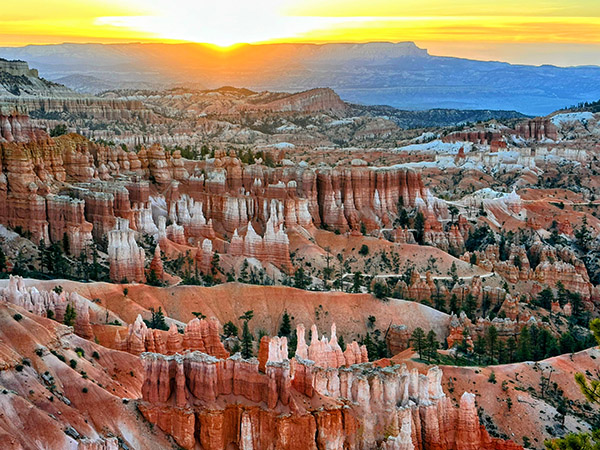
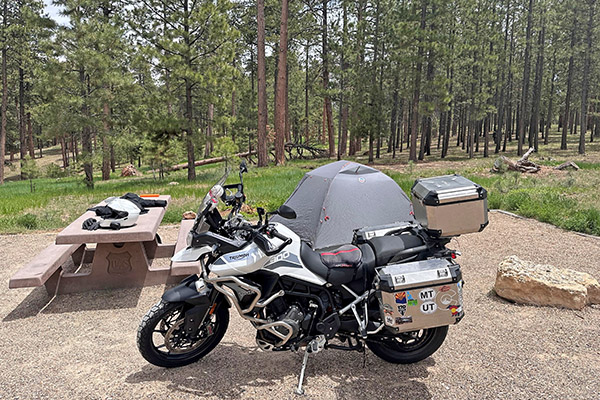
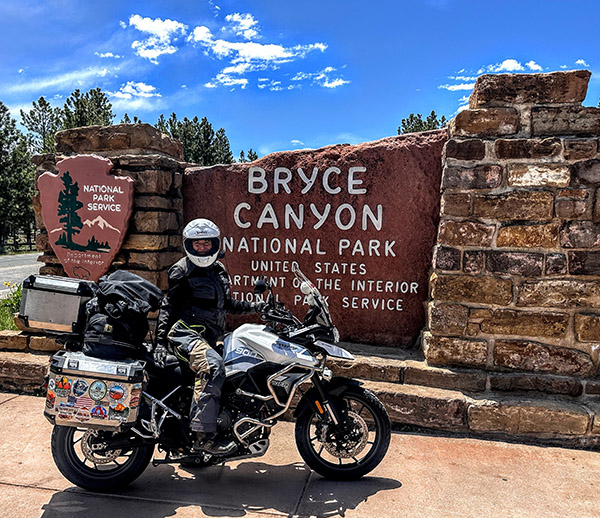
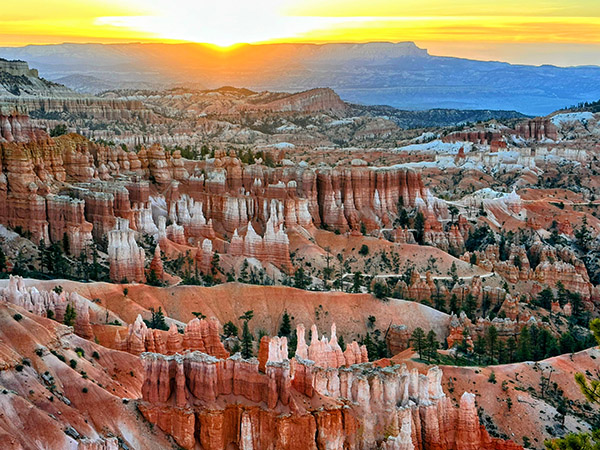
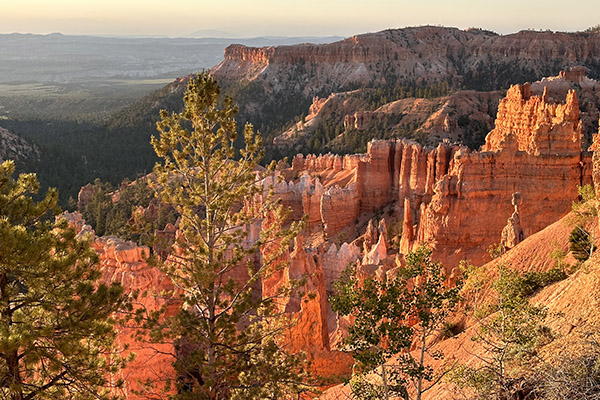
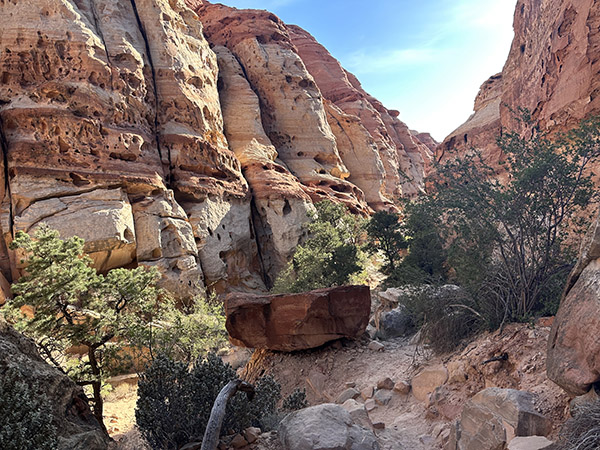
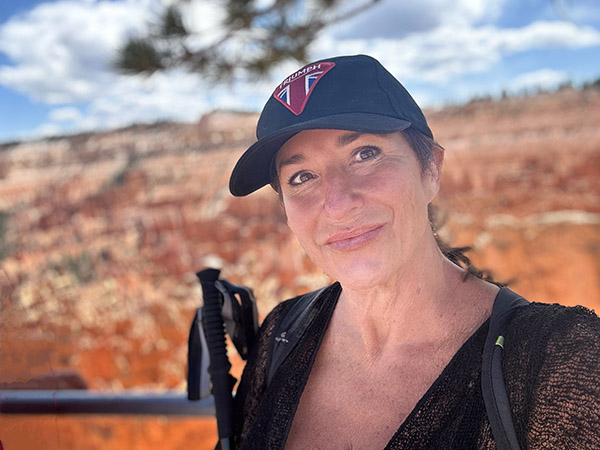
Arriving at Bryce Canyon, I was greeted by a surreal landscape of hoodoos—towering, otherworldly rock spires that seemed to defy gravity. I hiked once again the trails that wound through the park, taking in the views from vantage points like Sunrise Point and Inspiration Point. Wall Street trail was closed for repairs, but trusty old favorites satisfied my need for a day of hiking. My camp spot at Sunset Campground gave me the chance at an early morning sunrise the next morning. A predawn wakeup found me walking to the rims edge to watch the sun slowly rise below the horizon, the hoodoos took on a fiery glow, casting long, dramatic shadows that danced across the amphitheater-like terrain. Bryce Canyon’s mystical allure left an indelible mark on my soul, reminding me why I embarked on this journey in the first place. After a second night at Bryce, I was ready to tackle another epic day of riding Route 12 through Escalante to the sweetest underrated Capital Reef National Park.

Exploring Route 12 and Capitol Reef

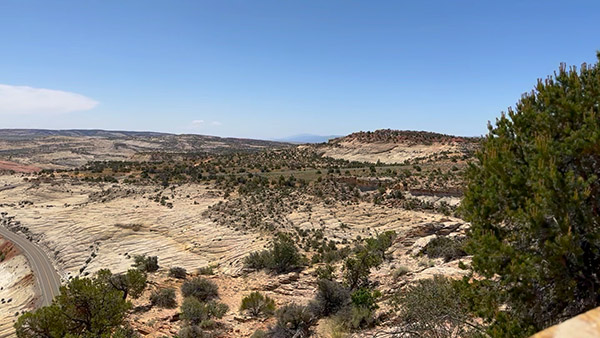
Continuing my adventure, the following morning, I eagerly resumed my route on Highway 12, heading towards my favorite section of the road, high above the captivating Grand Staircase-Escalante National Monument. This expansive and remote region boasts rugged canyons, vibrant cliffs, and extraordinary geological formations. The landscape, with its impossible rock formations, treated me to endless twisties, creating a sense of otherworldliness. My Tiger 900 was as happy as I was as I relaxed into the ride and allowed her to remind me again what her three cylinders can do. Both of us were in sync as we leaned into curve after curve as we blasted down to the bottom of the canyon.

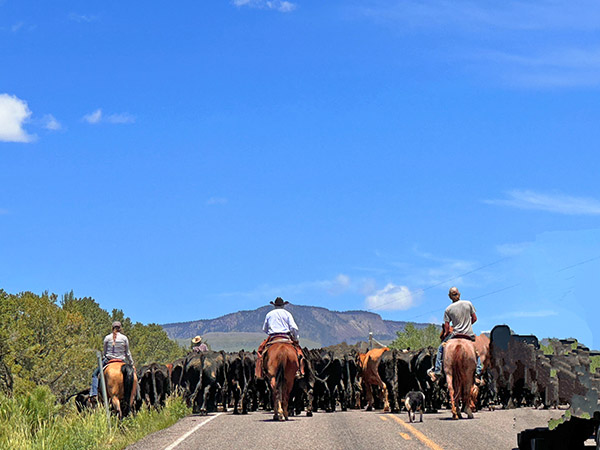
As I reluctantly approached the tiny town of Boulder, Utah, I realized I had made short order through the endless twisties of this section of Route 12. However, I was unexpectedly greeted by an old-school cattle round-up, complete with cowgirls and boys herding a large herd down Highway 12! After a brief turnaround, I found solace in my favorite restaurant, the Burr Trail Grill. Their farm-fresh ingredients delighted my taste buds, whether it was their fresh arugula salad topped with local goat cheese or their beastly-sized burgers that proved a challenge to conquer.

Resuming my journey on Highway 12, I found myself in an unexpected predicament. The cattle herd’s progress was slow, and I crawled along, clutching endlessly as I felt my left hand about to begin a serious complaint! Amidst the frustration, two memorable moments emerged. Firstly, a passerby exclaimed, “Dude, you have the sweetest bike and setup!” We shared a laugh as he realized I was indeed “dudeless.” Secondly, after navigating my way to the front of the line, I convinced the lead cowboy to move the herd slightly to the right, allowing me to pass. Maneuvering my bike through the cows became a comical adventure, with prayers that the sound of my motor wouldn’t startle them. Experiencing this traditional cattle drive in 2023 felt like a slice of Americana and added yet another reason to love Utah.

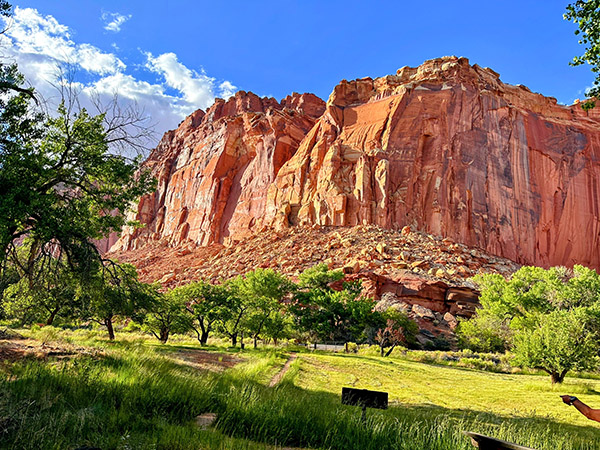
Leaving the cattle behind, I ascended Boulder Mountain, where endless views revealed the backside of Capitol Reef on the right and scenic meadows with clusters of aspen, fir, and spruce trees on the left. Surprisingly, the mountain still boasted more snow than expected for June. Camping, fishing, and wildlife viewing opportunities abound in this mountainous region, with numerous campgrounds and dispersed campsites available. I’ve personally spent nights here, savoring the breathtaking vista overlooking Capitol Reef and the sprawling valley floor. Soon enough I was descending Boulder Mountain and into the small town of Torrey, UT, and just a short few miles away from Capitol Reef National Park for two more nights of camping. A quick setup of my camp, and I was off to town for a much-needed shower and a cold beer! Later that day, a lovely couple I met in Zion joined me at my campsite and I was treated to a homecooked Korean chicken dinner, which was a far cry from the instant ramen I was planning for dinner. A lovely couple who reminded me that the gift of travel is the unexpected friends we make along the way.

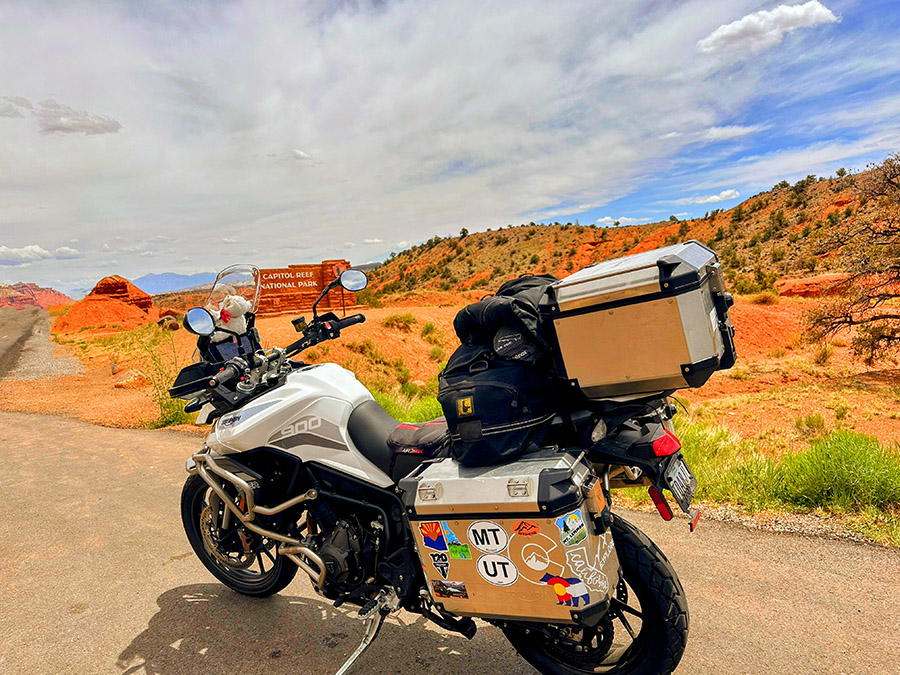
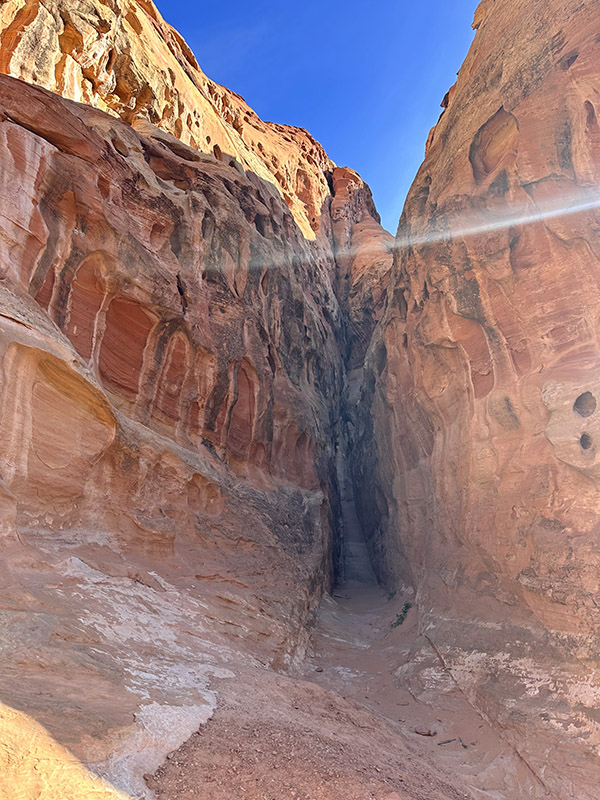
The next morning found me out on the trail a hump up to the top of the mesa for a panoramic view of the park. The air was crisp with hints of the heat to follow. The trail descends into a slot canyon then an arroyo wash to the other side of the park and beyond. Reluctantly heading back, I got on Tippi and explored the nearby petroglyphs. All in all, my short stay was a rewarding two nights and now headed to the not-so-famous outside of crazy riders who seek out remote roads Highway 50, billed as the loneliest highway in America!

Highway 50: The Loneliest Highway with a Detour to Great Basin National Park

I made a short order of breaking camp, and in no time Tippi and I were on highway 24 with the goal of making it to my 5th National Park, Great Basin. Following Route 24 goes through a rural farming section of the state with many small Mormon communities and opportunity for a breaks, food, and gas. I was eager to blow through this well-familiar route to get to Highway 50 and cut my teeth on a section of road I had been warned NOT to ride.

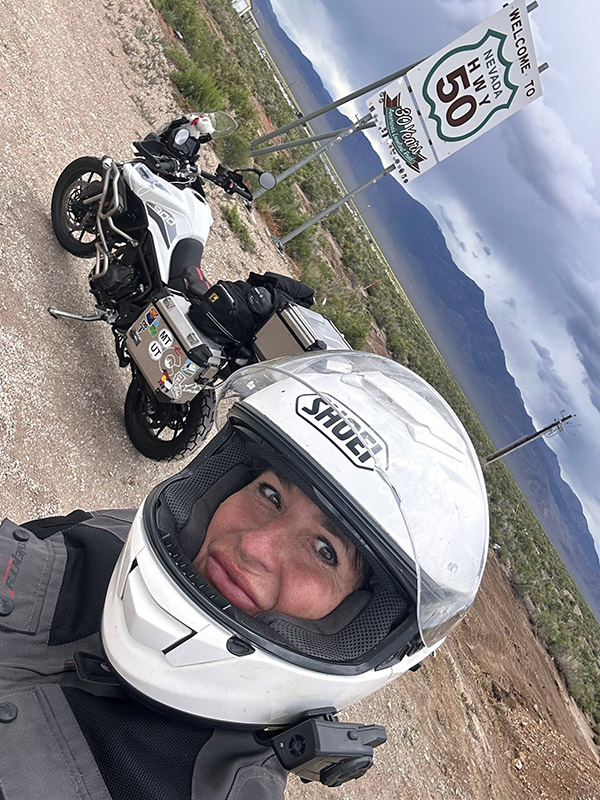
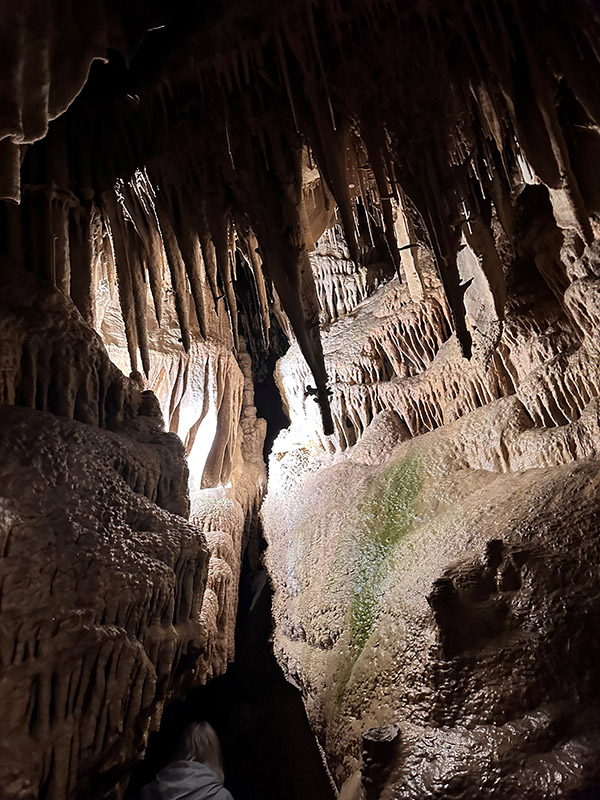
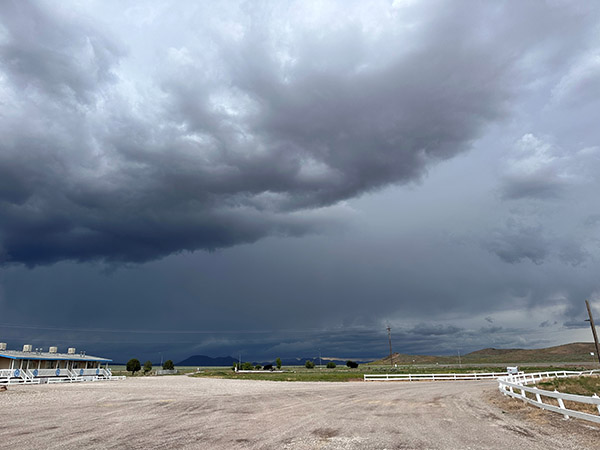
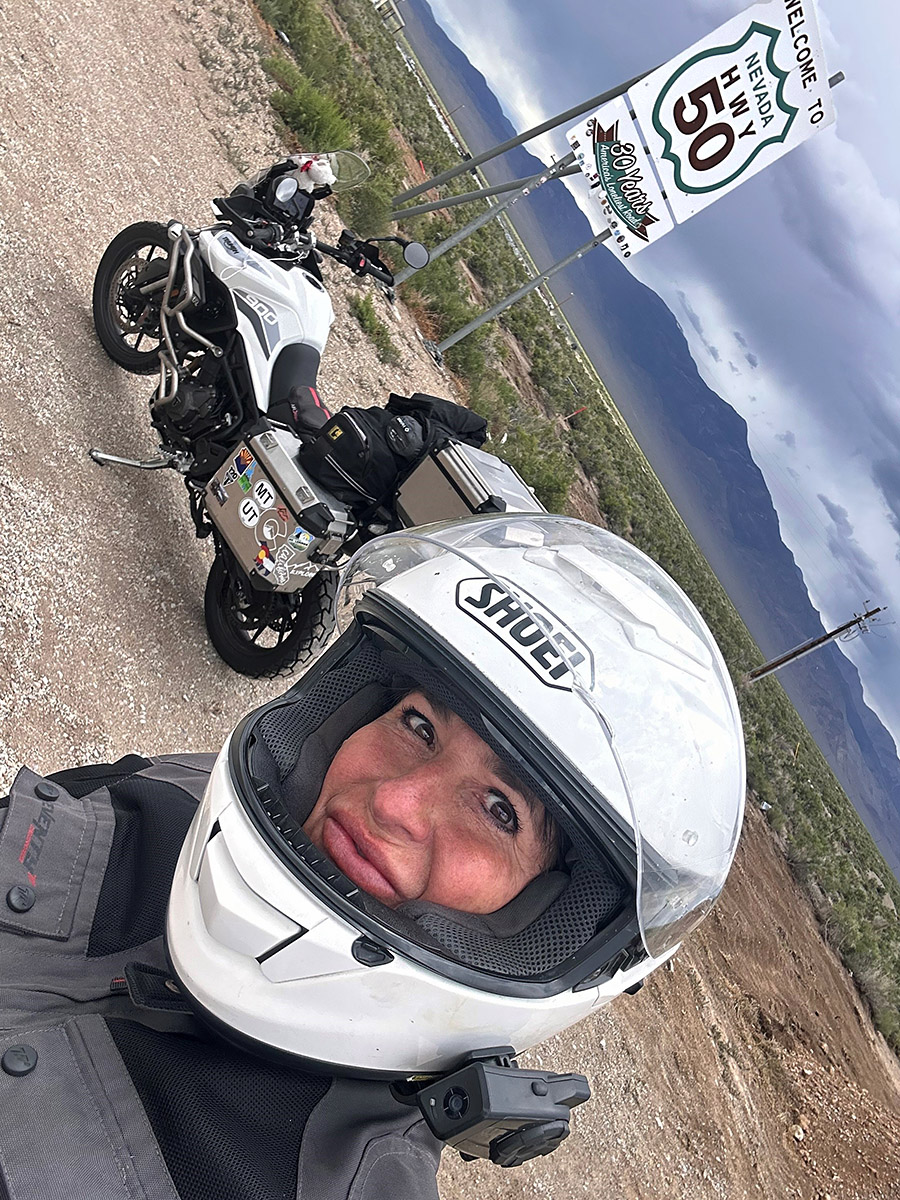
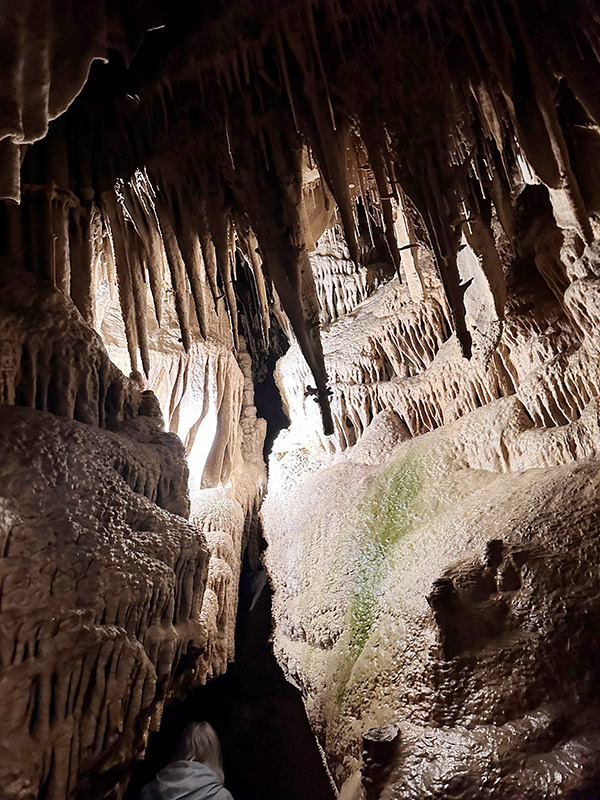
As I picked up Highway 50 off Interstate 15, I soon hit the famous first road sign and stopped to document my ride on her with a pic. With once again threatening storms, I glanced at the mountain ahead and thought how bad could it be? It was bad, I was wrong once again guessing the threat of a storm. A short very wet ride later, I left behind Highway 50 for a few days to visit the park. As a first timer to Great Basin NP, I was truly blown away! You enter the tiny town of Baker on the desert floor then 20 minutes later you are in the mountains with thick forest and views overlooking the high desert plains that seem to go on forever. Not to be missed is a guided tour of Lehman Caves. Truly the highlight of my stay. I selected one of the higher small campgrounds and was rewarded with a huge site surrounded by trees and brush with the river roaring behind me.

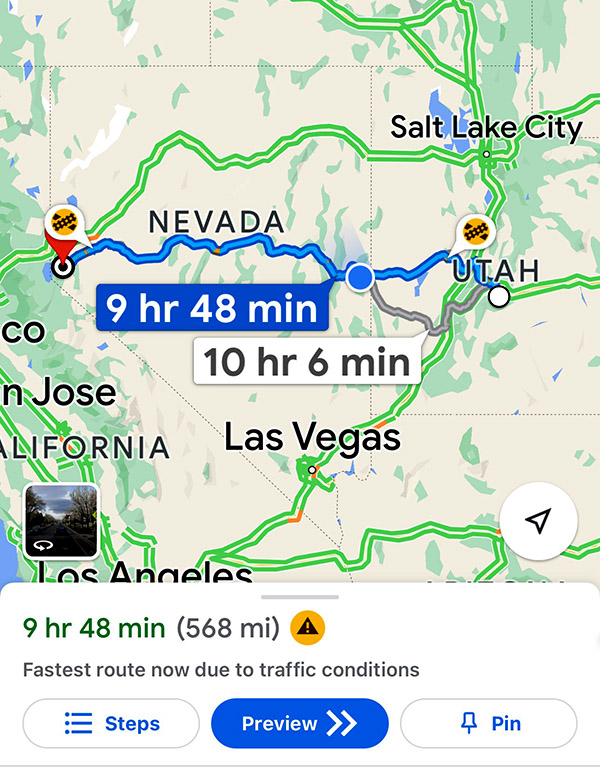
Reluctantly bidding farewell to Baker, I rejoined Highway 50, heading towards my next destination, South Lake Tahoe. Contrary to the dire warnings of scarce gas stations, I discovered that this notion was unfounded. Approximately 70 miles down the road, I arrived at Ely, another small mining town with plenty of services. After a quick refuel, I resumed my journey, realizing that the otherwise flat stretches of road were intermittently punctuated by mountain passes exceeding 7000 feet in elevation. These segments offered breathtaking vistas and enough twists and turns to satisfy both Tippi and me.

My first mountain pass, before descending into Ely, Nevada, presented an exhilarating ordeal with rain, lightning, and a brief ten-minute ride through hail. Eighty miles further, I found myself in the town of Eureka, where the threatening skies curtailed my exploration time. Nevertheless, I managed to visit a few must-see attractions, including the Opera House, built in 1879, the still-functional Courthouse of the same vintage, and a brief excursion to the town’s cemetery, where a variety of burial sites represented different social organizations, religious groups, and ethnicities. This walk-through history provided a fascinating glimpse into the town’s past.

Continuing on Highway 50, with the ominous skies in my rearview mirrors, I was reminded of the urgency to press on towards my next stop—Austin, Nevada. This old mining camp retains its rustic charm and has evolved into a haven for camping, hiking, and mountain biking, thanks to its proximity to the towering Toiyabe Mountains. During a pit stop, I encountered a large group of riders following the Pony Express Trail, who praised my adventure, while I vowed to return in the near future to explore that historic route.

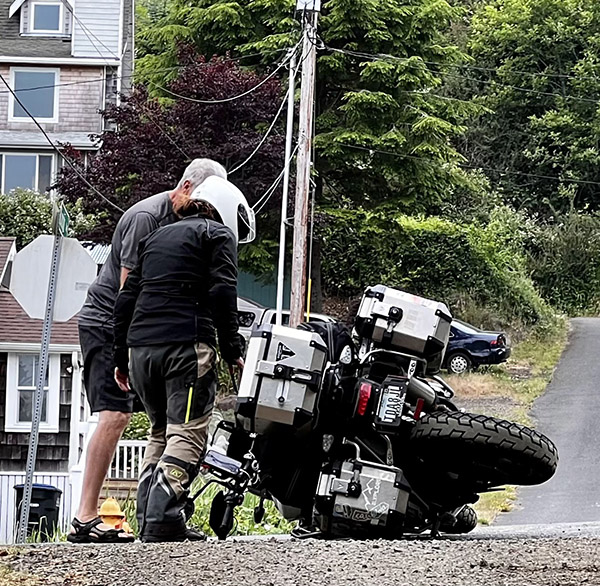
Reluctantly bidding farewell to this enchanting mountain town, I embarked on another 112-mile stretch to Fallon, Nevada. This promised a well-deserved lunch break and refueling opportunity before the final leg of my journey to Lake Tahoe. As hunger pangs intensified, I hurriedly pulled into the first gas station I encountered. Curiously, the ground appeared slanted, making it impossible to safely park my bike with its kickstand without an extreme lean. Oddly, as my kickstand tends to be a bit high, I often worry about Tippi toppling over. Trying another station, I realized that my kickstand was not misaligned but broken—a sudden and unfortunate realization. With every ounce of strength, I fought to prevent Tippi’s full weight from pinning me between the gas pump curb and the engine crash bar. As I cried out for help, a kind soul named Caleb rushed to my aid, assisting me in righting Tippi. Examining the kickstand, I conceded that my lunch break was a lost cause. I refueled while seated on my bike and came to terms with the fact that I would have to ride the rest of the way without lunch and with a dangling kickstand, just inches off the ground.

Continuing Towards Lake Tahoe

Arriving in Lake Tahoe was like reaching an oasis after a day filled with challenges and stunning scenery. The sight of the crystal-clear waters surrounded by towering pine trees was simply breathtaking. I met up with Mike Huber, a fellow adventure rider, as we eagerly exchanged stories of our respective journeys over drinks and pizza. Mike is a seasoned rider with an incredible collection of travel stories and insights, and this blog, which is a treasure trove of motorcycle adventures.

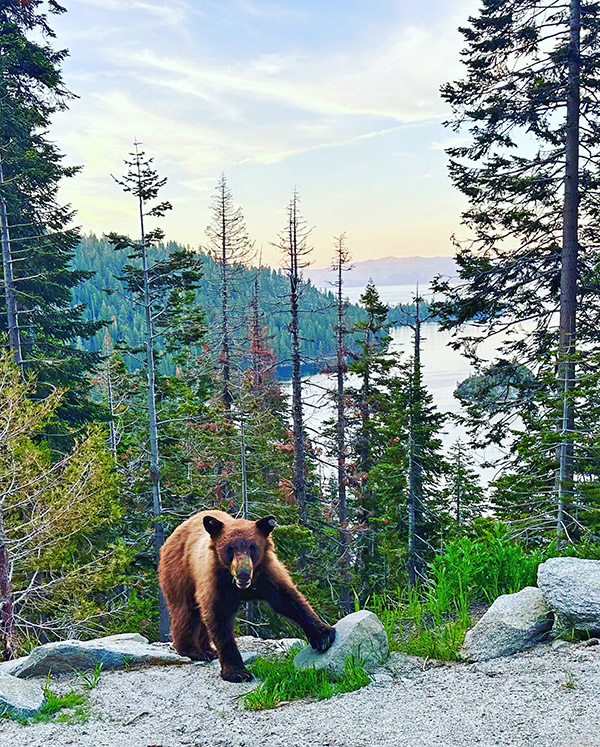
We decided to make the most of our time in Lake Tahoe by exploring the area together and spending time with our dear friend Yvette who had left Sedona for the mountains and lakes surrounding Tahoe. Two up on Tippi, our first stop was a visit to Emerald Bay State Park, a gem nestled on the lake’s southwest shore. A short hike up a roadside trail took us to a stunning vista overlooking Emerald Bay below. The clear blue waters and Fannette Island in the middle of the bay made for a postcard-perfect scene. At sunset we were even rewarded with a surprise pop up of a brown bear who a few feet away provided us with a pose straight up worthy of National Geographic!

Lake Tahoe, with its stunning shoreline, pristine waters, and surrounding mountains, offers many outdoor activities. We decided to spend the next afternoon cruising around the lake, taking in the panoramic views and stopping at scenic overlooks. Riding around Lake Tahoe was a highlight of my journey, and I couldn’t have asked for better company.

Conclusions

As I reflect on the second part of my solo motorcycle journey from Sedona to Canada, I’m filled with deep gratitude for the experiences and sights that have unfolded before me. From the awe-inspiring beauty of Bryce Canyon to the challenging twisties of Route 12, from the serene landscapes of Great Basin, this adventure has been a testament to the power of the open road and the indomitable spirit of solo travel.

Every mile has been a lesson in self-discovery, a reminder of the world’s beauty, and a celebration of the freedom that comes with embracing the unknown. The road has been my companion, and the landscapes have been my muse. And as I continue to ride north into Canada, I know the journey is far from over. There are more roads to explore, adventures to embrace, and stories to tell.

Stay tuned for the next chapter of this solo ride from Sedona to Canada. The open road beckons, and I’m eager to see where it will lead me on this journey of a lifetime.


Never miss an ExNotes blog:


My Solo Motorcycle Journey from Sedona to Canada: Part I

By Bobbie Surber

As a passionate female solo rider, I often find myself facing a barrage of incredulous looks and questions from both strangers and friends. They ask the usual list of queries: “Is it safe?” “Where will you stay?” “What if your bike drops?” It’s become almost customary to respond by sharing my blog or articles that capture the essence of the joy I find in solo travel, whether by foot or by bike. This brings me to my latest and most epic solo adventure – a motorcycle journey from my home in the enchanting town of Sedona, Arizona, all the way up to the stunning landscapes of Canada. Covering over 6,700 miles of magical terrain, this journey was a test of my spirit and a celebration of my love for long distance motorcycle travel.

It all began last fall when the idea of a ride to Canada took hold of me. I knew that this was the journey I was meant to embark upon. I was determined to take my time, to savor the journey, and to visit as many National Parks as possible along the way. My plan was simple yet liberating: I would make up my route no more than a week in advance, pack light, and camp as much as possible off my trusty motorcycle, a three-cylinder Triumph Tiger 900 GT Pro, lovingly named Tippi.

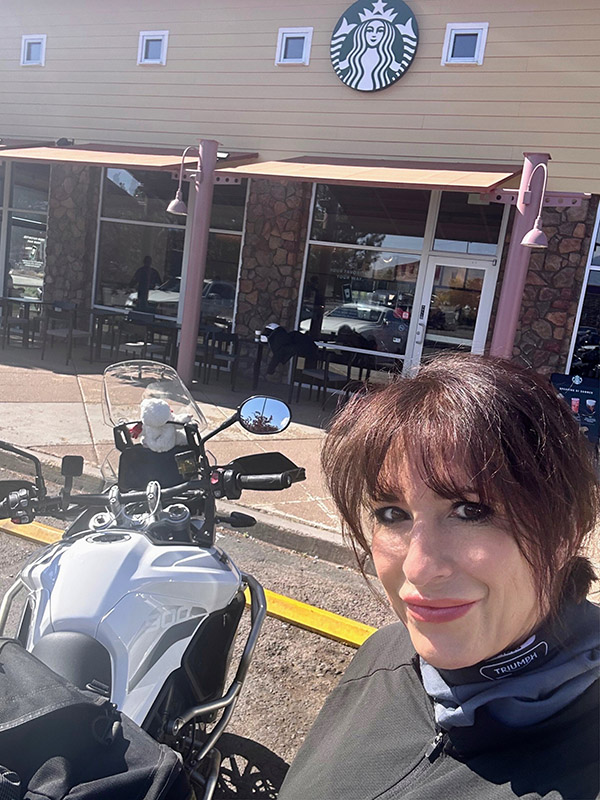
On the crisp morning of June 2nd, with the sun just beginning to warm the high desert of Sedona, I geared up for my adventure little did I know then that I would be gone for 11 plus weeks. The air carried an unusual coolness, a welcome departure from the scorching desert temperatures. My first stop was an obligatory one – Flagstaff, Arizona, just a short 30-mile ride from Sedona. The journey up Oak Creek Canyon was a visual feast, with Red Rock views and sinuous twists and turns that are a motorcyclist’s dream. I found myself at a Starbucks in Flagstaff, sipping on a well-deserved Americano, wondering what the day had in store for me as I charted my course towards North Grand Canyon National Park.

Leaving the comfort of Flagstaff behind, I embarked on Highway 89-A, leaving the tall pines of the city in my rearview mirror. The road led me to Lees Ferry, a spot where I could steal a quick moment with the majestic Colorado River. Riding through this part of Arizona on 89A felt like transitioning to another world. The landscape shifted from rugged mountains to a breathtaking desert expanse. Sandy plains, cacti, and the awe-inspiring sight of the Colorado River slicing through towering cliffs and canyons greeted me. Every time I ride through this area, I feel like I’m letting go of the worries of the world and immersing myself in the raw beauty of nature.

Arriving at Lee’s Ferry, I gazed in wonder at the grandeur of the Colorado River. Red Rock bluffs reached skyward, casting their reflections onto the water’s surface. A few photos captured the essence of the moment, and then I was back on the road, with Tippi carrying me across the vastness of the desert landscape with mountains looming in the distance with turbulent looking skies, laden with the threat of rain seemingly daring me to press onward.

Press on I did, and by the time I arrived at Jacob Lake, I was soaked to the bone. The reward, though, was immediate and satisfying. The general store at Jacob Lake had the antidote to my damp spirits – a hot cup of coffee and the most heavenly homemade cookies I’ve ever tasted in Arizona. While I warmed up and indulged my taste buds, I chatted with fellow riders who regaled me with tales of epic early June snowstorms they’d encountered that day while riding back from the Grand Canyon. It’s moments like these, swapping stories with fellow riders, that make a solo journey so enriching.

A swift pit stop at Jacob Lake was followed by the task of setting up my tent, which proved to be a bit of a challenge in the rain. But that’s the essence of adventure riding, isn’t it? You adapt, you overcome, and you keep moving forward. With my campsite established, I wasted no time and headed to North Grand Canyon. Fortunately, I was spared the snow, but a wicked hailstorm tested my resolve as I carefully made my way further up the rim.

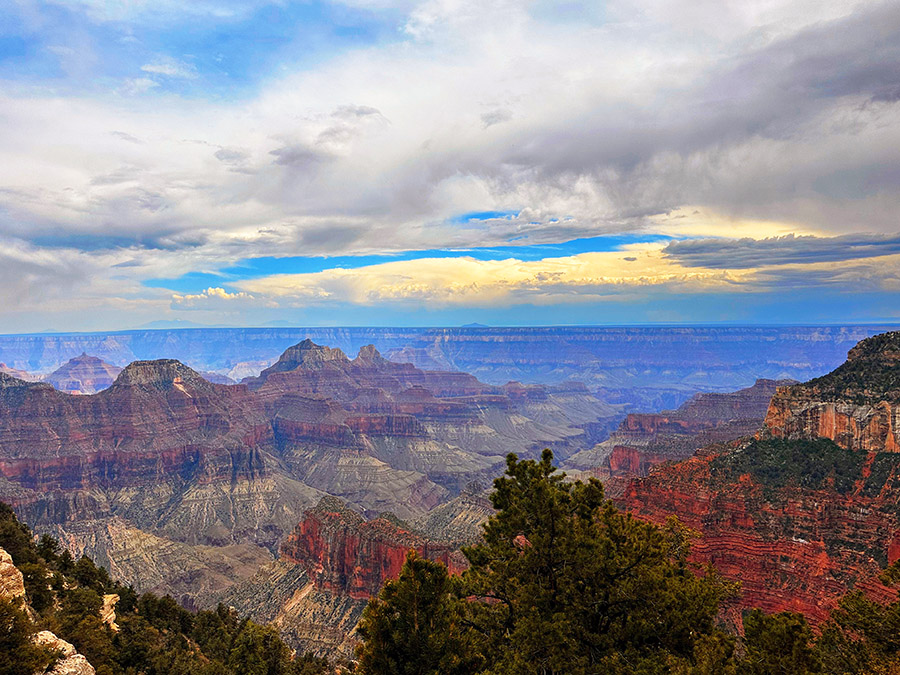
By the time I reached the park, the weather gods seemed to have taken pity on me. Dry weather prevailed, and I was treated to the most dramatic skies one could hope for when visiting the North Grand Canyon. As I stood there, gazing out into the vast expanse of this natural wonder, I couldn’t help but feel humbled by the forces of nature and the grandeur of the world we live in. It was a moment of pure serenity amidst the chaos of my journey.

The following morning, I bid farewell to North Grand Canyon, heading down into Kanab for a quick gas and coffee break before completing the remainder of my ride on Highway 89A, with Zion National Park as my next destination. With two days and one night to immerse myself in the beauty of Zion, I was eager to experience the park in all its glory.

Entering Zion National Park on a motorcycle is a unique adventure. The winding roads and the freedom to embrace the open road add an extra layer of exhilaration to the journey. Plus, if you time it right, like I did, arriving early can help you avoid the epic traffic jams that can plague this popular destination.

Setting up camp as quickly as possible, I wasted no time in hopping onto a shuttle ride to the park’s lodge. From there, I embarked on a day of hiking, exploring several of Zion’s shorter trails. I couldn’t resist attempting to secure a permit for Angel’s Landing, a trail known for its breathtaking, albeit nerve-wracking, vistas. Alas, the permit eluded me, but that didn’t dampen my spirits. Zion offered me an array of other trails and sights to explore, and I reveled in every step I took.

Zion’s rugged beauty is a testament to the power of nature’s sculpting hand. Towering sandstone cliffs, cascading waterfalls, and the vibrant colors of the Virgin River create a landscape that feels otherworldly. With my camera in hand, I captured every nuance of this remarkable place. Hiking a portion of the Narrows, with water rushing around me, was a highlight I’ll carry with me forever. Zion National Park, with its mesmerizing mix of desert and oasis, and once again confirming why I love this park so much.

As I lay in my tent that night, listening to the sounds of the wilderness around me, I couldn’t help but reflect on the incredible journey I’d embarked upon. From the stunning landscapes of my hometown of Sedona to the awe-inspiring grandeur of the Grand Canyon and the mesmerizing beauty of Zion, my solo motorcycle ride to Canada had already been a whirlwind of experiences. And this was just the beginning.

My journey would continue northward, taking me through more National Parks, enchanting towns, and breathtaking vistas, mountains, desolate beaches, and new friends I’d yet to meet. Each twist and turn of the road held the promise of new adventures and the opportunity to connect with the world in a way that only solo travel can offer. The open road called me, and I was more than ready to answer its invitation.


In the world of solo travel, there’s a unique freedom and self-discovery. It is a chance to test your limits, embrace the unknown, and find solace in the beauty of the world. My motorcycle journey from Sedona to Canada was not just a ride; it was a pilgrimage of the soul, an exploration of the heart, and a celebration of the indomitable spirit of the open road. As I drifted into sleep under the starry Utah sky, I couldn’t wait to see where the road would lead me next on this remarkable adventure.

My fellow adventurers, I invite you to stay tuned for the next captivating chapter of this solo ride from Sedona to Canada. The open road stretches before us, brimming with the promise of extraordinary experiences and inspiring tales yet to be written. With each twist of the throttle I embrace the unknown, and I can’t wait to share the unfolding journey of a lifetime with you.


Never miss an ExNotes blog:


ExNotes Event Review: AHRMA Motofest, Monterey, California

By Joe Gresh

After riding through the stifling heat of Utah, Nevada and central California the cold, foggy mists of the Monterey Peninsula penetrated my mesh jacket and I shivered. It was wonderful to be cold and it was wonderful to be at Laguna Seca’s Weather Tech Raceway. This wasn’t my first visit to Laguna Seca but it was my first time inside the track. Years ago I rode up from San Diego back when Laguna Seca was a date on the world championship calendar. Today, Austin’s COTA circuit has usurped that role in America but Laguna Seca is still way prettier.

Two strokes ruled Moto GP racing in that era and when I pulled up to the entrance gate the $50 ticket price almost gave me a stroke.  I was earning $3.50 an hour working on boats and $50 was a ton of money. I figured the hell with it and went to the Monterey Bay Aquarium instead. Oddly enough, the entry fee for AHRMA’s Motofest vintage racing was still 50 dollars some 40 years on. This time I paid for a ticket because riding from La Luz, New Mexico is a long way to go for nothing.

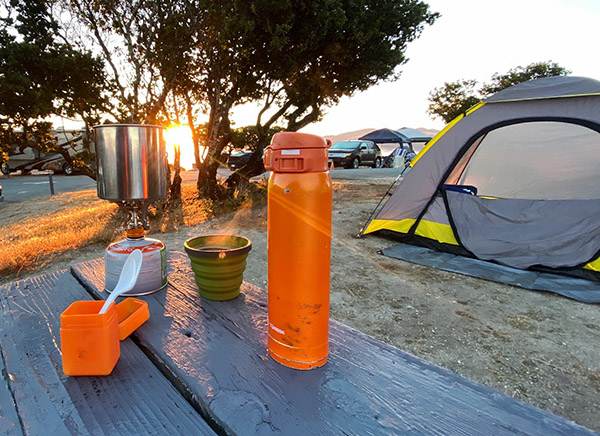
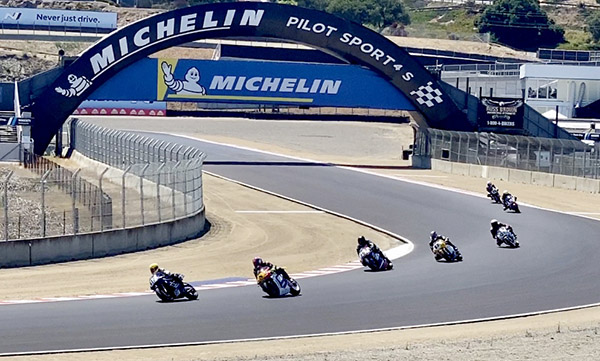
Motels around Monterey are sort of expensive. Your best deal is the 4-day camping pass at the track. I bought a reserved campsite because I wasn’t sure how things worked inside. Turns out there were plenty of campsites available for this event. I had site 110A, which gave me a view of turn 5 in one direction and a view of the bikes going up Rahal hill to the Corkscrew in the other direction.

Site A-110: it’s a good place to spend the weekend.

Plenty of portable toilets were sprinkled around the venue and hot showers were available in the more substantial structures. All the faucets were marked non-potable so bring plenty of water. I had to buy those little bottled waters in the paddock at $3 a bottle. The ground at my site was pretty hard so I never got my flimsy aluminum tent pegs to penetrate. Luckily my site had an old steel spike that someone left behind. I drove the spike into the hard ground on the windward side, tied the tent to the spike and used my gear to hold the other three corners down. The hydraulic jack came in handy as a hammer.

I say the ground was hard but apparently the hundreds of ground squirrels had no problem burrowing holes every 15 feet. The squirrels are all over the place at Weather Tech. I’m surprised that an aged vintage motorcycle racer hasn’t fallen in a squirrel hole and broken a leg. I’ve heard that when they get up in years it’s best to shoot them rather than let them suffer.

Me and Milich, he’s tall with a lot of drag but still wins.  You can visit Milich’s websites at http://guzzipower.com/ and https://www.ducpower.com/.
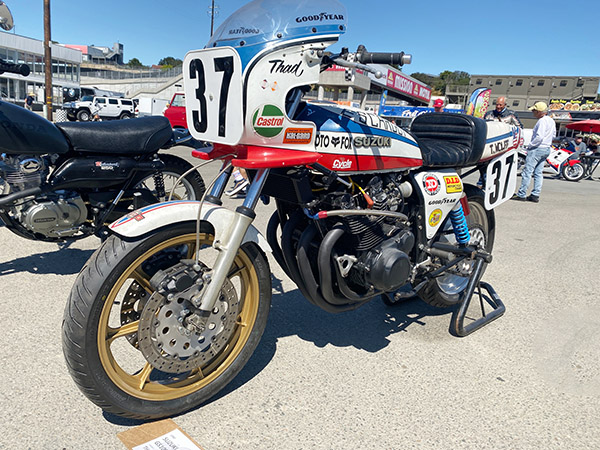
Thad Wolf’s Suzuki. I never did find Wolff, he must have known I was looking for him.

Thursday was practice all day. The bikes were sent out in groups with staggered starts. There are a lot of classes in AHRMA, like dozens, to keep track of but I mostly just listened for two-strokes. AHRMA’s Motofest had a sort of mini Motorcyclist magazine reunion vibe. The Kevin Hipp racing family was there along with Thad Wolff and Ed Milich. Go-Go Gulbransen, whose name the announcer never tired of uttering was there also. Go-Go was the guy who tested the upper limits of new sport bikes for Motorcyclist magazine. All these guys live and breathe motorcycles and it’s the passion you can’t fake that made them such good journalists.

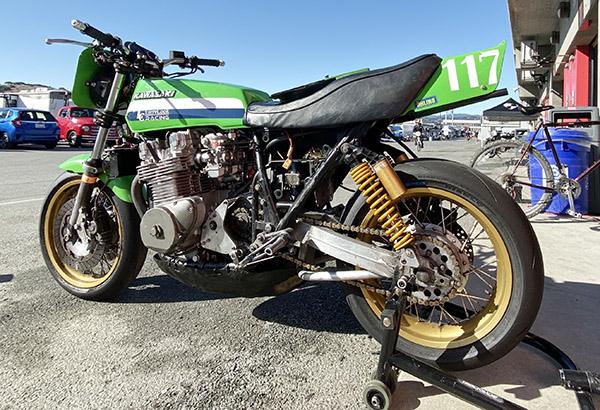
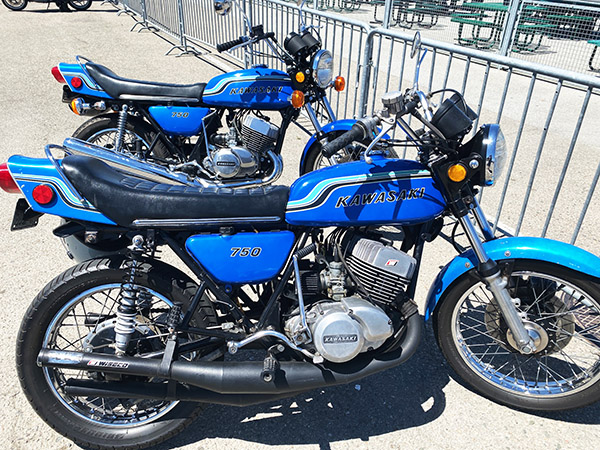
This might be a real S2 Kawasaki production racer. Very few were built. You had to know somebody.

Vintage racing today looks a bit different from when the motorcycles were current models. Hondas seem to dominate. The 160cc slopers, 175 twins and 350 twins were much faster than I remember them. In fact, I don’t remember them racing at all. I assume it’s due to better oils and electronic ignition systems, because in the old days the small bore grids were mostly Yamahas with a few Suzukis and Kawasakis. If there was a Honda racing it was usually sputtering at the tail end of the pack and the rider was wearing construction boots and welding leathers. Of course, things were different at the GP/factory level where Honda did all right for itself considering the handicap it was working under. It helps to have Mike Hailwood and Freddie Spenser on your team.

A brace of H2s these sounded good when they pulled in.
Jewel-like T500cc twin Suzuki. This was a revolutionary bike when it came out. Some people thought you couldn’t go this big without heating problems. Another bike I want to own one day.
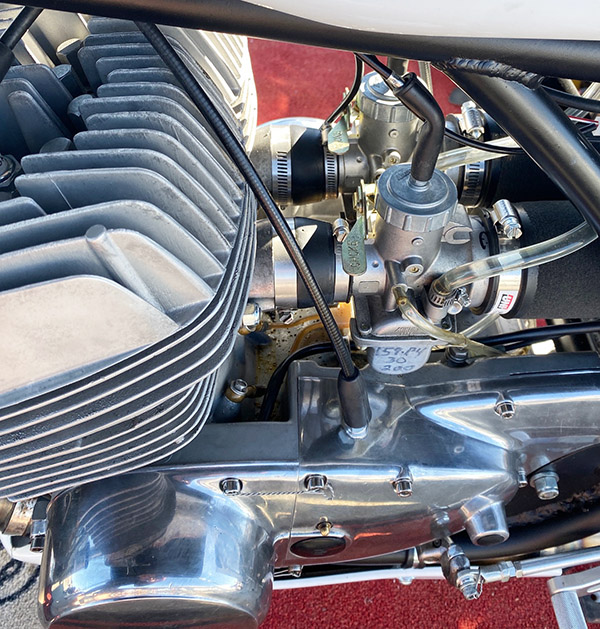
Zoomie RD 350 with DG sunburst heads. Going for that squish band action.
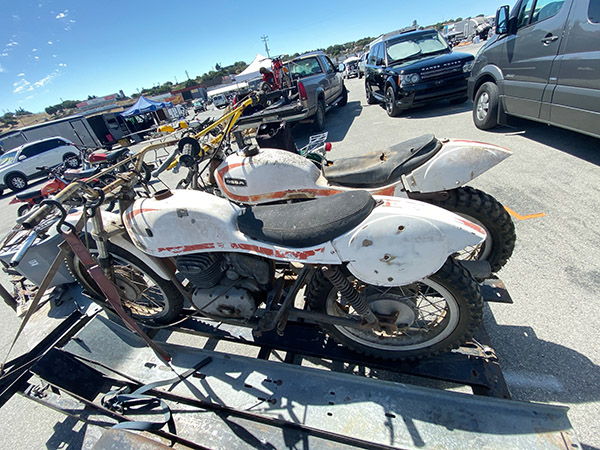
A pile of Ossas. These are Stilettos; I want a Pioneer.
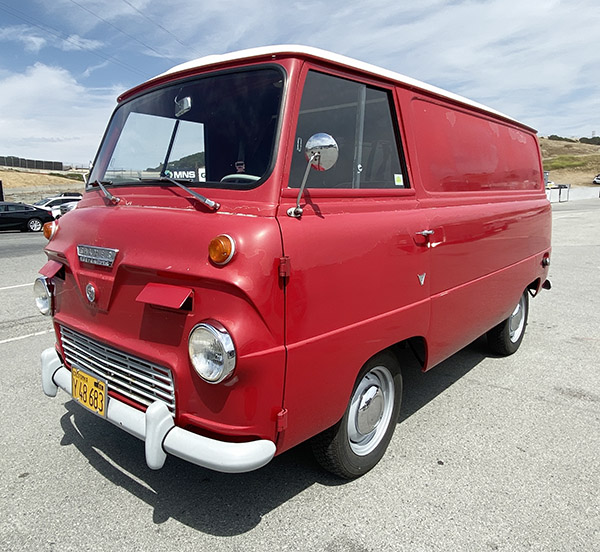
Thames van. I imagine it’s British.
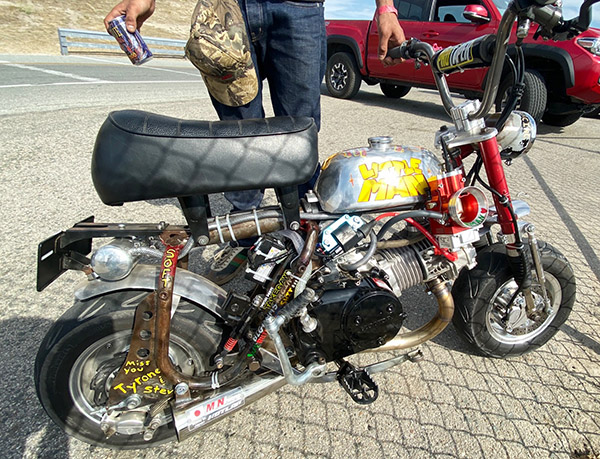
Stretched Honda Mini Trail with custom Grom-based block. 350cc, tops out around 100 miles per hour. I asked the kid if it was dangerous. He said he lived in Oakland, so it was the least dangerous thing he did.

After setting up camp I walked all over Laguna Seca: I needed the exercise after sitting on the ZRX1100 for five long days. To get to Monterey I took the long way around, up through Colorado to Grand Junction then across Utah and Nevada to California. I tried to ride Highway 120 through Yosemite Park but the road was closed. I detoured north from Lee Vining to Highway 108 and was rewarded with one of the world’s great motorcycle roads. Anyway, from my campsite to the paddock was only a 15-minute walk. Less if you didn’t tangle with a ground squirrel.

Vintage racing is all about the paddock. The racing, while serious, is almost secondary to checking out the old race bikes. The paddock is where the food is, where the beer is and where the old motorcycles are. Most of the spectators hang out in the paddock area. I wandered around for hours looking at motorcycles. I ate a turkey sandwich and drank a beer that was like 28 dollars but we need to support the moneymaking aspect of Laguna Seca or it’ll become luxury housing.

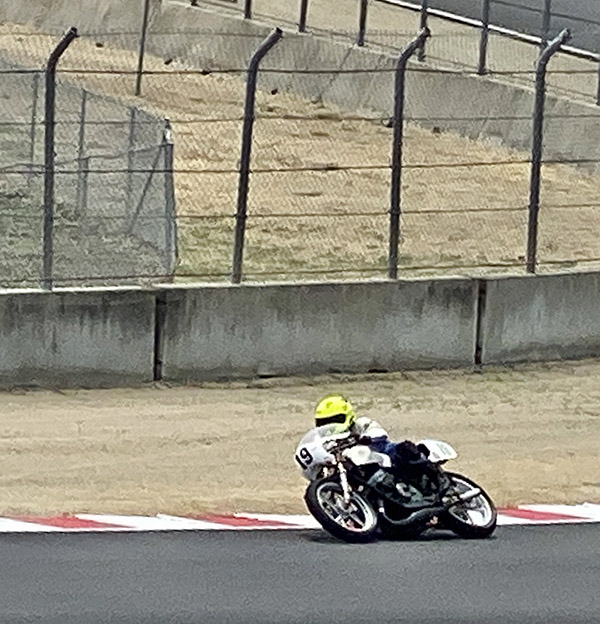
Turn 4 action.
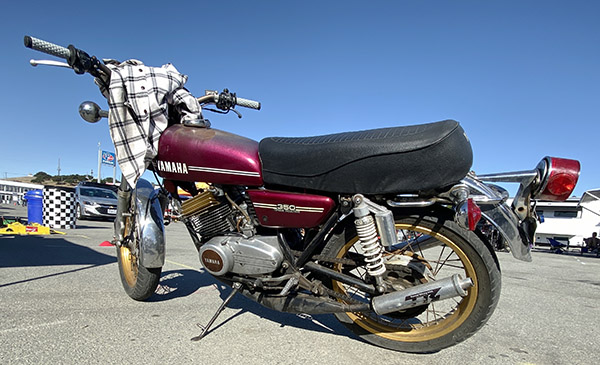
Yamaha RD400 scooting right along.

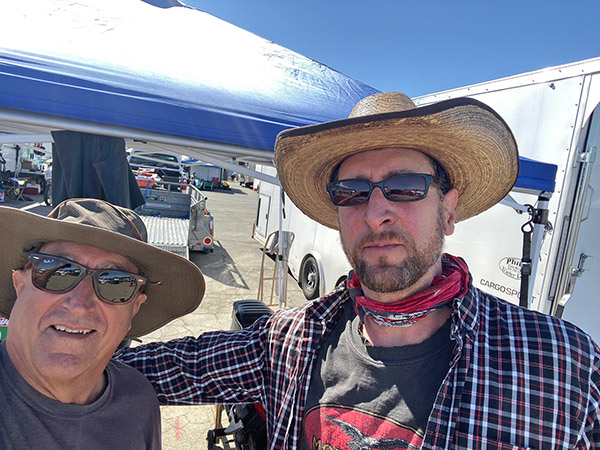
Saturday and Sunday were race days. I hung out with Motorcyclist Magazine alumni Ed Milich for a bit. Ed has an admirable cost per win philosophy in that he expends just enough effort to get first place and no more. His bikes look like hell but they run great. Paint don’t win races, says Ed. On the track he never seems to be trying hard, the gap between him and second place grew larger as if by magic. Ed won every race he entered (four) I did some math and determined that Ed spends around $4.37 per win. Hipp won his races also. Hipp’s bikes are those fast Honda 350s and they look like show bikes. Hipp’s wins probably cost more than Milich’s, but they still count.

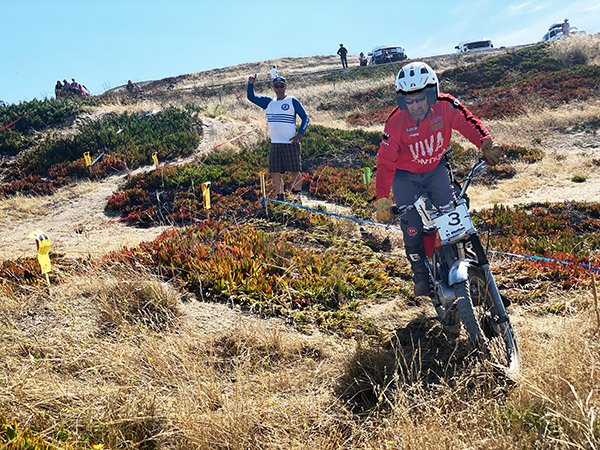
Montessssa on the trials course.

Sunday morning I went over to the trials section. Set in gullies and on the sides of hills, trials riding never looks too hard until you try it. Trials events at the level Laguna Seca puts on have the advantage of being relatively safe as the speeds are very low and you can’t fall very far. This isn’t the crazy stadium trials you watch on YouTube but it suits the old motorcycles participating. I might try the trials on Godzilla next time I go to Laguna.

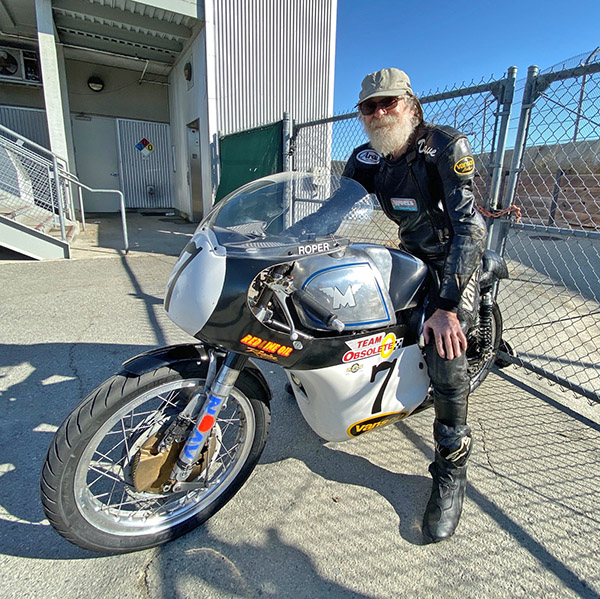
The legend Dave Roper. I think he’s still the only American to win at the Isle of Man races.
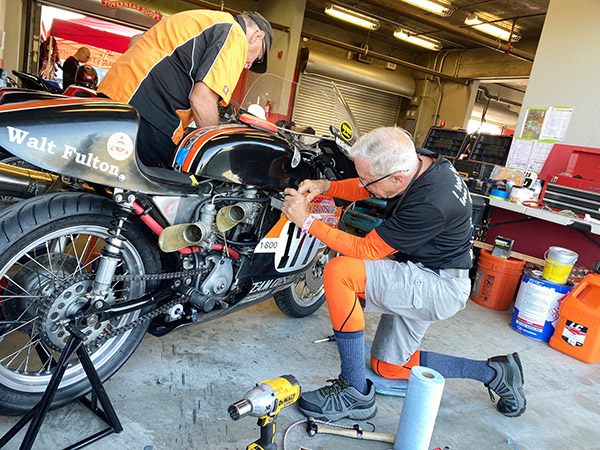
Walt Fulton fetteling his XR750.

With such wildly different motorcycles it’s hard to compare rider skill. Except when it comes to Dave Roper: Roper, who resembles a stick of beef jerky with a cotton ball stuck on one end, was smooth and fast on any bike he rode. Roper and Walt Fulton, with a combined 300 years of racing experience, put on quite a show with their matching H-D branded, Aermacchi Sprints. There was a vintage motocross at Laguna Seca but it ran concurrent with some other races so I missed it. You really need to be two people to see all the action at AHRMA’s Vintage Motofest.

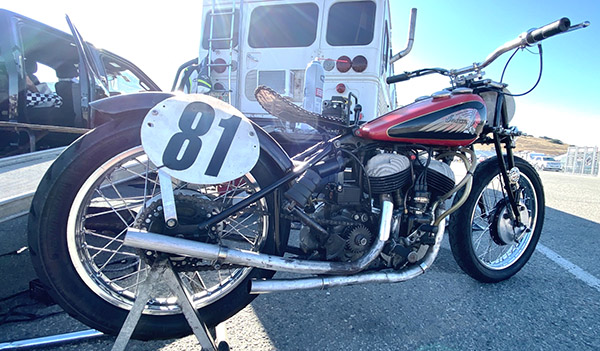
Nice, tank shift flattie. This bike sounded good on the track, very low rpm drone.

It was nice to have the campsite for Sunday night; I didn’t have to rush to pack and head out into the unforgiving freeways of California in the late afternoon. Wherever I ride the ZRX1100 it attracts attention. I’ve had people take selfie photographs standing next to the bike, I get asked what year it is almost every ride. The thing is bone stock. Laguna Seca was no different, the bike garnered a steady stream of complements from my camp neighbors. I must look hard up because the guy camping across from me handed me 40 dollars and said I had dropped it. I think he was trying to be nice to a vagabond. Normally I would have taken it but I’m trying to become a better person and told the guy it wasn’t mine.

Californians and Ex-Californians like to bitch about their state, but the damn place is beautiful. California has it all from the beaches to the mountains to the desert and all types of terrain in between. With straight roads crowded by farm equipment, the central valley (also known as The Breadbasket of America) was like the Tail of the Dragon for my nose. Sweet manure, grassy hay, dust and soil, the smells kept swapping back and forth giving my nasal passages whiplash.  If it wasn’t so expensive, I’d live in California again but my total running costs at Tinfiny Ranch are less than the annual taxes on any house I could afford there. The Californians I met were universally friendly and interesting to talk to, we would start up a conversation like we had known each other for years and had just spoken last Thursday.

I’ll go to AHRMA’s Monterey bash again. It’s closer than Daytona for me and with the camping, about the same cost. I give the event high marks for value. You really get your 50 dollars worth with AHRMA.


Never miss an ExNotes blog:


Want the story on the ZRX resurrextion?  It’s right here.

The Wayback Machine: A Walk Across Spain (Part 1)

By Bobbie Surber

The Camino de Santiago, also known as the Way of St. James, is a network of pilgrimage routes that lead to the shrine of the apostle Saint James the Great in the cathedral of Santiago de Compostela in Galicia, Spain. The Camino has been a popular destination for Christian pilgrims for more than a thousand years, and it is now visited by people of all faiths and backgrounds from around the world.

There are several routes of the Camino de Santiago, including the Camino Frances (French Way), which is the most popular, and the Camino Portugués (Portuguese Way), which starts in Lisbon or begins in Porto for a two-week shorter Camino. The Camino de Santiago is a long-distance walk or hike that typically takes 30-40 days to complete, depending on the route and the pace of the individual pilgrim.
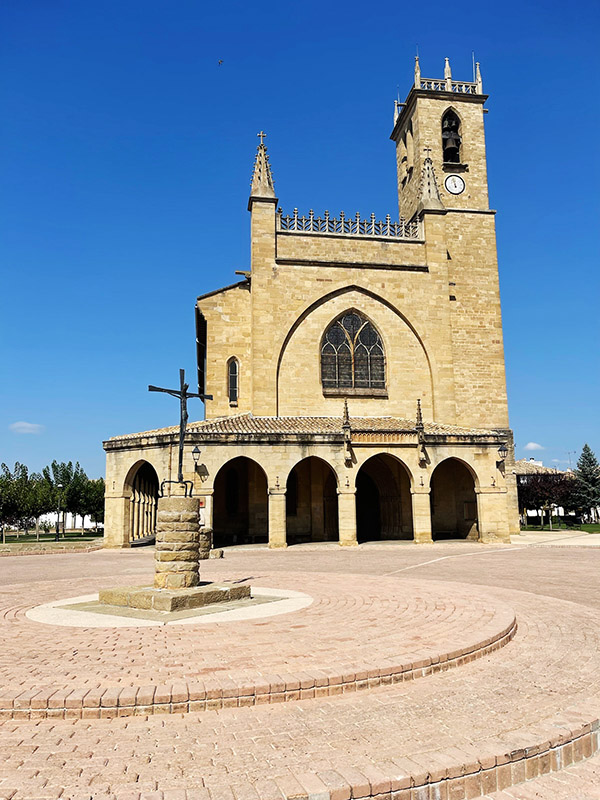
Along the way, pilgrims stay in Albergues (pilgrim hostels) or other types of accommodation and follow the yellow arrows and shells which mark the way. The Camino de Santiago offers a unique opportunity to experience the beauty of the Spanish landscape and culture and to challenge oneself physically and spiritually.


Please click on the popup ads!


I walked seven different Camino Routes with my first Camino in 2012 and the last in September 2021. My last walk found me starting in Pamplona, Spain, a vibrant city never lacking a reason for a fiesta, a city known worldwide for the Running of the Bulls every July.  I ended my journey in Leon, Spain. With my added side trips, I walked over 300 miles, experiencing high desert plateaus, the Rioja wine region, the blissful Logrono’s tapas, the magnificent Burgos Cathedral, the Meseta’s emptiness, and the joy of Leon.

I was on a multi-month motorcycle/camping trip through Arizona, Utah, Colorado, Wyoming, and Montana. When riding, there are times when every part of your brain is laser-focused on the road ahead of you and who might try to run you over from the back or side, but every now and then, the ride is so peaceful that you have time to turn a portion of your brain to the gift of “I wonder.” This led me to reminisce over my six prior walks along different Camino routes in Spain, Portugal, and France. Once released, an avalanche of memories and images flowed to the point that I knew I would be booking my flight to Europe as soon as I stopped my ride for the day.

A quick Google Flights search gave me what I needed, and I soon had a ticket. This was another solo walk, my favorite way for most hikes. My arrival in Pamplona was early enough that I decided to start my Camino right from the Pamplona Airport, bypassing one of my favorite cities in Spain.

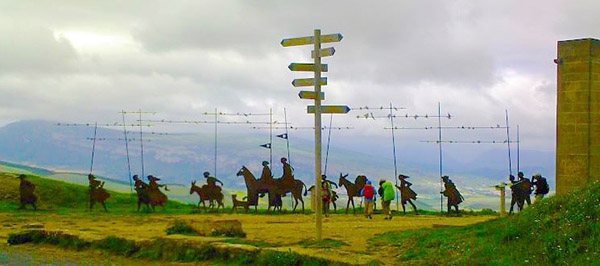
The morning had the hope of the fall weather yet to come as I headed slowly up the first of several foothills with the goal of a 10-mile walk for my first day. The gravel crunched satisfactorily underfoot as I quickly adjusted my backstraps to climb up to an iconic ridge that all pilgrims look forward to, the Alto del Perdón, a mountain pass in the province of Navarra in northern Spain, about 12 miles outside of Pamplona. I had returned to the Camino Frances trail after nine-year of absence, taking in beautiful views of the surrounding landscape and a chance to rest and recharge. The mountain pass is named after a sculpture of the Virgin Mary and the phrases “Señora del Camino” (Lady of the Way) and “Perdón” (Forgiveness), which are inscribed on the base of the sculpture. The windswept ridge and the massive wind turbines in the background contrast the sculptures that represent a pilgrimage from the Middle Ages. I took my first full breath after 18 hours of travel and an excellent 8-mile walk to this point. I thought about my intentions for this walk, what I hoped to gain and whom I would miss in the coming weeks of a long walk across most of Spain.

Reluctantly leaving the ridge late afternoon, I knew it would be challenging to reach my Albergue for the night. The steep loose gravel trail reminds me that my knees are not what they used to be, and motorcycle riding for the prior months did little to prepare me for the rigors of this walk. Soon the village of Uterga appeared with another climb up to her main street. My arrival timed perfectly to watch the evening stroll of the locals begin, kids running in the square, little old ladies with perfectly quaffed hair and well-put-together outfits ambling in deep conversations. Adults were sitting in outdoor cafes having a drink, visiting each other, and enjoying the last dregs of daylight. I wanted to plop my disheveled self within their mist and order my first long-awaited glass of Vino Tinto, but I pulled myself together and made the last of my walk to my Albergue in short order.

This first night’s stay found me in a dorm room in a private Albergue with its small restaurant and bar. After showing my pilgrims pass (issued to show you are walking the Camino) and paying 12 Euros for my place in the dorm room, I quickly dumped my backpack on my bed, looked in the mirror, confirmed I looked like a wreck, dashed for the bar, and ordered my first of many good Rioja wines. Settling in, I met my first group of fellow pilgrims. A portly German fellow in his mid-fifties that I would painfully learn would serenade us throughout the night with his epic snoring. Also, a group of Italian bicycle riders. They were loud, and all were talking at once with what would become the usual question:  Why is an American woman walking the Camino alone?  Well, that’s a question for another day! I order my second glass of wine and move into the restaurant for the start of the evening’s Pilgrim meal, an inexpensive three-course meal with portions that could feed a small family, and your choice of bottled water or a bottle of wine, Good God, man, why would you order the water?  I certainly did not.

I had equal feelings of contentment and joy seeping in as German, Italian, and Spanish conversations swirled around me—fellow pilgrims sharing their day’s success and physical hardships. Many of the pilgrims had started 60 miles back on the French side of the Pyrenees, had survived the celebrations of Pamplona, and were still in high spirits so early in their walk. I listened to their stories and their countless toasts made in several languages. I left the room while the wave of conversation and laughter reminded me of how lucky I was to be on this walk for a 7th time. This surely was the beginning of an epic adventure and the hope of what Spain had in store for me.


Never miss an ExNotes blog:

Highway 50: The Loneliest Road in America

By Bobbie Surber

Embarking on a motorcycle trip from Arizona to British Columbia I set two goals for myself: to visit as many national parks as possible and to explore remote and intriguing roads.  During my pursuit of the latter that I stumbled upon Highway 50, also known as the “Loneliest Road in America.” It offered the bonus of passing through the Great Basin National Park.

Like any good planner, I turned to social media for advice on surviving this desolate route (add in a touch of sarcasm). The responses I received were mostly negative, with warnings about the challenges of riding alone, extreme heat, lack of gas stations, and overall boredom. However, a few seasoned riders who were familiar with the road reassured me that not only would I survive, but I would also have the opportunity to earn a certificate attesting to my survival. With this mixed bag of feedback, I embarked on my journey, eager to uncover the truth about the Loneliest Road.

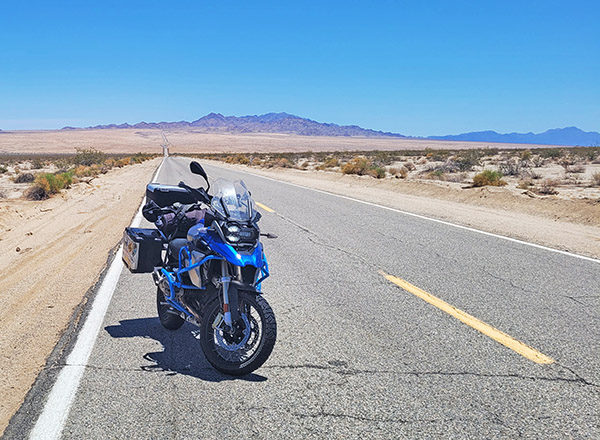
Highway 50, stretching from West Sacramento, California, to Ocean City, Maryland, is a scenic route that earned its moniker from a 1986 Life magazine article that described it as desolate and isolated. The section of Highway 50 referred to as the Loneliest Road is in Nevada. This road winds through vast stretches of remote desert landscapes, featuring rugged mountains and expansive plains that contribute to its reputation.
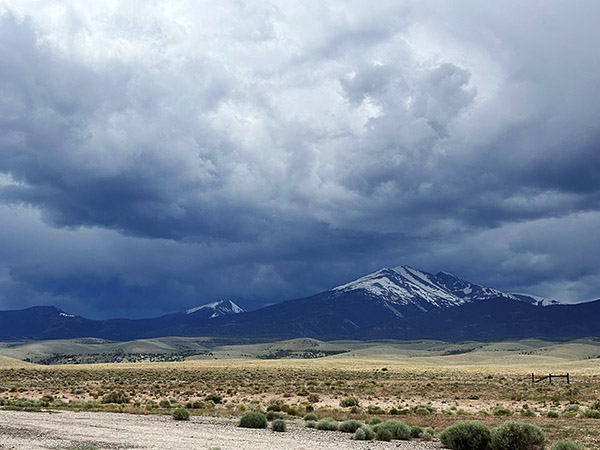
Traveling along the Loneliest Road offers a unique experience, characterized by long stretches between services. It is essential for travelers to come well-prepared, as gas stations, restaurants, and accommodations are few. Adequate fuel, extra food and water supplies, and an acute awareness of weather conditions, particularly during extreme heat or summer and winter storms, are crucial.

Despite its reputation for solitude, the Loneliest Road in America showcases stunning natural beauty, allowing travelers to immerse themselves in the vastness of the American West. Along the route, one can encounter remarkable attractions such as the Great Basin National Park, Lehman Caves, and several ghost towns. These highlights offer a glimpse into the unique charm and allure of this road less traveled.

Let’s dive into my own epic experience along this renowned route.

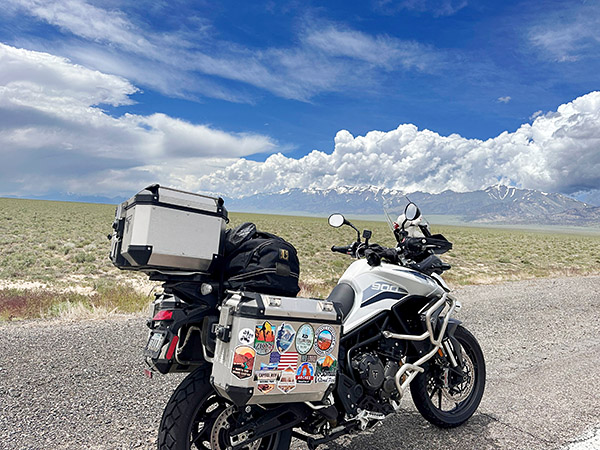
My journey began when I left my home in Sedona, AZ, riding my trusty Triumph Tiger 900 GT Pro, affectionately nicknamed “Tippi,” as she likes to take what I call unscheduled naps tipping over often at inconvenient locations. Loaded with gear for a summer of adventure, I set off on a bright June Sunday morning, spending five days exploring North Grand Canyon, Zion, Bryce Canyon, and the captivating Highway 12, before spending two nights in Capitol Reef.

Leaving Capitol Reef, I eagerly anticipated joining the long-awaited Highway 50, where it intersected Interstate 15 in Utah. Initially, the road meandered through open plains with scattered ranches along the way, offering nothing too remarkable. However, about an hour later, the ride became more intriguing as the winds picked up. As I glanced ahead, an ominous sky threatened an impending storm. Riding past sand and salt fields, I witnessed a bewildering phenomenon—the salt in the fields seemed to defy the wind, rising straight up in vertical columns rather than blowing or swirling. Bracing myself against the wind’s force, I pulled over to capture this puzzling sight but struggled to capture it adequately, settling for a short video clip as proof of my encounter.

Continuing across more plains, I found myself nearing the turnoff to Baker and the Great Basin National Park, my intended destination for two nights of camping and sightseeing. As I gazed at the mountain, I found an angry and ominous sky with snow-covered peaks that seemed to dare me to face the challenges of reaching its 7700-foot elevation to my destination at Upper Lehman Campground. Rain and lightning accompanied me as I rode into the tiny town of Baker, where I hastily stopped at the Visitor Center to check the weather report and determine how cold it would get during the night. Assured of temperatures above freezing, I pressed onward, rewarded with an epic campsite at Great Basin. Nestled alongside the rushing Lehman River, my campsite offered complete privacy, and I reveled in the wonders of the park over the next two rain-filled days and nights. The Lehman Cave tour was an unforgettable highlight not to be missed. As an avid hiker I loved that I was able to experience an epic 7-mile round trip hike along the mountain following ever upwards along the Lehman River complete with snow covered meadows and towering views of the mountain summit.

During my stay in Baker, Nevada, I discovered two places that I highly recommend. The first is the 489 Grill and Whispering Elms Motel and RV Park, which boasts a bar, RV and tent camping facilities, firewood, and the best burger I have ever tasted. Trust me when I say this is a significant claim, as I am a true burger aficionado. The food is not the only remarkable aspect; the owner and staff are incredibly hospitable, making your visit all the more enjoyable. The second recommendation is the Bristlecone General Store, a quaint establishment offering unique local gifts, an unexpectedly diverse selection of food options given its small size, and a coffee bar serving locally roasted beans by a blind roaster with an extraordinary sense of smell, resulting in a delightful brew devoid of the bitterness found in commercial beans. Among the store’s charms, one staff member named Rachel stood out for her warmth, hospitality, and willingness to share insights about Baker and local hidden gems. I was informed that Sandra’s Food Truck serves excellent and affordable Mexican cuisine—an experience I now eagerly anticipate for my future visits.

Reluctantly bidding farewell to Baker, I rejoined Highway 50, heading towards my next destination, South Lake Tahoe. Contrary to the dire warnings of scarce gas stations, I discovered that this notion was unfounded. Approximately 70 miles down the road, I arrived at Ely, another small mining town with plenty of services. After a quick refuel, I resumed my journey, realizing that the otherwise flat stretches of road were intermittently punctuated by mountain passes exceeding 7000 feet in elevation. These segments offered breathtaking vistas and enough twists and turns to satisfy both Tippi and me.

My first mountain pass, before descending into Ely, Nevada, presented an exhilarating ordeal with rain, lightning, and a brief ten-minute ride through hail. Eighty miles further, I found myself in the town of Eureka, where the threatening skies curtailed my exploration time. Nevertheless, I managed to visit a few must-see attractions, including the Opera House, built in 1879, the still-functional Courthouse of the same vintage, and a brief excursion to the town’s cemetery, where a variety of burial sites represented different social organizations, religious groups, and ethnicities. This walk-through history provided a fascinating glimpse into the town’s past.

Continuing on Highway 50, with the ominous skies in my rearview mirrors, I was reminded of the urgency to press on towards my next stop—Austin, NV. This old mining camp retains its rustic charm and has evolved into a haven for camping, hiking, and mountain biking, thanks to its proximity to the towering Toiyabe Mountains. During a pit stop, I encountered a large group of riders following the Pony Express Trail, who praised my adventure, while I vowed to return in the near future to explore that historic route.

Reluctantly bidding farewell to this enchanting mountain town, I embarked on another 112-mile stretch to Fallon, Nevada. This promised a well-deserved lunch break and refueling opportunity before the final leg of my journey to Lake Tahoe. As hunger pangs intensified, I hurriedly pulled into the first gas station I encountered. Curiously, the ground appeared slanted, making it impossible to safely park my bike with its kickstand without an extreme lean. Oddly, as my kickstand tends to be a bit high, I often worry about Tippi toppling over. Trying another station, I realized that my kickstand was not misaligned but broken—a sudden and unfortunate realization. With every ounce of strength, I fought to prevent Tippi’s full weight from pinning me between the gas pump curb and the engine crash bar. As I cried out for help, a kind soul named Caleb rushed to my aid, assisting me in righting Tippi. Examining the kickstand, I conceded that my lunch break was a lost cause. I refueled while seated on my bike and came to terms with the fact that I would have to ride the rest of the way without lunch and with a dangling kickstand, just inches off the ground.

Determined to soldier on, I pushed forward to Carson City, Nevada, before ascending the switchbacks and descending towards Lake Tahoe. The ride and the stunning view of the lake were awe-inspiring. I completed the remaining portion of my day’s journey with ease, covering over 400 miles. A warm hotel bed awaited me after seven nights of camping, and I eagerly anticipated reuniting with my boyfriend, Mike Huber, a fellow adventure rider who also happens to be a badass. I recommend checking out his posts on ExhaustNotes for a combination of insightful rides and outrageous travel stories.

In conclusion, my time on the Loneliest Road in America was an unforgettable experience. Despite the dire warnings I received, I found this historic stretch of highway to be well worth the ride. Contrary to popular belief, there are plenty of services available along the route, and the road itself is intermittently adorned with scenic mountain passes. The friendly locals and the sense of freedom that permeates this lightly traveled road are rare treasures that I seldom encounter. If you’re seeking a unique journey through the American West, I wholeheartedly recommend venturing onto the Loneliest Road in America.


Don’t forget to help bring content to you:  Please click on the popup ads!


Never miss an ExNotes blog:

Packing for a Long-Distance Motorcycle Trip

By Mike Huber 

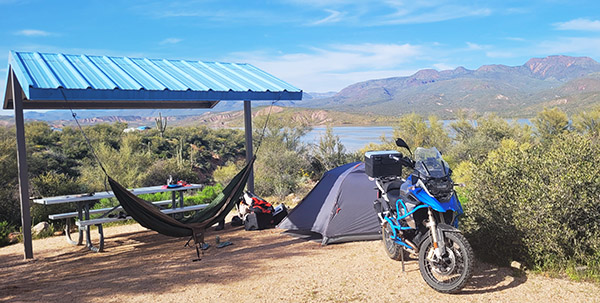
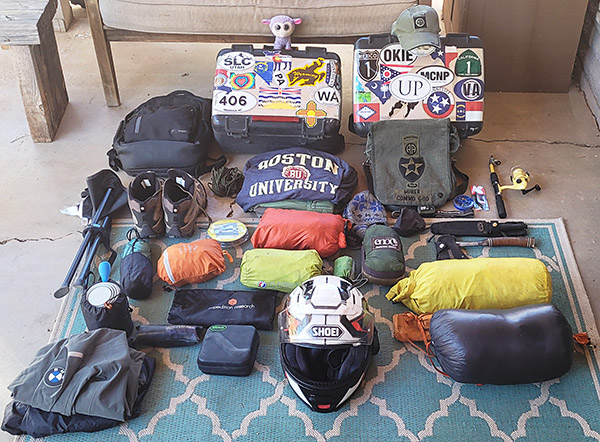
It feels like the perfect time to do a write up on packing for a long-distance motorcycle trip.  I left Sedona, Arizona, two weeks ago for a motorcycle journey to British Columbia on my BMW GS1200.  I didn’t quite pack everything I own, but close to it.  Having recently taken a hiatus from my day job there is no time frame for returning to Arizona other than when the weather changes in the Fall. With this being the case packing had to be tight, yet diverse enough for every possible type of weather that I may encounter.

My philosophy has always been less is better. This holds even more true when you have such minimal storage space on a motorcycle.  There is no need to have every centimeter packed to the gills.  Having a bit of remaining space allocated is important in the event you need to add gear or choose to pack sloppily after camping in the rain.  That buffer space should be held sacred. So, here is everything I am bringing along this journey.

      • Kelty 1-person Tent
      • Enu 2-person hammock (I like a larger hammock so I can wrap up if it’s cold)
      • Big Agnes sleeping bag (15 degree rated)
      • Laptop bag with chargers and backup portable battery
      • Luci Llight
      • Hiking boots
      • Stool
      • Cooking pot, cup, utensil, propane
      • Towel
      • Portable grill (for throwing a steak or freshly caught fish on top of some coals)
      • 25ft of paracord (usually for additional hammock straps as needed)
      • Day pack for hiking
      • Tire repair kit
      • Compressor
      • Fishing gear
      • Jumpmaster knife
      • Hatchet
      • Air mattress
      • Air pillow
      • Raingear (top and bottom)
      • Leatherman
      • SpotGen3 GPS (My Mom likes to know I made it to camp alive)
      • Headlamp
      • 3-liter expandable water blivit
      • Swimsuit
      • 2 pairs of pants
      • 3 pairs of socks
      • 3 pairs of underwear
      • 3 t-shirts
      • 1 pair of shorts
      • Duct tape
      • Electrical tape
      • Sweatshirt
      • Baseball hat
      • Riding jacket
      • Lambykins
      • Military side pack (for all fishing gear)
      • Winter hat (my Mom knitted)

Currently 10 days into this trip with 8 nights of camping in numerous weather conditions and I have remained quite comfortable.  Another barometer of success is when someone walks by my campsite as I am laying in my hammock reading a book and they comment “WOW, you fit ALL that on your motorcycle?”

I just smile and reply with a “yup.” I am now in northern California and will start hitting possibly more wet and cold weather so I will see how my gear continues to stack up against the elements as I travel further north with no real itinerary.  The main objective of this trip is to slow down, enjoy the moment, be present, and meet up with old and new friends along the ride.

Let me know if there is a piece of gear you feel I am missing or that you hold close during your long-distance motorcycle trips. I am always interested in improving my packing and living conditions while on the motorcycle.


Hey, a quick photo from this trip…there are two Joes, a deer, and two wild turkeys in the picture below.


Please click on the popup ads!


Never miss an ExNotes blog:

My Favorite Ride in the USA: Utah’s Highway 12

By Bobby Surber

Highway 12, also known as Utah State Route 12, is an awe-inspiring scenic byway in southern Utah that holds the prestigious title of being an “All-American Road.” Stretching approximately 124 miles, this route captivates travelers with its breathtaking landscapes and unforgettable views.

Starting near Panguitch, my journey along Highway 12 began with mounting excitement as the first red arches came into view. I took a short detour off of Route 12 to immerse myself in the famous hoodoos and trails of Bryce Canyon National Park. Lucky enough to secure a campsite at Sunset Campground, I made quick work of setting up my camp and heading out for a long afternoon hike. The next morning I witnessed a magnificent sunrise casting a warm glow over the canyon, illuminating the striking hoodoos and crimson rocks, a memory I won’t forget!  A one-night stay in Bryce leaves one unsatisfied and longing for more time to explore her magnificent trails.

Continuing my adventure the following morning, I eagerly resumed my route on Highway 12, heading towards my favorite section of the road, high above the captivating Grand Staircase-Escalante National Monument. This expansive and remote region boasts rugged canyons, vibrant cliffs, and extraordinary geological formations. The landscape and its impossible rock formations treated me to endless twisties, creating a sense of otherworldliness. My Triumph Tiger 900 GT Pro was as happy as I was as I relaxed into the ride and allowed her to remind me again what her three cylinders can do. Both of us were in sync as we leaned into curve after curve and blasted down to the bottom of the canyon.

For those with extra time, I highly recommend exploring nearby slot canyons such as Peek-a-Boo and Spooky Gulch, which offer outstanding hiking experiences.

Don’t miss the enchanting Calf Creek Falls nestled at the bottom of a lush canyon. A short hike leads to a captivating waterfall.  While leaving Calf Creek be sure to watch for a dirt road on the left with a sign for coffee. Take that turn and savor a cup of Joe with a view that will leave you speechless.

As I reluctantly approached the tiny town of Boulder, Utah, I realized I had made remarkable progress through the twisties.  I was unexpectedly greeted by an old-school cattle round-up, complete with cowgirls and boys herding a large herd down Highway 12! After a brief turnaround, I found solace in my favorite restaurant, the Burr Trail Grill. Their farm-fresh ingredients delighted my taste buds, whether it was their fresh arugula salad topped with local goat cheese or their beastly-sized burgers that proved a challenge to conquer.

Resuming my journey on Highway 12, I found myself in an unexpected predicament. The cattle herd’s progress was slow and I crawled along clutching endlessly as I felt my left hand about to begin a serious complaint! Amidst the frustration, two memorable moments emerged.  First, a passerby exclaimed, “Dude, you have the sweetest bike and setup!” We shared a laugh as he realized I was indeed “dudeless.” Second, after navigating my way to the front of the line, I convinced the lead cowboy to move the herd slightly to the right, allowing me to pass. Maneuvering my bike through the cows became a comical adventure, with prayers that the sound of my motor wouldn’t startle them. Experiencing this traditional cattle drive in 2023 felt like a slice of Americana and added yet another reason to love Utah.

Leaving the cattle behind I ascended Boulder Mountain, where endless views revealed the back of Capitol Reef on the right and scenic meadows with clusters of aspen, fir, and spruce trees on the left. Surprisingly, the mountain still boasted more snow than I expected in June. Camping, fishing, and wildlife viewing opportunities abound in this mountainous region, with numerous sites available. I’ve spent nights here savoring the breathtaking vista overlooking Capitol Reef and the sprawling valley floor.

As I arrived in Torrey, Utah, the end of Highway 12, I couldn’t help but lament the route’s brevity. With just 125 miles of captivating beauty, I yearned to turn around and experience it all over again. However, the call of the canyon beckoned me for a rewarding hike, followed by a well-deserved whisky to bring an end to a truly perfect ride.

Highway 12, Utah—truly a magical journey that captures the heart and leaves an indelible mark on the soul.


Never miss an ExNotes blog:


Help us keep the content coming:  Please click on the popup ads!

El Condor Comida

By Mike Huber

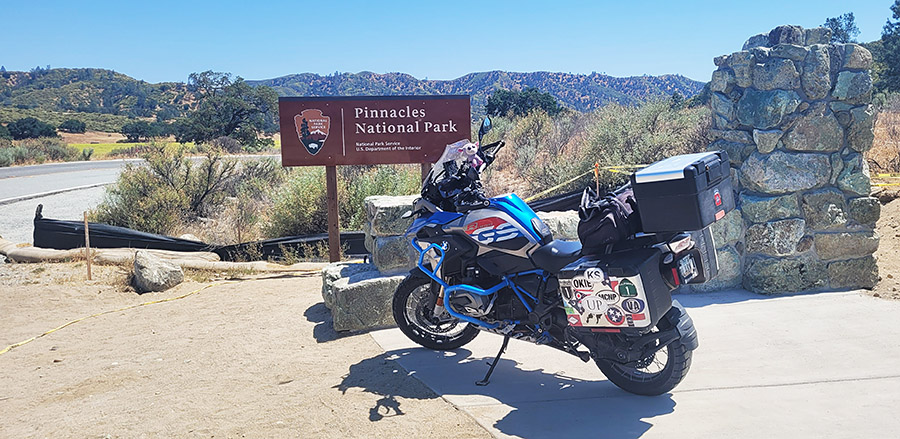
Pinnacles National Park is the 50th National Park I visited. I believe there are 63 National Parks total (National Park Service keeps adding them yearly, so…).  As with all the parks it is rare to be disappointed with a visit to any of them.  In fact, I have visited some of the parks numerous times just to be sure to fully embrace each part of them as many are quite large.

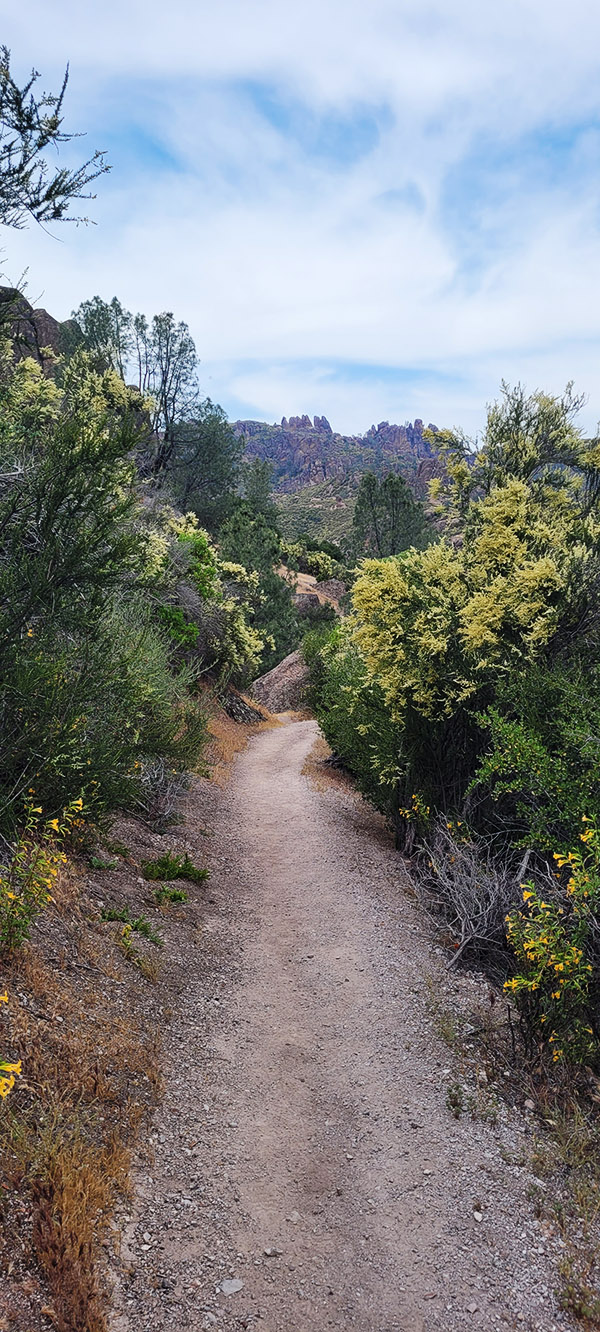
Pinnacles National Park is one of the lesser visited National Parks, which I find refreshing since there are fewer tourists than other National Parks, like Yellowstone and Yosemite where the crowds can be almost overwhelming and detract from the experience. For Pinnacles I had reserved two nights camping so once I arrived late in the day, I could knock out a shorter hike and complete a long hike on the spare day.  The longer hike I chose was to summit the highest peak in the park, Chalone Peak, which reaches 3,304 feet in elevation.  That isn’t that bad because there is only a 2,034-foot elevation gain from the base. This is a 9-mile trail that snakes through beautiful hills. Every turn provided an incredible panoramic view of the fields below and the mountains that stretched to the sky.

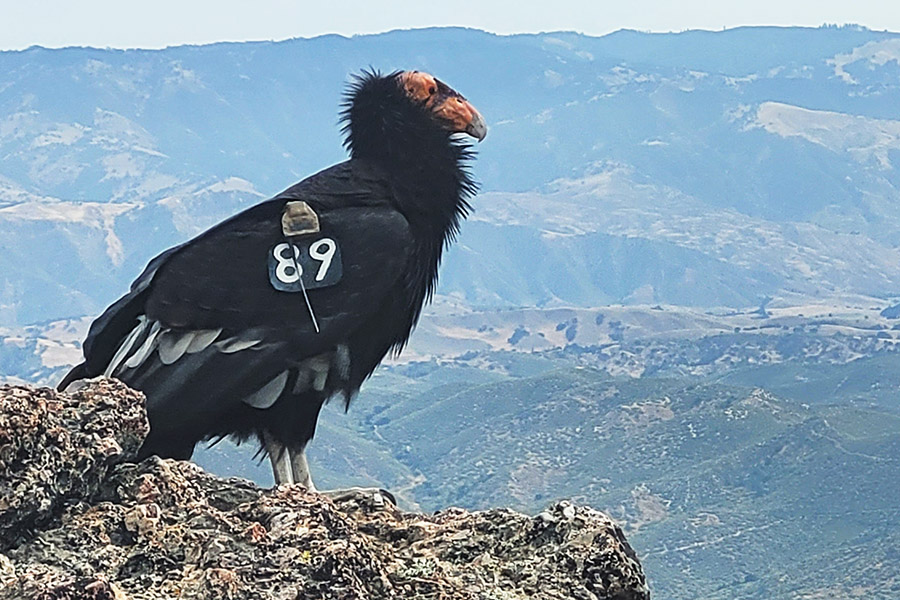
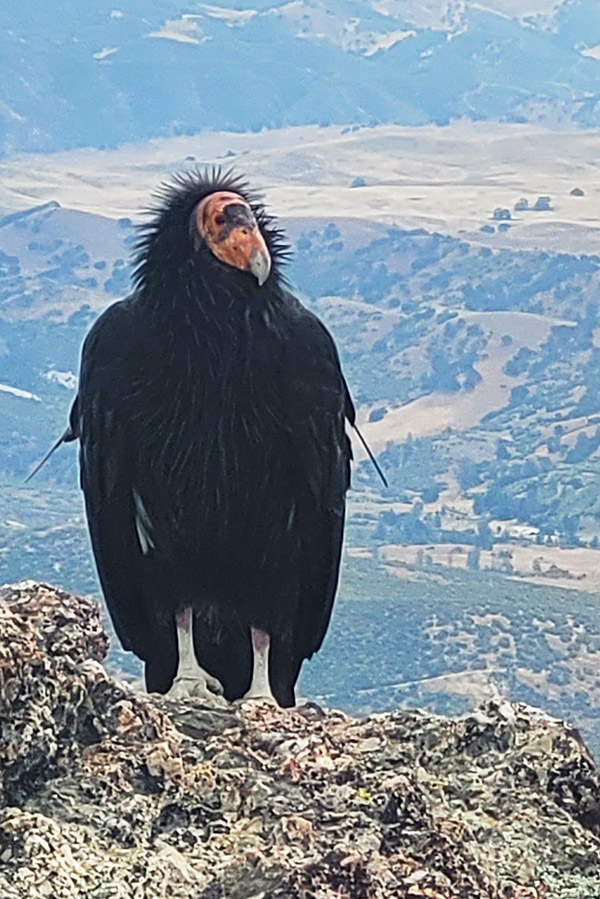
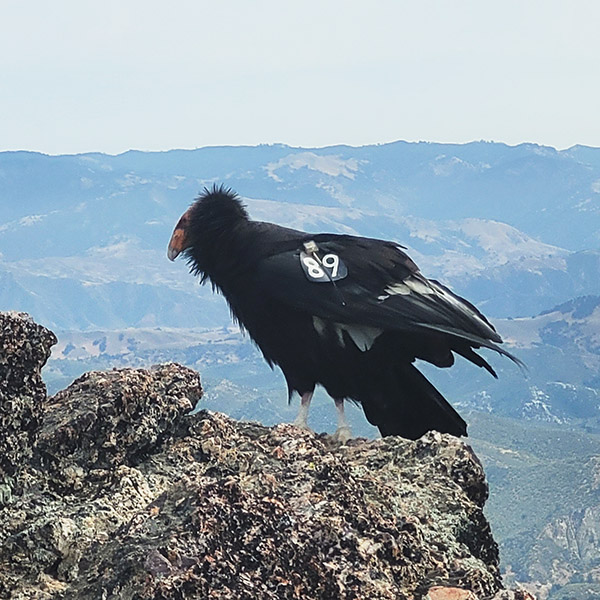
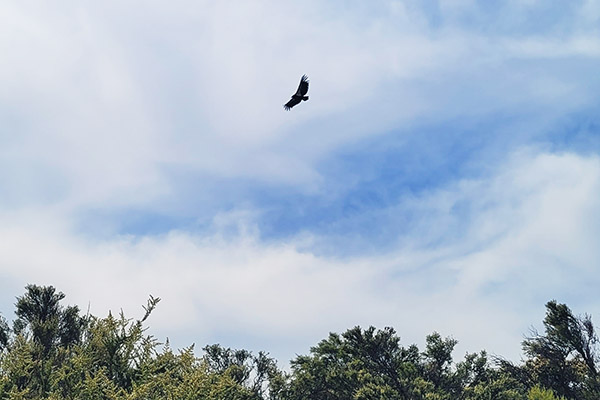
Once summitting the peak, it was time to rehydrate and fuel up with lunch for the hike back.  As I sat down, I heard what sounded like someone vomiting.  Looking to my left I saw I was sitting about 25 feet from a California condor.  It was tagged with No. 89.  The National Park Service tags these rare birds to track and follow them at a level not seen since Facebook started tracking me. Having researched No. 89, I learned this guy was born in captivity in Idaho in 2011. There are under 600 of these massive birds remaining in the world. To have the rare opportunity to see one was magical, but to be able to sit next to one for 30 minutes as I ate lunch was something spiritual, equivalent to petting the gray whales in Baja.

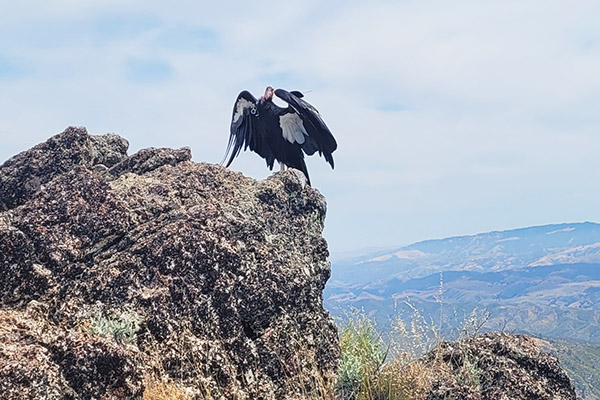
As I sat eating my lunch the condor and I constantly exchanged gazes.  Every so often it would spread its wings to show off its true size.  Not only did it not seem bothered by me, it seemed to enjoy my company (I mean, who doesn’t?).  After about 30 minutes I began wrapping up lunch and as I packed up, No. 89 silently turned away, spread its wings, and leapt off the rock like a hang glider sailing down about 100 feet and then turning upward it flew off into the distance.

This magical encounter reinvigorated me for the 4.5-mile hike to the base of the mountain. I had a solid buzz from the encounter for the remainder of the day.  Just like all the close encounters I have had in nature, that buzz never seems to fade and it has me looking forward to National Park Number 51.


Please click on the popup ads!


Never miss an ExNotes blog:

Chaco Canyon, New Mexico

By Joe Gresh 

In 2019 we booked a campsite at Chaco Canyon in northern New Mexico. Chaco Canyon was a fairly large Native American city that served as the capital for the Chaco people a thousand years ago. Strung out along the canyon within walking distance of each other there are several large, condominium-style structures, some reaching 5 stories high and all of them with courtyards, living areas, kivas, and storage rooms. The condos were built with fantastically intricate stonework consisting of millions of large and small stones. Chaco society was well organized and their mathematics and architectural engineering were well advanced, as it would need to be in order to produce such big, complex buildings.

Also in 2019 the plague hit and Chaco Canyon was closed to visitors, so we never made it to the campground. The same thing happened in 2020, so we missed Chaco that year and instead spent our time arguing on the Internet about masks and vaccines with medically-trained basement dwellers. In 2021 we had a reserved campsite near the cliffs of the canyon and not long before we were due to arrive the cliff calved, covering our campsite with boulders. The campground was closed in order to clean up the rubble. The section where we were booked is still closed.

In 2022 we again called the ranger station at Chaco Canyon and reserved a site.  All looked well in 2022 but a day or two before we were to leave CT came down with a nasty cold and we decided camping would be no fun with one of us sick in bed. Reluctantly, we cancelled our reservations yet again. Our efforts to see Chaco Canyon seemed cursed. We decided to try again in 2023 and figured March would be a good time to go. We wanted to avoid the hot summer months. Building up to March everything was going swimmingly; this would be the year we finally made it to the historic Native American site.

And then the rain started. We watched the weather reports coming in from Chaco Canyon: rain, snow, hail. It rained at Chaco Canyon every day the week before we were to go. All roads leading to Chaco Canyon involve quite a few miles of dirt. The rougher, south entrance to the canyon was closed due to the muddy road being impassable. We didn’t care: we were going to Chaco even if we drowned in mud. Farmington was our staging area for the camping expedition and we drove in spotty rain all day to get there. Turning north out of Albuquerque on Highway 550 we stopped for gas. While I was filling the gas tank it started snowing. Then the wind picked up to a brisk gale. The last 50 miles to Farmington were in a drizzly rain mixed with sleet. We made it to our motel where it rained all night long. The normally well-maintained north entrance road to Chaco Canyon was starting to look a bit iffy.

The next day was overcast and rain threatened, but the morning was drama free with only a light dusting of snow on our way to the entrance to Chaco. If you’re going to visit Chaco Canyon you’ll no doubt read horror stories about how rough the road is leading to the canyon. Keep in mind the people fretting about the road are driving giant RVs held together with staples and chewing gum. You may lose a kitchen cabinet or an ill-considered propane tank. If you are driving a car or truck you’ll be fine. Unless it has rained five days straight before you arrived.

Turning off Highway 550, the first 8 miles to Chaco Canyon are paved and then the road turns into wide, graded dirt. This section was very muddy and CT put her Jeep in 4-wheel low and locked the front and rear differentials. She couldn’t go very fast because the Jeep wanted to spin into the ditch at the slightest sign of ham-fisted steering. Down hills were exciting; the Jeep kind of drifted to the bottom in a semi-controlled slide. The mud wasn’t deep, only a few inches, but it was like driving on ice covered with ball bearings and oil.

We saw two other vehicles on our 23-mile ride and one of them was stuck in a ditch. CT is a big believer in recovery gear so she has straps and chains onboard at all times. Unfortunately this means we have to stop and help people who get stuck in a mud bog. The guy was so glad to see us. We came to a gentle stop 30 feet past the deepest part of the mud hole. “You got a rope?” I asked Mr. Stucky.

“No I sure don’t,” he said. I gave a dejected look at the mud.

“Do you guys have anything we can use?” he asked.

“Yeah, we got something.” I stepped into the mud and pulled CT’s clean ARB tow strap out of its clean zipper case.

“I think if you can pull me back onto the road I’ll be ok. I was going too fast and spun out.”

I was only half listening to Stucky.  All I could think of was that this means we have to get CT’s ARB tow strap muddy with this sticky goo and then I’ll have to clean it later.

Walking was hard due to the mud sticking to our boots and the slipperiness, but we managed to connect our nice, clean, tow strap to Stucky’s SUV and pulled his rig backwards towards a less muddy area. Stucky’s mini SUV didn’t want to leave the ditch and it crabbed along spinning wheels and slinging mud for 100 feet before it popped out of the rut and onto what passed for the road. I started to wind up the tow strap when Stucky, sensing my disappointment, said, “Here, let me get that. No need for you to get any muddier.” I was muddy already, but I handed Stucky the strap. I wanted him to feel like he had a stake in not getting stuck again. As Stucky coiled the ARB tow strap mud oozed between each wrap. We were only a few miles to the campground from this point.

Once you make it to Chaco Canyon the roads are paved so we had no trouble finding the ranger station or our campsite. The place was nearly deserted. Stucky’s little teardrop trailer was the only other camper at Chaco that day. Fast moving clouds scudded from west to east bringing alternate periods of sunshine, snow, rain and hail. During a sunny spell we set our Campros tent up on the nice, raised tent platforms provided to each camping spot. The raised tent spots are built from pressure treated 8×8 beams laid out in a square totaling 14 feet by 14 feet. The squares were filled with nice, soft dirt and we were damn near glamping, you know? I guess if I were more observant, the tie down clevises screwed into the pressure treated lumber would have given me a hint about wind speeds in Chaco Canyon.

We watched the looping, 15-minute Chaco Canyon video at the ranger station’s little movie theater and then decided to set up and get our junk sorted out. It was windy and cold but we had plenty of warm clothing to wear. CT brought along 6 jackets, 7 hats, and 3 duffle bags full of thermal underwear. The tent was heaving and snapping; it took two people to hold it still long enough to assemble the thing. The temperature started dropping as soon as the sun went down. A campfire was out of the question in this wind so we made our bed, ate a little cold-cut snack for dinner, drank hot, Dancing Goats coffee and sat at opposite sides of the tent holding the corners down.

Moving all the heavy gear to the perimeter of the Campros tent seemed to keep it from blowing over. We were able to snuggle together in the sleeping bag and kept from freezing, which was the whole reason I wanted to go camping with CT in the first place. We saw 27 degrees that night and the wind never stopped blowing. The next day was slightly warmer and the sun was peeking out from the clouds, but it was even windier.

Due to the weather all the ranger presentations were cancelled. We signed up for a Chaco tour led by a Navajo business called Navajo Tours USA. We used these guys before at the Bisti Badlands and they are great fun. The tour started at 10 a.m. and we went to each condominium and wandered around while our guide told us about the different stone patterns and construction details of the buildings. Usually Chaco great houses have a basement level and many of the places we were walking had filled in with dust and sand over the preceding thousand years.

Above the basement there were three or four stories. Each level was accessed by a ladder from the level below. This system continued on until you reached the roof. The floors were made from large wood beams, called vigas in Spanish.  Over the beams were placed smaller sticks and an adobe floor. The vigas hauled to Chaco came from the mountains many miles away. I figure there must have been some sort of money or economy that would have allowed workers to drag those beams and still be able to sustain a living wage.

The walls of the condos were fairly thick. Starting at the bottom the walls were three feet thick or more. The walls tapered as they rose, becoming thinner floor-by-floor.  Top-floor walls might only be one foot thick. Originally, the inner walls were plastered smooth with some sort of lime coating. In a few spots you could still see the factory stucco. There were windows that let light into the rooms.  Inner rooms were dark but they had openings that aligned with outer windows that allowed outside light to penetrate several rooms deep. The outside windows had wooden shutters for winter use.

The winds, strong already, were picking up and at times you’d be blown off balance. Each gust brought a stinging blast of sand and my eyes were getting full of grit. The Chaco people situated their buildings according to astronomical events. Usually one long, straight wall aligned with the rising sun at the solstices. Sometimes the wall pointed towards a particular star. The building was a giant calendar.

There is a lot more to the Chaco culture, the long, straight roads they built, where their food came from, and why the city was abandoned after only a few hundred years, but it was late in the afternoon and getting colder. The wind was so strong I couldn’t hear our guide very well. Light hail was falling and wisps of snowflakes juked and stutter stepped in the air. As much as I enjoyed the lecture I was glad when it was over. I like it outside but there is such a thing as too much outdoors. We went back to the campsite to have a little hot tea.

Camp was a disaster. Our Campros tent looked like a downed weather balloon. Tent poles had broken, stakes were pulled out and the rain fly was detached and flapping in the breeze. Inside the tent everything was covered in dirt blown in through the screened roof.  We tried to get the tent propped back up but when I pulled on it things started ripping. We managed to get the rain fly back over the wreckage and placed large boulders on the corners to hold it in place. It was snowing again. There was nothing to be done with the wind blowing so we went to the ranger station and loitered. I bought a ceramic coffee cup with a Chao Canyon logo; it was good to be out of the wind.

By 7 p.m. the wind eased up a little and we went back to camp to try to salvage what we could. Our first chore was emptying the Jeep before it got dark. The idea being if we couldn’t fix the tent we could retreat to the Jeep and sleep in the back. Sure it would be cramped but at least we had a heater in the car. And the car wouldn’t blow over. Maybe.

We managed to get the tent propped back up with the short, broken poles. The short poles made every other dimension wrong. The main ridge pole had a huge S curve and there were wrinkles all over the place. It wasn’t a thing of beauty. Besides the broken poles, the upwind corners were ripped where the tent stake loops attach. We propped heavy stuff in those corners to hold the tent’s shape. Next we cleaned up all the sand as best we could and finally got organized enough to have another cold dinner and hot coffee. A campfire was out of the question because neither of us wanted to bother.  In retrospect, when we left that morning we should have lowered the tent and placed rocks on the rain fly to hold it down. I believe it would have survived without a problem. I have no gripe against the tent: it went through a hurricane.

The jury-rigged tent stayed up all night long and by morning the sun was out and it was a relatively warm 40 degrees. Blue sky shined in through our open tent door and the wind was a gentle breeze. If our reservations were made just two days later we would have had a totally different feel for Chaco Canyon. It would have been nice Chaco Canyon instead of mean Chaco Canyon. The muddy road had dried up and was now passable by standard automobile. The campground started filling up as we packed our gear. Old Joe would have folded up the battered tent with the broken poles and torn corners, taken it home and stored it for 43 years thinking he was going to fix it one day. New Joe tossed it in the dumpster.

Those long-ago Chaco people had it much better in their thick stone buildings. Maybe the climate was different then, but I suspect not that much different. And it was an unusual weather pattern that saw all the other campers cancel their reservations leaving only Stucky, his dog and us in the entire joint.  The campgrounds were nice with clean bathrooms, flush toilets and heat, but no showers. We never did get to see all the buildings because it was so windy and cold. CT and I want to back to Chaco Canyon and explore more but maybe next time we’ll go when the weather is more clement.


Never miss an ExNotes blog:


You know what to do:  Please click on the popup ads!

Three Favorite Sedona Hikes

By Bobbie Surber

Arizona’s Sedona area offers fantastic hiking.  This blog describes three of my favorites.

Bear Mountain Trail

Bear Mountain provides fantastic red rock views. The start of the trail is at about 4600 feet in elevation from the parking lot. At the final summit, the elevation reaches 6150 feet.  At the summit of Bear Mountain, you can see the San Francisco Peaks in Flagstaff, views of Bell Rock in the Village of Oak Creek, Verde Valley, peaks of Sycamore Canyon, and all West Sedona.

Bear Mountain hiking trails. From top left, going clockwise: Bear Mountain Canyon views, start of the Bear Mountain Trail, the Bear Mountain trailhead, and me atop Bear Mountain.

A warm spring day found me on the Bear Mountain Trail with a new friend I met during a Sedona Meet Up Hiking event. Linda is from New Jersey and is an avid outdoorswoman, hiker, and yoga devotee. I enjoyed Linda’s company as we marveled at the views and shared about our lives, family, and career paths.

I was happy that the Bear Mountain Trail DID NOT kick me in the behind. A challenging hike with an 1800 ft gain over the course of 3 levels of summits. This is a designated wilderness area, so there aren’t any trail markers once you enter the designated area. Watch for trail markings carefully and pay attention, as you will encounter several false summits before reaching the peak. Views along the way revealed stunning red rock slot canyons and an area resembling a mini Grand Canyon. This is a steep trail with some rock scrambling. Please pay attention to the trail, as it is easy to get off track. 2 liters of water is the minimum recommended for this strenuous hike, more on a hot day. A hat and walking poles are also very helpful.

This hike is advanced and difficult. You should be prepared with proper footwear, water, food, and layers of clothes.

Sugarloaf to Lizard Head to Chuck Wagon to Brins Mesa, returning via Jordan Trail

Sunday morning started with a chill in the air and an overcast sky. I postponed getting out of bed and decided on another cup of coffee; my favorite, extra dark roast made strong enough to curl your hair worked its magic as I continued to procrastinate a few moments longer with a leisurely read of the Sunday paper. My hiking shoes waited anxiously beside my bed for the impending long hike. Not sure if it was the regret of a wasted Sunday or the sudden clearing of the clouds, whatever it was, I surrendered, dumped the remainder of my brew, got the hiking shoes on, and headed out the front door.

Coffee Pot Rock.

My goal was to try out Day 1 of a planned 3-day hike in Sedona and the Village of Oak Creek. I headed to the Sugarloaf Trailhead catching the Andante trail over to Chimney Rock Saddle to connect to the Lizard Head trail. This is where I was momentarily lost. OK, not momentarily lost… but I could not locate the %&# trail for about an hour! Man, talk about the embarrassment of getting lost in my backyard!

After bushwhacking and following a new chain-link fence, I found Lizard Head and started the ascent. Within a half hour, I was high up on the side of the mountain, and sure, I was too high for this trail. Thank goodness for cell phones and a call to my friend Doug, the master of all things related to Sedona trails, who knew exactly where I was and assured me I only needed to butt-scoot down the rocks about 100 ft and begin my descent to the bottom of the trail. He was dead on!

The Brins Mesa marker.

Besides my inability to navigate easy-to-locate trails in my backyard, I did not care for this section due to road noise off Dry Creek Rd. This, however, was short-lived as Lizard Head connected to Chuck Wagon trailhead with a lovely new picnic area, maps, and toilets. A fast rest and lunch, and I was back on the Chuck Wagon trail heading to the Brins Mesa trail. Chuck Wagon trail meanders through open vistas and dry gullies with views over Boynton and Secret Canyon. A wonderfully easy trail with outstanding red rock views. By 3 pm, I was at the trailhead of Brins Mesa with the much-needed forest to cool me off. Brins Mesa is always my favorite. Not sure why; perhaps it is the rebirth after the fire of 2006 or the feeling of others that have walked this Mesa for hundreds of years. Whatever the reason, I had a surge of endorphins firing off in my brain, and I was in complete bliss despite a longer-than-expected day of hiking and a start of a dreaded blister on my little toe.

After an enjoyable day of hiking, one might think that nothing could top it. However, heading to the Oak Creek Brewery from the Jordan trailhead for a delicious hotdog and refreshing beer further elevated my experience in Red Rock Country. Spending a Sunday in this manner gives a new meaning to Sunday Funday!

This 12-mile hike is moderate difficulty. Bring plenty of water.

West Fork Trail in Oak Creek Canyon

The West Fork Trail is a moderate hiking trail known for its picturesque views of the red rock canyons and the crystal-clear waters of Oak Creek. The out-and-back trail follows the creek for about 6.4 miles and takes around 2 to 4 hours to complete. It is suitable for hikers of all levels, including families with children. Hikers should wear appropriate gear and bring plenty of water and snacks. You will make numerous water crossings and find that water shoes make the trail more manageable; check the weather forecast for storms and potential flooding.

On the West Fork Trail.

My morning could not have been more perfect. Hot coffee served bedside, the sun shining brightly, two soft-boiled eggs just the way I like them, and an 8 am date with Elaine to hike the Oak Creek Canyon.

West Fork leaves, and the West Fork trailhead.

What I did not expect was to hit the famed West Fork Trail at the perfect date and time to see our Arizona fall leaves at the most glorious time of year. The morning light was enchanting as it filtered into the canyon, backlighting the trees and setting the red rock cliffs glowing with burnt orange with soft buttery yellows and rust red. Childhood joy resurfaced as we worked our way back and forth across Oak Creek; with each turn along the trail, nature revealed yet another excellent view of the Canyon.

West Fork Trail scenes.

It is difficult to describe this trail’s beauty in the fall. The experience goes beyond language; one must turn inward and fully immerse themselves in the earth’s magic beneath their feet. The power of the running creek and the ever-changing red rocks add to the enchantment of the surroundings, creating a truly indescribable experience. The company was as wonderful as the views along this hike.  It was so nice to have some Elaine time and, for a moment, remember what it is like to be removed far from our hectic busy lives and reacquaint with an old friend in an enchanted setting such as this.

Be prepared to face water crossings.


Sedona and the surrounding areas have an abundance of hiking opportunities. Thirty-seven years of living in this Red Rock paradise, and I still have hikes on my list yet to be explored. If you are planning a trip to Sedona, consider using All-Trails and stopping by the Forest Service office for up-to-date restrictions and trail conditions.  If hiking is what gets your mojo on, then Sedona will not disappoint!