The 70% Rule

One of my moto buddies stopped by Tinfiny Ranch, our high desert lair in New Mexico, and in the course of showing him around the property we got to talking about how incomplete everything was. He called it the 70% rule. As in 70% is close enough and time to move on to another project.

I blame it on my upbringing because I was raised in a house that was under construction for 16 of the 19 years I lived at home. There were additions, a second floor added, Walls knocked out and relocated, wall unit air conditioners installed and all manner of improvements that never saw completion. Oh, the stuff was sort of finished. The air conditioners worked fine but were never trimmed out, leaving a jagged edge around the face. The second floor had a beautiful staircase and the roof didn’t leak but it was still bare walls and floors when I left home for good. Same for the upstairs bathroom: the plumbing was stubbed out but the fixtures never were installed. The cats loved it up there. They had the whole floor to themselves.

Finishing just doesn’t seem that important to me. I’ve got the off-grid solar panel system working in Tinfiny’s large metal shed. Except it needs more batteries to complete the storage system. I have the 3000-watt array connected to four group 31 batteries, which the solar can charge in about an hour of sunshine. The rest of the day the solar power is wasted. I need about 12 more batteries to give the solar panels something to keep them busy. And I’ve yet to run the 12-volt circuits or the 24-volt circuits but I do have some LED lights and 120-volt outlets.

I’d like to have a concrete floor in Tinfiny’s shed. I’ve been working on it. Sadly, only around 25% of the floor is concrete leaving 75% (AKA the lion’s share) dirt. It’s a solid sort of dirt though, and not much water runs under the building’s edge when it rains, unless it rains really hard. Then it gets a bit muddy. It would have been a heck of a lot easier to pour the slab first, then put the building up but that ship has sailed.

I’ve nearly finished the water system. There’s a 2500-gallon tank being fed rainwater from half of the shed roof. I plan to gutter the other half some day but first I have to finish those 24-volt circuits to get the pressure pump working. I know the pump works ok because I’ve rigged it up to an 18-volt Ryobi battery. It’s just temporary, you know? There’s a pesky leak on one of the Big Blue filters. I’ve taken the canister apart several times but it still leaks from the large o-ring recessed into the canister. I leave the Ryobi battery out of the jury-rigged power connector when I don’t need water. That slows the leak quite a bit.

When you are off-grid you need a generator as backup in case a series of cloudy days runs the battery-bank down. Of course, the generator needs its own well-ventilated, soundproofed shed to keep the generator out of the elements and not drive everyone within a 4 square mile area crazy. I have almost finished the generator shed. I’ve got the floor poured, the wiring to the solar-generator transfer switch installed and complete but for some reason the wheels came off and the project stalled.

Lately I’ve been tinkering with an old Kawasaki Z900. If I run true to form and leave it 70% finished something will have to give. I could eliminate the brakes or maybe run 3 sparkplugs instead of 4. Tinfiny Ranch has more examples of my inability to complete a project. I estimate around 30% more. Hey wait a minute, this means we are nearly 70% done with this story. I guess that’s close enough.
Sniper!

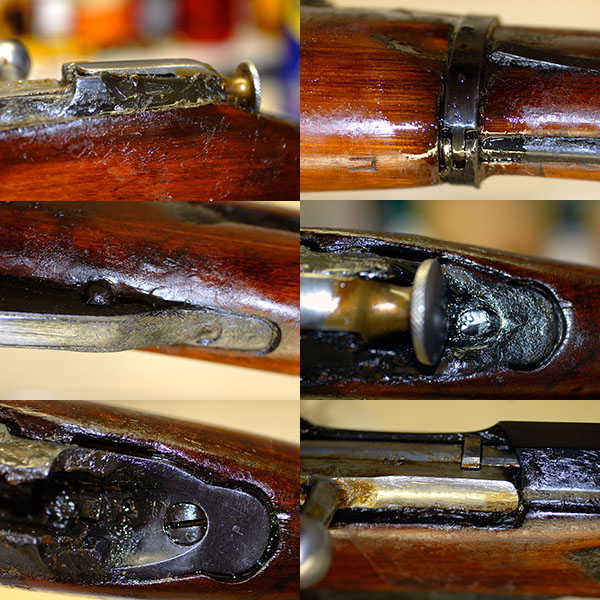
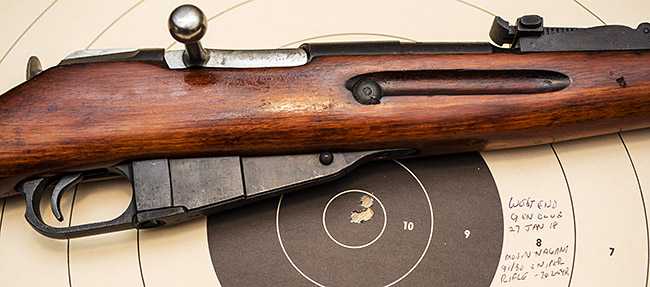
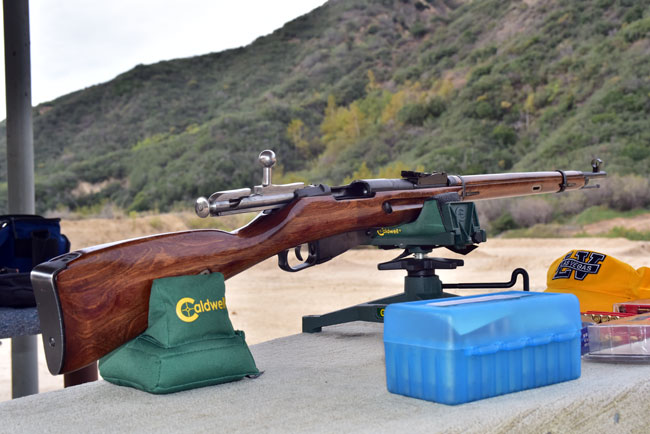
A thing of great beauty…10 hand-rubbed coats of TruOil, glass bedding, a trigger job, and a consistent 10-ring shooter. My Mosin is 75 years old.

I’ve written before about the Mosin-Nagant rifle, and I thought I would return to that topic to tell you a little bit about how I got into playing with these fine old Russian infantry rifles.

I had seen Mosin-Nagants on the discount racks at what I had always considered low end gun outlets (Big 5 Sporting Goods and other general purpose stores), but I never considered purchasing one. The Mosins on the rack were filthy, caked in cosmoline with dinged-up stocks.  They initially sold for $59 here in the US a few years ago, and they looked like $59 rifles to me.   Cheap.  Not up to my standards.  I was and still am a gun snob.  I thought the Mosins were too dirty to even handle, let alone purchase.  Nope, not my speed, I thought.  Any rifle that Big 5 was selling for $59 was not worth my time or consideration.   Ah, if only I knew where prices were headed, and just how good these rifles are.

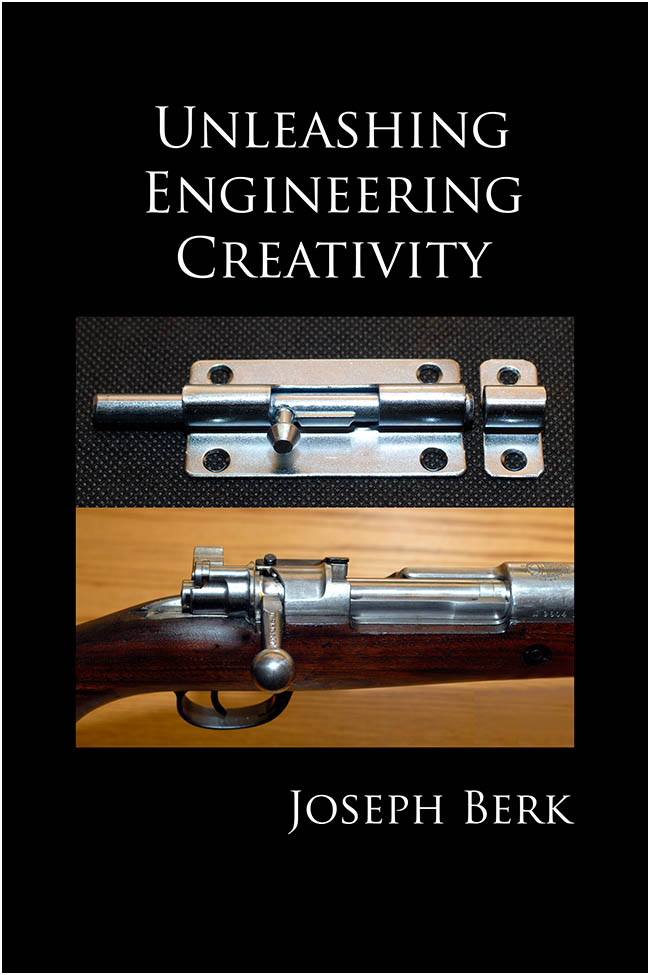
Fast forward a bit, and I was teaching a class on engineering creativity at Cal Poly Pomona. One of the techniques engineers can use to inspire their creativity is called TRIZ. It’s a technique that came to us from the old Soviet Union, and it involves looking at older designs in different product areas for ideas.   A classic example is Paul Mauser’s bolt action rifle, which is said to have been based on a common gate latch (in fact, I used of photo illustrating this as the cover shot for Unleashing Engineering Creativity).

http://exhaustnotes.us/images/Books/UnleashingEngineeringCreativity.jpg

One of my young students approached me after class to tell me about the Mosin-Nagant he and his father had purchased (at Big 5) for under a hundred bucks, and how much fun they were having with it. That planted a seed, and when I stopped in for my weekly gun-gazing fix at a local gun shop later that week, I bought a Mosin they had on the rack for $129.  The kid who showed it to me put it in the box when I started my 10-day waiting period (here in the Peoples Republik of Kalifornia we have a lot of goofy gun laws).  What neither that young man nor I knew was that there was a bayonet in the Mosin-Nagant’s cardboard box, and when he slid the rifle into it, the bayonet scratched the hell out of the stock.

Live and learn, I guess.   I wasn’t upset.  In fact, I was glad. The rifle was inexpensive enough that I saw the bayonet scar as an opportunity to completely strip the rifle down, do a trigger job, glass bed the action, and refinish the stock.  I did, and the rifle went from being a banged-up, gouged-up, cosmoline-encrusted derelict to…well, a  thing of great beauty. I kid you not, as the saying goes. Every time I take my Mosin to the range, I get compliments.  It’s the rifle you see in the photo at the top of this blog.

Russians like cosmoline, I guess. The cosmonauts apply it liberally.

But that’s not the whole story. The rest of this story is that the thing can shoot. I only shoot my own reloads, and the results are phenomenal. I have a jacketed bullet load I use and another load for cast bullets . Both are extremely accurate. My $139 Mosin is the most accurate open-sighted rifle I’ve ever shot.   Who knew?

That accuracy thing is not unique to my rifle. My good buddy Paul bought a Mosin after listening to me rave about my Russky rifle (in fact, several of my friends bought their own Russian war horses after listening to me babble on and on about mine). Paul found out his rifle was a former sniper weapon, and he asked me to try it. I did. I put three of my reloads through it, and after firing the first shot, I thought I missed on the second two (the target was 50 yards downrange, and all I could see at that distance was one hole). When I looked through the spotting scope, though, it told a different story.

Paul’s sniper, after I put three rounds downrange. I offered to buy Paul’s rifle and start the 10-day People’s Republik waiting period immediately. “Nyet,” was his only reply.

The Mosin sniper rifles are amazingly accurate.  When the U.S. military equips snipers, our armorers build the rifles from the ground up to assure extreme accuracy.  The Russians did it differently.  The Russians built approximately 17 million Mosin-Nagants from 1891 on, and they range fired every one of them.  When they found a rifle that was particularly accurate, it was designated as a sniper weapon.  It was one of those rifles you see in the photo above.

The price on Mosin rifles is climbing.   Today they go for something north of $300.  But trust me on this:  They are still a bargain at that price.  And wow, can they ever shoot. If you’ve ever thought about buying one, there’s no time like right now.  I think prices are going to continue to climb.

We include gun stories here on the ExNotes blog because we like to shoot and we like to write about shooting.  The feedback we get from you, our motorcycle blog followers, tells us you enjoy reading about gun stuff.  The collection of ExNotes gun stories continues to grow, and we want to make it easy for you to find it.  So, another bit of news…we’ve added a Tales of the Gun index page on the ExNotes site!


Never miss an ExNotes blog!


Hit those popup ads!

Loud Pipes Save Lies

A symphonic ’79 CBX with a wail as sweet as sugar…

Air-conditioning is a luxury in my world. Compressors, evaporators, electric clutches, if that junk fails I never bother to repair it because my trucks are not worth the investment. Running without AC requires open windows and I heard the 4-cylinder sport bike coming up behind me on the left. He was about three car lengths back and well up into the RPM range. You may not like that sound but it was music to my ears.

The main point is I heard him. So many motorcycle anti-noise campaigners claim that exhaust noise is one direction and useless as a safety measure. Like no one in front of you can hear your blat-blat-blat. The naysayers turn into online audio engineers describing the physics of sound and how loud pipes can’t possibly alert anyone to your presence. And they are full of crap. I heard the bike coming up behind me.

Go ahead and argue sound is annoying on a motorcycle. Push for better rider training. Explain to me how citizens shouldn’t be disturbed from their slumber as they text down the highway running over anything not traveling their same speed and trajectory. Say that loud motorcycles are causing Cagers to dislike us and that lawmakers will try and ban us. It all may be true. Those are worthwhile arguments.

But don’t tell me you can’t hear loud pipes. With your widows up and the stereo blazing away you probably can’t but there are other, less-insulated road users that can hear the outside world. Bicyclists, walkers and people without air conditioning will be alerted to your motorcycle long before you collide with them. Electric car owners report that pedestrians wander in front of their silent rides. That kind of stuff won’t happen to a drag-piped, stretched-swingarm Hayabusa spinning 9000 rpm.

Loud pipes can’t be both annoying and unheard on the road. The effect is even more pronounced in town: A straight-piped hog announces itself blocks away. The damn thing sounds like a bear rifling through garbage cans but I know it’s out there somewhere because I can hear the big V-twin stumble and fart like internal combustion is not settled science.

Sure, pipes make more noise towards the back because that’s the direction they are pointed. Would it be so bad if some Whopper-eating, stereo-adjusting, GPS-programming car driver heard you a few hundred feet before running your annoying ass over? If sound doesn’t equal safety then why are street-driven motorcycles equipped with horns? You can’t have it both ways.

The Greshqvarna….

Personally I don’t like loud pipes. They wear me down on long trips so I mostly run stock mufflers. My Husky came with an aftermarket muffler that is pretty loud but I leave it on out of inertia.

Has anyone’s life been saved by a loud exhaust system? Who knows? It’s difficult to prove a negative, something that didn’t happen. Trying to work within the system or to curry favor from others by silencing your motorcycle is a mug’s game. Run whatever exhaust system you prefer. Motorcycles, loud or quiet, are going to be annoying to the general public. Our very existence seems dangerous to them and their anger towards us isn’t noise related. It’s because we are not following the rules.

Zed’s Not Dead: Part 5

Regular readers (if anyone who reads this endless chain of Kawasaki Z1 resurrection stories can be called Regular) will recall the broken intake manifold screw problem. I tried soaking the busted screw in penetrating oil, drilling it and using an easy-out to no avail. I heated the cylinder head around the broken screw. It didn’t budge (the screw, that is). I even ground a Harbor Freight screwdriver into a straight-sided, square easy out so as to not expand the screw tighter into the hole like commercial, spiral-type easy outs. I had a really good purchase on the thing but nothing doing. The screw was well and truly stuck.

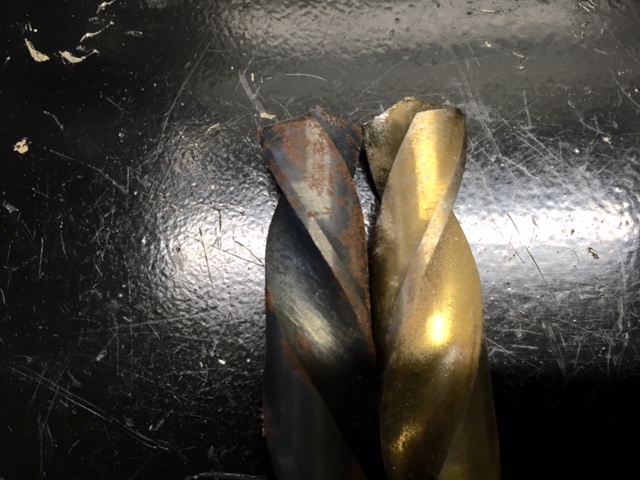
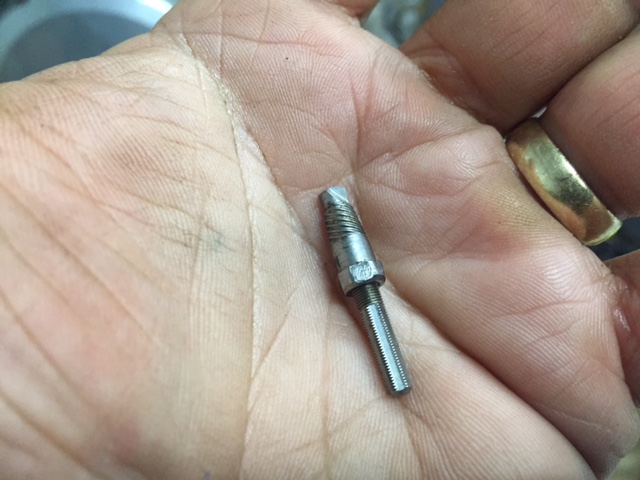
My last resort hinged on drilling a hole exactly through the center of the broken piece with a left-hand drill bit. If you’ve never used a left-hand drill bit they are exactly like a right-hand drill bit but they cut in an anti-clockwise direction.

The reason lefty bits are the nads for removing stuck or broken bolts is because of their natural tendency to unscrew whatever they are drilling into. By increasing the bit size in stages hopefully you can get the offending screw so thin that the remaining threads weaken, collapse slightly and wind out of the hole looking like a coil spring. And that’s mostly what happened except the thread came out in pieces.
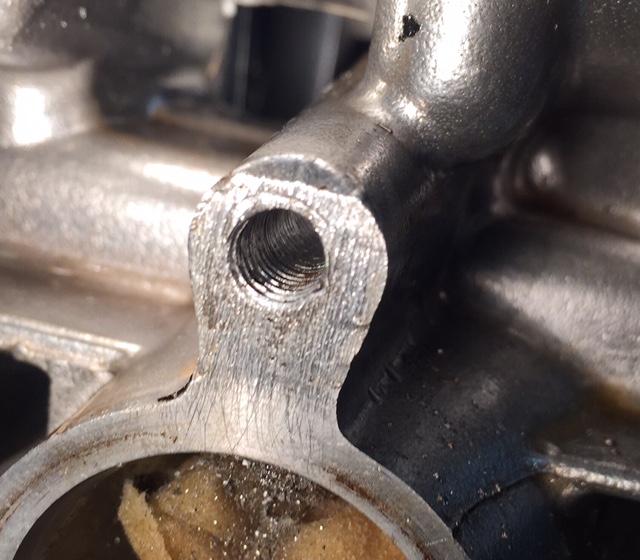
After clearing out the swarf I ran a bottoming tap into the hole and tidied up the threads as much as possible. I will use a slightly longer screw to compensate for the compromised hole but I’m pretty sure it will be fine and I have avoided using a Helicoil thread repair, which is the hack mechanic’s favorite crutch.
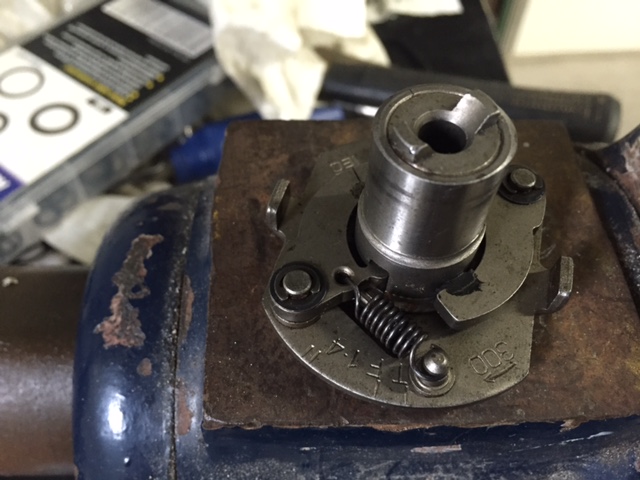
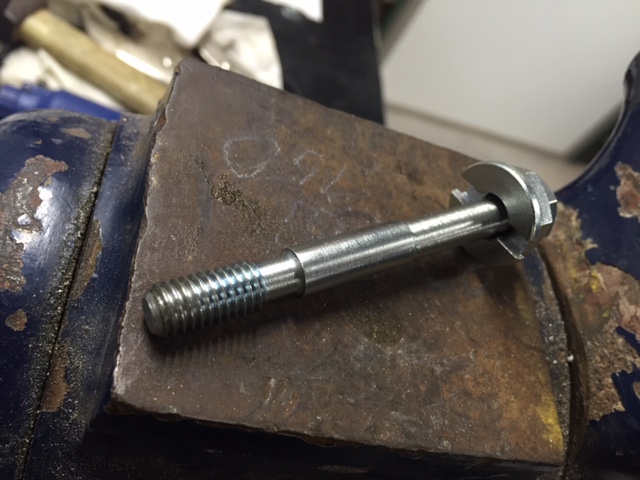
Zed was missing a few ignition parts so my Internet buddy Skip Duke sent me a spark advancer that very nearly fit the Kawasaki. The bolt that holds the advance to the crankshaft was a size too large for the hole in the advancer. Skip and I held a web-confab and decided that the advancer was the wrong part. Skip dug around his Z1 parts horde and found another unit that will work. This is the best thing about the Internet: you meet generous people that share your old motorcycle affliction.

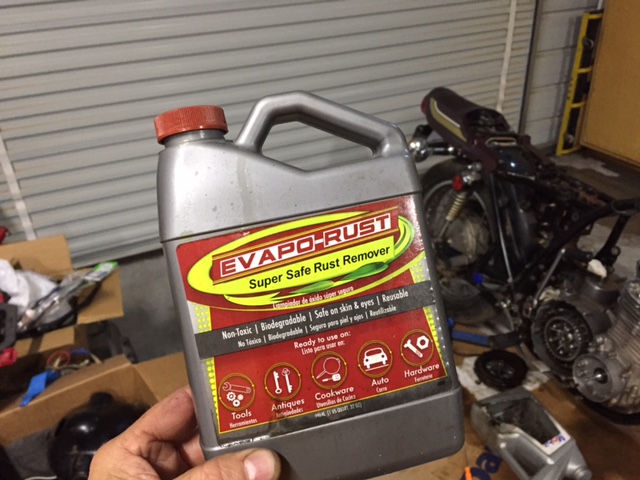
I haven’t forgotten about the carburetors either. I’ve been soaking them in Evapor-rust and the stuff is doing a fine job. It’s very mild so you can leave zinc carb bodies immersed for days without fear of eating away the good parts. All four of the carbs are clean and I’m waiting on a few parts before I can reassemble the rack.
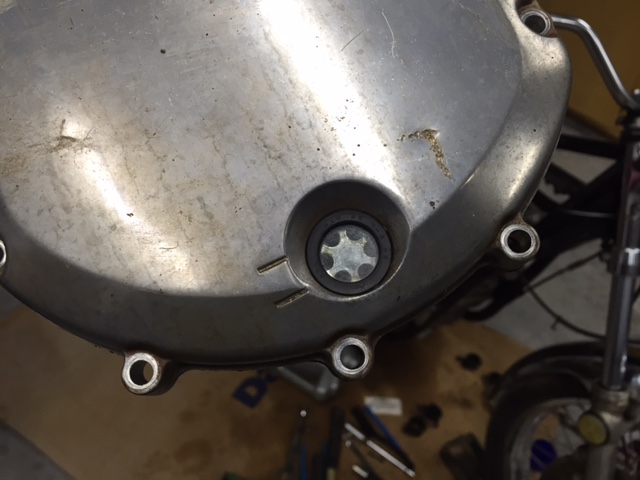
Zed’s little clutch-cover, oil level window was black with sitting-bike mung. It was so black the oil level could not be determined. I removed the cover and cleaned out behind the metal back-plate. Since I had the cover off I figured it would be a good idea to check the clutch plates for wear. The fibers are within tolerance and the steels are only slightly rusty so I’ll clean all those parts up and Zed should have a functioning clutch.
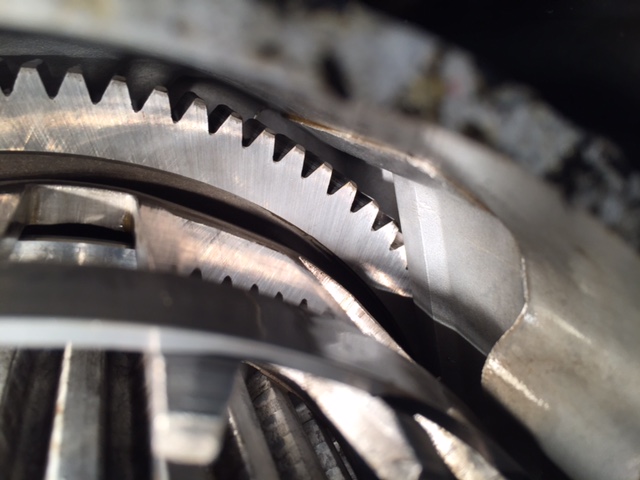
When Kawasaki designed the Z1 they went all out. This was Big K’s flagship motorcycle and the robust clutch is a fine example of strength. The large, straight-cut clutch gear would not look out of place in a one-ton manual truck transmission. The fingers that locate the fiber plates are surrounded by a steel band to prevent them from spreading under load. This clutch is awe-inspiring and looks like it could handle double the Z1’s 82 (claimed) horsepower. The bike has 41,000 miles showing on the clock and the metal parts show minimal wear. I am impressed.
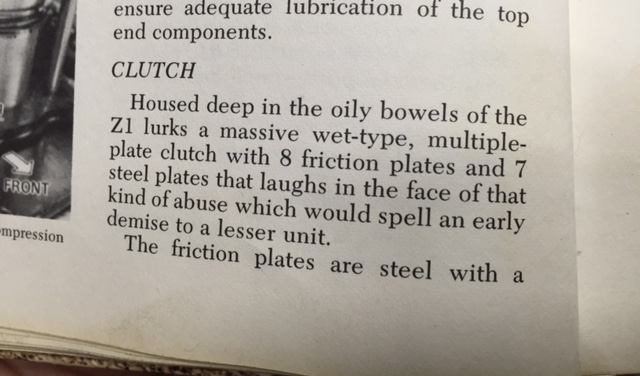
Don’t take my word for it, here is the author of the Z1 repair manual waxing eloquent over the Z’s clutch.
I’m making another list of parts and will be blowing more money on Zed. I really hope this engine runs without a lot of knocking and the transmission shifts like butter.

That’s Not How We Do It In China

See that gap?  That narrow space between the semi-truck hauling 20-foot long, 6-inch diameter solid aluminum rods and the BMW M6? I’m taking it, man, riding the horn button and twisting the throttle: zoom-zoom. See that intersection? The one with a whirlpool of scooters, three-wheeled single-cylinder diesel trucks and at least a hundred cars spinning left leaving eddys of pedestrians lapping at the edges? I’m a Hurricane Hunter riding straight into the maelstrom buffeted from side to side, tip-toeing around, swerving, cussing, sweating and focused, man, focused.

China’s city traffic requires all your intensity, taxes all your ability and is like nothing I have ever seen on the planet. There is no respite. There is no pause, You must lock on and track hundreds of individual trajectories from every point on the compass, constantly. Insane traffic scenarios unfold at a lightning pace, there’s no time to marvel at the stupidity. There’s only time to act.

The chaos is cultural: Chinese motorists drive like they’re riding a bicycle because they were only a few years ago. In less than one generation the Chinese have gone from pedals to 125cc Honda clones to driving millions of air-conditioned automobiles on surface streets designed for a sleepy agricultural nation. At any given moment dozens of traffic rules are being broken within 50 feet of your motorcycle. It’s a traffic cop’s dream.

Except that there aren’t any. For a Police State there are not many police in China. I’ve ridden entire days and not seen one Po-Po. My Chinese friends tell me the police show up for collisions but otherwise stay low-key. Because of this hands-off approach stop signs are ignored. Red lights mean slow down. You can make a left turn from the far right lane and no one bats an eye.

China uses the drive-on-the-right system but in reality left-side driving is popular with large trucks and speeding German sedans. Get out of the way or die, sucker. Painted lane-stripes are mere suggestions: Drive anywhere you like. Of course, sidewalks and breakdown lanes are fair game for cutting to the front of the cue.

China’s modernization process has happened so fast that the leap from two-wheeled utility vehicle to motorcycles as powersports fun never really occurred. In China there are millions of people riding motorcycles but relatively few motorcyclists.

If the cars don’t get you there are other strange rules that serve to dampen the popularity of Chinese motorcycling as a hobby. Motorcycles are banned on most major toll ways between cities. Law-abiding motorcyclists are shunted off to the old, meandering side roads. Which would be fun if they weren’t so infested with heavy, slow moving semi-trucks and near certain construction delays. In practice, since tollbooths have no ability to charge motorcyclists, Chinese riders blow through the far right lane, swerving to avoid the tollgate’s swinging arm. Ignore the bells, shouting and wild gestures of the toll-takers and roll the throttle on, brother.

Being banned from the highway is not a deal breaker, but being banned from entire cities is. In response to crimes committed by bad guys on motorcycles many cities remedied the problem by eliminating motorcycles altogether. Sales of new motorcycles in these forbidden cities is non-existent.

Rules designed to discourage motorcycling abound. Vehicles over 10 years old are not allowed to be registered, thus killing the used and vintage scene. Gasoline stations require motorcyclists to park far from the gas pumps and ferry fuel to their bikes in open-topped gas cans. Add to that the general opinion of the public that motorcycle riders are shifty losers too poor to afford a car.

So why do Chinese motorcyclists bother to ride at all? It’s not the thrill of speed; 250cc is considered a big bike in China and it’s really all you need to keep up with the slow moving traffic. I’ve spent a lot of time with Chinese riders and even with the language barrier I get that they ride for the same reasons we do: The road, the rain, the wind. After being cooped up in a high rise apartment (very few Chinese live in single-family homes) I imagine the wide-open spaces between crowded cities must seem like heaven. They did to me. Chinese motorcyclists and Low Riders ride a little slower, taking long breaks to smoke a cigarette, drink in the scenery or just nap. Every motorcyclist you meet is instantly your dear friend because we share this passion and despite all the minor regulatory hassles everybody knows love conquers all.


More epic motorcycle adventures?  You bet!

The Route 66 MSILSF Endurance Run!

You’re going to like this. It’s an endurance event, but not the kind you might be thinking of. No BMW GS ADV monsters, no Gold Wings, no Harleys, in fact, no motorcycles. It’s scooter time, folks!

Alan Spears, MSILSF honcho and motor scooter madman…my kind of guy!

First, let’s wind back the clock about 8 years. Let’s see, that would put us at about 2011, and that would be the Hell’s Loop scooter run, organized by the Motor Scooter International Land Speed Federation, and in particular, my good buddy Alan Spears. Alan, you see, is a bit different than the rest of the children. He’s an attorney by day, but at night he becomes a superhero dedicated to fighting villains and standing for Truth, Justice, and the American Way. Well, sort of. Alan, you see, organizes motor scooter endurance events. I know this because the one I entered was the aforementioned Hell’s Loop, and it was a hoot.

‘Twas a dark and stormy night…nah, not really. The sun was shining but it was freezing as the three of us rode our California Scooters into Death Valley back in 2011 during the Hell’s Loop event. That’s good buddies TK and Arlene out in front of me.

There were three of us, and we were on California Scooters. Those were the little 150cc Mustang replicas you’ve been reading about on the ExhaustNotes blog, the very same ones we rode to Cabo and back. The event was a hoot, and we might have won it, but one of our group forgot their gloves and then we got lost, and then…well, you get the idea. But we did finish, and we did 400 miles in a single day on our 150cc Mustangs. We froze our butts off, too, but what’s an adventure ride without a little loss of creature comforts? You say you want proof? It didn’t happen if there are no pictures? Hey, there’s that one above and here are a couple more…

Flat out on my 150 somewhere in Death Valley. Note the Baja decal on the windshield.
Filling up in Panamint, at $5.19 a gallon. Those little bikes got nearly 100 mpg, so I didn’t care.

All right, so where am I going with this story?

You can’t keep a good man down, and Alan is a good man. His next adventure is the Route 66 X-Treme Endurance 400-Mile run. It’s going to be the 21st of April in 2019, it’s going to be in Arizona, and you know what? I’m working real hard to scare me up a scooter. I want to play in this one, folks. Alan, you be my witness…I’m casting about to find a scoot. Contingent on that, Amigo, count me in.

The Route 66 MSILSF route, scheduled for April 2019. I have got to find a ride…because I want to play in this game!
Part of the Route 66 itinerary for the April endurance event. I’m guessing this is somewhere near Oatman, Arizona.

If you would like more information, you can contact Alan directly at msilsf@yahoo.com. Hopefully, I’ll see you in Arizona next April!

Platoon

Jack Lewis and I used to work for the same motorcycle magazine. We both started at the magazine about the same time. Our moto-journo fortunes seemed linked for 10 years and we both faded from the magazine’s pages nearly in lock step. One month on, one month off: Being platooned with Jack Lewis was like batting cleanup behind Babe Ruth. The crowd would be atwitter over the mammoth home run Jack smashed out into the parking lot, where the cigarette smoking kids would fight each other for the ball. Then it was my turn. No pressure.
I met Jack once in Seattle. He stood two heads taller than me and as much as I would have enjoyed disliking a man so much more talented than me he was the nicest guy you’d ever want to meet. We hit it off like old friends and are internet buddies today.

Jack’s writing has always been challenging, keep your dictionary handy, but the words fit together sweetly and feel like they were always meant to be. If you’ve ever gasped for breath digging a trench or had to guess at the number on a Mikuni main jet, follow the link to his latest piece titled Outcomes. The bastard has hit it out of the park again and the cigarette smoking kids are throwing haymakers.

Zed’s Not Dead: Part 4

I got tired of cleaning carburetors. The chemicals, the gunk, soaking and prodding with tiny wires, it’s flat wore me down, down, down, man. I left the worst parts to soak for a while and drifted off to try and remove a broken screw on the right side intake port. Starting with a near-center center punch I figured to drill the thing out and maybe get a remover deal to grab the threaded bit stuck in the head.

I drilled the screw in stages until I could try my handy-dandy left-hand drill/remover tool.
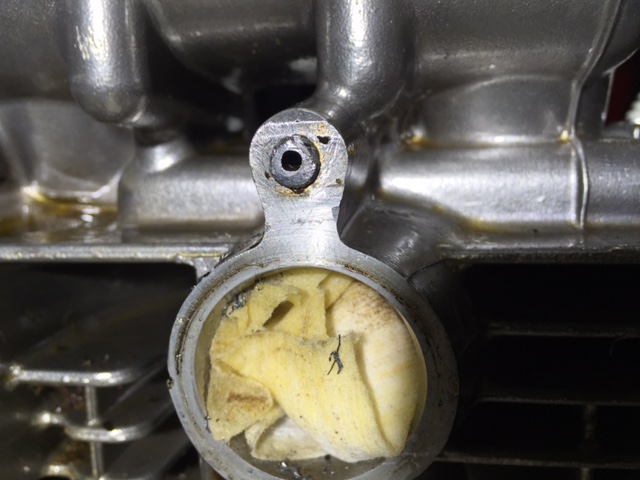
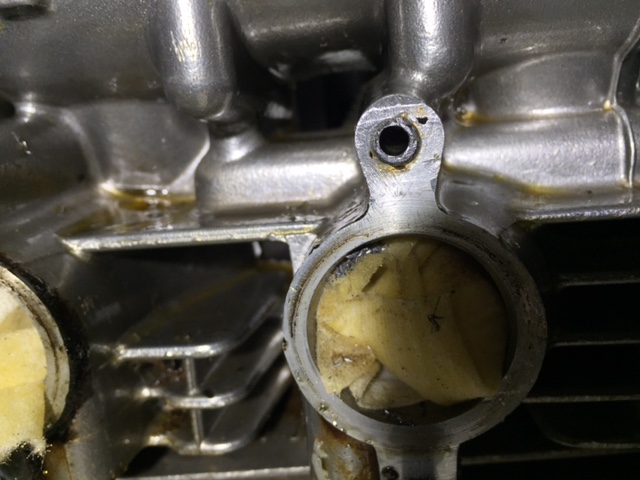
The broken screw is small, like a 4mm, maybe a 6mm and there’s not a lot of room for error. The little extractor tool had a good bite into the screw but the thing would not budge. One thing you don’t want to do is break off an easy out because they are super hard material. There’s no drilling the things and you are well and truly screwed if you manage to get the hole full of busted tool steel. I eased off. Sometimes you make more progress doing nothing rather than doing the wrong thing.
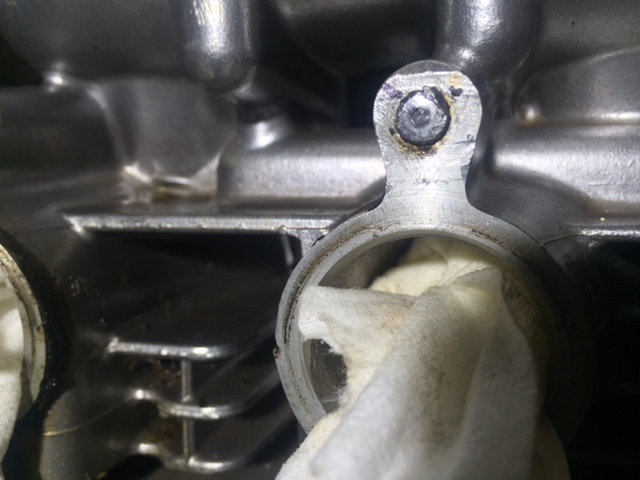
Admitting defeat today I decided to step away from the cylinder head and give the hole a few more days soaking with penetrating oil now that I can get to the backside of the situation. In addition to soaking I’ll heat-cycle the aluminum with a 1500-watt heat gun in the hopes of disrupting the steel screw/aluminum head interface. I guess the worse case would be to drill the thing all the way out and use a thread repair insert but I really don’t want to do that. That would be true hackery.
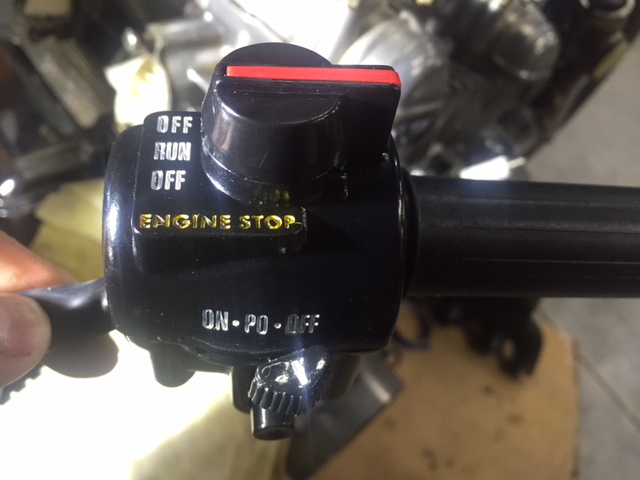
On a happier note the order from Z1 Enterprises showed up! I thought $39 for this right side throttle/switch was more than reasonable. The thing looks like factory (I assume as Zed was missing this part) complete with a cryptic Off-PO-On switch that will reveal its purpose once I get the beast powered up.

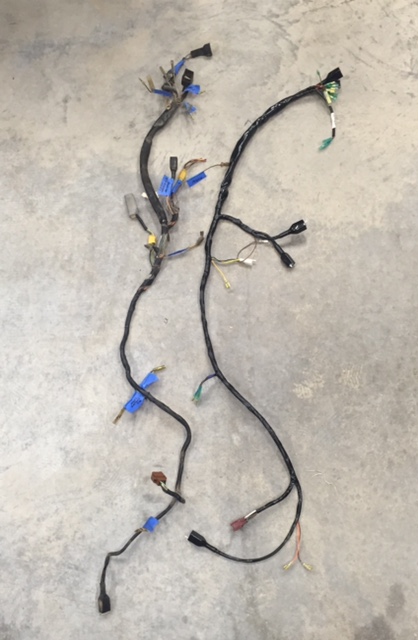
A complete Z1 Enterprises wiring harness (4 looms total) for $139 looks very nice and will eliminate chasing electrical issues with the madly cut and melted harness that came on the bike. Fresh multi pin plugs and wiring colors that match the original will make rigging the thing easy as pie. The purists or 100-point fanatics will probably bitch that the clear insulator over the connections is not the exact same shade as the 1975 original. Take my advice, those 100-point guys are obsessive-compulsive jerks and you don’t want to hang around them. In this photo the old harness is the one with blue tape indicating what connects to that point.

Included in the order was an O-ring for the re-sized drain plug and the washer that goes between the oil filter and the oil filter spring. With these parts I managed to get the bottom of the engine buttoned up. Progress has been fitful but Zed is getting closer. I’m really jonesing for concrete so I may have to pull off Zed and pour a yard to keep my soul on ice.
One more thing…if you’d like a handy index to all of the Zed’s Not Dead articles, we’ve started an index for this and future resurrections.  You can get to it here, or from the links on any ExhaustNotes.us page.

Baja, 150cc at time: Part V

The trek south on our 150cc California Scooter Mustang replicas continues. On the off chance you haven’t followed this ride, here are the first four installments of this grand adventure.   I almost called it a mini-adventure, but only the bikes were “mini.”   Everything else about this ride was a full-bore adventure.   So, to bring you up to speed…

Part I:  Baja, 150cc at a time…

Part II:  Baja, 150cc at a time…

Part III:  Baja, 150cc at a time…

Part IV:  Baja, 150cc at a time…

And with that, we’re back on the road, with our little 150cc Mustang CG clones, built by CSC Motorcycles, thumping their way south yet again…

Here’s a shot of our bikes parked in front of the Las Casitas Hotel in Mulege (it’s pronounced Mool-a-hay). The Tropic of Cancer was just a few miles down the road.

After a great stay at the Las Casitas Hotel in Mulege (one of my favorite places in Baja), we were on the road again, headed south to Ciudad Constitucion, our stop for the next evening. The regions we passed through were amazing, but the riding was beyond brutal. September is one of the hottest months of the year in Baja, and we were riding in 100-degree weather.

We soaked our clothes several times that day. J had a bunch of water in 5-gallon jerry cans on his big Dodge Power Wagon, and we used a trick I learned in the Army a long time ago…we soaked ourselves and then put our jackets on. The jacket keeps the water from evaporating too quickly, and in this kind of weather, you can stay cool for about an hour before you need another soaking. It really works.

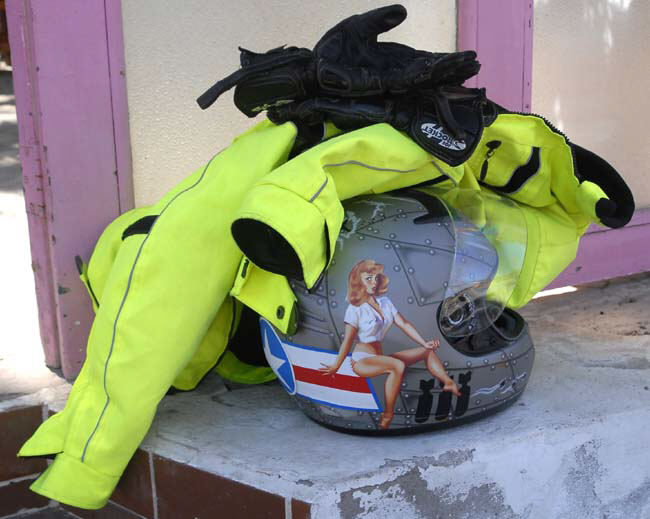
My riding gear. Joe Rocket gloves. They work. Don’t ask me how I know. My new Bell helmet. Lightweight, comfortable, and very, very cool. Everybody loved it. My Olympia riding jacket. Visible, and I’m still wearing it.

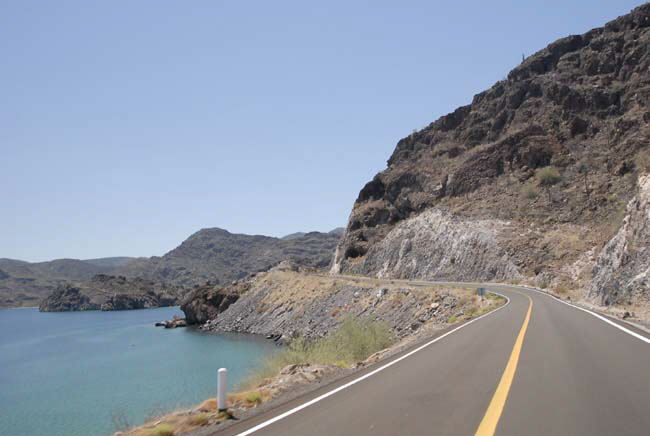
After Mulege, we continued south out of Mulege, and we soon found ourselves along what I believe to be the most beautiful part of Baja…and that would be Bahia Concepcion. I’ll let the photos do my talking here.

John’s California Scooter parked in front of Bahia de Concepcion on the Sea of Cortez.
The Sea of Cortez along the Transpeninsular Highway. The water really is that color.

South of Bahia Concepcion, we stopped in Loreto. It’s a nice town but it is a touristy spot. John and J got nailed for a couple of traffic infracciones, paid their fines, and we bolted.

We stayed the night in Ciudad Constitucion on the way down and on the way back.  It’s a pretty interesting town, but it is not a tourist spot (which is why I find it interesting).

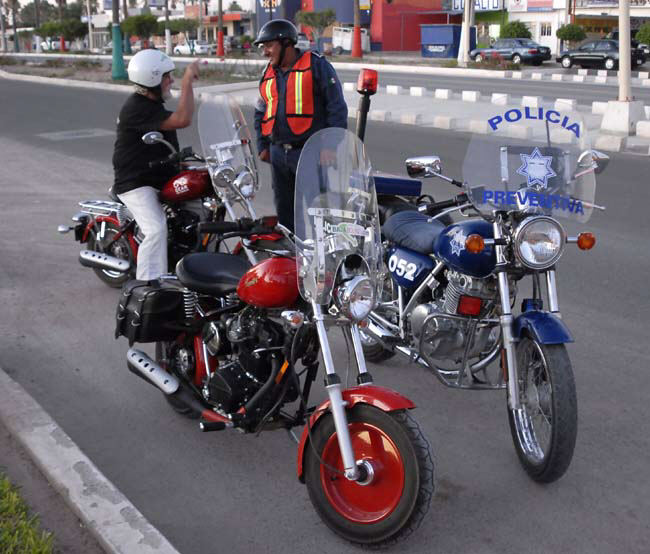
This local motor officer on a 250cc Suzuki stopped us as soon as he saw our bikes. He knew they were new and different. I tossed him my keys and asked for the keys to his police motor. We both had a good laugh about that!

Ciudad Constitucion was celebrating the Mexican Bicentennial, as Santa Rosalia had been the day before, and they had an awesome fireworks display.   It was impressive.

We had dinner at a sidewalk restaurant in Ciudad Constitucion, and we ate at a plastic table with plastic chairs right on the sidewalk. It was a cool evening, the town was festive, and it was great. The green things in the photo are nopales, or boiled cactus (very tasty). The tacos were delicious, too.

Simon ordering his dinner: Dos tacos.
Yours truly flirting with the waitresses. Dos senoritas.

We were up early the next morning, and we continued our southward quest. We knew the next major town was La Paz, but we didn’t want to get into it. La Paz meant heavy traffic and more heat.

You might be wondering…what were these little 150cc Mustang replicas, and what were the original Mustangs?   Hey, if you want to know more about that, you can read that story right here

Original Mustang motorcycles. Click on the image to get to the story!

CSC Motorcycles no longer manufactures new Mustangs, but more often than not they’ll have a nearly new trade-in on the showroom floor.  If you have an interest in these born-again Mustangs, here’s a link to the CSC website.

To be continued…


Want to learn more about riding in Baja?   Check out the ExhaustNotes Baja page!

Brown Motor Works in Pomona, CA

One of many vintage BMWs displayed at Brown BMW.

Brown Motor Works in Pomona, California, is a family-run BMW dealership that has been in business since the 1960s. I first visited the place when I moved to California in 1979, and that’s when I met Bob Brown. I liked Bob and the dealership immediately.   Brown BMW felt like a motorcycle shop.  Bikes, riding gear, cool used stuff, and none of the antiseptic featurelessness you typically find today at most new motorcycle dealers.  Nope, Brown’s is the real deal…a real motorcycle shop.

A new BMW in the Brown Motor Works showroom. These are stunning motorcycles.

Fast forward another 20 years, and my good buddy Marty kept telling me about the First Church of Bob. He was referring to the Saturday get-togethers at Brown’s, where riders congregated for an hour or so of talk about, well, anything and everything, followed by lunch.  I was a little hesitant at first because I didn’t ride a BMW, but Marty told me lots of guys at these weekly events didn’t ride Beemers.  So I went, and I’m glad I did.  I’ve made lots of friends there and I’ve gone on many rides as a result (the Three Flags Rally, Baja adventures, and more).  I’ve been a relatively faithful First Church of Bob disciple for close to 20 years now.  And hey, it’s Saturday.  I’m going there today.

Dave Brown, who runs the show at Brown BMW, along with his sister Julie.

Bob Brown is the guy who started Brown Motor Works. Bob is as real as it gets, and to overuse a phrase, the guy is a living legend. He raced the big races, including the storied Catalina Grand Prix, Baja, and more.  Bob rode the thousand-mile length of Baja when it was only paved for the first 200 miles.  And Bob rode what might have been the first GS ever to Alaska and back (and when I say the first GS ever, I mean it…he took a standard BMW boxer, chopped the fenders, put on knobbies, and pointed the front wheel north).  Bob designed handlebars, kickstands, and many other BMW accessories that ultimately found their way into the production motorcycles.

Bob Brown, in Baja, teaching yours truly the finer points on how to ride safely, quickly.

And wow, can Bob ride. I can’t tell you how many times I’ve seen him absolutely smoke youngsters on Gixxers, Ducatis, and other high-performance machines. Bob would be on a black-and-white police boxer trade-in (one of his favorite mounts, a bike weighing a good 200 lbs more than the hypersports) and he’d pass Ricky Racers in the twisties on the Crest who thought they were quick.  Sometimes he’d do it standing on the pegs, just to make a point.

Brown BMW is one of our ExhaustNotes sponsors (that’s their ad you see on all of our pages), and I’m here to tell you it’s a place you want to visit. Dave Brown and his sister Julie run the show today, with help from great folks like Tom in Sales, Eddie and Gerry in Service, and others. While you’re there, you can take a look at Bob’s collection of vintage BMW motorcycles, have a cup of coffee, and maybe even say hello to Bob. It’s a fun place to visit and everything they do is top notch.  Folks, trust me on this:  Brown Motor Works is the real deal.