I may be that kid your mother always warned you about. You know, the bad influence. The one who might do something she wouldn’t like, and then you follow suit. Moms live in fear of guys like me.
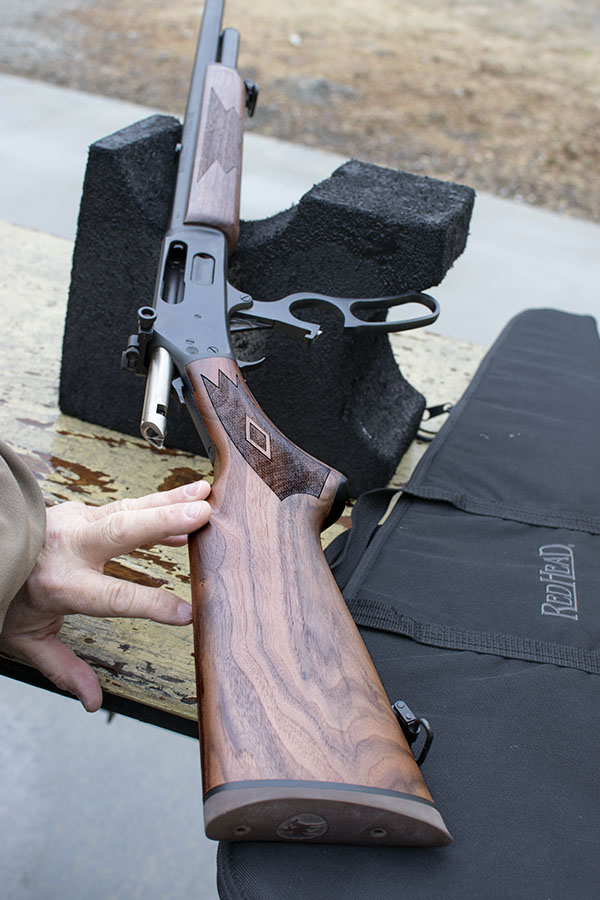
Paul’s .45 70 Marlin 1895. These are impressive rifles.
When it comes to guns, I am pretty sure I’m the guy she had in mind. On more than a few occasions, I’ll get fired up about a firearm (no pun intended), and then several of my friends will buy the same thing. It’s happened with Mosin-Nagants, 1911 .45 autos, Ruger No. 1 rifles, and most recently, big-bore Marlins. Caliber .45 70 Model 1895s, to be precise. Several of my friends now own these rifles and they are a hoot. One of these days we’ll have one of our informal West End Gun Club matches and restrict it to .45 70 rifles only. That should be fun.
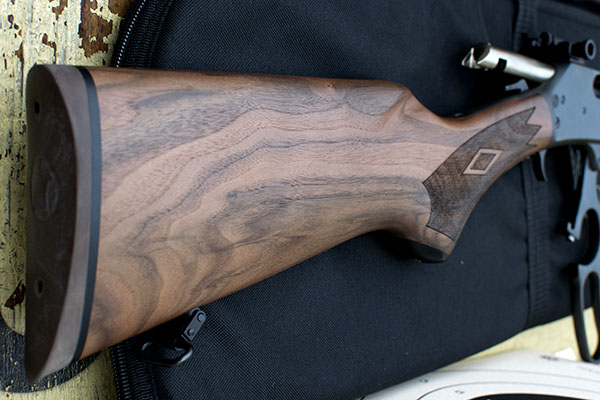
Paul and I both appreciate fine walnut, and Paul’s recent purchase of his brand-new Marlin is no exception. It’s unusual to see wood this highly figured on a production rifle. Take your time, peruse what’s available on Gunbroker.com on a regular basis, visit every gun store you can, and every once in a great while you find something like this.
I was in northern California last week and that’s always a good opportunity to visit with my good buddy Paul and send a little lead downrange. Well, maybe not a little. You see, Paul recently purchased a .45 70 Marlin 1895, and these rifles send lead downrange at the rate of 400 grains a shot. There are 7,000 grains in a pound. Do the math…that’s a big-ass bullet. Hell, they used to use these things for shooting buffalo.
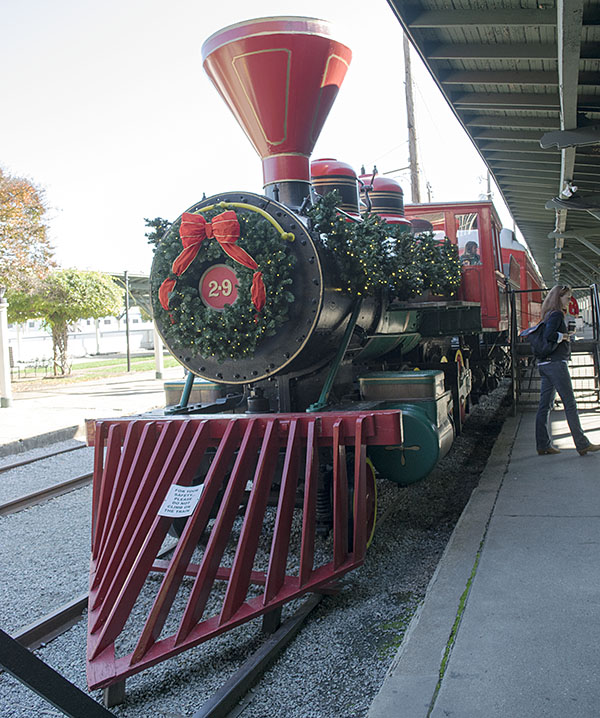
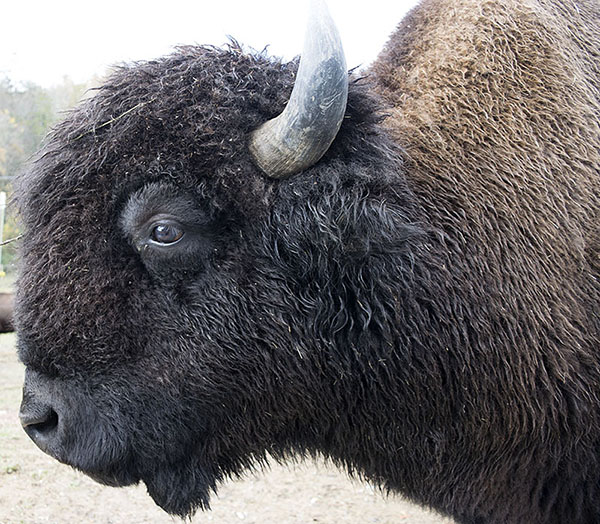
There’s no way I’d ever shoot one of these magnificent creatures, but back in the day when the buffalo hunters did, more often than not they were using a .45 70 rifle. I grabbed this photo on a recent trip to Tennessee.
The Marlins are great rifles, and you can pick up a 45 70 Model 1895 for around $600 if you shop around for a bit. Marlin was acquired by Remington a few years ago, and their quality took a hit during the transition as they moved production from the old Marlin factory in Connecticut to the Remington plant in New York. Judging by the recent rifles I’ve examined (including Paul’s), the quality issues are all in the rear-view mirror now. The new Marlins sure shoot well, too.
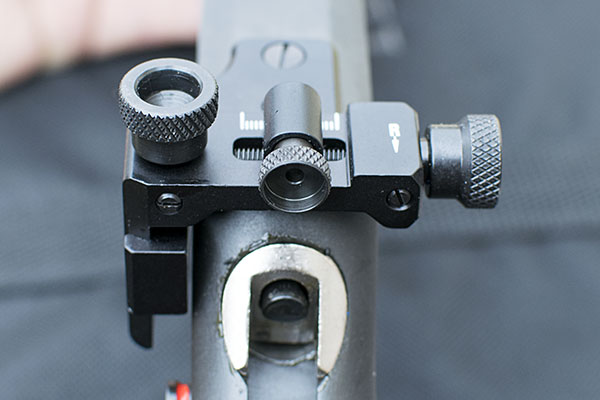
A Williams peep sight on Paul’s Marlin. If you know what you’re doing (and Paul does) these can shrink your groups significantly.
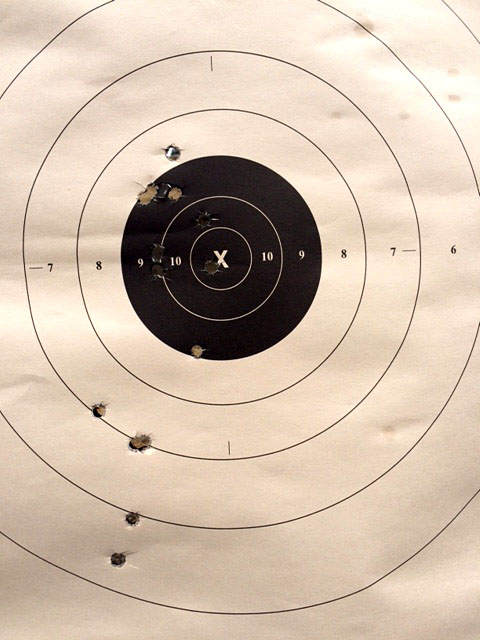
Paul added a Williams aperture rear sight to his 1895, and this was the first time he shot it. I had spotting duties. The first round went low left about 10 inches, and then Paul walked succeeding rounds up and to the right by adjusting the rear sight as I called the shots to him. It didn’t take too many shots to zero the rifle, and from that point on, it was simply a question of evaluating which of several different handloads grouped best. Paul had prepared test rounds using Unique and IMR 4227 propellant, all using the Missouri 400 grain cast lead bullet. The winner was 13.0 grains of Unique behind the mighty Missouri slug. At 50 yards, this load grouped well.
The target. Low, adjust, a bit higher, adjust some more, and well, you get the idea. It took only a few shots to get the Marlin dialed.
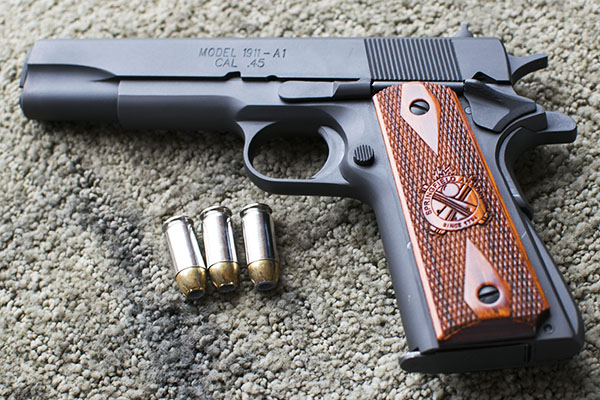
We were at a Santa Clara County public range and it was a rainy day, but we managed to have fun on both the rifle and handgun ranges. We shot the .45 70 and then my personal favorite handgun, the 1911 .45 Auto. Yep, Paul had his 1911 out, and we had fun with it, too.
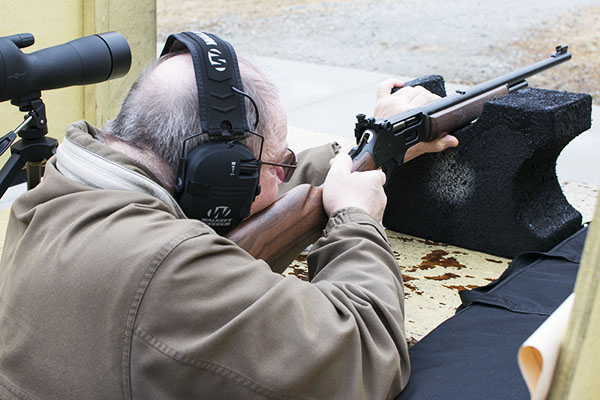
Paul shooting his 1895 at the local gun club.
Paul let me try the Marlin. He tried to capture the muzzle blast, but timing the camera to the shot is tough.
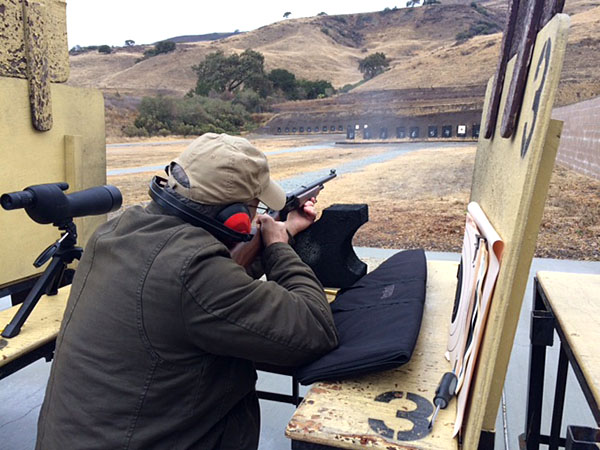
Yours truly behind the 1895. From the rear, Paul and I could be twins. We’ve been shooting buddies for more than 60 years. This photo shows the smoke just after I fired, and that’s good enough.Paul’s “Mil Spec” model Springfield 1911. These are fine guns, way better than what I carried in the Army.
Other folks on the range are always intrigued by the .45 70 cartridge. Compared to the most common rounds seen on rifle ranges these days, they’re huge. The perception is that the recoil must be horrendous. It can be if you load near the upper end of the propellant charge spectrum, but at the lower powder charge ranges, these guns are a lot of fun. That’s a topic for another blog, one that will appear here soon. Stay tuned!
Want to read our other ExhaustNotes Tales of the Gun stories? Just click here!
Water Canyon Road, west of Socorro, New Mexico is paved all the way to the Water Canyon Campground. The Campground is beautiful, wooded and self-serve: You put your fees into a pipe and pitch your tent. There are clean pit toilets and yodeling coyotes along with bear-proof trash cans. I’d like to hang out here but we are heading to The Magdalena Ridge Observatory.
Water Canyon Road continues on for another 13 miles of unpaved road. It’s not a terrible road: a regular car could do it if you didn’t mind cutting a few low-profile tires and maybe bashing the undercarriage. The sign says 4-wheel drive only and I guess that’s the best way to go. The drop-offs are wonderful and steep, the views towards the valley are eye-twisting.
Even if the scenery was terrible Water Canyon would be worth the drive because the road ends on top of Mt. Baldy and one of the newest, gigantic telescopes under construction. When completed, the Magdalena Ridge Interferometer will have ten 1.4-meter optical telescopes interconnected to provide the resolution equal to a 340-meter diameter mirror (at max zoom). That’s over one thousand feet and that’s a big mirror, my brothers; for comparison the Hubble Space Telescope is 2.4-meters or 8 feet. Nine of the 1.4-meter telescopes will be movable allowing the mirror to reduce in equivalent size to 7.8 meters for those cool, wide-angle shots. One mirror remains in the center.
It’ll be a clunky system. There are no tracks to smoothly zoom in and out. A crane will lift the telescopes and relocate them on pads so changing focal length will be a several day operation. Clunky or not, it will be a huge telescope limited only by the Earth’s atmosphere and the small amount of light gathering surface relative to the size of the array.
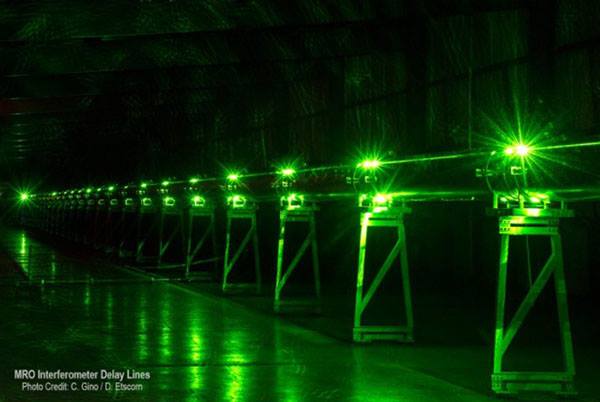
The ten telescopes will send an image through pipes to the control room. A vacuum will be maintained inside the pipes to reduce distortion and all ten feeds will be reassembled inside the control room to produce what should be some spectacular space photography. Think of the whole operation as a Very Large Array except in the visible wavelengths.
This pipe will be joined by 9 more. Inside each of the ten pipes in this section will be a shuttle to adjust the information beam’s timing. This adjustment is needed because the light source will always strike the individual telescopes at slightly different times due to their distance from the source. From here they shoot into the control room and the open air.
At the moment the Interferometer has only one mirror. Any high-rollers reading ExNotes who can contribute 11 million dollars to finish the other 9 telescopes would find little resistance to naming the whole damn place after their recently deceased cat. Or themselves.
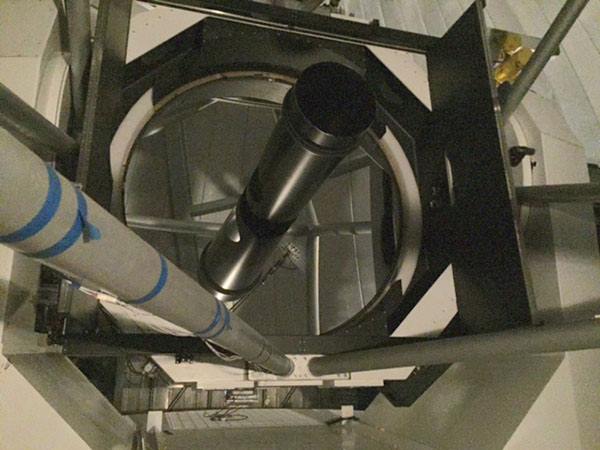
Like Popeil’s Ginsu knife deal, that’s not all! A short distance away on the same mountaintop is the Magdalena Ridge Observatory, a 2.4-meter, fast reacting telescope presently engaged by the government for tracking Earth orbiting objects. I imagine the idea is to identify and locate the other guy’s space stuff for future elimination in times of war. They can also track missile launches and aircraft as the gimbal is ten times faster than a garden variety telescope.
The mirror at the MRO is an ex-Hubble part of which there were three built; one is inside Hubble floating around space, the other is at The National Air and Space Museum in Washington, DC.
Tours of the Magdalena Ridge facility are infrequent, but don’t let that stop you from taking the ride up to the top. Check online for times and dates.
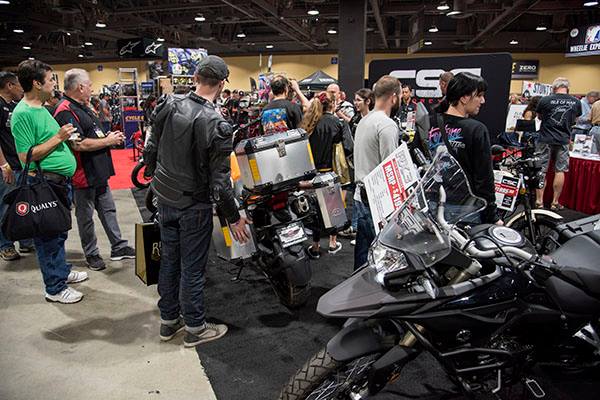
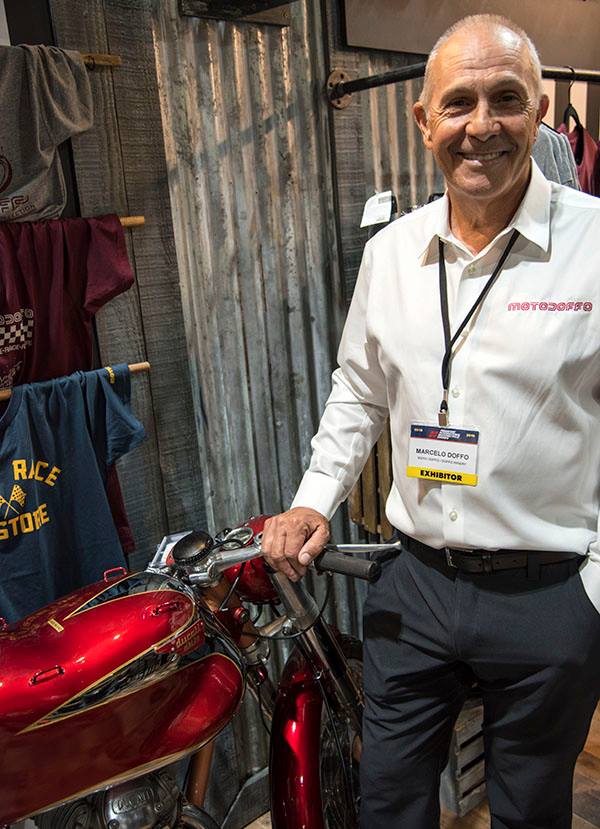
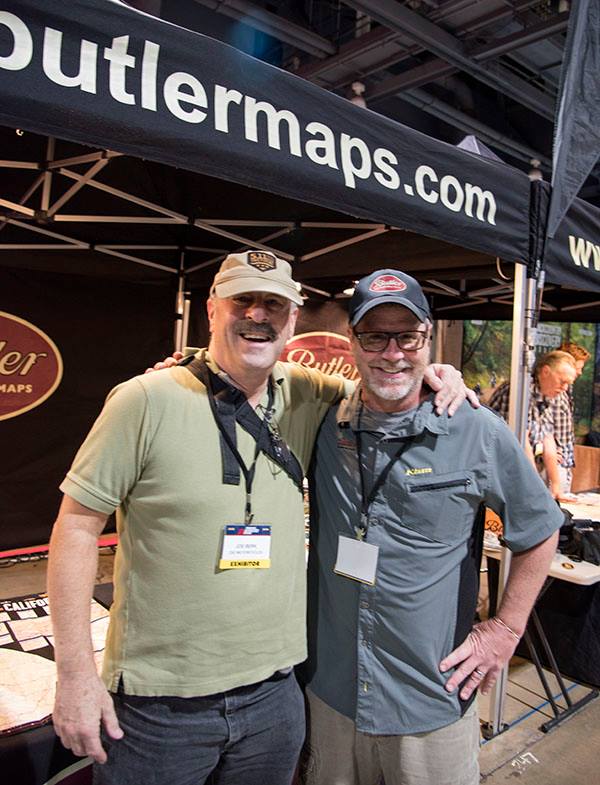
One of the best parts of the Long Beach International Motorcycle Show is always running into good friends. Here are a few good buddies we saw last weekend at the show.
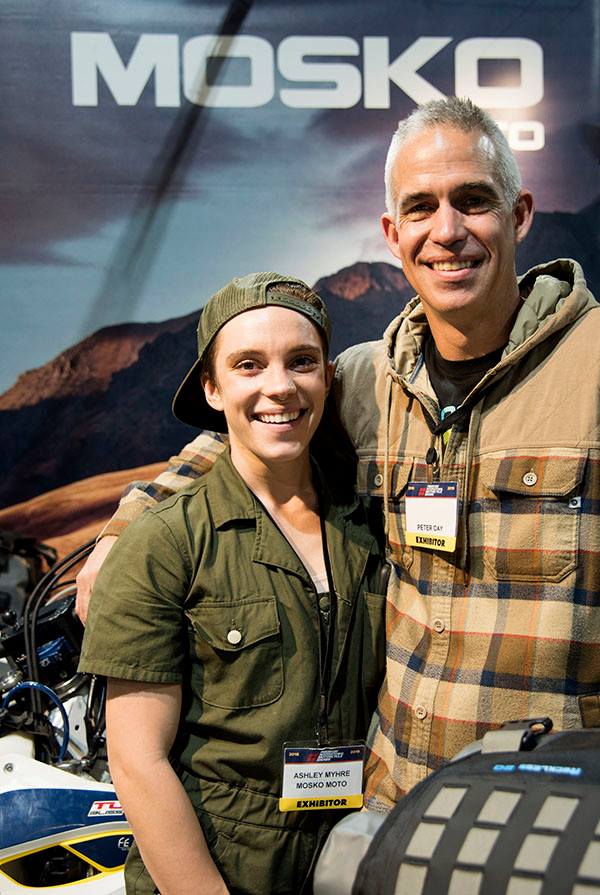
Good buddy Pete, who rode with us twice on the CSC Baja adventure rides!Good buddy Steve at the CSC booth, which was absolutely packed with folks taking in the new RX4, the new San Gabriel, the new City Slicker, and the iconic RX3 and TT250 motorcycles. That’s Steve in the background, second from the left. Check out the crowd!Good buddy Marcelo, owner of the Doffo Winery and the MotoDoffo Collection in Temecula!Good buddy Bill, of Butler Maps! I see Bill every year at these events.Good buddies Ash and Pete, of Mosko Moto. These folks make awesome ADV soft luggage!
I always enjoy seeing friends at the Long Beach Moto Show. It’s the best part of the show for me.
This is a blog I wrote for CSC Motorcycles a little more than 4 years ago (time sure flies when you’re having fun). The topic was as timely then as it is today. I like big bikes, but I like small bikes more, and I’m convinced that a small bike makes way more sense than a big bike for real world adventure touring. I thought I would post the blog again, as we are having way too much fun with CSC, BMW, Janus, and other companies who have seen the light. Here’s the blog from back in September 2014…
A 250cc bike seems too small to many riders. Is it?
The 250cc CSC Cyclone.
The motorcycle craze in the US really started in the mid-1960s. I know motorcycling goes back way before that, but motorcycling was essentially a fringe endeavor until Honda came on the scene. We met the nicest people on Hondas, if you remember, and that ad tagline was a winner (so is “Don’t Miss The Boat,” by the way). (Note: “Don’t Miss The Boat” was CSC’s tagline for the US RX3 introduction, and those who didn’t miss the boat participated in one of the best deals in the history of motorcycling.)
Honda’s sales model was a good one. They pulled us in with small bikes and then convinced us we needed larger and larger bikes. Many of us started with a Honda Cub (the 50cc step-through), we progressed to the Super 90 (that was my jump in), then the 160cc baby Super Hawk, then the 305cc Super Hawk, and at that point in about 1967 that was it for Honda. They didn’t have anything bigger (yet). After the 305cc Super Hawk, the next step for most folks was either a Harley or a Triumph.
Yours Truly, on a Honda Super 90 in the mid-’60s.
You know, back in those days, a 650cc motorcycle was a BIG motorcycle. And it was.
But Honda kept on trucking…they offered a 450 that sort of flopped, and then in 1969 they delivered the CB-750. That bike was so far out in front of everyone else it killed the British motorcycle industry and (with a lot of self-inflicted wounds) it almost killed Harley.
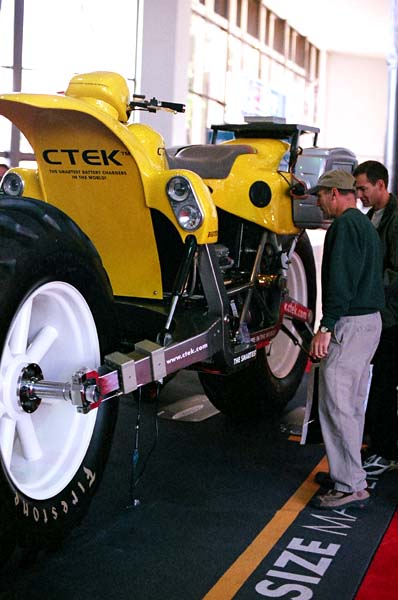
The Japanese manufacturers piled on. Kawasaki one-upped Honda with a 900. (Another note…it’s one of those early Kawi 900s that Gobi Gresh is restoring in the Zed’s Not Dead series.) Honda came back with a 1000cc Gold Wing (which subsequently grew to 1100cc, then 1500cc, and is now an 1800cc). Triumph has a 2300cc road bike. Harley gave up on cubic centimeters and now describes their bikes with cubic inches. And on and on it went. It seems to keep on going. The bikes keep on getting bigger. And bigger. And bigger. And taller. And heavier. And bigger. In a society where everything was being supersized (burgers, bikes, and unfortunately, our beltlines), bigger bikes have ruled the roost for a long time. Too long, in my opinion.
Is this where it’s going? (Note: I shot this photo at the Long Beach International Motorcycle Show about 15 years ago.)
Weirdly, today many folks think of a 750 as a small bike. It’s a world gone nuts. But I digress…
I’ve done a lot of riding. Real riding. My bikes get used. A lot. I don’t much care for the idea of bikes as driveway jewelry, and on a lot of my rides in the US, Mexico, and Canada, I kind of realized that this “bigger is better” mentality is just flat wrong. It worked as a motorcycle marketing strategy for a while, but when you’re wrestling with a 700-lb bike in the soft stuff, you realize it doesn’t make any sense.
Really?
I’ve had some killer big bikes. A Triumph Daytona 1200. A Harley Softail. A TL1000S Suzuki. A Triumph Speed Triple (often called the Speed Cripple, which in my case sort of turned out to be true). All the while I was riding these monsters, I’d see guys on Gold Wings and other 2-liter leviathans and wonder…what are these folks thinking?
I’d always wanted a KLR-650 for a lot of reasons. The biggest reasons were the bikes were inexpensive back then and they were lighter than the armored vehicles I had been riding. I liked the idea of a bike I could travel on, take off road, and lift by myself if I dropped it. To make a long story short, I bought the KLR and I liked it. I still have it. But it’s tall, and it’s heavy (well over 500 lbs fully fueled). But it was a better deal than the bigger bikes for real world riding. Nobody buys a KLR to be a poser, nobody chromes out a KLR, and nobody buys leather fringe for a KLR, but if that’s what you want in a motorcycle, hey, more power to you.
More background…if you’ve been on this blog for more than 10 minutes you know I love riding in Baja. I talk about it all the time. My friends tell me I should be on the Baja Tourism Board. Whatever. It is some of the best riding in the world. I’ll get down there the first week I take delivery on my CSC Cyclone, and if you want to ride with me, you’re more than welcome. (Note: And I did. We did a lot of CSC Baja tours, and CSC introduced a lot of folks to riding and to Baja. That one innocent little sentence became a cornerstone of CSC’s marketing strategy.)
I was talking up Baja one day at the First Church of Bob (the BMW dealership where me and some of my buddies hang out on Saturday mornings). There I was, talking about the road to San Felipe through Tecate, when my good buddy Bob said “let’s do it.” Baja it was…the other guys were on their Harleys and uber-Beemers, and I was on my “small bore” KLR. The next weekend we pointed the bars south, wicked it up, and rode to San Felipe.
The Boys…bound for San Felipe with my KLR leading the pack
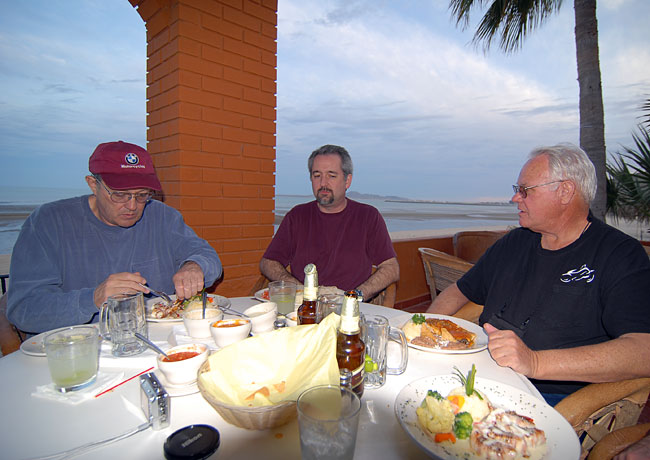
That was a fun trip. I took a lot of ribbing about the KLR, but the funny thing was I had no problem keeping up with the monster motos. In fact, most of the time, I was in the lead. And Bob? Well, he just kept studying the KLR. On Saturday night, he opened up a bit. Bob is the real deal…he rode the length of Baja before there was a road. That’s why he was enjoying this trip so much, and it’s why he was so interested in my smaller bike. In fact, he announced his intent to buy a smaller bike, which surprised everybody at the table.
Holding court on the Sea of Cortez. That’s Bob on the right.
Bob told us about a months-long moto trip he made to Alaska decades ago, and his dream about someday riding to Tierra del Fuego. That’s the southernmost tip of South America. He’d been to the Arctic Circle, and he wanted to be able to say that he’d been all the way south, too.
I thought all of this was incredibly interesting. Bob is usually a very quiet guy. He’s the best rider I’ve ever known, and I’ve watched him smoke Ricky Racers on the Angeles Crest Highway with what appeared to be no effort whatsoever. Sometimes he’d do it on a BMW trade-in police bike standing straight up on the pegs passing youngsters on Gixxers and Ducksters. Those kids had bikes with twice the horsepower and two-thirds the weight of Bob’s bike, and he could still out ride them. Awesome stuff. Anyway, Bob usually doesn’t talk much, but during dinner that night on the Sea of Cortez he was opening up about some of his epic rides. It was good stuff.
Finally, I asked: Bob, what bike would you use for a trip through South America?
Bob’s answer was immediate: A 250.
That surprised me, but only for an instant. I asked why and he told me, but I kind of knew the answer already. Bob’s take on why a 250: It’s light, it’s fast enough, it’s small enough that you can pick it up when it falls, you can change tires on it easily, you can take it off road, you can get across streams, and it gets good gas mileage.
Bob’s answer about a 250 really stuck in my mind. This guy knows more about motorcycles than I ever will, he is the best rider I’ve ever known, and he didn’t blink an eye before immediately answering that a 250 is the best bike for serious world travel.
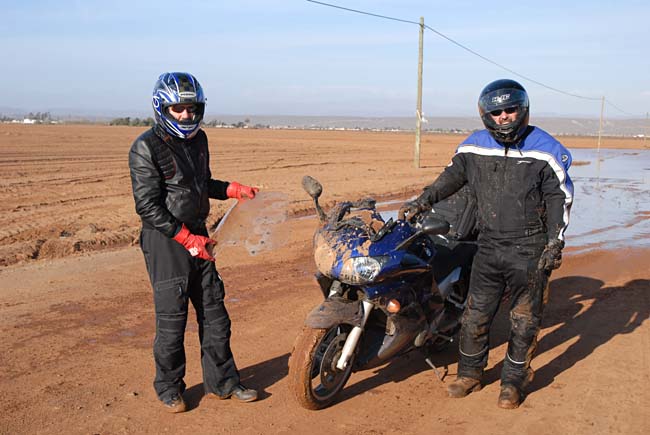
It all made a lot of sense to me. I had ridden my liter-sized Triumph Tiger in Mexico, but when I took it off road the thing was terrifying. The bike weighed north of 600 lbs, it was way too tall, and I had nearly dropped it several times in soft sand. It was not fun. I remembered another ride with my friend Dave when he dropped his FJR in an ocean-sized puddle. It took three of us to get the thing upright, and we dropped it a couple of more times in our attempt to do so. John and I had taken my Harley and his Virago on some fun trips, but folks, those bikes made no sense at all for the kind of riding we did.
Upright in this photo, but it was like wrestling a pig in mud a few minutes earlier.
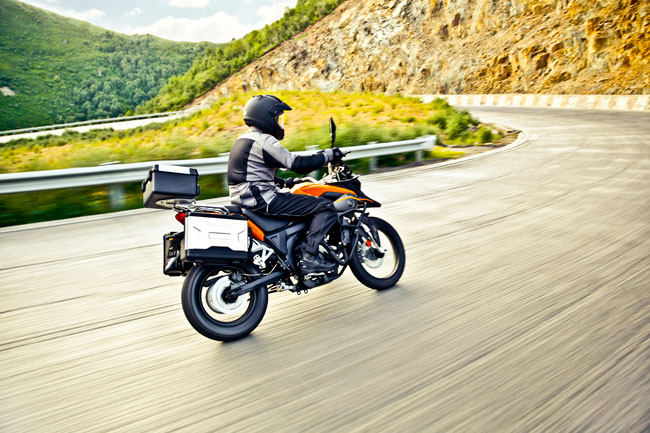
You might be wondering…what about the other so-called adventure bikes, like the BMW GS series, the Yamaha Tenere, or the Triumph Tiger? Good bikes, to be sure, but truth be told, they’re really street bikes dressed up like dirt bikes. Big street bikes dressed up like dirt bikes. Two things to keep in mind…seat height and weight. I can’t touch the ground when I get on a BMW GS, and as you’ve heard me say before, my days of spending $20K or $30K on a motorcycle are over. Nice bikes and super nice for freeway travel, but for around town or off road or long trips into unknown territory, these bikes are just too big, too heavy, and too tall.
There’s one other benefit to a small bike. Remember that stuff above about Honda’s 1960s marketing strategy? You know, starting on smaller bikes? Call me crazy, but when I get on bikes this size, I feel like a kid again. It’s fun.
I’ve thought about this long and hard. For my kind of riding, a 250 makes perfect sense. My invitation to you is to do the same kind of thinking.
So there you have it. That was the blog that helped to get the RX3 rolling, and CSC sold a lot of RX3 motorcycles. Back in the day, CSC was way out in front of everybody on the Internet publicizing the Zongshen 250cc ADV bikes, and other countries took notice. Colombia ordered several thousand RX3s based on what they CSC doing, other countries followed, and things just kept getting better and better. The central premise is still there, and it still makes sense. A 250 may well be the perfect motorcycle.
Never miss an ExNotes blog…subscribe here for free!
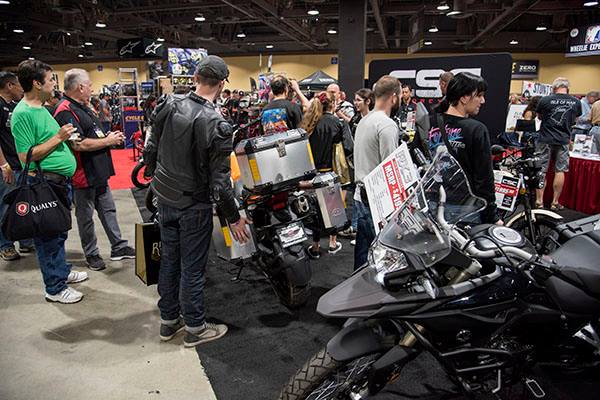
Say what you want about the man in the White House, or the former man in the White House, or who gets the credit: The economy is roaring. Nowhere was that more apparent than at the Long Beach International Motorcycle Show this weekend. It was packed, and we saw a lot of companies that hadn’t been there before. Triumph, MV Augusta, and more. Things were hopping, and if the attendance and the enthusiasm extend into the marketplace (and I think it will), we’re going to see significant growth in the US motorcycle market this year.
Shoulder to shoulder, the crowds were huge at this year’s Long Beach International Motorcycle Show.
Susie I and went on Saturday (thanks for the tickets, CSC Motorcycles), and it was shoulder-to-shoulder throughout much of the event. It was good to see. We’ll cover this event from six perspectives over several blogs: Friends, new motorcycles, custom motorcycles, vintage bikes, my favorites, and the female models that in the past always seemed to populate the big bucks exhibits (Harley, Ducati, Indian, and maybe a few others). Let’s do the easy part first, the drop dead gorgeous, young, mini-skirted female models who populated prior shows. The bottom line? I didn’t see any. Admittedly, I didn’t visit the Ducati booth (so maybe they had a few and I missed them), but in other booths where female models were usually present there were none. It’s probably a good thing, except for the models whom I’m guessing made good money in years past. Our society is growing up.
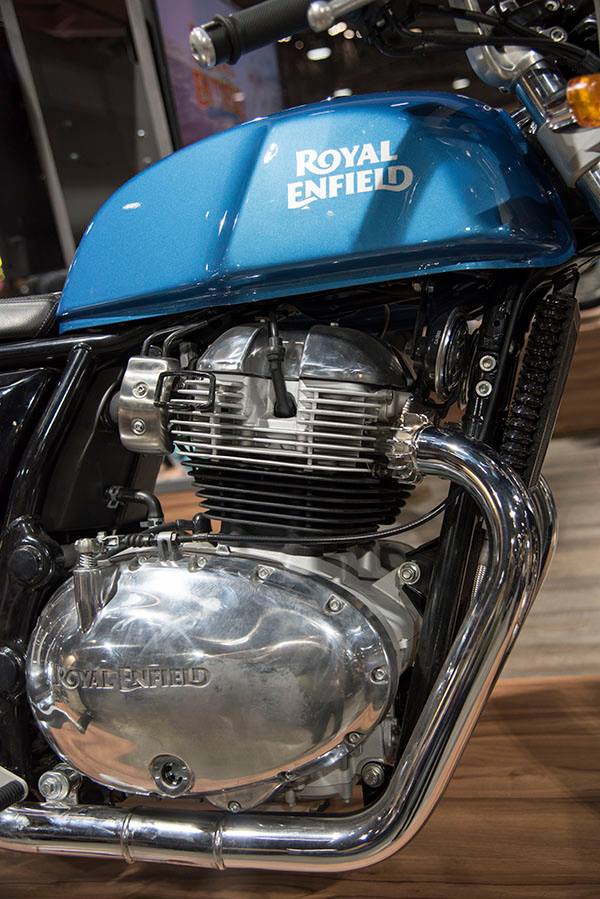
Two new bikes talked to me. One was the Royal Enfield 650 twin (a stunning machine); the other was the green Kawasaki 900cc Four with a café racer fairing. I sat on the Kawasaki. It fit me and it felt surprisingly light. Sue chased me off, I think, because she could sense the wheels turning. It’s a nice motorcycle (one I think I would like to own). Maybe it’s just Gresh’s enthusiasm in the Zed’s Not Dead Series, but I formed a bond with that Kawasaki. They say green motorcycles are bad luck, but I’d be willing to take the chance on this bike.
The gorgeous RE 650 twin. The suggested list price is $5799. That’s a hell of a deal.
We saw the new Kawasaki 800cc twin, the other café racer that’s styled like a real motorcycle (i.e., the original Triumph Bonneville). The colors ain’t great in the photos (Gresh commented on that in his Wild Conjecture piece), but in the flesh the colors work (they look way better than they do in the pictures). Instead of looking disjointed, the color mismatch makes for what appears to be a custom bike. Thankfully, the industry-wide craze for flat black bikes seems to be subsiding. This bike looked good.
The Kawi US guy told me the KLR 650 was not available this year and Kawi’s position is that this is a “skip” year, which he thinks might mean they are coming out with a new model for 2019, or maybe 2020. He said no one outside of Japan knows for sure. The Kawi dude said if the KLR does come back it most definitely will not be $6799 (the KLR’s price last year). He thought the price for a new version (if it comes to fruition) will be substantially higher. Their 300cc Versys looked good, but at $5799 it was pricey for a 300 (and that’s before what I’m guessing will be over a grand in dealer setup and freight).
The show was hopping. The economy is back, and the motorcycle business is along for the ride. Stay tuned, folks…there’s more Long Beach IMS coming on the ExhaustNotes blog.
Back when we were running Briggs and Stratton mini-bikes a few kids had Yamaha Mini Enduro 60cc or Honda Mini Trail 50cc bikes. Both of these bikes were stone reliable and a real leap forward from the hard-tail, flathead, one-speed stationary motored mini-bikes. I had a blue Mini Trail Honda that was indestructible. Riding the Everglades of South Florida the cooling fins would cake with mud and the engine would overheat until it would stop running. Just stop.
Clearing the fins with a handy stick and waiting fifteen minutes restored the bike to health and I could ride away. This happened several times a day and the bike never used oil or smoked. Like I say, Stone Ax.
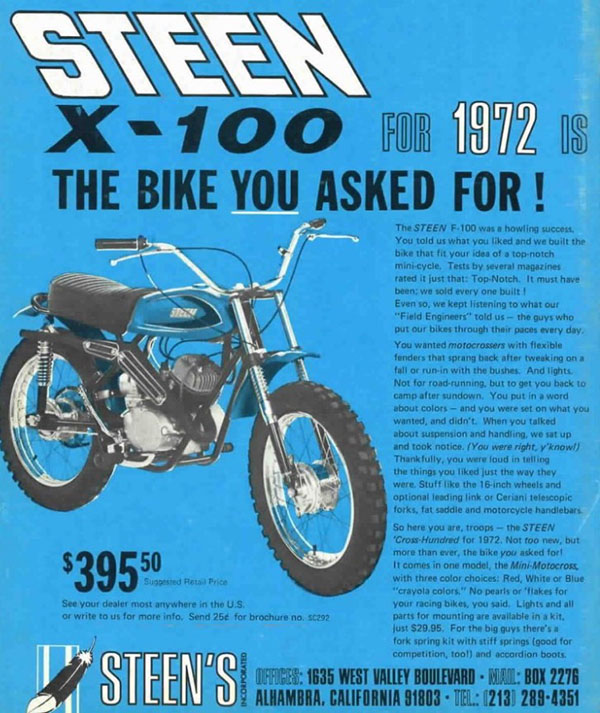
Into these tiny times strode a colossus: The Steen Alsport 100. What a machine! The Steen was equipped with a 100cc Hodaka engine, and the front forks were Earles type utilizing a swingarm and held up by two oil-damped shocks. The gas tank was fiberglass and beautifully shaped. White was the only color I saw but there were other colors. Steens were rare around the neighborhood.
The Steen was a little larger than a Mini Enduro or an SL70 but smaller than the (to us) full-sized Yamaha 90cc Enduro. The black expansion chamber (stock!) running along the side gave the bike a race-ready appearance. Whoever styled the Steen absolutely nailed it, as the Steen is still one of the best-looking motorcycles from any era.
I have no idea how the bike handled with the swingarm forks. With so much metal spread over such a large area I would guess the front turned heavier than it actually was. Later Steen went with a conventional fork, probably for looks more than suspension performance. The bike sounded great. It had a sharp cackle that our muted minis could not match. Even the Alsport logo and striping were cool.
Dealerships more so than motorcycle quality determined motorcycle popularity at the start of the 1970’s. There were no Hodakas to be found. Very few Kawasakis or Suzukis populated our riding areas. Oddly enough a Montesa or Bultaco might ride by. These were huge motorcycles. The Steen didn’t have much of a dealer network In Miami so there was only the one kid who had a Steen in our group. I should remember his name but it has slipped away to that place all memories eventually slip.
Today Steens are not outrageously priced. I see them for a thousand or two fairly often. Maybe people don’t know what they are or Hodakas are seen as more real; I don’t care, I love the things. If I win the lottery I’ll have a Steen just to stare at. I’ll start it up a few times a day and listen to the cackle.
Here’s one that sold for $1600 a few years ago:
Would you like to see all of our Dream Bikes? Click here and you will!
I had a hard time deciding on the title for this blog. The other contender was “Thank you for your service.”
Sue and I traveled through Tennessee last week. It’s a glorious state with a lot to see. I expected that. What I didn’t expect was the way we were treated on Veteran’s Day. I couldn’t pay for anything. When Sue and I went to the Jack Daniel’s Distillery in Lynchburg, they asked if either of us were veterans. I guess I was surprised at the question and I didn’t answer immediately, but Sue did. “Yes, my husband was in the Army.”
“There’s no charge for you today, then, sir, and thank you for your service.”
Wow, I just saved $20. That was nice.
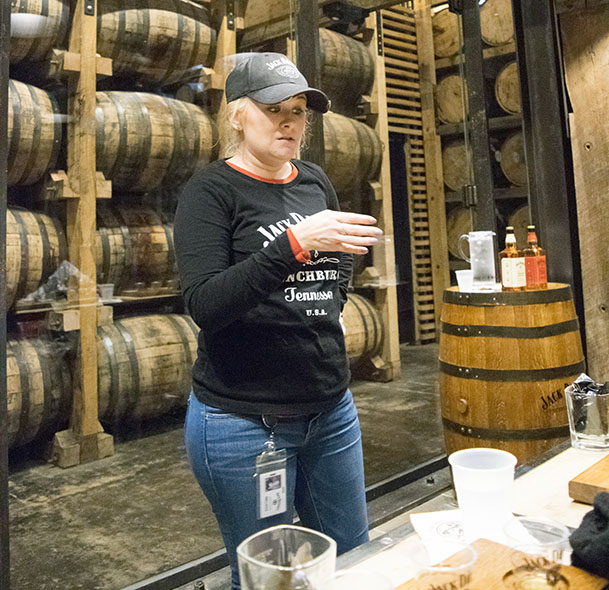
Melissa, our tour guide at Jack Daniel’s.
The Jack Daniel’s tour was fun, even though it was raining cats and dogs on that fine Tennessee Veteran’s Day. Our tour guide, Melissa, made it especially so, with one great story after another. I’ve known of Jack Daniel’s for a long time; what I didn’t know was that it was a sleepy backwater distillery for most of its life until a young crooner named Frank Sinatra made it known he wouldn’t drink anything else. Frank Sinatra was buried with a bottle of Jack, along with a dollar’s worth of dimes because he didn’t know where he was going, but he knew they might have pay phones there. Frank Sinatra’s favor put Jack Daniel’s on the map, and the rest, as they say, is history.
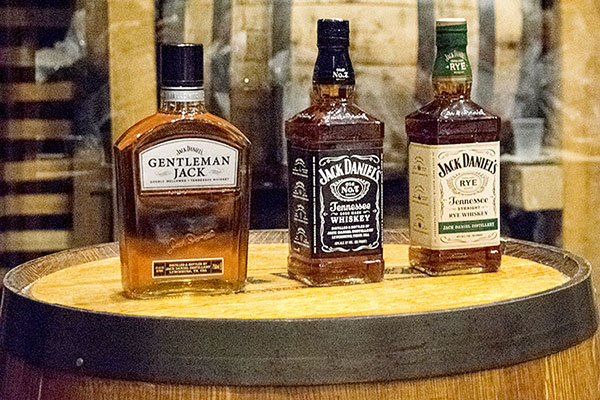
Jack on display. They have two more varieties in addition to those shown here (Honey, and Fire).
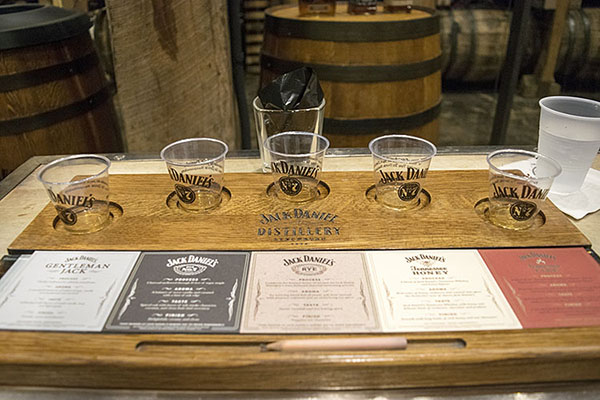
I found out that if you work at Jack Daniel’s, you get a free bottle of Jack every month (and they are always hiring). I learned that every bottle of Jack Daniel’s ever made has been made at that plant, which is fed by an underground spring with water that is perfect for producing Tennessee sipping whiskey. I learned that you can buy Jack Daniel’s by the barrel, and more than a few folks do (they have an entire wall lined with small plaques denoting those who did). Melissa walked us through the entire manufacturing process, and as a former manufacturing guy, I found it fascinating. They have a statue of Jack Daniel standing on several large boulders and, of course, they refer to it as “Jack on the Rocks.” We opted for the tasting tour at the end, and I learned that there are actually five variants of Old No. 7. All of them are really, really good. We had a blast.
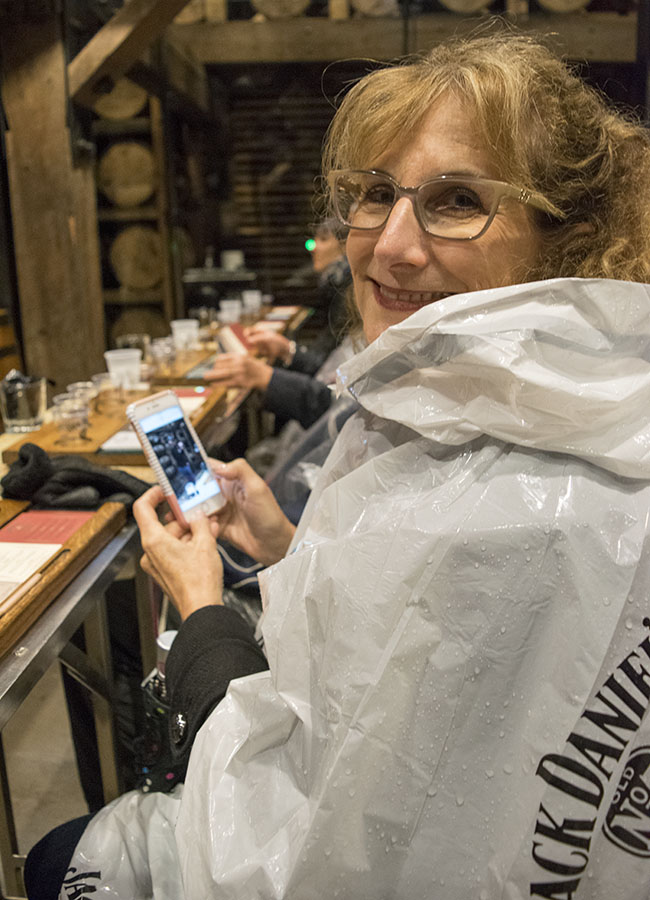
Ready for sipping. All were great.I always get one photo of Sue that defines the trip. This is the one from our recent Tennessee Tour.
After our amazing Jack Daniel’s tour, we stopped for lunch at the Southern Perks restaurant in Lynchburg. When we ordered our lunch, the young lady behind the counter popped the same question: Are either of you veterans? Again, Sue was quick to answer, and again, the response was the same: “Thank you for your service, sir. Your lunch is on us today.”
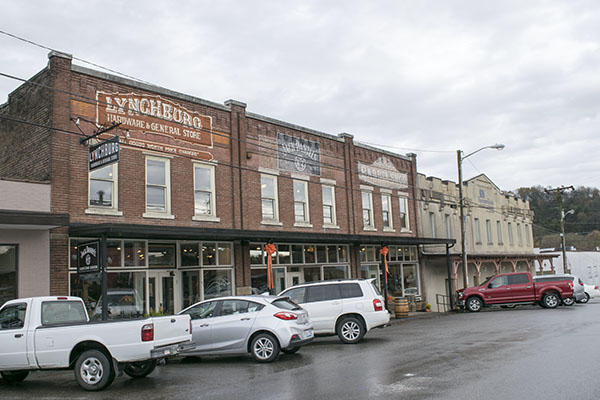
Downtown Lynchburg. It was a fun place.
Wow. I was speechless. A little choked up, actually. I’ve never been treated like this, and I left the Army a cool 42 years ago. I didn’t know what to say, and like always, I thought of the right response too late. When I hear “Thanks for your service” the next time, I’ll have my answer ready.
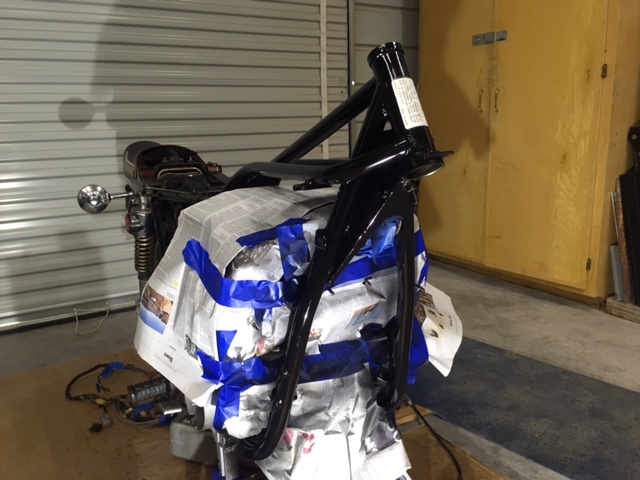
This is not a restoration. This is a resurrection. I plan to ride Zed, not store it away like a stolen Rembrandt. The front down tubes were pretty chipped and scratched with lots of bare metal so I had to fog a little black paint onto them to slow down the rust. I know all things rust. As soon as ore is melted into steel it begins the long path back to earth. We live in a temporary world; as soon as we stop our struggles and ambitions the things we care about turn into dust. So I painted the Kawasaki’s down tubes.
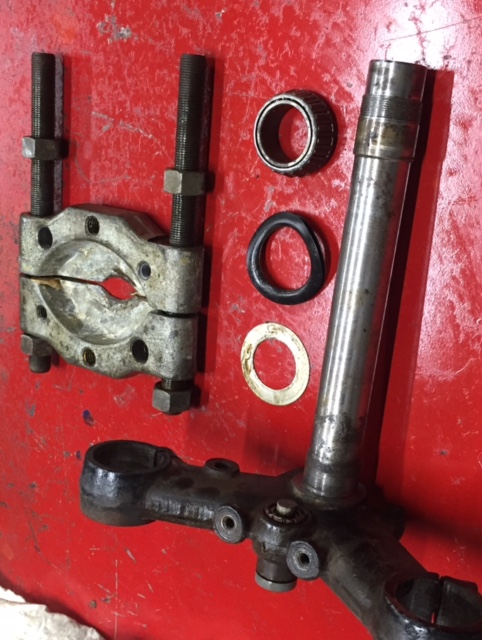
Next on my list were new steering head bearings. I have a Proto puller set that cost around $150 in 1970 and it mostly is still intact. From that kit I used the bearing separator to get behind the lower stem bearing. I clamped the stem in the vise and a few sharp raps later the bearing was off.
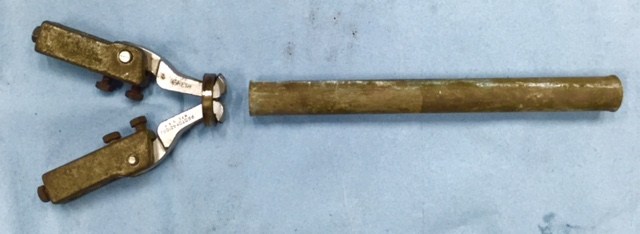
Removing the races pressed into the fork stem is a little harder. There isn’t a whole lot of meat exposed to get a purchase. Some people weld a bead on the race then use that to punch the race out. I’m sure there’s a correct way but I don’t know it so I use two puller claws and force them against each other to wedge the puller tips behind the race. Since you have to hold the claws together with one hand you’ll need a length of old bronze boat shaft to pound on the claws. Most Old Boat Shaft stores carry lengths of bronze shaft. It’s finding the store that’s the hard part.
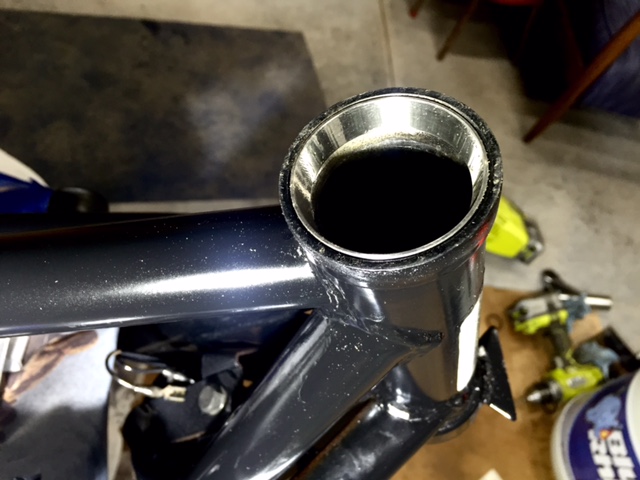
The new races pop in without trouble. I get them started with a dead blow hammer then finish seating them with a punch worked slowly around the circumference of the race. You can hear the hammer-tone change pitch when the race seats against the frame tube.
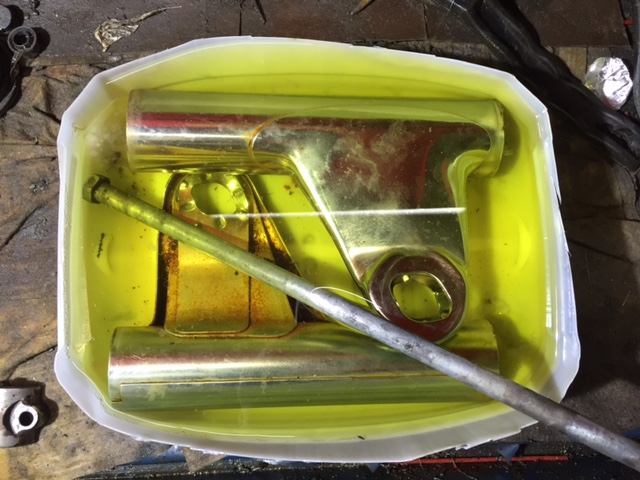
The triple clamps were a mess so I wire brushed them and shot some black paint on the things. I’m always aware that any paint work or cleaning I do destroys the originality of the bike so I try to keep it to a minimum. While the headlight ears were soaking in a vat of Evapo-rust I started assembling the forks.
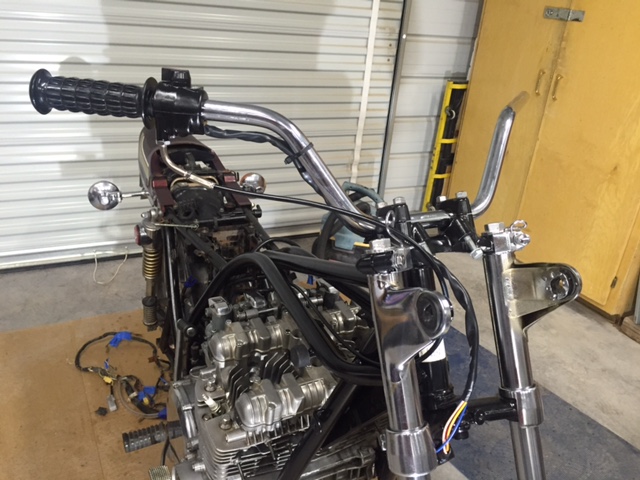
A new throttle/switch assembly from Z1 Enterprises, throttle tube from ebay, throttle cable from ebay, new grips from ebay and somehow these parts from all over the planet fit together nicely. The throttle tube is a bit short and the grip doesn’t quite reach the switch housing but I will be running a NEB cruise control and that widget will fill the space as if it was planned. I think the 90-degree metal bend at the throttle cable housing could follow the bars better but I’m not going to try and bend it.
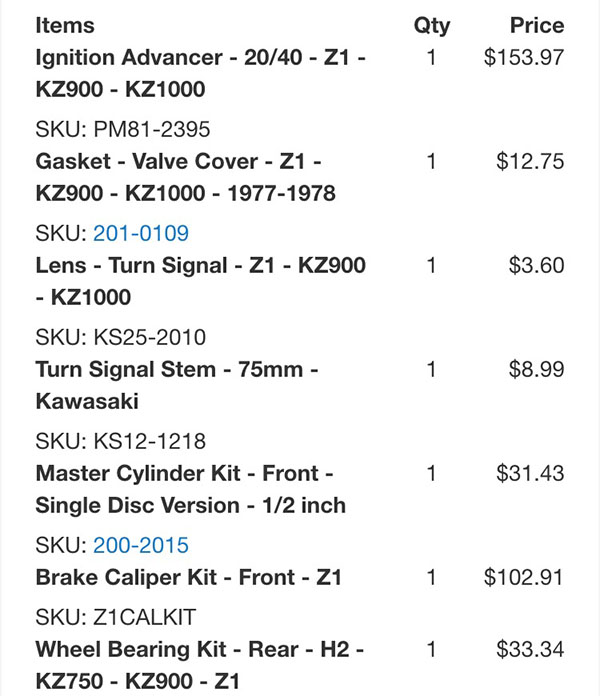
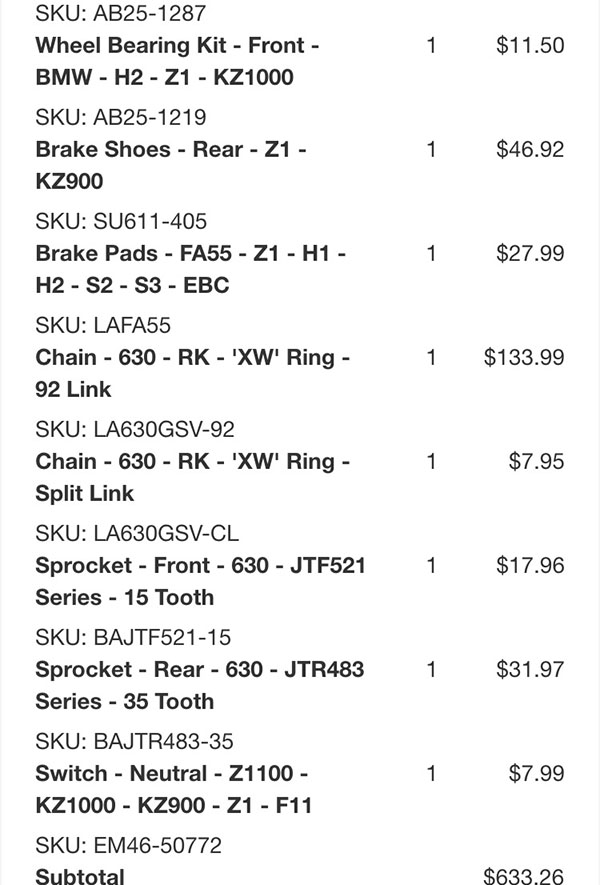
I’m close to $1000 in parts now. I’m replacing some wear items so I don’t think those should count against Zed.
Want to catch up on the rest of the Z1 resurrection? Just click here!
I’ve blown by Chattanooga a bunch of times on Interstate 24 and I’ve seen the sign for the Chattanooga Choo Choo. I always wanted to stop to see it. But I never had. Until today, that is. Yep, there really is such a thing…
The real deal: The Chattanooga Choo Choo. It’s on display behind a hotel of the same name, just a hop, skip, and a jump from the Interstate and downtown Chattanooga’s other attractions.
This is my first visit to this fine southern city, and folks, I’m here to tell you: Chattanooga is a fabulous town. I had no idea. This is a wonderful place, nestled along the Tennessee River close to the Georgia border. The Chattanooga Choo Choo. Lookout Mountain and Ruby Falls. Moon Pies (yep, for real). Great walking paths. Nearby Chickamauga Battlefield National Park. An incredible Civil War rifle collection. Dining that makes the word “fabulous” seem wholly inadequate. The verdict is in: I like this place!
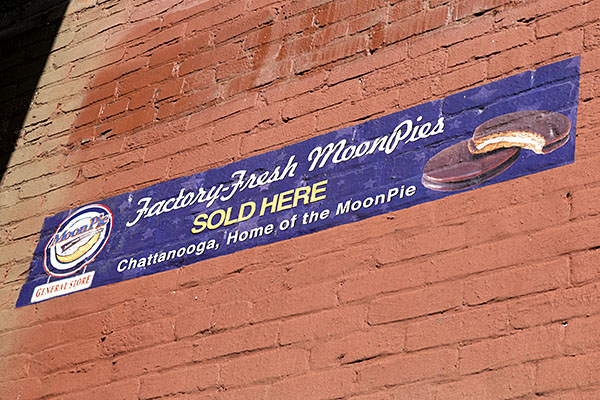
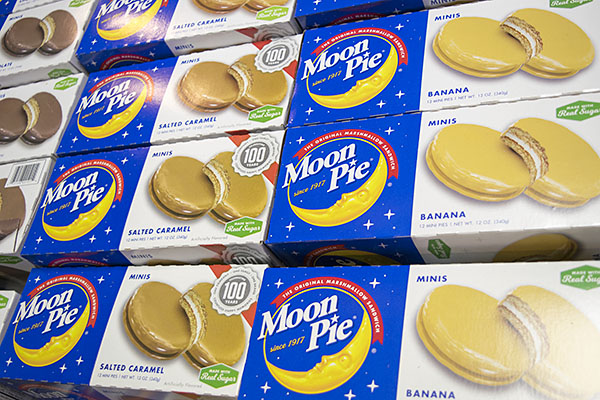
So, what’s the deal with Moon Pies? Hey, if you’ve never heard of Moon Pies, you need to get out more often. And if you’ve never tasted one, well, trust me on this: You owe yourself this treat. It turns out that Chattanooga is where Moon Pies are made, you can get them in just about any local store, and there’s actually an official Moon Pie factory outlet in downtown Chattanooga. That fact, all by itself, makes Chattanooga a bucket list destination!
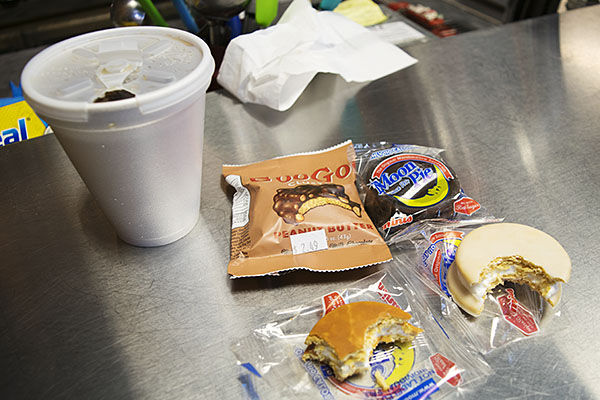
Chattanooga: Home of the Moon Pie.Heaven in multipack cartons. We bought several to bring home.And we sampled a few, too. That other treat? That’s a Goo Goo, another local treat made in nearby Nashville, but that’s a story for another blog.
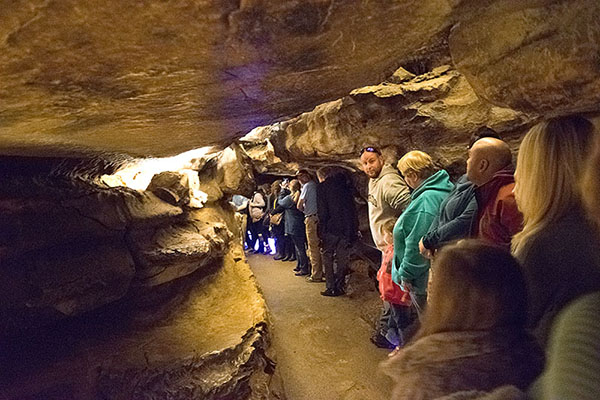
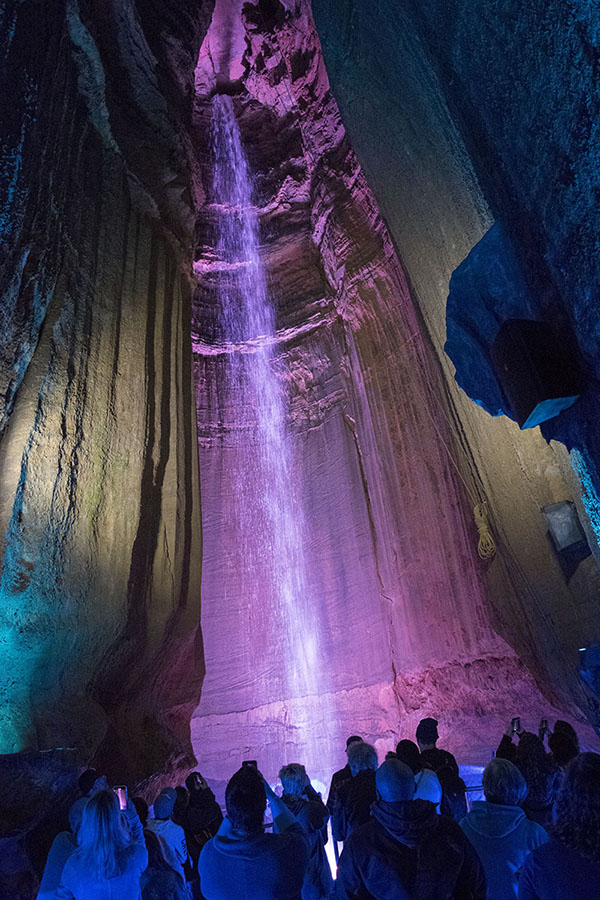
Lookout Mountain is another cool spot in Chattanooga, with an underground cave system that actually includes a 140-foot waterfall (all of which is underground). Think Jules Verne and a journey to the center of the earth. Yep, we hit it, too!
Deep in Lookout Mountain, headed for Ruby Falls.Imagine what it must have been like to discover this while exploring an underground cave. Meet Ruby Falls, 140-ft tall, and all underground.
We had an incredible lunch at The 405, a place we just happened upon while walking around downtown. The 405 is a Middle Eastern restaurant (I love Middle Eastern food) and it’s another one of Chattanooga’s best kept secrets. I had a chicken shawerma sandwich and it was fabulous, with juicy roasted chicken, a perfect Tahini sauce, and pita bread made fresh on the premises. I told our waitress I write a blog for the most discerning riders on the planet (that would be you), and the owner was at my table in a heartbeat. It turns out that my new good buddy and restauranteur Rashad is one of us. He rides a BMW sport bike, and we had a conversation about the great roads in the Chattanooga area. Rashad told me you can ride 51 weeks out of the year in and around Chattanooga and the way he described the roads, this sounds like a place where I need to spend more time. From my explorations around this region, I believe him. I have to get back here. And when you get out here, you have to try The 405. Tell Rashad Joe sent you.
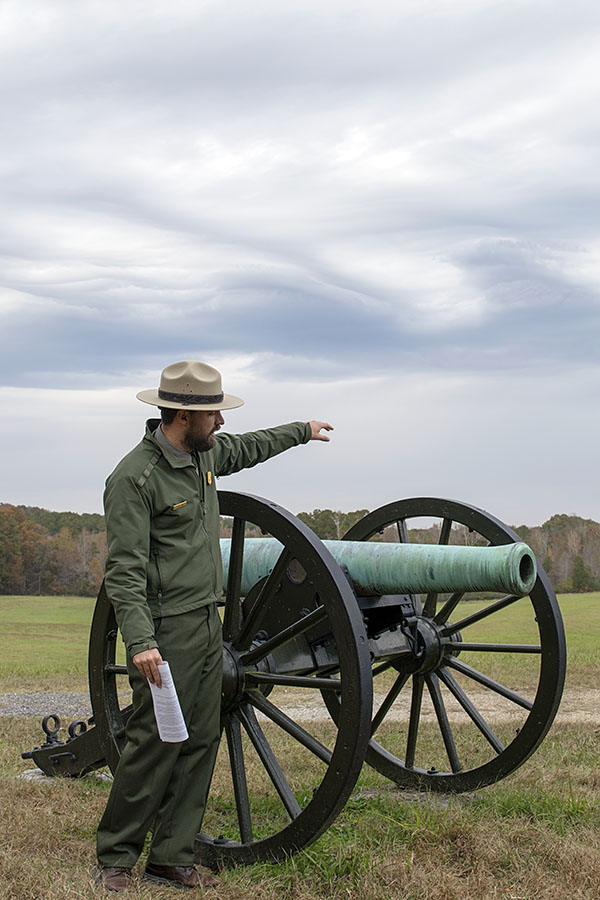
From downtown, it was a short ride to the Chickamauga and Chattahoochee National Military Park. We were lucky. It was Veteran’s Day, and the National Park Service was giving free guided tours. I think they do that every day, but seeing this sacred place on this grand holiday (on the 100th Anniversary of the end of World War I) made it even more interesting. Our guide was another new good buddy, in this case Ranger Chris.
Good buddy Ranger Chris on the Chickamauga battlefield.
Chris led a motor tour to three stops on the Chickamauga battlefield, and he made it come alive for us. If you’ve never been to Chickamauga, my advice is to put it on your list. Chickamauga and Gettysburg (fought just a few days apart) marked the turning point of the Civil War. We thoroughly enjoyed Chris’ presentation and the tour.
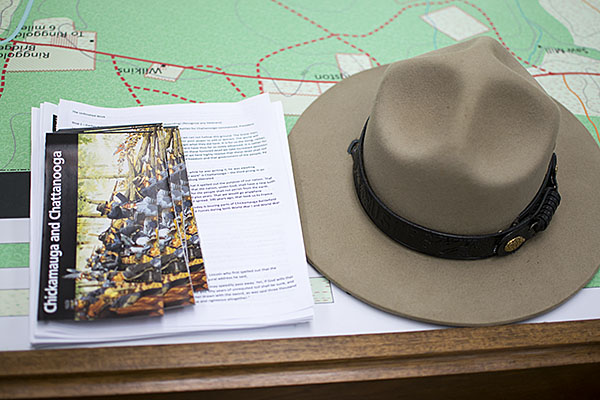
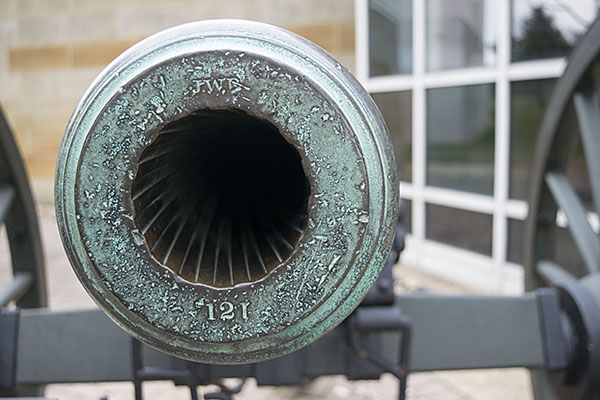
One of the best parts of the Chickamauga stop was the visitor’s center. It has several cannon on display, and a large map showing the battlefield.
Chris’s materials and his Ranger campaign hat. Good stuff at the Chickamauga visitor center.The business end of one of many cannon on display at the Chickamauga site.
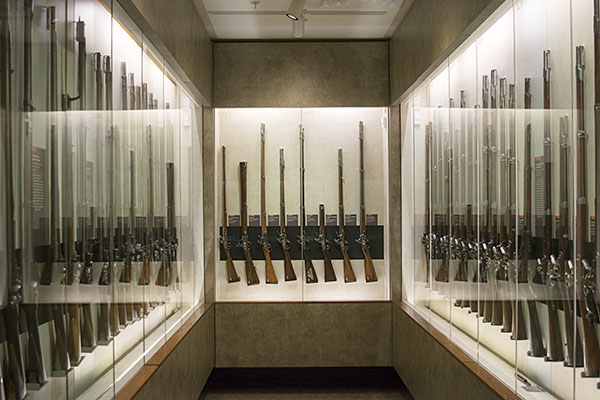
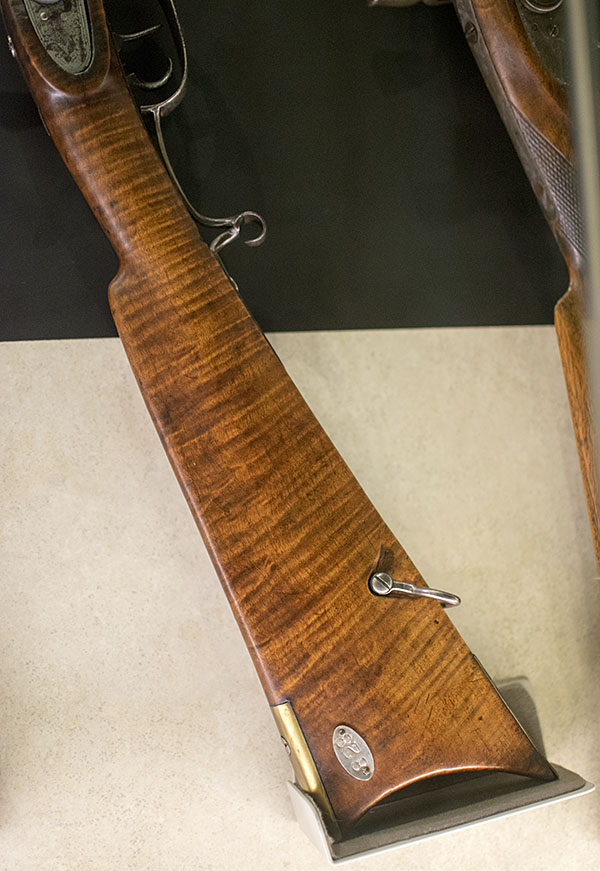
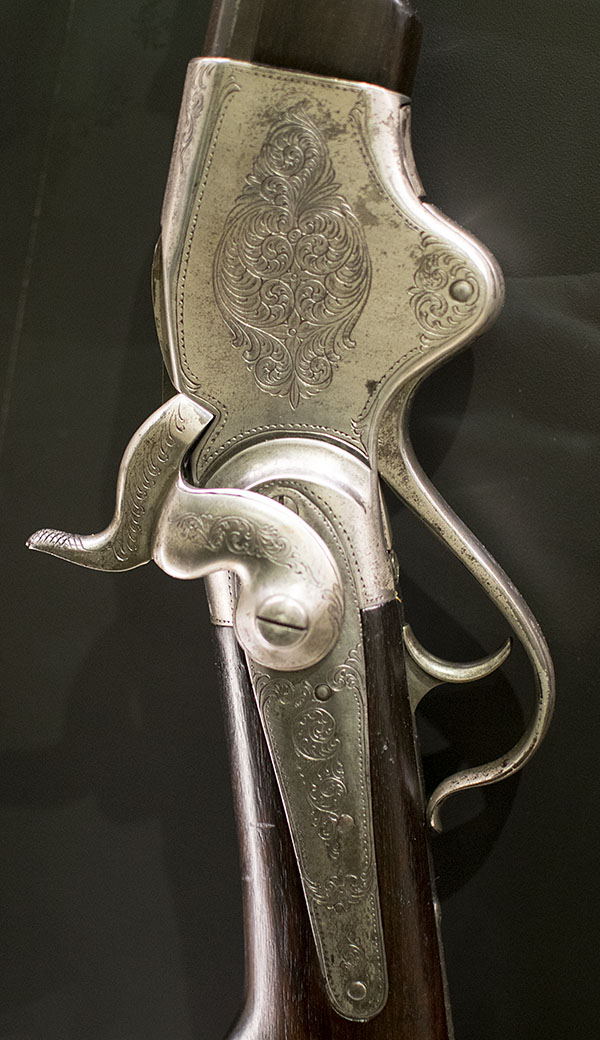
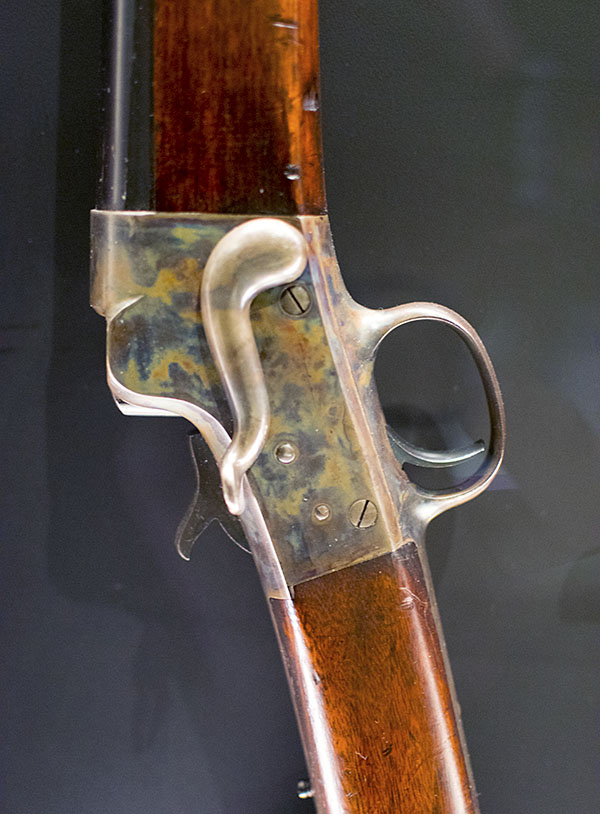
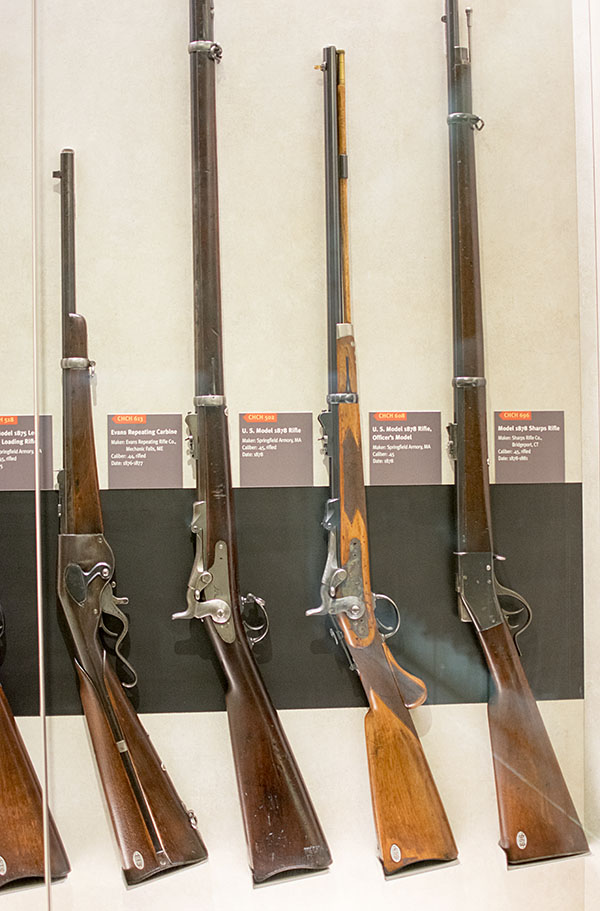
The Chickamauga visitor center also houses one of the best (probably the best) collection of Civil War rifles I’ve ever seen. It seems a local engineer and gun collector named Claud Fuller had built a collection of some 5,000 firearms and he donated a portion of his collection for permanent display here. They are magnificent. This collection, all by itself, justifies a trip to the area.
One of several halls displaying Civil War rifles from the Fuller collection.Fiddleback maple on a black powder rifle. These are beautiful firearms.A presentation-grade Spencer. I could have spent all day just looking at these rifles.Color case hardening on a Remington Hepburn rifle. This is amazing work.Several Trapdoor Springfields on display. These fire the 45 70 cartridge, one of the all time greats. The second one from the right is an Officer’s Model Trapdoor Springfield. I had never seen one before. I would have joined the Army just to get one of these!
After spending the afternoon at Chickamauga, we had dinner at the 1885 restaurant in Chattanooga’s St. Elmo district. I saw something on the menu I had never seen before: Mushrooms and grits. Hmmm, I wondered. That sounded interesting. And wow, was it ever!
Well, kiss my grits! This is before……and this is after. Yep, it was that good!
After dinner, our waitress recommended the cheese cake. Hey, everything else had been amazing, so why not?
Lemon and cream cheesecake. It came with a discount coupon for the local Coronary Care Unit.
My dinner tonight was one of the finest I’ve ever enjoyed. It was a great way to finish a Chattanooga visit. I’m up for a summer ride in this area, and I’ll be back. We’ll be home in California by the time you read this, and we’ll have a supply of Moon Pies for a short while. Like my good buddy Reuben always says: What a life!
 Water Canyon Road, west of Socorro, New Mexico is paved all the way to the Water Canyon Campground. The Campground is beautiful, wooded and self-serve: You put your fees into a pipe and pitch your tent. There are clean pit toilets and yodeling coyotes along with bear-proof trash cans. I’d like to hang out here but we are heading to The Magdalena Ridge Observatory.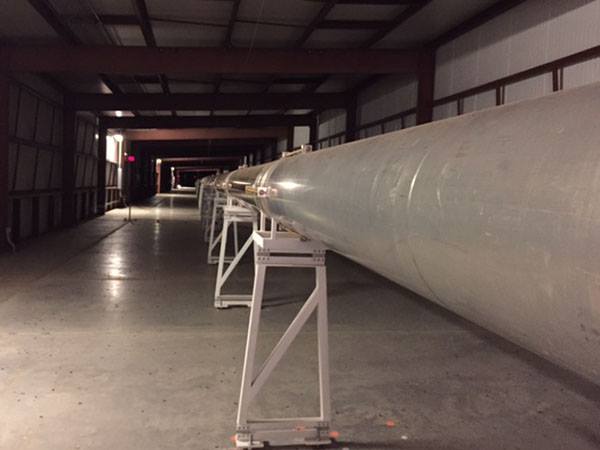
 The mirror at the MRO is an ex-Hubble part of which there were three built; one is inside Hubble floating around space, the other is at The National Air and Space Museum in Washington, DC.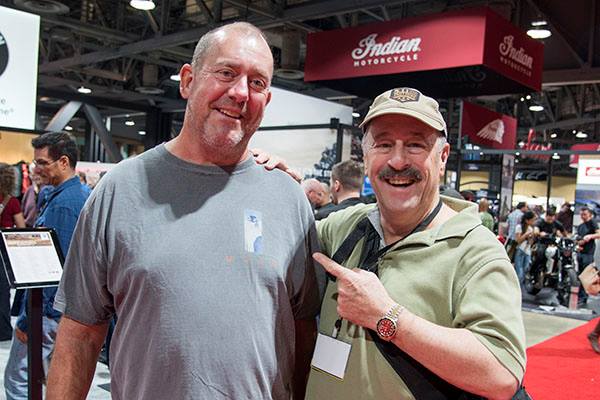
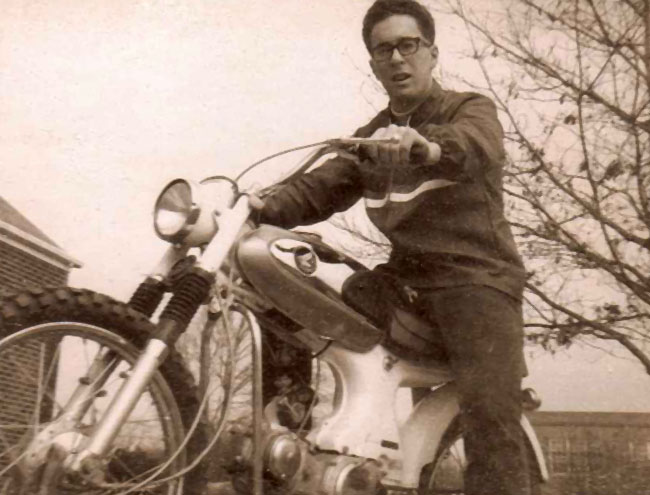
 Back when we were running Briggs and Stratton mini-bikes a few kids had Yamaha Mini Enduro 60cc or Honda Mini Trail 50cc bikes. Both of these bikes were stone reliable and a real leap forward from the hard-tail, flathead, one-speed stationary motored mini-bikes. I had a blue Mini Trail Honda that was indestructible. Riding the Everglades of South Florida the cooling fins would cake with mud and the engine would overheat until it would stop running. Just stop.
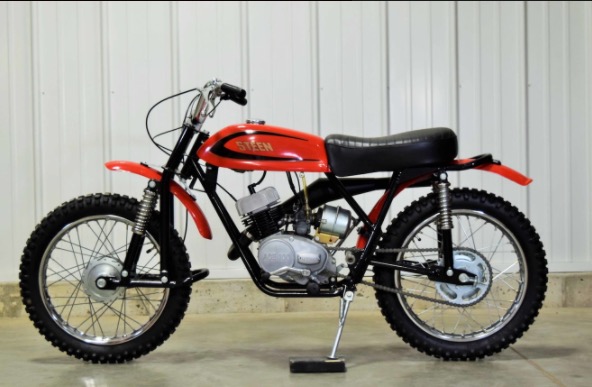 Into these tiny times strode a colossus: The Steen Alsport 100. What a machine! The Steen was equipped with a 100cc Hodaka engine, and the front forks were Earles type utilizing a swingarm and held up by two oil-damped shocks. The gas tank was fiberglass and beautifully shaped. White was the only color I saw but there were other colors. Steens were rare around the neighborhood.
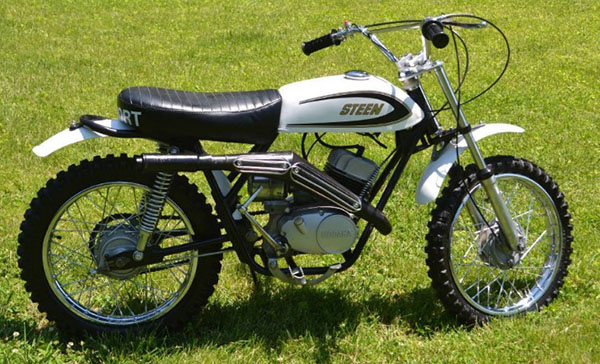 Dealerships more so than motorcycle quality determined motorcycle popularity at the start of the 1970’s. There were no Hodakas to be found. Very few Kawasakis or Suzukis populated our riding areas. Oddly enough a Montesa or Bultaco might ride by. These were huge motorcycles. The Steen didn’t have much of a dealer network In Miami so there was only the one kid who had a Steen in our group. I should remember his name but it has slipped away to that place all memories eventually slip.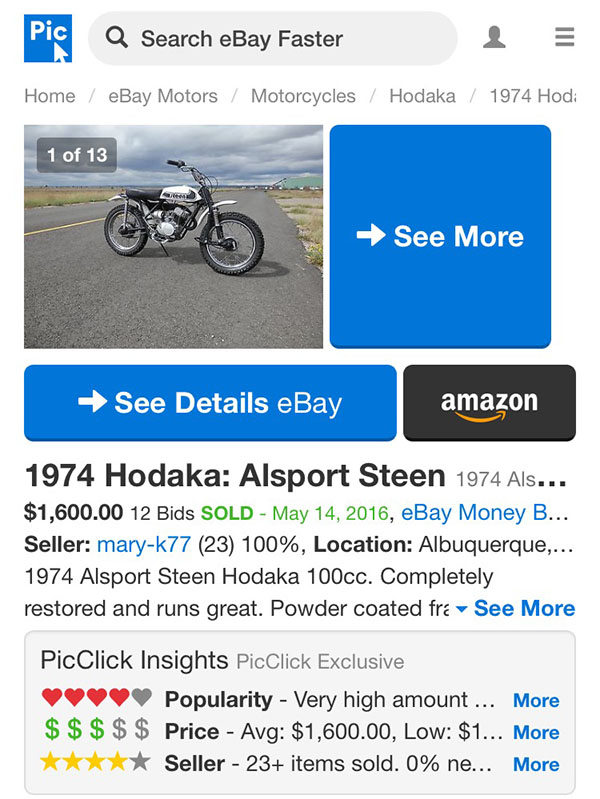
 This is not a restoration. This is a resurrection. I plan to ride Zed, not store it away like a stolen Rembrandt. The front down tubes were pretty chipped and scratched with lots of bare metal so I had to fog a little black paint onto them to slow down the rust. I know all things rust. As soon as ore is melted into steel it begins the long path back to earth. We live in a temporary world; as soon as we stop our struggles and ambitions the things we care about turn into dust. So I painted the Kawasaki’s down tubes.
 Next on my list were new steering head bearings. I have a Proto puller set that cost around $150 in 1970 and it mostly is still intact. From that kit I used the bearing separator to get behind the lower stem bearing. I clamped the stem in the vise and a few sharp raps later the bearing was off.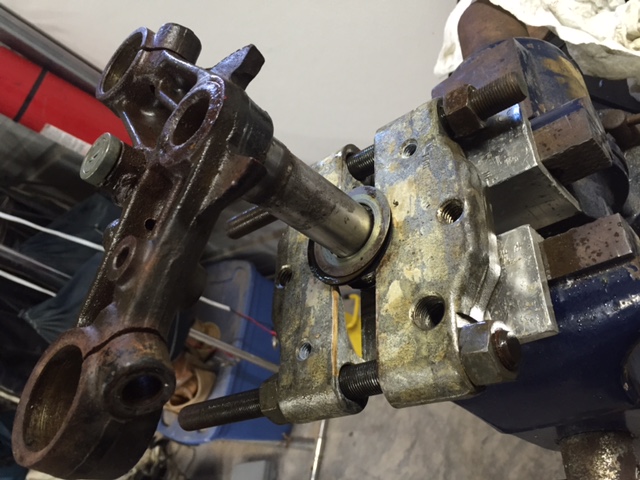
 Removing the races pressed into the fork stem is a little harder. There isn’t a whole lot of meat exposed to get a purchase. Some people weld a bead on the race then use that to punch the race out. I’m sure there’s a correct way but I don’t know it so I use two puller claws and force them against each other to wedge the puller tips behind the race. Since you have to hold the claws together with one hand you’ll need a length of old bronze boat shaft to pound on the claws. Most Old Boat Shaft stores carry lengths of bronze shaft. It’s finding the store that’s the hard part.
 The new races pop in without trouble. I get them started with a dead blow hammer then finish seating them with a punch worked slowly around the circumference of the race. You can hear the hammer-tone change pitch when the race seats against the frame tube.
 The triple clamps were a mess so I wire brushed them and shot some black paint on the things. I’m always aware that any paint work or cleaning I do destroys the originality of the bike so I try to keep it to a minimum. While the headlight ears were soaking in a vat of Evapo-rust I started assembling the forks.
 A new throttle/switch assembly from
  I’m close to $1000 in parts now. I’m replacing some wear items so I don’t think those should count against Zed.