ZRX RX: An ExNotes Resurrextion, Part 5

By Joe Gresh

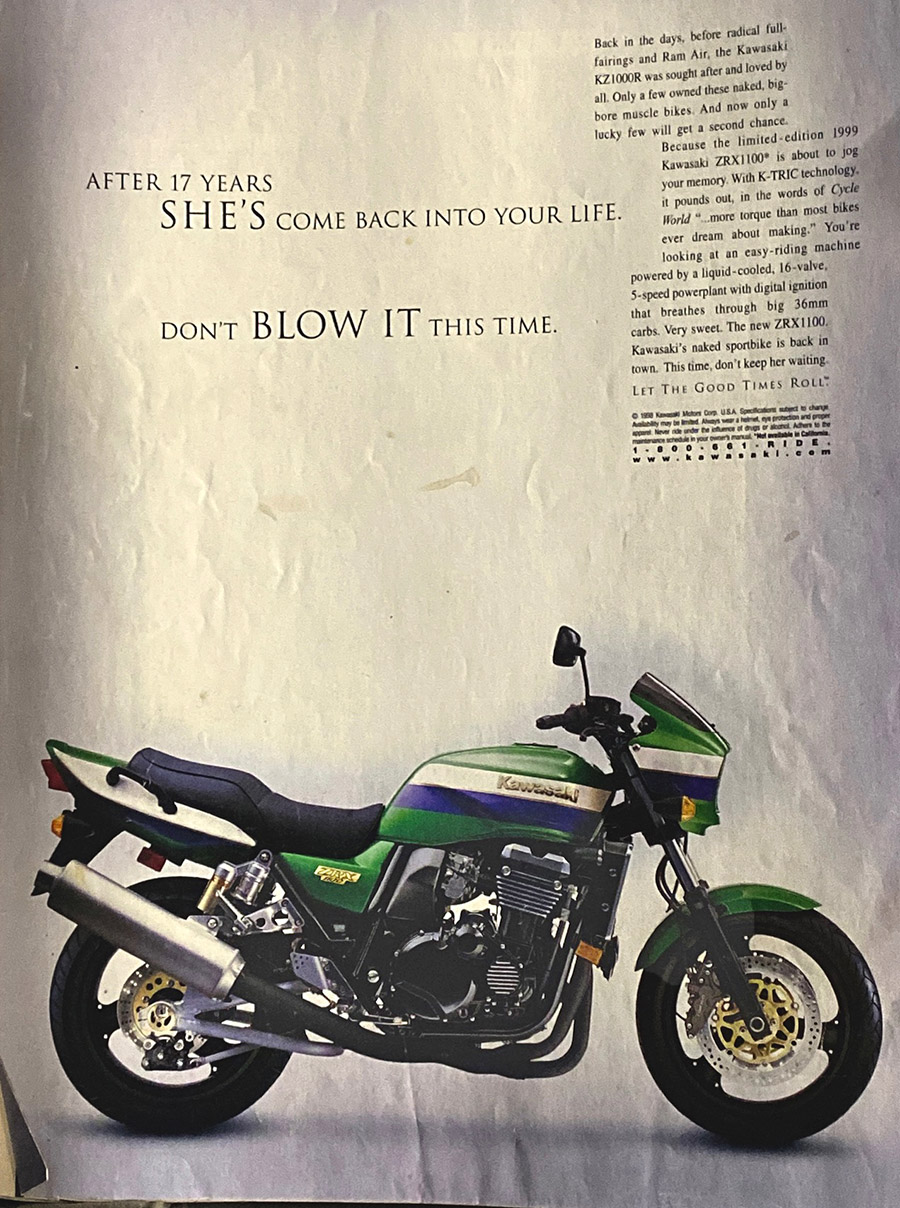
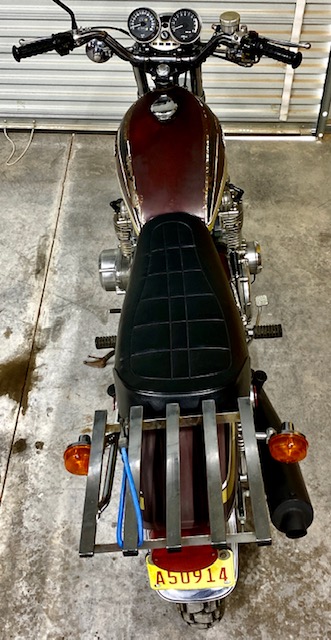
 The pressure of getting the ZRX1100 finished by July has eased off a bit. The Carrizozo Mud Chuckers may not be able to make July’s Laguna Seca races. I may have to go alone, which isn’t a bad thing, or skip the modern bikes and go to the vintage races held a week after. I’m leaning towards the vintage races as I really don’t have much interest in motorcycle road racing and the vintage bikes hold my attention just by existing. That doesn’t mean I’m backing off the ZRX1100 resurrexion project. I’m full speed ahead and will stay on the job until I am able to ride Rex again.

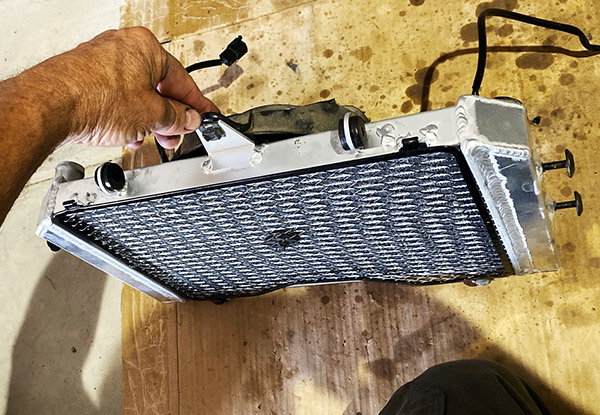
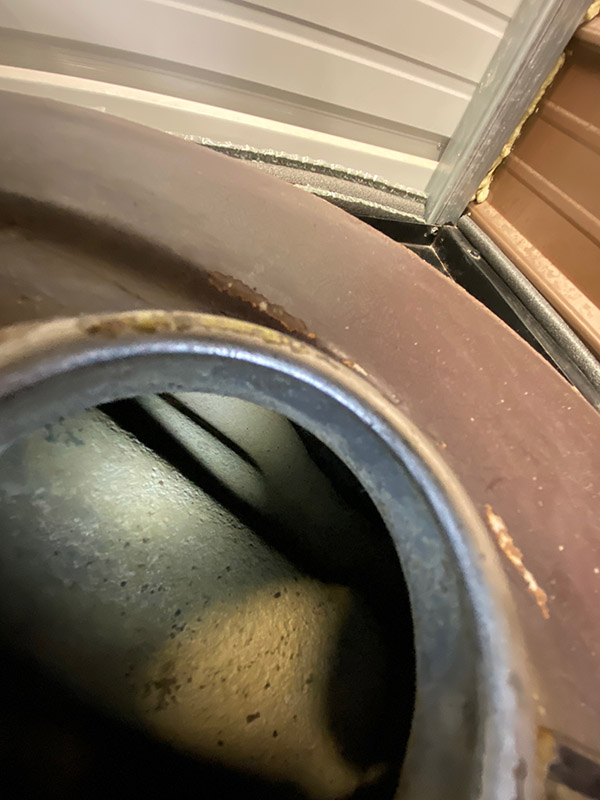
One of the things that worried me on the ZRX was the 24-year-old radiator. Kawasaki makes a quality motorcycle but how long can a radiator last? I found an aftermarket radiator on eBay for only $80 dollars with free shipping. You know how I like a deal. The radiator arrived securely packed and undamaged. It was welded aluminum and the workmanship looks excellent.

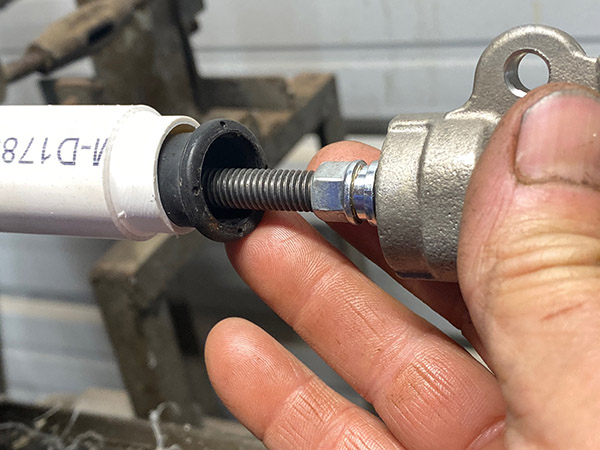
Unfortunately, there are a few problems with the fit of the aftermarket radiator. The top mounting ears are slightly too wide apart. When fitted with the original rubber isolator grommet the ears squeeze in as you tighten the bolts. It will need a thicker rubber isolator and that will require a longer spacer and bolt in order to avoid squeezing the rubber flat.

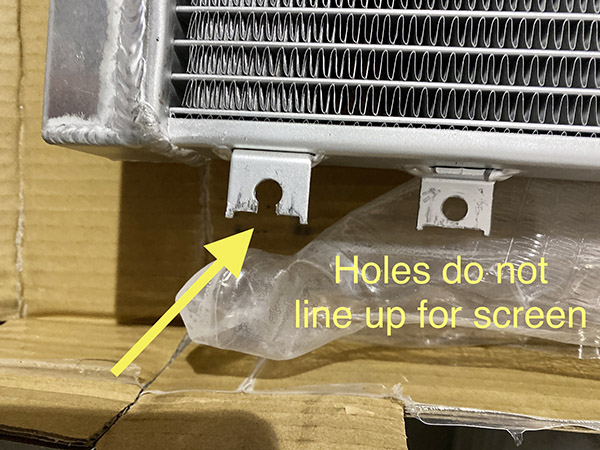
The next issue is the top tabs that hook into the expanded metal radiator bug screen are slightly too low. When the bottom screw holes are lined up the screen misses the top tabs completely; they hook into thin air. I slotted the screw holes to lower the screen on the radiator and it seemed to work although it looked like hell.

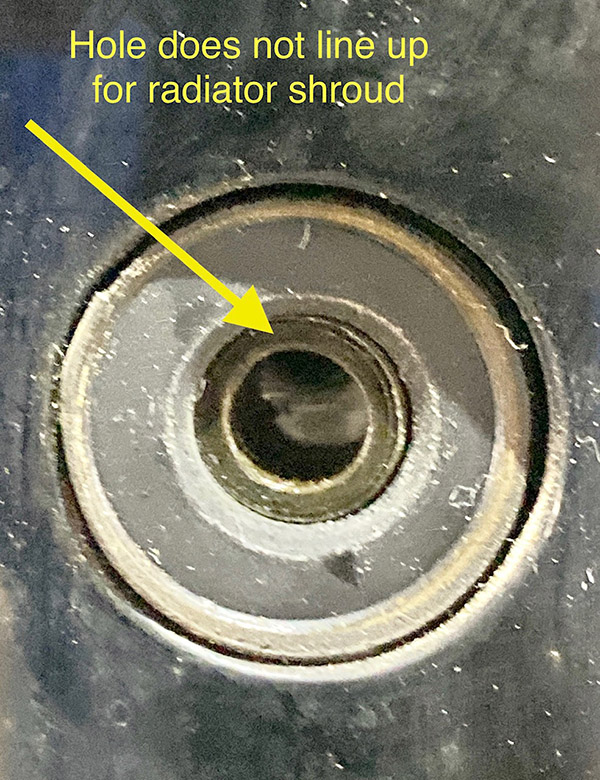
After those problems I found the blind holes in the side of the radiator that secure the radiator side covers were not centered correctly. You could get one bolt started or the other, but not both at once. This was fairly critical as the side covers also incorporate the bottom radiator mount and horn mounting bolts. To fix this I will need to fabricate new radiator side supports along with horn mounts. I decided to punt and cleaned up the original radiator and installed it. The aftermarket radiator might see future use but I’m not in the mood to do the fabrication right now.

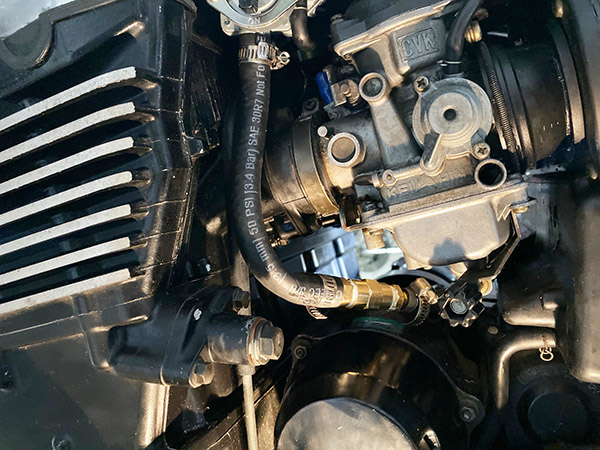
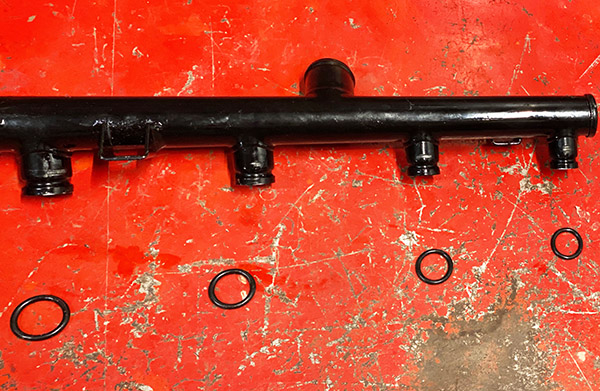
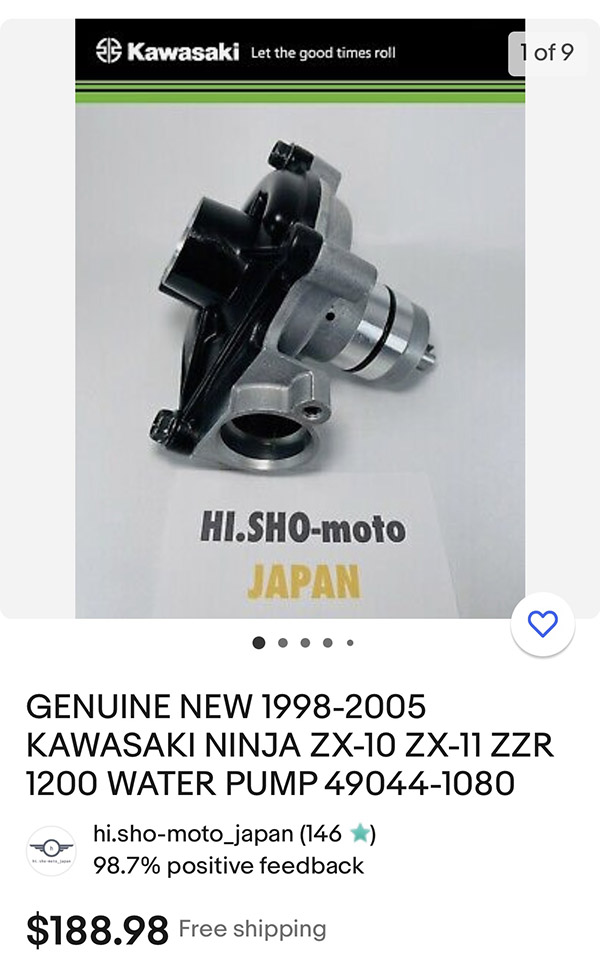
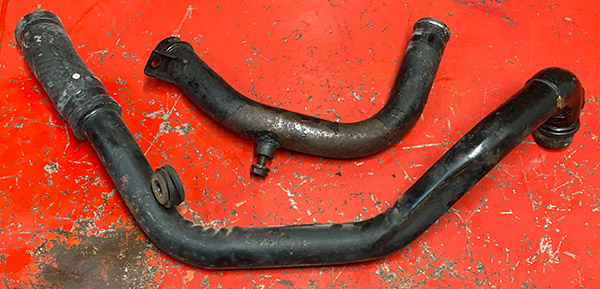
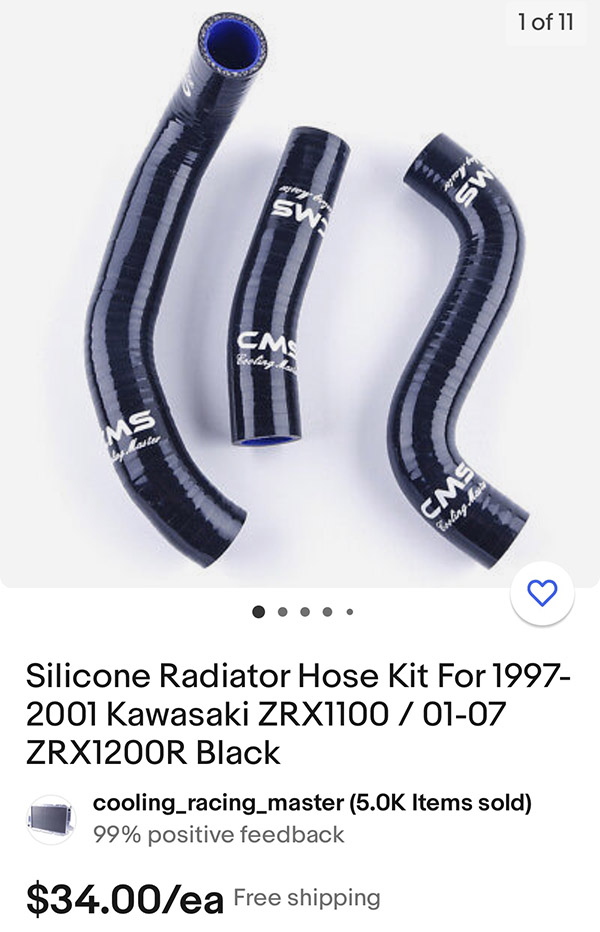
The new Kawasaki water pump fit perfectly and I was able to install the hard plumbing pipes and hoses. This included the log manifolds located on the front and back of the cylinder block. I ordered a set of silicone hoses that fit fairly well except one hose was missing. Fortunately, it’s the easiest one to get to and it is straight, so I reused the old hose. I can fix it later if it springs a leak.

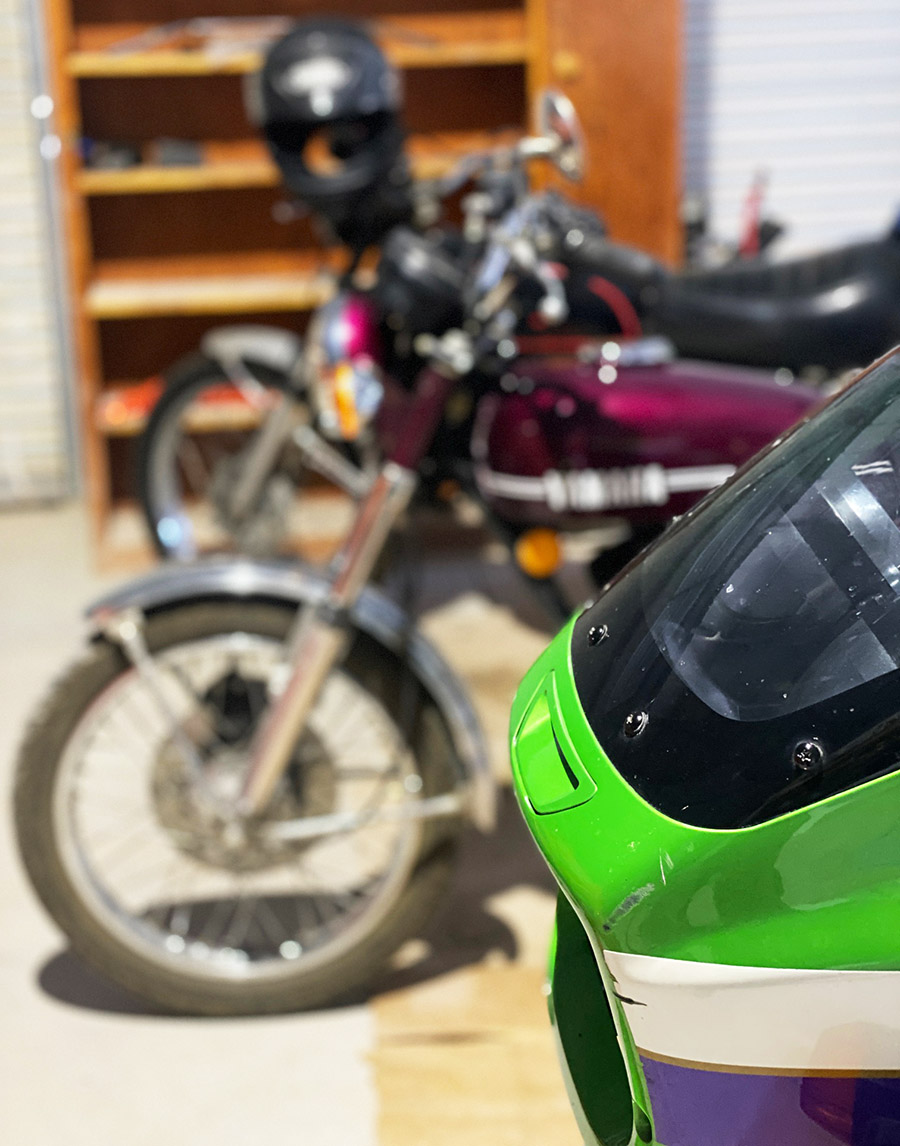
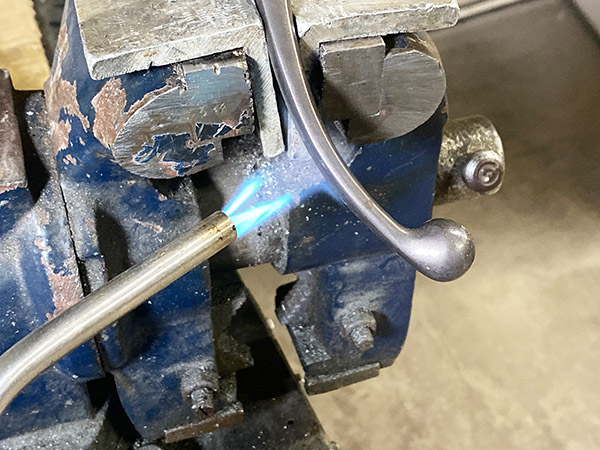
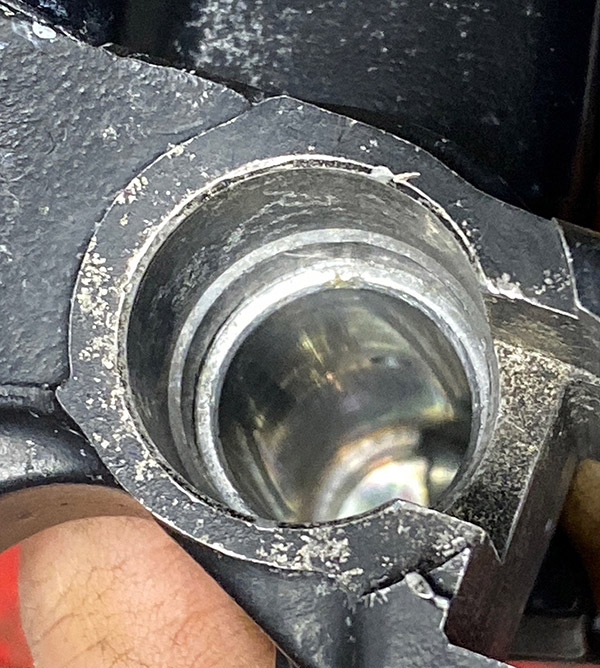
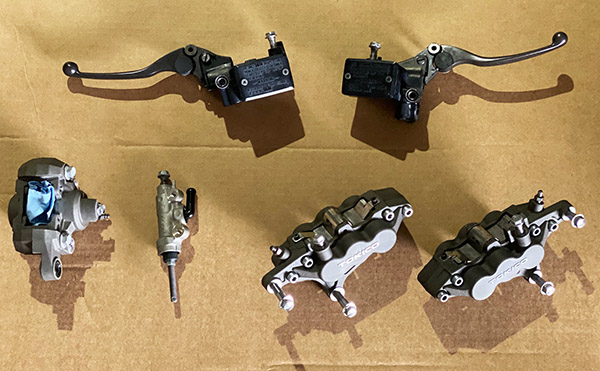
When I bought the ZRX used all those years ago the previous owner had dropped the bike moving it around. There is a small scuff on the headlight faring and the front brake lever was bent out at an awkward angle. I rode the bike like this for years. I decided that since I had the brakes apart I may as well straighten the lever. A little heat from a propane torch is all you need. Don’t go hog wild or you’ll melt the aluminum.

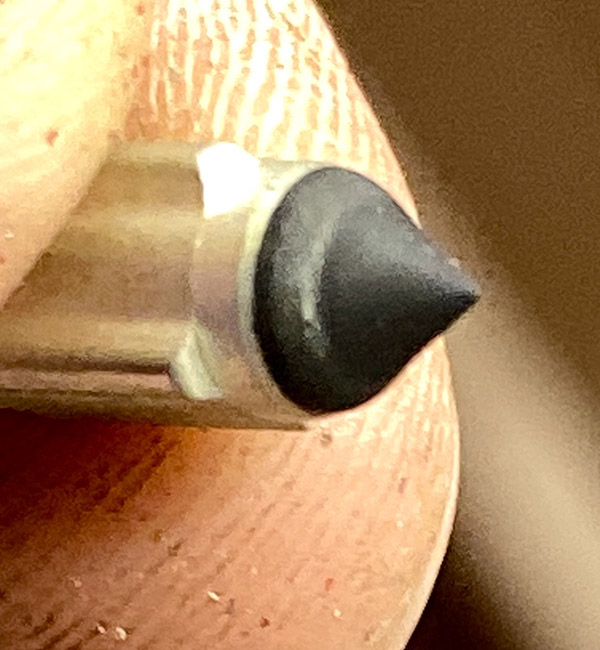
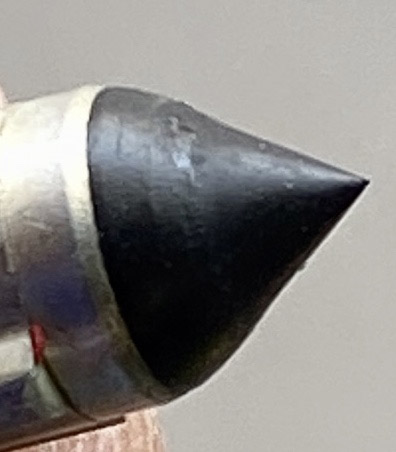
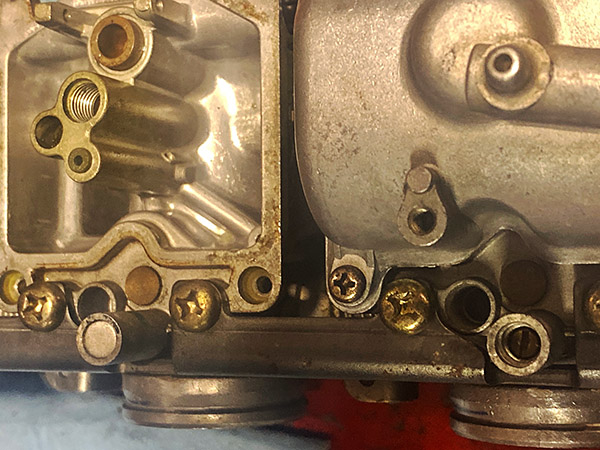
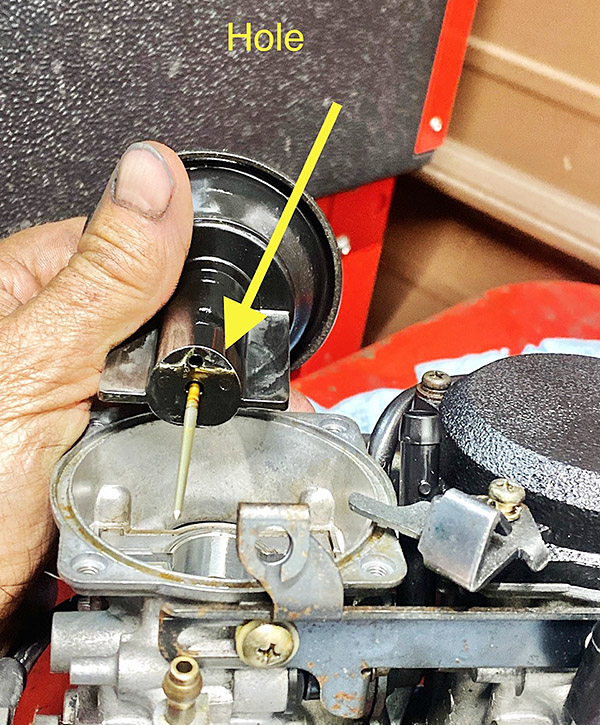
After closer examination I could see why the old float needles were leaking. There was a ridge worn into one and another had the rubber tip flaking apart. I ordered a new set of four needles for $28 (shipping included) from China but could not get an accurate delivery date. I was getting nervous about our trip so I went down to the local Kawasaki dealer. The dealer had Kawasaki-OEM needles for only $39 each. It killed me but I dropped $156 and bought the four needles.

With new needles in hand I checked the float levels. The range given in my book was 18.5mm ± 2mm from the float bowl flange to the bottom of the float. Mine were all sitting a bit high at 18mm. I readjusted them to 20mm anticipating needle wear and seating. After the carbs were back together I checked the floats on the bench and no fuel leaked out. I hope this status holds. Two days later my needles from China showed up. They look identical to the Kawasaki needles and even came with the tiny wire bail that fits over the float to pull the needle down when the float drops. My $156 needles required reusing the wire bail from the old needles.

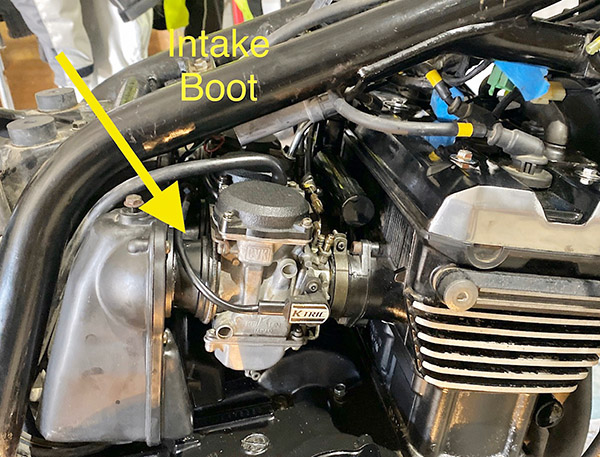
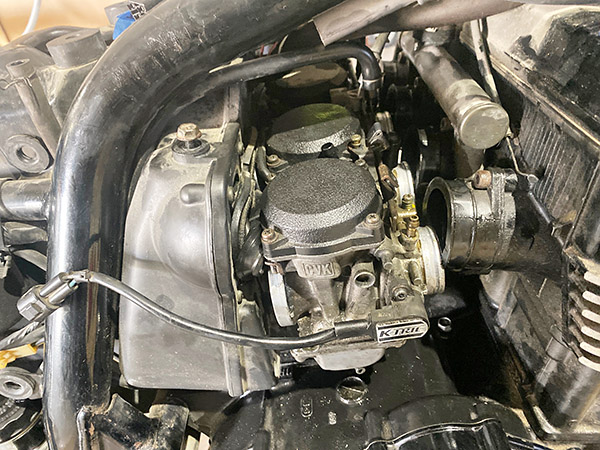
I can see why so many ZRX riders convert the original air box to pod-type filters. It’s a challenge getting the carbs back into position. You have to mount both throttle cables and the choke cable, then feed the cables through the frame as you battle to slide the carb assembly between the manifolds and the  air box rubbers. It took at least an hour fighting to get the things in.  Then, once you feel like you have succeeded, there’s the not-small matter of fitting the springs onto the air box rubber groove. None of this would be difficult if there were access. The two inside boots were out of reach and too crowded for my fingers. I managed to get the springs in place using a couple of screwdrivers and a lot of bad language.

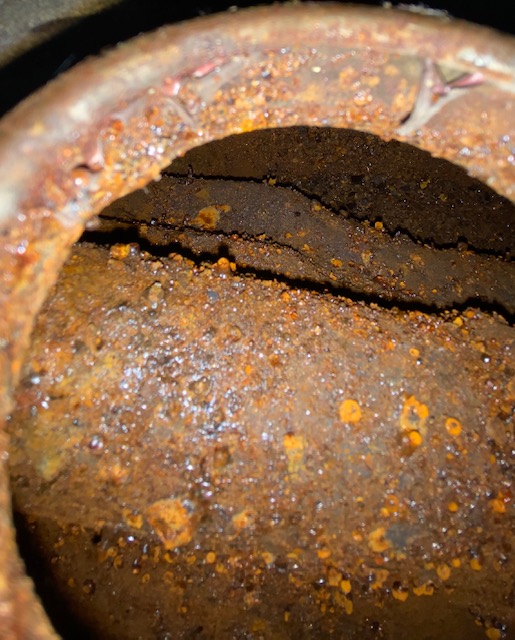
While waiting on parts I tackled the fuel tank. Amazingly the inside of the gas tank was not rusted. It had stinky old yellow muck inside but was otherwise in good condition. This might be due to my diligent addition of fuel stabilizer several times over the course of the ZRX’s long slumber. I rinsed the tank using fresh gas and after 4 flushes the inside was pretty clean.

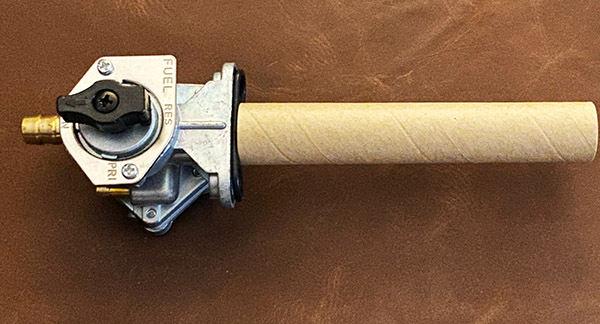
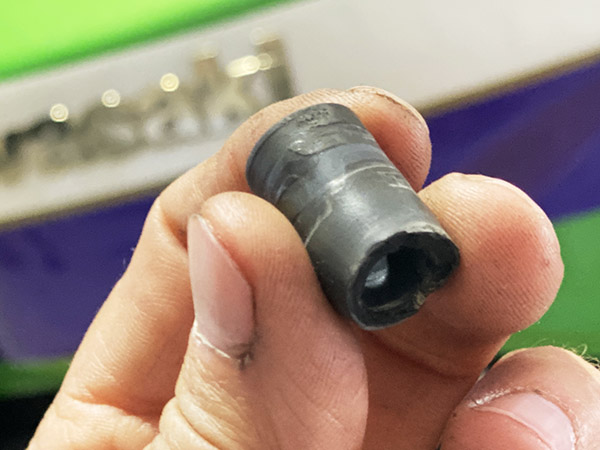
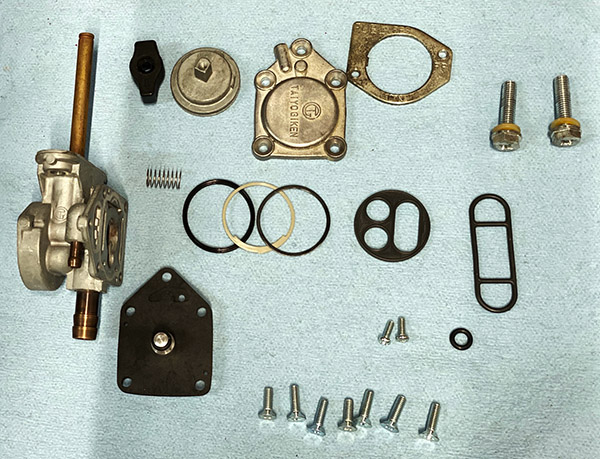
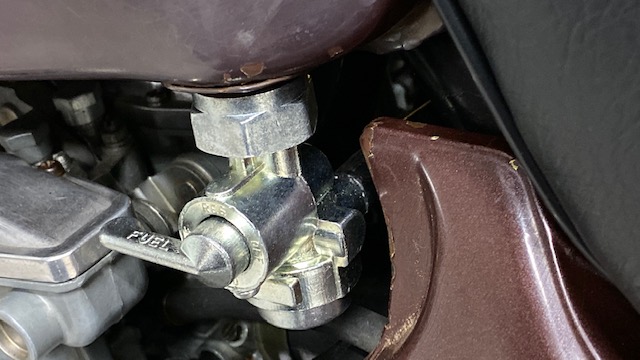
The fuel filter on the petcock was brittle with age (or fuel stabilizer) and crumbled to the touch.  The filter is not sold as a separate part so I bought an entire petcock for less than a few Kawasaki gaskets. Again, from China. I didn’t pay attention to the delivery date and the petcock was promised between June 7th and July 15th. This was a huge window, so I bought a rebuild kit and it didn’t show up, either. Panicking, I went to the local dealer and ordered the inner packing and the gas tank O-ring figuring I could at least make something work. As you can see, I’m using a shotgun approach to parts as time grows short.

The petcock rebuild kit showed up a day before the Kawasaki stuff did and I managed to get a petcock assembled. My main issue with this plan is that since there is no interior fuel filter I’ll have to fit an inline filter. This is not as easy as it sounds because the Kawasaki uses a large 3/8” fuel barb and the 3/8” inline filters I’ve found are too large to fit under the carbs or below the petcock. Maybe my new petcock will show up soon and solve the problem for me.

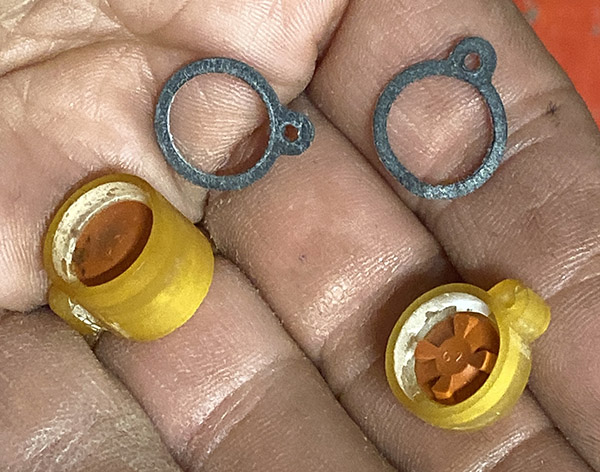
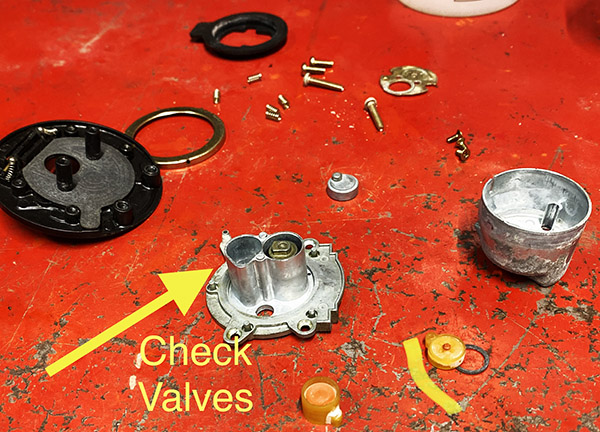
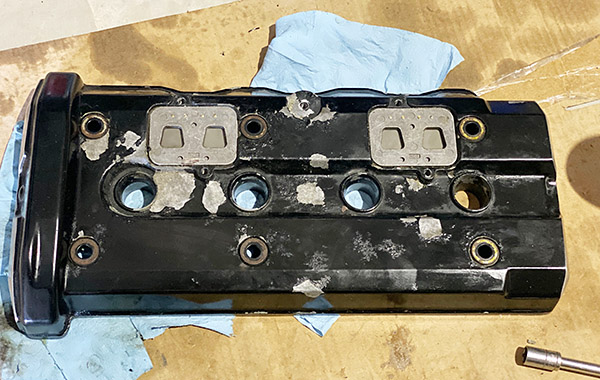
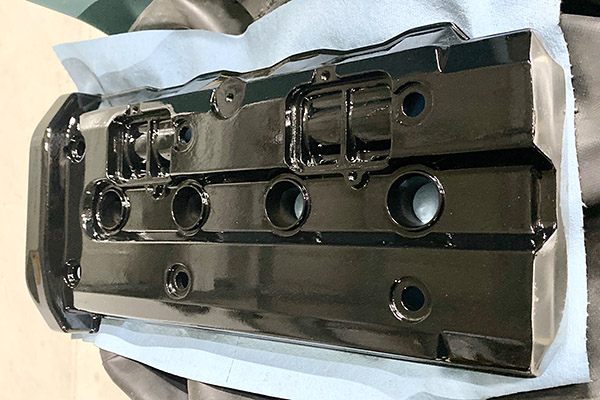
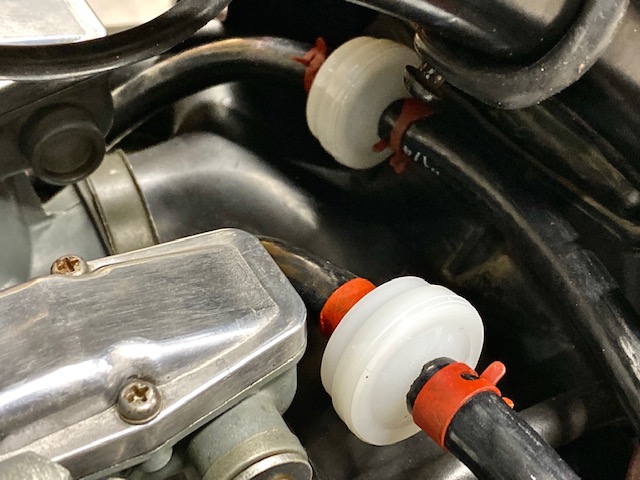
The big holdup now is the gaskets for the reed-valve pollution plumbing located on the valve cover. The law of unintended consequences says that I should have left the reed valves alone when I painted the valve cover. But I didn’t. They tore when I removed the reeds to paint. I ordered the gaskets weeks ago and they have not arrived.

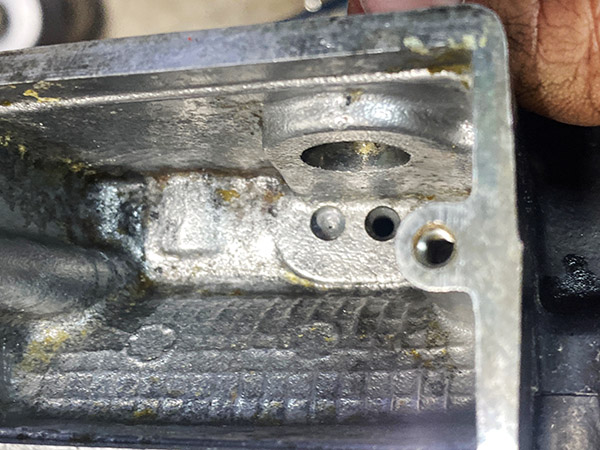
The reed valves allow fresh air to be drawn into the exhaust ports when there is a vacuum pulse at the exhaust port. Kind of like a smog pump without the pump. The reeds connect to a carb-vacuum-actuated valve that is supplied via the air box. I’m guessing this is some sort of backfire control. I can eliminate all this junk and I might do just that but I will need to make a blank plate to replace the reeds and a blob of high heat silicone to replace the gaskets.  Then I’ll need to plug the hole in the air box. It would be faster to bolt the junk back on as the bike ran fine with it.

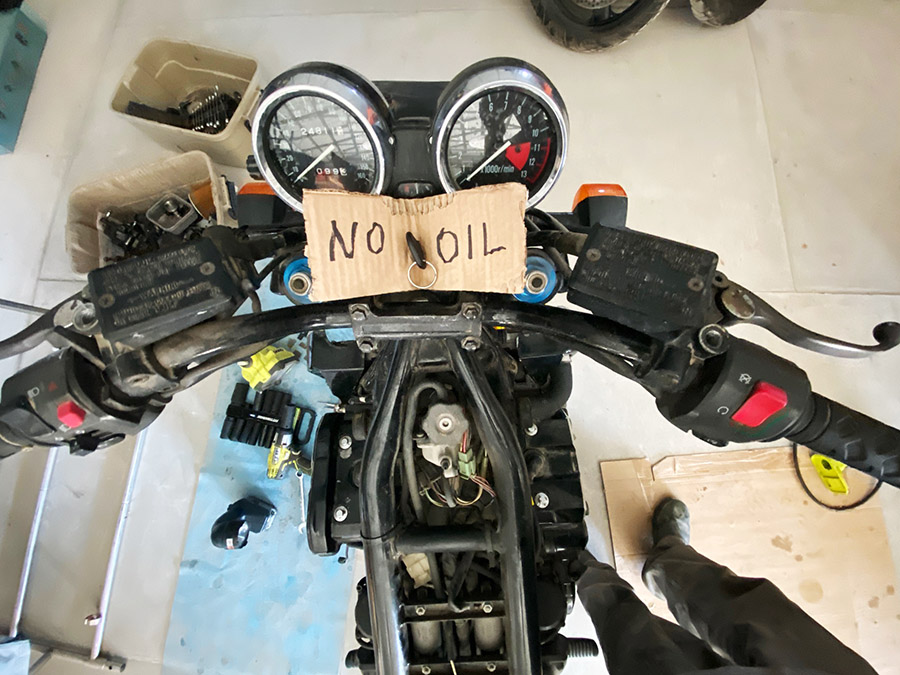
I also installed the new battery and tested the electrical system. I tested the lights and horn and they seemed to work then I bumped the engine over to see if the electric starter still functioned. Maybe in Part 6 this motorcycle will start.


Like what you see?  Please thank us by clicking on a few of the popup ads.


Never miss an ExNotes blog:


More Resurrections are here.

ZRX RX: An ExNotes Resurrextion, Part 4

By Joe Gresh

I’m starting to worry about the timeline on this Kawasaki project. It’s already almost June and we will be leaving for Laguna Seca the beginning of July. Parts are trickling in slowly now and I’ve found things to keep me busy. I don’t want to ride the Yamaha RD350 all the way to California but I will if it comes down to it.

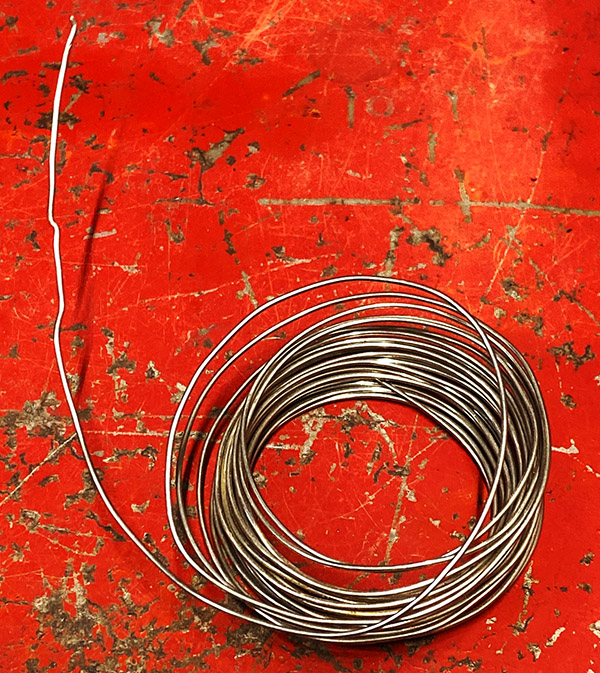
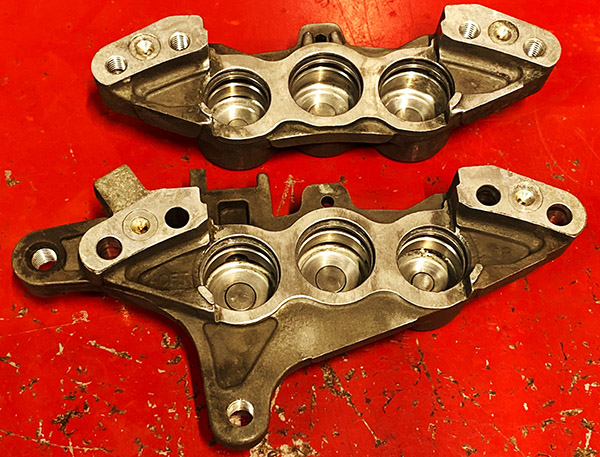
After assembling the rebuilt front calipers onto the 1999 ZRX1100’s forks I tried to flush out the brake lines with a can of spray brake cleaner stuff. No go as all three of the hoses were clogged so badly I couldn’t get a drop of liquid out of them. I guess old brake fluid turns into a solid after many years. A piece of stainless wire, sort of stiff, was worked back and forth into each line pausing occasionally to give the line a squirt. It was slow going but my thrifty ways were rewarded when I managed to force the wire all the way through the hose. Now I could really give the inside of the line a good, high pressure blast with the brake cleaner and air compressor.

I had the same problem with the rear brake hose and solved it the same way. Bleeding so many pistons takes patience and I don’t rush to do the thing in one day. The tiny bubbles take a long time to percolate to high points and I’ve got rear pedal pressure fairly good now. The front calipers are taking a bit longer. I have solid line pressure but I think there might be a bubble or two occupying space that should be DOT 4 fluid.

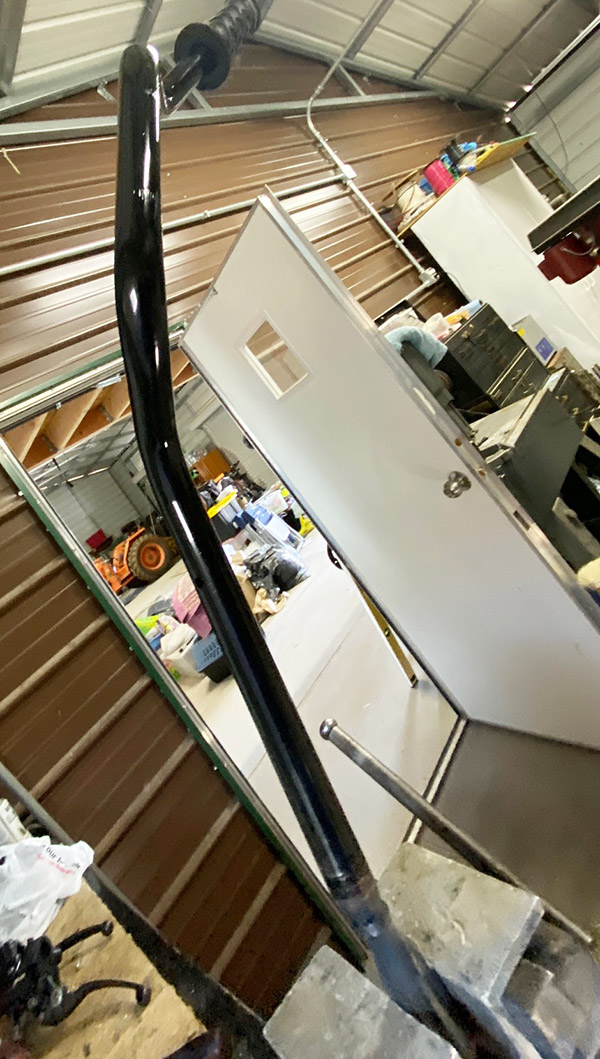
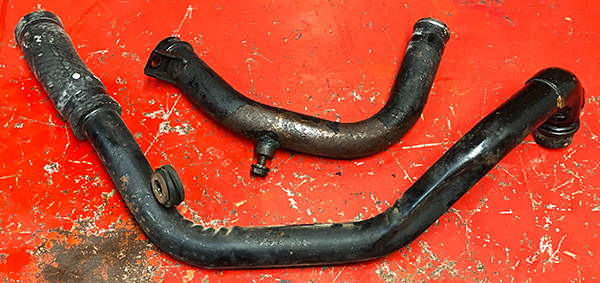
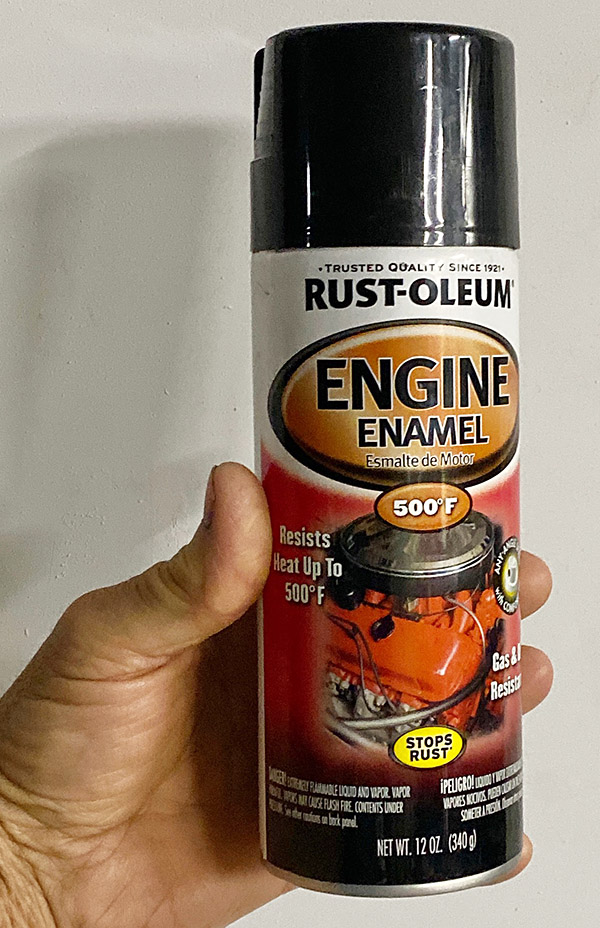
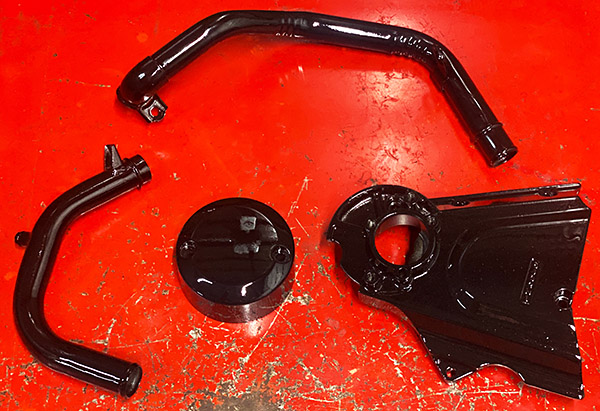
The Kawasaki ZRX has a lot of black painted parts. I love this even though most of the black paint was rusty and flaking off. There’s nothing easier than applying black paint. It’s a popular color and if it’s a shade or two off no one will notice. I gave the handlebars and water pipes a shot of Rust-Oleum engine paint.

This brand of paint seemed to mix well with the original Kawasaki paint. I tried another brand but it lifted the old paint at the margins where old paint meets bare metal.

The clutch slave cylinder leaked onto the sprocket cover area eating the paint so I wire brushed the cover, along with the slave cylinder cover and shot them with the same black paint.

Removing the four carburetors out of a ZRX is no easy feat. The book says to pull them from the air intake side first, and then slide them out of the manifolds on the cylinder head side. Well, I’m here to tell you that method doesn’t work. It was a battle but I had to slide the carbs out of the manifold first then work the air cleaner boots back with a screwdriver. I’m dreading putting the carbs back in. I think I’ll use a thin flat piece of steel on the air cleaner side to push the boots back without snagging the carbs.

The carbs were gummed up with old gooey gasoline but they weren’t the worse I’ve seen. Luckily all the vacuum diaphragms were intact and flexible. I had to remove the factory, no-tamper idle screw plugs to clean out the idle passage. Oddly, one idle screw was set to 1-3/4 turns out while the rest were +1-ish turn out. I’m going to split the baby and make them all 1-1/4 turns out to start. Located on the bottom of the carbs, these idle screws are somewhat accessible while the carbs are still on the bike so I can adjust them later if needed.

After cleaning all four carbs and reassembling them I wanted to bench test for leaks before facing the gauntlet of those rubber boots. I set the carbs in the vise and rigged a funnel to pour gas in. The gas ran out #4 carb as fast as I put it in. Taking the #4 float bowl off and inspecting the needle and seat revealed nothing so I cleaned the seat and rubber tipped needle again and ran another test. No change; the gas flowed like wine. I have ordered four new float needles so we will have to revisit the carb issue later.

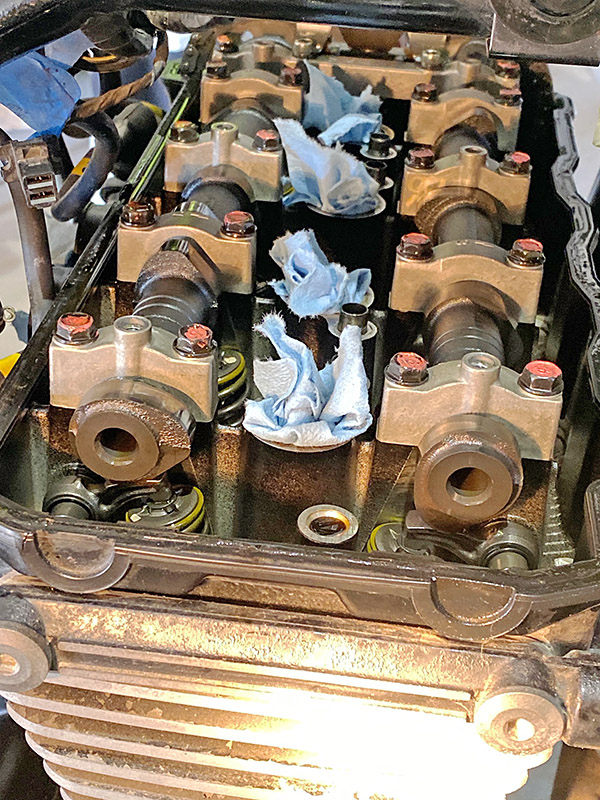
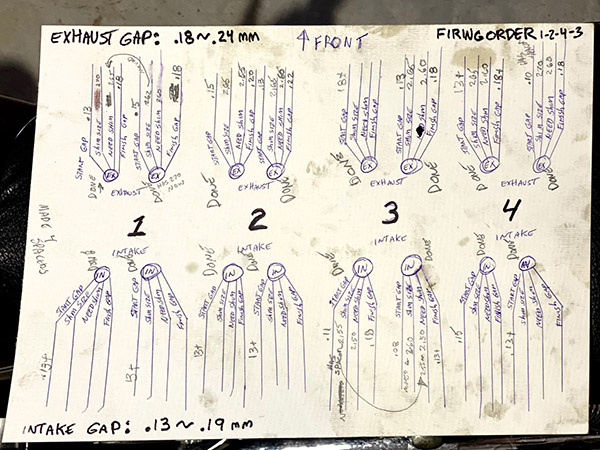
After 25,000 miles I felt it was time to do the Kawasaki-recommended 12,000-mile valve clearance check. As expected, they were all at the minimum gap specified or too tight. With 16 valves it’s easy to get mixed up with your adjustments so I made a chart to keep track of which valve needed what shim.

Kawasaki made the valve setting process easier by using cam follower type rockers. These rockers are mounted on a long shaft that runs through the cylinder head. The rockers are held in place over the valve stem by springs on the rocker shaft. This means you can slide the rocker over on the shaft and lower it so that the valve spring keeps the rocker from returning to its original position. No more having to swap in a shim just to rotate the cams to the next valve that needed setting. I was able to measure all the valves and determine what size shims I needed in two rotations of the crankshaft. After swapping the shims I could, I ended up needing seven shims in total. The local Kawasaki shop had them for $4 each.

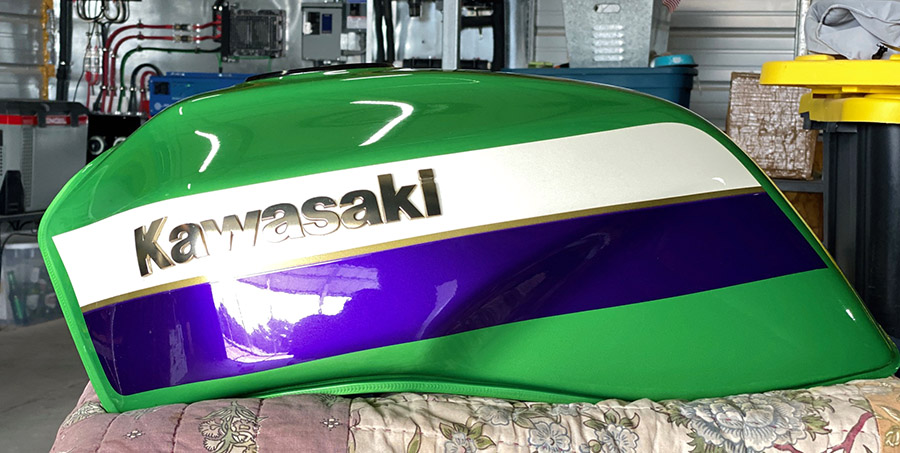
I was going to use a new valve cover gasket but the thing costs like $80. That’s too much for a big rubber ring. My plan is to dollar cost average and get one more use out of the old gasket. I’ll splurge on a new gasket at 50,000 miles…maybe. The cover looked pretty bad so I cleaned it up and shot it black with the same paint as I used on the coolant pipes. The gaskets on the crankcase breather reed valves tore when I removed the plates for painting so I ordered the four total gaskets at $30. This motorcycle repair business sure is expensive.

In Rex Rx Part 5 I hope to start getting closer to starting the beast. I’m waiting on bits and pieces so it might be time to do a few days of concrete work.


Help us help you:  Please click on the popup ads!


Miss the first four installments?  Hey, check them out here:

ZRX Rx 1
ZRX Rx 2
ZRX Rx 3


More Resurrections?  You bet!

Never miss an ExNotes blog:

The Santa Fe Literary Festival

By Joe Gresh

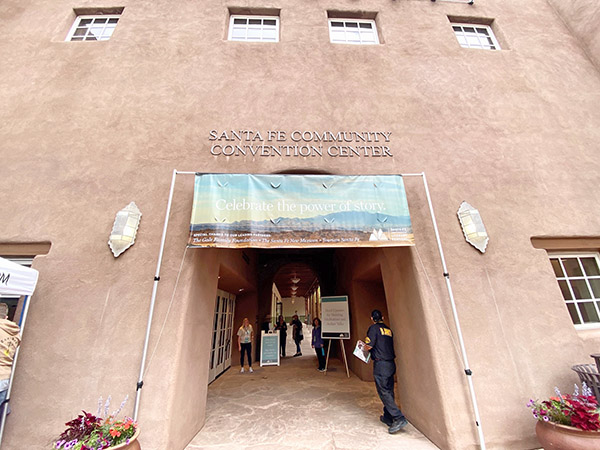
Dun colored, in a city of dun colored buildings, The Santa Fe Community Convention Center sits off Grant Street a few blocks from the city’s central plaza. The building is U-shaped with a large, exposed to the elements, interior courtyard paved with red bricks. The courtyard is sunken and drops down several steps lower than the floor grade of the main building. Surrounding the bottom courtyard is a low retaining wall with a wide, red brick cap. This cap is almost two feet wide and situated at just the right height for sitting on a sunny day.

Strings of tiny, white Christmas lights crisscross between the courtyard trees and metal tables and chairs are set up under the trees. Two food trucks, one selling African food, one selling Indian food, are at the far right end where a large gate allows entry for vehicles. There is a wooden bandstand constructed on the side nearest the street. On the bandstand students are reading poetry.

The poetry is depressing. Rape, murder and loneliness are the themes explored and the young poets sometimes break down and cry while they are reading their work. There is a lot of sadness and misery in this world; I don’t know why we can’t do better. Between each reader a relentlessly upbeat emcee comes on stage and asks us to “Give it up” for the previous poet, by which she intends for us to applaud.  We applaud but the emcee is not the boss of us.

Entering the Convention Center from the street, the left side has a room where vendors sell Literary Fest swag and where the featured authors go to sign the books they are selling. CT bought me a T-shirt. From this vendor area a hallway leads up a few steps to several large rooms where the authors are interviewed but we can’t go in yet. We have to line up outside to get our ticket QR code scanned.

The line runs along the outer perimeter of the courtyard and out through a walkway, then the line turns left and goes on for another hundred feet. The festival is well attended and well staffed. The line moves along. As we near the door to the vendor area the line turns 180 degrees to enter the hallway for the lecture rooms. This is the spot where the Line Jumpers practice their craft.

It’s a confusing, swirling area because you can go into the vendor section without attending a lecture. Next to double glass doors there are people making the sharp 180 turn towards the lecture’s security bag-search area mixed in with people trying get to the vendor area. Amongst all this to-ing and fro-ing the Line Jumpers float in the margins just outside the main scrum. With alert eyes and coffee mugs in their hands, the Jumpers strike when the staff glances away a moment or stops to explain the traffic situation to an attendee.

When you are standing in a line for long periods of time you get to know your surrounding line mates. It’s easy to see who hasn’t paid their dues. A tiny old lady lingers near the door watching for an opening. She can’t weigh more than 90 pounds soaking wet. Sensing a weak link in the force she pounces as we approach the turn. She is carrying two large cups of coffee from the coffee kiosk on the street. At Starbucks the coffee would have had a Latin sounding name to describe their size. Something like Ponderosa or Grande. I move to the left to block her advance, too late.

The professional Line Jumper has nerves of steel and without looking me in the eye she says, “I’ve lost my people.” And shoves past me. I don’t know what I’ve lost my people means. Yeah right, I tell her. She waves the hot coffee cups like they are some kind of a get out of jail free card and pushes on. “ You’re cheating, butting in front of people who have waited their turn a long time” is the best comeback I can think of. She ignores me and brushes past a few more people. Security lets her in and just like that another brick in the thin veneer of American civilization tumbles to the squalid streets below.

My anger at the Jumper has cast a cloud over my mood. I’m trying to be a better person and do my best to let it go. I tell CT that I’m choosing to not let the Jumper sour me on humanity in general. Maybe she has a medical disability that didn’t manifest itself as she bulled her way through the crowd of rule-followers like she was the featured attraction in Pamplona, Spain. I’m letting it go…I’m letting it go…

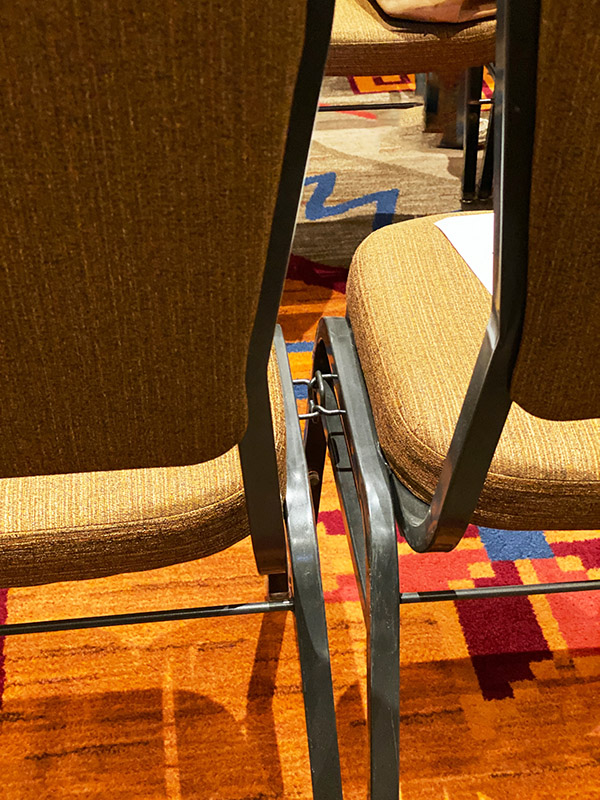
Inside the big room are rows of chairs that have a hook and loop type of attachment on the seat base. This makes it easy to maintain the correct spacing when setting up rows of hundreds of chairs. I didn’t bring my tape measure to the lecture but if I had I would have given the layout a quick quality control inspection. On stage there are a couple old fashioned looking chairs, a table and glasses of water.

The convention center is a multi-use building, thus the floor is level, not sloped like a theater. Seating is first come, first served. I see the Line Jumper lady already has her seat selected. In case a tall guy or a woman with a salad bowl on her head sits in front of me I get an aisle seat so I can lean outboard to see the stage.

The featured authors are on stage for about an hour. Some of them read passages in their books. Above and behind the author and interviewer is a large screen. It’s funny but I’m not sure if it was a projector screen or a liquid crystal display. The screen image lags behind the live stage view a few milliseconds so if you miss something you have to be fast if you want to see it again. There is a different interviewer for each show keeping the thing fresh feeling. There are two large shows in the morning with everyone in the same room. These sessions are for the more popular authors. In the afternoon, several smaller sessions run in tandem so you have to pick one or the other.

The festival was a two-day affair and the second day was a repeat of the first except with different writers and interviewers. The Line Jumpers were out in force the second day but I have risen above the mundane concerns of everyday life and no longer cared if they butted in ahead of people that waited an hour.

Literary fests are great places to learn about new authors and old authors you never heard of. I gained some insight as to why my writing is so poor and have taken inspiration from my fellows. Mostly time is the determining factor in quality writing. It’s all well and good to write a best selling novel in three weeks, one long scroll submitted and the money rolls in. Here at ExhaustNotes we tend to crank out volume product. There’s no time for introspection or craft. Most of the writers at the festival described how hard it is and how long it takes to write a book. Seven to ten years was not unusual. We bought a couple books from Ed Yong. He writes science-y type stuff and was a great interviewee. I haven’t read his books yet but when I do I’ll post a review here.

As we were leaving the convention center the festival, organizers sent a text to CT with the news that all swag was 25% off. We were halfway to our motel but naturally we had to go back and load up on t-shirts and tote bags. We also bought a couple of neat, insulated thermos bottles that look like Michelob Ultra cans except they have literary fest logos on them. If you get a chance, go to a literary festival. They are nothing like Daytona or Sturgis although some of the forms are similar. I had a great time but one thing I didn’t learn from all the lectures I attended was how to end a story.


More literary masterpieces?  Just click on the popup ads and we’ll do our best!
ZRX RX: An ExNotes Resurrextion, Part 3

By Joe Gresh

Labor rates at motorcycle shops are well over $100 an hour and that fact got me thinking about the value of old motorcycles. Take my 1999 ZRX1100: The basic bike is sound but there are many minor issues that add up to a lot more money than the motorcycle is worth. If you took the bike to a shop, that is.

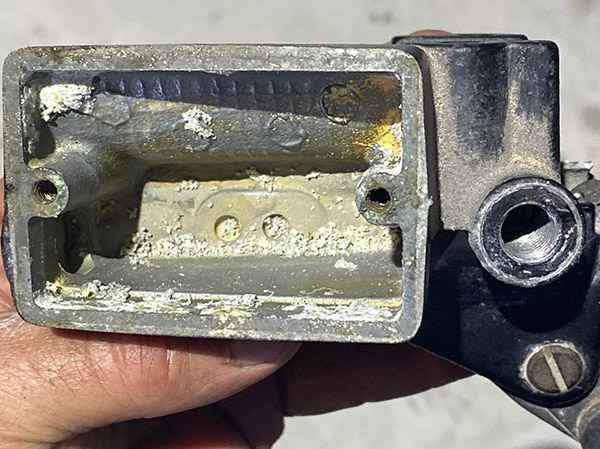
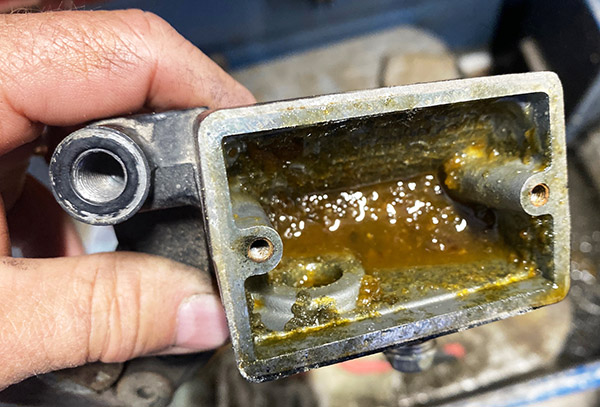
Fixing a bike yourself means you can take more risks. You can reuse iffy parts that a dealer mechanic cannot. The brake system on the Rex was in sad shape. All the calipers were stuck and the master cylinders were stuck, too. If I worked for a shop as a motorcycle mechanic I’d tell the customer they need all new parts. I couldn’t take the risk of my rebuilt caliper failing or coming back for a leak.

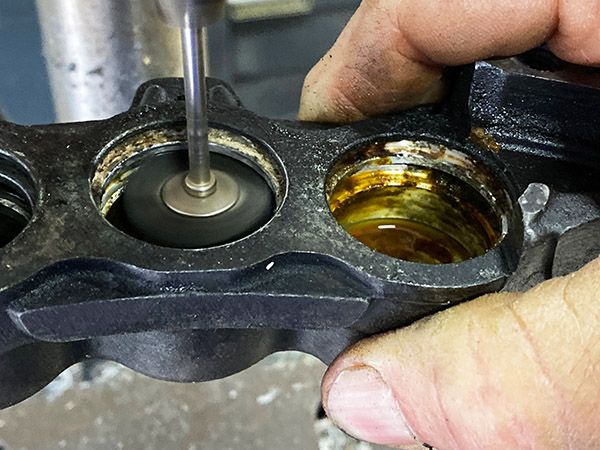
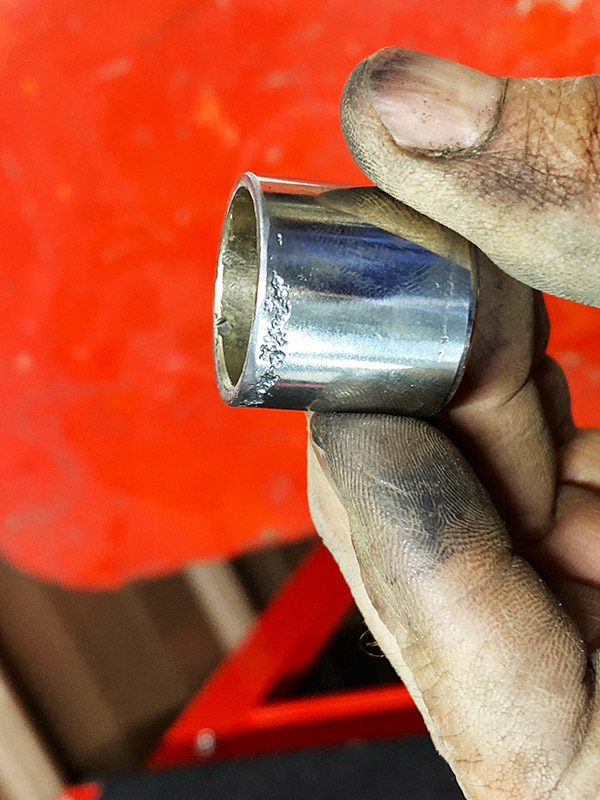
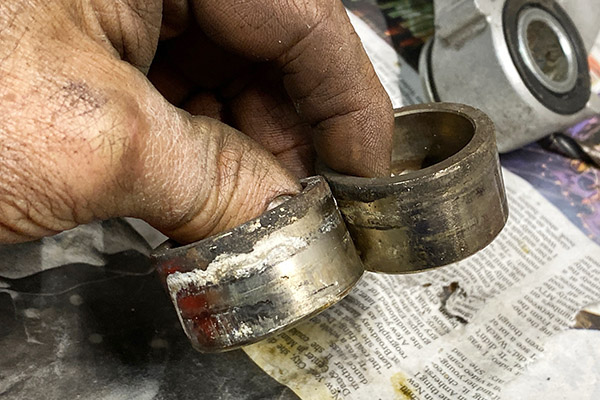
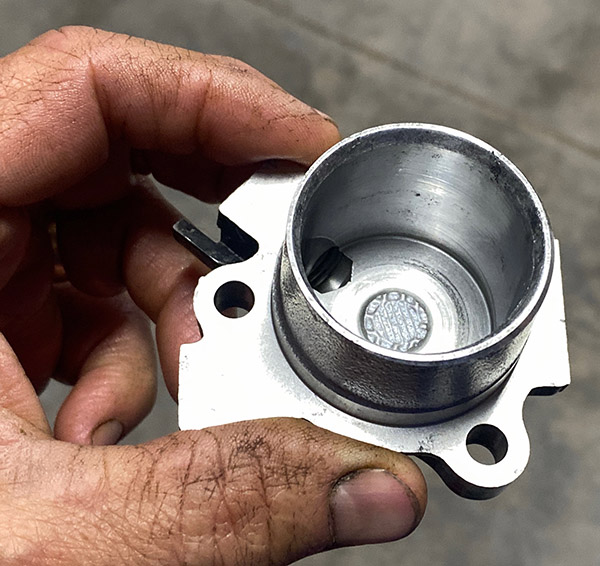
The bores in a brake caliper are not super critical as the sealing is done mostly on the piston walls. Unfortunately, my caliper pistons were not in great shape. I polished them as much as I could and cleaned up the bores. New o-rings and dust seals will hopefully keep them from leaking.

The master cylinder bore is much more critical because it forms the sealing surface for the piston and seals. Luckily the bores on the clutch and both brake caliper master cylinders were in good shape.

The rubber bits for the front and rear master cylinders looked ok-ish to me so I reused those parts. I’m to the point that I prefer old OEM bits to new aftermarket bits if I can get away with them.

The levers have a pressed in dust seal and I didn’t have a tube the correct size for the job so I turned out a short piece of PVC tubing to push the dust boot into place.

I ordered a new clutch master seal kit as I tore the original dust boot dismantling the thing. I also bought a clutch slave kit but the bore was so bad by the time I had it remotely smooth the piston was loose in the bore. I have ordered a new clutch slave cylinder.

All in, there were 18 hydraulic pistons in the ZRX that needed service. A shop mechanic would never re-use the stuff I did. It may come back to haunt me later.

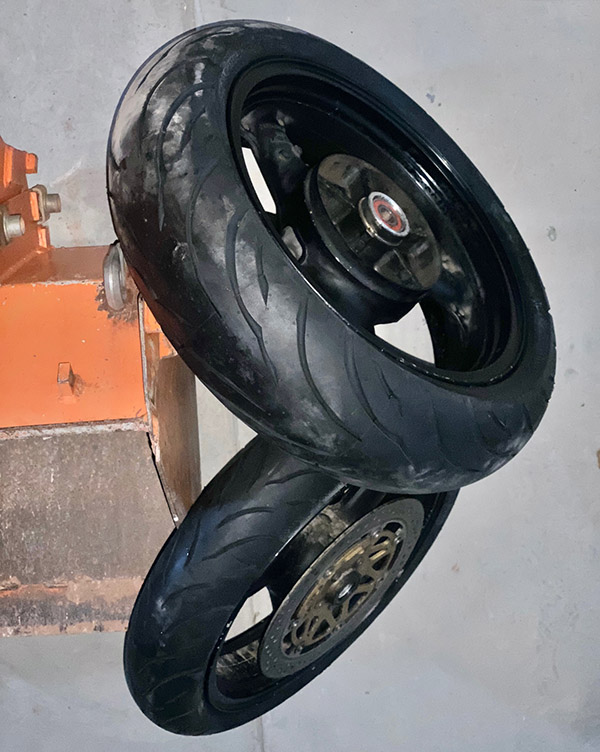
I bought two new, made in Malaysia Continental tires for the Rex as the ones on the bike were made in 2009. The old tire sidewalls had small weather checking. I would have run the old tires if I was just bopping around town but I have a few long trips planned so at $200 for the pair I figured I’d better bite. The Harbor Freight tire changer made the job tolerably easy. Still not as easy as having a shop do it.

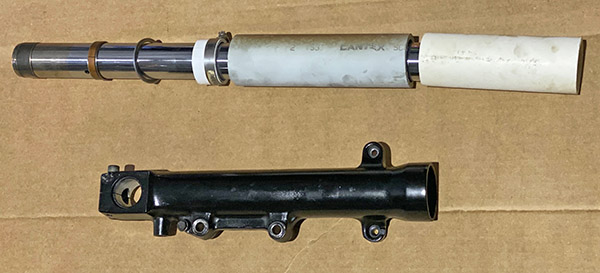
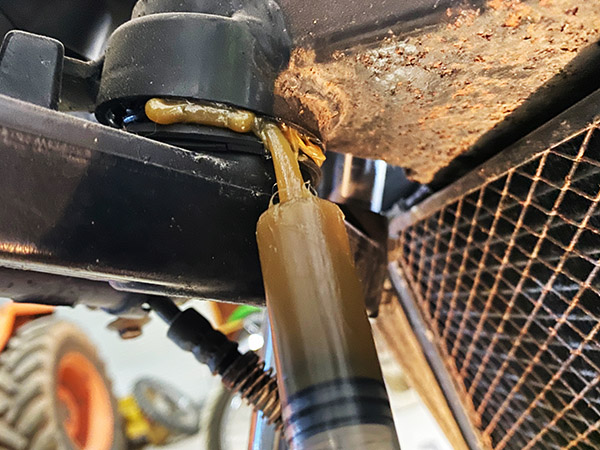
The fork seals were leaking so I popped in a new set of fork seals and replaced the fork oil and while I had the front end apart I dropped the lower triple clamp and pumped in some much needed grease to the steering head bearings.

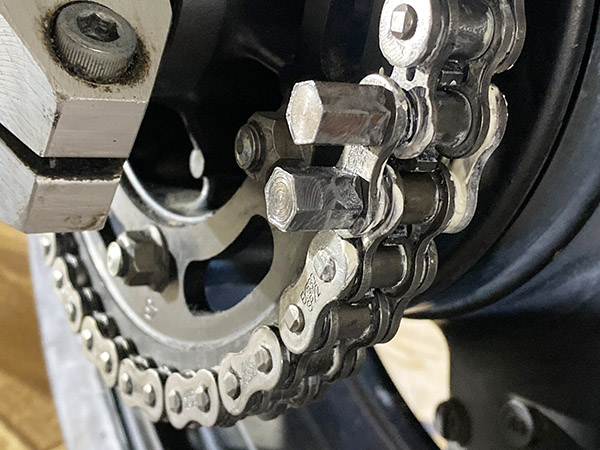
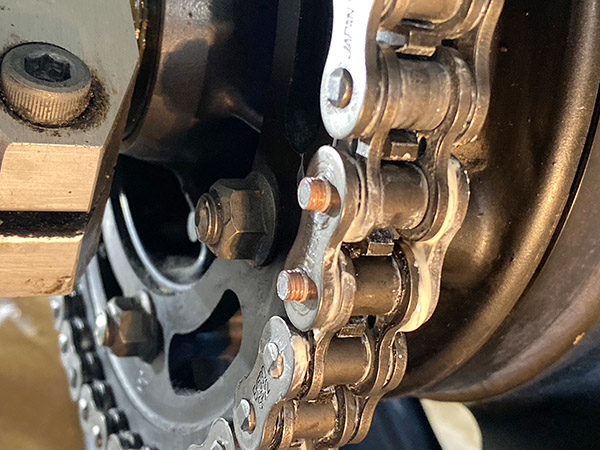
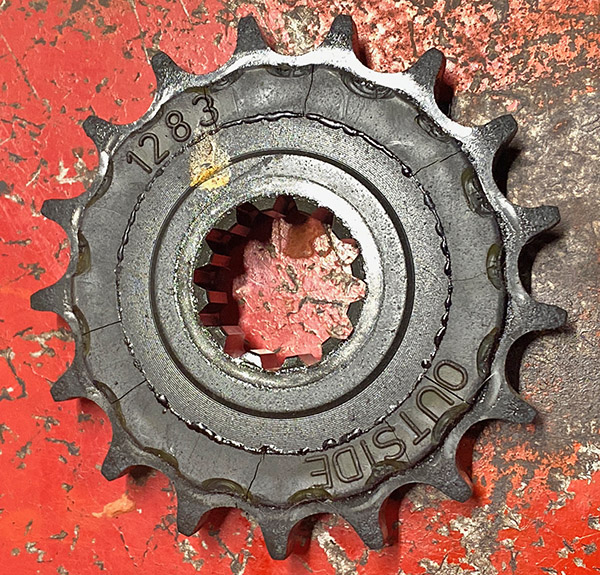
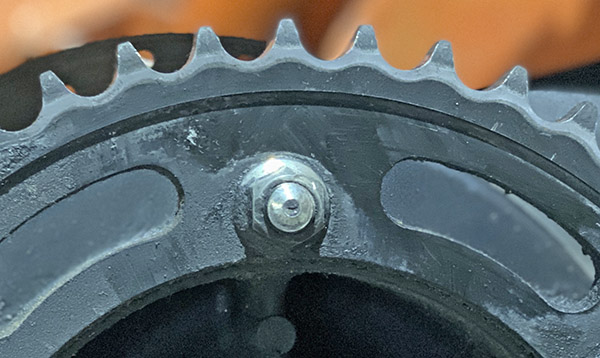
I also bought a new front sprocket and new X-ring chain for the Rex. The chain had a new style master link that worked by pressing the side plate on using small nuts then breaking off the studs that stick out. If it works it will be a good idea, if not I’ll probably break my engine cases when the chain lets go.

If I had taken the ZRX1100 to a shop by this point I would have already exceeded the value of the motorcycle. A shop would need to put in all new brake components to cover their butt. I’m willing to risk my life on shoddy equipment to save money and I’m nowhere near done with the bike or spending money, as you’ll see in future blogs.


Keep the hits coming:  Please click on the popup ads!


More Resurrections are here!

The Wayback Machine: Zed’s Not Dead

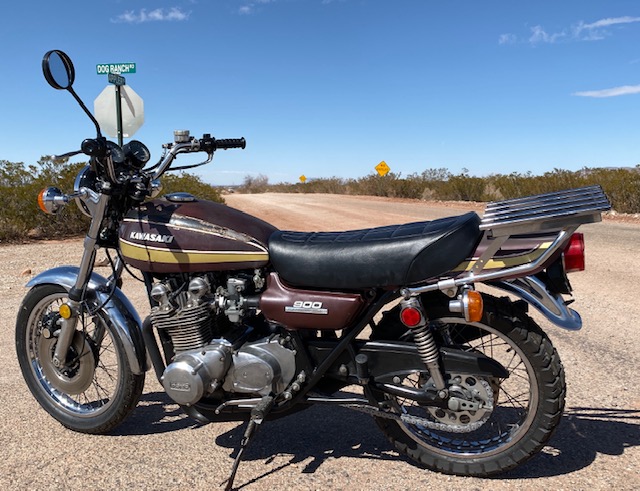
Our latest Resurrection story about Joe Gresh’s ZRX is not our first big Kawi resurrection story.  Going back a few years, we previously ran a 20-blog series on a Z1 Kawasaki.  This Wayback Machine piece was the culmination of that story, with a link at the end that will take you to the entire series.  Those big Kawis are cool, and the Z1 is unquestionably the coolest of them all.


By Joe Gresh

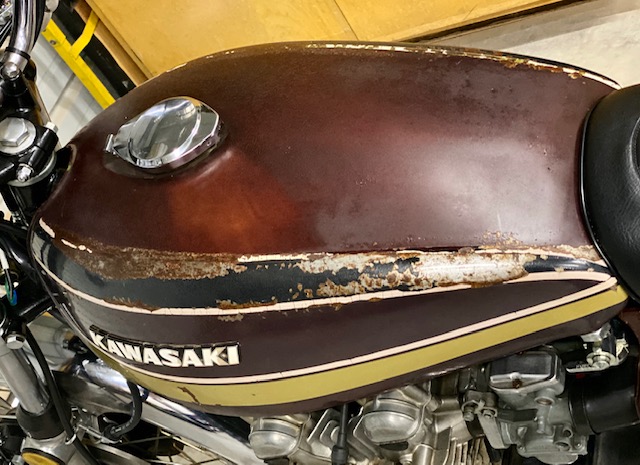
You may recall from Zed 19 I had to re-soak Zed’s gas tank as 10 days were not enough to dissolve the rust. I drained, dried and reloaded the tank with apple cider vinegar and let it sit for 4 more days. This is what it looked like originally:

The second session really knocked most of the rust out. After rinsing I dumped a large box of baking soda into the tank and added clean rainwater sloshing it as I filled to mix thoroughly. I don’t know the chemical reaction that takes place but the baking soda neutralizes the acid, turning the metal a dull grey, almost white color. This treated metal does not flash rust and I’ve been going 3-4 years on another tank I cleaned like this without rust reappearing. It’s like the metal turns passive and stops reacting to oxygen.

If I wasn’t so hell-bent on riding this bike I think I would flush and cider the tank one more time but it looks good enough and I’ve got to ride! I connected a small hose to my shop vac and played it all over inside the tank. I can hear nothing when I shake the tank so at least there are no big chunks loose inside.

Proving that even the simplest life forms can learn I bought an entire new petcock for $23 rather than the rebuild kit for $8. This is real growth on my part. Usually I buy the kit, mess with it for hours then put it on only to have it leak. Only then will I buy the new one. Kawasaki uses a turnbuckle-type left-hand/right-hand thread on the Z1 petcock. It took about 145 tries to get it to tighten up facing the correct direction.

The new petcock has screens inside the tank and a bowl filter but with 40% of Zed’s tank out of my view-field I can only assume the entire tank is as clean as the places I can see. Inline fuel filters, one for each set of two carbs will hopefully catch any debris still in Zed’s tank.

An update on the Z1 Enterprises regulator/rectifier: It works. The battery charges @ 14.8 volts which is still a tad high but much better than the 17 volts Kawasaki’s setup was doing.

From the top Zed looks pretty well sorted. I took it for a ride and it ran really well for off the bench carb settings. It might be a little rich at idle or it might just be our 6000-foot elevation. I’m not going to tinker with it for now. I’d rather get some miles on the bike.

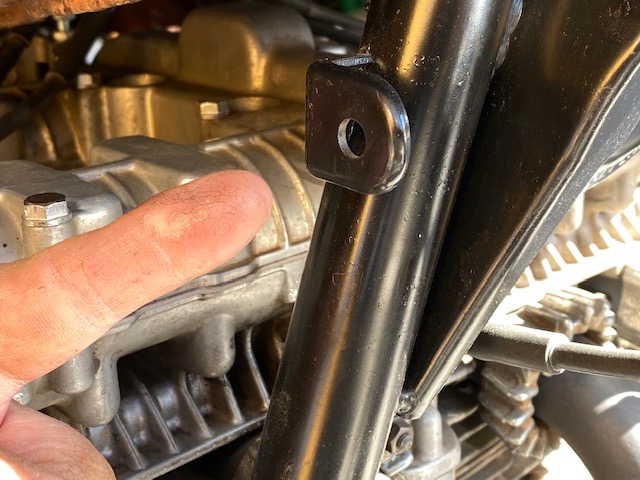
I don’t know what this bracket is for. Located on the right side down tube near the tach drive, it’d too light for a steering damper mount. Anyway, there’s enough stuff on the bike as is so I’m not going to worry about it.

I took Zed to my secret proving grounds and she ran through all 5 gears smoothly. The bike hit 90 MPH without even trying. I’ll need a better front tire to do any high-speed work. The brakes work ok. When you ride a SMR 510 Husqvarna all other motorcycle brakes seem like crap. After 33 miles there are small oil leaks at the tach drive and countershaft area. Maybe the clutch pushrod seal or sprocket seal is the culprit. That stuff is easy to fix.

The patina on Zed is excessive, bordering on shabby. The bike sat outside for years and paint wise there’s nothing left to polish or wax. The finish is just not there. The pin striping is cracked and missing sections. I’m not sure what to do about that. On the one hand a ratty bike may be less attractive to thieves and old Z1’s are getting fairly expensive. On the other hand it does look pretty bad. I’ve seen my Enduro buddy Mr. French do some amazing work with rattle cans. Maybe I’ll give it a go. The paint can’t look any worse.


That’s it: from Dead to Zed in 20 easy sessions. Don’t worry, this won’t be the last you’ll hear of Zed. I’ll be doing some long trips on this bike, maybe Mexico, maybe ride to a few flat track races. I’ll update the blog if I do any more major work on the bike. The story of Zed’s resurrection may be ending but the story of Zed is just beginning.


And there you have it.  If you’d like to run through the gears (i.e., the previous 19 installments of Zed’s Not Dead), you can do so here!


Help us continue the content:  Please click on the popup ads!

ZRX RX: An ExNotes Resurrextion, Part 2

By Joe Gresh

This ZRX1100 resurrextion started out kind of leisurely. We don’t like stress at ExhaustNotes.us because we are at peace with our surroundings. ExhaustNotes staff have a firm grasp of our place in the universe and see all matter as insignificant much like we see ourselves. There was no big rush, you know? However, things change in life and the ZRX resurrextion timeline has sped up due to the Mud Chuckers wanting to attend the road races July 7-9 at Laguna Seca in California, now known as Polident Speedway. From my house to Laguna Seca is 1150 miles the fast way and we never take the fast way. We might end up doing 2500 or more miles round trip. Thus, the urgency to get the road burner running as none of my other motorcycles are exactly suited to the job.

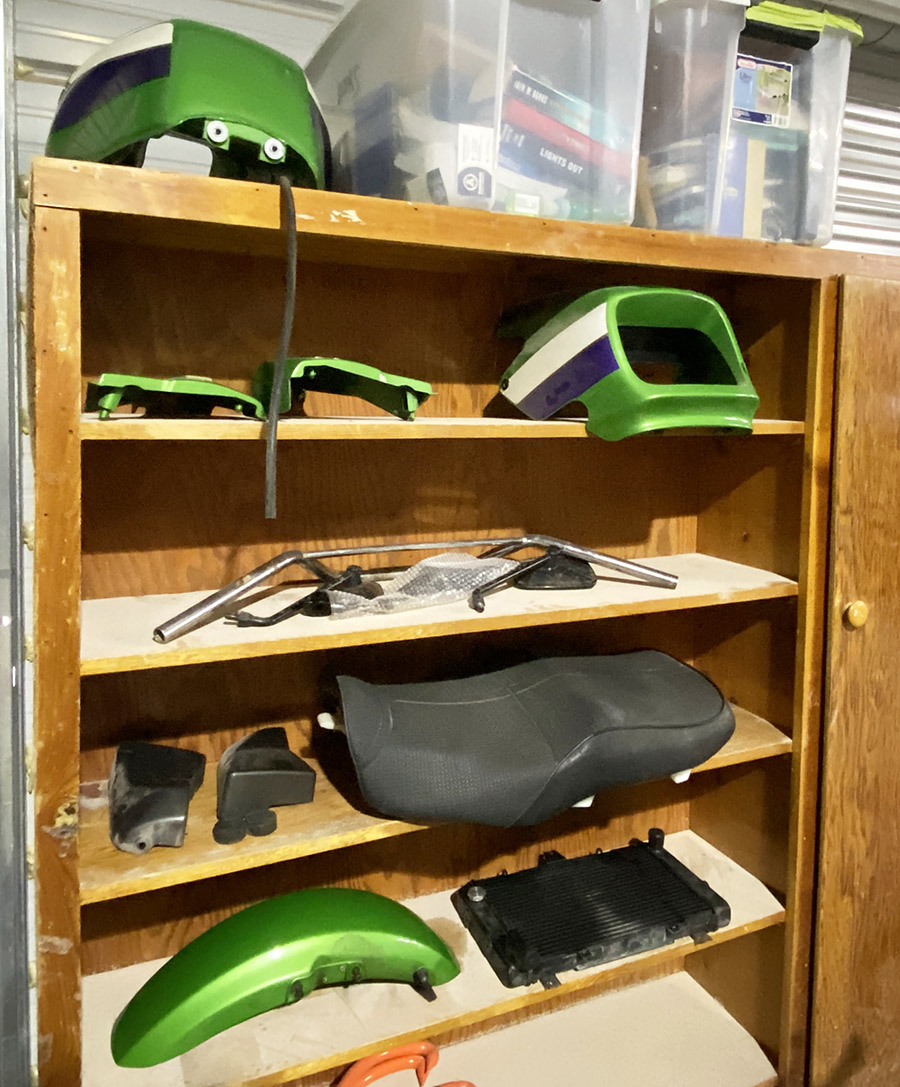
The first thing I did to the ZRX was to remove as much bodywork as possible to prevent the odd dropped wrench or spilled brake fluid from damaging Rex’s somewhat pristine original paintwork.

Kawasaki ZRX1100 bits and pieces have been trickling into the shed at Tinfiny Ranch and we will soon see some progress on the abandoned, neglected motorcycle.

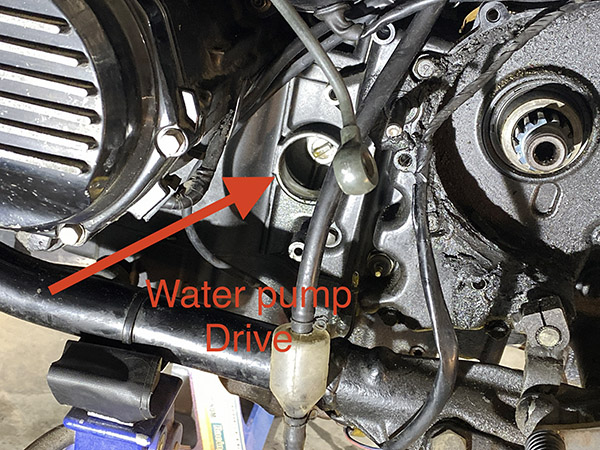
Starting with the coolant leak from under the engine, I have determined the water pump or the O-rings on the pipes connecting to the pump were the culprit. Seeing as the pump is 24 years old I sprung for a new pump on eBay. I imagine I could buy just the mechanical seal and rebuild the water pump but I’m getting lazy.

The coolant pipes are slightly rusty so I’ll have to clean them up and give them a shot of paint. The paint on the front down tubes is chipped from road debris so I’ll touch up those areas also.

I also bought some new silicone hoses for the pipes. These hoses live directly behind the exhaust headers and while they seemed flexible and in good condition, they are also 24 years old. A lot of stuff on the Rex is 24 years old, because the bike is 24 years old. Funny, it seems like a new model to me. I can remember buying it only a few years old not a long time ago. Is this how aging works? Does time compress making distant events seem close?

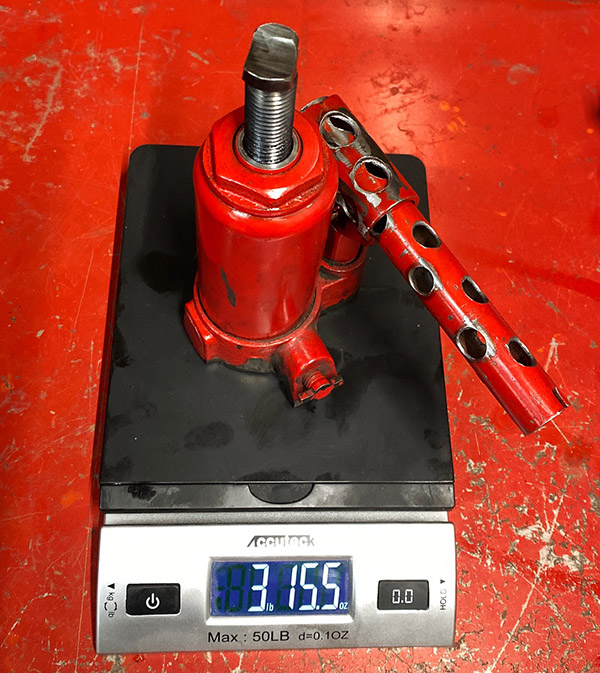
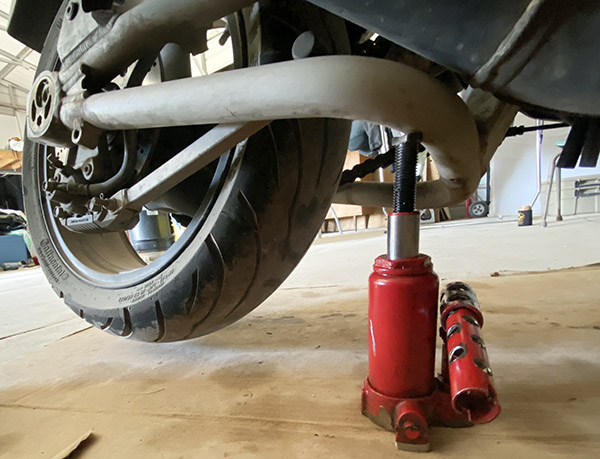
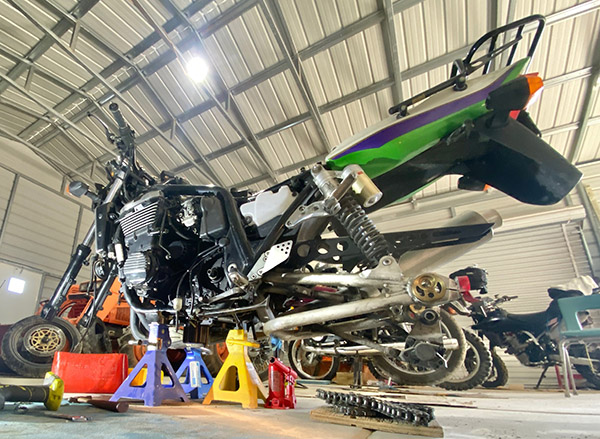
The ZRX1100 comes standard with a ground skimming, low-slung exhaust system. The header pipe collector joins under the engine making my motorcycle lift too tall to fit between the pipe and the ground. Even if the jack fit under the bike you’d have to make some spacer blocks to prevent the pipe from hitting the lift. I went with jack stands on both front frame rails and one stand on a cross pipe behind the engine. With this tripod set up the bike feels pretty stable.

Once jacked up I could remove both wheels for new tires. I also removed the clutch slave cylinder that is leaking and then could access the leaking water pump.

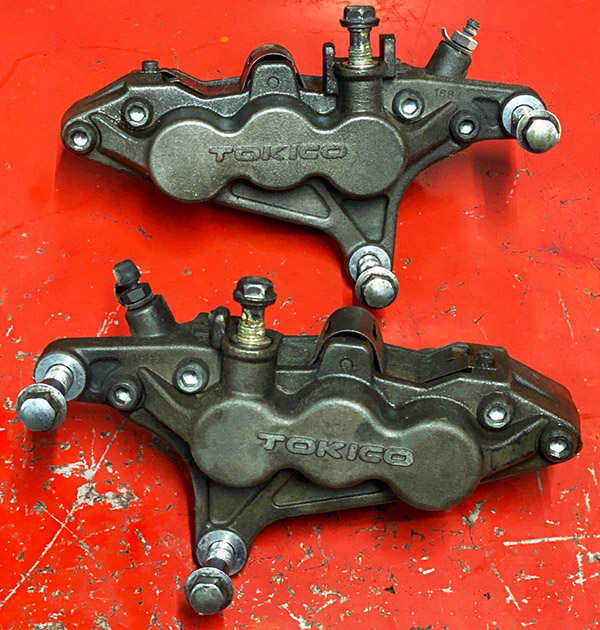
The calipers on the front brakes are stuck.  My caliper rebuild kits came in the mail so I’ll have plenty of piston swapping to keep me busy. This is one of the chores I dread.

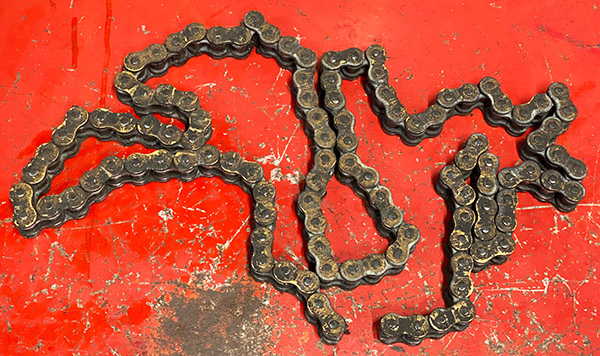
The chain is pretty much worn out. The rollers are loose on the pins and the thing has 25,000 miles on it.  Kawasaki used an endless type chain so I cut it off with a 4-inch abrasive cutting wheel. The rear sprocket looks unworn, which I find amazing, and the front sprocket has just the slightest bit of hooking. Most aftermarket junk won’t last as long as an old, used Kawasaki sprocket. I’ll get a new front sprocket and chain for the bike.

My initial goal with the Kawasaki is to fix the brakes, fork seals and tires. That will upgrade the ZRX to roller status, then I’ll be able to push it outside the shed for a much-needed bath. There is a long way to go to undo the damage 9 years of storage has done to this motorcycle so don’t get ants in your pants. Part 3 to follow, unless I skip to Part 5.


Help us keep the content coming:  Please click on the popup ads!


Here’s Part 1 of the ZRX Resurrection!


Never miss an ExNotes blog:


More Resurrections here!

ZRX RX: An ExNotes Resurrection

By Joe Gresh

The Carrizozo Mudchuckers have too much disposable income. Just in the last few months they’ve bought a Husaberg 400, a gas-in-frame Buell, a KTM 890, and a Kawasaki Vulcan 750. The boys want to do some high speed touring, like going to the Sacramento mile in California, and they are talking 500-mile days in the saddle. As I look over my operational motorcycles I don’t see anything I’d like to sit on for 500 miles.  But if I include the non-ops there is one that is capable of reeling off 500 miles without breaking a sweat.

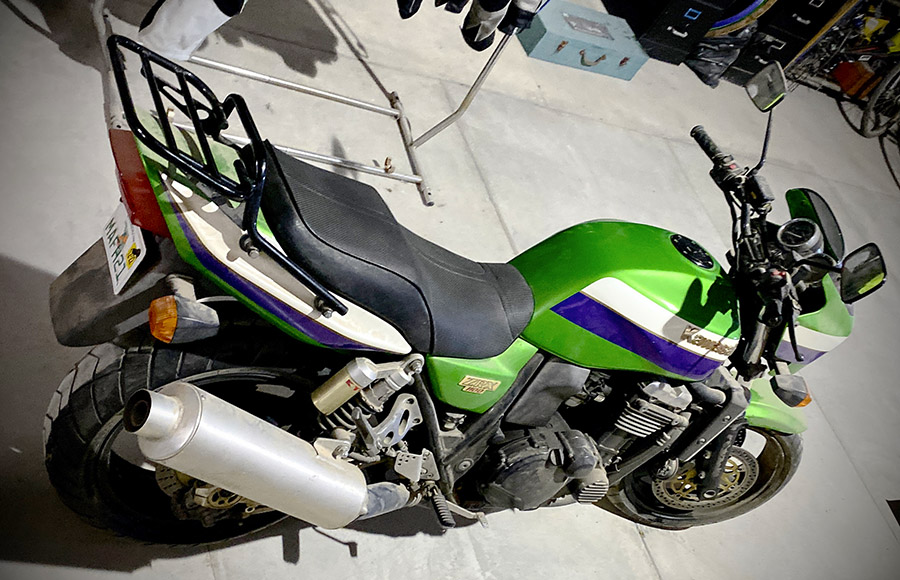
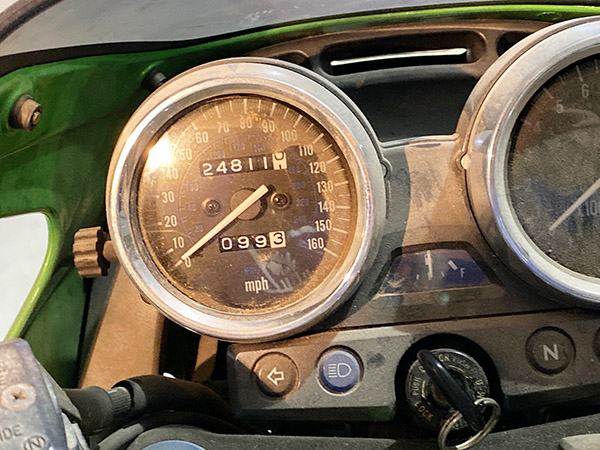
I’m talking about the long dormant Kawasaki ZRX1100. The bike is a road burner of the highest order and looks cool as hell to boot. The only problem is the ZRX has sat for 9 years as CT and I wandered the world. Nothing on the thing works.  The last time I rode the bike was on the Christmas toy run in the Florida Keys in 2014. It’s time I changed that.

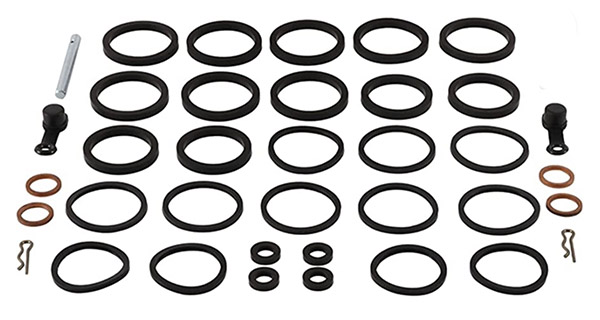
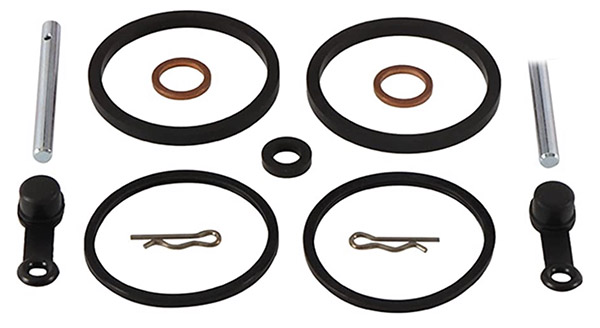
The ZRX front brake caliper kit, available on Amazon.

This resurrection might take a while because I’m knee deep in concrete projects but at least I can start ordering parts as my Social Security checks roll in.  I’m starting with the brake systems and forks. The front brakes on the Rex are 6-piston jobs and there are two calipers which means I have to deal with 12 pistons. The brakes are great on the Kawasaki but 12 pistons are a bit much.

The rear brake caliper kit, also available on Amazon.

Both master cylinders are frozen, probably full of crystalized brake fluid. I’m going to try and get away with cleaning up the master cylinders as I have not been impressed with the quality of aftermarket junk and I don’t feel like looking up a bunch of part numbers on the Kawasaki sites. I mostly stop with the front brake anyway; hopefully that master will be in good shape. A failure of the rear brake won’t slow me down…that doesn’t sound right.

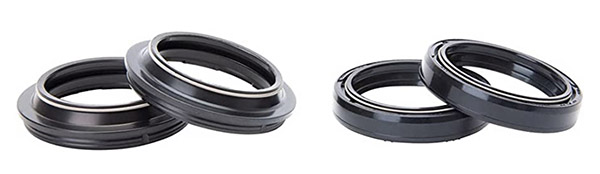
The ZRX fork seal kit.

I will rebuild the rear caliper using new seals. Don’t try to follow the logic. In addition, the fork seals need replacing and new fork oil dumped in. I might take a stab at greasing the steering head bearings while the front end is apart.

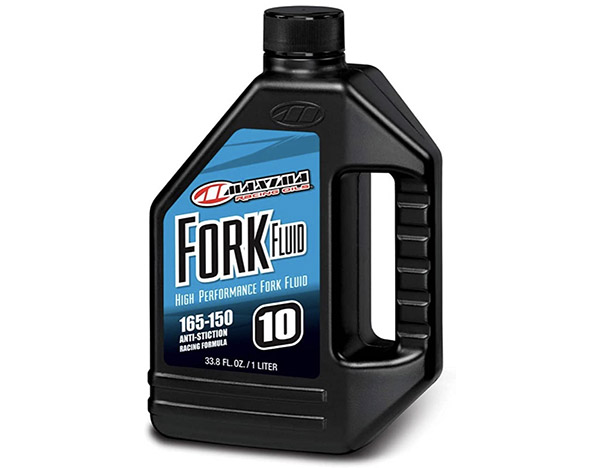
Maxima fork oil. It’s good stuff.

Due to its long slumber there are many, many issues with the ZRX, like:

      • Cooling system leaks, probably from the water pump
      • Broken throttle cable at twist grip housing
      • Chain is worn out
      • Carbs are gummed up
      • Gas tank is full of smelly, gooey gasoline
      • Clutch lever is frozen
      • Clutch slave cylinder is leaking
      • Battery is not there
      • Valves need adjusting

And I’m sure other things will crop up as I get into the project.

Barely broken in, my ZRX is.

I’ve really let this bike down. Believe me, I feel bad about it. Nine years of neglect have taken a huge toll on anything rubber. The good thing is the Rex has relatively low miles (25,000) and has never gone under water so I’ve got good bones to work with. The paintwork is mostly perfect and there are no dents. The bike will clean up and be a stunner. I rode the ZRX from Florida to New Mexico years ago and it will be bookoo-maximus karma if New Mexico is the place where the ZRX1100 rises up to snarl across the rust-red landscape again. Watch this space for updates.

Never miss an ExNotes blog:


Help us help you:  Please click on the popup ads!


Click here for more ExNotes Resurrections!


More Gresh?  You bet!

Chaco Canyon, New Mexico

By Joe Gresh 

In 2019 we booked a campsite at Chaco Canyon in northern New Mexico. Chaco Canyon was a fairly large Native American city that served as the capital for the Chaco people a thousand years ago. Strung out along the canyon within walking distance of each other there are several large, condominium-style structures, some reaching 5 stories high and all of them with courtyards, living areas, kivas, and storage rooms. The condos were built with fantastically intricate stonework consisting of millions of large and small stones. Chaco society was well organized and their mathematics and architectural engineering were well advanced, as it would need to be in order to produce such big, complex buildings.

Also in 2019 the plague hit and Chaco Canyon was closed to visitors, so we never made it to the campground. The same thing happened in 2020, so we missed Chaco that year and instead spent our time arguing on the Internet about masks and vaccines with medically-trained basement dwellers. In 2021 we had a reserved campsite near the cliffs of the canyon and not long before we were due to arrive the cliff calved, covering our campsite with boulders. The campground was closed in order to clean up the rubble. The section where we were booked is still closed.

In 2022 we again called the ranger station at Chaco Canyon and reserved a site.  All looked well in 2022 but a day or two before we were to leave CT came down with a nasty cold and we decided camping would be no fun with one of us sick in bed. Reluctantly, we cancelled our reservations yet again. Our efforts to see Chaco Canyon seemed cursed. We decided to try again in 2023 and figured March would be a good time to go. We wanted to avoid the hot summer months. Building up to March everything was going swimmingly; this would be the year we finally made it to the historic Native American site.

And then the rain started. We watched the weather reports coming in from Chaco Canyon: rain, snow, hail. It rained at Chaco Canyon every day the week before we were to go. All roads leading to Chaco Canyon involve quite a few miles of dirt. The rougher, south entrance to the canyon was closed due to the muddy road being impassable. We didn’t care: we were going to Chaco even if we drowned in mud. Farmington was our staging area for the camping expedition and we drove in spotty rain all day to get there. Turning north out of Albuquerque on Highway 550 we stopped for gas. While I was filling the gas tank it started snowing. Then the wind picked up to a brisk gale. The last 50 miles to Farmington were in a drizzly rain mixed with sleet. We made it to our motel where it rained all night long. The normally well-maintained north entrance road to Chaco Canyon was starting to look a bit iffy.

The next day was overcast and rain threatened, but the morning was drama free with only a light dusting of snow on our way to the entrance to Chaco. If you’re going to visit Chaco Canyon you’ll no doubt read horror stories about how rough the road is leading to the canyon. Keep in mind the people fretting about the road are driving giant RVs held together with staples and chewing gum. You may lose a kitchen cabinet or an ill-considered propane tank. If you are driving a car or truck you’ll be fine. Unless it has rained five days straight before you arrived.

Turning off Highway 550, the first 8 miles to Chaco Canyon are paved and then the road turns into wide, graded dirt. This section was very muddy and CT put her Jeep in 4-wheel low and locked the front and rear differentials. She couldn’t go very fast because the Jeep wanted to spin into the ditch at the slightest sign of ham-fisted steering. Down hills were exciting; the Jeep kind of drifted to the bottom in a semi-controlled slide. The mud wasn’t deep, only a few inches, but it was like driving on ice covered with ball bearings and oil.

We saw two other vehicles on our 23-mile ride and one of them was stuck in a ditch. CT is a big believer in recovery gear so she has straps and chains onboard at all times. Unfortunately this means we have to stop and help people who get stuck in a mud bog. The guy was so glad to see us. We came to a gentle stop 30 feet past the deepest part of the mud hole. “You got a rope?” I asked Mr. Stucky.

“No I sure don’t,” he said. I gave a dejected look at the mud.

“Do you guys have anything we can use?” he asked.

“Yeah, we got something.” I stepped into the mud and pulled CT’s clean ARB tow strap out of its clean zipper case.

“I think if you can pull me back onto the road I’ll be ok. I was going too fast and spun out.”

I was only half listening to Stucky.  All I could think of was that this means we have to get CT’s ARB tow strap muddy with this sticky goo and then I’ll have to clean it later.

Walking was hard due to the mud sticking to our boots and the slipperiness, but we managed to connect our nice, clean, tow strap to Stucky’s SUV and pulled his rig backwards towards a less muddy area. Stucky’s mini SUV didn’t want to leave the ditch and it crabbed along spinning wheels and slinging mud for 100 feet before it popped out of the rut and onto what passed for the road. I started to wind up the tow strap when Stucky, sensing my disappointment, said, “Here, let me get that. No need for you to get any muddier.” I was muddy already, but I handed Stucky the strap. I wanted him to feel like he had a stake in not getting stuck again. As Stucky coiled the ARB tow strap mud oozed between each wrap. We were only a few miles to the campground from this point.

Once you make it to Chaco Canyon the roads are paved so we had no trouble finding the ranger station or our campsite. The place was nearly deserted. Stucky’s little teardrop trailer was the only other camper at Chaco that day. Fast moving clouds scudded from west to east bringing alternate periods of sunshine, snow, rain and hail. During a sunny spell we set our Campros tent up on the nice, raised tent platforms provided to each camping spot. The raised tent spots are built from pressure treated 8×8 beams laid out in a square totaling 14 feet by 14 feet. The squares were filled with nice, soft dirt and we were damn near glamping, you know? I guess if I were more observant, the tie down clevises screwed into the pressure treated lumber would have given me a hint about wind speeds in Chaco Canyon.

We watched the looping, 15-minute Chaco Canyon video at the ranger station’s little movie theater and then decided to set up and get our junk sorted out. It was windy and cold but we had plenty of warm clothing to wear. CT brought along 6 jackets, 7 hats, and 3 duffle bags full of thermal underwear. The tent was heaving and snapping; it took two people to hold it still long enough to assemble the thing. The temperature started dropping as soon as the sun went down. A campfire was out of the question in this wind so we made our bed, ate a little cold-cut snack for dinner, drank hot, Dancing Goats coffee and sat at opposite sides of the tent holding the corners down.

Moving all the heavy gear to the perimeter of the Campros tent seemed to keep it from blowing over. We were able to snuggle together in the sleeping bag and kept from freezing, which was the whole reason I wanted to go camping with CT in the first place. We saw 27 degrees that night and the wind never stopped blowing. The next day was slightly warmer and the sun was peeking out from the clouds, but it was even windier.

Due to the weather all the ranger presentations were cancelled. We signed up for a Chaco tour led by a Navajo business called Navajo Tours USA. We used these guys before at the Bisti Badlands and they are great fun. The tour started at 10 a.m. and we went to each condominium and wandered around while our guide told us about the different stone patterns and construction details of the buildings. Usually Chaco great houses have a basement level and many of the places we were walking had filled in with dust and sand over the preceding thousand years.

Above the basement there were three or four stories. Each level was accessed by a ladder from the level below. This system continued on until you reached the roof. The floors were made from large wood beams, called vigas in Spanish.  Over the beams were placed smaller sticks and an adobe floor. The vigas hauled to Chaco came from the mountains many miles away. I figure there must have been some sort of money or economy that would have allowed workers to drag those beams and still be able to sustain a living wage.

The walls of the condos were fairly thick. Starting at the bottom the walls were three feet thick or more. The walls tapered as they rose, becoming thinner floor-by-floor.  Top-floor walls might only be one foot thick. Originally, the inner walls were plastered smooth with some sort of lime coating. In a few spots you could still see the factory stucco. There were windows that let light into the rooms.  Inner rooms were dark but they had openings that aligned with outer windows that allowed outside light to penetrate several rooms deep. The outside windows had wooden shutters for winter use.

The winds, strong already, were picking up and at times you’d be blown off balance. Each gust brought a stinging blast of sand and my eyes were getting full of grit. The Chaco people situated their buildings according to astronomical events. Usually one long, straight wall aligned with the rising sun at the solstices. Sometimes the wall pointed towards a particular star. The building was a giant calendar.

There is a lot more to the Chaco culture, the long, straight roads they built, where their food came from, and why the city was abandoned after only a few hundred years, but it was late in the afternoon and getting colder. The wind was so strong I couldn’t hear our guide very well. Light hail was falling and wisps of snowflakes juked and stutter stepped in the air. As much as I enjoyed the lecture I was glad when it was over. I like it outside but there is such a thing as too much outdoors. We went back to the campsite to have a little hot tea.

Camp was a disaster. Our Campros tent looked like a downed weather balloon. Tent poles had broken, stakes were pulled out and the rain fly was detached and flapping in the breeze. Inside the tent everything was covered in dirt blown in through the screened roof.  We tried to get the tent propped back up but when I pulled on it things started ripping. We managed to get the rain fly back over the wreckage and placed large boulders on the corners to hold it in place. It was snowing again. There was nothing to be done with the wind blowing so we went to the ranger station and loitered. I bought a ceramic coffee cup with a Chao Canyon logo; it was good to be out of the wind.

By 7 p.m. the wind eased up a little and we went back to camp to try to salvage what we could. Our first chore was emptying the Jeep before it got dark. The idea being if we couldn’t fix the tent we could retreat to the Jeep and sleep in the back. Sure it would be cramped but at least we had a heater in the car. And the car wouldn’t blow over. Maybe.

We managed to get the tent propped back up with the short, broken poles. The short poles made every other dimension wrong. The main ridge pole had a huge S curve and there were wrinkles all over the place. It wasn’t a thing of beauty. Besides the broken poles, the upwind corners were ripped where the tent stake loops attach. We propped heavy stuff in those corners to hold the tent’s shape. Next we cleaned up all the sand as best we could and finally got organized enough to have another cold dinner and hot coffee. A campfire was out of the question because neither of us wanted to bother.  In retrospect, when we left that morning we should have lowered the tent and placed rocks on the rain fly to hold it down. I believe it would have survived without a problem. I have no gripe against the tent: it went through a hurricane.

The jury-rigged tent stayed up all night long and by morning the sun was out and it was a relatively warm 40 degrees. Blue sky shined in through our open tent door and the wind was a gentle breeze. If our reservations were made just two days later we would have had a totally different feel for Chaco Canyon. It would have been nice Chaco Canyon instead of mean Chaco Canyon. The muddy road had dried up and was now passable by standard automobile. The campground started filling up as we packed our gear. Old Joe would have folded up the battered tent with the broken poles and torn corners, taken it home and stored it for 43 years thinking he was going to fix it one day. New Joe tossed it in the dumpster.

Those long-ago Chaco people had it much better in their thick stone buildings. Maybe the climate was different then, but I suspect not that much different. And it was an unusual weather pattern that saw all the other campers cancel their reservations leaving only Stucky, his dog and us in the entire joint.  The campgrounds were nice with clean bathrooms, flush toilets and heat, but no showers. We never did get to see all the buildings because it was so windy and cold. CT and I want to back to Chaco Canyon and explore more but maybe next time we’ll go when the weather is more clement.


Never miss an ExNotes blog:


You know what to do:  Please click on the popup ads!

CSC’s RX6

By Joe Berk

Great things continue to emerge from CSC Motorcycles, my alma mater and your favorite motorcycle company.  CSC is now importing the new Zongshen 650cc Cyclone, the RX6.  It’s a logical step up.  The first CSC adventure touring motorcycle was the RX3, and I had a ton of fun on it.  You know the story…when CSC first planned to bring that motorcycle to America, I wrote a blog about it and we sold the first one within a few seconds of the blog being published (it went to a buyer in Alaska).  The sales poured in, and literally within days of the RX3 motorcycles arriving in America, we led a tour of 15 CSC riders on a 2000-mile ride through Baja.  It was awesome, and it was pretty gutsy…taking 15 Chinese motorcycles on a ride like that.

It was onward and upward after that…a 5000-mile ride through the western US with a dozen guests from China and Colombia, a 6000-mile ride across China with Joe Gresh, a circumnavigation of the Andes Mountains in Colombia, and many more Baja rides.  Then came the CSC TT 250, the San Gabriel, the RX4 450cc, the 400cc twins, the electric City Slicker, and the RX1E  electric ADV motorcycle.

You’ve probably heard the rumors of the Zongshen/Norton alliance and their skunkworks 650cc twin, and I’m here to tell you the 650cc RX6 is a reality.  I rode the first one in America in the San Gabriel Mountains above CSC’s facilities, and it’s awesome.  And like all of the bikes listed above, CSC is bringing it here.

There are a lot of features on the new RX6 (I’ll list the specifications and some of the features at the bottom of this blog).   What grabbed my attention immediately when I saw the new CSC were the fit and  finish, the color, the dash, and just the overall aura of excellence.  The RX6 is a world class motorcycle.  One of the coolest things is the dash.  Check this out:

The RX6 is a full-sized motorcycle, but it’s not overwhelming.  If I had one I’d probably name it Goldilocks.  It’s not too big and it’s not too small.  It’s just right.

Another cool feature is the wireless key.  It’s like the electronic key on most new cars.  It has a key feature (you know, so you can insert it in any of the various locks on the RX6, like the fuel filler cap), but as long as you have it on you, you can start the RX6 just by hitting the starter button.  You don’t have to put the key in the ignition.

The brakes felt good on my ride in the mountains.  There are large dual disk  brakes up front, a single disk in the rear, and anti-skid braking front and rear.

The RX6 sounds like a motorcycle ought to.  It has a decisive exhaust note, and it sounded good reverberating off the San Gabriels.   It’s fast, too, with noticeably more power than an RX3 or an RX4 throughout the rev range.  I didn’t push it too hard (it was CSC’s first sample in the US), but the power was definitely there.  Zongshen is claiming a 112 mph top end; I think that is realistic and probably a bit of an underestimate.  The one I rode was literally brand new and I was in the mountains, so I didn’t try a top end run.

Zongshen is emphasizing the Cyclone family name (the RX3 is actually a Cyclone, too, but at CSC we made the decision to refer to it as the RX3).   The badging on the motorcycle’s side panels says SR650 (presumably, the SR stands for Sports Road), so we’ll have to see how the bike is named when it goes on sale, and Steve tells me that will be soon.  The motorcycle will carry a retail price of $7195, and as CSC always does, they are offering an introductory “Don’t Miss The Boat” price of $6695.  It’s a certainty that price won’t last long, so…you know…don’t miss the boat.  More info will be available on the CSC website.


CSC 2023 RX6 Specifications

      • Engine type: SR650, 650cc parallel twin, 4-stroke, water cooled, DOHC, 8-valve, Delphi Electronic fuel injection, ECU ignition
      • Bore/stroke: 82mm x 61.5mm
      • Compression ratio: 11.5:1
      • Horsepower: 70 hp at 8500 rpm
      • Torque: 62 Nm at 7000 rpm
      • Transmission: 6-speed
      • Clutch: FCC slipper-type
      • Wheelbase: 57.1 inches (1450mm)
      • Front suspension: 41mm inverted telescopic fork, 130mm travel
      • Rear suspension: KYB preload-adjustable mono-shock, 51mm travel, 142mm rear wheel travel
      • Front brake: Nissin 2-piston caliper, dual 320mm front discs, 5mm thick, Bosch ABS
      • Rear brake: 2-piston caliper, 260mm rotor, thickness: 5mm thick, Bosch ABS
      • Front wheel/ tire: Pirelli 120/70-R17 cast aluminum wheel, tubeless
      • Rear wheel/tire: Pirelli 160/60-R17 cast aluminum wheel, tubeless
      • Overall length: 86.4 inches (2195mm)
      • Overall width: 32.3 inches (820mm)
      • Overall height: 54.9 inches (1395mm)
      • Seat height: 32.3 inches (820mm)
      • Ground clearance: 6.5 inches (160mm)
      • Fuel capacity: 5.5 gallons (21 liters), locking gas cap
      • Estimated fuel economy: 48 MPG
      • Curb weight: 540 lb (245kg)d
      • Top speed: 112 mph (180 kph)
      • Max load, rider and luggage: 396 pounds (180kg)
      • Instrumentation: Cyclone 7-inch, full-color TFT dash, with digital speedometer, tachometer, odometer, tripmeter, fuel gauge, gear indicator, neutral light, temperature gauge, clock, turn signal and high beam indicators; Bluetooth linking to rider’s phone
      • Electronic tire-pressure monitoring system
      • Lighting: full LED lights and turn signals
      • 12-volt and USB charging outlets on dash
      • 300-watt alternator
      • Automotive-type waterproof connectors under seat
      • Tapered aluminum handlebars with bar-end weights
      • Standard engine guards, adjustable electronic windshield, vibration-damping foot pegs, dual curvature rear view mirrors
      • Front and Rear built in recorder and cameras
      • 5,000-mile valve adjustment intervals
      • Easy maintenance supported by a service manual and CSC online tutorials
      • Options: CSC touring luggage packages, accessory driving lights, heated handgrips, and more

ExNotes Mentors: Bernie Hunt

By Joe Gresh

I’ve worked in the trades most of my life. I don’t pull that “most” figure out of a hat. It has yet to be determined how my remaining years will be spent but even if I started a new career tomorrow there is simply not enough time left to exceed the 50-plus years I’ve spent doing manual labor, unless I live to 110 years old.  So far all the mentors I’ve written about were involved with the line of work I was doing, be it construction, the various marine trades I engaged in or mechanics. Bernie Hunt was a different sort of mentor in that he created an entirely new and unexpected line of work.

Mr. Hunt was the editor of The Key West Citizen, our local daily newspaper way down south in the Florida Keys. For a small town there were a lot of dramatic events happening in Key West seemingly all the time. It was such a clannish place and so vested in the smuggler’s lifestyle that the Feds were constantly blowing into town arresting high officials because local law enforcement was in on the deal, if not outright protecting the crooks. Scandals were plentiful and the news business was hopping.

After one of the many hurricanes that hit our place in Big Pine Key, the whole island was littered with junk. Residents would stack their crap along the roadsides where it sat waiting for someone to haul it away. Big Pine Key was considered The Sticks to Key West and other islands and so we were usually last for any kind of assistance. No matter where you lived in the Keys, local government was slow to react in times of disaster and we had to wait for FEMA to come in and mop up the mess. This took many, many months.

With the stinking piles of trash as a backdrop I wrote a letter to the editor about how the roadside junkyards were a boon to people like me. I found a rare column-shift collar for a three-speed manual transmission Ford Econoline van in the piles. I dug out a nearly complete 1972 Yamaha RT2 motorcycle not far from home. My friends in Big Pine Key called it Beirut Auto Supply because our neighborhood looked like images of war-torn areas in the Middle East.


Help us help you:  Please click on the popup ads!


Mr. Hunt called me. He said he wanted to know if I was a real person and that he loved the letter and wanted to make it into a column for the Sunday edition of the newspaper. I was pretty excited. He asked if I could come down to the Key West Citizen offices and meet with him. This was pretty cool considering I was a boat electrician and not a writer.

That’s how I met Bernie Hunt for the first and last time. We chatted in his office and he asked, “What makes you so funny?” I was caught off guard by the question since the Beirut Auto Supply story wasn’t all that hilarious to me. I couldn’t think of anything and I told him that I didn’t know, that I was just writing about how it was on Big Pine Key. I felt dumb as hell.

After a bit more chatting, Mr. Hunt said, “Call me Bernie. How would you like to write a weekly column for us?”

To see how weird this question was you have to understand about Key West’s long, distinguished literary history. The Island is lousy with writers ever since Hemingway drank, fought and typed standing up here. You can’t swing a 6-toed cat without hitting a struggling writer. Taking a chance on a boat electrician with zero writing experience and from Big Pine Key when he had dozens of real writers to pick from sitting on the stoop outside his door was just plain foolhardy.

Brian Catterson, an editor of mine at Motorcyclist once told me that the only correct answer to an editor asking you to write a story is “Hell yes.” I didn’t know that at the time but I still said, “Hell yes.” Bernie took me on a tour of the newspaper building introducing me to the people we met along the way. “This is Joe Gresh, he’ll be writing a column for us,” Bernie would say, like I was somebody they should know. The printing room was an analog delight: huge rollers spun giant coils of newsprint into sheets of printed material. Steel dies were laid out and inked, Bernie complained about how the cost of newsprint had gone up and said they would need to raise the price of a copy if it kept up.

When I got home reality hit: How was I going to write 700 words a week? I bent to it and with a lot of help from CT editing the gibberish I produced we managed to get a Sunday column done. And then we did another. And another. And another.

CT typed my handwritten stories and then faxed them to the newspaper where they would be typeset and printed. Deadline was Friday for the Sunday edition. I wrote about 80 Sunday columns over two years for the Key West Citizen. In all that time Bernie never called me except to say that they couldn’t run a story because it was too weird or for legal reasons. The column received many letters of complaint, which I loved. Bernie never gave me direction, writing advice or told me he liked what I was doing: he just kept printing the stuff.

One day Bernie left for another editor’s job. I lasted a few more editions but the new editor from Ypsilanti, Michigan didn’t care for my shtick and stopped printing my stories. I was never actually fired I was simply ignored. I was pretty burnt out from trying to come up with a topic and write a story each week so I wasn’t too upset about the way it ended.

When I decided to write about him I tried to find Bernie online. I can’t tell if he’s dead or alive. The last place I have him living was Las Vegas, Nevada. I found some phone numbers and email addresses and tried contacting him but no dice. After the Key West Citizen he went on to be editor at many different newspapers and magazines. He even won a Pulitzer Prize (I think), so he’s done fairly well without me. Bernie was the most hands-off mentor I’ve had. His method was to point me in an unfamiliar direction and kick me in the ass. It worked well.

If anyone knows where Bernie is now, do me a favor and send him a link to this story.


Never miss an ExNotes blog: