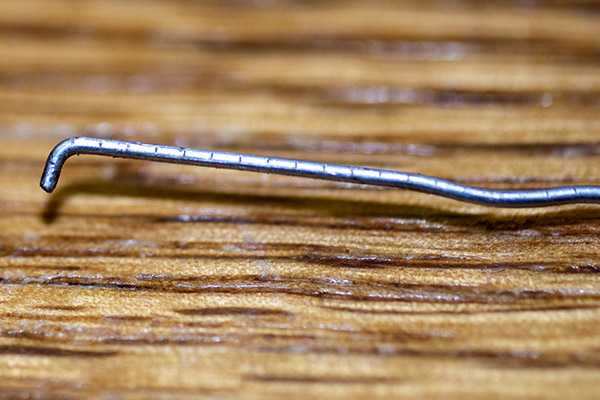
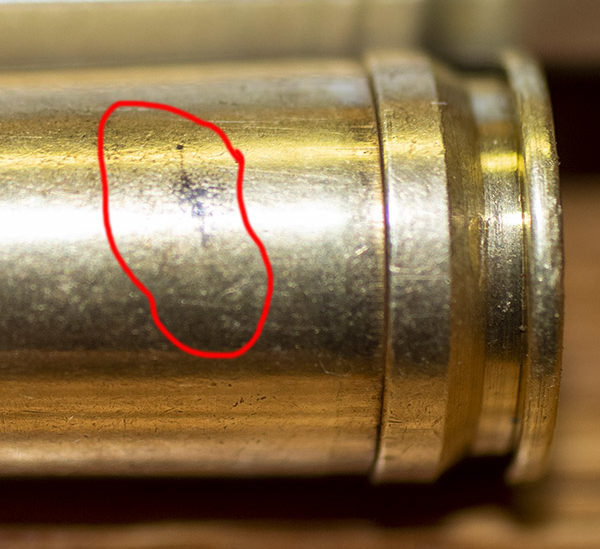
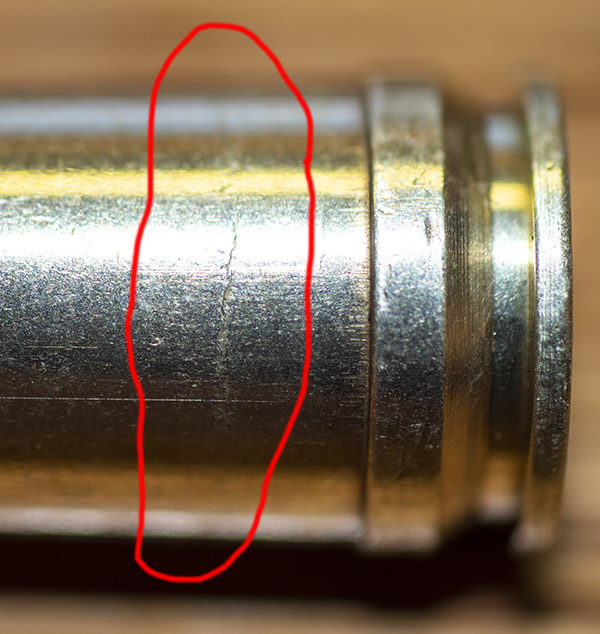
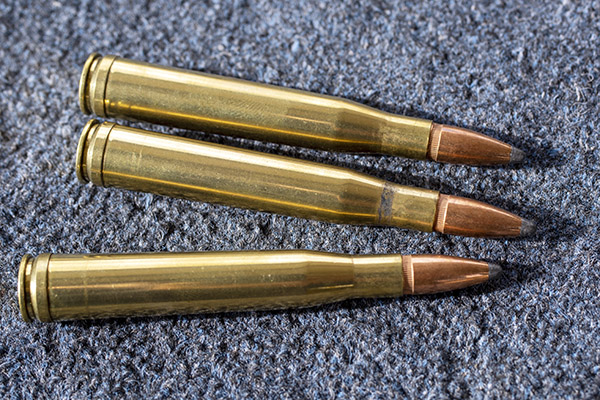
I had the 300 H&H Mags out last week, and when reloading the brass from that range session, I noticed a bright ring around some of them about a quarter inch above the belt. I did the inside-the-case check with a bent paper clip and sure enough, I could feel the sharp step of the brass thinning. Uh oh. Impending case separations. I had reloaded this brass once too often.
Case separations are caused by case stretching, which progresses each time you reload a cartridge. You can check for impending separations by examining the cases closely (you’ll see a bright ring, maybe evidence of gas escaping, or maybe even the beginnings of a crack above the case head). You can also make a tool from a paper clip to feel for a circumferential notch inside the case. That’s what I do, and I could feel the notch on these cases. They were at the end of their useful life.
I don’t know how many times I had reloaded these cases (maybe something like 3 to 5 times?), but rather than risk an impending case separation, I tossed the brass (all 50 pieces). It felt like a crime against nature, but it was necessary. I had two more boxes of 300 H&H brass (100 rounds) tucked away, so that will be the next lot that I load. I had tumbled the old brass for several hours, and maybe that was a good thing because it let me see the warning signs and the faint beginnings of circumferential cracks. Time to move on and start with fresh brass.
Evidence of a escaping gas on a fired 300 H&H Magnum case. The “belt” is the larger diameter just above the case base.A classic impending case separation. You can see that the case has already started to crack. This would separate if I loaded and fired it again.
When I started this blog, I didn’t intend for it to be another reloading tutorial, but here we are anyway. Let’s get back on the two 300 H&H Magnums. I guess to start, allow me to tell you a bit about the magnificent and classic 300 H&H cartridge. It goes back to shortly after World War I, when the venerable English firm of Holland and Holland introduced it as an African plains game cartridge. I know, I’m coming across as snooty, and to tell the truth, I’m not entirely certain what “venerable” means. But it sounds like it fits.
300 H&H reloads. I use 150 gr Winchester bullets I bought about 6 years ago. I got a good deal on those bullets and I bought about 700 or so. I should have bought more, as I can’t find them anywhere online. I think I have about 200 or 300 left. You can see a bright circumferential ring above the case base on the lower cartridge, warning that this brass was past its useful life.
The 300 H&H was the absolute hottest .30 caliber cartridge in those days, and the belted 300 H&H cartridge just looks cool. It became the basis for nearly every magnum round that followed, including nearly all the Weatherby chamberings, the 7mm Remington Magnum, and a bunch more. The 300 H&H round won the Wimbledon 1000 yard match in 1935, and in 1937 Winchester offered it as a factory chambering in their Model 70 (assuring it’s survivability well into the future). Did I mention it just looks cool, too?
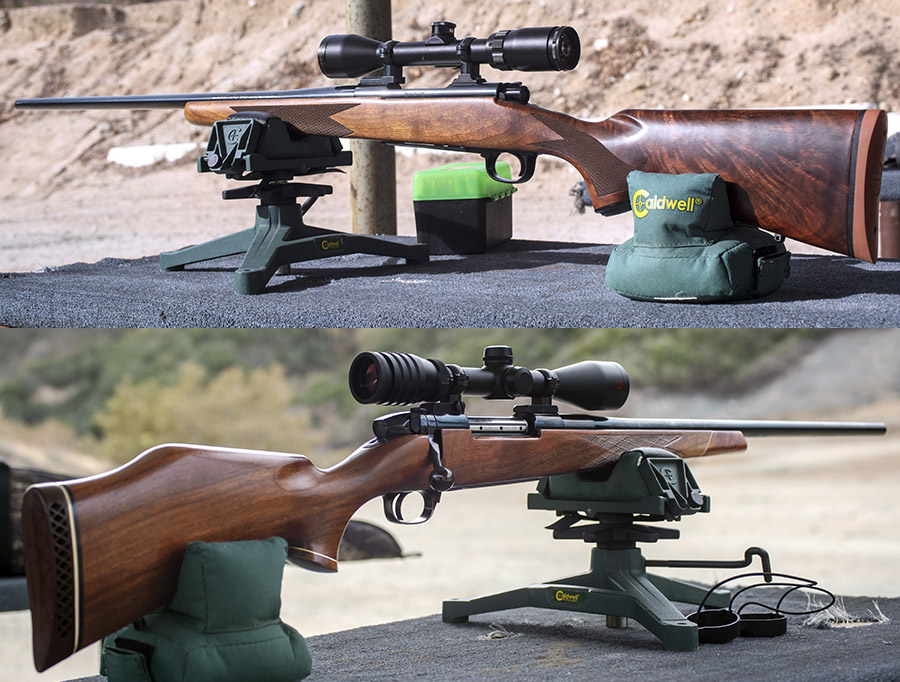
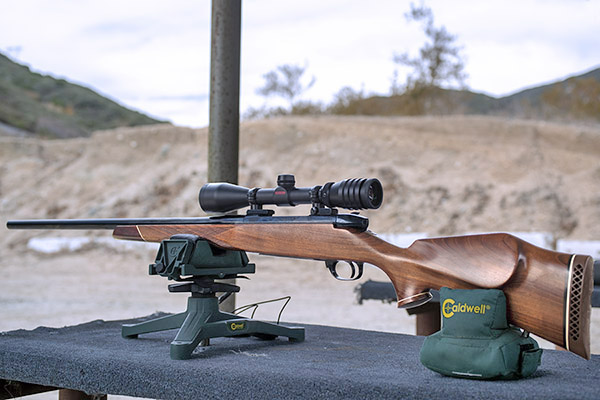
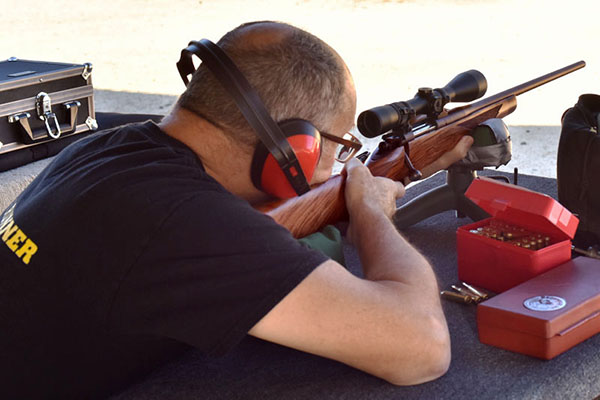
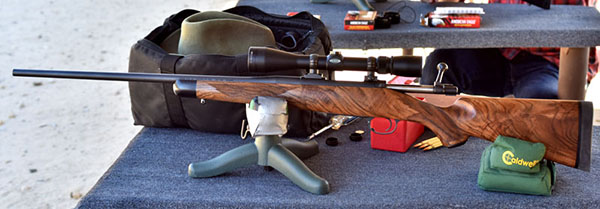
So to continue the story, I had to have a 300 H&H, and because I had a Weatherby 7mm Mag that I couldn’t get to group well no matter what I tried, to me the solution was obvious: Rebarrel it in 300 H&H. Which I did. 35 years ago. I’ve been shooting it ever since. It’s the one you see in the big photo at the top of this page, and if you don’t feel like scrolling up, here’s a view from the port side:
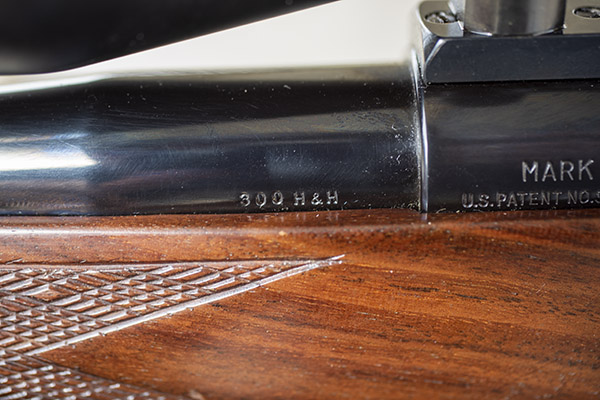
A custom 300 H&H Weatherby Mark V. This is a magnificent rifle.The cartridge stamp on my custom barrel.
The 300 H&H Weatherby is a fabulous rifle. It has a Timney trigger my Dad put in it while I was overseas, and it breaks like glass. I enjoy owning it, reloading for it, and shooting it.
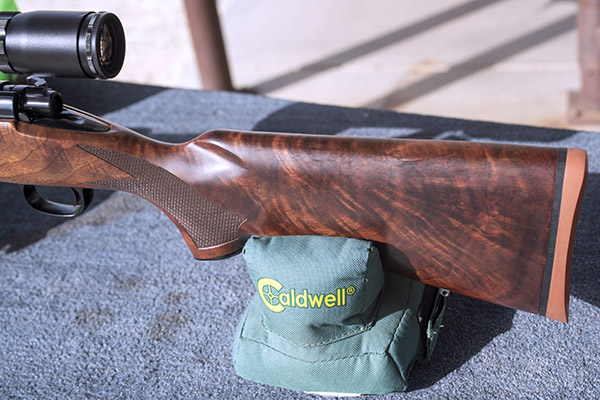
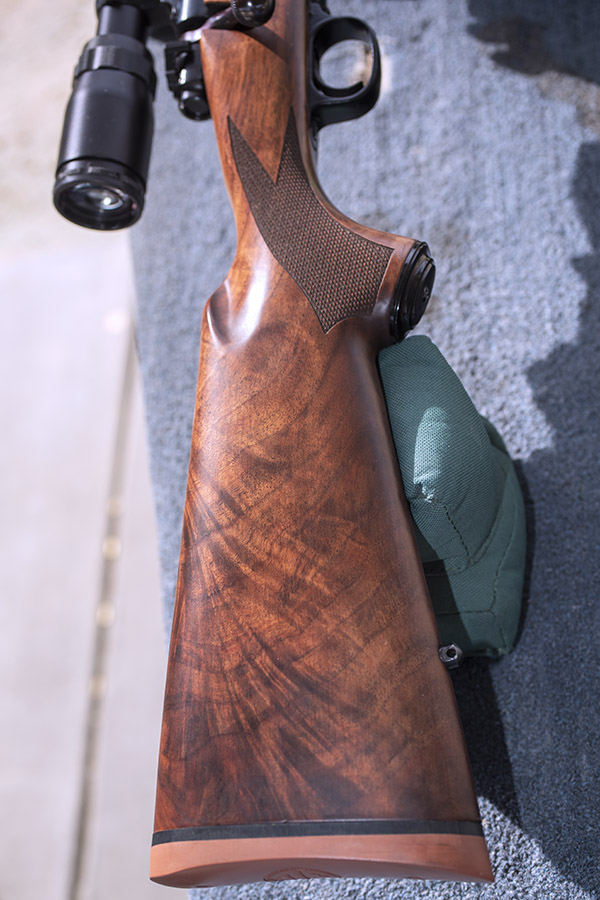
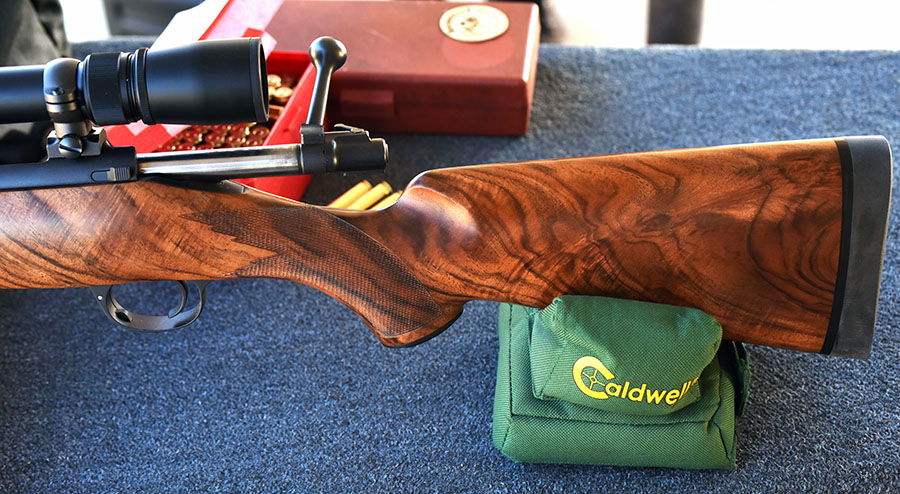
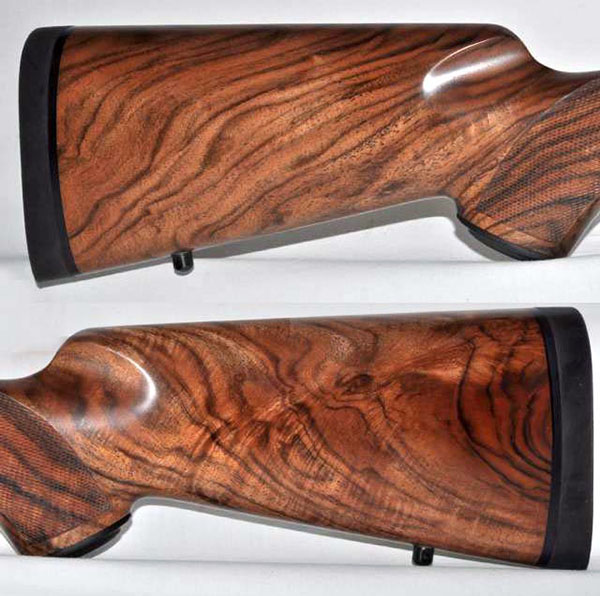
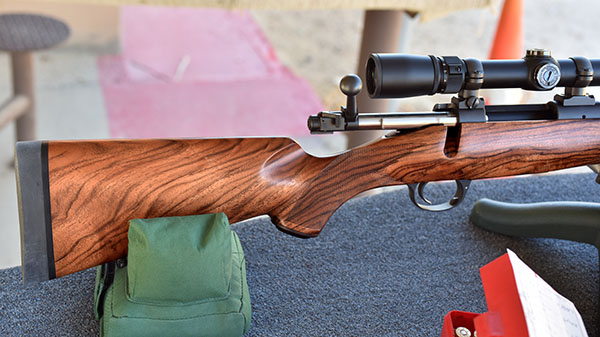
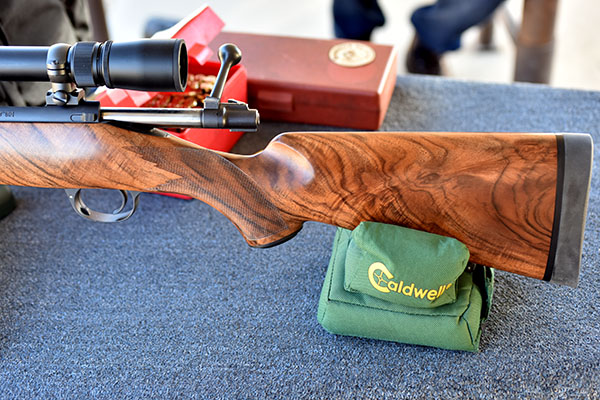
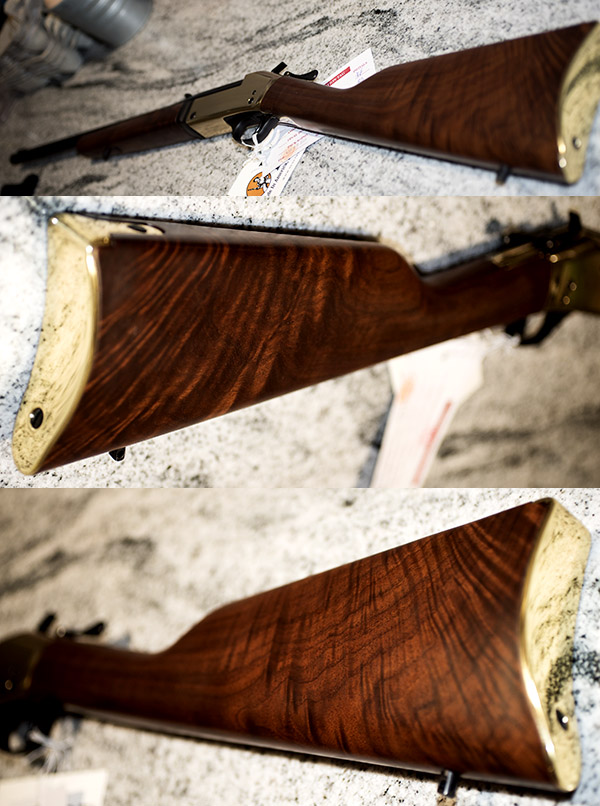
Then I picked up another 300 H&H rifle maybe 7 years ago: A Model 70 Winchester. The Model 70 in 300 H&H is not a commonly-encountered rifle, and I searched a while to find this one on Gunbroker with the fancy walnut I wanted. Trust me on this: It looks even better in person. And this one is a shooter. It deserves a better scope, but it’s still a beautiful rifle.
Sometimes people ask why I always find rifles with the nicest wood. It’s because I look for them!The Model 70 stock from the right side of the rifle. It’s unusual to see this kind of walnut on a production rifle. I recognized that when I saw the rifle on Gunbroker, and I pulled the trigger.
Anyway, one day last week was one of those days when I woke up and knew I needed to get out and shoot some 300 H&H Magnum. So I did. These are some photos from that range session. I think it was a Monday. It was cold and windy as hell with gusts up to 60 mph (that’s the bad news), but because of that I had the range to myself (that’s the good news).
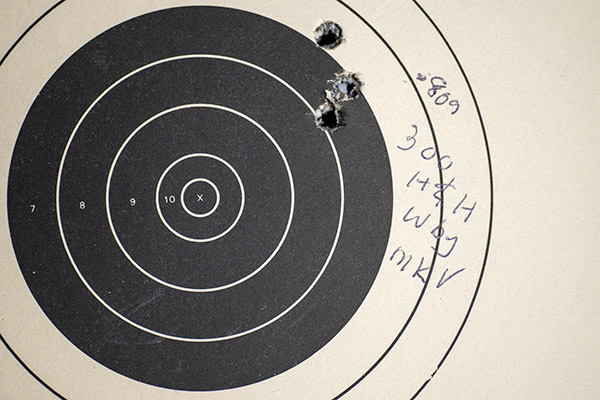
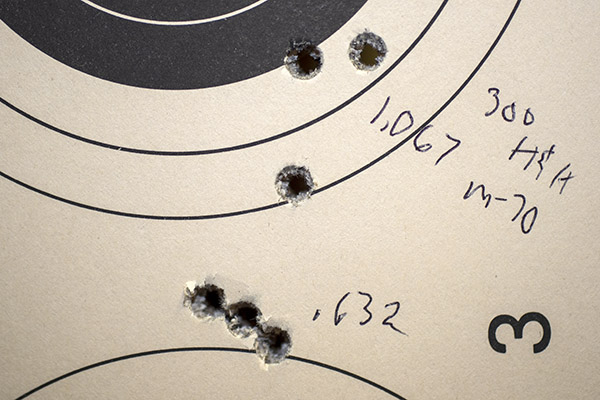
I shot my standard 300 H&H load. It’s one that has done well for me in the Weatherby, and it does equally well in the Winchester. The load is 60 grains of IMR 4320, a CCI-250 large rifle magnum primer, the 150-grain Winchester jacketed soft point bullet I mentioned above, and an overall cartridge length of 3.600 inches. You won’t find this load in any of the newer reloading manuals, but I still have the manuals I used years ago, before all the latest and greatest gee-whiz propellants came out. That’s where I found this one. And wow, does it work! Check out the 100-yard groups on the targets below, and remember it was a cold and windy day when I shot these.
The inexpensive Bushnell on the Model 70 was at the end of its elevation adjustment range and the rifle still shot a little high at 100 yards. I shimmed the front of the scope up .010 inch, which should get me a foot lower on the target at 100 yards (if you do the math, each 0.005 gets you 6 inches at 100 yards). I should be in the scope’s adjustment range after shimming, but I haven’t fired it again to make sure. I’ll check it the next time I’m out there. Longer term, though, the Model 70 will get the scope it deserves (and that will be a Leupold).
Edit: I learned that the manufacturer has discontinued IMR 4320 propellant, so the bad news is that when I deplete the little bit of this wonderful powder I have left, I need to develop a new load (and I guess that’s also the good news, as it means I get to play around with developing a new accuracy load). I’ll probably start with IMR 4350, as my research indicates it’s the go to powder for .300 H&H. Nobody has 4350 in stock right now; hopefully, that will change soon.
One more update…on a subsequent trip to the range, the shims did the trick for the Model 70; the Bushnell scope can now be adjusted to put the shots right where I want them.
More fancy walnut: Check!
More accuracy loads: Check!
More gun stories: Check!
You’ve thought about reloading, you’ve read stuff from us and others about the benefits of reloading, and you want to do it. But how?
Hey, I was born into it. My Dad was a reloader and I had a pretty good idea what to do when I wanted to start, but the urge to do so didn’t hit until I was a young guy in the Army at Fort Bliss. I was lucky. The guy who ran the Fort Bliss Gun Club (Roy Johnson) had a room set up for just that purpose and he walked me through the process some 50 years ago. But Roy has gone on to his reward, you’re probably not stationed at Fort Bliss, and you want to get into the game. That’s what this blog focuses on, and in particular, the equipment you’ll need to get started.
Inside the Fort Bliss Gun Club. This is a fabulous place where I spent a lot of time as a young Army dude. Next time I’m in El Paso you can bet I’ll stop in again.
Reloading Advantages
There are three advantages to reloading: Cost, accuracy, and availability.
Generally, reloaded ammo costs less than factory ammo, and in some cases (especially for more exotic rifle ammunition), the savings are huge. For example, factory .416 Rigby ammo costs $170 for a box of 20 rounds; I can reload .416 Rigby ammo for well under a buck a round.
From an accuracy perspective, reloading is the only way to go. You can tailor a load to a particular firearm by varying bullet type, bullet seating depth, crimp, powder type, powder charge, brass, and primers to arrive at a combination that delivers superior accuracy (and it’s fun doing this). I have rifles that shoot 3-inch groups at 100 yards with factory ammo; with my custom reloads, I can get half-inch groups.
Today, if you reload and you’ve laid in a good stock of components, you can reload your way through any ammo shortages. Nobody has .45 ACP, 9mm, or .223 ammo in stock right now; I have enough components on hand to reload thousands of rounds. I’m on the range two or three times a week enjoying my shooting hobby while other folks are online whining about not being able to buy ammo.
What You Will Need
The things you will need to start reloading fall into two categories: The reloading equipment, and the reloading components. The reloading components are the things that combine to bring an empty brass cartridge case back to life (that includes the bullets, the propellant, and the primers). The reloading equipment includes the gear you need to take the components and turn them into a ready-to-fire cartridge.
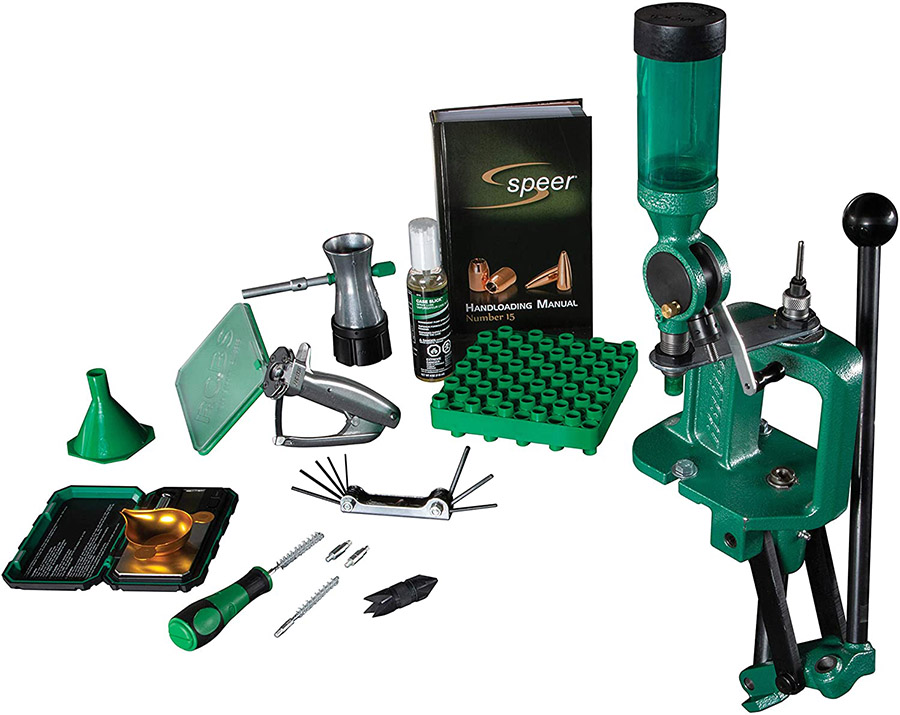
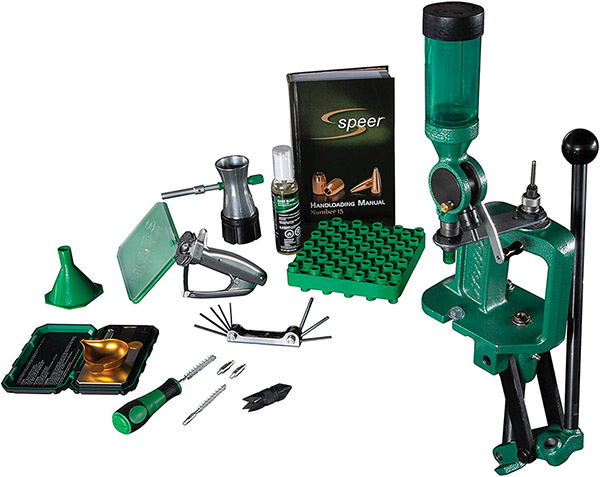
If you want to get into the reloading game, I believe the best way to do so is to buy a complete equipment reloading package from one of the suppliers like RCBS or Lee. That’s the RCBS kit shown in the big photo above. I’ll talk about it, the Lee kit, and a couple of others further down in this blog. First, let’s review each bit of gear.
The Reloading Press
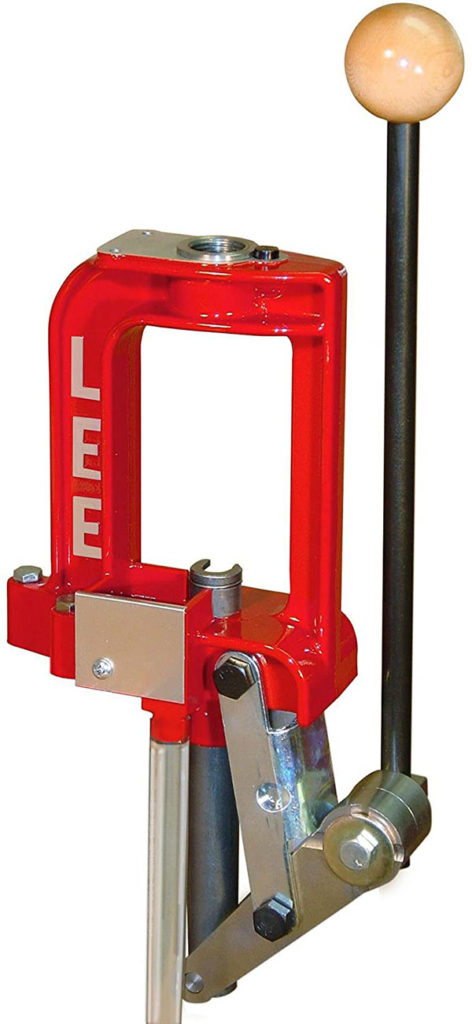
That’s the lever-operated press that accepts the dies (more on that in a second) for reloading your ammo, and sometimes the press includes a mechanism for seating primers in the cartridge case after the old primer has been removed. In other cases, a separate priming tool is used. Presses are offered by RCBS, Lee, Lyman, Hornady, and other companies.
The Lee Challenger press. It’s a decent unit at a decent price, and an ideal way to get started in reloading.
Dies
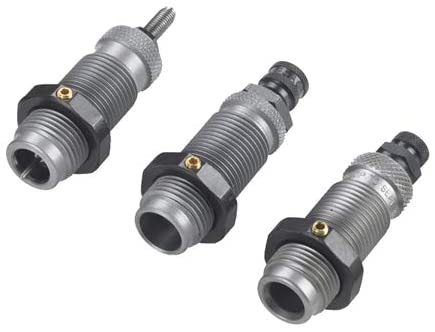
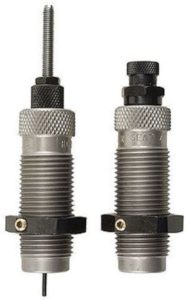
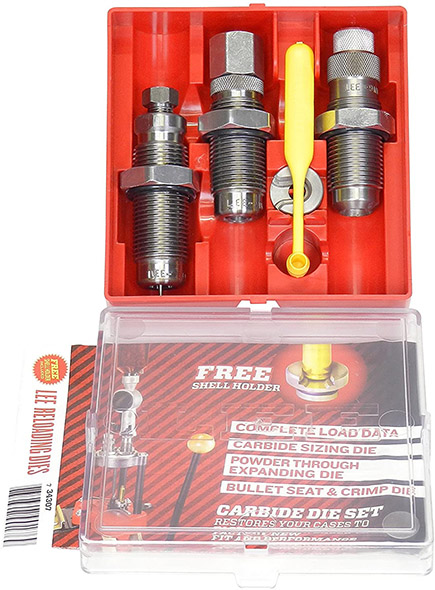
The dies are cartridge specific. For handgun cartridges, the die set usually includes three dies; for rifle cartridges, the die set usually includes two dies. The good news is that die threads are pretty much standardized, and every company’s dies will fit every company’s reloading press. In other words, if you buy Lee dies, they’ll work on an RCBS press. If you buy RCBS dies, they’ll work on a Lee press. Dies are offered by several companies, with the most popular brands being Lee and RCBS.
A three-die pistol set from RCBS. The first die knocks out the old primer and resizes the fired case. The second die flares the case mouth to accept a new bullet. The third die seats the new bullet and, if you want, crimps the bullet in place.An RCBS two-die rifle set. The first die knocks out the fired primer and returns the case to its original dimensions. The second die seats the bullet and, if desired, crimps it in place.A three-die pistol cartridge set from Lee Precision. Lee includes the shell holder with their die sets.
Shell Holder
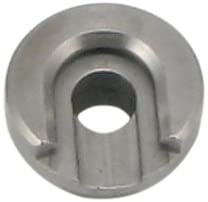
You will need a shell holder for the cartridges you wish to reload. That’s the piece that holds the cartridge case in place so the press can push it up into the die and then extract it from the die. RCBS does not include the shell holder with their die sets (so you’ll need to buy RCBS shell holders separately); just about all other die makers do (when you buy their dies, the die set includes a shell holder for that cartridge).
A shell holder. You need to buy these separately if you buy RCBS dies.
A Powder Dispenser
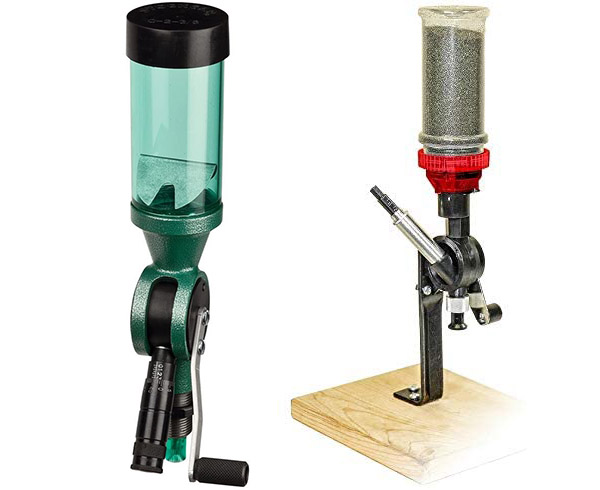
This is a device for dropping a precisely-metered powder charge into each cartridge case. There are fancy (read: expensive) electronic powder dispensers, but you don’t need those to get started and a lot of folks (myself included) don’t like them. A simple mechanical dispenser will work fine (as mine has been doing for 50 years). Both RCBS and Lee offer good powder dispensers; the Lee is substantially less expensive.
An RCBS powder dispenser on the left, the Lee powder dispenser on the right.
A Powder Scale
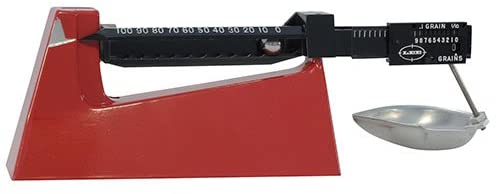
This is a simple balance beam scale to allow you to measure the weight of the propellant charge and adjust the powder dispenser to throw that charge. There are electronic scales, too, but they add complexity and considerable expense where none is required. Again, the dominant brands are Lee and RCBS.
A simple Lee balance beam reloading scale. These scales can measure to a tenth of a grain.
Cartridge Trays
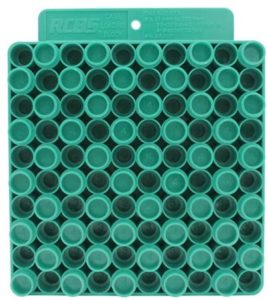
When we reload, we use a cartridge tray (to hold the cartridges as we work through the process of reloading). A variety of manufacturers offer these.
An RCBS cartridge tray. These are available from several manufacturers. I’ve been using mine for nearly 50 years.
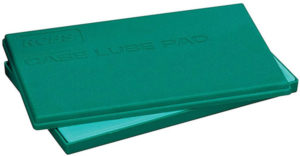
A Case Lube Pad
This is a simple foam pad. You put case lube on the pad and roll the brass cases on it to lubricate the exterior prior to running them through the resizing die (the first die used in the reloading process). If you have a straight wall pistol cartridge, you can buy tungsten carbide dies that don’t require lubing the cartridge cases. If you’re going to reload 9mm, .38 Special/.357 Magnum, .45 Auto, or .45 Colt, my advice is to spend the few extra bucks and get the carbide dies.
An RCBS case lube pad. You put a bit of case lube on the pad and roll the brass on it to lube the cases prior to running them through the resizing die.
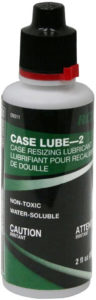
Case Lube
This is the lube used as described above. To mention it again, if you’re going to reload straight wall pistol cartridges and you buy tungsten carbide dies, you won’t need case lube (or the case lube pad).
RCBS case lube.
Alternatively, you can buy spray-on case lubes, which eliminate the need for the case lube pad. I’ve tried spray-on case lubes and I prefer using the pad and case lube instead. Other reloaders like the spray-on approach better.
A Primer Seating Tool
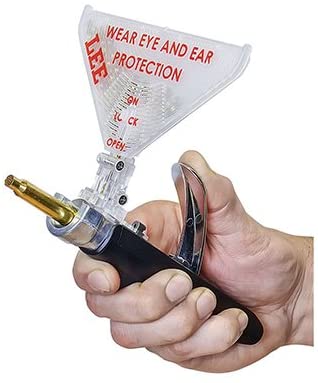
Some reloading equipment companies incorporate a primer seating tool in their press; others offer separate primer seating tools. I have an RCBS press that came with the primer seating tool, but I like using a manual hand priming tool instead. Several manufacturers offer these; I use one from Lee.
The Lee hand priming tool. These work well. You can feel each primer seating and better control seating depth with these hand priming tools.
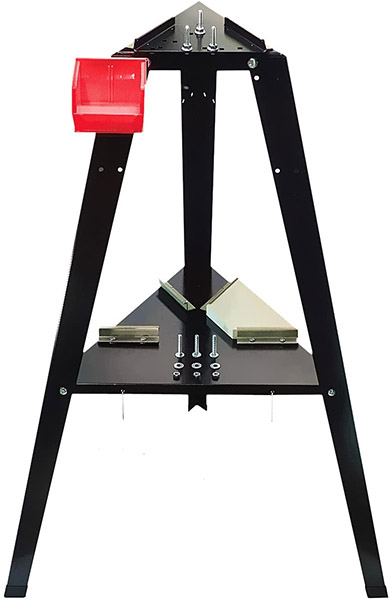
A Bench
You may already have a sturdy workbench where you can mount the reloading press; if not, there are reloading-specific benches available.
A Lee reloading bench. These work well if you don’t have a workbench for mounting your press.
A Reloading Manual
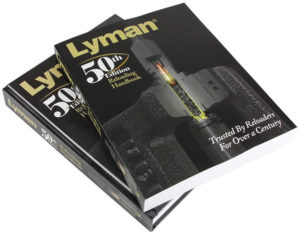
There are several available, including the excellent offerings from Sierra, Speer, Hornady, and Lyman. Don’t think you can skip this; a good reloading manual is a must-have item for any reloader. They all explain the reloading process at the beginning, and they include safe recommended load levels for nearly all cartridges. I’ve acquired several reloading manuals over the years and they are all good; my favorites are the ones from Lyman. Others are published by bullet manufacturers (these include the manuals from Hornady, Speer, and Sierra) and those manuals include loads only for their bullets. The Lyman manual is more generic. But like I said, they’re all good.
I have reloading manuals going back 50 years. The Lyman manuals are probably the best.
That’s the reloading equipment. In addition to that, you’re going to need the ingredients for the cartridges you want to reload. That includes the brass cases, the bullets, the powder, and the primers.
Brass Cartridge Cases
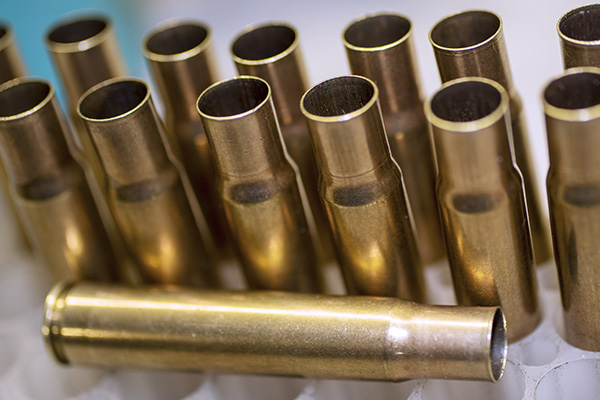
You can buy virgin brass online, you can buy once-fired brass at the range or at most gunstores, or you can do like most of us have done: Save your brass when you shoot factory ammo and reload it.
.35 Whelen brass waiting to be charged with propellant. This ammo costs $43 for a box of 20 factory rounds (and you can’t find anybody who has it in stock right now); I can reload it for under 50 cents a round.
Bullets
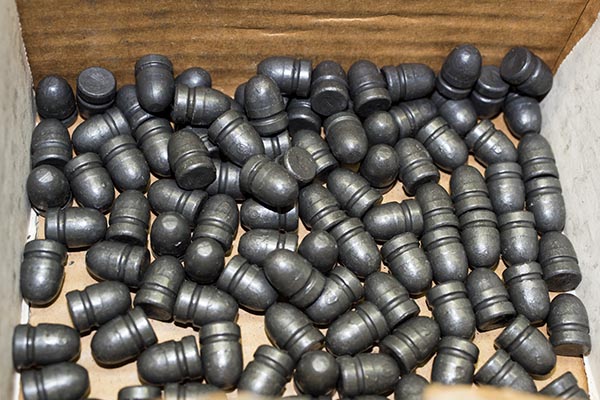
You’ll need bullets to reload your ammo. There are lots of options here, and they basically break down into either cast or jacketed bullets. I’m a big fan of cast bullets for handgun and reduced velocity rifle reloads, and I use jacketed bullets for full-bore factory level (high velocity) rifle loads. Most folks these days order bullets online from reloading suppliers like MidwayUSA, Graf’s, MidSouth, Powder Valley, Natchez Shooting Supplies, and others. Smaller gun stores are disappearing, and you usually don’t find decent prices at the big chain stores.
Cast bullets waiting to be loaded into .45 ACP cases.
Propellant
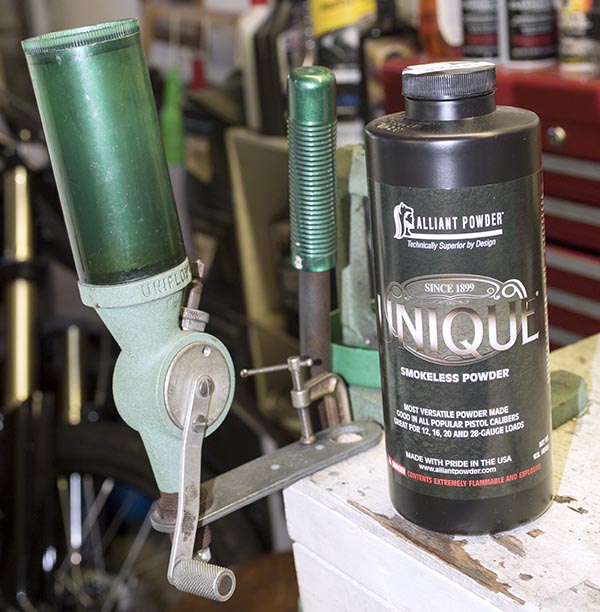
For lack of a better term, we usually call propellants “powder,” and there are a wide variety of powders available. The reloading manuals show which powders work best for the cartridge you wish to reload.
Unique propellant and my RCBS powder dispenser. The reloading manuals will help you select the powder you need. Unique is a good general purpose propellant I’ve used for a variety of handgun cartridges and a few cast bullet rifle loads.
Primers
The primer is the component that lights the candle when you pull the trigger. There are several primer suppliers. The trick today is finding them, as there has been a run on primers since the pandemic began. If you can find primers in a local shop, buy them. The same suppliers listed above for bullets also sell primers (they are all out of stock now, but that will change as supply catches up with demand).
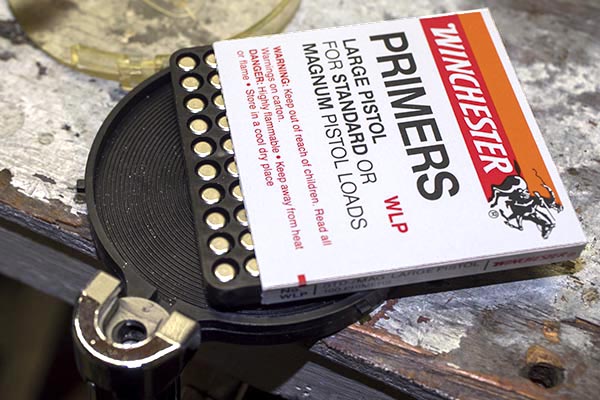
Winchester primers being loaded into my Lee hand priming tool. Other primer makes include Remington, CCI, Federal, and a few more.
The Best Equipment Approach: A Complete Kit
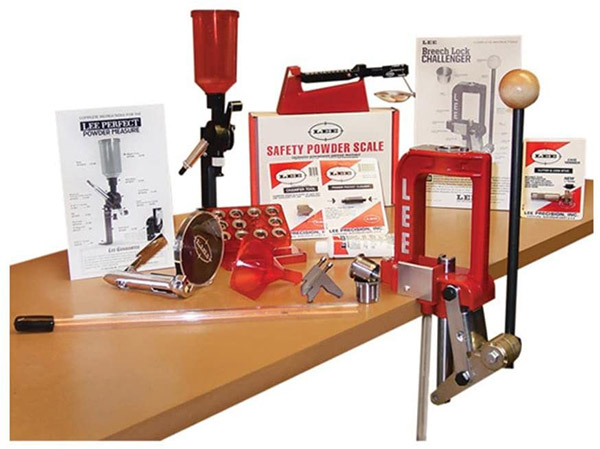
As I mentioned at the start of this blog, I believe the best way to get into the game is to buy a complete equipment reloading package from one of the reloading equipment suppliers. My advice if you are a new reloader is to go with the Lee package. It’s the least expensive and if you decide that reloading is not for you, you’ve minimized your cash outlay. I should add, however, that I don’t know anybody who ever tried reloading who didn’t get hooked on it. It is a marvelous hobby, and I believe it is as much fun as shooting.
I’ve used reloading equipment over the years from all the manufacturers. My personal setup is centered around an RCBS Rockchucker, but equipment from any of the suppliers is good. Basically, you can’t go wrong in this game from an equipment perspective. With that said, let’s take a look at what’s out there.
The Lee Challenger reloading kit. These were sold out on Amazon (and everywhere else) when this blog was published. Keep an eye on the Amazon site; it’s a good place to order the kit.
There’s only one problem with the Lee Challenger reloading kit: It’s such a good deal (well under $200 for the entire kit) that literally everyone is out of stock right now. As you know, we’re going through unprecedented times in the shooting world (guns, ammo, and reloading components are sold out due to the civil insurrection in many large cities, a new anti-gun administration on the horizon, and the global pandemic). That will change, but at this instant, no one I could find has the Lee kit in stock.
The RCBS reloading kit. RCBS makes high quality equipment that will last a lifetime. It costs more, but it’s worth it.
I’ve been using RCBS equipment for the last 50 years, and I believe it to be the best. It is built to last. If I couldn’t get the Lee package as a newbie, or if your budget will allow it, I’d go with RCBS equipment. At about $400, it’s just over twice the price of the Lee kit, but it’s still a great deal compared to buying all the different equipment items separately. The RCBS package shown above includes an electronic scale instead of a beam scale, a powder trickler (it allows you to finesse adding individual powder kernels to attain a precise charge weight), and a couple of case preparation tools that the Lee kit doesn’t include.
Lyman is another outfit offering a complete reloading kit:
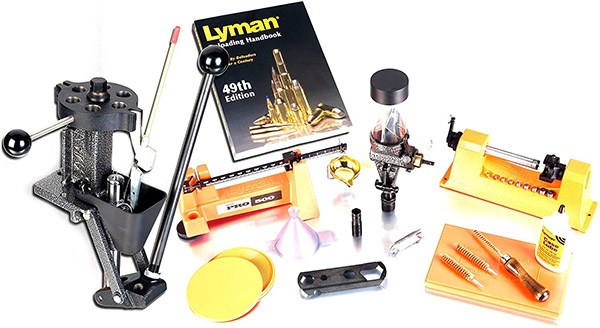
Lyman’s reloading equipment package.
What’s a bit different about the Lyman kit is that it comes with a turret press, which allows you to mount all the dies in the press head and rotate them as you progress through the various reloading steps. I’m not a big fan of this approach; other folks are. The Lyman kit is just under $1000; the turret press and the inclusion of a case trimmer are what drive the price to that level.
Hornady’s reloading package. I have the least experience with Hornady reloading gear, and I’m not wild about their dies. Hornady bullets are fantastic.
The Hornady kit is about $550. That’s substantially less than the Lyman kit, but more than either the Lee or the RCBS kits.
So there you have it. Remember that no matter which reloading kit you buy, you’ll still need dies and a shellholder specific to your cartridge. You’ll probably want to purchase more equipment as your reloading interest develops, including more dies (so you can reload more calibers), case cleaning and polishing accessories, a micrometer, and more. But what we’ve outlined here will get you started and keep you in the game for years.
In this blog we’ve covered the equipment you’ll need to get into reloading. If you would like to read about how to use this equipment, we have you covered there, too. We have a bunch of information on reloading various cartridges on our Tales of the Gun page, and a complete series on reloading handgun ammo that you can review here:
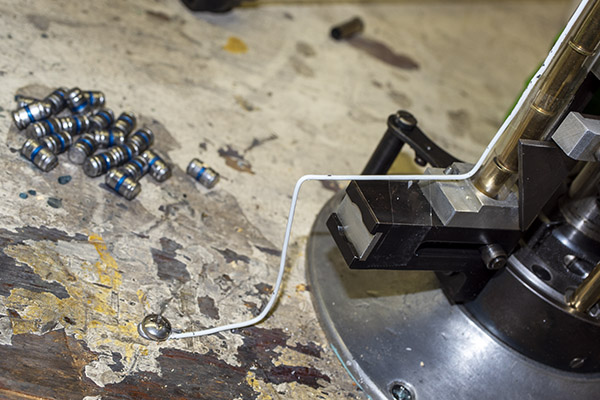
Like the title says, this is a story within a story. It’s about using primer pickup tubes with my resurrected Star reloader, and how Lady Luck smiled on me yet again.
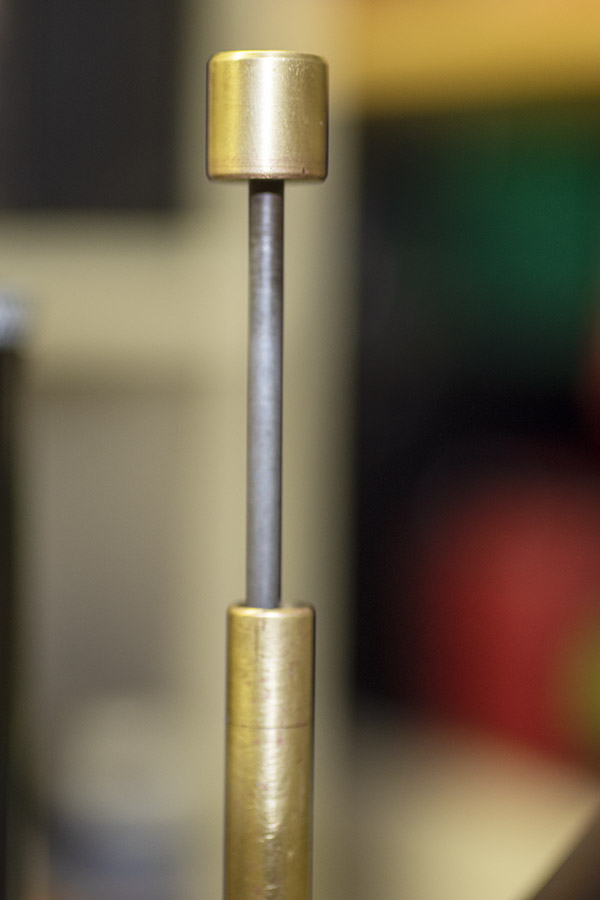
First, a bit of background. There are a few approaches in the reloading world for transferring primers from the primer box into the reloader. In our general series on reloading, I showed how to use the Lee primer tool, which is what I generally use when I’m loading on a single stage press like my RCBS Rockchucker. Another approach is to use a primer pickup tube and a primer tray. See, the deal is that you don’t want to touch the primers with your bare fingers. You might get skin oils on the primer, and that could make the primer inert. As explained earlier, in this game, you want all the primers to be “ert.”
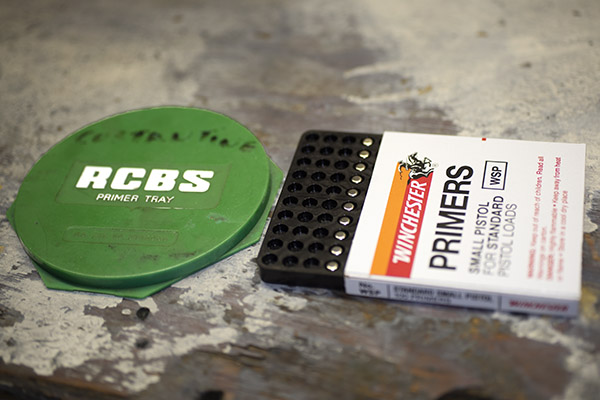
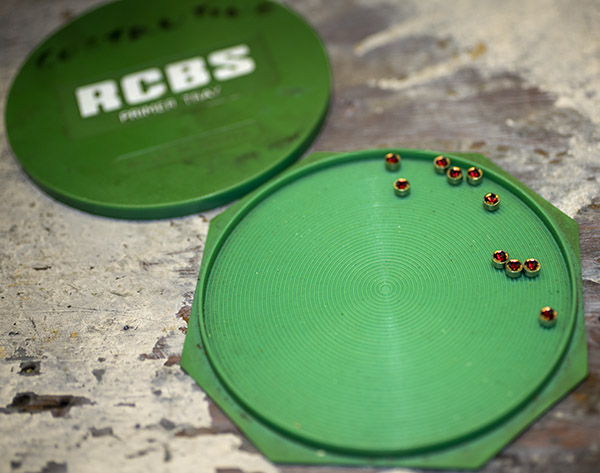
The first step is to transfer primers from the box they come in into a primer tray, like you see below.
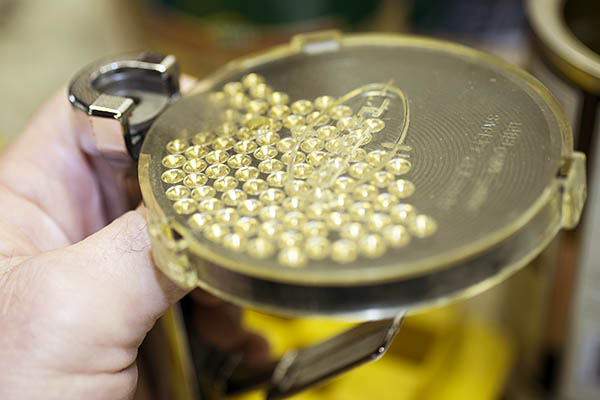
That green circular deal on the left in the photo above is the primer tray. It consists of a base and a lid. You take the lid off and drop the primers into the base, like you see below.
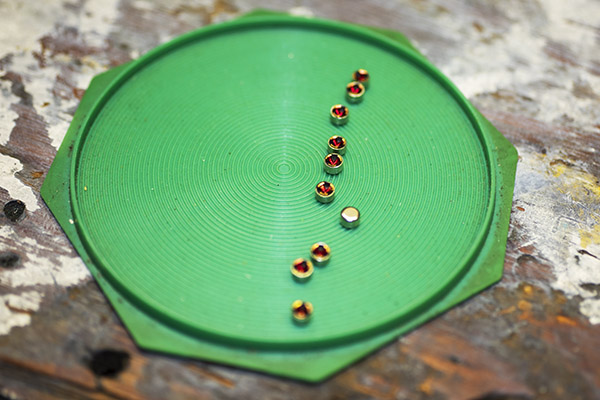
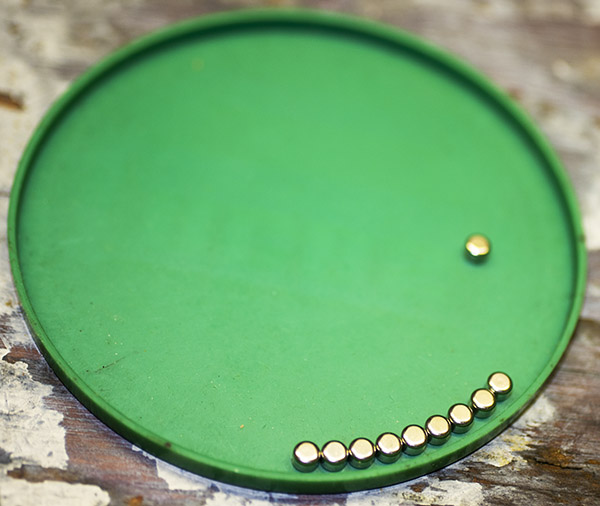
When you do that, though, invariably some of the primers will face up and some will face down. We want them all facing down in the tray’s base, and we get that by jiggling the base. There are little circumferential ridges molded into the base, and when you jiggle the tray, it makes all the primers face down (see below).
Get ready for more cleverness here, folks. What we do next is put the lid back on the primer tray, invert it, and then remove the base from the lid. That leaves us with the lid, and all the primers in it are facing up (see below).
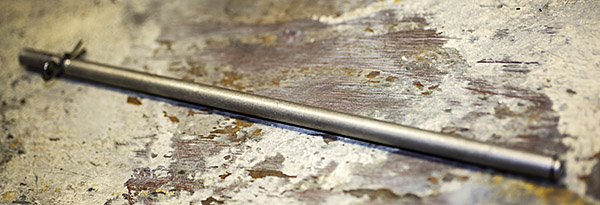
At this point, we pick up the primers from the tray using a primer pickup tube like you see in the photo below.
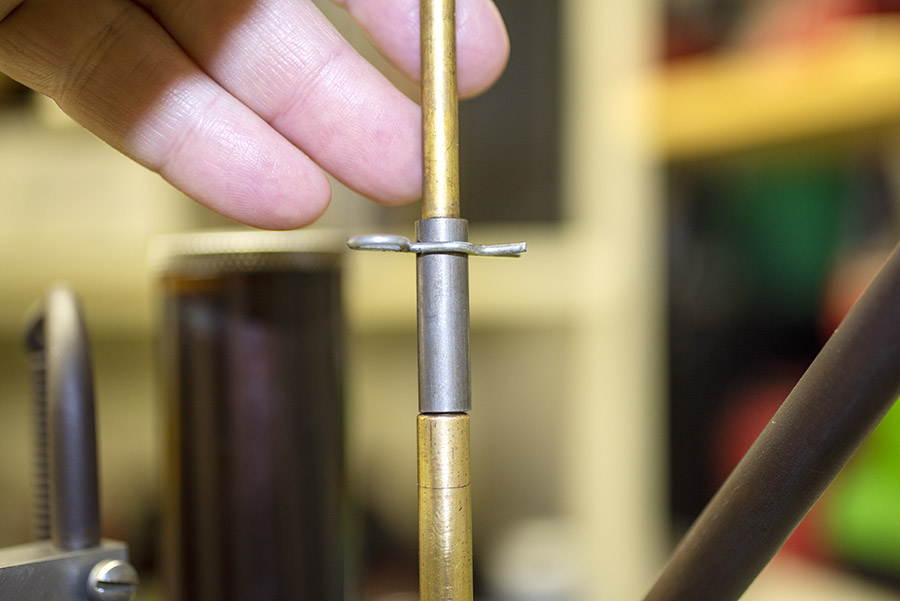
The tube you see in the photo above is an RCBS primer pickup tube. It’s a hollow tube with a spring catch on one end and a spring clip on the other. What you do is take that tube and push it down (spring end down) on top of each primer. That stacks the primers, one on top of the other, in the tube. Then you invert it over the primer magazine on the Star reloader, remove the spring clip, and all the primers in the pickup tube drop into the Star’s primer magazine.
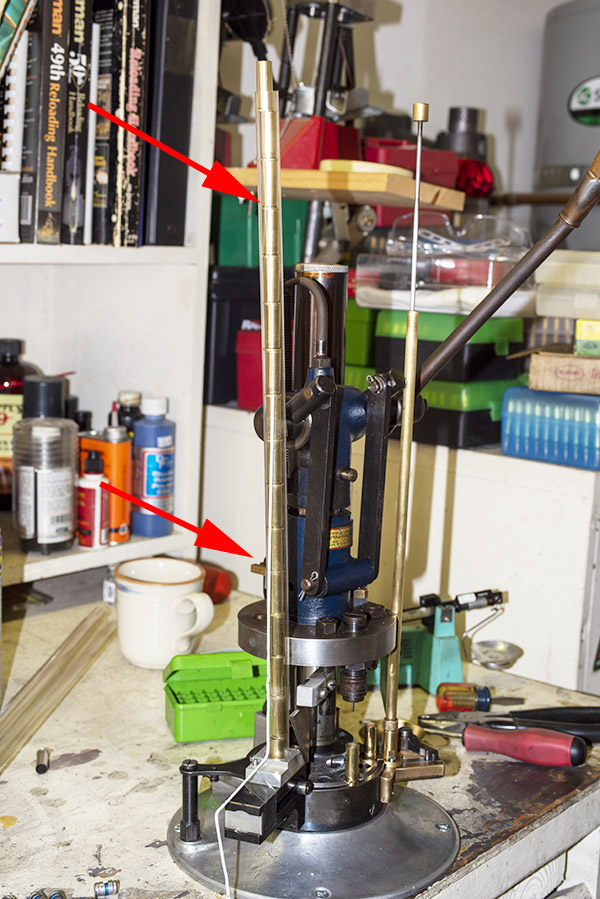
Star reloaders originally had a brass primer pickup tube, but that didn’t come with the one I have. I’m not complaining; my Star reloader was free. And I figured I’d just use an RCBS primer pickup tube, because I knew had three or four of those stashed away somewhere. But I couldn’t find the things. Then I remembered I had put a bunch of reloading odds and ends in a 50 cal ammo can somewhere, and I went through maybe 10 ammo cans before I found it. I used the RCBS primer pickup tube and I had to hold it carefully in alignment with the Star’s primer magazine when transferring the primers from the inverted tube, pulling the pin, and letting the primers fall into the Star brass primer magazine. It worked just fine. It wasn’t the original Star gear, but hey, you go to war with the Army you have.
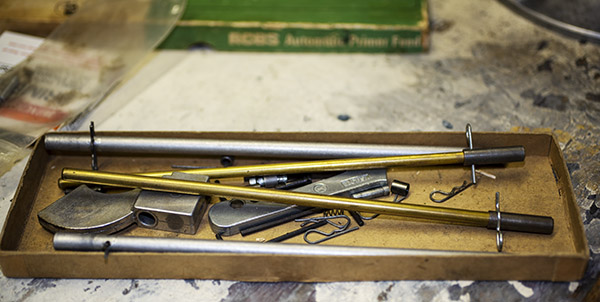
After I did that, I went on to other things. I thought I was doing pretty good, you know, finding those RCBS primer pickup tubes, but the box they were in kept playing over and over again in my mind. Something was tickling the neurons, but I didn’t know what it was. Then it hit me. I remembered earlier in the day when I took the RCBS primer pickup tube out of the box. I could see it clearly in my mind:
There were two other brass primer pickup tubes in that box. In my eagerness to get the RCBS primer pickup tubes (the ones I was looking for), I reached right over the brass tubes. Could it be? I put that stuff away a decade ago, way before I ever had the Star.
I went back to that box immediately, and son of a gun, there were not one, but two Star original brass primer pickup tubes. Two! I think they came from Sue’s Dad before he passed away more than 10 years ago (he was a reloader, too), and I got a lot of his old bits and pieces. He never had a Star reloader that I ever saw, but he must have latched onto these two primer pickup tubes somewhere along his journey through life. How about that?
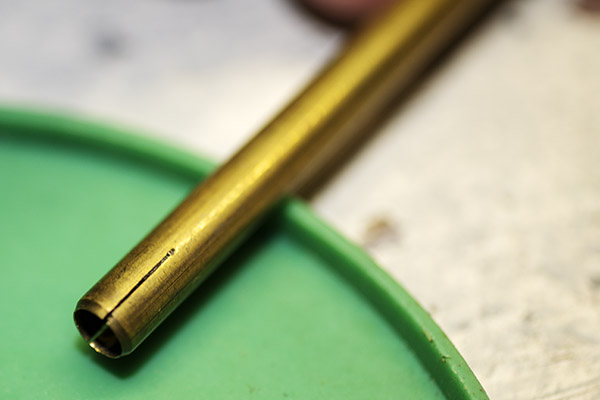
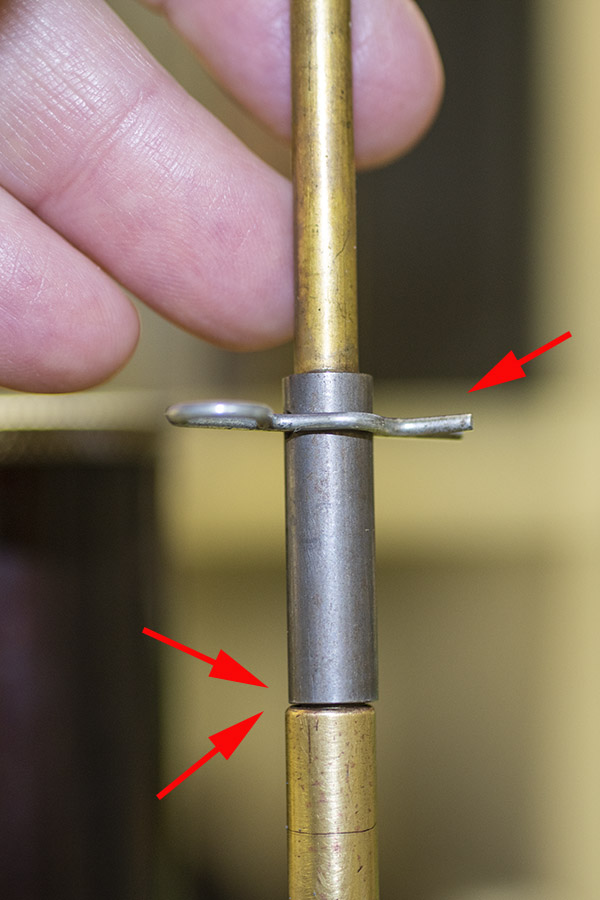
So, back to the story du jour…and more of the Star folks’ cleverness. Star used a slightly different approach than did RCBS. For starters, they made a cross cut in the pickup end of their primer pickup tubes to give the spring tension needed to hold the primers in the tube.
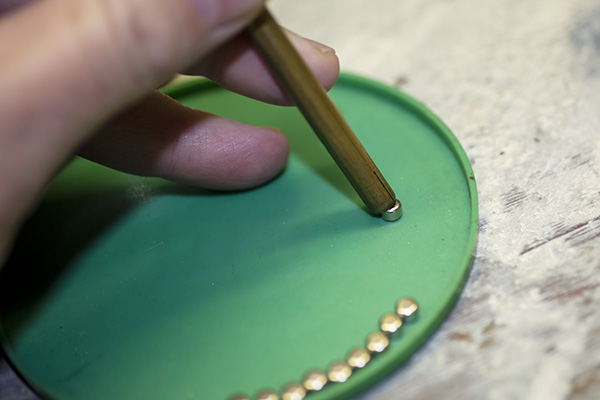
I started picking up a batch of primers from the primer tray lid with my newly-discovered Star primer pickup tube.
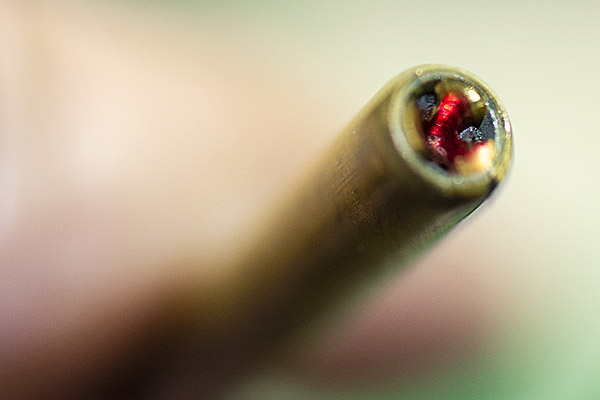
When you get that last one, you push it the rest of the way in with a probe (not your finger). With apologies in advance for the inadequate photo depth-of-field, here’s what the last primer looks like in the Star tube.
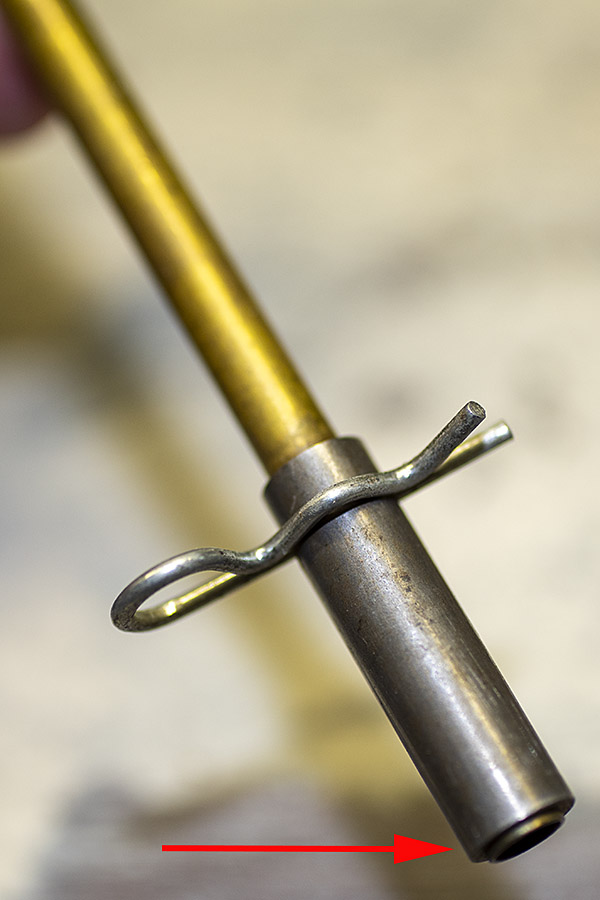
Then you invert the tube, so all the primers are at the other end. The spring clip keeps them from falling out. There’s a flange on the end of the Star primer pickup tube. It interfaces with the Star reloader’s primer magazine to keep the primer pickup tube aligned with the primer magazine tube.
Here’s the top end of the Star reloader’s primer magazine, with the primer follower in place. I removed it and placed the primer pickup tube on top.
At this point, I then removed the spring clip, and all the primers that were in the primer pickup tube transferred (gravity feed!) into the primer magazine.
So there you have it. The Star is up and running, and I’ll post about cleaning up a few more details on this magnificent old machine in the next Star blog. Stay tuned!
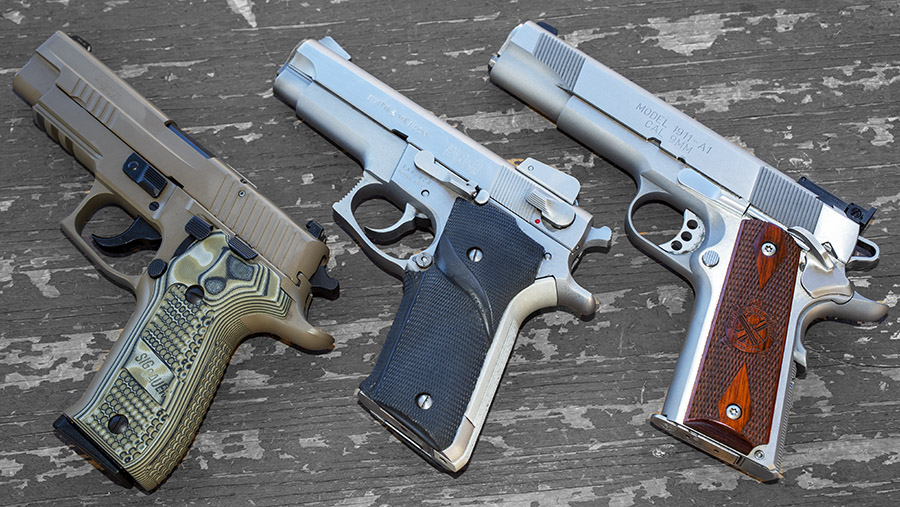
Back in January I tested a bunch of 9mm cast bullet loads in the three handguns you see above: A SIG P226 Scorpion, a Smith and Wesson Model 659, and the Springfield Armory 1911 Target. For that test series (you can read it here), all the loads used the Missouri 125-grain cast roundnose bullet with different powders and different charge weights. My cast bullet testing showed the SIG to be the most accurate, followed by the Springfield and then the Smith and Wesson Model 659.
I promised an update with jacketed bullets to assess accuracy and functionality of all three handguns (and to find favored accuracy loads for each). It took a while, but I finally got around to making good on that promise this past week. The six different loads I tested for the jacketed 9mm test series are summarized below:
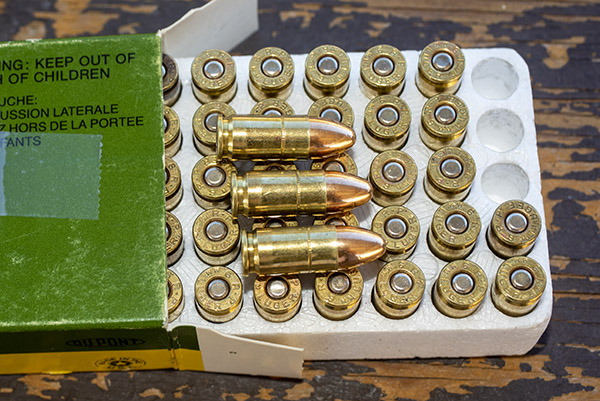
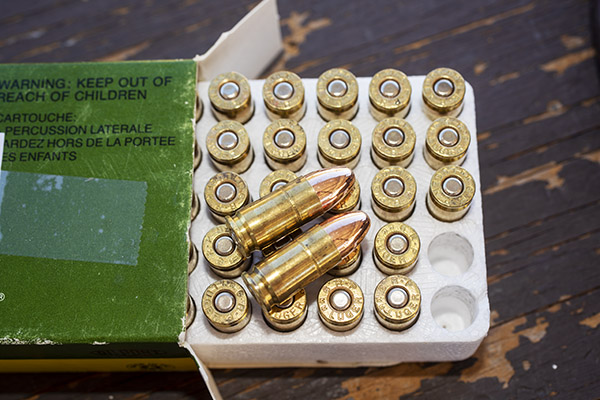
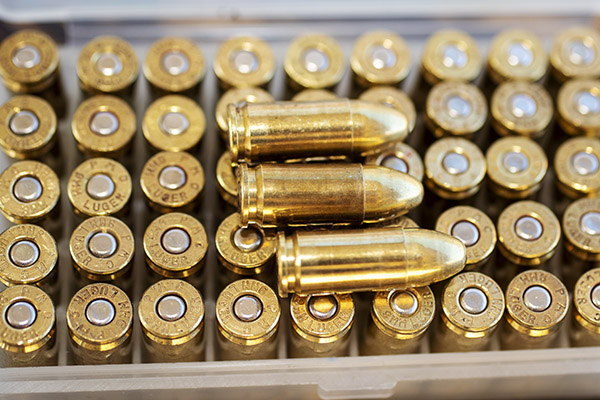
Actually, the term “jacketed” doesn’t really apply to the Xtreme bullets (they are copper plated, not copper jacketed). The Armscor bullets are brass jacketed. Both the Winchester and Speer bullets are copper jacketed bullets. As you can see from the table above and the photos below, the Xtreme, Armscor, and Winchester bullets were of the roundnose configuration. The Speer 147-grain bullets were jacketed flatnosed bullets. I didn’t try any hollow points in this test series; I prefer roundnose bullets in my 9mm handguns. They are reliable.
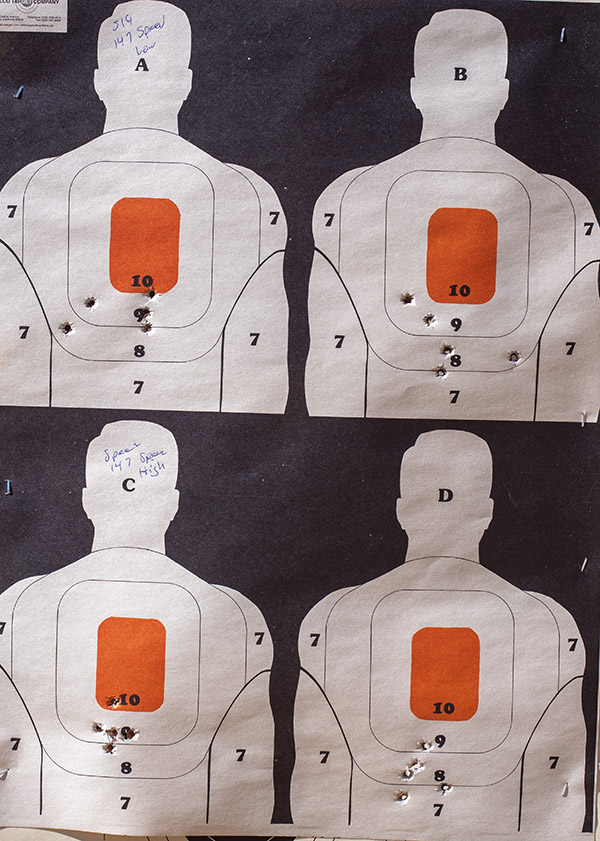
All groups were 5 shot groups. I shot a total of 360 rounds in the two test series (both the jacketed and cast bullet accuracy tests).
While I was shooting last week, I was a little disappointed. I thought I had done a lot better with the cast bullets back in January. I thought my jacketed groups were larger when I eyeballed the targets, but you never really know until you measure the groups.
9mm jacketed bullets on an Alco target. I like using the Alco target that has four mini-silhouettes on a single target. All testing was at 50 feet.
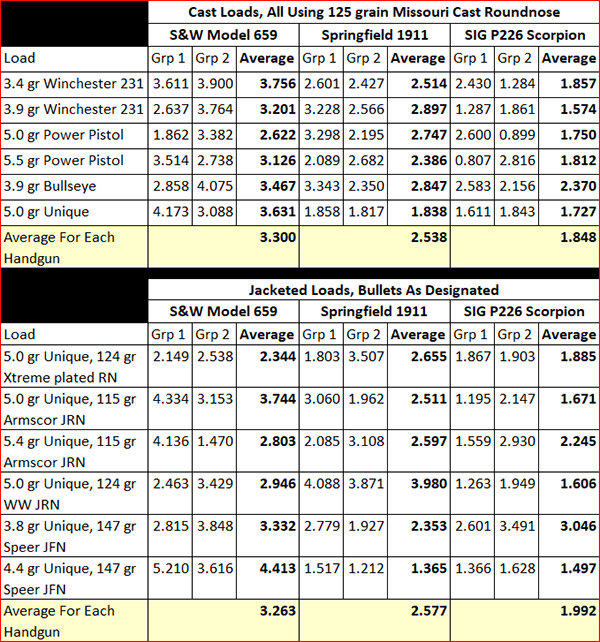
When I returned home, measured the group sizes, and tabulated the results, I was surprised. The results of the jacketed and plated bullets were not too different from what I had achieved with the cast bullets almost a year ago. Take a look:
The most surprising finding, for me, was that the average results with the jacketed bullets (versus the cast bullets) were almost identical. Here’s that data extracted from the above, shown in a table that makes it a little easier to make the comparison:
My testing showed essentially the same results for the three handguns I tested whether I used cast bullets or jacketed bullets: The SIG P226 Scorpion is the most accurate (it is a magnificent handgun), followed by the Springfield Armory 1911, followed by the Smith and Wesson 659. It doesn’t matter whether it’s with cast or jacketed bullets: The averages are eerily similar for each gun, with a very slight accuracy advantage going to the cast bullets for the SIG and the 1911, and a very slight accuracy advantage going to the jacketed bullets for the Smith 659. But the differences between jacketed and cast bullets are so small they can be ignored. Cast bullets are usually a lot less expensive than jacketed bullets, so this is good knowledge.
Help us continue to bring stories to you: Please click on the popup ads!
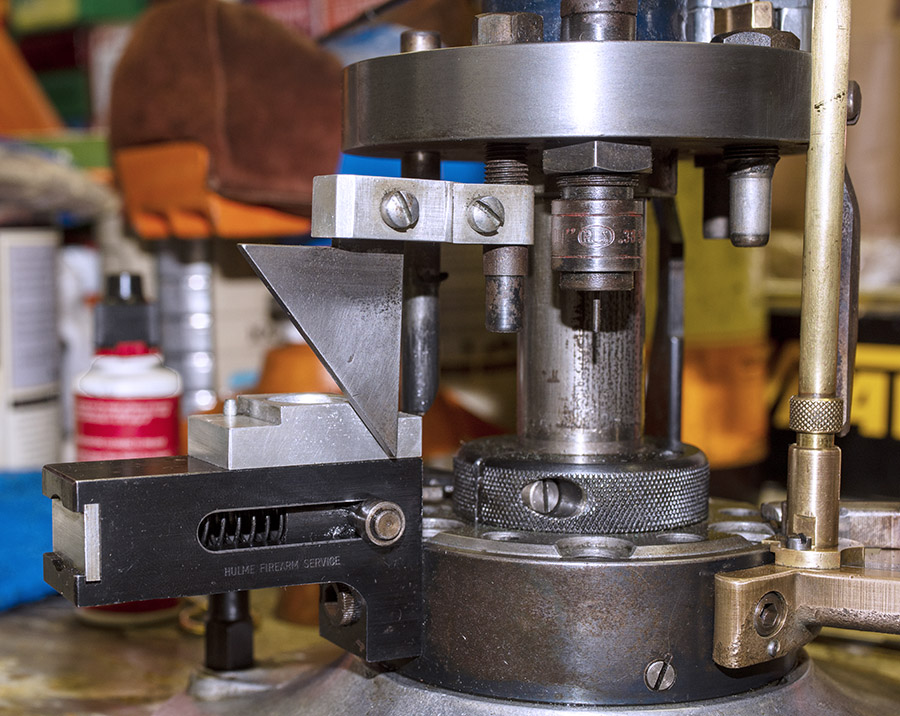
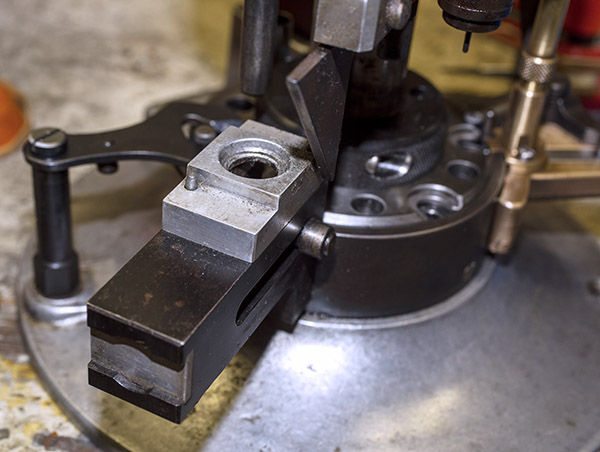
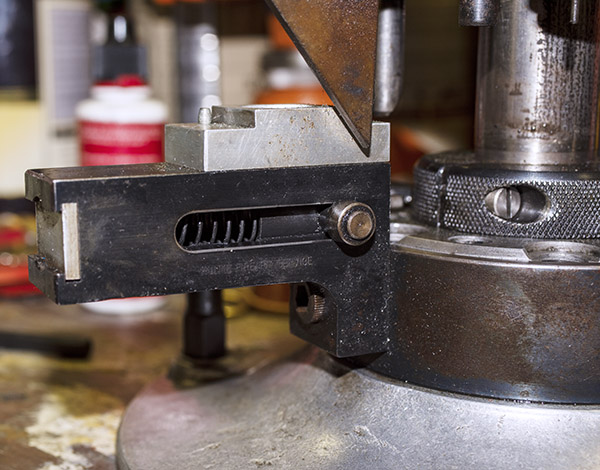
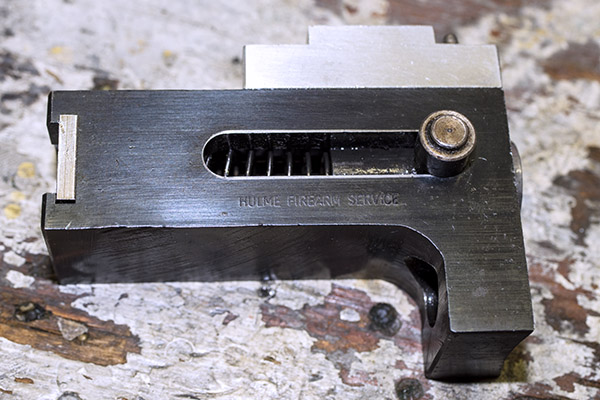
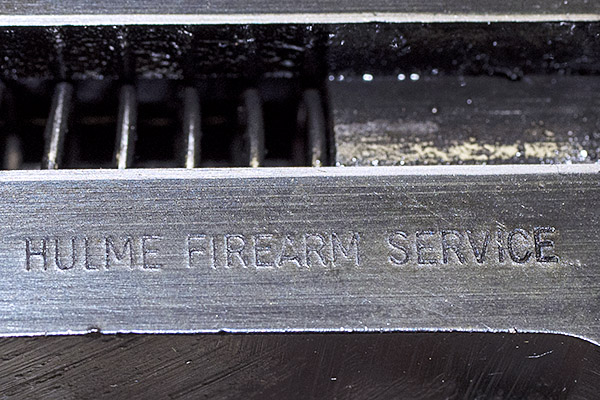
The Star story just keeps getting better. I not only picked up the reloader for free…I also got a free Hulme case feed mechanism. I didn’t realize what I had until I started learning more about these marvelous old machines.
You may remember that we posted a blog a month or so ago about the Los Angeles Sheriffs Department Pistol Team. It was a cool old video (it was from the 1930s), but I didn’t realize just how cool it was until I spoke with my buddy Paul about the Star reloader I’m resurrecting. Paul mentioned that the LASD video had a segment about reloading .38 Special ammo, and as soon as he said it, I remembered the scene. You’re certainly welcome to watch the entire video again, but my advice would be to jump to the 13:57 mark to see the Star reloader in action:
Man, those guys are busy, I thought as I watched them reloading .38 Special ammo in the video above. It’s almost as if you need three hands (or two people) to operate the Star. For every cycle, you need to:
Insert a case in the shell plate.
Insert a bullet in the case that’s just been charged with powder.
Pull the main lever down.
Pull the main lever up.
Index the shell plate one position counterclockwise.
Then I realized: The guys in that video above were placing the empty .38 Special cases directly into the shell plate. My Star doesn’t work that way. It has a case feed mechanism. Instead of inserting the empty case directly into the shell plate, you insert the case into the case feed mechanism. Why do that, I wondered, when you can insert the case directly into the shell plate?
Then it hit me: My Star had the optional Hulme case feeder. It was missing a couple of parts (the empty case magazine and the support for that magazine), but those parts would be easy to replace or make myself. That way, I wouldn’t have to insert an empty case into the Star every time I pulled the lever. I could just load up 25 or 30 cases at a time, and the Hulme case feed mechanism would take care of the rest. That would simplify the number of actions I’d have to do each cycle. Woo hoo!
Here’s another YouTube I found that explains how the Hulme case feed mechanism works.
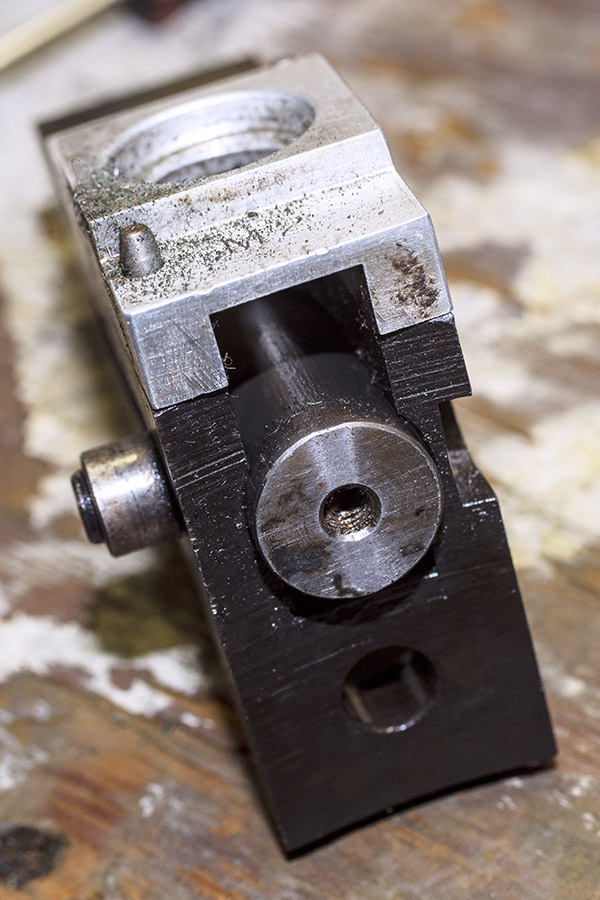
It’s all very clever. I started this part of the Star resurrection by cleaning up the Hulme case feed mechanism on my press.
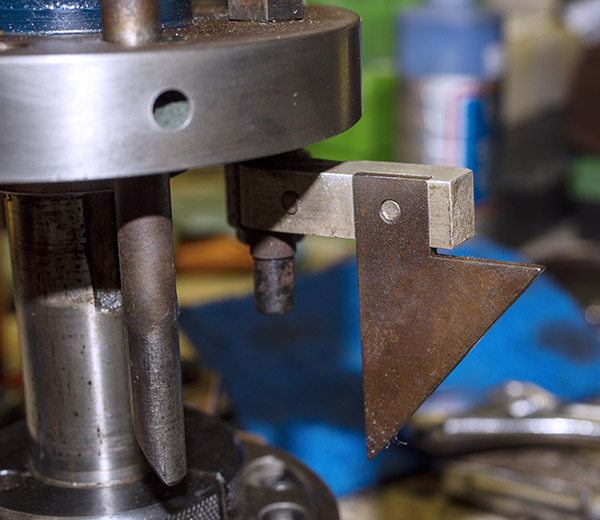
Here’s what it looked like before I disassembled it for a more thorough cleaning. Notice the rusty cam angle at the top of the photo below.
Here’s another photo of the rusty cam. It’s the piece that drives the Hulme case feeder to the rear when the tool head is lowered (which occurs when the main lever is pulled down).
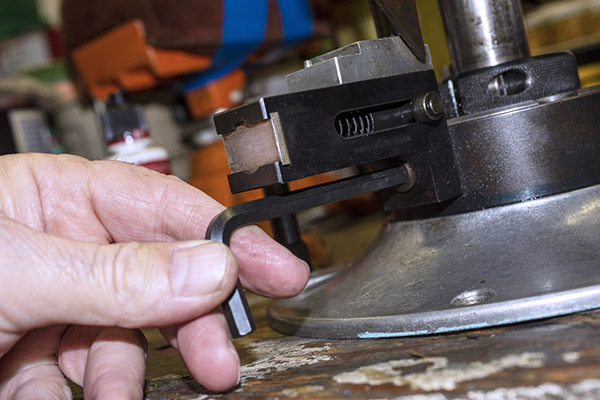
The Hulme case feed mechanism attaches to the Star base with a single Allen bolt. Stars originally did not have that hole in the base, but the Hulme case feed mechanism was such a popular option that Star included a drilled and tapped hole (for the Hulme device) on all their presses sometime around 1959. I learned this from good buddy Bruce at Star Machine Works in New Jersey.
I removed it and then cleaned the case feed mechanism with Kroil, WD 40, and Scotchbrite.
Then I went to work on the cam and its mounting bracket with Kroil and Scotchbrite. After that, I remounted the Hulme case feed mechanism. Here’s what the case feed mechanism looks like in operation:
So, I had the case feed mechanism cleaned and it was operational. But I still needed to feed in a single case every cycle. I didn’t want that; I wanted the cases to feed automatically. It was time to channel my inner Bubba. All I needed was a tube in which to stack empty .38 Special cases above the case feeder, and a means to secure that tube. Hulme originally offered the componentry to do that, and my good buddy Bruce at Star Machine Works (the company that restores these magnificent old reloaders) offers the parts, but I hadn’t spent anything on my Star, and I wanted to keep it that way just for the sake of living up to my cheap SOB reputation. I wondered: WWJGD (what would Joe Gresh do)? I noodled a few ideas around, and then went to the closet for a coat hanger. I already had a clear plastic tube from one of my Lee reloading presses.
Like we say in French: Voilà!
The Star and its Hulme case feed mechanism works, and it works well. Take a look!
We’re getting pretty close to being done with the Star resurrection project, but there are still a few more things I want to show you. Stay tuned; you’ll see them right here on the ExNotes blog!
Sometimes you just get lucky. That’s what happened to me. I’m buying a used snubnosed .38 Special (there will be a blog on it in a few weeks), and I used a different federal firearms license dealer for the transfer (I always buy through an FFL dealer to keep things legal). The seller had an FFL dealer he wanted to use, and much to my surprise it happened to be one of the rangemasters at the West End Gun Club (a guy I already knew). We all had a nice visit, and while I was there, I was looking around the shop and my eye turned to an old progressive reloader. I love old stuff, and if you’re reading this, you probably do, too.
Now when I say progressive, I don’t mean the reloader leans left or votes democrat. Nope, progressive in the reloading world means each pull of the lever results in a finished round coming off the machine. With each stroke, a cartridge case is resized and deprimed, another is flared, another is charged with powder, another has a bullet seated in the brass case and crimped, and a new one is spit out. Then, on the lever upstroke, the base plate rotates (it progresses, hence the name), and the sequence continues. The output on a progressive is impressive. You can reload north of 500 rounds an hour on these things.
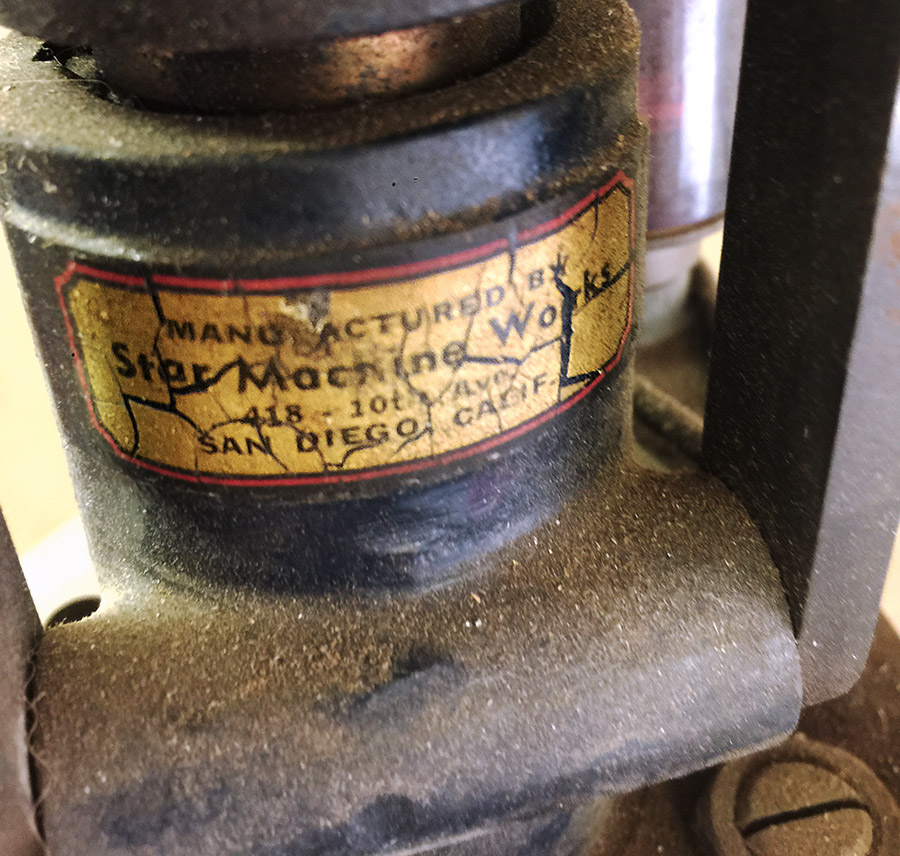
This particular progressive is one of the first ones and it was made by a company called the Star Machine Works. They first came out in the 1930s. I don’t know exactly when mine was made, but it had my attention this morning and I guess that was obvious. My rangemaster buddy told I could take it home with me if I wanted.
“How much?” I asked. I think he could see that the hook was already set. I wanted it. And I guess it showed.
“You could take it home with you.”
“I think I will,” I said, “but tell me how much.”
“No,” he said, “you can take it home. It’s yours.”
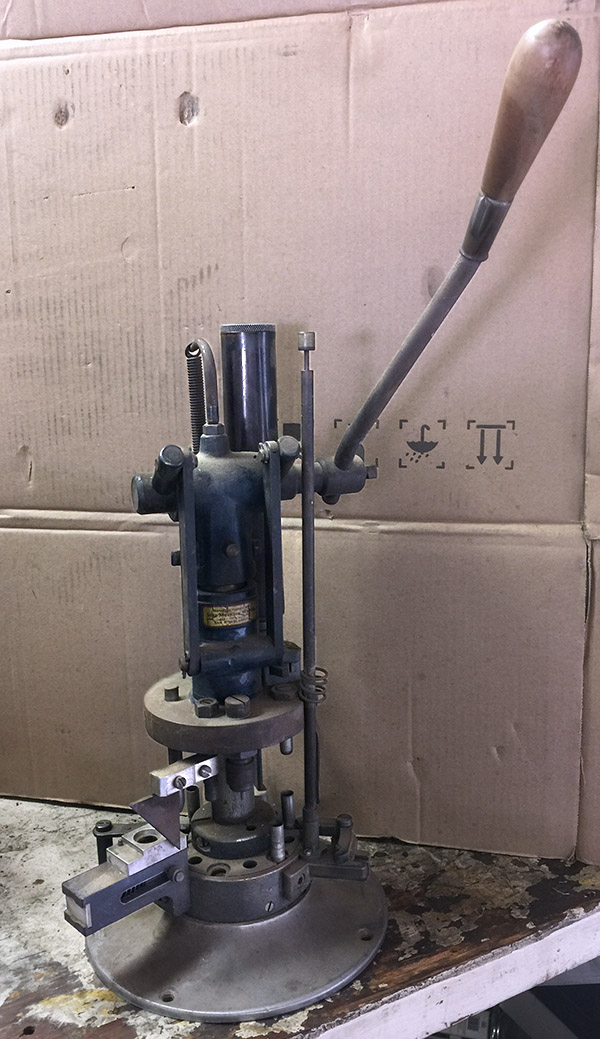
You can’t beat a deal like that. The pictures you see here are of my new-to-me (but probably older than me) Star progressive reloader on my reloading bench. It’s going to go through a Joe Gresh-style resurrection, and we’ll tell the story here on ExNotes. There won’t be any cosmetics (I love the patina on this thing), and I want to keep the look as you see it here. The Star will only undergo the stuff that’s needed to make it functional. And you’ll be able to follow the Star’s resurrection here on the blog.
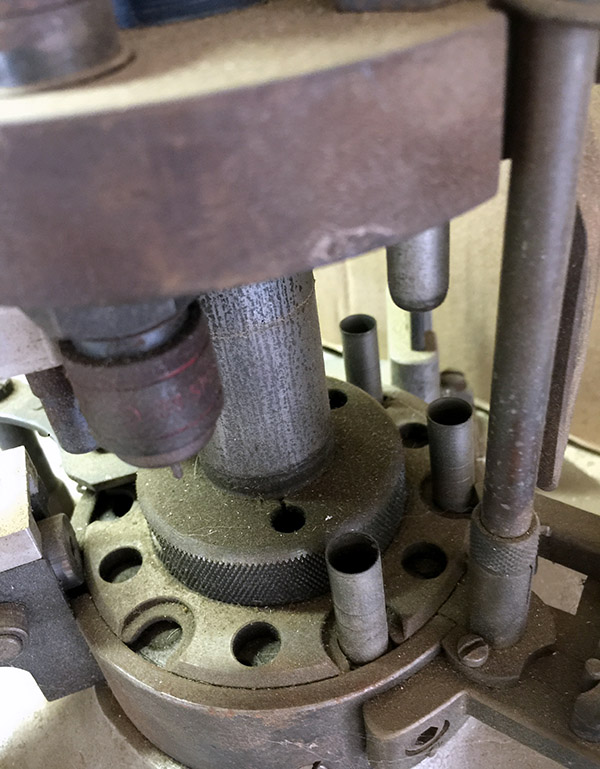
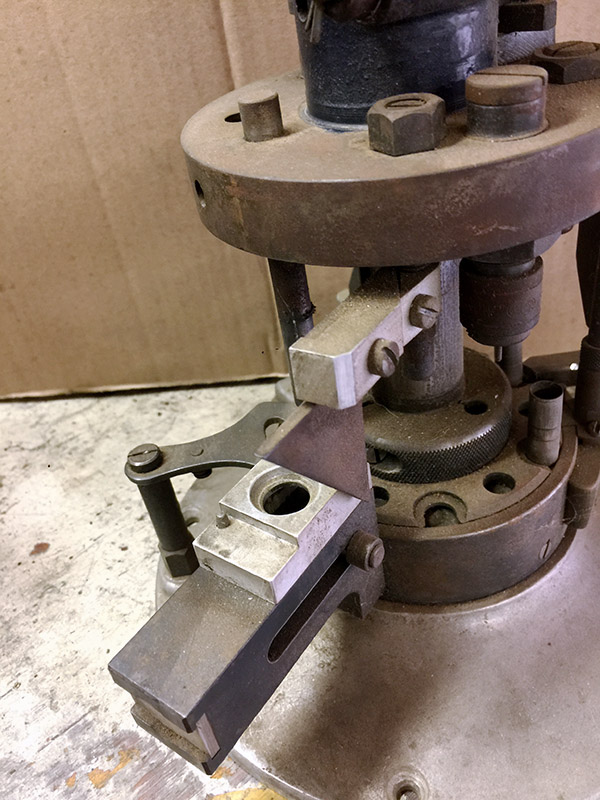
This Star is set up for .38 Special and .357 Magnum (both cartridges take the same dies), and there are still a few cases in the machine from who knows when. You can see how they index into the plate, and it’s that plate that advances with each stroke of the lever.
The photo above shows the case feeding mechanism. I haven’t attempted to clean it up or actuate the press yet. What you see is exactly how it came home with me.
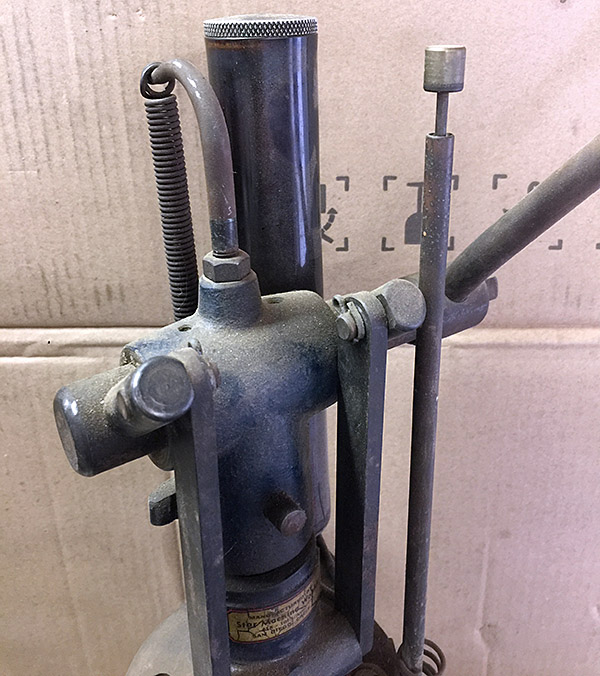
The big tube behind the lever and head is the powder container, and the narrow tube to the right is (I think) the primer dispenser.
I’ll start cleaning the Star this week, and once I’ve got it cleaned and lubed I’ll do my best to understand how it operates. I’m not nearly as mechanically talented as Joe Gresh, so this resurrection will probably take a while. But I’m going to enjoy the ride, and I think you will, too. Like we always say: Stay tuned.
Boy oh boy, we’ve got cool stuff to link to, like our Resurrections page and our Tales of the Gun page. And hey, if you don’t want to miss any of it, be sure to subscribe to the ExNotes blog. We’re running a special this month, and if you sign up now, it’s free!
I like fancy walnut. I won’t buy a gun unless it has exceptional wood and it’s in chambered in a round I already shoot (I don’t want to buy new dies and components, and with the exception of .22 Long Rifle, I only shoot what I reload). On rare occasions I’ll come across a rifle with wood so exceptional, though, that I’ll set aside my caliber rule. This is a story of one such rifle: A Kimber 84 Classic Select chambered in .257 Roberts.
The Kimber “Select” designation means the rifle has been selected for the figure in its stock, but I’d seen any number of Select Kimbers with mediocre wood. That’s not the case here, though. The two photos directly below were straight from the Gunbroker.com ad, and I’d never seen one as beautiful as the auction photos indicated.
I knew I wanted the rifle, but I was a bit skeptical because I’d talked to a guy at the range with a .257 Roberts Kimber. When I asked him how it shot, he just looked down and shook his head. “With that pencil weight barrel, it’s hard to hold 3 inches,” he said. “Good enough for deer, I guess.”
But still, that wood. When I saw those photos above online, I called the store behind the Gunbroker ad. “Is it really as nice as the pictures?” I asked.
“We were stunned when we opened the box,” the guy at the other end said, “so the answer is yes. We’ve never seen one like it.”
That cut it for me. The rifle had a “buy now” price posted on Gunbroker, and that’s what I did. The time to buy something exceptional is when you see it. I suspect if I had let the auction for the Kimber run its course, the bidding would have taken the price well north of the buy now number.
I was a little leery of the .257 Roberts cartridge having had zero experience with it, but everything I read about it was good. Ned Roberts (a gun writer and wildcat cartridge developer in the 1920s) necked down the 7mm Mauser round to .25 caliber (the actual bullet diameter is 0.257 inch). Remington added legitimacy to the cartridge by offering it in 1934. Folks say it’s perfect for hunting everything from groundhogs to deer. All that sounded great, but I remembered that guy with his .257 Bob at the gun club. I need not have worried, though. You’ll see why in a minute.
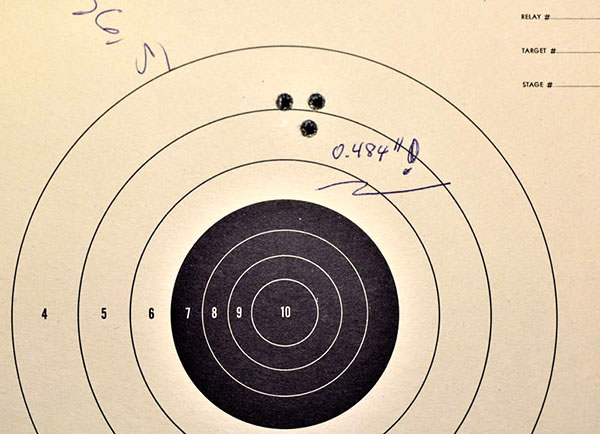
So how did the Kimber shoot? In a word, it was fantastic. How about sub-half-minute groups the first time out?
The secret sauce for the Kimber is 36.5 grains of IMR 4320 propellant under the 100-grain Sierra jacketed softpoint bullet (their No. 1620 bullet). My Lyman manual lists a propellant range for that bullet of 36.0 to 40.0 grains. I had three loads prepared that went up to 38.0 grains, but I found the 38.0-grain load too hot (the bolt was difficult to open). You should always start low and work up, and I had just proven that. Every rifle is different (even when they are identical), and 38.0 grains was too hot in my rifle. The 36.5-grain load was the Goldilocks load: It was just right.
More beautiful wood and secret sauce reloading recipes? You can read them right here!
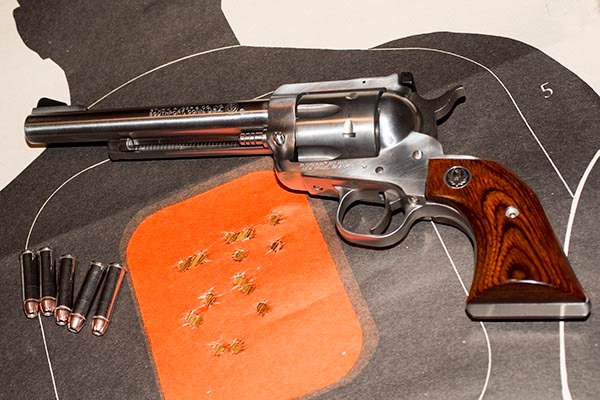
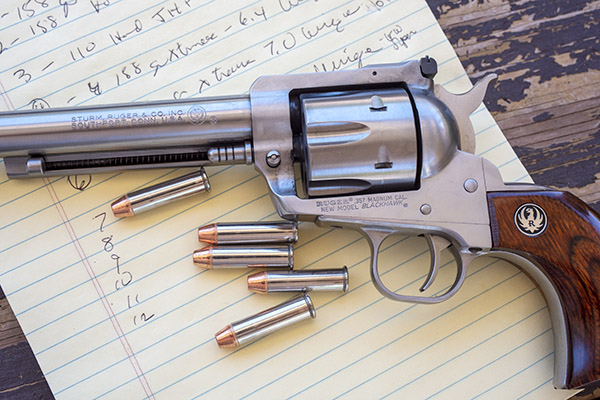
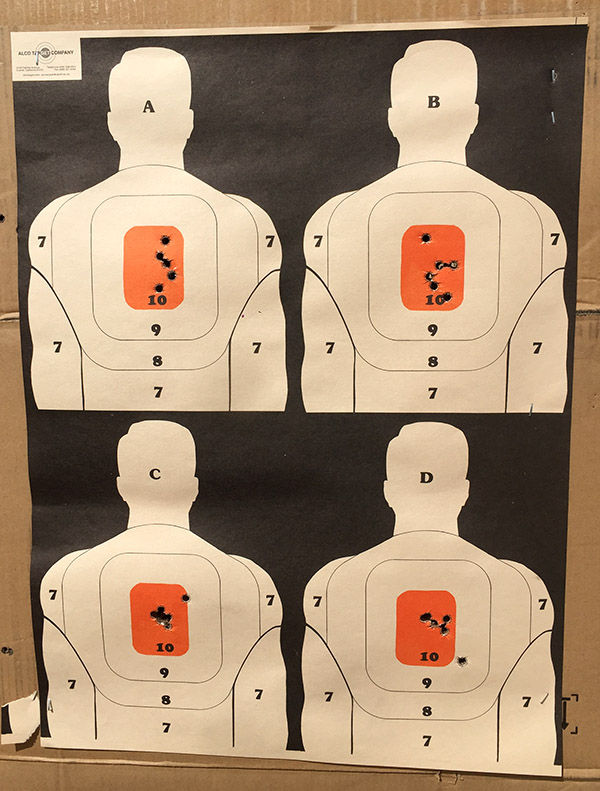
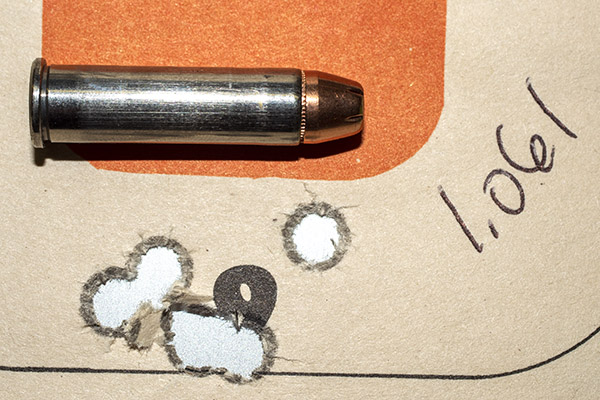
A favorite load that seems to work well in any .357 Magnum revolver, including my stainless steel Ruger Blackhawk, is 15.7 grains of Winchester’s 296 propellant and the Hornady 158-grain jacketed hollow point bullet. I use standard rather than magnum primers. This was a 25-yard target.
The .357 Ruger Blackhawk
Ruger’s Blackhawk is an iconic firearm, one that’s been in production since the 1950s in one form or another. I bought my first one in a department store in Texas for under a hundred bucks back in the mid-1970s, and I’ve bought and sold several since. I wish I had not sold any of the Blackhawks.
I’ve owned a few .357 Magnums over the years…Rugers, a couple of Model 27 Smiths, a Model 28 Smith (remember that one?), a Model 19 Smith, and a Model 65 Smith. I’ve owned a couple of Colt Pythons, too. The Pythons were nice, but not nice enough to command the premium prices they pulled in the 1970s, and certainly not nice enough to pull the exorbitant amounts they sell for today. The Smiths were accurate, but they didn’t hold up under constant use with magnum loads. I had a new Model 27 that I wore out in a couple of seasons in the metallic silhouette game; it suffered from extreme gas cutting under the top strap and a cylinder that sashayed around like an exotic dancer in a room full of big tippers. The Ruger Blackhawks seem to last forever.
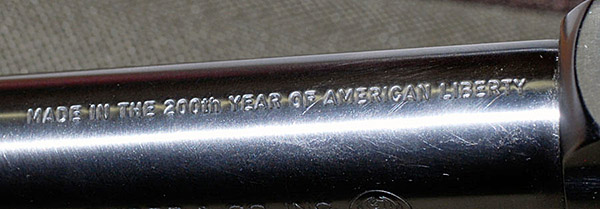
Every Ruger firearm manufactured in 1976 carries the 200th year bicentennial stamp, just like the one on my 200th year Blackhawk. On my gun, the liberty scrollmark is on top of the barrel.
I’m down to one .357 Magnum now and it’s a 200th year stainless steel Blackhawk with a 6 1/2-inch barrel. It’s one of my favorite revolvers and it’s not for sale (it never will be; I learned my lesson about letting good guns get away). I have a few favorite .357 Magnum loads I’ve used over the last 50 years. I thought it might be a good idea to document how they did in the Blackhawk, try a few more to see how they do, and share it all with you here on the ExNotes blog. I guess this is the appropriate place for the disclaimer: These are loads that work well in my Blackhawk. You should never just take these loads (or any others from the Internet) and simply run with them. Always consult a reputable reloading manual (I like the Hornady and Lyman manuals best). Always start with lower charges and work your way up, looking for any signs of excess pressure, and go no higher if you see signs of excess pressure. Okay, so that’s out of the way. Let’s get to the good stuff.
Last week’s .357 Magnum testing at the West End Gun Club.
.357 Magnum Accuracy Loads
I’ve played with a lot of different .357 Magnum loads over the years. I have a few favorite .357 Mag loads that have been superbly accurate in any of the .357 sixguns I’ve owned. That’s a bit unusual because frequently a load that is accurate in one gun won’t be accurate in another, but that rule doesn’t seem to apply here. The loads I like have worked well for me in any .357 I’ve ever shot. I verified these loads in my Blackhawk with this latest round of testing, and like I said above, I explored a few more loads.
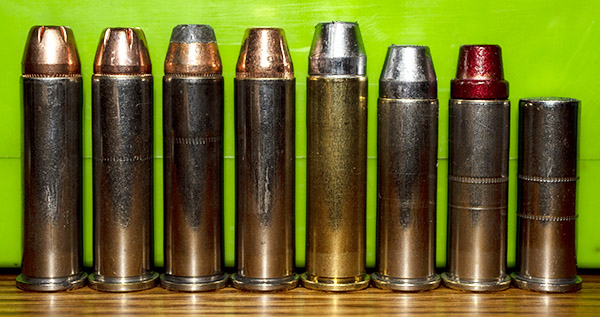
A few of the loads tested for this blog. From left to right, the first five are .357 Magnum cartridges and the last three are .38 Special cartridges (you can fire .38 Special rounds in a .357 Magnum handgun). The bullets (from left to right) are the 110-grain Hornady jacketed hollow point, the 158-grain Hornady jacketed hollow point, the 158-grain Hornady jacketed flat point, the Xtreme 158-grain plated flatpoint, a cast 158-grain flatpoint, a cast 158-grain flatpoint in a .38 Special case, a powder-coated 158-grain semi-wadcutter in a .38 Special case, and the Missouri 148-grain double-ended wadcutter in a .38 Special case.
So, with the above as background info, let’s get into the loads. I’ll start with one of the standard “go to” .357 Magnum loads. That’s the 158-grain cast semi-wadcutter bullet (the Keith-style) over 7.0 grains of Unique. This is not the hottest .357 load (it’s a mild-recoiling .357 Magnum load), but it’s hot enough, it’s very accurate, and it’s relatively flat shooting. I have a guy who casts 158-grain flatpoint bullets for me and I like those with 7.0 grains of Unique even better than the semi-wadcutter bullets. The load is very consistent, and with the same zero and six o’clock hold I use at 50 feet (seen in the target below), I pretty much hit right on target at 25 yards, 50 yards, and yep, even at 100 yards. I was hitting a steel gonger last week at 100 yards consistently with this load. My shooting buddies were impressed, and after all, that’s what a lot of this is all about. This is a good load.
A 50-ft target with the .357 Blackhawk using 158-grain cast flatpoints with 7.0 grains of Unique. Like they say, this is close enough for government work.
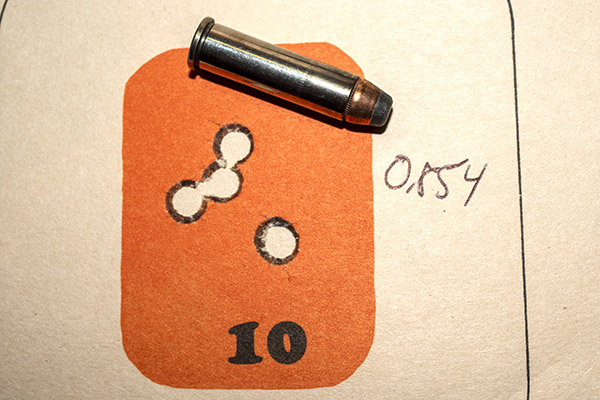
For hotter .357 Magnum loads, any of the Hornady 158-grain jacketed bullets (hollow points, flat points, and full metal jacket flat points) work superbly well with 15.7 grains of Winchester’s 296 propellant. These loads have a distinctive bark, high velocities, snappy recoil, and they are superbly accurate.
15.7 grains of WW 296 and the 158-grain Hornady jacketed flat point resulted in the best group fired in this test series. Two shots went through the hole in the lower right.
Another long time favorite load is a bit unusual but it’s accurate as hell. That’s the 110-grain Hornady jacketed hollow point and a max Unique load (10.0 grains of Unique, as listed in a Hornady reloading manual from the 1970s). I first tried this one 40 years ago when I had a Colt Python and I was impressed with its accuracy. I tried it again in this test series and the results were similarly impressive. It’s probably the fastest load I tested because of the max load and the light bullets. My old Hornady manual indicates the 110 grain Hornady bullet with 10.0 grains of Unique exits the muzzle at 1450 feet per second. That’s fast.
If light bullets and high velocity float your boat, try this one (but work your way up to it): 10.0 grains of Unique with Hornady’s 110-grain jacketed hollow point.
Plated Bullets: Are They Any Good?
Surprisingly, the 158-grain plated flatpoint bullets I tested didn’t do well with any charge of Unique, and in the past, they have performed very poorly with 296 (the bullets frequently shed their plating in the bore). These plated bullets are offered by Berry and Xtreme. These are not jacketed bullets; the copper plating is chemically applied and the coating is very thin. I did get one decent showing with a lower-end charge of IMR 4227 propellant, but given the choice, I’d go for a plain cast bullet rather than plated bullets. You may feel differently. Please leave a comment here on the blog if your experience is different than mine.
Powder Coating and Paint Fumes
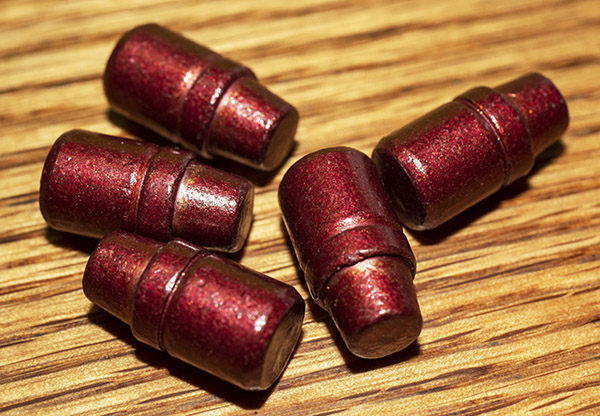
I tried powder-coated bullets last week, too, to see how they would perform. Powder coating is a concept that’s been around for a few years as an alternative to lubing cast bullets. I found that accuracy was more or less on par with lubed bullets, but not really any better. The powder-coated bullets look cool (the cartridges kind of look like lipstick). When I fired several powder-coated bullets fairly quickly, I could smell the paint. Some folks swear by these bullets and love them for IDPA and similar competitive pistol events. For me, performance was the same as conventional cast bullets. Your mileage may vary. Leave us a comment if you feel differently.
Powder-coated 158-grain semi-wadcutter bullets. I found their accuracy to be comparable to conventional cast and lubed bullets.
A Metallic Silhouette Load
When I shot metallic silhouette competition I used a 200-grain cast roundnose bullet in my .357 Magnum Model 27 Smith and Wesson. That bullet worked extremely well, and because of its heavy-for-caliber nature and high length/diameter ratio, it carried a lot of energy downrange. It was superbly accurate with 12.4 grains of 296. But finding those bullets is next-to-impossible today. It used to be a standard .38 Special bullet for police duty, but very few (if any) departments carry .38s today, and nobody seems to stock the 200-grain bullets. Maybe I need to get back into casting. I sure loved that 200-grain bullet in the .357 Magnum. They actually made the .357 Magnum work better on the 200-meter rams than a 240-grain .44 Magnum. The .44 Magnum wouldn’t consistently take down the rams; the 200-grain .357 Magnum did so every time.
.38 Special Loads
One of the great things about a .357 Magnum handgun is you can also shoot .38 Special loads in it. I guess that’s a good thing, as the .38 Special cartridges have lighter recoil. I tried three .38 Special loads with three different bullets. The accuracy load in .38 Special is a 148-grain wadcutter bullet seated flush with the cartridge mouth over 2.7 grains of Bullseye propellant. That load is super accurate in my Model 52 Smith and Wesson target pistol, and it did okay in the Ruger, too. I’ve always believed that a .38 Special cartridge would never be quite as accurate in a .357 Magnum handgun because the bullet has to make a longer jump to reach the rifling, and my testing last week did nothing to change my mind on that count. The .38 Special does okay in a .357 Magnum handgun, but I believe the best accuracy resides in a .357 case.
.357 and .38 Accuracy Testing Results
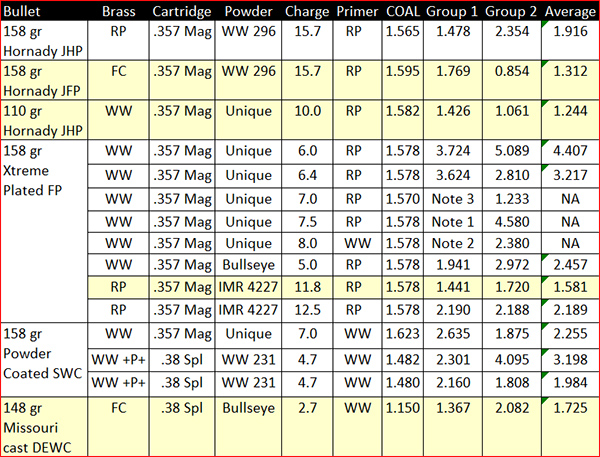
Here’s a chart summarizing my accuracy results:
Ruger Blackhawk accuracy testing results. All testing was with a two-hand hold at 50 feet. All groups are five shots. All loads (except the plated bullet loads) were crimped. All cast bullets were sized to 0.358. Note 1: Two shots went off paper. Notes 2 and 3: One shot went off paper.
There you have it. If you have a load that works well, please leave a comment. We’d love to hear from you.
The new Henry Single Shot, brass frame .45 70 rifle. Henry makes a beautiful rifle.
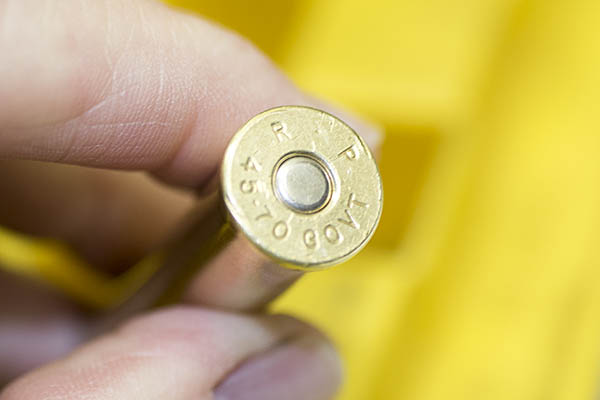
I’m using the time before I pick up my new Henry rifle to prepare the reloaded ammunition I want to test for accuracy. You will recall that in an earlier blog we discussed the three .45 70 load levels shown in modern reloading manuals. As I mentioned in that earlier blog, I use the loads intended for the 1873 Trapdoor Springfield. Those loads were powerful enough to take down all kinds of critters back in the 1800s, and in developing loads for other .45 70 rifles, I’ve found these to be fun to shoot and accurate.
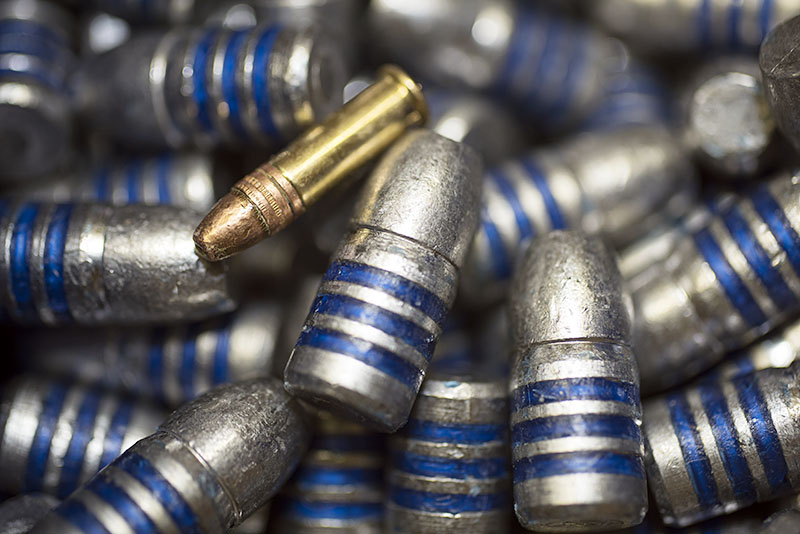
Missouri 405-grain cast .45 70 bullets. These have proven to be very accurate in other .45 70 rifles. I’m trying these and two other bullets in the Henry. The .22 Long Rifle cartridge you see here didn’t come with the Missouri bullets; I added it to give you an idea of just what a monster the .45 70 cartridge is.
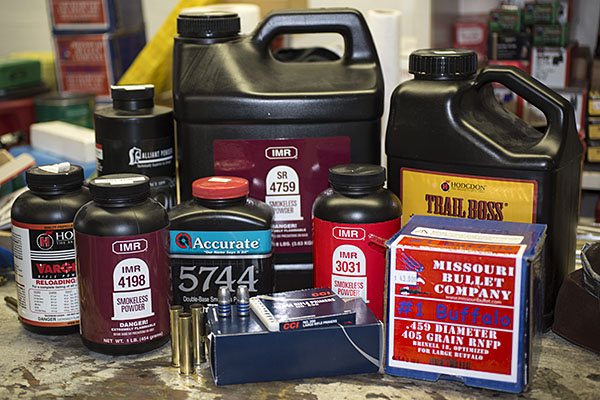
My loads are based primarily on the components I have on hand and loads I’ve known to work well in the past. Powders include SR 4759, IMR 4198, IMR 3031, 5744, Varget, and Trail Boss. Bullets include the Remington 405-grain jacketed soft point, the Hornady 300-grain jacketed hollow point, and the Missouri 405-grain cast roundnose.
A photo showing some of the components to be used in this test. When loading, I would never have all of this stuff on the reloading bench, and in particular, I would never have more than one powder on the bench at the same time. The risk of mixing powders is too great. If you have more than one powder container on the bench, it’s very easy to pour the remaining powder in the dispenser into the wrong container (don’t ask me how I know this). When that happens, the only prudent thing to do is throw the mixed powder on the front lawn (it makes good fertilizer).
I like all of the bullets I listed above, but I particularly like the Missouri bullets. The Missouri cast bullets seem to always be available, they are relatively inexpensive, and they are accurate. I’m expecting to see great accuracy from these in the Henry, as they shoot well in the Ruger and the Marlin. The 405-grain Missouri bullets are accurate in the Chiappa 1886, too, but that rifle’s stock design and buttplate make the recoil painful when shooting the heavier Missouri bullets.
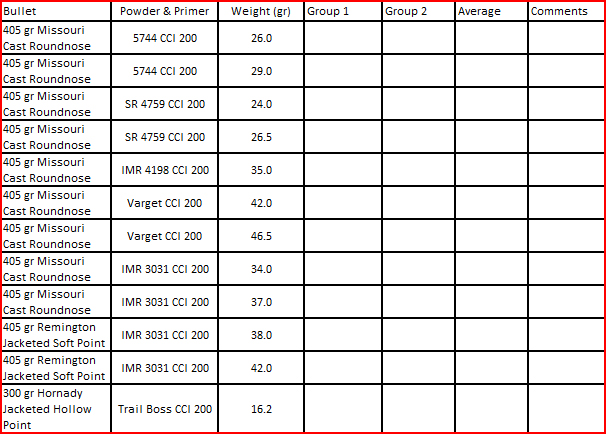
Here are the .45 70 loads I will test in the Henry:
When testing for accuracy, it helps to keep things organized. I’ll bring this table to the range with me and record my results as soon I retrieve the targets. All loads will be fired using open sights at 50 yards.
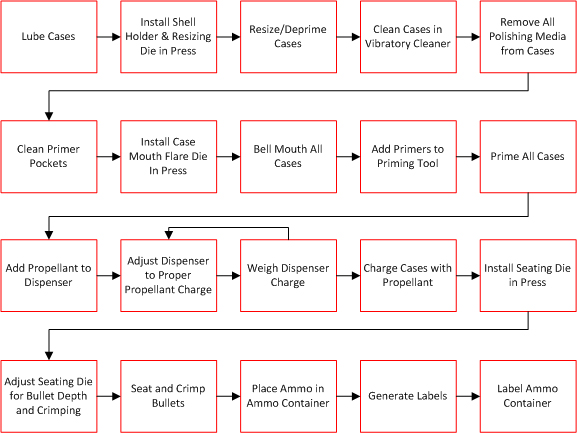
For a more in-depth reloading process overview, I invite you to review our earlier series on loading .45 ACP ammunition. The .45 70 reloading process is very similar to loading handgun ammo. That’s because the .45 70 is nearly a straight-walled cartridge, so the steps are the same. This is what is involved in reloading .45 70 ammo:
The reloading process. It looks complicated, but it’s very intuitive. Most folks who reload find it as enjoyable as shooting.
I use mostly RCBS or Lee reloading dies for all of the cartridges I load. Both are good companies, and both offer superior customer service (if you ever need it, which has only occurred a couple of times for me). I’ve been reloading .45 70 ammo for close to 50 years now, and I’ve been using the same set of RCBS dies the entire time.
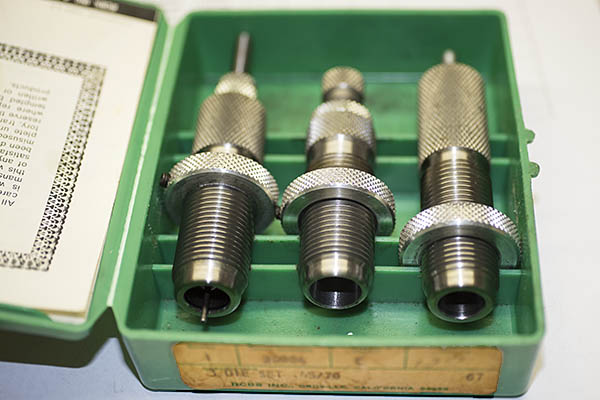
A three-die RCBS set. The first die (on the left) deprimes and resizes the fired case to its original diameter. The case has to be lubricated for this step, or else it will stick in the die. The second die is called the expander die. It expands the upper portion of the cartridge case and, if adjusted to do so, adds a flare to the case mouth. The third die (on the right) is the bullet seating and crimping die. It can be adjusted to change the depth to which the bullet is seated, and to add a crimp if you wish to do so.
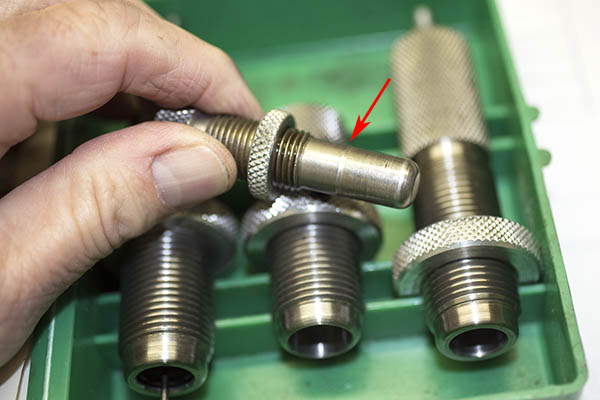
The expander die (the one in the center of the above three dies) is the one that flares the case mouth. It contains a threaded insert with a step in it to apply the bell mouth to the case.
In this photo, the case expander has been removed from the die to show the diametral step. It is this step that adds a flare to the case mouth.
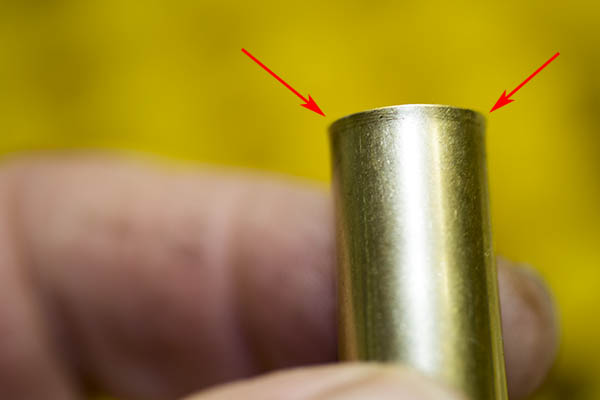
This is what the case mouth should look like after it has been flared. You don’t want to overdo this step. You just want to get enough of a flare to allow the bullet to get started in the case.
A .45 70 case with a flared mouth. We add the flare to allow the bullet to enter the case with no shaving of the bullet.
After the case has the flare applied, it’s time to clean the primer pockets and then prime each case. I use another RCBS tool to clean any combustion residue from the primer pocket (see our earlier tutorial on loading .45 ACP ammo), and then I use a Lee priming tool to seat the primers.
The Lee priming tool. This is another tool I’ve been using for five decades. It’s a much better way to prime cartridge cases.A CCI 200 large rifle primer in place, ready to be seated in a cartridge case. The .45 70 cartridge requires a Lee No. 8 shellholder, shown in place in this photo.A .45 70 case in the Lee priming tool. Compressing the handle (shown to the right of the priming tool barrel) forces the primer into the case. You do this one at a time for each case.A freshly primed .45 70 cartridge case.
After all the cases have been cleaned, flared, and primed, it’s time to add propellant. I use my RCBS scale along with a powder dispenser to add the right amount of powder to each case. To get the correct amount of powder, I always consult a load manual. I’m showing you different charge weights in this blog, but DO NOT rely on what I’m telling you (or what you read on the Internet from other people) for this information. Always consult a reloading manual. Several reloading manuals are available; I prefer the Lyman manual and it’s the one I use most often. Most of the other manuals are either from bullet manufacturers or propellant manufacturers, so they list only their components. The Lyman manuals are not restricted to a single brand of bullets or powders, as Lyman does not manufacture bullets or powders. Lyman does a good job, I think.
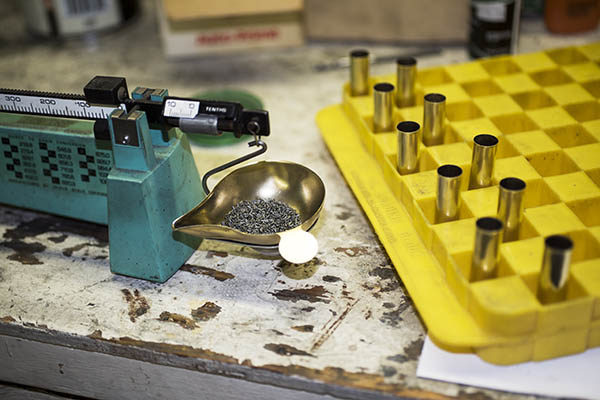
My RCBS powder scale, the reloading tray, and ten .45 70 cases waiting for their propellant charges.
When I load different test loads as I’m describing in this blog, I’ll charge and complete each group separately. Typically, that’s ten cartridges in a group.
Once the cases have been charged with propellant, it’s time to seat and crimp the bullet. I typically use a light crimp for the .45 70. Crimping involves bending the flared case mouth into a crimping groove (sometimes called a cannelure) on the bullet. You crimp a cartridge for three reasons: To prevent the bullet from being forced further into the cartridge case if it is fed into the chamber automatically (as occurs with, say, a 9mm or .45 ACP cartridge), to prevent the bullet from backing out of the case due to the recoil of other cartridges (as might occur in a revolver or a rifle magazine), and to hold the bullet in place when the primer first fires (this allows the flame front to build to a consistent pressure in cartridge prior to driving the bullet down the bore). It’s that last reason that I’m most interested in here. It should make for a more accurate cartridge. Theoretically, neither of the first two reasons is a consideration for a single shot rifle.
A Missouri bullet on top of a charged .45 70 case, ready to be run into the bullet seating die in the RCBS Rockchucker press.
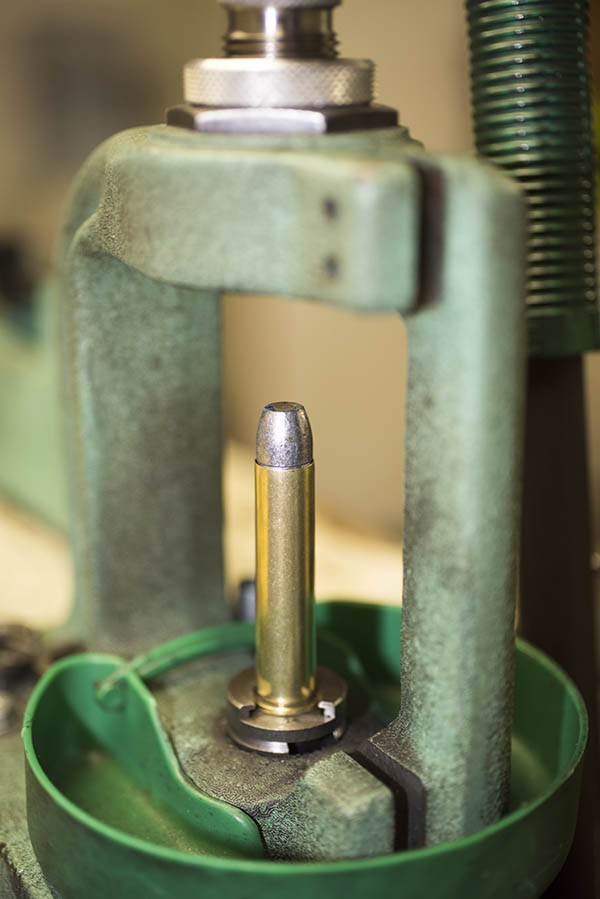
Seating the bullet and crimping it is a bit of a dance. You have to get the bullet seated to the right depth, and then you have to apply the crimp. We use the third and final die in a three-die set to accomplish both. I screw the bullet seating portion of the die fairly far into die initially and then I screw the die into the press to get the bullet seating depth where I want it. In this case, I want the top of the brass case to be nearly even with the top of the bullet’s crimp groove. Then I back the bullet seat all the way up in the die, and screw the die body into the press such that it forms the crimp (there’s a tapered decreased diameter in the die insider diameter that forms crimp). Once I have the crimp where I want it (and the amount of crimp I want), I then screw the bullet seater all the way such that it contacts the bullet. I then make sure everything is jake on the next round (you know, the same crimp and the same cartridge overall length), I make any required small adjustments, and then I lock everything down with the die’s two locknuts and load the remaining cases.
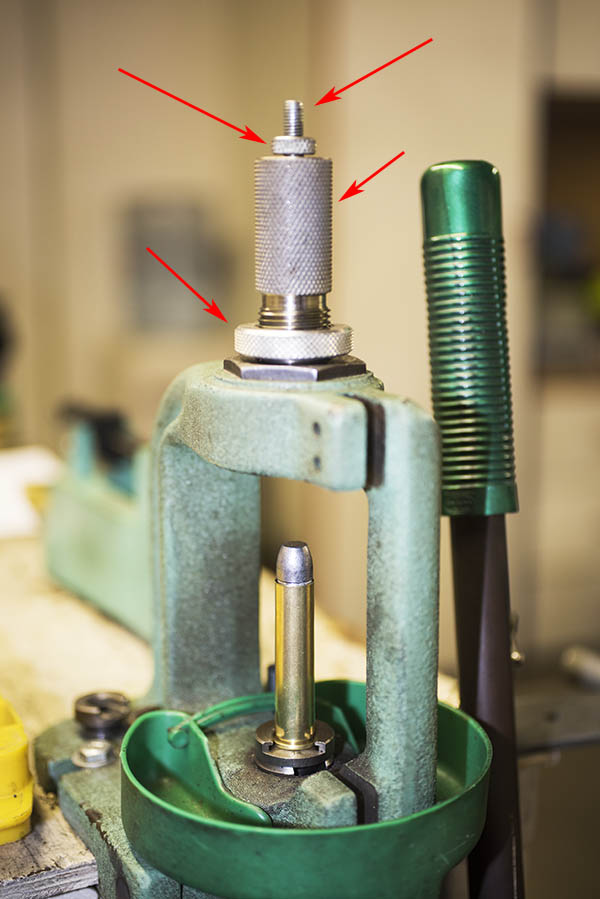
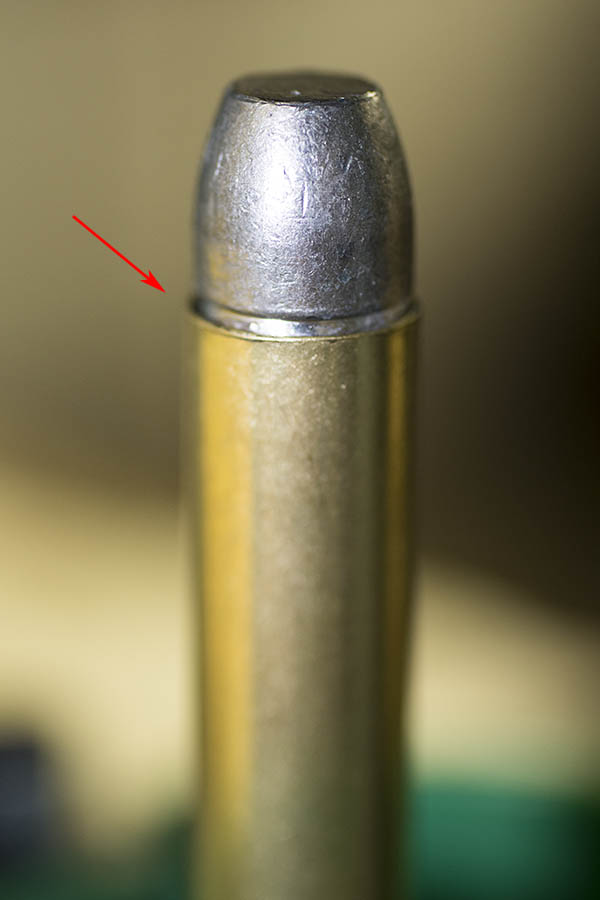
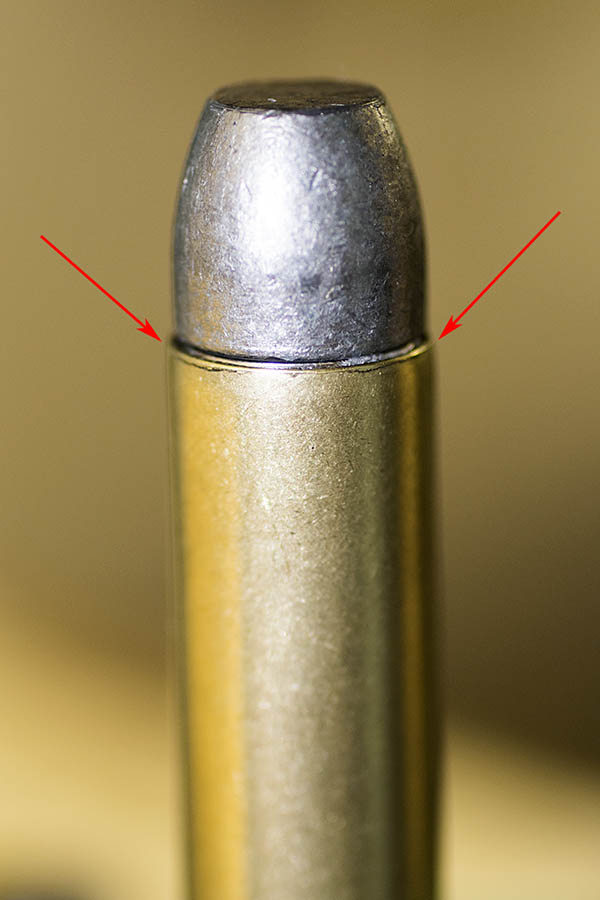
Adjustments on the seating and crimping die. The small-diameter threaded shaft controls fine adjustment of the bullet seating depth. Turning the main die body into or out of the press controls coarse bullet seating depth and crimp. The two locknuts (denoted by the arrows on the left) lock the bullet seating shaft and the die body in place.The Missouri bullet nearly fully seated in the case, but not yet crimped. I’ll seat the bullet just a bit deeper, and in the last few thousandths of an inch on the press stroke, the upper edge of the cartridge case will be crimped by the die around the bullet.A seated and crimped Missouri bullet in a .45 70 brass case. When I bellmouth the cases, I only open them up just enough to allow the bullet to start into the case. When I crimp, I only crimp a little bit. This minimizes working of the brass around the case mouth. Loading at the Trapdoor Springfield levels as I do, and using this minimal amount of opening and then crimping the brass, results in long case life. These cases were purchased in the 1970s and I’m still using them.A completed round. This .45 70 cartridge is ready chamber and fire. It’s a big cartridge.
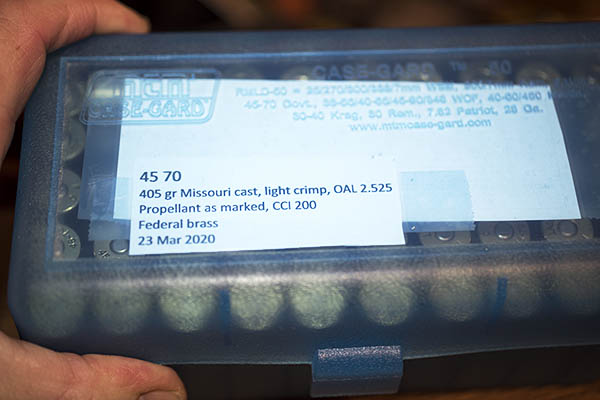
After I’ve done all of the above, I immediately label the packaged, reloaded ammo so that I know what I have. I can’t rely on my memory and do this later; I always perform the labeling operation as soon as the reloading operations are complete.
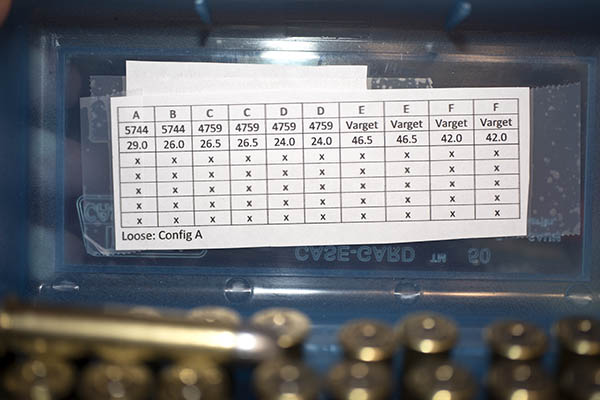
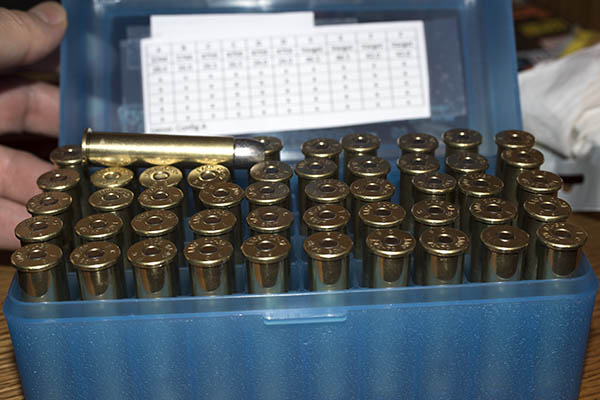
A box of 50 .45 70 cartridges labeled and ready to take to the range. I always label my loads as soon as I finish them.Because these are cartridges loaded differently for accuracy testing in the new Henry rifle, I included a map inside the cartridge container to identify how each group has been loaded.Ready to go to the range. Reloaded cartridges are less expensive than factory ammunition, and I will be able to find which combination of components performs with the greatest accuracy in my new Henry rifle. With factory ammo, you pay more and you get what you get in terms of accuracy.
There you have it. I have all the .45 70 ammunition I want to test loaded, boxed, labeled, and ready to go to the range. Now all I have to do is take possession of my new Henry, head out to the West End Gun Club, and see what works best. You’ll get to see it, too, right here on the ExNotes blog.
Check out our earlier Henry Single Shot stories here:
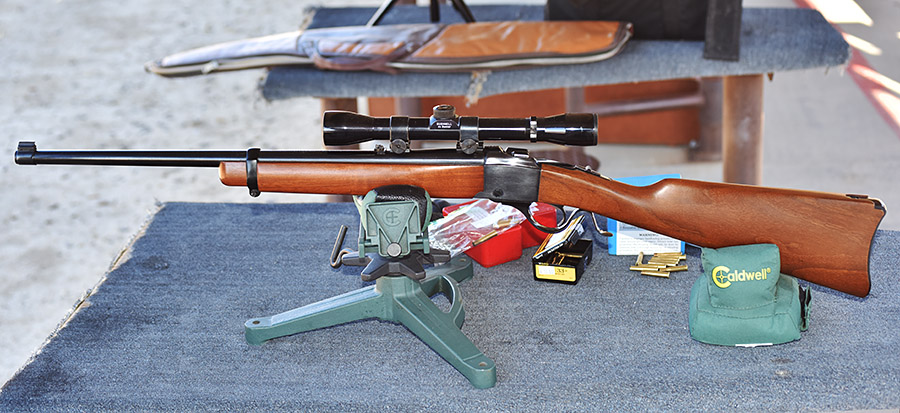
I’ve written about the Hornet before (and I’ll give you a link to that past blog at the end of this one). The point of today’s writeup? It’s about accuracy and a few different loads for the Hornet in my single-shot No. 3 Ruger. I like the idea of a single-shot rifle and I love the .22 Hornet cartridge. The .22 Hornet was the world’s first centerfire .22 cartridge, and in its day, it was a real hot rod. Velocities range between 2400 and 2900 feet per second (sometimes a little more, depending on the load). Recoil and muzzle blast are nearly nonexistent compared to other centerfire cartridges, and it’s a fun cartridge to shoot.
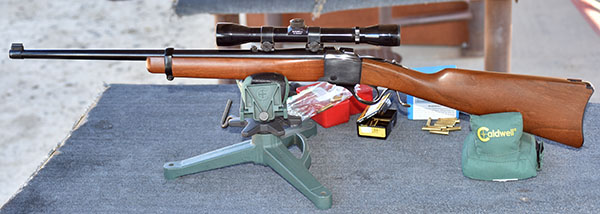
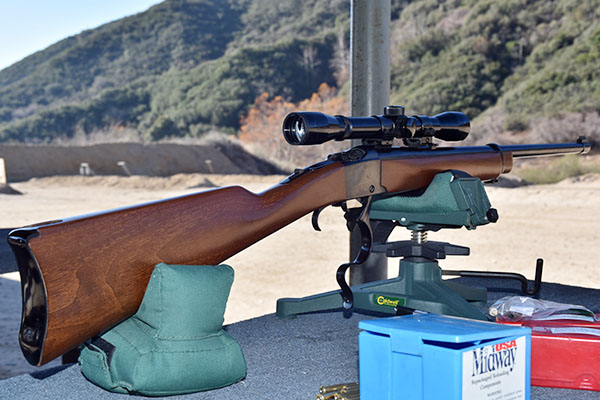
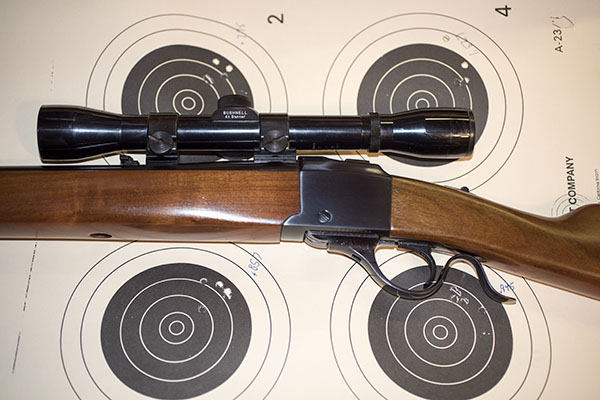
A Ruger No. 3 in .22 Hornet. It has a period-correct inexpensive Bushnell 4X scope, which is good enough for me. My rifle is in near-new condition.
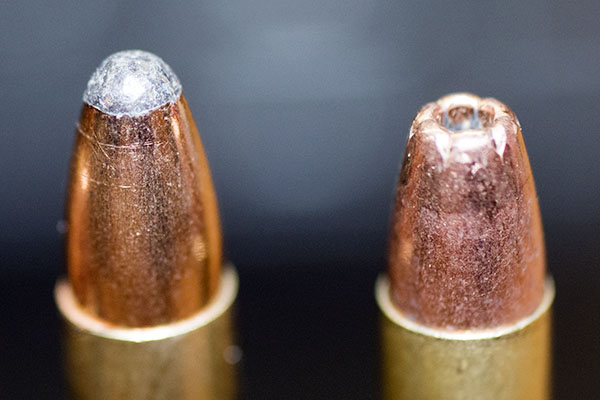
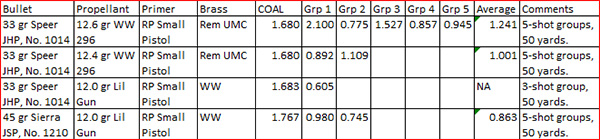
The idea for this blog started when I saw three boxes of Speer 33-grain hollow point bullets a couple a few weeks ago at my reloading supply depot. They were inexpensive (just $10 a box), so I bought all three. I hadn’t tried the light Speer bullets and I wanted to see how they compared to an old favorite, the 45-grain Sierra Hornet bullet. I also wanted to try a propellant that I had purchased previously (Lil Gun) and compare it to my favorite Hornet propellant (Winchester 296). And my good buddy Tom recently gave me a bunch of old .22 Hornet ammo that I shot up on a prior outing, so I had a good supply of Hornet brass. It all came together a week or two ago, and the result was a hundred rounds of reloaded .22 Hornet ammo in various load configurations.
The Sierra 45-grain jacketed soft point bullet on the left, and the Speer 33-grain jacketed hollow point bullet on the right.
The Ruger No. 3 was the low-alternative to the fancier Ruger No. 1 back in the day. The No. 1 had more figured walnut (in the 1970s, and maybe today, too), the No. 1 rifles with iron sights had fancier sights and a cool quarter rib, the No. 1 stock had a pistol grip and a rubber recoil pad, and the No. 1 had hand-cut checkering. The No. 3 was a simpler gun, with plain walnut, an aluminum (later plastic) buttplate, no checkering, and a less-fancy iron sight setup. In the 1970s, the No. 3 suggested retail price was $165, and you could buy them brand new all day long for $139. The No. 1 retail price was $265, and those could similarly be had for $239. Oh, how times have changed. New No. 1 Rugers sell for something like $1500 today, and Ruger stopped making the No. 3 altogether. It’s likely (in my opinion) that at some point in the not too distant future, Ruger will drop the No. 1, too. That’s okay; it will make mine more valuable. Not that I’m planning to sell anything. It just feels better knowing the value is going up.
Ruger manufactured the No .3 from 1973 to 1986. The very first one was chambered in .45 70 (a classic cartridge, to be sure), and then Ruger added two more classics: The .22 Hornet and the .30-40 Krag. Ruger built the rifle you see in this blog in 1978. Ruger No. 3 rifles can still be found on the used gun market, but these days they go for about the same price as a used No. 1, which is usually somewhere between $800 and $1000. Supply and demand, you know…they aren’t making any more No. 3 Rugers.
The Ruger No. 3 falling block action, with the lever open and the block in the retracted (or lowered) position.
The Ruger’s action is called a falling block because, well, it is. When you open the trigger guard/lever, the breechblock drops (it’s the silver thing you see in front of the trigger in the photo above), and that allows inserting a round in the chamber.
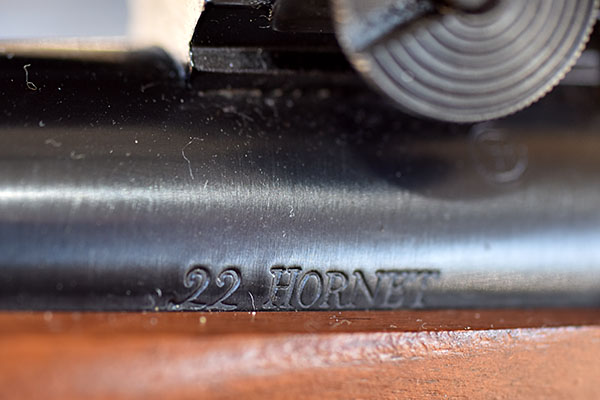
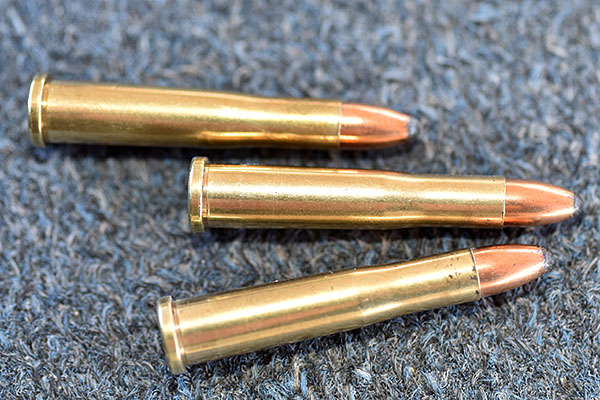
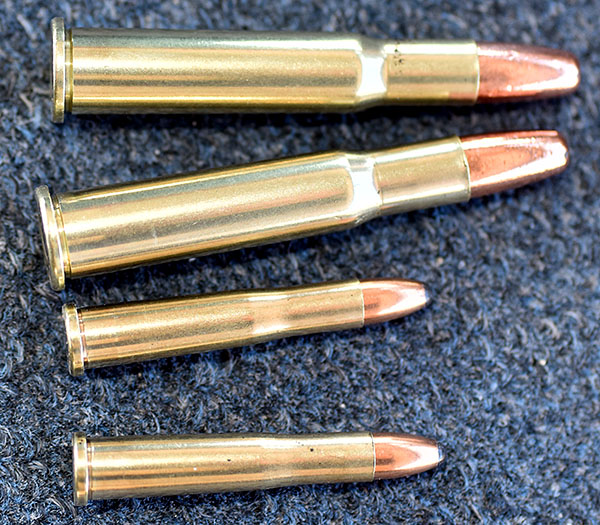
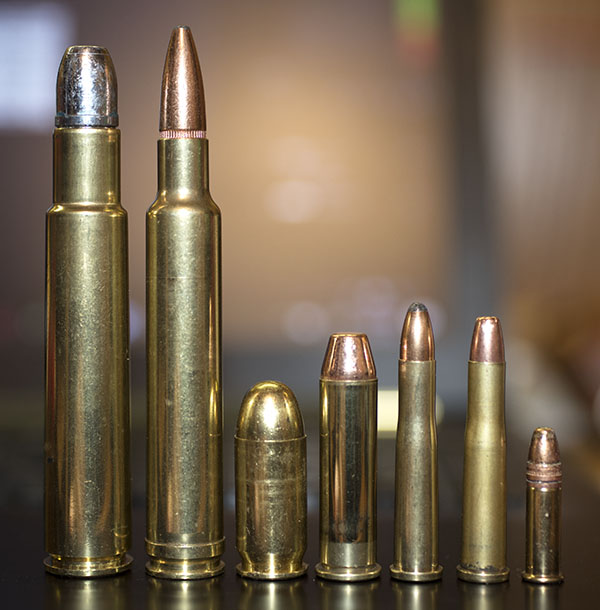
Ruger uses a distinctive font on its No. 1 and No. 3 rollmarks. This one is cool.The .22 Hornet is a cute round. These are loaded with 45-grain Sierra jacketed softpoint bullets.A sense of scale: .22 Hornet rounds next to a couple of .30 30 cartridges.Another sense-of-scale photo. From left to right, that’s a .416 Rigby cartridge with a 350-grain cast Montana bullet, a .300 Weatherby Magnum with a 180-grain jacketed softpoint bullet, a .45 ACP with a 230-grain jacketed roundnose bullet, a .357 Magnum with a 158-grain plated bullet, a .22 Hornet with a 45-grain jacketed softpoint bullet, another .22 Hornet with a 33-grain jacketed hollowpoint bullet, and a .22 Long Rifle with a 40-grain plated bullet.
The Hornet is fun to shoot, but it’s one of those cartridges that is tricky to reload (a couple of others are .30 Carbine and 9mm; they are challenging to reload for other reasons). Hornet brass is very thin (so you can’t reload it too many times and it’s easy to deform it when seating the bullet). It’s hard to get the bullets started straight during the seating operation, and the whole reloading process just takes a lot more finesse than does reloading most other cartridges. Everything is tiny. That being said, though, I like reloading Hornet ammo, especially when good groups are the result.
So how did it go? Not bad, I think. Here are the results:
The 33-grain loads show promise.
My testing wasn’t exhaustive, and I only shot at 50 yards on this outing. I tried a few new things with these tests. As mentioned above, the Lil Gun propellant and 33-grain Speer bullets were two of the variables, and both did well. I’d previously read that some shooters had better results using small pistol primers instead of small rifle primers, so tried that and it seems to be the case for me, too. The theory is that small rifle primers, combined with the Hornet’s small case capacity, may blow the bullet out of the case before the powder can get a good burn going. I don’t know if that’s the case or not, but the small pistol primers worked well for me.
The next steps for me will be to shoot these loads at 100 yards to see how the rifle does at that range. The scope on my rifle is an inexpensive Bushnell straight 4X and it’s quite a bit more clear at 100 yards (it’s just a little bit out of focus at 50 yards). We’ll see how that goes, and I’ll publish the results here. Stay tuned, my friends.