We’re starting a new feature here on ExhaustNotes.us called Tested To Destruction. TTD will be a life-cycle product test from purchase to the dumpster. You’ll not find so complete a product test anywhere else on the Internet, go ahead and look around. Due to the long test periods involved some of the products may be discontinued and no longer available. There’s not a lot we can do about that. One other note: By definition we are testing to destruction so all products will fail in the end. It happens to the best. Nothing lasts forever.
I first became aware of Rossi boots in Australia. Nearly every tradesman wore the things and the ones I spoke to raved about the classic, made in Australia boot. I was on extended leave in the outback and needed a tough boot for hiking and camping so I bought a pair of Rossi Enduras. The Rossies aren’t cheap (like me) but I splurged and who doesn’t love having boots named after the greatest modern-era motorcycle road racer?
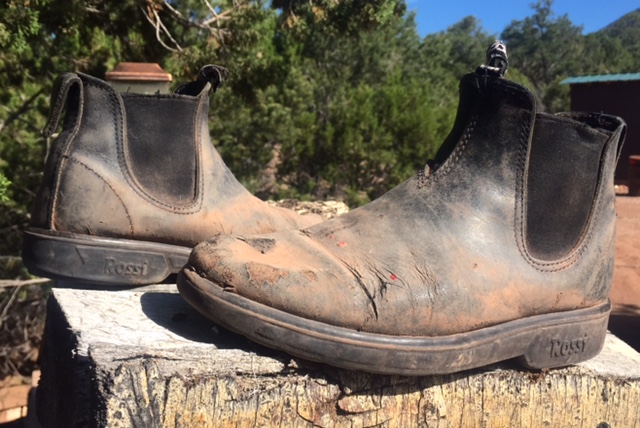
The Rossies were comfortable from Day One. No blisters or slipping, soft and flexible with pull tabs and elastic sides to make installation a breeze. No wonder the Tradies wore them. That first pair lasted through Australia and back in the States through several boat rewires.
In my real job I worked in very oily conditions. The bilge of a commercial fishing boat is full of slimy gunk. Unlike every other boot or canvas shoe I have purchased, the Rossi soles stayed firmly attached to the uppers. The Rossies easily outlasted four pairs of regular boots.
One thing that disintegrates after a couple years is the rubber liner inside the bottom of the boot. This liner is supremely comfortable when new and I guess you can replace it with another liner. This has happened with both pairs I’ve owned. When mine fell apart I pulled out the pieces and kept on pouring concrete. The boot is still comfy without the liner, just less so.
The boots in the photo are my second pair of Rossies and they have gone through the wringer on countless construction jobs. Imagine: 2 pairs of boots for over 5 years of hard use. I used to go through work boots every 6 to 9 months. My second pair, like the first, never came apart and I’m retiring them only because they look so bad people keep offering me money for a cup of coffee.
I wear these boots when riding motorcycles, dirt or street. The comfort is great and being able to easily slip them off on hot rides is so nice. I know slip-on boots may fly loose in a crash situation so save your breath: I make my gear choices for me. You make your gear choices for you. Anyway, Flat Earthers and Vaccine Deniers tell me it’s safer to be thrown clear of the boot in an accident.
You can buy Rossi boots online but make sure to get the ones made in Adelaide, Australia. They’re not very stylish and you can expect to pay a lot but it’s like you’re getting four pairs of boots for the price of one. There are several boots that look the same as Rossies but are lower quality. Shop wisely.
The finished product: Reloaded .45 ACP ammunition. This handcrafted ammo is tailored for my 1911, and it is much more accurate than factory ammunition. Our blogs on reloading will cover the equipment and components needed, and the steps involved, in reloading ammo for the .45 Automatic.
I’ve had a few requests for a blog on reloading. You know, not just favored loads for different cartridges, but how to go about reloading. I know it can be a bit intimidating if you’ve never done it, but (trust me on this), learning how to reload adds an entirely new dimension to shooting, and many of us view reloading as being as much fun as shooting. In fact, one of my friends often jokes about shooting…he says it’s what we do so we get to reload ammo again.
A very cool guy named Roy Johnson taught me how to reload when I was in the Army. I was assigned to Fort Bliss, Texas, and Roy ran the Rod and Gun club there. Roy was a colorful El Paso fixture, and they named the road to the Rod and Gun club Roy Johnson Lane when he died. I was 22 years old when Roy taught me how to reload, and I’ve been reloading ever since.
I thought I would approach this topic in two or three parts, with the first blog focused on the equipment and components you’ll need to reload, and a subsequent blog or two on the actual reloading process. I had to pick a cartridge, so I thought I would start with the first one I learned to reload: The .45 ACP.
With that as a backdrop, here we go…
Reloading reverses the process of firing a bullet, and reversing that process requires several pieces of equipment.
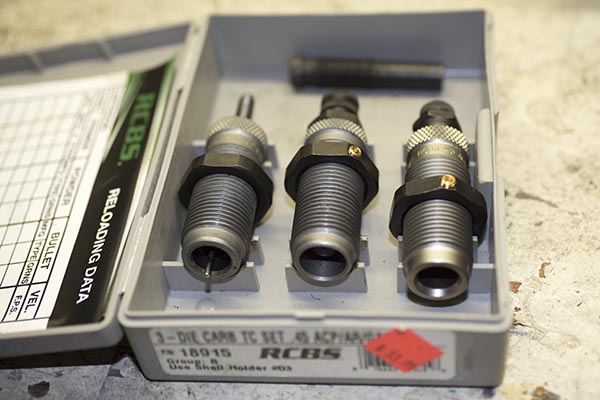
One part of the equipment list is the dies that force the fired brass case back into shape (the brass expanded during firing) and knock the used primer out of the case.
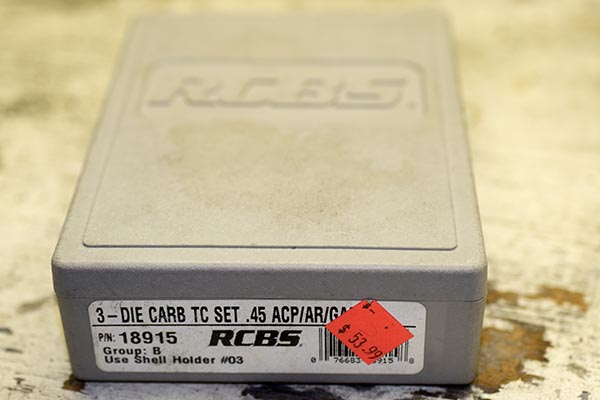
A set of RCBS carbide dies for the .45 ACP cartridge.A die set consists for a pistol cartridge typically includes three dies. From left to right, they are the resizing die (it sizes the brass case back to original dimensions and punches the primer out of the case), the expander die (it opens and flares the case mouth to accept the new bullet), and the seating die (it seats the new bullet in the case and removes the case mouth flare).
I stick with RCBS dies, as I’ve learned over the years they work best, but there are other manufacturers out there. I also use Lee dies for a few of the cartridges I reload (they are typically less expensive than RCBS dies, and they are as good). An added advantage of the Lee dies is that they include the shellholder with the die set, so you don’t have to buy a separate shellholder and pay extra for it. I don’t care for Hornady dies, but as they say, your mileage may vary. I’m the guy doing the writing here, so I’ll share my experiences and preferences, and I like RCBS and Lee. A new set of RCBS carbide dies are a little north of $50; Lee dies are typically $10 to $15 less than the RCBS dies (and like I said earlier, the Lee dies come with a shellholder).
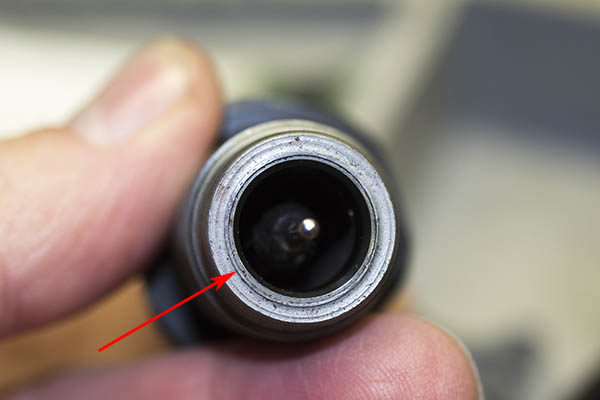
The business end of the carbide resizing die. The red arrow points to the carbide insert.
I use carbide dies for pistol cartridges. A carbide die has a super-hard carbide insert that interfaces with the brass case, and it allows you to squeeze the case back to its unfired configuration without having to lubricate the case first. The downside is that carbide dies are slightly more expensive than non-carbide dies. For straight-walled pistol cartridges, there are three dies in a set. We’ll discuss in more detail what each does in Part II of this series.
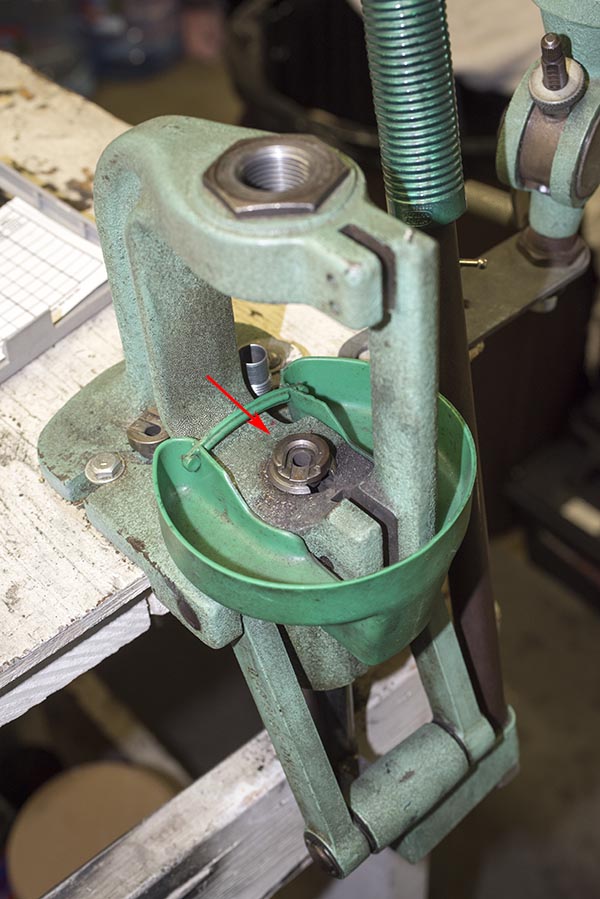
You will also need a reloading press and a shellholder for the brass cartridge case. I use an RCBS Rockchucker press I bought new nearly 50 years ago when Roy Johnson taught me how to reload. A good press lasts forever.
The RCBS Rockchucker reloading press. A good one lasts forever. The red arrow points to the shell holder. Different cartridges take different shell holders. We’ll see how all this stuff is used in Part II of our reloading series.
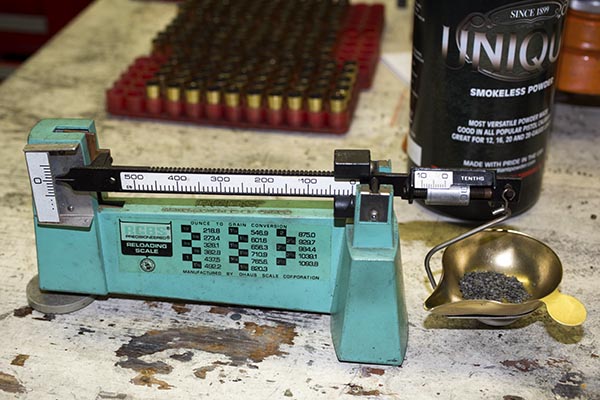
A scale is necessary for measuring propellant charges (also referred to as powder). Several companies offer scales specifically designed for reloading.
My RCBS reloading scale. Like the Rockchucker press shown above, I’ve been using this for a half century.
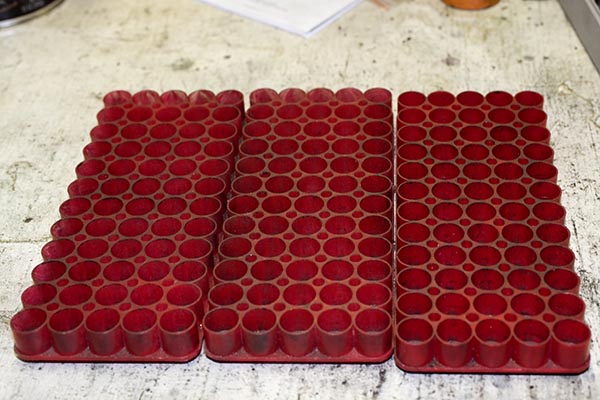
It’s a good idea to have reloading trays for the cartridges. These are relatively inexpensive, and they seem to last forever, too.
Reloading trays. These hold the brass cases we are going to reload, and allow for easy tracking and inspection of each reloading process step.
A powder dispenser allows you to dispense the correct amount of propellant in each cartridge case.
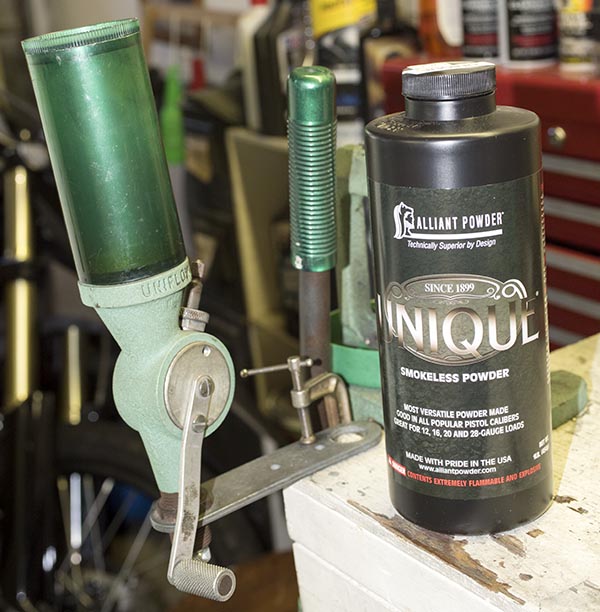
A powder dispenser, and the propellant I like to use for loading .45 ACP ammunition. I bought that dispenser back in the day, along with the scale and the press. My preferred propellant is Unique.
At this point, we’ve covered the equipment necessary; let’s now turn to the components. One is the propellant you see in the photo above. As seen in the photo below, for the .45 ACP cartridge, I prefer Unique.
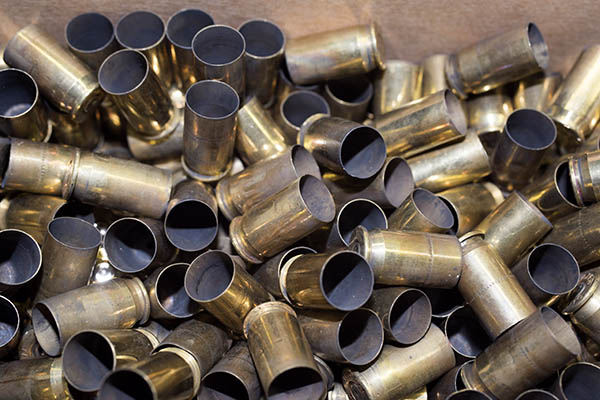
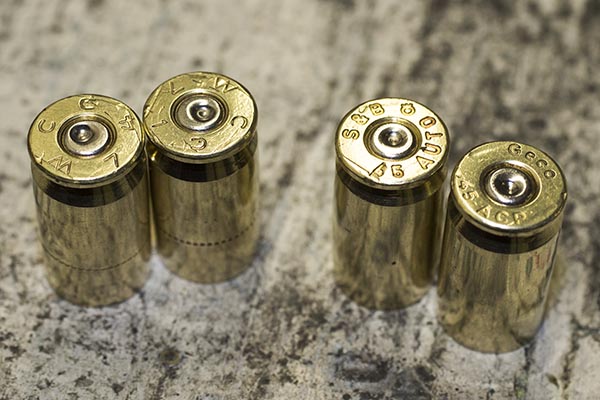
You’ll need previously-fired cartridge cases. You can also buy new brass that has never been loaded if you don’t have any, or you can buy factory ammo, shoot it, and save the brass. I don’t think I’ve ever purchased new brass for the .45 ACP, mostly I had plenty available from my days in the Army. The .45 ACP cartridge is a relatively low-pressure cartridge, and the brass seems to last forever. I’ve been reloading the brass you see here for a long time.
Fired .45 ACP brass. It’s dirty. I usually polish mine, but it’s not necessary that you do so. We’ll talk more about that in the next blog.Polished .45 ACP brass. It cleans up well and it seems to last forever (look at the stamps on the two cases on the left).
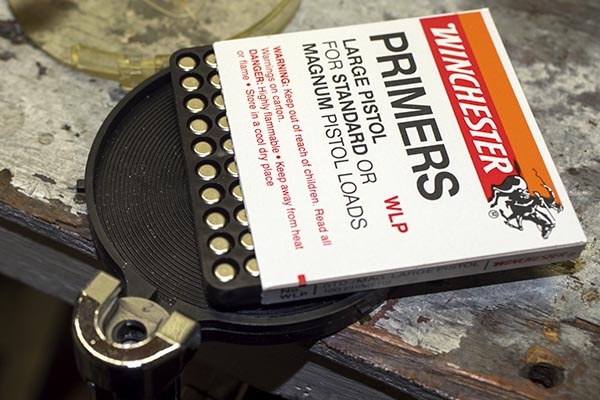
You’ll need primers. The primer is the little cap that the firing pin strikes when you pull the trigger. There are two or three companies making primers these days. I usually buy whatever the shop has in stock. I haven’t found that primers make a difference in accuracy or reliability for handgun shooting.
Winchester primers. We’ll talk about the tool you see below the primers, and how to install the primers, in the next blog.
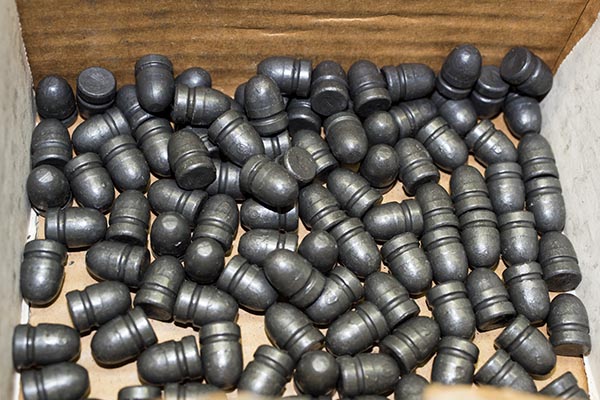
And finally, you will need bullets. I’m using moly-coated 230-grain roundnose lead bullets these days, like you see in the photo below, mostly because I have a bunch of them in my reloading locker. Many other bullet configurations are available.
Bullets. I usually buy them in boxes of 500 because I do a lot of shooting. There are different kinds of bullets available, but that’s a discussion for another time, too. If you’re just starting out and you’re reloading .45 ACP ammo, my advice is to get a 230-grain roundnose bullet in either cast or jacketed flavors. It will feed reliability in nearly any 1911. We’ll talk more about this in the next blog, too.
There’s one other item I strongly recommend you purchase, and that’s a reloading manual. These manuals list different loads for different cartridges and different bullets and propellants. The whole idea here is to experiment with these combinations (within the parameters provided by the manuals) to find the recipe that produces the best accuracy and reliability in your gun. My preference is the Lyman manual, as it lists different bullet manufacturers and cast bullets, too. You can buy manuals from the bullet manufacturers, but the downside there is they only show data for their bullets.
You can buy all of the equipment separately (as I did a long time ago) or you can buy a complete kit that has everything you need to get started. RCBS has a kit that goes for about $350. Lee has a similar kit for a lot less (about $150), and it will get you into the reloading game. I have a friend who bought the Lee kit a few years ago, he uses it to reload .308 Winchester ammo for his Model 700 Remington, and the ammo he makes routinely delivers 1/2-inch groups at 100 yards. With either kit, you’ll need to buy the dies required for the cartridge you wish to reload, and the components as described above.
You might be wondering: Where do you buy this stuff? Most gun stores sell reloading equipment and components. Cabela’s and Bass Pro are two that come to mind. You can also buy components and equipment online from places like Amazon, Midway, Natchez Shooter’s Supply, Grafs, and other places. Buying the energetic components online gets a bit more complicated (propellants and primers), but the stores can fill you in on that. In most areas, there’s usually a shop that is known for being the best in your neck of the woods for reloading stuff, and you can find these places with a quick Google search or by asking around.
So there you have it. I’ve described the equipment and the dies you’ll need to reload the .45 ACP, but the procedures I’ll describe in subsequent blogs will be the same for nearly any handgun cartridge (.38 Special, .537 Magnum, .380, 9mm, .40 S&W, .44 Magnum, and .45 Colt). All you need will be different dies and shellholders, and of course, different types of bullets.
Our next reloading blog will cover the first steps of the reloading process. Stay tuned; it’s coming up!
Read our other Tales of the Gun stories for the loads we prefer. Disagree with anything above or want to toss your $0.02 into the discussion? Hey, there’s a comments section below and we’d love to hear from you.
One last thing…ever wonder what the “ACP” stands for in .45 ACP? Well, here you go…wonder no more.
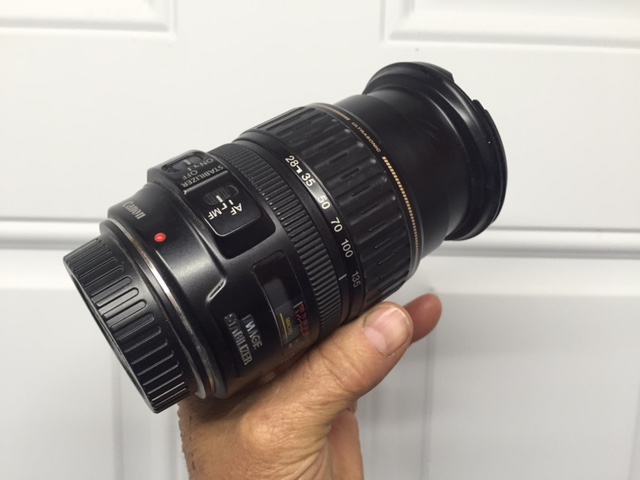
The only camera that survived our 40-day, Zongshen RX3 China tour was the one inside my cell phone. My Canon 5D, that weighs a ton, broke its battery door and the 28-135 zoom lens actually fractured and stopped zooming. It sounds like the gears inside are broken. Both were inside a padded camera bag and the bag was wrapped in extra clothing. Don’t let anyone tell you we didn’t pound on those Zongshen RX3’s.
My go-to travel camera, a little Canon S95, also could not survive the rough Chinese trails we explored. The S95 suffered a broken screen and refused to boot up due to a broken top plate. Again, this camera was in my jacket pocket and not rattling around in a bag. We ride hard, you know?
Back in the USA the 5D battery door was an easy $7 fix. The 28-135 zoom lens is still broken and the parts to fix it are nearly as much as a used lens. I may not even replace it as I’ve gotten away from hauling the big 5D on motorcycle trips. It’s a great camera that takes beautiful pictures but magazines and web sites do not require technically perfect photos, only interesting subjects.
The Little S95, by dint of its size was harder to fix. I bought a new top switch plate for $14 and using a microscope, replaced the part without damaging a lot of other parts in the process. To my surprise the little camera booted up and would take photos. The broken screen was slightly annoying but the worse problem was that the front ring did not work anymore. The S95 really needs that ring to operate correctly. I’m pretty sure I broke the ring in the process of installing the top switch. These tiny digital cameras pack a lot of components into a tiny space. Fixing them is nothing at all like concrete work. The S95 was consigned to the busted camera drawer.
Joe Berk and I recently went to Mexico to road test the new Royal Enfield 650 and that trip convinced me that I needed a decent point and shoot camera. The cell phone camera is great but there were times I needed zoom but didn’t feel like digging out the big camera. I wanted a pocket DSLR.
Back to the busted camera drawer and the S95 I went. The parts to fix the screen and the front ring switch cost around $50. Add to that the $14 I had already spent, and the fact that I would probably end up breaking something else while fixing the S95, and things were looking glum for my S95. The little beat up Canon is a great shooter and I’ve had two-page spreads published in magazines with it, so while I hated to give up on an old friend I began to look for a used, working S95.
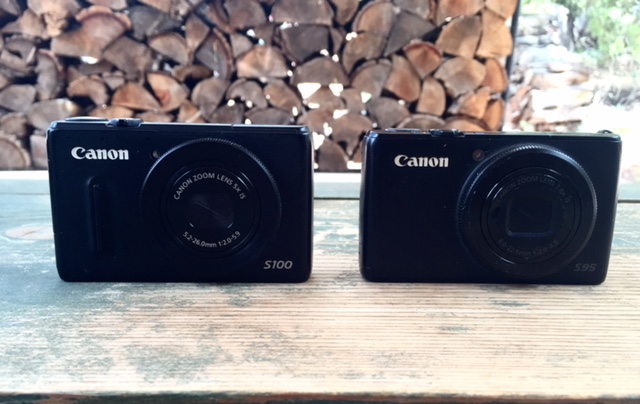
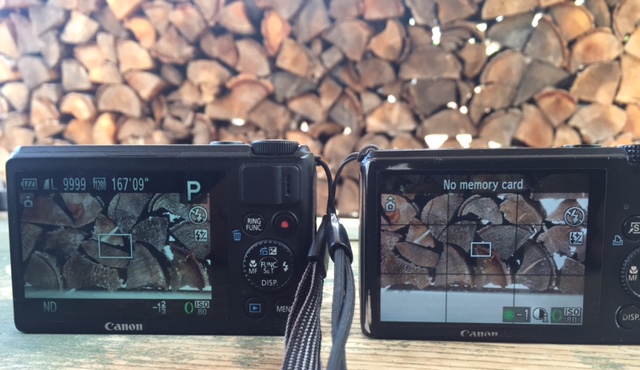
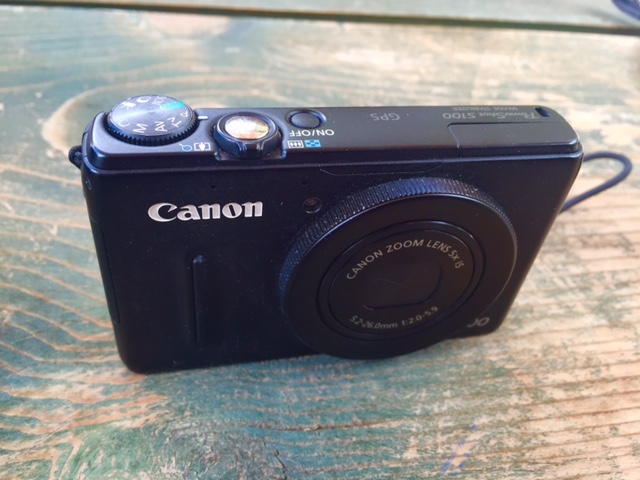
Prices for used S95’s hover around $100 for a fairly straight, functioning example. The funny thing is the next generation model, the S100, was the same price as the older unit. With a wider and longer lens and a much faster processor than the S95 the only thing making me hesitate was the S100’s bad reputation for a lens error glitch. When the glitch hits the lens stays extended and the machine refuses to take photos. So it’s kind of a major glitch, you know? Here you can see the extra bit of S100 (left) vs S95 (right) wide angle.
Here you can see the extra bit of zoom. S100 on left.
I researched the camera forums and found some S100 owners never have the lens error and of those that did a ribbon wire falling out of its socket was the cause for most of the failures. So I bit on a sweet 100-dollar, S100 that looks like brand new and seems to function perfectly.
The S100 boots up noticeably faster than the S95 but I am never in that much of a hurry. It will burst a bunch of shots faster than the old model. This may come in handy for action shots. The wide-angle lens is only noticeable when comparing both cameras side by side. When it comes to photography, more is always better. I’m happy with the little S100 and can’t wait to try it out on a motorcycle trip. If I ever go on another motorcycle trip, that is.
The right bike and the right clothes make for good traveling, and this is especially important when you’re riding Baja. Travel light and travel right is the way to go. What you don’t want to do is travel like I did on my first Baja trip. On that one, my Harley looked like that opening scene in The Beverly Hillbillies (you know, the one with everything strapped to Jed Clampett’s old pickup, including Granny in a rocking chair on top).
How not to do it. My old Harley was way overloaded on this early Baja trip.
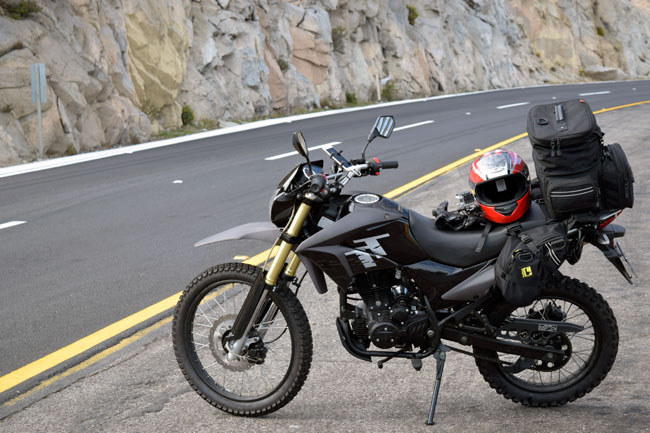
I guess it all starts with the right bike, and for all of us, that’s the bike we have. I’ve ridden Baja on many different motorcycles, and they all worked for me. My preferred bike for Baja riding, though, is my CSC RX3, which I think is perfect (especially with its standard luggage). I’ve settled on a 250 as the perfect size for real adventure travel (your choice may be different, I’m not trying to pick a fight, and if my choice upsets you, hey, you’re young…you’ll get over it).
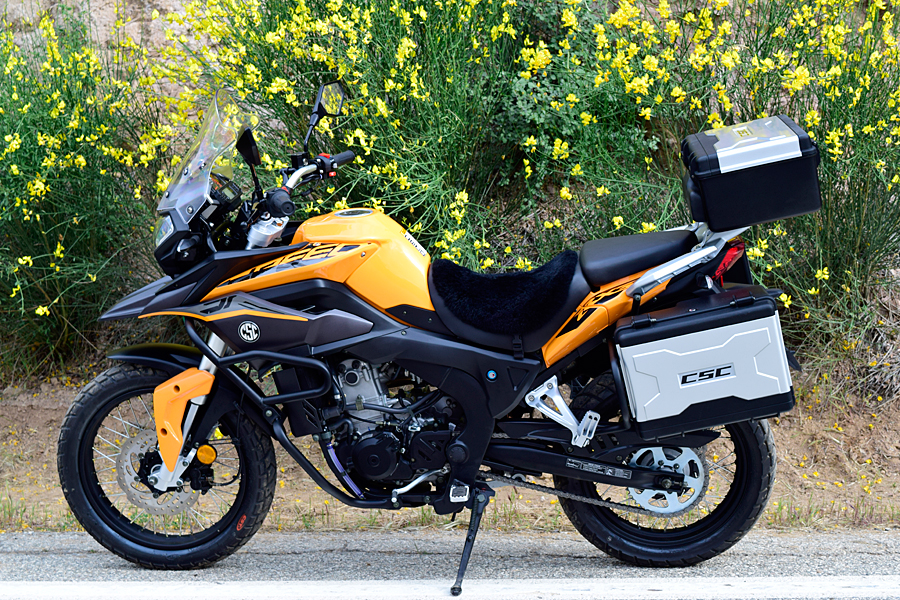
My RX3 early in its life. I can pack everything I bring with me on a Baja ride in its luggage. My bike also has a sheepskin seat cover, which makes for a more comfortable ride.
When I’m on the RX3, I can carry everything I need in its two panniers and the top case, with nothing strapped onto the bike with bungee cords. I don’t like to carry stuff outside the luggage, because everything is locked and I can leave the bike when we stop to eat or take pictures without worrying about anyone stealing anything. I’m usually carrying more than most of the folks I ride with, too, because I’ve got my Nikon DSLR, a laptop computer, the power supply and cord for the laptop, the recharger for the camera battery, an extra camera battery, and a laptop mouse. I need to keep the beast fed (i.e., this blog), and I blog daily from the road. The top case is devoted to the computer and the camera gear. I keep tools, spare parts (you can read about recommended Baja spares here), and chain lube in the right pannier, and clothes in the left pannier. Remember what I said above…travel light and travel right.
If I’m on a bike that doesn’t have luggage, my preferred approach includes an older Nelson Rigg tailpack and a set of Wolfman soft pannier bags. That’s all I need. These two items go on and off the bike easily and they are high quality items. I bought the Nelson-Rigg tailpack 20 years ago when I rode Baja on my TL1000S, and I bought the Wolfman bags from CSC when I rode Baja with my TT250. I’ve been impressed with both the Wolfman and Nelson-Rigg brands. Wolfman, especially…it’s good gear.
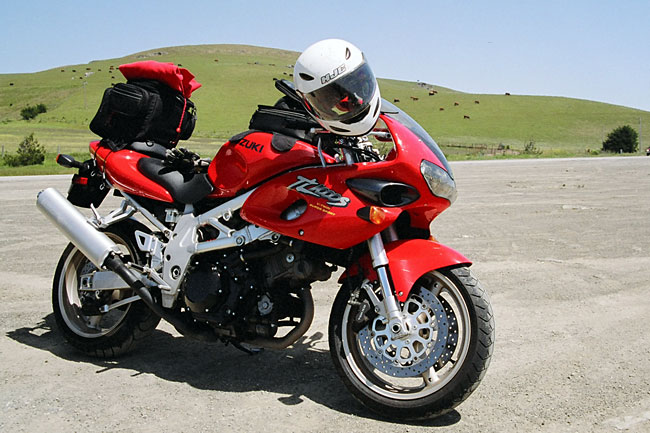
My old TL1000S (the first year for that bike…it was a ’97) and the Nelson-Rigg tailpack. The TL is long gone; the tailpack is still covering miles with me.My TT250 with my Joe Rocket gloves, HJC helmet, Wolfman soft luggage, and Nelson-Rigg Tailpack (the same one you see on the TL1000S above, but 20 years later in this photo). All good gear.
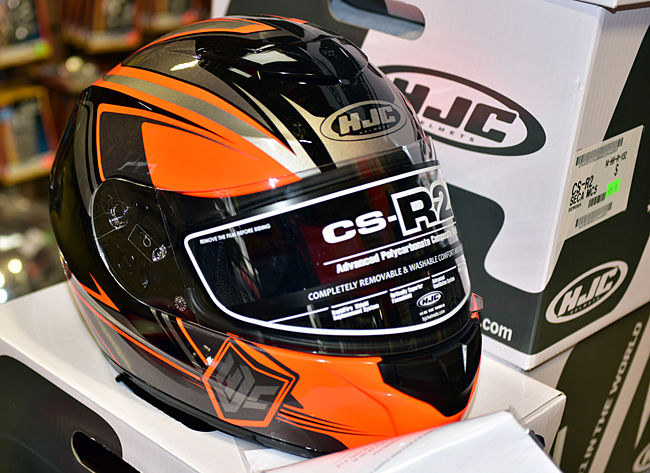
My helmet is another item I bought from CSC. It’s an HJC and I like it. It’s not heavy (which makes a huge difference when you’re covering hundreds of miles day after day) and it’s comfortable. I’ve tried others, but I keep coming back to the HJC line. I have a Scorpion, but it doesn’t have a visor position that allows opening the visor slightly for air flow. Others don’t form a good seal between the visor and the helmet, so when it rains the visor gets wet on both the inside and the outside. Nope, for me that HJC works.
The HJC helmet I currently use. It’s comfortable and it’s not heavy.
My jacket is made by Olympia. I like it because of the color (fluorescent yellow), and the fact that it is all one color. Most (maybe all) of the other fluorescent yellow jackets available today have black panels along with the fluorescent yellow and I don’t care for that approach. My jacket has a removable liner and it keeps me warm, and at night if it’s cool and I’m off the bike, I can wear just the liner as a light jacket.
A selfie showing my Joe Rocket gloves and my Olympia riding jacket. I didn’t realize it when I bought it, but keeping that Oly jacket on the road required more maintenance than the motorcycles.
I should mention that I hated the Olympia jacket the first two years I owned it. Olympia used cheap stitching when they had these made, and most of it came undone. Every time I washed that jacket, more stitching came apart. Oly wouldn’t make good on it (they were quick to point out that the jacket had a 1-year warranty). I paid a tailor to resew all the seams, though, and after that, it stayed together (even after repeated washings). It’s the jacket I wear most often now.
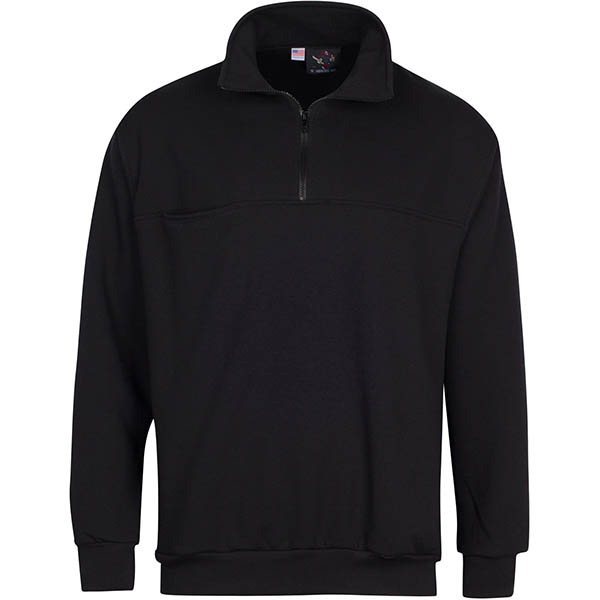
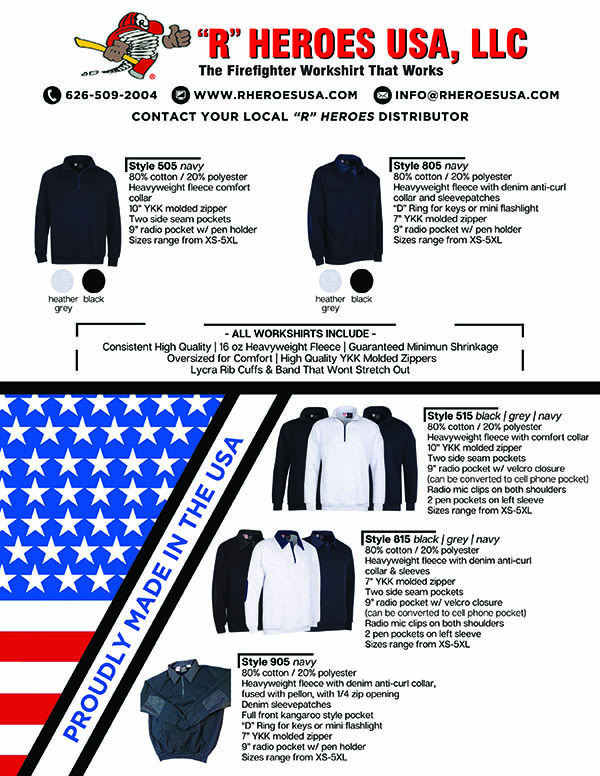
I always bring along my R Heroes 505 workshirt, an ultra-high quality sweatshirt I wrote about in an ExNotes blog a few months ago. I own two of these shirts (one of which has held up for 10 years now). It’s warm and it’s extremely comfortable. It’s also loose enough that if you’re carrying a concealed sidearm, it provides good coverage (don’t do that in Baja, though). I love my R Heroes shirts.
My R Heroes 505 workshirt. I love it.
I wear Walmart jeans (I’m not into fancy jeans and I think anybody that pays big bucks for blue jeans is bonkers) and an old set of motorcycle pants. On warmer days, the motorcycle pants go into one of my bags and it’s just the jeans. On cooler days or if it’s raining, I wear both. My motorcycle pants are water resistant but not waterproof (if the rain lasts long enough, they’ll soak through). Every year or so, I’ll spray the paints with Kiwi water repellant to refresh the Scotchguard. I’m kind of embarrassed that I don’t know who made the motorcycle pants. I’ve had them for more than 20 years and the labels are long gone.
My gloves are Joe Rocket. Joe Rocket gear is reasonably priced and the quality is there. I have two pair. I cut off the right index finger tip off on one so I can work my iPhone when I’m using it as a nav system. I also have an older set of BMW cold weather riding gloves, and they work gangbusters. I think I paid a hundred bucks for the BMW gloves (everything that says BMW is big bucks), but on supercold mornings, I’m constantly reminded that was money well spent.
The last item I’ll mention are my boots. I’m not a big fan of any of the motorcycle-specific boots because they are too big, too heavy, and too uncomfortable when you get off the bike. I like military or police style boots, and my preferred brand is from an outfit called HAIX. They’re Austrian (the boots are actually manufactured in Croatia). They’re expensive (about $200), but they are worth it. The first pair I bought lasted 10 years. I bought a new pair a year or two ago, and I’ll get 10 years with them, too.
I didn’t start out in the typing business looking for swag. I was more interested in seeing my byline on a real, printed object. Being published meant at least one person in the world thought my stuff wasn’t terrible. No, it was like more swag found me. Slowly at first, then faster as the typing game became less and less lucrative, swag has grown ever larger in importance.
Today all I write for is swag. I pay the electric company with logoed T-shirts and swap brake manufacturer stickers for groceries. Swag has completely replaced the United States Dollar in my financial transactions. My wallet looks like an overstuffed armoire and I fill those Leave-a-Penny convenience store change holders with plumbing company plastic key fobs.
More than money, swag fills the void: I insulate walls with swag and burn it to make a fine garden fertilizer. When cooking, I substitute swag in all recipes that call for newt. I mark time by measuring the half-life of a rubber USB drive shaped like a Harley-Davidson motorcycle. I have over 1000 tiny jars of lemon sage Best Western hair conditioner that I plan on converting into diesel fuel someday.
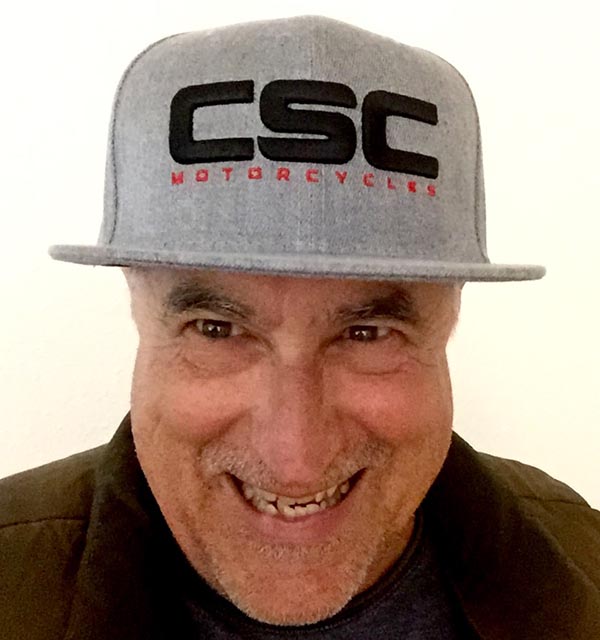
CSC sent me a flat-brimmed swag cap. They didn’t need to: I love those guys and how their business plan is a fantastic experiment in mail order motorcycling. I like that the customer needs to be a bit more self sufficient to operate their motorcycles. And I like the hat. With most products becoming sealed off to us regulars, CSC bikes actually require you to dig in. Since I own mostly weird motorcycles that have no dealer support I relate to the pride a CSC owner feels when he sets his own valves or replaces the chain and sprockets on his motorcycle.
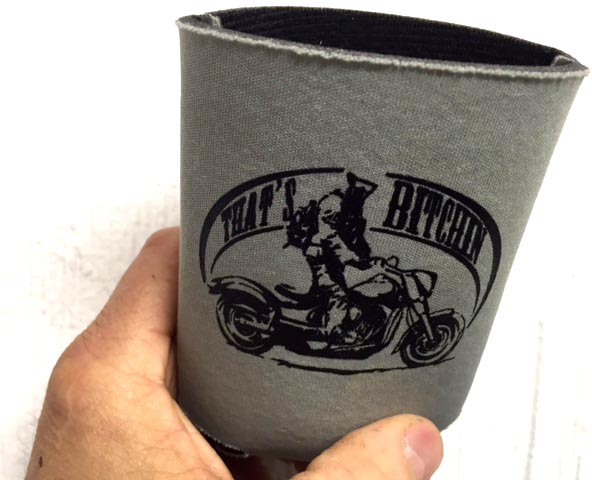
Swag works. The preceding paragraph should be all the proof you need. Swag turns customers into advocates and a scuba suit beer cooler celebrating Pandya’s 50th birthday will always come in handy. Come to think of it, Exhaustnotes.us has no swag that I’m aware of. I’ll have to get to work on that.
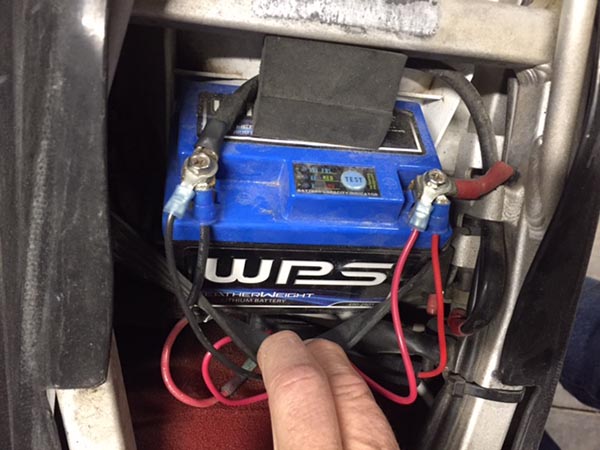
Unlike motorcycles, I’m not fixated on doing things the old way for electrical energy storage. I run a lithium-polymer battery in the Husqvarna that has exceeded all my expectations. The thing never goes dead (no trickle charger needed) it has tons of cranking amps (no need to use the compression release to start the bike) and it weighs nothing. You can install the thing in any position and nothing will leak out. The only drawback to the lithium-polymer battery is cost.
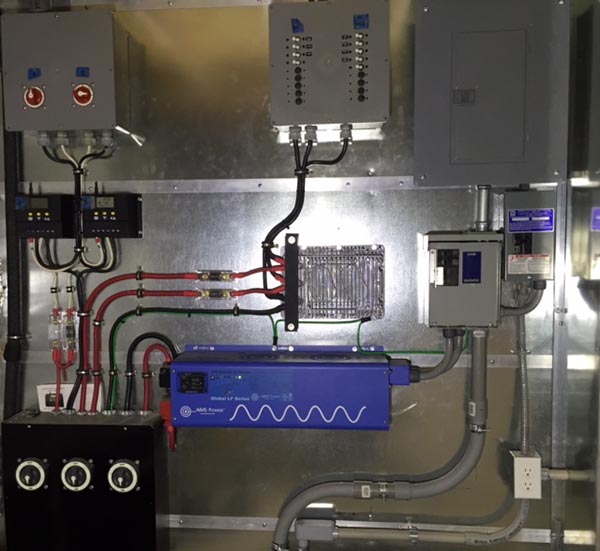
Battery technology is advancing rapidly with so many new combinations of lithium with something else, molten salt or rare elements only found in war torn areas. It’s hard to know which technology will win out in the end but for now, in my solar-powered shed system, lead-acid still offers the best electron storage option.
Lead-acid batteries are messy, inefficient and half their capacity comes at a voltage too low to run your equipment correctly. They are heavy as hell and the cable connections are always corroding from the acid fog and hydrogen fumes escaping from the fill caps. You’re lucky to get 5 years service out of a lead-acid battery. The things are problematic in most every way.
But not in all ways: lead-acid is a completely mature technology. We’ve been building them since 1860 and there is a cradle-to-grave recycling system in place right now. Any auto store or Wal-Mart has the ability to take your old lead-acid batteries and deal with them responsibly. Unlike the new battery elements there are no ecological surprises with lead-acid: We know all.
Lead-acid batteries are available everywhere. Go to any town in the world with at least one gas station and you can buy a lead-acid battery. You don’t have to deal with Tesla or any of the high-tech battery startups that don’t actually have product. Your battery isn’t tracked online, the software will never need to be updated and your battery bank will never be monitored by anyone but you. Unlike most e-car and e-bike batteries, lead-acid batteries come in standard sizes (24, 27, 31, 4-D, 8-D) and for the most part are interchangeable unless you have a restrictive battery box or short cables.
Lead-acid batteries are tough. It’s hard to damage a clean lead-acid battery with tight connections. They put out gobs of amps on demand and as long as there is electrolyte in the cells they stand up to overcharging well. They’re even somewhat repairable: Go on YouTube and look up battery repair for ways to flush out debris from old lead-acid batteries to gain new life.
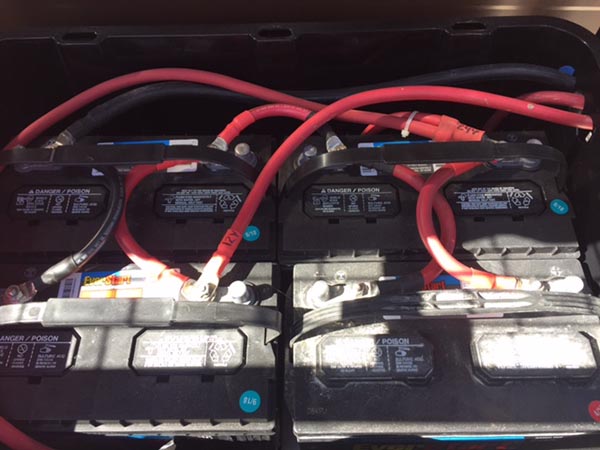
Lead-acid batteries are easily scalable and nearly any voltage or amperage desired can be achieved with large, simple jumper cables. I’m running 4, group 31, 12-volt batteries in my 24-volt system. My future plans are for 16 batteries total but there’s no rush. I can take as long as I want to get there or 8 batteries might prove to be enough for my usage level.
Most important for me: They are cheap! The four deep cycle marine batteries in my off-grid system @100 amp/hour each give me a total of 2400 watts of storage (@ 50% capacity) for 400 dollars. If I ever get to 16 batteries I’ll have 9600 watts of storage for around 1600 dollars. Compare that to 7000 dollars for 7000 watts of storage from Tesla’s Powerwall.
The newer Powerwall is AC-in, AC-out and comes with a built-in AC inverter which is a savings if you’re charging from the grid but you’ll need a solar AC inverter to charge the Powerwall from the sun so it’s kind of a wash for my set up. The lifespan/charge cycle of lead-acid batteries is supposed to be less, judging from the two-year lifespan of the lithium ion batteries used in my cordless tools, maybe not.
I’m not a Luddite when it comes to battery technology on motorcycles or power tools but for me the new designs and materials haven’t yet made sense for large, stationary storage banks at low cost. I’ll revisit the topic if Tesla reduces the price of their Powerwall by half or some new manufacturer comes up with a wiz bang combination of chemicals that outdoes ancient lead acid technology.
I’ll get to R Heroes USA, the title of this blog, in just a bit. There’s a story behind today’s title and it goes like this: About 10 years ago, CSC donated a Mustang replica to the Firefighters Cancer Support Network (the FCSN), a charity of firefighters focused on helping firefighters and EMS workers with the disease. The motorcycle CSC built for the FCSN was a great-looking bike, and when I picked the colors for my CSC 150 I had it built exactly like the Firefighter model…
A Mt. Baldy firefighter checking out my CSC 150 several years ago.
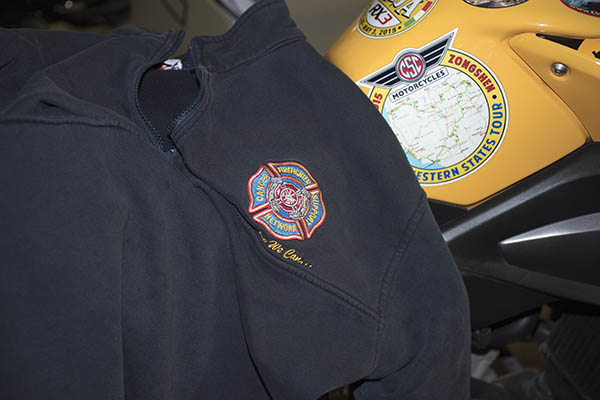
When Steve and Maureen donated the bike, the FCSN gave Steve and me each a sweatshirt. I liked mine immensely, and in fact, for the last 10 years it has been my “go to” shirt for knocking around, or whenever it gets really cold out here, or whenever I’m riding in cold weather. Yeah, I’ve got a heated vest and all the right motorcycle gear, but when it’s seriously cold and I want to layer up, nothing beats that sweatshirt. It’s warm and it’s incredibly comfortable. When we did the recent Janus MotorcyclesBaja ride, I knew it was going to be a cold expedition and I knew I’d be wearing my blue pullover sweatshirt.
My 10-year-old R Heroes shirt. This is my favorite shirt. It’s still in great shape. R Heroes makes them right here in California.
Most recently, we’ve been in a cold snap here in So Cal, and I’ve been wearing my FCSN shirt pretty much every day. It made me think: I’ve been wearing that sweatshirt for nearly 10 years. That’s phenomenal. I thought about that a bit, and I realized: I need to get me another one of these.
I looked online, and I couldn’t find anything of the same style. You see, it’s not just a sweatshirt. It’s got pockets, it’s got a YKK zipper (the best there is), it’s fleece-lined,and like I said, it’s warm. It’s also just long enough to cover anything you might have strapped on your hip (even a big old .45). It’s perfect. I usually don’t get excited about clothes, but I fell in love with that pullover.
With no initial luck on the Internet, I looked inside the shirt. I couldn’t find a label that indicated any of the sweatshirt companies I thought I knew, so I looked a little harder. There was a tiny label that said “R Heroes USA.” What’s that? I thought, so I did a search on that name, and oila!
It turns out that there’s an apparel company called R Heroes USA, it was founded by a firefighter, they manufacture here in America, and they focus on gear for firefighters (that explains the great pockets and the uber-high quality). I sent an email to R Heroes USA, one thing led to another, and my new good buddy (and R Heroes USA founder) Chuck took my order for a new shirt just like the old one. It’s their Model 505 workshirt. It should arrive about the same time you are reading this blog.
I’m pumped, and I know I’ve got another good 10 years in front of me with this new shirt. You can do the same, you know. You can’t order directly off the R Heroes USA site, but you can get to a list of their dealers and if there are none nearby, you can send R Heroes an email just like I did.
Like I said, I had a nice conversation with Chuck (the R Heroes USA owner and founder). One thing led to another, and what do you know, R Heroes USA is looking to reach beyond the firefighter market. The Model 505 (and probably other R Heroes USA shirts) are perfect for riding, and ExhaustNotes has a new advertiser. It’s a win-win-win all the way around, folks. Click on the R Heroes USA logo below (or right here), give the site a visit, and get yourself what I’m here to tell you is the best and longest-wearing shirt on the planet!
The odds are infinitesimally small that I will ever be called upon to overthrow a tyrant. I’m much more likely to be part of the brainwashed mob chasing down the righteous and the truth-tellers. I haven’t bought any guns lately because I don’t want to fit out my broken moral compass with the tools to get the job done. I get the public’s fascination with guns, though, the solid, no rattle feel, the precision machine work, and the black menace that radiates from a well-oiled rod. With a slight nudge to the right I could have become one of those guys that owns 43 guns. Who needs so many guns you say? I would have.
I bought my first gun when I was 20 years old. It was a Ruger bull-barrel .22 caliber target pistol. The thing was a load of fun out on San Diego’s Kitchen Creek road where a self-policed gun range glistened with glass shards in the late 1970s. You could buy milk cartons full of ammunition for the Ruger at department stores or sporting goods retailers. Nine dollars equaled 500 rounds and it made for a cheap, fun day blowing up bottles and cans.
The Ruger would rust if you didn’t keep it clean and the bottles weren’t shattering enough to suit me so the next gun I bought was a stainless steel Smith and Wesson .357 revolver with a 4-inch barrel. When you pulled the trigger you could see the drum turn, the hammer draw back and flames shoot out the sides of the weapon. It was like a miniature cannon. You got dirty shooting the thing. The whole process of firing the S&W revolver satisfied me on so many levels that at this point I was perilously close to becoming a gun nut.
For some reason, maybe it was God’s Hand, I didn’t become a gun nut. The trips out to Kitchen Creek became fewer. The ammunition got more expensive and the two pistols were packed away. It was only a few years ago that I dug the guns out. The Ruger was a mess. Rust had scarred its smooth gun-black finish and the mechanism was stuck. It took hours to get the thing cleaned up and the rest of the day to figure out how the various parts fit back into the handgrip. Being stainless, The Smith was fine, only needing a bit of oil to loosen things up.
My wife, CT, and I took the guns out to our local range to relearn how they operated. It was kind of fun and it really helped CT to see the difference between an automatic and a revolver. Like me, she prefers the revolver because the works are out in the open. Just by looking you can see the status of a revolver. With an automatic it’s anyone’s guess if the thing is ready to go off or it’s empty.
This Christmas CT gave me one of those heavy steel spinner targets, the kind with a large round target on the bottom and a smaller one on the top. When you manage to hit the thing the target spins around like a kinetic lawn ornament. I guess CT enjoyed our day at the range more than I did. Now she wants a Mosberg pump shotgun and one of those scary looking assault style rifles. You know, for home protection. It seems like we might end up with a gun nut in the family after all.
I like to read the ExhaustNotes blog. In the aerospace industry, if you liked what your team created too much, we called it drinking your own bath water. The risk in drinking your own bath water was that you lost sight of what was important to the customer and you stopped reviewing your work objectively. Anyway, every once in a while I’ll read through the blog to see what looks good and what we could maybe do better. And in doing that I realized that old Arjiu and I hadn’t done a dream bike piece recently.
That brings us to today and the dream bike bit du jour: The Ideal Electric Motorcycle. I’m going to define the specs for what I think would be a riotously successful electric motorcycle. Bear with me…I think this is going to be good, which can sometimes happen even with bath water.
I guess the first order of business is to consider the current crop of ebikes’ weaknesses. That’s easy. Limited range, limited top speed, long recharge times, clunky and bulky external chargers (for some bikes), and the biggest one of all (at least to me): A near complete lack of cool. Yeah, I’m defining the specs for an ebike that would do well in the US, and the lack of cool is a very big deal. We have to address that. It’s a serious shortfall in all the ebikes I’ve seen. I mean, nobody visualizes themselves as Steve McQueen jumping a fence in Nazi Germany on an ebike. Nobody thinks of themselves as Peter Fonda kickstarting a silent ebike to take Nancy Sinatra for a ride.
Remember that old Harley ad? The one that showed a toddler in a Harley T-shirt with the this question at the bottom: When did it start for you? That ad says it all. I know for me, and I suspect for nearly all of you, our fascination with motorcycles originated when we were wee ones and we saw a motorcycle that stopped us in our Buster Brown tracks. You know what I’m talking about. A bike that made us just stop and stare, usually for a long period of time. I have two such recollections: One was a 1950’s era Harley Duo-Glide dresser (with a monstrous V-twin engine, corrugated exhaust headers, and drop-dead-deep-gorgeous paint); the other was a ’64 500cc Triumph twin (white with gold accents, pea-shooter mufflers, Triumph’s “parcel grid” on the gas tank, a matching tach and speedo, and those magnificent, sweeping exhaust headers). Yeah, those bikes defined cool. They were visually arresting things. None of the ebikes currently on the market do that for me. Like my old platoon sergeant used to say, this is something we need to talk about.
Serious cool. Visually arresting. I’m not saying an ebike should look like a Panhead, but a Panhead has a cool factor that no current ebike possesses. We need to address that. We need to find a way to have an ebike elicit the same kind of irrational, emotional, I-need-this-in-my-life response.
Okay, enough reminiscing. Let’s get to the specs. The way I see it, we need to address weight, size, top end, range, recharging, cost, comfort, and the cool factor. Here we go, boys and girls…
Let’s hit the elephant in the room first, and that’s the range issue. We need more. Nobody has a motorcycle with decent range. The City Slicker, under best case conditions (I’m talking low speeds and summer temperatures) can do about 60 miles, maybe a scosh more, and obtaining the last few miles involves really low speeds and lots of prayer. Zero claims much greater range, but every magazine that’s tested the Zero shoots those claims down with a heartfelt dismissal that goes along the lines of “in your dreams, Zero.” Nope, the range on the current crop of ebikes just isn’t where it needs to be yet. Where is that? Hey, I’m writing the spec. I’d say 250 miles. Put an ebike out there that can go an honest 250 miles at normal speeds, and I’m in. I think that should be doable at a reasonable price (I’ll say more on that in a bit). Yeah, a 250-mile range would make an ebike viable for me.
We want range, and lots of it. If an ebike had a range of 250 miles and a recharge time of 30 minutes, I could ride to Mama Espinoza’s in El Rosario, charge the bike while I was enjoying one of the old gal’s lobster burritos, and make it all the way to Guerrero Negro in a day. Where do I sign?
Next up: Recharging. Look, the bottom line is I don’t want to wait 8 hours to recharge a bike. As long as I’m writing the spec and dreaming out loud, I’d like to see a sub-30-minute recharge time. When I stop at a gas station, it’s about 10 minutes to pull up to the pump, put the bike on the sidestand, get off, take off my gloves, unlock the fuel cap, get out my wallet, put the credit card in the gas pump, enter my zip code, pick the octane level I want, take the nozzle out of the pump, peel back the nozzle’s foreskin so the fuel will flow (hey, we live in Kalifornia), put fuel in the tank, and then reverse the process. Add another rider or maybe another ten riders (if I’m on one of my Baja tours and I’m being my usual hardass self about not wasting time), and a fuel stop grows to maybe 30 minutes. I’m used to that, and that’s what I want in an ebike: Quick replenishment. That’s beyond the current state of the art, but don’t tell me we can’t do it. The solution is obvious: We need to change the state of the art.
On the recharger, I want it built into the bike, with a simple cord that pulls out of the bike to plug in someplace (kind of like you get on a vacuum cleaner). Give me a 15-foot cord and I’m good to go. I don’t want to screw around with an external power converter, because then I’d have to find a place to carry it on the bike. Build that thing into the motorcycle. Zero has the right idea on this one.
I think an 85-mph top speed is good. I know, I know…maybe you’re one of those guys: Ah need at least a 1000cc and Ah need to go at least a hunnert else they’ll run me down on the freeway. If that’s you, don’t waste any more time here; go back to posting stupid stuff on Facebook and the other forums. Here’s the deal: I’ve been riding for a few years, and the times I’ve needed to go above 85 mph are few and far between. In fact, I’ve never actually “needed” to go over 85. Adding top end takes a big bite out of an ebike. I’m willing to give up stupid top end to get more range, shorter recharge times, and less weight. So, 85 mph it is. Give me that in an ebike and I’m a happy camper.
I want a reasonable amount of stowage space so I can do Baja without bungee cords. Some folks look like they’re moving when they go on an overnight motorcycle trip. I’ve ridden with those guys. They and their bikes are like the opening Beverly Hillbillies scene with Granny on top of the pickup truck (not that’s there’s anything wrong with being a hillbilly, or a Granny, for that matter). The City Slicker has a cool stowage compartment where the fuel tank would be on a gas bike. Something like that would work just fine for me. I don’t need to change my underwear every day on a motorcycle trip.
The ideal motorcycle (not just an ebike, but any motorcycle, in my opinion) should have a seat height no higher than 30 inches, a weight of 400 lbs or less, and physical dimensions that allow for easy u-turns on two-lane roads. None of this 36-inch seat height, 800-lb silliness. The ergonomics should be straight standard motorcycle, too. No Ricky Racer, stupidly-low-clip-on, first-two-years-of-chiropractor-visits-are-free seating positions. And while I’m on doctor references, no gynecological-exam, silly-ass cruiser seating positions, either. If the designers of my ideal ebike could just get a 2006 KLR 650 and duplicate its handlebar/seat/footpeg relationship, that would be fine. My KLR had the best seating position of any motorcycle I’ve ever owned.
I’d vote for 17-inch rear and 19-inch front wheels because that combo just flat seems to work for damn near everything. I won’t be jumping any logs with my ideal ebike or trying to fly across soft sand, and that eliminates the need for a 21-inch front wheel. And everybody has all kinds of tire combos for the 17/19 setup. To borrow a phrase, why re-invent the wheel?
I want a plug-and-play bike with BITE. Not as in “bite me,” but as in built-in-test-equipment (like the aerospace industry uses). That would completely eliminate the need for a dealer (come to think of it, it would also eliminate the need for a shop manual). No obscene, inflated dealer freight and setup fees. Nope, I want factory direct. And if anything goes wrong with the bike, it shows me which module I need to remove and replace. Plug and play. I don’t feel the need to fund an on-the-job-training program for a dealer-based, wannabe motorcycle mechanic. BITE me, baby.
I think the cost of such a bike should be about $7,500. That feels about right for what a motorcycle should cost. Yeah, I know, you probably couldn’t build it for that in America. Maybe India? Or China? Or maybe you could make it in America. Source the subassemblies wherever you need to, keep the UAW and IAM snouts out of the trough, and assemble the bikes here. Create 30 to 50 US jobs at an assembly plant, preferably in Texas or New Mexico. This is doable, folks. Trust me on this. I used to run manufacturing facilities before I moved up to blogging. We can do this.
So there you have it. Do all of the above, and folks would beat a digital path to your online direct sales website. Yep, all of the above, at $7,500. That’s the ticket.
Oh, and one last must have: Electric start. Peter and Nancy (and the rest of the Wild Angels cast), my apologies in advance, but no kickers on my ideal electric bike. I know they’re cool, but this is the 21st Century.
Want to read more of our ebike stuff? Hey, just click here! It’s our new index page with all the good ebike articles we’ve done here on the blog.
More good stuff. It seems the Chairman of the Southern California Motorcycle Association, my new good buddy Gonzo, is a big fan of the ExhaustNotes.us site. We had a nice conversation yesterday, and Gonzo told me he particularly liked our story on the Jack Daniel’s visit (so much so they are running it in their newsletter this month) and our first intro piece on the 2005 Three Flags Classic.
One thing led to another…I’ve been invited to the 2019 Three Flags Classic (boy oh boy, I’m really thinking about that one), and I became an SCMA member. You should be, too, even if you’re not living here in the Southland because SCMA’s events are international in reach. You can join right here.
And one last thing: Want to win a free copy of one of our moto adventure books? You can get in on the drawing if you sign up for automatic email blog updates (the widget is in the upper right corner if you’re on a laptop, and below this article if you read the blog on a phone). We’ll never share your email with anyone else!
You remember my post on being a bad influence? You know, I get a new rifle, get all pumped up about it, and then my buddies buy the same thing? And you remember that at least couple of the gun blogs we’ve done have been “A Tale of Two (fill in the blank)” gun stories, with the other guns owned by good buddy Greg, or Paul, or one or another of my shooting buddies?
Well, it turns out I’m not the only bad influence in town. There was a movie not too long ago (Wind River) where the main character carried a stainless steel, scoped, .45 70 Marlin lever gun, and he reloaded his own ammo to boot. Good buddy Greg saw that movie and decided his life wouldn’t be complete unless he had a similar rig. Here’s the trailer for Wind River to give you a bit of background if you haven’t seen the movie…
You might have noticed the Harvey Weinstein credit at the start of the movie (now there’s a guy who’s fortunes have certainly reversed). I saw Weinstein speak (in person) at a Bud Ekins and Steve McQueen motorcycle tribute event about 10 years ago, but I digress…that’s a story for another blog and another time. Back to the main attraction for this blog.
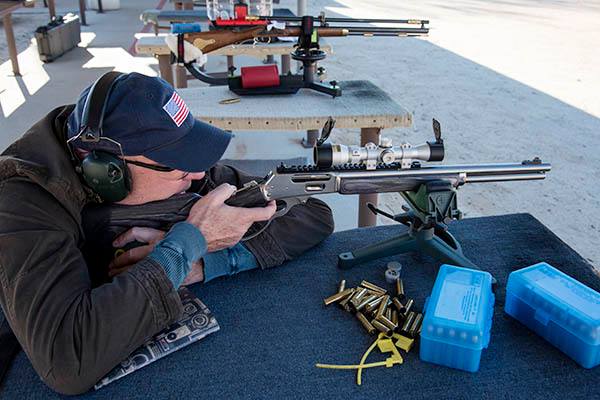
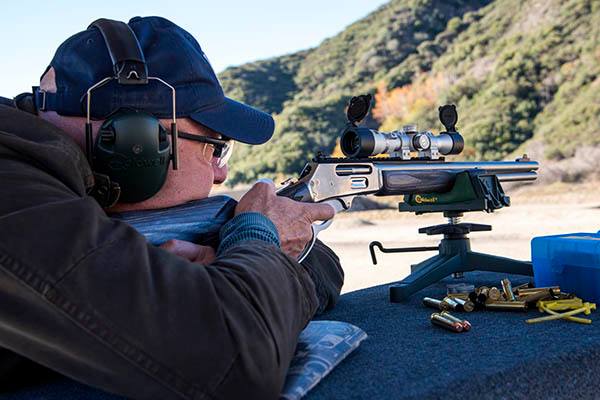
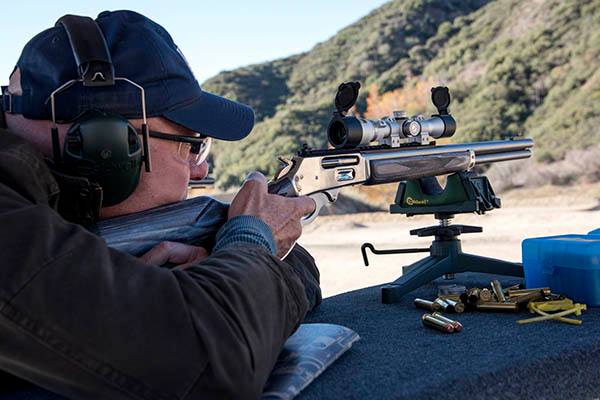
Anyway, Greg pulled the trigger on what I’m calling the Wind River Marlin, and we took his new rifle to the range this weekend. Greg’s new 1895 is awesome from both accuracy and power perspectives. Highly-polished stainless steel, laminated stock, big loop, long-eye-relief scope, Picatinny rail mount, 16-inch barrel, and more. It’s very impressive…
Greg and the Wind River Marlin, settling in to drop the hammer.Deep breath, let it halfway out, gently squeeze……and another 400-grains of lead heads downrange. I tripped the shutter just as the rifle was recoiling and caught the thing in midair. Note the rifle lifting off the rest in recoil.
Here’s a very short video of Greg firing the Wind River special…watch it bounce around when it recoils. The lens caps dance around a bit, too!
And here’s what it looked like on the target at 50 yards…that’s outstanding accuracy and great shooting.
The guy is good. That’s four 5-shot groups, and it’s great shooting in any caliber. It’s amazing in a cartridge as powerful as the .45 70.
The concept of a scoped lever action rifle, and particularly one with a long-eye-relief scope, kind of fits in with the Jeff Cooper Scout Rifle idea. I like it because I’ve always wondered what kind of accuracy these big bore lever guns are truly capable of, and Greg’s new stainless steel 1895 confirms that the Marlin lever guns can be tack drivers with the right load and a skilled rifleman. Some might argue that a lever gun should use iron sights (the traditionalist approach), or that a scope looks out of place on a lever action rifle. Greg’s rifle dispels both notions. The Wind River rifle looks great, and it has the accuracy t0 match its looks.
Another school of thought holds that the modern Marlins are not as good as the older ones. These folks generally push the notion that when Marlin was an independent company (before Remington acquired Marlin a few years ago) the quality was better. That’s hogwash, again as shown by Greg’s stainless steel Marlin 1895 and Paul’s blued-steel version of the same rifle. The current production Marlins are every bit as good as the older ones.
I, too, had a new Marlin on the range today (mine was of the .30- 30 flavor, but it was different rifle than the 336 Octagon covered here) . But that’s another story for a another blog, which is coming up in the next few days. Stay tuned!

 We’re starting a new feature here on ExhaustNotes.us called Tested To Destruction. TTD will be a life-cycle product test from purchase to the dumpster. You’ll not find so complete a product test anywhere else on the Internet, go ahead and look around. Due to the long test periods involved some of the products may be discontinued and no longer available. There’s not a lot we can do about that. One other note: By definition we are testing to destruction so all products will fail in the end. It happens to the best. Nothing lasts forever.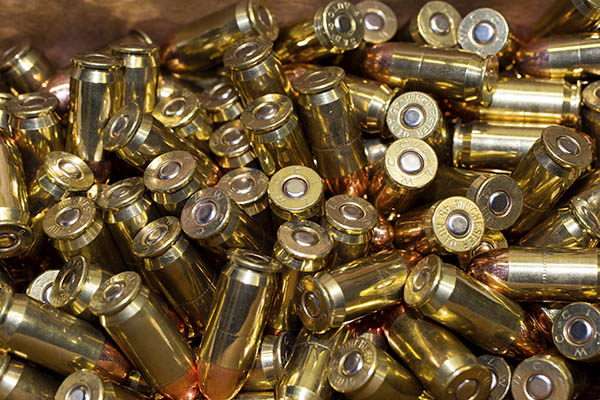
 The only camera that survived our 40-day, Zongshen RX3 China tour was the one inside my cell phone. My Canon 5D, that weighs a ton, broke its battery door and the 28-135 zoom lens actually fractured and stopped zooming. It sounds like the gears inside are broken. Both were inside a padded camera bag and the bag was wrapped in extra clothing. Don’t let anyone tell you we didn’t pound on those Zongshen RX3’s.
 My go-to travel camera, a little Canon S95, also could not survive the rough Chinese trails we explored. The S95 suffered a broken screen and refused to boot up due to a broken top plate. Again, this camera was in my jacket pocket and not rattling around in a bag. We ride hard, you know?
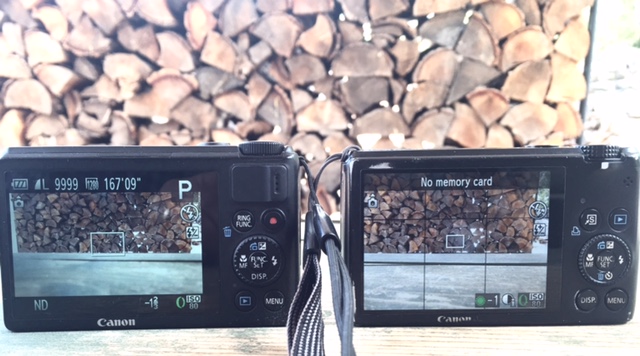 Here you can see the extra bit of zoom. S100 on left.
 I researched the camera forums and found some S100 owners never have the lens error and of those that did a ribbon wire falling out of its socket was the cause for most of the failures. So I bit on a sweet 100-dollar, S100 that looks like brand new and seems to function perfectly.
 The S100 boots up noticeably faster than the S95 but I am never in that much of a hurry. It will burst a bunch of shots faster than the old model. This may come in handy for action shots. The wide-angle lens is only noticeable when comparing both cameras side by side. When it comes to photography, more is always better. I’m happy with the little S100 and can’t wait to try it out on a motorcycle trip. If I ever go on another motorcycle trip, that is.


 I didn’t start out in the typing business looking for swag. I was more interested in seeing my byline on a real, printed object. Being published meant at least one person in the world thought my stuff wasn’t terrible. No, it was like more swag found me. Slowly at first, then faster as the typing game became less and less lucrative, swag has grown ever larger in importance.
 CSC sent me a flat-brimmed swag cap. They didn’t need to: I love those guys and how their business plan is a fantastic experiment in mail order motorcycling. I like that the customer needs to be a bit more self sufficient to operate their motorcycles. And I like the hat. With most products becoming sealed off to us regulars, CSC bikes actually require you to dig in. Since I own mostly weird motorcycles that have no dealer support I relate to the pride a CSC owner feels when he sets his own valves or replaces the chain and sprockets on his motorcycle.
 Swag works. The preceding paragraph should be all the proof you need. Swag turns customers into advocates and a scuba suit beer cooler celebrating Pandya’s 50th birthday will always come in handy. Come to think of it, Exhaustnotes.us has no swag that I’m aware of. I’ll have to get to work on that.
 Unlike motorcycles, I’m not fixated on doing things the old way for electrical energy storage. I run a
  in the Husqvarna that has exceeded all my expectations. The thing never goes dead (no trickle charger needed) it has tons of cranking amps (no need to use the compression release to start the bike) and it weighs nothing. You can install the thing in any position and nothing will leak out. The only drawback to the
  Battery technology is advancing rapidly with so many new combinations of lithium with something else, molten salt or rare elements only found in war torn areas. It’s hard to know which technology will win out in the end but for now, in my solar-powered shed system, lead-acid still offers the best electron storage option.
 Lead-acid batteries are easily scalable and nearly any voltage or amperage desired can be achieved with large, simple jumper cables. I’m running 4, group 31, 12-volt batteries in my 24-volt system. My future plans are for 16 batteries total but there’s no rush. I can take as long as I want to get there or 8 batteries might prove to be enough for my usage level.
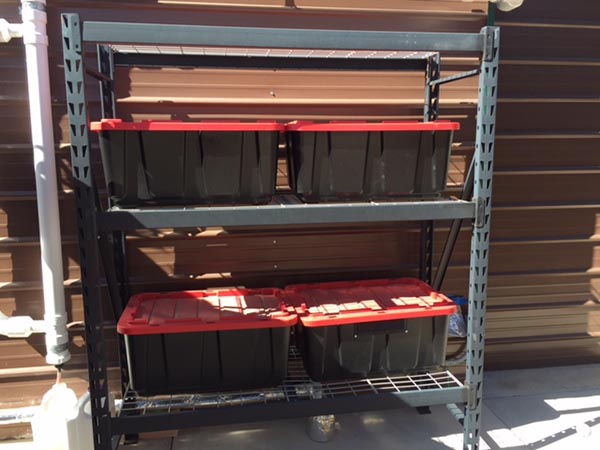 Most important for me: They are cheap! The four deep cycle marine batteries in my off-grid system @100 amp/hour each give me a total of 2400 watts of storage (@ 50% capacity) for 400 dollars. If I ever get to 16 batteries I’ll have 9600 watts of storage for around 1600 dollars. Compare that to 7000 dollars for 7000 watts of storage from Tesla’s Powerwall.
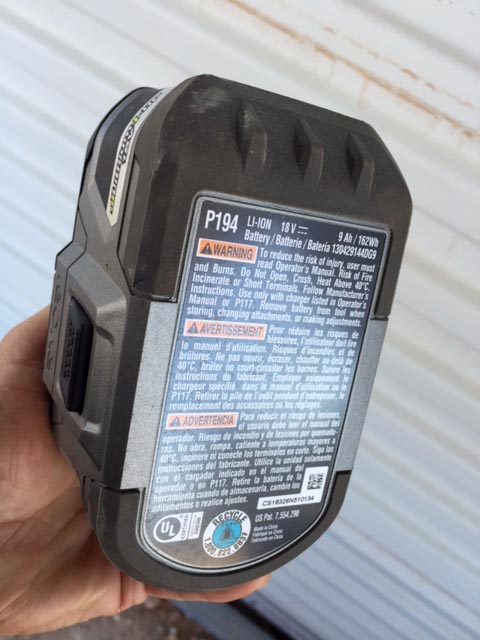 I’m not a Luddite when it comes to battery technology on motorcycles or power tools but for me the new designs and materials haven’t yet made sense for large, stationary storage banks at low cost. I’ll revisit the topic if Tesla reduces the price of their Powerwall by half or some new manufacturer comes up with a wiz bang combination of chemicals that outdoes ancient lead acid technology.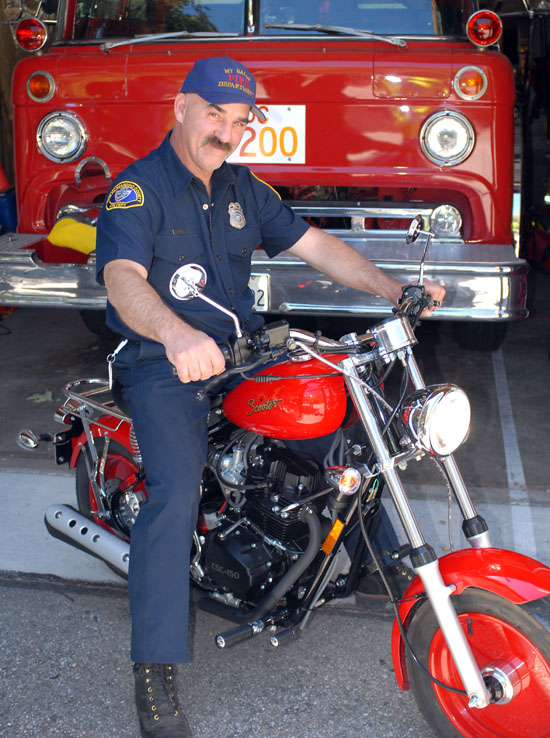

 The Ruger would rust if you didn’t keep it clean and the bottles weren’t shattering enough to suit me so the next gun I bought was a stainless steel Smith and Wesson .357 revolver with a 4-inch barrel. When you pulled the trigger you could see the drum turn, the hammer draw back and flames shoot out the sides of the weapon. It was like a miniature cannon. You got dirty shooting the thing. The whole process of firing the S&W revolver satisfied me on so many levels that at this point I was perilously close to becoming a gun nut.
 For some reason, maybe it was God’s Hand, I didn’t become a gun nut. The trips out to Kitchen Creek became fewer. The ammunition got more expensive and the two pistols were packed away. It was only a few years ago that I dug the guns out. The Ruger was a mess. Rust had scarred its smooth gun-black finish and the mechanism was stuck. It took hours to get the thing cleaned up and the rest of the day to figure out how the various parts fit back into the handgrip. Being stainless, The Smith was fine, only needing a bit of oil to loosen things up.
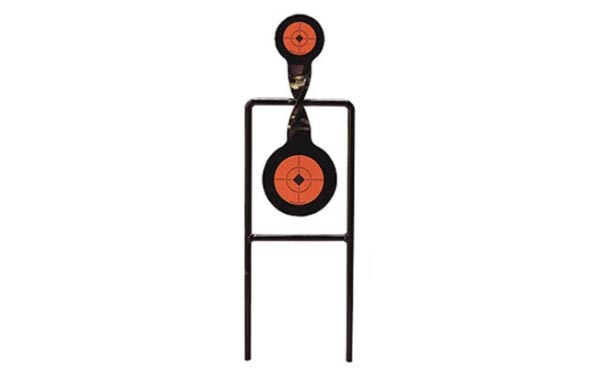 This Christmas CT gave me one of those heavy steel spinner targets, the kind with a large round target on the bottom and a smaller one on the top. When you manage to hit the thing the target spins around like a kinetic lawn ornament. I guess CT enjoyed our day at the range more than I did. Now she wants a Mosberg pump shotgun and one of those scary looking assault style rifles. You know, for home protection. It seems like we might end up with a gun nut in the family after all.