CSC’s RX6

By Joe Berk

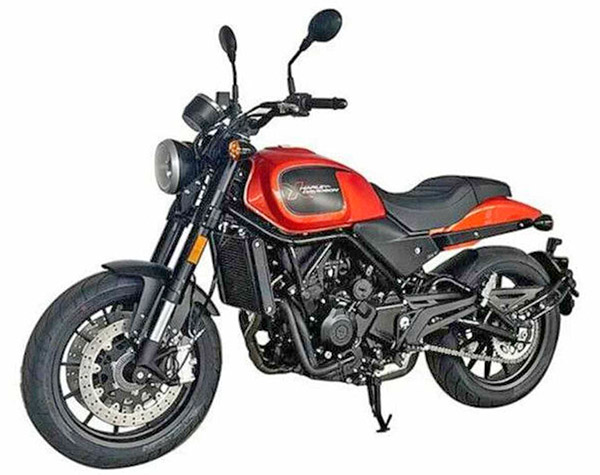
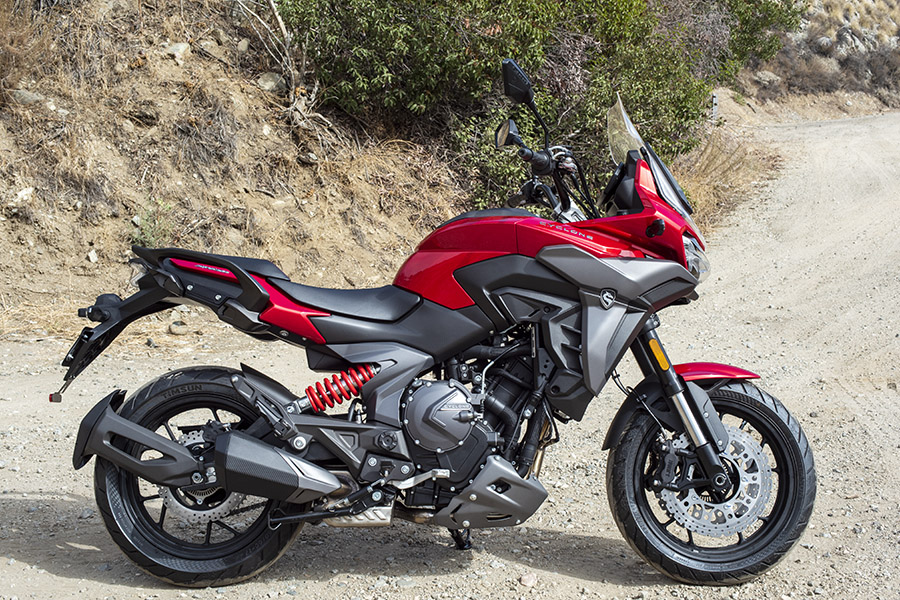
Great things continue to emerge from CSC Motorcycles, my alma mater and your favorite motorcycle company.  CSC is now importing the new Zongshen 650cc Cyclone, the RX6.  It’s a logical step up.  The first CSC adventure touring motorcycle was the RX3, and I had a ton of fun on it.  You know the story…when CSC first planned to bring that motorcycle to America, I wrote a blog about it and we sold the first one within a few seconds of the blog being published (it went to a buyer in Alaska).  The sales poured in, and literally within days of the RX3 motorcycles arriving in America, we led a tour of 15 CSC riders on a 2000-mile ride through Baja.  It was awesome, and it was pretty gutsy…taking 15 Chinese motorcycles on a ride like that.

It was onward and upward after that…a 5000-mile ride through the western US with a dozen guests from China and Colombia, a 6000-mile ride across China with Joe Gresh, a circumnavigation of the Andes Mountains in Colombia, and many more Baja rides.  Then came the CSC TT 250, the San Gabriel, the RX4 450cc, the 400cc twins, the electric City Slicker, and the RX1E  electric ADV motorcycle.

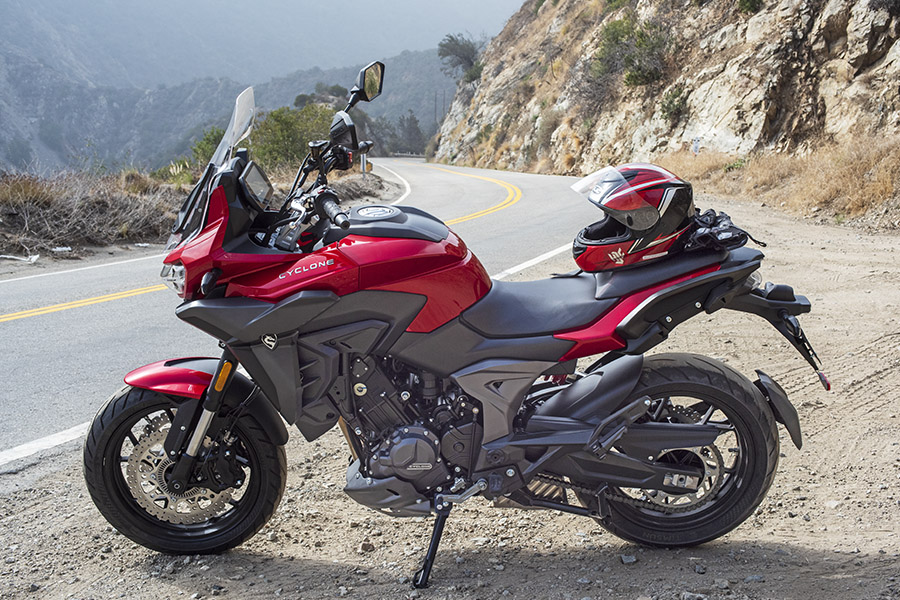
You’ve probably heard the rumors of the Zongshen/Norton alliance and their skunkworks 650cc twin, and I’m here to tell you the 650cc RX6 is a reality.  I rode the first one in America in the San Gabriel Mountains above CSC’s facilities, and it’s awesome.  And like all of the bikes listed above, CSC is bringing it here.

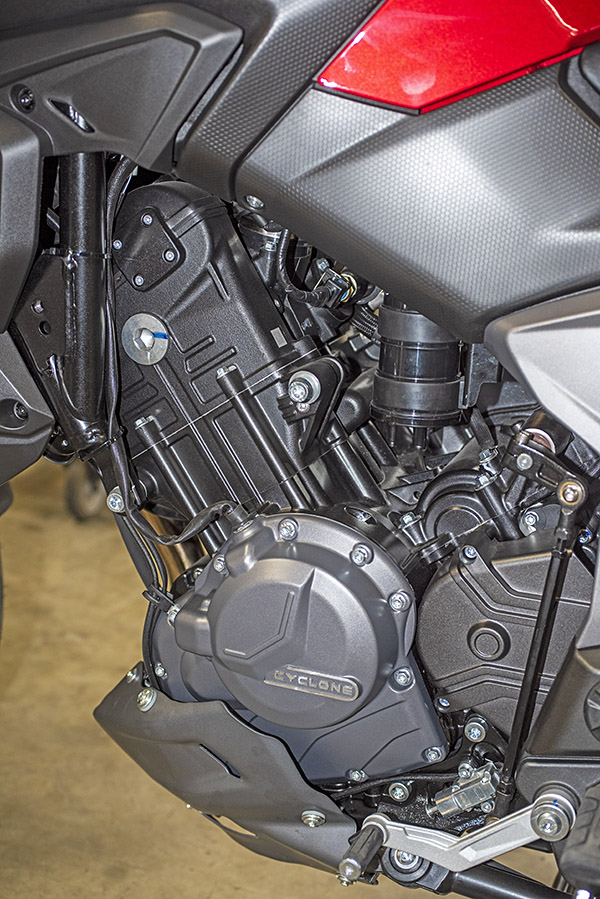
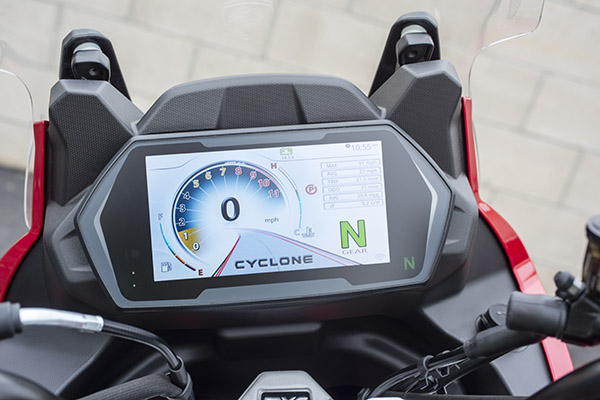
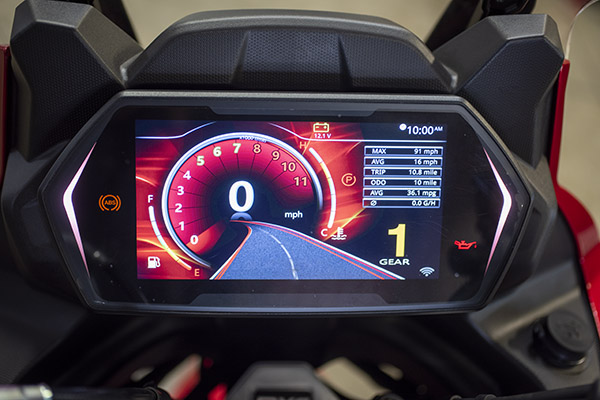
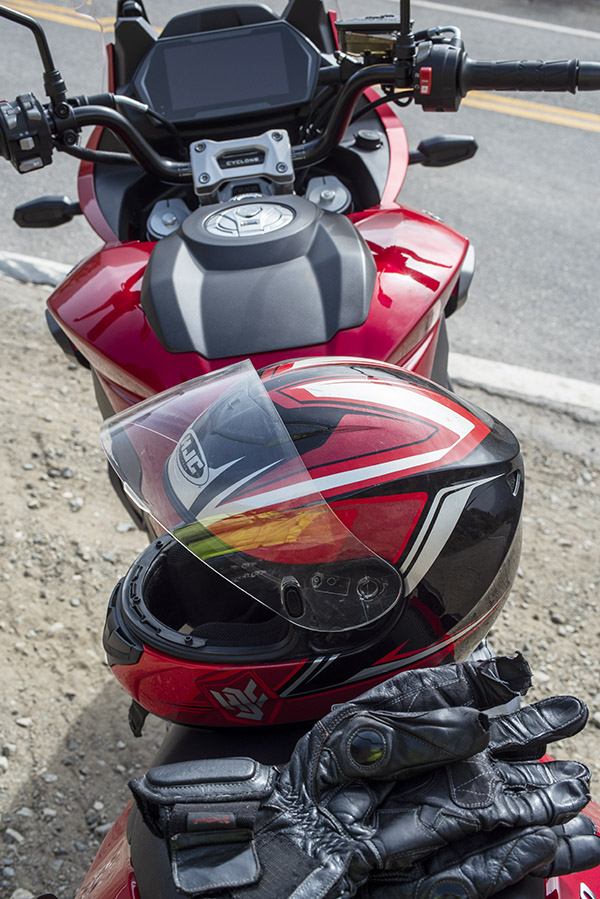
There are a lot of features on the new RX6 (I’ll list the specifications and some of the features at the bottom of this blog).   What grabbed my attention immediately when I saw the new CSC were the fit and  finish, the color, the dash, and just the overall aura of excellence.  The RX6 is a world class motorcycle.  One of the coolest things is the dash.  Check this out:

The RX6 is a full-sized motorcycle, but it’s not overwhelming.  If I had one I’d probably name it Goldilocks.  It’s not too big and it’s not too small.  It’s just right.

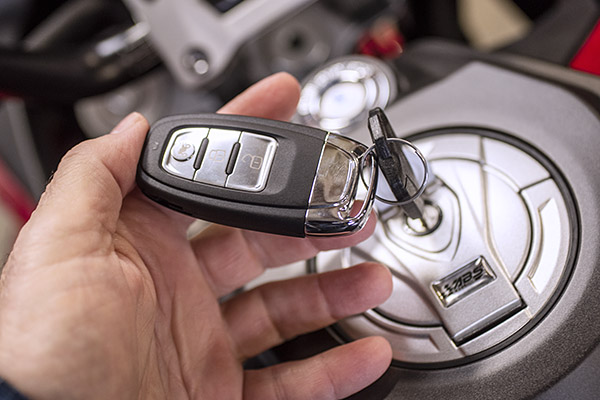
Another cool feature is the wireless key.  It’s like the electronic key on most new cars.  It has a key feature (you know, so you can insert it in any of the various locks on the RX6, like the fuel filler cap), but as long as you have it on you, you can start the RX6 just by hitting the starter button.  You don’t have to put the key in the ignition.

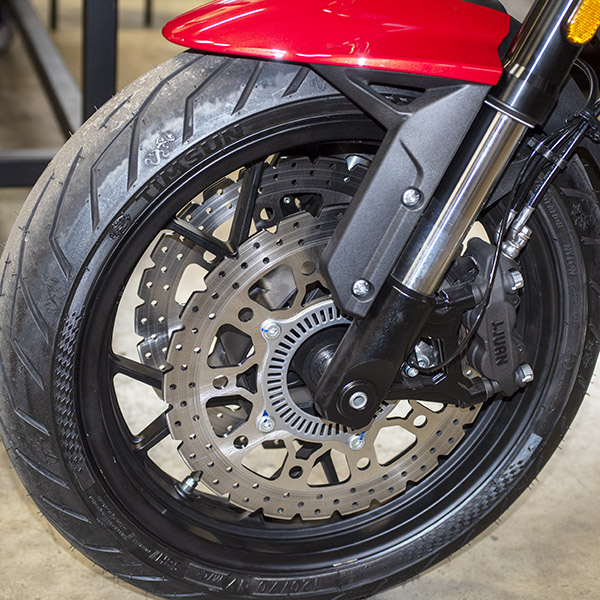
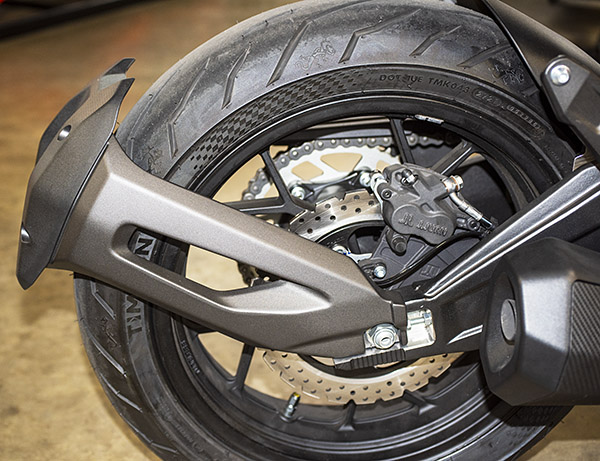
The brakes felt good on my ride in the mountains.  There are large dual disk  brakes up front, a single disk in the rear, and anti-skid braking front and rear.

The RX6 sounds like a motorcycle ought to.  It has a decisive exhaust note, and it sounded good reverberating off the San Gabriels.   It’s fast, too, with noticeably more power than an RX3 or an RX4 throughout the rev range.  I didn’t push it too hard (it was CSC’s first sample in the US), but the power was definitely there.  Zongshen is claiming a 112 mph top end; I think that is realistic and probably a bit of an underestimate.  The one I rode was literally brand new and I was in the mountains, so I didn’t try a top end run.

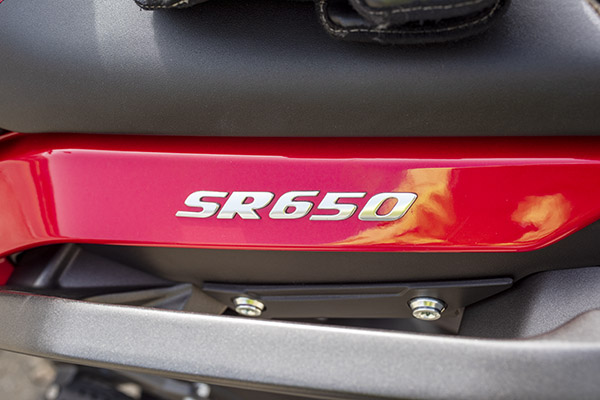
Zongshen is emphasizing the Cyclone family name (the RX3 is actually a Cyclone, too, but at CSC we made the decision to refer to it as the RX3).   The badging on the motorcycle’s side panels says SR650 (presumably, the SR stands for Sports Road), so we’ll have to see how the bike is named when it goes on sale, and Steve tells me that will be soon.  The motorcycle will carry a retail price of $7195, and as CSC always does, they are offering an introductory “Don’t Miss The Boat” price of $6695.  It’s a certainty that price won’t last long, so…you know…don’t miss the boat.  More info will be available on the CSC website.


CSC 2023 RX6 Specifications

      • Engine type: SR650, 650cc parallel twin, 4-stroke, water cooled, DOHC, 8-valve, Delphi Electronic fuel injection, ECU ignition
      • Bore/stroke: 82mm x 61.5mm
      • Compression ratio: 11.5:1
      • Horsepower: 70 hp at 8500 rpm
      • Torque: 62 Nm at 7000 rpm
      • Transmission: 6-speed
      • Clutch: FCC slipper-type
      • Wheelbase: 57.1 inches (1450mm)
      • Front suspension: 41mm inverted telescopic fork, 130mm travel
      • Rear suspension: KYB preload-adjustable mono-shock, 51mm travel, 142mm rear wheel travel
      • Front brake: Nissin 2-piston caliper, dual 320mm front discs, 5mm thick, Bosch ABS
      • Rear brake: 2-piston caliper, 260mm rotor, thickness: 5mm thick, Bosch ABS
      • Front wheel/ tire: Pirelli 120/70-R17 cast aluminum wheel, tubeless
      • Rear wheel/tire: Pirelli 160/60-R17 cast aluminum wheel, tubeless
      • Overall length: 86.4 inches (2195mm)
      • Overall width: 32.3 inches (820mm)
      • Overall height: 54.9 inches (1395mm)
      • Seat height: 32.3 inches (820mm)
      • Ground clearance: 6.5 inches (160mm)
      • Fuel capacity: 5.5 gallons (21 liters), locking gas cap
      • Estimated fuel economy: 48 MPG
      • Curb weight: 540 lb (245kg)d
      • Top speed: 112 mph (180 kph)
      • Max load, rider and luggage: 396 pounds (180kg)
      • Instrumentation: Cyclone 7-inch, full-color TFT dash, with digital speedometer, tachometer, odometer, tripmeter, fuel gauge, gear indicator, neutral light, temperature gauge, clock, turn signal and high beam indicators; Bluetooth linking to rider’s phone
      • Electronic tire-pressure monitoring system
      • Lighting: full LED lights and turn signals
      • 12-volt and USB charging outlets on dash
      • 300-watt alternator
      • Automotive-type waterproof connectors under seat
      • Tapered aluminum handlebars with bar-end weights
      • Standard engine guards, adjustable electronic windshield, vibration-damping foot pegs, dual curvature rear view mirrors
      • Front and Rear built in recorder and cameras
      • 5,000-mile valve adjustment intervals
      • Easy maintenance supported by a service manual and CSC online tutorials
      • Options: CSC touring luggage packages, accessory driving lights, heated handgrips, and more

The Wayback Machine: Zongshen, Chongqing, and Tempus Fugit

By Joe Berk

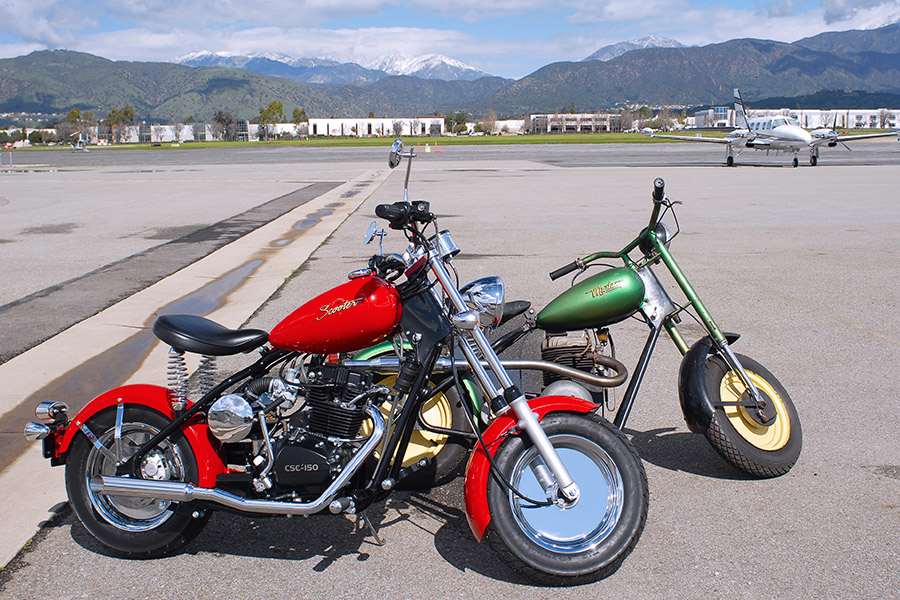
Time flies when you’re having fun.   It’s hard to believe it’s been a dozen years since I first visited Zongshen for CSC Motorcycles, and when I did, the RX3 wasn’t even a thought.  I went to Zongshen looking for a 250cc engine for CSC’s Mustang replica (the photo above shows CSC’s Mustang and an original 1954 Mustang Pony).  CSC’s Mustang replica had a 150cc engine and some folks said they wanted a 250, so we went hunting for a 250cc engine.

The quest for a 250 took me to a little town called Chongqing (little as in population: 34,000,000).  I spent a day with the Zongers and, well, you know the rest.  This is the email I sent to Steve Seidner, the CSC CEO and the guy who had the foresight to dispatch me to Chongqing.  I was energized after my visit that day, and I wrote the email you see below that night. It was a dozen years ago.  Hard to believe.


Oh, yeah, as you’re reading this…please click on the popup ads.  The folks who put them up there pay us every time you do.


17 Dec 2011

Steve:

Just got back from the Zongshen meetings in Chongqing.    This letter is a summary of how it went.

Our host and a driver picked us up in a Mercedes mini-van in the morning at the hotel.  It was about a 1-hour drive to the Zongshen campus.  Chongqing is a massive and scenic city (it just seems to go on forever).   Imagine mid-town Manhattan massively larger with taller and more modern buildings, built in a lush green mountain range, and you’ll have an idea of what the city is like.  We took a circular freeway at the edge of town, and the views were beyond stunning.  It was an overcast day, and every time we came around a mountain we had another view of the city in the mist.  It was like something in a dream.   Chongqing is the Chinese name for the city.   We in the US used to call it Chun King (like the noodle company).   We drove for an hour on a freeway (at about 60 mph the whole time) to get to the Zongshen campus, and we were still in the city.   I’ve never seen anything like it.  The city is awesome.  I could spend 6 months here just photographing the place.

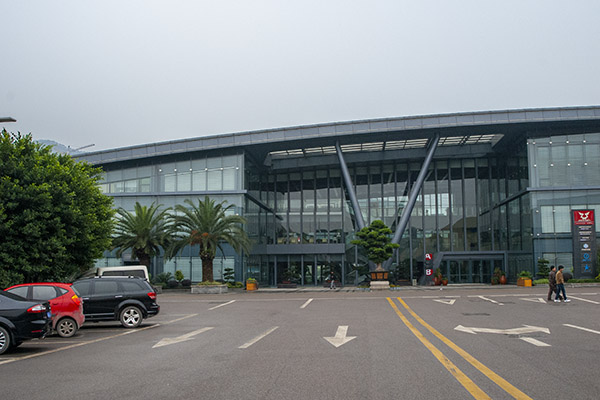
The Zongshen facilities are huge and completely modern.  The enterprise is on a landscaped campus (all fenced off from the public) in the city’s downtown area.  We were ushered into their office building complex, which is about as modern and clean as anything I have ever seen.   You can probably tell from this email that I was impressed.

Let me emphasize this again:  The Zongshen campus is huge.  My guess is that they have something in excess of 1.5 million square feet of manufacturing space.

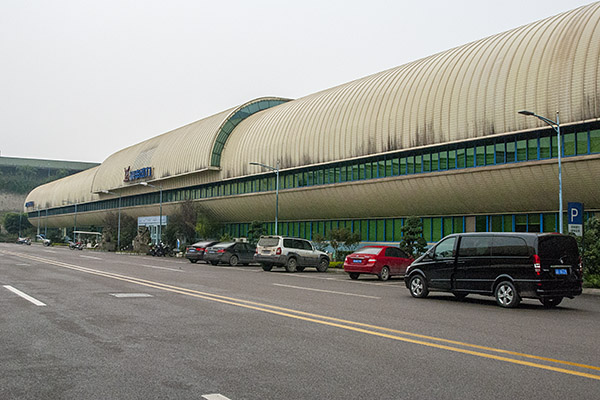
Here are some shots of some of their buildings from the outside…they have several buildings like this.  These first two show one of their machining facilities.
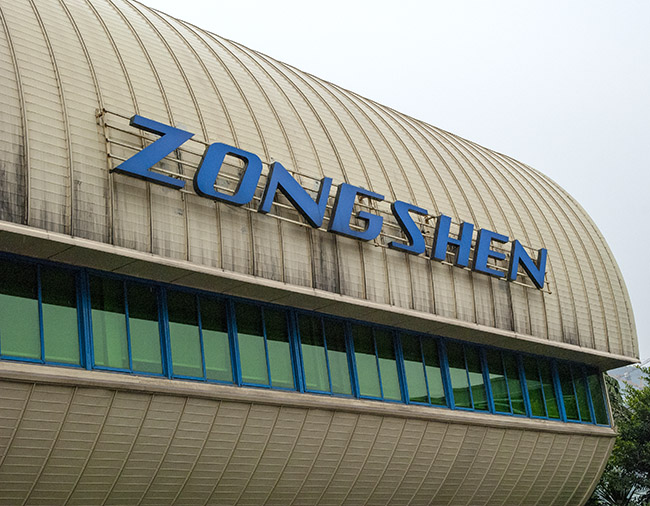
There were several buildings like the ones above on the Zongshen campus.  It was overwhelming.  This is a big company.   The people who work there live on the Zongshen campus (Zongshen provides apartments for these folks).   They work a 5-day, 8-hour-per-day week.   It looked like a pretty nice life.  Zongshen employs about 2,000 people.

Here’s a shot showing a portion of the Zongshen office building.  Very modern, and very nicely decorated inside.
Zongshen is the name of the man who started the business.   The company is about 20 years old.  Mr. Zongshen is still actively engaged running the business (notice that he is not wearing a beret).  I had the Chinese characters translated and what he is saying is “I want Joe to write our blog.”

Zongshen has a few motorcycles and scooters that have received EC (European Community) certification.  They do not have any motorcycles that have received US EPA or CARB certification.  They do have scooters, though, approved in the US.  They have two models that have EPA and CARB certification.  I explained that we might be interested in these as possible powerplants for future CSC motorcycles.

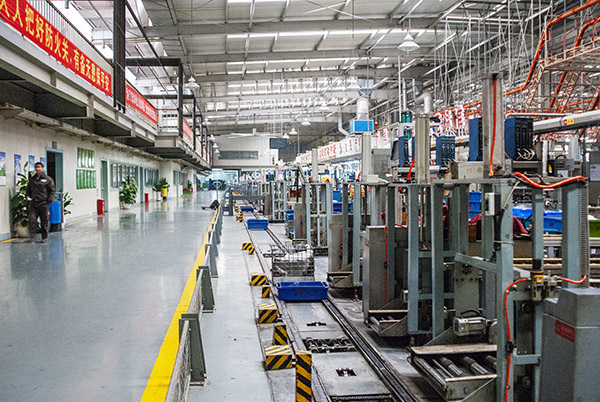
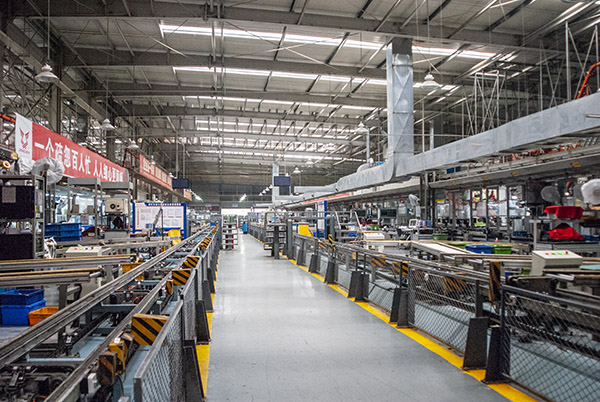
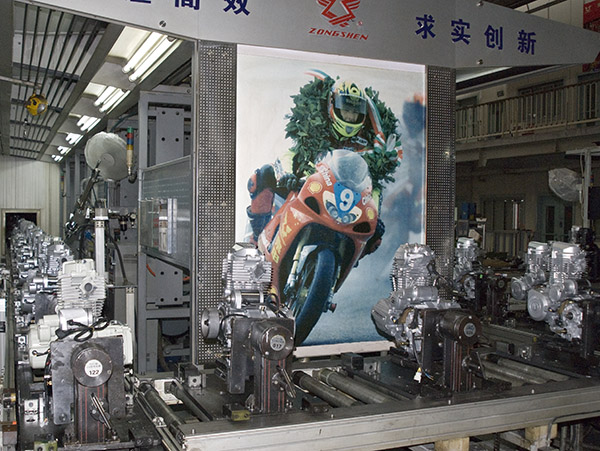
I asked to see the factory, and they took us on a factory tour.   In a word, their production operation is awesome.  The next several photographs show the inside of their engine assembly building (they had several buildings this size; these photos show the inside of just one).   It was modern, clean, and the assembly work appears to be both automated and manual (depending on the operation).  Note that we were in the factory on a Saturday, so no work was occurring.  I was thinking the entire time what fun it must be to run this kind of a facility.  Take a look.
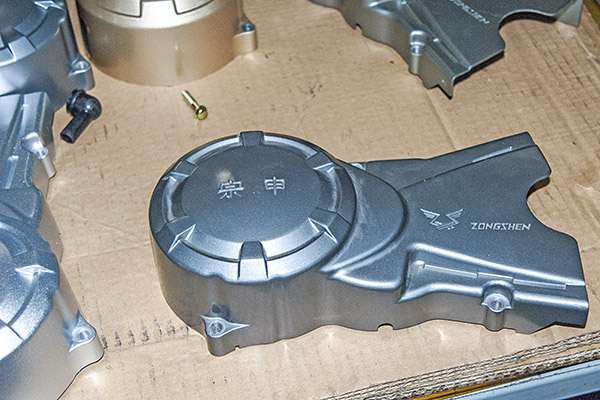
Zongshen has onsite die casting capabilities, so they can make covers with a CSC logo if we want them to.   Having this capability onsite is a good thing; most US manufacturers subcontract their die casting work and I can tell you that in the factories I have managed, getting these parts on time in a condition where they meet the drawing requirements was always a problem in the US.   Doing this work in house like Zongshen is doing is a strong plus.   They have direct control over a critical part of the process.
In addition to all the motorcycle work, Zongshen makes power equipment (like Honda does).  I grabbed this shot as we were driving by their power equipment factory.
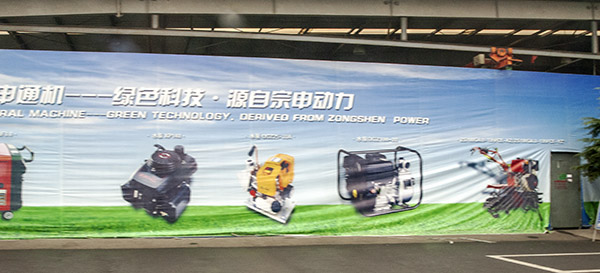
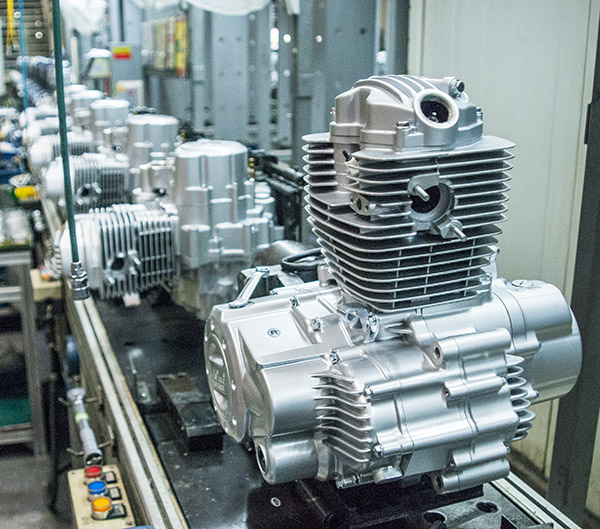
Here are some photographs of engines in work.  Zongshen makes something north of 4,000 engines every day.
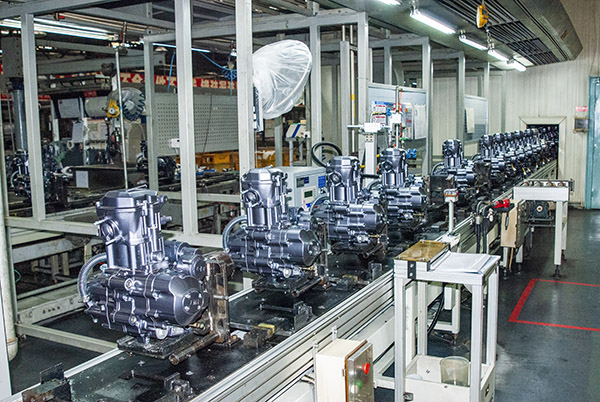
Yep, 4,000+ engines.  Every day.

The engines above are going into their automated engine test room.  They had about 100 automated test stations in there.

Zongshen makes engines for their own motorcycles as well as for other manufacturers.    They make parts for many other motorcycle manufacturers, including Harley.   They make complete scooters for several manufacturers, including Vespa.

These are 500cc, water-cooled Zongshen ATV engines….
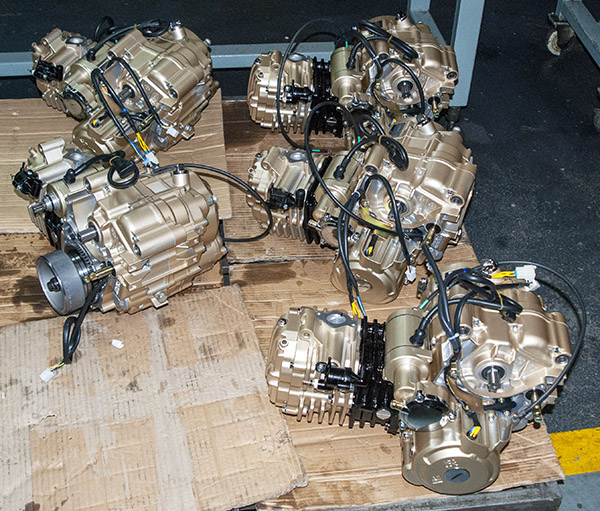
Zongshen can make engines in nearly any color a manufacturer wants.  When we walked by this display I asked what it was, and they told me it showed the different colors they could powder coat an engine.
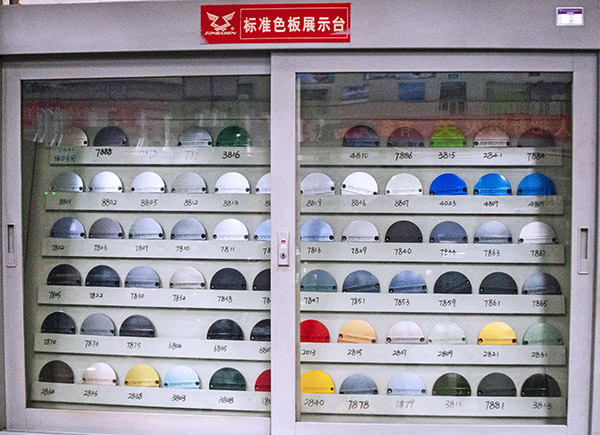
Quality appears to be very, very high.  They have the right visual metrics in place to monitor production status and to identify quality standards.  The photo below shows one set of their visual standards.   These are the defects to avoid in just one area of the operation.
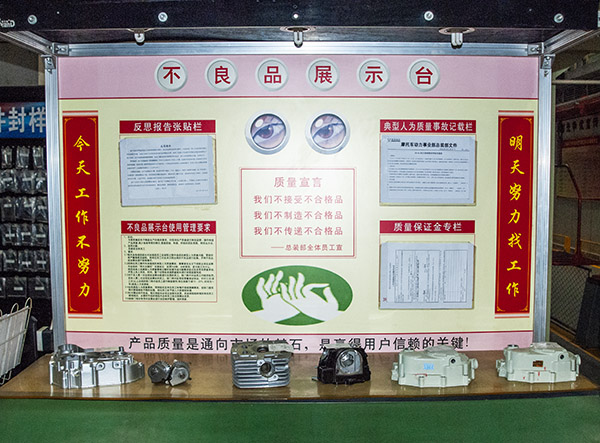
This idea of using visual standards is a good one.  I don’t see it very often in factories in the US.   It’s a sign of an advanced manufacturing operation.   And here’s one set of their production status boards and assembly instructions…boards like this were everywhere.
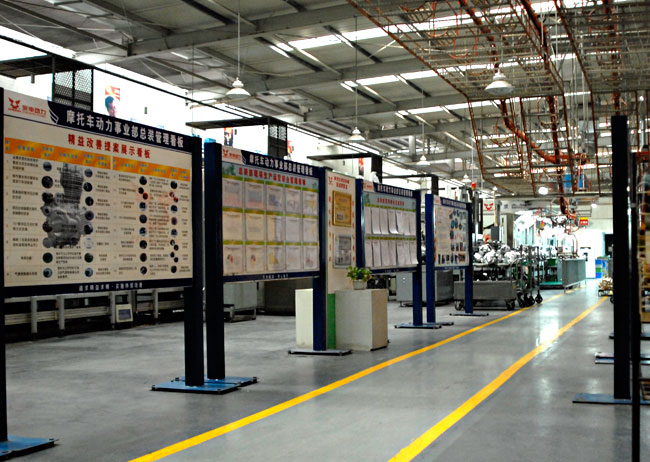
650-12_DSC6280

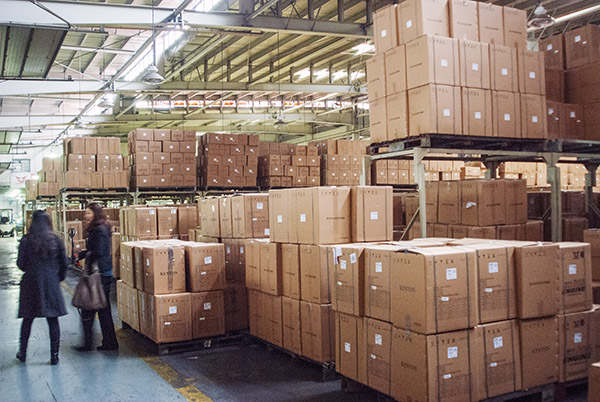
The photo below shows their engine shipping area.
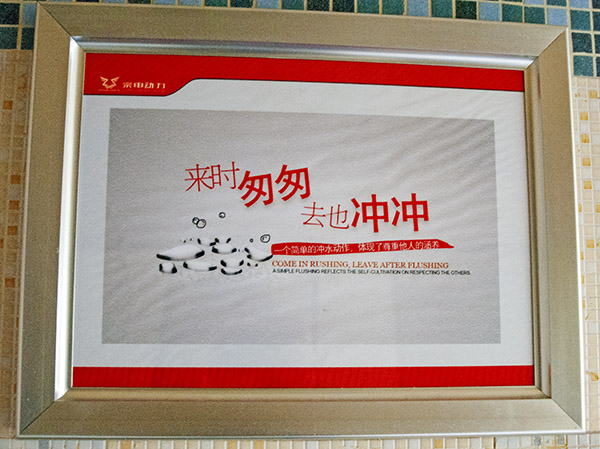
Here’s a humorous sign in the Zongshen men’s room…be happy in your work, don’t take too long, and don’t forget to flush.
As I said before, this entire operation was immaculate.  Again, it’s a sign of a well-run and high quality plant.

We then briefly ducked into the machine shop.  It was dark so I didn’t grab any photos.   What I noticed is that they use statistical process control in manufacturing their machined parts, which is another sign of an advanced quality management approach.

I also have (but did not include here in this email) photos of their engine testing area.  They test all engines (a 100% test program), and the test approach is automated.  I was impressed.   Zongshen’s quality will be as good or better than any engine made anywhere in the world, and we should have no reservations about using the 250cc engine in our CSC motorcycles.  These guys have it wired.

My host then took us next to a factory showroom at the edge of the Zongshen campus.  Here are a few photos from that area.
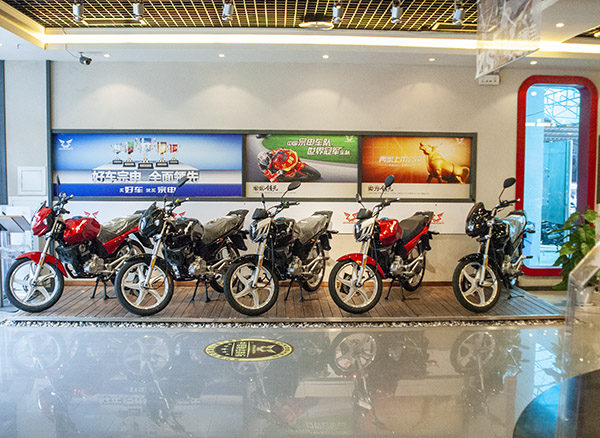
Check this one out…it’s a 125, and it looked to me to be a really nice bike.
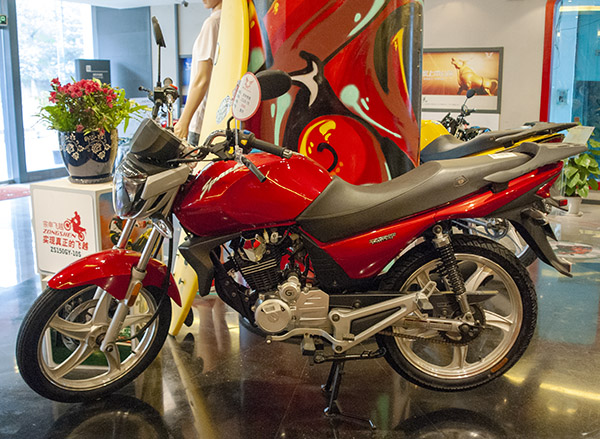
Now check out the price on the above motorcycle.  This is the all inclusive, “out-the-door-in-Chongqing,” includes-all-fees price.
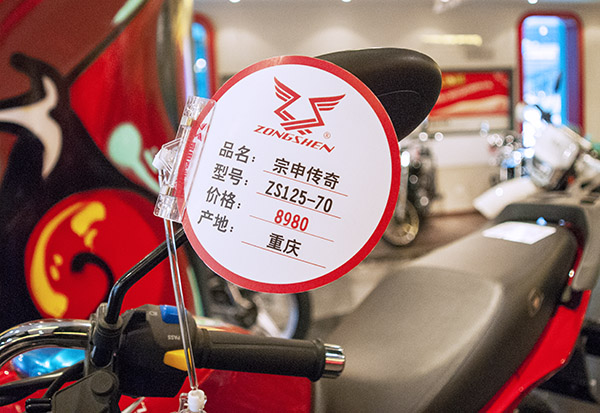
Yep, that’s 8980 RMB (or Yuan), and that converts to (get this) a whopping $1470 US dollars.   I want one.

The Chinese postal service uses Zongshen motorcycles….as do Chinese Police departments, and a lot of restaurants and other commercial interests.  These green bikes are for the Chinese Post Office, and the red ones are for commercial delivery services.
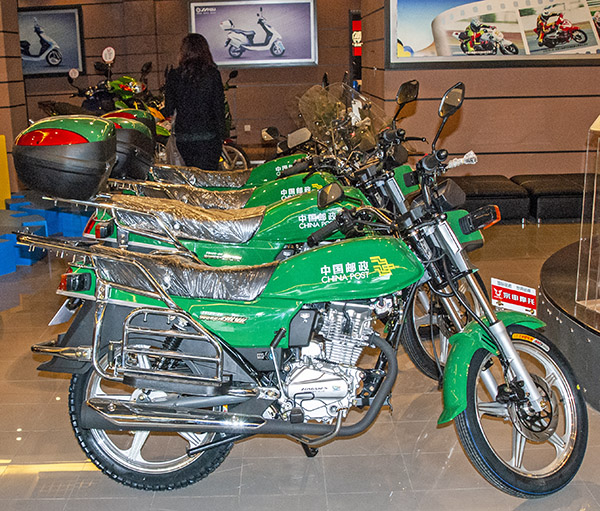
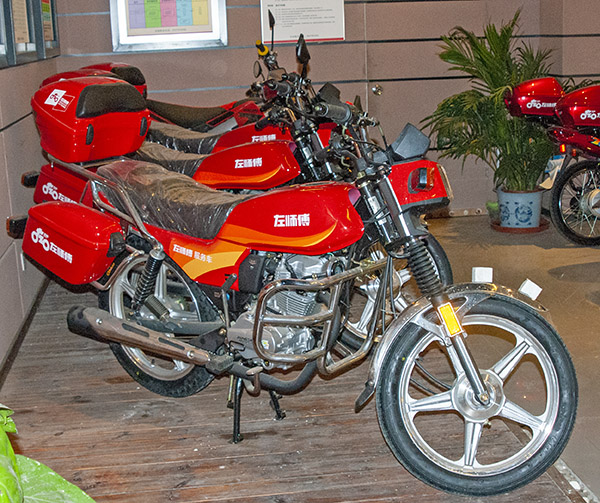
Another shot from their showroom.
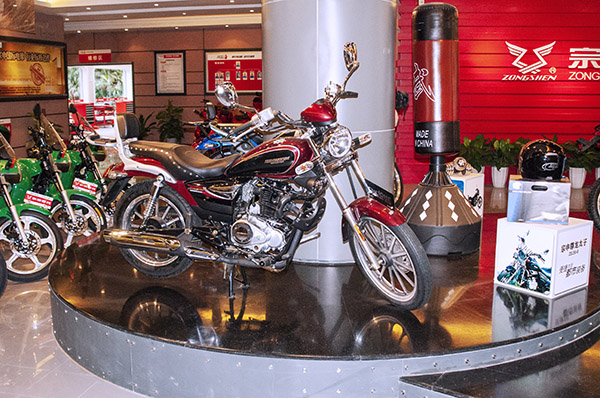
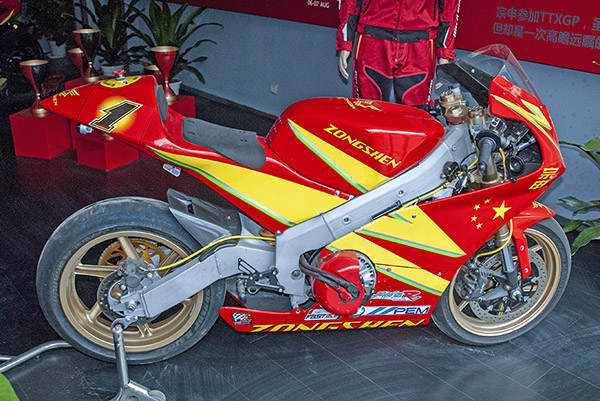
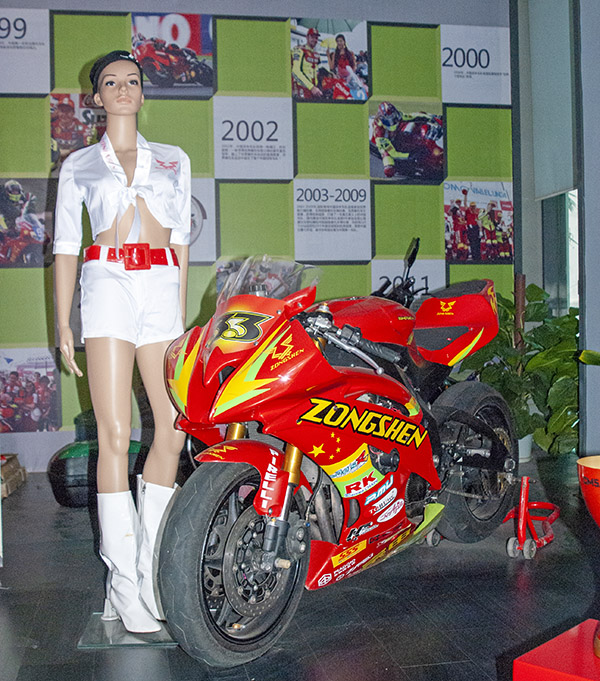
Zongshen also has a GP racing program, and they had their GP bikes on display with photos in the factory and the actual bikes in an office display area.   Cool.
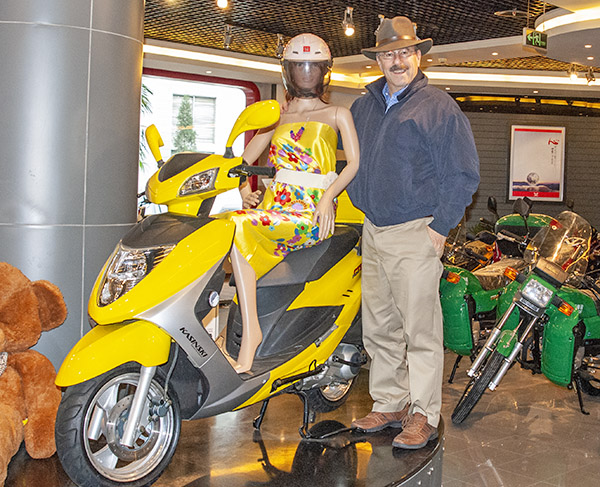
And finally one last photo, Steve, of Indiana Jones having a blast in Chongqing.
The bottom line, Boss, is that I recommend buying the 250 engine from these folks.  Their factory is awesome and they know what they are doing.   I write books about this stuff and I can tell you that this plant is as well managed as any I have ever seen.

I’ll be in the air headed home in a few more days.   This trip has been a good one.

That’s it for now.  I will send an email to the Zongshen team later today confirming what we want from them and I will keep you posted on any developments.    Thank you for the opportunity to make this visit.

Joe


So there you have it.  What followed was CSC becoming Zongshen’s North American importer, the RX3, the RX4, the TT 250, the San Gabriel line, the electric motorcycles, the Baja RX3 runs, the Andes Mountains adventure ride, the 5000-mile Western America Adventure Ride, the ride across China, the Destinations Deal ride, and more.  Lots more.  The first big ride with Zongshen was the Western America Adventure Ride, and in a few more days, we’ll post the story about how that came about.  We were excited about hooking up with Zongshen; the Chinese were excited about riding through the American West.  And ever since then, it has been one hell of a ride.

Stay tuned.


Never miss an ExNotes blog:


The latest from Dos Joes…buy your copy now!
Live on Amazon!

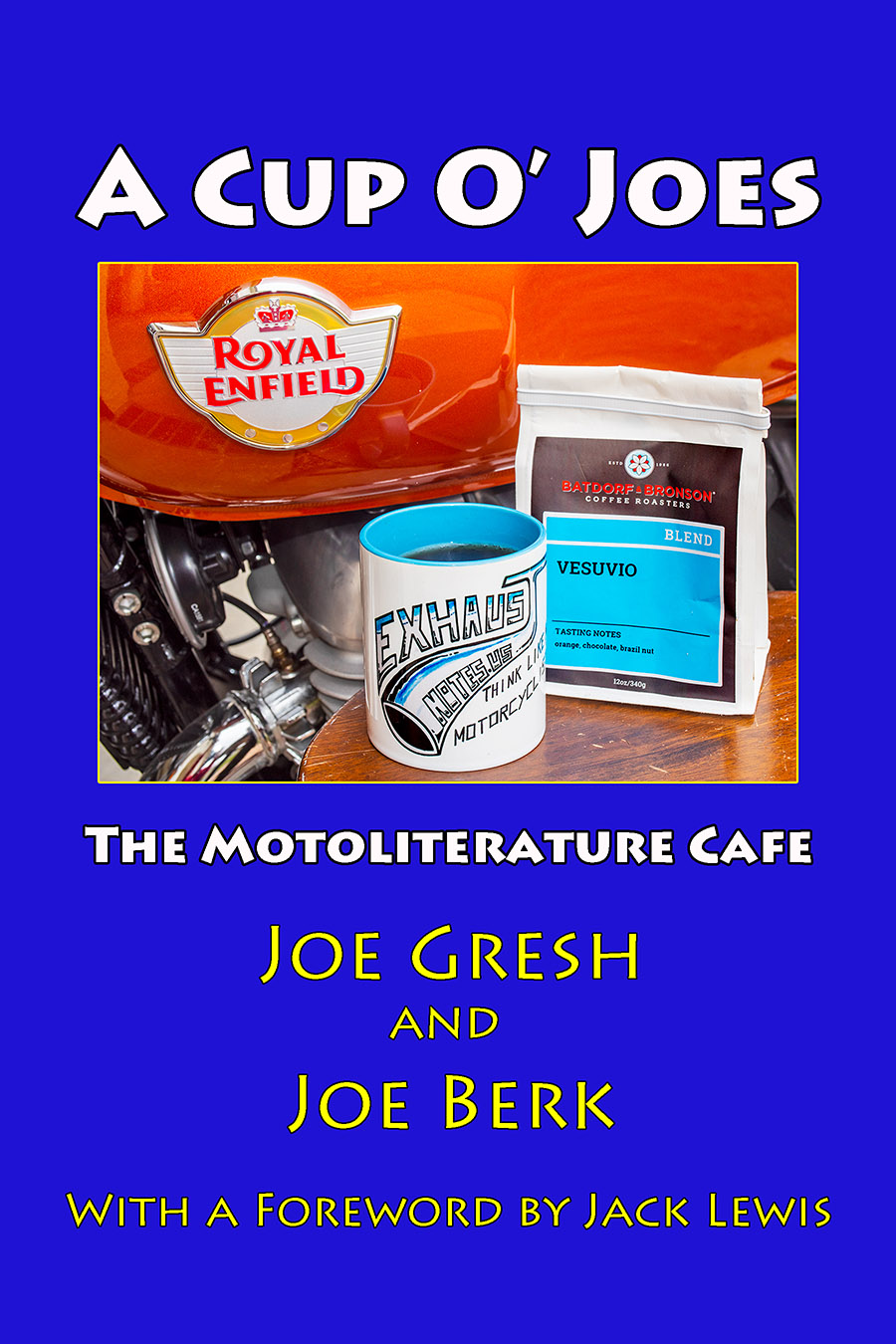
A Cup O’ Joes is available now on Amazon.  Every bathroom in every motorcycle shop and every motorcyclist’s home needs this book.  They make great gifts.  Check out the blurb:

Joe Gresh and Joe Berk bring you a collection of their favorite articles and stories from the ExhaustNotes.us website, Motorcycle Classics magazine, Rider magazine, Motorcyclist magazine, ADVMoto magazine, and other publications.  Ride with the Joes in China, Colombia, Mexico, New Zealand, Canada, the former Soviet Union, and the United States.  Read their opinions on motorcycles, accessories, and more.  Humor, wit, insight, and great reading…this collection of motoliterature belongs in your library.  Published in black and white.

You could wait for the movie, but the movie deal fell through.  You know the story…I wanted Leonardo di Caprio to play me or Gresh, the studio countered with Danny DeVito, and things fell apart after that.

Seriously, though, you need this book.  It will make you taller, skinnier, more attractive, and a faster rider.  Trust us on this.


Never miss an ExNotes blog:

The Wayback Machine: Indiana Jones in Liqian

By Joe Berk
Yes, it really was like that. Somewhere along the Silk Road (the actual Silk Road) in China. I parked my RX3 when I saw the double rainbow, thinking someday I might use the shot in a blog about this adventure.

Almost 40 years ago, I saw my first Indiana Jones movie and it affected me profoundly.  I started traveling the world stumbling upon lost empires. Things that have been swallowed by time, as they say.  My motorcycle ride through Colombia had some of that.  The Baja adventures have a bit of it, too.  But none of the rides had more of an Indiana Jones flavor than did the ride across China.  That ride was three years ago this month, and I still think about it every day.  There were several things we saw in China that would have been right at home in an Indiana Jones movie.  One was Liqian.   I can best tell you about it with an excerpt from Riding China, the story of the ride with Joe Gresh across the Ancient Kingdom.

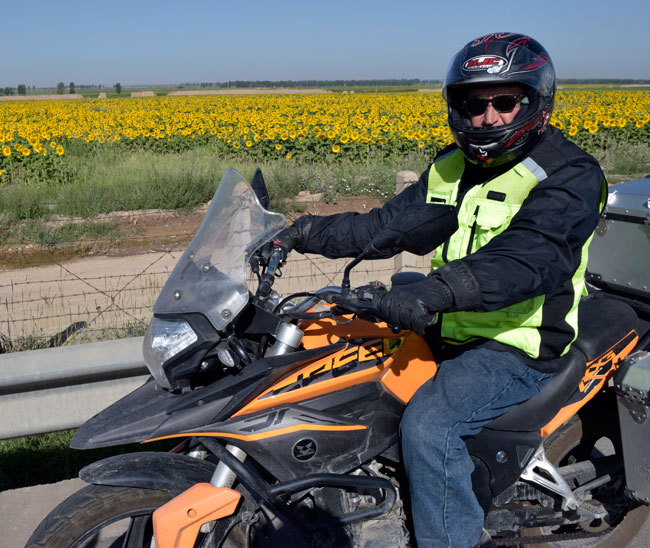
Gobi Gresh, aka Arjiu, stopping to smell the sunflowers in China.

The ride in the morning was just like yesterday. We rode the Silk Road at high speed, making great time in magnificent weather. I knew we were going to Wuwei (you could have a lot of fun with that name; it’s pronounced “woo wee”), but that was really all I knew about that day as we started out that morning. Boy, would this day ever be an interesting one!

It was to be a very full day, and Wuwei would be another one of those cities of several million people that seem to pop up in China every 50 to 100 miles. It was a huge city I had never heard of. China is an amazing place, and I was going to learn today it is more amazing than I could have imagined, and for a reason I would have never guessed. I’ve mentioned Indiana Jones movies a lot in this book. Today, we came upon something that could easily be…well, read on. This is going to be good.

After riding for a couple of hours, we left the freeway and entered a city called Yongchang. It seemed to be pretty much a regular Chinese city until we stopped. I needed to find a bathroom and Wong helped me. Wong is a big, imposing guy. He’s a corrections officer supervisor in Xi’an. He has a friendly look, but he can turn that off in a New York minute and become an extremely imposing figure. I saw him do that once on this trip, and I’ll tell you about that episode when we get to it.

Corrections Officer Supervisor Wong. He looks like a mischievous guy. This guy’s command presence was amazing. I saw him stop a car just by looking at it. Here, he’s enjoying the attention in Yongchang.

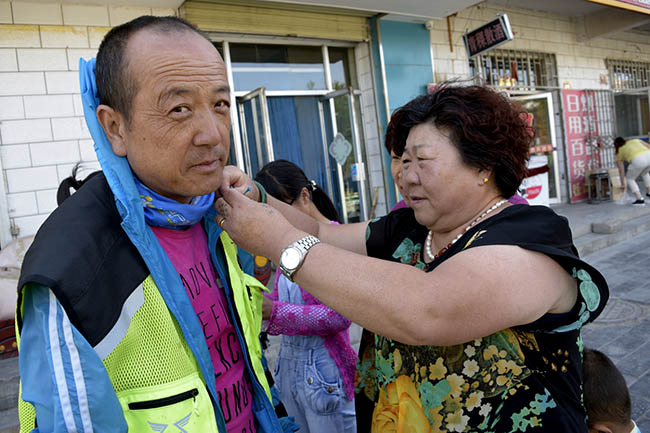
Anyway, I followed Wong through a couple of alleys and businesses until we came to an empty restaurant (it was mid-morning, and it had no customers). Wong spoke to the lady there, she nodded her head and smiled at me, and pointed to the bathroom. When I rejoined the guys back on the street, several women at a tailor shop (we had coincidentally stopped in front of a tailor shop) were fussing over Wong. He needed a button sewn on his jacket and it was obvious they were flirting with him. Wong seemed to be enjoying it. Like I said, Wong is a big guy, and I guess you could say he’s good looking. I think the women who were sewing his button on were thinking the same thing.

Beautiful young Chinese ladies. Mostly Chinese, anyway.  The one on the left is entering my phone number in her contacts list.

Three teenage girls approached us and wanted to know about our bikes. Like many young Chinese, they spoke English (in China, you learn English as a second language in grade school; it is a strong advantage in Chinese society if you can speak English well). They wanted to practice with us. It was the routine stuff (“how are you?” “hello,” and things like that) until one of the teenaged girls looked directly at me and asked, “Can I have your phone number?” Gresh and I both had a good laugh over that. I actually gave her my phone number and she carefully entered it into her phone (and no, she hasn’t called me yet).

I was enjoying all of this immensely, taking photos of the girls, the seamstresses flirting with Wong, and the rest of China all around me. There was something different about one of those teenage girls. I couldn’t quite recognize what it was, but to me she definitely looked, well, different.

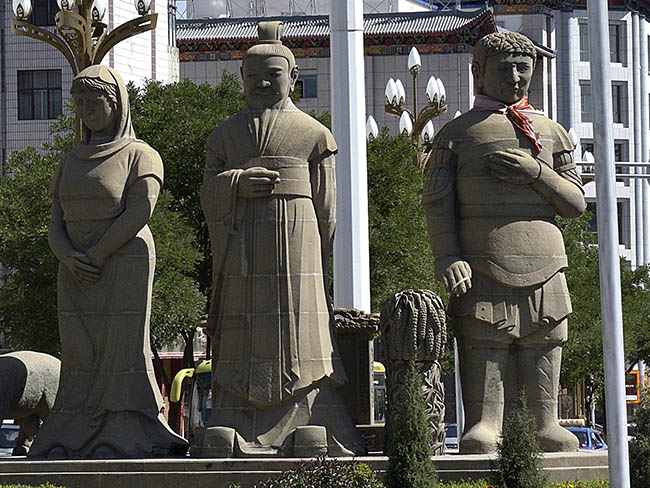
Yongchang statues. They don’t look as Chinese as you might think they should. There’s a reason for that.

It was at about that time that Sean approached me and said, “Dajiu, do you see those three statues over there?” He pointed to three tall statues that faced us, perhaps 300 yards away. I nodded yes. “If you look at their faces, you will see that they have Roman features.” Truth be told, I couldn’t really see it in the statues because they were too far away, but I grabbed a photo and later, on my computer, I could see something different. But before I looked at the photo, it all clicked for me. That’s what had my attention with that girl. We were literally in the middle of China and she didn’t look as Chinese as her two friends. She looked different.

All right, my friends, I need to go tangential here for a minute or two and share this story with you. Hang on, because this is real Indiana Jones stuff. No, scratch that. I’ve never seen an Indiana Jones movie with a story line this good (and I’ve seen all of them).

More than 2,000 years ago, before the birth of Christ, the two most powerful empires on the planet were the Roman Empire and the Han Dynasty. These two superpowers of their time enjoyed a brisk trade relationship along the Silk Road. Yep, the very same trail we had been riding for the last few days. Between them (in what became Iran and its surrounding regions) lay a smaller empire called Parthia. For reasons only the Romans understood, Rome thought it would be a good idea to attack Parthia. They sent several Roman Legions to war (and to put this in perspective, a Roman Legion consisted of about 5,000 men). To everyone’s surprise (including, I would imagine, the Romans), the Parthians kicked Rome’s butt.

Wow, imagine that. Rome, defeated on the field of battle by the much smaller Parthian Empire. To put it mildly, things did not quite go the way the Romans thought they would.


Help us bring more content to you:  Please click on the popup ads!

All of this severely disrupted trade between the Han Dynasty and the Romans, and nobody liked that. “Why the hell did you do that?” the Han Dynasty asked Rome. “We had a good thing going and you screwed it up.”  At least that’s what I’m guessing the conversation went like.  You get the idea.

Cooler minds prevailed and the Romans  realized, yeah, that was a dumb move.  The Romans told the Parthians, hey, it’s over, let’s be friends again. The war ended, the Chinese were happy, the Romans were happy, the Parthians were happy, and trade resumed. All’s well that ends well.

Well, sort of. There was still that matter of those pesky Roman legions that had invaded Parthia. They didn’t come back from that war, and for two thousand years, no one knew what happened to them. The Romans probably assumed their Legionnaires had all been slaughtered.  No one knew until an Australian dude and a Chinese guy, both University archeologist types (starting to sound a little like Indiana Jones yet?) put a theory together in 1957. Hmmm, maybe those Romans had not been killed after all.

The Parthians, being bright enough to defeat the Romans, were not about to let the Legionnaires go home and perhaps attack them again in some future war. They didn’t want to kill the Romans, either. I guess they were kinder, gentler Parthians.  Here’s where those two Aussie and Chinese archeologists enter the picture. They hypothesized that the Parthians told the errant Legionnaires, “Look, we don’t want to kill all you guys, but there’s no way we’re going to let you go back to Rome. And there’s no room for you here, either. Your only option is to keep heading east. Go to China. Maybe you crazy warmongering Italians will find nice Chinese girls and settle down.”   With that, and as one might imagine, a hearty arrivederci, the Romans continued their eastward march straight into the middle of China.

And folks, the prevailing wisdom today is that is exactly what happened (although the prevailing wisdom evidently hasn’t prevailed very far, as I had never heard the story until that morning in Yongchang). In fact, prior to this theory surfacing, folks wondered why the Chinese referred to the area around Yongchang as Liqian. That’s not a Chinese word, and it’s unlike the name of any other Chinese town.  The folks who know about these things tell me it is an unusual word in the Chinese language.

Liqian is  pronounced “Lee Chee On.”

Get it yet?

Lee Chee On? Liqian?

Doesn’t it sound like “legion?” As in Roman legion?

A Chinese man in Liqian. This guy could be the Marlboro Man for a Chinese cigarette company!

I found all of this fascinating. I saw more than a few people around the Liqian area that had a distinct western appearance, and they all consented to my taking their photos when I asked. They recognize just how special their story is. The Chinese government is taking note of this area, too. They are developing a large theme park just outside of Yongchang with a Roman motif. We visited that theme park, and while we were there, Sergeant Zuo gave a book to me (printed in both English and Chinese) about the place. It is one of the two books I brought back from China, and that book is now one of my most prized possessions.

Imagine that:  Roman legions, resettled in the middle of China, in a town called Liqian.  And I rode there.  On an RX3.


That photo at the top of this blog?  All the gear, all the time?

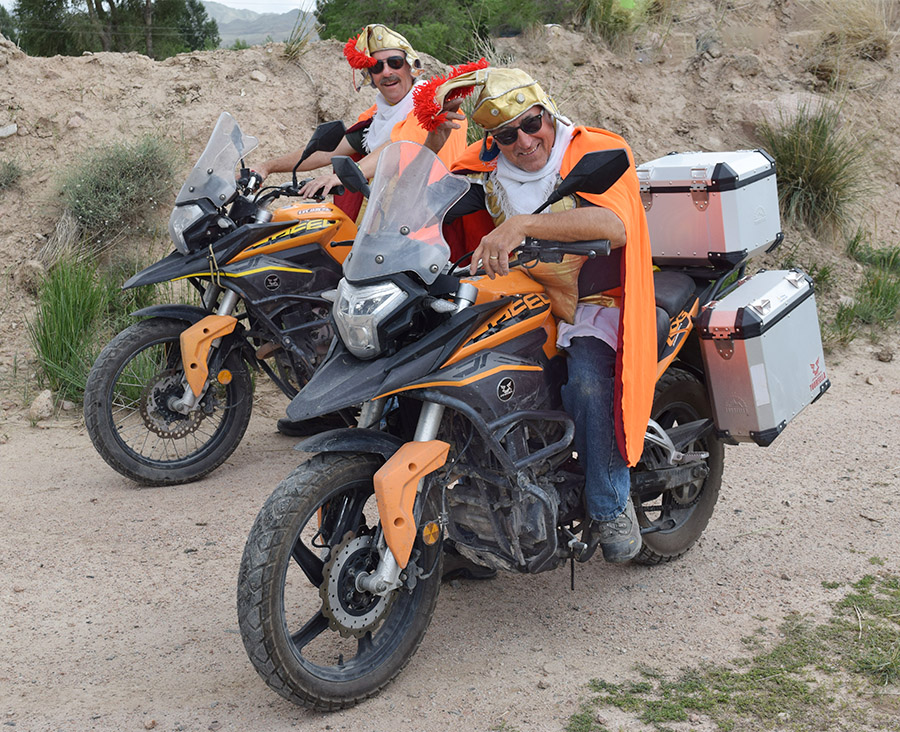
Nah, it was nothing like that.  One of the Zongshen guys had this idea about making a movie with a Roman Empire theme (you know, being as we were in Liqian and all that), and he bought along gladiator costumes. I’m not sure what Gresh and I were thinking (we’re not normally into gladiator movies) but we let those guys talk us into putting the costumes on and taking a few pics and videos.  I guess you had to be there to understand it; it was all in the spirit of the ride.


Watch for our next Indiana Jones episode in China.  It’s about the lost Buddhist grottos at Mo Gao in the Gobi Desert.  There’s more good stuff coming your way.  Stay tuned!


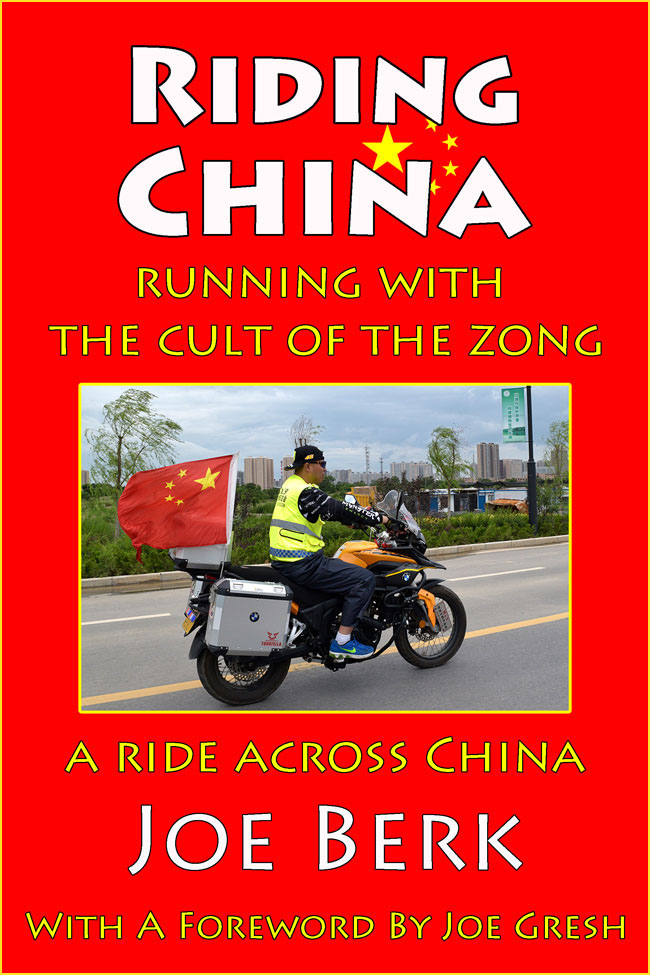
Want to read more about the ride across China?  Pick up a copy of Riding China!

The War Wagon in Baja

By Joe Berk

I’ve traveled extensively in Baja and I want to get down there again as soon as possible.  It’s the best riding on the planet, the food is amazing, the scenery is incredible, and the people are great.  The whale watching is a religious experience.  I know Baja is almost indescribably awesome and you do, too, if you’ve been there.  When I talk about Baja with folks who haven’t been there, though, the question always emerges:  Is it safe?

The short answer is yes.   But one time, we came pretty close to it not being safe.  On one trip out of many over the last 30+ years in Baja, Susie and I had a bad experience.   I almost didn’t write this blog because I didn’t want to scare anyone away from Baja.  I’ve been to Baja many times since, and I plan to keep visiting Baja.

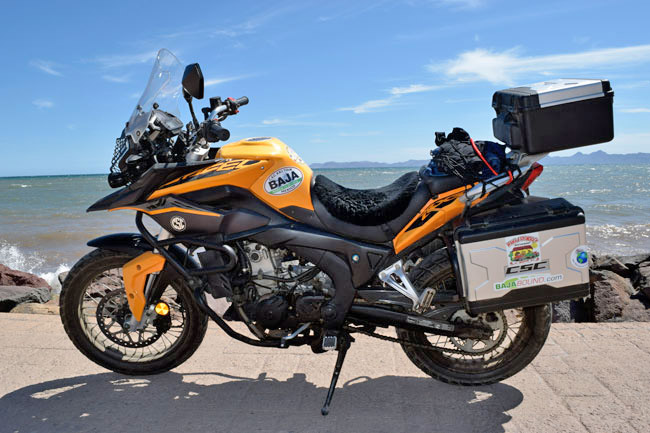
The best bike for Baja…my CSC RX3 on the malecon in Loreto, BCS.

So, with that as an introduction, let me add a bit more.  I was setting up the first CSC Baja expedition, with the idea being that we would offer free tours to Baja with the purchase of a CSC motorcycle.  That idea worked fabulously well and we successfully ran the CSC tours for years, treating people to the ride of their life, selling a lot of motorcycles, and generally having an inordinate amount of fun.  It convinced me that the RX3 motorcycle was possibly the best bike ever for exploring Baja, and I still feel that way.  You may disagree, but hey, it’s okay to be wrong.

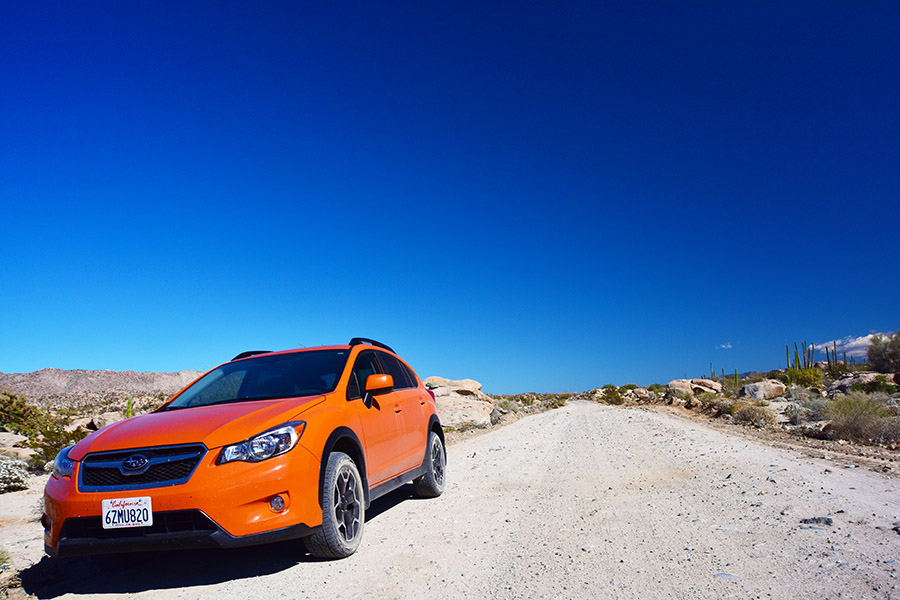
But I digress.  To get back on topic, I hadn’t been to Baja in a while and I was taking a big group down, so Susie and I rolled south in my Subie on a pre-ride scouting expedition.  With the intro stuff done, here’s the blog I wrote for CSC on that trip.


Susie and I are down in Baja scouting the locations for the Inaugural Baja run, and it sure has been an interesting two days. I didn’t have any Internet access in Catavina yesterday, but I have a spotty connection in Santa Rosalia tonight, right on the Sea of Cortez, and we’ll see how much of this gets through.

First, a few quick photos of our first couple of stops…

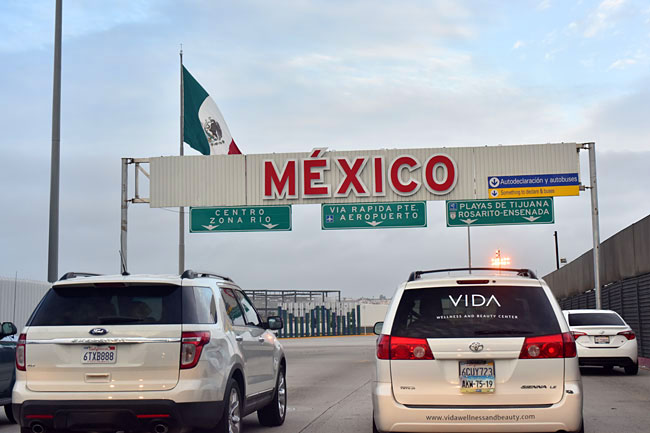
Rolling across the US border into Mexico…
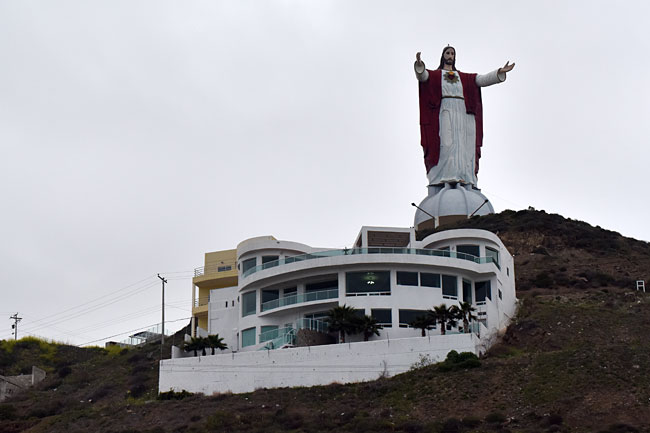
Jesus, a giant statue on the way to Ensenada.
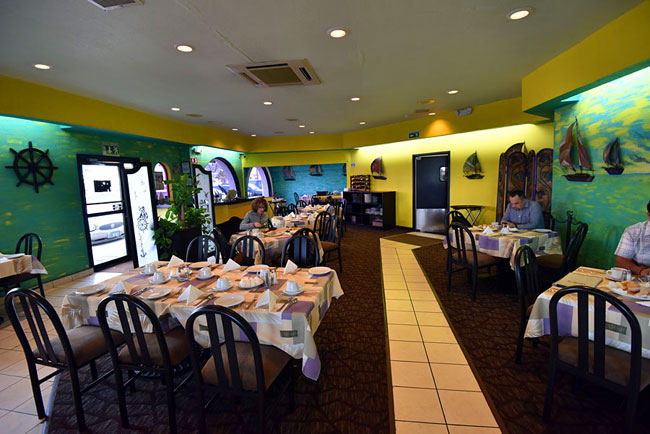
Breakfast in Velero’s in Ensenada…worth the trip into Mexico all by itself!
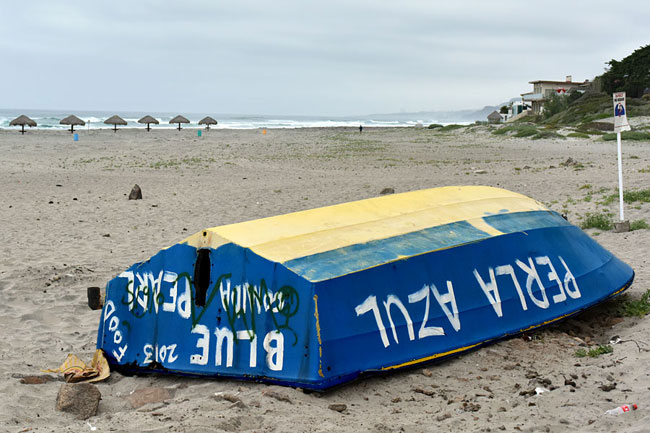
The Blue Pearl, on the beach…

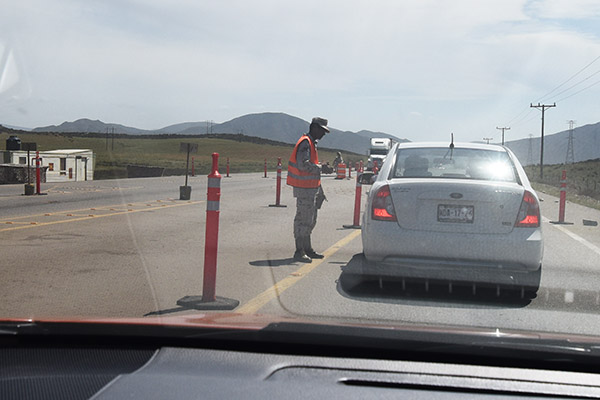
After we rolled through Ensenada, it was on through the mountains south and Baja’s agricultural district. Boy oh boy, did we have an adventure.  All that stuff I’ve been telling you about how safe it is down here? Well, I still believe it, but my confidence (and Susie’s) was sorely tested yesterday.  See that guy in the photo below? FYI, you’re not supposed to take photos at these roadblocks, and I want you to keep that in mind on our CSC Baja trip…but I never have done too well following rules.  I’m talking about the infantryman talking to the car in front of us at our first military roadblock (one of many Puesto Militars) on the way down. He’s the dude standing to the left of the white car.

Mr. “Okay, go ahead…”

Well, things got very interesting after that. That photo was about 175 miles south of the border, just north of San Quintin, where we got caught in a mini-labor riot. Turns out the migrant workers down here are not happy with their wages on the farms. A lot of them come from mainland Mexico with their families, including their kids, whom they evidently put to work picking whatever crops they pick in the fields north of San Quintin. The Mexican government is clamping down on child labor, so that affects these people and they are plenty angry about it. Real angry, apparently.

One of the military checkpoint guys told us the road was closed (that dude in the photo above) about 80 km ahead but he didn’t speak English and he didn’t tell us why. I thought it was because they were working on the road, which happens frequently in Baja, and when that happens the road is closed for about 20 minutes. Then you can proceed. Happens all the time. Amazingly (based on what we found out a few miles down the road) that young soldier let the car in front of us proceed, and then he let us proceed.

About 30 miles later, we started seeing what we thought were small piles of asphalt on the road with lots of wires (you know, like for fixing potholes, which they have a lot of in Baja, but I couldn’t figure out what the wires were). We saw this for about the next 15 miles. We saw hundreds of people milling around, too; far more than I’ve ever seen in these little farming towns.

It turns out that we what thought were piles of asphalt were actually the remains of burning tires. As in “let’s light a fire and shut the main highway down burning tires.” The ag workers have been having demonstrations (actually, labor riots) in the San Quintin area, and we found out (the hard way) that this had been going on for 2 days.

We went a few more miles and encountered a roadblock (more burning tire remnants and boulders blocking the road) with about 50 men milling about who immediately surrounded us. They wouldn’t let us go forward or turn around. One of them threatened us and the Subaru with a 2×4. They were all over the car. Susie had the presence of mind to lock the doors. These guys were mad at the world, and we were the world at that instant. I didn’t know what to do, so I fell back on what always seemed to work elsewhere in the world: I asked the guy who seemed to be in charge if I could pay the toll to get through. He seemed genuinely surprised at that, he thought about it for maybe 5 seconds (duly observed by his subordinate seditionists), and then he realized this might be a viable alternative income stream (Sue designs and manages automated toll roads in the US; it seems to work for us). Our Mexican revolutionary said, “hokay,” I gave him a ten dollar bill, and he told the insurrectionists “let them pass.” Crisis averted. Whew!

The tire remnants continued for another 5 miles, but there were no more roadblocks. While we were stopped at the impromptu toll plaza, one of the seditionists keyed my car door on Susie’s side with initials, presumably the initials of their labor movement (LPS or something like that). I’ll guess I’ll get my body shop guy to repaint it when I get home. That little Subie is going to end up having more bodywork than Joan Rivers. A couple of months ago I dropped one of the RX3s into it. This week it was the Nuevo Mexican Revolution. I’m keeping the body shop business alive in California. Or maybe not. I might leave those initials there as a war wound. At the very minimum, I am re-christening the Subie. She’s no longer the Starship Subaru (sorry, Carl, that was a good moniker, but its time has come and gone). My car is now known as the War Wagon.

We found out from a busload of people in El Rosario (next town down the before getting into the mountains) that they expect the demonstrations to continue for a couple more days and then it should be over. One guy had his windows shattered, probably by the same guy we saw with the 2×4.

Folks, all the tourists down here (and there are lots of us) were talking about this. No one had ever experienced anything like it before, and most of us have been coming down here for decades. It’s a blip, and I’m guessing it is already over.  It sure was exciting, though.

We continued south after that… and that meant it was time for a few more photos.

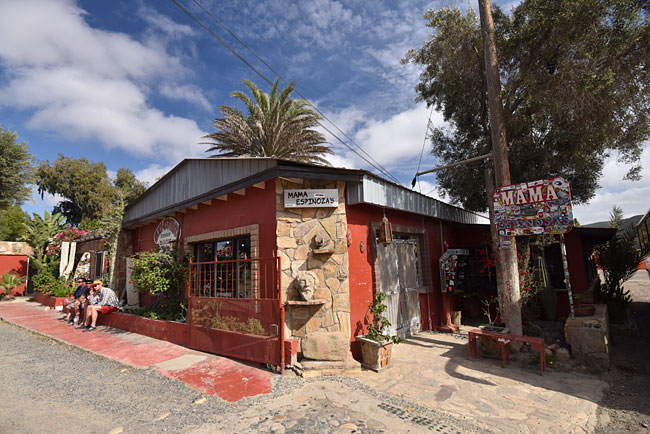
Mama Espinosa’s in El Rosario…great burritos!
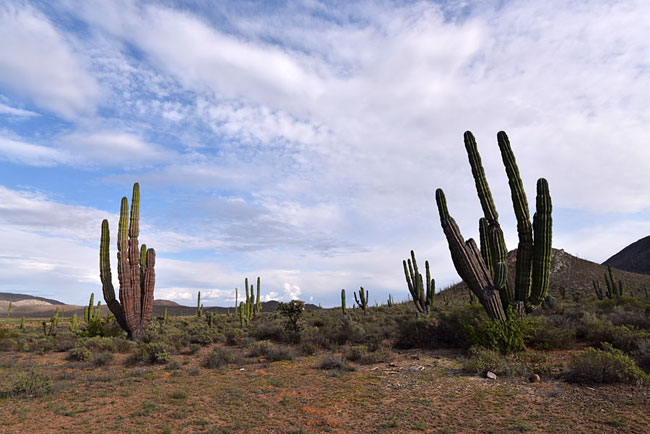
Cardon cactus in the Vizcaino Desert

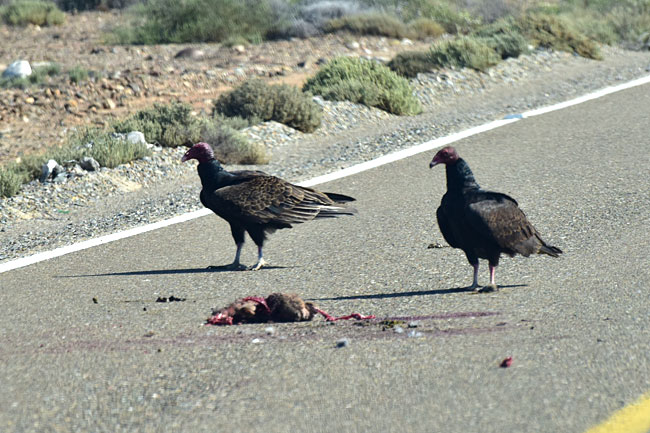
At one point on our way to Guerrero Negro, I spotted several vultures fighting over a dead rabbit. Time to put the 70-300 on the Nikon and see how close I could get.

The Baja Department of Sanitation hard at work.

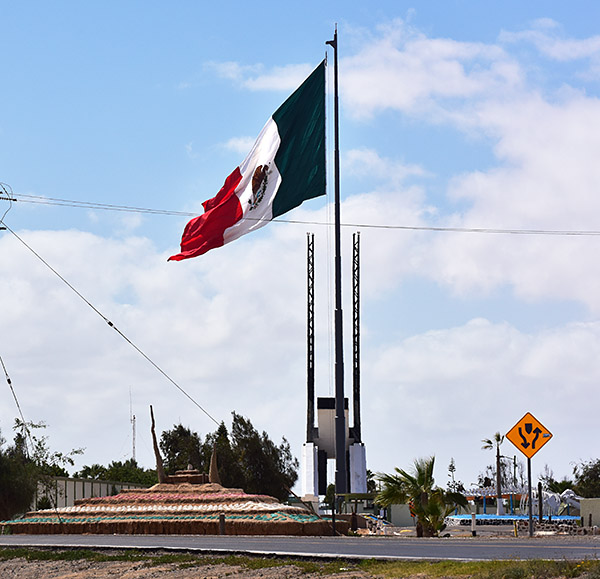
When you roll into Guerrero Negro, there’s a giant Mexican flag flying in front of a giant metal structure (an artist’s interpretation of the Mexican Eagle). You’re not supposed to take pictures here (it’s a military installation), but I still had the 300mm lens on the camera and I got sneaky.

The largest flag I’ve ever seen.

That point is right on the 28th Parallel, which marks the border between Baja and Baja Sur (the two Mexican states in Baja).

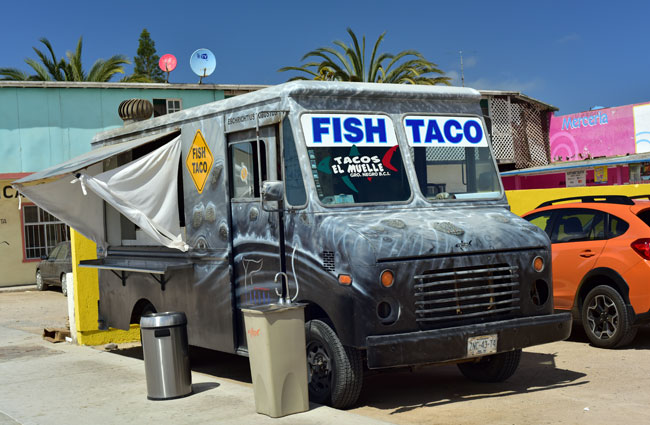
You know, being anywhere near the 28th Parallel and not stopping for a fish taco or two at Tony’s would be a crime. I’ve been stopping at his truck for the last 21 years…every time I come down here. What’s cool about it is Tony always recognizes me, even though sometimes it’s a year or more since I’ve seen him!
The best fish tacos in the world!
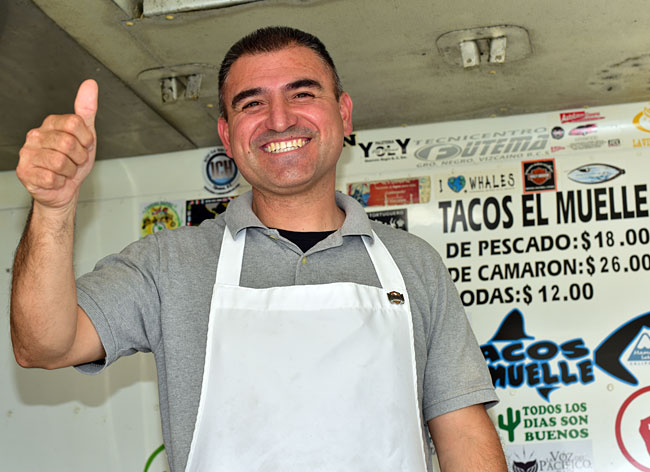
My good buddy Tony Lopez, who is a fish taco chef extraordinaire!

Tony told me he’s been in business for 22 years. I bought my first fish taco from him 21 years ago.

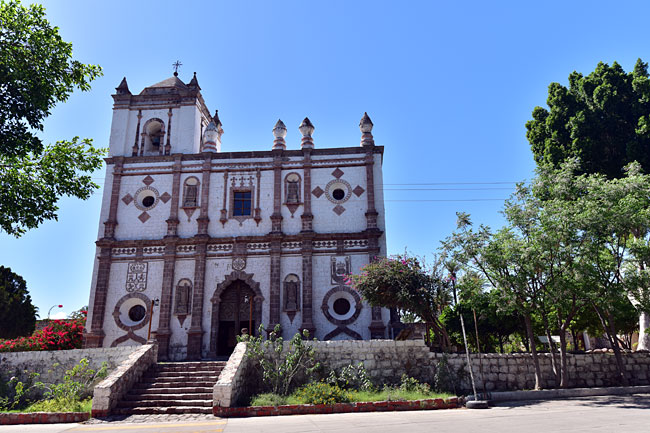
We stopped in San Ignacio next and I grabbed a couple of photos of (and in) the mission there.

The San Ignacio Mission, built by the Jesuits in the 1700s…it’s still in use as a working church
Flowers inside the Mission
One of the figures inside the San Ignacio Mission

That’s it for tonight, my friends. Time to sign off and get some shuteye. We’re headed south again tomorrow. Watch for more photos!


So there you have it.   With more than three decades of exploring Mexico under my belt, this was my one negative Baja experience.  I communicated the above to all the followers we had on the CSC blog and asked if they wanted to change the trip to someplace else here in the US, and everyone answered with a resounding No!   We did the Baja trip with 15 or so riders, and we did several more CSC Baja rides after that.   Every one of those trips was a blast.  Here’s a video I prepared from the first CSC ride:

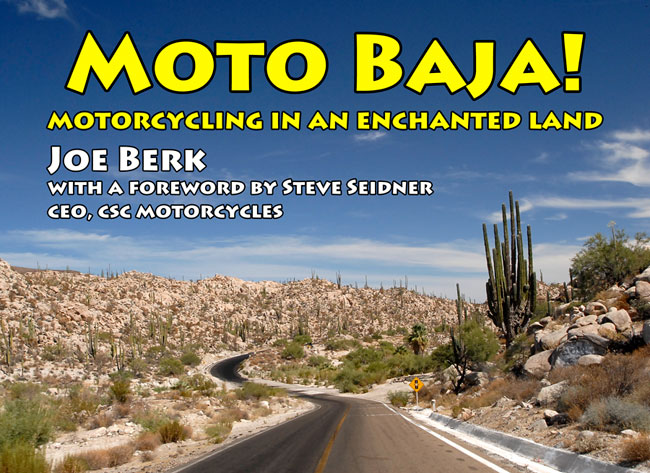
You can read more about Baja and our adventures down there in Moto Baja.

I made a lot of good friends on those Baja rides, many of whom still ride their CSC motorcycles and many of whom regularly follow the ExNotes blog.   You’ve seen their comments here over the last four or five years.

To me, Baja is the best riding there is.  If you’re headed into Baja, make sure you get insurance.  It’s not likely you’ll need it, but the Mexican government requires that you be insured and your regular insurance won’t cover you in Mexico.  The insurance provider we always go with is BajaBound.

Want more Baja content?  You can find more ExNotes Baja stuff here.

The Casio Marlin

By Joe Berk

I’ve mentioned my Casio Marlin (also known as the Duro) a few times in previous blogs.  I love this watch for any number of reasons:  It’s accurate, it’s rugged, it’s waterproof, it’s comfortable, and it’s inexpensive.  It’s a diver’s watch, but I’m not a diver.  I just like the look of thing.  I’ve worn it on a few big moto trips including the ride around the Andes Mountains in Colombia.  It poured cats and dogs on that trip.  The Marlin was unfazed.

At about $50, this watch has to be the deal of the century.  Just for grins I grabbed a picture of the Rolex Sea Dweller and put it along side the Casio.  If you own a Rolex don’t get your shorts in a knot ((I own one, too).   But the comparison has to make you wonder:  Let’s see, $50 for the Casio and $16,500 (or whatever it is these days) for the Sea Dweller (if you can find one and in today’s market that’s not easy).  As Aristotle would say….hmmmmm.

Yeah, you can go a little deeper with the Rolex (they say down to 3,900 meters).  My Casio says it’s good for 200 meters.  That’s over 600 feet down.  It’s not likely I’ll ever visit those regions and if I ever do I can guarantee you the time of day is not what will be on my mind.

I’ve owned my Marlin for about 10 years now.  I think I’ve had to replace the battery twice.  My guy charges me $3.25 to install a new battery (parts and labor).  The strap got stiff and cracked, so I’ve replaced that once (I think it was $10).  I checked and the cost of a replacement resin Rolex band is close to $300.  On the other hand, the Rolex is self-winding, so it never needs a battery.   Again….hmmmm.


You know what to do…click on the popup ads!


On that comfort thing…the Casio Marlin is about the right size for a man’s watch and the resin band is very comfortable.  I always forget I have it on and on more than a few occasions I’ve gone into the water wearing it (swimming, showering, and most recently, almost being swept away in my Subaru going to the gun club).  It doesn’t matter to the Casio.  I’d say it’s indestructable, but some Internet weenie would want to get into a urinating contest about that.

Boarding the ferry in Magangué on the Magdelena River.  Even there, the Casio’s good looks and functionality appealed to an onlooker.

When I rode Colombia with Juan and Carlos, one time we had to wait a couple of hours on a hot and humid afternoon for the ferry to come in and carry us down the Magdalena River to Mompos.  While we were waiting in what little shade we could find in Magangué, a young Colombian boy came over and touched the Casio, nodding his approval.  If I had another watch with me I would have given it to him.  I still think about that on occasion and wish I had given it to that kid.  I think when I bought my Marlin, they were $39.  That young fellow most likely would have cherished the Casio the rest of his life (as I will).  Maybe I need another ride in Colombia.  If I go again I’ll throw an extra Marlin in one of the panniers.  You know, just to be prepared.


More watches and more product reviews?  You bet!


Never miss an ExNotes blog:

The Wayback Machine: Why a 250?

By Joe Berk

This is a blog I wrote for CSC Motorcycles several years ago (time sure flies when you’re having fun).  The topic was as timely then as it is today.  I like big bikes, but I like small bikes more, and I’m convinced that a small bike makes way more sense than a big bike for real world adventure touring.  I thought I would post the blog again, as we are having way too much fun with CSC, BMW, Janus, and other companies who have seen the light.  Here’s the blog from way back.


A 250cc bike seems too small to many riders. Is it?

The 250cc CSC Cyclone.

The motorcycle craze in the US really started in the mid-1960s. I know motorcycling goes back way before that, but motorcycling was essentially a fringe endeavor until Honda came on the scene. We met the nicest people on Hondas, if you remember, and that ad tagline was a winner (so is “Don’t Miss The Boat,” by the way).  (Note:  “Don’t Miss The Boat” was CSC’s tagline for the US RX3 introduction, and those who didn’t miss the boat participated in one of the best deals in the history of motorcycling.)

Honda’s sales model was a good one. They pulled us in with small bikes and then convinced us we needed larger and larger bikes. Many of us started with a Honda Cub (the 50cc step-through), we progressed to the Super 90 (that was my jump in), then the 160cc baby Super Hawk, then the 305cc Super Hawk, and at that point in about 1967 that was it for Honda. They didn’t have anything bigger (yet). After the 305cc Super Hawk, the next step for most folks was either a Harley or a Triumph.

Yours Truly, on a Honda Super 90 in the mid-’60s.

You know, back in those days, a 650cc motorcycle was a BIG motorcycle. And it was.

But Honda kept on trucking…they offered a 450 that sort of flopped, and then in 1969 they delivered the CB-750. That bike was so far out in front of everyone else it killed the British motorcycle industry and (with a lot of self-inflicted wounds) it almost killed Harley.

The Japanese manufacturers piled on. Kawasaki one-upped Honda with a 900. (Another note…it’s one of those early Kawi 900s that Gobi Gresh is restoring in the Zed’s Not Dead series.) Honda came back with a 1000cc Gold Wing (which subsequently grew to 1100cc, then 1500cc, and is now an 1800cc). Triumph has a 2300cc road bike. Harley gave up on cubic centimeters and now describes their bikes with cubic inches. And on and on it went. It seems to keep on going. The bikes keep on getting bigger. And bigger. And bigger. And taller. And heavier. And bigger. In a society where everything was being supersized (burgers, bikes, and unfortunately, our beltlines), bigger bikes have ruled the roost for a long time. Too long, in my opinion.

LBMC06-0
Is this where it’s going?  (Note:  I shot this photo at the Long Beach International Motorcycle Show about 15 years ago.)

Weirdly, today many folks think of a 750 as a small bike. It’s a world gone nuts. But I digress…

I’ve done a lot of riding. Real riding. My bikes get used. A lot. I don’t much care for the idea of bikes as driveway jewelry, and on a lot of my rides in the US, Mexico, and Canada, I kind of realized that this “bigger is better” mentality is just flat wrong. It worked as a motorcycle marketing strategy for a while, but when you’re wrestling with a 700-lb bike in the soft stuff, you realize it doesn’t make any sense.

Really?
Really?

I’ve had some killer big bikes. A Triumph Daytona 1200. A Harley Softail. A TL1000S Suzuki. A Triumph Speed Triple (often called the Speed Cripple, which in my case sort of turned out to be true). All the while I was riding these monsters, I’d see guys on Gold Wings and other 2-liter leviathans and wonder…what are these folks thinking?

I’d always wanted a KLR-650 for a lot of reasons. The biggest reasons were the bikes were inexpensive back then and they were lighter than the armored vehicles I had been riding. I liked the idea of a bike I could travel on, take off road, and lift by myself if I dropped it. To make a long story short, I bought the KLR and I liked it. I still have it. But it’s tall, and it’s heavy (well over 500 lbs fully fueled). But it was a better deal than the bigger bikes for real world riding. Nobody buys a KLR to be a poser, nobody chromes out a KLR, and nobody buys leather fringe for a KLR, but if that’s what you want in a motorcycle, hey, more power to you.

More background…if you’ve been on this blog for more than 10 minutes you know I love riding in Baja. I talk about it all the time. My friends tell me I should be on the Baja Tourism Board. Whatever. It is some of the best riding in the world. I’ll get down there the first week I take delivery on my CSC Cyclone, and if you want to ride with me, you’re more than welcome.  (Note:  And I did.  We did a lot of CSC Baja tours, and CSC introduced a lot of folks to riding and to Baja.  That one innocent little sentence became a cornerstone of CSC’s marketing strategy.)

I was talking up Baja one day at the First Church of Bob (the BMW dealership where me and some of my buddies hang out on Saturday mornings). There I was, talking about the road to San Felipe through Tecate, when my good buddy Bob said “let’s do it.” Baja it was…the other guys were on their Harleys and uber-Beemers, and I was on my “small bore” KLR. The next weekend we pointed the bars south, wicked it up, and rode to San Felipe.

DSC_1629-650
The Boys…bound for San Felipe with my KLR leading the pack

That was a fun trip. I took a lot of ribbing about the KLR, but the funny thing was I had no problem keeping up with the monster motos. In fact, most of the time, I was in the lead. And Bob? Well, he just kept studying the KLR. On Saturday night, he opened up a bit. Bob is the real deal…he rode the length of Baja before there was a road. That’s why he was enjoying this trip so much, and it’s why he was so interested in my smaller bike. In fact, he announced his intent to buy a smaller bike, which surprised everybody at the table.

Holding court on the Sea of Cortez
Holding court on the Sea of Cortez.   That’s Bob on the right.

Bob told us about a months-long moto trip he made to Alaska decades ago, and his dream about someday riding to Tierra del Fuego. That’s the southernmost tip of South America. He’d been to the Arctic Circle, and he wanted to be able to say that he’d been all the way south, too.

I thought all of this was incredibly interesting. Bob is usually a very quiet guy. He’s the best rider I’ve ever known, and I’ve watched him smoke Ricky Racers on the Angeles Crest Highway with what appeared to be no effort whatsoever. Sometimes he’d do it on a BMW trade-in police bike standing straight up on the pegs passing youngsters on Gixxers and Ducksters. Those kids had bikes with twice the horsepower and two-thirds the weight of Bob’s bike, and he could still out ride them. Awesome stuff. Anyway, Bob usually doesn’t talk much, but during dinner that night on the Sea of Cortez he was opening up about some of his epic rides. It was good stuff.

Finally, I asked: Bob, what bike would you use for a trip through South America?

Bob’s answer was immediate: A 250.

That surprised me, but only for an instant. I asked why and he told me, but I kind of knew the answer already. Bob’s take on why a 250: It’s light, it’s fast enough, it’s small enough that you can pick it up when it falls, you can change tires on it easily, you can take it off road, you can get across streams, and it gets good gas mileage.

Bob’s answer about a 250 really stuck in my mind. This guy knows more about motorcycles than I ever will, he is the best rider I’ve ever known, and he didn’t blink an eye before immediately answering that a 250 is the best bike for serious world travel.

It all made a lot of sense to me. I had ridden my liter-sized Triumph Tiger in Mexico, but when I took it off road the thing was terrifying. The bike weighed north of 600 lbs, it was way too tall, and I had nearly dropped it several times in soft sand. It was not fun. I remembered another ride with my friend Dave when he dropped his FJR in an ocean-sized puddle. It took three of us to get the thing upright, and we dropped it a couple of more times in our attempt to do so. John and I had taken my Harley and his Virago on some fun trips, but folks, those bikes made no sense at all for the kind of riding we did.

Upright in this photo, but it was like wrestling a pig in mud a few minutes earlier.

You might be wondering…what about the other so-called adventure bikes, like the BMW GS series, the Yamaha Tenere, or the Triumph Tiger? Good bikes, to be sure, but truth be told, they’re really street bikes dressed up like dirt bikes. Big street bikes dressed up like dirt bikes. Two things to keep in mind…seat height and weight. I can’t touch the ground when I get on a BMW GS, and as you’ve heard me say before, my days of spending $20K or $30K on a motorcycle are over. Nice bikes and super nice for freeway travel, but for around town or off road or long trips into unknown territory, these bikes are just too big, too heavy, and too tall.

There’s one other benefit to a small bike. Remember that stuff above about Honda’s 1960s marketing strategy? You know, starting on smaller bikes? Call me crazy, but when I get on bikes this size, I feel like a kid again. It’s fun.

I’ve thought about this long and hard. For my kind of riding, a 250 makes perfect sense. My invitation to you is to do the same kind of thinking.

_I8A6206-650


So there you have it.  That was the blog that helped to get the RX3 rolling, and CSC sold a lot of RX3 motorcycles.  Back in the day, CSC was way out in front of everybody on the Internet publicizing the Zongshen 250cc ADV bikes, and other countries took notice.  Colombia ordered several thousand RX3s based on what they saw CSC doing, other countries followed, and things just kept getting better and better.  The central premise is still there, and it still makes sense.  A 250 may well be the perfect motorcycle.


Keep those popup ads percolating…help us by clicking on them!


Never miss an ExNotes blog…subscribe here for free!

The Wayback Machine: That’s Not How We Do It In China

By Joe Gresh

See that gap?  That narrow space between the semi-truck hauling 20-foot long, 6-inch diameter solid aluminum rods and the BMW M6? I’m taking it, man, riding the horn button and twisting the throttle: zoom-zoom. See that intersection? The one with a whirlpool of scooters, three-wheeled single-cylinder diesel trucks and at least a hundred cars spinning left leaving eddys of pedestrians lapping at the edges? I’m a Hurricane Hunter riding straight into the maelstrom buffeted from side to side, tip-toeing around, swerving, cussing, sweating and focused, man, focused.

China’s city traffic requires all your intensity, taxes all your ability and is like nothing I have ever seen on the planet. There is no respite. There is no pause, You must lock on and track hundreds of individual trajectories from every point on the compass, constantly. Insane traffic scenarios unfold at a lightning pace, there’s no time to marvel at the stupidity. There’s only time to act.

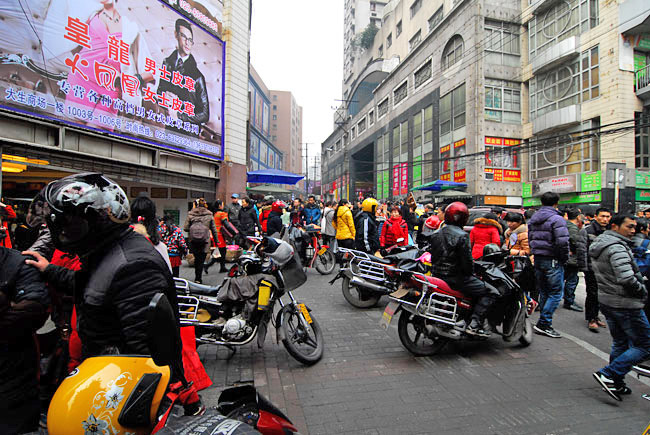
The chaos is cultural: Chinese motorists drive like they’re riding a bicycle because they were only a few years ago. In less than one generation the Chinese have gone from pedals to 125cc Honda clones to driving millions of air-conditioned automobiles on surface streets designed for a sleepy agricultural nation. At any given moment dozens of traffic rules are being broken within 50 feet of your motorcycle. It’s a traffic cop’s dream.

Except that there aren’t any. For a Police State there are not many police in China. I’ve ridden entire days and not seen one Po-Po. My Chinese friends tell me the police show up for collisions but otherwise stay low-key. Because of this hands-off approach stop signs are ignored. Red lights mean slow down. You can make a left turn from the far right lane and no one bats an eye.

China uses the drive-on-the-right system but in reality left-side driving is popular with large trucks and speeding German sedans. Get out of the way or die, sucker. Painted lane-stripes are mere suggestions: Drive anywhere you like. Of course, sidewalks and breakdown lanes are fair game for cutting to the front of the cue.

China’s modernization process has happened so fast that the leap from two-wheeled utility vehicle to motorcycles as powersports fun never really occurred. In China there are millions of people riding motorcycles but relatively few motorcyclists.

If the cars don’t get you there are other strange rules that serve to dampen the popularity of Chinese motorcycling as a hobby. Motorcycles are banned on most major toll ways between cities. Law-abiding motorcyclists are shunted off to the old, meandering side roads. Which would be fun if they weren’t so infested with heavy, slow moving semi-trucks and near certain construction delays. In practice, since tollbooths have no ability to charge motorcyclists, Chinese riders blow through the far right lane, swerving to avoid the tollgate’s swinging arm. Ignore the bells, shouting and wild gestures of the toll-takers and roll the throttle on, brother.

Being banned from the highway is not a deal breaker, but being banned from entire cities is. In response to crimes committed by bad guys on motorcycles many cities remedied the problem by eliminating motorcycles altogether. Sales of new motorcycles in these forbidden cities is non-existent.

Rules designed to discourage motorcycling abound. Vehicles over 10 years old are not allowed to be registered, thus killing the used and vintage scene. Gasoline stations require motorcyclists to park far from the gas pumps and ferry fuel to their bikes in open-topped gas cans. Add to that the general opinion of the public that motorcycle riders are shifty losers too poor to afford a car.

So why do Chinese motorcyclists bother to ride at all? It’s not the thrill of speed; 250cc is considered a big bike in China and it’s really all you need to keep up with the slow moving traffic. I’ve spent a lot of time with Chinese riders and even with the language barrier I get that they ride for the same reasons we do: The road, the rain, the wind. After being cooped up in a high rise apartment (very few Chinese live in single-family homes) I imagine the wide-open spaces between crowded cities must seem like heaven. They did to me. Chinese motorcyclists and Low Riders ride a little slower, taking long breaks to smoke a cigarette, drink in the scenery or just nap. Every motorcyclist you meet is instantly your dear friend because we share this passion and despite all the minor regulatory hassles everybody knows love conquers all.


More epic motorcycle adventures?  You bet!


Help us bring you more stories:  Please click on the popup ads!

Want to read all about the China ride?  Pick up a copy of Riding China!

An Electrifying Development: CSC’s RX1E Motorcycle

Imagine an electric motorcycle that doesn’t look dorky, one that looks like a an ADV bike, with a fit and finish rivaling anything in the world.  Before you go all “Ahm a real ‘Murican and yer not” on me, I’m here to tell you this:  You don’t have to imagine this motorcycle.  It’s real and I rode it.  It’s quick and it feels light, and the thing handles.  And yes, it’s from China.  If that gets your shorts in a knot, move along…there’s nothing for you here.

The bike is the new RX1E from CSC Motorcycles in Azusa, and it’s manufactured by Zongshen.  That’s Zongshen, as in million-motorcycles-annually Zongshen.  I’ve ridden Zongshen motorcycles all over Colombia, all over China, all over Baja, and all over America, and I’ve been in their factories many times.  You may know a guy who’s cousin worked for a guy who thinks Chinese bikes are no good; my knowledge is more of a first-hand-actual-experience sort of thing.

The RX1E looks a lot like an RX3.  It’s got the ADV style.  I think it is an exceptionally attractive motorcycle.  Some folks may wonder why the bike is styled like an ADV bike.  Hey, it has to be styled like something.  The ADV style has good ergos and good carrying capacity, so why not use that as the styling theme?   Just to check, I parked it in front of Starbuck’s, you know, like the big kids do with their BMWs, and it worked just fine.

The motorcycle has an 8 kilowatt motor (with 18.5 kilowatt at peak power), but the kilowatt thing for an electric motorcycle is misleading.  This motorcycle is quick.  I opened it up getting on the freeway and the bike blew through 70 mph before I realized it.  It had more left, but I ran out of space.  It’s silent, and you hit speeds you don’t mean to because there’s no noise to go with the acceleration.  Think of it as the opposite of a Harley:   No noise at all, and lots of acceleration.

It’s not going to be inexpensive, but it’s inexpensive compared to other electric motorcycles.  CSC is going to sell a lot of these.

The time for a full recharge, per the CSC folks, is 6 hours.  CSC opted for a more powerful charger to get the recharge time down.

It comes with a full set of luggage, crashbars, a windshield, and a cool dash.  You can fit a full face helmet in the tail pack.

The RX1E is water cooled.   Yep, you read that right.   The Zongshen wizards use water cooling with a radiator to keep motor temps down.

The dash is cool, and you can change the color theme.  I liked it.  It was a little difficult to read in sunlight, but CSC tells me that will be corrected by the time the bikes are released for sale in a few months (I rode the first one to arrive in America).

The bike has three modes:  Eco, Comfort, and Sport.  Eco saves energy, Comfort is kind of in the middle, and Sport gives snappier acceleration.  Think of Goldilocks and the Three Bears.

Switchology is superior, in my opinion.  Here’s a peek at the left and right sides.  Yep, there’s cruise control, reverse, mode setting, high beam and low beam, the horn, turn signals, a park position, and a kill switch.  It’s a logical, well thought out, and quality presentation.

The bike doesn’t have that squirt out from under you feeling that other electric bikes have off a dead stop.  CSC’s City Slicker had a little bit of that.  The Zero I rode a couple years ago had way too much of it…so much so I found the Zero difficult to ride.  The RX1E is much more rider friendly.

The bike has disk brakes front and back and ABS.  There are cast aluminum wheels.  The final drive is via belt.  There’s no messy chain, nothing to oil, and it’s quiet.  I like it.

The fit and finish are awesome.  It’s as good as anything I’ve seen on any motorcycle anwhere in the world.  The one I rode was red (it’s the one you see in the pictures here).  I saw a Harley chopper and stopped to ask the owner if I could shoot a photo of the the RX1E next to it.  He was good to go, and I grabbed the shot you see below.

The RX1E ergonomics felt perfect to me.   The seat is comfortable, the reach to the bars was perfect, and I could put both feet flat on the ground.

CSC shows the bike’s weight to be 469 pounds, but it felt way lighter to me.  That might be because the weight is down low on this bike.  Or maybe I’m just used to my Enfield, which feels way heavier.  Whatever it is, the bike feels light.  The RX1E has high flickability.

The lack of any noise takes some getting used to.   It was unnerving at intersections.  On an internal combustion engine motorcycle, the noise makes you at least think other people can hear you.   The silence of an electric motorcycle makes you wonder if they see you.  Maybe that’s a good thing; it made me even more of a defensive rider than I normally am.

There’s no shifting, and because of that there’s no clutch and no shift lever.  Oddly, the lack of any need to shift felt perfectly natural.  Not having a clutch lever on the left handlebar when coming to a stop takes a little getting used to.

The bike has a reverse.  It doesn’t need one.  It felt so light and the seat is so low that backing up the old-fashioned way is easy…you know, sitting on the bike and using your legs to back it up a hill.  Yep, I did it.

The turning radius is delightfully tight.  I don’t have a spec for this, but I can tell you that u-turns in one-lane alleys are easy.  I know because I did it.

CSC tells me the range is about 80 miles, although the spec below says 112 miles.  I haven’t tested the bike for range like I did on the City Slicker because I only played around in town for an hour or so.  Good Buddy TK, the sales dude at CSC (who may be the world’s only sales guy who never stretches the truth), has been commuting back and forth to work on the bike and he tells me the 80-mile range is real.

The RX1E impressed me greatly.  If reading this blog gives you the impresssion that I really like the RX1E, I’ve done my job as a writer.  CSC and Zongshen have hit a home run here.  Zongshen’s engineering talent and CSC’s ability to see what the US market wants is impressive.

Spoiler alert:  Knowing people in high places has its advantages. I used to be a consultant for CSC, and CSC advertises on the ExNotes site.  But that hasn’t influenced what you’re reading here.   My friendship with the CSC owners got me an early ride on the RX1E (a scoop, so to speak) and a chance to see the specs before anyone else, which we’re sharing here.  They’ll be on the CSC website today or tomorrow.


CSC RX1E Specifications

Motor:  Liquid-cooled permanent-magnet
Peak Power:  24 hp (18.5kW)
Torque:  61.2 lb-ft (83Nm)
Battery:  Lithium-ion 96-volt, 64Ah
Battery Capacity: 6.16kWh
Charger: 110-volt
Input Current: 15A
Range: 112 miles based on New European Driving Cycle (NEDC)
Frame: Tubular steel
Rake & Trail: 27°, 74mm
Wheelbase: 55.5 inches (1400mm)
Front Suspension: 37mm inverted telescopic fork, 4.7 inches travel, adjustable for rebound damping
Rear Suspension: Monoshock, 4.3 inches travel, adjustable spring preload and rebound damping
Front Brake: Two-piston caliper, 265mm disc
Rear Brake: Single-piston caliper, 240mm disc
Wheels: 17-inch aluminum
Tires: 100/80-17 front; 120/80-17 rear
Length: 82.2 inches (2090mm)
Width: 34.0 inches (865mm)
Height: 47.4 inches (1205mm)
Seat Height: 30.9 inches (780mm)
Ground Clearance: 6.0 inches (150mm)
Curb Weight: 436.5 pounds (198kg); 469 lb with luggage and crash bars
Max Load: 331 lb (150kg)
Top Speed: 75+ mph
Colors: Crimson Red Metallic, Honolulu Blue Metallic and Silver Moon Metallic
Price: $8,495 (plus $410 dealer prep, documentation, and road testing fees) and if you order the bike now, CSC is offering $500 off with delivery in Spring 2023


Hit those popup ads and keep us publishing!


Never miss an ExNotes blog:

Glendora Ridge Road

Glendora Ridge Road is one of the best kept secrets in southern California, offering 12 miles of well-maintained, low-traffic twisties nestled in the San Gabriel Mountains.  And it’s not just 12 miles…it’s 12 miles with 234 curves (I counted them) through some of the most beautiful country imaginable.  The striking thing about this road is its simultaneous desolation and nearness to civilization.   Glendora Ridge Road is only 45 minutes from downtown Los Angeles.  It’s only 10 minutes from my front door. Given its magnificence and nearby location, you’d think I’d ride it every day. I don’t, but I should.

That’s the ridge Glendora Ridge Road runs along, framed by the Entfield’s instrumentation.

Glendora Ridge Road is a glorious ride, and it’s been a favorite ride for me ever since I arrived in California.  It’s hard to believe just how good it is and just how much of a change it offers between what most folks think southern California is and pure wilderness.  Like I said above, it starts just 10 minutes away from my home.   Ride it and you enter a different world.   When I rode it last week, I saw two other vehicles on the entire ride.  One was a single-cylinder dual sport; the other was a red Ducati.   That’s it:  Just two vehicles, and both were motorcycles.

As is the case with many mountain paths, Glendora Ridge Road began life as a dirt road many decades ago.   Situated high up in the Angeles National Forest, asphalt came to Glendora Ridge Road in the 1970s.  There’s no centerline for most of its length, which requires extra care in navigating its many tight blind corners.  Glendora Ridge Road attracts motorcyclists, bicyclists, and the odd sports car or two.   We also get some ricky racers in modified Honda Civics and the like up in the San Gabriels, so caution is in order.

Yikes! In the spring, you’ll see these guys looking for lady spiders at dusk. They say they’re harmless. I’ll take their word for it.

Glendora Ridge Road runs directly through one of the premier wildflower spots in America (the colors are surreal during April and May when the flowers are blooming…purples, reds, yellows, oranges, and more).   Glendora Ridge Road also borders the San Dimas Experimental Forest, a 32-square mile research area.  I’ve seen deer, fox, bobcat, bear, tarantulas, and snakes up there.  I grabbed the tarantula shot above one evening in the pre-digital days with a 35mm Minolta and a 28mm lens.  I had to get right on top of the spider to get that shot.  I held the camera maybe six inches or so above it, only to later learn those things can jump 10 inches straight up!

I’ve ridden Glendora Ridge Road on virtually every motorcycle I’ve owned in the last 40 years.   We used to do a lot of company rides with CSC Motorcycles, and everyone loved it.  The RX3 is a perfect motorcycle for this ride.  We once did a winter ride when the road was iced over.  We rode it anyway.

The photo opportunities along Glendora Ridge Road are awesome.  These days, I’m down to one motorcycle, and that’s my 650 Enfield.  There are a lot of good spots for getting advertising quality photos on Glendora Ridge Road, and I took advantage of a few.  Glendora Ridge Road has several areas where the cliffs and overhangs provide shade, so even on a bright day you can get great shots without harsh shadows

I pick a motorcycle based on how I know its colors will photograph. I chose wisely, I think.
On Glendora Ridge Road, looking north. It really is this scenic. I had the road and the San Gabriels to myself.  The great Mojave Desert lies on the other side of those mountains.

Glendora Ridge Road runs roughly east to west (or west to east, depending on which way you travel).   I like riding this road in the early morning or at dusk, as it makes for a more interesting ride (fewer folks, and the wildlife is more active.)   In the morning, it’s best to ride in a westerly direction to keep the sun out of your eyes, and vice versa at dusk. The road’s curves make it tempting to go faster than you should, but my advice is to keep a relaxed pace.  Many of the corners are blind, and you never know if there’s a squid pushing too hard coming the other way.

Just as you enter Mt. Baldy Village, the sign for Glendora Ridge Road appears on the left (if you’re not looking for it, you may miss it). You’ll only climb about a half-mile before you hit Cow Canyon Saddle.  It’s a neat place to get a feel for the length and breadth of the valley skirted by Glendora Ridge Road.  There’s a dirt road on the other side of that valley, but it’s not open to the public (the dirt road runs about eight miles to an abandoned tungsten mine). After running west for exactly 12 miles (and as mentioned above, no fewer than 234 curves), you arrive at the intersection of Glendora Ridge Road, Glendora Mountain Road, and East Fork Road.  Glendora Mountain Road meanders down into Glendora.  If you turn right to take East Fork Road, it continues on to Highway 39 above Azusa. The intersection of these three roads is a popular meeting spot where riders stop to talk and take in the view.  On clear days in the winter, you can see the Pacific Ocean and Catalina Island.

Always a good idea. This photo shows Glendora Mountain Road heading up into the San Gabriels.

My choice for the return home on this most recent Enfield ride was Glendora Mountain Road.  It’s equally scenic and a little shorter ride back.  My arthritis was bothering me a bit and even though I was having a great time, my shoulder was reminding me I’m not 17 years old anymore.  It was a good ride down out of the mountains.  There are places on Glendora Mountain Road where you can see Highway 39 and the reservoir above Azusa, as shown in the photo below.

This is a photo stitched together from four photos in PhotoShop. The road at the base of the mountains on the other side of the reservoir is Highway 39, which runs south to Azusa. CSC Motorcycles is located not too far from the notch in the mountains on the left side of this photo.

So there you have it:  Glendora Ridge Road, one of So Cal’s best kept secrets.  If you’re looking for a great ride, this is it.  If you’re up there and you see an old guy on an Enfield nursing his left shoulder, give a wave.


Never miss an ExNotes blog:


You know what to do:  Hit those popup ads!