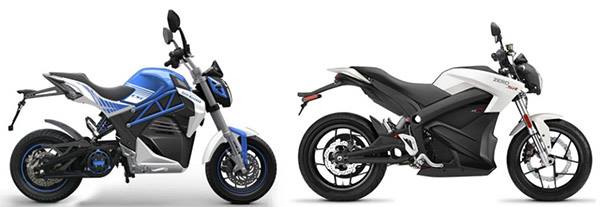
Named, noted, and quoted…

A comparo…Slick and Zero. It was fun doing this one.

Hey, this is cool.  Our story on the CSC City Slicker and Zero electric motorcycles was picked up (and quoted extensively) by a website called Electrek, an Internet magazine focused on electric vehicles.   Imagine that…being quoted in a magazine.   That’s cool…other people quoting me.  I’m working on learning how to write gud (spelling and grammar mistakes intended, folks) because when I grow up I want to write as well as Arjiu (and that would be my good buddy and literary hero, Joe Gresh).

Okay, enough on that.   I said I would someday explain the Dajiu and Arjiu business, and this is that day.
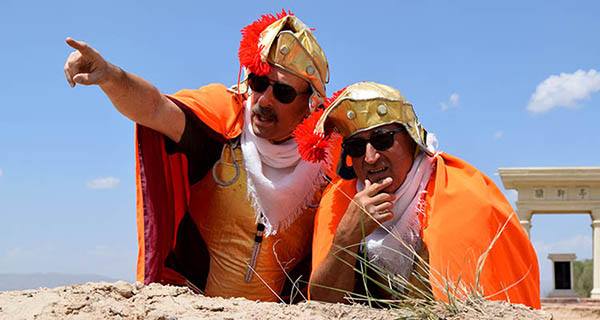
Dajiu and Arjiu in China. Yeah, we like gladiator movies…

So I’m Dajiu (which means big uncle, I’m told) and Joe Gresh is Arjiu (which means little uncle).  Our Chinese buddies gave us those names on the Western America Adventure Ride (you can read about that in 5000 Miles at 8000 RPM).   Joe and I were leading a ride around the western US with a group of guys from China, and they were having difficulty with both of us having the same first name.  It’s funny…most of the Chinese guys had adopted English names (Hugo, Leonard, Kyle, etc.) to make it easier for us, but they were having trouble with us having the same English name (Joe and Joe).  On the second day of that ride, Hugo (Zongshen’s factory guy) fixed it by giving us new names, Dajiu and Arjiu.  Hugo called us all together to make a formal announcement, and he handled it in a very solemn manner.   I imagine the ceremony was similar to becoming a made man in the Mafia, or maybe a Bar Mitzvah.  The Chinese guys thought it was marvelous.

The pronunciation is “Dah Geo” and “Ar Jeo” and our new Chinese names stuck.  Whenever we’re with the Chinese guys, they simply refer to us as Dajiu and Arjiu, as if those were our given names.  That’s how we’re introduced to others in China.  It’s pretty cool.  You can call us that, too, if you wish.
Wild Conjecture: The FTR1200 Indian

This photo may or may not be the new Indian FTR1200 that we’ve all been fantasizing about since Indian shoved both H-D and Kawasaki aside and took over flat track racing in America. Posted by Roger Gutterridge and brought to my attention by my internet buddy, Skip Duke, I have no way of knowing if this is the real thing.
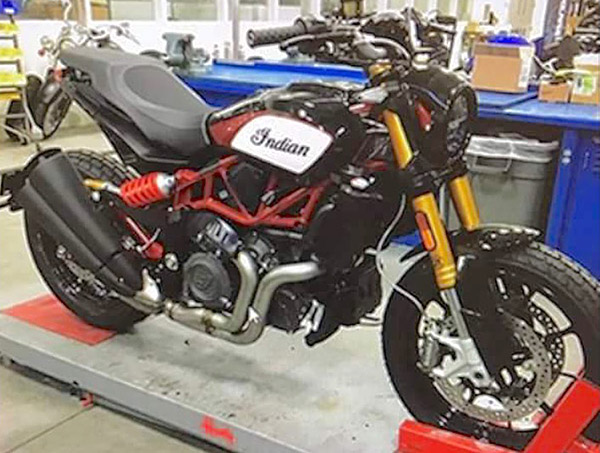
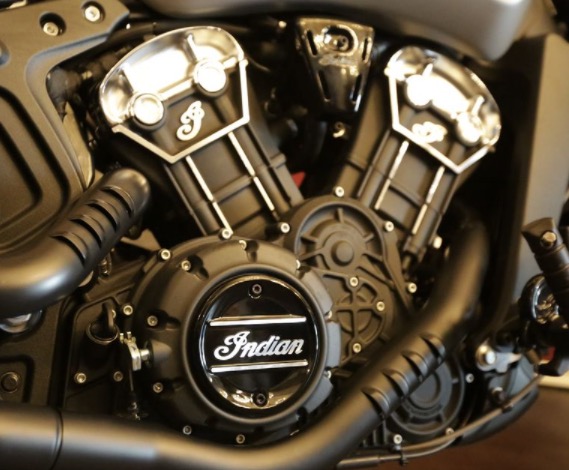
Here at Wild Conjecture we don’t concern ourselves with facts. Indeed the very name of the joint suggests half-cocked ideas and squishy logic. But there are a few things that make me think this bike may be real.

What do you think?
A great engine.

The engine seems to be based on the regular Scout, at least the bottom-end looks mostly the same. I really don’t see why Indian would try to street-ify a race engine when the Scout unit is reliable and makes decent horsepower. What would be the advantage of creating another dealer parts stream and the exposure to warranty claims for a new engine that cuts a few pounds? The American motorcyclist has proven time and time again that weight is not a deal killer.

The frame looks pretty cool, perhaps a Ducati employee was spirited away to Spirit Lake? Rear suspension has Indian’s patented no-stroke shock absorber technology and by the girth of the spring looks to be mono shock. Front suspension is via the now traditional upside down fork with a steepish rake compared to Indian’s cruiser offerings. Flat track style handlebars top the front end. The front brakes are huge and doubled. Stopping should not be an issue with this bike.

Giant mufflers occupy most of the left rear section but I’m guessing there’s a box underneath to soak up more life saving noise. Body-wise, the gas tank could be a bit further forward and an inch or so higher in the front. As is it sort of looks like someone put the wrong tank on the FTR. I only have this one angle so it may be fine from another angle. The wheels look like they came directly off the race bike but I’m guessing in 17-inch for a wide selection of tires. Shod with flat track treaded tires, they look the business.

Nothing on the pictured bike looks undoable. Indian could start cranking these things out any time they wanted to. Overall, I like the bike. Since Indian began teasing us with hints of the street-going FTR about 482 years ago I’ve heard many comments from the buying public. The general consensus is that if Indian builds a street version of their 750cc race bike we will beat a path to their door.

This doesn’t look like a street version of Indian’s 750cc racer. It looks like a race styled version of their Scout. For real life street riding the Scout engine is the better choice and you won’t miss changing flywheels for an afternoon ride in the mountains. If you really want to race flat track just pony up the $50K and get the real thing.

Wild Conjecture loves the thing pictured even if it’s a red herring. More importantly, what do you think? Has Indian made the flat track bike that you said you would buy? Is this thing a phony? Is it real enough?


Check out all of our Dream Bikes here!

The Only Time I Bought a New Motorcycle

Our tiny motorcycle world is flooded with hyper-ventilating products. We are spoiled for choice in both gear and bike models to suit an unfathomable number of riding styles, lifestyles and hairstyles. Motorcycle manufacturers pour increasing amounts of capitol into chasing an aging, dwindling ridership. Adrift, bike makers are doubling down on complexity and exclusivity combined with rich textures and finishes. It’s a Corinthian Leather approach to motorcycling that didn’t work for the Chrysler Cordoba, either. The same technology that helps keep computer memory exponentially increasing allows builders to make a (nearly) unique motorcycle for each and every one of us, for a price. It’s still not working for me.

I don’t understand the desires of today’s motorcyclist. I don’t value the things they value and I don’t even understand the conversation when they start talking farkles. To me, farkles are things that break off in a crash. Big, heavy, cluttered motorcycles are the popular choice amongst riders. Riders like massive, unusable power tamed by tinker-toy mystery boxes and acres of plastic covering automotive-quality mechanicals. Strip the faring off of a modern motorcycle and gaze at the industrial wreckage: That’s not why I got into motorcycles, man.

The last time a motorcycle manufacturer spoke to me was in the early 1980’s, by, of all people, Honda. You guys know I’m pretty hard on Honda. Their recent offerings have been bland and sensible, but there was a time when Honda built some of the most desirable motorcycles in the world.

The bike that called my name…the Honda XL600R.

We have lost the ability to be surprised in this Internet age but in 1983 I walked into San Diego’s Fun Bike Center and ran head first into Honda’s new XL600R. I was blindsided by its superiority over every motorcycle I had ever owned. A pulsing red mist settled in over my eyes. With its long travel mono-shock suspension and potent 600cc single-cylinder engine it was not only perfect for dirt, but the semi powerful disc front brake allowed the XL to do a damn good impression of a sport bike on the pavement. Ask that guy riding the Ninja 600 on Palomar Mountain.

I had to have one right now. With $2000 dollars in my bank account I drained that sucker dry and started pitching the deal to area dealerships. The downtown Honda dealer bit and later the next day I was flat broke but invincible.

The bike was a revelation. Trails that I bounced over at 45 miles per hour were now smooth and level at 70 miles per hour. I could go so fast (95 mph!) in the dirt I was overshooting familiar corners. Dry riverbeds became desert freeways. The bike demanded a recalibration of all my senses and a new riding style. It didn’t like pussy-footing around. You had to slide way up on the gas tank and make every move a hard, aggressive move. Kick starting it was a pain but the endless wheelies and powerslides made it all worthwhile. I put 70,000 miles on the XL600. Sadly the engine reliability wasn’t equal to its overall brilliance. I had to rebuild the engine three times.

$10K, to start. Wow!

I look at the zillions of new motorcycle models and none of them fire my passion like that ’83 XL600R. There is one bike though, one bike that almost duplicates that long-ago blood-lust and oddly enough it’s another Honda. The new CRF450L. At $10,000 I wont be rushing down to the Honda dealer with cash in hand like 1983. I’m older and wiser now, and I may not be able to recalibrate my senses.

Long Way Back

Highway 41. Falling safes and ACME dynamite country. Beep beep!

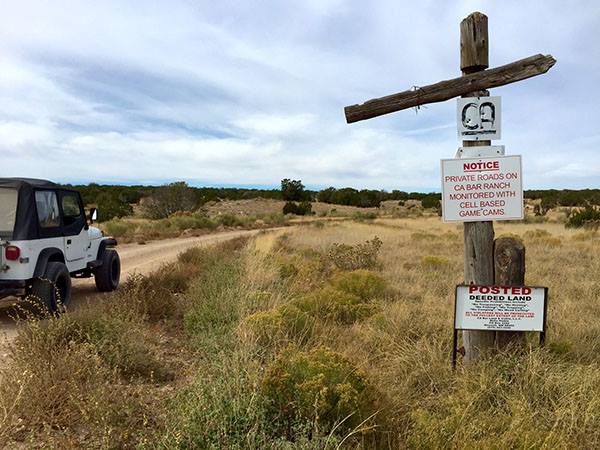
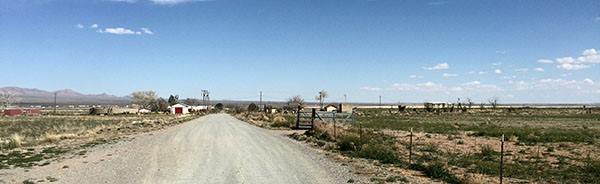
Highway 41 runs from the Gran Quivira ruins to Highway 380. Forty miles of easy dirt, (unless it rains), the road really doesn’t go anywhere I need it to go but I still take the route if I’m going north/south to Santa Fe and have time to kill. I have lots of time to kill.

The consequences of not keeping your rig in shape?

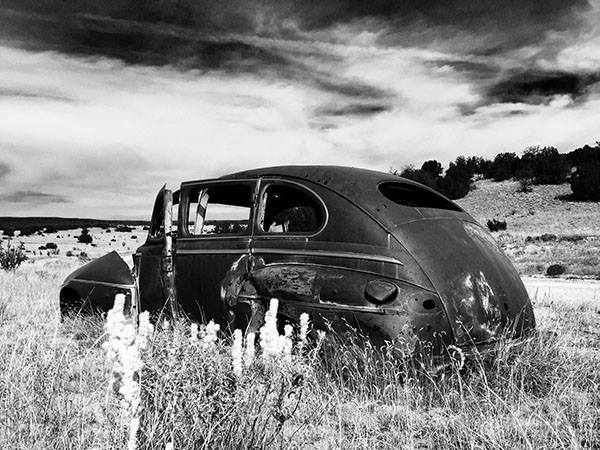
There are old ranches in New Mexico. This dry land requires thousands of acres to support cattle or whatever hybrid, cactus-eating animals they raise out here. Access to these ranches is via roads like 41. The road cuts through warning signs and fence lines working its way past lonely muster stations that no longer thunder with the sounds of hooves and bellowing cattle. Time continues to function out here, hour by hour degrading nails and planks, erasing the best efforts of past generations. It’s a bygone landscape that appeals to a kid raised on a steady diet of Road Runner and Wiley Coyote cartoons.

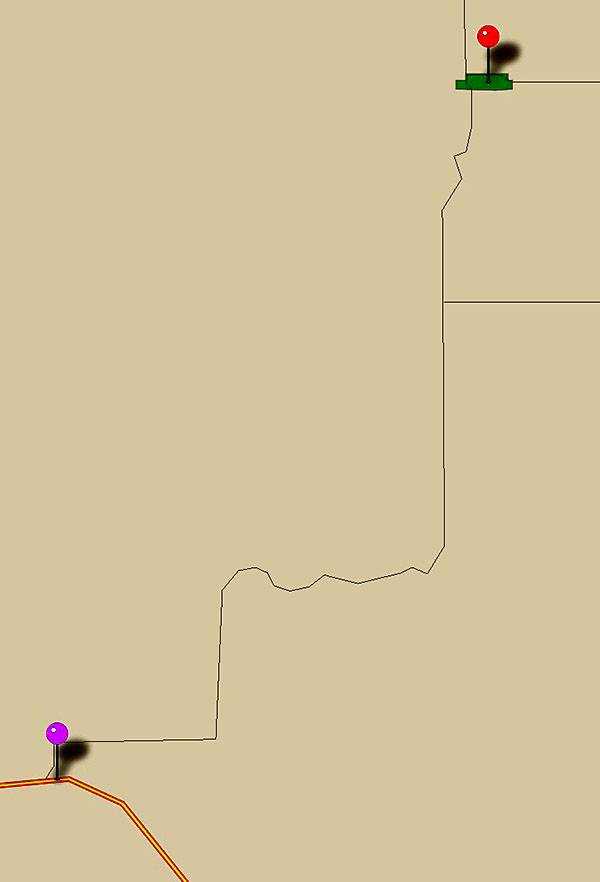
Highway 41. The red pin is Gran Quivira.

I’d like to think I could have made a stand out here, been a solitary man roping and fence-mending in the bitter wind of a New Mexico winter, surviving by my wits and taming this vast, high desert. I would have mail ordered rockets and catapults from ACME, the cartoon version of Amazon. I’d build windmills and log cabins. I’d eat snakes and shoot quarters out of mid-air with a six-gun that I took out of a dead man’s holster. Then I’d write a Rustic’s poem about the dead man titled, “His Noted Life Was Not In Vain.” I’d have all the trappings of America’s western lore and I would have shouldered it in stride. A life without comfort or ease would be met with a steely-eyed stoicism that concealed deep emotions surging through my fully realized cowboy-self.

A time gone by.
Bring it on, and I’ll still be standing!

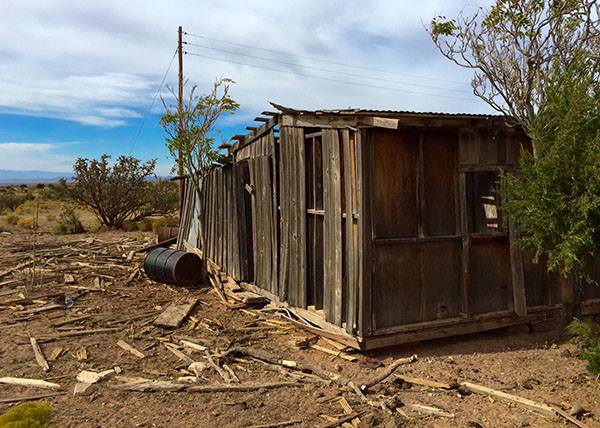
Highway 41 is remote, the kind of road that makes you worry about tires or if you have enough water. There’s no cell phone reception and you’ll want your rig in top shape to travel out here. I keep my rig in just-above-collapse shape. Clapped out with three broken engine mounts appeals to my cowboy-self. After climbing a small ridge, 41 becomes increasingly populated by ghosts. Bent and weathered power poles spread their arms, holding nothing. I should have brought more water and a jar of peanut butter.

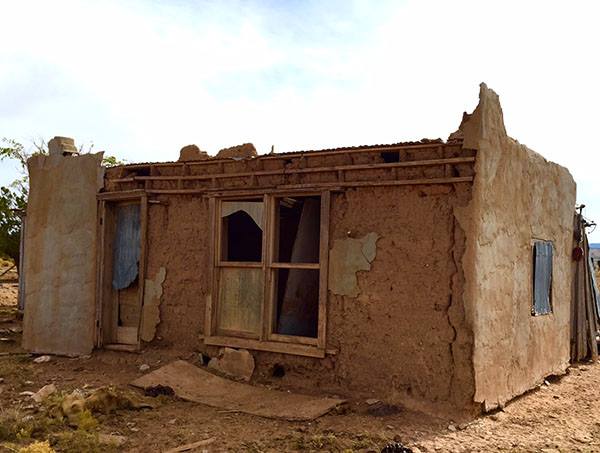
If you have the time, and the back road leads somewhere you don’t really need to go, I recommend taking Highway 41. There’s adventure in every movement. Joy in discovering a structure that still stands despite it all. America’s private history is waiting to be discovered, starting with the insignificant bits first. It’s on us to record the passing of the Old West. We can be witnesses for unheralded battlefields where stoic cowboys fell to Time and Nature.

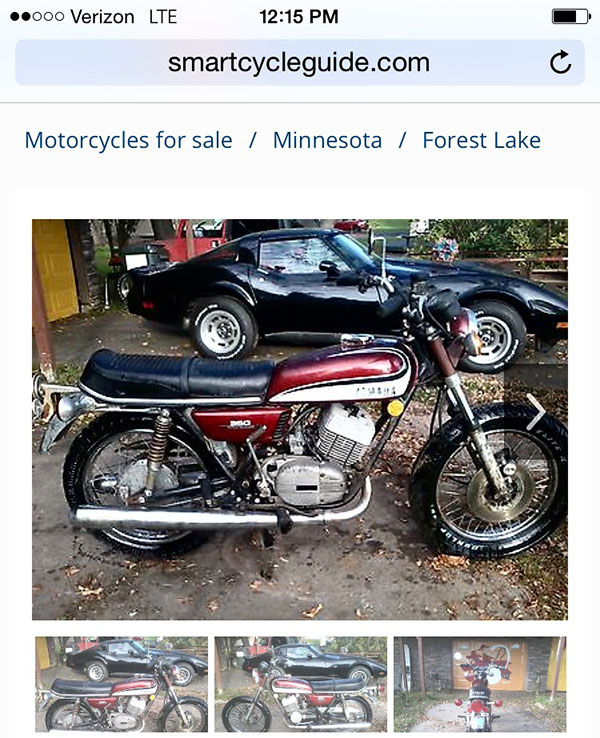
Dream Bike: Yamaha RD350

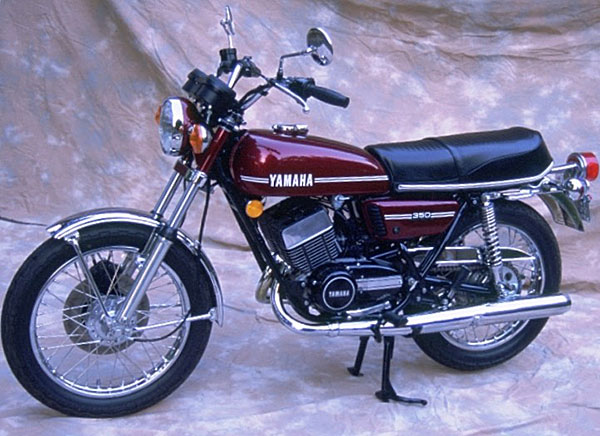
Unlike most of my other dream bikes I’ve actually ridden an RD350. The slightly gaudy 1973 model I rode was mostly the previous generation Yamaha R5 except with reed valves, a disc brake in the front and one additional gear in the transmission giving a total of six. However minor the changes were, the result was spectacular.

The Yamaha RD350…one of my Dream Bikes!

The RD350 was a wheelie king and the bike would blow away any of the other 350cc bikes including the three-pot Kawasaki. Maybe the disc-valve Kawasaki 350 twin from the 1960’s would have outran it but we’ll never know as there were none around my town. It left the Honda CB350 for dead and would stay with a Honda CB750 up to around 70 mph. I know this because we checked.

Not just fast, the RD handled as good as the best bikes of the era. As children we set up a week-end flat track in the high school parking lot and the RD would drift the asphalt corners under power like it was at Ascot Park. That is, until it hooked up and spit you over the high side. Riding it gave you a feeling that anything was possible including dirt trails. It was an all-rounder long before today’s silly, overweight, overwrought, can-opener ADV bikes blundered onto the scene.

Top end on the RD350 was a bit over 100 miles per hour and it got there rapidly. It was slippery in the wet but that was down to the era’s bias-ply, low tech tires. If you rode it hard it drank gas at a startling rate.  Except for fouling a plug now and then or the outside commutator brush wearing down nothing much went wrong in normal use. I have no idea what happens if you race them. Probably nothing good.

The red, 1973 RD model was cool but my dream bike came one year later. In 1974 Yamaha dropped the thick tank badges along with the tacky striping and painted the bike a deep metallic purple. Tastefully subdued decals on the tank sides indicated just who the hell made the thing. It was a thing of beauty and I must own one someday, somehow.

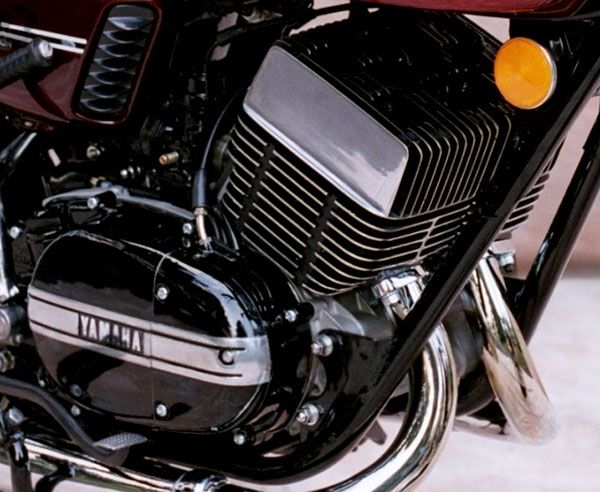
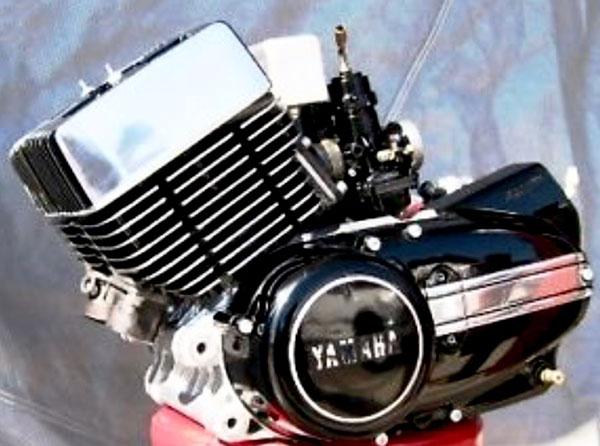
Right side engine, 1974 model.
Left side engine, where the brushes are

Like everything our generation touches, the prices of Japanese motorcycles from 1970’s are getting screwed ever-upwards. Being one of the most desirable motorcycles of that era, RD350’s have gone up quite a bit. You can still find nice ones for $3000 with beaters down around $1500.

Here’s a 1973 RD350 for $1500

I’ve nearly bought one several times but either the distances involved were too great or I came to my senses and bought a thousand bags of concrete instead. As soon as I get a few projects out of the way I’m going to sell off some motorcycles and take another stab at RD350 ownership, in purple for the win.


See all of our Dream Bikes here

Time Travel

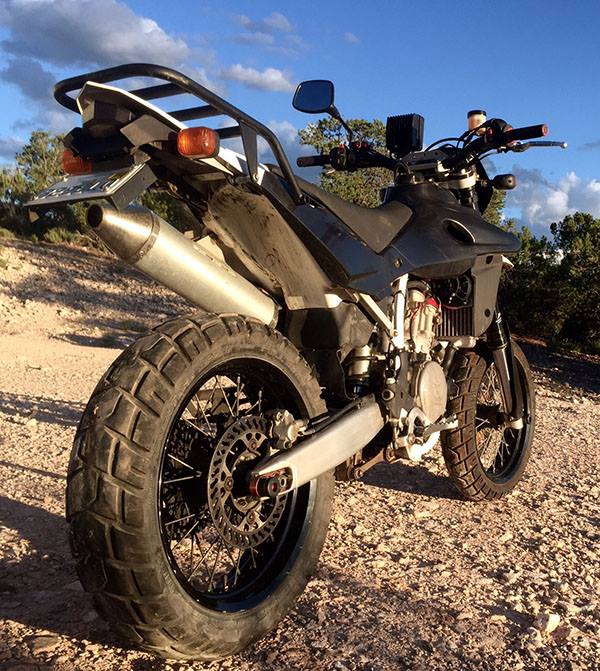
The Husky…a machine for compressing time.

When I was 13 years old in Florida you could get a restricted permit at age 14. The restricted permit was a driver’s license that allowed you to drive as long as an adult was in the car with you. Assuming he/she wasn’t suicidal, the adult was supposed to keep an eye on your driving and coach you. An adult would help you pick up the nuances of parallel parking, rude hand gestures, and, in Dade County, gun fighting after minor traffic accidents. Needless to say, having an aged, creaking burnout sitting in the car fouling the air with the smell of stale urine cut down on motoring fun quite a bit.

There was a motorcycle loophole in the restricted permit system. If a motorcycle was less than 5 horsepower, and if you stayed off the major highways and didn’t ride at night, you could ride solo without adults helicoptering over your ride. It was wonderful. Obey these few rules and a kid could ride his motorcycle anywhere he pleased.

Motorcycles between 50cc and 90cc were right in the 5-horsepower wheelhouse but your average traffic cop couldn’t tell a 175 from a 50. Many bikes were rebadged to appear smaller displacement than they were. I never knew anyone in my circle of friends that got busted for riding a bike too big. Of course, you had to be reasonable about the subterfuge. A 50cc badge on a Kawasaki 750 wouldn’t fly.

Two months before I turned 14 the state upped the age for a restricted permit to 15 years old. The world ended that day. Massive volcanic eruptions, cataclysmic earthquakes, a steady rain of nuclear weapons bombarding the United States, nothing was as devastating to me as Florida’s stupid statute change.

I would have to wait an additional 365 days and I’d only lived 5000 days in total. The year dragged by. Endless days were followed by endless nights only to be repeated one after another. I had to attend yet another grade in school. I couldn’t wait to be done with public conformitouriums anyway and this stolen year of motorcycle riding made it all the more aggravating. The drip, drip, drip of time counted my heartbeats, counted my life ebbing away. I was inconsolable, miserable and the experience placed a chip on my shoulder for government that I have not shaken off.

There are 9 years hidden in there somewhere!

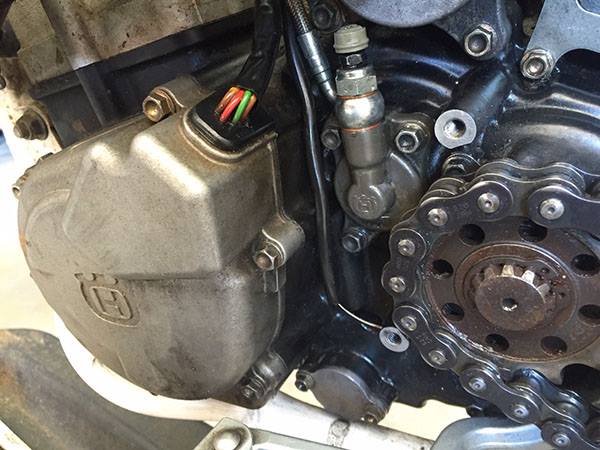
Begrudging the failed clutch on my Husqvarna the other day I came to the jarring realization that I have owned the bike 9 years. I swear, I bought this thing not more than a couple days ago. I degreased the countershaft sprocket area to gain access and removed the clutch slave cylinder. From the inside of the slave I pulled out an aged, creaking o-ring that smelled of stale urine. The leak had allowed the clutch fluid to escape into the crankcase. Except for the missing 9 years the clutch repair went well.

Einstein was right; time is relative. From my 14-year-old perspective a year was an eternity. Now, as an adult I’m scared to close my eyes for fear that another decade will have passed by at light speed. Or worse yet, I won’t be able to re-open them at all.

No More, No Motus

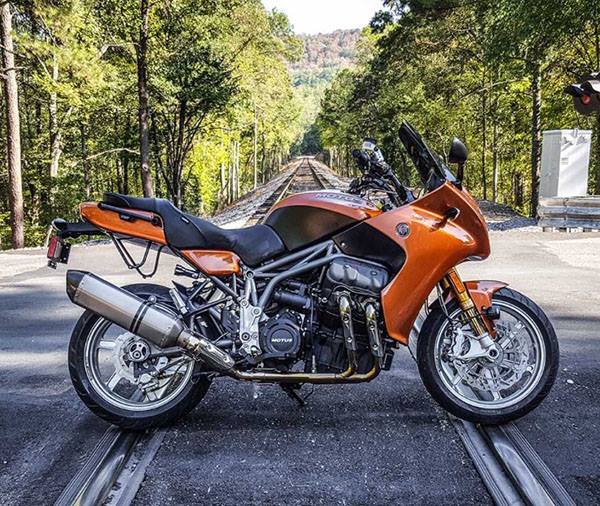
The shocking news is that they lasted 10 years. Motus Motorcycles announced they were shutting down and I mean right now. Which is a shame because I liked the looks of their sport tourer and it apparently had a great engine. Legendary moto-journalist Jack Lewis said he liked the bike and that’s good enough for me. The Motus sold for around 30,000 dollars. That undercut some other American-made motorcycles in the rarified cruiser category but was still a hefty chunk of change for a sport tourer.

The mighty Motus is no more.

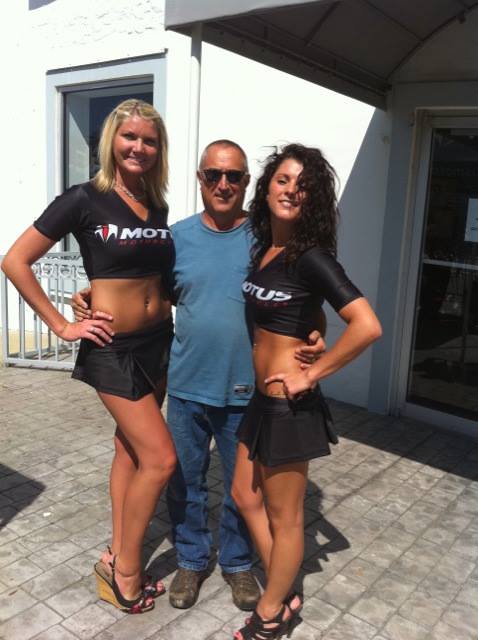
I saw Motus at Daytona long time ago, before the production motorcycles were available. There were a couple of good-natured models standing around the bike. Closer to the ground and less aloof than the Ducati models, the girls wore short black skirts and belly-exposing, Motus logoed crop-top T-shirts. I joked around with them and they let me pose for for a photograph with one on each arm. The girls really didn’t know anything about the Motus but they were packing in the crowds. I thought it was damn good marketing.

Good natured and good looking, Joe Gresh is.

I never got to ride a Motus. I never asked the company for a loaner. They were getting plenty of coverage in the moto-press and I am not very ambitious. The V-four engine attracts a lot of attention because of its small size and torque. Loosely based on a Scat style engine, I predict a bright future selling the Motus engine as a stand-alone unit.

Old British sports car owners, guys tired of being run over in 4-cylinder Jeeps, perhaps racers in a spec-engine mini, sprint-car series are all potential customers for a reorganized Motus. Call the new company Motus Power Systems and sell bolt-in kits to repower various lightweight 4-wheelers.

Could taller, more aloof models have saved Motus? Hard to say. My advice to Motus is to forget about motorcycles. There are so many fantastic bikes available we don’t need another. The entire United States motorcycle industry would fit inside the tackle box of the recreational fishing industry. Motorcycles are such a tiny fraction, a statistical rounding error really, of the greater automotive economy that it’s not worth Motus’ trouble.

Hell, if you sold every motorcycle rider in America a Motus you’d still need to borrow money from me to get Uber fare home. The money simply isn’t there. So start work on the Jeep/Motus repower kit, boys. I’ll be first in line to mooch a test fitting in Brumby the YJ. I’ll even let you guys hire models to pose next to the old Jeep.

Tracy!

During the summer of 2016, your blogmeisters (Arjiu and Dajiu) rode RX3 motorcycles 6000 miles across China.   Tracy was our translator and he was funny as hell.

Our good friend Tracy is an up and comer in the Zongshen organization.  He sent an email to us recently, along with the above photo.  Tracy is being reassigned to the Zongshen team in Mexico, and Gresh and I may take a ride down there once Tracy is in country.   You can bet the beer will flow freely when that happens!

Hey, buy two or three…they make great gifts!

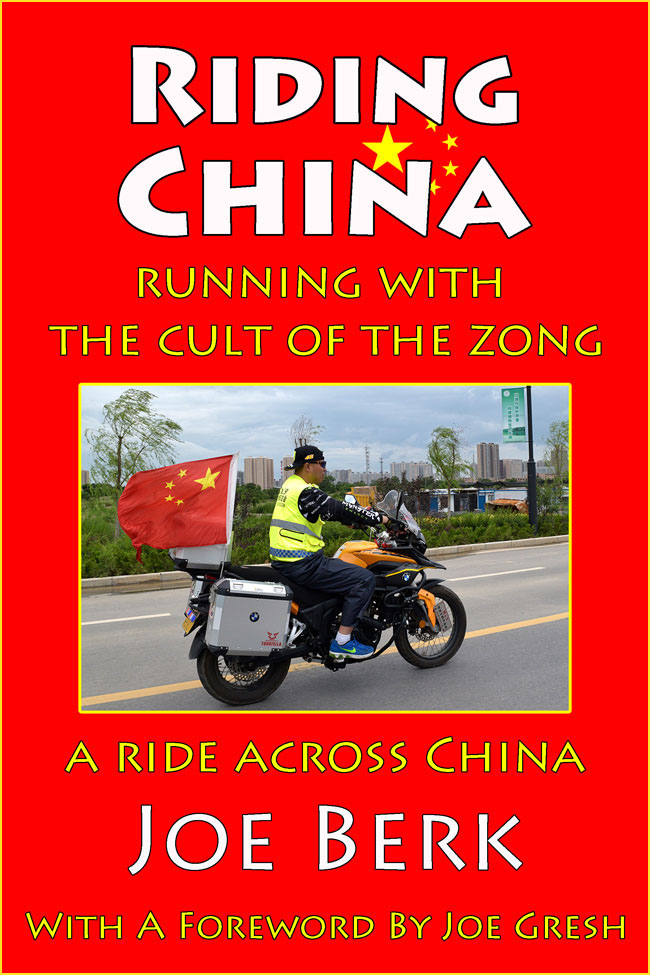
If you’d like to read the story of our ride across China, you can do so here.   It was a great ride and an amazing adventure.

Dirty Secret

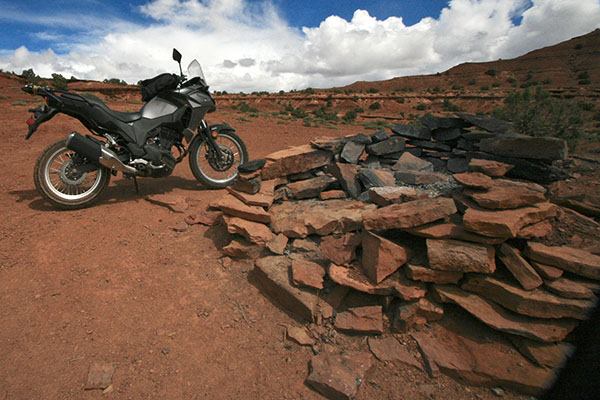
Dirt roads…my favorite place to ride.

If I were forced to live in a large city I probably wouldn’t ride motorcycles. Connected technology has brought us all closer together, so close that none of us really like what we see from our fellow man. This ubiquitous-connectedness has created a disconnect in a huge quantity of automobile drivers. Proximity sensors that auto-apply braking and lane-holding algorithms are responses to a driving populace that grows ever more disinterested in what is happening on the other side of the windshield. Self driving cars can’t get here soon enough for me.

Public roads are dangerous for motorcycles, no two ways about it, but there is a better place to ride. It’s a place where youthful hijinks don’t end in an expensive traffic citations or death by obliviousness. This place can be found everywhere, mere inches below the civilized world. This place is called The Dirt.

The Dirt. It’s awesome. There are no drivers on their cell phones.

The Dirt is the true and holy Mother Road, unlike The Street, which relies completely on and has to be built on top of The Dirt. The Dirt stands on its own merits needing neither creation nor sustenance. Dirt will still be here long after the last human on Earth has crashed the last Volvo on Earth into the last telephone pole on Earth while sending the last text ever sent…on Earth.

The Dirt encompasses a wide variety of surfaces from graded county roads to nearly impassable paths more suitable to mountain goats. And you can ride a motorcycle over all of it. True, it’s getting harder to find places to ride near population centers. So pull up stakes and move to the less tony parts of the USA where there are miles and miles of dirt roads to explore.

A better place to ride.

Motorcyclists who start out in the dirt are simply better riders than those that don’t. Finding the limit on pavement is risky, expensive and painful. Those same limits can be exceeded and re-exceeded many times while riding in the dirt, sometimes without any input from the rider. Hell, sometimes the rider is tangled in a bush with a sprained thumb while the motorcycle explores the limits on its own. Crashing in The Dirt is less damaging to both body and bike. I’m not saying you can’t get killed dirt riding but it takes a determined effort to accomplish on your own what a drunken car driver will do for free.

The most interesting, less-picked-over sites are accessible only by dirt roads. Fencing and authorities are few and far between. If you see an abandoned mine shaft that needs falling into or a rusty car that needs a few more bullet holes you can fall or shoot with complete freedom.

Listen, don’t let street riding scares put you off motorcycles. Pick up an old dual purpose bike for a thousand or two and start finding your groove out where it’s safe to do the things you like to do.

Dream Bike: Harley XR1000

I liked that Dream Bike piece Gresh did over the weekend about his fantasy bike, the Kawasaki 350cc Avenger.  I like the concept: Articles on the ones that got away.

And as is always the case, if Gresh wrote it, I like it.

Can I say that on this blog?  You know, Gresh and I do most of the writing, so am I allowed to say that about his stuff?  Hey, I don’t care.

I’m guessing if you’re reading this, you have a dream bike.   You know, one you didn’t buy but wish you had.   We’d like to hear about it.   Do a short piece on it with a photo or two and we’ll publish it here.

In the meantime, and because I like “the one that got away” concept so much, I’m going to do a short bit on my dream bike. One of them, anyway. It’s the 1983 Harley XR1000. Yeah, I know, I’m a guy who made his bones writing about small bikes (the CSC RX3, in particular), and the XR1000 is anything but small. But I like it.

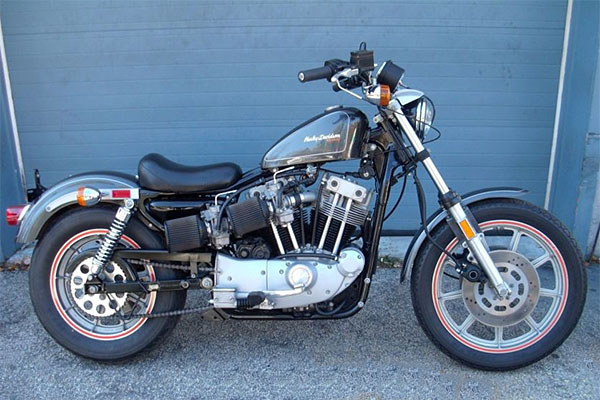
The 1983 Harley XR1000. Check out the massive Dellortos and the K&N air filters. All business. I like it.
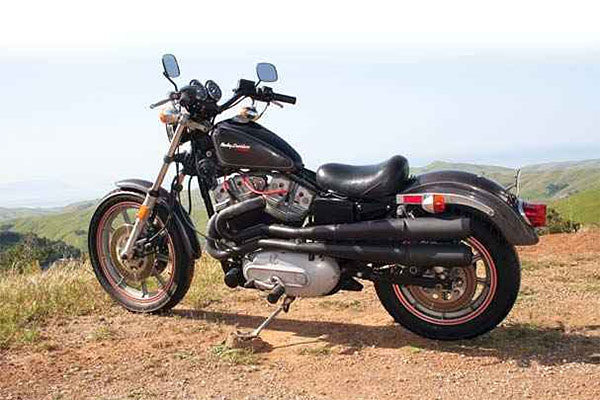
A view from the other side. I’m not a guy who normally leans left or listens to folks who do, but the XR1000’s asymmetry and leftist tendencies are oddly appealing.

The magazines of the era all panned the XR1000, and every once in a while one of them does a retrospective (and they still don’t like it). You know what? I don’t give a rat’s rear end about some magazine weenie’s opinion. I like the look, the concept, and the sound of the XR1000, and one of my few regrets in life is that I didn’t buy one new in ’83.

Not that I didn’t have good reason back then. I had bought a Harley Electra-Glide Classic, new, in 1979. It was the worst vehicle of any type I’d ever owned, and I swore I’d never buy another Harley. That was the principal thing that kept me from pulling the trigger on a new XR1000 in ’83 (I sold the Electra-Glide in ‘82, and the reliability reputation injuries it left hadn’t healed yet). But time heals all wounds (I wish I had that Electra-Glide now), and if I could find a clean XR1000 I’d be on it in a New York minute.

The magazines said the XR1000 vibrated (they actually paid folks to point that out on a Harley?), you could burn your left leg on the exhaust (duh), and the twin Dellortos hit your knee on the right side of the bike (seriously?). Not content with stating the obvious, one of the magazines actually wrote the bike had a predilection for turning left. A bike based on a flat tracker? A predilection for turning left? And folks wonder why the motorcycle magazine business fell on hard times.

Everything the magazines hated about the XR1000 made me want one more. It was a raw, muscular, asymmetric, no passenger, no compromises, in-your-face motorcycle. I still want one.


We spend a lot of time dreaming about motorcycles.   See our other Dream Bikes here!