One of the many red lines crossed on the way to becoming moto-saturated is owning a motorcycle lift. If a rider finds that he needs a lift then things have gone too far and he needs to reevaluate what the hell is actually up.
I’ve wanted a lift for many years but haven’t been able to justify the expense or space requirements a lift brings to the table. (ha!, get it? Table?)
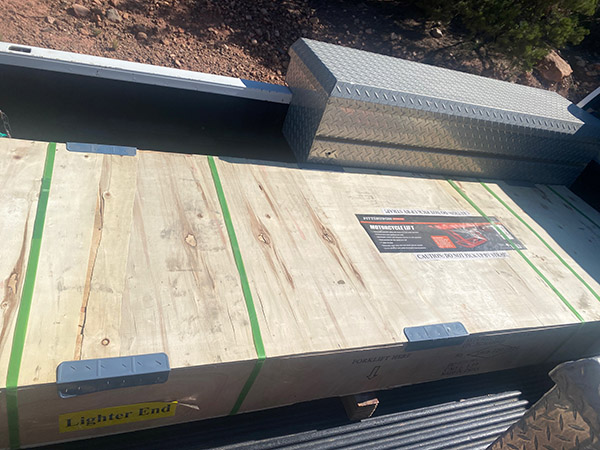
The lift comes securely packaged in a wooden crate. If you know the price of wood nowadays the lift is almost free!
This particular lift from Harbor Freight cost around $300 when it first appeared on my radar 30 years ago. At the time my shop was a 10×10 metal shed and there just wasn’t enough space to park the thing.
Turns out it was a good thing I didn’t take the plunge as my shed in Florida was flooded several times and the lift would have corroded away. (Ha! Get it? Plunge-flooded? I kill myself!)
My recent acquisition of a pair of Honda Dreams and subsequent crawling around on battered knees got me thinking about a lift again. I have the room now. Floods are unlikely where my shop is situated and the HF sale price of $399 defied quantitative easing, inflation-tracking and recent tariffs on China. In short, $399 seemed like a pretty good deal.
You definitely get your money’s worth in weight as the lift was a heavy bitch to load and unload. Plan on having a few strong backs to move the lift. The guys at Harbor Freight loaded it into the truck with a forklift but I don’t have any strong backs available at home. I had to slide the crate out of the truck and let it fall the last two feet from the tail gate. It wasn’t really a free fall, I had a floor jack mid-crate to act as a fulcrum when the crate cleared the tailgate. Think of it as a controlled crash landing. The crate took the fall in stride and its contents were undamaged by my rough handling. Plus the lift is a sturdy thing, it would take some doing to bend it.
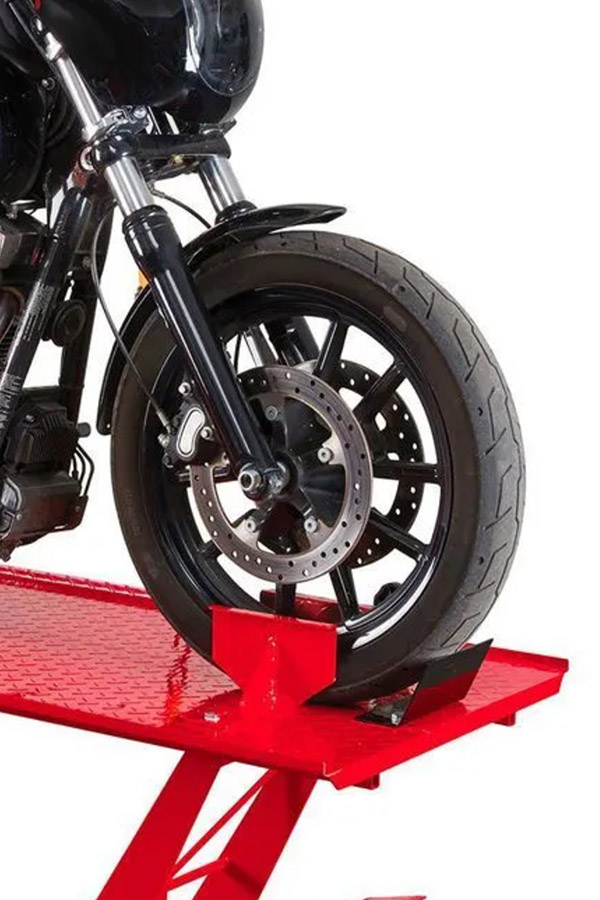
In this Harbor Freight photo you can see how the clamp won’t do much for holding the motorcycle upright.
The lift comes 99% assembled with only the wheels, tie down points and tire vise to bolt on. If you’re handy 1/2 hour should see the project through. There are a few niggling issues though.
Like most things from China Freight the lift needed a few modifications. It goes with the $399 price point.
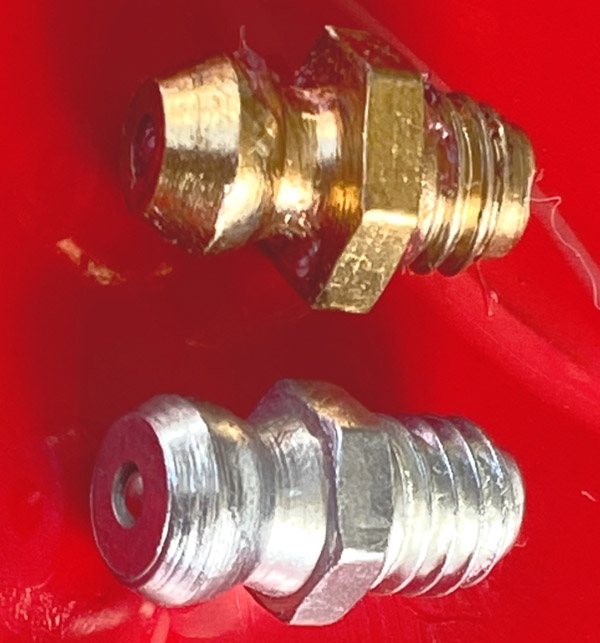
Slightly reduced nipples to go with the reduced price. If you want to grease your new lift you’ll need to replace the gold Chinese nipples with good old USA style, silver Chinese nipples.
China must have different size grease guns because all of the grease fitting were slightly undersized and didn’t fit a US style grease gun. Attempts to grease the various grease points just pumped gook all around the nipple. I replaced the China-sized nipples with US-sized nipples and the pressurized grease flowed to the desired locations with no ooze-out around the fitting.
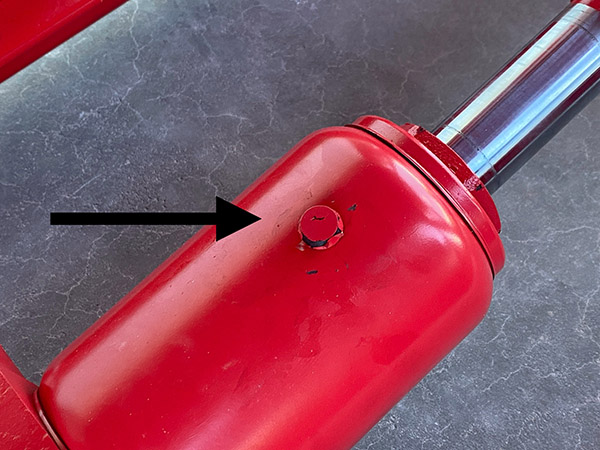
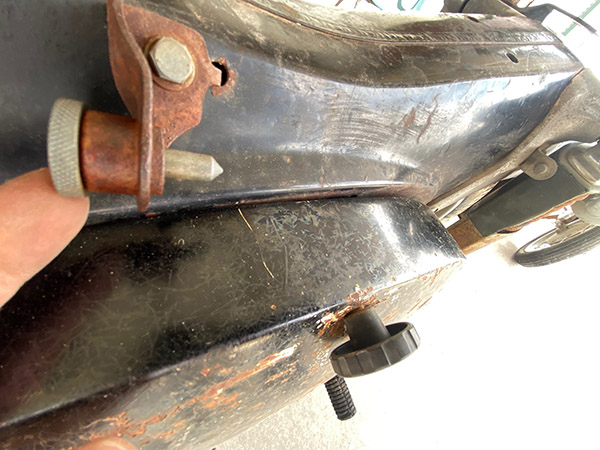
This rubber plug is where you add oil to the pump. Warning: it’s a bear (like Ossa!) to get back in the hole.
The owners manual that came with the lift recommended checking the hydraulic oil in the ram. It was slightly low so I put in a few ounces of fork oil. That was the easy part. Getting the little rubber plug back into the ram housing was a struggle with the lift in the lowered position. I finally gave up and raised the lift for access. It was still a PITA to get the plug back in.
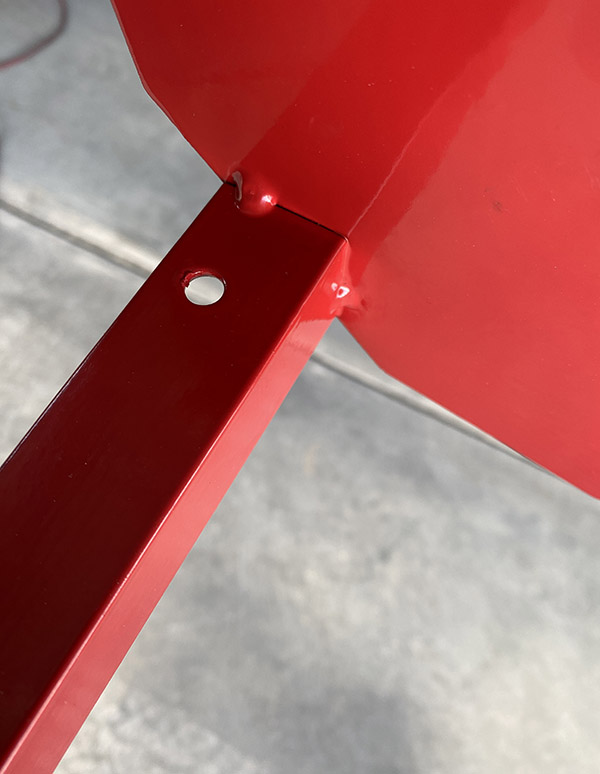
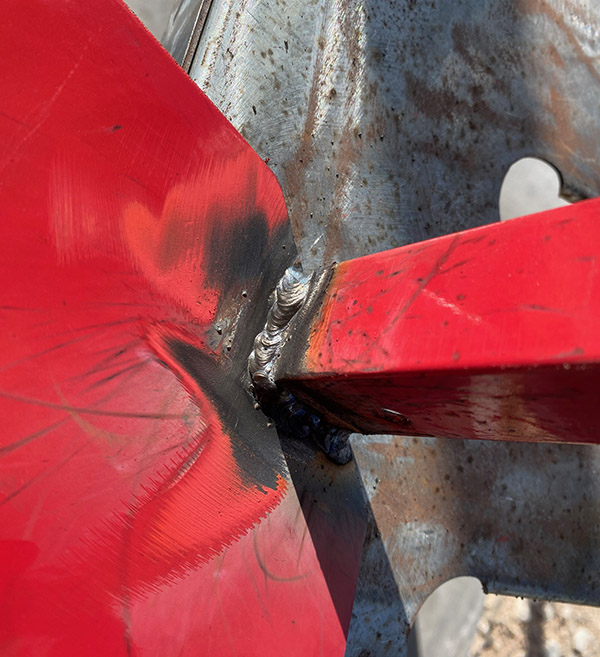
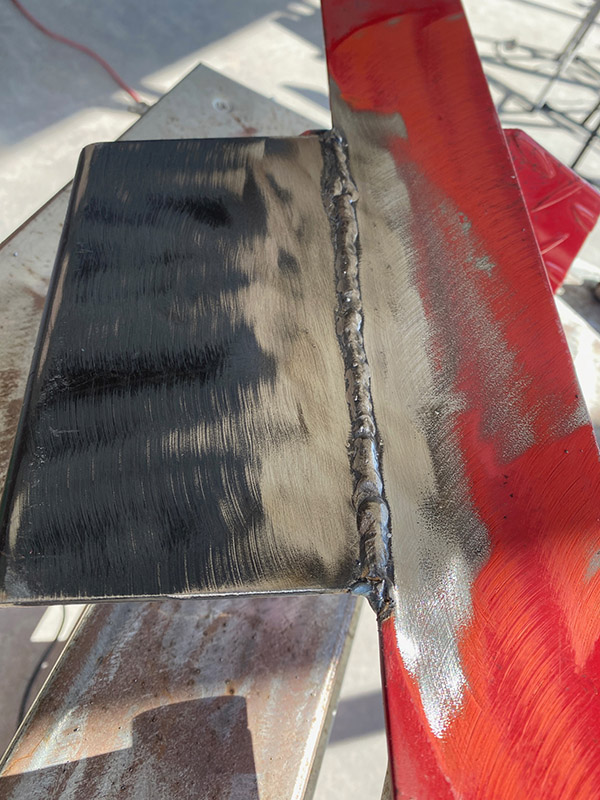
Not much weld on sliding part of the clamp.I stuck some more welding wire to help hold the slider togetherHere it is in action. I’ve yet to clamp the rest of a motorcycle to the table so it may fall apart on me.
As delivered, the tire clamp installs in the wrong place. Down on the floor, it doesn’t provide much resistance to tipping leverage. There are many internet solutions for this issue but all of them required spending additional money. I figure at $400 you shouldn’t need to buy more stuff just to keep the bike from falling over.
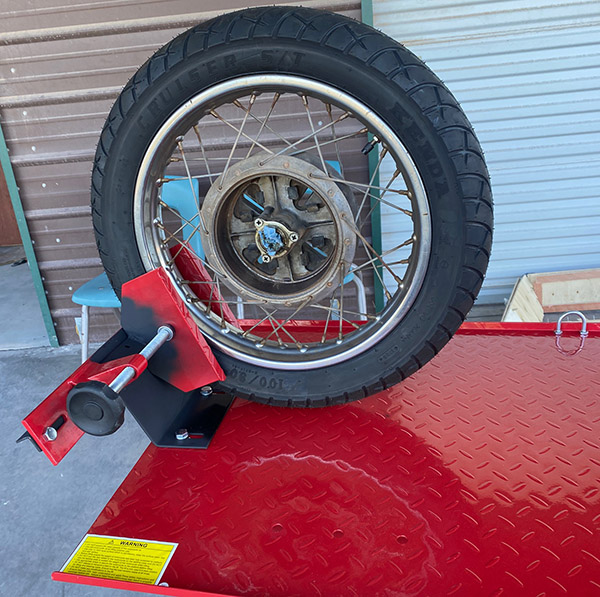
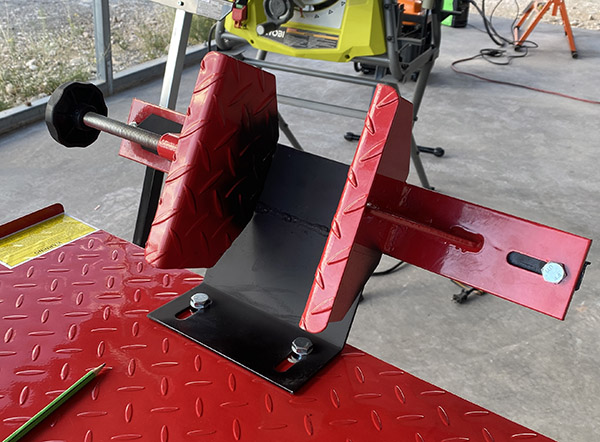
As delivered the tire clamp is too close to the fulcrum of tip-ology.If all you have is a hammer every problem is a nail. It’s the same when you get a welding machine. I added the tire clamp to the top of the tire stop to gain better leverage.The repositioned tire clamp gets a higher grip for less tip.
The thriftiest way to fix the tire clamp is to relocate the thing on top of the tire stop. This gave me a chance to practice poor welding on a mission critical part. The sliding part of the clamp was lightly welded so I slathered on a bit more metal.
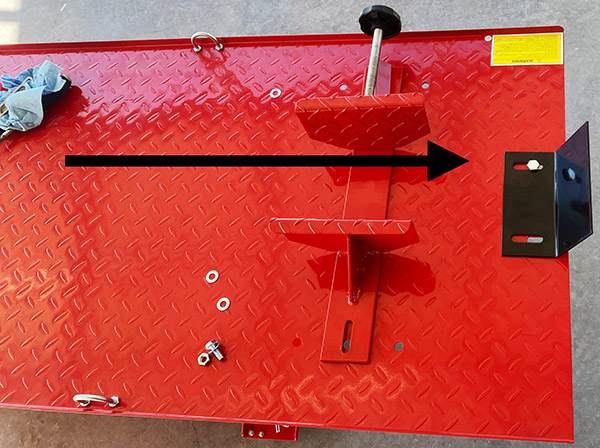
Once the clamp was in place I added a piece of angle iron to prevent jaw-spread, a common occurrence among older motorcyclists. Drilling two extra holes in the angle iron gave me another, more forward attachment point for tie down straps.
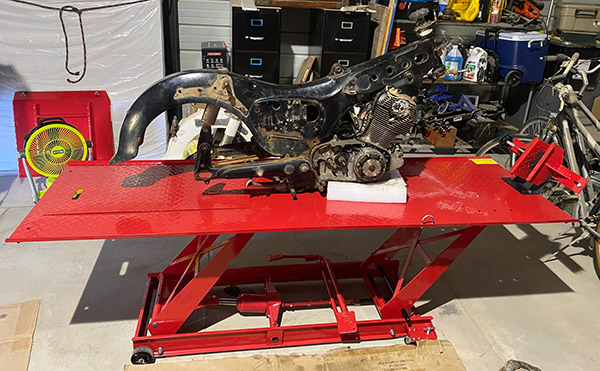
This all sounds like a lot of work but it took maybe 2-3 hours and that number includes thinking about things. I’ve got the Dream on the lift for its maiden voyage and it seems to be stable. I give the lift 5 stars for value and 2 deep vein thrombosis’ for HF still not quite getting it right after all these years. If you need a motorcycle lift and don’t mind tinkering and welding a bit the HF lift on sale is hard to beat.
The ’62 Dream gets the honor of being the first to sit atop the HF lift.
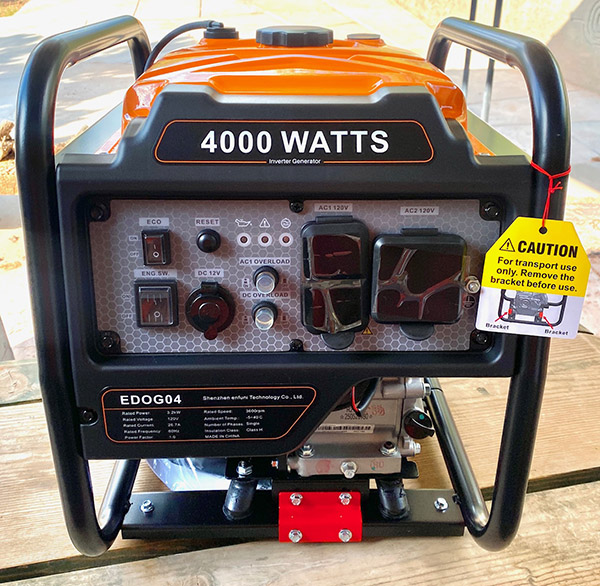
My nesting work here at the ranch is taking me further away from electrical power. A 100-foot extension cord isn’t cutting it anymore. The little Harbor Freight Tailgator has been a trooper, but 700-watts isn’t enough for the electric jackhammer or two concrete mixers at once, and besides that the urge to spend money is strong.
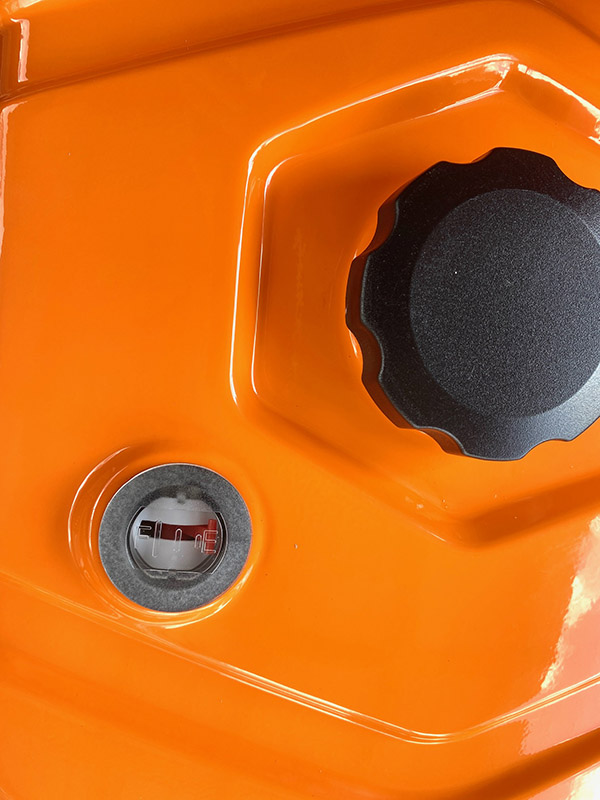
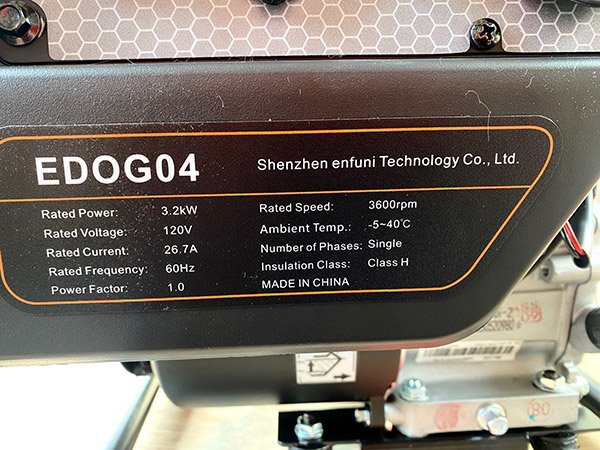
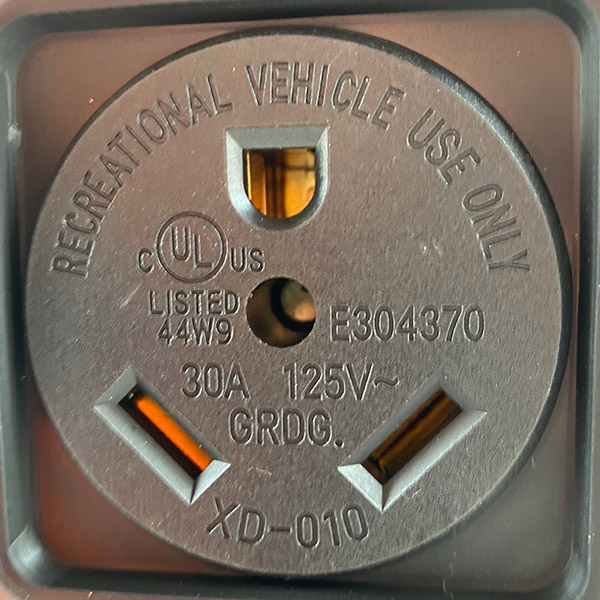
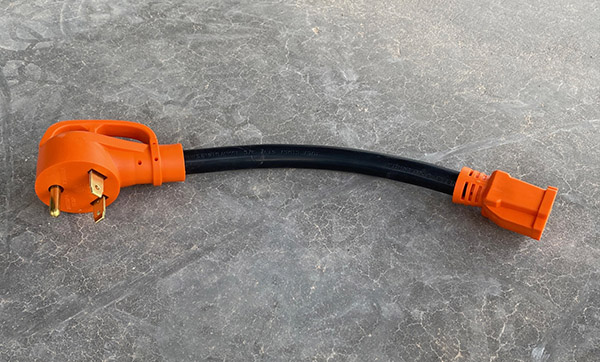
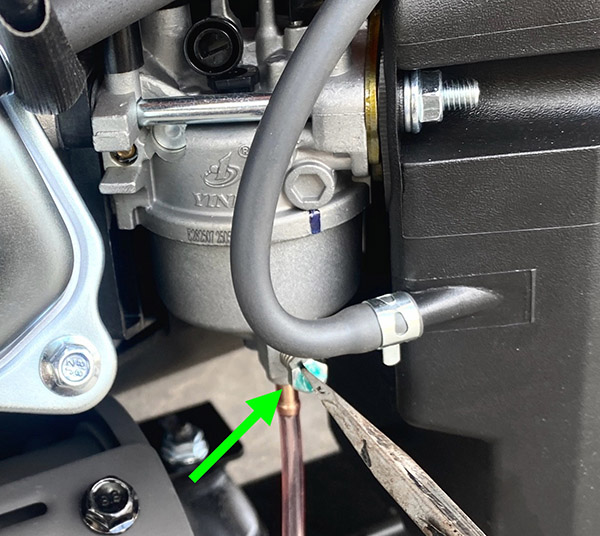
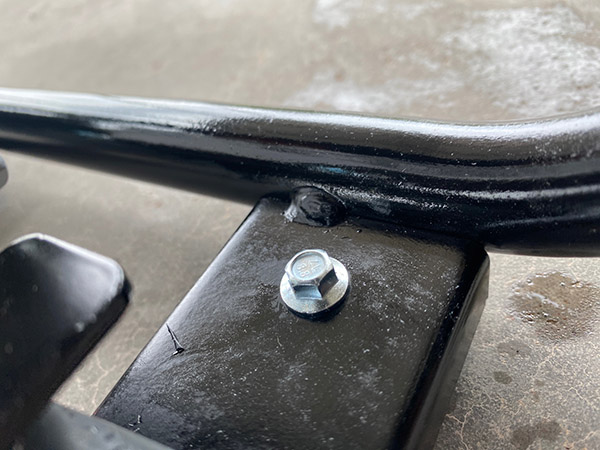
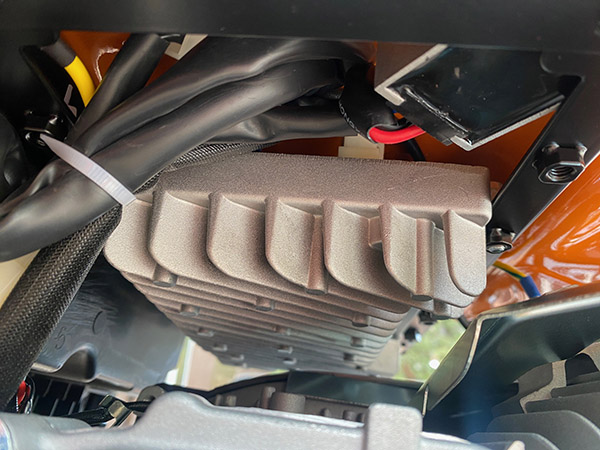
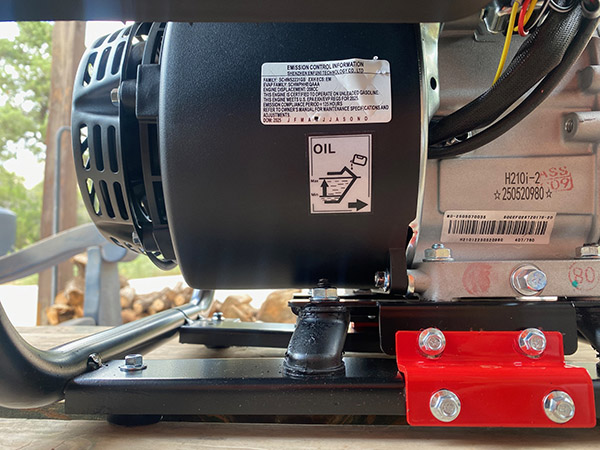
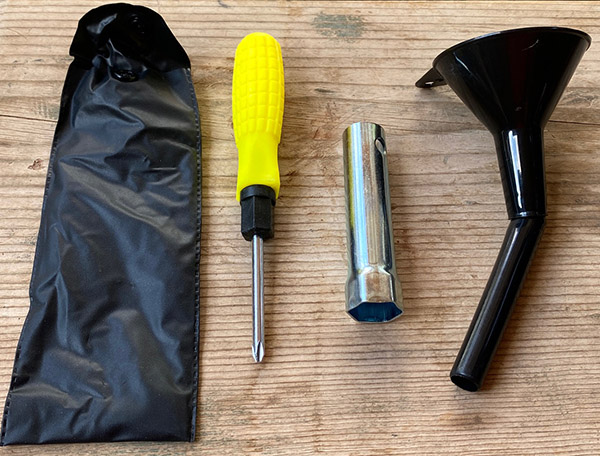
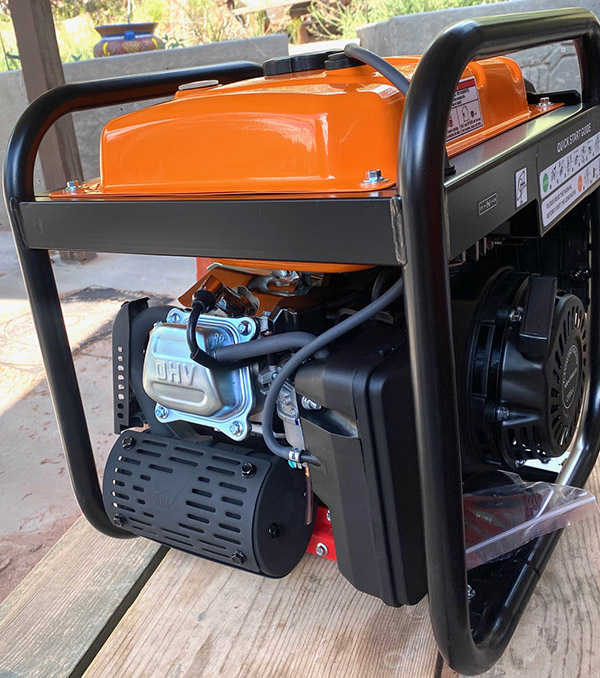
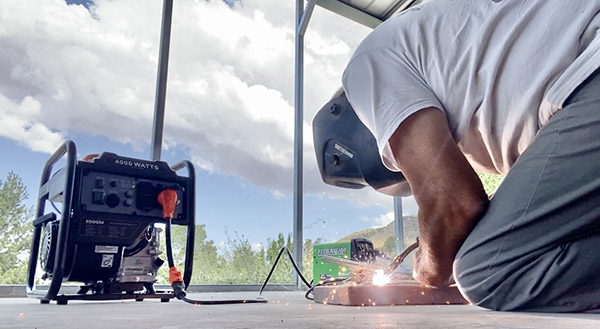
Lots of buttons and outlets on the 4000. A 12-volt cigarette lighter outlet is unusual for cheap stuff.A cool little fuel gauge is fitted to the top of the tank.Rated 3200 continuous and 4000 surge, the ‘Zhen seems to power most anything up to 26 amps. That’s four times as much as the Tailgator.The 30-amp, RV-type plug is great for welding.But you’ll need an adaptor to plug your light duty flux core into the 4000.This handy float bowl drain is a must-have for today’s crappy, alcohol laced fuel. Drain it after every use.I’d like to see a little more weld on the frame. It would only take 30 seconds.The inverter lives under the fuel tank. This is where the magic happens converting DC into AC.Unlike a normal genset that hangs the AC portion off of the crankshaft opposite the pull start, the Shenzhen incorporates the power source inside the blower area and the rope start.The generator came complete with a cute tool kit. You won’t get far with it but the thought counts.The muffler isn’t super quiet like a Honda but it costs a lot less. The ShenZhen is around 63 decibels using my seat of the ear dyno.
I have more than the usual number of generators: in addition to the Tailgator, there’s a 10,000-watt Italian-Honda mash up and a 9,000-watt Predator (also from Harbor Freight), but both of those machines are heavy and hard to move on the steep and rocky New Mexico terrain we are currently beating into submission.
I wanted something light-ish that I could toss in a truck or carry downhill to a terracing job. It needed to have enough juice to run my equipment loads and if it could power the flux-core welder, that would be ideal.
At 60 pounds the Shenzhen 4000 seemed like the way to go. Amazon reviews on the generator were mostly good.
The ‘Zhen 4000 is an inverter-type generator. Unlike a standard AC generator which must run at a steady RPM to make 60 cycles per second, an inverter generator makes DC power (zero cycles or one endless cycle, depending on how you look at it). That DC is then converted to AC by an inverter.
The advantages to inverter-type generators are several:
The engine RPM can vary according to load making the unit more economical for powering lighter loads. At full load there probably isn’t much difference.
The frequency can be tightly controlled, putting out 60 hz regardless of the load.
The sine wave form can be cleaner with less noise. Small generators induce jagged wave forms due to the slight increase/decrease in crankshaft rotation speed through the engines power cycle.
There’s less noise at lighter loads, because the engine speed can be slowed to meet demand.
The disadvantage to inverter-type generators is basically a more complicated generator with more parts to fail. There is a slight efficiency loss converting DC to AC voltage but it’s kind of a wash (see Item 1 above)
The Shenzhen I bought from Amazon was $299. Now that I’ve bought it, my ever-alert Facebook algorithm is sending fly-by-night offers for the same unit at $149. If you can get it for that price without being scammed, it’s a hell of a deal. $299 isn’t bad either.
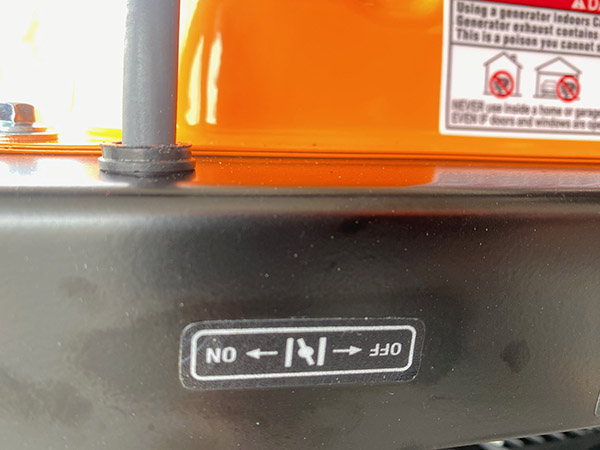
The choke was labeled backwards which led to a lot of rope pulling. It might be ok in the southern hemisphere but around here we peel the sticker off and flip It over.
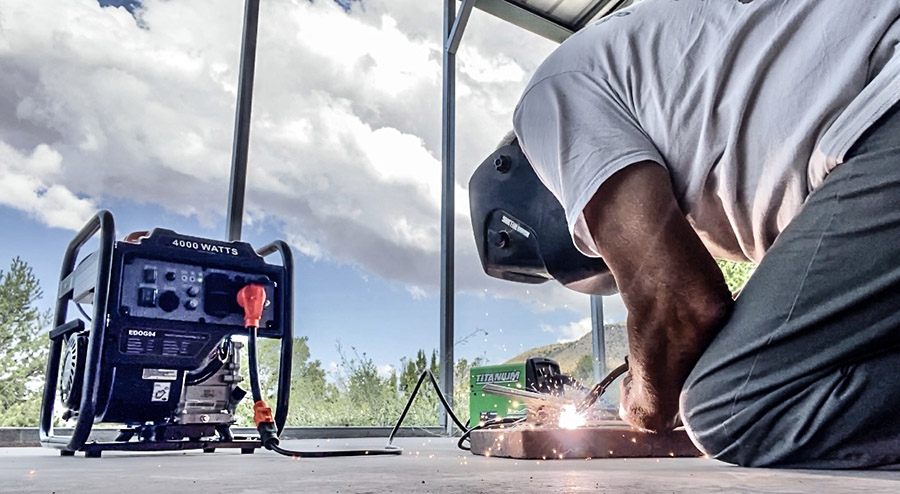
The unit started right up once I realized the choke was labeled backwards and seems to have plenty of power. It runs my little flux core welder better than a regular receptacle. I’m mobile!
Time will mention under its breath if the ‘Zhen holds up and I’ll be sure to let you know if it’s junk. For now, it’s the real deal.
The Shenzhen 4000 runs the flux core welder nicely. I can crank it all the way up, a setting that pops a 15-amp breaker after a minute.
When I was younger (by a lot) I used to modify all my motorcycles. Different forks, different gas tanks, different wheels. I never left well enough alone. Until I bought a new, 1983 Honda XL600, I only had a few stock bikes. The XL600 was so good it started me thinking about why I kept messing with original bikes. And so I stopped.
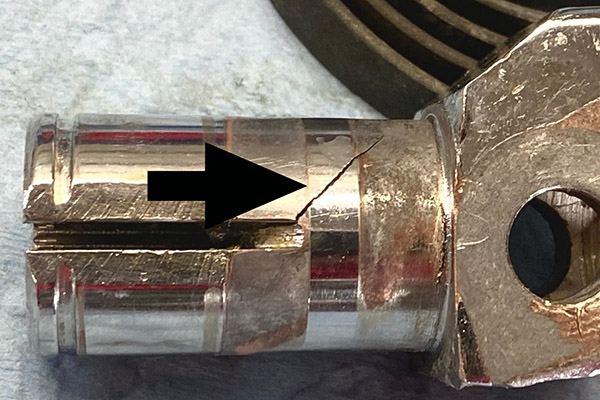
I found the reason why the kickstart splines slip. The lever knuckle is cracked allowed the splines to expand when kicking. Luckily the spare engine has the part.
I pretty much leave motorcycles stock now. It’s a lot easier and quieter. Let’s face it: The bikes are more reliable stock. Reliability is important to me now. Along with resale value.
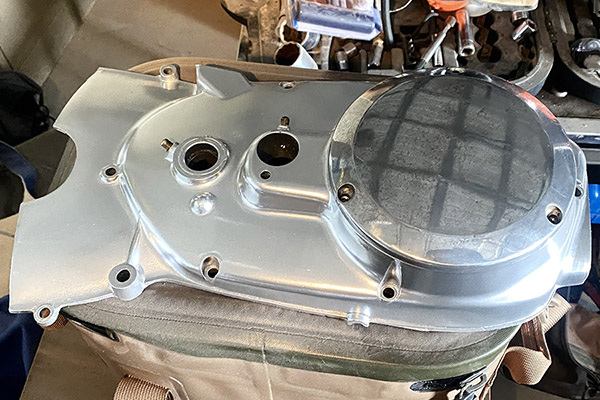
I’ve been polishing the turd a bit. The aluminum color is too bright, I’ll try something else but the bike should clean up and look decent.
Lately, the Dream 305 decision tree has branched off in a different direction. Getting the bike running was exciting but figuring out how to proceed has not been. What to do with this beast? If the engine was bad things would be easy: Part it out. But the engine is not bad.
The main issue is the low value of restored Dreams. A couple thousand bucks will get you a nice rider that needs nothing. My ’62 is an early model that has some cachet, but not enough to make much difference.
I was going to leave the bike rough and stock, just get it operational, but deep down, I don’t like the way a Dream looks. The engine is fine. I like the close-set fins, but It’s those fender flares. They make the bike look stodgy and old.
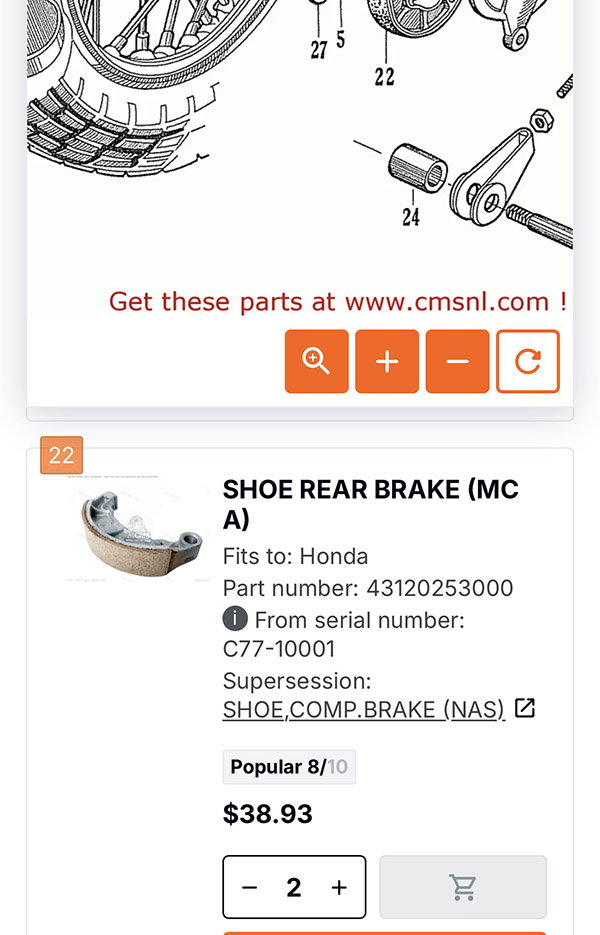
Front brake shoes are cheap and available for the Dream but rear shoes have a different mounting set up. At $38 each shoe I’ll be running the old ones. Hopefully the lining stays glued on and doesn’t come loose and lock up the wheel.
I’ll be the first guy to tell you don’t modify old bikes because it lessens interest and value, but what if the bike has little value to start with? I’ve decided the flares have to go. Kind of a return to my roots on a bike that isn’t in great shape.
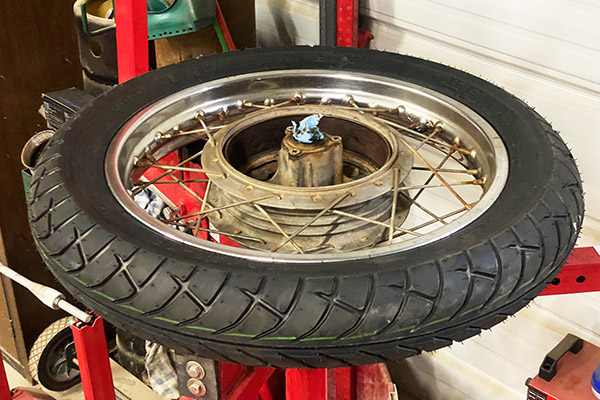
The rear rim is in fairly good shape, and the new Kenda fit will. Neither of the front rims are very good. They are round and straight, but the chrome is shot. As this is a budget build, I may try some chrome spray paint just to get the bike on the road.
Hear me out: Modding this bike is not a big deal as I have a bit of metalworking to do on the Dream’s sheet metal frame and have decided to take the bike completely apart to allow easy access and flat welding.
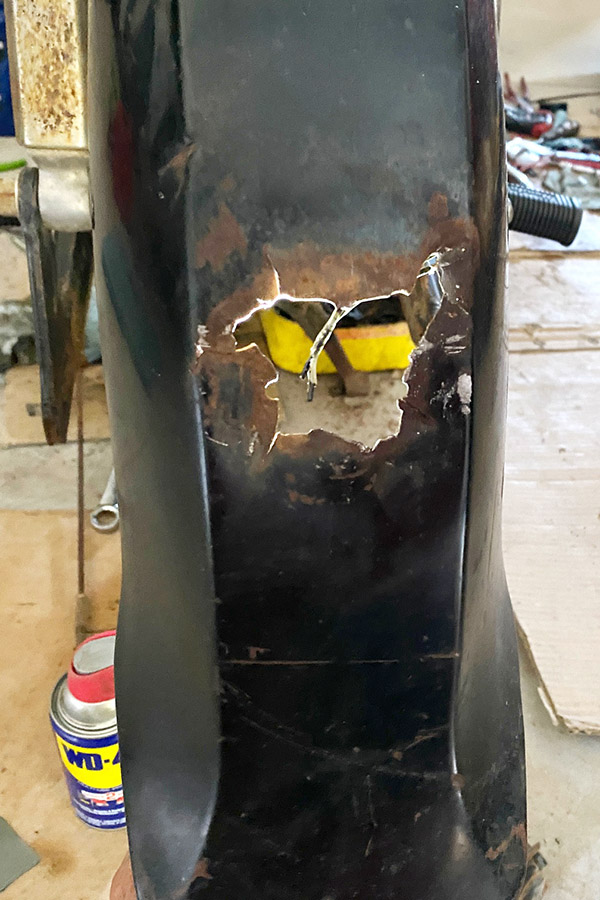
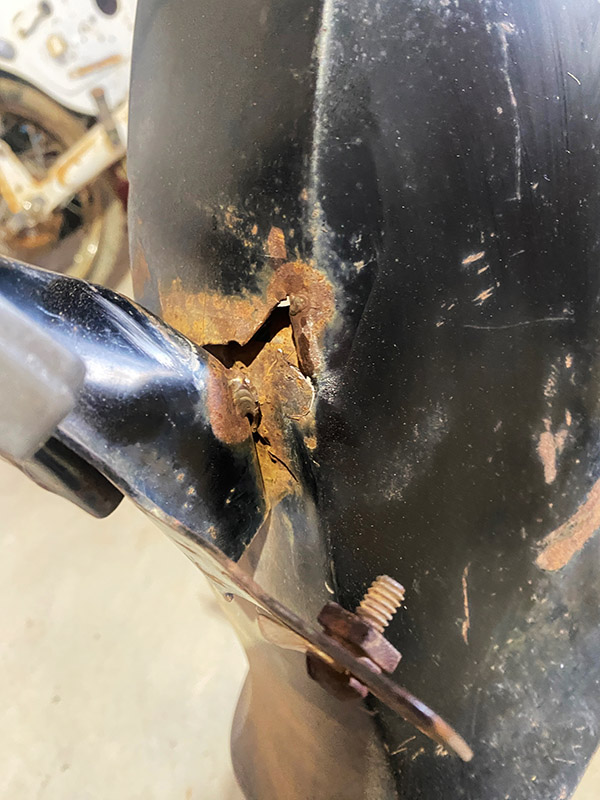
The Dream has been down sometime in the last 60 years. I’ve tweaked the front fender straight-ish. A little welding and trimming will make it usable.The taillight area is kind of a mess. I’ll use the flare cut-off to supply original sheet metal when I plug this hole.
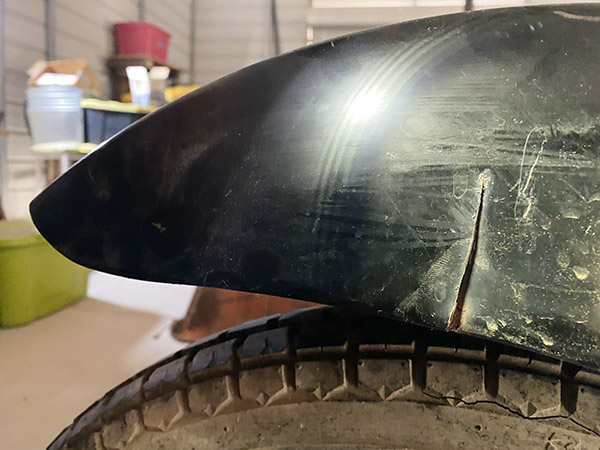
The front fender has a crack and the flare is bent; it will need some massaging and removing the flare removes one problem. The rear fender has a gaping hole where the taillight sat, and I’ll be welding that closed. There are a few dents that would be easier to beat out with the frame upside down. The bike won’t be original, but it won’t be far off original. And most importantly, I’ll like the way it looks. I’m shallow that way.
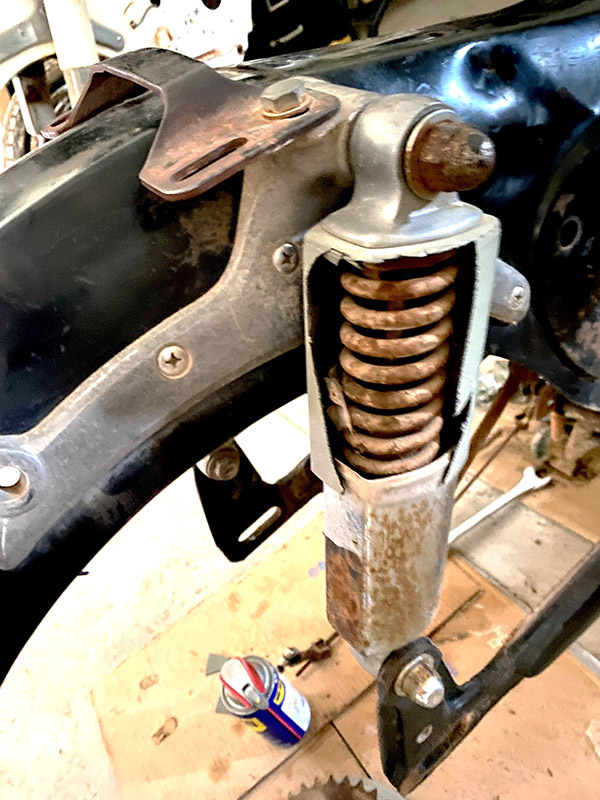
These square shocks are iconic Dream bits. No longer held to a high standard, I won’t be looking to replace the eroded plastic covers.
Things are hopping at the ranch, so I have made little progress (but not zero progress). Just having clarity, freedom and a plan saves on lateral moves.
This was an interesting blog to write (and it was interesting on many levels). As you know, I’m writing a series of blogs on motorcycles I’ve owned with the machines organized by cylinder count. The idea is to consider all of them from my ownership perspective, rack up a bunch of (hopefully) fun-to-read blogs, and then wrap up with my opinion on which engine configuration is the best. I’ve already done the first one on the singles I’ve owned.
A word on the photos: I was surprised I had photographs of every bike I’ve ever owned. In recent decades, after I had become a half-assed amateur photographer, the photo quality is generally good. In earlier years, I was not a very good photographer, nor was my equipment very good. Some of the photos are in black and white, and most of the earlier ones were taken with a dinky little Minolta C-110 camera. Hey, you go to war with the army you have.
Between that first ¿Quantos Pistones? post and this one, something self-updated on my computer and my laptop went from simply taking my orders to predicting what words I’m going to type next and then filling them in, which I found to be wildly annoying. I thought it was in the WordPress software, but it wasn’t. It was in my Edge browser. Google helped me; I found the offending “feature” in the Edge settings and switched it off. I think these software weenies are changing things just to give themselves something to do. I wish they would stop. The folks who keep doing this sort of thing are going to have a hard time explaining themselves when they’re standing in front of the pearly gates. I’ll be there, too, as a witness for the prosecution.
Rant over; let’s get back to the main attraction.
As was the case in the blog on singles, I am again discovering this: Just when I think I’ve listed all of the twins I’ve owned, I remember another one. That sure has been the case here. I suppose I had better hit the Publish button before I remember another one.
Alrighty then: With the above as a backdrop, here we go.
1965 Honda CB 160
Okay, I’m cheating a little. This wasn’t my bike at all. It was my Dad’s. But I rode it in the fields behind our house quite a bit and I sort of considered it to be mine, and that’s why it’s on this list.
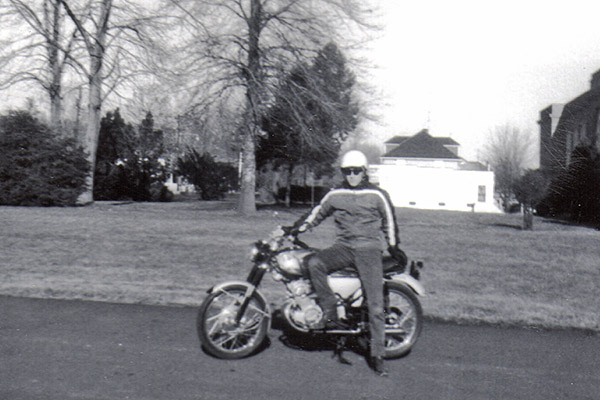
The 1964 Honda CB 160, That’s me on the bike in New Jersey, during the winter months, when I was 14 years old.
The little 160 was nice. It was the first motorcycle I ever rode and I had a lot of fun on it. Honda was making big inroads in the United States in the mid-1960s and they changed nearly everything in the motorcycle world. It was a fun time for a 14-year-old kid.
The CB 160 only stayed with us for a couple of months. Dad had been bitten by the bug. He wanted something bigger.
1965 Honda Super Hawk
As was the case with the CB 160, the Super Hawk was Dad’s motorcycle. But the same modifier applied: I used to ride it in the fields behind our house in New Jersey, so I’m including it here.
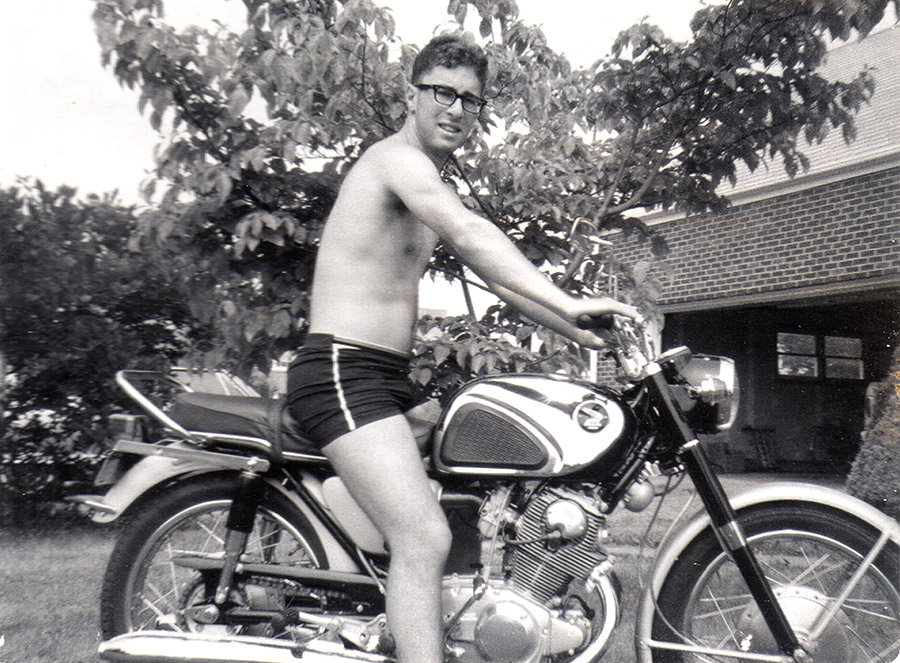
Fast forward a bit, and it’s me again during the summer months on a 1965 Honda Super Hawk. We had a swimming pool, so I spent my summers in a bathing suit.
The Super Hawk, with its 305 cubic centimeters, seemed infinitely more powerful than the CB 160 (especially riding it in the fields behind our house). Dad had the bug, though. The Super Hawk would only last for a couple of months, too.
1966 Triumph Bonneville
Ah, this was a motorcycle. A Triumph Bonneville. I couldn’t believe it. It had been my dream machine for at least a couple of years, and now there was one in the garage. And you know what? Dad let me ride it in those same fields behind our house. I can’t imagine what he was thinking or why he let me do that. I never dropped it, though. God Almighty, it was powerful. And the sound….it was awesome.
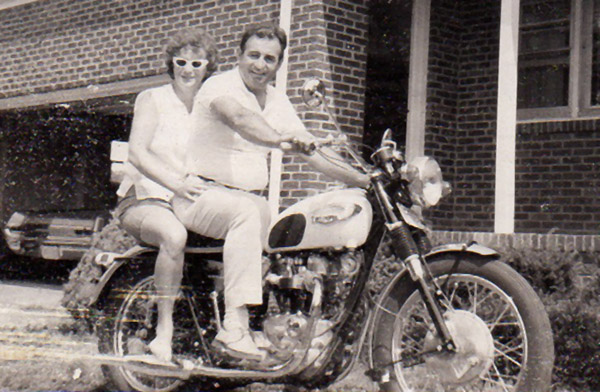
Mom and Dad on the 1966 Triumph Bonneville. You can see their other Bonneville (a 1965 Pontiac) in the garage. You could say we liked Bonnevilles. No one in my family has ever been to the Bonneville Salt Flats. I probably should go there one of these days.
The Bonneville was an amazing motorcycle. Dad and I had a lot of good rides on it. I wish we had kept it. On that sound comment above: Nothing, and I mean nothing, has a a more soul-satisfying exhaust note than a Triumph.
1978 Triumph Bonneville
I was living in Fort Worth, Texas, I was single, and I was an engineer at General Dynamics on the F-16 program. When I passed by the Triumph dealer I realized I hadn’t ridden a Triumph Bonneville since I was 16 years old, so I thought I’d stop by. An hour later I signed on the dotted line, and I owned a Bonneville again.
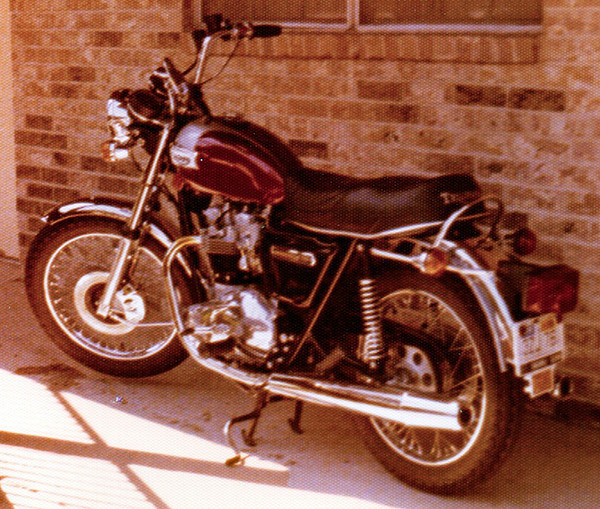
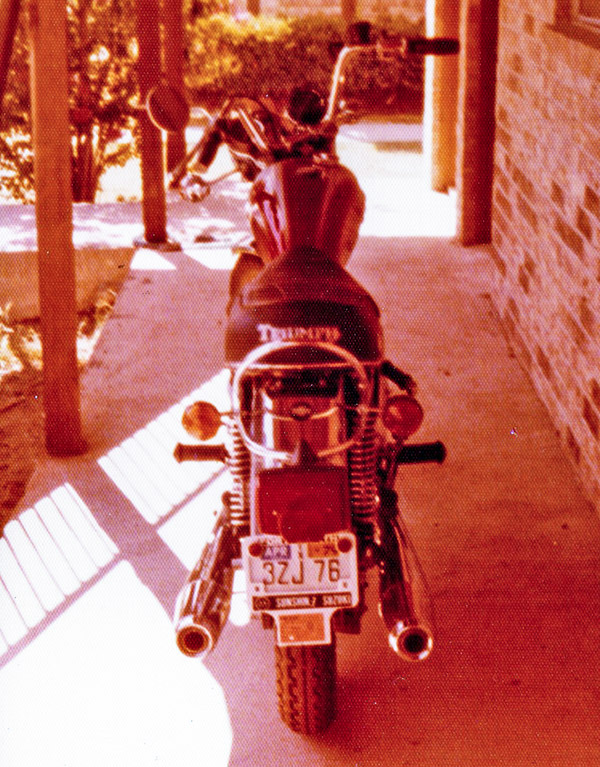
My 1978 Triumph Bonneville, parked outside my apartment in Fort Worth, Texas. The colors have mostly drained from these two photos. The bike was a deep candy apple red.Another shot of my 1978 Triumph Bonneville.
It was a great motorcycle. There was an older guy who owned a Yamaha TT 500 at General Dynamics (his name was Sam), and we road all the farm roads in the areas around Fort Worth. We both had hay fever and Texas had terrible pollen, but the riding was great. My Bonneville would top out at exactly 109mph (the earlier T120 and then T140 designations notwithstanding), and that was enough. The bike was kick start only (which made it an anachronism in 1978), but I was okay with that, too. For awhile, anyway.
I sold the Bonneville. I’m can’t remember why; I did a lot of dumb things when I was young. Shortly after I sold the Bonneville, I realized I needed a motorcycle again. You know, to be a complete person. That led to my next acquisition. But to this day, I wish I had kept the Bonneville.
1979 Harley Electra-Glide Classic
I used to spend a lot of time at the Fort Worth Harley dealer drooling over their new bikes. The late ’70s were, in my opinion, the height of the Willie G styling years at Harley. It was also the absolute bottom for them from a quality perspectives, as I would soon find out when I finally bit the bullet and bought the bike I thought was the most beautiful motorcycle I’d ever seen: The 1979 Electra-Glide Classic.
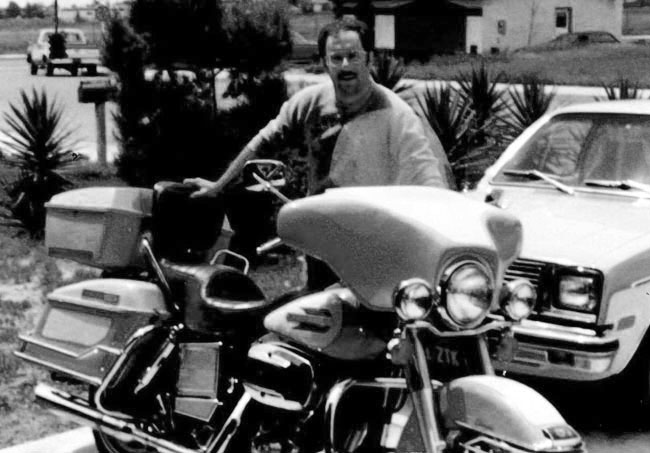
Yours truly, with a full head of hair and a 1979 Electra-Glide Classic. I called it my optical illusion. It looked like a motorcycle.
The Electra-Glide was beautiful, but to call it a piece of crap would be insult to turds the world over. The bike couldn’t go a hundred miles without something breaking on it. It needed three top end jobs in the 12,000 miles I owned it (the first two were on the warranty, the last one was on me). I’d finally had it with that bike and what some folks like to call “The Motor Company.” Hell, the motor was the worst thing on that bike. And the brakes. And the clutch. And the starter. And the handling. And the….well, you get the idea. It was one of the last years Harley was owned by AMF, and when a Harley mechanic told me what that stood for, I finally got it. I smiled inwardly when I sold the bike, thinking to myself, “Adios, MF.”
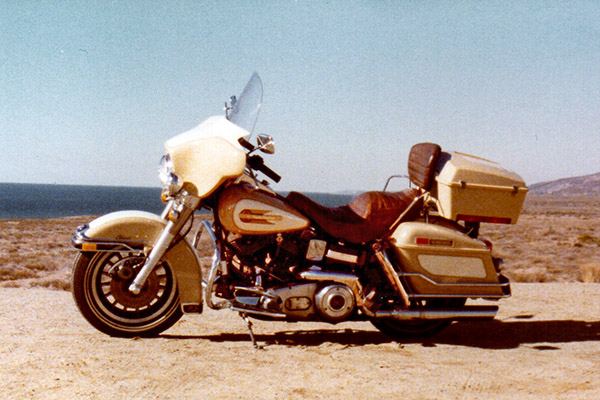
On the way down to San Diego, with the Pacific Ocean in the background. I explored a lot of southern California on the Harley. It was the most unreliable motor vehicle of any type I ever owned.
After that awkward ownership experience, I swore I’d never buy another Harley. I didn’t keep that promise, though.
Even considering all the above, I wish I still had that ’79 Electra-Glide. It would be worth a small fortune today. It sure was a pretty motorcycle.
1976 Triumph TR6
Somewhere in the succession of events described above, I moved from Fort Worth to southern California. General Dynamics transferred me to the Pomona facility. I loved southern California and I hated GD/Pomona. Actually, that’s not entirely accurate. The company was okay, but my boss was a dickhead. So I did what I normally do in that situation: I quit and went to work for another defense contractor. While there, I worked with yet another defense company, and one of the guys there had a 1976 Triumph TR6 he offered to sell to me for $500. It was running, it was registered, and minutes later it was mine.
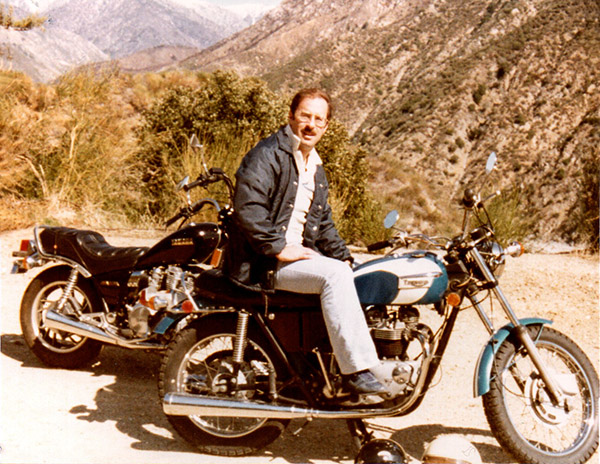
On Glendora Ridge Road on the 1972 Triumph Tiger. It was a great motorcycle.
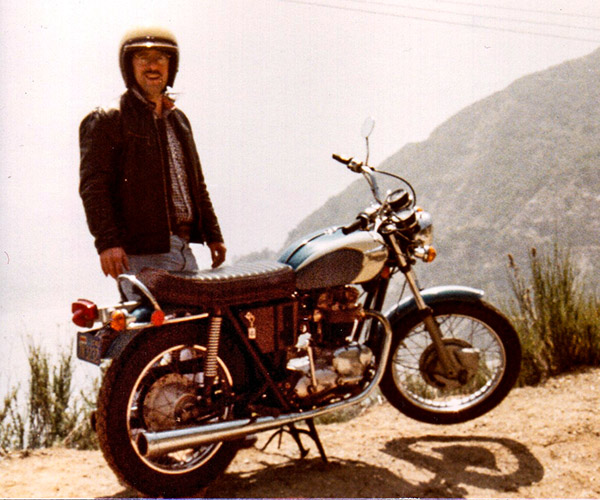
The TR6 was a wonderful motorcycle. If there was a performance difference between it and a Bonneville, I didn’t have the asspitude to feel it. The single-carb TR6 actually felt stronger at low rpm than the Bonneville did. I loved that bike, too.
Another Glendora Ridge Road portrait. The Tiger had character, and I mean that in a good way.
The paint on the TR6 had oxidized pretty badly (the former owner kept it outside). I had this idea I would restore it (see above regarding my propensity to do dumb things when I was younger). I did a pretty good job turning the great-running TR6 into a basket case (again, see the preceding comments regarding my youthful decisions). The paint job I paid for on the fuel tank was a disaster, and then I lost interest in resurrecting the bike. I sold the basket of bits and pieces for what I had paid for the bike. I wish I still had that one.
1972 Triumph Daytona
The first motorcycle I ever went gaga over was a 1964 Triumph Tiger that a kid named Walt Skok rode to high school. In those days, the Tiger was a 500cc twin that looked a lot like a Bonneville. God, that thing was beautiful.
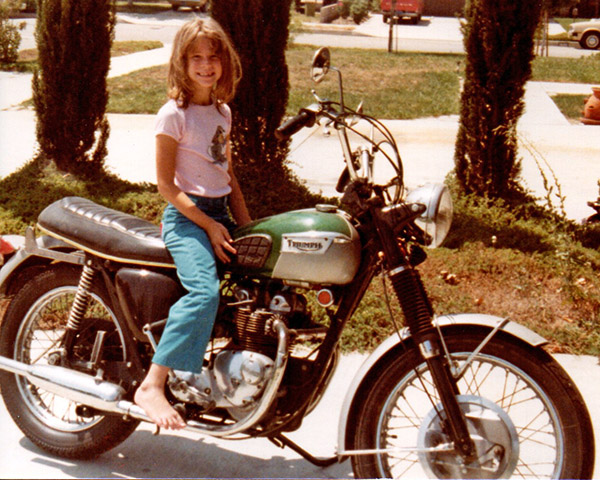
One of the neighbor kids on my 1972 Triumph Daytona, also known as the Baby Bonneville. This was another great motorcycle.
Triumph kept that 500cc twin in their line for years, ultimately adding a second carb and rechristening the bike as the Daytona. When the 650 line went to the oil-frame-configuration in the early 1970s, the Daytona (also known as the Baby Bonneville) did not; it kept the classic Triumph separate oil tank and peashooter mufflers.
I can’t remember who I bought the Daytona from (I bought it used), but I sure remember its looks. It was a deep candy metallic green with silver accents. It was bone stock and it was a wonderful ride. The handing was almost thought-directed…I could just think what I wanted the motorcycle to do and it would do it. One day, for no particular reason, I took it to the top of one of our streets that ran up into the mountains, turned it around, turned off the ignition, and started coasting downhill. I wanted to see how fast it would go with zero power (see my previous decision-making comments); the answer was exactly 70mph.
I never registered the Daytona over the three years I owned it; I just rode the snot out of it. I never got stopped or and I never had a citation for the expired plates. I can’t remember why I sold it, or who I sold it to. The Daytona was a wonderful motorcycle. I wish I still had it.
1992 Harley Heritage Softail
I didn’t keep my promise to never buy another Harley. A fried let me ride his ’89 Electra-Glide. It was a big, fat porker (the bike, not my friend), but Harley was getting a lot of press about their improved quality. I saw a blue Heritage Softail on the road one day, and I decided I need one. It was that simple.
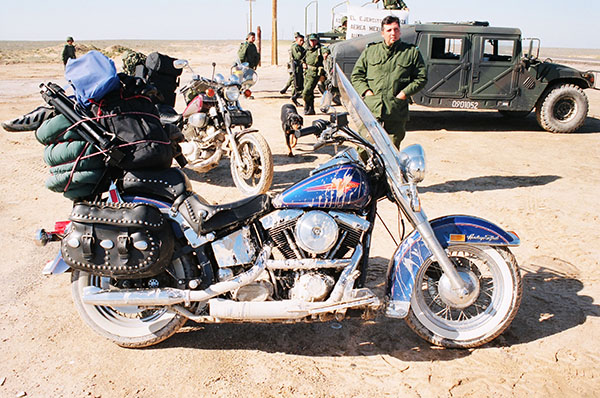
I covered a lot of territory on my 1992 Harley Softail. This shot was in the mud flats near Guerrero Negro in Baja, a trip I made with good buddy Baja John.
I put a lot of miles on my ’92 Softail, and while it lasted, it was a great motorcycle. Good buddy Baja John and I rode our bikes to Cabo, we took the ferry across the Sea of Cortez, and we rode down to Guadalajara and then back up through mainland Mexico to Nogales (you can read about that adventure here).
The Harley died on me down in Mexico on another trip, and although I had regained a tiny bit of trust in Milwaukee, the dealers were still (in my opinion) basically incompetent. When my ’92 went belly up, the dealer wouldn’t touch it because it was more than 10 years old (I can’t make this stuff up, folks), so I took it to an unencumbered independent repair shop and had it rebuilt as a real motorcycle (you can read that story here).
What kind of killed the Harley dream was me forgetting to pick up milk one day when coming home from a ride on the Harley. My wife asked about the milk. I realized I had forgot it, so I went back out to run to the store. For whatever reason, I took my KLR, and it was as if I had been set free. The KLR was just so much better, I put an ad in the local Cycle Trader the next day and sold the Harley the day after that.
While I am on this subject of Harley twins, I will tell you that I always wanted a Sportster. One day the Harley dealer had to keep my bike overnight and he lent a Sportster to me. That changed my mind in a hurry. It was gutless. I know some of my readers ride Sportsters and others ride Big Twins. Mea culpa in advance. If you’d like to tell me how great your bikes are and how I have my head up my fourth point of contact, please leave a comment, or send in a draft blog (info@exhaustnotes.us) with pics and I’ll publish your rebuttal.
1982 Yamaha XS 650
This was a lucky find, or rather, it sort of found me. I was teaching a failure analysis class at McDonnell Douglas about thirty years ago, and the first evening when I connected my laptop to the projector, a photo of the Triumph Daytona (the one described above) briefly appeared in front of the class.
“Hey, I have one of those,” one of the older engineers in the class said. I asked if he was a Triumph fanboy (as I was). He told me that he didn’t have a Triumph; he had the Yamaha that was based on it. He offered to sell it to me in front of the entire class. I hadn’t even introduced myself yet.
“Let’s talk after class,” I said.
I turns out this guy had purchased the XS 650 new, rode it very little, and it had sat in his garage for several years. I bought it for $900. I think it was a 1982 model, but I can’t say that for sure. Being a Triumph rider, I always thought it would be cool to own one of the Japanese 650 twins. You know…better reliability, no oil leaks, smoother running engines, better fit and finish, and all that.
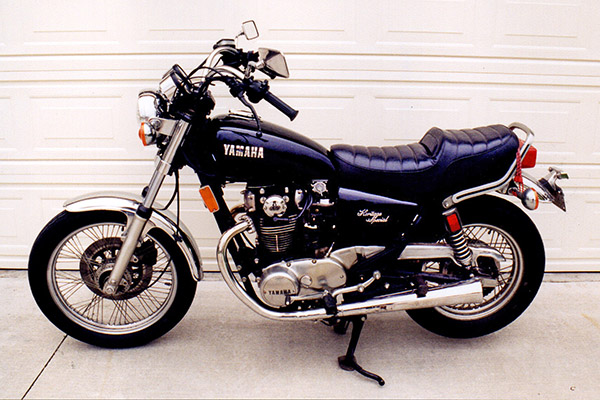
I found had a good shot (at least I think it is good) of my 1982 Yamaha XS 650 Heritage Special. To this day, I don’t know how Yamaha managed to make the bars so uncomfortable.
I didn’t keep the XS 650 long enough to assess its reliability. I did keep it and ride it long enough to find out that it had absolutely no personality, it didn’t have the bottom end torque that a Triumph did, it sounded more like George Jetson’s car than a real motorcycle (let’s see how many of you know who he was), its Phillips head screws reacted to a screw driver the same way butter reacted to a hot butterknife, and the “cruiser style” handlebars were the most uncomfortable I’d ever experienced. As you can guess, the XS 650 didn’t hang around long. I traded it in to lower the cash outlay on my TL1000S Suzuki.
1997 Suzuki TL1000S
Ducati was setting the world on fire with its L-twin performance bikes, and predictably, it was only a matter of time before the Japanese attempted to do the same. Two L-Twin Japanese motorcycles emerged in 1997: Suzuki’s TL1000S and Honda’s Super Hawk (not to be confused with their Super Hawk of the mid-1960s, as shown above in this Twins story). I opted for the Suzuki variant in red. I just liked the looks of it; I felt it was a prettier motorcycle than the Honda.
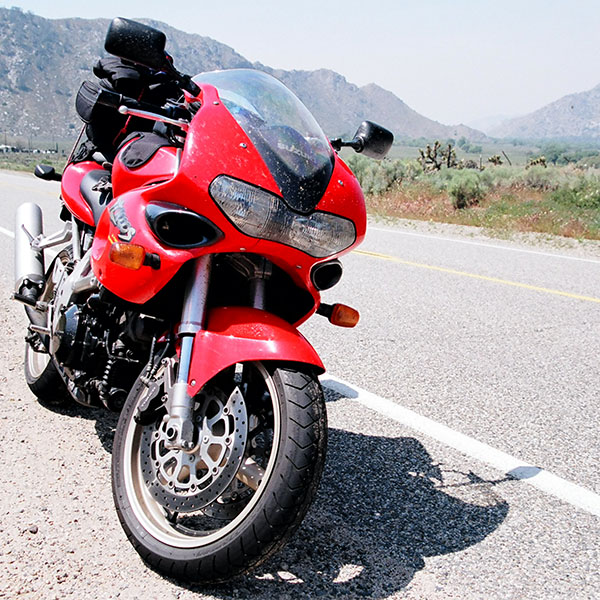
The Roadmaster. This thing ate miles and speed limits voraciously. I toured a lot of Baja on it. This photo was taken somewhere in northern Baja.
The Suzuki was the fastest and hardest accelerating motorcycle I ever owned. It would lift the front wheel when shifting from second to third at over 100 mph. I dropped it twice getting in over my head, but I never really damaged the bike or myself. I used the TL as a touring bike, and I covered large parts of Baja with it. It was a fabulous machine and I wish I still had it.
2020 Royal Enfield INT
My most recent twin is the Royal Enfield 650 INT. Enfield called it the Interceptor initially (which is a much better name), but they quickly changed it to the INT (my guess is because Honda threatened to sue them, as they already had a model called the Interceptor).
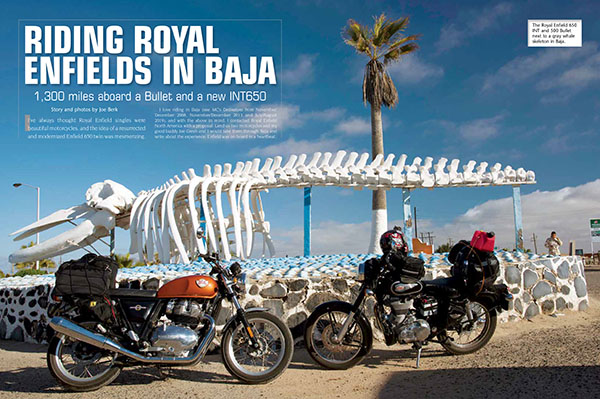
The Motorcycle Classics magazine centerfield showing the two Enfields Gresh and I used for touring Baja. It was a fun trip.
Gresh and I conned Enfield North America into loaning us two bikes (a 500cc Bullet and the new twin INT) for a comparo ride in Baja. We had a great trip, trading bikes off each day and blogging extensively about our impressions. I liked the INT so much I bought one shortly after we returned. It’s a great bike at a great price and it has all the performance I’ll ever need, both as a street bike and as a touring bike.
So there you go. I’ve owned a lot of twins. To me, a well-engineered twin makes a great street bike.
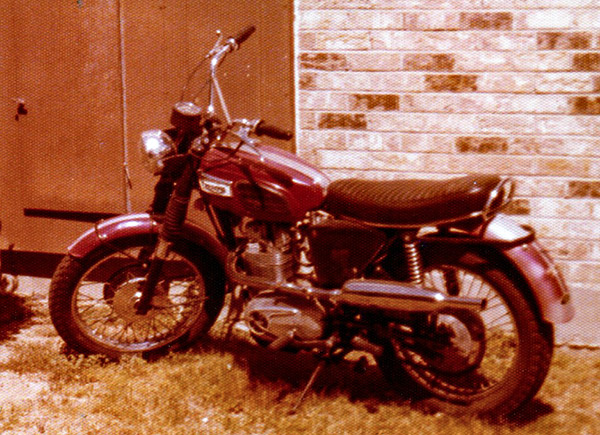
You know what? In searching for photos of my old twins, I found another single I’d forgotten all about. It was my Triumph Cub.
I never put the Cub on the street. I just rode it a bit in the fields behind my apartment building and then sold it. It was crude compared to other bikes of the era, but it was nice. It would be worth way more today than what I paid for it or what I got when I sold it.
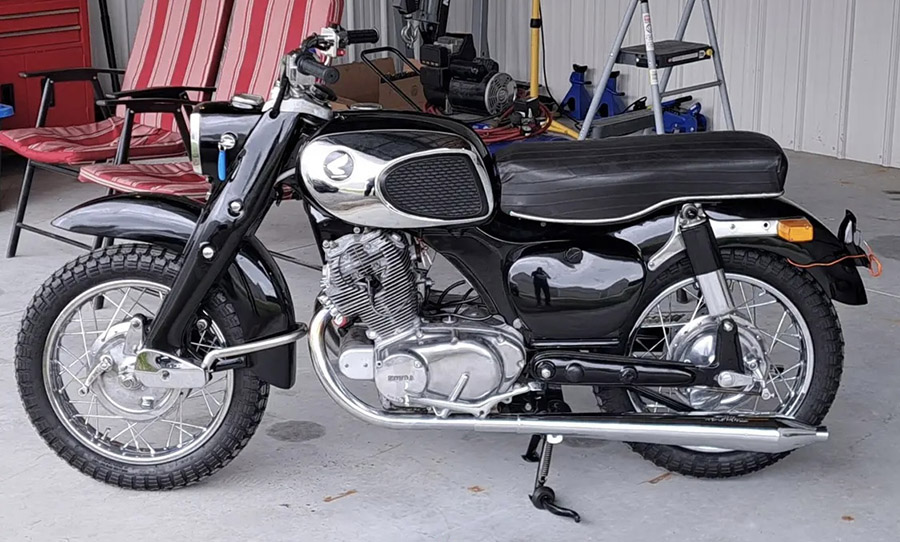
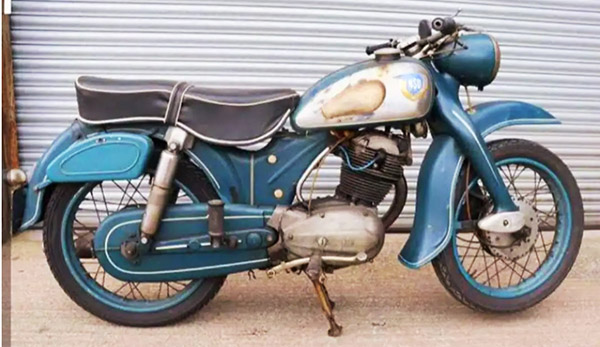
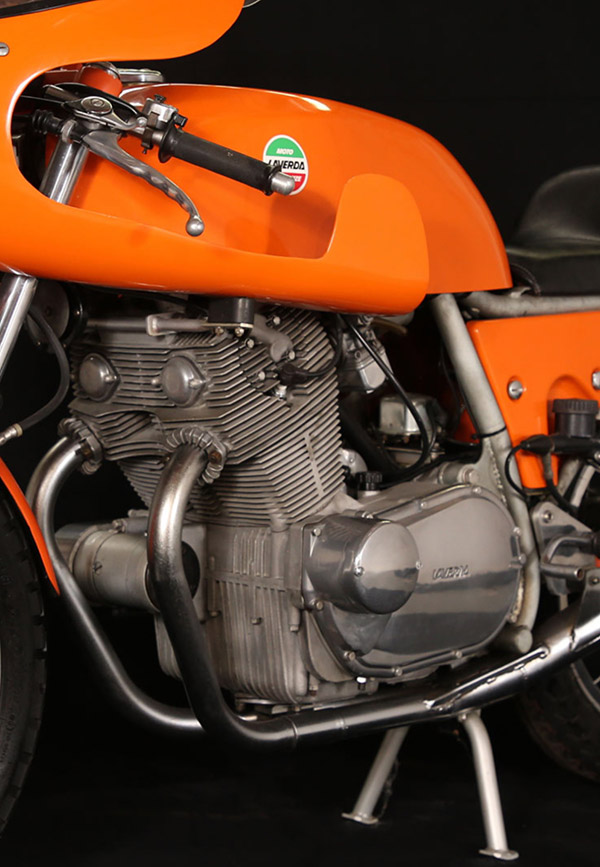
Originality is rare in the mechanical world. Designers build on other’s work. The clean sheet stays clean and so the Honda Dream was heavily influenced by German motorcycles of the 50’s. Just like Honda’s 305 inspired Laverda’s 750 of the mid-1960’s.
The Dream borrowed a lot of ideas from the German NSU.And then Laverda borrowed a lot of ideas from Honda’s 305 engine.
Of course, none of that has to do with the job at hand: getting the 1962 Dream running as cheaply as possible.
The running part was easy: you can’t kill these old Hondas. I cleaned the carb, squirted some oil in the cylinders and onto the valve train, rigged a battery and a hot wire to the ignition, stabbed the starter wire onto the positive-battery and the Honda fired right up.
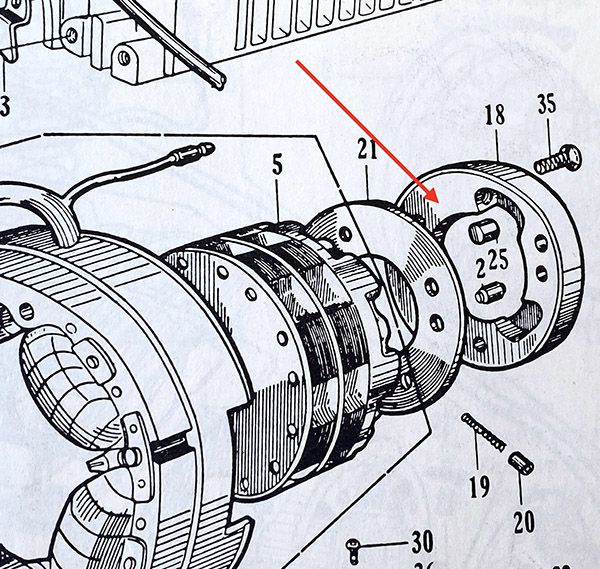
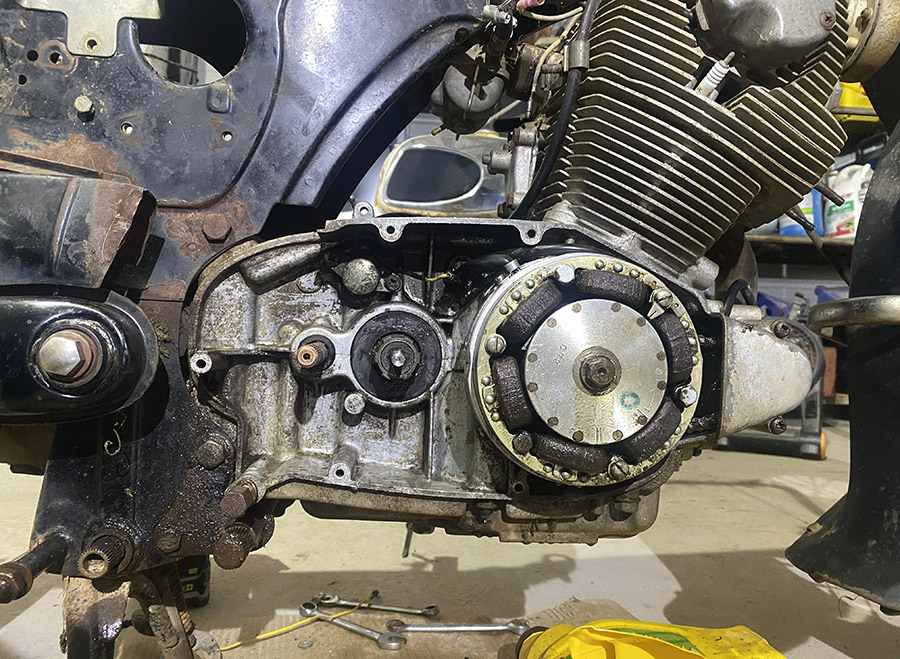
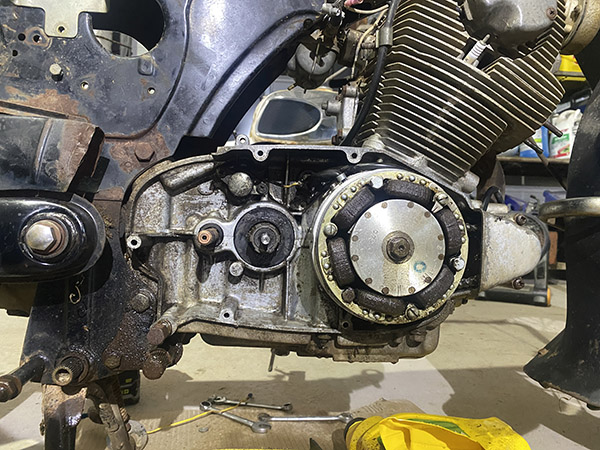
The sprag clutch (red arrow) will need some work. It skips and grabs intermittently.
Not right-right up as the electric starter’s sprag clutch is a hit and miss affair. (I’ll work on that later) once the engine turned over it ran.
Of course, clouds of smoke poured out of the tail pipes, as all that oil I squirted in the cylinder was burning off. Then the left cylinder stopped firing. I discovered the Tytronic ignition puts out a strong spark when I electrocuted myself pulling the left-side spark plug lead to confirm it wasn’t hitting.
Next I swapped leads to check the secondary of the ignition coil and the problem stayed on the left side. Since there’s only one carb, that left the spark plug. I swapped plugs and the problem moved to the right side.
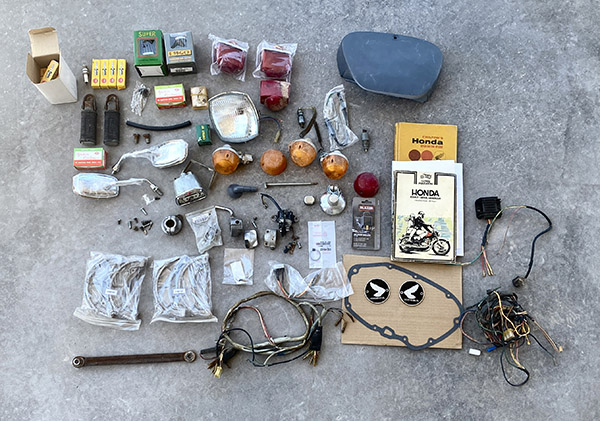
The Dream came with three boxes of parts, and inside those boxes were at least eight new spark plugs. All were the wrong ones (the reach was too long). I kept digging and found a used plug with the correct reach but a different part number. Regardless, I screwed the thing in and the Honda ran on both cylinders.
The rear fender is kind of a mess.
I shifted the gearbox through its four speeds. The countershaft rotation speed increased with each up shift. I didn’t hear any untoward noises except for the taillight. At some point the taillight cracked the rear fender. Someone, probably an engineer, welded the light to a back plate and then to the fender. Which should have been fine. It wasn’t. The welds broke and the taillight rattled like a loose roofing panel.
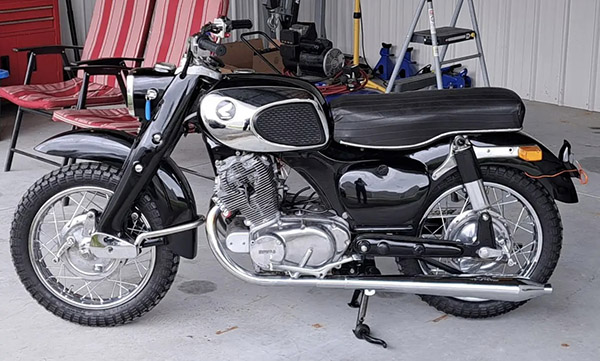
I like the way the Dream looks with the fenders shaved. (Photo from internet, I don’t know who took it.)
A hacksaw remedied the taillight situation. I ran the Honda until it quit smoking. The bike kept running better the longer it ran. I have something to work with, baby. Now I can move on to the running gear.
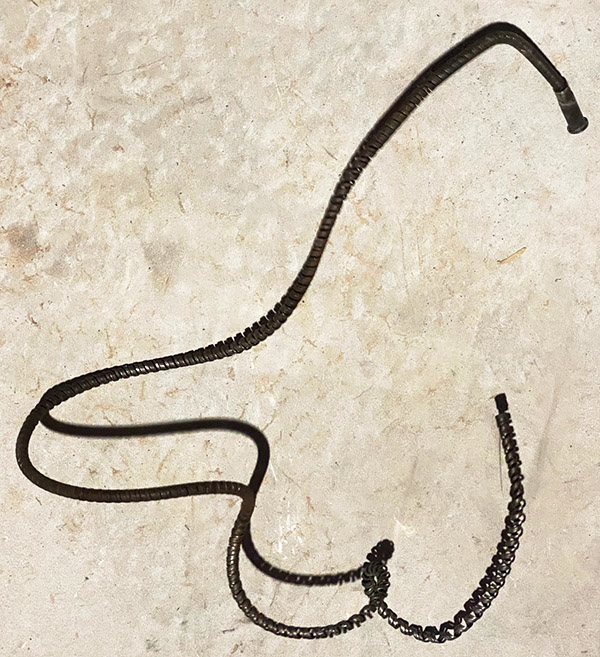
The old speedo cable took a beating.
Unfortunately, my budget-build took a setback with the speedometer cable. The cable stuck in the housing and twisted the end off near the wheel side. Fiscally, I was going to fix it. The dried grey plastic around the housing flaked off easily. I managed to get the cable out and since the speedo cable was a bit long I figured to shorten it by a 1/2-inch and re-crimp the drive tang and end piece. For the plastic cover I was going to use black, heat shrink tubing.
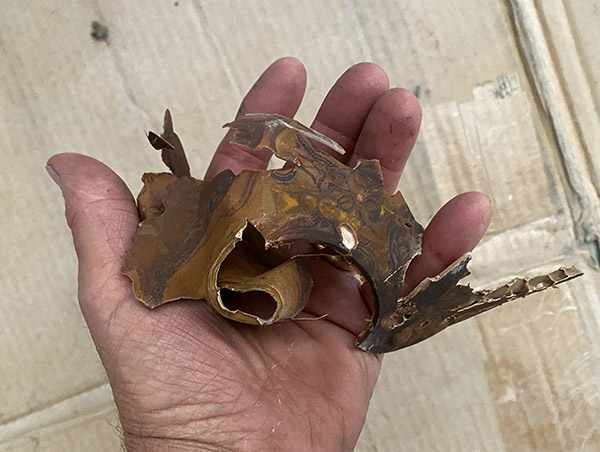
All was going well. I decided to wire wheel the rust on the cable housing. Long-time wire-wheelers will be able to predict what came next. I must have momentarily relaxed my grip on the housing. The wheel grabbed the housing and wound it around the grinder shaft. The loose end flailed like a weed whacker string. I was lucky to escape un-whacked. The worst part is I kind of knew it was going to happen but I kept going anyway.
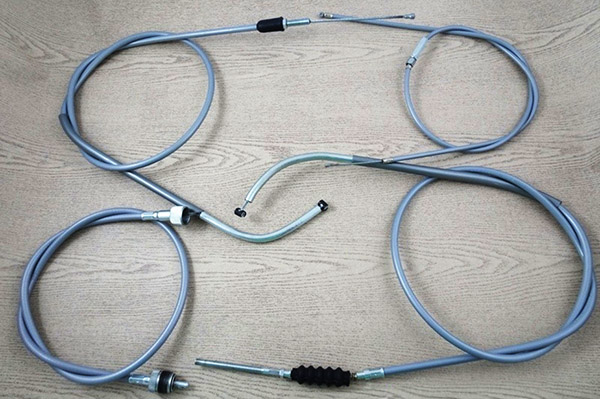
Four cables for $100! Such a deal!
A new speedometer cable was around $50 on eBay. Or, I can get a complete set of speedometer, clutch, throttle and front brake cables for $100. My budget swelled with excitement. At least I won’t have to watch those other three cables wind around the wire wheel.
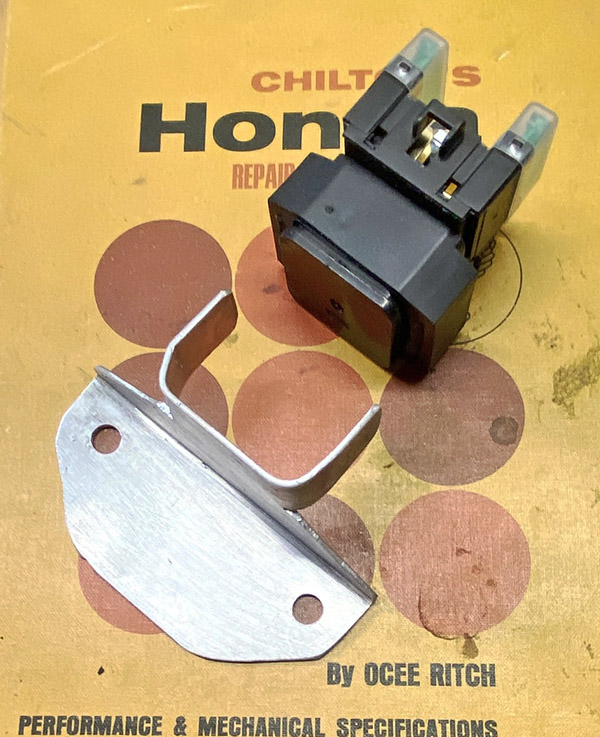
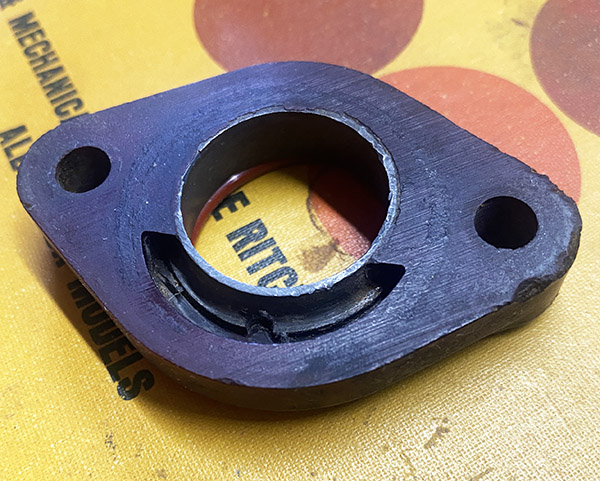
I’m using a generic starter relay. These are cheap and available. I’ll need to make a bracket to mount the thing to my bike.Interesting duct work on the 305’s phenolic carb spacer
Then came a bridge rectifier, a starter solenoid, a chain, some o-rings, and new spark plugs. When the stuff shows up I’ll have more work to do.
Still on the list is tires and tubes, a seat cover, cleaning out the gas tank liner crap, and all the wiring. The plan now is to get the bike operational and ride it around a bit to see if it’s worth messing with further.
For Where You in ’62 Parts 1 and 2, as well as earlier Joe Gresh Resurrections, click here.
It’s monsoon season here in New Mexico and the hard rain mixed with hail has me wasting time indoors…I mean tinkering with the Dream 305.
The most annoying problem on the black Dream was the clutch lever wouldn’t move. The cable was like a banjo string, the lever wouldn’t move and the kickstart spun freely. I guess the Dream doesn’t have primary gear start.
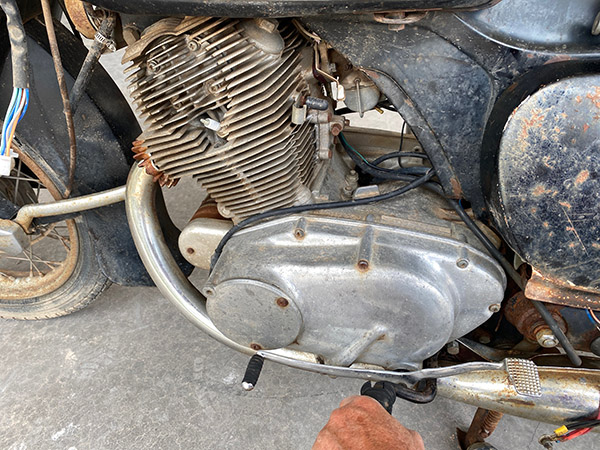
The clutch released after I removed the right cover. Several sessions of Gunk got it looking a bit cleaner.
I took off the right-side engine cover and that released the clutch. Once the cable was loose I slipped the cover back on and the kicker turned over the engine with a slipping gear sound.
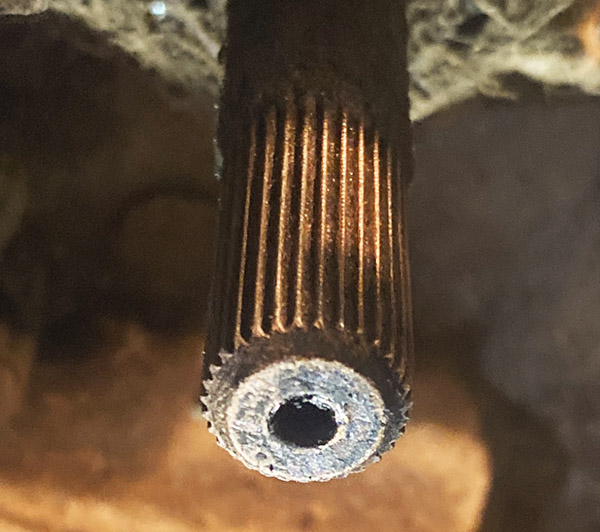
The kickstart splines look ok but the start lever slips. I’m thinking a keyway might solve the problem.
Turns out the kick lever slides onto the kickstart shaft and is kept from turning by shallow splines in the shaft and kick lever. My Dream must have been kicked a lot. I’m not sure how to fix the problem, maybe grind a keyway?
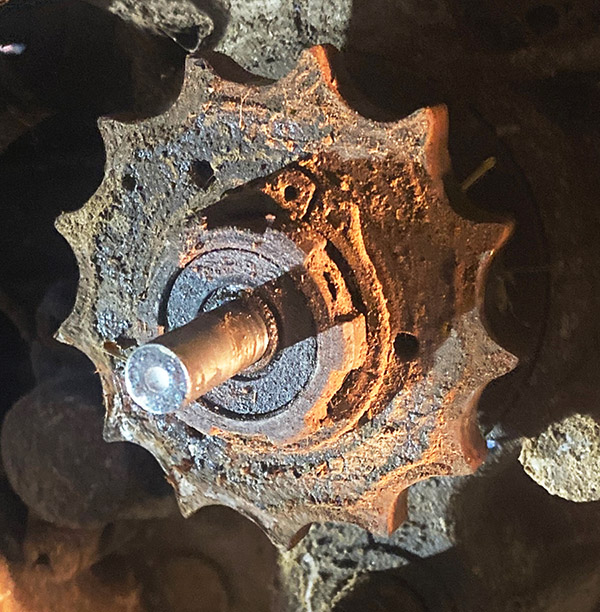
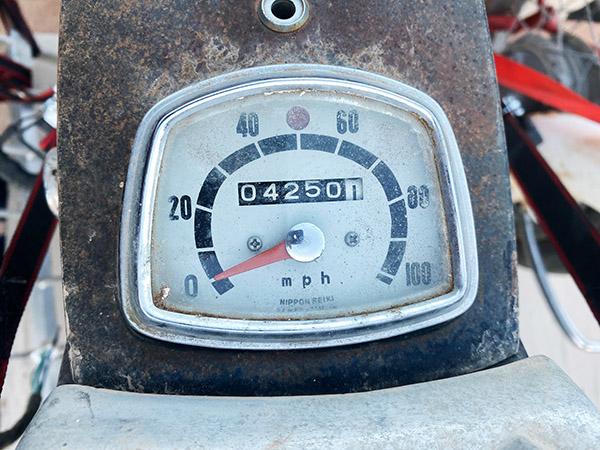
Sprockets don’t wear out this much in 4000 miles. I suspect the white Dream is the low mileage bike. This black Dream has been around the block.
The sprocket area was a greasy mess so I cleaned it up and removed the worn out countershaft sprocket. The kickstarter and the sprockets have me thinking the 4000 miles on the odometer isn’t accurate. The white Dream looks more like the low-mileage bike.
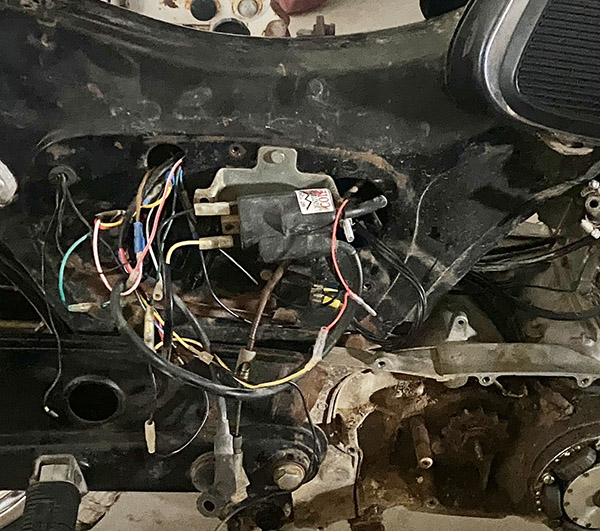
The wiring was a snarl of mismatched colors. When things get this bad it’s time to start over.
Moving on, the wiring was a mess. The main harness looks like it was new in the past 10 years. Everything else was a tangle so I removed all the wiring to get a clear view of the situation. I’ll start fresh if the engine proves usable.
I’m going to check the valve clearances but the round rocker covers are 23mm. I started easing into the cover with a large adjustable wrench but it felt like the aluminum might round off. 23mm is a socket I don’t have. I’ve ordered a socket from Amazon and when it shows up I’ll tackle the valves.
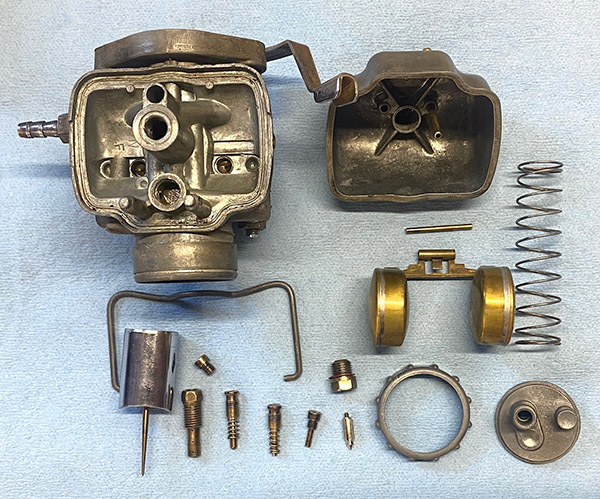
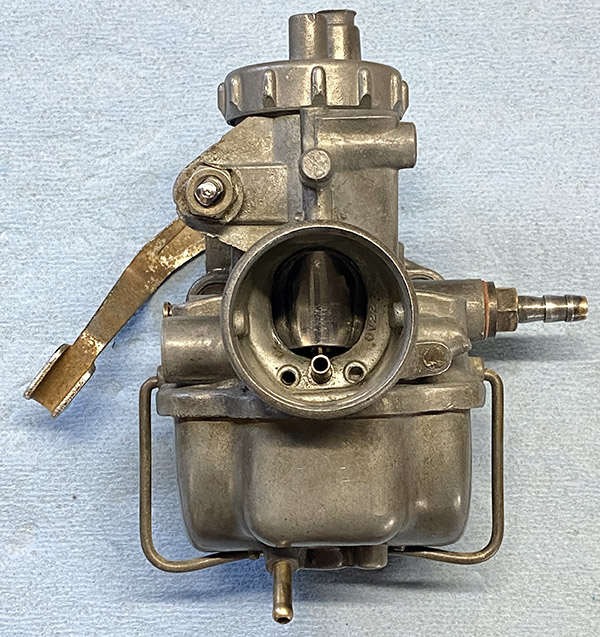
The carb bits looked good. The Dream is a simple machine to work on and tune.63 years old and doesn’t look a day over 40. The single small venturi and two, 150cc pistons promise many miles per gallon.
I also removed the carb for cleaning. At first glance it seemed not too bad and the second glance confirms it. Everything was in good shape inside so I reused all the bits.
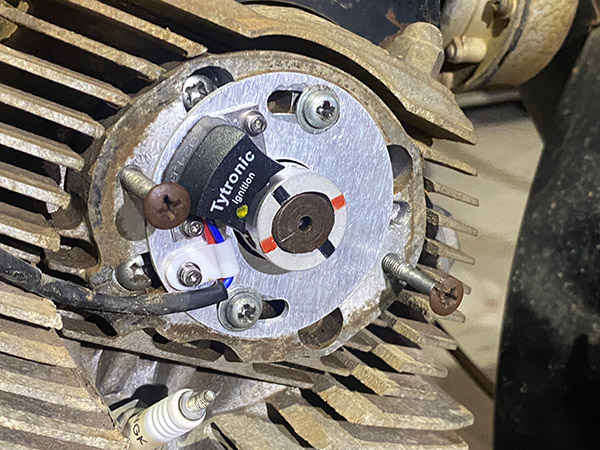
The Tytronic system is easy to connect once you have a diagram. I don’t like the single Allen head set-screw holding on the magnetic trigger.
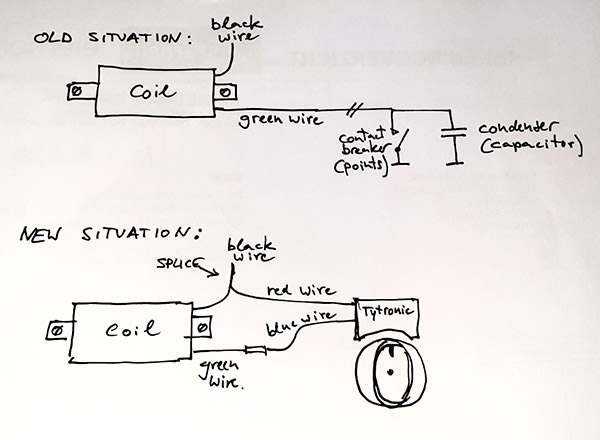
The Dream came with a Tytronic electronic ignition system. Whoever wired it connected the ground side of the coil in series with the condenser then to the ignition module. I don’t see how that can work. Condensers are used with points to help with arcing when the points break so why would an electronic ignition use one?
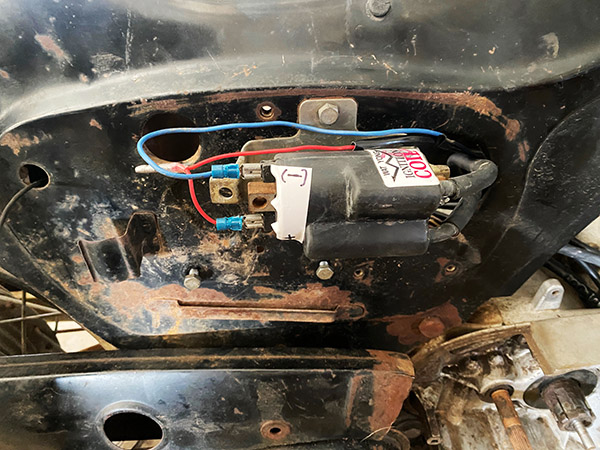
Thank you to the internet hero who took the time to draw a diagram. Something Tytronic should have done instead of their lame, verbal-to-text description.The simplified coil/ ignition wiring. Blue and red go to Tytronic module. Battery positive to red, battery negative to frame.
Clear information on the Tytronic set up wiring was hard to find. The factory instructions online used wire colors, most of the colors didn’t match what I have. I like a wiring diagram but all I found was “connect the yellow to the blue” type of stuff. Luckily some brave soul posted a diagram of his set up. I rigged the Tytronic as the line drawing showed. Next I used a test light across the coil connections to set the timing. It’s really simple. I hope the Tytronic actually works.
Oh, how I hate tank liner. Anyone using this crap is not professional.
I’m kind of all over the map on the Dream but as issues are resolved you’ll see a more organized approach. The gas tank has that horrible tank-liner crap inside. It’s delaminating so I pulled some big pieces out. Now only 90% of the liner needs to be removed. There are very few occasions when tank liner is required. Don’t do it.
The near-term goal is to see if the engine is good. After that I don’t know where this project is going. I’m not spending any money on the bike or making a decision until I hear the engine run.
Motorcycles, like cats, tend to find you when you’re not looking for either. I never wanted a Z1, but the 1975 Zed forced its way into my life. And now it’s Honda Dream 305s meowing at the door.
Low miles, if it runs at all it won’t be hurt too bad.
When I was 17 years old I had a 1960-ish Dream 305 built from an assortment of bikes I picked up for little money. History is repeating itself here and two 305 Dreams have occupied the ranch.
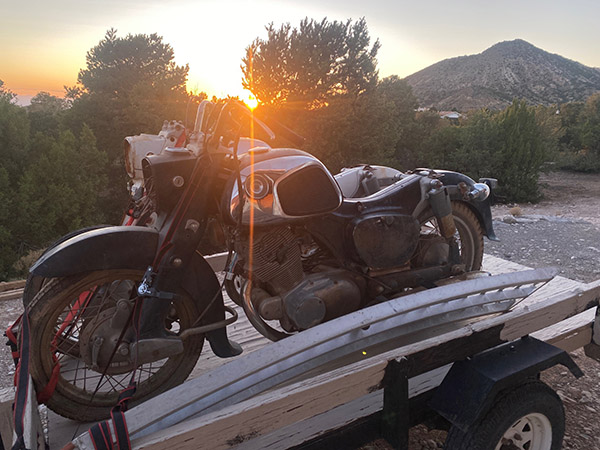
The darker it gets the better a Dream looks.
I’m running out of room for motorcycles in the shed. I have no time to mess with these bikes as my nesting has gone into overdrive. But the deal, the deal dammit, was too good to pass up.
De-gunked and pressure washed. It still looks rough.
The Black Dream is a 1962 model and is mostly complete. It looks like the one I had at 17 except mine was red. I guess mine is black now. Of course it needs a thorough going over and every nut, bolt and part needs attention. The engine ran when parked but then they all run right before they quit running.
Tire pump holder. The tire pump Is long gone.
The white one has a nicer frame, with no dents or rust, I think it’s ’65-ish/’67-ish. I’d like to use the white frame but I only have a title to the black frame. I wonder if anyone would care?
Darren bought lots of parts before he lost ambition. This cuts down on things I would need to buy.
Darren, the seller, was going to fix the black one but lost ambition, wisely in my book. He bought a bunch of bits and pieces and the bike came with 3 boxes of junk, a spare engine (status unknown) an extra gas tank and two seats.
I don’t need this hassle man. Why do I keep doing the same thing expecting different results? CT, wife of the year, knows a good deal and handed me cash, “Go get that pile.”
So far I’m not in very deep. Only $500 that I could have used elsewhere. I’ve inventoried the extra parts, de-gunked and pressure washed the bikes. I burned the pressure hose on the washer’s exhaust so add a new hose to the motorcycle cost.
I’d like to say the bikes cleaned up nicely but I’d be lying. So now I’m wondering why I took on another project when I have 23 unfinished projects. It’s an illness.
I have a few options: CT and I want to start an eBay store to get rid of all our junk. I could part out the whole mess and probably make more than I paid. I could go all in and restore one, complete, Dream, but Dreams aren’t worth much money and I would lose on the deal.
Or I could see just how cheap I can get the Dream safely operating, a challenge, like the Youtubers do. My first impression is tires and a seat cover, along with a headlight trim ring, are the major purchases needed. All the rest can be nursed back to usable-but-crappy level.
Between two engines I should be able to get something that runs and shifts. Black is easy to spray paint using rattle cans. And then what? Then what, man? Would I ride it? Sell it for a loss? The only positive spin is that it would give me something to write about.
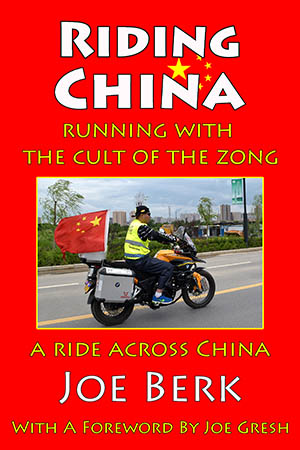
I posted a blog yesterday about Chinese pocketknives and drew a few comments (as I knew I would). One of them mentioned Shaolin martial arts, and that prompted a response from me about the Shaolin Temple in China. Not a lot of folks here in the US have been to the Shaolin Temple. I know of two who rode there on motorcycles (that would be Joe Gresh and yours truly). I covered that visit in Riding China, and I thought it would be good to share a part of that chapter with you today. Who knows…I might even sell a few books by doing so. You know, so you can read the rest of the story about our ride through China.
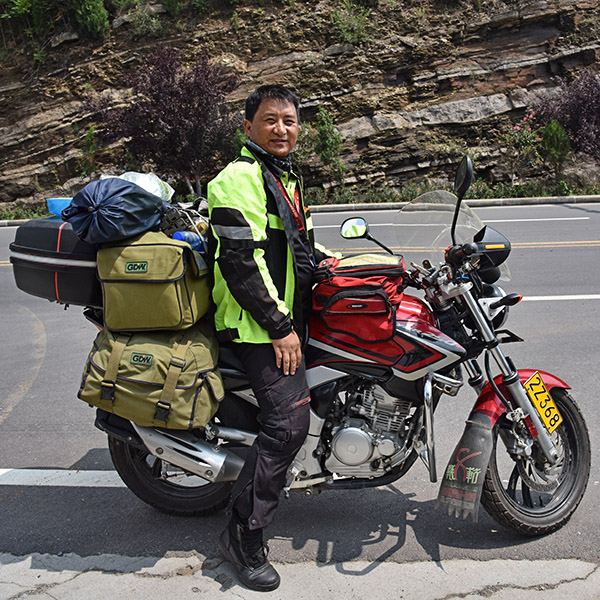
We continued riding and entered a mountainous region. I liked that a lot. The roads were nice, there wasn’t much traffic, and because we were both moving and climbing, the heat abated a bit. We stopped for a break, and a fellow came along on a 250cc Yamaha that was configured for touring. He stopped and chatted with us and we took turns taking pictures of each other. His bike looked good. We only saw a few other Chinese on our trip who were touring on motorcycles.
A Chinese motorcyclist on a 250cc Yamaha. His luggage is from Lester Peng’s motorcycle luggage company. Lester rode with us last year on the 5000-mile Western America Adventure Ride.
I didn’t realize it at the time, but we were very close to the Shaolin Temple when we stopped to talk to the Yamaha rider. That would be our next destination this day. Another fellow then came by and he had an animated conversation with Sean (our guide). It turns out he was selling, Sean was his mark, and the guy was working Sean hard. This guy owned a restaurant and he wanted us to eat there. He was successful; we did.
We didn’t pause for naps after this lunch, but Sean was soon having another excited conversation with folks outside the restaurant. I didn’t know what they were discussing, but I later realized it was about transportation and how we would get into the Shaolin Temple. The bottom line to this conversation was that we all piled into three small gray minivans that took us about two miles down the road, back the way we had ridden to get to the restaurant.
What I learned later was that there were two ways to get into the Shaolin Temple complex. One was through the main gate, and apparently that cost more. The other was a woodsy trail through the mountains that required a climb over two or three mountains on a slippery muddy trail. If you did that, you could sneak into the Shaolin Temple complex for free. That’s what we did, and that climb was rough. The trail was slippery, and by now the temperature and humidity were up again. Had I known what was going on I would have gladly paid to go in through the front door, but I didn’t realize what we were doing until I was doing my best impersonation of a mountain goat in the hills behind Shaolin.
So here’s the deal on the Shaolin Temple: It’s famous as the home of Chinese Kung Fu. No kidding; it’s both a Buddhist Temple and a world-renown Kung Fu school (the original Kung Fu school, actually). It’s where Bruce Lee learned his craft, and if you’ve ever seen a martial arts movie with scenes that have large numbers of young Chinese guys learning the martial arts, it was almost certainly filmed here.
The Shaolin Temple was beautiful. As we walked along its well-manicured paths, a young guy went into a martial arts routine that was mesmerizing. It was something right out of a movie. The guy was executing all of these snappy martial arts stances (one seemed to flow into the next) in a manner that almost made the display a dance routine. It probably only lasted a minute or two, but when it ended, a large crowd had already gathered and everyone applauded. I enjoyed seeing it, even though I know nothing about any of this stuff.
A martial artist demonstrating his moves at the Shaolin Temple.More moves. I told the guys I could do this, but I don’t think they believed me.
The Buddhist Temple was beautiful, but by then it was so miserably hot and humid we weren’t enjoying anything. We were in a walled courtyard that allowed no airflow, and I couldn’t seem to get my body temperature down. I was still perspiring from climbing over the mountains.
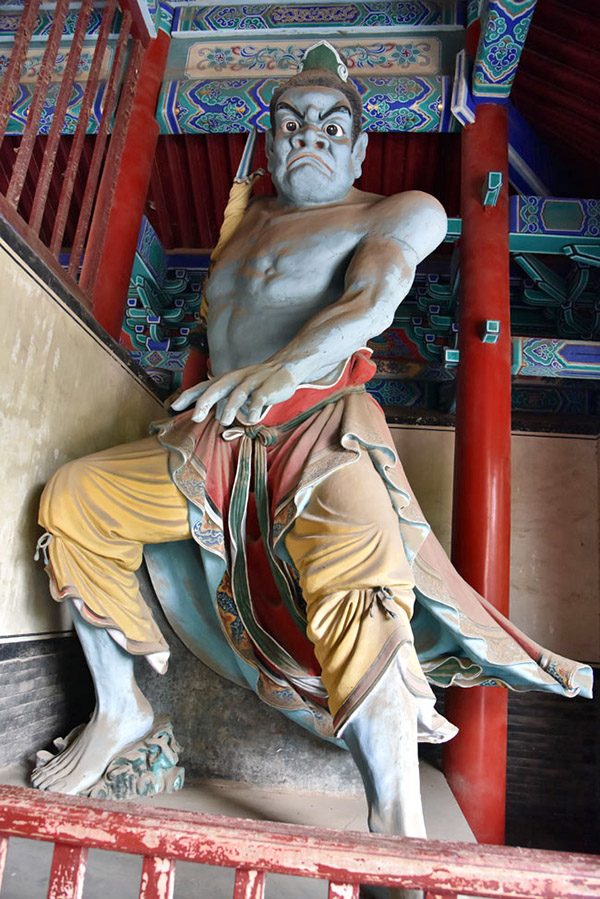
I shot a few photos of some of the figures inside the temple (yet again, the D810 Nikon’s incredible low light level capabilities came through).
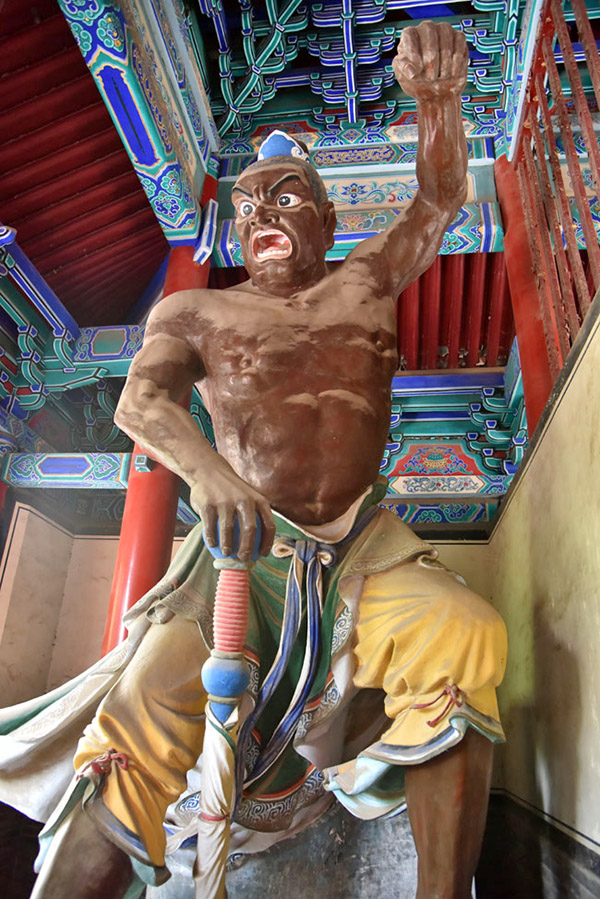
A figure inside the Shaolin Temple. It’s likely Bruce Lee saw these things when he studied here.Another huge and menacing figure inside the Shaolin Temple. These statues were about 15 feet tall.
On our walk out (we left through the main gate), it mercifully started raining again. The rain finally helped me cool off. So far, this day was the hottest and most humid day of our ride (and I found I was saying that nearly every day for the last several days).
At dinner that night, I thought I would have a little fun with the guys. One of the dishes that evening had black fungus mixed in with the vegetables, and I loved that stuff. As I mentioned earlier, what the Chinese call black fungus is a mushroom of some sort, and I loved the taste of it. A small speck of one of the mushrooms, a black piece about a quarter of an inch long, was on the edge of my dinner bowl. I managed to pick up that tiny piece of mushroom with my chopsticks in preparation for solidifying my reputation as a chopstick martial arts master.
I told Tracy, who was sitting next to me, that I wanted him translate exactly what I was about to tell the Chinese guys in our group. He said okay, but went back to his meal. “No, Tracy,” I said. “I want you to tell the guys to stop eating and listen to what I have to say.”
Tracy looked at me for second, and then he spoke to the group in Chinese. The others stopped eating, looking at Tracy and then at me.
“We all visited the Shaolin Temple today and we saw the birthplace of Kung Fu,” I began. I paused, nodded at Tracy, and he started speaking to the group in Chinese.
“You may not know this, but like Mr. Bruce Lee, I, too, am a martial arts expert,” I said. Tracy looked at me and translated what I just said. The others stared at me, taken in by my serious demeanor.
“You know that I am an expert with chopsticks, as I demonstrated on our second night in the peanut contest,” I said. Tracy diligently continued to translate. “You may not know that I am a master at using chopsticks in the martial arts. In fact, I created a branch of Kung Fu that relies entirely on chopsticks.” As I said that, I motioned with my left hand as if I was shooing a fly away from the food on our table. It was a motion all of us had used across China at all of our dinners to get rid of the flies.
As Tracy continued to translate, and when I saw everybody look at my left hand shooing the imaginary flies away, I lunged out into the space over our table with my right hand, still holding my chopsticks. As I did so, I emitted a piercing “eeeee yah!” (my best rendition of a martial arts cry, worthy of no less a master than Bruce Lee himself). I held up my chopsticks, which still held that small morsel of black mushroom. No one could have confused that speck of mushroom for anything other than a fly captured in mid-air by a martial arts master (with his chopsticks, of course).
A loud gasp of astonishment and admiration went up from all of the Chinese riders. Before they could get a closer look, I plopped the tiny piece of mushroom into my mouth and exaggeratedly swallowed. There was a second of stunned silence at our table, followed by another gasp and heavy applause. Gresh was the only one who rolled his eyes. A legend was born that evening, my friends, and he be me.
We had a great dinner that night (I know, I’ve been saying that about every meal on this trip). Eeeeeeyah! The fly-impersonating black fungus. The chopsticks. The applause. It was wonderful.
After dinner, all I wanted to do was get back to the hotel, take a cool shower, crank the air conditioner all the way down, and get some sleep. I posted a blog that night, I went to bed, and I probably dreamed about being a chopstick martial artist.
They’re still talking about me over there, you know.
The ride across China was amazing, the adventure of a lifetime. You can read about the adventures of dos Joes on the entire trip here:
I was going to do a bunch of stories on my solar power system that powers my shed. I may still do that but this is more of an update on the batteries I use to store the solar power.
Small footprint means more energy density and hotter, more localized fires…
With solar, unless you plan on only having power in the daytime, you’ll need a way to store energy. The traditional way to accomplish this is with lead-acid batteries. I’m a lead-acid fan boy because they are so much cheaper than lithium batteries or a molten salt battery.
I should say, were cheaper…as of late lithium batteries have been dropping in price so much you can now get a 12-volt 100ah lithium battery for the same price as the cheapest Walmart lead-acid, deep cycle battery.
My solar system has been online since 2018 and in those years I’ve had to replace three Walmart batteries. The others are getting a bit long in the tooth, you know? Six years is a good service life for a lead-acid battery. Walking by the battery bank a few days ago I smelled the telltale odor of sulphur. This meant another battery had given up the ghost. It’s usually easy to find the bad battery in a bank. It will be hot to the touch, or in this case the filler caps had blown off. Kind of obvious.
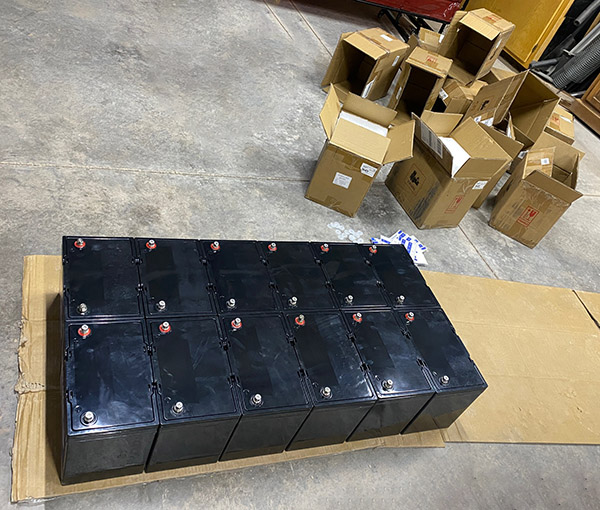
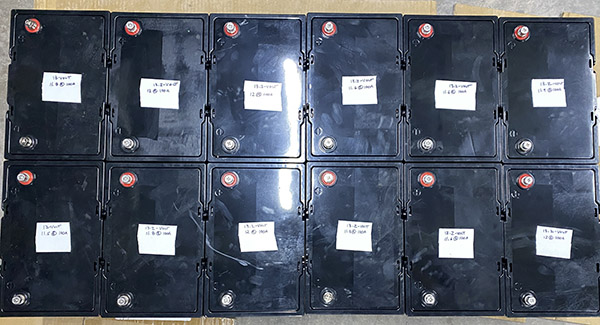
The lithium batteries seem fairly even voltage wise at 100-amp load.
Looking at the average age of my battery bank I decided to bite the bullet and buy a new lithium set up. Getting in just under the tariff wire, so to speak.
My new bank will be 12, 12-volt, 100ah lithiums. Wired in series/parallel to produce a 24-volt, 600 amp hour storage capacity. That’s theoretically 14,400 watts of storage if you could squeeze every bit of juice out of the batteries.
By contrast, the existing 12, 12-volt 100ah battery bank only has 7200 watts of usable storage capacity due to lead -acid batteries dropping voltage below 50% capacity. The same total amount of juice is in the lead-acids but it’s at a voltage too low to operate equipment.
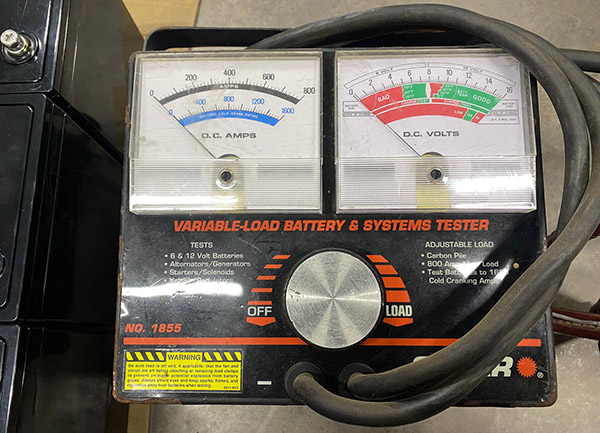
I use an old, analogue battery load tester to establish baseline numbers for future troubleshooting.
In addition, the lithium batteries have a smaller footprint so I’ll be able to rig the new bank on a single shelf instead of two shelves like the set up is now. This will cut down in battery cable length and by extension, voltage drop. Less cable is always good with electricity.
All in, I’ll nearly double my solar storage capacity in less square footage for less money than the old style lead-acids. This seems like a win-win.
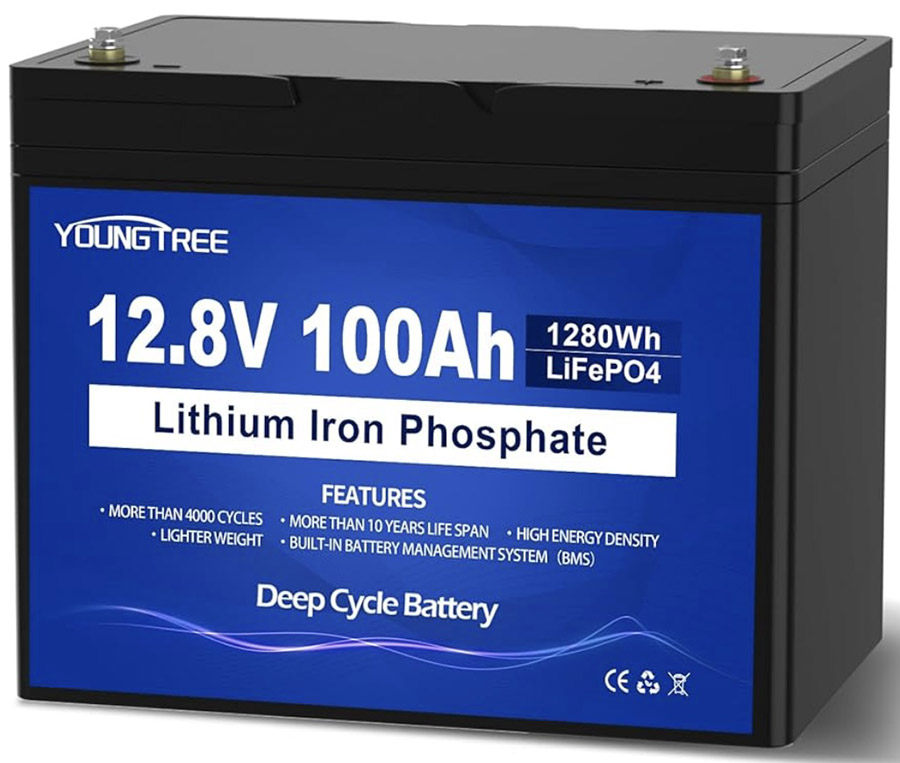
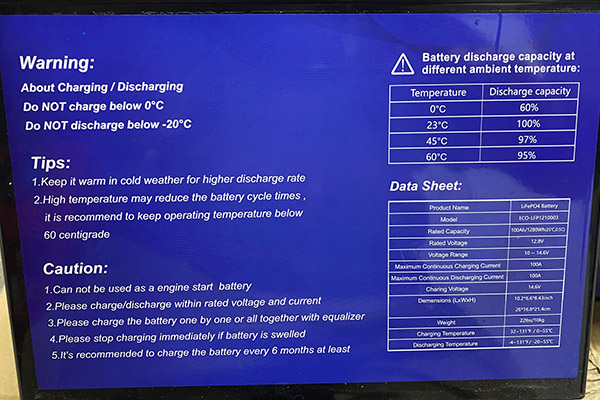
Lots of important information that I will ignore is printed on the battery.
Now for the downside. These generic lithium batteries claim a 10-year life span but since the Chinese manufacturer’s keep changing brand names like I change underwear the likelihood of the same battery company being around a decade is slim. And then there’s that small detail of the fires.
Lithium batteries don’t like cold weather so that could be an issue. We do get some 20-degree nights at the ranch. I run pipe heaters at night so maybe that bit of drain will keep the batteries snug and warm.
Ah well, it’s not like lead-acid batteries don’t catch fire or explode occasionally.
I’ve had good luck with my Walmart lead-acids, no complaints, and I’m hoping these lithium replacements hold up at least 6 years. 10 years will be great and if they last look for an exhaustnotes long term review in 2035.
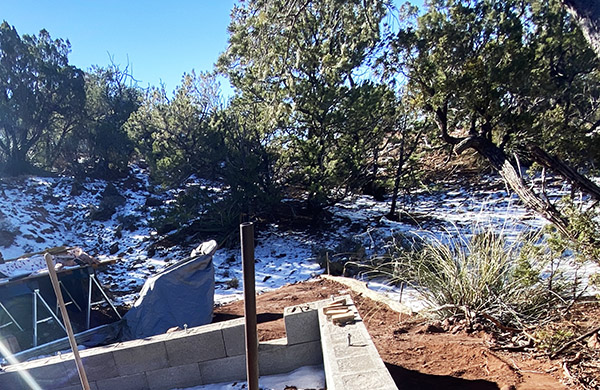
I’m filling the area beyond the wall. It was a steep rocky place and now you can walk around without stumbling like an old man…which I am.
Terracing is much easier than removing the mountain so that’s what we’ve been doing. The little cabin we live in is on a terraced spot down by the arroyo. The shed is higher up on another terraced spot.
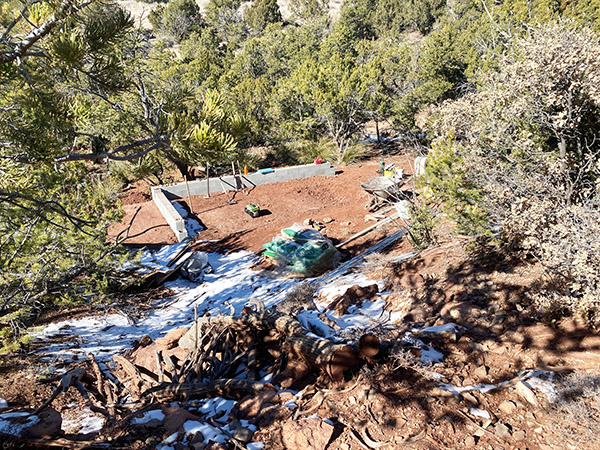
There’s a great location for a greenhouse behind our shack and down closer to the arroyo. The spot gets plenty of winter sun and it’s protected in most directions from wind. It’s so low I suspect it may flood in heavy rains.
It’s a little hard to get to but the location will be better when the high winds kick up.
Unfortunately, the location is hard to get to. A while back I made a set of stairs to access the location but there’s no way to get the Kubota tractor down the stairs. I actually could get it in position via another route but it would require cutting a bunch of trees. I don’t want to cut trees.
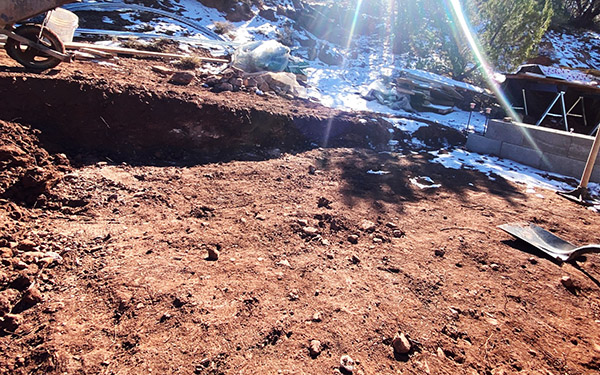
That leaves hand digging. The ground is not too bad to dig. It’s much easier than the front of the house where I put a driveway. Down in the arroyo the ground is a combination of hard topsoil, mid-sized rocks and some whitish, proto-rock stuff that crumbles with a sharp blow from a 2-pound sledgehammer.
The land tapers from level. At the highest about three feet must be removed.
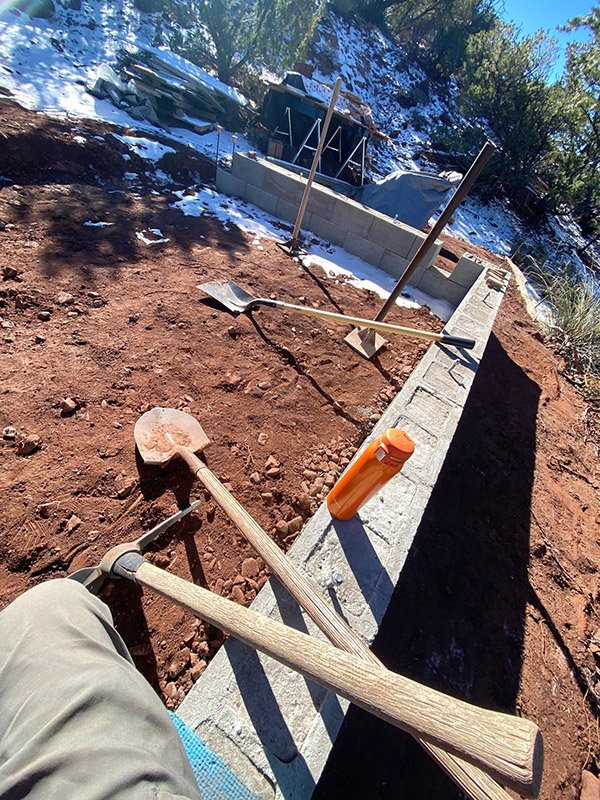
The process is: I break up the top layer with an electric, 35-pound jackhammer (powered by the Harbor Freight Tailgator generator), then I use a round point shovel to move the loosened soil into a wheel-buggy. A little work with a pick dislodges the larger rocks. Aside from a few tree roots, it’s the best digging I’ve encountered on the property.
Since the area is so steep I’m bulkheading off lower regions with some old roll-up garage doors and using the removed earth to level a larger pad. It’s like getting free land. I plan to fill about two feet deep of as large an area as I have dirt for.
This sounds like a lot of work and it is. I take it slow and steady. It’s really no worse than going to a gym to work out and you get the added benefit of a flat spot on your ranch.
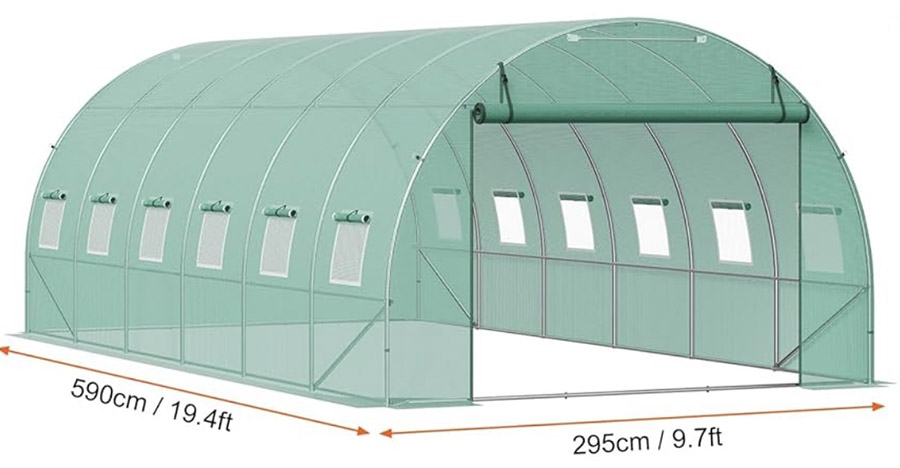
The greenhouse is a cheap Vevor 10-foot x 20-foot hoop style. The hoops are 1-inch tubing that are assembled like tent posts. A through bolt holds the pieces together. The cover is a greenish plastic material reinforced with what looks like thread. I think the cover will last a couple years if we don’t get a hailstorm. It’s not a heavy-duty unit.
It’s a happy worksite. I take frequent breaks and enjoy the smell of freshly turned earth.
The foundation will be heavy duty. I’m building a two-block high pony wall to set the greenhouse on. The blocks are dry stacked, poured solid, and they sit on a 4-inch-thick footer. The footer has rebar to keep it together when it cracks. I’ve set some 1/2-inch j-bolts into the block cavities to secure the wood sill that I will screw the greenhouse tubing into.
The foundation is overkill because I’m assuming the Vevor won’t last long and I’ll be scratch building anothergreen house one day. In the meantime, I’ll practice my green thumb.
As the project progresses, I’ll post updates. There will be solar power and a water catchment system making the greenhouse off-grid. For those of you wanting to build your own greenhouse my advice is to start with level ground.