For as long as I can remember I have loved summer road trips and a chance to camp. My mom tells me (with a bit of frustration in her voice) “you are just like your dad!” True enough, I am that indeed. My dad, being disabled, had restricted mobility but driving, camping, and fishing he could do. I learned at an early age that the mountains meant freedom, that a campfire and a rustic meal cooked over an open flame with my gateway to a good life!
Add to that, Arizona in August is no fun with daily temperatures reaching 100+ degrees and after 10 weeks laying low while Tom recovered from his motorcycle accident we were ready to roll! So, when friends invited us up to Yellowstone we jumped at the chance!
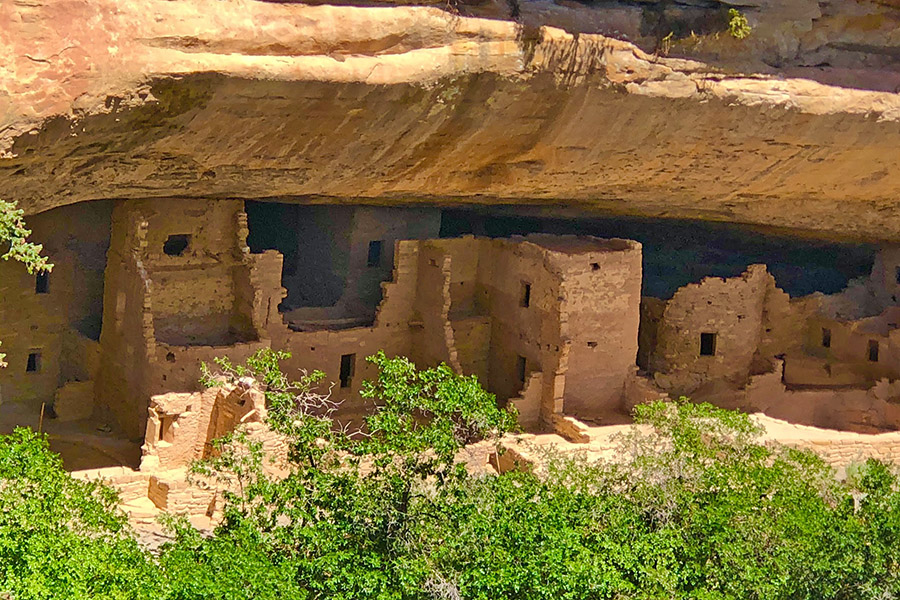
Pulling out of Sedona August 6th for a two-week road trip, car loaded with camping gear, our first stop was Mesa Verde National Park in Colorado. The ancient stone homes you see in the photo at the top of this blog are in Mesa Verde.
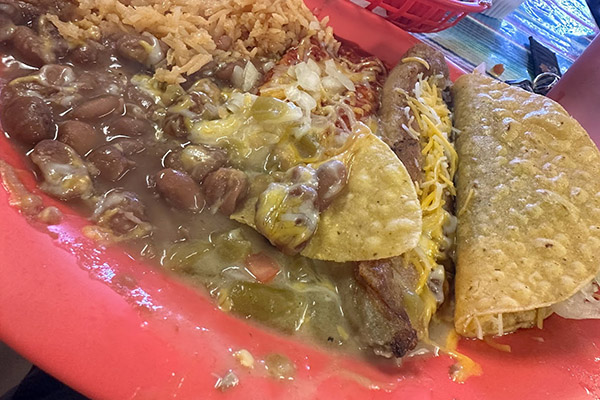
As lead-foot Tom tore up Oak Creek Canyon from Sedona to Flagstaff, Arizona we realized if we detoured a half hour we could go to Genaro’s Café, a local favorite for New Mexican food. Easy decision, in three hours I would have a plate of the best enchiladas and tamal in front of me covered with true red chili sauce, not that crap they call enchilada sauce! Try their stuffed Sopapilla if you dare as well as their green chili. God, I want to drive back for another plate just writing about the place.
A full belly, we pulled out of Gallup heading for Shiprock and on to Colorado. Eventually the western town of Cortez that I know so well came into view. Soon we would arrive at our night’s destination.
Mesa Verde National Park is a favorite stop of mine, I’ve camped here countless times on my motorcycles and always feels like coming home. Morefield Campground is spacious, clean and sets you up for visiting the ruins the next day. The highlights of this park are the ranger led tours, four tour options with my favorite being the Balcony House Tour – The most adventurous for sure and involves climbing a 32-foot ladder, crawling through a narrow tunnel, and climbing stone steps with handholds. A one-hour tour focused on how Ancestral Pueblo people lived.
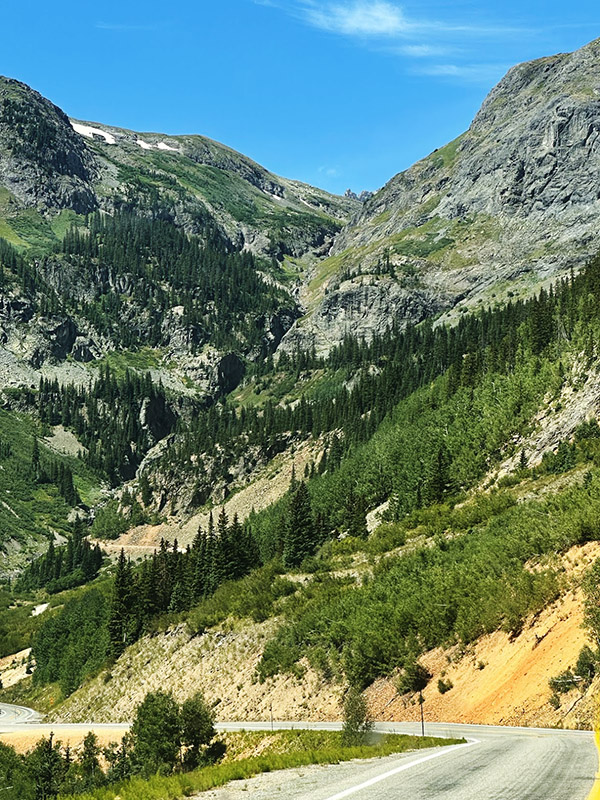
After our adventure back in time we took off for cooler ground, driving along RT 145 from Cortez to Telluride then joining the famous Million Dollar Highway, an epic road filled with tight sweeps and stunning views. Just don’t take your eyes off the road as guard rails can be few and far between!
With a few stops for fuel and campfire wood we made it to our destination for the next three nights camping above one of my favorite towns, Ouray, CO, a turn-of-the-century gold and silver mining town. The area is nicknamed “Switzerland of America” due to its dramatic Alpine setting, complete with restored Victorian homes and hot springs aplenty. We found a sweet remote campsite off Yankee Boy Basin and set up home for the next three nights.
We spent the following days and nights indulging in cold nights around a campfire, hitting our Jamison Whiskey to help with the adjustment to tent camping and hiking some of my favorite trails between Ouray and Silverton.
When you visit, I highly recommend a dip in the hot springs and several waterfall hikes that never disappoint. My favorite being Ice Lake Falls. My last tip is stopping at Ouray Grocery Store, going back to their meat counter, picking up a grass raised hunk of beef and burning that baby on your campfire to a perfect medium rare, serve with a side of potatoes and a nice Malbac and I guarantee you are going to have a great night.
In the pocketknife world, Case is an old school, respected, made in America marque that has been around for a long time. I’ve written before about Case knives. Case makes a very reasonably-priced, premier American product. They are a first-class item.
You can imagine my surprise, then, when a Priority Mail item showed up in my mailbox (my real mailbox, not the Outlook one on my screen). I saw that it was from good buddy TK halfway across the country, but I had no idea what it would be. I knew TK from my CSC Motorcycles days, when we both worked at the company. Those were good times and TK was a good guy. We shared common interests in motorcycles, guns, knives, and other things. TK and I rode the Death Valley rally on CSC Mustangs. TK had previously worked at a knife shop, and it’s been said that his name was short for “Tommy Knives.”
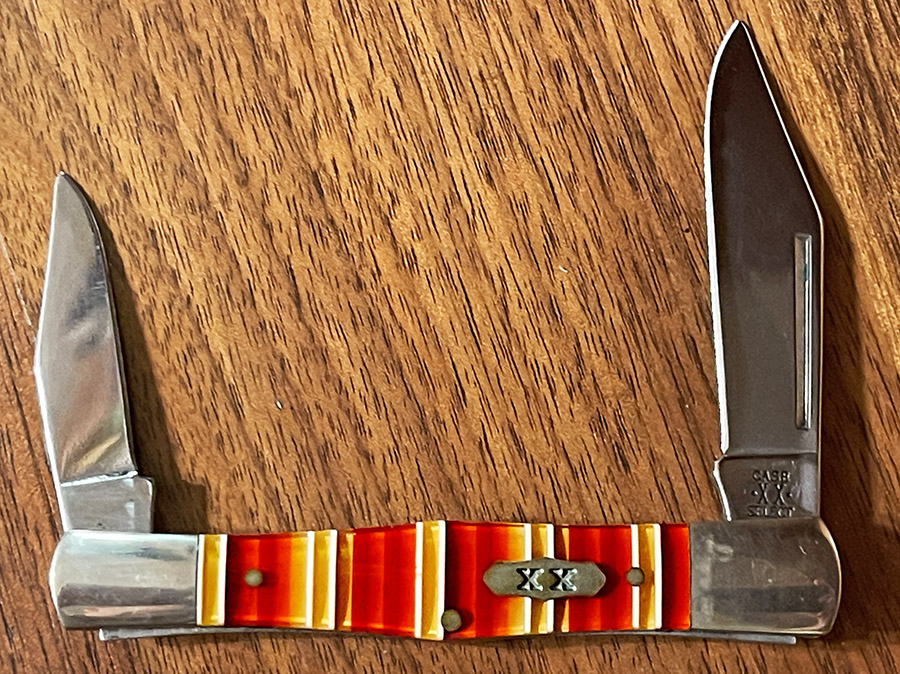
When I opened the box from TK, it was Christmas Day here in California. TK had sent a beautiful Case XX two-bladed folder, one that I had never seen or known about previously.
I took a photo and uploaded it to Google to learn what this new-to-me collectible was, and it was indeed a collectible item. A Case XX Whittler, to be specific, with candy stripe scales, made in 2001. Very, very cool.
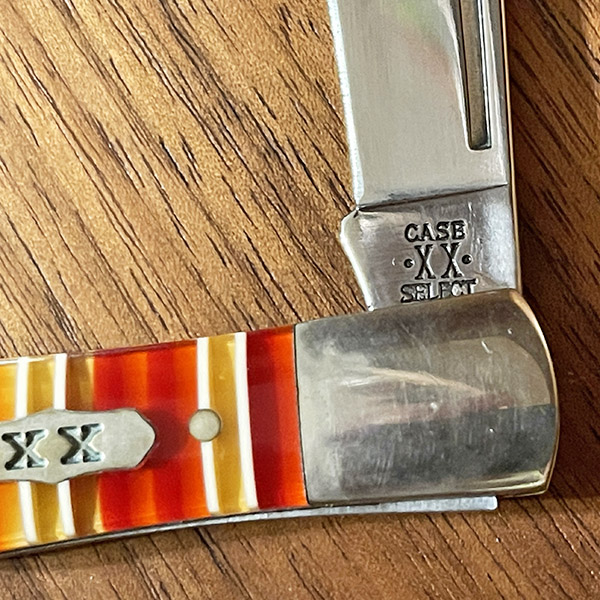
You might be wondering what Case’s “XX” denotes, as did I. Here’s what Google said:
The “XX” on Case knives…signifies that the blade has undergone a specific heat-treating process, specifically that it was tempered and tested twice for strength and durability.
Historically, the “XX” mark originated as a quality control system during the heat-treating process at W.R. Case & Sons Cutlery Co. When blades were initially hardened in the furnace, an “X” was marked on the pan. A second “X” was added when the blades returned to the oven for tempering, indicating they had been properly and fully treated. Today, the Case “XX” trademark serves as a distinction of the quality and craftsmanship inherent in each knife.
This is a very nice and much appreciated gift, TK. Thanks very much!
A sad note to this story: I wrote this blog a couple of weeks ago, and then I learned a couple of days ago that TK passed away after undergoing heart surgery (TK passed on 18 September). Godspeed, TK. Our thoughts are with you. I enjoyed your friendship and you will be missed.
Back in the 1970s when I was in the Army, I was eligible for what the government called “Space A” flying. “Space A” was space availability, and what it meant is that if a US military aircraft had an open seat, I could grab it (and a free ride) to wherever that aircraft was going. Having never been to California (and a lot of other places back in those days), I copped a free C-141 seat out of McGuire AFB and flew to Travis Air Force Base in California. The plan was to fly out to the west coast and then travel by Greyhound bus back to New Jersey. You know, the “leave the driving to us” guys.
My first bus stop was Reno, Nevada, and while I was there I visited Harrah’s auto collection. It was the largest car collection in the world in the 1970s, with more than 1800 automobiles (or 1400, depending on which source you believe). Bill Harrah was a rich guy with a casino and an overwhelming interest in cars of all types.
Harrah passed away in 1978, and Holiday Inn bought his hotel and casino in 1980. The guys at Holiday Inn auctioned off the car collection, but when they first announced the sale of the auto collection, the City of Reno kicked up a stink. So, Holiday Inn donated 175 cars from the collection for a future auto museum. Those 175 cars became the nucleus for what is now the National Automobile Museum located in downtown Reno. Susie and I rode up there recently to explore the place and grab a few photos for an upcoming magazine article. We had a great visit. It was fun.
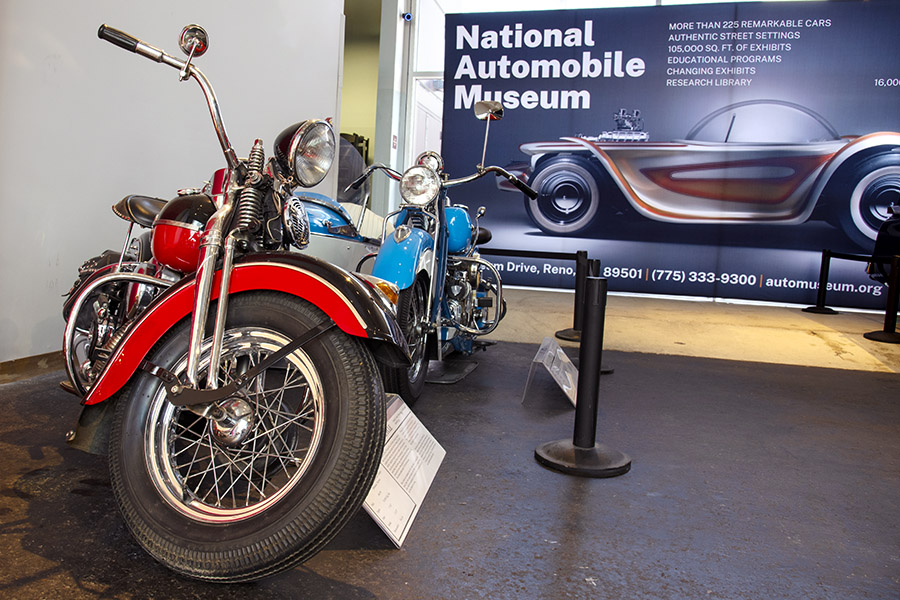
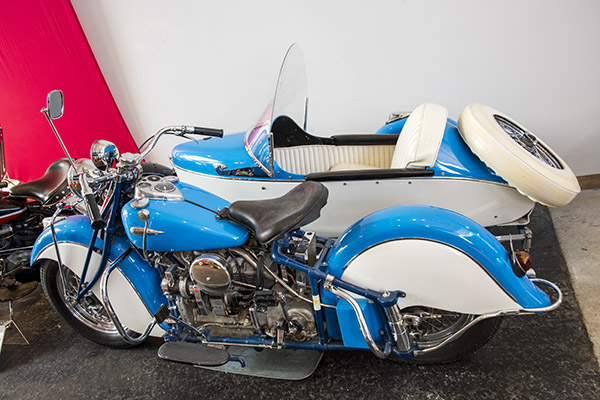
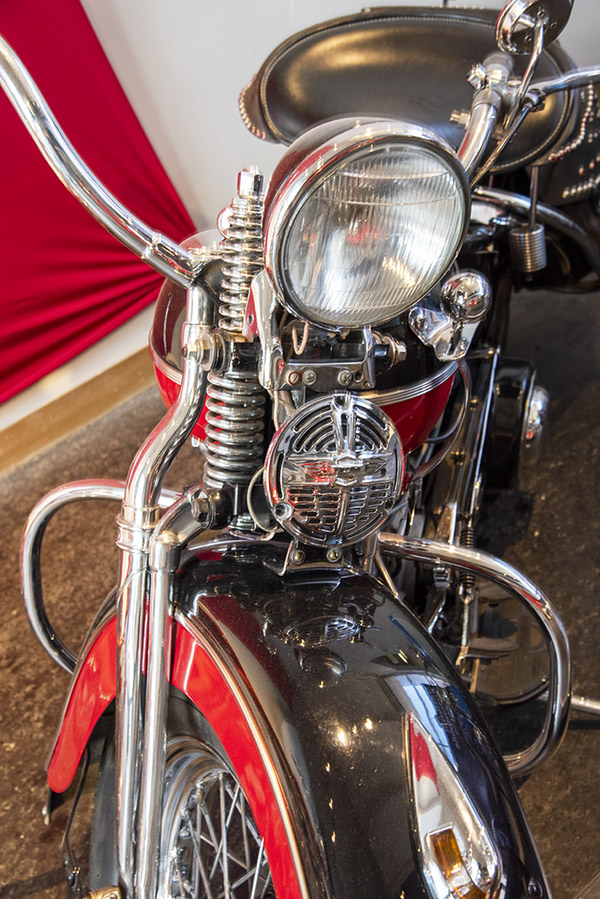
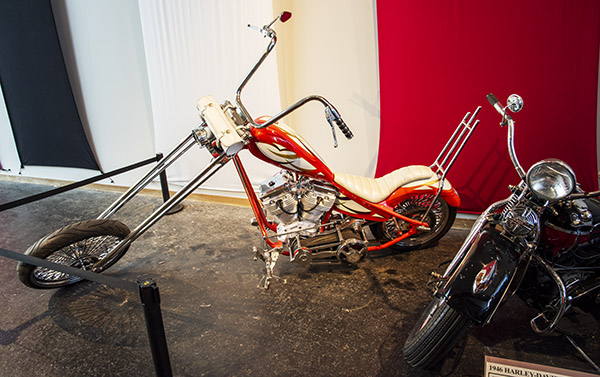
My principal interest was the collection’s motorcycles. When I first spoke to folks at the Museum, I was told they only had three motorcycle (a 1946 Harley, a 1941 Indian, and a (yawn) chopper), but I found there were quite a few more.
The National Auto Museum’s 1941 Indian, with a matching sidecar.The 1946 Harley Knucklehead.A chopper. You see one, you’ve seen them all.
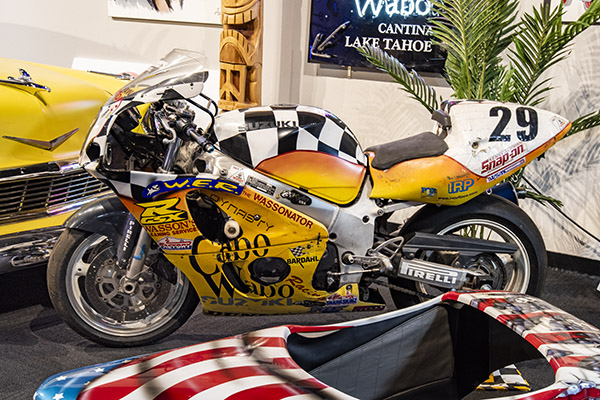
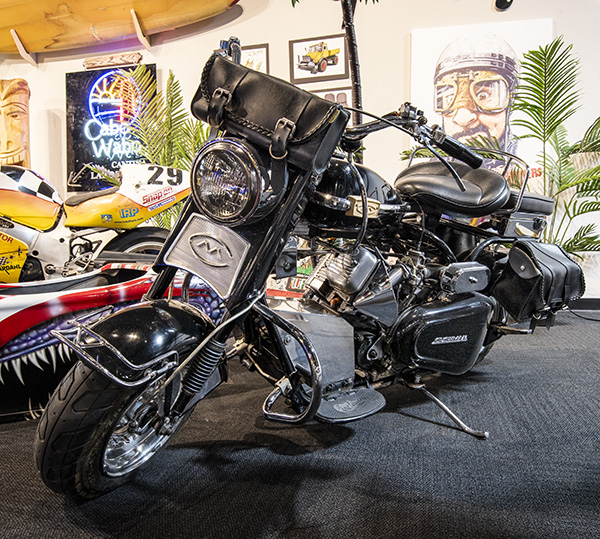
Our motorcycle discoveries as we wandered about in the Museum included a GSXR race bike and a full-dress Cushman scooter. The Cushman reminded me of my days with CSC when we first built a resurrected version of the old Mustang motorcycle.
A Gixxer.A full-dress Cushman scooter. Cushmans are cool, Mustangs are cooler.
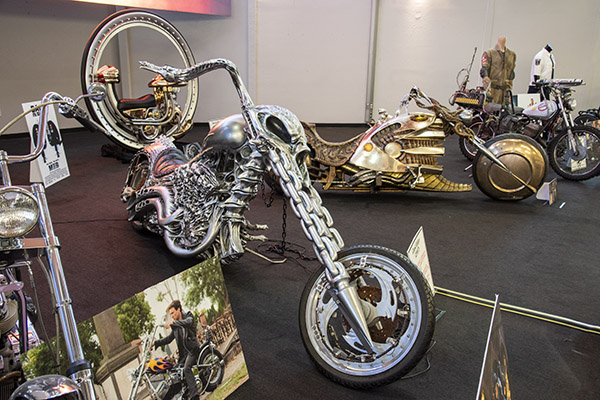
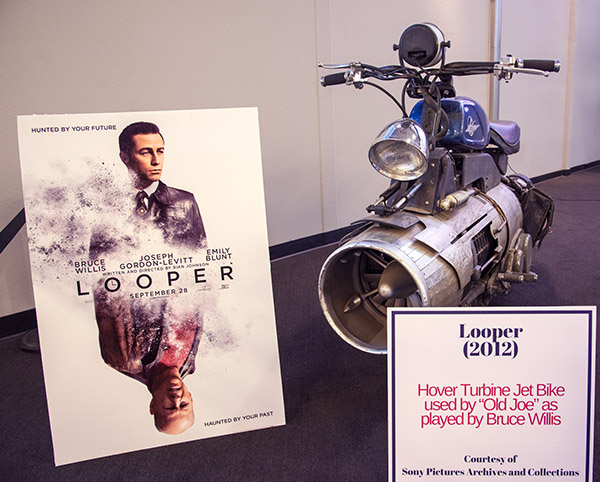
Another motorcycle exhibit included motorcycles that had been featured in different movies, including the Ghostbusters bike and others.
Movie bikes of all flavors.Bruce Willis’ ride, a hover turbine bike. I missed this movie when it was in the theatres.
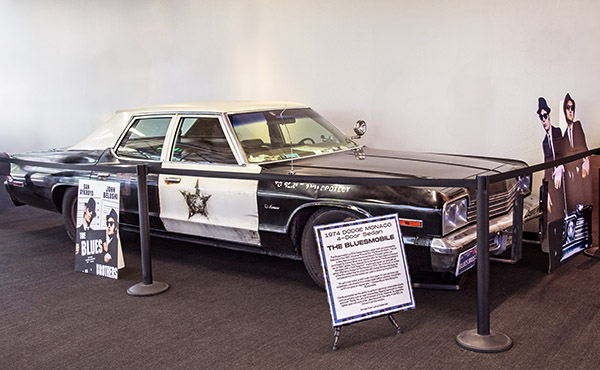
We saw the BluesMobile near the movie bikes. The Blues Brothers has to be one of the best movies ever made. Whenever I see it on TV or on any of our streaming video channels, I’ll watch it. The music is incredible. Akroyd was incredible. Aretha, Ray Charles, and Cab Calloway were awesome. Belushi was incredible (he died way too young). The Blues Brothers doing Rawhide was incredible (I included a YouTube of this at the end of this blog). The Blues Brothers was a great movie; I think it is one of the best ever. Seeing the BluesMobile from that show was a treat.
The BluesMobile. It was a featured car in The Blues Brothers.
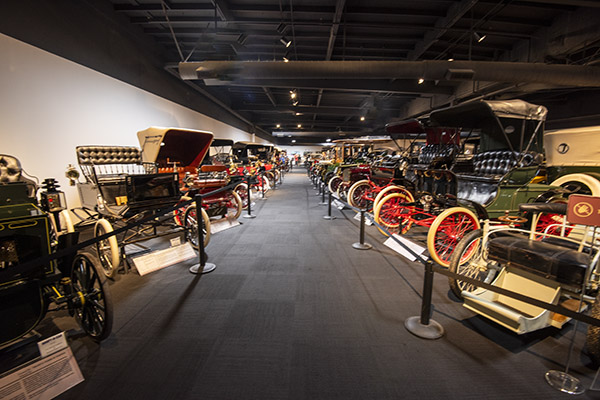
The National Auto Museum is arranged in four large galleries showcasing different automobile categories, with other collections in the hallways separating the galleries. The first gallery held cars from the earliest days of the automobile. The galleries were almost overwhelming; there was just so much to take in. Even though the Harrah collection downsized dramatically when Holiday Inn acquired the business, there are still a lot of things to see.
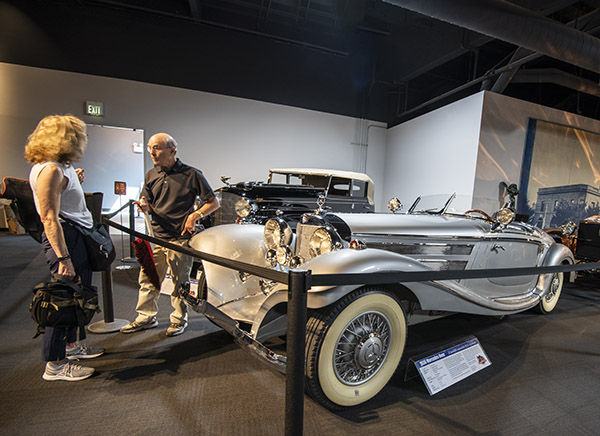
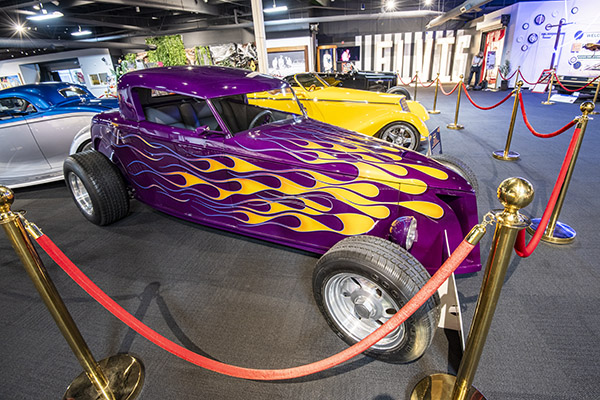
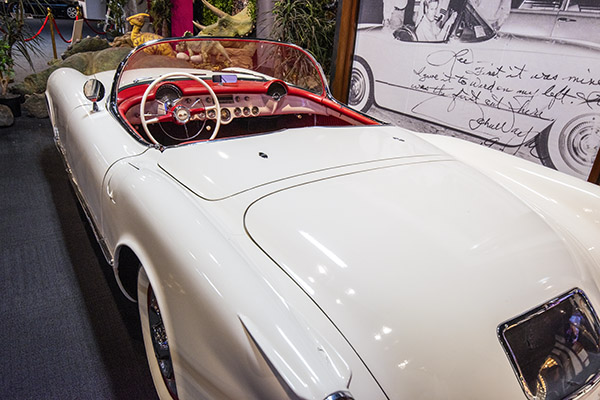
One of the Museum’s four halls, this one featuring very early automobiles.Sue chatting up one of the docents working on a beautiful Mercedes Benz from the 1930s.Another of the Museum’s halls featured custom cars.John Wayne’s 1953 Corvette.
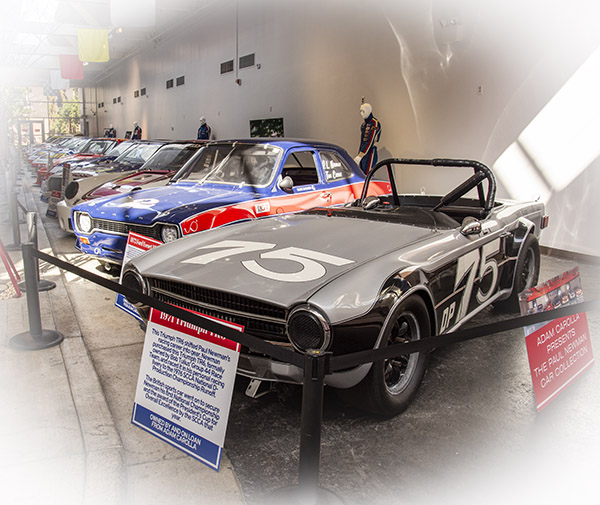
One of the “in between the main galleries” exhibits was a collection of sports cars previously owned by Paul Newman. The collection was later purchased by Adam Carolla and is now displayed in the Museum.
The Paul Newman collection, owned by Adam Carolla.
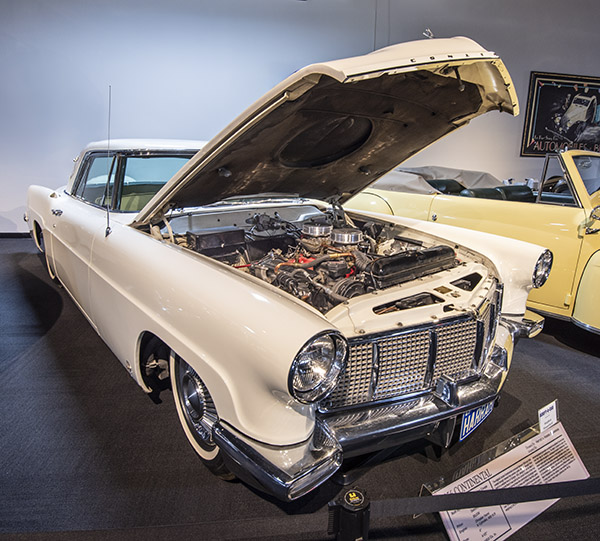
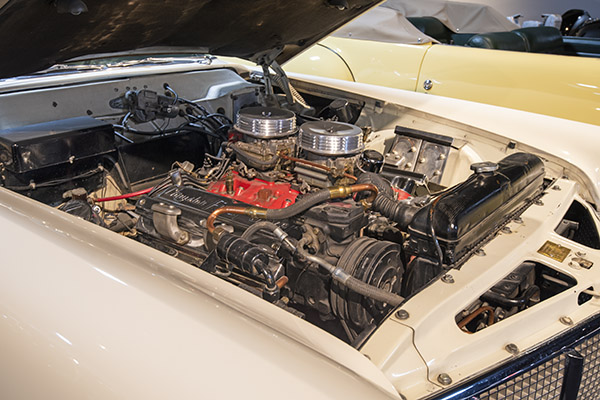
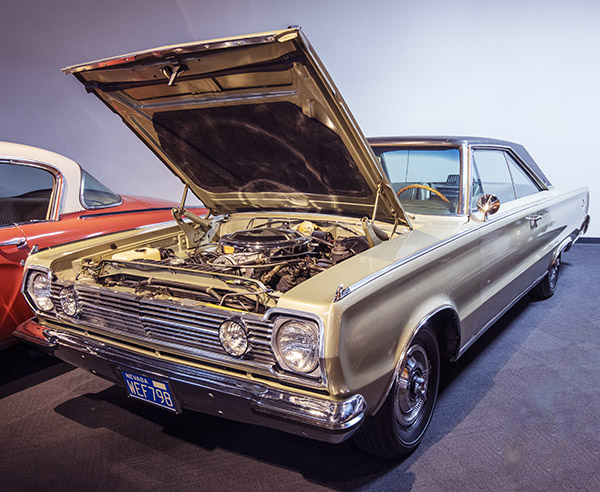
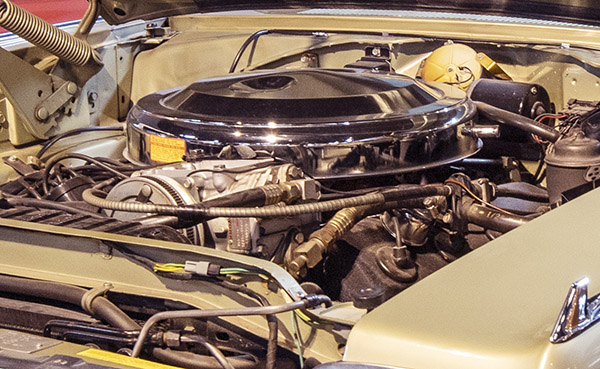
Another gallery featured a collection of cars from the 1950s and 1960s. Several had my attention. One was a gorgeous white two-seat Lincoln Continental Mark II powered by a Chrysler Hemi engine. Another was a 1966 Plymouth with a 426 Hemi engine, a car I drooled over back the ’60s.
A custom 1956 Mark II.This Mark II had a Chrysler Hemi engine.A Hemi-powered ’66 Plymouth.The ’66 Plymouth’s 426 Hemi engine.
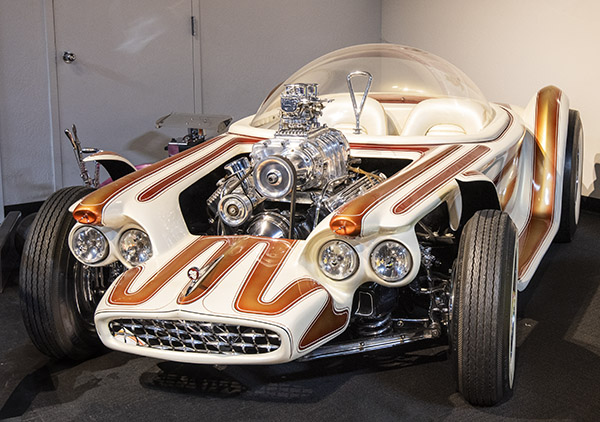
There were other cars tucked into hallway exhibits, including one I knew from my days as a very young teenager. It was Ed “Big Daddy” Roth’s Beatnik Bandit, a futuristic, supercharged, bubble-topped hot rod. One of its features was that the car was completely controlled by a centrally-mounted yoke (the yoke controlled the throttle, the brakes, and the steering). Revell released a 1/25-scale Beatnik Bandit model in 1963 (I built one of the model kits). The Beatnik Bandit is permanently etched in my memory, and seeing the actual car was a treat. I had never seen it before.
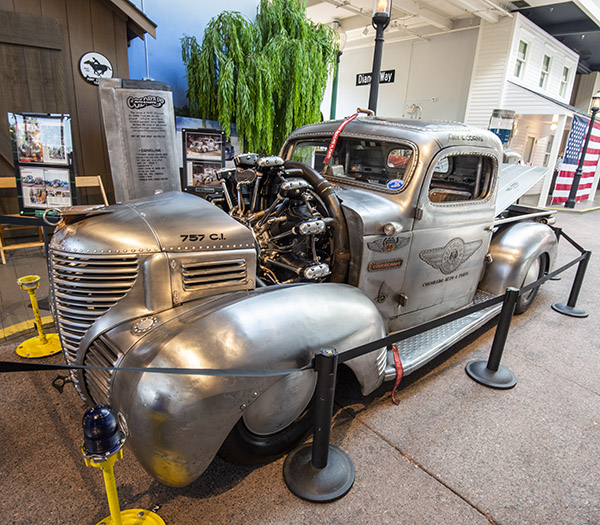
Ed Roth’s Beatnik Bandit. Note the passenger compartment yoke.A custom pickup truck powered by an aircraft radial engine.
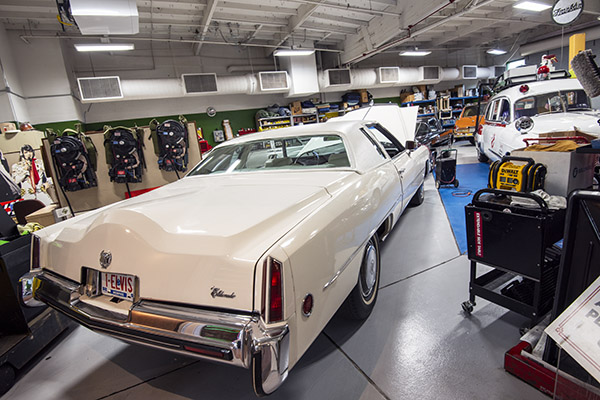
There’s a garage to the left as you enter the Museum, and there were interesting cars in there for service (I asked if I could enter the garage; the answer was no).
The Elvis Eldo, with Harrah’s orange Jerrari parked ahead of it.
One of the cars in the garage to be service was Elvis Presley’s all-white Cadillac Eldorado. Another one that would make for an interesting display (and it probably is on display when not being serviced) was Bill Harrah’s “Jerrari.” In addition to being fabulously wealthy and the owner of Harrah’s casinos, Harrah was the Ferrari distributor for the western United States. He lived up in Tahoe, and coming down (or going up) the road from Reno to Tahoe can be an exciting experience when there’s snow or ice on the road (I know this from personal experience). Harrah had his guys put a V-12 Ferrari engine in a Jeep Wagoneer. You can just spot Harrah’s Jerrari in the photo (it’s the orange vehicle out ahead of the Elvis Eldo).
The National Automobile Museum is a solid 10 in my book. We traveled up US Highway 395 to Reno (a magnificent road with great scenery through the eastern Sierra Nevada Mountains), and the Museum was well worth the trip. Like a lot of America’s cities, Reno has become a bit sketchy and it seems its streets are overrun with refugees from the Star Wars bar scene. That said, we enjoyed our visit. One of Reno’s best kept secrets is an absolutely fabulous breakfast restaurant (The Two Chicks). Their chile relleno omelet was delicious. Dos Chicas is another spot that, all by itself, is worth a ride up to Reno. It was that good.
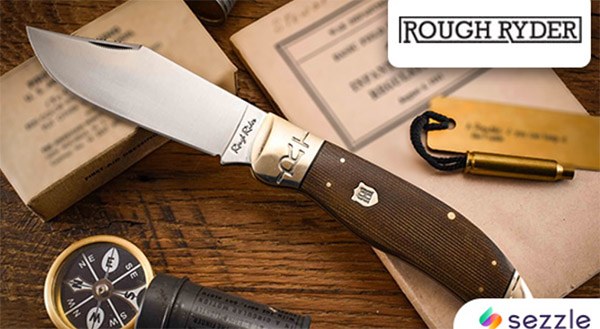
You know I’m a knife nut. The collecting craze came to me late in life, and I’ve been making up for lost time. You also know that when you buy anything from any retailer, you’re deluged for life with an endless stream of emails pitching more products. Those emails work (at least they do on me), and sometimes they light a match that can’t be extinguished. That’s what happened here. An email floated in from an online knife retailer touting a sale, with a photo of a knife that that caught my attention.
So I clicked and the ad brought me to the online retailer’s website, but the knife wasn’t there. I spent a good half hour looking through hundreds of knives from that manufacturer (Rough Ryder) on the retailer’s site, and I couldn’t find the one in the ad above. I emailed the retailer asking about it, and didn’t get a response. I emailed the retailer again the next day and there still no response. On Day 3, I called the retailer. They apologized for not answering my emails and promised a response that day. They kept their word, but I didn’t like the answer: The knife was out of stock and they had no plans to order more. I also received an email from the man who owned the knife store. He apologized for the ad. That was a nice touch and it kept those guys on my “go to” list. But I still wanted the knife and they didn’t have it. Compounding the felony, the knife importer (Rough Ryder) didn’t have the knife shown above on their website, either.
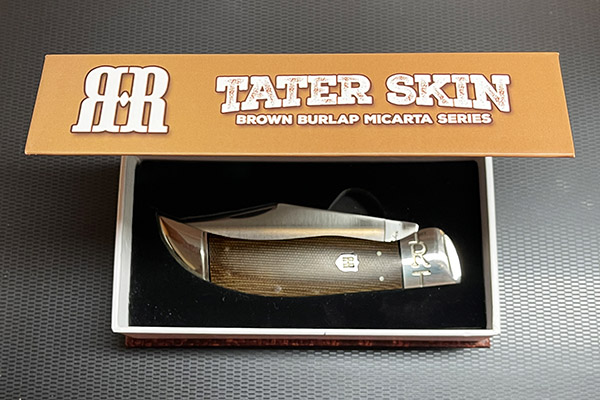
I didn’t know anything about the knife, including its size or anything other than the fact that it was a folder and the scales were brown burlap Micarta. I Googled those terms and found the knife on Amazon! Woo hoo! I knew I had promised Susie I was done buying knives for a while, but you know how that goes. Add to cart, buy, etc. It arrived the next day.
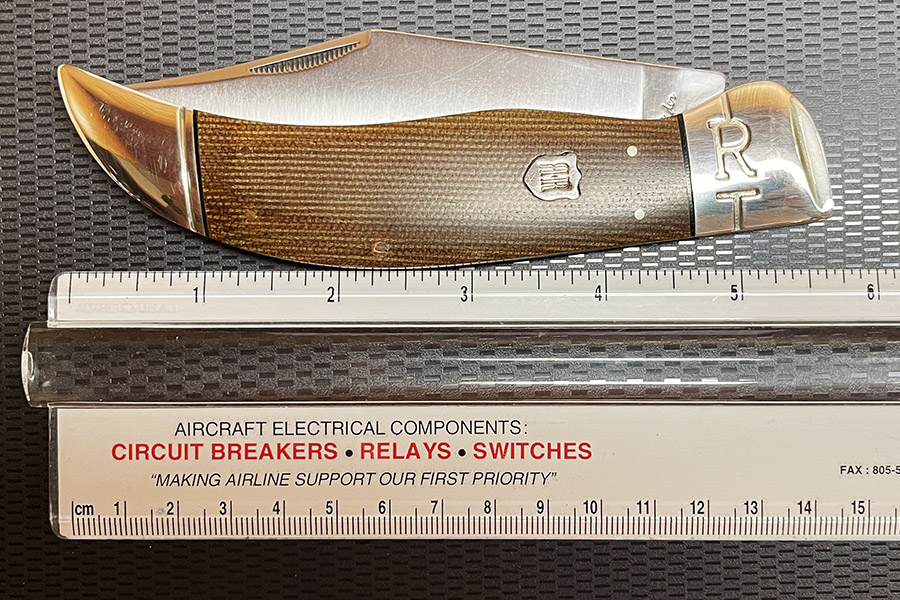
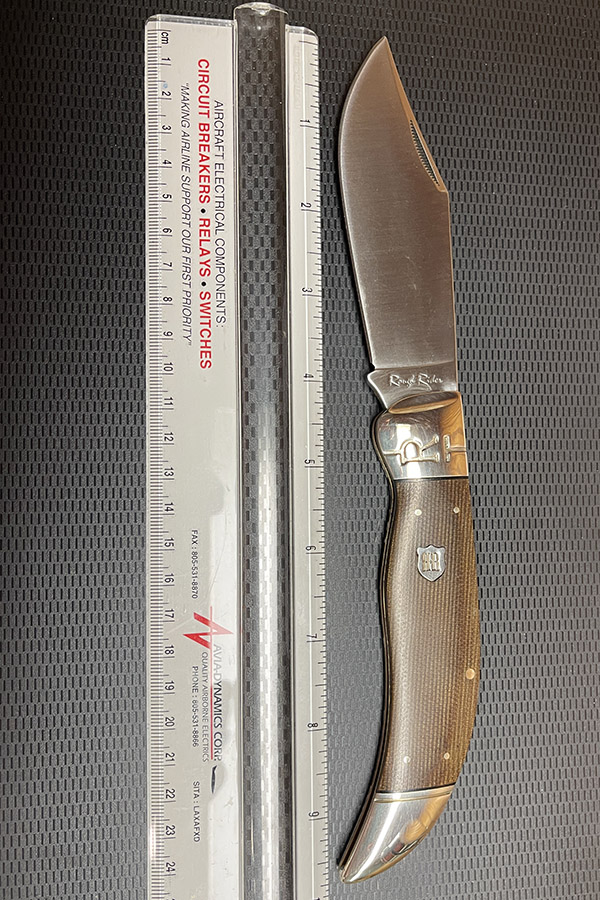
Man, this is a big knife. Please, no jokes or questions about what I am compensating for. I just like these things and they are so inexpensive, I’m indulging whatever underlying cranial miswiring is fueling this collecting affliction. I sent a quick photo to Bowie-fabricating good buddy Paul, and he asked me how big it is. That led to more iPhone photos and this blog.
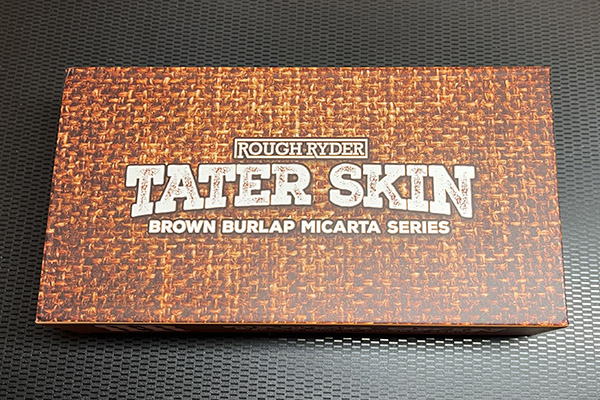
I learned on Amazon the knife is the Rough Ryder Deer Slayer, and the Rough Ryder series with brown burlap Micarta scales is their Tater Skin line. The Rough Ryder Deer Slayer isn’t offered any longer, but you can still find them on Amazon and one or two other retailers. The Amazon price is $39.97, and for a knife this size, that’s pretty reasonable.
The Rough Ryder Deer Slayer is nicely packaged. The box is fiberboard (cardboard, basically) and it probably won’t stand up to constant opening and closing, but it is nice. The knife doesn’t come with a sheath (or a holster, like a Buck does), which would have been even nicer. But it’s still pretty cool.
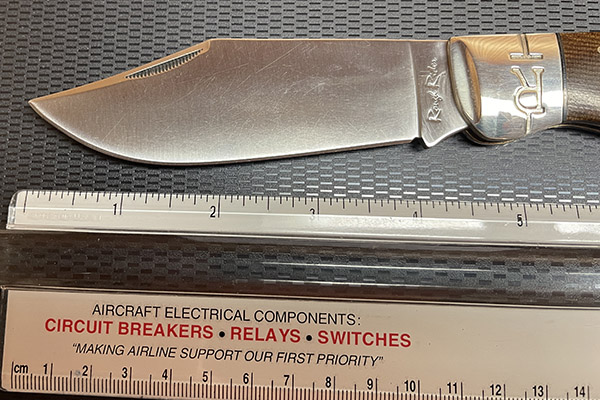
The blade is 4 inches long, and the knife (with the blade out) is almost 10 inches. This is a big knife.
The blade material is 440 stainless (it is razor sharp), and the brown burlap Micarta scales are aesthetically pleasing. The blade is a slip joint, which means it opens and closes like a regular pocketknife. The spring that holds it in either the open or closed position is strong, and I’m ultra-careful closing this one, making sure my fingers are out of the blade’s path as the knife is being closed.
The bottom line: I like the Rough Ryder Deer Slayer. I’ll probably never do anything with the Deer Slayer other than look at it (I’m certainly not going to slay Bambi with it). But I like it. If you want one, you should act fast as the knife is no longer being made. Amazon has a few in stock, and then that’s it.
My nesting work here at the ranch is taking me further away from electrical power. A 100-foot extension cord isn’t cutting it anymore. The little Harbor Freight Tailgator has been a trooper, but 700-watts isn’t enough for the electric jackhammer or two concrete mixers at once, and besides that the urge to spend money is strong.
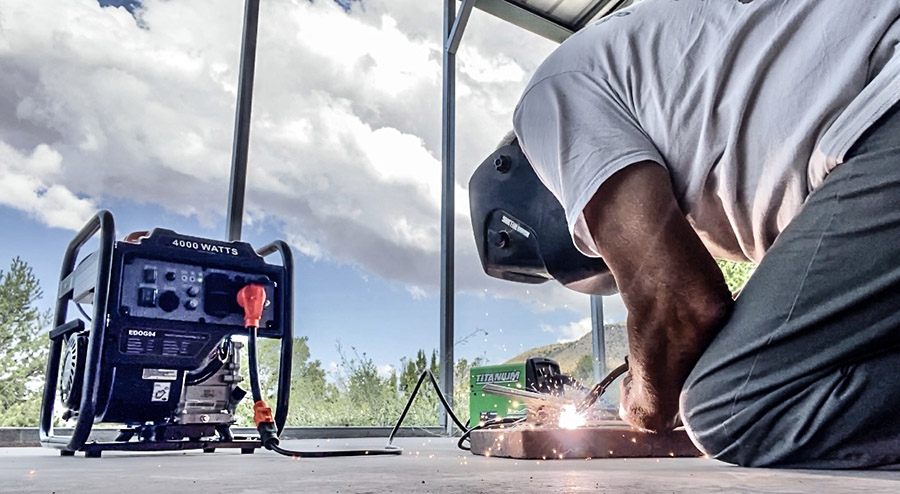
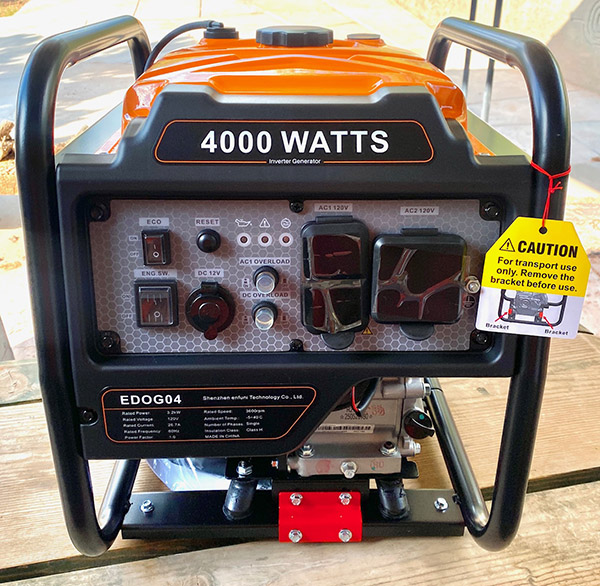
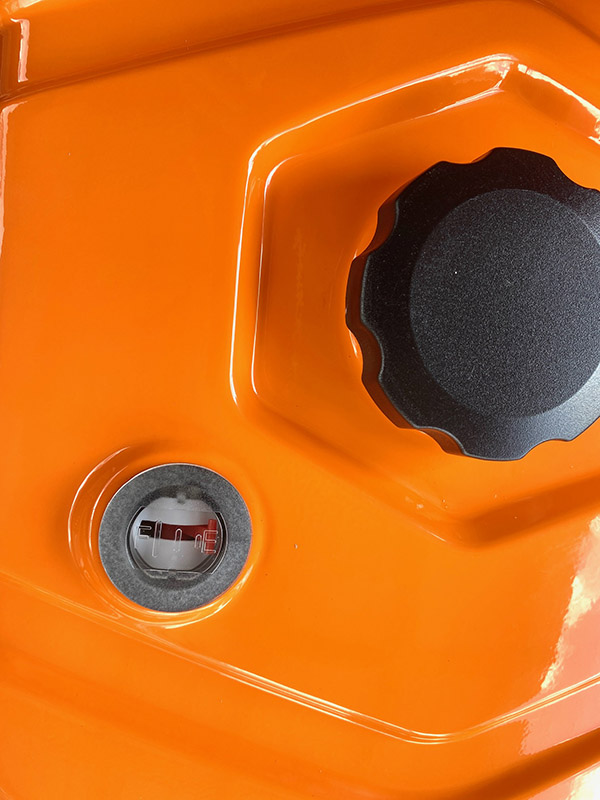
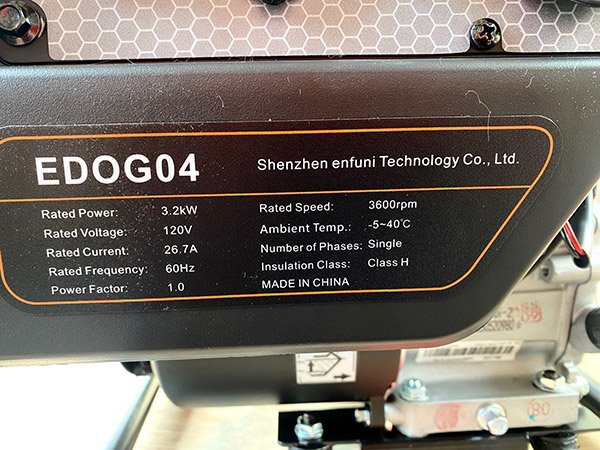
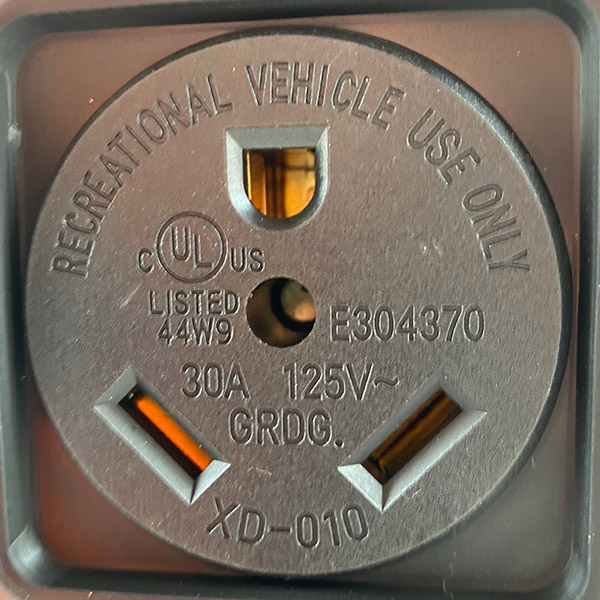
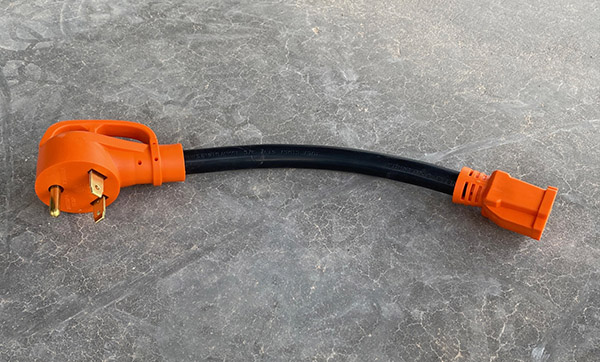
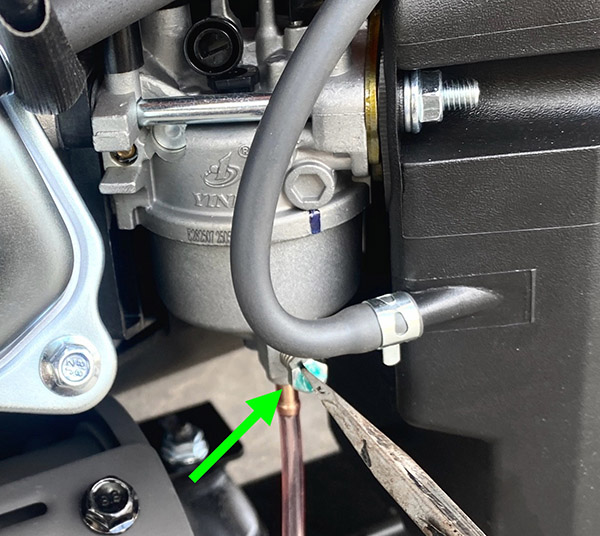
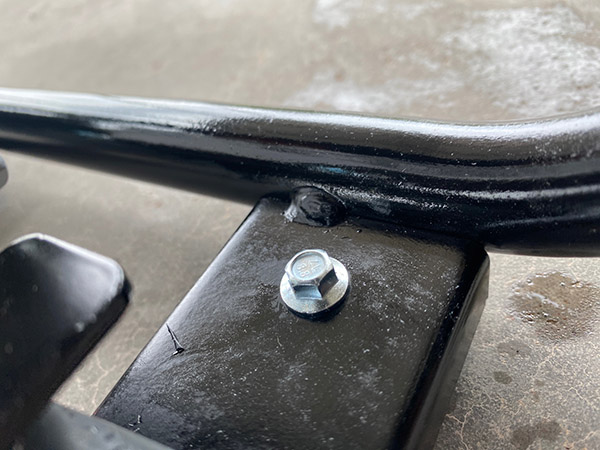
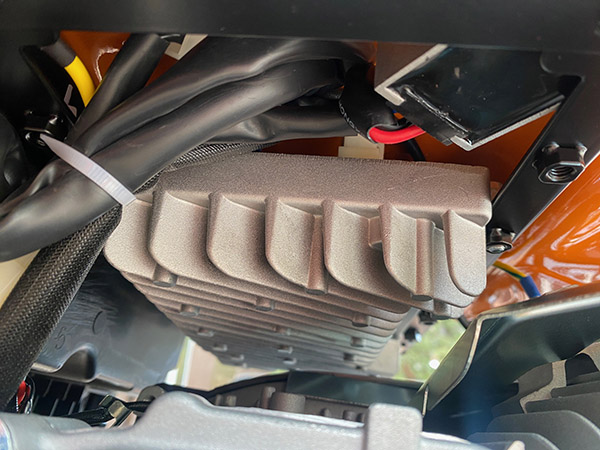
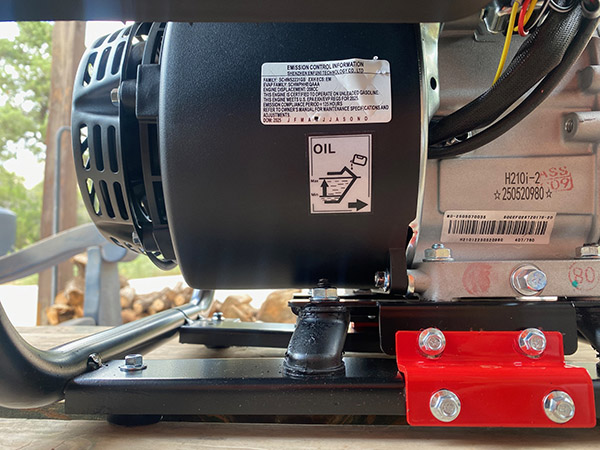
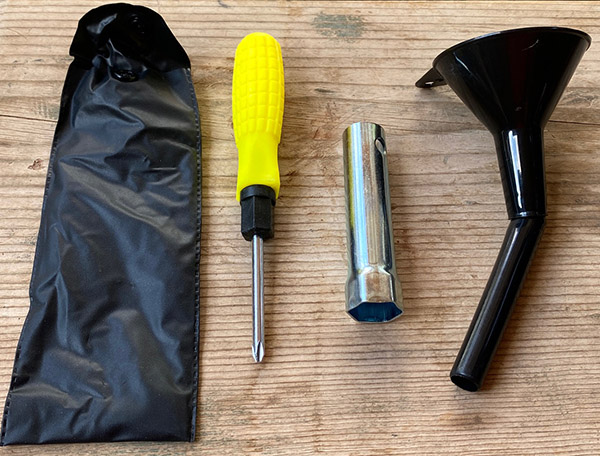
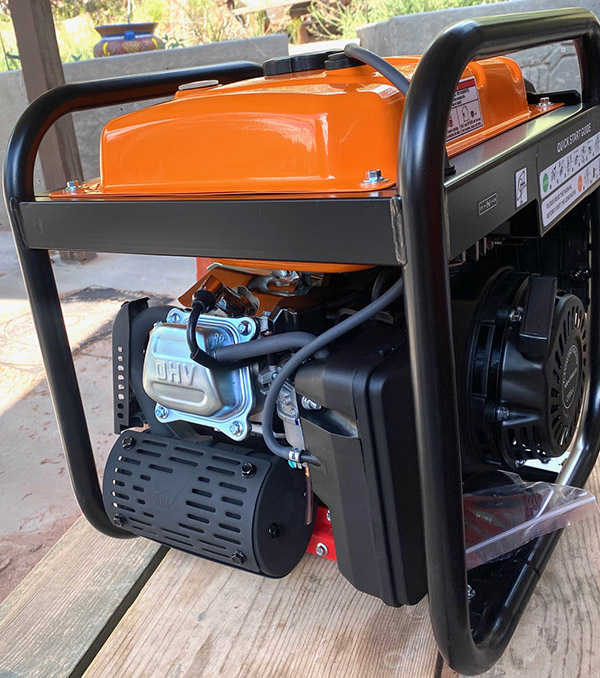
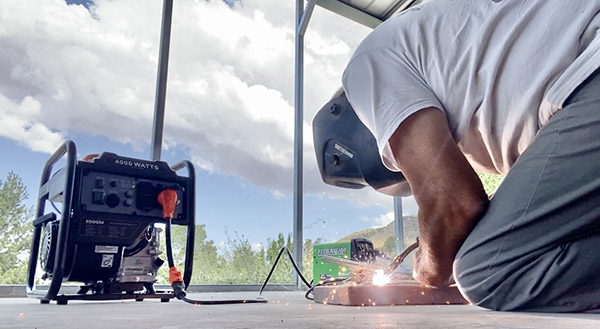
Lots of buttons and outlets on the 4000. A 12-volt cigarette lighter outlet is unusual for cheap stuff.A cool little fuel gauge is fitted to the top of the tank.Rated 3200 continuous and 4000 surge, the ‘Zhen seems to power most anything up to 26 amps. That’s four times as much as the Tailgator.The 30-amp, RV-type plug is great for welding.But you’ll need an adaptor to plug your light duty flux core into the 4000.This handy float bowl drain is a must-have for today’s crappy, alcohol laced fuel. Drain it after every use.I’d like to see a little more weld on the frame. It would only take 30 seconds.The inverter lives under the fuel tank. This is where the magic happens converting DC into AC.Unlike a normal genset that hangs the AC portion off of the crankshaft opposite the pull start, the Shenzhen incorporates the power source inside the blower area and the rope start.The generator came complete with a cute tool kit. You won’t get far with it but the thought counts.The muffler isn’t super quiet like a Honda but it costs a lot less. The ShenZhen is around 63 decibels using my seat of the ear dyno.
I have more than the usual number of generators: in addition to the Tailgator, there’s a 10,000-watt Italian-Honda mash up and a 9,000-watt Predator (also from Harbor Freight), but both of those machines are heavy and hard to move on the steep and rocky New Mexico terrain we are currently beating into submission.
I wanted something light-ish that I could toss in a truck or carry downhill to a terracing job. It needed to have enough juice to run my equipment loads and if it could power the flux-core welder, that would be ideal.
At 60 pounds the Shenzhen 4000 seemed like the way to go. Amazon reviews on the generator were mostly good.
The ‘Zhen 4000 is an inverter-type generator. Unlike a standard AC generator which must run at a steady RPM to make 60 cycles per second, an inverter generator makes DC power (zero cycles or one endless cycle, depending on how you look at it). That DC is then converted to AC by an inverter.
The advantages to inverter-type generators are several:
The engine RPM can vary according to load making the unit more economical for powering lighter loads. At full load there probably isn’t much difference.
The frequency can be tightly controlled, putting out 60 hz regardless of the load.
The sine wave form can be cleaner with less noise. Small generators induce jagged wave forms due to the slight increase/decrease in crankshaft rotation speed through the engines power cycle.
There’s less noise at lighter loads, because the engine speed can be slowed to meet demand.
The disadvantage to inverter-type generators is basically a more complicated generator with more parts to fail. There is a slight efficiency loss converting DC to AC voltage but it’s kind of a wash (see Item 1 above)
The Shenzhen I bought from Amazon was $299. Now that I’ve bought it, my ever-alert Facebook algorithm is sending fly-by-night offers for the same unit at $149. If you can get it for that price without being scammed, it’s a hell of a deal. $299 isn’t bad either.
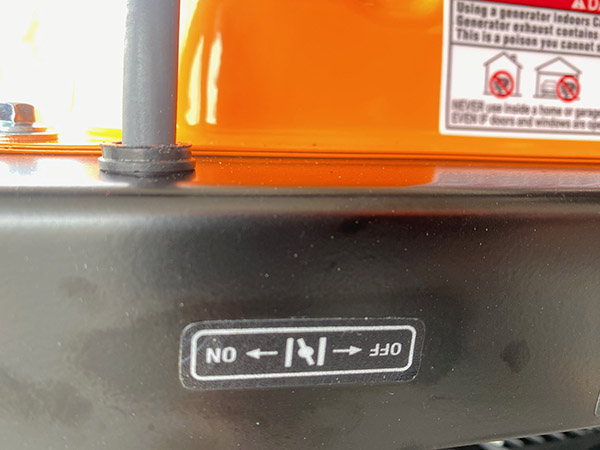
The choke was labeled backwards which led to a lot of rope pulling. It might be ok in the southern hemisphere but around here we peel the sticker off and flip It over.
The unit started right up once I realized the choke was labeled backwards and seems to have plenty of power. It runs my little flux core welder better than a regular receptacle. I’m mobile!
Time will mention under its breath if the ‘Zhen holds up and I’ll be sure to let you know if it’s junk. For now, it’s the real deal.
The Shenzhen 4000 runs the flux core welder nicely. I can crank it all the way up, a setting that pops a 15-amp breaker after a minute.
Back in 2014, I had never even sat on a motorcycle. Then one summer afternoon, a friend tossed me a helmet and said, “Try it.” I wobbled, stalled, and grinned my way through a parking lot. That was it. I was done for.
My First Dirt Love: Yamaha XT225
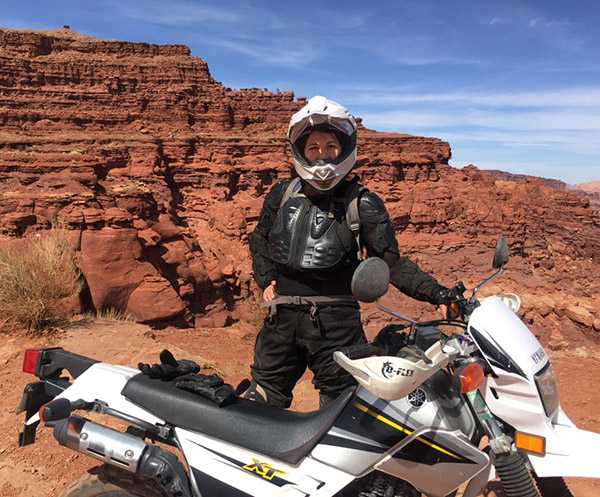
In January 2015, I bought my first bike, a 2006 Yamaha XT225. She was small, light, and forgiving, which is precisely what you want when you’re learning how not to fall over every ten feet. We learned together: I tried not to panic on steep trails, and she patiently lugged me through it all.
I still have her parked in the corner of the garage. She’s like the loyal dog you don’t ride much anymore, but will never give away.
The BMW 310 Era
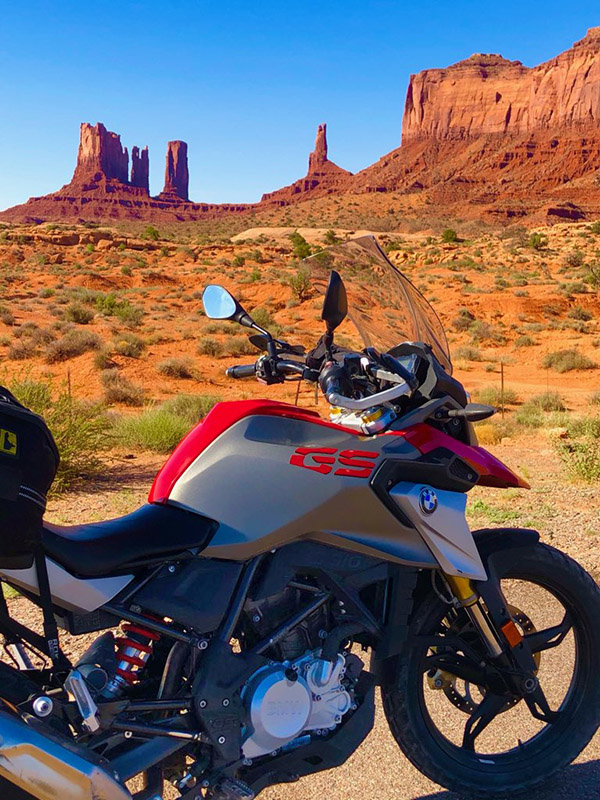
By 2016, I wanted a bike that could do more than chase dusty trails. I needed a solution that could connect dirt tracks and pavement without causing itself to disintegrate. That’s how I ended up on a 2016 BMW 310GS.
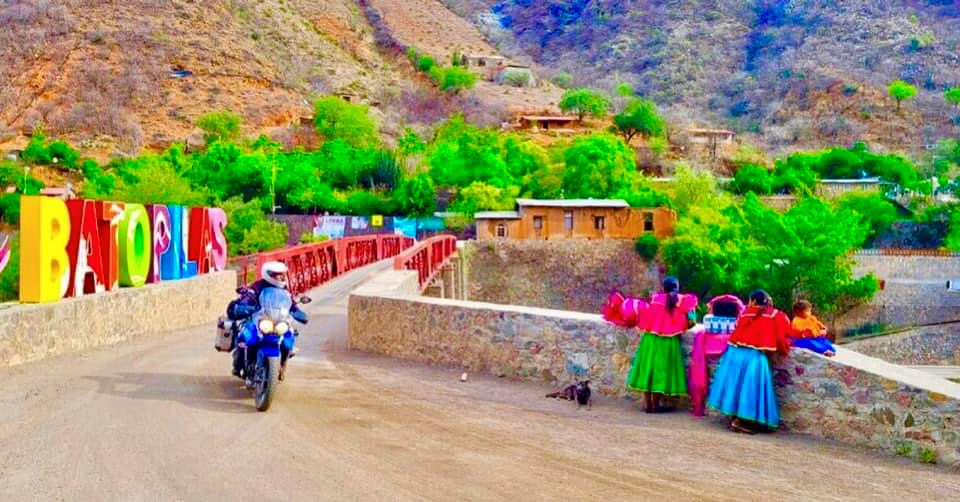
She was perfect, for a while. I rode her solo through Baja, mainland Mexico, and all over the Southwest. But with a top speed of about 80 mph, I started to feel vulnerable. There were moments where I’d look in the mirror and see a semi closing fast, me already full throttle, and think, “Nope… this isn’t going to work long-term.” That’s when I started looking for something bigger.
The Tiger 800: Love at First Triple
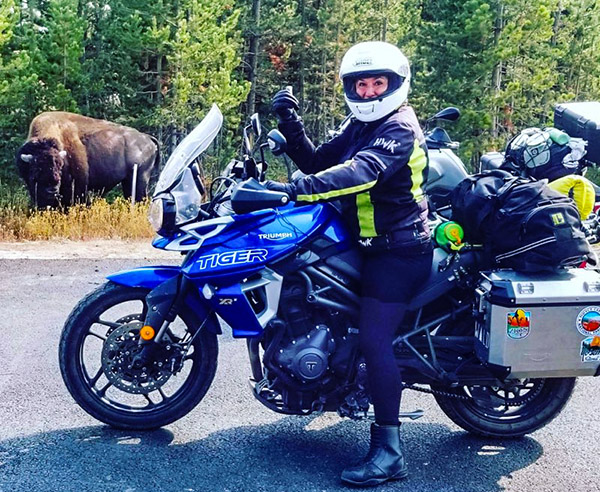
Then came the 2018 Triumph Tiger 800. Oh man, that three-cylinder engine. If an engine could flirt, this one winked at me every time I twisted the throttle. Smooth, growly, and just plain fun.
We went everywhere together: mainland Mexico (again), Colorado, Baja, Colorado, Wyoming, Utah, you name it. I thought we were set for life until Traci showed up.
Triumph Tiger and My Awakening
My friend Traci wanted to downsize from her BMW 1200, so she came to Sedona to check out my Tiger 800. A few months later, she’d found herself a shiny Triumph Tiger 900.
I had to try it, of course, strictly for research. Ten minutes later, I was hopeless. The Tiger 900 was like my 800 after a week at a spa: sharper, quicker, and somehow even smoother.
Meet Tippi: My Triumph Tiger 900 GT Pro
November 2022, and I’m signing papers for a brand-new 2023 Triumph Tiger 900 GT Pro. I named her Tippi because she has a habit of taking naps at the worst times, parking lots, trailheads, the occasional gas station, and the middle of a sandy road in Baja. She is a serious napper!
And then we took a big one: Arizona to Canada. Long, glorious days in the saddle. Wind that tried to push me back to Arizona, rain that soaked me down to my socks, and border guards who couldn’t believe I’d ridden all that way solo. When I finally rolled into British Columbia, I was tired, crusted in bugs, and grinning like an idiot. That trip sealed the deal, Tippi was the bike.
What Makes Tippi Different? (Specs with Soul)
The 2023 Triumph Tiger 900 GT Pro is built for riders who want one bike that can do everything without drama. According to Triumph Motorcycles https://www.triumphmotorcycles.com:
Electronics: Six riding modes, cornering ABS, traction control, cruise control, and a 7-inch TFT display.
Comfort: Heated grips, heated rider/passenger seats, adjustable windscreen, and center stand.
Weight: 423 lbs dry (476 lbs wet).
Why I’ll Stick with Her (for now)
When I’m not riding, I’m outside staring at her like a teenager with a crush, sometimes having little chats about our next adventure. (Yes, I talk to my bike. No, I don’t need an intervention.)
Motorcycles come and go, but right now? Tippi’s my dream bike. My Yamaha was too small, the BMW too slow, but the Tiger 900 GT Pro was just right.
From first dirt wobble to a solo Canada run, I wouldn’t trade any of it, even the tip-overs. Especially the tip-overs, they gave her a name, and me, a story worth telling.
When I was younger (by a lot) I used to modify all my motorcycles. Different forks, different gas tanks, different wheels. I never left well enough alone. Until I bought a new, 1983 Honda XL600, I only had a few stock bikes. The XL600 was so good it started me thinking about why I kept messing with original bikes. And so I stopped.
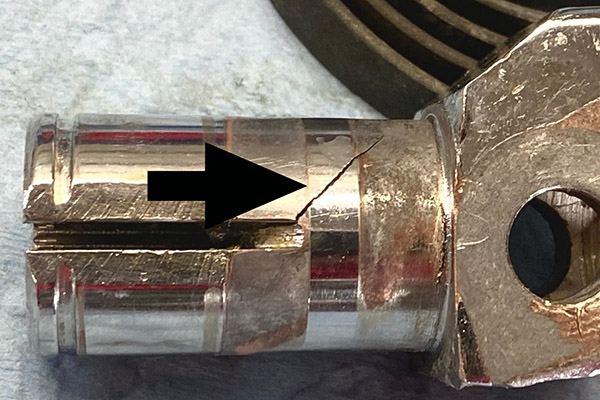
I found the reason why the kickstart splines slip. The lever knuckle is cracked allowed the splines to expand when kicking. Luckily the spare engine has the part.
I pretty much leave motorcycles stock now. It’s a lot easier and quieter. Let’s face it: The bikes are more reliable stock. Reliability is important to me now. Along with resale value.
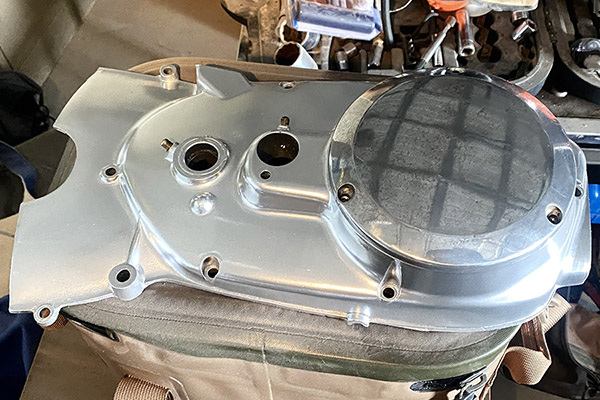
I’ve been polishing the turd a bit. The aluminum color is too bright, I’ll try something else but the bike should clean up and look decent.
Lately, the Dream 305 decision tree has branched off in a different direction. Getting the bike running was exciting but figuring out how to proceed has not been. What to do with this beast? If the engine was bad things would be easy: Part it out. But the engine is not bad.
The main issue is the low value of restored Dreams. A couple thousand bucks will get you a nice rider that needs nothing. My ’62 is an early model that has some cachet, but not enough to make much difference.
I was going to leave the bike rough and stock, just get it operational, but deep down, I don’t like the way a Dream looks. The engine is fine. I like the close-set fins, but It’s those fender flares. They make the bike look stodgy and old.
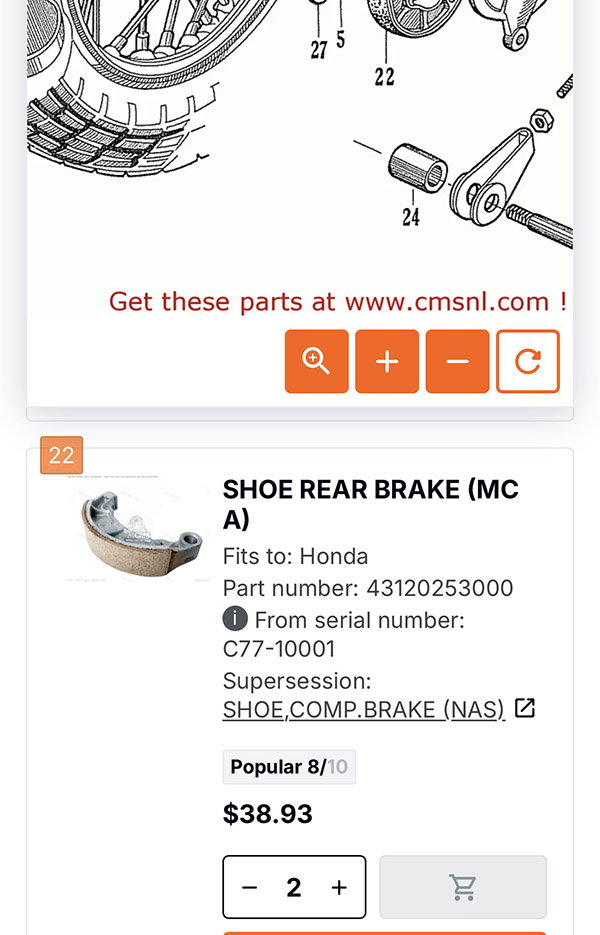
Front brake shoes are cheap and available for the Dream but rear shoes have a different mounting set up. At $38 each shoe I’ll be running the old ones. Hopefully the lining stays glued on and doesn’t come loose and lock up the wheel.
I’ll be the first guy to tell you don’t modify old bikes because it lessens interest and value, but what if the bike has little value to start with? I’ve decided the flares have to go. Kind of a return to my roots on a bike that isn’t in great shape.
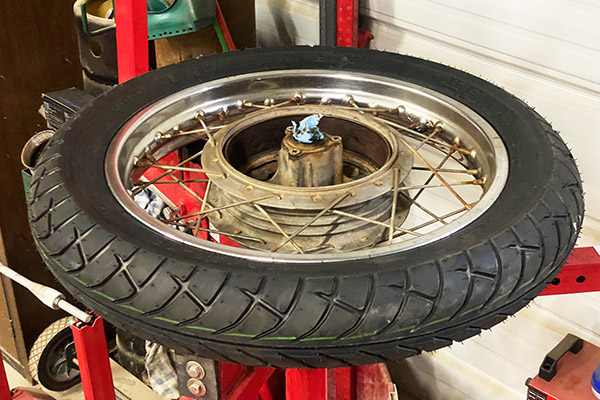
The rear rim is in fairly good shape, and the new Kenda fit will. Neither of the front rims are very good. They are round and straight, but the chrome is shot. As this is a budget build, I may try some chrome spray paint just to get the bike on the road.
Hear me out: Modding this bike is not a big deal as I have a bit of metalworking to do on the Dream’s sheet metal frame and have decided to take the bike completely apart to allow easy access and flat welding.
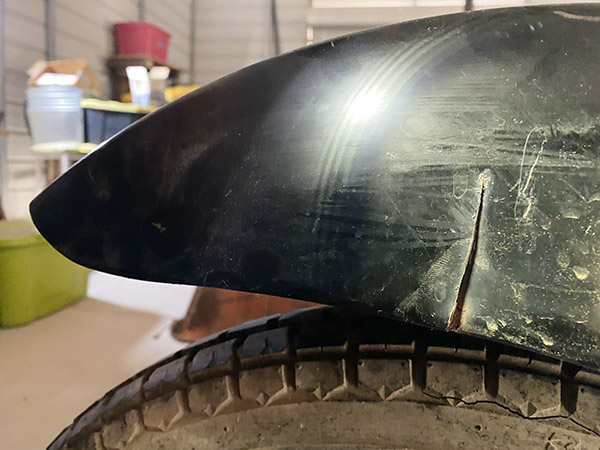
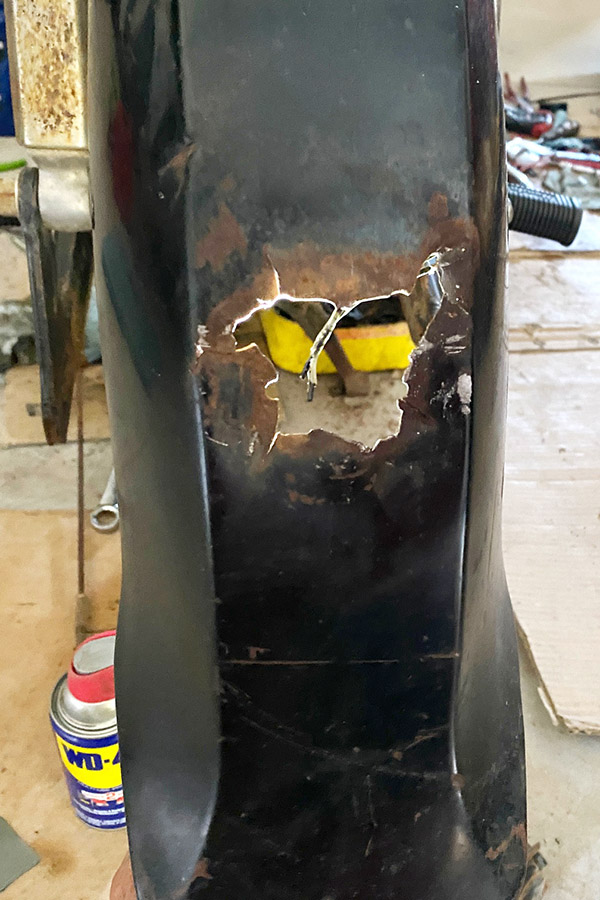
The Dream has been down sometime in the last 60 years. I’ve tweaked the front fender straight-ish. A little welding and trimming will make it usable.The taillight area is kind of a mess. I’ll use the flare cut-off to supply original sheet metal when I plug this hole.
The front fender has a crack and the flare is bent; it will need some massaging and removing the flare removes one problem. The rear fender has a gaping hole where the taillight sat, and I’ll be welding that closed. There are a few dents that would be easier to beat out with the frame upside down. The bike won’t be original, but it won’t be far off original. And most importantly, I’ll like the way it looks. I’m shallow that way.
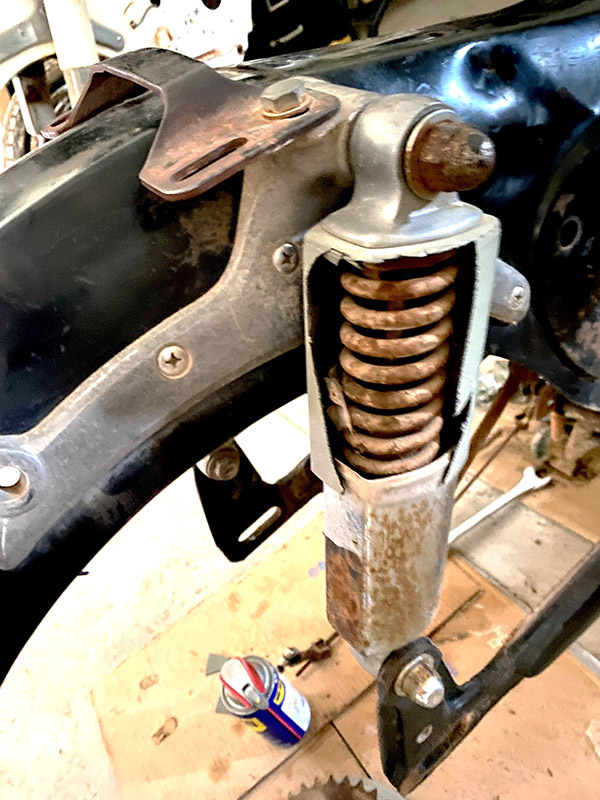
These square shocks are iconic Dream bits. No longer held to a high standard, I won’t be looking to replace the eroded plastic covers.
Things are hopping at the ranch, so I have made little progress (but not zero progress). Just having clarity, freedom and a plan saves on lateral moves.
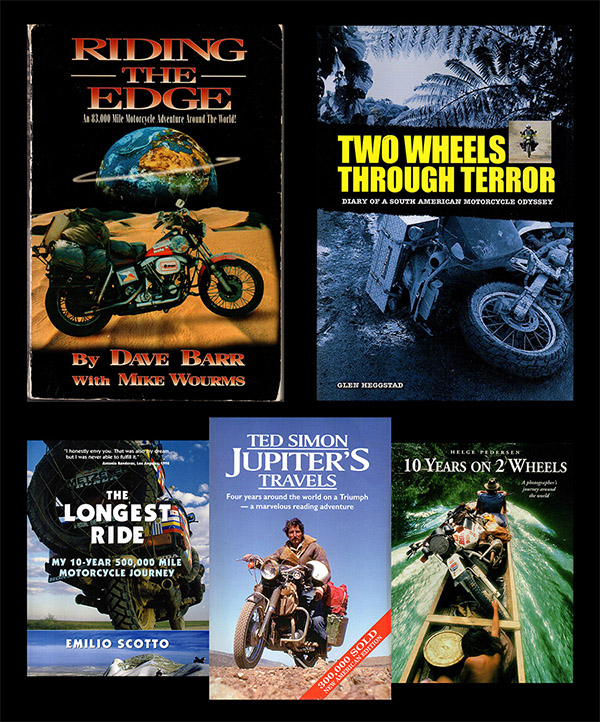
I thought I’d read everything that had ever been published about traveling the world on a motorcycle. I’ve written about it on ExNotes, describing my favorites among all the books on this topic.
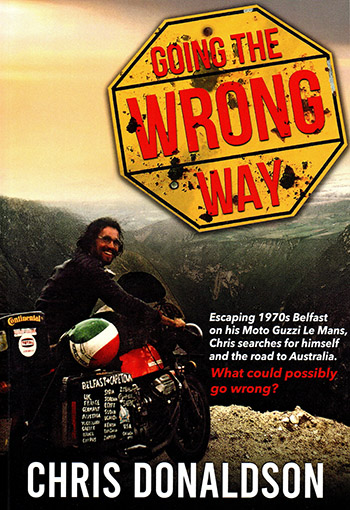
Notice that I’m writing in the past tense, and the reason for that is I most recently learned about another motorcycle saga that belongs on my best-in-class list: Going the Wrong Way, by Chris Donaldson.
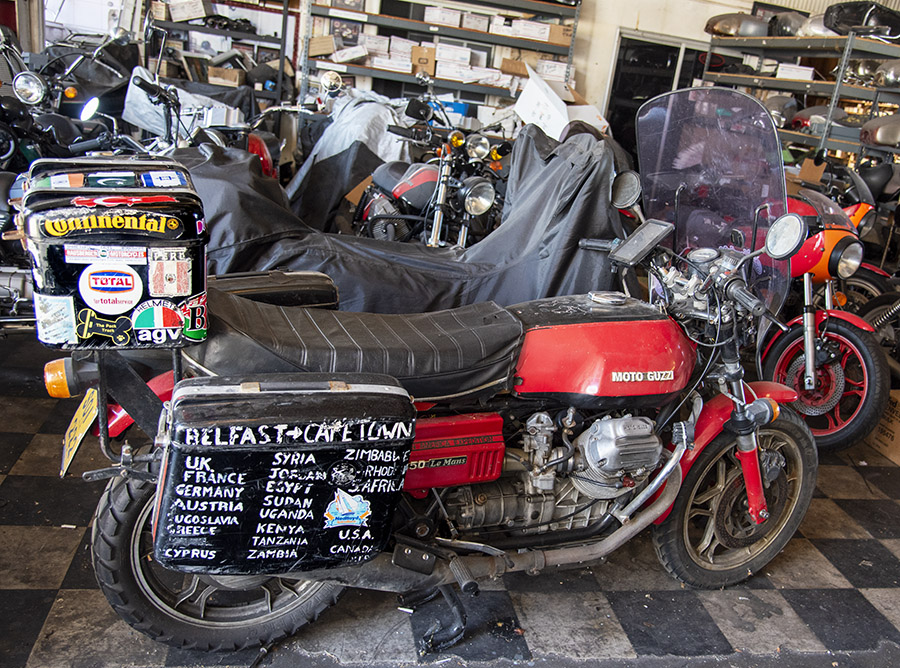
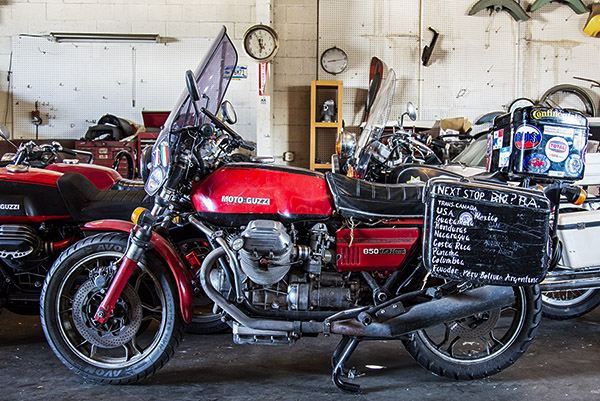
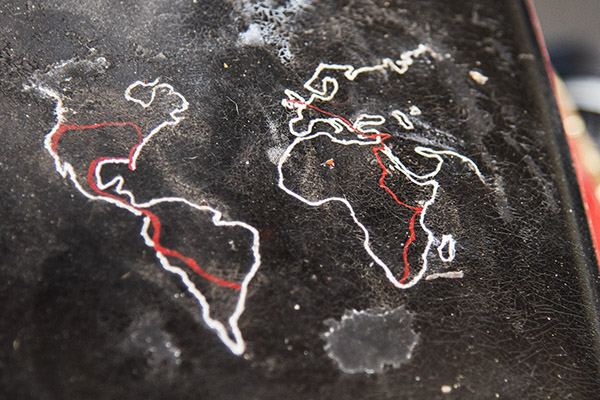
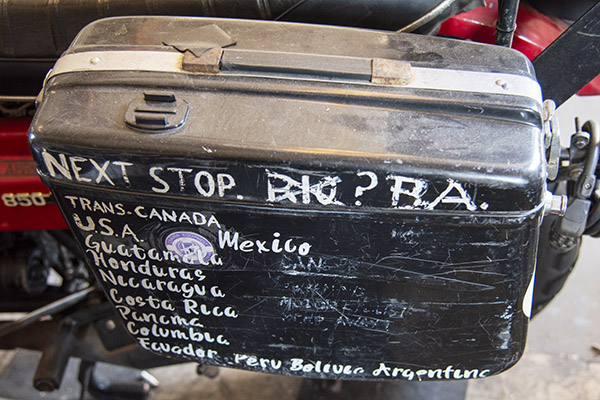
My newfound discovery came about almost by accident a few days ago when I visited with Moto Guzzi Classics, an independent Guzzi revival and maintenance facility in Signal Hill, California for a potential story I’m doing for the ExNotes blog and maybe one of the motorcycle magazines. The guys who run Moto Guzzi Classics are, in as few words as possible, both a bit eccentric and absolute subject matter experts. One of them, my new good buddy Wyatt, showed a few of the bikes in their shop to me, and one of those motorcycles belongs to Chris Donaldson. Chris is a Belfast boy (as in Belfast, Ireland) who is going around the around on a Moto Guzzi 850 Le Mans.
Man, there’s a lot to unpack in that last sentence. Belfast. Coming of age during The Troubles. Getting out of Ireland as a young man. Moto Guzzi, which has to be one of the coolest motorcycles on the planet (they’re like Harleys, but for people who like motorcycles). The Le Mans 850, which has to be one of the worst motorcycles in the world for world travel. Traveling the world (as in present tense). That’s right, the journey is not over, even though Mr. Donaldson started it many decades ago. Donaldson plans to continue his global conquest on the same motorcycle, which is one of the reasons why the bike you see here is currently in the queue at Moto Guzzi Classics in Signal Hill.
I’ve had a hard time putting the Going the Wrong Way down on my nightstand each night for the last several nights. I’d read until I couldn’t stay awake, and fall asleep reading it. Don’t get me wrong; the book is anything but boring. Just the opposite is true. It’s fabulous, and even though I couldn’t keep my eyes open because I was reading into the wee hours, I couldn’t stop reading. Going the Wrong Way has all the bike reliability stuff to keep an engineer interested, all the philosophical stuff to keep a philosopher awake, all the people stuff to keep a people person awake, all the border crossing drama stuff to keep a world traveler tuned in, and, well, I could go on, but I don’t want to spoil it for you. The writing is almost poetic. It’s that good.
Folks, Going the Wrong Way is a great read. Don’t just take my word for it; there are something like 1,394 Amazon reviews posted on this book (soon to be 1,395, when I write mine), which is really kind of stunning for a motorcycle travel book written by a rider with no sponsors. Trust me on this: Get yourself a copy of Going the Wrong Way. You can thank me later.
Our other book reviews (along with reviews on a lot of other things) are here.
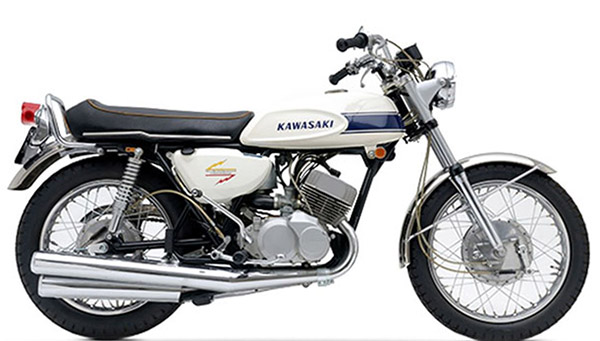
I suppose I could wax eloquent about all the magnificent three-cylinder motorcycles out there in the world, but in keeping with the theme of this series, I’m sticking (at least for now) with motorcycles I’ve owned or ridden. In those of the triple flavor, there have been three: A 1969 Kawasaki two-stroke H1 Mach III, a 2006 Triumph Tiger, and a 2007 Speed Triple. The first one (the Kawi 500 triple) didn’t impress me at all; the Triumph triples impressed me mightily.
Keith Hediger’s 500cc Kawasaki
Way back when I was in college, I had a 1971 Honda 750 (I’ll you about that bike when I do the ¿Quantos Pistones? blog on the fours). One of my ROTC buddies, Keith Hediger, had a 1969 Kawasaki Mach III. It was a real oddball: A 500cc, two-stroke triple that could stay with a Honda Four in a drag race (which was kind of amazing, considering the Honda’s 50% displacement advantage). Keith and I had this great idea that it would be a real adventure to ride from New Jersey to Quebec, Canada, and we set off to do just that.
A 1969 Kawasaki Mach III 500cc two-stroke triple, a bike that broke all the rufes.
New Jersey to Canada on two naked street bikes with no plan, no luggage, and no rain gear was not a great idea. That point was driven home when it started to rain somewhere in Vermont. It kept raining all the way up into Canada, and when we hit Montreal, we decided we had experienced enough adventure riding for one trip. But it was my first international motorcycle ride, and I had a chance to ride Keith’s Mach III when we switched bikes for a while.
My short ride on the Mach III convinced me of three things:
The Honda CB750 Four was downright luxurious compared to the Mach III.
The Mach III had a seat like a 2×4. It was uncomfortable as hell.
The Mach III was indeed every bit as powerful as the CB750 Four.
I didn’t ride the Mach III long enough or on the right kind of roads to assess its rumored widow-making handling, but the bike felt twitchy and unstable compared to my Honda. And that was it for me and triples for the next 2o or 30 years.
My decades-earlier short ride on the Mach II notwithstanding, I changed my mind about triples. I wanted a Triumph. It started at a Cycle World event (or maybe was it Cycle; I always get the two pubs mixed up) in Los Angeles. I was there on my ’92 Softail when it happened: I heard a Trimph Speed Triple enter the parking lot. It was a magnificent thing, kind of a pearlescent candy pink (which sounds weird as I type this), but wow, it hit all the buttons for me. The color (I would call it bubble gum pearl) just flat worked for me, and that exhaust note…it was just wonderful. It was kind of a mix between a small block Chevy with a big cam and a jungle cat’s snarl. Fierce, yet refined. Loud, but not obnoxious. Big power, but controlled. I knew that someday soon I would own a Triumph triple.
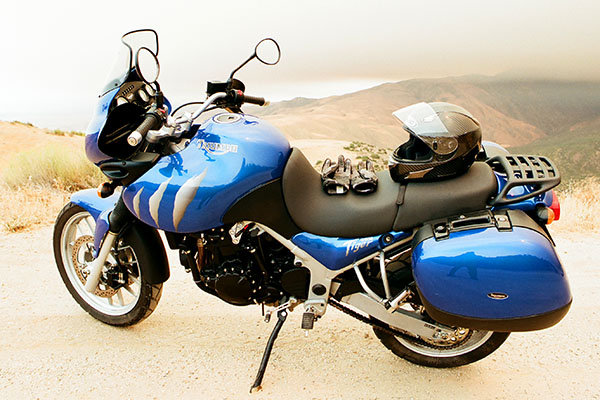
2006 Triumph Tiger
That someday soon arrived when I stopped at Doug Douglas Motorcycles in San Bernardino. In those days some 20 years ago now, Doug Douglas was an old school motorcycle shop. San Bernardino is regarded by many in southern California as the armpit of the state, and I guess I was of that opinion, too. At least until one of my riding buddies corrected me: “It’s more like the crotch,” he said. I think he was right.
My 2006 955cc Triumph Tiger. The haze in the background is real. I and buddy of mine were riding in the mountains north of Los Angeles during one of our many famous forest fires.
Anyway, I was riding through San Bernardino on my Harley when I stopped at Doug Douglas Motorcycles. Doug was an old guy even then, and he was famous, I guess, as a former motorcycle racer. He was a crusty, cagey old guy who picked up on my reaction when I saw the candy blue, tiger-striped Tiger you see above. He knew I was a goner before he ever said a word. Doug told me what it would be, out the door, and my fate was sealed. Folks, I’ve never paid the asking price for anything, and folks who know me, know I’m as tight was a turtle’s butthole (and that’s watertight). I looked at the Tiger and then Doug and I simply said, “Okay.”
I don’t remember exactly, but I think the Tiger was about $9,000. Sue hit the roof when I came home and told her what I had just done. Then I told her I needed a ride back to Doug Douglas so I could bring the bike home. She fumed for about half the trip until she finally asked me where the money was coming from. I told her I had some money left from selling my Suzuki TL1000S. “What did you do with the rest of that money?” she asked.
“That mother of pearl and black onyx bracelet I bought for your birthday,” I said. I hadn’t known it when I said it, but it turned out that was the perfect answer. Sue was sweet as a kitten for the rest of the ride. When we reached Doug Douglas’s place, I introduced her to Doug.
“You must be the world’s greatest motorcycle salesman,” Sue said. “My husband told me he said yes to your first offer, and that never happens.”
Old Doug scratched his chin and told her, “It’s true I’m a good motorcycle salesman, but I’m really much better at selling new living room and bedroom furniture.” Sue and I were perplexed at that one, until Doug added, “lots of guys who come home with new motorcycles end up buying new furniture within a few days of their buying a motorcycle from me…”
The Tiger was a wonderful motorcycle and I covered a lot of miles with it. The Tiger was Triumph’s “me, too” ADV machine, but it was god-awful off road. I was terrified on it every time I turned onto a dirt road in Baja, which was exactly twice. In soft sand it would scare the bejesus out of a former paratrooper (something I can speak to with authority). The Tiger was essentially a high-performance street bike with ADV styling. It excelled on mountain roads. It was tall and top heavy, but it was fast, it sounded wonderful, and I loved it.
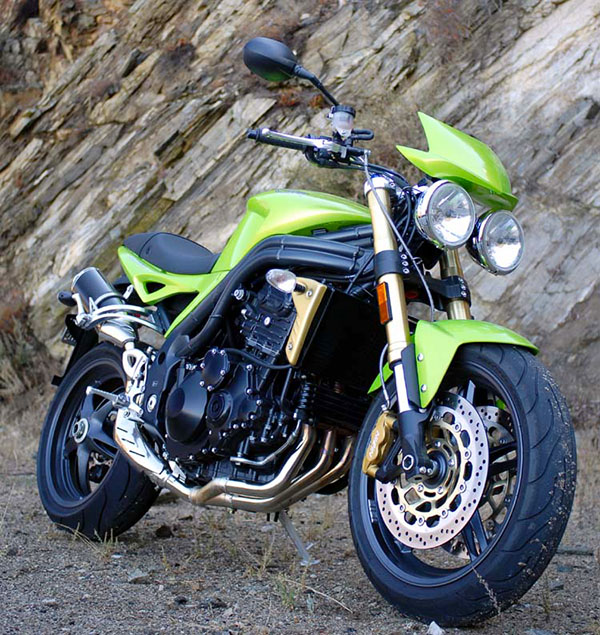
2007 Triumph Speed Triple
The Tiger scratched a lot of my itches, but I still remembered that candy bubble gum Speed Triple, I fancied myself a hooligan, and I still had the urge to own a Speed Triple.
My 2007 Triumph Speed Triple. I shot this photo up on Glendora Ridge Road.
About a year after I bought the Tiger from Doug Douglas, I was in his dealership again and I saw the Speed Triple you see above. I didn’t buy it on that visit, but I thought about it a lot in the days that followed. I drove out there on a lunch break (I was still working then), made an offer, and it was mine.
I opted for a few doodads, including gold-anodized bits and pieces, the little flyscreen, and a set of Jardine carbon fiber mufflers. The result was what was unquestionably the most beautiful motorcycle I’ve ever owned. I remember I was getting a haircut one time downtown and a cop came into the barbershop. He asked if the Speed Triple was mine. I got an adrenaline rush thinking I had done something wrong, but nope, he just wanted to tell me it was a beautiful motorcycle.
The Speed Triple was beautiful and it photographed well, but it was buzzie and uncomfortable, and with its short wheelbase it was a little bit twitchy. I owned four or five motorcycles in those days, and the S3 was the one I rode the least. I sure liked looking at it, though.
One morning, I was headed to the University early in the morning for an 8:00 class. That was November 9, 2009. I exited the freeway and turned left, and I remember seeing a guy at a stop sign in a Camaro. We established eye contact. The next thing I knew I was being loaded into a helicopter, in great pain, with the blades’ downwash sweeping over me, thinking either I was having a really bad dream or I was being medevaced in Vietnam (which is kind of interesting, as I’ve never been in Vietnam).
My “I got screwed” photo. Trust me on this: It was as painful as it looks.
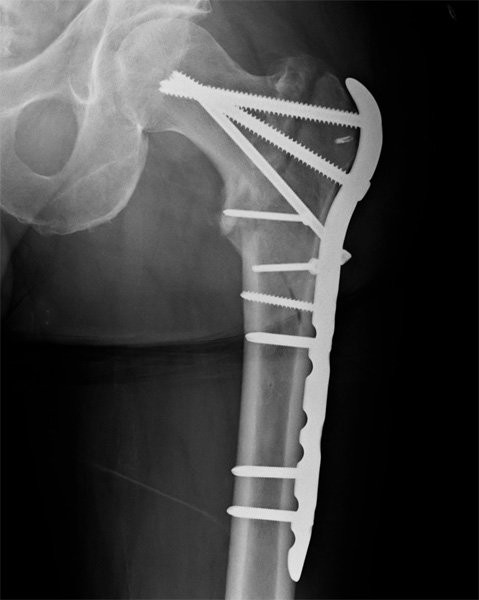
It wasn’t the Camaro guy at the stop sign, and it wasn’t even at that intersection. My S3/automobile altercation had occurred a block further west, which I learned 6 weeks later while I was still in the hospital. I have no memory of the crash (event amnesia, the doctor called it), but as crashes go, it was a relatively bad one. I had a concussion, two crushed vertebra, and two big fractures of my left femur. The femur was the big deal. One surgery while I was still in the hospital put a big metal plate down there to hold everything together while the fractures healed, and when that broke a year later, I had revision surgery to remove the now-broken plate and install a femoral rod so that the lower fracture (which had not healed) could do so. (Trust me on this: The words “revision” and “surgery” should never be used together.) I went on to ride other motorcycles throughout the western US, Mexico, Colombia, and China, so I guess the accident didn’t screw me over too badly. But it made an impression, and I’ll never use a motorcycle to commute to work again. The streets have a different personality during commuting hours, one best suited for a big car, or maybe an armored vehicle.
So that’s my story on the triples. Although the idea of a three-cylinder motorcycle may feel weird (and from an engineering perspective, maybe a little unbalanced or asymmetric), I believe a three-cylinder motorcycle makes a lot of sense. I think a triple has it all: Power, balance, handling, and (at least for Triumphs) the right ExhaustNotes.
Missed our stories on the Singles and the Twins? Hey, no problemo! Here they are:
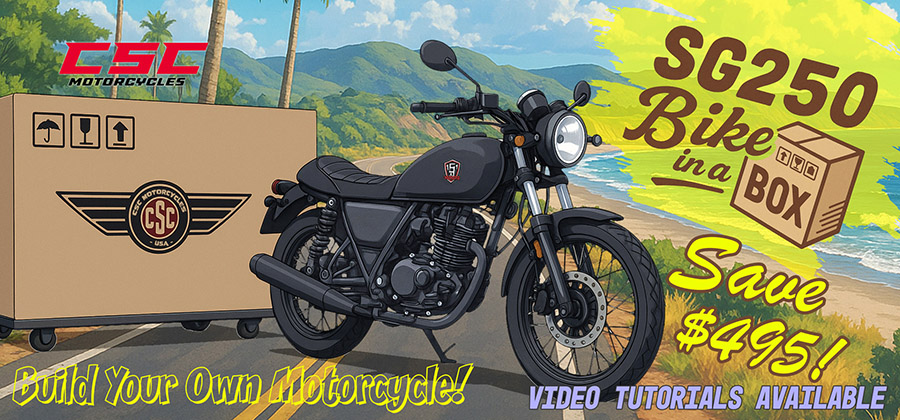
Boy oh boy, it’s hard to believe a dozen years have slipped by. The year was 2013, and one of CSC Motorcycles’ early marketing campaigns for the CSC 150 Scooter was the “bike in a box” program. CSC sold its Mustang revival motorcycle as a kit, with assembly to be performed by the owner. It was a brilliant marketing campaign and it worked well. So well, in fact, that when CSC started importing the iconic RX3 250cc adventure touring motorcycle a couple of years later, an option available to consumers was to buy the bike in a pre-setup format and perform the setup themselves.
In an effort to hold the line on tariffs and keep prices down, CSC is returning to its roots for the San Gabriel 250, one of its best-selling models. Buyers can get the bike pre-setup, set it up themselves, and save a whopping $495. It’s easy to put one of these motorcycles together, and to make it even easier, CSC provides a complete “how to” video. It’s a great way to bond with your bike and to learn a bit about motorcycle mechanics in the process. For more info, visit the CSC website at www.CSCMotorcycles.com.
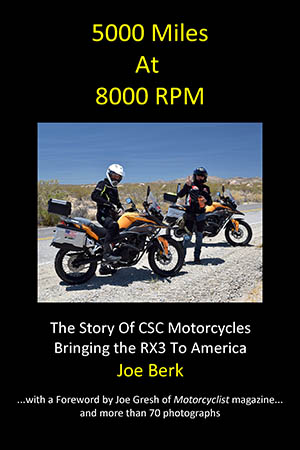
Would you like to learn more about CSC’s early days and the role yours truly and Joe Gresh played in helping to promote CSC Motorcycles? It’s all there in 5000 Miles at 8000 RPM.


 I’ve had a hard time putting the