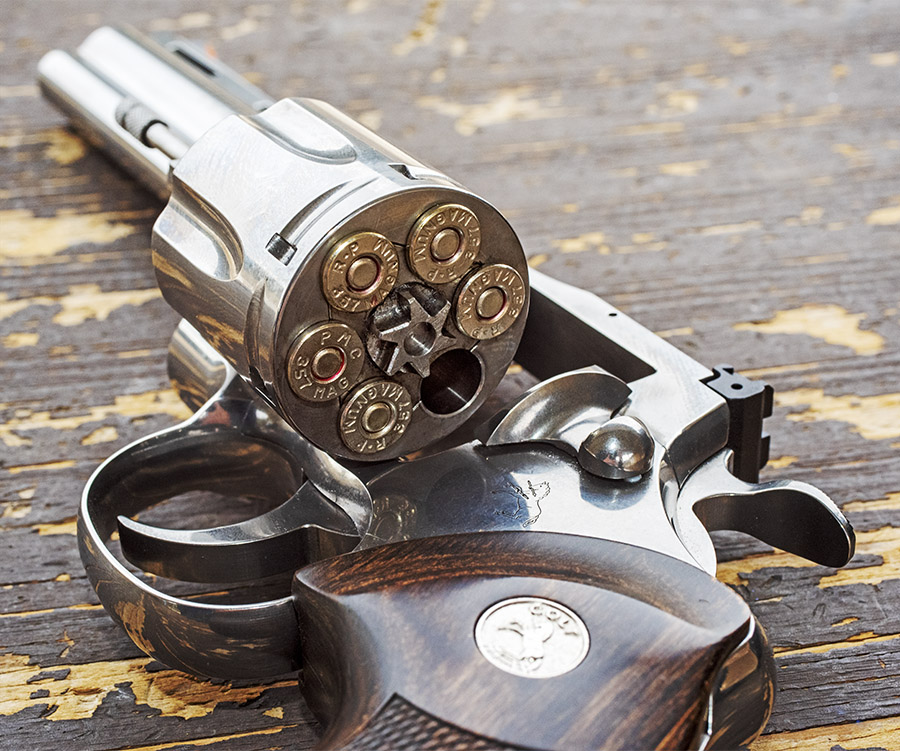
I’ve owned three Colt Pythons. Back in the ‘70s I had a blue 6-inch Colt Python and another 6-inch nickel-plated one (they were only about $250 back then, and I could buy them for even less through the Post Exchange). Both those Pythons went down the road, and yeah, I’m sorry I sold them. Who wouldn’t be?
Please click on the popup ads…it keeps us going!
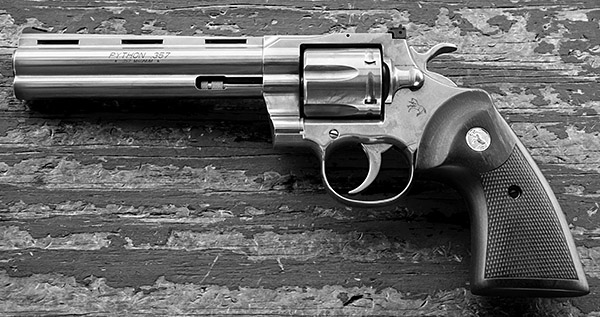
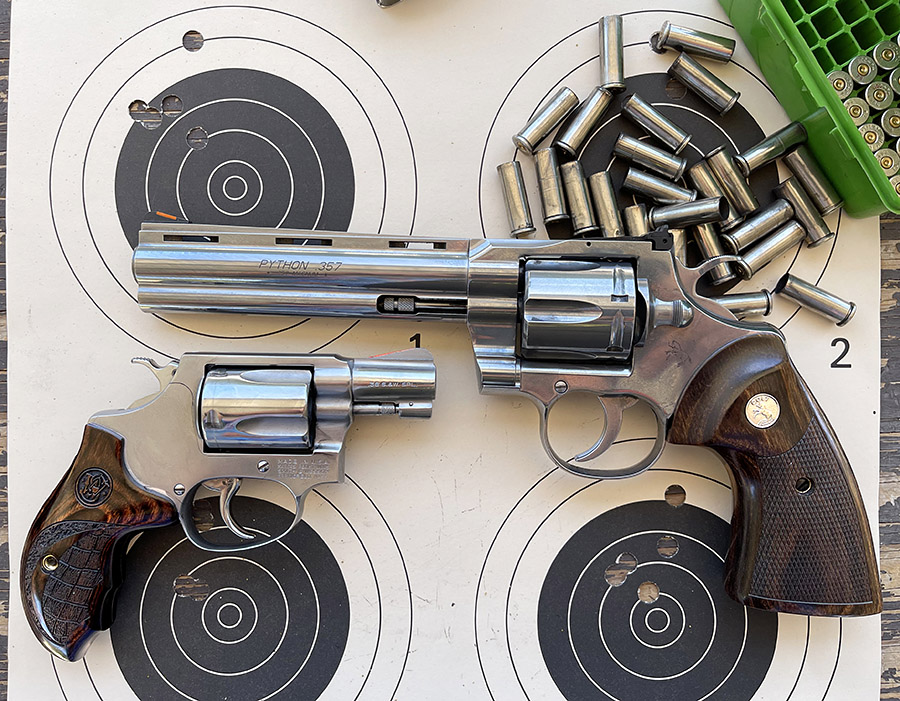
These days, I have a 6-inch bright stainless Colt Python, the new model, and I love it. It’s the one you see in the photo above. I’ve been to the Colt factory to see how they are made, and both the Python’s design and its production are impressive. I’ll let you in on a secret: The new Pythons are better guns. I shoot my Python a lot. In the last few months I’ve been hitting the range with it at least a couple of times every week. I’m old school, I guess: I prefer a revolver to a semi-auto, and I prefer .38 Special and .357 Magnum over 9mm. Your mileage may vary. I know what I like.
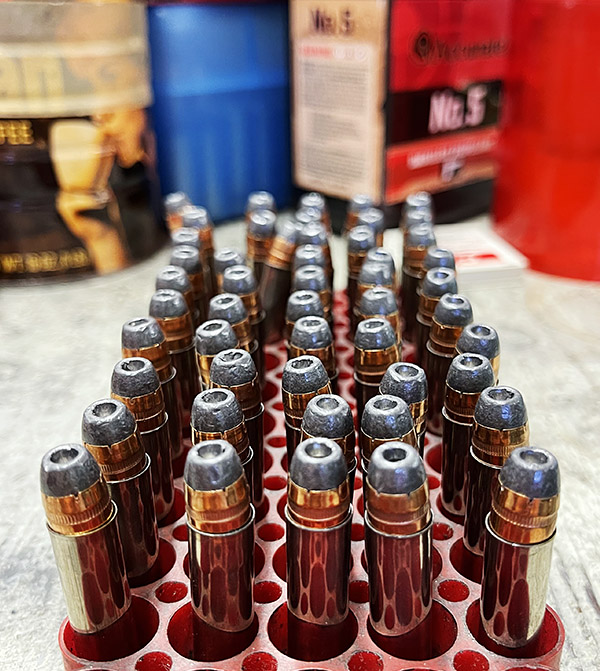
Winchster 110-grain jacketed hollow point bullets waiting to be seated and crimped.
I remembered that back in the day I found a 110-gr jacketed hollow point bullet with 10.0 grains of Unique (the max load in the Hornady manual in the 1970s) and it was extremely accurate in my blue steel Python. I mean, like one-hole accurate. Accurate enough to keep that load in my memory for five decades.
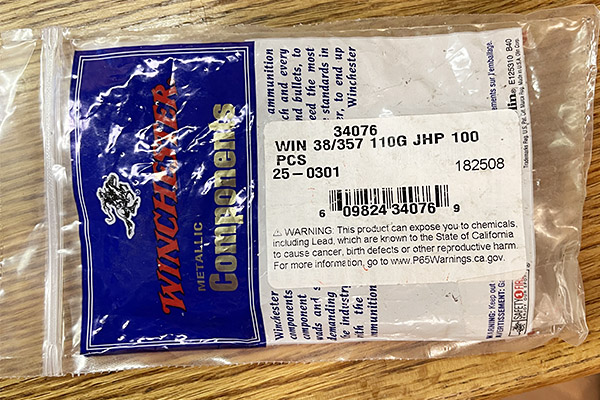
Fast forward 50 years and you’ll find me scrounging for reloading components on a fairly regular basis. On one of those scrounging expeditions Rick Phillips (of Phillips Wholesale) had Accurate No. 5 propellant in stock. It’s a handgun powder, and Rick told me that Accurate No. 5 has a burn rate about like Unique. Hmmm. Unique, huh? That stuck in my mind, mostly because I had some 110-grain .357 pistol bullets in my components stash: I had Winchester jacketed hollow points, and Hornady jacketed hollow points. I bought a bunch of the Winchester bullets during the Obama years when everything was scarce, and I was down to one unopened bag of 100. I had an unopened box of the Hornady 110-grain bullets, too.
Winchester, if you’re paying attention, this bag was 15 bullets light.
I loaded the last of the Winchester bullets recently using some junk 357 brass. I have Unique, but I wanted to see if I could get good results with Accurate No. 5. Rick’s comment about Accurate No. 5 being about like Unique stuck in my mind. The max load on the Accurate site for 110 grain bullets is 11 grains, so I loaded some at 10.1 grains and some at 10.5 grains, both with magnum CCI primers.
Winchester shorted me on that last bag of 100 grain bullets. The last bag I had was unopened, but it had only 85 bullets in it. I wrote to Winchester customer support, and they responded with an answer that was left blank. I wrote to Winchester again after receiving the above non-answer for an answer, but I’m not holding my breath.
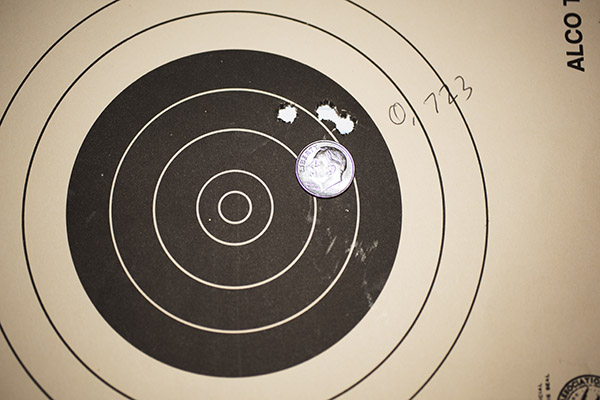
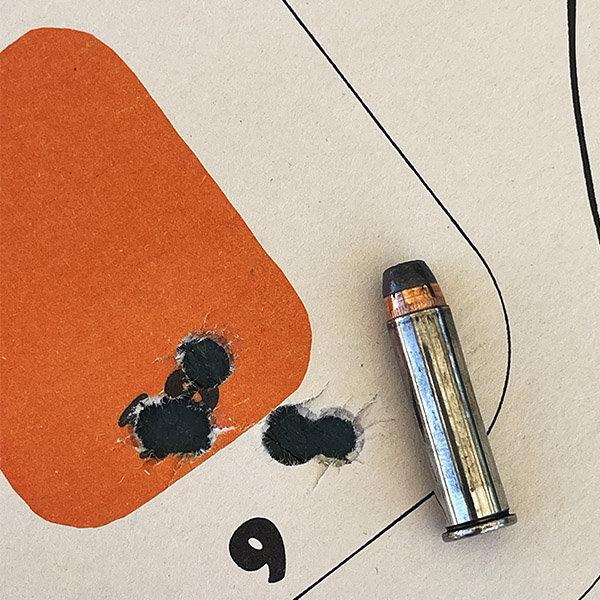
The results with both the Hornady and Winchester bullets were great. Here’s a 5-shot group at 50 feet with 10.1 grains of Accurate No. 5 and the Winchester bullets. This was the best group this morning, but they were all good.
That’s how we like to do it. I know the brass is dirty. This was a quick and dirty test. The laod was 10.1 grains of Accurate No. 5, a CCI 550 primer, and Winchester’s 110-grain jacketed hollowpoint bullet. The distance was 50 feet.
The 10.1 and the 10.5 grains of Accurate No. 5 loads shot about the same from an accuracy perspective, but the 10.5 grain loads made the primers flatter, so I’ll load the 10.1 grain load the next time I reload this ammo. No sense burning up more powder and stressing the gun and the brass if there’s no accuracy improvement. It’s already excellent at 10.1 grains.
Rugged, reliable, regal, and rewarding: Today’s Colt Python.
The Winchester bullets looked cruder than the Hornady bullets but I think they maybe had a slight accuracy edge. I went online to buy more, but I learned Winchester discontinued them. One of my buddies had two bags and he gave them to me, but the odds of me ever getting any more are slim. Hornady, Speer, and Sierra all make JHP 110-grain bullets, but nobody has any in stock. I have 85 left of the Hornady bullets (I used 15 of the Hornady bullets to make up for the ones Winchester shorted me) and now, an additional 200 Winchester bullets. You still owe me 15 bullets, Oliver.
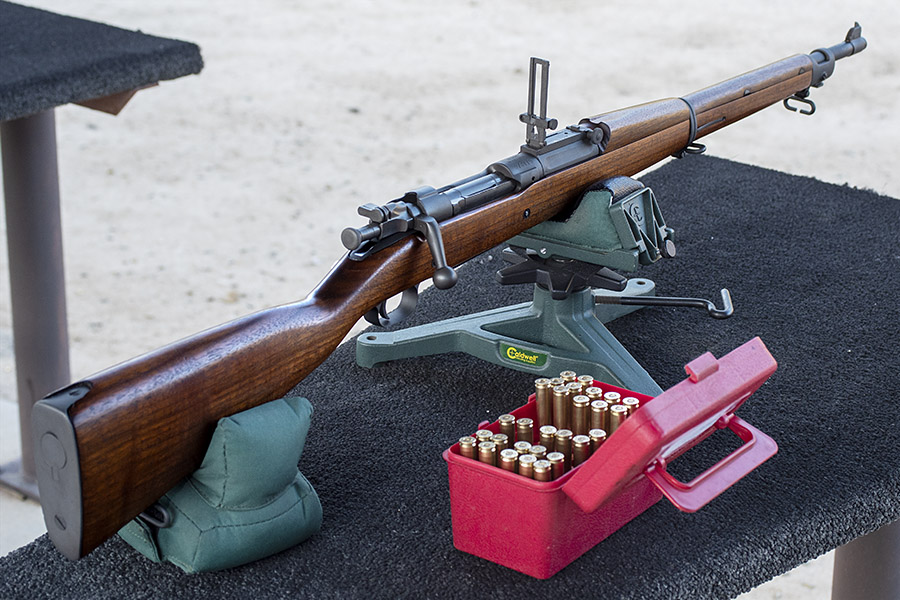
This is an update on my latest 1903 Springfield load development work.
I purchased this rifle about three years ago assuming the headspace was correct, but it wasn’t. That’s a risk associated with old military rifles. Rifle parts are often mixed through the years, and when doing so with the bolt and the barreled action, it’s easy to induce an excess headspace condition. That’s what I encountered on my rifle, so I had the Civilian Marksmanship Program (CMP) in Anniston, Alabama install a new 1903 barrel and rechamber the rifle. Live and learn, I guess. Always check the headspace when purchasing a milsurp rifle.
As it was returned to me from the CMP the rifle shot to the right and jacketed bullets shot way too high (at least I thought it shot way too high, but I was wrong…more on that in a bit). I noticed that the front sight was biased to the left (which made the rifle shoot to the right). I drifted the front sight in its base (it’s a dovetail fitting). The front sight takes a retaining screw that secures it to the barrel mount, and on my rifle that screw was missing. It might have shipped that way from the CMP or it might have fallen out.
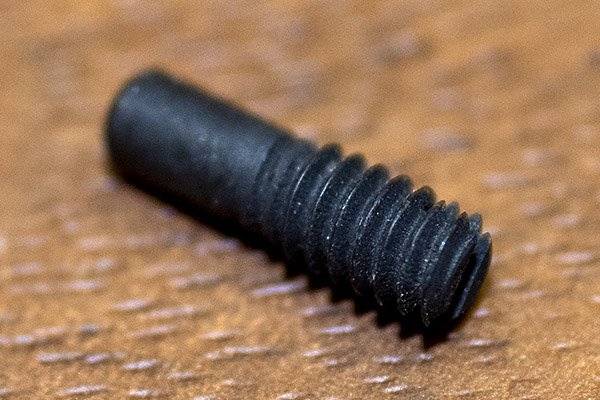
When the Springfield was returned to me from the CMP, the front sight was biased to the left, as you see here. I didn’t notice it at first.A replacement front sight screw.
I wrote to the CMP regarding the missing front sight screw, but I haven’t heard from them and I found a replacement front sight screw on the Sarco website. I haven’t installed it yet (that will come later). I drifted the front sight in its dovetail to the right, and that brought the point of impact closer to the point of aim.
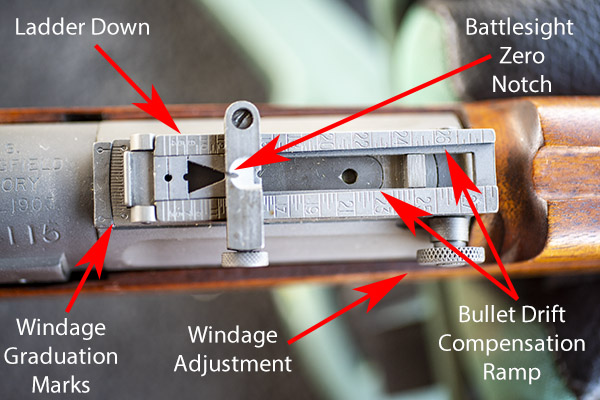
Before I get into the reloading specifics, I should explain a bit about the rear sight. The rear sight on the 1903 Springfield rifle is a complicated device. It’s called the M1905 rear sight, and it is designed and calibrated for standard military ball ammo (back in the day when the Army used .30 06 ball ammo). The sight is a ladder type rear sight and it has four aiming methods. One is the battlesight zero (it’s with the ladder down); the other three are with the ladder up which allows adjusting for various distances. In the big photo at the top of this blog, you see the rear sight with the ladder up. In the photo below, you see the rear sight with the ladder down.
The M1905 rear sight assembly on the 1903 Springfield rifle. The sight ladder is in the down, or battlesight zero position. Wow, there’s a lot going on there.
This first aiming method is through the battlesight zero notch with the ladder down. Battlesight zero means the bullet will coincide with the point of aim at 547 yards. The thought is that if you hold center of mass on a man-sized target at any distance up to 547 yards, you’ll hit the target. At 100 yards the rifle will shoot way high with the ladder down using the battlesight zero, which is what I experienced. I did not understand this was a normal occurrence when using the battlesight zero rear sight notch.
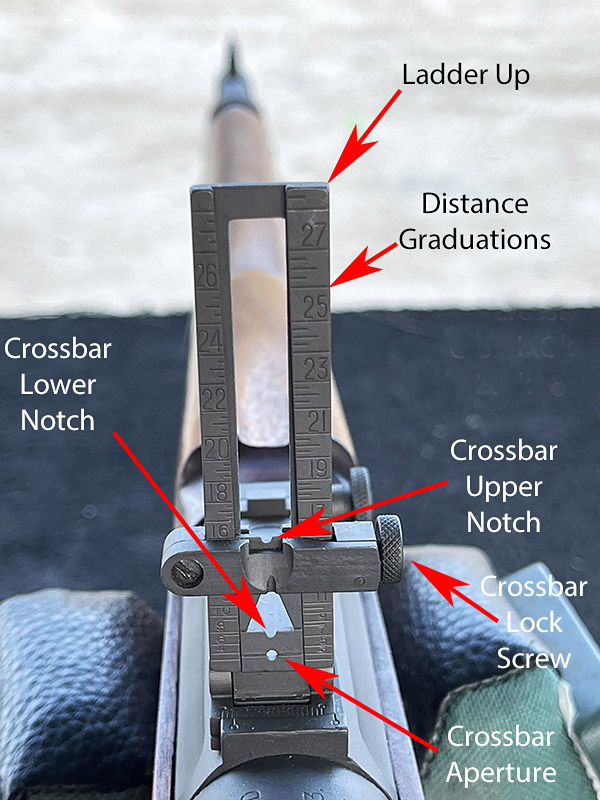
The 1903 Springfield’s rear sight in the raised position. Note that the sides of the rear sight force the crossbar to the left as distance to the target increases. That’s a built-in feature to compensate for bullet drift to the right at longer distances. Clever people, those Army engineers were. This rifle is over 100 years old.
The other three aiming methods all involve shooting with the ladder up (as you see in the above photo). You can adjust for various ranges from 100 yards out to 2800 yards (which is roughly a mile and a half) by loosening the crossbar lock screw and sliding the crossbar up or down to various indicated ranges on the ladder. One sighing method uses the crossbar upper notch. You simply slide the crossbar up or down so that the top of the notch aligns with the estimated distance to the target (in yards) on the ladder’s distance graduations. Another sighting method uses the crossbar lower notch. In this case, you slide the crossbar up or down so that the top of this lower notch aligns with the estimated distance to the target. The last sighting method involves using the crossbar aperture. There’s a horizonal scribe line across the plate containing this aperture, and when using the aperture, you align that scribe line with the estimated distance to the target. The aperture allows zeroing the rifle for ranges as close at 100 yards, which is where I do most of my shooting.
All the above is calibrated for standard military .30 06 ball ammo. If you’re shooting cast bullet ammo, or jacketed ammo with bullet weights or velocities other than standard ball ammo, you have to zero your rifle for your specific load.
There’s one other bit of coolness incorporated into the design of this rear sight. The sight ladder is designed so that as you raise the crossbar, the sighting notches and aperture move to the left. That’s to compensate for the bullet’s natural drift to the right as distances increase.
It’s all very clever, but in my opinion the Army made it too complicated. The rear sight was probably designed by an engineer who never had to carry or use a rifle in the field or train recruits to do so. I think most of the guys I served with in the Army would have a hard time remembering all this (I’m an engineer and I struggled to understand it). Apparently the Army agreed: They simplified the rear sight on the later 1903A3 rifle. The 1903A3 rear sight is much better for an infantry rifle.
That’s enough background on the 1903 Springfield sights. Let’s get to the reloading variables and which loads the Springfield likes. I prepped several, and I also grabbed some of the ammo I had previously loaded for the M1 Garand.
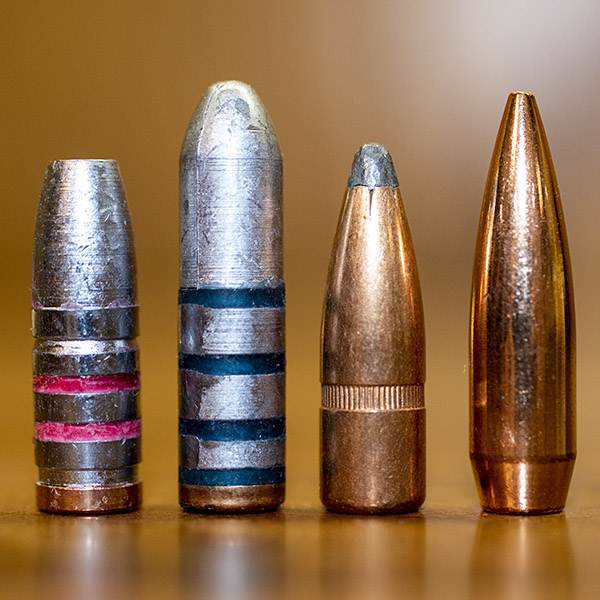
Four bullets used in this testing. From left to right: The Hursman 173-grain cast bullet, the Montana 210-grain cast bullet, the Winchester 150 grain jacketed soft point bullet, and the jacketed Speer 168-grain Match bullet.The Hursman cast bullet loaded in a .30 06 cartridge.
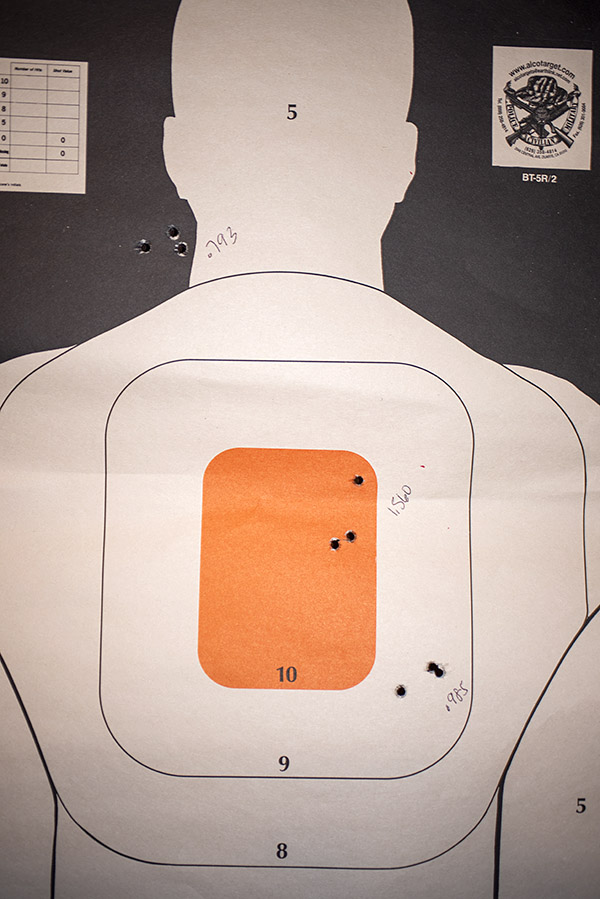
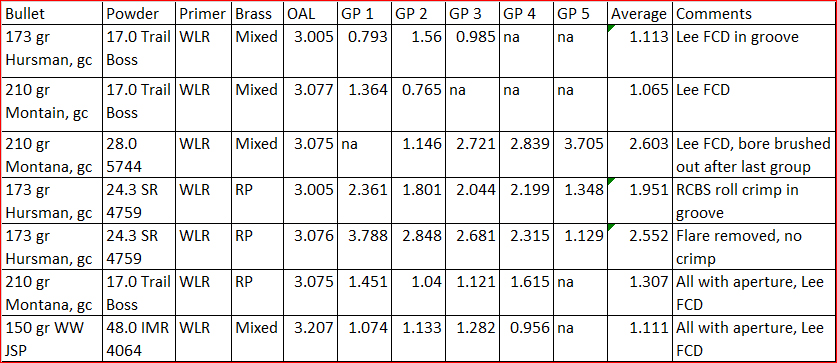
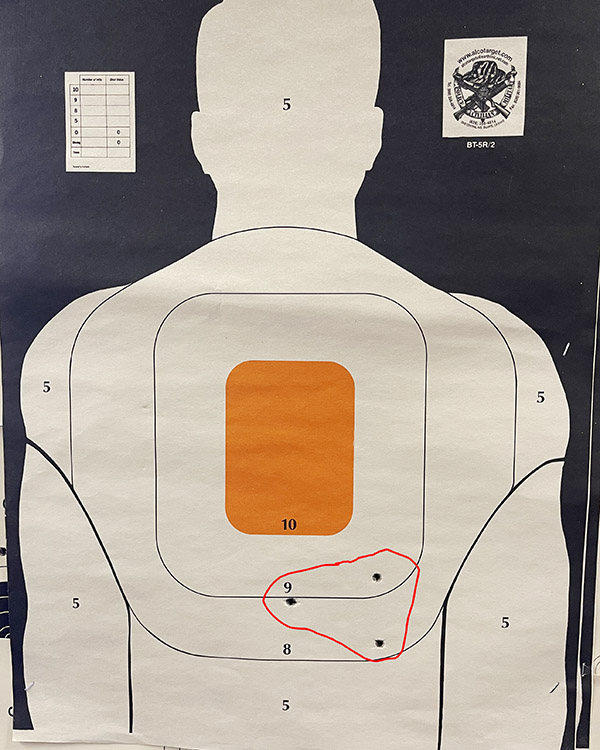
I first fired at a 5o-yard silhouette target to see where the bullets were hitting (there’s lots of real estate on that target). With the ladder down, the point of impact was to the right and low using the 17.0-grain Trail Boss and 173-grain Hursman bullet load. With the ladder up, it moved left a little and printed higher using the higher rear sight notch. For that 0.793 group up top, I used the bottom edge of the upper left box as the aimpoint. For the other two groups, it was the bottom of the orange bullseye.
An initial target shot with cast bullets and Trail Boss powder. There’s a lot of real estate on this target, so I could see where the rifle was shooting.
I shot groups at 50 yards with several different loads using combinations of the bullets shown above and SR 4759, Trail Boss, 5744, and IMR 4064 propellants, all at 50 yards, and all with neck-sized-only .30 06 brass. Then I returned a week later and fired groups with the 150-grain jacketed Winchester bullets (again at 50 yards).
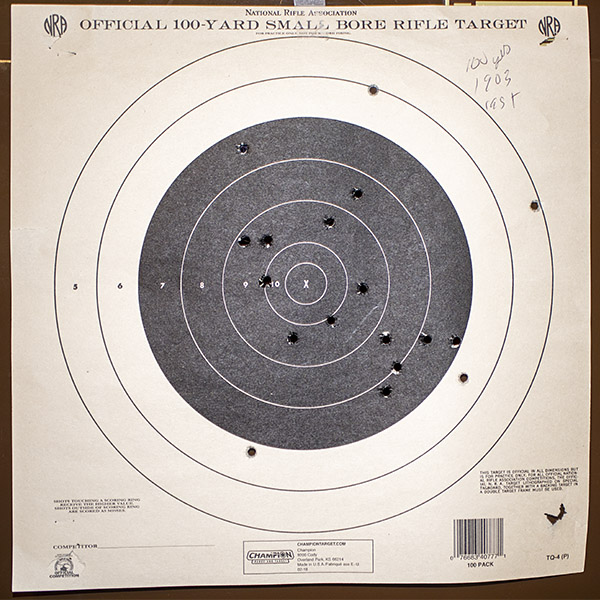
After shooting the above groups, I had 20 rounds left with the Trail Boss, Hursman bullet, and SR 4759 load. I shot two of them at a clump of dirt at about 80 yards and hit it (I think) both times. Then I put a 100-yard small bore rifle target up at 100 yards and shot at it with the 173-grain cast bullet SR 4759 load (8 rounds were crimped, and 10 rounds were not). To my surprise, all 18 rounds were on the paper and 14 of the 18 were in the black. It’s not that great a 100-yard group, but it shows potential. All this was with the ladder down using the battlesight zero sighting approach, so with cast bullets this rifle (at least with the SR 4759 load) is pretty much in the ballpark.
Cast bullets at 100 yards using the battlesight zero rear sight.
For the jacketed loads, I used the 150-grain Winchester jacketed soft point bullet (I bought a bunch of these a few years ago when somebody had them on sale) and 48.0 grains of IMR 4064. This is the accuracy load in the Lyman reloading manual with a 150-grain jacketed bullet, and I know from prior development work it is superbly accurate in my Model 70. It is also a minimum load, which is nice given the 1903’s steel buttplate. The 1903 did well at 50 yards with the Winchester bullets, so I posted another silhouette target at 100 yards. I fired three rounds and it was rough shooting at that target. Using the aperture, I literally could not see the orange bullseye at 100 yards when I focused on the front sight. The orange bullseye disappeared until I shifted my focus to the target. I’d acquire the bullseye, then rapidly shift my focus to the front sight and squeeze the trigger. I did that three times, literally firing blind, and managed to get a 3.050-inch 3-shot group.
The 150-grain jacketed Winchester bullet load at 100 yards. I couldn’t keep the orange bullseye visible using the aperture at 100 yards.
I figured it was time to quit while I was ahead. I didn’t have any more black bullseye targets with me. I knew I would be able to see those focusing on the 1903’s front post while sighting with the aperture. But with the orange bullseyes (like you see in the target above), I might as well have been shooting at night. I returned to the range a few days later and shot at 100 yards with the jacketed 150-grain Winchester bullets (with the 48.0-grain IMR 4064 load), the 210-grain cast Montana bullets (with the 17.0-grain Trail Boss load), and the 168-grain Speer match bullets (with a 48.0 grain IMR 4064 load).
Using the rear sight aperture, I shot the target below at 100 yards with the 150-grain Winchester jacketed bullet and 48.0 grains of IMR 4064. I was pleased with the results and I quit after 3 shots (I didn’t want to screw up the group).
Three shots into an inch and three quarters at 100 yards. The load was 48.0 grains of IMR 4064 and the Winchester 150-grain jacketed soft point bullet. Old eyes and an even older rifle sometimes do great things. My rifle was manufactured in 1918; I was born in 1951.
I then shot at another 100-yard target with the 210-grain Montana cast bullet (these were loaded with 17.0 grains of Trail Boss). I used the rear sight’s lower notch for this target. Hmm, what do you know…the elevation was about perfect without moving anything on the rear sight.
Another 100 yard target, this time with the Montana 210-grain cast bullet and 17.0 grains of Trail Boss. I used the rear sight notch immediately above the aperture without making any adjustments. This is a real sweetheart load with minimal muzzle blast, almost no recoil, and no leading. The cast bullets are not as accurate at 100 yards as are the jacketed bullets, but they are still pretty good.
Finally, I fired eight rounds originally loaded for the Garand (I reload for the Garand in multiples of eight, as that’s what a clip holds), returning again to the rear sight aperture. This load used the 168-grain Speer jacketed boattail hollowpoint bullet and 48.0 grains of IMR 4064 propellant. The Speer bullets are almost identical to the Sierra match bullet, but the Speer’s ogive is slighly different and it has less bearing area in the barrel. I called the wizards at Speer about that and they recommended going to a heavier charge than would be used with the comparable Sierra bullet (they specifically recommended 48.0 grains of IMR 4064 for the Garand). That load was a little warm in the 1903 (the recoil was significantly more than the 150-grain Winchester bullet and the primers had slight flattening). But it was reasonably accurate.
Eight rounds of .30 06 ammo loaded for the Garand, using the 1903 rear sight aperture, at 100 yards. The astute blogophile will note there appears to be only seven holes; the hole just outside the 10-ring had two bullets pass through it.
My observations and conclusions from the above are:
The 1903 Springfield rear sight is needlessly complex for an infantry rifle. You may feel differently. Hey, go start your own blog.
With my cast bullet loads, there was no leading. My cast bullets had gas checks (the little copper cup on the bullet base), which helps to prevent leading.
The Lyman cast bullet book showed a minimal 5744 load to be the accuracy load for the 210-grain Montana cast bullet. I did not find that to be the case.
Both the Hursman 173-grain and the Montana 210-grain cast bullets were extremely accurate with 17.0 grains of Trail Boss, at least at 50 yards.
The Winchester 150-grain jacketed bullet accuracy load, per the Lyman manual, was with 48.0 grains of IMR 4064. I found this to be a very accurate load. I didn’t do a lot of work developing a jacketed bullet load. I’m going to stick with this one for this rifle.
Orange bullseyes and aperture rear sights don’t work with my old eyes at 100 yards. They are okay at 50 yards, but not 100 yards.
Both of the jacketed bullet loads I tried (the Speer Garand load and the Lyman 150-grain accuracy load) are accurate. Without adjusting the rear sight from the 150-grain jacketed bullet setting, the Garand load shoots a little high and to the right, but the group size would fit into the bullseye if the sights were adjusted.
The cast bullets are not as accurate as the jacketed bullets at 100 yards. The cast bullets are comparabily accurate to jacketed bullets at 50 yards, but not at 100.
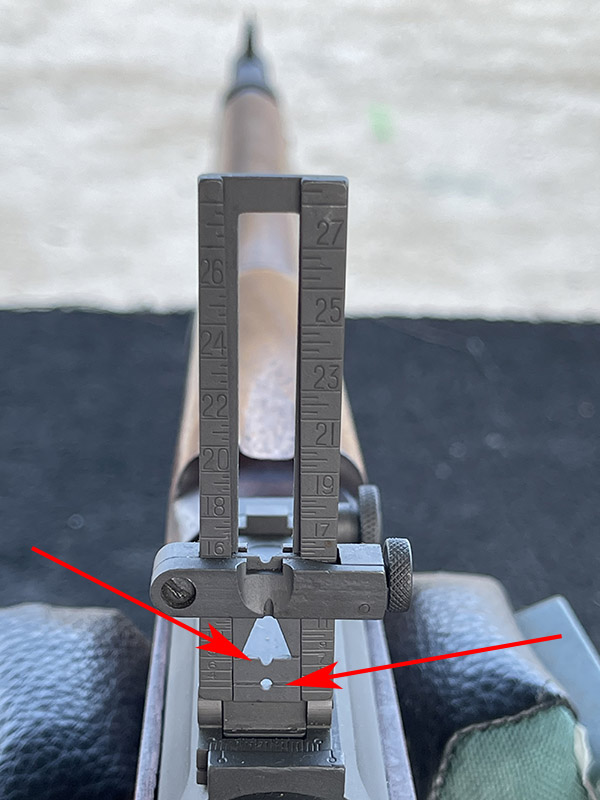
With regard to shooting both cast and jacketed bullets in the same rifle, I got lucky: As complicated as that 1903 Springfield rear sight is, I found that one rear sight position shoots to the same point of impact at 100 yards for both my cast bullet accuracy load and my jacketed bullet accuracy load. Yep, you read that right. With the rear sight crossbar secured as you see in the photo below, I can use the aperture (denoted by the right arrow) with the 150-grain jacketed bullet load. Or, I can use the lower crossbar notch (denoted by the left arrow) with the 210-grain cast bullet, 17.0 grains of Trail Boss load. Both will shoot to the same point of impact at 100 yards. A friend asked if I tuned the loads to do this. I wish I could say I had that kind of load development expertise. Nope, I just got lucky.
One size fits all (sort of). With the 1903’s rear sight in the raised position, I use the notch denoted by the arrow on the left for my cast bullet accuracy load at 100 yards. I use the aperature denoted by the arrow on the right for the 150-grain jacketed bullet load at 100 yards. I don’t need to move the rear sight cross bar up or down. Sometimes you just get lucky.
One final note that’s sure to set the Internet on fire: I know this is heresy. As much as I like my 1903, I think the 91/30 Mosin Nagant is a better rifle. My Mosin groups better at 1oo yards. But that’s a story for another blog.
Never miss an ExNotes blog:
Tales of the Gun: 1911s, revolvers, 9mm semi-autos, bolt action sporters, milsurps, reloading, big bore rifles, and more. It’s all right here!
Click on those popups, folks! It’s what pays the rent!
It’s been a long haul correcting double action misfires on my snubnose Smith and Wesson revolver, but the magnificent Model 60 is where I want it to be now. Here’s how I went about it.
My Model 60 had too much end shake (the cylinder had a lot of back and forth play). Shimming the cylinder with TriggerShim’s excellent shims quickly corrected that problem. Shimming the cylinder keeps it closer to the firing pin and that permits more energy from the hammer’s fall transferring directly into the primer. You can read our blog about correcting cylinder end shake here.
My reloaded ammo’s primers were not completely seated. When that occurs, some of the hammer and firing pin’s energy goes into fully seating the primer rather than firing it. You want ammo reloaded for use in double action revolvers to have very slightly flattened primers after the primer seating operation, and that can be achieved with Lee’s excellent primer seating tool. You can read about that here.
If a revolver is out of time the firing pin will hit the primer off-center resulting in unreliable ignition. If you shoot enough your revolver will go out of time. Correcting revolver timing typically involves fitting a new hand and you can read about that here.
If your revolver’s hammer spring has weakened over the years or as a result of use you can easily install a new Wolff hammer spring. We wrote a blog about that you can read here.
If you’re having problems with misfires in a double action revolver, the above areas are where I would look first.
The .35 Whelen is an interesting cartridge. A wildcat formed by necking .30 06 brass up to .35 caliber, it’s been called the poor man’s .375 H&H, but the price of ammo would suggest it’s anything but a poor man’s cartridge. A box of 20 factory rounds when I checked just a few minutes ago ranged from a low of $50 to a high of $72. For 20 rounds? Gimme a break!
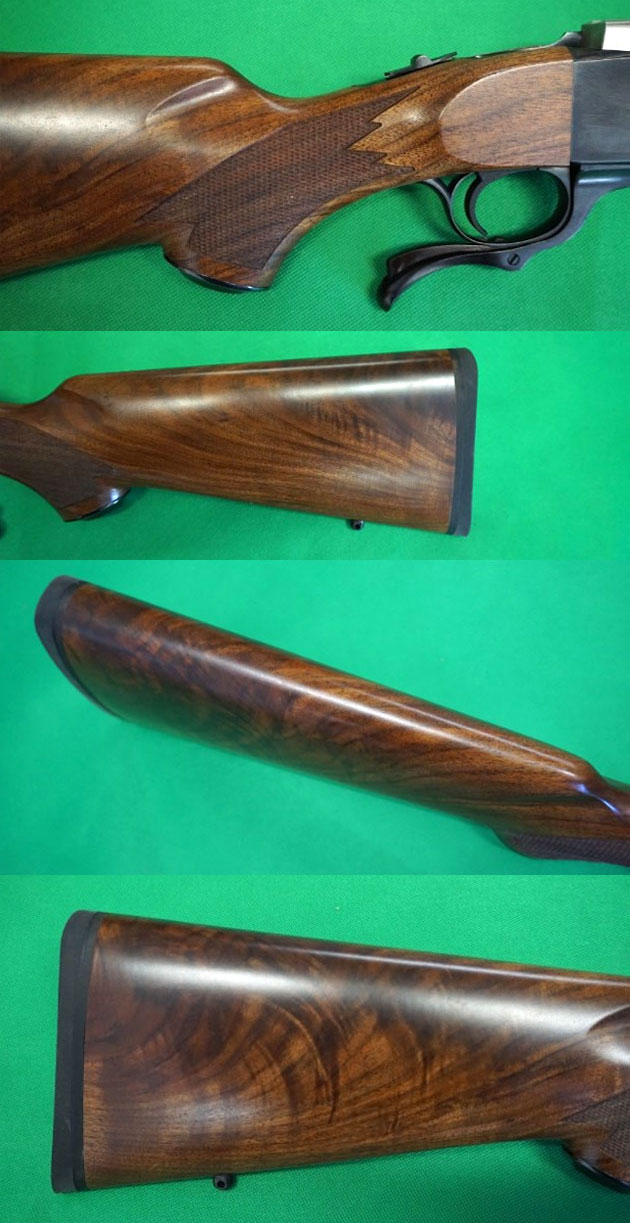
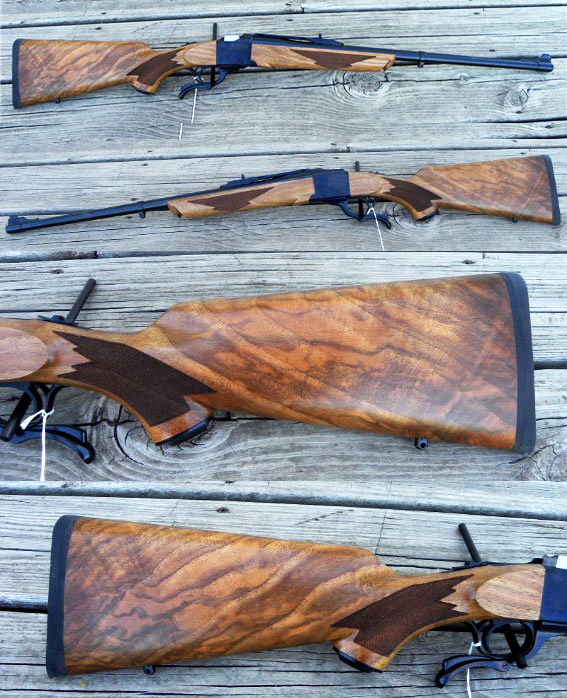
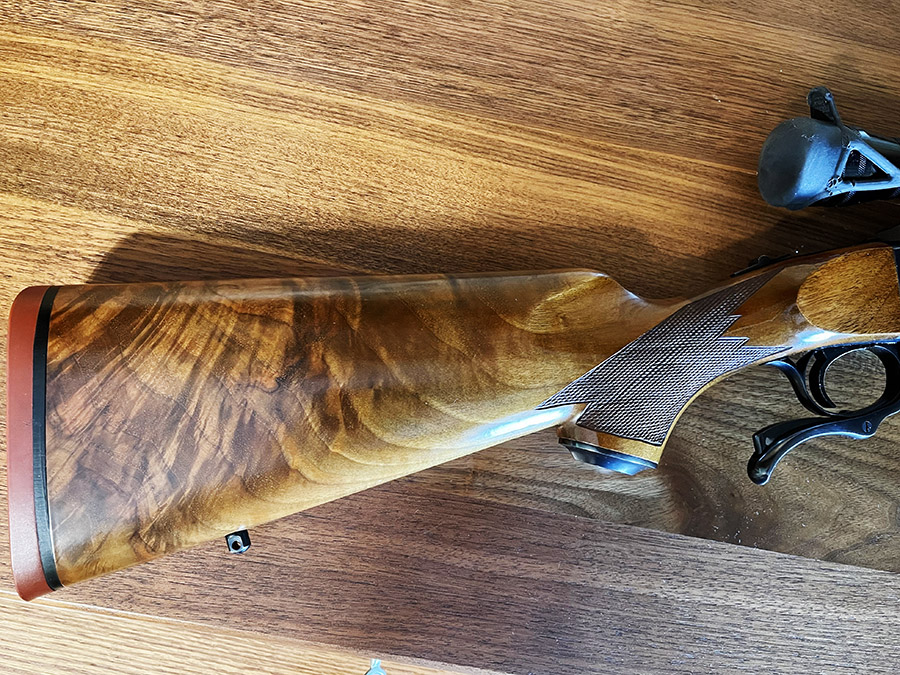
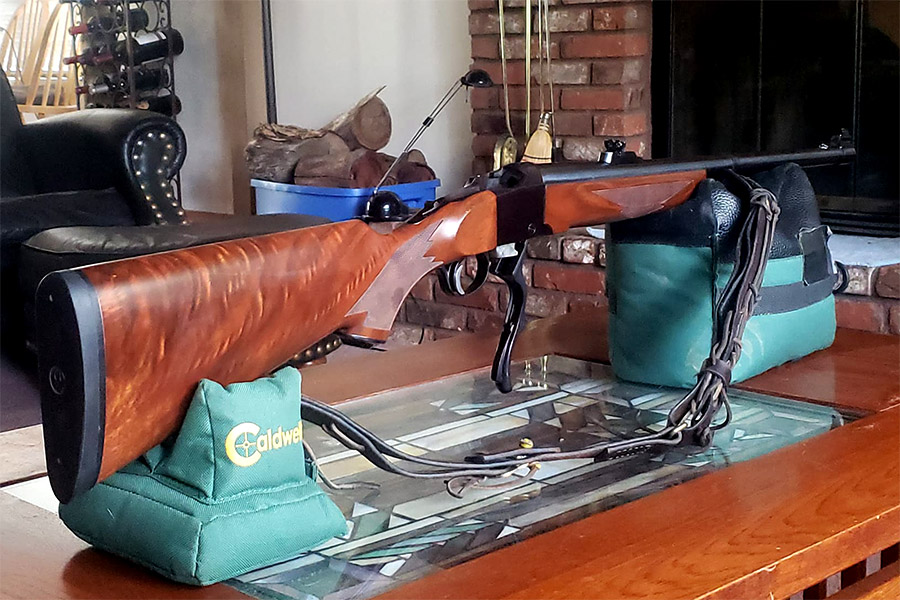
My .35 Whelen Ruger No. 1. They didn’t make too many of these and mine has exceptional Circassian walnut. It’s not for sale.
I like to shoot, but I’m a cheap SOB and truth be told, I don’t like beating my self up with factory .35 Whelen recoil. Roll that up with the good luck I’ve been having with good buddy Ralph’s Boudreau Bullets in several handguns and I wondered: Could I have Ralph make .35 caliber powder-coated pistol bullets sized to .359 inches? You see, cast pistol bullets for the .38 Special or .357 Mag are ordinarily sized to .358 inches (the sizing operation occurs after the bullets are cast when they are swaged down to the desired diameter). But .358-inch diameter bullets probably wouldn’t work in the Whelen. The .35 Whelen rifle has a bore of .359 and shooting bullets sized to .358 would allow the propellant gases to escape around the bullet as it traveled down the barrel. That would melt the sides of the bullet and create God-awful leading. A tighter fit (with .359 bullets) ought to work better, and powder-coated cast pistol bullets are inexpensive. Inexpensive is good. Did I mention I’m a cheap SOB?
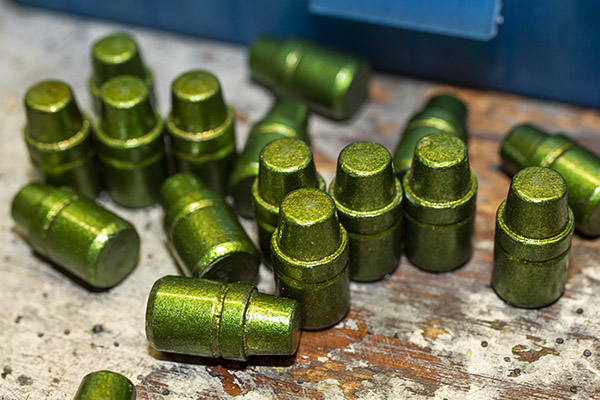
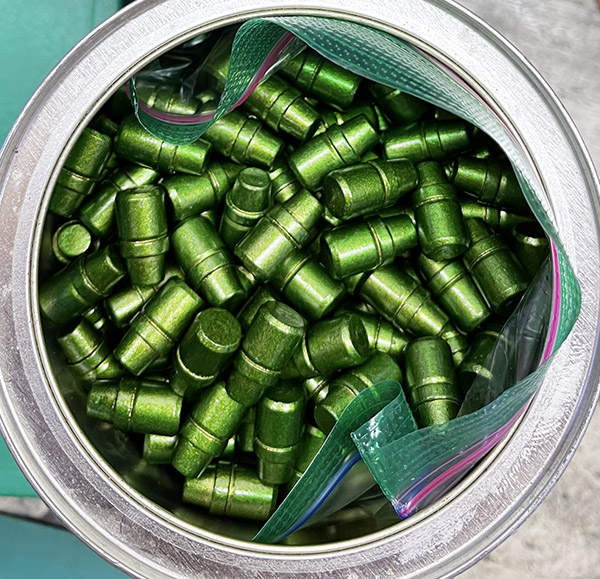
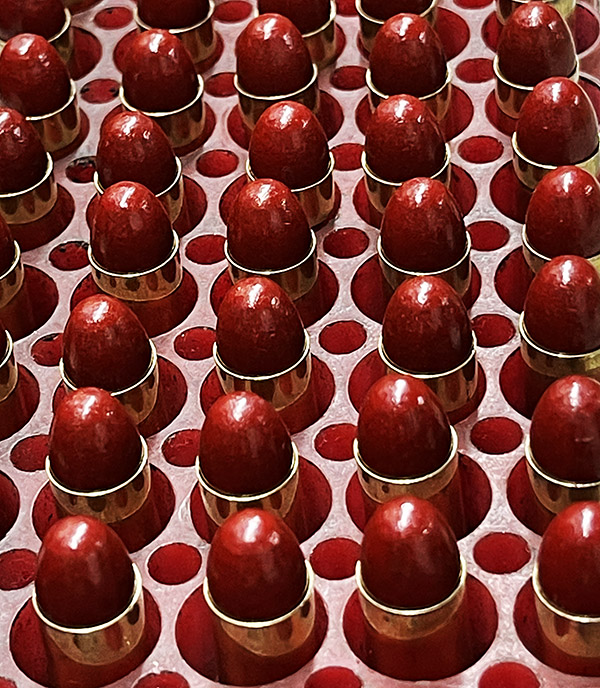
Boudreau 158-grain powder-coated pistol bullets with candy apple green powder coating. These are sized to .359.
I’ve loaded jacketed pistol bullets in the .35 Whelen before, I’ve loaded cast pistol bullets, and I’ve also loaded cast rifle bullets from Montana Bullet Works. The Montana bullets are great and the Whelen performed well with them. The jacketed pistol bullets worked well. The cast pistol bullets I tried before didn’t work well (you can read about that here). The premium cast Montana Bullet Works bullets are not cheap (nor should they be). I wanted something inexpensive so that I could play with the Whelen at recoil levels comparable to a .22. Maybe Ralph’s powder-coated pistol bullets would work.
Montana Bullet Works cast rifle bullets. These are very accurate, but they cost as much as jacketed rifle bullets.
Ralph obliged, and when my .359 158-grain cast semi-wadcutters arrived, the fun began. I did my research on the Internet about what loads other folks had used with cast pistol bullets in the .35 Whelen, or at least I attempted to. Like everything else on the Internet, opinions were all over the map.
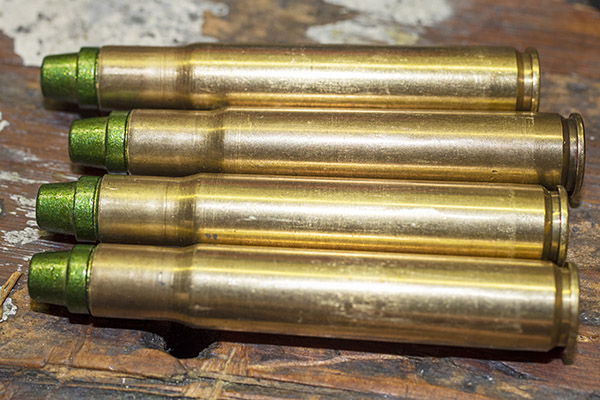
I make .35 Whelen brass from older .30 06 brass that I had already reloaded a few times by running the cases through a .35 Whelen full length resizer. Not every case survived the neck expanding operation.Loaded .35 Whelen ammunition with Boudreau’s 158-grain powder-coated bullets. Later loads seated the bullets out further for an overall cartridge length of 2.910 inches. I don’t use a crimp on these bullets and I neck size only.
I initially went with what one forum commenter fervently quoted: Low charges of Trail Boss were the way to go with 158-grain cast bullets. He was wrong, as least as far as my Ruger No. 1 is concerned. I tried 13.0 grains and the groups at 50 yards were (no kidding) about a foot in diameter. This might be okay for a shotgun, but not a rifle. The groups were lousy, but I noticed that the bore was clean. Ralph’s powder coating, which had worked well in keeping a handgun bore clean, worked well in the longer rifle barrel as well.
These groups were typical of all loads tried (except the last one).A nice clean bore with Trail Boss powder. There was no leading.
I next tried Unique propellant (first with 13.0 grains, and then with 15.0 grains), which had worked well for me in the past in a variety of cast rifle loads for other cartridges. Nope, both of these loads shot lousy groups, too, and they leaded the bore way more than Trail Boss. Trail Boss is actually a faster powder than Unique, so the slower-burning Unique was driving the bullets to higher velocities.
Bore leading with Unique. This stuff doesn’t dissolve with Hoppe’s or any other commonly-used bore solvent. You’ve got to scrub it out with a bore brush.
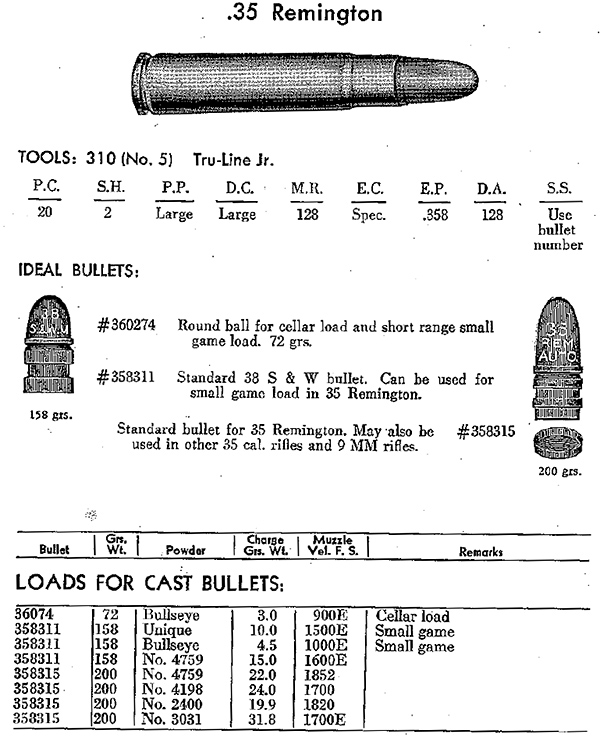
Then it was on to Bullseye. I found a few references to these loads in various forum comments, but Bullseye is a dicey powder and I wanted a better load data source than some yahoo on a gun forum. I hit paydirt when I found an old Ideal reloading manual and it had a Bullseye load for the .35 Remington (the .35 Whelen was still a wildcat cartridge when this manual was published and there was no load data for it). I figured with the .35 Whelen’s bullet weight and case volume, I wouldn’t get into trouble using the .35 Remington load. I tried it and I tried a few others with a bit more powder (there were no pressure signs), but nope, it was not to be. I still had terrible groups at 50 yards.
Loads from an old Ideal reloading manual. It was a place to start.Bullseye loads in the .35 Whelen produced no leading.
Hmmmm. Maybe it’s a powder position thing, I wondered. I called Ralph at Boudreau’s Bullets and chatted with him. Ralph explained that when the powder doesn’t fill the case, powder position makes a huge difference in accuracy even in a 9mm pistol cartridge. Okay, I can fix that, I thought. So after loading my brass again with the same light Bullseye loads, I inserted a cleaning patch in each cartridge to hold the powder up against the primer. Still no cigar, though: The groups remained stuck on atrocious. It was cool, however, seeing the cleaning patch threads dissipate downrange in the scope after each shot. One good thing that came out of the Bullseye loads was that they didn’t lead the bore. Well, maybe two good things: I didn’t blow myself up. Okay, three good things: None of the bullets stuck in the bore.
I was just about ready to give up trying to make the powder-coated .359 Boudreau bullets work in the Whelen when my mind returned to the powder position question. Okay, I thought, the cleaning patch wad trick (a noble thought) was a bust. But Trail Boss might still be the way to go, even though the lighter load wouldn’t group. Those earlier 13.0-grain Trail Boss loads left a lot of unoccupied space in the case. The beauty of Trail Boss is that you can load all the way up to the bullet base (thereby completely eliminating the powder position issue, as the case will be full) without overpressurizing the cartridge. So that’s what I did. I measured where the base of the bullet would be at a cartridge overall length of 2.910 inches and I filled a case to that level with Trail Boss. The magic number was 19.3 grains. I adjusted my powder dispenser and went to work.
19.3 grains of Trail Boss powder in my RCBS powder scale. The powder flakes look like little Cheerios.19.3 grains of Trail Boss in the .35 Whelen cases. The powder stack just touches the bullet base. The propellant is held in place and it provides a nice, even, repeatable burn.
The next day I was on the range at the West End Gun Club. I’d been reading more forum posts about 158-grain semi-wadcutter bullets in .35 Whelen and the feel I got from them was that most people were shooting at 25 yards. You know, turning a grizzly bear rifle into a close-range gopher grabber. Okay, that’s an old reloaders trick: You want tighter groups, just move the target closer. So for the first six of my 19.3-grain Trail Boss loads, I shot at a 25-yard target and wowee: Finally, a group!
19.3 grains of Trail Boss and the 158-grain Boudreau powder-coated bullets at 25 yards.
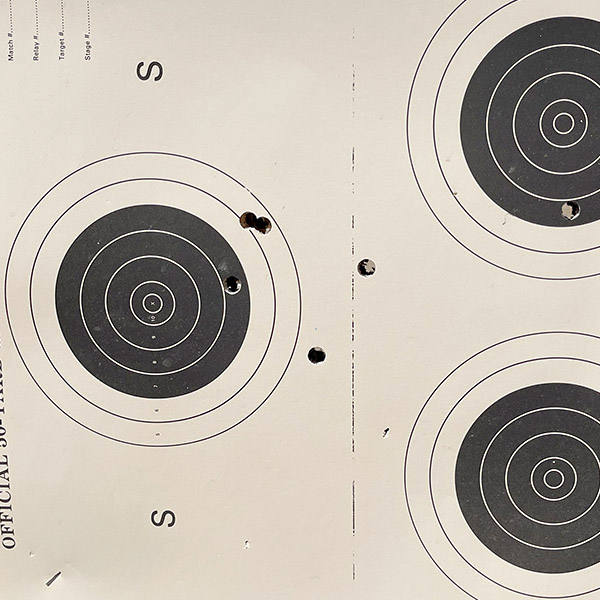
It wasn’t a great group (I’ve shot tighter groups at 25 yards with a handgun), but it was a group. It was a clear indication I was on to something. So I next set up a target at 50 yards.
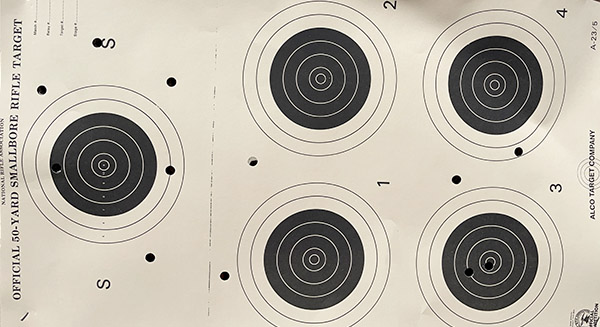
The same 19.3 grains of Trail Boss at 50 yards. I can’t explain that flyer off to the right. But the other five rounds were looking better. More work is necessary. I have a path forward.
That group was gratifying. I can’t explain the one flyer off to the right (the trigger broke cleanly on that shot and it felt like it should have grouped with the others…maybe it hit a fly on the way to the target). The other five shots went into a group about the size of the bullseye, but biased to the right. That’s one thing I noticed with all of these light loads: They shoot to the right.
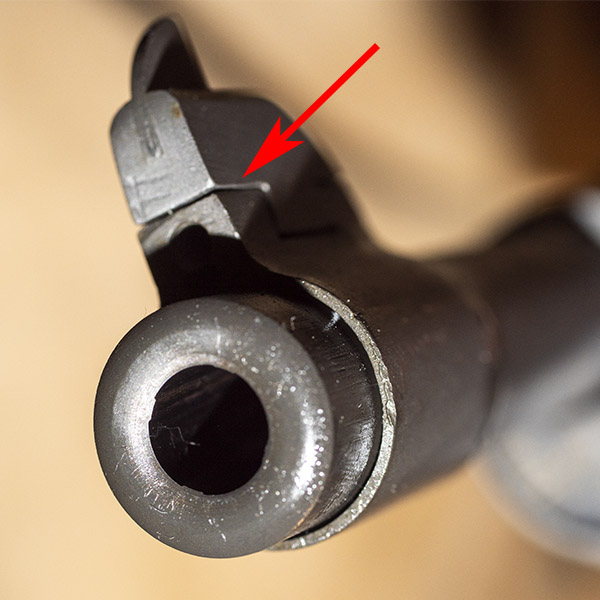
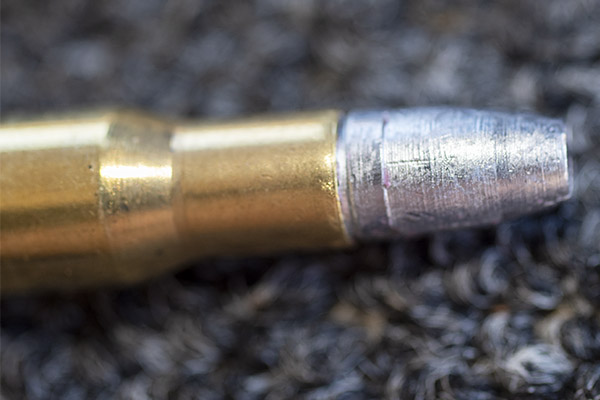
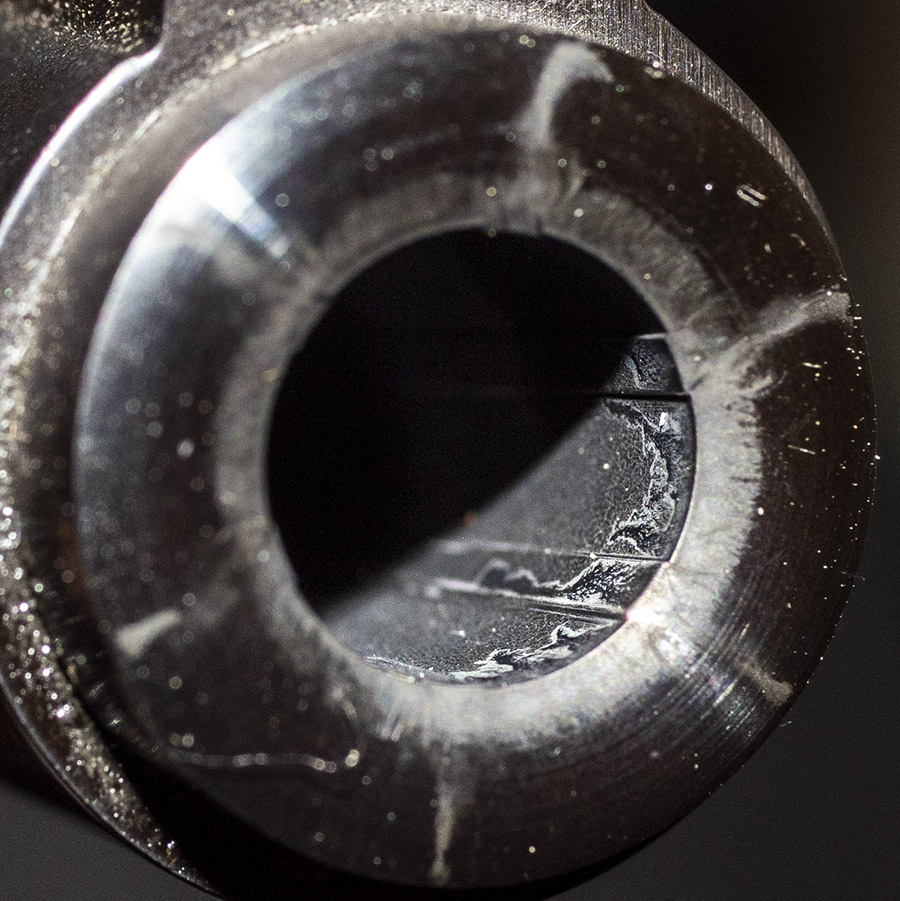
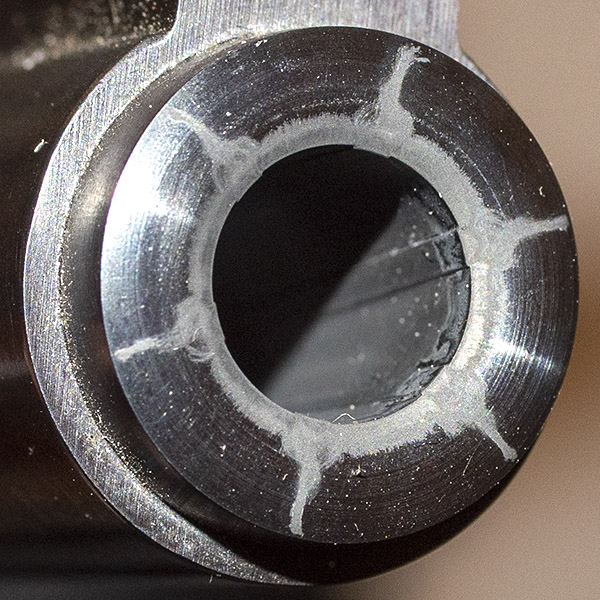
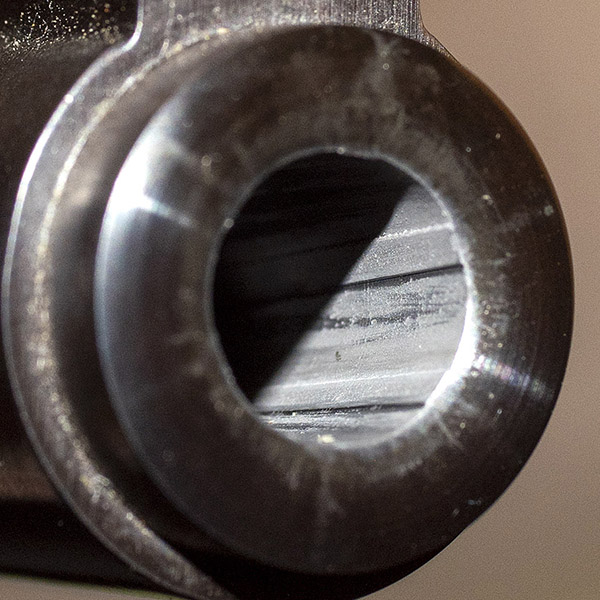
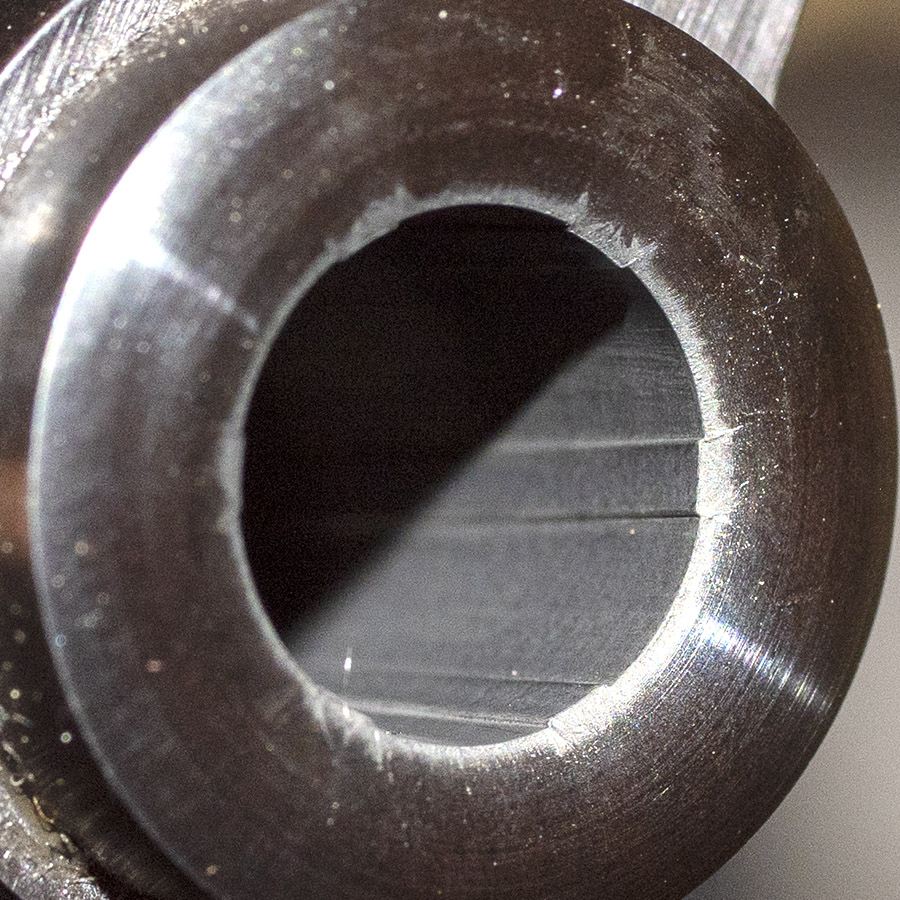
When I returned home, I photographed the muzzle. It’s the photo at the top of this blog. I was pleased to see how clean it was. It had the same appearance as occurred before with 13.0 grains of Trail Boss. There was a kind of swirly thing going on near the muzzle inside the bore; I think that is a combination of melted lead and powder-coating paint behind the bullet as it exits the bore. The rifling was clean, as in no lead.
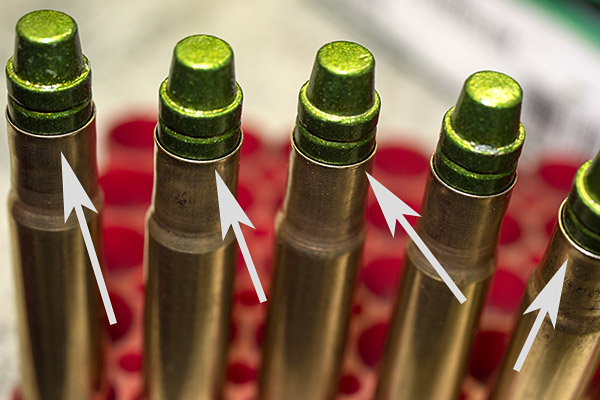
There are a few more things I should mention: When you’re loading at these reduced levels, the brass doesn’t really expand or stretch. Neck sizing works just fine. Also, when you’re loading cast bullets, you have to flare the brass case’s mouth (I use a Lee tool for this) so that the bullet can get an easy start into the case. If you don’t flare the case, you’ll shave the powder coating and lead off the sides of the bullet, both of which will degrade accuracy. And one more note…you’ll see in these photos that I seat the bullets pretty far out for an overall cartridge length of 2.910 inches. The bullets are not contacting the rifling at that length, and there’s enough of the bullet in the case to keep it aligned. I’m not worried about setback (the bullets moving under recoil) because the Ruger No. 1 is a single-shot rifle.
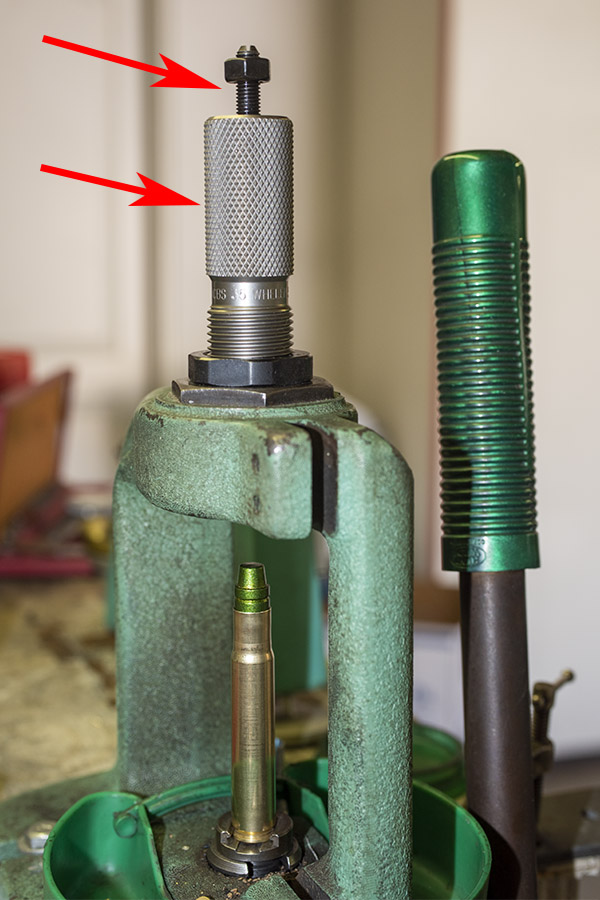
The gray arrows point to a very slight flare. You have to flare the cases before seating the bullets or the case will shave the bullet as it is inserted into the cartridge case.The bullet seating and crimping die in my RCBS Rockchucker press. Seating and crimping are performed in two separate steps.
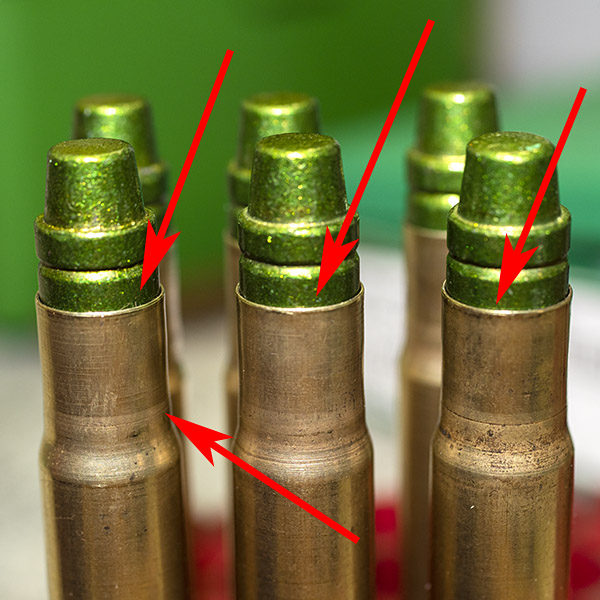
After I seat all the bullets to the correct depth, I then back way off on the bullet seater (again, denoted by the upper arrow in the above photograph). I’ll next screw in the die body (denoted by the lower arrow) until the reduced crimping radius in the die body interior contacts the mouth of the cartridge. At that point, I’ll adjust the die by screwing it in just a little bit further. What I’m doing is adjusting the die so that it removes the flare, but does not crimp the case mouth. You can see the results (i.e., the case mouth flare removed) noted by the red arrows in the photo below.
The upper arrows show the case mouth after the crimping die has removed the case mouth flare. These are not crimped; I adjusted the die to just remove the flare. The lower red arrow indicates the depth to wihch I neck sized these cases.
Back to the cost issue: As you read at the start of this blog, a box of 20 rounds of .35 Whelen factory ammo goes for anywhere between $50 and $72. By my computations, the reloads you read about here cost under $6 for a box of 20 rounds.
So what’s next? Well, the brass is in the tumbler and I’m going to load more. Same load, which kicks about like a .22. Then I’ll try reducing the load slightly to see if that improves things. Stay tuned; you’ll be able to read all about it right here on the ExNotes blog.
Another day on the range, and another set of test results. These are the first loads I’ve tried with Boudreau’s 158-grain powder-coated semi-wadcutter bullets. I loaded the Boudreau bullets into .38 Special cases for evaluation in a Colt Python and a Smith and Wesson Model 60. My first reloads were with Accurate No. 5 powder.
158-grain Boudreau bullets in candy green. Boudreau’s makes a good bullet.Fresh .38 Special reloads. The candy green color goes well with brass cases.
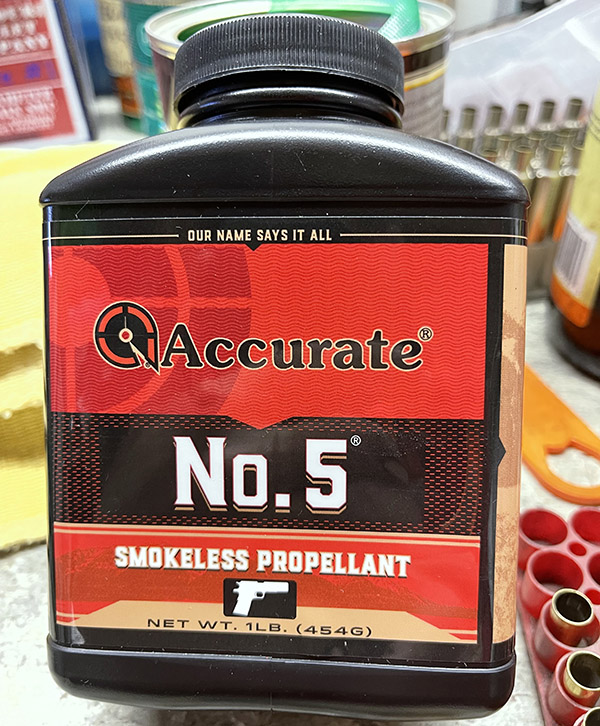
These days, you take what you can get when it comes to reloading components. I previously developed accurate .38 Special loads with Bullseye, Unique, Power Pistol, and WW 231 propellant (you can read about them on our Tales of the Gun page), but I haven’t previously loaded .38 Special with Accurate No 5. It was the only powder my reloading shop had in stock, so I bought a couple of bottles to try.
Classy-looking ammo.Accurate No. 5 propellant.
Finding data for powder-coated bullets is a bit dicey, and it’s even more difficult with Accurate No. 5. There’s load data on the Accurate website, and they recommended a load range of 5.3 to 5.9 grains for this powder with a 158-grain powder-coated bullet. I loaded at 5.4 grains (0.1 grain above the minimum) to try in both my Colt Python and my Model 60 Smith and Wesson (both of which have been massaged with custom triggers from good buddy TJ’s Custom Gunworks).
Colt Python results at 50 feet. Not bad for an initial load. Subscribe to the ExNotes blog for future load tests.Smith and Wesson Model 60 load results at 50 feet. This is not too shabby for a snubnose revolver.
I recently tried Boudreau’s 9mm 125-gr bullets and I was very pleased with the results (you can read about that here). I’m just getting started developing loads for the .38 Special with the Boudreau powder-coated bullets.
9mm ammo reloaded with Boudreau’s powder-coated bullets.
You may have noticed that Boudreau’s Bullets is now an advertiser on the ExNotes site. I like the product and we want to share the knowledge with you. You can call the number on their site; ask to talk to Ralph. He’s very knowledgeable and you will be in good hands.
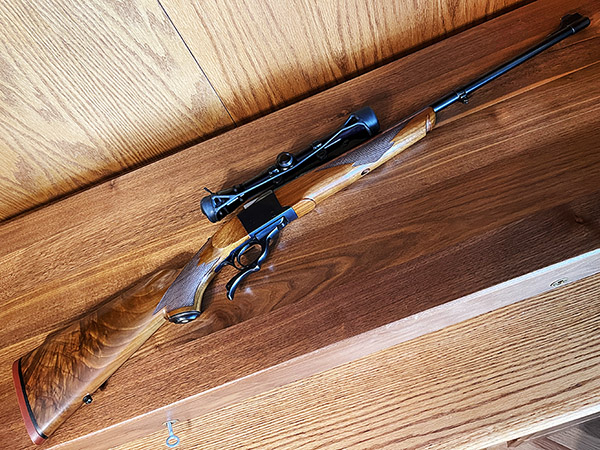
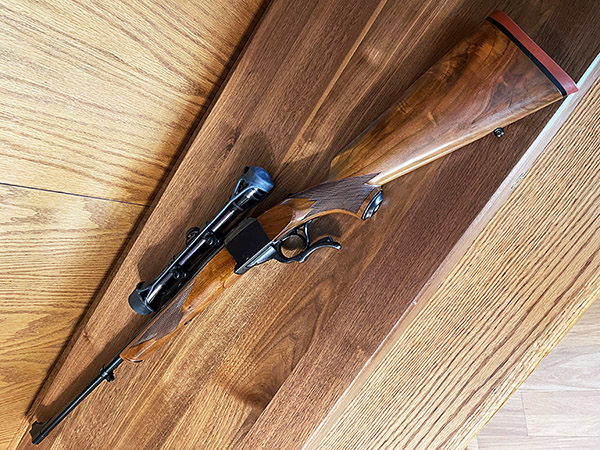
I’ve been a Ruger No. 1 fan for close to 50 years. It started with one I’ve written about before, and that is a Ruger No. 1A chambered in the awesome .30 06 Government cartridge. I’ve spent time on the range and I’ve hunted with this rifle, and it is probably my all-time favorite firearm.
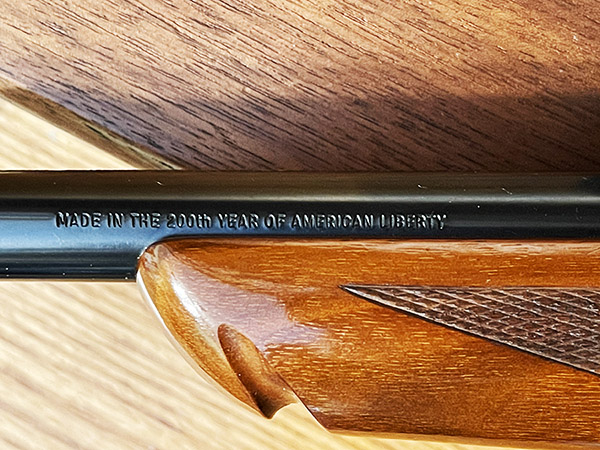
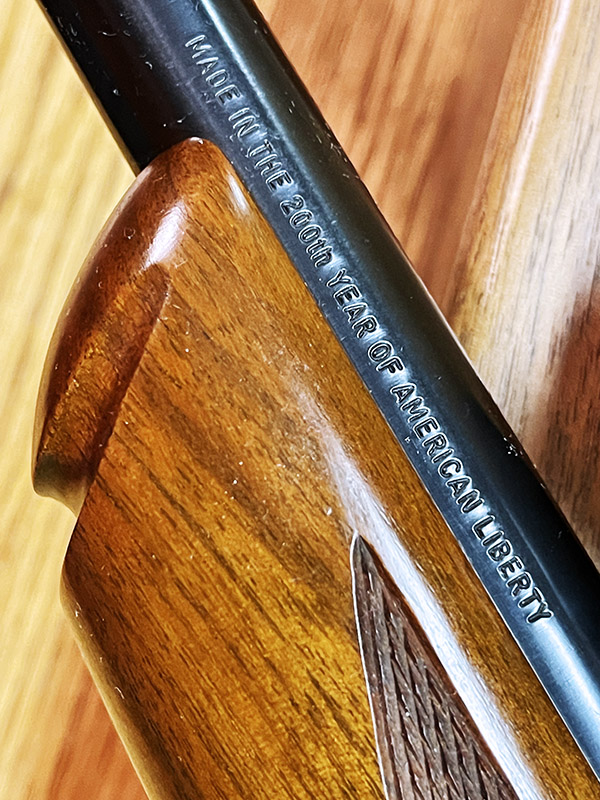
What attracted me to the No. 1 was my father’s fascination with the rifle (he never owned one, but he wanted to), the beautiful and exquisitely figured walnut Ruger used on these rifles, and their style. To me, they just look right. My fixation started in 1976. Ruger roll-stamped every firearm they manufactured with “Made in the 200th Year of American Liberty” that year.
Rugers with this roll-marked stamp are known as Liberty or Bicentennial guns.Like I said, the walnut on my Ruger .30 06 is exquisite on both sides.As I said, the highly-figured walnut is exquisite on both sides of this .30 06.
The Ruger No. 1 came in different configurations, and the ones you see here are what Ruger called the 1A. They had 22-inch barrels, iron sights, and the Alex Henry fore end (that’s the fore end with the notch at the front). There are all sorts of suppositions about what why the notch was originally included on the Farquharson rifles that influenced the Ruger No. 1 design, but no one seems to know for sure. I just like the look of the thing. To me, these rifles are elegant. They’re not particularly light, but they’re short and it’s easy to get around in the woods with one. Back in the day, I bought a straight 4X Redfield scope and a still prefer a 4X non-variable scope for hunting (even though it’s tough to find one these days; high-powered variable scopes are all the rage).
Those west Texas days back in the ’70s were good. We spent a lot of time (essentially every weekend) out in the desert north of Fabens chasing jackrabbits and coyotes, and the No. 1 you see here sent a lot of those critters to the Promised Land. Jackrabbits were grand fun. It was hard to believe how big some of them were.
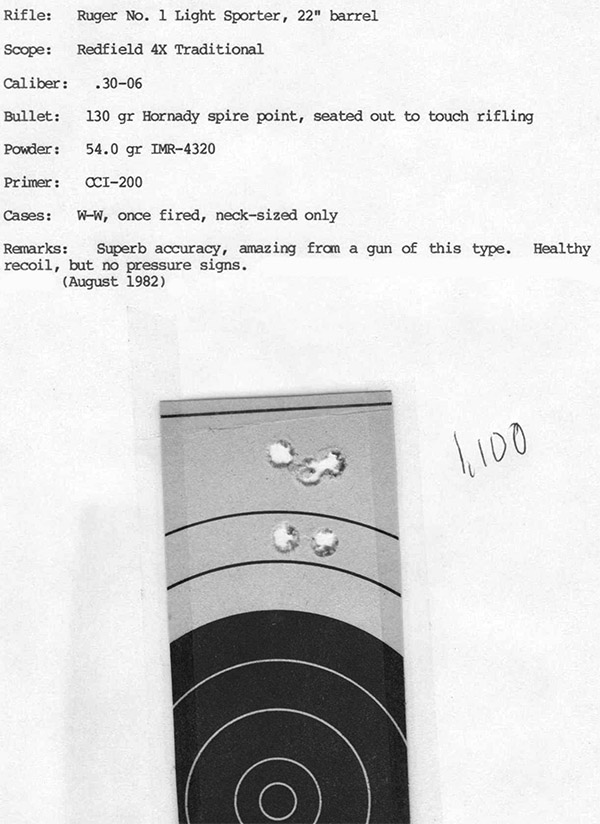
The accuracy load for my .30 06 No. 1 is the 130-grain Hornady jacketed softpoint bullet over a max load of IMR 4320 propellant. IMR 4320 is no longer in production, but I’ve got about 10 pounds of it so I’m good for a while. The rifle will put that load into an inch at 100 yards all day long, and the 130 grain Hornady bullet seems to be perfect for jackrabbits. Yeah, I know, that’s maybe a little more power than needed for Peter Cottontail, but hey, like Donald Rumsfeld used to say: You go to war with the army you have.
Gee whiz…a group I shot 40 years ago!
The .30 06 also does well with other loads. I was on the range with the ammo I had on hand a week or so ago with heavier bullets and I was pleased with the results. I tried 180 grain Remington bullets loaded on top of 48.0 grains of IMR 4064. Those loads shot low and had perceptibly heavier recoil, but they grouped under an inch at 100 yards.
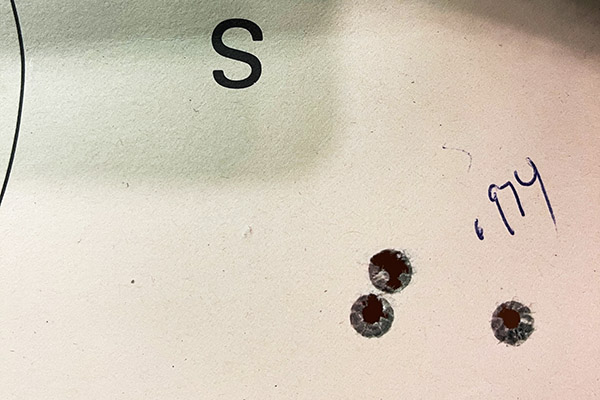
Three shots at 100 yards with the Ruger .30 06 No. 1A. The load was the 180 grain Remington jacketed soft point bullet and 48.0 grains of IMR 4064, with military brass and a CCI 200 primer.
The title of this blog is A Tale of Two Bicentennial No. 1 Rugers, and that brings us to the second rifle. I was in Ohio on a secret mission about 15 years ago and the guy I visited there learned of my interest in guns. He took me to a local shop that only sold through an online auction (that was the gunshop’s business model). When we arrived, I quickly noticed another Ruger No. 1A, this time chambered in .243 Winchester. It was a bicentennial rifle, it looked to be a near twin to my .30 06 1A, and I had to have it. I tried to buy it while I was there and have shipped to my FFL holder in California, but the owner confirmed what my friend told me…I had to bid on it at auction. I did, and I won the auction at $650. Bear in mind that these rifles’ list price in 1976 was $265, and they typically sold at $239 back then. If you think I got scalped, think again. I won the auction, and the MSRP on these rifles today is something around $2,000. And the ones made back in the 1970s are, in my opinion, of much higher quality in terms of walnut figure, checkering, and other attributes.
A .243 Winchester Ruger No. 1. It wears a period correct El Paso Weaver 4×12 telescopic sight.The left side of the .243 No. 1.Ruger used to put fancy walnut on the No. 1 rifles. Today, not so much.A fancy walnut, red pad Ruger No. 1. Sweet!Like the .30 06 No. 1 featured above, this .243 is also a Liberty gun.
Most recently, good buddy John gave me a bunch of assorted brass and I started loading bits and pieces of it. I loaded the .30 40 Krag and wrote about it a week or so ago. There were a few pieces of .243 Winchester brass and that had me thinking about the .243 No. 1 in this blog. You see, I bought that rifle, stuck it in the safe, and never fired it. That was a character flaw I knew I needed to address.
I thought I had a set of .243 dies, but I was surprised to find I did not. I had some ammo, so I guess at some point I had .243 dies. I bought a new set of Lee dies, and I already had some .243 bullets. And as it turns out, the Lyman reloading manual lists IMR 4350 as the accuracy load for 60 grain bullets, and I had some. I only loaded six rounds (using the brass John gave to me), and I thought I needed to buy .243 brass (everybody is sold out of .243 brass right now). Then I started poking around in my brass drawer and it turns out I have five boxes of new Winchester 243 brass. I swear I’m gonna find Jimmy Hoffa or an honest politician in my components storage area one of these days.
The Tula factory ammo I had didn’t shoot worth a damn. Tula is cheap ammo, this stuff was old, and it grouped around 2.9 to 3.5 inches at 100 yards. I also had some very old reloads that had 100 grain Sierra bullets and 34.0 grains of IMR 4064, and it did only marginally better. The six rounds I loaded myself with the brass good buddy John provided was better. At least I think it was better. I used 65 grain Hornady V-Max bullets and 43.2 grains of IMR 4350 powder. I had one good group and one lousy group. But hey, Rome wasn’t built in a day, and I’m just getting started. I’ll buy some heavier 6mm bullets (.243 is 6mm), I’ll try them with a few different loads, and you’ll get to read about it here on the ExNotes blog.
More stories on Ruger single-shot rifles (the No. 1 and the No. 3) are here.
Good buddy and fellow Inland Empire shooter Jose recently posted on Facebook about what has to be one of the best deals ever for a highly collectible Ruger No. 1 in .405 Winchester. Ruger produced only a small number of these rifles (I’ve only seen one in person at a gun show a few years ago). This one has exceptional walnut, which makes it even more desirable.
Here’s Jose’s story. Enjoy, my friends.
I’ve never had any desire to hunt African game and I probably never will. But I’ve enjoyed reading about the African plains rifles since I was a kid in junior high school. Bringing a copy of Guns & Ammo magazine to school would probably get you a quick trip to the principal’s office these days…but I digress.
Exquisite walnut is often found on the older Ruger No. 1 rifles.
Quite a few years ago I saw an old Ruger No.1 Tropical in the consignment rack of a small gun shop that is now long gone. The owner said, “just pick it up and feel the heft.” And of course, I did and the next thing you know we were talking price, knowing I would never pay $2,000 for a collectible Ruger No. 1. Shaun confided in me that the rifle’s owner couldn’t find the obsolete 405 ammo for it anywhere and he wasn’t a handloader, so he wanted to sell the rifle. Another problem with the rifle was that a previous owner had cut down the front sight, probably because he had been shooting handloads with .41 caliber pistol bullets. So we settled on $500 and I became the owner of my first “unobtainable” Ruger No. 1!
In the gun shop years ago eyeing the Ruger No. 1. Salesman Shaun said, “hand me your phone and let me take a photo of you so you can see how good you look with that rifle!” Shaun passed away a couple of years ago, but I know he smiled down from Heaven yesterday as I fired the Ruger No. 1H Tropical for the first time. And he was right, this gun was meant for me!
It took me a lot of searching over the past few years, but I finally located a set of 405 Win reloading dies, the shell holder, and all the components to bring this rifle back to life.
Hornady had made a run of new 405 Winchester brass and I was lucky enough to find a New Old Stock box of 50 shells. I also located some new Barnes .412, 300 grain TSX bullets.
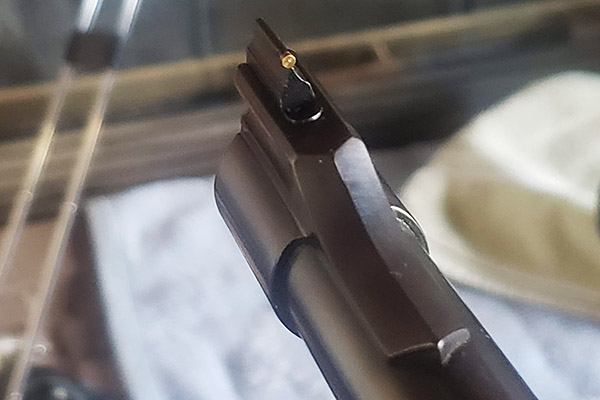
The first step in restoring the old 1H Tropical was to contact Ruger and purchase a new gold bead front sight. That was a simple install as the blade is held in place by a small detent spring.
New Ruger NOS gold bead front sight blade installed.
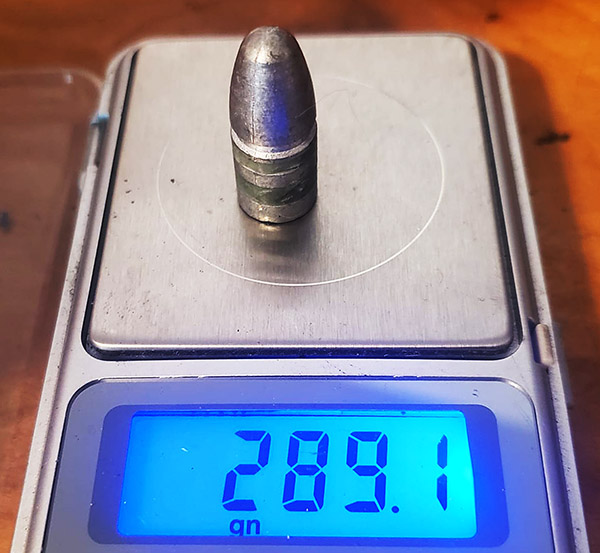
Not wanting to use the expensive Barnes TSX bullets quite yet, lead bullets were cast from lead wheel weights with a bit of tin added using a Lyman 412263 plain base mold to cast 288 grain bullets. These were sized to 0.413 inch and lubed with Alox. Lyman has since discontinued this fine old bullet mold.
A Lyman 412263 bullet, lubed and sized.
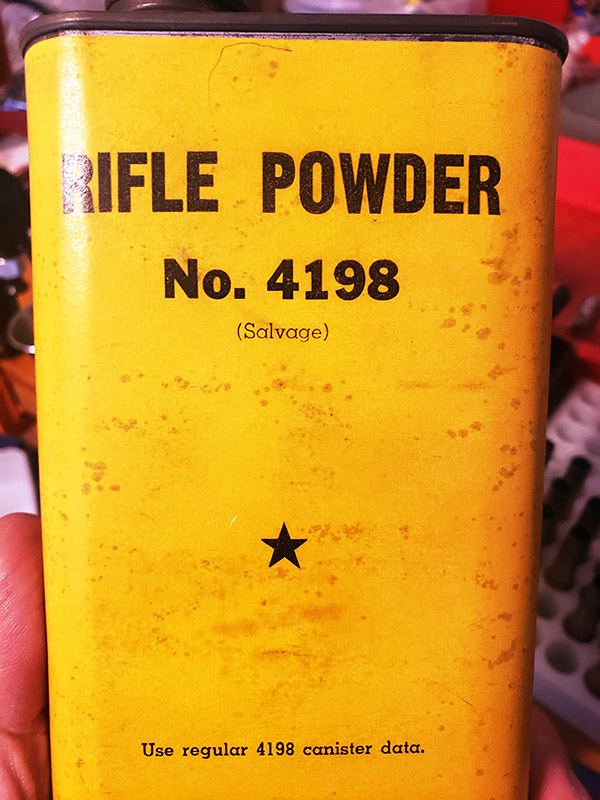
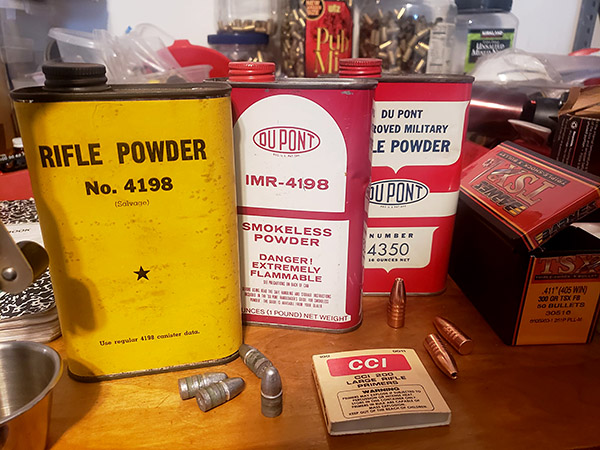
Finally, yesterday morning I decided it was time to resurrect this old rifle! Besides, the project would give me the opportunity to test some old “salvage” Hodgdon 4198 powder I’ve had sitting on the shelf for nearly two decades. The powder is probably from the 1950s or early 1960s. I also had some ancient CCI 200 large rifle primers on hand.
Hodgdon “salvage” 4198 smokeless powder. The powder is probably WW II US Military surplus powder that Hogdon bought in bulk and repackaged in the late 1950s or early 1960s.Vintage components for a vintage cartridge.
I loaded 20 rounds of 405 Winchester ammo using the cast lead bullets and a starting load of 38.5 grains of 4198 and headed down the hill with good friend Yvon to an informal shooting range on BLM land.
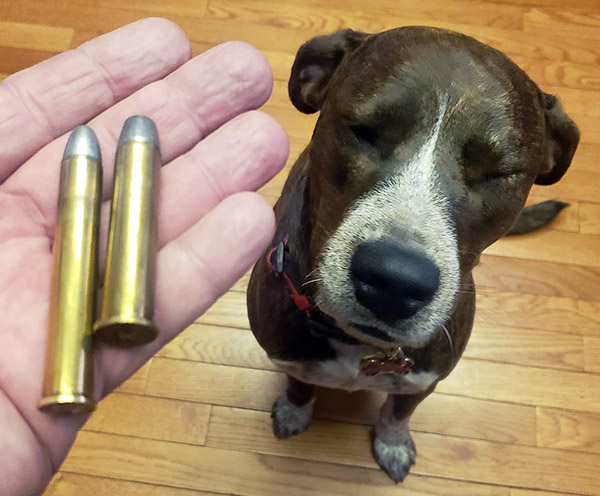
The obsolete 405 Winchester cartridge (left) and the popular 45-70 Government cartridge (right) used by 1880s plains buffalo hunters of the American west. I don’t shoot buffalo and never will. But I enjoy reviving and firing old guns!
Let me say that this Ruger No. 1H Tropical in 405 Winchester lives again. It shoots incredibly tight groups with the cast bullets and gold bead open sights.
My next project will be to develop a non-lead hunting load using the 300 grain Barnes TSX bullets.
Bringing life back into old obsolete rifles can be tons of fun.
That’s an awesome story, Jose, and thanks for allowing us to share it here on the ExNotes blog. Your No. 1 has to be one of the best deals ever. The dealer’s original asking price is probably what that rifle is worth if you could find one for sale. Well done, my friend.
The 6.5 Creedmoor cartridge draws a lot of flak on the Internet. I suspect most of the folks who go negative do so with no real experience. I have two 6.5 Creedmoor rifles, and both do very well for me. Will they magically overcome a shooting skills deficit? No. Are there other cartridges out there that can do as well? Sure. But the 6.5 Creedmoor, in my opinion, does what it is supposed to, and that’s provide accuracy with modest recoil. I’m a believer.
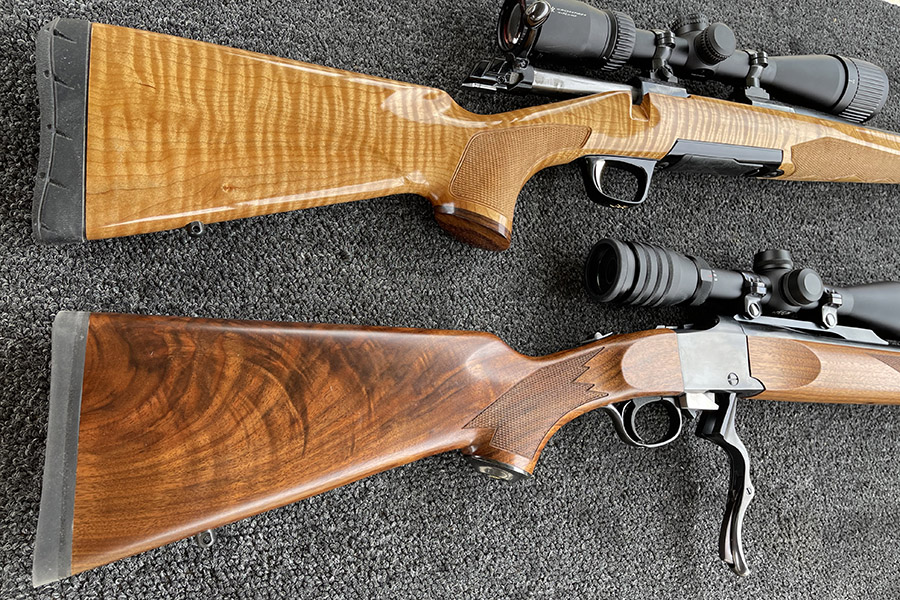
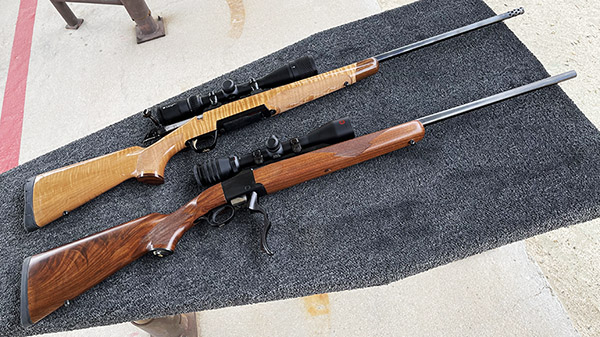
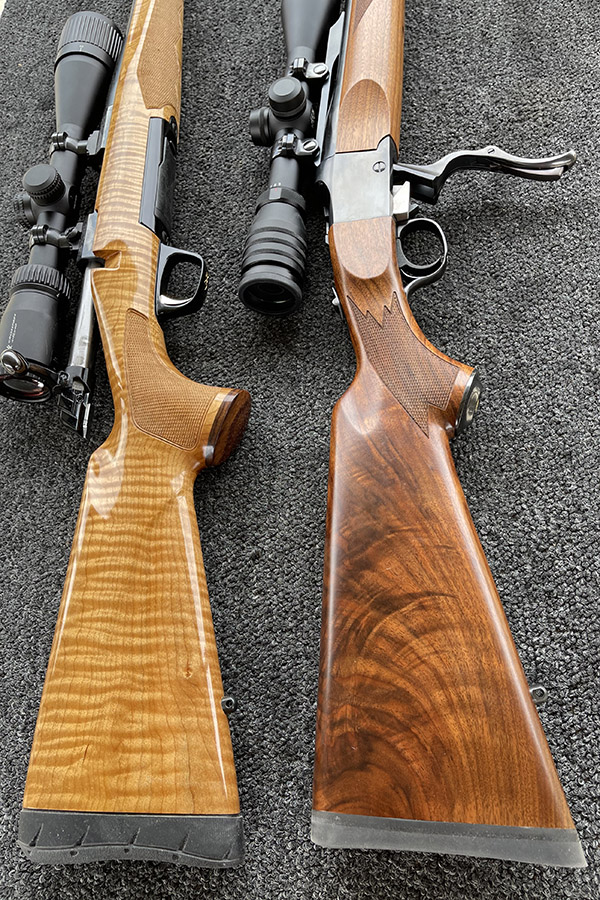
I had my two Creedmoors on the range a few days ago, a Browning X-Bolt and a Ruger No. 1 (you’ve seen them on these pages recently). Both are elegant rifles and each has what I would call exhibition grade wood. The Browning has a curly maple stock and the Ruger has fancy walnut. Both are factory rifles, and other than mounting scopes on each, both are unmodified guns.
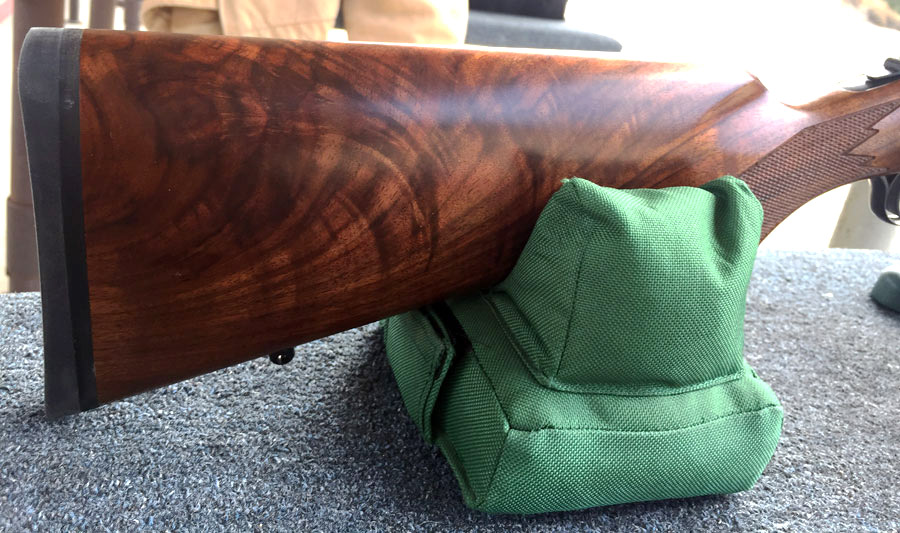
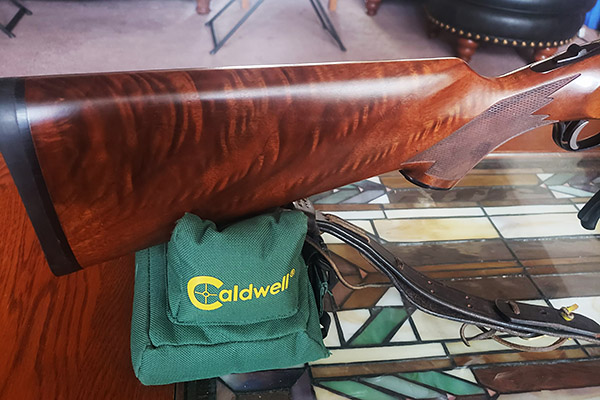
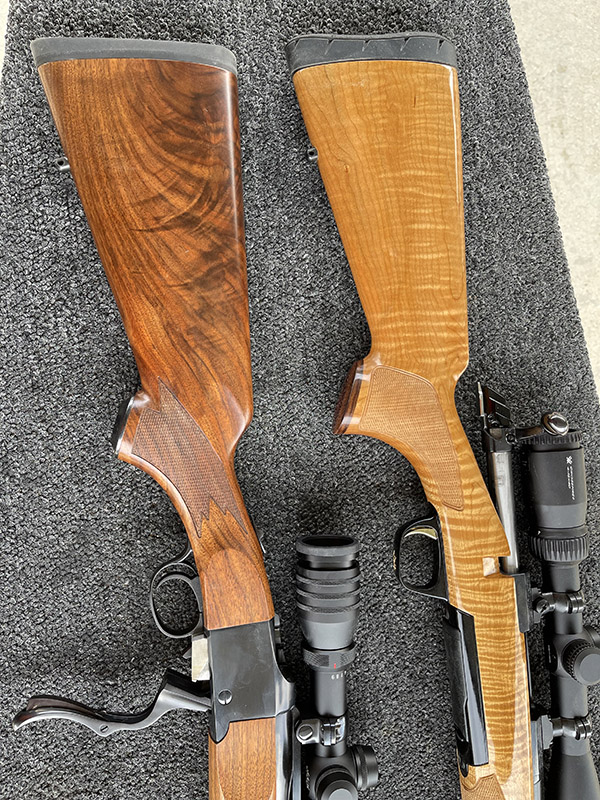
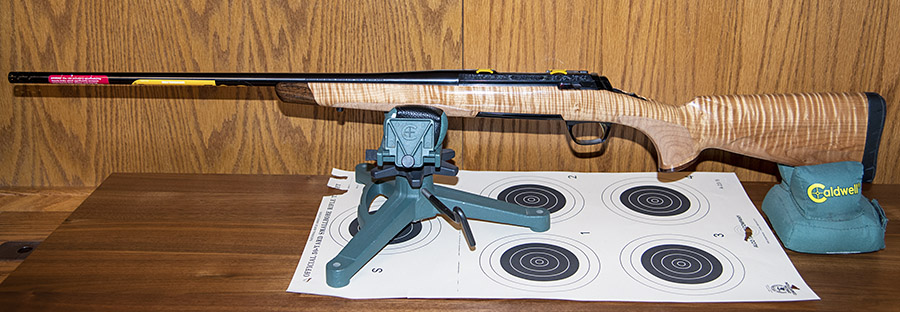
Which one is prettier? It’s a tie in my opinion. Good wood, to me, is one of the best parts of having a fine rifle, and both these 6.5 Creedmoors answer the mail in that regard. The wood seems to be alive on each, changing depending on the viewing angle and how the light hits it. This sensitivity to light orientation is probably more pronounced with the maple-stocked Browning. The curl runs from front to rear and top to bottom on both sides (this rifle has an unusually highly-figured stock). When photographed from the front (as I did in the photo below), the figure on the Browning is more subdued.
When photographed from the rear, though (as you can see below), the Browning’s curl really pops. The Ruger’s fancy walnut looks good from any angle.
The Browning is a bolt action rifle based on the Paul Mauser design (as are nearly all bolt action rifles) and it holds five rounds (four in the magazine and one in the chamber). You can buy extra magazines and carry them with four more rounds ready to go in each (you know, in case your deer starts returning fire). The Ruger is a falling block action and it is a single shot. I prefer that and I admit it is a bit of snobbery on my part; I like to think I only need one shot. On the rifle range, I only load one round at a time. Come to think of it, on a hunt I also only load one round at a time. California’s magazine restrictions are irrelevant to me; to my way of thinking if you need a 30-round magazine you aren’t much of a shot.
As much as I love Ruger No. 1 rifles, I prefer the scope location on a bolt action rifle better. A telescopic sight on a bolt action is in a more natural position. The Ruger No. 1 positions the scope further forward, and even when I mount the scope as far to the rear as it will go, it requires an unnatural amount of forward stretch to get the correct eye relief. You can get Ruger scope rings with a rearward setback to overcome this problem, but they look goofy and they add more weight to the rifle.
The Ruger is a heavier rifle. Part of that is the slender and shorter barrel on the Browning. Walnut is lighter than maple, but the Ruger barreled action is heavier that the Browning X-Bolt barreled action. Browning’s specs put the maple X-Bolt at 6 1/2 pounds; a Ruger No. 1B (this rifle’s configuration) is listed as 8 1/4 lbs. On the rifle range the Ruger’s heft doesn’t bother me. If I was carrying a rifle all day on pig hunt, I’d prefer the lighter Browning. The Browning feels almost dainty compared to the No. 1.
I mounted inexpensive scopes on both rifles. The Browning has a Vortex 4×12 scope and the Ruger has a 3×9 Redfield. The optics are equally bright on both. The Vortex has indistinct indexing on its windage and elevation click adjustments; the Redfield turret is snappy and allows counting clicks by feel alone as you make them. The Redfield Revenge is discontinued (the Redfield company is no more), but it is a good scope. I prefer the Redfield to the Vortex.
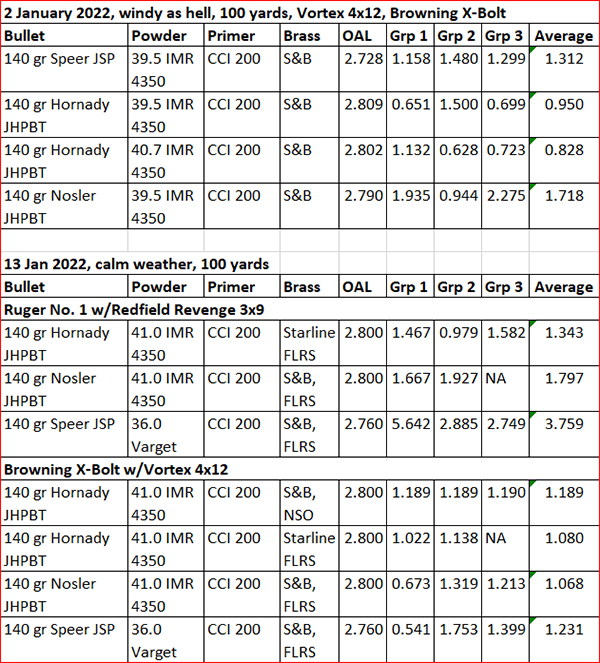
Both rifles are accurate at right around minute of angle, and both will occasionally get down in the 0.6-inch group neighborhood. The Ruger didn’t like the Speer 140 grain jacketed soft point bullet with 41.0 grains of IMR 4350, although I’ve used it before with a lighter charge of that same powder and achieved sub-minute-of-angle groups. Rifles have their preferences. With a load dialed for each rifle, the accuracy of both rifles is comparable.
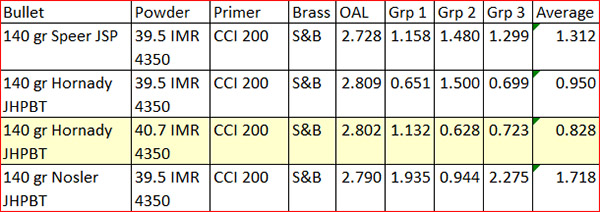
I tried a few loads in both rifles recently with IMR 4350 and Varget powder, and I also tried neck-sized-only ammo in the Browning. Here are the results:
If there’s an advantage to neck sizing fired cases in the Browning, it’s not obvious to me. I’m going to full length resize the brass from this point forward, which will allow me to use my reloaded ammo in either rifle.
When I bumped the IMR 4350 charge up to 41.0 grains, accuracy deteriorated from previous sessions. The Browning likes 40.7 grains (or maybe a little less); the Ruger did better with the Speer 140 grain jacketed softpoints at 39.5 grains of IMR 4350.
What’s next? I found Berger Bullets load data for IMR 7828 SSC propellant. That’s a slower burning propellant ordinarily used in magnum cartridges, but I like the fact that it fills the case (which should make for a more accurate load) and I thought I would give it a try. I have 20 rounds loaded and I’ll test this combo later this week. Stay tuned, and you’ll read about it here on the ExNotes blog.
Yeah, I’ve become a 6.5 Creedmoor believer. This is a superior cartridge and accuracy seems to just come naturally with it.
The rifle you see above is a maple-stocked Browning X-Bolt. It’s from a limited run and it sure is good looking. I bought it from a small shop in in Lamar, Colorado, when I was there on a recent secret mission. The dealer wouldn’t ship it to California so it had to go the long way around: Lamar, Colorado, to Raleigh, North Carolina, to Riverside, California, and then finally to me after I waited the obligatory 10-day cooling off period (I have to be the coolest guy in California; I’ve cooled off so many times). California has extra requirements for shipping guns to FFL holders here and the dealer in Colorado didn’t want to mess with our nutty requirements. The reshipper guy in North Carolina makes a living doing this (who says government can’t stimulate trade?). It’s crazy, but that’s our leftist Utopia here in the Golden State. I sometimes wonder if our firearms regs have ever actually prevented a crime.
Anyway, to leave the politics behind, a couple of weeks ago when I was on the range a good friend gave me a box of once-fired 6.5 Creedmoor brass another shooter had left behind. That was a sign, and I figured I’d reload it for the first range session with the new Browning.
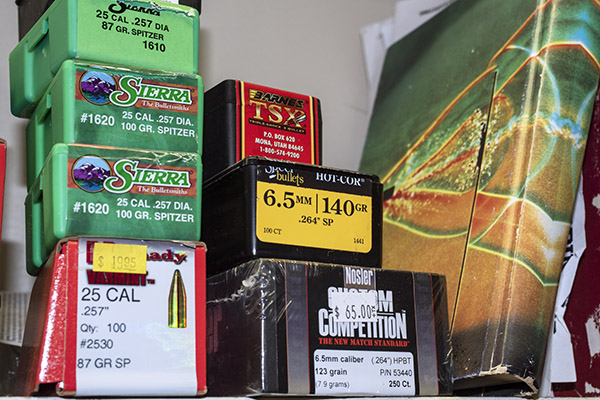
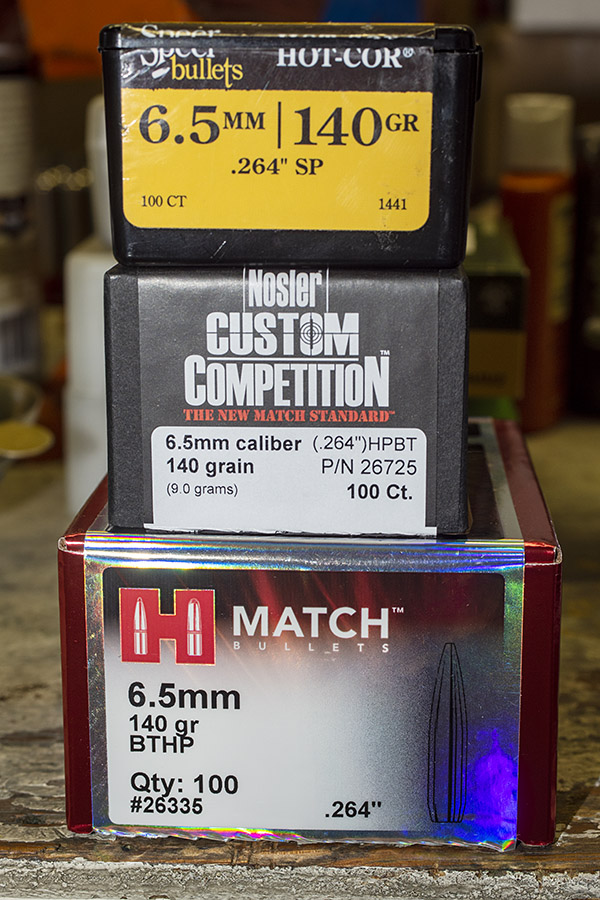
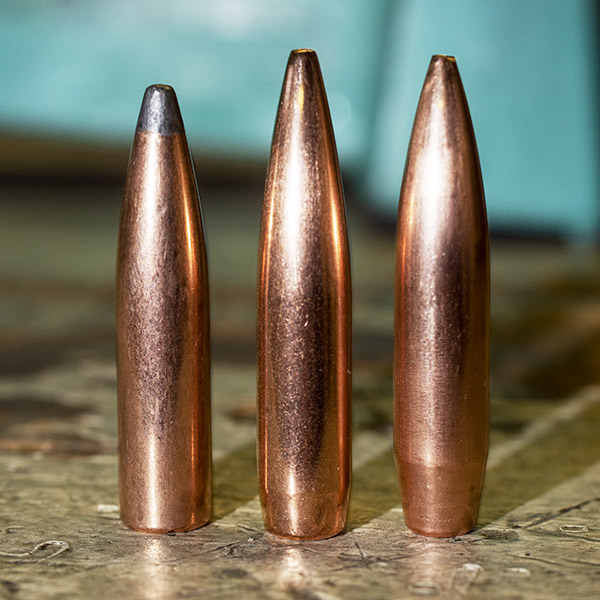
Speer, Hornady, and Nosler 6.5mm bullets.
I already had stocked up on 6.5 Creedmoor bullets. I am probably on every reloading retailer’s email list and I get a dozen advertising emails every day. With components being in short supply nationally, if I see anything I might use I pick it up. Like the maple Browning you see above, the time to buy something that’s hard to get is when you see it (to quote Mike Wolfe).
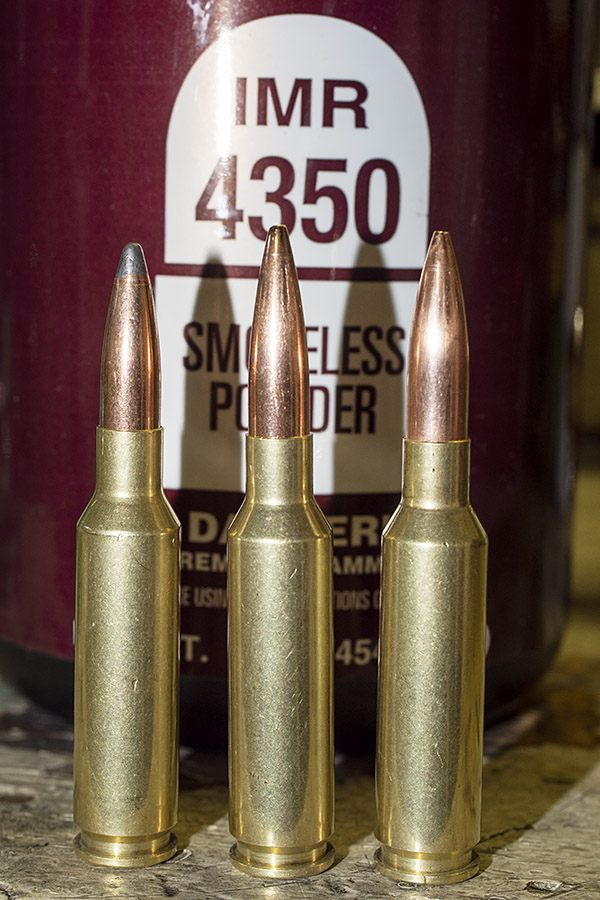
That’s the Speer 140-grain jacketed softpoint on the left, the Hornady 140-grain jacketed boattail hollowpoint in the middle, and the Nosler 140-grain jacketed boattail hollowpoint on the right. The Nosler has a longer boattail than the Hornady, and the ogive is blunter.
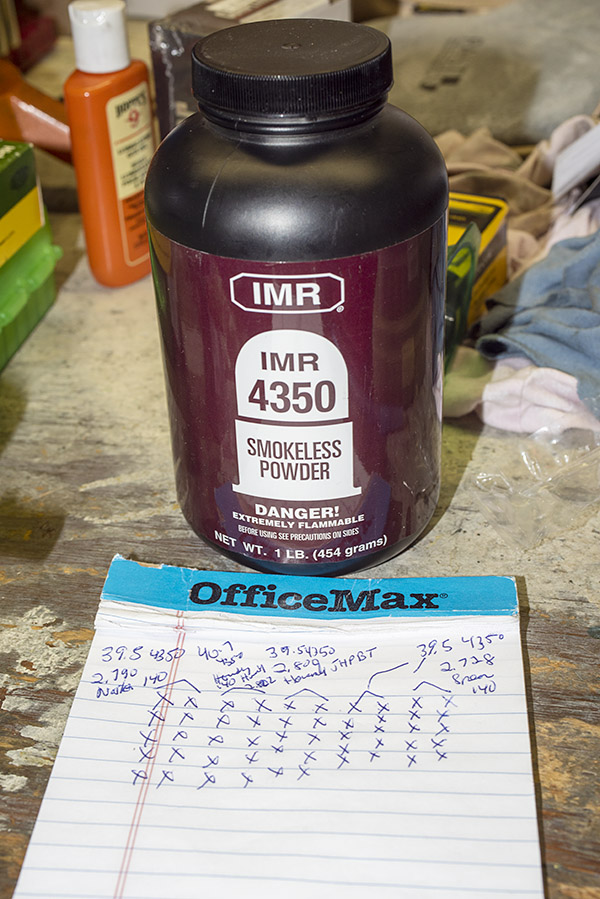
From everything I’ve read and my limited experience loading for a Ruger 6.5 Creedmoor No. 1 (see my recent blog on the 6.5 Creedmoor Ruger No. 1), IMR 4350 propellant is the secret sauce for accuracy with this cartridge. I had some under the reloading bench and it got the nod for this load session.
That’s how I keep track of what I’m loading at the bench. I’ll transfer that information to a reloading label that goes on the rifle ammo container.
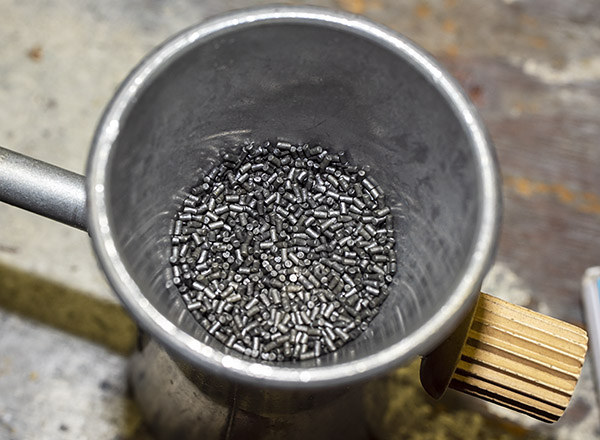
IMR 4350 is an extruded stick powder, and it doesn’t meter consistently through the powder dispenser. I use an RCBS trickler I’ve had for 50 years. The idea is that you drop a charge into a loading pan, it goes on the scale, and then you trickle in extra powder (a particle or two) at a time with the trickler to arrive at the exact weight.
An old and well worn RCBS powder trickler. It works well and although it sounds slow, it goes pretty quickly.
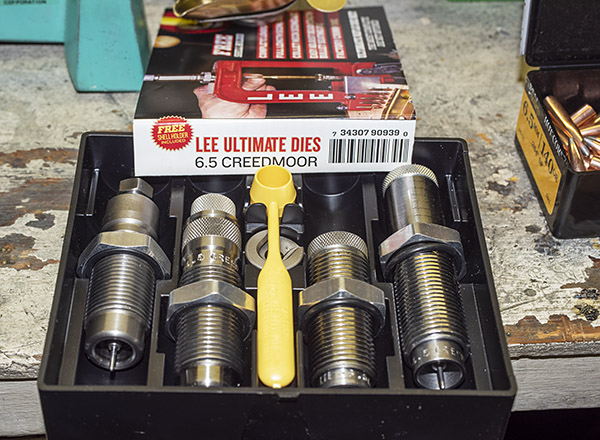
I have a set of Lee dies I use for the 6.5 Creedmoor. It’s Lee’s “ultimate” four-die set, which includes a full length resizing die and decapper, a neck-size-only die and decapper, the bullet seating die (which includes a roll crimping feature), and a factory crimp die. Lee dies are inexpensive and they work well. Their customer service is superb, too. I full length resized this batch and I didn’t crimp. I’ll experiment with that later. For this load, I just wanted to get pointed in the right direction. The refinements will come later (if they are needed).
The Lee 6.5 Creedmoor die set. Lee dies include the shell holder; most other manufacturers’ die sets do not. Lee makes good gear.
After charging the primed cases with IMR 4350, I seated the bullets. The long, heavy-for-caliber bullets and the relatively short 6.5 Creedmoor brass make for cartridges that look like hypodermic needles. It’s good looking ammo.
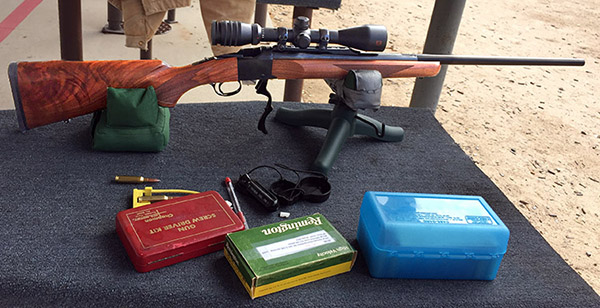
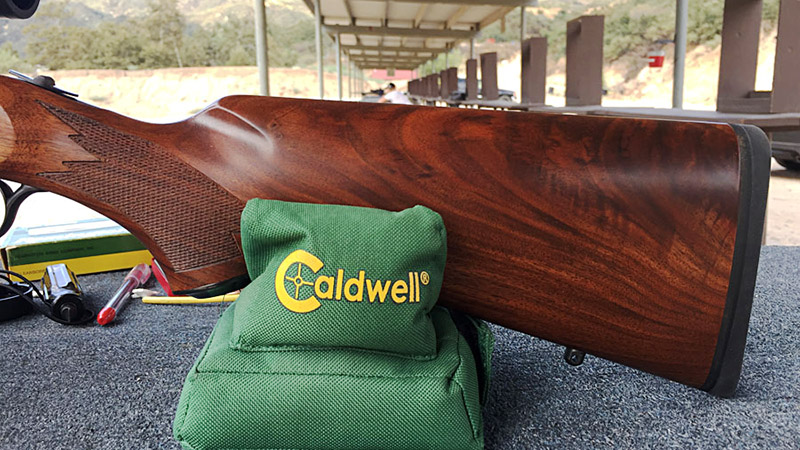
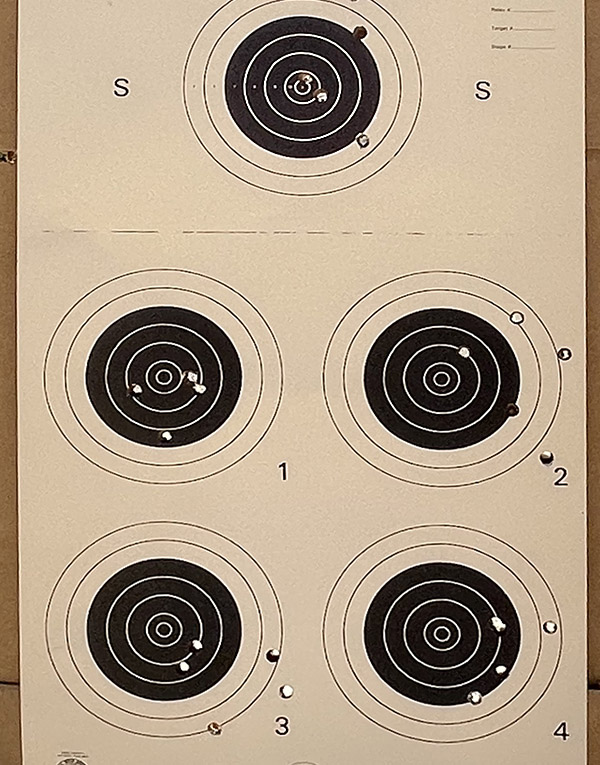
So how did the new 6.5 Creedmoor do? It was very cold and very windy when I went to the range. I had hoped for more pictures of the Browning in the daylight but it was so windy I didn’t want to chance the photos (I was afraid the wind would knock the rifle out of its Caldwell rest). There was only one other shooter out there; most folks were probably staying warm at home. I shot at 100 yards and the wind notwithstanding, this puppy can shoot. Here are the results from my first box of reloaded ammo…there are a few erratic groups, but they were due to me and the wind.
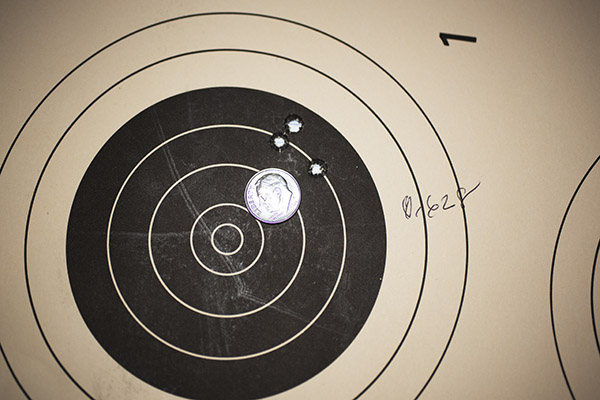
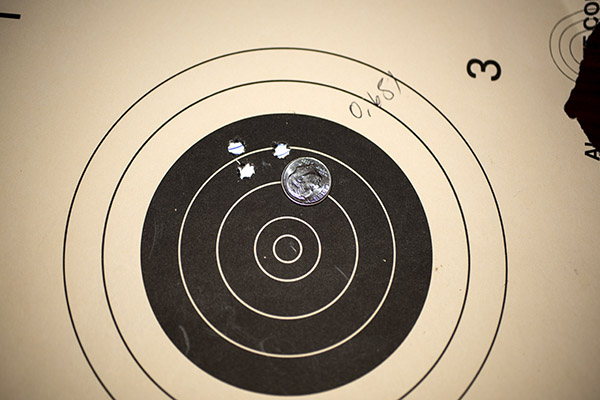
Here’s what the best groups looked like:
The Browning likes the 140 grain Hornady jacketed hollowpoint boattail bullets, which is good because I have a couple of boxes of those. Going up to 40.7 grains of IMR 4350 helped a bit. After I fired these rounds, I could chamber a fired case without it sticking, so I am going to load another 20 cartridges that I will neck size only.
The scope I bought for this rifle is a Vortex 4×12 (it’s made in China). This was the first time I used a Vortex. The optics are very clear. Because of the wind and the cold temperatures I didn’t try to adjust the parallax; I just set the parallax adjustment at 100 yards and shot (I’ll adjust the parallax next time, assuming the weather cooperates). The Vortex click adjustments for windage and elevation are not as tactilely distinct as they are on a Leupold or a Weaver. The clicks are squishy and I had to look at the turret graduations to keep track. Eh, it’s a $170 scope. You get what you pay for. Sometimes.
The recoil on the 6.5 Creedmore is moderate; maybe a little less than a .308. The Browning has a removable muzzle brake, and that helps.
The maple Browning (especially this one) really stands out. There were three rangemasters and one other shooter on the range the day I shot it. Everyone stopped what they were doing to look at the rifle. They thought it was a custom gun. This Browning X-Bolt is a beautiful firearm. And it shoots, too.
Never miss an ExNotes blog: Sign up here for free!
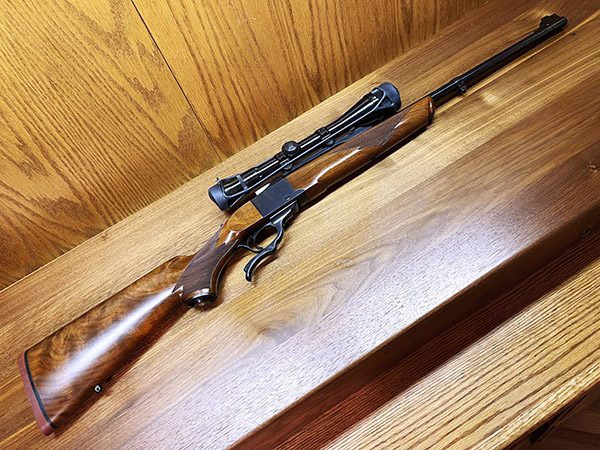
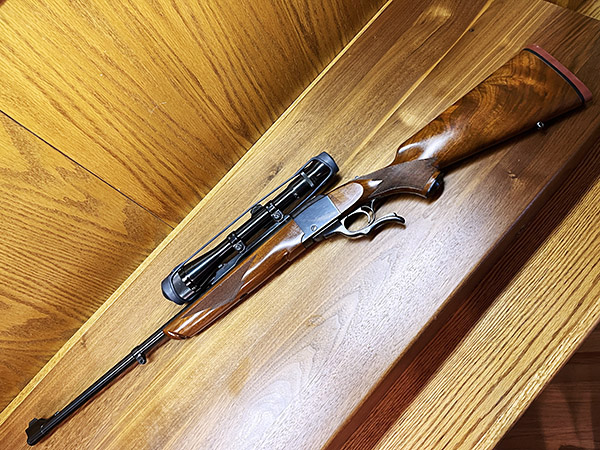
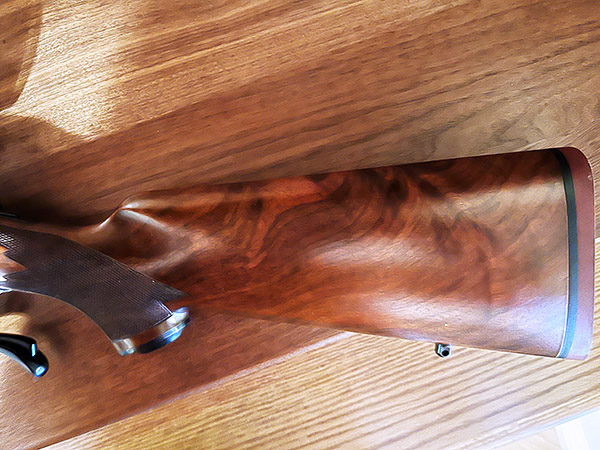
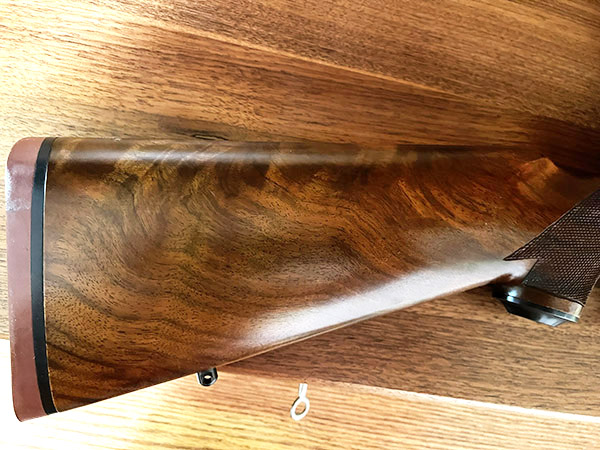
This was another blog with a daunting title challenge. I went with the one you see above. Other choices were “The 6.5 Creedmoor No. 1” and “Surfing While Under The Influence.” The story goes like this: A few years ago Ruger built a limited number of their elegant single-shot No. 1 rifles chambered in 6.5 Creedmoor. They were built exclusively for a Ruger distributor, and as is that distributor’s habit, they were fitted with 28-inch barrels (the normal barrel length for the beavertail fore end No. 1 Rugers is 26 inches). If you tell me a rifle is a limited edition you have my attention. Tell me it’s a Ruger No. 1 and I’m about 90% of the way there. If it has fancy walnut, you can hear the cash registor go “ka-ching.”
I’d been watching the Creedmoor No. 1 rifles on Gunbroker.com, but I didn’t see any with wood that caught my attention. Then one night I’d had a beer or two (okay, maybe it was four or five) and I was surfing the Gunbroker.com site, and this 6.5 Creedmoor No. 1 appeared:
The Ruger No. 1 first hit the market in the late 1960s, and it is about as classy a rifle as ever existed. It’s a real specialty item. Today the craze is all about black plastic semi-automatic rifles with big magazines; but none of that nuttiness has ever appealed to me. A single shot rifle, on the other hand, gets my attention immediately. They are just cool. There’s something inherently worthy about having to make that one shot count.
The 6.5 Creedmoor cartridge was developed specifically as a target round, and it’s been catching on for the last few years. It has the same trajectory as a .300 Winchester Magnum but with substantially less recoil, and everything I’ve read about the Creedmoor said it is inherently accurate.
So, back to my quest for a 6.5 Creedmoor No. 1. The price on Gunbroker seemed right, I hit the “buy now” button, and the rifle had a new owner. The next day I looked at the Gunbroker ad again, and something I had not noticed the night before caught my attention. It was listed with a 26-inch (not a 28-inch) barrel. Hmmm. So I did a bit more research. What I had purchased was a rifle from Ruger’s earlier run of 6.5 Creedmoor No. 1 rifles, which folks tell me is even harder to find than the more recent group of 28-inchers. Hmmm. A rare No. 1 in the chambering I wanted with beautiful wood. Sometimes you just get lucky.
When the rifle arrived, I bought an inexpensive Redfield scope, a set of Lee reloading dies, a box of 6.5mm bullets, and a bag of Starline brass. I only loaded two different loads, and I was off to the range. All the hype about the 6.5 Creedmoor’s inherent accuracy? Hey, I’m here to tell you that if you’re looking for an argument, I’m not your guy. My No. 1 convinced me that the 6.5 Creedmoor is indeed an accurate cartridge.
I loaded two different recipes with the 140-grain Speer jacketed softpoint bullets seated to an overall cartridge length of 2.700 inches, IMR 4350 powder, Winchester large rifle primers, and virgin Starline brass. At 100 yards, I fired five rounds with the above load using 38.5 grains of IMR 4350, and those five went into 2.272 inches. I was just getting warmed up. I then tried the same combo but with 39.5 grains of IMR 4350. The first three-shot group was 0.701 inches, and the second three-shot group was 0.978 inches. This was outstanding for the first outing. Maybe I just got lucky. But I don’t think so. I think that the 6.5 Creedmoor is everything folks say it is.
Last week I was on the range again with a different rifle, and good buddy Dan asked if I shot 6.5 Creedmoor. I do, I answered. It seems somebody shot a box or three of factory ammo and didn’t keep their brass. Dan wanted to know if I wanted it. Does the Pope poop in the woods? Is a bear Catholic? You bet, I answered. Any kind of brass is hard to come by these days. But 6.5 Creedmoor? For free? Like I said, sometimes you just get lucky.
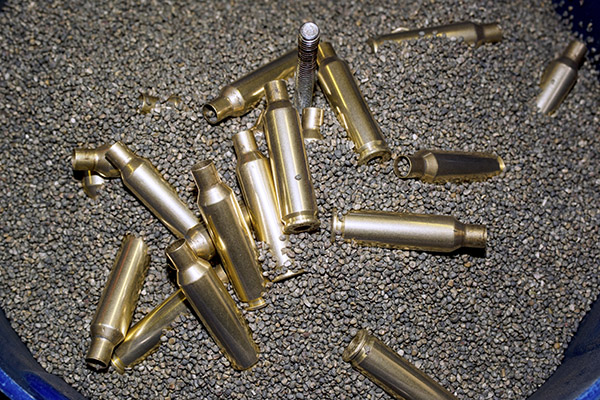
6.5 Creedmoor brass in the vibratory cleaner. It’s looking good.6.5mm bullets in Speer and Nosler flavors. I only tried the Speer bullets so far. I’ll bet the Noslers are going to be more accurate.
I’ll keep you posted on 6.5 Creedmoor developments right here on the ExNotes blog. I’ll load more ammo this week and I’ll get on the range shortly after that. Stay tuned.
Help us keep the lights on…please click on the popup ads!

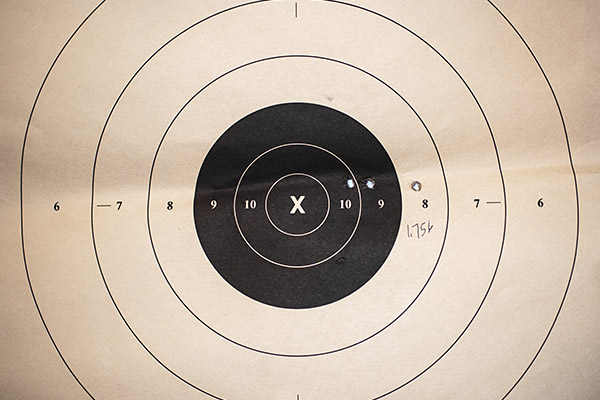
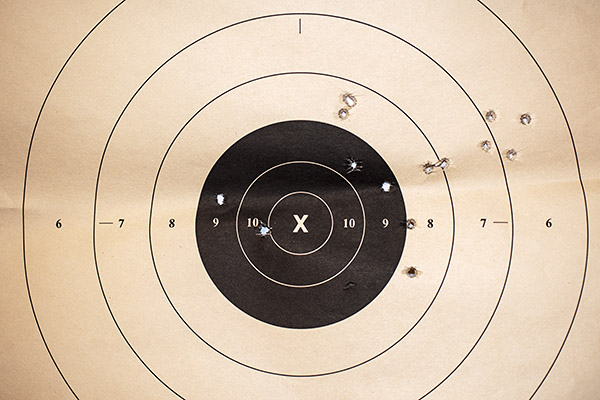
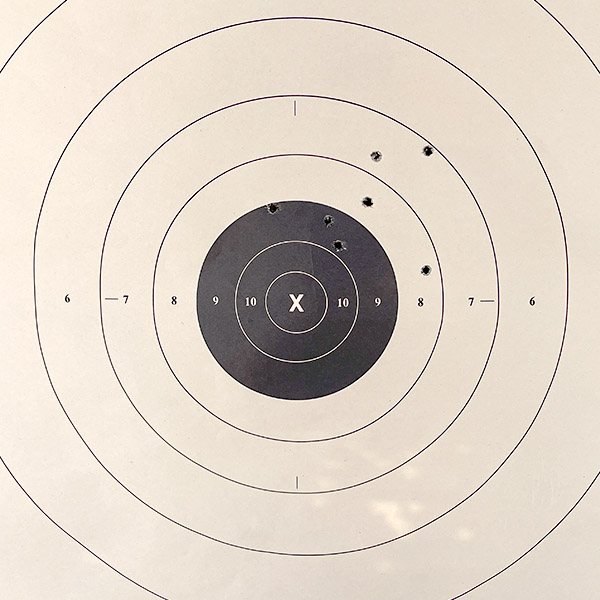



 Here’s what the best groups looked like: