I haven’t done a knife story in awhile, but that doesn’t mean I haven’t been buying. Some of these online knife stores’ websites are addictive, and the Chicago Knife Works site certainly falls into that category. It’s fun just perusing their offerings. Sometimes, I’ll see something that piques my interest and then I’ll search on a feature that a particular knife has. That occurred recently when I saw a folder I likes with bone handles (or scales, to use knife aficionado terminology).
Bone as a scale material is intriguing to me, partly because I like the way it looks, partly because it looks like ivory, and partly because of a recent visit to the fabled Colt Custom Shop in West Hartford, Connecticut. When I saw an artist crafting custom grips on a Colt 1873 Single Action Army, I asked about the material (knowing that ivory was no longer available). The answer, as good friend and Colt factory guide Tim told me, was bone. Giraffe bone, to be specific. I would never have imagined.
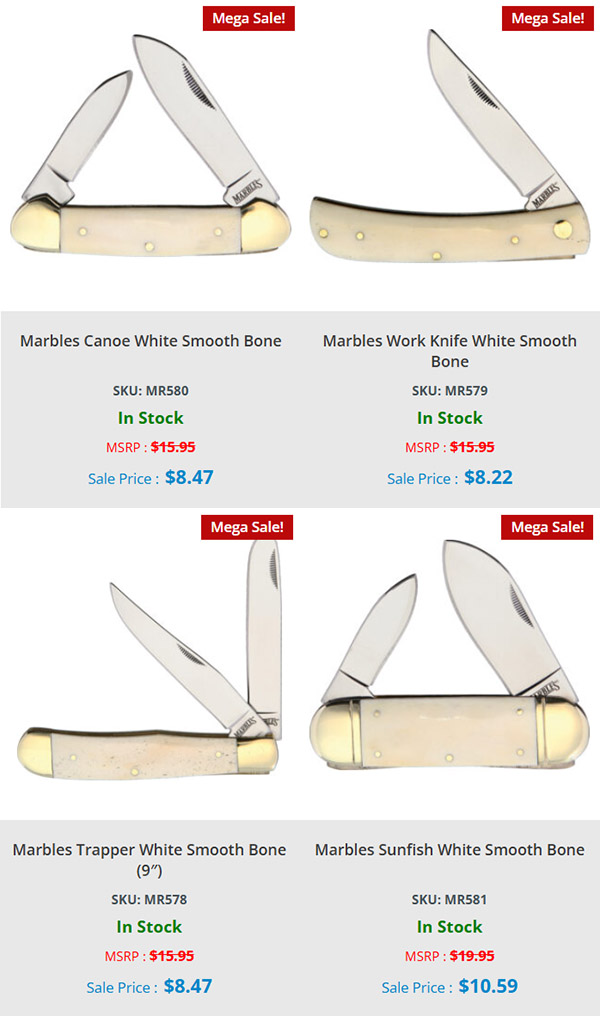
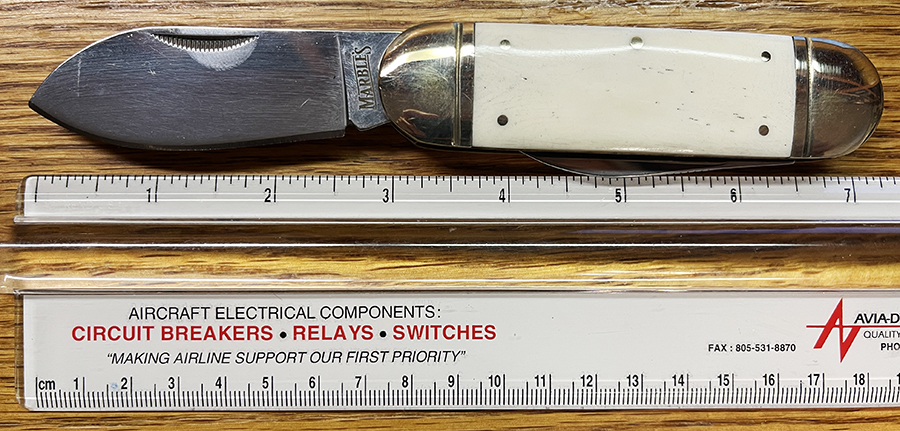
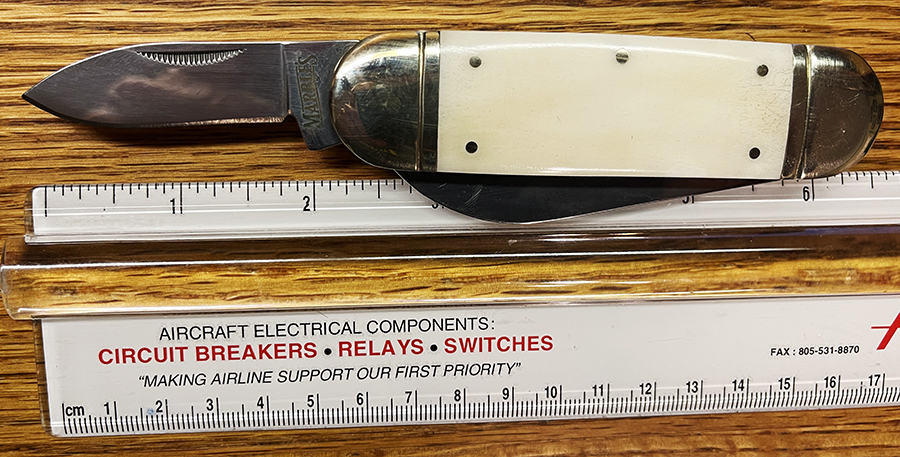
Anyway, to get back to the main attraction, I saw a Marbles folding knife with white bone scales on the Chicago Knife Works site and I liked it, so I searched on all Marbles folders with bone scales. What the site’s search returned was intriguing.
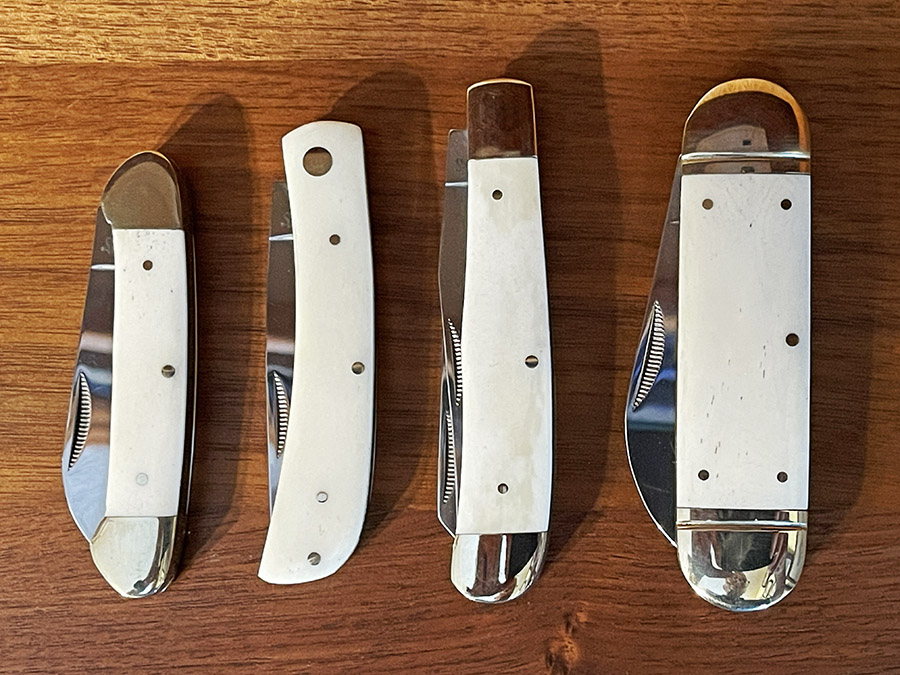
I liked every one of the knives I saw, and Chicago Knife Works‘ prices are so reasonable I pulled the trigger on all of them. Cheap fun, and they looked good on the Chicago Knife Works site. They arrived a few days later (all the above, with shipping, was only about $50), and I can tell you they look even better in person.
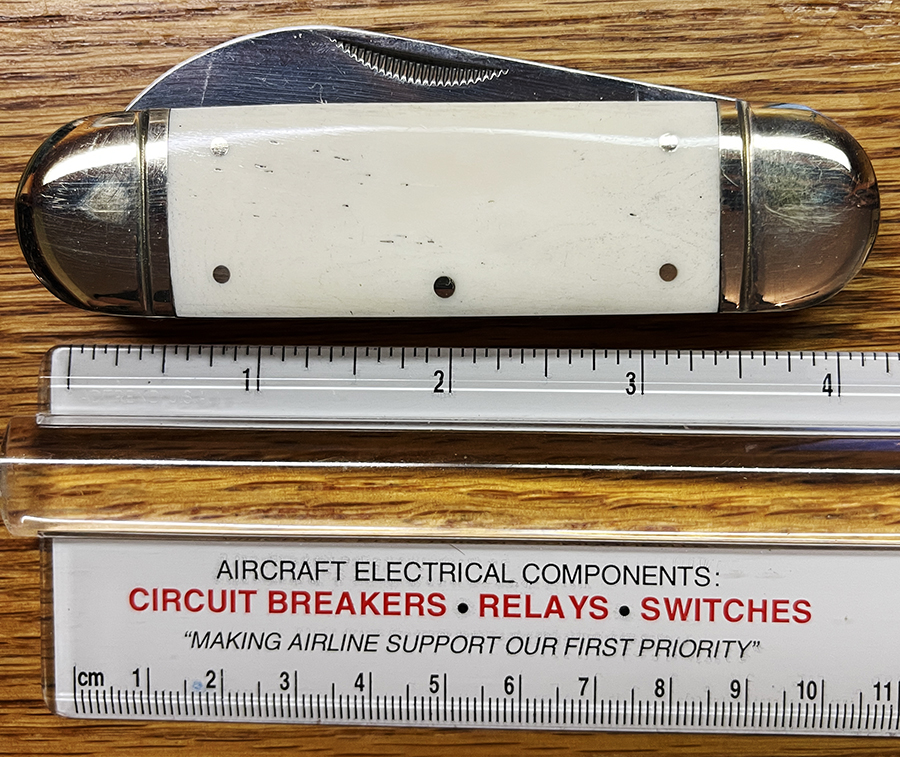
All the knives are appealing, and I like the white bone appearance. The canoe style is one I’ve written about before, and in my opinion, it is about the perfect-sized pocketknife for pocket carry. It has two blades and both are razor sharp. The work knife (also known as a sodbuster) is a single-bladed knife and its name comes from the fact that it is designed to be used by a working man (like a farmer). The trapper knife (as you might have guessed) is the design preferred by trappers. It has two blades: One with a clip point and the other with a spey blade (we’ve mentioned those before; my Case Stockman knife also has a spey blade). And finally, there’s that gorgeous two-bladed sunfish knife, which is a big knife. It gets its name from its sunfish-like shape.
The Sunfish is a physically big knife, as the following photos show:
I can’t say which of the above knives I like the best, so I’ll cut to the chase and tell you that I like them all. So much so, I continued the quest for knives with white bone scales.
Most recently, I purchased a large folder (the Rough Ryder Deer Slayer) from another knife supplier only because Chicago Knife Works didn’t have it in stock. I’ve written about it before.
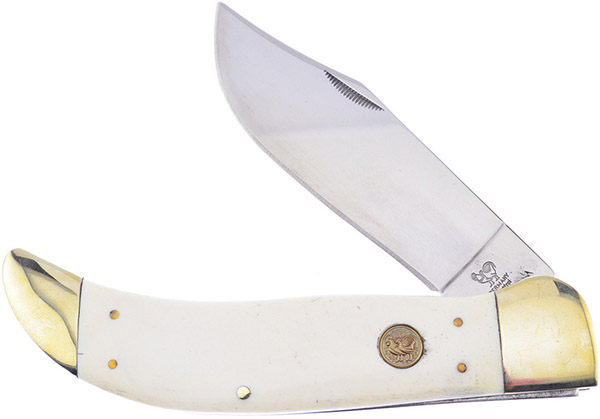
I like the look and size of the Deer Slayer so much that I started poking around to see if that knife was available with white bone scales. It was. The manufacturer this time is Hen and Rooster, and I was able to order it from Chicago Knife Works.
I guess I should say the importer, not the manufacturer, as I suspect the same manufacturer makes knives for several importers with slight differences to meet the importers’ marketing strategies. I don’t have the Hen and Rooster knife yet, but when I get it, I’ll post a few photos in a future blog.
As the title implies, last week was quite a week, and a lot of it focused on Moto Guzzi stuff. The Roman gods are sending me a message, I think, but old age and big bucks will most likely keep my desire to own a vintage Guzzi suppressed. And there’s been some pocketknife stuff, too, leading into the age-old Chinese quality discussion. I’ll get to that in a minute.
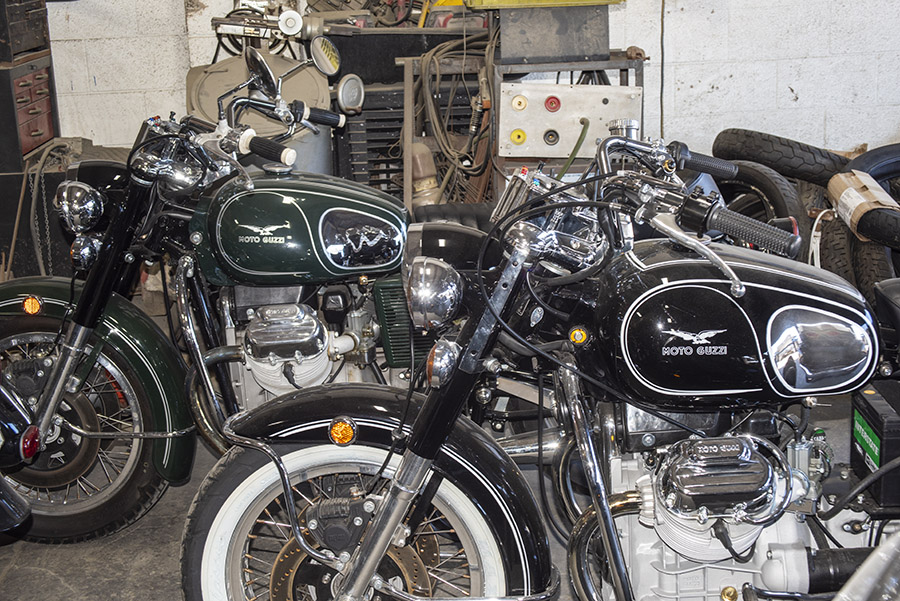
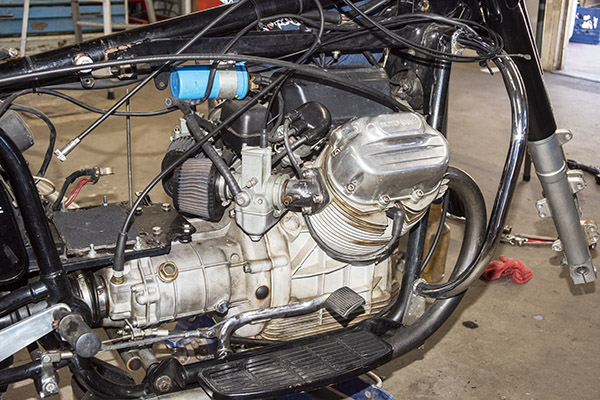
The guts of a Guzzi in the Cycle Garden shop. This is a cool place in a hot locale (temperatures sometimes approach 120 degrees in Indio).
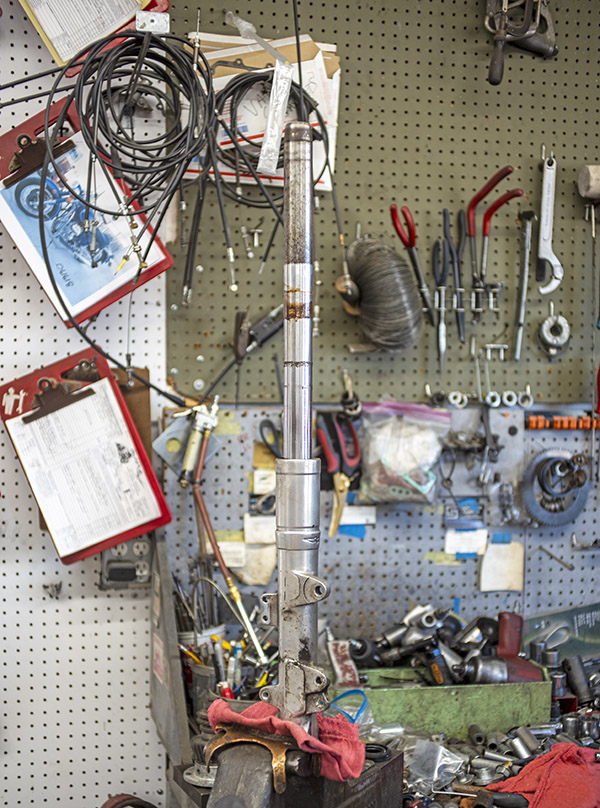
I spent Monday morning at Cycle Garden in Indio, California, getting tutored by good buddy Steve on the finer points of Guzzi fork rebuilding. It’s for a piece I’m doing on that topic, and the folks at Cycle Garden couldn’t have been more welcoming. These guys know their stuff, as well they should: They are the largest, busiest, and probably the best in the world at concours-level Guzzi restorations. I developed a bad case of the “I wants” for a restored Guzzi after seeing some of the bikes at the top of this blog, but it’s probably not in the cards.
Just forking around out in the desert…
After treating me to a cup of his famous home-roasted and ground coffee, Steve showed some of the bikes to me. There’s not a single part on a Cycle Gardens restoration Guzzi that isn’t touched during the restoration (both 0n the motorcycle and in the engine). How much? Somewhere in the neighborhood of $40,000 to $50,000. A look at any of the Cycle Garden bikes easily confirms the value is there. But my wallet is light enough already. Watch for more on the Cycle Garden shop; it’s amazing.
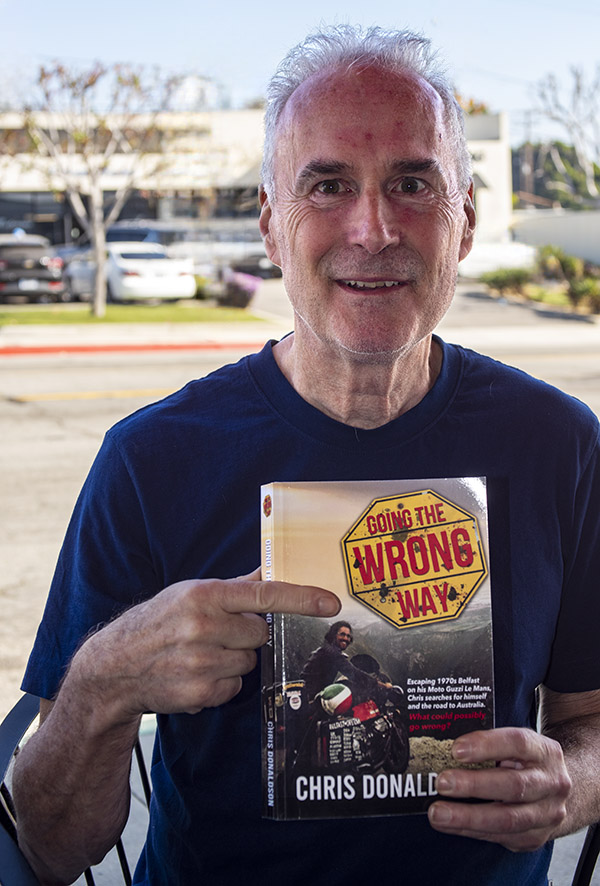
The man, the Moto Guzzi, and the legend: Chris Donaldson sitting across the table from yours truly. Buy the book on Amazon. Buy mine, too!
On Friday, I visited another Guzzi shop 130 miles to the west, this time to meet with and interview Chris Donaldson. Chris wrote Going the Wrong Way, the story of his ride around the world on a Moto Guzzi. He just flew into Los Angeles from Ireland to ride across the US. We had a nice meeting, and you’ll be hearing more about Chris in a subsequent blog.
One the pocketknife front, it’s been mostly good (and the good will be featured in upcoming blogs) with several new additions to the collection. But there’s been a couple of bad apples, and that’s increased my smarts about what to look for in a pocketknife.
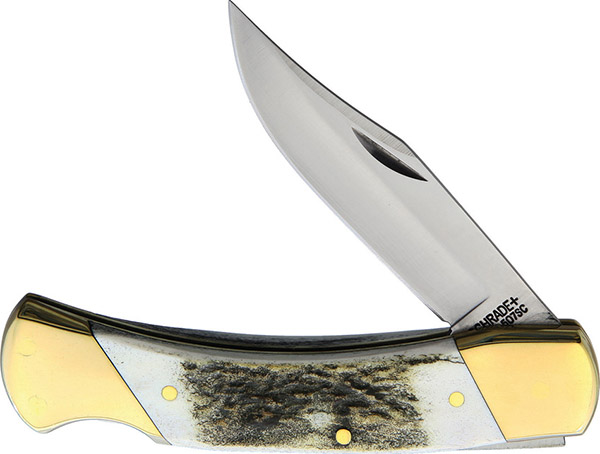
The Schrade stag-handled folding hunter. The blade wobbled in the knife body when closed. Back it went. I’m still waiting for a replacement. It’s made in China.
The first was a large Buck-110-style Schrade folding hunter with stunning stag grips. The knife arrived and I loved the look of it, but it had a defect. With the blade closed, it wobbled inside the knife body. In my opinion, it should have no side-to-side play, so back it went. I don’t want my money back; I just want a good knife. We’ll see what happens.
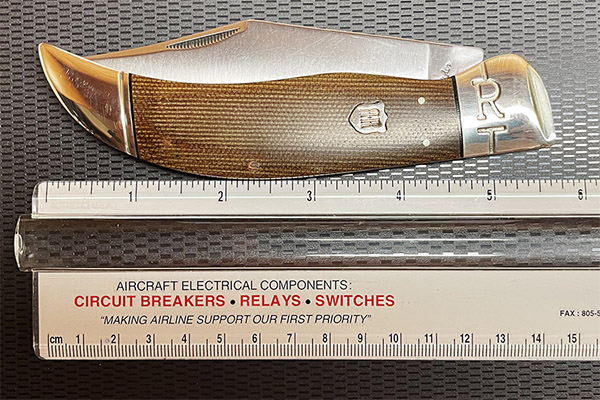
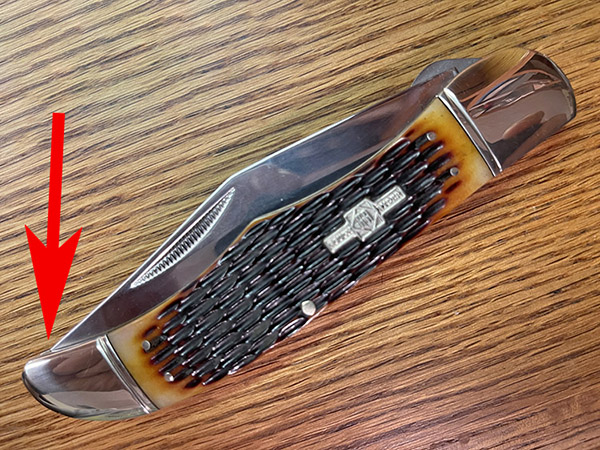
The Rough Rider Large Hunter. I love the design, but the knife is no good. The tip lies above the line of the knife body when the knife is closed. Muey malo, mi amigo. This is also a Chinese knife.
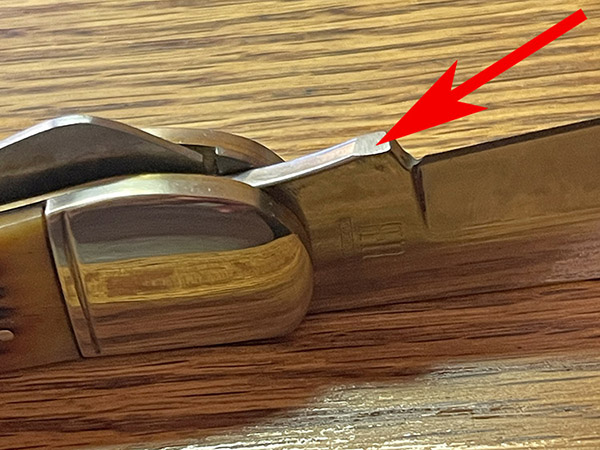
The next was another beautiful large hunter, this time from Rough Rider. It’s a beautiful knife, but it arrived with a different problem. On this one, when the knife is closed the tip of the blade sits slightly proud of the knife body, and that means you can catch your hand on it. Who would think to check for this? Apparently, not the folks who manufacture the knife, and not the folks who sell them, either. I bought one from Amazon, and I returned it the next day. I wanted the knife, though, so I ordered it again from Chicago Knife Works. Wouldn’t you know it? The replacement knife had the same problem. Size notwithstanding, it’s an inexpensive knife, but apparently they’re all bad (at least based on my sample of two).
The Rough Rider’s kick. Grinding it down didn’t fix the problem.
I tried grinding down the Rough Rider’s kick (the part of the blade that controls how far it goes into the knife body when it closes), but that didn’t fix the problem. It’s an inexpensive knife (only about $15) and I’m not going to bother returning it. I’ll just look at it from time to time. It will remind me that I’m not as smart as I sometimes think I am.
Stay tuned, my friends. There’s more coming your way.
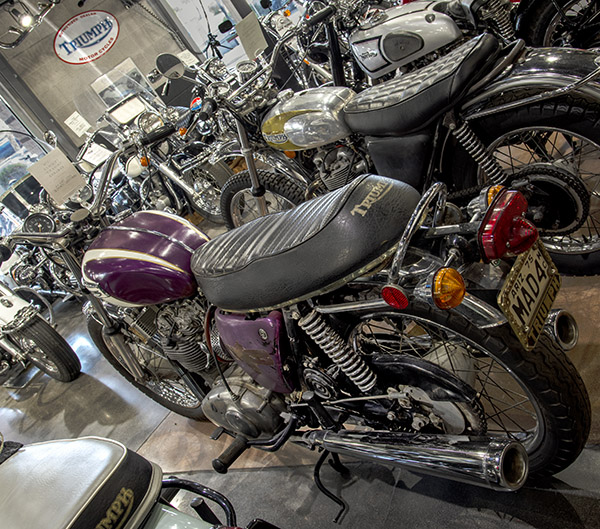
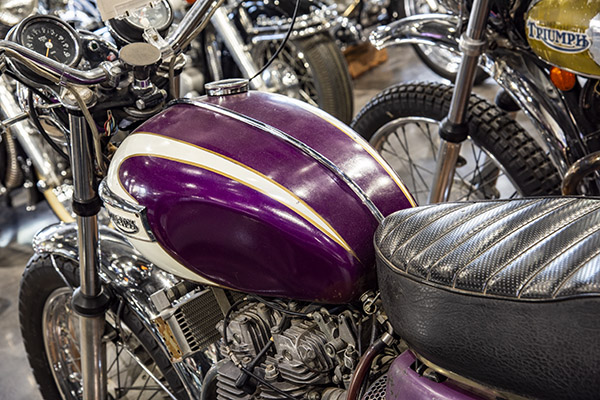
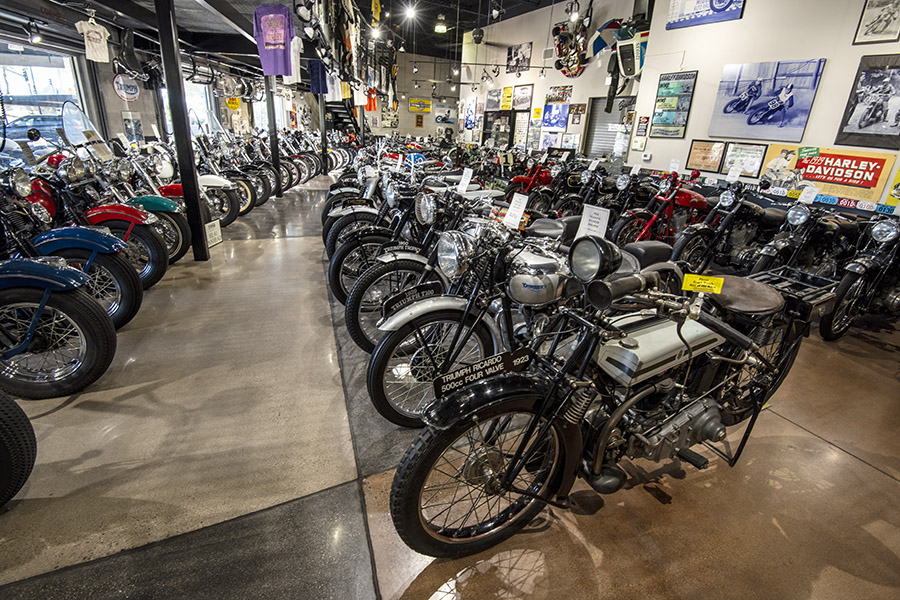
I stirred up a few comments last week with that photo of Emma Booton’s 1972 restomod Triumph Trident and its glorious purple color. This week, I visited the Buddy Stubbs Motorcycle Museum in Phoenix, Arizona (a wonderful place, and the subject of an upcoming ExNotes blog) when I happened to spot an original ’72 Trident 750cc triple. Its original purple paint was what Triumph called Regal Purple.
You know, Emma was right. Roto Rooter purple, the color you see on her bike in the photo atop this blog, is much nicer. That’s my opinion, and if you don’t agree with me, I am okay with you being wrong.
There are a lot of motorcycles in the Buddy Stubbs Museum, and each has a story. Watch for our upcoming blog on this Phoenix destination.It presents a regal appearance, don’t you think?
The original Triumph is a nice motorcycle, and it has the advantage of being original (including the original paint geometry, with Triumph’s familiar scallops). But given the choice, Emma’s Triumph gets the nod here.
The Dream is perched on the new Harbor Freight lift and slowly coming apart. I’ve been busy with other projects so don’t freak out if it seems like progress is slow. It’s not me. It’s the environment I work in.
This installment involves a bit of inventory control. I need a decent front rim but all the ones online look just as bad as the rim I have. The parts bike front rim is bad too. They are sturdy and run true but lots of surface rust makes them look bad. I can get new rims on eBay, sold in pairs for around $200 delivered, but I only need one rim. Anyone want to form a syndicate and go halvies on some 305 Dream rims?
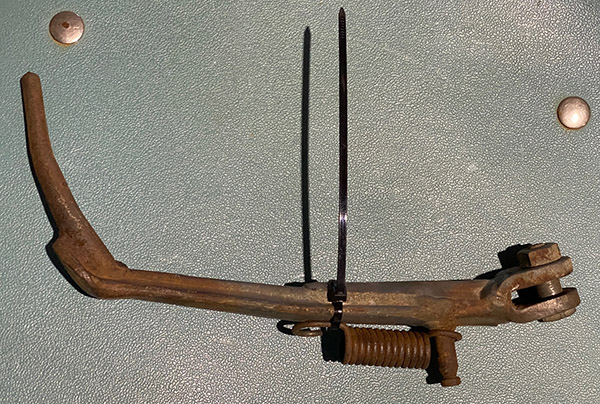
$20 kickstand. Sometimes I do it the easy way.
Both of the Dreams were missing their side stands and I debated making one from scratch. Just for kicks I went on eBay and some hero had a side stand for $20 so I bought it. It’s kind of like cheating but It would take me two days to make a stand.
Hopefully these seals will work, keeping the oil inside where it belongs.
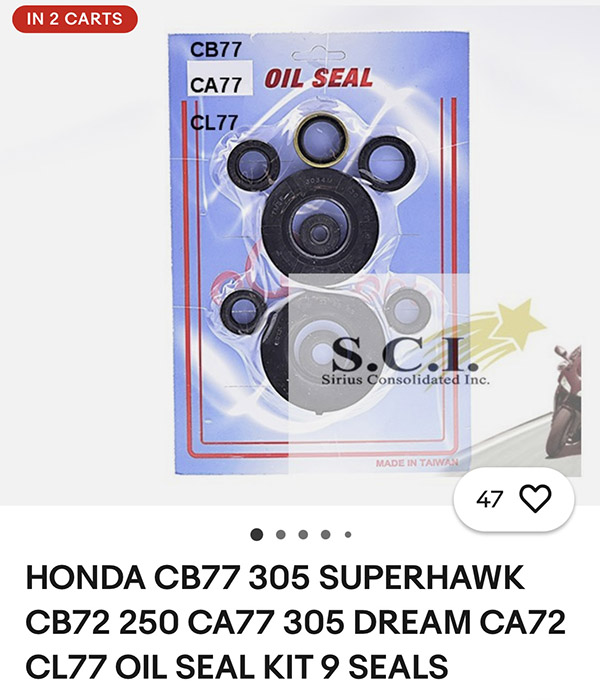
I’ve also ordered a set of engine seals. I’ll have the engine side covers off to free up the clutch plates and clean the centrifugal oil filter can. Also I need to remove the alternator to gain access to the starter clutch as it’s hit and miss. I figure it’s a good time to replace the seals. The only one leaking at the moment is the shift-shaft seal but you know how it goes with old rubber. Twenty miles down the road another seal will start leaking. Then another.
Deez Nuts were tight as hell. It took me two days to get them loose.
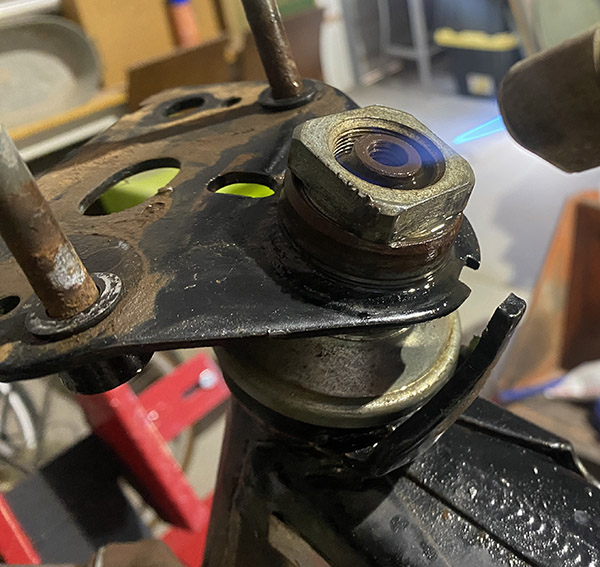
Getting the Dream’s steering stem apart was an Ossa. The top lock nut was knitted to the cone nut and the thing was tight as hell. Much hammering, heat and penetrating oil was used over the course of two days. The steering stem nuts finally unwed and spun off by hand. All the bearings and races look good with no divots or flat spots to cause erratic steering. There was even soft grease still inside! Impressive for a 63-year-old motorcycle.
The Dream on the maiden lift.
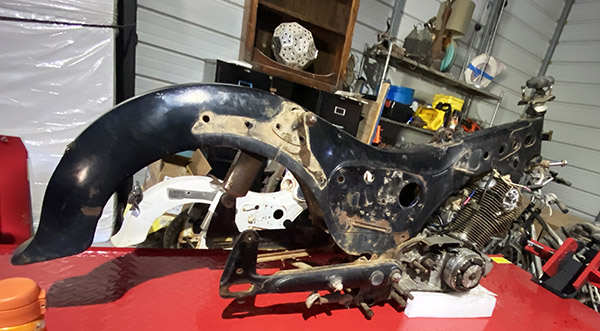
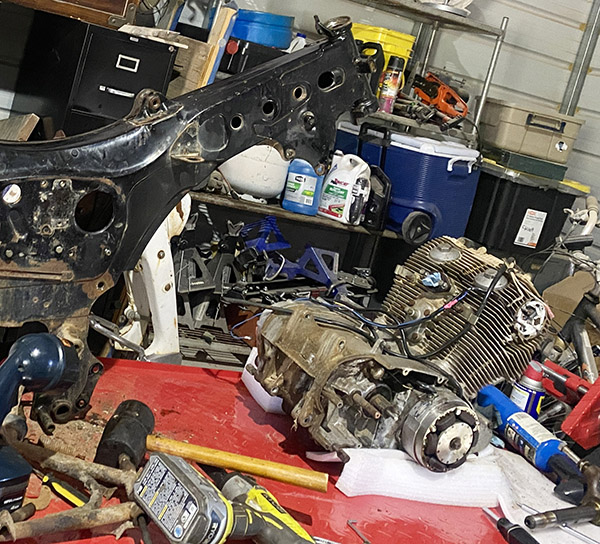
I’ve got the frame off the engine now. It’s a fairly lightweight sheet metal construction. Kind of like a monocoque Norton but with a separate fuel tank. Honda copied a lot of ideas from German and British sheet metal frame manufacturers.
The Dream frame is light. Easy to lift off the engine for an old man.
The frame has a few dings to fix and the Dream is made from pretty thick metal. The dents are hard to get behind to push out. I’ll try the painless/paintless dent remover but I don’t hold out much hope as the frame is twice as thick as gas tank metal. If that doesn’t work I’ll get a stud welder and pull the dents with a slide hammer.
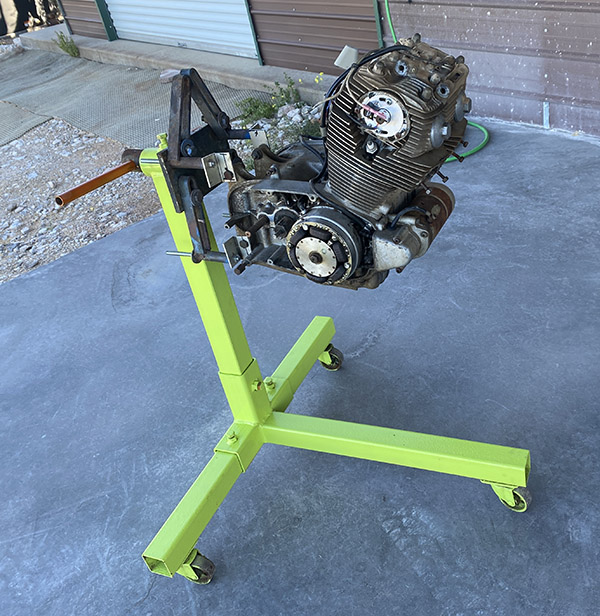
Kind of Kawasaki green for the new paint on the stand. Almost safety vest green. I had a can in stock.
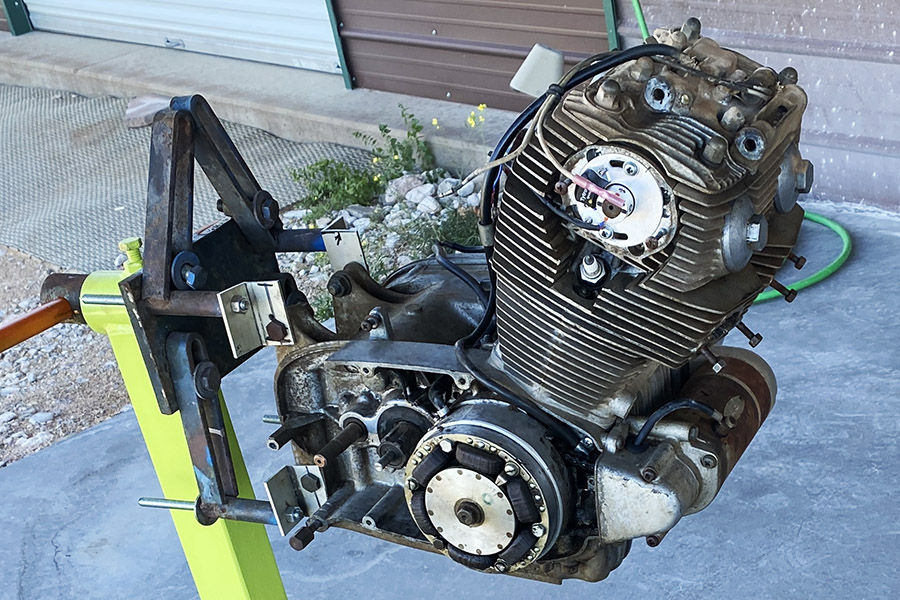
Since I have a new, shiny lift I decided to clean up the old, rusty engine stand to match. I’ve had this stand since the late 1970’s and it’s had everything from a 4-Cylinder Volvo marine engine, many Chevy small blocks and a big, heavy, Ford 427-inch OMC inboard strapped to the thing. The big Ford was pretty bouncy. With the cast iron, water-cooled exhaust manifolds the thing probably exceeded the stand’s weight rating by 300 pounds. I used a 2×4 in the front to help stabilize the engine.
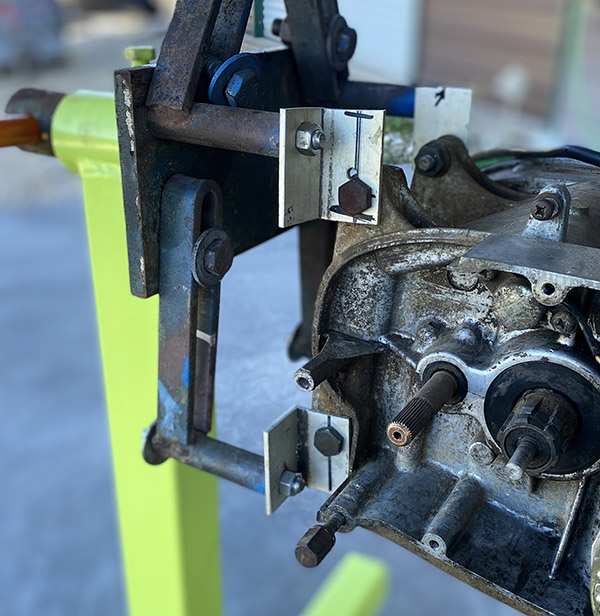
A few aluminum tabs and the Dream engine bolted right up. I’m going to do this method on the next MC engine I work on.
In all those years this will be the first motorcycle engine I’ve had on the stand. It makes everything easy with the mill at hip level. You can rotate the engine 360 degrees by spinning the T-handle. Which begs the question: why didn’t I think of this before?
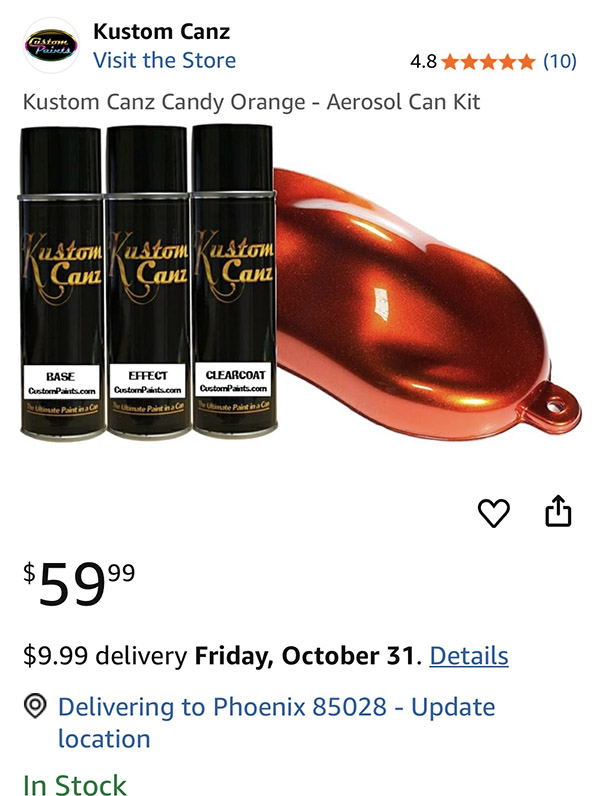
I’m thinking heavy metallic with candy-copper followed by 2K clear. What are the odds it won’t bubble?
I hear you: not much progress but I’m a bit lame right now and taking it easy for a week or so. What about a 3-part metallic orange for a color? Too much? Atomic Green? Black, red or white is boring.
The alarm rang early last week, and Sue and I were on the road at 5:00 a.m., pointed east on the 210 for the 5 1/2 hour trek to Phoenix and the Buddy Stubbs Motorcycle Museum. It was worth the drive out there.
There are more than a few dealers who have a handful of bikes tucked into a corner of their showrooms they call a museum. Not so with the Buddy Stubbs Motorcycle Museum in Phoenix, Arizona. It’s the largest motorcycle museum in the American Southwest, and it’s one of the best motorcycle museums of the many I’ve visited over the last 30 or 40 years. I don’t say that lightly. This place is spectacular.
Many marques are well represented. This colors on this early ’60 Noron twin work for me.
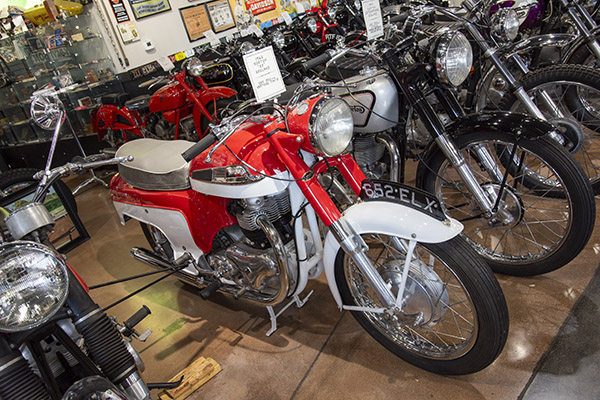
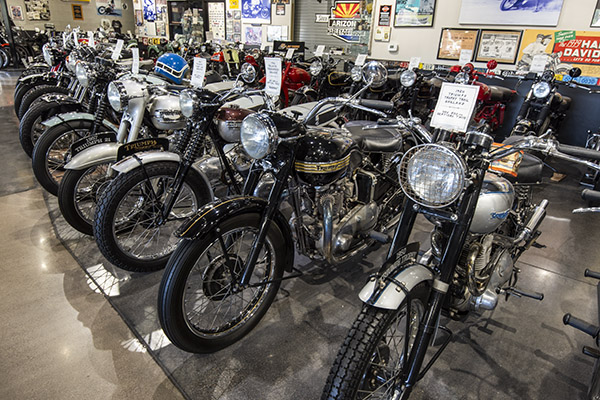
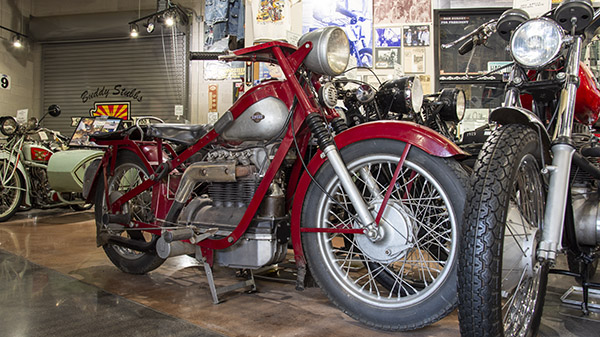
Sue and I visited the Buddy Stubbs Museum recently for an upcoming issue of Motorcycle Classics magazine, and I sure was glad we did. The Museum has 137 bikes (with 124 on display). You might think they’d all be Harleys, but you’d be wrong. All the cool stuff is there, and it’s all vintage. Harleys, Triumphs, BSAs, Vincents, BMWs, Excelsiors, Indians, and a bunch more. It seems like every motorcycle in the Museum has a story.
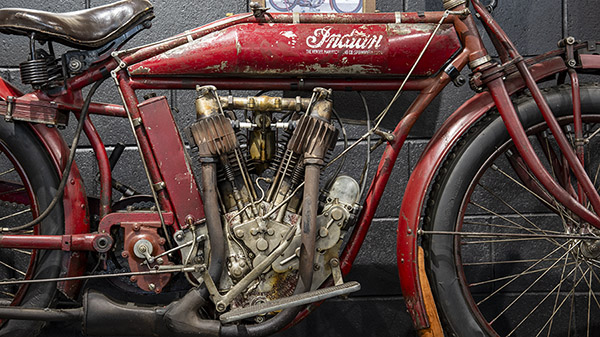
The 1913 Indian Buddy commuted on between dealership locations.
One of the stories is about the 1913 Indian in its original unrestored glory. You might recall that about 25 years ago Harley made their dealers build new and modern showrooms. Buddy Stubbs was one of those dealerships, and while the new location was under construction, Buddy rode between the old and new locations daily on that 1913 Indian. That’s cool.
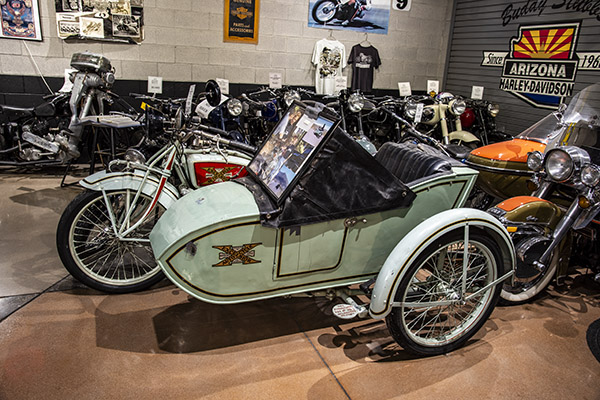
Buddy’s Cannonball Excelsior. All the spares rode in the sidecar and there was no chase vehicle.
Another bike with a story is the 1915 Excelsior, with sidecar, that Buddy rode in the 2010 cross country Cannonball Run. Okay, you might be thinking a lot of guys did that. Yeah, but…and the “yeah, but” in his case is that a 70-year old Buddy Stubbs made the ride with no chase vehicle. He carried all the parts he thought he might need in the sidecar. Wow.
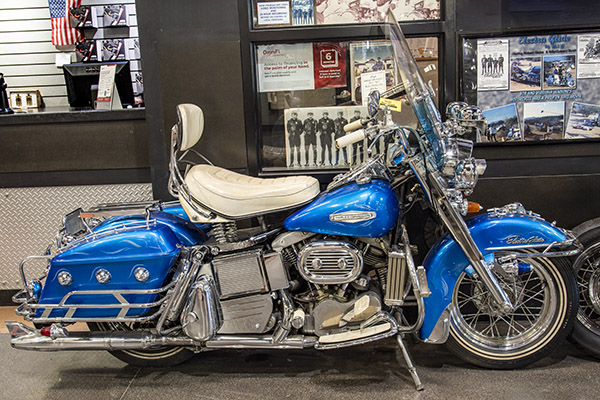
Yes, it’s the actual Electra-Glide in Blue. The real one that we all saw in the movie.
Remember the 1973 Electra-Glide in Blue movie? Buddy taught Robert Blake how to ride a motorcycle for that movie, and the motorcycle that Blake’s felonious motor officer buddy bought with stolen money (in the movie, not in real life) currently sits in the Buddy Stubbs showroom. Blake went on to a successful TV series (Baretta), and then he fell from grace when he murdered his wife (which he got away with in the criminal trial, although he was later found financially liable in a subsequent civil case). It’s tough to convict a movie star here in the Golden State.
The black T-Bird (second from right) was The Wild Ones backup bike.
Speaking of motorcycle movies, the grand-daddy of them all has to be Marlon Brando’s The Wild One. You will recall that Brando rode a Triumph Thunderbird in that movie. The producers kept a spare Triumph Thunderbird on set during the production. You know, just in case. That spare T-Bird is in the Buddy Stubbs Museum.
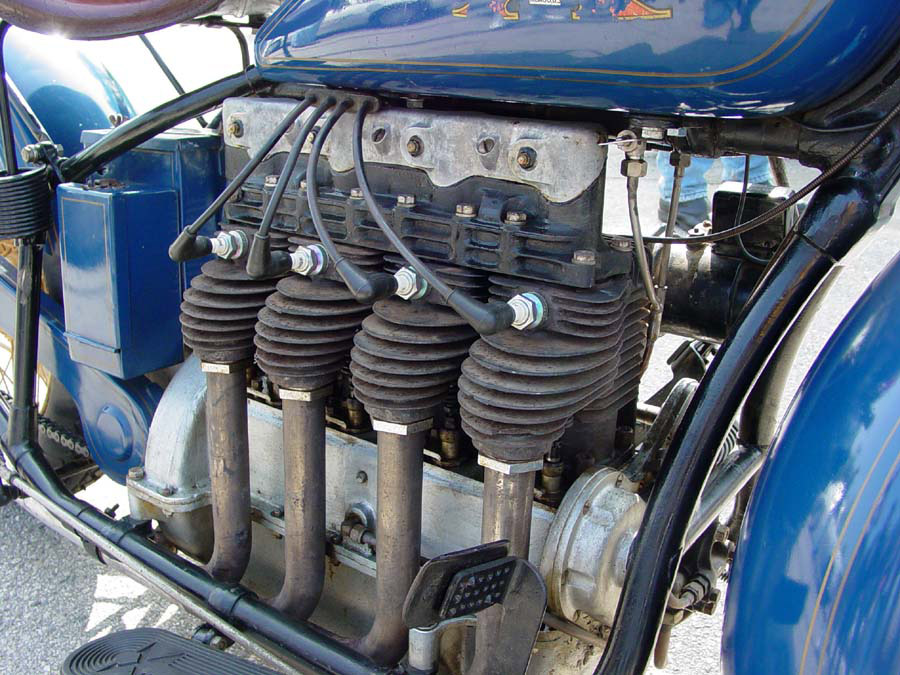
A four-cylinder Nimbus. It might have made it into our ¿Quantos Pistones? series had I seen it sooner.
There’s a whole section here on ExNotes focused on our dream bikes. Satisfyingly, several of those are in the Buddy Stubbs Museum, including lots of Triumph Bonnevilles, Harley Cafe Racers, and the Harley XR1000.
By any measure, Buddy Stubbs (who at age 85 is still with us) is an amazing man. You can even buy a book about Mr. Stubbs, which I did while visiting the dealership. I have a signed copy.
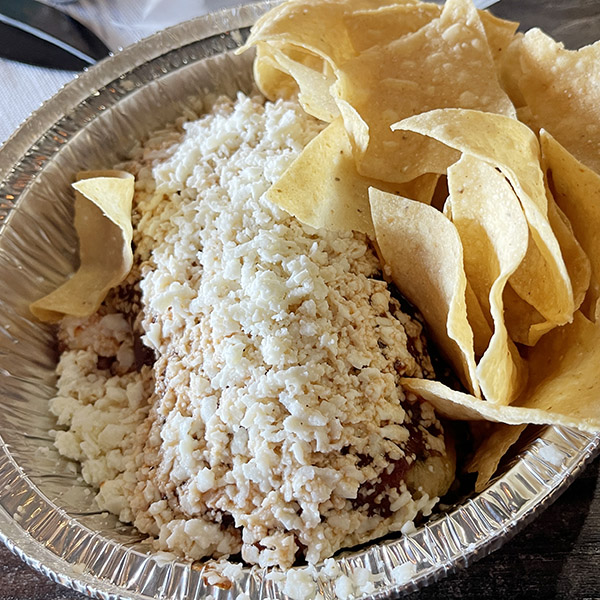
A chile relleno tamale. Muey bueno!
Hey, one more thing that I’d be remiss to not mention in this blog. Stop for lunch at the Tamale Factory, which is just 8/10ths of a mile up North Cave Creek Road from the dealership. I had the chile relleno tamale and Sue had the chicken version. Both were fantastic.
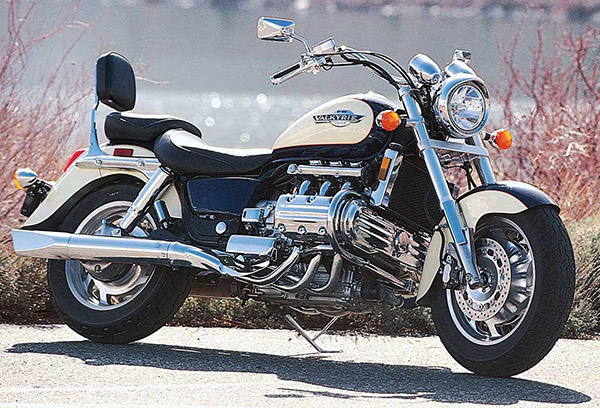
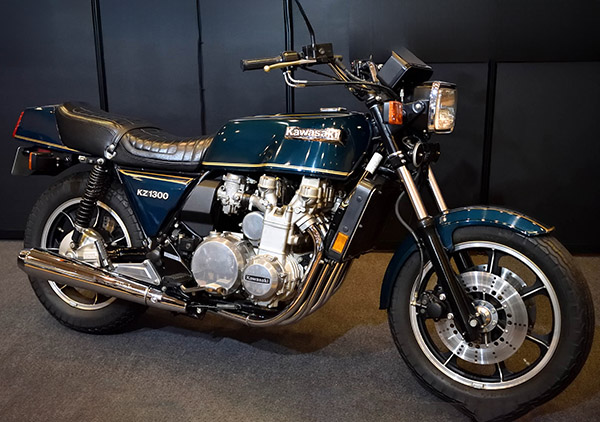
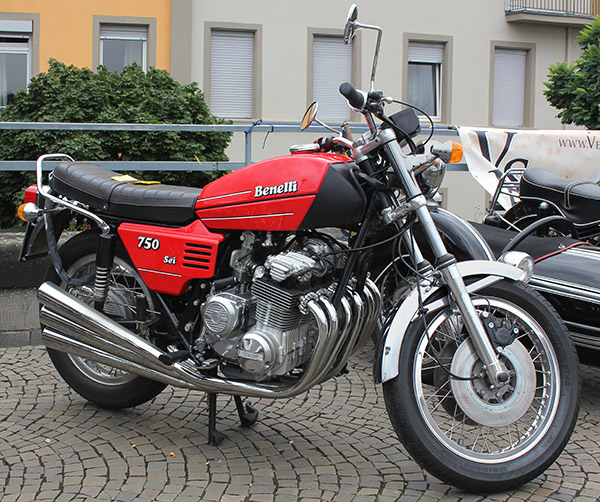
As the Sixes go, there have been a few: The Honda CBX, the Kawasaki KZ1300, the Honda Gold Wing, the Honda Valkyrie, the Benelli Sei, and the BMW K1600. This doesn’t include any custom engined bikes, and there have been a few. This blog is long enough already, so I’m leaving out things like bikes with three Triumph 650 Twin engines. All the bikes included here were factory offerings.
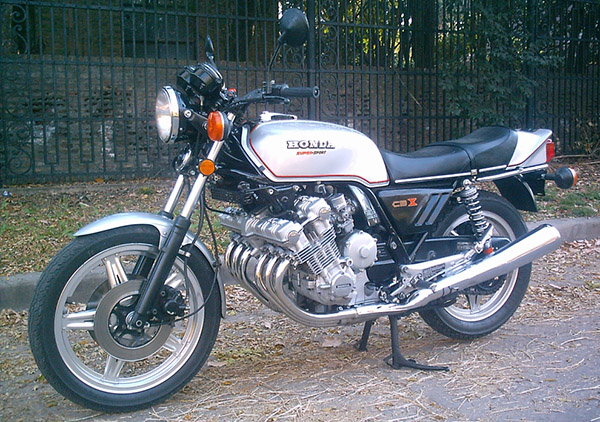
Honda CBX
The year was 1979, and I was riding a Triumph 750 Bonneville I bought new in Fort Worth, Texas. We had a Honda dealer in town that had a demo CBX, and I went over there as soon as I knew the dealer had the CBX in stock.
A 1971 Honda CBX, like the one I ruptured.
In those days, dealers of all kinds of bikes allowed unsupervised test rides. Very few dealers, if any, do that today, and for good reason. There are guys out there that will ride the snot out of them. I was one of them back in 1979. I picked up the CBX (a beautiful silver one that was essentially a naked bike; this was before Honda put the big fairing and bags on the CBX in 1981), and I headed out to Loop 820. Loop 820 (as the name implied) looped around Fort Worth. I lived on the west side of town out near the General Dynamics plant where I was an engineer on the F-16.
Loop 820 in those days way out on the west side of Fort Worth was a traffic-devoid area, and that made it a favored spot for top speed testing. My ’78 Bonneville would top out at an indicated 109 mph on Loop 820 (I think I’m past the statute of limitations on that moving violation, which is why I’m sharing this with you). Naturally, it was where I took the CBX. The bike had something like 6 miles on the odometer, but I didn’t care. The magic number? 131 mph. Yep. I was a speed demon back in the day.
When I brought the bike back to the dealer, I put it on the sidestand with the engine still running. It squirted oil arterially out the left side of the forward cam cover. It squirted in spurts, like it had a heart pumping it out. “How’d you like it?” the enthusiastic sales guy asked, and then he saw the oil orgasming out the top end.
“I didn’t,” I said. “I mean, look at it. It leaks worse than my Triumph…”
So I didn’t buy that CBX, but I never abandoned the idea of owning one.
My 1982 Honda CBX. Bone stock. Impressive. Fun to ride.
Maybe 20 years later I stopped at Bert’s, a huge local Honda/Suzuki/Yamaha/Kawasaki (and maybe a few other makes I can’t remember) dealer. He had a 1982 CBX on the floor. It was a used bike with just 4500 miles on the odometer, and he wanted $4,000 for it. It was beautiful. Completely stock, it was pearlescent white with turquoise and black accents. I stopped twice but couldn’t quite bring myself to pull the trigger. Then I stopped in a third time and it was gone. Rats. Missed it. He who hesitates is lost, and I had hesitated.
I asked about the bike and was told some rich guy from Japan had bought, and Bert’s was putting new seals in the forks, installing a new air filter, cleaning the carbs, and doing a general servicing on it. Lucky guy, I thought.
Then I stopped in a fourth time and the bike was back on the floor. The sales guy on duty in Bert’s used bike department was a nice old guy who told me he won the Daytona 200 in 1956. Did he really? Hell, I don’t know. We didn’t have the Internet yet. But none of that mattered. The ’82 CBX was back on the floor and it was now $4500. I could get my checkbook out fast enough.
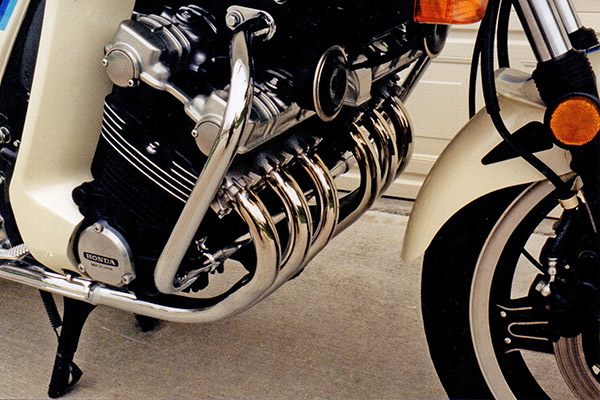
Six pipes, six cylinders, six carbs, 24 valves, double overhead cams.
I had a lot of fun with the CBX, riding all over California, Nevada, and Arizona with it. I put 20,000 miles on the bike. I even road to the Laughlin River Run one year, where it drew more stares than any of the cookie-cutter wannabe rebel yuppie EVO-engined Harleys.
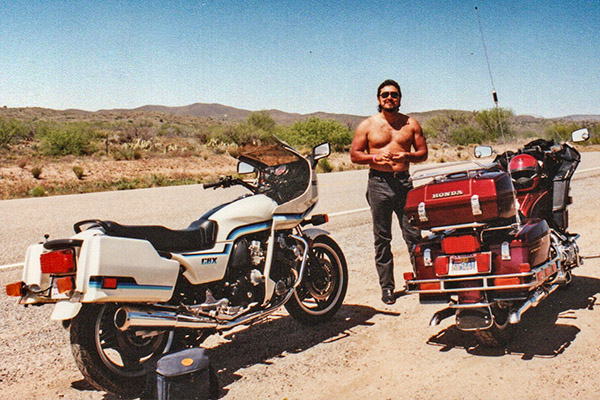
On the road near Bagdad. Bagdad, Arizona, that is. That’s my buddy Louis and his Gold Wing. Louis went into witness protection and has since taken to wearing a shirt.
I loved the bike, but I decided it was time to sell it a few years later. A friend offered me $4500, which is what I had paid for it and about what they were going for in those days, and I sold it. I wish I still had it.
The Honda Gold Wing
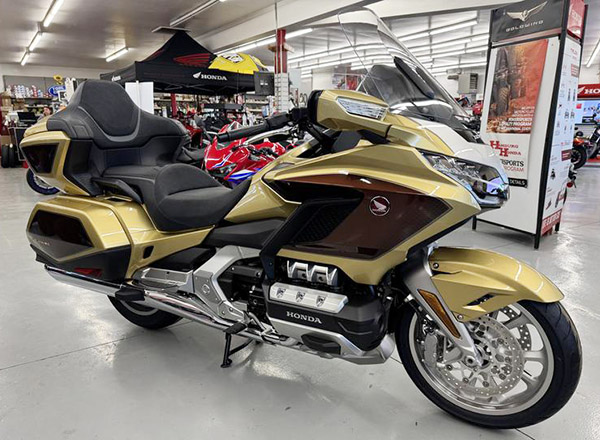
Somewhere in its history (actually, it was way back in 1988, which surprised me), the Honda Gold Wing became a flat six displacing 1520cc. I think they are up to something like 1800cc or maybe a million cubic centimeters by now. I never rode a Gold Wing Six and I never had a desire to own a Gold Wing (one short ride on Louis’ Wing, a Four, convinced me that Wings are crafted of boredominium).
A Wing Ding Six. I think there’s a bathroom with a shower somewhere in there.
None of the Wings in any denomination ever appealed to me. I know that modern Gold Wings are impressive and fast and handle well (for a battleship) and all that. The whole Wing thing just never appealed to me. Never has, and never will.
The Honda Valkyrie
The Honda Valkyrie used the Gold Wing engine and it was, I think, supposed to sort of compete with Harley. I liked the idea, and I thought I wanted one, so I went back to Bert’s and looked at one on the showroom floor. Fortunately for me and my wallet, I rode my ’92 Harley Heritage Softail there. The Valkyrie looked good, I thought, until I went back out to the parking lot and saw a new Valkyrie that someone had parked right next to my Softail. Both bikes had windshields and saddlebags, so it was a good side-by-side comparison.
The Honda Valkyrie. If you were wondering, a Valkyrie is a female warrior figure from Norse mythology. She worked for Odin and chose dead warriors on the battlefield, and then guided them to Valhalla
That visual comparison is what drove a silver stake through the Valkyrie’s heart for me. I couldn’t believe how big, porky, and bloated the Valkyrie looked next to my Softail (and the Softail was not a small machine). The Heritage Softail just looked way more svelte, nimble, and sexy. That killed it for me. No Valkyrie would ever live in my garage.
Like the Gold Wing, there were two iterations of the Valkyrie – a 1520cc initial offering and then later an 1832cc version. The Valkyries were known for their atrocious fuel economy, although I can’t imagine anyone who bought one worried about that. They were huge bikes.
The Kawasaki KZ1300
Shortly after Honda introduced the CBX, Kawasaki introduced a 1300cc, water-cooled monster they called the KZ1300 (I think that’s what they called it). Unlike the Honda CBX (whose production run lasted only from 1979 to 1982), the KZ1300 stayed in the Kawasaki lineup for several years. I don’t know why.
The KZ1300 fell from the ugly tree and hit every branch on the way down.
The Honda CBX (even though it was a Six displacing 1050cc) looked nimble, lean, and mean. The Kawasaki looked like a bus or maybe a dump truck to me. There was nothing elegant or graceful about it. I wanted no part of it. I’ve never ridden one.
Benelli Sei
Benelli jumped on the air-cooled inline 6 theme with their Sei models. They were good looking bikes, but they looked (at least to me) like a copy of the Honda CBX. As copies go, the CBX wasn’t a bad thing to use as a starting point, but to me, the CBX was a far more attractive motorcycle.
The Benelli Sei. It’s pretty, but I like the Honda CBX more.
The Sei was offered at first as a 750 and later as a 900. The Benellis were made from 1973 to 1978. I think I may have seen one or two Benelli Sei motorcycles, but I can’t remember where. I never rode one and I had no desire to. The CBX spoiled me.
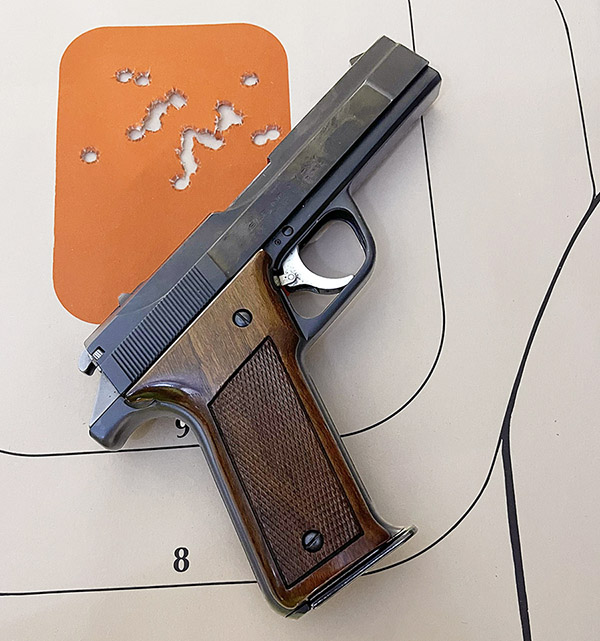
As an interesting aside, Benelli is one of those interesting companies that made both guns and motorcycles. I have a rare Benelli 9mm handgun, a pistol that didn’t make it commercially but is delightfully complex and fun to shoot. Benelli also makes rifles and shotguns. Motorcycles marketed under the Benelli name are today manufactured in China.
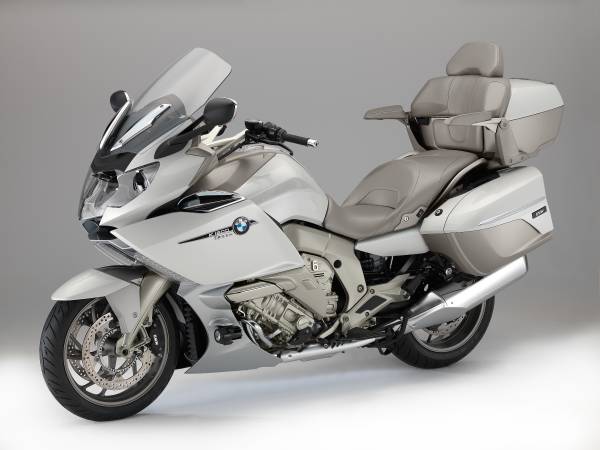
BMW K1600
The BMW K1600 series of luxo-barges are (as the name implies) 1600cc motorcycles. They have inline (across the frame) six-cylinder engines, with the pistons at a steep forward angle.
BMW K1600. Where’s the engine?
There’s a K1600 GT and a K1600 GTL. I think the L stands for luxury. Or maybe it stands for loaded (which is what I’ve have to be to ever purchase one of these 750-pound land yachts). Like most BMW products, the K1600s are outrageously priced, a situation made worse by tariffs.
These bikes, I think, are unnecessarily laden with electronics and other silly features. A few years ago when the K1600 first hit the market, I was in a BMW dealer chatting with the marketing manager. He was multitasking during our conversation. The other thing he was doing? He was trying to figure out how to use a K1600’s electronic ignition key for a bike he had just sold. BMW North America was on the phone, and the guy on the other end was similarly perplexed. That made four of us who couldn’t break the code on how to use the key (BMW NA, the dealer’s sales manager, the bike’s new owner, and me). I was the only one of the four who didn’t care, as I wasn’t going to ride the bike. Ah, the good old days…when a key was just a piece of mechanically-notched steel that you stuck in the bike’s ignition lock and turned.
So there you have it: My take on the Sixes. So is this it? We’ve done singles, twins, triples, fours, Fives, and Sixes. Surely there can’t be more.
Hey, don’t call me Shirley. Stay tuned. Yep, there are 7-cylinder, 8-cylinder, 9-cylinder, and more cylinders coming up. Stay tuned.
Missed our other ¿Quantos Pistones? stories? Here they are:
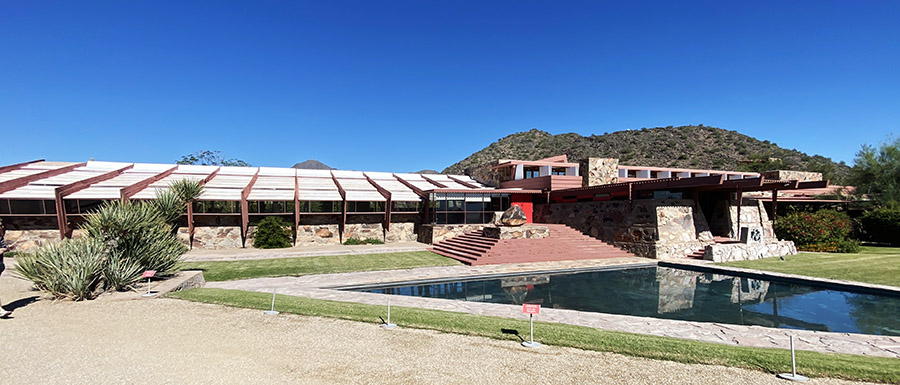
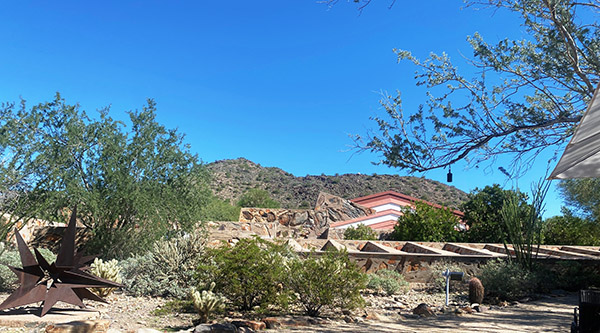
East of Scottsdale, Arizona, is a Frank Lloyd Wright house he named Taliesin West. The word “house” is being kind; it’s a mashup of tent and stone. The place is built using local rock and concrete, so you know I’m predisposed to like Taliesin.
Front view from the visitors entrance. The rocks blend in because they are from the site. We didn’t get to see the borrow pit.
I’m usually not a fan of Wright’s designs. They pointlessly stretch the function of materials and the idea of space in directions I dislike. Wright pushed the boundary of possibilities: A structure didn’t have to provide structure, it could exist simply as an idea. Take Falling Water. It barges in on the environment lording itself over the river and unnecessarily cantilevering all over the place. It’s a rude work. Not to mention his stuff leaks.
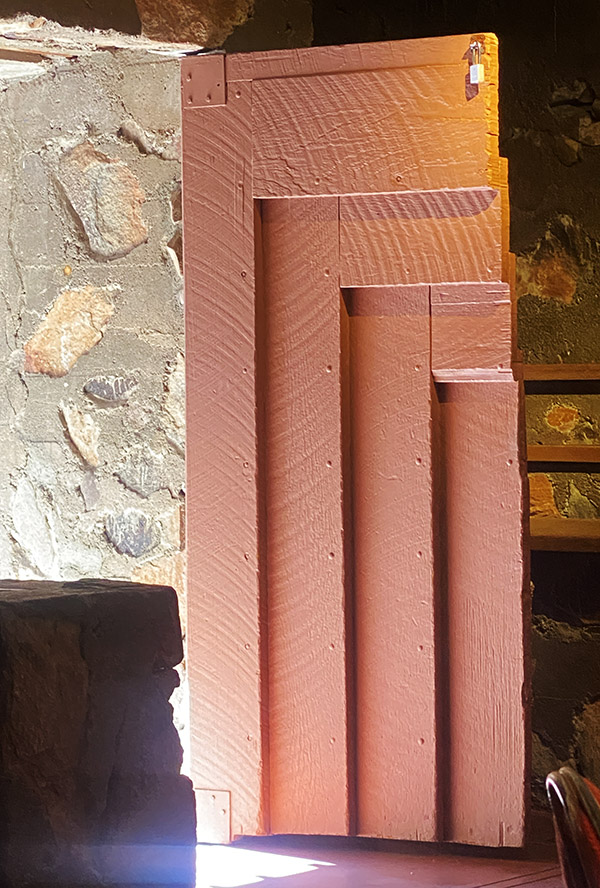
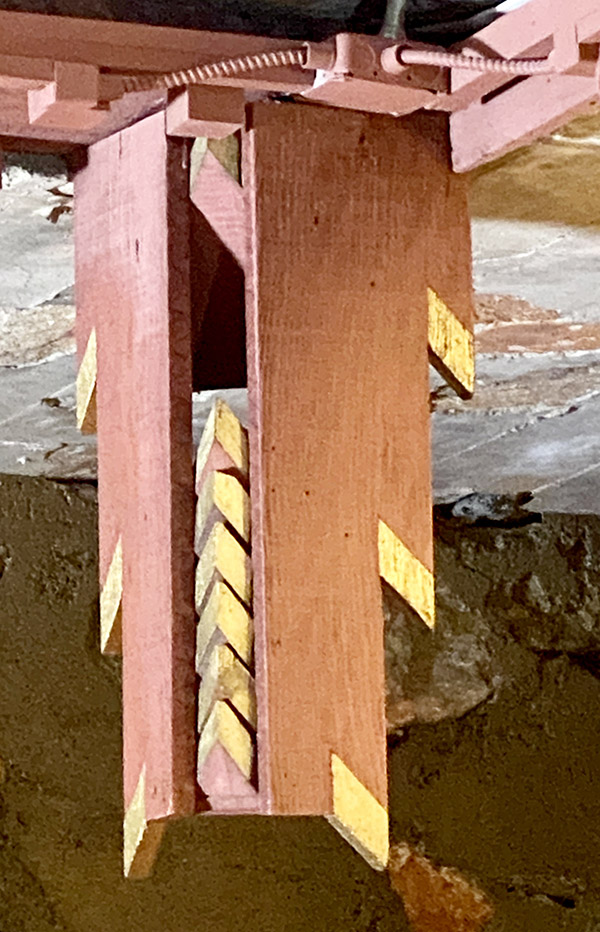
Door into the Kiva room. Kivas in my neck of the woods are round inside and partially underground. Wright got the feel with a square room.Detail of a plywood embellishment in the Kiva.
Taliesin West follows Wright’s usual distain for practicality and water tightness. Many roofs are canvas. Shutters open backwards so rain can blow in instead of shielding the windows. Painted plywood, probably the miracle material of the 1940s, is used extensively and today lends a cheap feel to the building. Not to mention the constant painting and replacement plywood requires. Odd little squares line the eaves requiring constant upkeep. Shallow reflecting pools breed slime and need cleaning frequently.
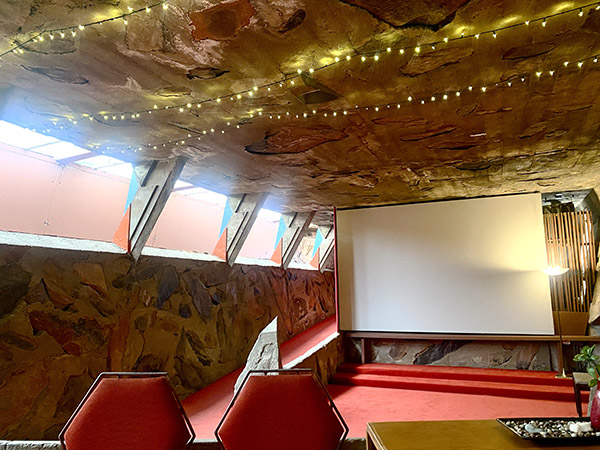
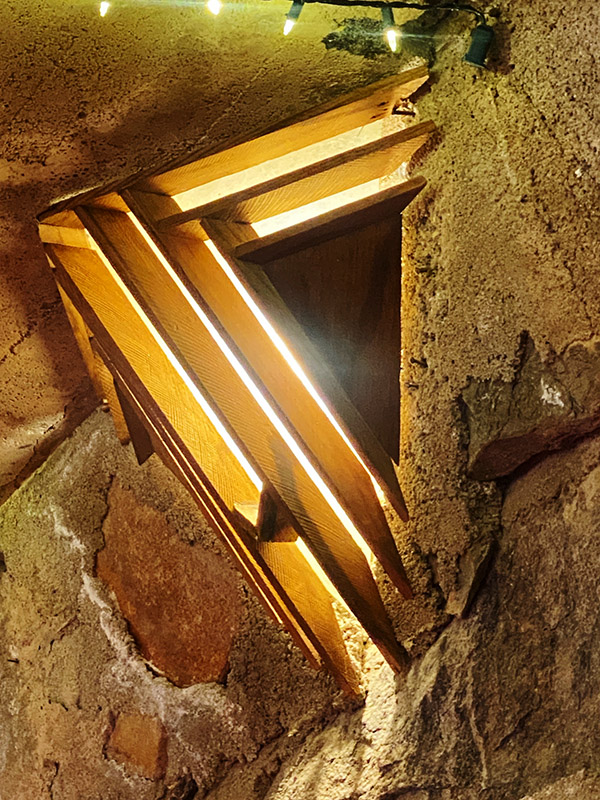
The entertainment room. Its low, heavy ceiling gives a crypt-like feel. Lots of windows to let dust and air inside.Interior wall lamps. Painted wood. Taliesin uses cheap materials, easy to replace.
Over the entertainment area the roof is a series of angled concrete and stone boxes that look like ideal water traps. Ceilings are low most everywhere and typically large Americans had to duck to get inside rooms. There’s a reason we all live in boxes. Boxes work.
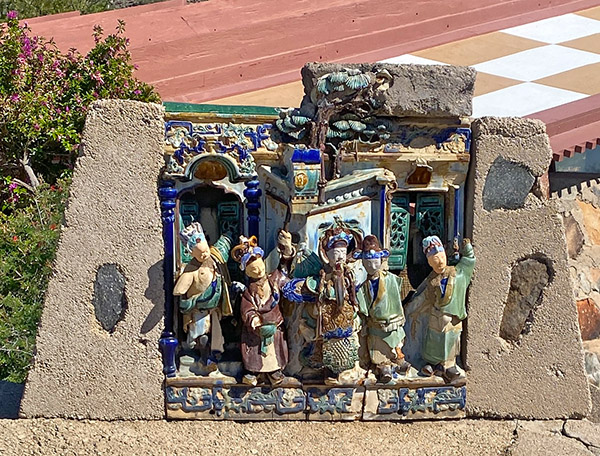
Wright liked Chinese ceramics and design. Taliesin West looks sort of Oriental.
Having said all that, I loved Taliesin. Wandering around, my inability to think outside the box kept me shocked at the unsuitable designs Wright employed. I’ll never be as free as him. Things like moving a window because he didn’t want to move a vase amaze me. My values always default to sensible. I’m going to move the vase no matter how much I like it there. Wright doesn’t do sensible.
Sitting in the Garden Room, looking out the low, western wall, gave a feeling of it being a special place. None of the boxes I build feel special. The density of the walls with their large rocks strangled in concrete felt safe. My dry-stack rock walls can tumble down at any moment. Corrugated metal buildings feel anything but safe.
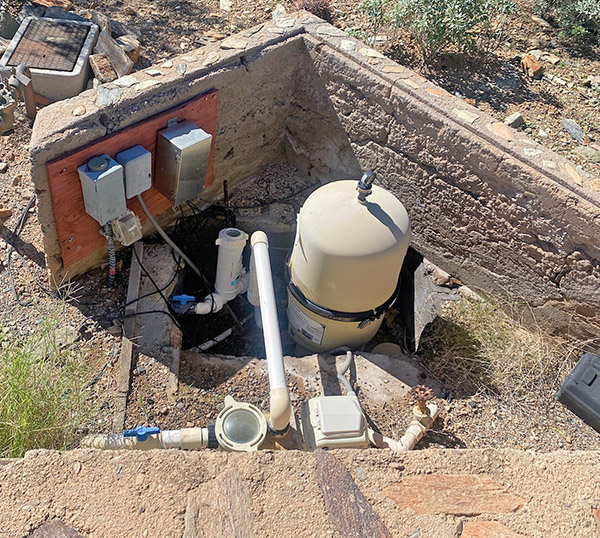
Water pump and surge tank. I’m not sure if this is for the house or the landscaping.
Taliesin started out as a 500-ace campsite and when Wright left for the summer the canvas roofs were removed and the buildings were left to the elements. Returning for winter the place would be reassembled and a crowd of designers worked there. Taliesin has a magical, Disney-theme-park feel. You expect a gnome to pop out and spin a hex around every corner.
My takeaway is this: I’m never going to build something that is doomed to fail, but I might be able to loosen up a bit and do some dumb things just because I want to. At least I’m going to try and stretch my thinking. Wright showed us that we don’t always have to follow the rules.
A few months ago Sue and I visited the Jameson Classic Motorcycle Museum in Monterey, California, for a Motorcycle Classics “Destinations” article. It was a marvelous museum in a marvelous locale, we had a wonderful time, Motorcycle Classics published the article, and I first learned of Emma Booton. Staci Jameson, heir to the Jameson museum collection, explained that several of the bikes on display had been lovingly restored by Emma Booton, whom Staci described as a “restoration goddess.”
I’m currently working on another Motorcycle Classics set of articles featuring how to do different motorcycle maintenance activities, which led me to seek Emma’s advice and, hopefully, to photograph her activities as she did some of the things I would be writing about. Well, I hit a home run there, too. Emma was very willing to support the activity, so Sue and I did another run up to the Monterey Peninsula to visit with Emma at her Moto Town shop.
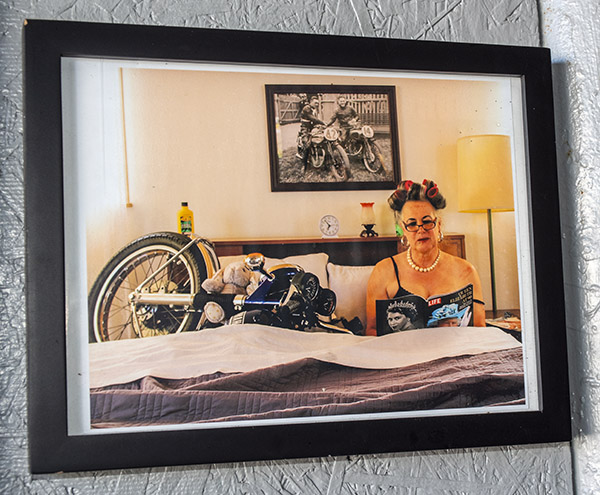
Emma has a sense of humor, as this photo in her shop demonstrates. That’s Emma on the right.
Emma and I spent a great morning together as she worked through a series of activities on a vintage Honda dirt bike and I snapped away with my Nikon. Emma is a wonderful teacher with a delightful British accent and a very keen sense of humor. It was fun and I enjoyed every second of it.
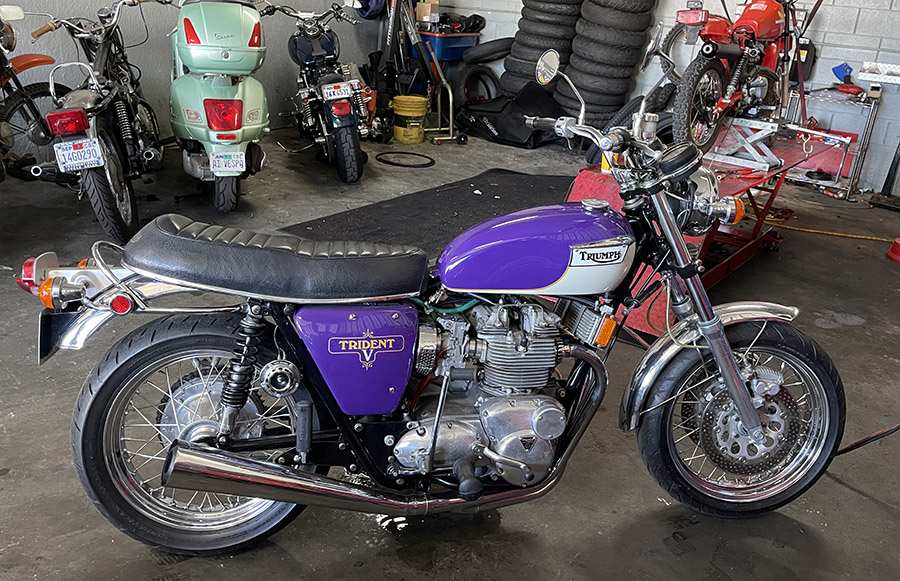
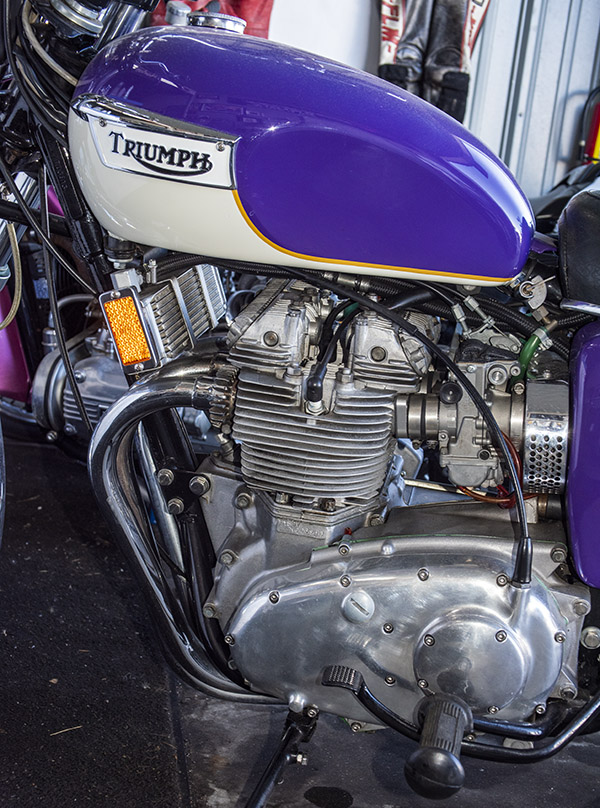
Emma Booton’s resto mod Triumph Trident. I want it.
While all this was going on, my eye wandered to the other bikes in the shop, and one in particular was visually arresting: A resto mod Triumph Trident. I asked Emma about it and learned it was one of her personal bikes. The bike has been poked out to 900cc, it has larger diameter forks and dual disk brakes, bigger carbs, transistorized ignition, a hotter cam, an oil cooler, and lots more.
I asked Emma if the colors were the stock Triumph purple that was available in those early 1970s Trident days. I remembered that Triumph had a purple, but Emma’s bike was much more vibrant than any Triumph I remembered. “No, dear,” came the answer in that vibrant British accent (aurally matching the Trident’s stunning purple paint). “I knew I wanted purple, but not the Triumph purple, which wasn’t very uplifting. I looked and looked and looked and couldn’t find exactly what I wanted, and then I saw it…the purple on a Roto Rooter truck! I call it Roto Rooter purple!”
Call Roto Rooter, that’s the way…
There weren’t any Roto Rooter trucks nearby, and on the long drive back down to So Cal, Sue and I diligently scanned the other cars and trucks we saw on the road, but we didn’t see any Roto Rooter vehicles. A quick look on Google Images struck paydirt, though, and we saw it. Emma was right. She nailed it: Rotor Rooter purple!
Emma and yours truly.
I would dearly love to own Emma’s Triumph. Not many motorcycles reach out and grab me like that, but the Trident you see here sure did. It’s a good feeling.
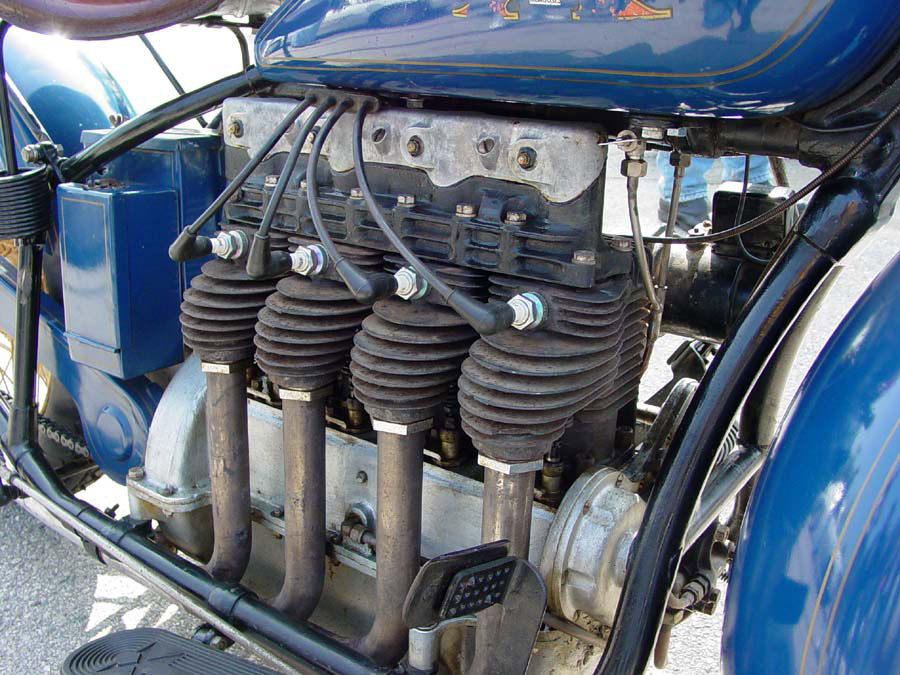
In prior ¿Quantos Pistones? posts, I wrote about engines with which I had personal experience. When dealing with five-cylinder engines, though, I cannot do that. I don’t think I’ve ever even seen a five-cylinder motorcycle. They exist, though, and I found them by poking around a bit on the Internet. The best source was Wikipedia, which lists several. I used Wikipedia as the basis for further research, and I went beyond that to include others found online.
The Straight Fives
These fall into two categories: Custom-built motorcycles created from stock bikes, and Honda’s 1960s small displacement Grand Prix racing motorcycles.
Honda built the RC148 (the first edition of their 125cc inline five-cylinder, four-stroke engine), and the RC 149 (which was a further development effort). The RC149 is reported to have reached speeds of over 130 mph. It had an 8-speed transmission and the pistons must have been about the size of thimbles. Well, not really. This engine was originally based on Honda’s 50cc twin (can you imagine such a thing). Take two and a half 50cc twins, throw in some Honda pixie dust, and voilà, you get an inline 125cc 5-cylinder GP bike. It must have been exciting, being an engineer at Honda back in the 1960s.
Here’s a video I found of Honda techs evaluating an RC149 on a Honda test track. If you like listening to engines wail (their, um, ExhaustNotes), you’ll enjoy this one:
There have also been custom straight fives fabricated from other engines. Here’s one based on the Kawasaki three-cylinder 750cc two stroke:
Those bikes must have been impressive, too. I thought I once saw something on the Internet about a similar custom Kawasaki 900 (you know, like Gresh’s old Zed) that had been cobbled into an inline 5-cylinder machine, but I couldn’t find it again. Maybe it was in a dream.
Honda’s V-5 GP Bikes
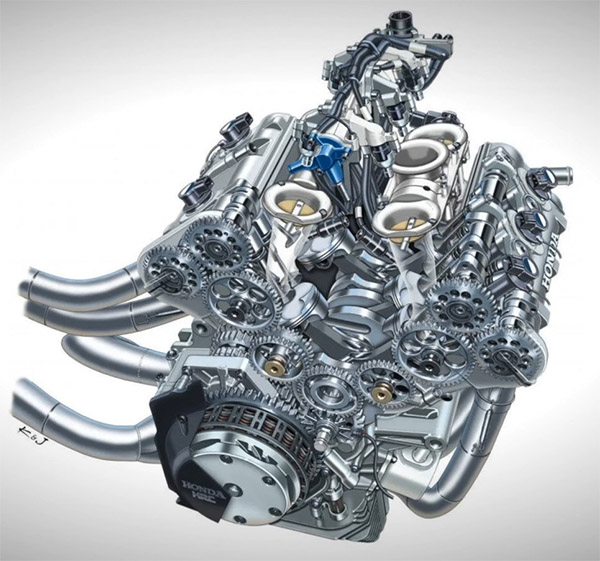
Honda was the only player in the V-5 game, and they only did so on their GP bikes in the early 2000s. That bike was designated the RC211V. Everyone else used either a V-4 or an inline four.
The reasons are very technical, but they all boil down to two advantages:
The V-5 engine was actually smaller than either a V-4 or an inline four engine, and
The V-5 engine had an inherent power advantage over the other four-cylinder engines.
The above is explained well in the video below.
The Verdel Radial 5
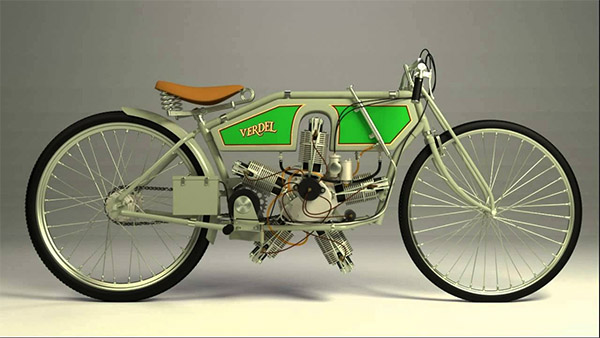
Here’s one that has a bit of controversy about it: The Verdel radial 5-cylinder bike:
Some have written about it as a rare, 1912 motorcycle, but it’s not. It was built in Britain by an engineer in the late 1990s. A notable motorcycle museum bought it thinking it was a genuine vintage motorcycle (Verdel did exist, but the company made aircraft engines, not motorcycles), and apparently the museum has since acknowledged that this never was a production motorcycle from Verdel. It kind of looks the part, so it’s easy to understand how the museum fell for the vintage bike story. The ground clearance and those two cylinders hanging out from the bike’s undercarriage just scream for a skid plate.
Go Puch Yourself
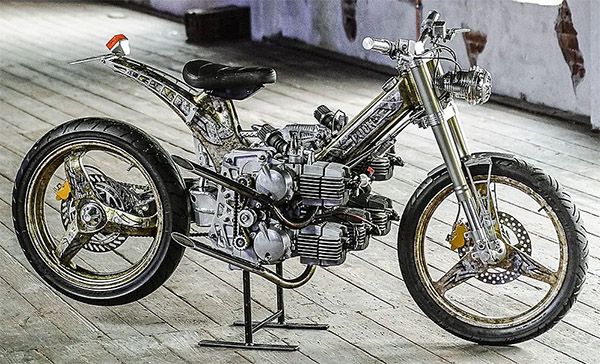
Sorry, I couldn’t resist that (every once in a while, my New Jersey roots emerge). Back to the story: Here’s another interesting 5-cylinder custom motorcycle assembled by a talented builder using Puch moped engines.
Uwe Oltman (that’s the builder’s name), a guy in Germany, assembled the custom you see above from five Puch 50cc (actually, 48.8cc) moped engines.
The info I found says the bike is pretty much an unrideable showpiece due to the noise and heat from the five Puch 2-stroke engines. They’ve been poked out to 70cc each, so I guess that makes this creation a 350. As design exercises go, I think it’s cool.
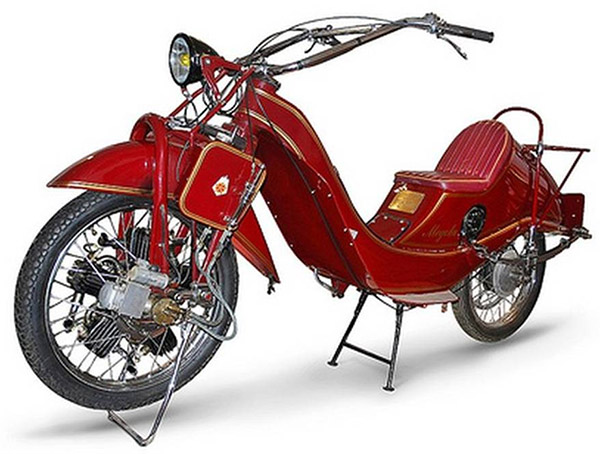
Megola
I first heard of this from a friend who had a conversation about rare motorcycles with Jay Leno. Mr. Leno has a Megola in his collection. The Megolas were German bikes from 1921 to 1925 in Munich. The name is combination of its designers’ names (Meixner, Gockerell, and Landgraf).
Megolas are about as weird as motorcycles can be. The engine’s five cylinders rotate around the front axle, with a 6-to-1 transmission that cuts the axle rotation to one sixth of the engine’s speed. The 640cc engine ran at 3600 rpm, which turned the front wheel at 600 rpm, which provided a top speed of about 60 mph. There’s no clutch, so when a Megola rider came to a stop, so did the engine. The owner’s manual suggested riding in small circles if you didn’t want to shut the engine off. Weird, huh?
So there you have it: The Fives. Next up in our ¿Quantos Pistones? series will be (you guessed it) the Sixes. That one will be easier, as I owned a Honda CBX a few years ago. Stay tuned!
Ah, missed a couple! I thought I had them all, but then I found this video, and it identified a couple more 5-cylinder bikes. Take a look; it’s worth a watch!
Missed our earlier ¿Quantos Pistones? stories on the Singles, the Twins, the Triples, and the Fours? Hey, no problemo! Here they are:
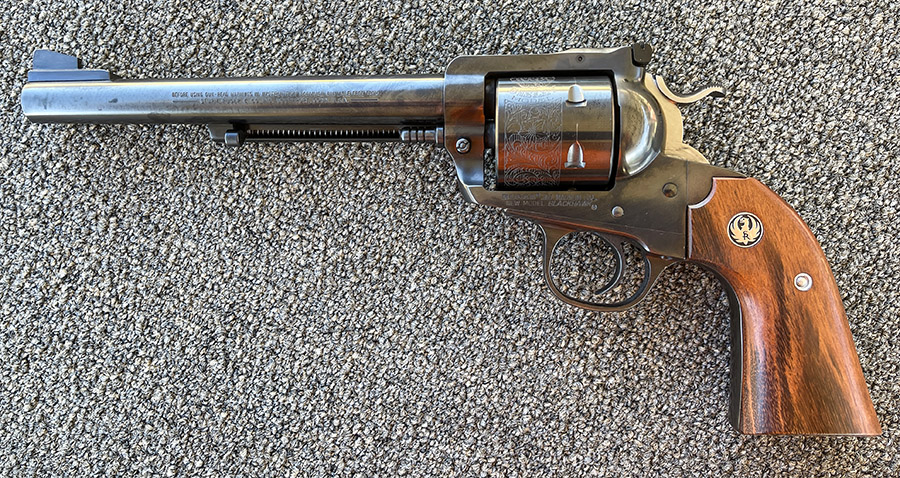
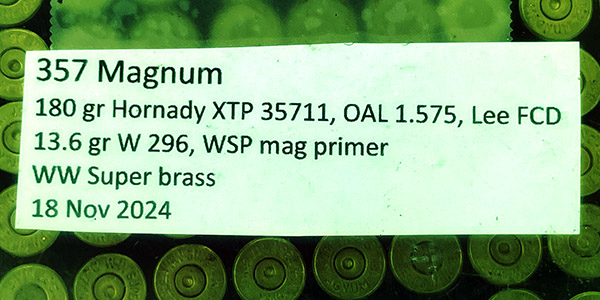
I’ve written about the Ruger .357 Magnum Bisley before, and I’ve written about other Ruger .357 Magnum revolvers. The .357 Magnum cartridge is one of my all-time favorites, and I wanted to share with you a load that is particularly powerful and accurate. It’s the one you see below:
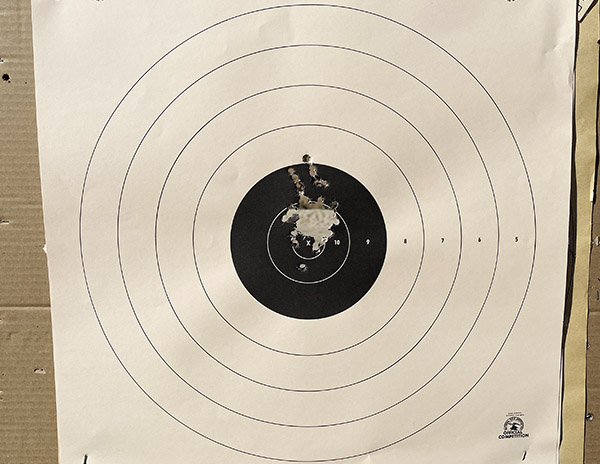
Winchester’s 296 propellant has always performed well for me in the magnum handgun cartridges and in .30 Carbine, and the .357 Magnum is no exception. I had loaded these cartridges with Hornady’s 180-grain jacketed hollow point bullets (a heavier bullet than the normally-used 158-grain bullet). I like these bullets a lot, and apparently, so does the Bisley. Here’s a 25-yard target with 50 rounds, shot from the bench, but with no other rests employed:
The average velocity from the Bisley was a cool 1194 feet per second, with a relatively small 18.4 feet per second standard deviation. This is a good load. From a metallic silhouette perspective, I can’t tell you if they will reliably take down the 200-meter rolled homogeneous ram, but I’m guessing they will.
We’ve written a lot on the .357 Magnum cartridge, Ruger handguns, and reloading the cartridges they shoot (including the very fine Lee Precision dies and turret press I use). Links to those articles are listed below.