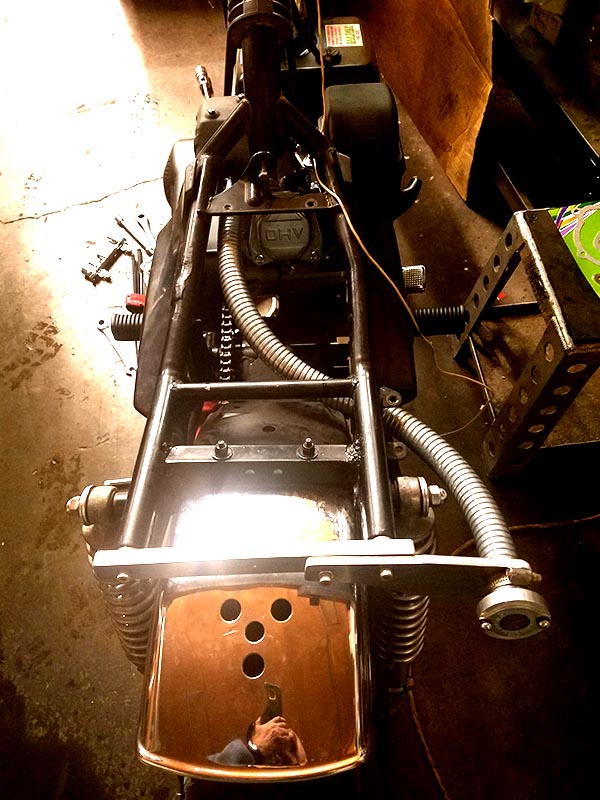
Squeeze Me: KLR250 Refresh, Reflash and Rehash Part 3

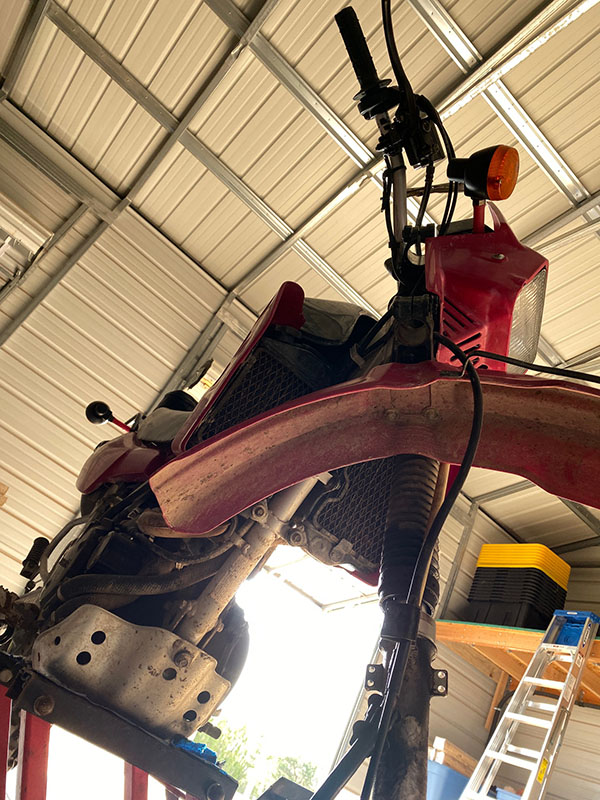
The KLR250 refurbishment has been going slowly but in addition to that I’m not getting much done otherwise. It’s the heat. Temperatures at Tinfiny Ranch have been hovering around 100 degrees or more and under these conditions it’s all I can do to press paper firebricks.
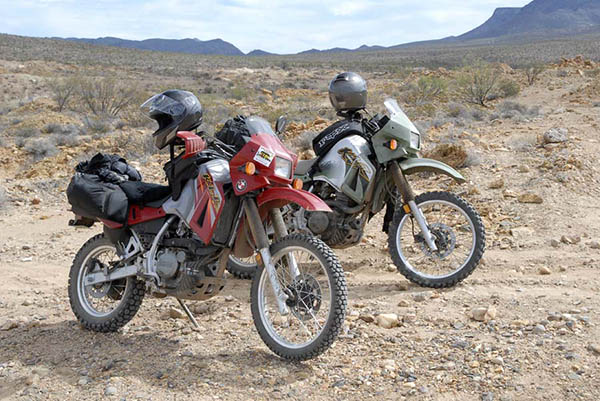
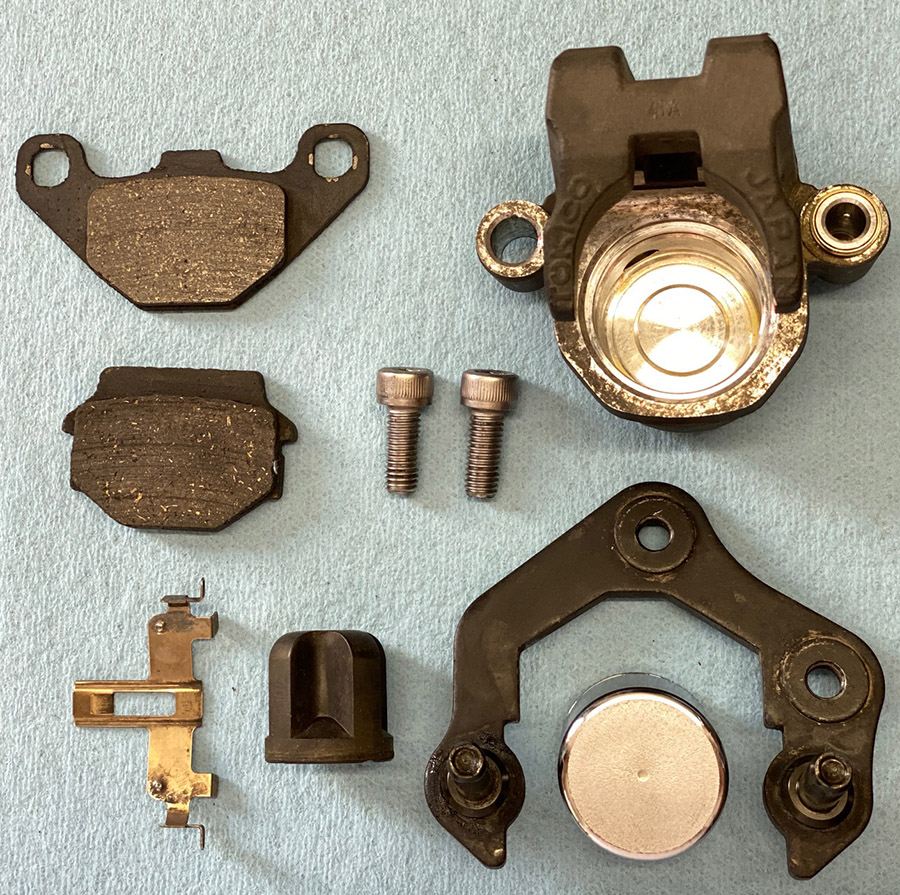
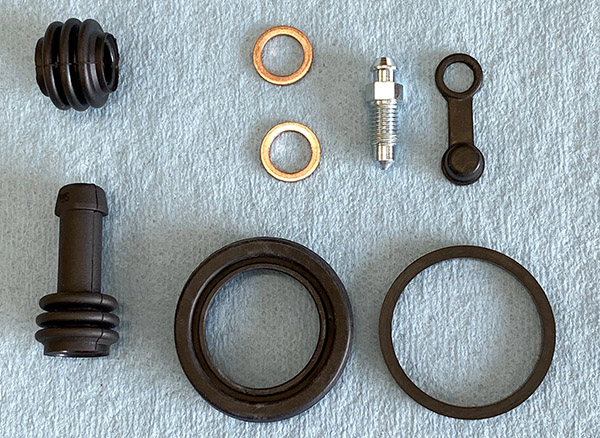
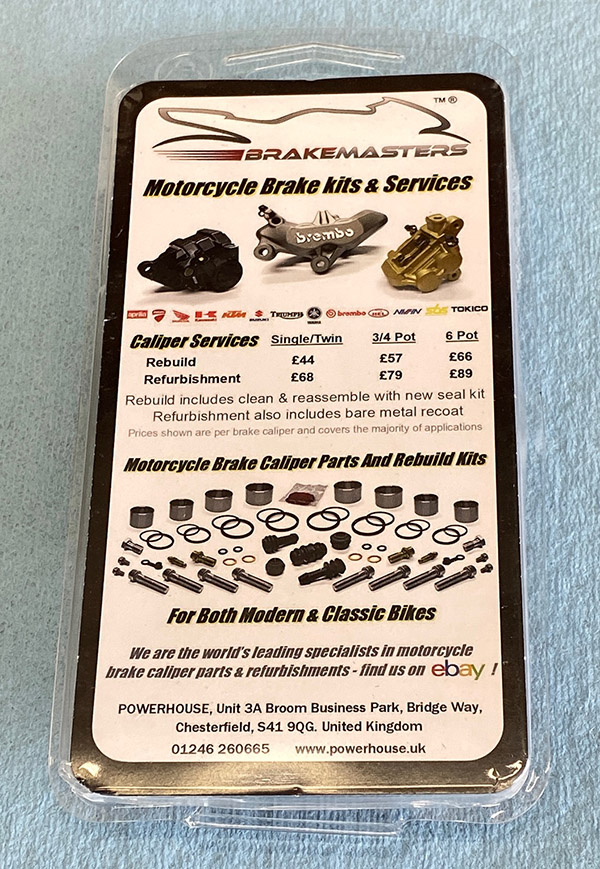
I did manage to order a brake caliper kit from England. The Widow Maker’s front brake gave me lots of problems at Daytona this year. The caliper was mightily stuck and the master cylinder was odd feeling. I managed to get the brake working well enough for Bike Week and replaced the master cylinder in a previous R, R & R episode but I didn’t trust my half-assed Florida Man repairs on the caliper.

The Brakemasters rebuild kit was very complete and was inexpensive to boot. The Widowmaker’s original rubber parts lasted through 20 years of neglect so the new stuff has a steep hill to climb. The only part I didn’t care for was the new bleeder nipple. The replacement nipple did not want to thread in easily. I could have forced it and remolded the aluminum caliper threads but instead used the old nipple, which threaded in by hand.

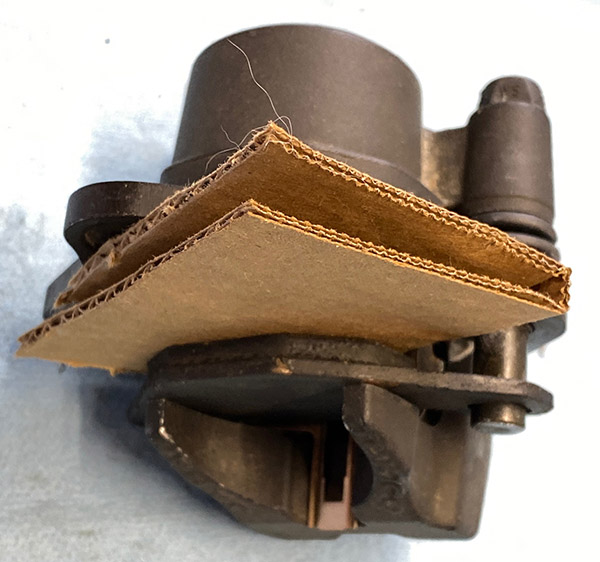
As expected, the caliper job went well. Old motorcycles with single-piston calipers are a breeze to repair. The hardest part was fitting the dust seal into the caliper body and then fitting the piston. I didn’t remember how I did the trick last March and was getting frustrated. Thank goodness for YouTube; I pulled up a quick search on caliper dust boot installation and there was a guy showing me how to do the deal.

I think in March I used a beer can to make an expander sleeve for the piston and then slid the piston into the (already installed in the caliper) boot. It just wasn’t working this time. Maybe fresh rubber is stronger than 20-year-old rubber. YouTube man fitted the boot to the piston first (the opposite of what I was doing) and let a short length of rubber hang off the back. That hanging bit was then pushed and prodded into its groove on the caliper. Once the dust boot is in the groove the piston can be slid into the caliper all the way until the piston groove catches the other end of the boot. With all the talk of grooves this sounds confusing but that’s why YouTube videos are so nice. YouTube Man’s method worked great and the caliper is now ready for reinstallation.

If it cools off a little I’ll tackle the fork seals and re-grease the steering head bearings next. And keep making firebricks, of course.


More on the KLR250 and other moto-resurrection stuff is on the ExNotes Resurrections page!

Repairing Blinkers: KLR250 Refresh, Reflash and Rehash Part 2

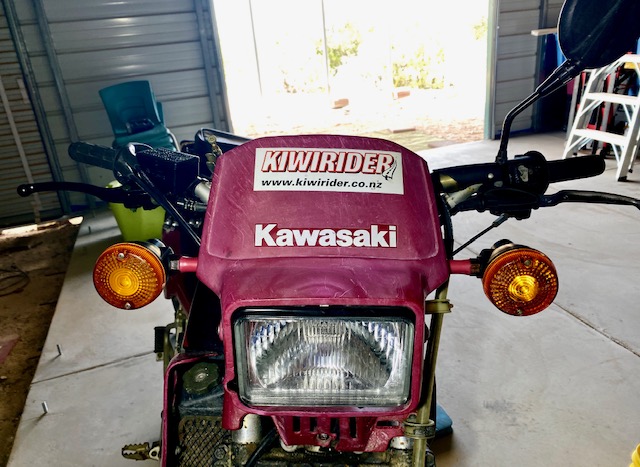
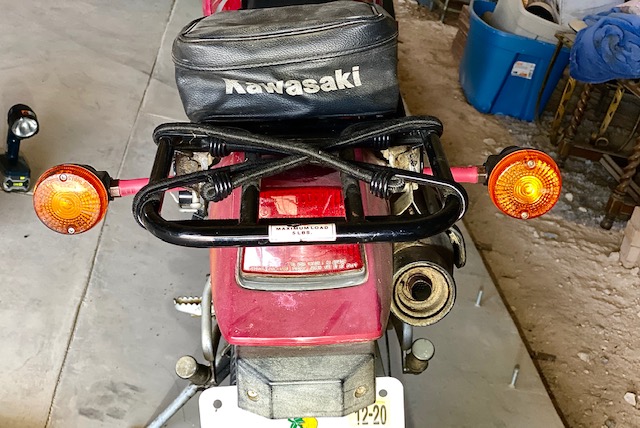
Blinkers on a dirt bike are kind of silly but lately I’ve been running The Widowmaker, my 2005 KLR 250, on the street more than is right or just. The KLR250 spends most of its time in Florida and the automobile drivers in that state are legendarily bad. With Nearly-Deads behind the wheel and blind rage as their co-pilot any blinking light that may draw attention is a good thing.

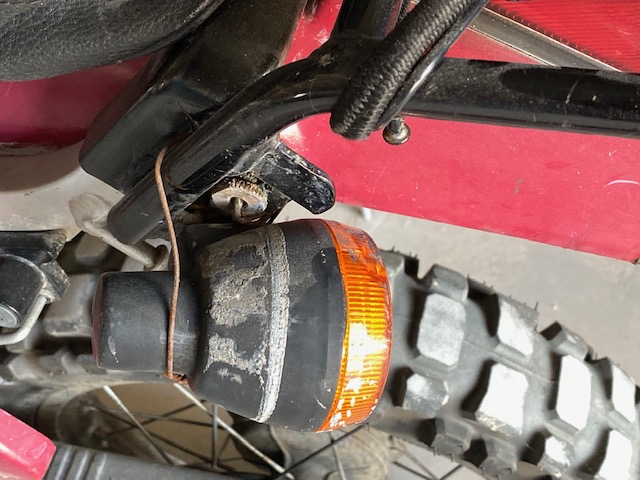
The Widowmaker’s blinkers have had a rough go of it. They worked fine when I bought the bike but several thousand miles of the Trans America Trail managed to put a pronounced sag in the rubber stalks holding the lamp fixtures. The rubber soon cracked and the blinkers hung down swinging on their electrical wires.

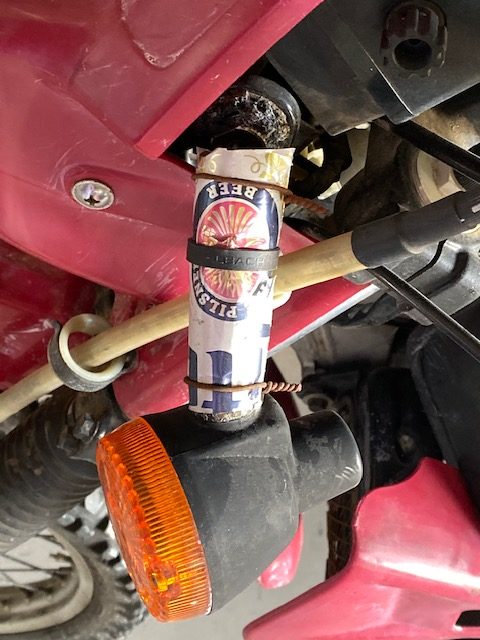
At first I managed to keep the original stalks in the game using the KLR rider’s best friend, duct tape. Soon the tape was not enough and I progressed to beer can wraps, bailing wire and spit. The rubber stalks crystallized and began to crumble into small, hard black cubes. It was a metamorphosis: soft, pliable rubber became fragile like chalk. The lamps, now free from their moorings swung in a crazy amber half circle pointing towards the ground. As they filled up with water the light fixtures quit blinking and they became memories of directional indicators slapping the side of the motorcycle.

I couldn’t find replacement stalks online. The complete blinker is sold as a unit and when your motorcycle needs as much attention as mine you can’t blow a bunch of money on parts that will break off soon anyway. I dismantled the old blinkers and decided to try to fix them for two reasons: Because I’m cheap like that and KLR riders will always take the hardest path.

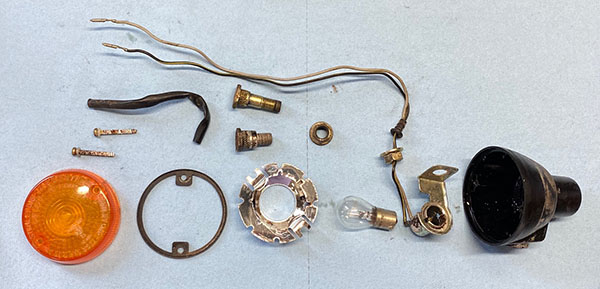
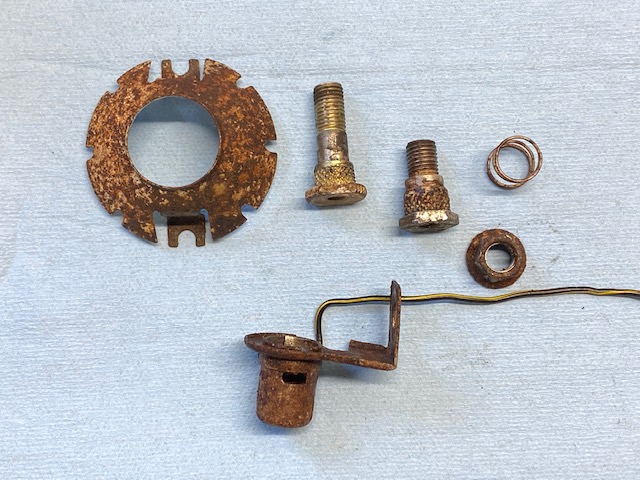
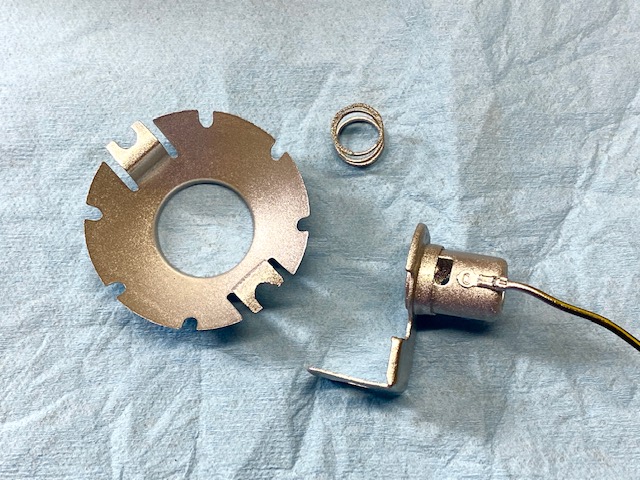
Two of the direction lamps weren’t rusty and came apart fairly easy. The rusty ones were more of a challenge. I had to soak them in penetrating oil and break the glass bulbs in order to remove the bulb base from the socket using pliers. After getting them apart I soaked the rusty bits in Evaporust for a few days and then painted the reflector and socket a fetching metallic silver.

Making new stalks was a conundrum: I needed something stiff enough to hold the lamp in position but flexible enough to bend during a crash, preventing destruction of the blinker lens and housing. I toyed with the idea of two thin strips of sheet metal to provide a malleable stem that could be bent back into position. I debated welding a thin tube between the threaded ends but didn’t have any tubing that would serve the purpose.

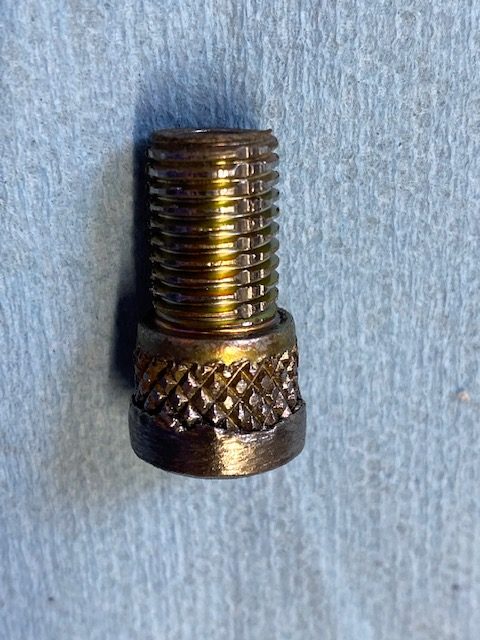
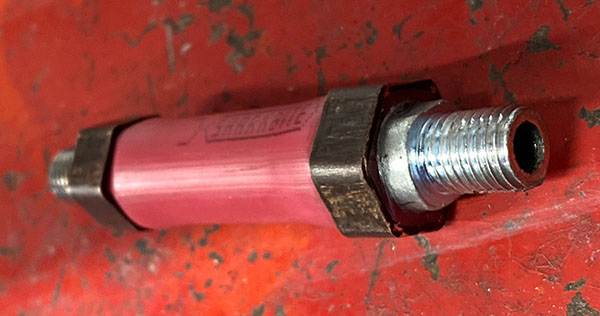
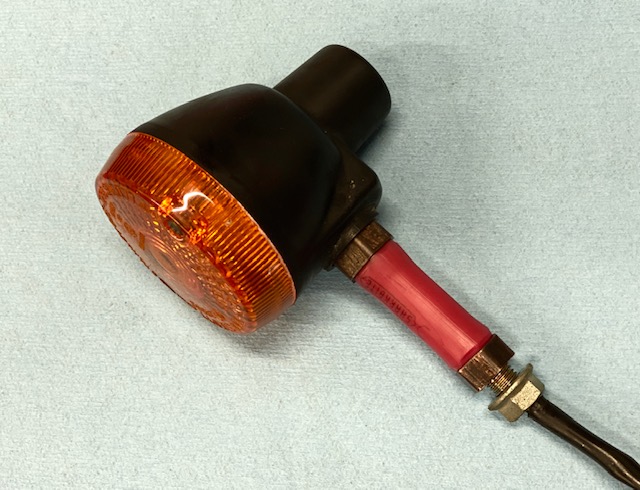
I settled on ½” Pex plastic plumbing tubing mainly because it comes in a red color than neatly matches The Widowmaker’s faded bodywork. The Pex copper crimp rings would make for a neat finished end to the Frankenstalks. The only problem was the threaded ends salvaged from the old rubber parts were a little too big for the Pex pipe.

I really could have used the South Bend lathe to turn down the ends but that project is not completed yet so I had to chuck the parts into a hand drill and grind them to size. Even cut down they were still too large for the Pex but I didn’t want to grind any more and lose the knurling. It’s amazing how a new tool opens up avenues of creativity. It frees your mind, man. My new tubing expander (bought for an air conditioning job) made short work of the Pex inside diameter and the threaded inserts fit perfectly.

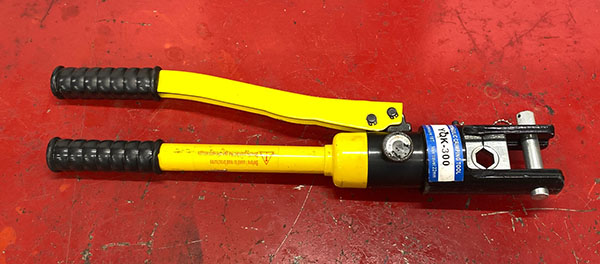
Next I used the tubing expander to resize the copper Pex crimp rings to fit the expanded pipe. Things were going well. After crimping the copper rings with a hydraulic cable crimper the stalks looked like 100 bucks.

The grinding process put a divot in the threaded end so I had to run a 10mm die over the things to straighten out the divots. With 4 new blinker stalks it was only a matter of time before everything was reassembled and back on the motorcycle. I’ll need to put a battery in to see if the blinkers actually work (I’m using the same battery in the Z1, the Husky, and the KLR) but I remain confident they will work at least as good as they used to. Which is not at all.

A few questions remain. Will the crimped ends stay put on a rough trail? I assume they will rip out during a crash and that’s good. My new stalks cost about 67 cents apiece so I can replace them as often as I like. Will the plastic tube droop leaving me with a sad-eyed KLR250? Will the bike require a plumbing inspection now? I don’t know the answers but I’ll report back if these Frankenstalks actually work.


More “Bring ‘Em Back Alive” Gresh Resurrection stories are here!

Stop Me If You’ve Heard This One: KLR250 Refresh, Reflash and Rehash Part 1

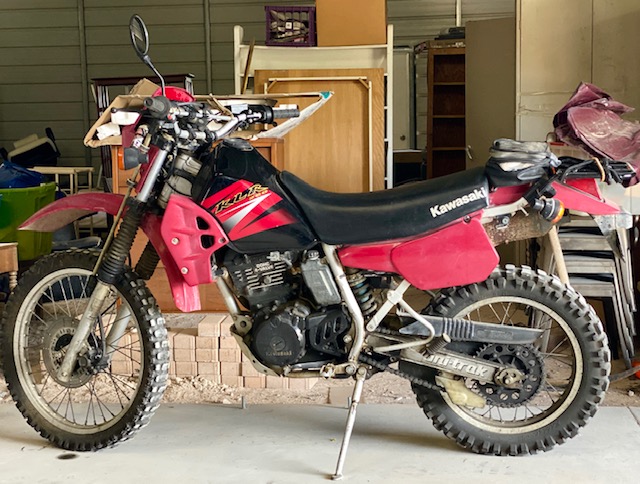
I’ve owned a KLR250 for a long time. I bought the thing on highway 40 between Ocala and Ormond Beach from a gator-meat seller named Street. When I bought it the KLR was nearly new and being a 2005 model it is the last in a long line of KLR250 Replicants that started in 1995. In 20 years of building the 250cc enduro-style bike all Kawasaki did was change the paint schemes and the seat colors.

My KLR, named “The Widowmaker” due to its extremely low power output, has done some long distance, cross country traveling but the last 7-8 years it has been stowed at The Love Shack for use in March during Daytona’s bike week. Long periods of inactivity broken up by a week of full throttle action has left The Widowmaker in a sad state so I brought her out to New Mexico for some tender loving care.

In no particular order The Widowmaker needs front brake work, blinker stalk replacement, a new front tire, valves adjusted, carb cleaned, air filter replaced, coolant and coolant hoses replaced (15 years!), back tire replaced, fork seals and a few other things I’m forgetting. It’s not that bad a list for the many years of neglect The Widowmaker has suffered under my care.

Last March The Widowmaker’s front disc brake was giving me trouble. It would not release and the disc got pretty hot from dragging. I could smell brake lining burning as I rode the bike. The Widow maker, never very fast to start with, was pushing the front forks down and struggling to make 40 miles per hour. Cracking open the bleeder on the caliper freed up the front wheel and I managed a few days of riding using only the rear drum brake.

Eventually I had to fix the brake as it was taxing my brain planning stops 300 feet in advance. I took the caliper off and the piston was firmly stuck inside with a crystalline white-ish gunk but I managed to extract the offending part without too much collateral damage. 2005 might as well be 500 years ago when you’re trying to find motorcycle parts. I went to a few brick and mortar motorcycle shops in Daytona but nobody had anything for a 15 year-old KLR. I didn’t have enough time to order online so I cleaned out the bore and stuck the caliper back together.

Bleeding the system was a challenge as the master cylinder seemed to move 2 pico-liters of fluid each stroke. The lever didn’t feel right but I pressed on. The Widowmaker’s brake was better but the caliper was still not releasing well and I determined the master cylinder was the culprit. All around me Florida was closing up due to Covid-19. I had no more time to work on the bike so I loaded The Widow maker into the truck and hauled it out west to New Mexico.

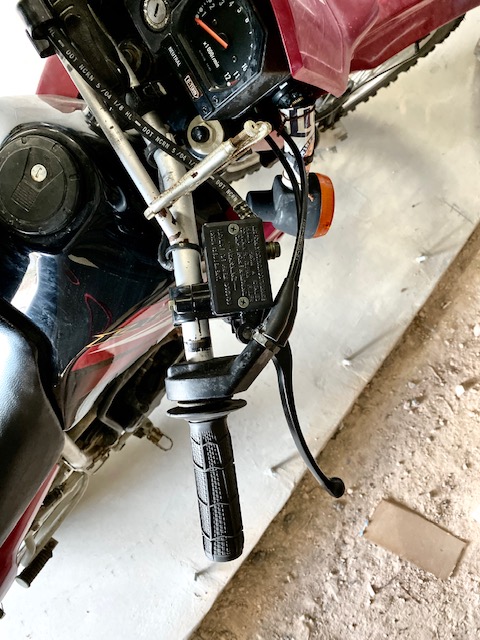
Looking online for a master cylinder rebuild kit I found new, complete, generic master cylinders with lever and all for $20! People complain about the global economy but $20 is $20. My Facebook post about the cheap master cylinder brought mixed reactions. Some said they are garbage and leak others said they use them all the time and that they work great. I went with the generic because I’m old now. If the brakes fail I haven’t lost much time.

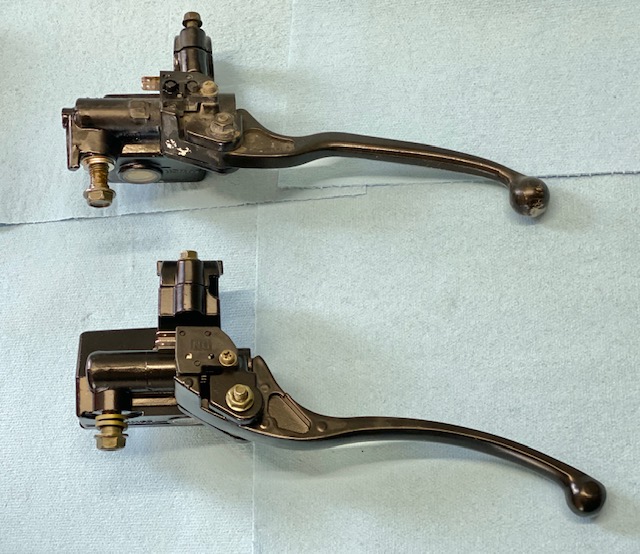
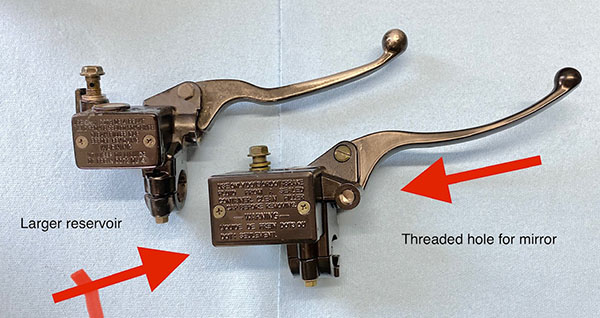
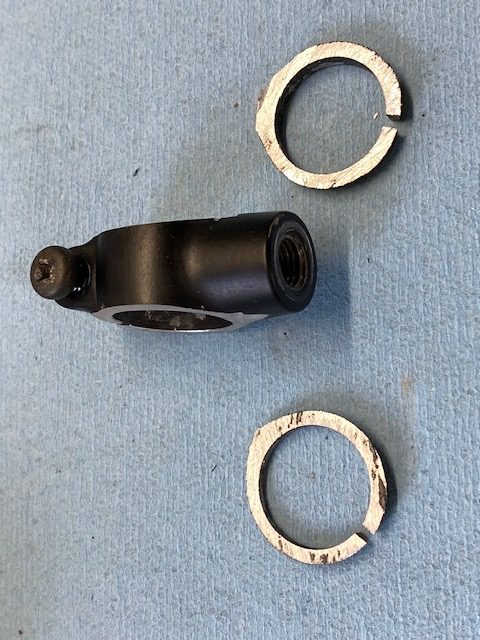
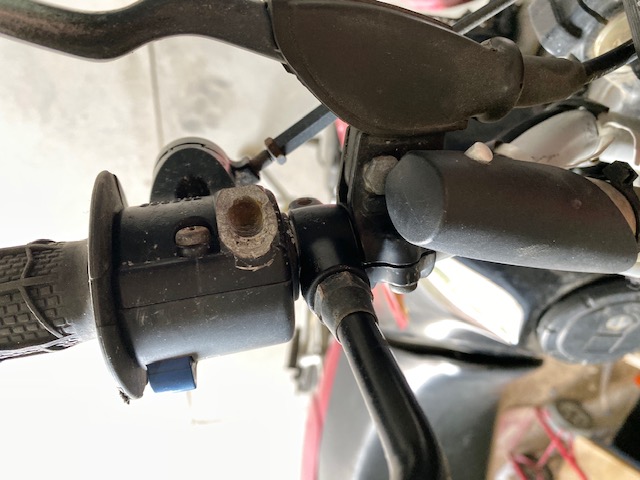
When I say complete I mean even down to the brake light switch. I opened up the unbranded box and the new unbranded lever looked great cosmetically. I could see no flaws in the construction and a side-by-side comparison with the original Nissan master showed there was nothing visual to make the OEM seem better than the generic. A few minor differences: the generic has a larger reservoir and includes a threaded hole for a mirror. The mirror mount was an unexpected bonus because I had broken the left side mirror mount in a violent side-trip through some sagebrush out in Utah. I was trying to follow Hunter at the time. The extra mounting hole allowed me to transfer the old, right side, stand alone mirror mount to the left side where I had wanted a mirror ever since the sagebrush incident .

If you Safety Nazis are wondering where the handlebar kill switch is I can tell you that it broke off years ago in a less memorable crash. The key switch is only a foot away. The new master cylinder installed and bled out easily. The front brake has a firm lever, firmer than it ever was. The caliper releases nicely and all seems rosy. Time will tell if the replacement master cylinder lasts as long as the Nissan.

The left side of the handlebar has the (also broken) light/blinker/horn and all that works well. I had to thin down the mirror mount to fit between the clutch lever (not broken!) and the switch cluster.

I don’t want to give you the wrong impression. Realize it has taken many years to break all these parts. I’m not tossing the bike down the road everyday, you know? The Widowmaker’s features, like a boxer fighting past his prime, are becoming smoother and less distinct from the blows. If I don’t turn back the tide of destruction now The Widowmaker will look as bad as a 2021 Goldwing.


Want more of Gresh’s resurrection projects?  Just click here!

Baja 2009: The KLR Khronicles Part IV

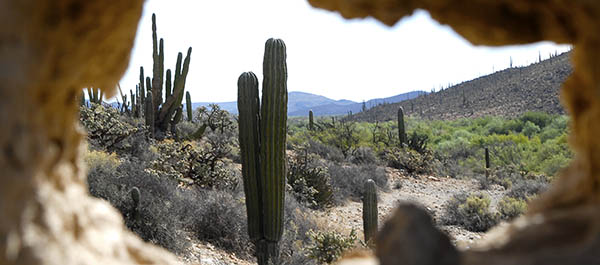
The view, peeking out from the Mission San Velicata de Espana ruins.

Read Parts I, II, and III of the 2009 KLR Baja foray here!


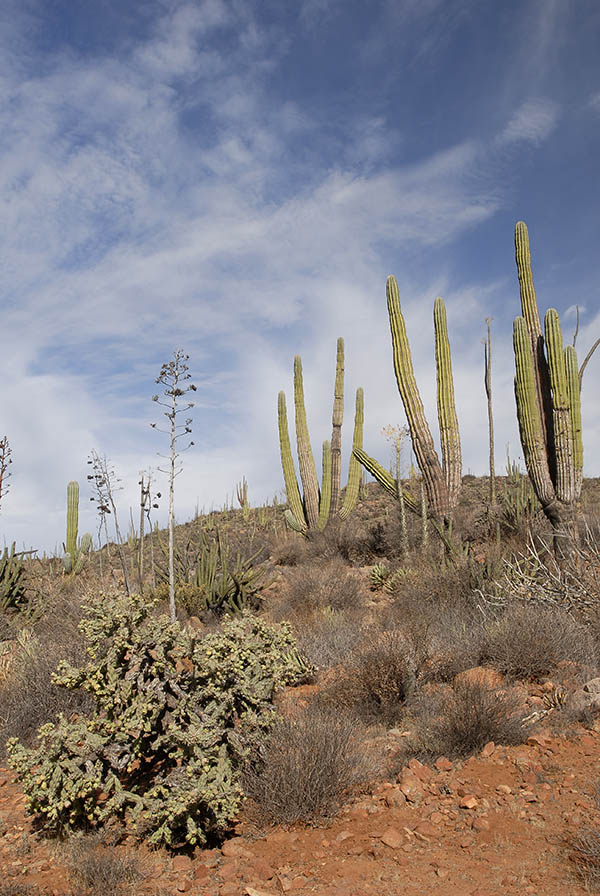
When the Transpeninsular Highway continues south after leaving El Rosario, it crosses a long bridge across the dry Rio El Rosario and then winds into the mountains on the northern edge of the Valle de los Cirios.  The wilderness starts here, and it is awesome.   I love this area. It’s the first place you encounter cardon cactus and the cirios. These things grow only in Baja (you won’t find them anywhere else on the planet). The Cardon are the giant cactus that look something like the saguaro cactus in Arizona, but the cardon are much, much larger. The cirios are the weird-looking thin shoots that grow to heights of around 30 or 40 feet (maybe even more). Someone once wrote that they look like a plant that Dr. Suess would have designed, and I think that’s a good description.  They have this kind of weird, whimsical, goofy look…the kind of thing one might create when under the influence of, well, whatever your preferred mind-altering substance is.

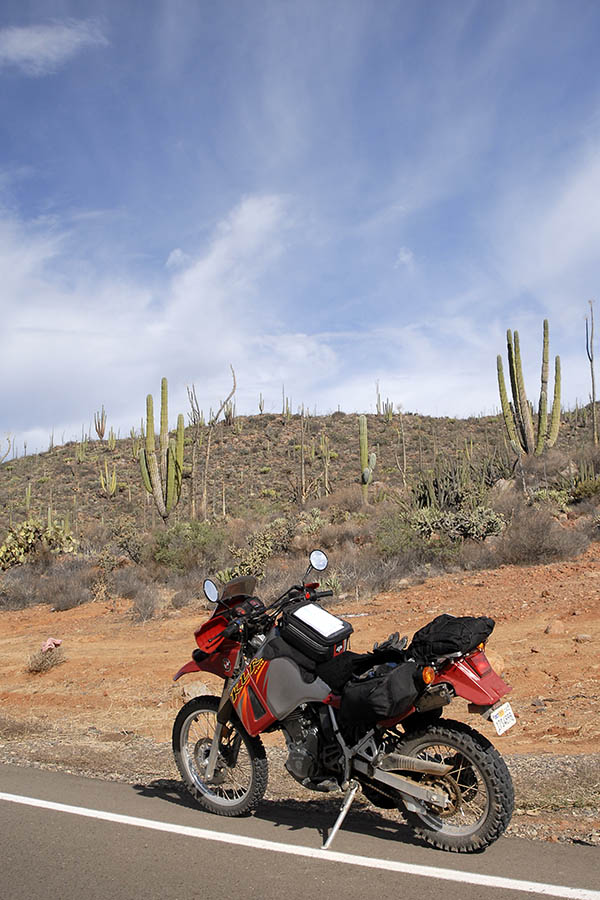
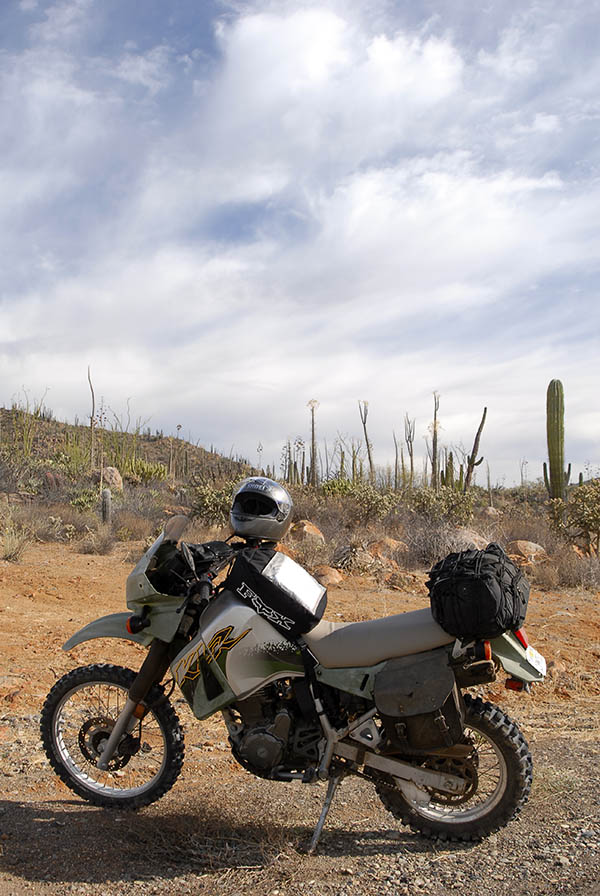
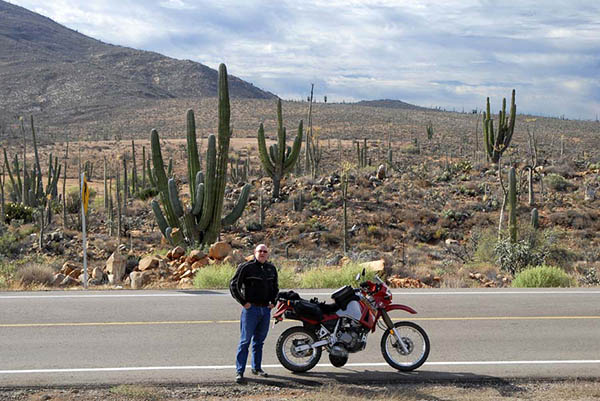
I grabbed a few shots of our KLRs a few miles into the mountains.  You can see the cardon and the cirios in the background.

My KLR 650. I had the Kawi soft luggage on it and a Nelson-Rigg tank bag.
John’s KLR. These bikes just keep going and going. They’re perfect for this kind of ride.
Baja cacti. It’s one photo op after another in Baja.
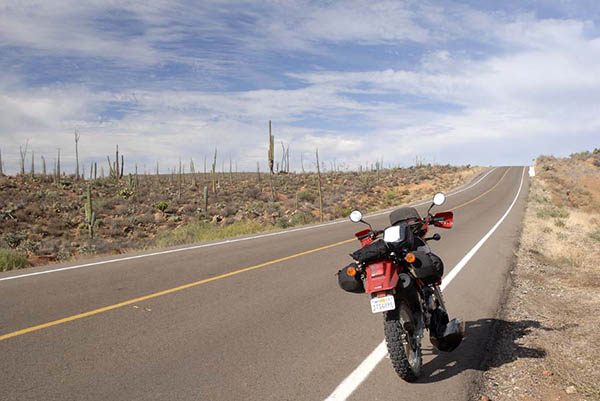
A shot along the Transpeninsular Highway in the Valle de los Cirios.
Baja John standing by my KLR. The background almost looks like it’s been painted into this scene.

After rolling along the highway a few more miles, I saw something out of the corner of my eye on the road.  At first I wasn’t sure, and then as I was playing back the image mentally, I decided I needed to turn around and take another look…

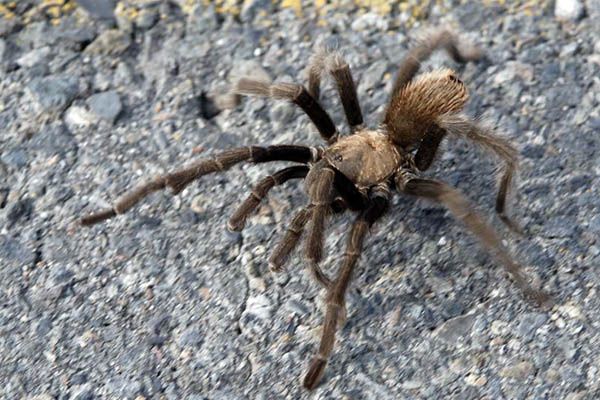
Yep, my eyes weren’t playing tricks.  I had seen what I thought I saw.  Is that correct grammatically?  Whatever.  The spider was huge.

Wow, that was one monstrous tarantula!  We parked the bikes and started taking photos.   This spider was easily double the size of the tarantulas I’ve seen in California.

John got down in front of the tarantula.   He squatted to get a closer look, and then something wild happened. The spider ran straight at John. We were both shocked at its speed. They normally seem very deliberate and slow, but I have to tell you, that one moved terrifyingly fast.

John jumped up, screamed, and propelled himself backwards faster than a Democrat mistakenly wandering into a Trump rally.  John was paddling backward so fast he looked like an old Warner Brothers roadrunner cartoon.

We both laughed after it happened.  Here we were, two guys old enough to know better, screwing around with a ginormous tarantula in the middle of the Baja peninsula, laughing like a couple of kids.  Baja does that to you.

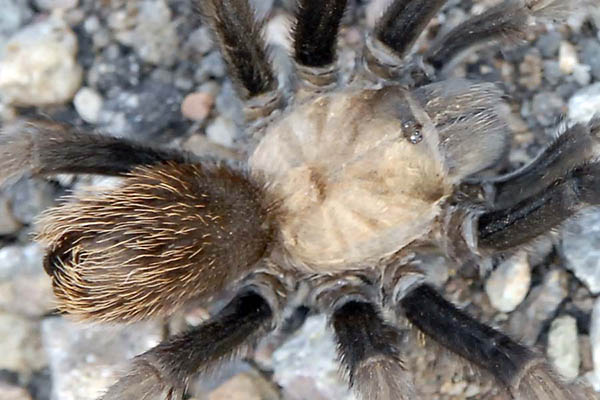
Look at this fellow’s little beady eyes. And his hairy butt. That’s quite a hairdo. It kind of reminds me of Beavis and Butthead. Come to think of it, those might be appropriate names for John and me.
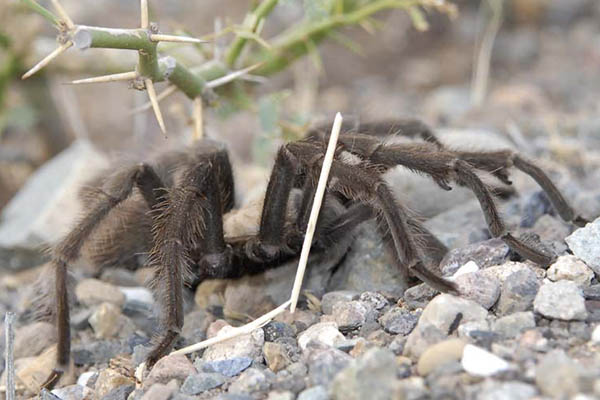
The tarantula crawled under a plant, I took a few more photos, and we were on our way.

I think I already mentioned that I had my Nikon D200 on this trip and an older (non-VR) 24-120 Nikon lens. I mostly shot at f/8 (the 24-120’s sweet spot) in the aperture mode, which is a mode that works well for me. I also had the 12-24 Tokina wide angle lens along for the ride, but I never even mounted it on the camera. The 24-120 is not a macro lens, but it did an acceptable job here.  The Tokina lens does a good job, too, but the 24-120 Nikon was handling everything for me on this ride.

Our next planned stop was the Mission San Fernando Rey de Espana Velicata. We almost didn’t go. I had been spooked by the dogs, and I told John the night before that I wasn’t too keen on rolling through any more little villages with dogs. John waited awhile and casually mentioned that he really wanted to see some of the sights accessible only by dirt roads. I acquiesced and I’m glad I did.   We saw some amazing things…things we wouldn’t have seen if we hadn’t wandered off road.

Further down the Transpeninsular Highway, we saw the sign for the Mission San Fernando Rey de Espana Velicata and a dirt road veering off to the west.   I took the turn first, and son of a gun, a dog materialized out of nowhere and started chasing me.   This time the dog was so small it was funny.  It was a little Chihuahua, and he looked anything but threatening.   The little guy was behind me yapping up a storm and I was enjoying the chase.   Those little legs were pumping for all they were worth and he still couldn’t keep up.  It was me, the Chihuahua, and John (in that order) rolling down this dirt road.  The pup was struggling to keep up, barking all the while and trying his best to be intimidating.  I could hear John laughing behind me.  I should have grabbed a picture.

On the road to the Mission San Fernando Rey de Espana Velicata

The Mission San Fernando Rey de Espana Velicata was the only one in Baja founded by the Franciscans (the Jesuits did all the others).  It only lasted from 1769 to 1818. It was built to convert the local Cochimi Indians to Catholicism (that was how it was advertised; basically, the missions were labor camps with a touch of that old time religion).  Unfortunately, the Spaniards brought diseases for which the indigenous people had no immunity, and disease soon ravaged the area. The entire mission system in Mexico ended in the early 1800s, when Mexico gained its independence from Spain.  It’s not a pretty story, but there’s a history here and it’s intriguing to visit these ancient places (especially when they are well off the beaten path).

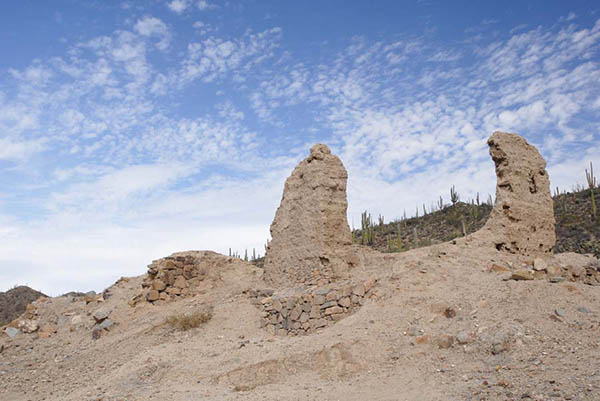
The Mission San Fernando Rey de Espana Velicata. This is all that’s left of it.
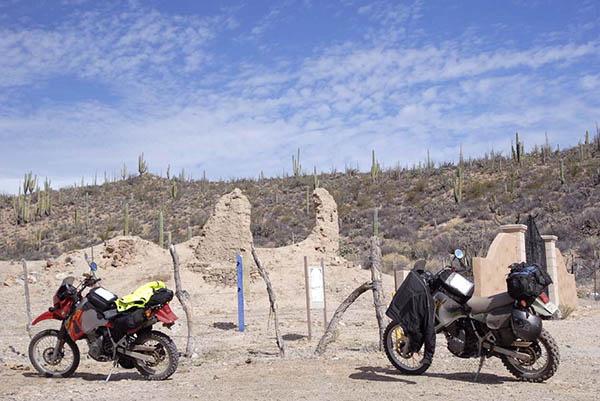
Our KLRs parked in front of the mission ruins.

The place was amazing.  I’d seen the sign and the dirt road to get to the mission on each of my prior Baja visits, but I had never been to see it.  Getting there and taking it all in was fun.

After visiting the Mission San Fernando Rey de Espana Velicata, we rolled south along the Transpeninsular Highway a few more miles and took another dirt road (this time to the east) to see the ruins at El Marmol. El Marmol was a world-famous marble and onyx quarry 50 years ago. Like the mission, we’d seen the signs for it on our earlier travels through Baja, but we had never made the trip out there to see it. I always wanted to see what El Marmol was all about, especially after reading about it in several Baja references.  Carole Lombard had a bathtub made from El Marmol marble, you know.

The ride out to El Marmol was exciting.  The road was rough and had deep sand in several spots. My friend Bob had previously told me that the best way to take this stuff was at high speed, and that’s what we did. It made an enormous difference. I could see the rough road beneath me, but the KLR’s long-travel suspension let me fly over it. It was almost an out-of-body experience.   I enjoyed it.  I was in the zone, and suddenly, we were there.

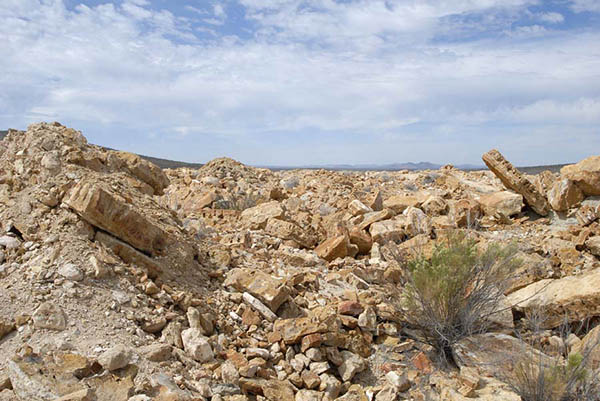
El Marmol. There isn’t much to it, other than a pile of big rocks.  Folks still come out here to get the marble.  We saw a few Mexicans loading some into a tiny pickup truck.
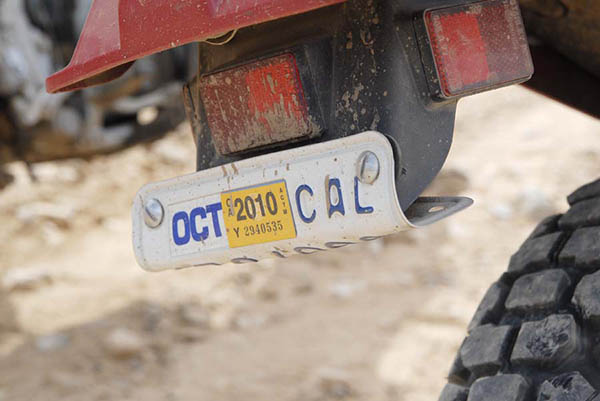
I bottomed the suspension in a few spots on the ride out to El Marmol, and this is what it did to my KLR’s license plate.  Many first-gen KLR owners relocate their license plate up on top of the rear fender. Now I know why.
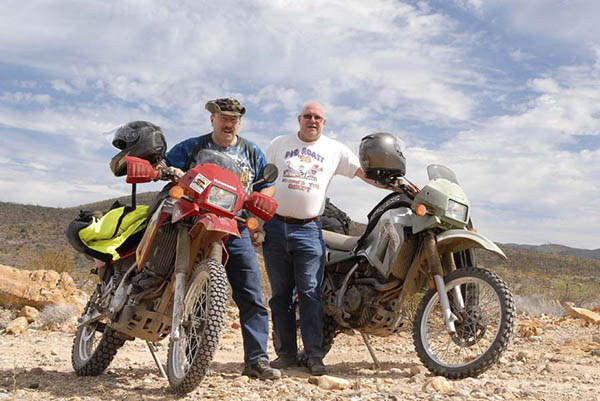
Two KLRistas at El Marmol. That’s my yellow riding jacket on my KLR.  It seemed to aggravate any dog who saw it.
The KLRs at El Marmol.

We stopped for a break on the way out of El Marmol where the dirt road rejoined the Transpeninsular Highway.  We had a good conversation with Jose, a police officer from Catavina who consented to a photo.

Good buddy Jose, my tocayo.

There were two dogs hanging around the place watching John, Jose, and me.  They seemed friendly enough when John gave one of them a snack.  Then we got on the motorcycles and it was as if someone had flipped a switch.  The dogs instantly turned mean, snarling and going after John, who was accelerating sharply way (a relative term, to be sure, when you’re on a KLR).  There’s a rule in Mexico, I guess.  If you’re a dog and you see a guy on a motorcycle, you’ve got a reputation to maintain.  This time, though, both dogs went after John and ignored me.   They chased John all the way back to the highway, with me following.   Hey, that’s was okay by me.  I’d already earned my combat pay.

The dogs chasing John, though, didn’t seem to have their hearts in it.  They were chasing John like it was part of their job description and the boss was watching.  Going through the motions.  Phoning it in.  You know the drill.

I thought about that as we continued south.  I reasoned and hoped that as went further into Mexico (and we were about 350 miles into Baja at this point), the dogs might be nicer.  Our next destination was Guerrero Negro, 500 miles south of the border.  We would soon find out.


Check out our other Epic Motorcycle Rides, and watch the ExNotes blog for the next installment of the Baja KLR Khronicles!

Like what you’re reading?  Sign up for our automatic email updates, and you’ll be eligible for our quarterly drawing to win one of our adventure motorcycle books.  Want to read about our other Baja motorcycle adventures?   Order your own copy of Moto Baja here!

Rob’s project bike…

I received an interesting email from my good buddy Rob a couple of nights ago.  Rob is an interesting guy…I rode with him on the 5000-mile Western America Adventure Ride described in 5000 Miles at 8000 RPM, and then again on one of the Baja trips.

Good buddy Rob in Oregon.
Rob’s mascot on a bike he calls “Donkey Hoty.”

Here’s Rob’s note to me, along with some very interesting photos…

Hi Joe,

Hope your living life to the fullest. I really enjoy you and Gresh’s ExhaustNotes and keeping up with you.

Anyways its very cold up here and to kill time I’ve been looking at Ball and Cap pistols and wondered if you had any experience shooting, loading, etc. with them?  Any further plans on an east coast RX3 trip or Alaska?

If your ever up here in the Pacific Northwest area , give me a shout.  Maybe I can meet up with you somewhere.

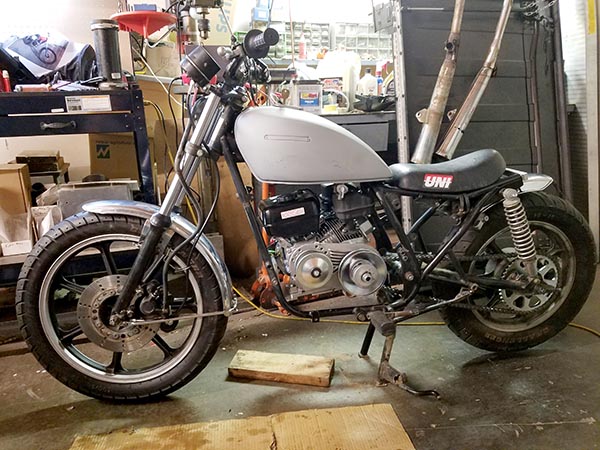
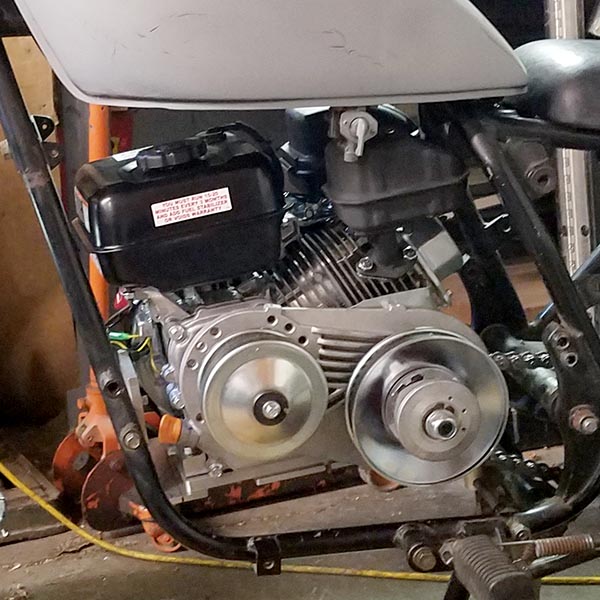
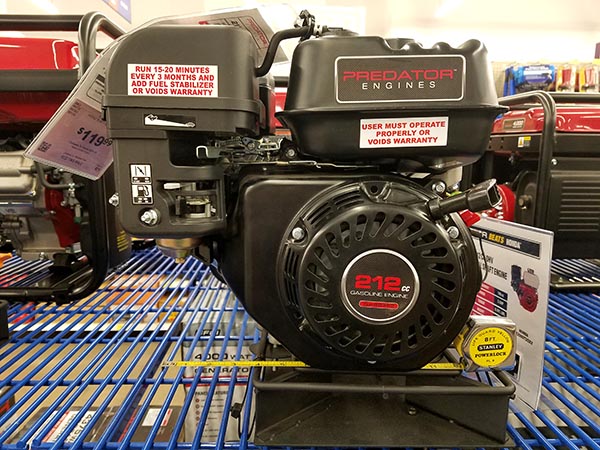
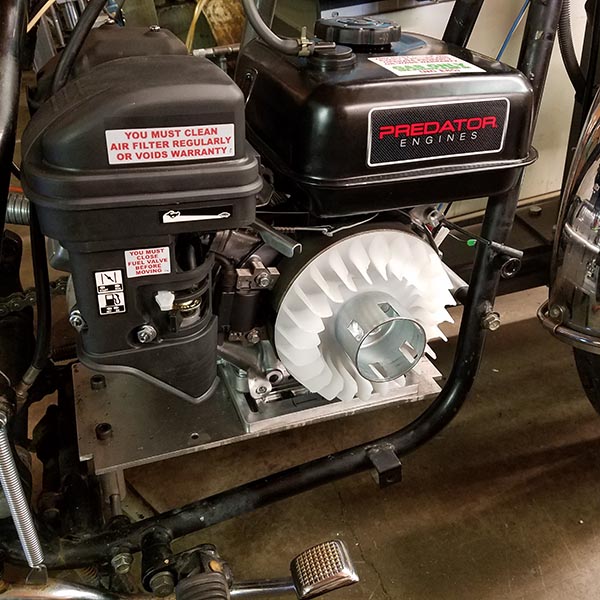
Not sure this year where all my bikes will take me. My favorite rally in Hells Canyon is done and over with and she’s looking for another venue place to host it.  I may try and get to the beater bike rally in Hood River. I’m working on a Kawasaki KZ440 that I took the motor out of and put in a Harbor Freight 212cc lawn mower motor in it with a cheap torque converter so its an centrifugal clutch auto like a big mini bike. If I can get it to go fast enough (45-55mph) I may try and ride down to rally from Walla Walla.

Hope all is well with you and yours Joe. 

Take care,

Rob

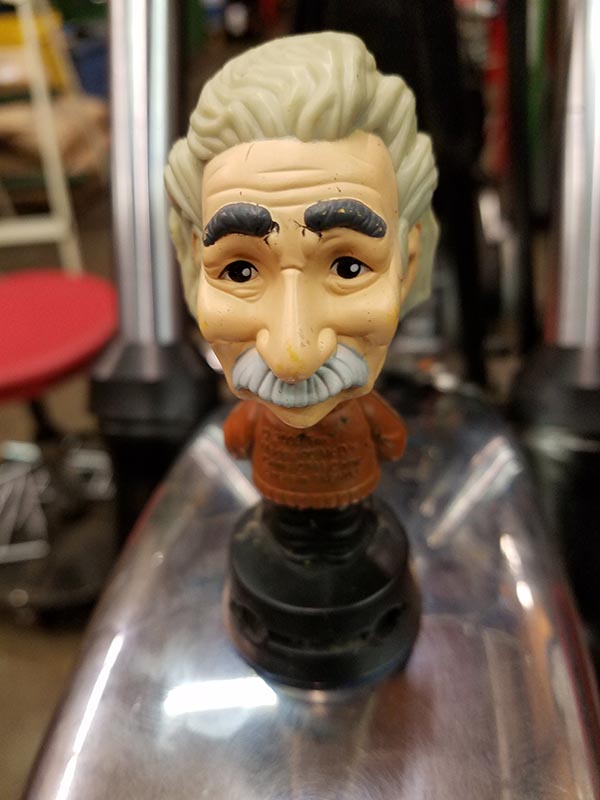
Rob calls his new bike Einstein, and like Donkey Hoty, he has a hood ornament to match.
Rob’s unintentional self-portrait.

Rob, your project bike is fascinating.  Please keep us posted on how it progresses.  The centrifugal clutch concept on a full-figured motorcycle is interesting.   Mustang (i.e., the original California-manufactured Mustang of the 1950s) offered a centrifugal clutch bike in the 1950s they named after their original offering (the Colt), and the one I saw owned by Al Simmons and later Steve Seidner was a real beauty.

A ’56 Mustang Colt. It had a centrifugal clutch. The Mustang Motor Products Corporation positioned this bike as a lower-priced Mustang, but it was a commercial flop.

Mustang’s intent was not to offer a bike with an “automatic” transmission; what they were really after was a value-engineered version of the Mustang.  It had the standard Mustang 322cc flathead engine, but a centrifugal clutch replaced the Berman transmission and the bike had Earles-type forks instead of the Mustang’s telescopic forks.   The factory workers didn’t like it and there was some talk of efforts to sabotage the ones leaving the plant.  The one I saw was beautiful.  It flopped in the market, which was unfortunate.   When I worked at CSC, we’d routinely get calls from folks asking if we had any bikes that had an automatic transmission.  The answer, of course, was no.  But I think this sort of thing could work on a small displacement bike for folks who don’t know how to (or don’t want to) shift.  I know you do and I know you are doing this just to have fun.  But I think you are on to something here.

To answer your other questions….I have zero experience with black powder guns, other than to watch my good buddy Paul build custom black powder rifles and play with them.  I once bought a Uberti .44 Model 1858 sixgun and it looked to be very well built, but a friend of mine wanted one and I sold it to him without ever having fired it.

I don’t have any east coast RX3 or other plans at this time.  I’m too busy planning for the next Baja trip, I guess.

The beater rally you mention sounds pretty cool, and I love the Hood River area of the Columbia River Gorge.  That sounds like it might be fun!

Zed’s Not Dead: Part 15

Zed’s forward progress has come to a temporary halt. Not due to any complications on the Kawasaki’s part, although the project has exceeded my initial estimate by double and I’m not done yet. No, Pitiful Man has to strike a balance between work and play. He must strive to appease the gods and their fickle ways while angering none. It’s a fine line we walk and sometimes we have to dance atop a vibrating string.
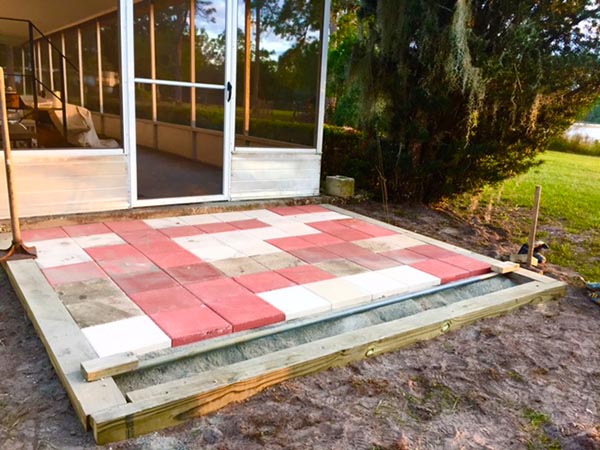
A quick trip to Florida was in order as the Love Shack, our singlewide trailer in the Ocala Forest, was showing signs of neglect. CT and I freshened the grey floor paint and installed new back porch pavers, eliminating the sad little stoop that had served us poorly for 14 years. While we were at it some new window shades, new screen doors and a lick of paint on the Lido Deck were in the cards. Another project I started 14 years ago, installing sliding closet doors, was finally brought to a conclusion. When we were finished the place looked like a hundred bucks.

Back at Tinfiny Ranch in New Mexico another, larger project had to be tackled: a twenty-foot by thirty-foot concrete floor in the tin shed. I’ve decided to tackle the shed floor in stages, like the International Six Days Trial. Stage one will be Bay Number 1 (a little confusing because an additional bay, Bay Zero, was added to the shed after the other three bays had been named). This stage consists of 16 individually poured slabs of which I have 9 complete as of this writing. After the slabs are in place a shear wall will be built to add strength to the flimsy metal shed and also divide the space into a Bay 2 and 3 dirt floor, rat-accessible side, and a Bay 1 concrete, non-rat accessible side.

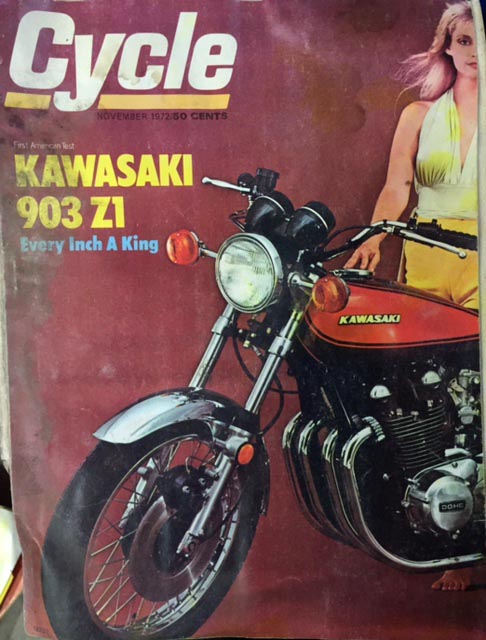
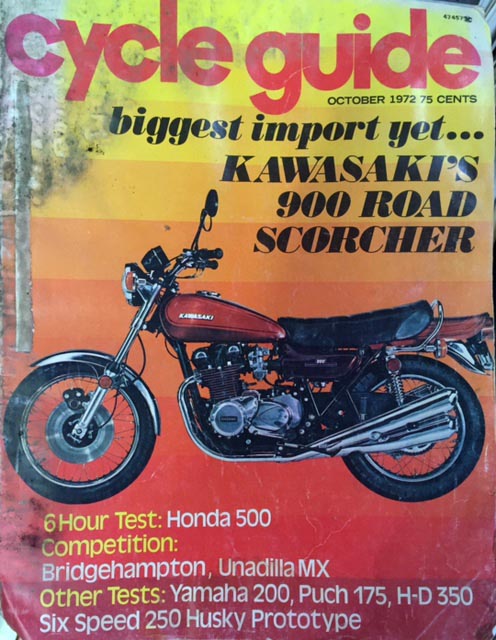
Those faithful Zed’s Not Dead readers that have not deserted me will recall Part One where I describe Zed’s crooked path back and home. After we bought Tinfiny Ranch I discovered a trove of paperwork from Zed’s previous owner. Several motorcycle magazines from the era featuring Zed were in a box along with a possible explanation for the Zed’s wiring issues described elsewhere in this series.
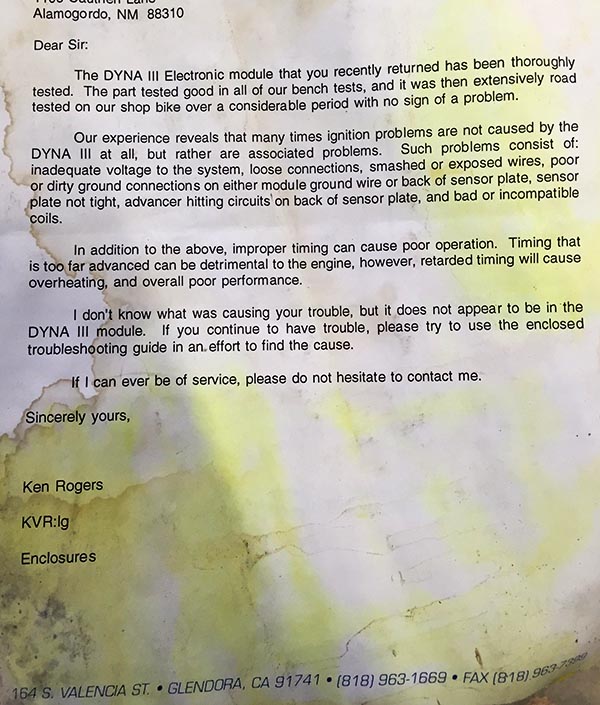
This letter dated August 3rd 1994 from Ken Rogers representing Dyna III ignitions (I’m guessing not the singer) explains to the previous owner how they have thoroughly tested the electronic ignition he sent back and have proclaimed it fit as a fiddle. Zed’s burned-up wiring harness may have been due to a faulty Dyna ignition installation. This would also account for the wiring to the coils being cut as those short bits were spliced into the Dyna module. I never found any of the Dyna stuff in my initial clean up but I haven’t gone through all the old guy’s junk.
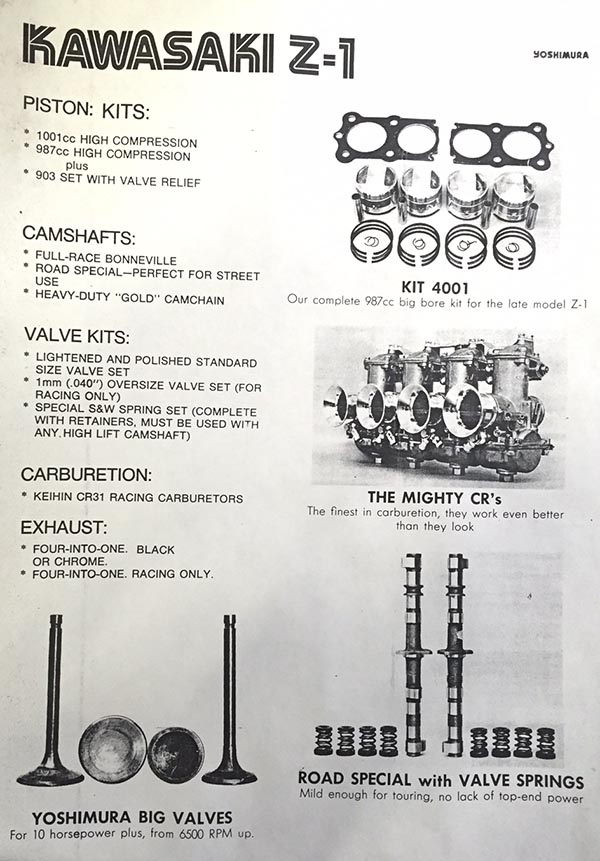
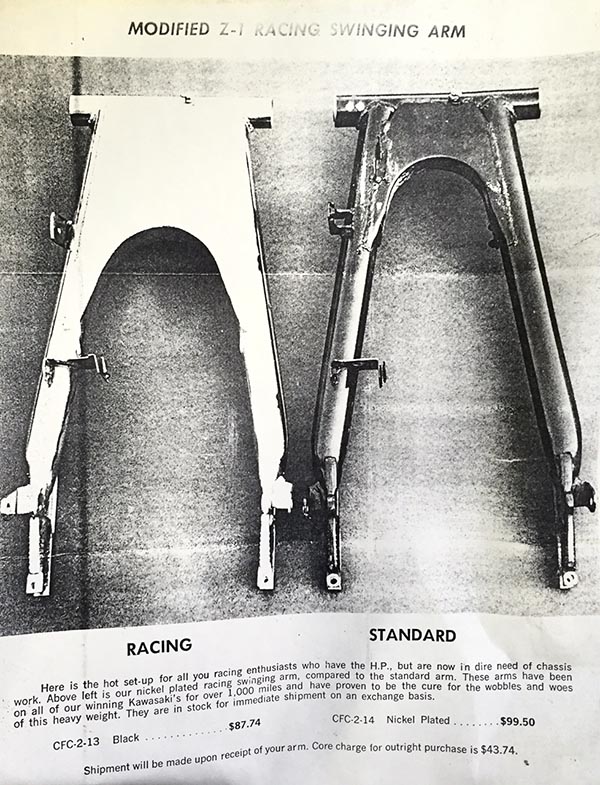
Along with the Dyna stuff there was a lot of Yoshimura brochures and price lists. After seeing the damage to the wiring harness on Zed I’m torn between hoping my bike has some nice performance parts installed and fearing that my bike has some nice performance parts installed. I should be able to measure the cams to see if they have additional lift but I’m not sure how to check displacement without winning an AMA national road race. I suspect the Yoshi stuff was bench dreaming because the bike runs too well to be hot rodded.
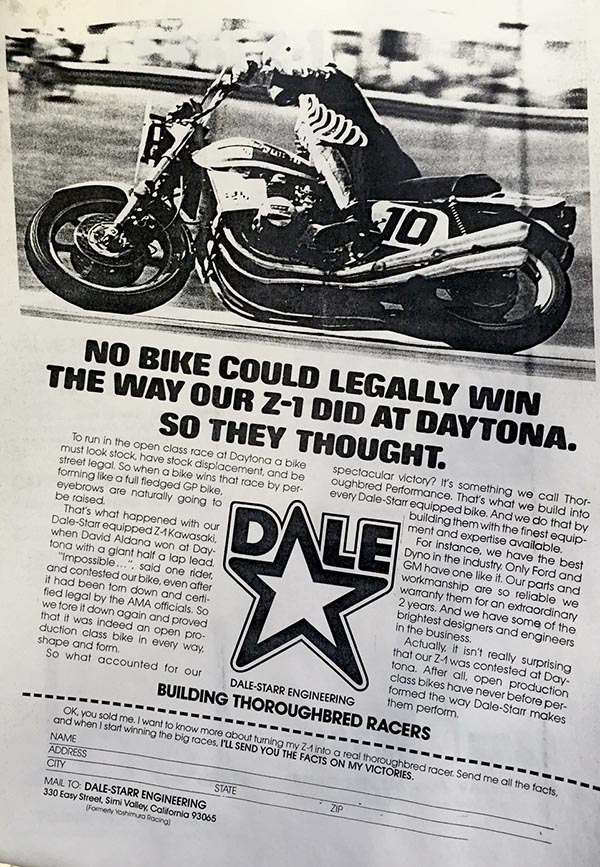
Finally here’s a nice photo from Dale-Starr of David Aldana winning the Daytona superbike race with a half-lap lead over the guy in second place. Apparently this caused protests that required Aldana’s bike to be disassembled twice! The bike was found legal and Aldana’s win stood. I met Aldana at Barberville one year. I was so excited to meet him I started doing the “We’re not worthy!” Wayne’s World bowing thing and Aldena told me to knock it off.
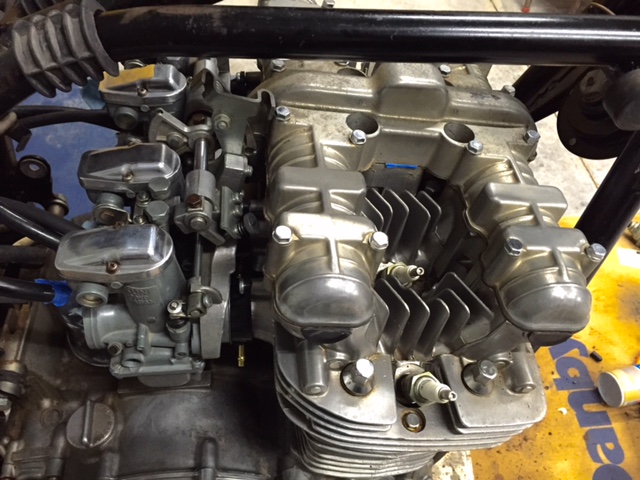
While no real work has been done to Zed in Part 15 I’ve enjoyed digging through Zed’s past. Reading the old magazine reviews reinforces just how spectacular the Kawasaki Z1 900 was when it came out in 1973.  And how spectacular a motorcycle it still is.


Want to catch the rest of the Zed story?   Hey, just click right here!

The 2018 Long Beach International Motorcycle Show

Say what you want about the man in the White House, or the former man in the White House, or who gets the credit: The economy is roaring. Nowhere was that more apparent than at the Long Beach International Motorcycle Show this weekend. It was packed, and we saw a lot of companies that hadn’t been there before. Triumph, MV Augusta, and more. Things were hopping, and if the attendance and the enthusiasm extend into the marketplace (and I think it will), we’re going to see significant growth in the US motorcycle market this year.

Shoulder to shoulder, the crowds were huge at this year’s Long Beach International Motorcycle Show.

Susie I and went on Saturday (thanks for the tickets, CSC Motorcycles), and it was shoulder-to-shoulder throughout much of the event. It was good to see. We’ll cover this event from six perspectives over several blogs: Friends, new motorcycles, custom motorcycles, vintage bikes, my favorites, and the female models that in the past always seemed to populate the big bucks exhibits (Harley, Ducati, Indian, and maybe a few others). Let’s do the easy part first, the drop dead gorgeous, young, mini-skirted female models who populated prior shows. The bottom line? I didn’t see any. Admittedly, I didn’t visit the Ducati booth (so maybe they had a few and I missed them), but in other booths where female models were usually present there were none. It’s probably a good thing, except for the models whom I’m guessing made good money in years past. Our society is growing up.

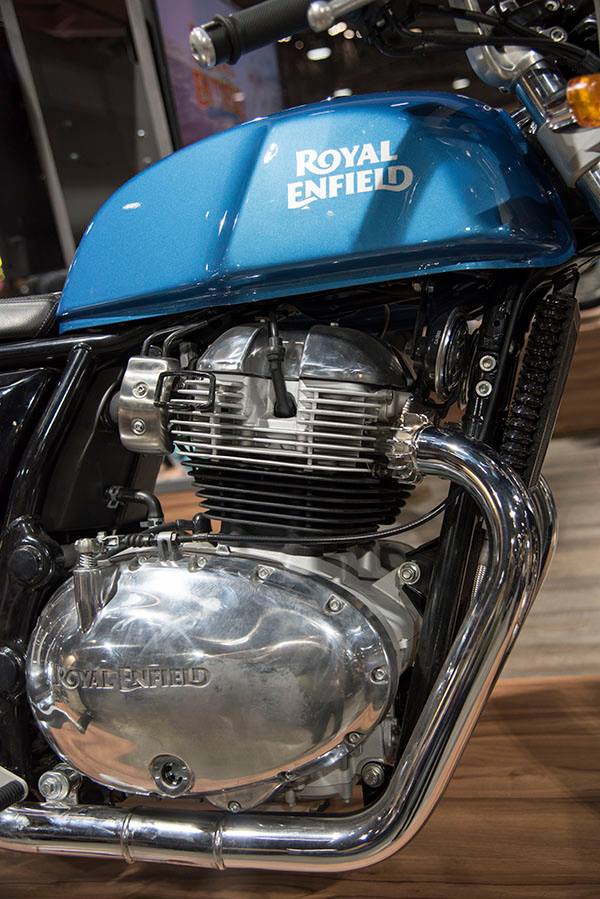
Two new bikes talked to me. One was the Royal Enfield 650 twin (a stunning machine); the other was the green Kawasaki 900cc Four with a café racer fairing. I sat on the Kawasaki. It fit me and it felt surprisingly light. Sue chased me off, I think, because she could sense the wheels turning. It’s a nice motorcycle (one I think I would like to own). Maybe it’s just Gresh’s enthusiasm in the Zed’s Not Dead Series, but I formed a bond with that Kawasaki. They say green motorcycles are bad luck, but I’d be willing to take the chance on this bike.

The gorgeous RE 650 twin. The suggested list price is $5799. That’s a hell of a deal.

We saw the new Kawasaki 800cc twin, the other café racer that’s styled like a real motorcycle (i.e., the original Triumph Bonneville). The colors ain’t great in the photos (Gresh commented on that in his Wild Conjecture piece), but in the flesh the colors work (they look way better than they do in the pictures). Instead of looking disjointed, the color mismatch makes for what appears to be a custom bike. Thankfully, the industry-wide craze for flat black bikes seems to be subsiding. This bike looked good.

The Kawi US guy told me the KLR 650 was not available this year and Kawi’s position is that this is a “skip” year, which he thinks might mean they are coming out with a new model for 2019, or maybe 2020. He said no one outside of Japan knows for sure. The Kawi dude said if the KLR does come back it most definitely will not be $6799 (the KLR’s price last year). He thought the price for a new version (if it comes to fruition) will be substantially higher. Their 300cc Versys looked good, but at $5799 it was pricey for a 300 (and that’s before what I’m guessing will be over a grand in dealer setup and freight).

The show was hopping. The economy is back, and the motorcycle business is along for the ride. Stay tuned, folks…there’s more Long Beach IMS coming on the ExhaustNotes blog.

Zed’s Not Dead: Part 8

Progress has slowed on Zed. I really wanted to start the beast up. The problem is I haven’t figured out the ignition advancer issue yet. My E-buddy Skip sent me two of the things but neither one will work on the 1975 Z1 crankshaft end. I feel bad that Skip is trying to do me a favor and that the poor guy has to keep digging around in his parts stash. It goes to show you: no good deed goes unpunished. I am going to suck it up and buy a new, $159 advancer from Z1 Enterprises. Hopefully it will be the correct one and fit the crankshaft.
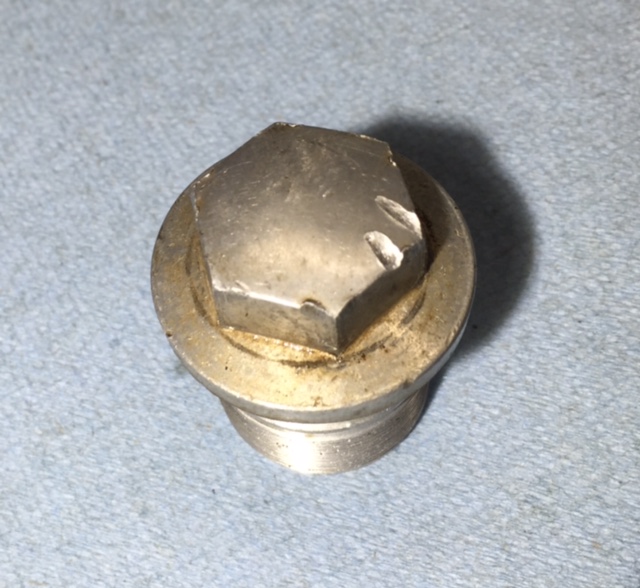
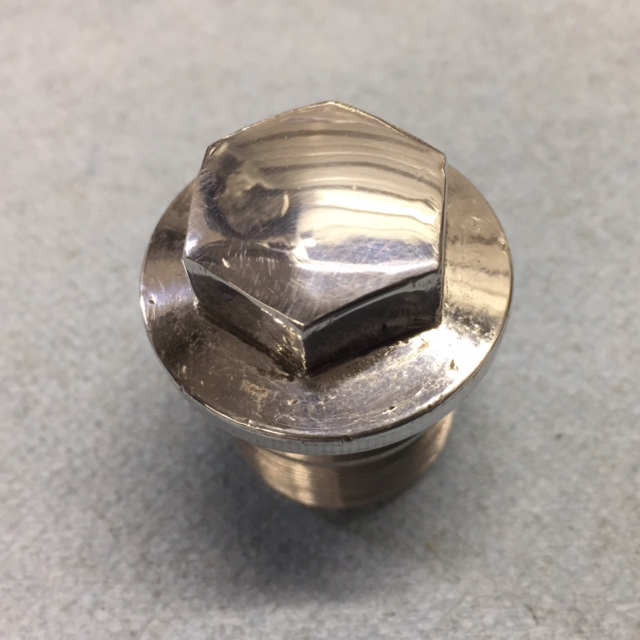
Meanwhile, I’m not ignoring the rest of the bike. Let’s face it, even if the engine is shot I have to get this bike running. The front forks were leaking and contained about 3 ounces of oil between both fork legs. This is down a bit from the 5.7 ounces per leg suggested in my shop manual. I know I said this was not going to be a show bike restoration but I couldn’t bear a future staring at this gouged fork cap bolt so I sanded the thing smooth and gave it a lick of polish. Of course this means that I have to do the other side also.
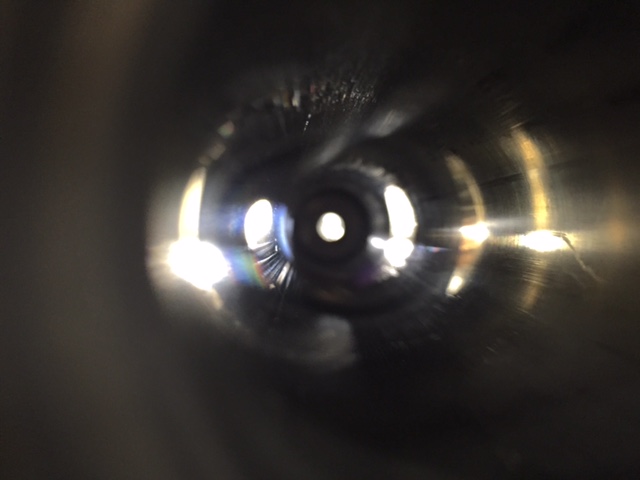
The internals of the forks were covered in sticky black goo, which required a ton of solvent and liberal doses of carb cleaner to cut loose. Then came rags stuffed down the tubes and pushed back and forth using a drill bit extension. The sliders came polished from the factory and since they were preserved under a coat of oil it took no time at all to spiff them up without crossing over to the dreaded Show Bike threshold.
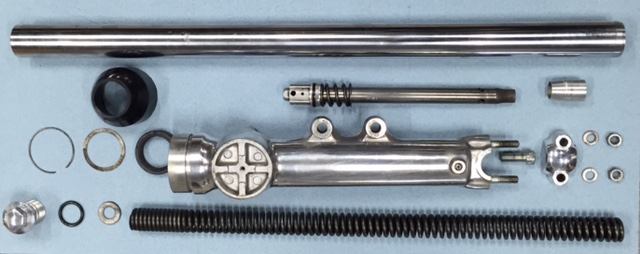
All the fork parts look usable if not perfect. The upper section of the fork tubes that were covered by the headlight brackets is pretty rusty. I’ve polished it off a bit and will lube the rusty areas to prevent further rust. None of the rust will show on the assembled forks but I’ll have to deduct points when the bike is in the Pebble Beach show.
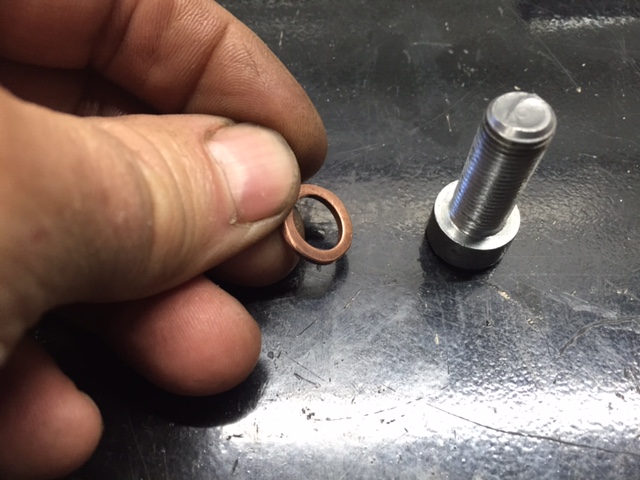
The fork sliders are held to the damping rod via this Allen-head bolt. There was a fiber washer to seal in the fork oil but I don’t have any fiber washers. I ended up grinding a copper washer to fit and I only have one of those. Looks like a trip to Harbor Freight is in order to buy their 5090 Copper Washer Warehouse kit.
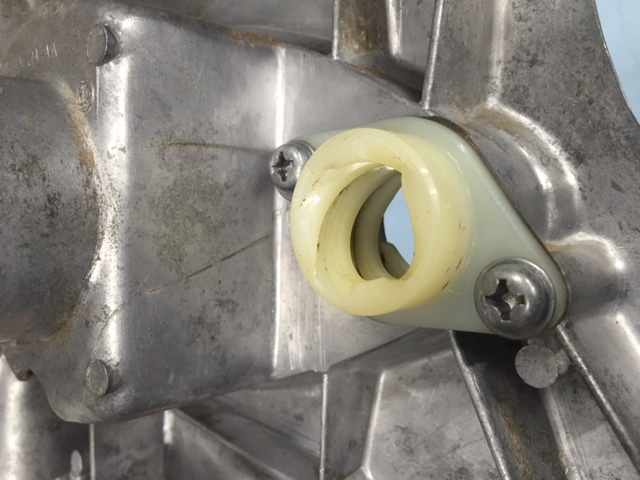
The clutch actuator was in good shape but dirty and dry. Most of the ones I bought for my old Yamaha had the helix cracked. I suffered along with the cracked helix until Hunter found a new, re-pop part and sent it to me, asking if he could have some of the ones I’d stolen from him in exchange. I have no idea what the old man is on about. This Kawasaki part is much sturdier than the Yamaha part and crack free so that’s one point to Kawasaki in the red-hot clutch actuator wars.
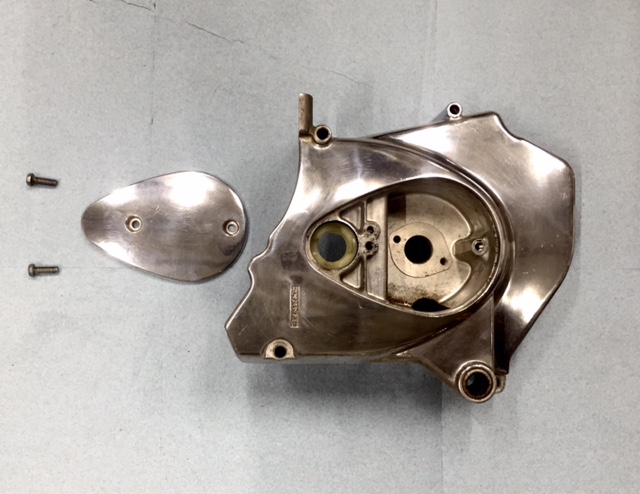
I gave the sprocket/clutch actuator cover a quick polish. The aluminum on Zed is in great shape. It took about 5 minutes to shine this cover because it was smooth to start with. I’ll let the cover oxidize naturally after the bike is built. I can’t be expected to clean a motorcycle more than once.

I’m placing another big order with Z1 Enterprises today. They stock a lot of hard-to-find Z1 parts. It’s easier for me to order from one place and if your order is over $200 shipping is free. Who doesn’t blow $200 on bike parts? I don’t like filling out the credit card fields twenty times from a bunch of fly-by-night vendors and Z1E’s prices are in line with eBay sellers and other vintage parts sellers.


Want to catch up on the rest of the Z1 resurrection?  Just click here!

Wild Conjecture II: The KLR 650

The Kawasaki 1M-BC.

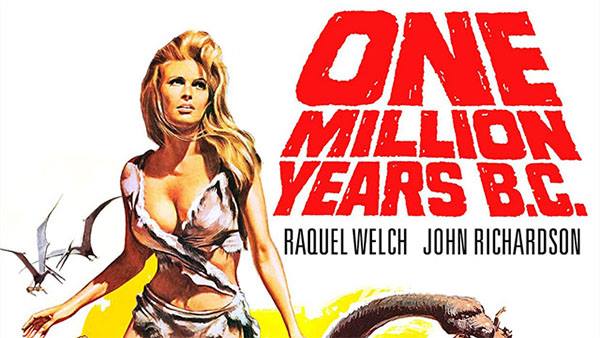
One Million Years BC. Raquel Welch. Who was John Richardson?

I was laughing so hard reading Gresh’s piece on the KLR 650 it took me a few minutes to get that “One Million BC” designator, and then I started laughing even harder. For reasons reaching back to my teenage years, I had visions of Raquel Welch scantily clad in strategically-draped animal skins atop a KLR 650.  Yeah, that could work.

Ah, the KLR. Nearly all of us have owned one at one time or another. I wanted a KLR for a long time and I waited too long to buy one (mostly because none of the dealers allowed test rides), but I finally pulled the trigger on a new one in 2006.  The bike was $5250 out the door (I know, you did better on yours).  That price included an obscenely-inflated-but-successfully-negotiated-lower dealer setup fee.  The windshield fell off on the 4-mile ride home.

I loved my KLR and I kept it for 10 years. I’d heard, off and on, that it was Kawasaki’s best-selling motorcycle.  It was a sensibly priced and simple motorcycle. Top heavy, yeah. Heavy, yeah. Well supported with tech days and a great online community, yeah. Fun to ride, yeah. Easy to maintain, yeah. A great adventure touring bike, absolutely yeah.

My KLR 650 near the salt fields of Guerrero Negro, B.C.S.  I had a lot of fun on that motorcycle.

Even though I started on small bikes (I was one of those nicest people you met on a Honda; I only became mean later in life) the KLR was the first bike of my adult life that made me realize I’d been brainwashed: I did not need a big bike. I also owned a Harley Softail with an S&S 96-inch motor at the same time I owned the KLR, and one day after inadvertent back-to-back rides, I realized the KLR was faster, more comfortable, and handled better. I’d spent more for just the S&S motor than the entire KLR cost new. The Softail went on CycleTrader that same day and was gone by the weekend.

My Harley Heritage Softail in Baja. This is a good example of how not to pack for a motorcycle trip.

The US motorcycle market is in the crapper for a lot of different reasons (none of which current industry leadership has been able to address). Sales dropped by 50% with the onset of the Great Recession of 2008, and today (10 years later), sales are still essentially at that same 50% level. It’s a double or triple or quadruple (or more) whammy…banks aren’t giving 6th mortgages on homes to buy a Harley, millennials are more interested in iPhones and Instagram than motorcycles, folks who were buying motorcycles are increasingly interested in adult diapers, motorcycles are too big and too expensive, and more than a few dealers are still price gouging with fraudulent and flatulent setup and freight fees. And there hasn’t been a good motorcycle movie (think The Great Escape or Easy Rider) in years. The answer is obvious to all but those heavily-invested in heavy, large, overpriced motorcycles (i.e., the same current industry leadership mentioned at the beginning of this paragaph): Smaller, lighter, way less expensive bikes. And maybe a good movie or two would help prime the pump.

So what do I think will be the follow on to the iconic KLR 650?

I see two options, and maybe a third…

Option 1 is for Kawasaki not to do anything because they already have a KLR 650 replacement. That bike is the Versys 300. The Good Times people may have pulled a fast one on us, and introduced a replacement without telling us it was a replacement. Hell, the Versys basically costs the same as a KLR 650.  From a price point perspective, it is the replacement.

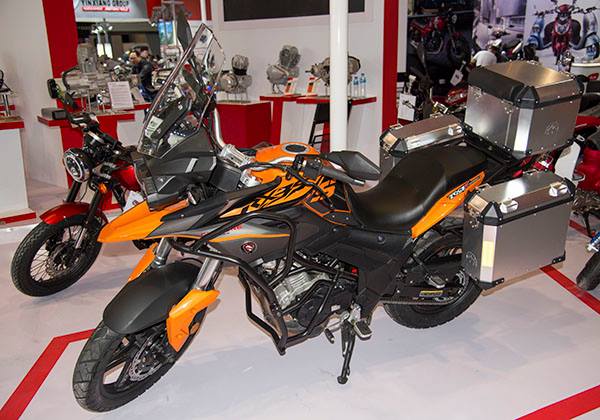
Option 2 would be an entirely new Kawasaki. If the Big K goes this way, my guess is it will be something around 450cc, it will be a single, it will be too tall, it will be fuel injected, and it will be too expensive. It will not be manufactured in Japan; my guess is Thailand (where the KLR 650 has been manufactured for decades). Or maybe China. I think Kawasaki is mulling this one very carefully. Such a bike would have to go head to head with the new RX4 and RX3S to be offered by Zongshen (and in the US, CSC), the Royal Enfield 400cc Himalayan, and maybe others.  That would be a tough competition.  My guess is the Zongs will be a good $2,000 (probably more) less expensive than anything the Good Times People bring to us as a KLR 650 successor, and the Big 4 dealers will exacerbate the price problem by tacking on their ingrained and irrational $1500 freight and setup fees. Maybe Kawasaki realizes this, and if so, that makes a good argument for them to just pick up their marbles and go home (which they may have already done; see Option No. 1 above).

The Zongshen RX3S on display at the Canton Fair in Guangzhou. It’s hard to imagine how any KLR replacement can compete with this or the Zongshen RX4, given Kawasaki’s traditional path to market and dealer fees.

There is, of course, a third option, and that’s to just keep building the KLR 650.  The tooling was paid for years ago and there’s no real expense in continuing the line.  This makes a lot of sense, unless the bikes are just not selling, and that may be the case. As mentioned earlier, the US market is flat and outside the US, bikes over 250cc are viewed as freakishly huge.  I don’t buy the argument that because the KLR 650 is carbureted it won’t meet emissions requirements; the bike has been carbureted its entire life and new carbureted bikes are being approved in the US all the time.  If my last name was Kawasaki, I’d keep the KLR 650 on the market, drop the price dramatically, find a way to limit the dealer larceny that passes as freight and setup fees, and sell the hell out of that bike.

We’ll see. This will be interesting.


Check out our other Dream Bikes!

Dream Bike: Kawasaki 350cc A7 Avenger

The stuff dreams are made of…in this case, a Kawi 350cc Avenger!

Kawasaki’s A7 is high on my motorcycle lust-list. The styling of the Gen 2 models is as perfect as a motorcycle can be. Decals and graphics, a Kawasaki strong suit in the 1970’s, gave the bike a speedy, eager look that shouts, “Let the good times roll!” And roll they did, Big Daddy: long before the Yamaha RD series, Kawasaki was hazing the streets and smoking tires with its 350cc, twin-cylinder, disc-valve two-stroke.

I don’t believe the manufacturer-claimed 42 horsepower, but then I’ve never ridden one so maybe it does crank out that much. Large displacement (over 125cc) twin-cylinder, disc-valve motors have always been relatively rare in the motorcycle world. That’s probably due to the excessive crankcase width mandated by two carburetors sticking out past the ends of the crankshaft-mounted, induction timing discs. Crankcase width aside and freed from the symmetrical intake timing of a piston-port engine, a disc valver usually makes more and better power (I’ve been told).

The Avenger, along with its less-attractive, low-pipe sister was also a pioneer in electronic ignition. It was a great system when it worked, but 50-years-on may not be so hot. The addition of oil injection made the Avenger about as maintenance-free as a 1970’s bike could get. The package as a whole looks 50 years ahead of the British and American offerings from the same era.

Prices on A7’s haven’t reached silly RD350 heights yet. The bike in these photos that I stole from Smart Cycle Guide is listed at $3600, the high end of the range. Here’s the link: www.smartcycleguide/L49224558. If you spend a few minutes you can find clean, running examples for $1500 on the Internet.

For me, the only knock on the A7 is that it may be too well made. I’m at the stage in my life where I don’t need a reliable motorcycle. New bikes are darn near perfect and perfection is boring. I search for the ever-elusive soul ride: Motorcycles that drip. The best motorcycles are the ones that leave you stranded; they turn any ride into a grand adventure. Besides, quirky flaws and secret handshakes appeal to my need to be special.

The thing with dreams is that you don’t want to over-analyze them. I can’t say why I like the A7 so much. I’ve never seen one running. I guess it’s the optimism of the design. The A7 is from an era when anything was possible and the future was a burning arrow pointing straight into the sky. If I ever hit the lottery I’ll have one, along with a bunch of other motorcycles to be discussed later here on the ExNotes blog.


Check out our other Dream Bikes!