The Wayback Machine: Applying Taguchi to Load Development

By Joe Berk

People reload ammunition for different reasons.   It used to be you could save money by reloading, and I suppose for the more exotic cartridges (any Weatherby ammo, the big elephant rounds like .458 Win Mag, the .416 Rigby, etc.) that’s still the case.  It’s not the case for the more common rounds like 9mm, .45 ACP, and .223 Remington; bulk ammo for those is so inexpensive you’d be hard pressed to reload for as little as that ammo costs.  Sometimes people reload because factory ammo is no longer available or it’s very tough to find.  But most of us reload for accuracy.  We can experiment with different combinations of components and tailor a combo to a particular firearm to find the sweet spot…that combination of components that provides the tightest groups.  I’m in that category; it’s why I reload.

When I’m testing for accuracy and I get a tight group, I always wonder:  Is it because of the combination of components, or is it just a random event?  Usually, if the group size is repeatable, we conclude that it is the component combination, and not just a random good group that results from all the planets coming into alignment.  But is there a better way?   You know, one that shows with more certainty that it’s the component combination, and not just a fluke?

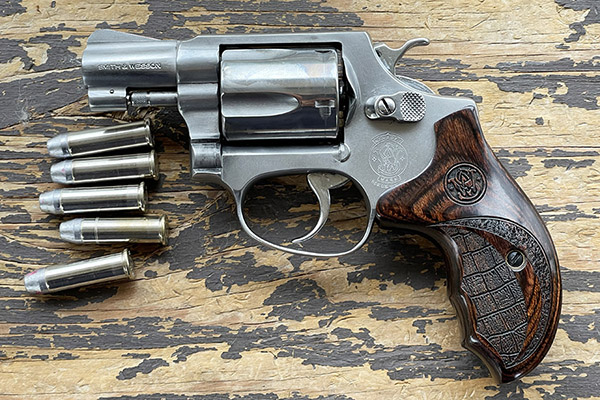
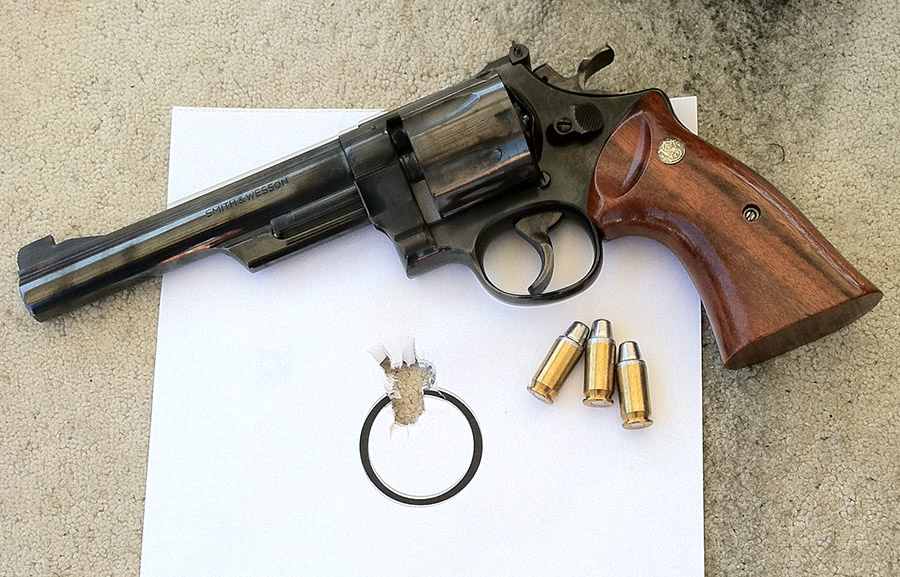
This article is a bit different.  It’s not just a story about a gun or about reloading ammunition.  It includes those things, but it’s more.  This story is about applying the Taguchi design of experiments technique to .45 ACP load development for ammo to be used in a Smith and Wesson Model 25 revolver (the one you see in the photo above).

I’m guessing you probably never heard of Taguchi.  That’s okay; most folks have not.  Taguchi testing is a statistical design of experiments approach that allows evaluating the impact of several variables simultaneously while minimizing sample size.  The technique is often used in engineering development activities, and I used it regularly when I was in the aerospace world.  The technique was pioneered by Genichi Taguchi in Japan after World War II, and made its way to the US in the mid-1980s.  I used the Taguchi technique when I ran engineering and manufacturing groups in Aerojet Ordnance (a munitions developer and manufacturer) and Sargent Fletcher Company (a fuel tank and aerial refueling company).

Taguchi testing is a powerful technique because it allows identifying which variables are significant and which are not.   Engineers are interested in both.  It lets you know which variables you need to control tightly during production (that is, which tolerances have to be tight), and it identifies the others that are not so critical.  Both are good things to know. If we know which variables are significant and where they need to be, we can change nominal values, tighten tolerances, and maybe do other things to achieve a desired output. If we know which variables are not significant, it means they require less control.   We can loosen tolerances on these variables, and most of the time, that means costs go down.

Like I said above, I used Taguchi testing in an engineering and manufacturing environment with great success.  The Taguchi approach did great things for us.  When I worked in the cluster bomb business, it allowed us to get the reliability of our munitions close to 100%.   When I worked in a company that designed and manufactured aerial refueling equipment (think the refueling scene in the movie, Top Gun), it helped us to identify and control factors influencing filament-wound F-18 drop tanks.  In that same company, it helped us fix a 20-year-old reliability problem on a guillotine system designed to cut and clamp aerial refueling hoses if failures elsewhere in the refueling system prevented rewinding the hose.  You don’t want to land in an airplane trailing a hose filled with JP4 jet fuel.  Good stuff, Taguchi testing is.

As you know from reading our other Tales of the Gun stories, the idea in reloading is to find the secret sauce…the perfect recipe of bullet weight, propellant, brass case manufacturer, and more, to find the best accuracy for a given firearm.   Hey, I thought…I could apply the Taguchi technique to this challenge.

When you do a Taguchi experiment, you need to define a quantifiable output variable, and you need to identify the factors that might influence it.  The output variable here is obvious:  It’s group size on the target.  The input variables are obvious, too.  They would include propellant type, propellant charge, primer type, bullet weight, brass type, bullet seating depth, and bullet crimp.  We’re trying to find which of these factors provides the best accuracy.  I wanted to turn my Model 25 Smith and Wesson into a hand-held tack driver.
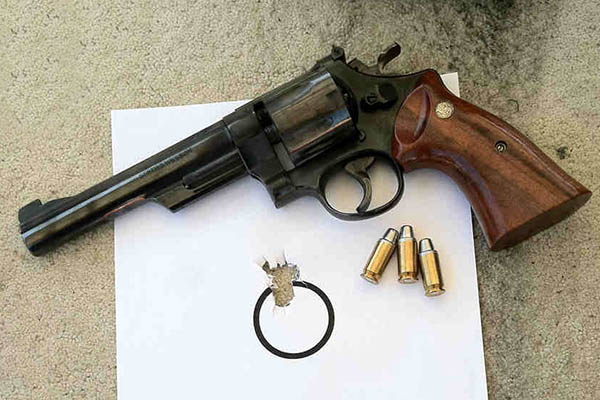
The Model 25 is an N-frame Smith and Wesson revolver chambered for the .45 ACP pistol cartridge. It is a superbly accurate handgun, as attested to by the target above.

When Taguchi developed his testing approach, he made it simple for his followers.   One of the things he did was define a simple test matrix, which he called an L8 orthogonal array.  It sounds complicated, but it’s not.  It just means you can evaluate up to seven different input variables with each at two different levels.  That’s a bit complicated, but understanding it is a little easier if you see an example.   Here’s what the standard Taguchi L8 orthogonal array  (along with the results) looked like for my Model 25 load development testing:
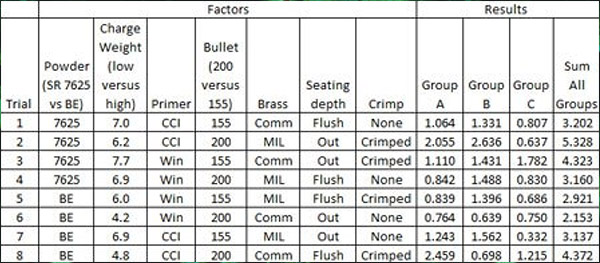
As the above table shows, three sets of data were collected.  I tested each load configuration three times (Groups A, B, and C), and I measured the group size of each 3-shot group.  Those group sizes became the output variables.

The next step involved taking the above data and doing a standard Taguchi ANOVA (that’s an acronym for analysis of variance).  ANOVA is the statistical method used for evaluating the output data (in our case, the group sizes) to assess which of the above input variables most influenced accuracy.  That’s a complex set of calcs greatly simplified by using Excel.   The idea here is to find the factor with the largest ANOVA result.   You see, any time you measure a set of results, there’s going to be variation in the results.  Where it gets complicated is the variation can be due to randomness (the variation in the results that would occur if you left all of the inputs the same).  Or, the variation can be due to something we changed.  We want to know if the differences are due to something we did (like changing or adjusting a component) or if they are due to randomness alone.   I cranked through the ANOVA calcs with Excel, and here’s what I obtained…
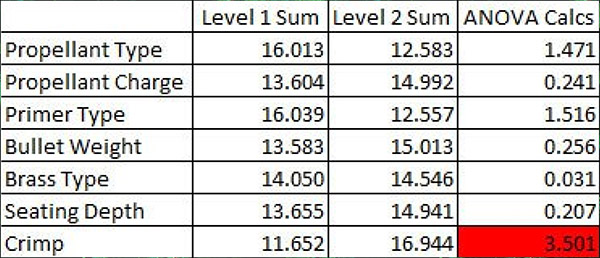
The above results suggest that crimping (squeezing the bullet by slightly deforming the case mouth inward) has the greatest effect on accuracy (it had the largest ANOVA calculated result).  The results suggest that cartridges with no crimp are more accurate than rounds with the bullet crimped.  But it’s a suggestion only; it doesn’t mean it’s true.   The next step is to evaluate if the differences are statistically significant, and doing that requires the next step in the ANOVA process.  This gets really complicated (hey, I’m an engineer), but the bottom line is that we’re going to calculate a number called the f-ratio, and then compare our calculated f-ratio to a reference f-ratio.  If the calculated f-ratio (the one based on the test results above) exceeds the reference f-ratio, it means that crimping versus no crimping makes a statistically significant difference in accuracy.  If it not not exceed the reference f-ratio, it means the difference is due to randomness.   Using Excel’s data analysis feature (the f-test for two samples, for you engineers out there) on the crimp-vs-no-crimp results shows the following:
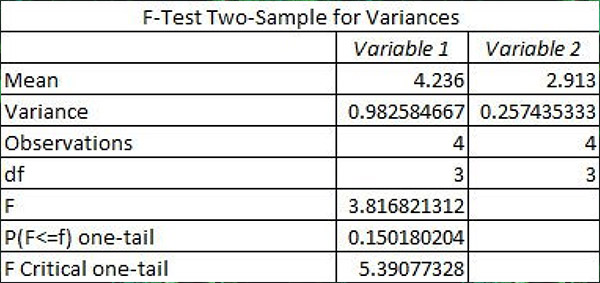
Since the calculated f-ratio (3.817) does not exceed the critical f-ratio (5.391), I could not conclude that the findings are statistically significant.  What that means is that the difference in accuracy for the crimped versus uncrimped rounds is due to randomness alone.

Whew!  So what does all the above mean?

All right, here we go.  This particular revolver shot all of the loads extremely well. Many of the groups (all fired at a range of 50 feet) were well under an inch.  Operator error (i.e., inaccuracies resulting from my unsteadiness) overpowered any of the factors evaluated in this experiment.  In other words, my unsteadiness was making a far bigger difference than any change in the reloading recipe.

Although the test shows that accuracy results were not significantly different, this is good information to know. What it means is that all of the test loads (the different reloading recipes) are reasonably accurate.  If I had used a machine rest, I might have seen a statistically significant difference.  Stated differently, the test told me that I needed to use a machine rest with this gun to see which load parameters were really playing a role in accuracy.  Without it, my flaky shooting skills (or as the statisticians like to say, my randomness) overpowered any accuracy gains to be realized by playing with component  factors.

That said, though, I like that 4.2 grains of Bullseye load with the 200 grain semi-wadcutter bullet, and it’s what I load for my Model 25.  But I now know…the gun shoots any of these loads well, and crimping versus no crimping doesn’t really make a difference.


Check out our other Tales of the Gun stories here.


Join our Facebook ExNotes page!


Never miss an ExNotes blog:


Help us keep the lights on:


Don’t forget: Visit our advertisers!


Red Dot and The Load

By Joe Berk

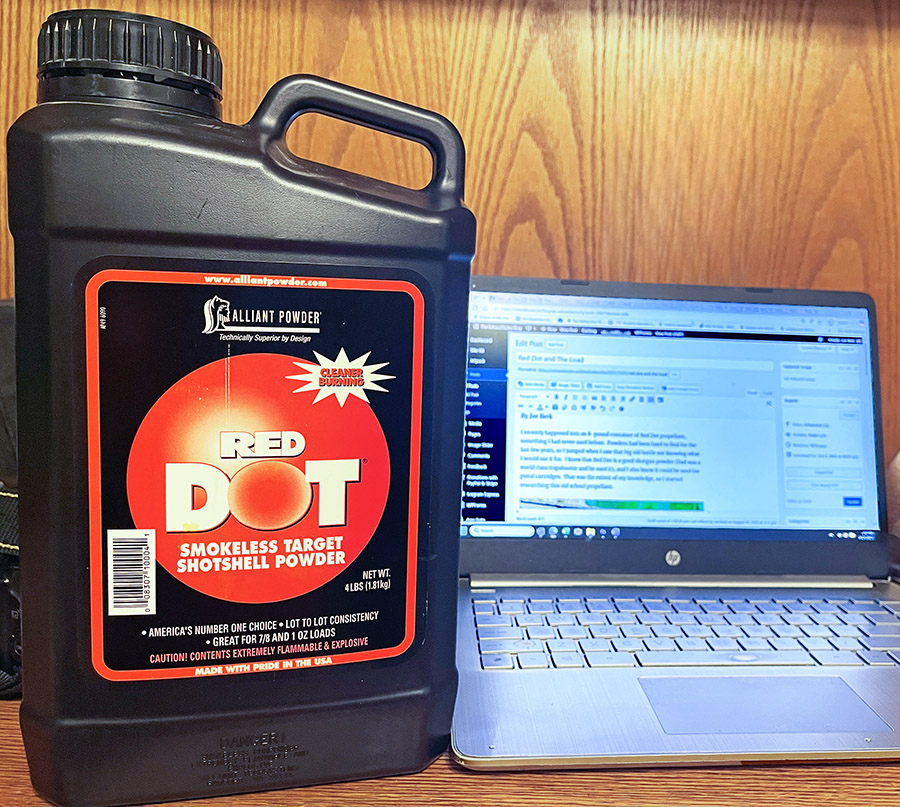
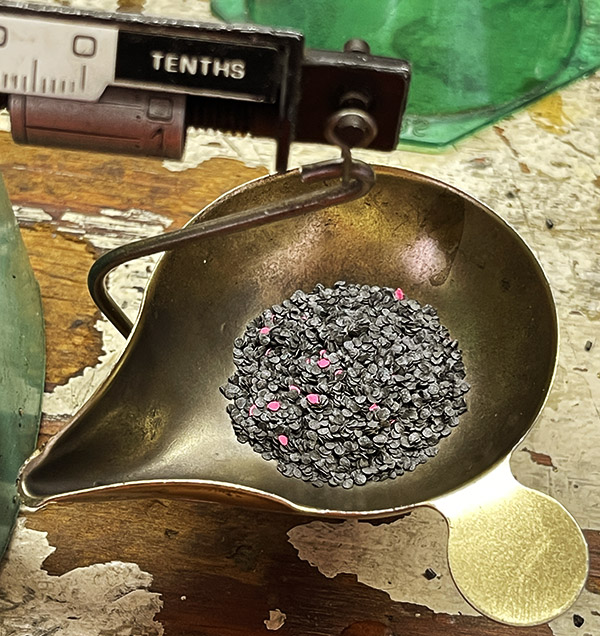
I recently happened into an 8-pound container of Red Dot propellant, something I had never used before.  Powders had been hard to find for the last few years, so I jumped when I saw the Red Dot (not knowing what I would use it for).  I knew that Red Dot is a good shotgun powder (Dad was a world class trapshooter and he used it), and I also knew it could be used for pistol cartridges.  That was the extent of my knowledge, so I started researching this old school propellant.

Red Dot propellant. My cell phone camera and fluorescent lighting would have you thinking this powder should be named “Purple Dot,” but trust me, the flakes that appear to be purple in the above photo are really bright red.

What I learned about Red Dot was interesting.  The Hercules powder company first released Red Dot in 1932, and it was primarily intended to be a shotshell powder for trap and skeet shooters.   It’s a flake powder and it’s distinguishable by the red-dyed flakes mixed in with the black ones.  It’s been updated at least a couple of times (one of the updates was to make it burn cleaner), but its kept its place as a relatively fast powder with a burn rate just slightly slower than Bullseye.  For that reason, it also makes a great pistol powder, and most load manuals include recipes for practically everything from .25 ACP up to .45 Colt.  I’m going to try it in .38 Special and .45 ACP, and maybe .44 Special.  I think I can use it my old Star reloader, which is set up to throw 2.7 grains of Bullseye.  I’ll check that out at some point in the future.

It turns out that among rifle cast bullet shooters (a space I inhabit), Red Dot is a preferred powder, so much so that 13.0 grains of it is informally (and apparently widely) known simply as “The Load.”  The conventional wisdom is that 13.0 grains of Red Dot behind any cast bullet in any .30 caliber rifle (.308, .30 06, 7.62×54 Russian, 7.65 Belgian, .303 British, and more), the .375 H&H, and the .45 70 is a reliable and accurate load.  With my 8-pound bottle of Red Dot and “The Load” (i..e, 13.0 grains of Red Dot), I should be good for something north of 4,307 rounds.   That should keep me busy for a while.  I’ll be playing with cast loads using “The Load” in a Mosin-Nagant, a Springfield 1903, a Modelo 1909 Argentinean Mauser, and probably the .45 70.  When I do, I’ll share the results here.


Join our Facebook Military Surplus Rifles page!


Join our Facebook ExNotes page!


Never miss an ExNotes blog:


Help us keep the lights on:


Don’t forget: Visit our advertisers!

TriggerShims Bolt Shims

By Joe Berk

I should have known better.  Before I tried good buddy Lance’s bolt shims (at TriggerShims.com), I was a bit skeptical even though another of Lance’s products had worked (and is still working) very well for me.  I installed Lance’s cylinder shims on my Model 60 Smith and Wesson revolver a few years ago and they solved a lot of ills, including excess cylinder gap, difficulty in opening the cylinder, velocity loss, and double action misfires.  The Model 60 is completely reliable now (I’ll include a link to that story at the end of this blog).

The above notwithstanding, though, I was still skeptical about bolt shims. I didn’t understand the concept of rimfire rifle bolt shimming, and that fueled my cynicism.  I mean, on a bolt action rifle, what is there to shim?

I called Lance at TriggerShims and spoke with him.  Lance said his customers tell him bolt shims work, but I wouldn’t know until I tried them.  I was up for it.  I had two rimfire rifles I felt should be more accurate:  A Remington Custom Shop Model 504 and a CZ 452 Varmint model.  The CZ would shoot moderately well off and on (it wasn’t consistent); the Remington was a major disappointment from the day I bought it.  It was expensive and for something coming from Remington’s Custom Shop, I expected a lot more.  The Custom Shop 504 rifle is beautiful, its walnut stock is fabulous, but its groups were poor.

The Concept

When you get a set of bolt shims from Lance, you get five in varying thicknesses. The shims are color coded so you don’t have to guess at what they are or measure them.  The package looks like you see below.

A pack of TriggerShims’ bolt shims. Note the color coding on the shims.  Five shims come in a package; the fifth one from the envelope you see above now resides in my Remington Model 504.

How Bolt Shims Work

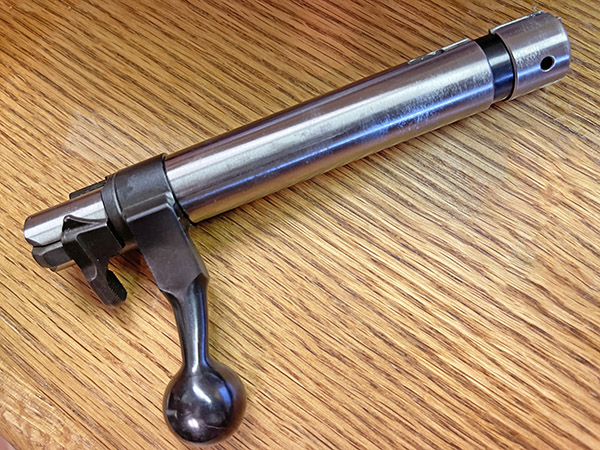
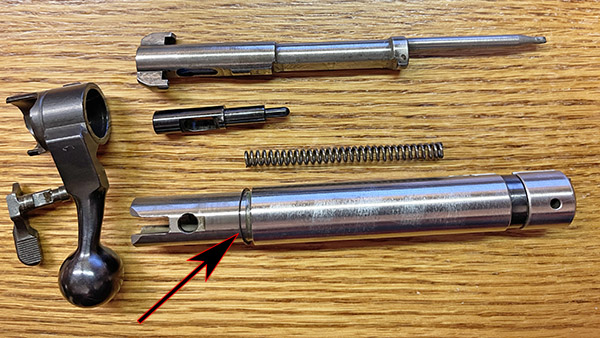
Most rimfire bolt action rifles’ bolts are different than centerfire bolts.  On a centerfire bolt, the bolt locks into the receiver at the front of the bolt.  On most rimfire bolt action rifles, the bolt locks into the receiver at the bolt handle, the forward portion of the bolt extends forward to meet the rifle’s breech, and the bolt’s locking lug is integral to the bolt handle.  Typically (as is the case on my CZ 452 and Remington 504), the forward portion of the bolt is actually two separate and concentric cylinders, with the forward part of the bolt able to move forward on the inner cylinder (i.e., closer to the chamber) if it is shimmed to do.  You can see it in my Model 452 CZ bolt in the photos below.

The CZ 452 bolt.
The CZ 452 bolt disassembled. The arrow points to the 0.002-inch TriggerShims shim placed on the bolt shank.

Now consider headspace, the amount of clearance between the cartridge base and the bolt face.  If there’s too much headspace, case separations can result when the brass case stretches during firing.  Not enough headspace, and you can’t close the bolt.   You might wonder:  Why not simply have line-to-line contact in the chamber between the cartridge and the chamber, with zero headspace when the bolt is closed?  That could work if you always shot with cartridge cases from the same manufacturer, there was no variation in the cartridge cases, there was no variability from rifle to rifle, you always fired your weapon at the same ambient temperature, and you always let it cool completely between shots.  These qualifiers are unrealistic, so rifle manufacturers add clearance (i.e., headspace) so that the bolt can always close on any rifle they manufacture when using any kind of ammo meeting the cartridge’s external dimensional specifications at any reasonable temperature.

On a centerfire bolt action rifle, we can use tricks like neck sizing the case (instead of full length resizing the case) so that if that case was previously fired in the same rifle, a reloaded cartridge will have much less clearance between the cartridge case, the bolt face, and the chamber walls.  This often works with a centerfire cartridge if, when reloading the cartridge, we only resize the case neck (that’s called neck sizing).  Sometimes it’s an easy way to shrink groups (i.e., to make your reloaded ammo more accurate).

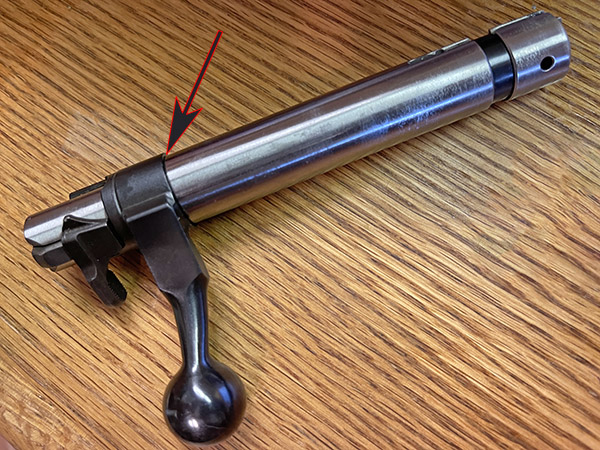
We don’t reload .22 ammo, though.  So what can we do to eliminate unnecessary headspace?  That’s where TriggerShims’ bolt shims enter the picture.  The idea is that instead of increasing the length of the brass case to eliminate unnecessary headspace, we push the bolt face forward (toward the rifles’ chamber) to shrink the headspace.  In the photo above, you can see where the TriggerShims bolt shim fits between the bolt handle and the bolt’s outer cylinder.  When the bolt is assembled with the bolt shim installed, it looks like this:

The arrow points to the bolt shim. It pushes the bolt face forward 0.002 inches.
The bolt shim is visible from the bolt underside. Because the bolt locks with a lug on the bolt handle casting, the forward portion of the bolt sits further forward when the bolt shim is installed.

The package from TriggerShims contains five shims of different thicknesses, color coded by thickness.  Lance doesn’t know how much shimming your bolt might need, and initially you don’t either.  One approach is to go at this question as you would when developing a load for a centerfire rifle; i.e., trying different powders, powder charges, etc., except the sole independent variable is shim thickness.  Here, the questions are how much excess headspace is there in your rifle, and how much should you remove to optimize accuracy?

The best approach to answering the above questions is to take the shims to the range, and with your preferred ammo, shoot groups with no shims, the 0.0015-inch shim, the 0.002-inch shim, the 0.003-inch shim, the 0.004-inch shim, and the 0.005-inch shim, and then select the shim that provides the greatest accuracy.  Theoretically, if you switched ammo brands, you could repeat the process and find the best shim for the new ammo.  It’s very clever.

Me?  I’m lazy.  I watched a bunch of YouTube videos describing the above and I decided I didn’t want to disassemble and then reassemble my bolt at the range, so I simply installed the 0.002-inch shim on both my CZ 452 Varmint and my Remington Custom Shop Model 504.  (The Model 504 bolt shim installation is very similar to how it’s done on the CZ.)

The Results

Does it work?  In a word, yes.  I wouldn’t have believed it without trying it myself.   I’m here to tell you the results are nothing short of amazing.

Remington Model 504

As I mentioned at the start of this blog, my Model 504 was a real disappointment.  Yeah, it’s beautiful, with deep, lustrous bluing and gorgeous walnut.

My Custom Shop Model 504. It sure is pretty.

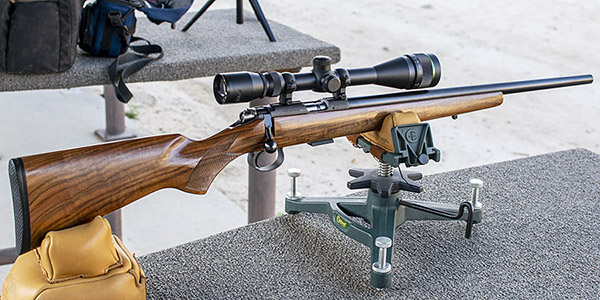
But the Model 504 didn’t group well with any ammo.  That was a surprise, partly because of the rifle’s price, partly because of the Remington Custom Shop’s reputation for stellar performance, and partly because the rifle was glass bedded from the Custom Shop.  I did my online research (ass backwards, as usual, after I bought the rifle) and I learned that Model 504s are known for lousy accuracy.  I tried screwing around with relieving the bedding where it interfered with the barrel attaching screw, I tried different action screw torques, and I tried different ammo.  Nothing worked.  I thought I had been stuck with a beautiful rifle that was essentially a paperweight.  Here are a couple of typical groups from the Model 504 at 50 yards with Eley Target ammo (which is good stuff) before I installed the bolt shim.

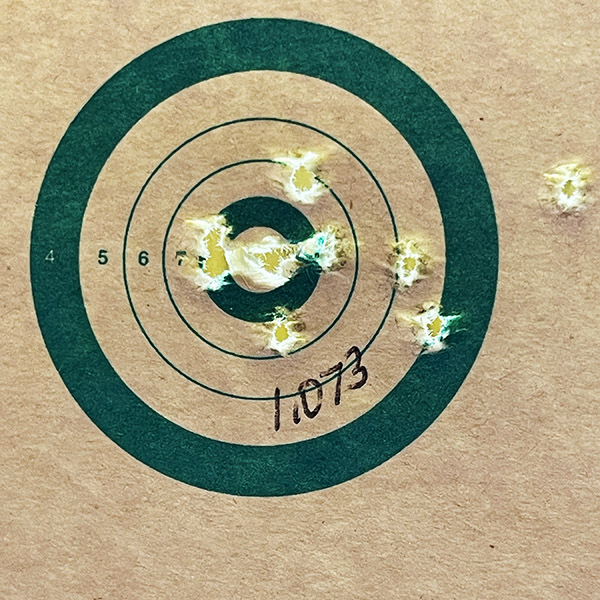
A Model 504 typical pre-bolt-shim-installation 5-shot group at 50 yards.
Another pre-bolt-installation group at 50 yards from the Model 504. Before installing the bolt shim, I would have considered this a good group from this rifle.

As you can see, they are what we in the engineering world would call lousy.  The groups would vary, seldom going as low as that 1.041-inch group you above.   Mostly they were awful.

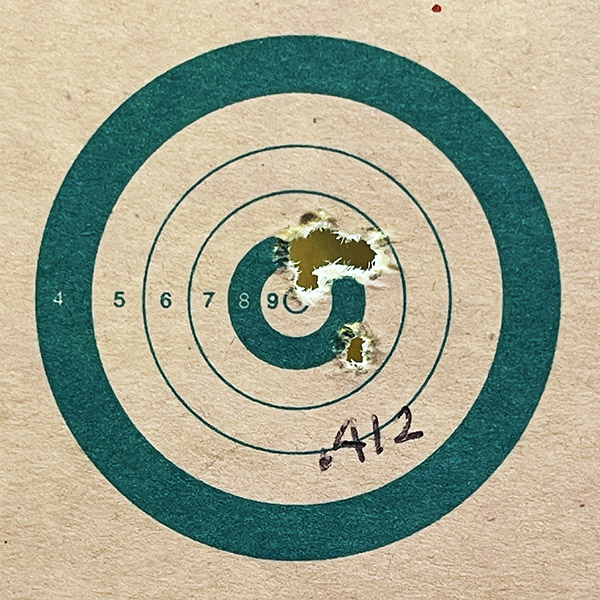
I then installed a 0.002-inch trigger shim on the Model 504 and I tried it again.  Wow! Look at this!

A dramatic and immediate improvement with the 0.002-inch bolt shim. This first group with the bolt shim installed was shocking. It got even better (see below).
The next group from the Model 504 with the bolt shim. I’m a believer.

When I saw those groups through the 12X Weaver scope on my Model 504, I couldn’t believe what I was seeing.  In my mind, I could hear Lance’s calm voice in our recent telephone conversation telling me there’s no guarantees, but folks say they work.   Indeed they do!

CZ452 Varmint

I was blown away by the Model 504’s improved accuracy with the addition of the 0.002-inch bolt shim, so I wanted to try it on the CZ.

Another pretty rifle: The CZ 452 Varmint.

The CZ has always shot better than the Model 504.  Here’s a typical 10-shot group with the CZ452 before I installed the bolt shim:

I meant to shoot a 5-shot group before installing the bolt shim, but I shot 10 instead. It’s a typical group from the CZ before I installed the bolt shim.

What you see above is what the CZ would do at 50 yards with Eley Target ammo in my hands.  Sometimes it would do a little better.  Sometimes it would do a little worse.   I’m not that great a shot; other people could probably do better.  But it’s typical for me.  I wanted it to do better.

The TriggerShims 0.002-inch bolt shim went into the CZ and again, my response was:  Wow!

One little tiny 0.002-inch bolt shim and voila!
Someone once said only accurate rifles are interesting. These two rifles suddenly became much more interesting with the addition of TriggerShims bolt shims.

The Bottom Line

As the saying goes, your mileage may vary.  But I’m convinced:  Bolt shims work.  I might be able to improve my groups even more if I experimented a bit with different shim thicknesses, but I’m more than pleased with what I saw after trying my simple and unscientific “install the 0.002-inch shim and see what happens” approach.  This really is a great product. If you want to improve a bolt action .22  rifle’s accuracy, check out TriggerShims.  You can thank me later.


Pretty Wood

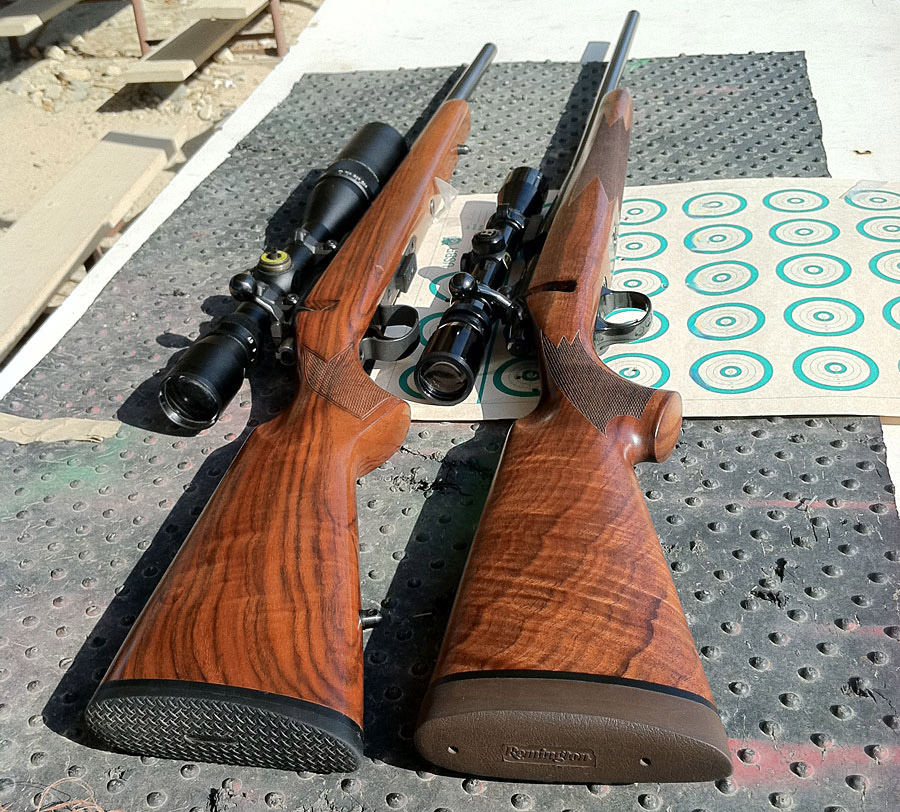
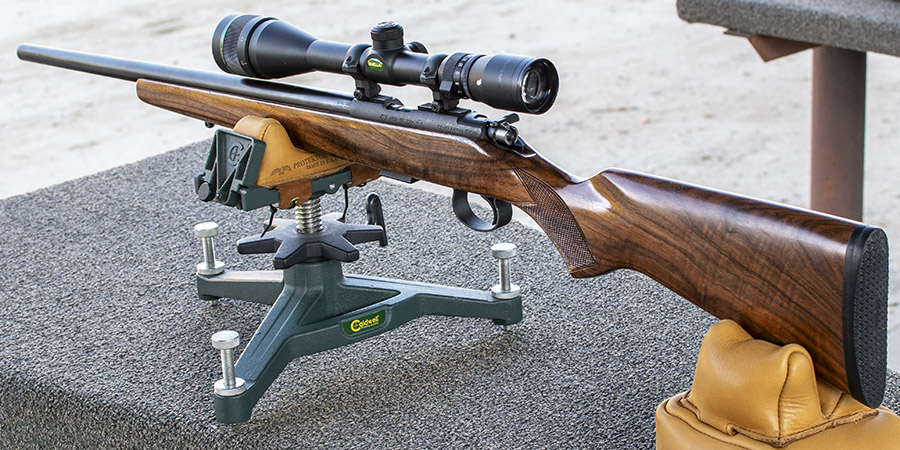
People sometimes ask how I find guns with exceptional wood.  It’s easy.  I can’t pass a gun shop without stopping, and I spend a lot of time on gun forums.  Every once in a while, I’ll see a rifle with walnut that speaks to me.  The Model 504 you see here came from First Stop Guns (they’re in Rapid City, South Dakota) when Susie and I were out there touring that part of the country.  I spotted the CZ 452 on a forum post and I sent a message to the owner asking if he would sell it to me.  The first answer was no, but a year later the owner contacted me and asked if I was still interested.  You know the answer to that one.

Pretty lumber indeed, and now they are both shooters. The CZ 452 is on the left; the Custom Shop Model 504 is on the right. You don’t often see .22 rifles with wood like this. For that matter, you don’t often see centerfire rifles with this kind of wood, either.

About that Model 60 cylinder shim story I mentioned…


Join our Facebook ExNotes page!


Never miss an ExNotes blog:


Help us keep the lights on:


Don’t forget: Visit our advertisers!

A Laminated Mosin

By Joe Berk

The surplus Mosin-Nagant rifles that were everywhere (until Obama was in office) were the best gun deals ever; now, you hardly see them anywhere, and when you do, they go for big bucks.  You used to be able to buy a Mosin for $79 at Big 5.  I started playing around with them about 15 years ago.  Today, when you see one, it’s not unusual for the store to have them marked at $500 (or more).

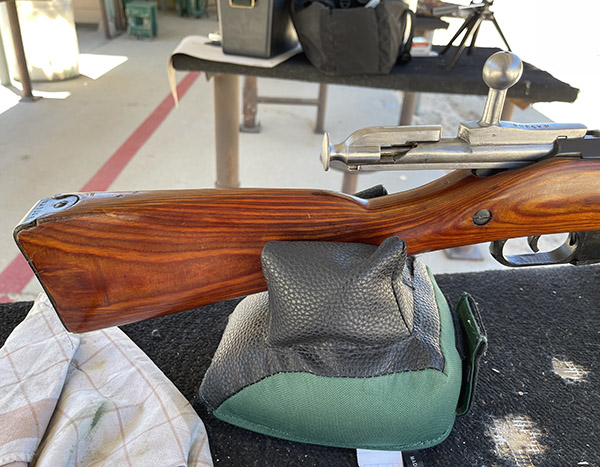
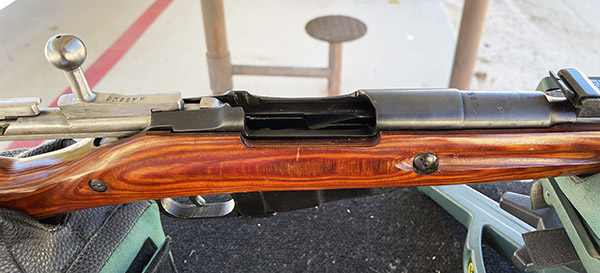
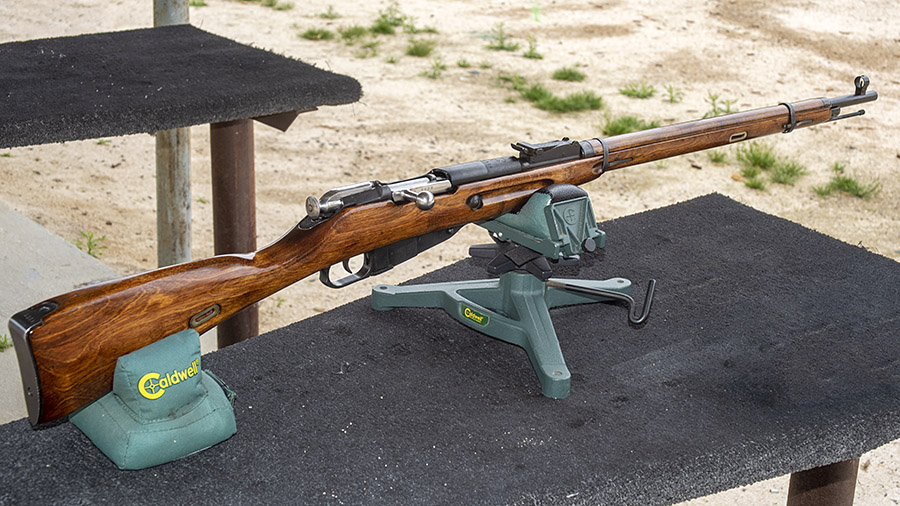
One of mine is a laminated stock Mosin 91/30, which is not seen too often.  I bought it about 10 years ago from Gunrunner’s in Duarte for $239 and stuck it in the safe.  Until today, I had not fired it.  It’s a Tula (there were two makers; Tula was one) with a round receiver.  It was made originally in 1939.  After the war, the Soviets refurbed most of them and a very few were fitted with laminated stocks.  I’ve never seen another one on the range.  It’s a pretty rifle, and I like the look of it.  Laminated wood stocks are usually much more stable than a standard stock, so I think that’s helping this rifle’s accuracy.

My laminated Mosin has the usual nicks and dings.  The serial numbers all match (stock, magazine, bolt, receiver, and bayonet).  The trigger is heavy, gritty, and just God-awful.  For the groups you see here, I used my new favorite Mosin load (42.0 grains of IMR 3031 and the PRVI PPU 150-grain jacketed softpoint boattail bullet).

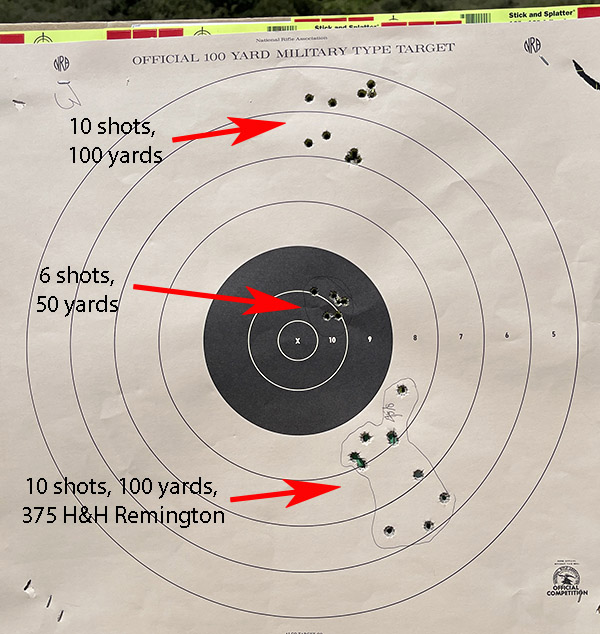
The rifle, I think, shoots well (even with its terrible trigger, and it was pretty windy out there the day I shot the groups you see above).  Because I am a cheap SOB, I reused a target from a previous range session with my .375 H&H, so you can ignore the group to low right of the bullseye.  With my laminated-stock Mosin, I first shot 6 rounds at 50 yards to see where the rifle was printing (my aim point was at 6:00 on the bullseye).  Then I moved the target out to 100 yards and fired another 10 rounds using the same aimpoint.  The 50-yard group measures 1 1/8 inch; the 100-yard group measures 2 13/16 inch.  That’s not too bad for the first time out, and not too bad for an old guy using iron sights.

My rear sight is already all the way down.  I am going to look for a front sight with a taller post (if you know who might offer these, please let me know). The rifle probably has a 500-meter battlesight zero (or whatever the Russians used), and it was probably set up with the bayonet installed (which makes the rifle shoot to the right without the bayonet).   I can adjust the windage by drifting the front sight; I can’t lower the elevation without getting a taller front post.

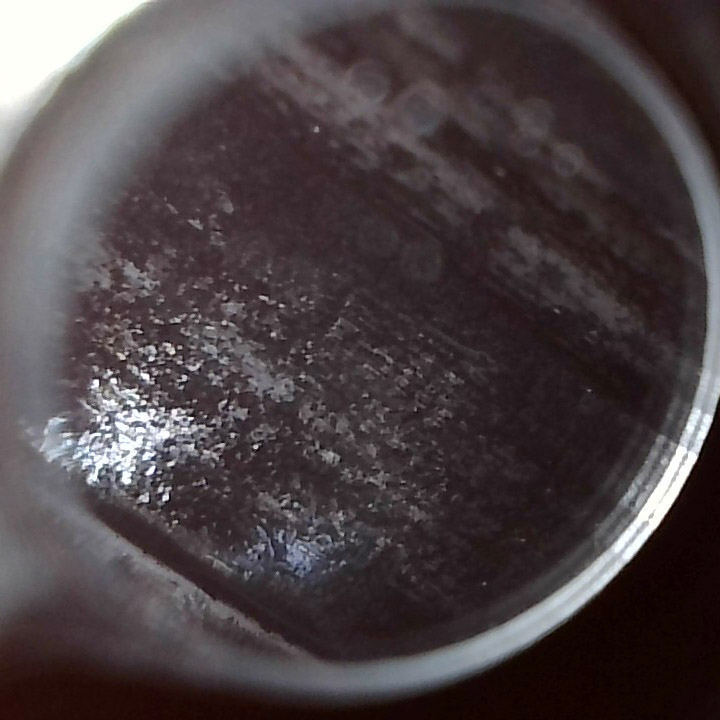
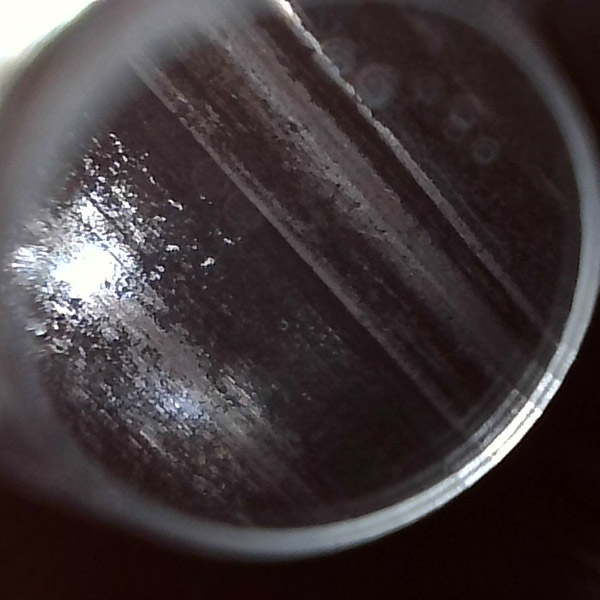
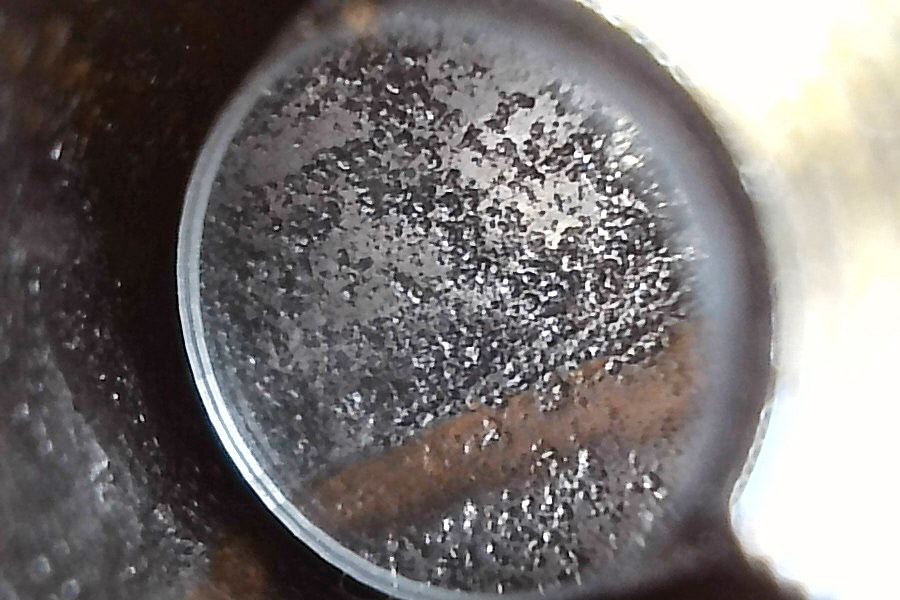
You might be wondering what the bore looks like on this rifle.  I can show you:

There are some takeaways from the above photos:

      • The bore is better in some spots than in others.
      • When these rifles saw action in World War II (as this one probably did), the ammo used had corrosive primers.  The effects of that are visible.
      • Even Mosin-Nagant rifles with funky bores can shoot well.
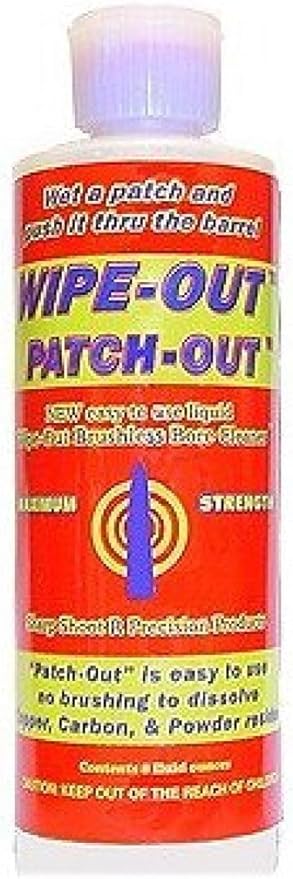
      • The bore cleaning copper fouling solvent I use, Patch-Out, does a good job.  It works a lot better than Hoppes No. 9.  You don’t see any copper in the photos above.

Incidentally, if you’ve never seen the movie Enemy at the Gates, it’s one of the best movies ever (in my opinion).  The Mosin-Nagant rifle plays a starring role.  The opening scenes are really well done.  Take a look:

I’ve written a lot about the Mosin-Nagant 91/30 rifle.  I love these old rifles. Here are my earlier posts:

Three Mosin-Nagant Loads
Mosins, Sewer Pipes, and Lunar Landscapes
A Tale of Two Mosins
More Mosin Loads
Cast Bullet Mosin Loads
Mosins, and Enemy at the Gates
NJ State Police Museum
A Tale of Two Old Warhorses
Home on the Range
Stupid Hot 7.62x54R Ammo
Lee Ermey’s Guns Go To Auction
Revisiting World War II
Sniper!
Motorcycles and Milsurps

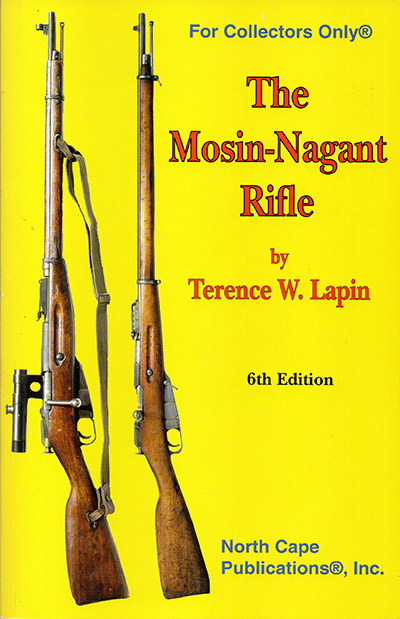
If you would like to learn more about the Mosin-Nagant rifle, the Lapin book is the definitive source:

The Mosin-Nagant Rifle is an easy and fascinating read.   I enjoyed it and I think you will, too.


Join our Facebook ExNotes page!


Never miss an ExNotes blog:


Help us keep the lights on:

ExNotes Review: MidwayUSA Soft Rifle Case

By Joe Berk

I don’t usually buy things with features I don’t need, but I made an exception for MidwayUSA’s soft rifle case.  I needed a couple of soft rifle cases because some of mine had worn out (the zippers were tearing on a couple, the inner lining was snagging on the front sight on another, the handle broke on one, etc,).  Usually, I spend about $10 or $12 on a rifle case because the only thing I really use them for is bringing a rifle to or from the range.  In the past, I’ve purchased them when visiting Bass Pro or Turner’s.

I buy a lot of reloading components from MidwayUSA, so that’s where I went for the cases.  MidwayUSA usually ships either the day I order anything, and they have that $100 free shipping threshold.  At $26.24, their Heavy Duty Scoped Rifle Case was more than I wanted to spend, but hey, I would only need to order four of the things to get my free shipping.  I am a sucker for that free shipping deal.

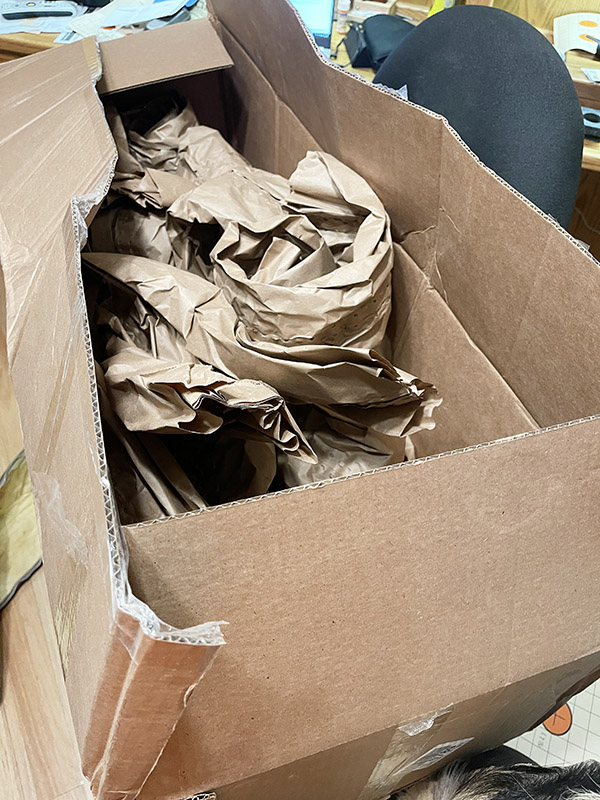
The cases arrived quickly, and MidwayUSA packaged them well.  They arrived in a single large box with plenty of padding.  You could have shipped a body in the box (it was that big). Each case was in a separate plastic bag.  It’s funny when you think about it:  Carefully packing a case in a box to protect it from damage when the purpose of the case is to protect things from damage.

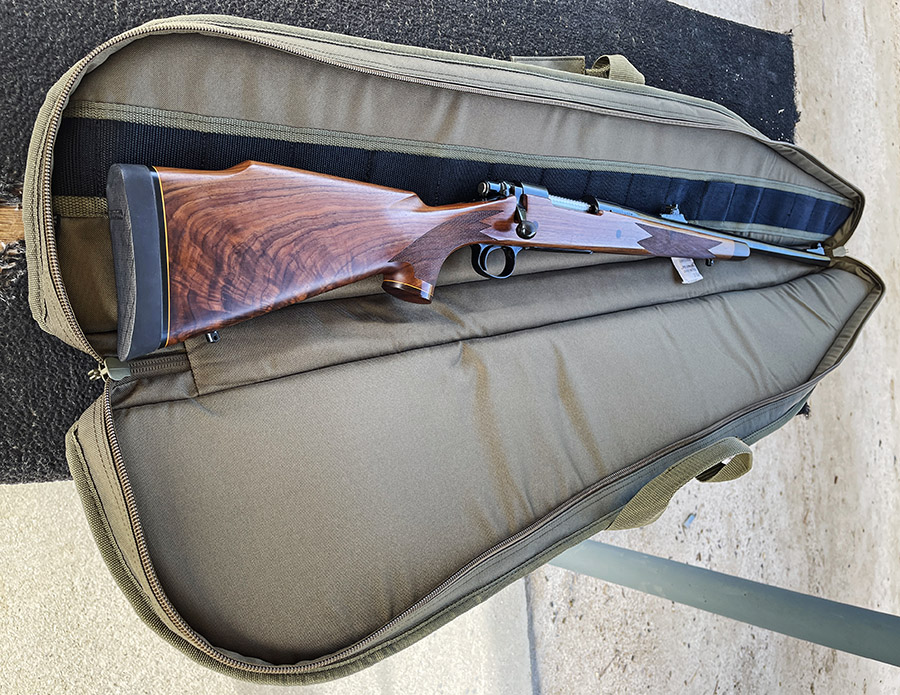
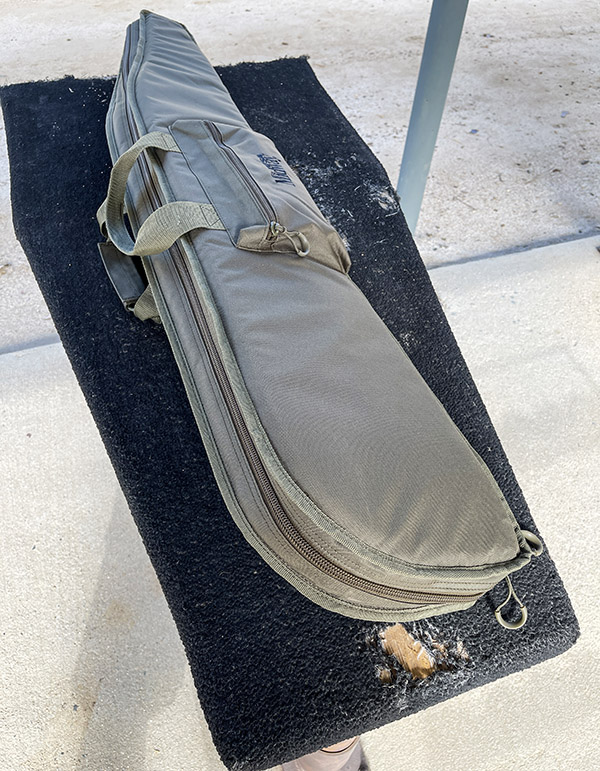
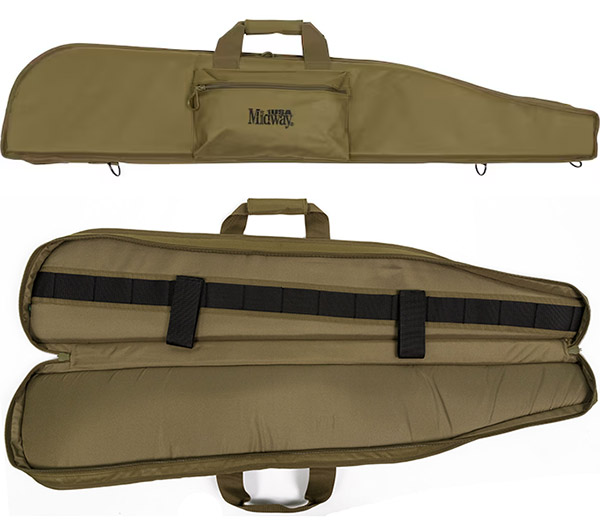
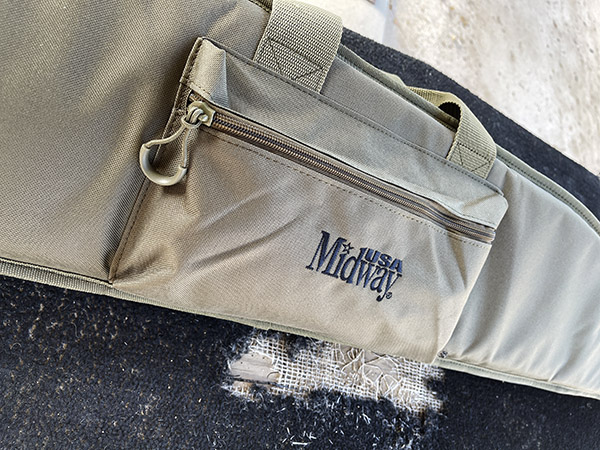
The rifle case itself is impressive.  It’s wider than usual and it has heavier padding on the sides.  The zippers are higher quality than what I usually see on rifle cases.  Inside, there are a couple of Velcro straps to secure a rifle (that’s a feature I don’t need, but it’s a nice touch).  The case has a carrying strap so you can carry it from the shoulder (yet another feature I don’t need, but some folks might).  There’s an exterior zippered pocket, presumably for carrying ammo.   I used it for the Velcro retainers and the shoulder strap, so I guess it came in handy.

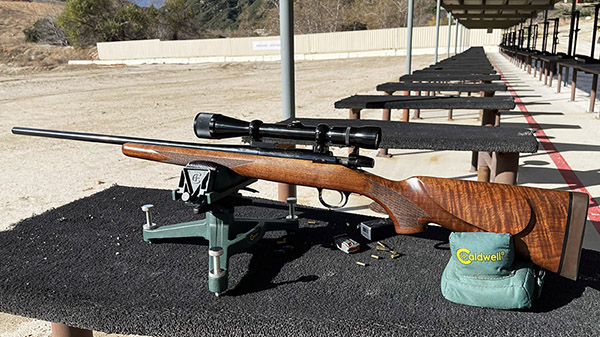
I was worried about the case being big enough to accept get some of my longer barreled rifles, but there’s plenty of room.  I have a couple of long action bolt rifles with 26-inch barrels, and the MidwayUSA case swallowed those with ease.  You can see that in the photo at the top of this blog.

The cases can be had in olive green, desert, or black.   I bought the olive green version in a nod to my alma mater (the US Army).

Overall, I give the case 10.0 points (out of a total possible 10 points).  I knocked it down a half a point because it had things I didn’t need, but then I gave it a half point back for MidwayUSA’s free (and speedy) shipping.  If you are in the market for a rifle case, this is a good one.


Pro Tip:  Never store a firearm in a soft case (or a holster) for an extended period of time.  The case or the holster will hold moisture and lead to rusting.  Take the weapon out regularly and wipe it down with an oiled rag.


Join our Facebook ExNotes page!


Never miss an ExNotes blog:


Help us keep the lights on:


Don’t forget: Visit our advertisers!

IMR 3031 Mosin Loads

By Joe Berk

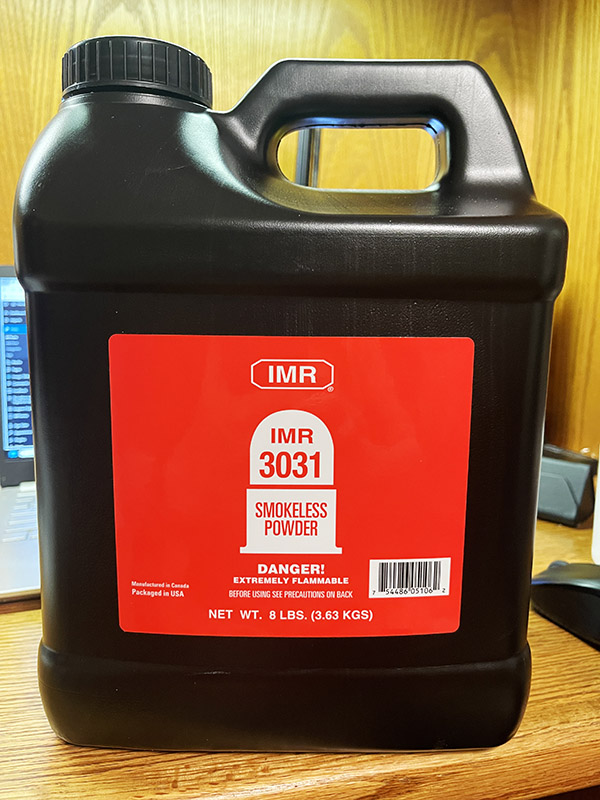
I recently bought an 8-lb container of IMR 3031 on the theory that the time to buy something is when you see it, and I’ve been researching loads for various cartridges using that powder.

IMR 3031, and lots of it.

IMR 3031 doesn’t appear too often in modern reloading manuals, which struck me as odd because when I first started playing with things that go bang it seemed like 3031 was an almost universal propellant, good for whatever ails you.  So I dug out some reloading manuals from the 1970s, and as I expected, 3031 showed up for a bunch of different cartridges.  One of them is 7.62x54R, and I wanted to see if I could develop a decent load for my Mosin-Nagant.  I should point out at this point that there’s nothing special about my 1940 Tula Mosin (other than the fact that it’s one of my favorite rifles).  In fact, the barrel looks more like a sewer pipe than a precision shooting instrument.

My Mosin-Nagant’s bore. It ain’t pretty.

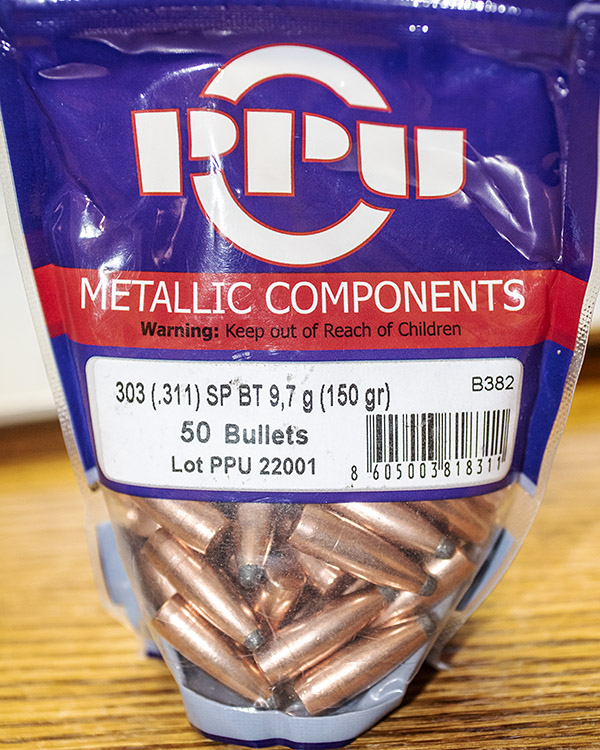
I loaded the ammo for this test series with the PPU Partizan 150-grain,  0.311-inch diameter, jacketed softpoint boattail bullet.  These are relatively inexpensive bullets (they go for around $.30 each from Graf’s, which I guess is cheap by today’s standards).  These bullets pop up for sale occasionally, and a while back I bought 500 of them.

PPU bullets. They are relatively inexpensive. Sometimes they go on sale.
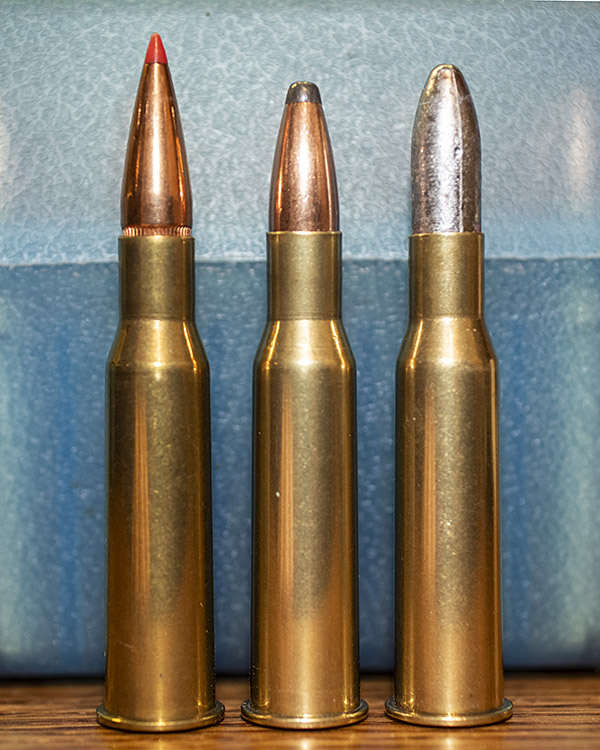
Three different 7.62x54R reloads. From left to right, it’s the Hornady V-Max bullet, the PPU jacketed softpoint bullet, and a cast lead bullet. I shot only the PPU bullets for this blog.

My testing consisted of five different IMR 3031 loads to see how they performed at 100 yards.  The drill was to fire 10 rounds each at charges of 39.0, 40.0, 41.0, 42.0, and 43.0 grains.   I used PRVI Partizan brass and Winchester primers, and I seated the bullets for an overall cartridge length of 2.790 inches with no crimp.  Here’s what I found:

The chrono and accuracry results. 42.0 grains of IMR 3031 seems to be the sweet spot.
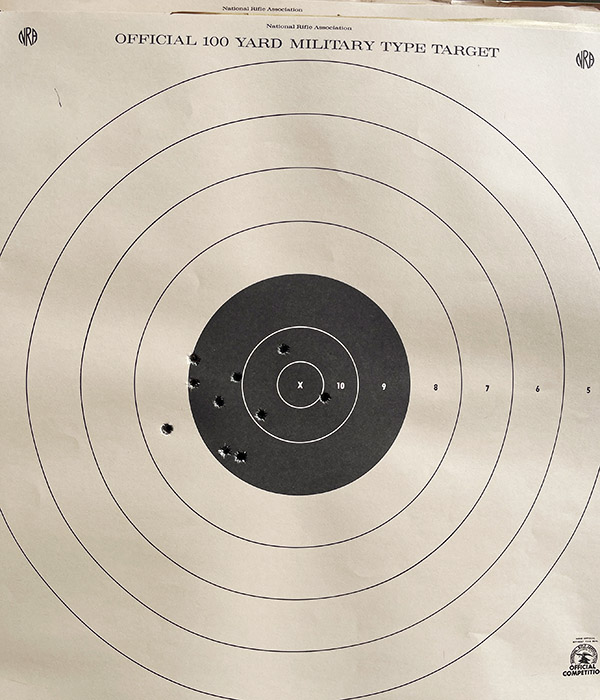
A 100-yard target group with the 42.0 grain IMR 3031 load.

The sweet spot appears to be right about 41.0 to 42.0 grains of IMR 3031 (the target above is with 42.0 grains).   The standard deviation is smaller for the 42.0-grain load with the same group size, so that’s what I’m going with.  Recoil was moderate with all loads; none of the loads showed any pressure signs.  None of the above were compressed charges. The 43.0-grain load had a smaller standard deviation, but the group opened up and shifted to the left, so I’m going to call the 42.0-grain load good.  It’s as good as the groups I was getting with IMR 4320, which had previously been my Mosin accuracy load.

Before any of you out there in the blogosphere get your shorts in a knot about using older reloading manuals, I realize the manual companies (and others who parrot them) advise against doing so.  The theory is that the propellant formulations have changed and what the old manuals show as a safe load may not necessarily be so today.  I get it.  That’s why I start testing at the bottom of the range and work up, looking for pressure signs along the way.  The current and the 2007 Hornady manuals do not list IMR 3031 for the 7.62x54R.  The 1973 Hornady manual (the first one I ever bought when I was just getting started in this game) shows a max of 44.4 grains with a 150-grain bullet, which is why I stopped my initial testing at 43.0 grains.  None of the loads I tested showed any pressure signs and recoil was moderate with all loads.  I think the new manuals feature new powders because the powder companies pay for the manuals to include their newest stuff.  I don’t think they do it because the powders are necessarily better.  Maybe I’m wrong.  I’m a cynical old fart.

I should point out that my findings are not rigorous for two reasons:

    • I’m not that good a shot, and
    • My eyes are not what they used to be.  It’s getting increasingly more difficult to get the front sight in sharp focus (ah, to be 72 again…).  I do the best I can.

But I’m still out there having fun, and that’s what important.


I’ve written a lot about the Mosin-Nagant 91/30 rifle.  Here are my earlier posts:

Three Mosin-Nagant Loads
Mosins, Sewer Pipes, and Lunar Landscapes
A Tale of Two Mosins
More Mosin Loads
Cast Bullet Mosin Loads
Mosins, and Enemy at the Gates
NJ State Police Museum
A Tale of Two Old Warhorses
Home on the Range
Stupid Hot 7.62x54R Ammo
Lee Ermey’s Guns Go To Auction
Revisiting World War II
Sniper!
Motorcycles and Milsurps

If you would like to learn more about the Mosin-Nagant rifle, the Lapin book is the definitive source:

The Mosin-Nagant Rifle is an easy and fascinating read.


Join our Facebook ExNotes page!


Never miss an ExNotes blog:


Help us keep the lights on:


Don’t forget: Visit our advertisers!


Revisiting the 375 H&H Safari Rifle

By Joe Berk

I’m not as good as I used to be.  That point was brought home during a recent session with my Remington .375 H&H Safari Grade rifle.  I can tell by reviewing a few blogs I did earlier on this rifle.  The groups were better. Way better.  I just don’t have the visual acuity I used to. I’ve written about this rifle before, and I’ll give you the links for those earlier blogs at the end of this one.

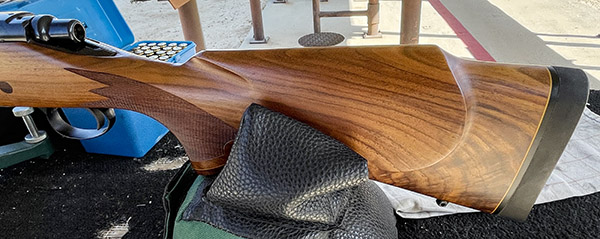
The walnut is what drew me to this rifle. That, and the fact that it is a .375 H&H.
The lumber is straight grained through the length of the stock, and then it explodes in a feather pattern near the butt. This is good stuff.
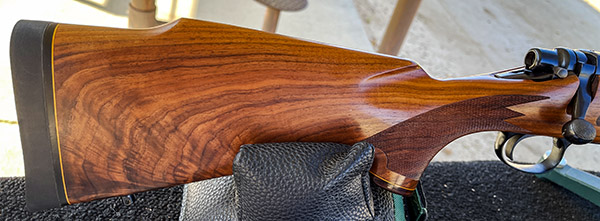
The view from the starboard side, where the contrasty grain is even better. Life is too short for plain walnut. You can quote me on that.

I’ve owned the Safari rifle for five decades now.  I’ve never been on a safari with it, and at this point in my life, I probably never will be.  But I can still dream.  Capstick, Corbett, Bell, and other professional hunters wrote about their adventures going after things that could gore, stomp, or bite you to death.   I like reading those stories.  Like I said, I can still dream.

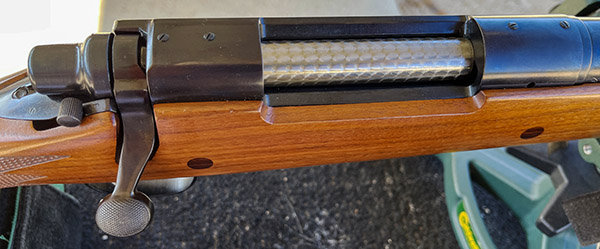
Back in the 1970s, the Safari Grade Model 700 Remington rifles were only offered in two chamberings: .458 Magnum and .375 H&H. Check out the jeweled bolt.
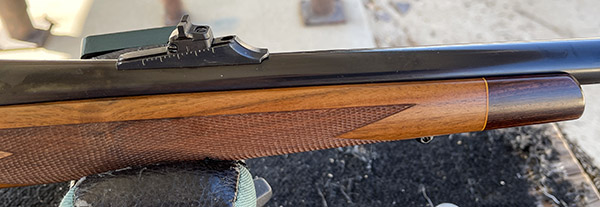
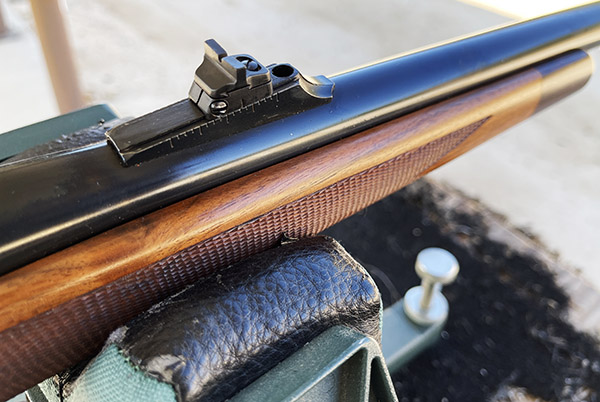
The Safari Grade rifles had a rosewood fore end tip and matching pistol grip accents, with light maple spaces. Classy stuff. Check out the rear sight.
Another view of the rear sight.  The Safari Grade rifles had cut checkering, too (no pressed-in or fuzzy laser cut checkering on these rifles).
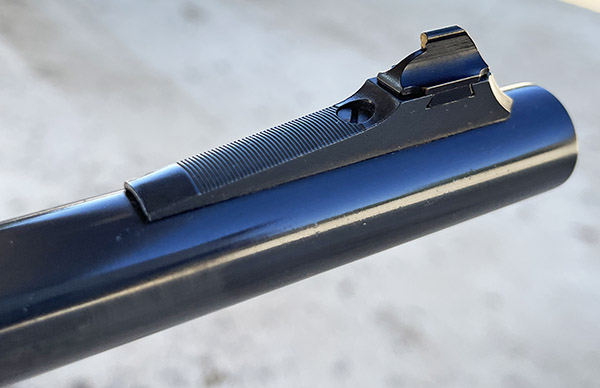
The front sight on my Model 700. That little bead is a lot harder to see these days than it was 40 or 50 years ago.

I first became interested in big bore rifles when a group of guys I hung around with in El Paso 50 years ago cooked up a cast bullet bench rest competition.  They all bought big bore rifles, with the understanding that minor casting imperfections wouldn’t affect the bigger .458 or .375 cast bullets very much.  I never lost interest in that concept, although the bullets I’ll write about here are of the jacketed variety.

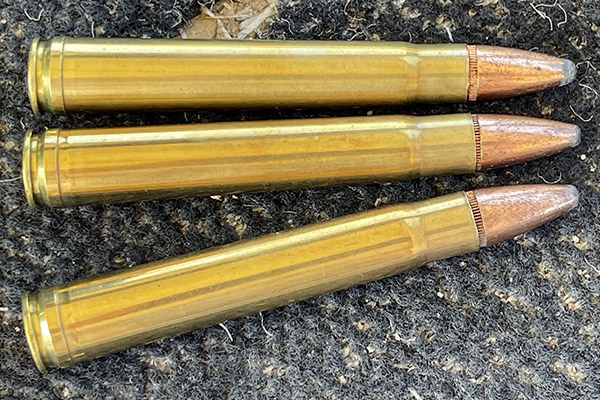
.375 H&H reloads with 270-grain Hornady jacketed softpoint bullets. The bullets are factory seconds.

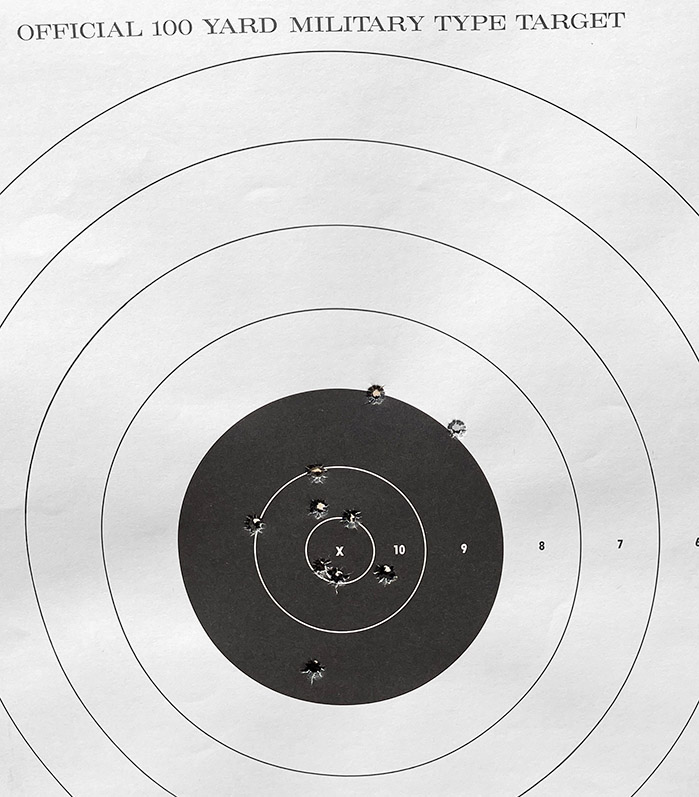
The weather at the West End Gun Club was perfect:  No wind, moderate temperatures, and the horseflies weren’t out.  I set up my gear, put my targets out during a line break, and chatted with my geezer buddies for a bit (being retired is fun).  Then I pulled the big Remington from its case, placed it in the rifle rest, set up my Garmin chronograph, chambered a round, and searched diligently for the front sight as I settled in behind the rifle.  As the front sight danced in and out of focus, I did my best to hold it at the base of the bullseye (barely visible 100 yards away), and gently put pressure on the trigger.  I did the same nine more times, each time remembering the marksmanship fundamentals I learned in the Army.

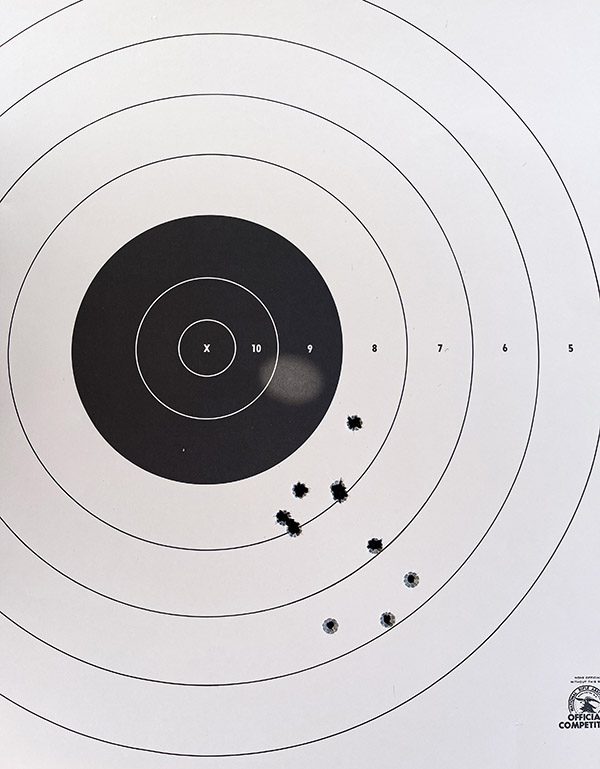
My first target of the day. Low and to the right. The group was just okay. I’ve done better.

I shot at 100 yards from the bench, and as has been the case in prior outings, the rifle printed a little low and a little to the right (I had to use my spotting scope to see it; there’s no way those little .375 holes would be visible to the naked eye).  I thought I would adjust the rear sight to compensate for this, but I had my contact lenses in on this outing and I couldn’t see the screws that lock the rear sight in position well enough to take a chance on loosening them and moving the sight.  I’ll do that when I get home.  I had my contacts in because I thought I might be able to see the front sight a bit better.  Hope springs eternal, but it wasn’t in the cards for me.  I shoot open sights pretty much the same whether I’m wearing my glasses or my contacts.

On the next target, I threw in a little Kentucky windage, doing my best to hold the front sight at 9:00 on the black bullseye.  It worked.  The next 10 shots were mostly in the bullseye, but I had to struggle even more to see the front sight with it partially over the black bullseye.  Normally I would hold at 6:00, where the front sight is still tough to see but the contrast against the white background surrounding the bullseye is better.  Trying to hold it at 9:00, with the front sight’s little bead half in and half out of the bullseye, was like trying to have a discussion with a left winger.  But when I looked through the spotting scope, I could see that I did okay.

A 9:00 o’clock hold and a little luck resulted in this group. I do love shooting my .375 H&H.

My load is mild compared to where you can go with this cartridge.  I shoot a reduced load using Hornady 270-grain jacketed softpoint factory second bullets, 33.0 grains of SR 4759 propellant, Remington brass, a CCI 200 primer, an overall cartridge length of 3.570 inches, and no crimp.  Recoil is mild for a .375 H&H.

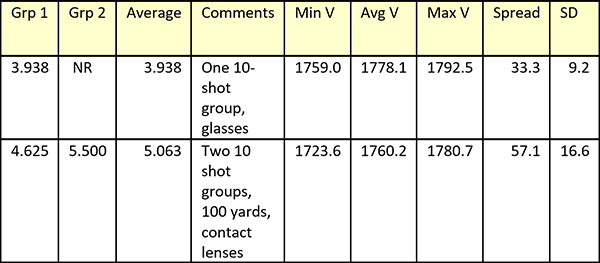
The group size and chrono results, along with those from a single group fired a week or so earlier, are provided below.

It looks like I did a little better wearing glasses than I did with my contact lenses.  I think I see better with my contacts, but I guess the results don’t lie.  It was a little bit cooler on this second outing than it was on the day I shot previously, and that shows up in the velocity results.

One of my buddies chided me about the Remington needing a scope.  I would do better with a scope, but I like the challenge of hitting a distant target with iron sights.

You might be wondering about the factory second bullets.  They are usually available from MidwayUSA.  I don’t know what makes them factory seconds.  It might be the cannelure location on the bullet shank, it might be slight tarnishing, or it might be something else.  The factory second bullets are about half the price of the standard (presumably higher quality) Hornady bullets.  For my purposes, these are good enough.  Maybe I’d get smaller groups with first quality bullets.  Maybe not.  Someday maybe I’ll test to see if there’s an accuracy difference.

As promised, here’s a set of links for my earlier .375 H&H blogs:

The 375 H&H at 100 Yards
375 H&H Loads
The Remington 375 H&H Safari Grade Rifle

You might recall that we also wrote a few blogs on a cartridge that improves upon the .375 H&H (and that would be the .375 Ruger).  Those blogs are here:

A Custom 375 Ruger
A Day at the Range

And to wrap up this blog, while I was on the Midway site I came across a Youtube video about the .375 H&H by my good buddy Larry Potterfield.  I enjoyed it and I thought you might, too.


Join our Facebook ExNotes page!


Never miss an ExNotes blog:


Help us keep the lights on:


Don’t forget: Visit our advertisers!

Iron Sights and a .45 70 No. 1

By Joe Berk

There are more than a few .45 70 stories here on the ExNotes blog.  This is another one.  I like the .45 70, and I make no excuses for that. I’ll share a few links on our other .45 70 stories at the end of this blog.

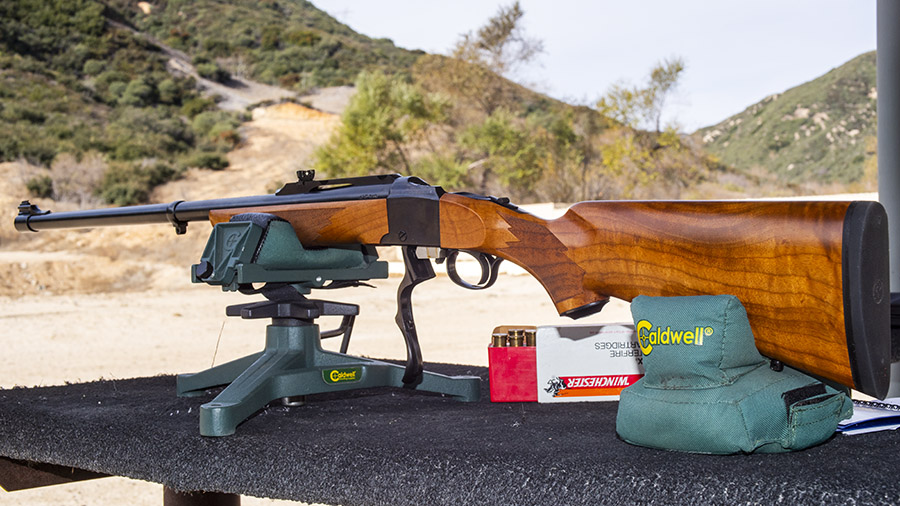
A few years ago Ruger offered a special No. 1 Single Shot rifle in .45 70 with a 26-inch barrel and a Circassian walnut stock.  Most had very plain wood.  Then I found an almost new one in Duarte for cheap. Ruger rifles usually have long throats, but this run of No. 1 rifles had short ones, and conventional 405 grain bullets wouldn’t chamber if the bullet was crimped in the crimping groove (or so the whining on the Internet went).  I’m guessing the original owner either bought or reloaded ammo for my rifle (the one you see above) and it wouldn’t chamber, so he put the rifle up for sale.

Then another stroke of good luck:  A guy at the range had some Winchester 300-grain .45 70 ammo, and it chambered in the No. 1.

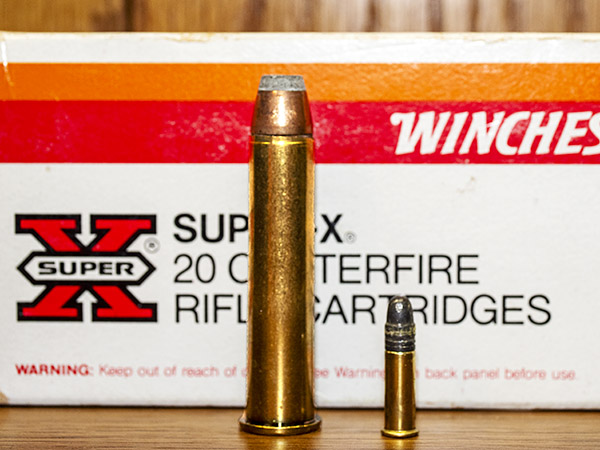
A Winchester .45 70 cartridge with a .22 Long Rifle cartridge.

That Winchester ammo was noteworthy for two reasons: It chambered, and it was relatively accurate at 100 yards.  I wrote about that before (you’ll see the link below).

The story gets more interesting.  Hornady makes a jacketed 300-grain hollow point bullet, and I picked up a bunch of those years ago.  When I loaded them, they wouldn’t chamber in the Circassian .45 70.  Then I noticed a Hornady illustration of their current 300-grain bullet design, and the bullet profile had changed.  It looked like it might work based on the illustration, so I bought a box of the Hornady bullets and they worked.  I could crimp in the cannelure and they chambered in my Circassian Ruger.

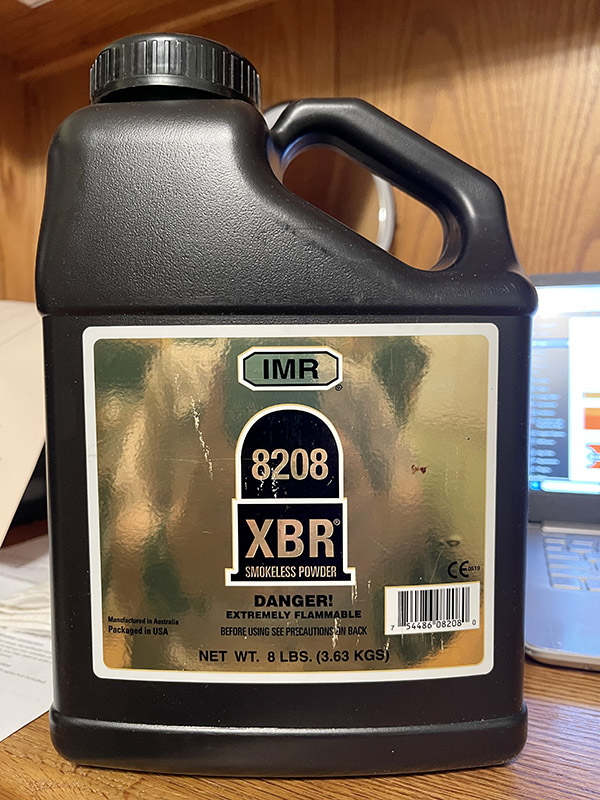
XBR 8208 Propellant. This is good stuff.

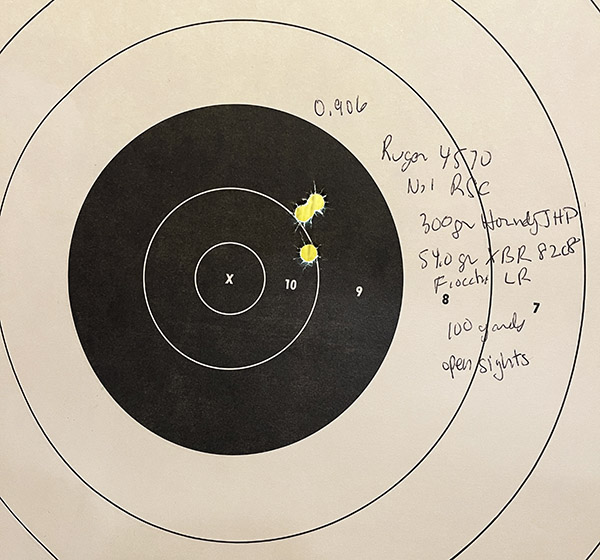
Like I said above, I knew from an earlier range session that the Winchester ammo was relatively accurate in my Circassian No. 1, so my objective was to duplicate that load.  I found online that Winchester listed their ammo’s velocity at 1880 feet per second.  I didn’t know what propellant Winchester used, but I had a bottle of XBR 8208 and it was proving to be very accurate in other cartridges (more on that later).  Interpolating from the Hodgdon’s XBR 8208 load data, it looked like what I needed was 54.0 grains, and that’s how I loaded.

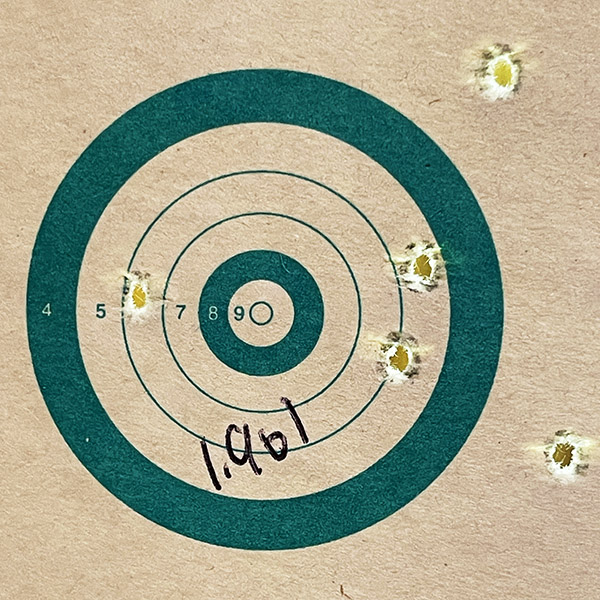
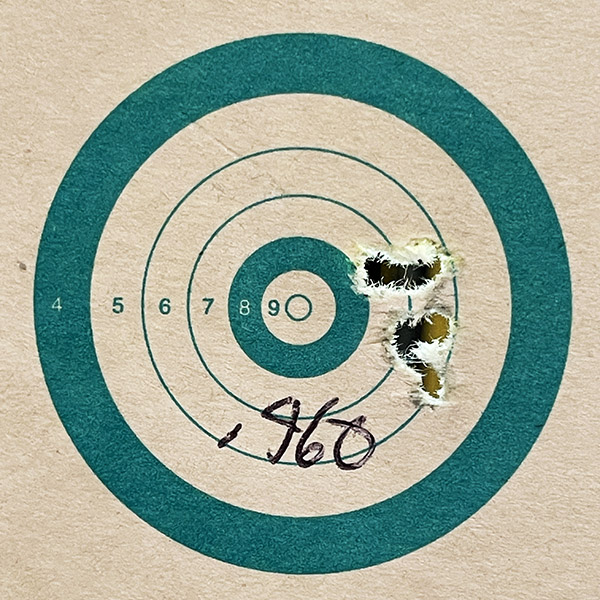
It was an overcast Wednesday morning out at the West End Gun Club when I tried the load at 100 yards.  I fired three rounds and took a peek through my spotting scope.  I couldn’t spot the hits in the scope, so either they all went in the black (which would be good), or I missed the target completely (which would be bad).  Good buddies Duane and Walt were on the range that day, and when we walked out to check our targets, it was time for a collective “Whoa!”  I was more than pleased with the results.   Hell, a 0.906-inch group would be good with a scoped rifle.  For a guy like me and open sights at 100 yards, it was spectacular.  I’m really pleased with the load, the rifle, and myself.  I’m even more pleased I had a couple of witnesses out there to see it!

Phenomenal results (at least for me) at 100 yards with open sights.

Those other cartridges I mentioned that work well with XBR 8208?  In my .22 250 rifles, this propellant works very, very well with Hornady’s 52-grain match bullet.  In the .243 No. 1, it pairs very well with Nosler’s 55-grain  bullet, Hornady’s 58-grain V-Max bullet, and Speer’s 75-grain jacketed hollow point bullet.  In 6.5 Creedmoor Browning X-Bolt rifle, XBR 8208 is the cat’s meow with the 123-grain Nosler jacketed hollow point boattail bullet and the 140-grain Hornady jacketed hollow point boattail bullet.  With that last load, you could shoot flies at 100 yards if you could find them in the scope.


More .45 70 stories?  We’ve got a bunch of them!

Ruger No. 3 45 70 Loads
Ruger .45 70 Circassian No. 1
Buffalo Guns
A Wind  River Marlin .45 70 Rifle
A .45 70 Remlin 1895
The 1886 Winchester
Turnbull Guns
Marlin Cowboy Front Sight Installation
Marlin 1895 Cowboy Revisited
Henry Rifles
The Henry Is In California
Developing a Henry .45 70 Load: Part 1
Developing a Henry .45 70 Load: Part 2
Henry’s Home and an Interview with Dan
Henry Accuracy Loads


More shooting fun?  You bet!  Check out Tales of the Gun


Join our Facebook ExNotes page!


Never miss an ExNotes blog:


Help us keep the lights on:


Don’t forget: Visit our advertisers!

A Compact Rock 1911 Weak Link

By Joe Berk

Did you ever love a thing that stopped deserving your love, but you keep on loving it?  That’s how I feel about my Rock Island Compact 1911.   Man, I want to love this pistol, but it’s fighting me.  The latest development?  The reverse recoil plug on my Compact 1911 failed again.

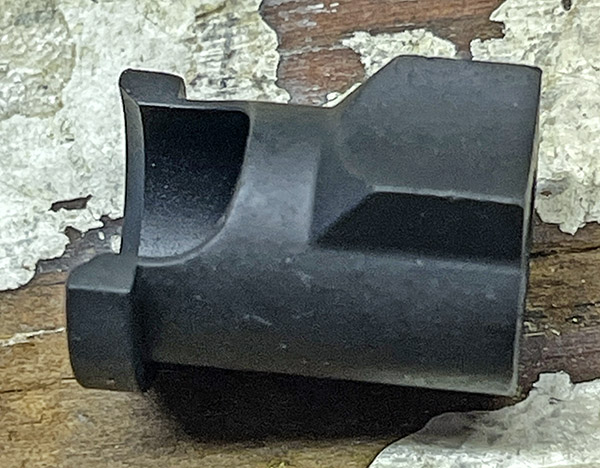
The offending culprit: The Rock Island Compact 1911 Reverse Recoil Plug. This is the new part. The old failed one is in the photo at the top of this blog.

You may recall that this part failed once before in my Rock Compact.  I wrote about that as well as a host of other Rock Island Compact 1911 issues in a previous blog.

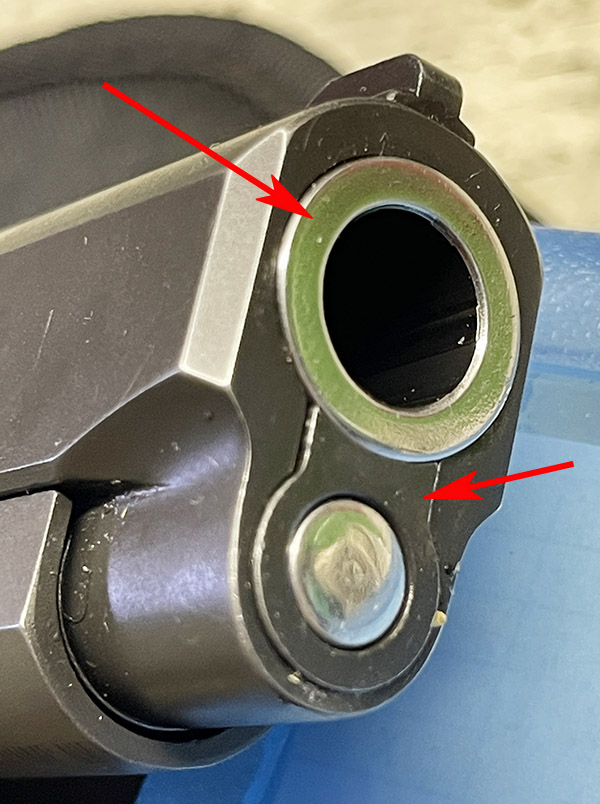
The Compact 1911’s barrel. Note the increased diameter at the muzzle end, which eliminates the need for a separate barrel busing. My chamber’s exterior has custom jeweling by TJ’s Custom Gunworks.
The business end of my Compact 1911. The arrow on the left points to the barrel, the arrow on the right points to the reverse recoil plug.

In a conventional, full-sized 1911, the guide rod spring fits into a barrel-like plug that captures the end of the spring, and that plug engages the handgun’s barrel bushing.  There’s not enough room for that arrangement in a compact 1911, so the various companies producing compact 1911s incorporate different designs to address this.  Rock Island’s Compact 1911 has no barrel bushing (the barrel itself has a larger diameter and it acts as the bushing).  And there’s no conventional recoil spring plug, either.  Instead, the Rock Island Compact uses what they call a reverse plug.  The Rock Island part is made of steel, as it should be (I initially suspected it was made of aluminum, but my magnet doesn’t work on aluminum).  Even though it’s made of steel, it just doesn’t hold up.

What happened this time is the gun became extremely stiff (I could barely rack the slide), the trigger pull became increasingly heavy, and the gun doubled on me (it fired two shots with a single trigger pull).  When that happened, it was time to call it a day and tear the gun down.

The arrow points to the reverse plug installed in the slide, with the guide rod/recoil spring/reverse plug assembly installed in the slide.

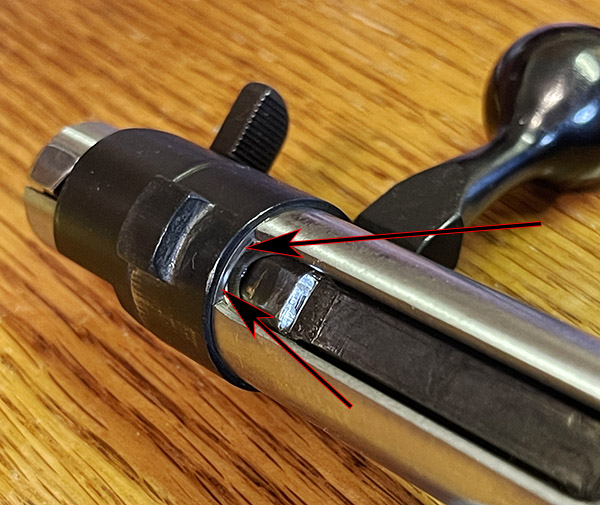
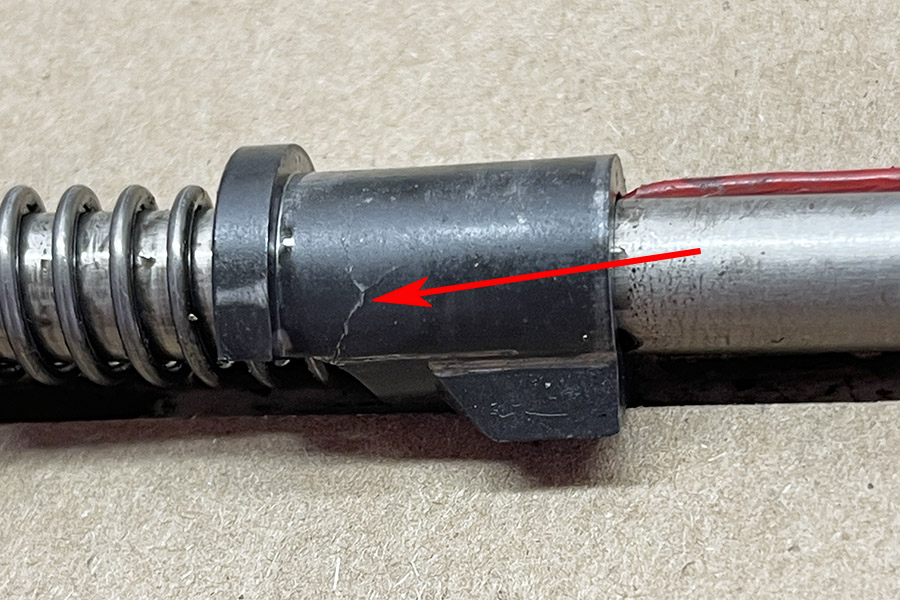
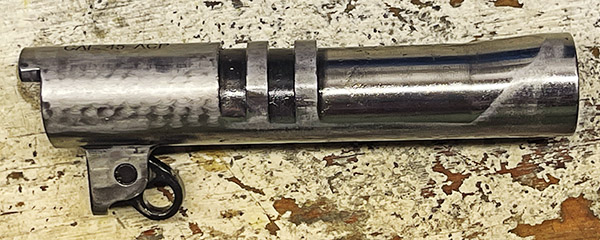
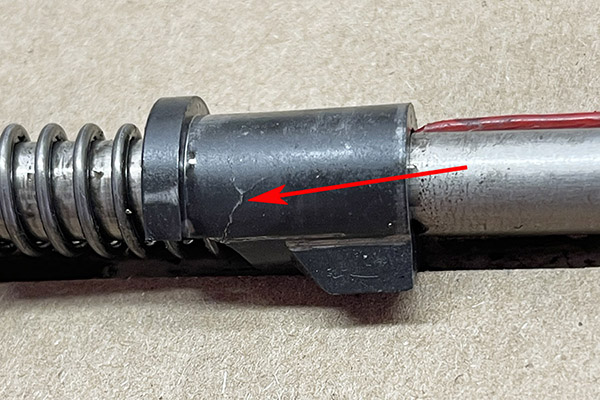
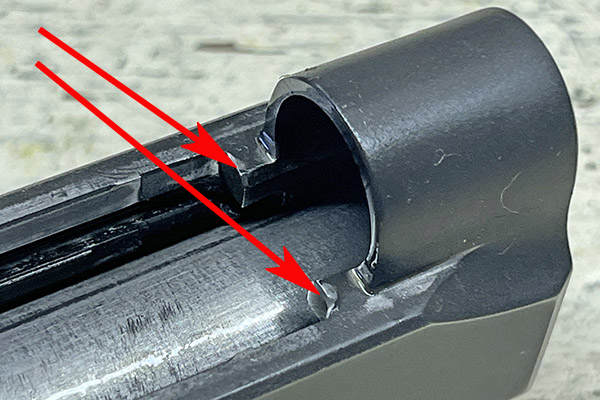
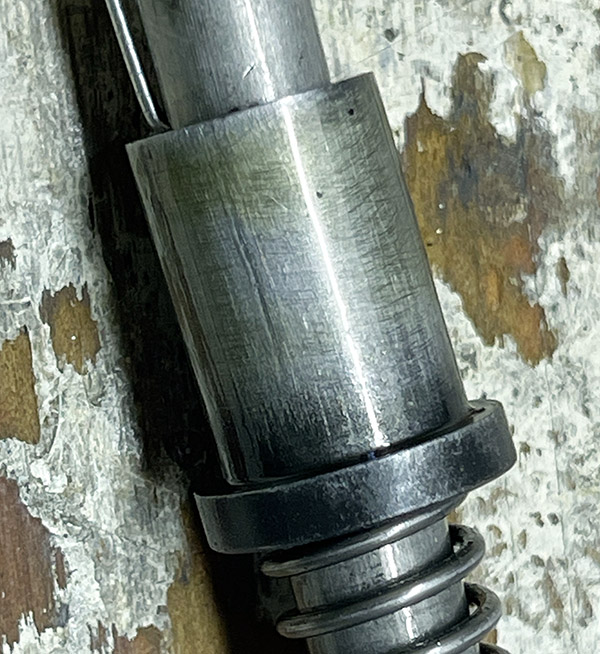
The interior of the 1911 was funky.  It had been working well so I just kept shooting it, but now it was time for a good cleaning.  When I disassembled the 1911 and pulled guide rod, spring, and reverse plug from the slide, I noticed two hairline cracks on either side (that’s the photo you see at the top of this blog and below).  Wow.  I hadn’t fired more than a thousand rounds since I had replaced the recoil plug when it previously failed.

Cracks on the previous reverse plug. This has happened twice. I think this part is poorly designed. It doesn’t last very long.

I called Armscor/Advanced Tactical/Rock Island three times (these guys have more names than a character in a Russian novel) and left messages.  I filled out their website’s customer service form.  That was a couple of months ago and I’ve still not had a response.  The Rock Island 1911s are supposed to have a lifetime warranty.

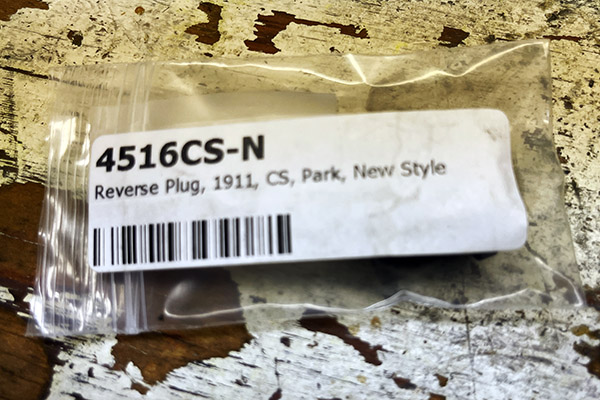
A new reverse plug from Rock Island. I bought three this time. They didn’t honor their lifetime warranty.

After not receiving a response, and based on the reverse plug’s flimsy design, I ordered three new ones. I suppose I could have continued to sit around and feel sorry for myself, but I wanted to shoot my 1911, and I’m not going to take these guys to small claims court for $30 and change.  The reason I ordered three parts is that I don’t know how long the Rock Island parts aren’t going to last (I suspect it won’t be long), so I wanted to have spares on hand the next time this occurs.  To Armscor/Advanced Tactical/Rock Island’s credit, the parts shipped the same day, so I knew they have people monitoring their website.  They just didn’t respond to my complaint about the part.  Maybe it’s because of my previous blogs on their Compact 1911.

Edit:  Several weeks later, I received an email from Advanced Tactical.  Here’s the text of their email:

From: Advanced Tactical Sales
Sent: Friday, July 25, 2025 7:03 AM
To: Joseph Berk
Subject: Re: Compact 1911 Recoil Spring Plug Persistent Failures

Good morning Joseph,

Thank you for your patience and understanding. Our call center is currently experiencing a major transition, leading to a high volume of customer requests for information, replacement parts, repairs, and other inquiries. We are working hard to address these issues promptly and professionally, even though we are short-staffed.

Please provide the serial number of the gun, it is required for our records.

Thank you!

Pedro

I responded to my new buddy Pedro to let him know that I threw in the towel waiting for them, and I had already purchased three replacement parts (three, because I knew they wouldn’t last).  I suggested that they reimburse me for the three parts.  I have yet to get a response.

Tabs on the Compact 1911 slide that interact with the reverse plug. These should not be modified. The reverse plug needs to be relieved and slightly ramped to slide into these tabs.

Rock Island states on their website that the reverse plug needs to be fitted by a competent gunsmith.  For good buddy TJ (of TJ’s Custom Gunworks) doing so would be a slam dunk, but we were having riots in Los Angeles again and I didn’t want to drive through town. (There are gunsmiths closer to me, but I know from hard-won experience that none of them meet that “competent” qualifying adjective).  So I did what Joe Gresh would do:  I did the work myself.

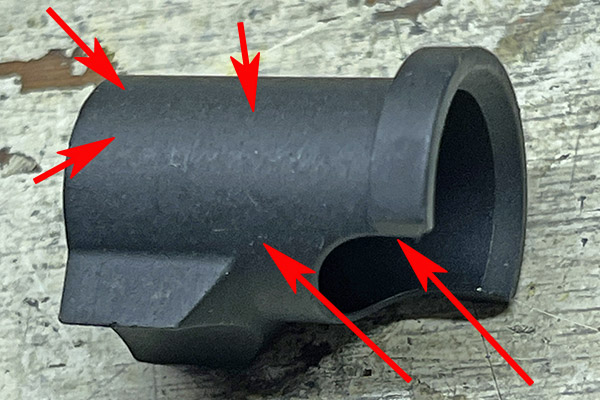
Areas on the reverse plug that need to be relieved to fit the part to the slide.  I refer here to the larger diameter interrupted ring (on the right in the photo above) as the plug’s rib.

Fitting the reverse recoil plug involved sanding its body until it would enter the slide’s bore.  There are a couple of tabs on the slide, and the reverse plug’s rib needs to be relieved to clear these.  I think not relieving the rib would accelerate the reverse plug’s failure (the plug would slam into the slide’s tabs with each shot).  if that occurs, the reverse plug would be torqued in a downward direction.  Looking at the failed plug and its fractures, I believe this is what occurred on both of my reverse plugs’ failures.

After working on the reverse plug for about an hour (such that it slid easily into its cavity in the slide and the plug’s rib cleared the slide tabs), I reassembled the 1911 and took it to an indoor range near where I live. It functioned flawlessly, except for one shot that dropped a little below the orange bullseye.  I think maybe a gnat landed on my front sight for that one.

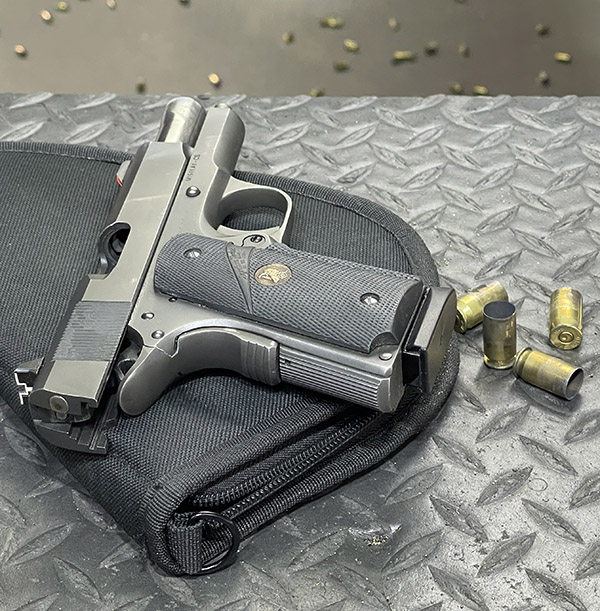
The Compact 1911 on the range. It’s well worn. I like the idea; the execution is weak.
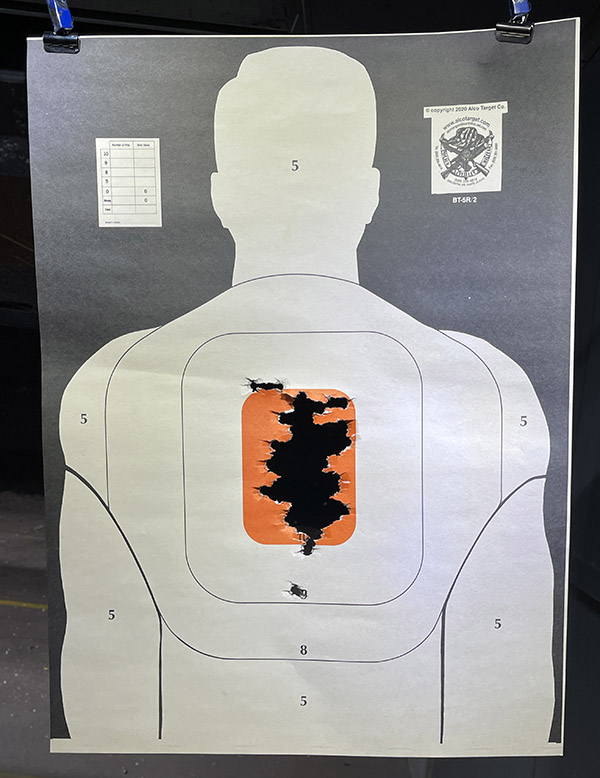
A hundred rounds later. Dead is dead, and this guy is as dead as Julius Caesar.
My Compact 1911 Load. It works well.

My load for the Compact 1911 is the 185-grain powder-coated Gardner semi-wadcutter bullet seated to an overall length of 1.250 inches, 5.0 grains of Bullseye powder, and the Winchester large pistol primer.  For this particular box of ammo, I used Winchester brass that had previously experienced multiple reloadings (you almost can’t wear .45 ACP brass out).  This same load also works well in my full size 1911.

The post-firing reverse plug after 100 rounds.. I’ll be inspecting it regularly.

When I returned home, I examined the new reverse recoil plug and it had no cracks.   I’m keeping my fingers crossed.  I’ll inspect the reverse recoil plug every time I disassemble the Rock Compact for cleaning.  I know what to look for now, and I know how to fix it.


Join our Facebook ExNotes page!


Never miss an ExNotes blog:


Help us keep the lights on:


Don’t forget: Visit our advertisers!

CSM Emory L. Hickman

By Joe Berk

About seven years ago I did a blog on CSM (Command Sergeant Major) Emory L. Hickman, the man who taught me how to shoot a 1911.   He passed away several decades ago at the tender young age of 49, a victim of exposure to Agent Orange in Vietnam.  Here are the original blogs I wrote about him:
The 1911
Mentors: Command Sergeant Major Emory L. Hickman

I enjoyed writing those blogs, and I enjoyed the time I spent with the Command Sergeant Major.  I met him when I was a second lieutenant going to graduate school at Rutgers in 1973.   As a brand-new second looey, I didn’t really know what a Sergeant Major was (let alone a Command Sergeant Major).  I learned when I went on active duty they are at the pinnacle of the US Army’s noncommissioned officer corps, and I would further learn that they are treated with reverence by soldiers of all ranks (up to and including general officers).   CSM Hickman taught me how to shoot the .45 ACP 1911, and he taught me well.  I still do pretty good on the pistol range, even as a guy who can properly be considered a geezer.

So where am I going with this?

About a week ago, I received a request to add an email address to our list of ExhaustNotes subscribers.  I evaluate every one of those requests, because if I just let any old address onto the list, I would be bombarded with spam emails and blog comments.  I sort of get bombarded anyway, but personally approving or disapproving every request keeps the spam bots and Russian bad guys at bay (if there’s a .ru in your email address or any Cyrillic characters in your message, don’t waste your time).

What raised my “likely spam” antenna was that this recent request included an email address based on CSM Hickman’s name.  I figured it was one of those spoofing deals, like when you get an email from yourself offering deals that are too good to be true.  Those get immediately deleted.  I deleted this subscription request and promptly forgot about it.

A week later, I received an email (instead of just a subscription request) from the same CSM Hickman address, with a note that the writer was CSM Hickman’s son.  He asked me to call him at the included phone number.  I wasn’t about to ignore that, so I called, and in a few seconds I was chatting with Emory L. Hickman, Jr.  Wow!

As it turns out, Emory L. Hickman, Jr., is just a few years younger than me.  We had a marvelous conversation, we chatted about his dad (the Command Sergeant Major), and we chatted about our kids (there’s an Emory L. Hickman III, too, and he’s the one who found the blogs I previously wrote about CSM Hickman).  Emory, Jr., told me that he and his family enjoyed the blogs enormously.  That’s good and hearing it made me feel good.  I had a lot of fun writing those stories and recalling my days on the Rutgers pistol range with the original Emory Hickman.  You know, in that photo atop this blog (Emory, Jr., sent it to me a few days  ago), CSM Hickman looks like an imposing guy.  To the North Koreans, the VC, and the NVA, he was.  But to me, he was simply a nice, southern gentlemen with a quiet way about him.  He was a wonderful teacher.  I think about him every time I pick up a 1911, including the time when I won the Army’s 38th Brigade pistol championship in Korea.

Emory, Jr., and I talked about his father and I told him one of my favorite stories.  CSM Hickman was coaching me and I was getting better, but the improvement wasn’t what I wanted.  I asked the Command Sergeant Major if he thought I should get my Colt 1911 accurized.

“May I try your pistol, Sir?” he asked.   Here was this guy, a career Army man more than twice my age (at the pinnacle of the NCO ranks) calling me “Sir.”  It was heady stuff.

“Sure,” I said.  I dropped the mag, locked the slide back, checked to make sure the pistol was unloaded, and handed it to him.  CSM Hickman loaded five rounds in the magazine, put the mag in the gun, aimed the 1911, and fired five shots at the tiny bullseye 50 feet away.   When the thunder died, there was one ragged hole in the center of the bullseye.  You could have covered that single ragged hole with a nickel.  I was speechless.  I had no idea such a thing was even possible.

“Maybe at some point in the future, Sir,” the Command Sergeant Major said in response to my thought about accurizing the pistol, “but I think it’s good enough for now.”

I thought so, too.


Join our Facebook ExNotes page!


Never miss an ExNotes blog:


Help us keep the lights on:


Don’t forget: Visit our advertisers!